

Dietary docosahexaenoic acid (DHA) as lysophosphatidylcholine, but not as free acid, enriches brain DHA and improves memory in adult mice
Open accessThe DOI matches its Crossref record; 47 of the 47 references it cites were found in a registry or an index.
Abstract
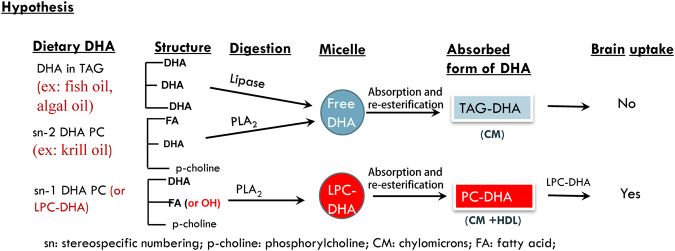
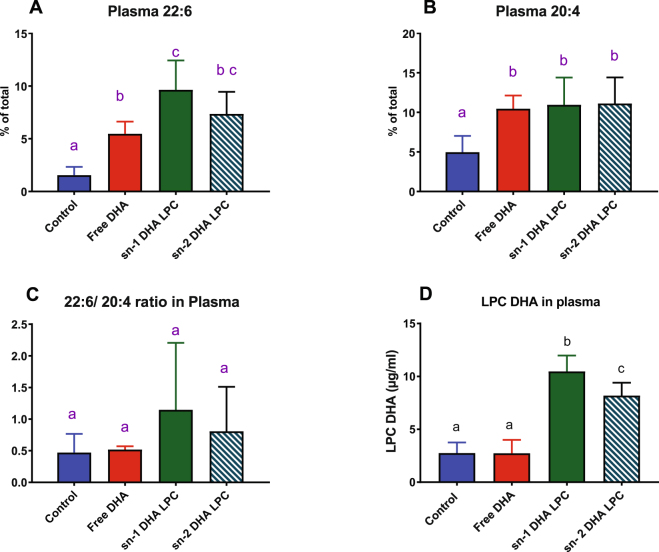
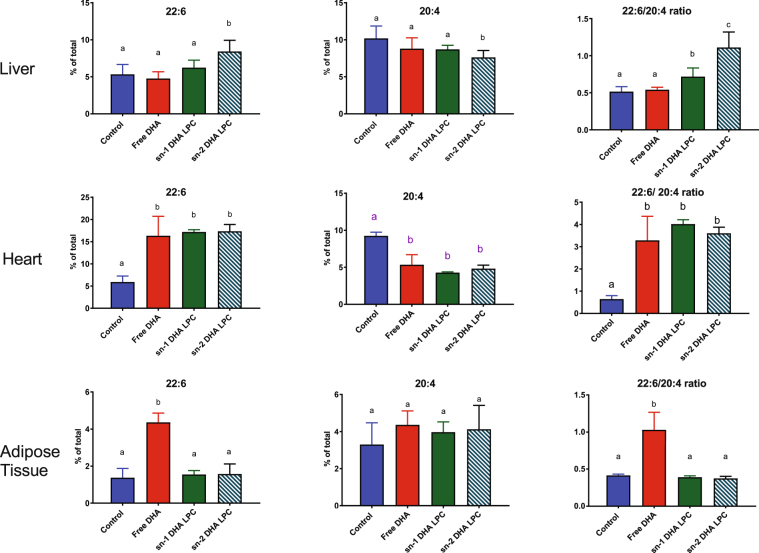
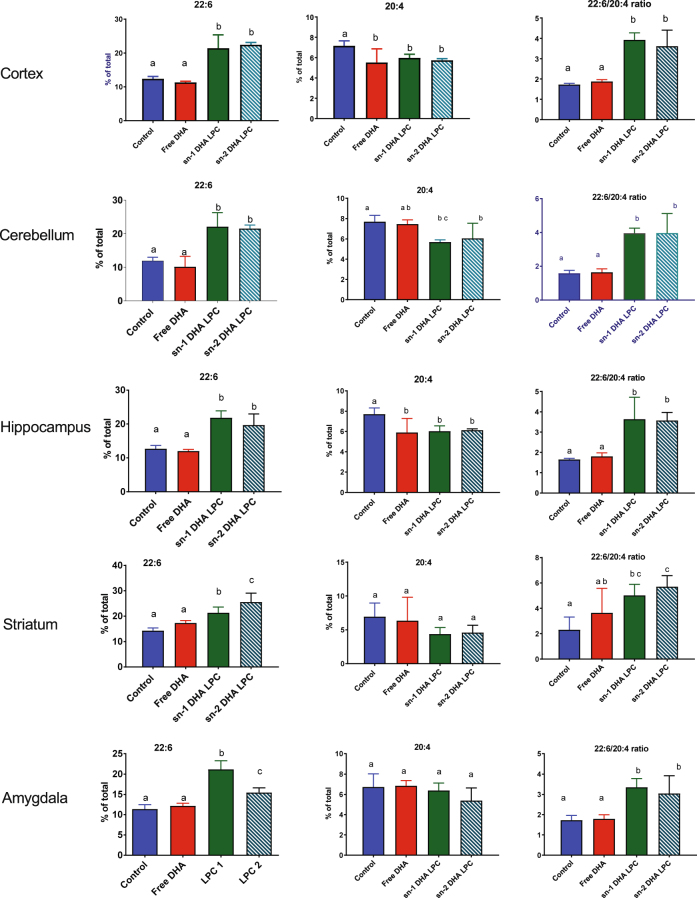
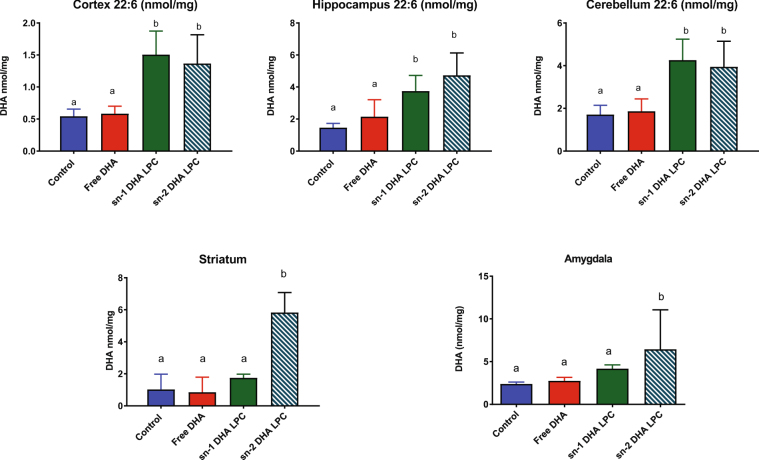
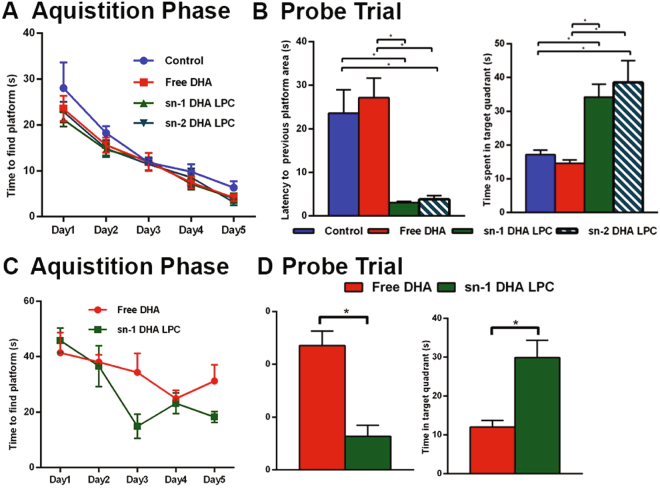
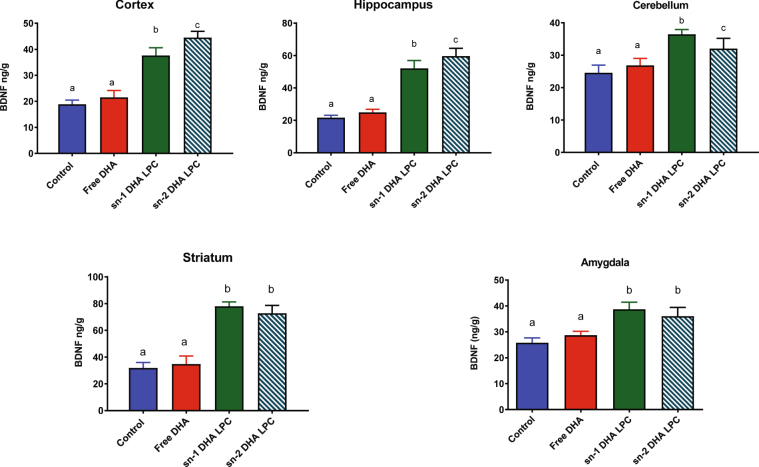
Docosahexaenoic acid (DHA) is uniquely concentrated in the brain, and is essential for its function, but must be mostly acquired from diet. Most of the current supplements of DHA, including fish oil and krill oil, do not significantly increase brain DHA, because they are hydrolyzed to free DHA and are absorbed as triacylglycerol, whereas the transporter at blood brain barrier is specific for phospholipid form of DHA. Here we show that oral administration of DHA to normal adult mice as lysophosphatidylcholine (LPC) (40 mg DHA/kg) for 30 days increased DHA content of the brain by >2-fold. In contrast, the same amount of free DHA did not increase brain DHA, but increased the DHA in adipose tissue and heart. Moreover, LPC-DHA treatment markedly improved the spatial learning and memory, as measured by Morris water maze test, whereas free DHA had no effect. The brain derived neurotrophic factor increased in all brain regions with LPC-DHA, but not with free DHA. These studies show that dietary LPC-DHA efficiently increases brain DHA content and improves brain function in adult mammals, thus providing a novel nutraceutical approach for the prevention and treatment of neurological diseases associated with DHA deficiency, such as Alzheimer's disease.
Overview
The claims and statistics of this paper haven’t been checked yet.
Free: it reads the open-access text and checks the first 5 claims that cite a source we can check. Create a free account to check every claim.
Integrity signals
Registry
Cites
Statistics
Figures
Verification
Claims the paper makes
The claims and statistics of this paper haven’t been checked yet.
Free: it reads the open-access text and checks the first 5 claims that cite a source we can check. Create a free account to check every claim.
Claims other papers make about this one
Each is checked against this paper’s own text: does it say what the citing paper says it does?
In the citing paper
“Rodent and human models show that DHA supplementation could not only have a beneficial impact on brain functions, including learning and memory [46,47], depressive and aggressive behaviors [45,48] but also on audition [49,50], and olfaction [51,52].”
From Microalgae n-3 PUFAs Production and Use in Food and Feed Industries (2021) · cites this paper as [46]
Self-check
Percentages, sums and reported differences re-computed from the paper’s own numbers.
The self-check needs the paper’s full text.
Citations
Cites
1 retracted
Rao, J. S., Ertley, R. N., Lee, H.-J., DeMar, J. C., Arnold, J. T., Rapoport, S. I., & Bazinet, R. P. (2007) · Molecular Psychiatry · doi:10.1038/sj.mp.4001888 · Cited by 279
RetractedA RAPID METHOD OF TOTAL LIPID EXTRACTION AND PURIFICATION
Bligh, E. G., & Dyer, W. J. (1959) · Canadian Journal of Biochemistry and Physiology · doi:10.1139/o59-099 · Cited by 54,751
Omega-3 Fatty Acids and Inflammatory Processes
Calder, P. C. (2010) · Nutrients · doi:10.3390/nu2030355 · Cited by 1,116
Mfsd2a is a transporter for the essential omega-3 fatty acid docosahexaenoic acid
Nguyen, L. N., Ma, D., Shui, G., Wong, P., Cazenave-Gassiot, A., Zhang, X., Wenk, M. R., Goh, E. L. K., & Silver, D. L. (2014) · Nature · doi:10.1038/nature13241 · Cited by 1,048
Docosahexaenoic Acid Supplementation and Cognitive Decline in Alzheimer Disease: A Randomized Trial
Quinn, J. F., Raman, R., Thomas, R. G., Yurko-Mauro, K., Nelson, E. B., Van Dyck, C., Galvin, J. E., Emond, J., Jack, C. R., Weiner, M., et al. (2010) · JAMA · doi:10.1001/jama.2010.1510 · Cited by 764
Self-citationFreund-Levi, Y., Eriksdotter-Jönhagen, M., Cederholm, T., Basun, H., Faxén-Irving, G., Garlind, A., Vedin, I., Vessby, B., Wahlund, L.-O., & Palmblad, J. (2006) · Archives of Neurology · doi:10.1001/archneur.63.10.1402 · Cited by 751
Bazan, N. G., Molina, M. F., & Gordon, W. C. (2011) · Annual Review of Nutrition · doi:10.1146/annurev.nutr.012809.104635 · Cited by 441
Bekinschtein, P., Cammarota, M., & Medina, J. H. (2014) · Neuropharmacology · doi:10.1016/j.neuropharm.2013.04.024 · Cited by 349
High-Density Lipoproteins: Nature’s Multifunctional Nanoparticles
Kuai, R., Li, D., Chen, Y. E., Moon, J. J., & Schwendeman, A. (2016) · ACS Nano · doi:10.1021/acsnano.5b07522 · Cited by 338
Preferential Uptake of Dietary Fatty Acids in Adipose Tissue and Muscle in the Postprandial Period
Bickerton, A. S. T., Roberts, R., Fielding, B. A., Hodson, L., Blaak, E. E., Wagenmakers, A. J. M., Gilbert, M., Karpe, F., & Frayn, K. N. (2007) · Diabetes · doi:10.2337/db06-0822 · Cited by 246
Grosso, G., Micek, A., Marventano, S., Castellano, S., Mistretta, A., Pajak, A., & Galvano, F. (2016) · Journal of Affective Disorders · doi:10.1016/j.jad.2016.08.011 · Cited by 244
Redgrave, T. G., & Small, D. M. (1979) · Journal of Clinical Investigation · doi:10.1172/jci109435 · Cited by 237
Lysophosphatidylcholine as a Preferred Carrier Form of Docosahexaenoic Acid to the Brain
Lagarde, M., Bernoud, N., Brossard, N., Lemaitre-Delaunay, D., Thiès, F., Croset, M., & Lecerf, J. (2001) · Journal of Molecular Neuroscience · doi:10.1385/jmn:16:2-3:201 · Cited by 221
Metabolic Fate of Chylomicron Phospholipids and Apoproteins in the Rat
Tall, A. R., Green, P. H. R., Glickman, R. M., & Riley, J. W. (1979) · Journal of Clinical Investigation · doi:10.1172/jci109564 · Cited by 219
DeMar, J. C., Ma, K., Chang, L., Bell, J. M., & Rapoport, S. I. (2005) · Journal of Neurochemistry · doi:10.1111/j.1471-4159.2005.03258.x · Cited by 203
Docosahexaenoic acid: one molecule diverse functions
Hashimoto, M., Hossain, S., Al Mamun, A., Matsuzaki, K., & Arai, H. (2017) · Critical Reviews in Biotechnology · doi:10.1080/07388551.2016.1207153 · Cited by 184
DHA Improves Cognition and Prevents Dysfunction of Entorhinal Cortex Neurons in 3xTg-AD Mice
Arsenault, D., Julien, C., Tremblay, C., & Calon, F. (2011) · PLoS ONE · doi:10.1371/journal.pone.0017397 · Cited by 179
Glycerophospholipid Identification and Quantitation by Electrospray Ionization Mass Spectrometry
Ivanova, P. T., Milne, S. B., Byrne, M. O., Xiang, Y., & Brown, H. A. (2007) · Methods in Enzymology · doi:10.1016/s0076-6879(07)32002-8 · Cited by 174
Preferential incorporation of sn-2 lysoPC DHA over unesterified DHA in the young rat brain
Thies, F., Pillon, C., Moliere, P., Lagarde, M., & Lecerf, J. (1994) · American Journal of Physiology-Regulatory, Integrative and Comparative Physiology · doi:10.1152/ajpregu.1994.267.5.r1273 · Cited by 166
Wu, A., Ying, Z., & Gomez-Pinilla, F. (2011) · Journal of Neurotrauma · doi:10.1089/neu.2011.1872 · Cited by 159
Plasma non-esterified docosahexaenoic acid is the major pool supplying the brain
Chen, C. T., Kitson, A. P., Hopperton, K. E., Domenichiello, A. F., Trépanier, M.-O., Lin, L. E., Ermini, L., Post, M., Thies, F., & Bazinet, R. P. (2015) · Scientific Reports · doi:10.1038/srep15791 · Cited by 135
McNamara, R. K., Jandacek, R., Rider, T., Tso, P., Dwivedi, Y., & Pandey, G. N. (2010) · Journal of Affective Disorders · doi:10.1016/j.jad.2010.03.015 · Cited by 129
Thiès, F., Delachambre, M. C., Bentejac, M. C., Lagarde, M., & Lecerf, J. M. (1992) · Journal of Neurochemistry · doi:10.1111/j.1471-4159.1992.tb08353.x · Cited by 127
Bioactive metabolites of docosahexaenoic acid
Kuda, O. (2017) · Biochimie · doi:10.1016/j.biochi.2017.01.002 · Cited by 126
Arendash, G. W., Jensen, M. T., Salem, N., Hussein, N., Cracchiolo, J. R., Dickson, A., Leighty, R. E., & Potter, H. (2007) · Neuroscience · doi:10.1016/j.neuroscience.2007.08.018 · Cited by 122
Cunnane, S. C., Chouinard‐Watkins, R., Castellano, C., & Barberger‐Gateau, P. (2012) · Prostaglandins Leukotrienes and Essential Fatty Acids · doi:10.1016/j.plefa.2012.04.006 · Cited by 109
DHA diet reduces AD pathology in young APPswe/PS1ΔE9 transgenic mice: Possible gender effects
Perez, S. E., Berg, B. M., Moore, K. A., He, B., Counts, S. E., Fritz, J. J., Hu, Y., Lazarov, O., Lah, J. J., & Mufson, E. J. (2010) · Journal of Neuroscience Research · doi:10.1002/jnr.22266 · Cited by 96
Petursdottir, A. L., Farr, S. A., Morley, J. E., Banks, W. A., & Skuladottir, G. V. (2008) · The Journals of Gerontology Series A: Biological Sciences and Medical Sciences · doi:10.1093/gerona/63.11.1153 · Cited by 93
Sethom, M. M., Fares, S., Bouaziz, N., Melki, W., Jemaa, R., Feki, M., Hechmi, Z. E., & Kaabachi, N. (2010) · Prostaglandins Leukotrienes and Essential Fatty Acids · doi:10.1016/j.plefa.2010.07.001 · Cited by 88
Tou, J. C. L., Altman, S., Gigliotti, J. C., Benedito, V. A., & Cordonier, E. L. (2011) · Lipids in Health and Disease · doi:10.1186/1476-511x-10-179 · Cited by 88
Smink, W., Gerrits, W. J. J., Gloaguen, M., Ruiter, A., & van Baal, J. (2012) · animal · doi:10.1017/s1751731111001479 · Cited by 80
Chen, S., & Subbaiah, P. V. (2007) · Biochimica et Biophysica Acta (BBA) - Molecular and Cell Biology of Lipids · doi:10.1016/j.bbalip.2007.08.001 · Cited by 75
Self-citationThomas, R., Zuchowska, P., Morris, A. W. J., Marottoli, F. M., Sunny, S., Deaton, R., Gann, P. H., & Tai, L. M. (2016) · Acta Neuropathologica Communications · doi:10.1186/s40478-016-0387-3 · Cited by 72
Self-citationTyagi, E., Zhuang, Y., Agrawal, R., Ying, Z., & Gomez-Pinilla, F. (2015) · Neurobiology of Disease · doi:10.1016/j.nbd.2014.09.014 · Cited by 70
Lim, S., & Suzuki, H. (2001) · Journal of Nutrition · doi:10.1093/jn/131.2.319 · Cited by 64
Lipase‐catalyzed synthesis of lysophospholipids in a continuous bioreactor
Sarney, D. B., Fregapane, G., & Vulfson, E. N. (1994) · Journal of the American Oil Chemists Society · doi:10.1007/bf02541478 · Cited by 58
Enhanced incorporation of dietary DHA into lymph phospholipids by altering its molecular carrier
Subbaiah, P. V., Dammanahalli, K. J., Yang, P., Bi, J., & O’Donnell, J. M. (2016) · Biochimica et Biophysica Acta (BBA) - Molecular and Cell Biology of Lipids · doi:10.1016/j.bbalip.2016.05.002 · Cited by 51
Self-citationJain, S., Banerjee, B. D., Ahmed, R. S., Arora, V. K., & Mediratta, P. K. (2013) · Neurochemical Research · doi:10.1007/s11064-013-1122-0 · Cited by 46
HIRATSUKA, S., ISHIHARA, K., KITAGAWA, T., WADA, S., & YOKOGOSHI, H. (2008) · Journal of Nutritional Science and Vitaminology · doi:10.3177/jnsv.54.501 · Cited by 42
Lin, Y. H., Shah, S., & Salem, N. (2010) · The Journal of Nutritional Biochemistry · doi:10.1016/j.jnutbio.2010.06.008 · Cited by 42
Saito, M., Ueno, M., Kubo, K., & Yamaguchi, M. (1998) · Journal of Agricultural and Food Chemistry · doi:10.1021/jf970385d · Cited by 34
Valenzuela, A., Nieto, S., Julio Sanhueza, C., Morgado, N., Rojas, I. S., & Zañartu, P. (2010) · Grasas y Aceites · doi:10.3989/gya.053709 · Cited by 29
Rodrigues, P., Martins, S. V., Lopes, P. A., Ramos, C., Miguéis, S., Alfaia, C. M., Pinto, R. M. A., Rolo, E. A., Bispo, P., Batista, I., et al. (2014) · British Journal Of Nutrition · doi:10.1017/s0007114514000853 · Cited by 28
Regulation of hepatic lipase activity by sphingomyelin in plasma lipoproteins
Yang, P., & Subbaiah, P. V. (2015) · Biochimica et Biophysica Acta (BBA) - Molecular and Cell Biology of Lipids · doi:10.1016/j.bbalip.2015.07.003 · Cited by 25
Self-citationEvidence for altered positional specificity of LCAT in vivo
Subbaiah, P. V., Sowa, J. M., & Davidson, M. H. (2004) · Journal of Lipid Research · doi:10.1194/jlr.m400197-jlr200 · Cited by 25
Self-citationGázquez, A., Hernández‐Albaladejo, I., & Larqué, E. (2016) · Nutrition Research · doi:10.1016/j.nutres.2016.12.006 · Cited by 22
Choline up-regulates BDNF and down-regulates TrkB neurotrophin receptor in rat cortical cell culture
Johansson, J., Formaggio, E., Fumagalli, G. F., & Chiamulera, C. (2009) · Neuroreport · doi:10.1097/wnr.0b013e32832b7324 · Cited by 16
Cited by
Saini, R. K., & Keum, Y.-S. (2018) · Life Sciences · doi:10.1016/j.lfs.2018.04.049 · Cited by 1,281
The mechanisms of lysophosphatidylcholine in the development of diseases
Liu, P., Zhu, W., Chen, C., Yan, B., Zhu, L., Chen, X., & Peng, C. (2020) · Life Sciences · doi:10.1016/j.lfs.2020.117443 · Cited by 579
Health benefits of dietary marine DHA/EPA-enriched glycerophospholipids
Zhang, T.-T., Xu, J., Wang, Y.-M., & Xue, C.-H. (2019) · Progress in Lipid Research · doi:10.1016/j.plipres.2019.100997 · Cited by 339
Ahmmed, M. K., Ahmmed, F., Tian, H. (., Carne, A., & Bekhit, A. E. (2020) · Comprehensive Reviews in Food Science and Food Safety · doi:10.1111/1541-4337.12510 · Cited by 241
Microalgae n-3 PUFAs Production and Use in Food and Feed Industries
Remize, M., Brunel, Y., Silva, J. L., Berthon, J.-Y., & Filaire, E. (2021) · Marine Drugs · doi:10.3390/md19020113 · Cited by 214
“Rodent and human models show that DHA supplementation could not only have a beneficial impact on brain functions, including learning and memory [46,47], depressive and aggressive behaviors [45,48] but also on audition [49,50], and olfaction [51,52].”
Background
Metadata
- Authors
- Sugasini, D., Thomas, R., Yalagala, P. C. R., Tai, L. M., & Subbaiah, P. V.
- Affiliations
- University of Illinois Chicago (US)
- Corresponding author
- Subbaiah, Papasani V.
- Venue
- Scientific Reports
- Published
- 2017-09-12
- Volume
- 7
- Issue
- 1
- Pages
- 11263-11263
- ISSN
- 2045-2322 (ISSN-L)
- PMC
- PMC5596017
- OpenAlex
- W2753001826
- Cited by
- 201
- References
- 47
- Citations by year
- 2026: 29 · 2025: 20 · 2024: 19 · 2023: 18 · 2022: 28 · 2021: 29 · 2020: 21 · 2019: 20 · 2018: 14 · 2017: 3
- FWCI
- 13.19
- Type
- journal article
- Language
- en
- Open access
- gold
- doi.org
- Licence
- cc-by
- creativecommons.org/licenses/by/4.0 (tdm)
- creativecommons.org/licenses/by/4.0 (vor)
- Locations
- Scientific Reports (publishedVersion, cc-by)
- PubMed Central (publishedVersion, cc-by)
- PubMed (publishedVersion)
- Funders
- U.S. Department of Veterans Affairs (S10 OD010660, BX001090, I01 BX001090, IO1 BX001090)
- National Institutes of Health (1s10od010660-01a1, IO1 BX001090)
- NIH Office of the Director (S10 OD010660)
- National Center for Complementary and Integrative Health (R21AT008457)
- Topics
- Health Sciences › Nursing › Nutrition and Dietetics › Fatty Acid Research and Health
- Life Sciences › Agricultural and Biological Sciences › Aquatic Science › Aquaculture Nutrition and Growth
- Life Sciences › Neuroscience › Cellular and Molecular Neuroscience › Alzheimer's disease research and treatments
- Keywords
- docosahexaenoic acid, lysophosphatidylcholine, spatial learning and memory, brain-derived neurotrophic factor, blood-brain barrier, nutraceuticals, Alzheimer's disease, adipose tissue, heart
- MeSH terms
- Animals, Ascorbic Acid, Brain, Brain Chemistry, Docosahexaenoic Acids, Lysophosphatidylcholines, Memory, Dietary Supplements, Mice, Spatial Learning
About these checks
Registry, retraction, Cites and statistics results are computed, not judged, with one exception: a printed reference that no index lists is read once by a model before it counts as a citation error. Claims are extracted by a model and kept only when their quote appears verbatim in the text; each cited source is then checked, with a model’s help, for whether it says what the claim relies on. Those verdicts can be wrong — read the claim’s quote and the cited source before relying on one.
Statistics and arithmetic are recomputed, not judged.
Confidence bands are shown only for fields calibrated on our annotated test set. None is calibrated yet, so no band is shown.
What counts as a claim ›How we measure confidence ›How we check this ›
Are you an author, or do you see a problem with this page? Request a review
Data sources
Bibliographic data: Semantic Scholar, OpenAlex, Crossref.
Contains information from the Semantic Scholar Academic Graph Datasets, made available under the ODC Attribution License (ODC-BY 1.0).
Semantic Scholar’s data is described in: Kinney, R., et al. (2023). The Semantic Scholar Open Data Platform. arXiv:2301.10140.
