

Forecasting the onset and course of mental illness with Twitter data
Open accessThe DOI matches its Crossref record; 50 of the 50 references it cites were found in a registry or an index.
Abstract
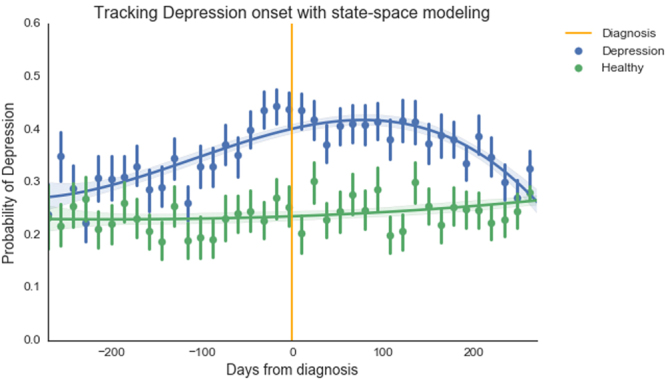
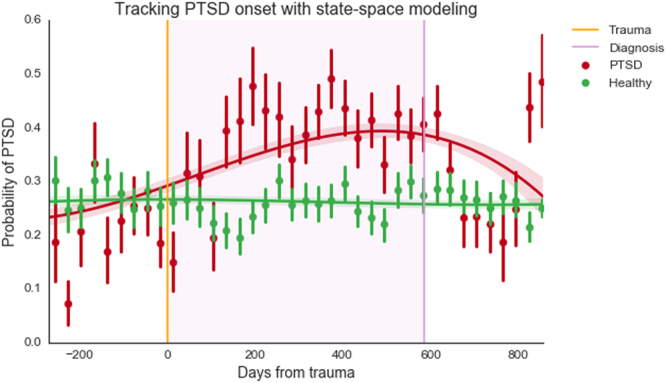
We developed computational models to predict the emergence of depression and Post-Traumatic Stress Disorder in Twitter users. Twitter data and details of depression history were collected from 204 individuals (105 depressed, 99 healthy). We extracted predictive features measuring affect, linguistic style, and context from participant tweets (N = 279,951) and built models using these features with supervised learning algorithms. Resulting models successfully discriminated between depressed and healthy content, and compared favorably to general practitioners’ average success rates in diagnosing depression, albeit in a separate population. Results held even when the analysis was restricted to content posted before first depression diagnosis. State-space temporal analysis suggests that onset of depression may be detectable from Twitter data several months prior to diagnosis. Predictive results were replicated with a separate sample of individuals diagnosed with PTSD (N users = 174, N tweets = 243,775). A state-space time series model revealed indicators of PTSD almost immediately post-trauma, often many months prior to clinical diagnosis. These methods suggest a data-driven, predictive approach for early screening and detection of mental illness.
Overview
The claims and statistics of this paper haven’t been checked yet.
Free: it reads the open-access text and checks the first 5 claims that cite a source we can check. Create a free account to check every claim.
Integrity signals
Registry
Cites
Statistics
Figures
Verification
Claims the paper makes
The claims and statistics of this paper haven’t been checked yet.
Free: it reads the open-access text and checks the first 5 claims that cite a source we can check. Create a free account to check every claim.
Claims other papers make about this one
Each is checked against this paper’s own text: does it say what the citing paper says it does?
The source backs part of the claim, not all of it — or backs it for a different population, condition or comparison.
In the citing paper
“For PTSD in particular, although studies have yet to validate models in a clinical setting, past work has shown that AI-based language techniques can distinguish Twitter users that have publicly disclosed a diagnosis of the condition from random selections of users (e.g. Coppersmith, Dredze, & Harman, 2014; Preotiuc-Pietro, Sap, Schwartz, & Ungar, 2015; Reece et al. 2017).”
From World Trade Center responders in their own words: predicting PTSD symptom trajectories with AI-based language analyses of interviews (2023) · cites this paper as Reece et al. 2017
Experimental — accuracy not yet measuredThe cited source says what the claim attributes to it.
In the citing paper
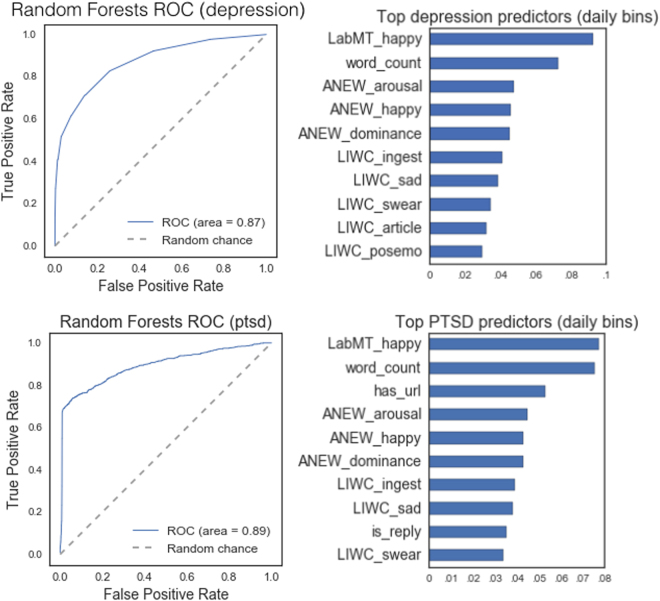
“In Reece et al, 52 the LabMT was the first predictor in the random forest model to detect PTSD on Twitter data.”
From Linguistic markers for identifying post-traumatic stress disorder and associated symptoms: a systematic literature review (2025) · cites this paper as [52]
The cited source says what the claim attributes to it.
In the citing paper
“The first 2 studies leverage social media data and rely on selfreported PTSD diagnoses, which may contribute to their higher AUC values.”
From Linguistic markers for identifying post-traumatic stress disorder and associated symptoms: a systematic literature review (2025) · cites this paper as [52]
The check wasn’t confident either way, so it gives no verdict — never disputed.
In the citing paper
“From the forest plot highlights studies with notably higher AUC scores, particularly Reece et al, 52 Kirinde Gamaarachchige and Inkpen, 84 and Schultebraucks et al. 43”
From Linguistic markers for identifying post-traumatic stress disorder and associated symptoms: a systematic literature review (2025) · cites this paper as [52]
Experimental — accuracy not yet measured
Self-check
Percentages, sums and reported differences re-computed from the paper’s own numbers.
The self-check needs the paper’s full text.
Citations
Cites
The CES-D Scale: A Self-Report Depression Scale for Research in the General Population
Radloff, L. S. (1977) · Applied Psychological Measurement · doi:10.1177/014662167700100306 · Cited by 53,267
The Parable of Google Flu: Traps in Big Data Analysis
Lazer, D., Kennedy, R., King, G., & Vespignani, A. (2014) · Science · doi:10.1126/science.1248506 · Cited by 2,523
Reputation as a sufficient condition for data quality on Amazon Mechanical Turk
Peer, E., Vosgerau, J., & Acquisti, A. (2014) · Behavior Research Methods · doi:10.3758/s13428-013-0434-y · Cited by 1,618 · cited 1×
“MTurk workers who have completed at least 100 tasks, with a minimum 95% approval rating, have been found to provide reliable, valid survey responses (32).”
BackgroundPredicting Depression via Social Media
De Choudhury, M., Gamon, M., Counts, S., & Horvitz, E. (2021) · Proceedings of the International AAAI Conference on Web and Social Media · doi:10.1609/icwsm.v7i1.14432 · Cited by 1,579
Clinical diagnosis of depression in primary care: a meta-analysis
Mitchell, A. J., Vaze, A., & Rao, S. (2009) · The Lancet · doi:10.1016/s0140-6736(09)60879-5 · Cited by 1,251 · cited 6×
“Precision, recall, specificity, negative predictive value, and F1 accuracy scores are reported, and general practitioners’ unassisted diagnostic accuracy rates as reported in Mitchell, Vaze, and Rao28 (MVR) and Taubman-Ben-Ari et al.22 (TBA) are used as informal benchmarks for depression and PTSD, respectively.”
BackgroundInfluentialFerrari, A. J., Somerville, A. J., Baxter, A. J., Norman, R., Patten, S. B., Vos, T., & Whiteford, H. A. (2013) · Psychological Medicine · doi:10.1017/s0033291712001511 · Cited by 1,230 · cited 1×
“Depression has emerged as the leading mental health condition of interest among computational social scientists (712), as it is a relatively common mental disorder (16) and influences a range of behaviors and patterns of communication (17).”
BackgroundLanguage use of depressed and depression-vulnerable college students
Rude, S., Gortner, E.-M., & Pennebaker, J. (2004) · Cognition & Emotion · doi:10.1080/02699930441000030 · Cited by 1,018 · cited 1×
“This trajectory matches closely with average improvement time frames observed in therapeutic programs (45).”
BackgroundTemporal patterns of happiness and information in a global social network: hedonometrics and Twitter
Dodds, P. S., Harris, K. D., Kloumann, I. M., Bliss, C. A., & Danforth, C. M. (2011) · PLoS ONE · doi:10.1371/journal.pone.0026752 · Cited by 809 · cited 2×
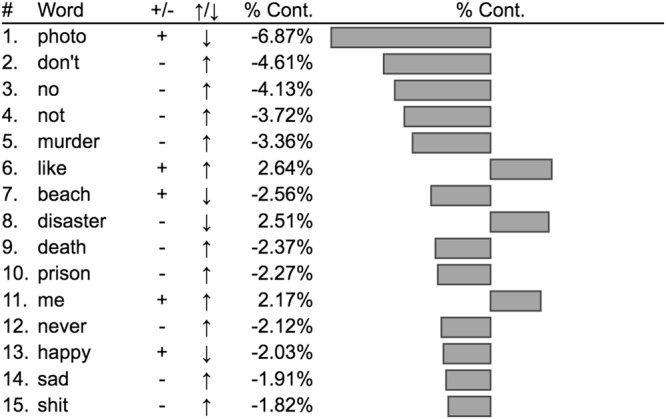
“Word shift graphs We averaged labMT happiness scores across observations in each class, after the removal of common neutral words and retweeted promotional material (38) , .”
BackgroundMethodSelf-citationDiscovering Shifts to Suicidal Ideation from Mental Health Content in Social Media
De Choudhury, M., Kiciman, E., Dredze, M., Coppersmith, G., & Kumar, M. (2016) · Proceedings of the 2016 CHI Conference on Human Factors in Computing Systems · doi:10.1145/2858036.2858207 · Cited by 683 · cited 1×
“In addition to physical ailments, predictive screening methods have successfully identified markers in social media data for a number of mental health issues, including addiction (6), depression (712), PostTraumatic Stress Disorder (PTSD) (13,14), and suicidal ideation (15).”
BackgroundBrief screening instrument for post-traumatic stress disorder
Brewin, C. R., Rose, S., Andrews, B., Green, J., Tata, P., McEvedy, C., Turner, S., & Foa, E. B. (2002) · British Journal of Psychiatry · doi:10.1192/bjp.181.2.158 · Cited by 623 · cited 2×
“The Trauma Screening Questionnaire (TSQ) was used to screen for PTSD (31).”
BackgroundMethod
Research works printed but not linked: 1
- Park, M., Cha, C. & Cha, M. Depressive moods of users portrayed in Twitter. In Proceedings of the ACM SIGKDD Workshop on healthcare informatics (HI-KDD) (pp. 1–8) (2012).
Cited by
Items 101–200 of 402
Owen, D. C., Antypas, D., Hassoulas, A., Pardiñas, A. F., Espinosa-Anke, L., & Camacho-Collados, J. (2023) · JMIR AI · doi:10.2196/41205 · Cited by 34
“Reece et al [19] made similar observations when examining Twitter users.”
BackgroundResultInfluentialAssessment of supervised classifiers for the task of detecting messages with suicidal ideation
Caicedo, R. W. A., Gomez, J. M., & Sasieta, H. A. M. (2020) · Heliyon · doi:10.1016/j.heliyon.2020.e04412 · Cited by 29
“…social networks have provided researchers with new platforms to deploy automated methods for the analysis of language to better understand the thoughts, feelings, beliefs, and personalities of each person [44], even mental illnesses like depression or Post-Traumatic Stress Disorder [42].”
BackgroundKjell, K., Johnsson, P., & Sikström, S. (2021) · Frontiers in Psychology · doi:10.3389/fpsyg.2021.602581 · Cited by 30
“Posts on social media have also been used to predict further episodes of depression several months before onset using Twitter (De Choudhury et al., 2013; Reece et al., 2017) and Facebook (e.g., Eichstaedt et al., 2018).”
MethodALGAN: Time Series Anomaly Detection with Adjusted-LSTM GAN
Bashar, M. A., & Nayak, R. (2023) · doi:10.21203/rs.3.rs-3609809/v1 · Cited by 22
ALGAN: Time Series Anomaly Detection with Adjusted-LSTM GAN
Bashar, M. A., & Nayak, R. (2025) · International Journal of Data Science and Analytics · doi:10.1007/s41060-025-00810-2 · Cited by 40
Fleming, M. N. (2020) · Ethics & Behavior · doi:10.1080/10508422.2020.1817026 · Cited by 29
“…linguistic styles that map onto public health trends in mental health, to distinguish between people who have been diagnosed with a mental disorder and those without, and even to predict the onset of depressive episodes (e.g., De Choudhury et al., 2013; Jashinsky et al., 2014; Reece et al., 2017).”
BackgroundOsman, A. B., Tabassum, F., Patwary, M. J. A., Imteaj, A., Alam, T., Bhuiyan, M. A. S., & Miraz, M. H. (2022) · Annals of Emerging Technologies in Computing · doi:10.33166/aetic.2022.02.005 · Cited by 27
Data Analytics on Online Student Engagement Data for Academic Performance Modeling
Tao, X., Shannon-Honson, A., Delaney, P., Li, L., Dann, C. E., Li, Y., & Xie, H. (2022) · IEEE Access · doi:10.1109/access.2022.3208953 · Cited by 22
“These measures are often used separately in social 263 media environments [21], [33], [34], but rather than repre- 264 senting them as single spectrum values, here these features 265 are made up of a score describing the intensity of either 266 end of relax/stress or positive/negative sentiment spectrums.”
BackgroundOverview of the role of big data in mental health: A scoping review
Ahmed, A., Agus, M., Alzubaidi, M. S., Aziz, S., Abd-Alrazaq, A. A., Giannicchi, A., & Househ, M. S. (2022) · Computer Methods and Programs in Biomedicine Update · doi:10.1016/j.cmpbup.2022.100076 · Cited by 31
Depressive Emotion Detection and Behavior Analysis of Men Who Have Sex With Men via Social Media
Li, Y., Cai, M., Qin, S., & Lu, X. B. (2020) · Frontiers in Psychiatry · doi:10.3389/fpsyt.2020.00830 · Cited by 24
“…are then treated as independent variables in an algorithm, such as support vector machine (SVM) (28, 29), naive Bayes methods (30), random forest (31), multi-model depressive dictionary learning model (MDDL) (18), etc. Deep learning models, which have recently achieved outstanding results in…”
MethodAutomated Construction of Lexicons to Improve Depression Screening With Text Messages
Tlachac, M., Shrestha, A., Shah, M., Litterer, B. R., & Rundensteiner, E. A. (2022) · IEEE Journal of Biomedical and Health Informatics · doi:10.1109/jbhi.2022.3203345 · Cited by 23
“LIWC is a popular lexicon for depression detection research [28], [29], [30], [31], though the lexicon was cited as a limitation [31], motivating future research [21] to use the more modern Empath lexicon [24].”
MethodSentiment and structure in word co-occurrence networks on Twitter
Fudolig, M. I., Alshaabi, T., Arnold, M., Danforth, C. M., & Dodds, P. S. (2022) · Applied Network Science · doi:10.1007/s41109-022-00446-2 · Cited by 25
“2021), and predicting signals of depression in self-expressed social media posts (Wang et al. 2013; Coppersmith et al. 2014; Reece et al. 2017; Stupinski et al. 2021).”
BackgroundSelf-citationA Novel Deep Learning Based Healthcare Model for COVID-19 Pandemic Stress Analysis
Dumka, A., Verma, P., Singh, R., Bisht, A. K., Anand, D., Aljahdali, H. M., Noya, I. D., & Obregón, S. A. (2022) · Computers, materials & continua/Computers, materials & continua (Print) · doi:10.32604/cmc.2022.024698 · Cited by 20
“, in their research, estimates the progression of depression in post-traumatic stress disorder over internet users by building a computational model [8].”
BackgroundAdler, N., Cattuto, C., Kalimeri, K., Paolotti, D., Tizzoni, M., Verhulst, S., Yom‐Tov, E., & Young, A. J. (2018) · Journal of Medical Internet Research · doi:10.2196/10179 · Cited by 20
Developing an early warning system of suicide using Google Trends and media reporting
Chai, Y., Luo, H., Zhang, Q., Cheng, Q., Lui, C. S. M., & Yip, P. S. F. (2019) · Journal of Affective Disorders · doi:10.1016/j.jad.2019.05.030 · Cited by 22
Kruzan, K. P., Whitlock, J. L., & Bazarova, N. N. (2021) · JMIR Mental Health · doi:10.2196/21854 · Cited by 26
“Previous studies have shown that behavioral patterns and linguistic features of posts in web-based communities can distinguish between people with and without a number of conditions [56-58] and can be used to infer risk [59,60].”
BackgroundUtilizing Instagram Data to Identify Usage Patterns Associated With Schizophrenia Spectrum Disorders
Hänsel, K., Lin, I. W., Sobolev, M., Muscat, W., Yum-Chan, S., Choudhury, M. D., Kane, J. M., & Birnbaum, M. L. (2021) · Frontiers in Psychiatry · doi:10.3389/fpsyt.2021.691327 · Cited by 22
What users’ musical preference on Twitter reveals about psychological disorders
Alavijeh, S. Z., Zarrinkalam, F., Noorian, Z., Mehrpour, A., & Etminani, K. (2023) · Information Processing & Management · doi:10.1016/j.ipm.2023.103269 · Cited by 29
Detecting Mental Distresses Using Social Behavior Analysis in the Context of COVID-19: A Survey
Dhelim, S., Chen, L., Das, S. K., Ning, H., Nugent, C., Leavey, G., Pesch, D., White, E. B., & Burns, D. (2023) · ACM Computing Surveys · doi:10.1145/3589784 · Cited by 35
“In [118], it was shown that the average word count per tweet was negatively correlated with depression; however, unlike [136], no signiicant correlation between the depression symptoms and the frequency of tweets”
BackgroundPatient Engagement in a Multimodal Digital Phenotyping Study of Opioid Use Disorder
Campbell, C. I., Chen, C.-H., Adams, S. R., Asyyed, A. H., Athale, N., Does, M. B., Hassanpour, S., Hichborn, E. G., Jackson-Morris, M., Jacobson, N. C., et al. (2023) · Journal of Medical Internet Research · doi:10.2196/45556 · Cited by 24
“Social media data can also provide important insights into a person’s behavioral health status through both content and usage [19,20].”
BackgroundArtificial Intelligence Models to Predict Disability for Mental Health Disorders
Alkahtani, H. S., Aldhyani, T. H. H., & Alqarni, A. A. (2024) · Journal of Disability Research · doi:10.57197/jdr-2024-0022 · Cited by 25
“Reece et al. (2017) collected 204 Twitter users to identify sadness.”
BackgroundČihařová, M., Amarti, K., van Breda, W., Peng, X., Lorente-Català, R., Funk, B., Hoogendoorn, M., Koutsouleris, N., Fusar‐Poli, P., Karyotaki, E., et al. (2024) · Biological Psychiatry · doi:10.1016/j.biopsych.2024.06.002 · Cited by 25
What type of happiness are you looking for? - A closer look at detecting mental health from language
Arseniev‐Koehler, A., Mozgai, S., & Scherer, S. J. (2018) · Workshop on Computational Linguistics and Clinical Psychology (CLPsych) · doi:10.18653/v1/w18-0601 · Cited by 31
“…et al., 2014; Resnik et al., 2013; Williamson et al., 2016; Schwartz et al., 2014; Howes et al., 2014; Fraser et al., 2016; Tsugawa et al., 2015; Nguyen et al., 2014; De Choudhury et al., 2014; Tsugawa et al., 2015; Nadeem, 2016; Reece et al., 2017; Guntuku et al., 2017; De Choudhury et al., 2016).”
Deep Bag-of-Sub-Emotions for Depression Detection in Social Media
Lara, J. S., Aragón, M. E., Gonzalez, F. A., & Montes-y-Gómez, M. (2021) · Lecture notes in computer science · doi:10.1007/978-3-030-83527-9_5 · Cited by 20
Prediction of Depression, Anxiety and Stress Levels Using Dass-42
Srinath, K. S., Kiran, K., Pranavi, S., Amrutha, M., Shenoy, P. D., & Venugopal, K. R. (2022) · IEEE International Conference for Convergence in Technology (I2CT) · doi:10.1109/i2ct54291.2022.9824087 · Cited by 28
Anxiety, Depression and Stress prediction among College Students using Machine Learning Algorithms
Malik, S. S., & Khan, A. (2023) · International Conference on Electrical, Electronics, Information and Communication Technologies (ICEEICT) · doi:10.1109/iceeict56924.2023.10157693 · Cited by 24
“It contains 21 questions and is used for filtering the signs associated to these mental issues [4-5].”
BackgroundHate Speech Detection System using Machine Learning Algorithms
Raturi, A., Joshi, K., Anupriya, A., Jain, P., Gupta, V. K., & Meena, J. (2024) · International Conference on Advancement in Computation & Computer Technologies (InCACCT) · doi:10.1109/incacct61598.2024.10551015 · Cited by 18
“In [2], the researchers analyzed written information and identified indications of post-traumatic stress disorder (PTSD) and depression.”
BackgroundDecision Models and Technology Can Help Psychiatry Develop Biomarkers
Barron, D. S., Baker, J. T., Budde, K. S., Bzdok, D., Eickhoff, S. B., Friston, K. J., Fox, P. T., Geha, P., Heisig, S., Holmes, A. J., et al. (2021) · Frontiers in Psychiatry · doi:10.3389/fpsyt.2021.706655 · Cited by 20
Patel, R., Smeraldi, F., Abdollahyan, M., Irving, J., & Bessant, C. (2021) · BMJ Open · doi:10.1136/bmjopen-2021-056601 · Cited by 21
Capturing mood dynamics through adolescent smartphone social communication.
Li, L. Y., Trivedi, E., Helgren, F., Allison, G. O., Zhang, E., Buchanan, S. N., Pagliaccio, D., Durham, K., Allen, N. B., Auerbach, R. P., et al. (2023) · Journal of Psychopathology and Clinical Science · doi:10.1037/abn0000855 · Cited by 26
Indirect Identification of Perinatal Psychosocial Risks From Natural Language
Allen, K., Davis, A. L., & Krishnamurti, T. (2021) · IEEE Transactions on Affective Computing · doi:10.1109/taffc.2021.3079282 · Cited by 18
“reached AUC 1⁄4 0:87 using sentiment and metadata in random forests to predict depression in Twitter users [51].”
MethodCohrdes, C., Yenikent, S., Wu, J., Ghanem, B., Franco-Salvador, M., & Vogelgesang, F. (2021) · JMIR Mental Health · doi:10.2196/27140 · Cited by 21
“Furthermore, previous research indicated promising approaches to detect signs of depression in tweets [17] and predict the individual onset of a depressive episode based on supervised algorithms, including content and linguistic style analyses of tweets (eg, for negative affectivity [18]).”
BackgroundZhu, M., Song, Y., Jin, G., & Jiang, K. (2020) · International Workshop on Health Text Mining and Information Analysis (LOUHI) · doi:10.18653/v1/2020.louhi-1.14 · Cited by 17
“…as follows: drug adverse events (Bian et al. 2012), public health (Paul et al. 2011; Parker et al. 2013), mental health (Coppersmith et al. 2014; Reece et al. 2017), dental pain (Heaivilin et al. 2011), influenza (Lee et al. 2013; Paul et al. 2015; Gesualdo et al. 2013; Aramaki et al. 2011;…”
BackgroundBrewer, G., Centifanti, L. C. M., Caicedo, J. C., Huxley, G., Peddie, C., Stratton, K., & Lyons, M. T. (2021) · Illness Crisis & Loss · doi:10.1177/10541373211023951 · Cited by 20
“Further, previous research suggests that mental health related conversations on social media reflect actual crisis episodes experienced (Eichstaedt et al., 2018; Kolliakou et al., 2020; Reece et al., 2017).”
BackgroundTweep: A System Development to Detect Depression in Twitter Posts
Razak, C. S. A., Zulkarnain, M. A., Hamid, S. H. A., Anuar, N. B., Jali, M. Z., & Meon, H. (2019) · Lecture notes in electrical engineering · doi:10.1007/978-981-15-0058-9_52 · Cited by 23
Augmenting Semantic Representation of Depressive Language: From Forums to Microblogs
Farruque, N., Zai͏̈ane, O. R., & Goebel, R. G. (2020) · Lecture notes in computer science · doi:10.1007/978-3-030-46133-1_22 · Cited by 17
A Review on Negation Role in Twitter Sentiment Analysis
Gupta, I., & Joshi, N. (2021) · International Journal of Healthcare Information Systems and Informatics · doi:10.4018/ijhisi.20211001.oa14 · Cited by 18
“Purportedly, Twitter has been seen as an impactful resource for health care studies (Burke et al., 2018; Doan et al., 2018; Reece et al., 2017).”
BackgroundRobust language-based mental health assessments in time and space through social media
Mangalik, S., Eichstaedt, J. C., Giorgi, S., Mun, J., Ahmed, F., Gill, G., Ganesan, A. V., Subrahmanya, S., Soni, N., Clouston, S., et al. (2024) · npj Digital Medicine · doi:10.1038/s41746-024-01100-0 · Cited by 35
“…language behavior, whethermotivatedbyself-presentationornot,ispredictiveofstandardnon-NLPmeasuresofpsychologicalattributessuchasdepression questionnaires 45,46 , personality tests 47 – 49 , annotated mental health self-disclosures 50 , medical depression diagnoses 15 , or public health surveys 20 .”
BackgroundReich, D., Todoki, A., Dowsley, R., Cock, M. D., & Nascimento, A. C. A. (2019) · arXiv (Cornell University) · doi:10.48550/arxiv.1906.02325 · Cited by 46
“Machine learning (ML) models for classification of text such as e-mails and SMS messages can be used to infer whether the author is depressed [48], suicidal [44], a terrorist threat [2], or whether the e-mail is a spam message [3], [52].”
BackgroundSocial media big data analysis for mental health research
Wongkoblap, A., Vadillo, M. A., & Ćurčin, V. (2021) · Elsevier eBooks · doi:10.1016/b978-0-12-822201-0.00018-6 · Cited by 23
Park, D., Lim, S., Choi, Y., & Oh, H. (2023) · IEEE Access · doi:10.1109/access.2023.3305477 · Cited by 16
“[13] used the Center for Epidemiological Studies Depression (CES-D) scales and the Trauma Screening”
MethodA Hybrid System Based on Bayesian Networks and Deep Learning for Explainable Mental Health Diagnosis
Pavez, J., & Allende, H. (2024) · Applied Sciences · doi:10.3390/app14188283 · Cited by 23
Yang, X., & Li, G. (2025) · JMIR Formative Research · doi:10.2196/60286 · Cited by 18
“Moreover, research has shown that depression can affect how individuals express themselves in their social media posts [15].”
Quantitative Methods for Analyzing Intimate Partner Violence in Microblogs: Observational Study
Homan, C. M., Schrading, J. N., Ptucha, R., Cerulli, C., & Alm, C. O. (2020) · Journal of Medical Internet Research · doi:10.2196/15347 · Cited by 20
Shankar, R., & Yip, A. W. (2025) · Scientific Reports · doi:10.1038/s41598-025-08599-7 · Cited by 16
“Previous studies have demonstrated the value of sentiment analysis and topic modeling in understanding patient experiences and public discourse related to various health conditions, such as dementia 21 cancer 22 mental health disorders 23,24 patient experience 25 and so on.”
Motti, V. G., & Berkovsky, S. (2022) · Springer eBooks · doi:10.1007/978-3-030-82786-1_10 · Cited by 21
Al-Musallam, N., & Al-Abdullatif, M. (2022) · National Computing Colleges Conference (NCCC) · doi:10.1109/nccc57165.2022.10067346 · Cited by 14
Tutun, S., Topuz, K., Tosyali, A., Bhattacherjee, A., & Li, G. (2024) · Journal of Management Information Systems · doi:10.1080/07421222.2024.2415771 · Cited by 19
“Reece et al. [28] used a rule-based system to determine the level of depression based on language expressed in public tweets.”
InfluentialWang, Y., Zhao, Y., Zhang, J., Bian, J., & Zhang, R. (2019) · Health Informatics Journal · doi:10.1177/1460458219867231 · Cited by 15
Predicting Individuals Mental Health Status in Kenya using Machine Learning Methods
Alharahsheh, Y., & Abdullah, M. (2021) · International Conference on Information and Communication Systems (ICICS) · doi:10.1109/icics52457.2021.9464608 · Cited by 13
Suicide and the agent–host–environment triad: leveraging surveillance sources to inform prevention
Keyes, K. M., Kandula, S., Olfson, M., Gould, M. S., Martínez‐Alés, G., Rutherford, C. G., & Shaman, J. L. (2021) · Psychological Medicine · doi:10.1017/s003329172000536x · Cited by 13
Ploug, T. (2023) · Philosophy & Technology · doi:10.1007/s13347-023-00616-9 · Cited by 23
“In a related study of Twitter data, the developed model also achieved greater accuracy than unassisted physicians in identifying people with depression (Reece et al., 2017).”
MethodResultImpact assessment of stereotype threat on mobile depression screening using Bayesian estimation
Tlachac, M., Reisch, M., Lewis, B., Flores, R., Harrison, L., & Rundensteiner, E. A. (2022) · Healthcare Analytics · doi:10.1016/j.health.2022.100088 · Cited by 16
An Enhanced BERT Model for Depression Detection on Social Media Posts
Nareshkumar, R., & Nimala, K. (2024) · Lecture notes in networks and systems · doi:10.1007/978-981-99-8479-4_5 · Cited by 16
Trusted commonsense knowledge enhanced depression detection based on three-way decision
Chen, J., Yao, H. L., Shu, Z., & Zhang, Y. (2024) · Expert Systems with Applications · doi:10.1016/j.eswa.2024.125671 · Cited by 17
Identifying emerging mental illness utilizing search engine activity: A feasibility study
Birnbaum, M. L., Wen, H., Meter, A. V., Ernala, S. K., Rizvi, A. F., Arenare, E., Estrin, D. L., Choudhury, M. D., & Kane, J. M. (2020) · PLoS ONE · doi:10.1371/journal.pone.0240820 · Cited by 17
Abad, Z. S. H., Butler, G., Thompson, W., & Lee, J. (2021) · Journal of Medical Internet Research · doi:10.2196/28749 · Cited by 13
“Reece et al [20] used AMT to build a data set and develop a prediction model to detect depression emergence and posttraumatic stress disorder in Twitter users.”
Comparative Analysis of Machine Learning Models to Predict Depression, Anxiety and Stress
Singh, S., Gupta, H., Singh, P. K., & Agrawal, A. P. (2022) · International Conference on System Modeling & Advancement in Research Trends (SMART) · doi:10.1109/smart55829.2022.10047752 · Cited by 12
Chen, L., Magdy, W., & Wolters, M. K. (2020) · Frontiers in Psychology · doi:10.3389/fpsyg.2020.00526 · Cited by 15
“For many studies in the area, high symptom individuals account for nearly half of the data set (De Choudhury et al., 2013; Tsugawa et al., 2015; Nadeem, 2016; Reece et al., 2017; Orabi et al., 2018).”
BackgroundAffect-Dynamic Signatures of Psychosis Risk Across Multiple Time Scales and Contexts
Li, L. Y., Schiffman, J. E., & Martin, E. A. (2022) · Clinical Psychological Science · doi:10.1177/21677026211070794 · Cited by 15
“…provides a sensitive reflection of the user’s emotional states (Fan et al., 2019; Jones et al., 2016; Liu et al., 2017) and has concurrent and predictive validity in tracking mental-health and physical-health conditions (De Choudhury et al., 2013; Eichstaedt et al., 2015, 2018; Reece et al., 2017).”
Yoga-Veganism: Correlation Mining of Twitter Health DataPreprint
Islam, T. (2019) · arXiv (Cornell University) · doi:10.07668/wisdom-kdd-2019 · Cited by 36
#Sad: Twitter Content Predicts Changes in Cognitive Vulnerability and Depressive Symptoms
Sasso, M. P., Giovanetti, A. K., Schied, A. L., Burke, H. H., & Haeffel, G. J. (2019) · Cognitive Therapy and Research · doi:10.1007/s10608-019-10001-6 · Cited by 15
Sochiatrist: Signals of Affect in Messaging Data
Massachi, T., Fong, G., Mathur, V., Pendse, S. R., Hoefer, G., Fu, J. J., Wang, C. B., Ramoji, N., Nugent, N. R., Ranney, M. L., et al. (2020) · Proceedings of the ACM on Human-Computer Interaction · doi:10.1145/3415182 · Cited by 14
“The majority of these works specifically analyze Twitter data [11, 14, 16, 21, 35, 41], but some studies examined platforms such as Instagram [40] and Facebook [10].”
BackgroundDetection of Financial Opportunities in Micro-Blogging Data With a Stacked Classification System
de Arriba-Pérez, F., García-Méndez, S., Regueiro-Janeiro, J. A., & González-Castaño, F. J. (2020) · IEEE Access · doi:10.1109/access.2020.3041084 · Cited by 13
Kumar, A. (2021) · Intelligent Decision Technologies · doi:10.3233/idt-200061 · Cited by 14
“In 2017, Reece et al. [16] used random forest classifier to train on the Twitter data of 204 users to predict the depression, PTSD disorder.”
Machine Learning Based Psychotic Behaviors Prediction from Facebook Status Updates
Ali, M., Baqir, A., Sherazi, H. H. R., Hussain, A., Alshehri, A. H., & Imran, M. A. (2022) · Computers, materials & continua/Computers, materials & continua (Print) · doi:10.32604/cmc.2022.024704 · Cited by 12
Depression Detection on Social Media Using Text Mining
Dessai, S., & Usgaonkar, S. S. (2022) · International Conference for Emerging Technology (INCET) · doi:10.1109/incet54531.2022.9824931 · Cited by 11
Between the Lines: Machine Learning for Prediction of Psychological Traits - A Survey
Johannßen, D., & Biemann, C. (2018) · Lecture notes in computer science · doi:10.1007/978-3-319-99740-7_13 · Cited by 17
Characterizing Delusional Spirals through Human-LLM Chat Logs
Moore, J., Mehta, A., Agnew, W., Anthis, J. R., Louie, R., Mai, Y., Yin, P., Cheng, M., Paech, S. J., Klyman, K., et al. (2026) · Proceedings of the 2026 ACM Conference on Fairness, Accountability, and Transparency · doi:10.1145/3805689.3806443 · Cited by 15
“Researchers from a variety of fields have developed computational methods to classify text for indicators of mental health symptoms, conditions, and disclosures [4, 11, 13, 56, 77, 94].”
Deep temporal modelling of clinical depression through social media text
Farruque, N., Goebel, R. G., Sivapalan, S., & Zai͏̈ane, O. R. (2024) · Natural Language Processing Journal · doi:10.1016/j.nlp.2023.100052 · Cited by 19
Chandrasekaran, R., Kotaki, S., & Nagaraja, A. H. (2024) · npj Mental Health Research · doi:10.1038/s44184-024-00107-5 · Cited by 15
The need for patient rights in AI-driven healthcare – risk-based regulation is not enough
Ploug, T., Jørgensen, R. F., Motzfeldt, H. M., Ploug, N., & Holm, S. (2025) · Journal of the Royal Society of Medicine · doi:10.1177/01410768251344707 · Cited by 15
“21,22 In the future, publicly available data could be used for easy and cost-effective diagnosis as well as for public health interventions aimed at early detection and prevention of disease.”
Characterizing Anxiety Disorders with Online Social and Interactional Networks
Dutta, S., & Choudhury, M. D. (2020) · Lecture notes in computer science · doi:10.1007/978-3-030-60152-2_20 · Cited by 11
Tommasel, A., Diaz-Pace, A., Rodríguez, J. M., & Godoy, D. L. (2021) · Information Discovery and Delivery · doi:10.1108/idd-01-2021-0003 · Cited by 27
Precision diagnostics in children
Dimitri, P. (2023) · Cambridge Prisms Precision Medicine · doi:10.1017/pcm.2023.4 · Cited by 10
“…social media platforms on smartphones and tables to support the diagnosis of mental health issues in young people and adults such as depression (Reece and Danforth, 2017), post-traumatic stress disorder (Reece et al., 2017) and schizophrenia (Hänsel et al., 2021) highlights the value of ‘…”
BackgroundModelling the Psychological Impact of COVID-19 in Saudi Arabia Using Machine Learning
Aleid, M. A., Alyamani, K. A. Z., Rahmouni, M., Aldhyani, T. H. H., Alsharif, N. H., & Alzahrani, M. Y. (2021) · Computers, materials & continua/Computers, materials & continua (Print) · doi:10.32604/cmc.2021.014873 · Cited by 11
Tommasel, A., Diaz-Pace, A., Rodríguez, J. M., & Godoy, D. L. (2021) · arXiv (Cornell University) · doi:10.48550/arxiv.2101.04540 · Cited by 10
“Similarly, Reece et al. (2017) aimed at predicting whether an individual would be diagnosed with depression based on analyzing the presence of LIWC categories in social media posts.”
BackgroundTwitter Discussions on #digitaldementia: Content and Sentiment Analysis
Cho, H., Kim, K.-M., Kim, J.-Y., & Youn, B.-Y. (2024) · Journal of Medical Internet Research · doi:10.2196/59546 · Cited by 11
“Twitter is recognized as a valuable source for monitoring public opinion on various health-related issues, including mental health [33-35].”
Yom‐Tov, E., & Cherlow, Y. (2020) · Journal of Medical Internet Research · doi:10.2196/21922 · Cited by 9
“We note that other services, including content providers (eg, Wikipedia and patient groups [11]) and social media platforms (eg, Facebook [12] and Twitter [13]) collect similar data.”
BackgroundDetection of Mental Illness Risk on Social Media through Multi-level SVMs
Hemmatirad, K., Bagherzadeh, H., Fazl-Ersi, E., & Vahedian, A. (2020) · Iranian Joint Congress on Fuzzy and Intelligent Systems · doi:10.1109/cfis49607.2020.9238692 · Cited by 9
“Some of the authors that use n-grams of words are Reece et al.[6], Kshirsagar et al.[4], Homan et al.[3], Shen et al.[7].”
BackgroundMethodUban, A. S., Chulvi, B., & Rosso, P. (2022) · Studies in computational intelligence · doi:10.1007/978-3-031-04431-1_13 · Cited by 23
Does Social Media Feed Tell about Your Mental State? A Deep Randomised Neural Network Approach
Kumar, S., & Nisha, Z. (2022) · International Joint Conference on Neural Networks (IJCNN) · doi:10.1109/ijcnn55064.2022.9892210 · Cited by 9
“Efforts have been made to use it for the research work [15], [16].”
BackgroundMethodMentalNet: Heterogeneous Graph Representation for Early Depression Detection
Mihov, I., Chen, H., Qin, X., Ku, W., Yan, D., & Liu, Y. (2022) · Proceedings · doi:10.1109/icdm54844.2022.00140 · Cited by 19
Park, D., Lee, G., Kim, S., Seo, T., Oh, H., & Kim, S. J. (2024) · IEEE Access · doi:10.1109/access.2024.3401704 · Cited by 9
“However, many existing studies predicting depressive disorder through social media are not based on DSM-5 depressive disorder diagnostic criteria [2], [3], [4], [5], [6].”
BackgroundMethodCrosslingual Depression Detection in Twitter Using Bilingual Word Alignments
Laritza, C.-G., Ortega-Mendoza, R. M., Villaseñor-Pineda, L., & Montes-y-Gómez, M. (2019) · Lecture notes in computer science · doi:10.1007/978-3-030-28577-7_2 · Cited by 12
Using Sequence Mining to Predict Complex Systems: A Case Study in Influenza Epidemics
Aldhyani, T. H. H., Joshi, M., Maaytah, S. A. A., Alqarni, A. A., & Alsharif, N. H. (2021) · Complexity · doi:10.1155/2021/9929013 · Cited by 12
“Tenkanen et al. reported that big data on social media is comparatively simple to obtain useful information for developing a real-time system [27]. proposed research uses Twitter information to forecast mental illness [28].”
BackgroundChen, D., Wang, P., Zhang, X., Qiao, R., Li, N., Zhang, X., Zhang, H., & Wang, G. (2025) · JMIR Formative Research · doi:10.2196/56057 · Cited by 13
“In the text modality, hidden Markov models and random forest models were developed to predict depression and posttraumatic stress disorder based on frequency of Twitter usage and content [9].”
MentalSpot: Effective Early Screening for Depression Based on Social Contagion
Pirayesh, J., Chen, H., Qin, X., Ku, W., & Yan, D. (2021) · ACM International Conference on Information and Knowledge Management (CIKM) · doi:10.1145/3459637.3482366 · Cited by 17
“Traditional classification models such as Support Vector Machine, k-Nearest Neighbor, Logistic Regression, and Random Forest were explored for depression detection [4, 6, 15, 19, 20].”
MethodWeger, R., Lossio-Ventura, J. A., Rose-McCandlish, M., Shaw, J. S., Sinclair, S., Pereira, F., Chung, J. Y., & Atlas, L. (2022) · JMIR Mental Health · doi:10.2196/40899 · Cited by 9
“We also hypothesized that mental health history would be associated with more negative sentiment [15,16], greater use of negative emotional words [21-25], and more first-person singular pronouns (FPSPs) [16,20-30].”
BackgroundMaltreated Children Use More Grammatical Negations
Knolle, F., Vallotton, C. D., & AYOUB, C. C. (2017) · Journal of Child and Family Studies · doi:10.1007/s10826-017-0905-3 · Cited by 11
“In a recent study, Reece et al. (2017) analyzed written language used in Twitter messages of healthy and depressed individuals.”
BackgroundApplying Attention-Based Models for Detecting Cognitive Processes and Mental Health Conditions
Villatoro-Tello, E., Parida, S., Kumar, S., & Motlíček, P. (2021) · Cognitive Computation · doi:10.1007/s12559-021-09901-1 · Cited by 11
“Previous research has demonstrated that the way people use words convey a great deal of information about themselves and their mental health conditions [5, 31, 34, 35], including academic success [32]; however, much of the previous research has focused on the analysis of self-reports or essays.”
BackgroundBak, M., Chiu, C., & Chin, J. (2023) · Cyberpsychology Behavior and Social Networking · doi:10.1089/cyber.2022.0116 · Cited by 12
“49,50 A 10-fold cross-validation method was leveraged to evaluate the model performances.”
Social Media Analytics to Predict Depression Level in the Users
Husain, M. S. (2019) · Advances in medical technologies and clinical practice book series · doi:10.4018/978-1-5225-8567-1.ch011 · Cited by 11
Dewhurst, D. R., Alshaabi, T., Kiley, D., Arnold, M., Minot, J. R., Danforth, C. M., & Dodds, P. S. (2020) · EPJ Data Science · doi:10.1140/epjds/s13688-020-0220-x · Cited by 9
Self-citationBhattacharya, J., Gupta, A., Dretsch, M. N., Denney, T. S., & Deshpande, G. (2024) · IEEE Transactions on Artificial Intelligence · doi:10.1109/tai.2024.3411596 · Cited by 7
“…identifying the trajectories, building the robust classifier, and tracing the unique path from childhood trauma to nonremitting PTSD. Reece et al. [22] used Twitter data to develop computational models for the prediction of PTSD. Features captured effect, linguistic style, and context for 204…”
BackgroundSu, Y., Zheng, X., Lu, J., Gong, Y., Gao, Q., Shen, S., & Liu, Q. (2025) · Expert Systems with Applications · doi:10.1016/j.eswa.2025.127346 · Cited by 10
An Operational Deep Learning Pipeline for Classifying Life Events from Individual Tweets
Du, X., Bian, J., & Prosperi, M. (2019) · Communications in computer and information science · doi:10.1007/978-3-030-11680-4_7 · Cited by 8
Kirkegaard, E. O. W. (2020) · Mankind Quarterly · doi:10.46469/mq.2020.60.4.3 · Cited by 11
Analysis of Twitter Users' Lifestyle Choices using Joint Embedding Model
Islam, T., & Goldwasser, D. (2021) · Proceedings of the International AAAI Conference on Web and Social Media · doi:10.1609/icwsm.v15i1.18057 · Cited by 11
“…the information in a user’s social media account, i.e., personality (Kosinski, Stillwell, and Graepel 2013; Schwartz et al. 2013b), emotions (Wang and Pal 2015), happiness (Islam and Goldwasser 2020), mental health (Amir et al. 2017), mental disorders (De Choudhury et al. 2013; Reece et al. 2017).”
Background
Metadata
- Authors
- Reece, A. G., Reagan, A. J., Lix, K. L. M., Dodds, P. S., Danforth, C. M., & Langer, E. J.
- Affiliations
- Harvard University (US)
- University of Vermont (US)
- Stanford University (US)
- Corresponding author
- Reece, Andrew G.
- Danforth, Christopher M.
- ORCID
- Venue
- Scientific Reports
- Published
- 2017-10-11
- Volume
- 7
- Issue
- 1
- Pages
- 13006-13006
- ISSN
- 2045-2322 (ISSN-L)
- PMC
- PMC5636873
- OpenAlex
- W2512937600
- Semantic Scholar
- 1290aa325025d705edc3b04d244eab2766779755
- Cited by
- 401
- References
- 49
- Citations by year
- 2026: 21 · 2025: 48 · 2024: 44 · 2023: 57 · 2022: 65 · 2021: 68 · 2020: 41 · 2019: 36 · 2018: 15 · 2017: 6
- FWCI
- 38.39
- Type
- journal article
- Language
- en
- Open access
- gold
- doi.org
- Licence
- cc-by
- creativecommons.org/licenses/by/4.0 (tdm)
- creativecommons.org/licenses/by/4.0 (vor)
- Locations
- Scientific Reports (publishedVersion, cc-by)
- PubMed Central (publishedVersion, cc-by)
- PubMed (publishedVersion)
- arXiv (Cornell University) (submittedVersion)
- Digital Access to Scholarship at Harvard (DASH) (Harvard University) (submittedVersion, cc-by)
- ScholarWorks -A service of University of Vermont Libraries (University of Vermont) (submittedVersion, cc-by)
- DOAJ (DOAJ: Directory of Open Access Journals) (submittedVersion)
- arXiv (Cornell University)
- Funders
- National Science Foundation (1447634)
- Harvard University
- Topics
- Social Sciences › Psychology › Social Psychology › Mental Health via Writing
- Physical Sciences › Computer Science › Artificial Intelligence › Emotion and Mood Recognition
- Social Sciences › Psychology › Experimental and Cognitive Psychology › Mental Health Research Topics
- Keywords
- depression, post-traumatic stress disorder, Twitter, social media, early detection, language style, affect, computational psychiatry, early screening
- MeSH terms
- Depression, Humans, Stress Disorders, Post-Traumatic, Disease Progression, Social Media
About these checks
Registry, retraction, Cites and statistics results are computed, not judged, with one exception: a printed reference that no index lists is read once by a model before it counts as a citation error. Claims are extracted by a model and kept only when their quote appears verbatim in the text; each cited source is then checked, with a model’s help, for whether it says what the claim relies on. Those verdicts can be wrong — read the claim’s quote and the cited source before relying on one.
Statistics and arithmetic are recomputed, not judged.
Confidence bands are shown only for fields calibrated on our annotated test set. None is calibrated yet, so no band is shown.
What counts as a claim ›How we measure confidence ›How we check this ›
Are you an author, or do you see a problem with this page? Request a review
Data sources
Bibliographic data: Semantic Scholar, OpenAlex, Crossref.
Contains information from the Semantic Scholar Academic Graph Datasets, made available under the ODC Attribution License (ODC-BY 1.0).
Semantic Scholar’s data is described in: Kinney, R., et al. (2023). The Semantic Scholar Open Data Platform. arXiv:2301.10140.
