

Forecasting the onset and course of mental illness with Twitter data
Open accessThe DOI matches its Crossref record; 50 of the 50 references it cites were found in a registry or an index.
Abstract
We developed computational models to predict the emergence of depression and Post-Traumatic Stress Disorder in Twitter users. Twitter data and details of depression history were collected from 204 individuals (105 depressed, 99 healthy). We extracted predictive features measuring affect, linguistic style, and context from participant tweets (N = 279,951) and built models using these features with supervised learning algorithms. Resulting models successfully discriminated between depressed and healthy content, and compared favorably to general practitioners’ average success rates in diagnosing depression, albeit in a separate population. Results held even when the analysis was restricted to content posted before first depression diagnosis. State-space temporal analysis suggests that onset of depression may be detectable from Twitter data several months prior to diagnosis. Predictive results were replicated with a separate sample of individuals diagnosed with PTSD (N users = 174, N tweets = 243,775). A state-space time series model revealed indicators of PTSD almost immediately post-trauma, often many months prior to clinical diagnosis. These methods suggest a data-driven, predictive approach for early screening and detection of mental illness.
Overview
The claims and statistics of this paper haven’t been checked yet.
Free: it reads the open-access text and checks the first 5 claims that cite a source we can check. Create a free account to check every claim.
Integrity signals
Registry
Cites
Statistics
Figures
Verification
Claims the paper makes
The claims and statistics of this paper haven’t been checked yet.
Free: it reads the open-access text and checks the first 5 claims that cite a source we can check. Create a free account to check every claim.
Claims other papers make about this one
Each is checked against this paper’s own text: does it say what the citing paper says it does?
The source backs part of the claim, not all of it — or backs it for a different population, condition or comparison.
In the citing paper
“For PTSD in particular, although studies have yet to validate models in a clinical setting, past work has shown that AI-based language techniques can distinguish Twitter users that have publicly disclosed a diagnosis of the condition from random selections of users (e.g. Coppersmith, Dredze, & Harman, 2014; Preotiuc-Pietro, Sap, Schwartz, & Ungar, 2015; Reece et al. 2017).”
From World Trade Center responders in their own words: predicting PTSD symptom trajectories with AI-based language analyses of interviews (2023) · cites this paper as Reece et al. 2017
Experimental — accuracy not yet measuredThe cited source says what the claim attributes to it.
In the citing paper
“In Reece et al, 52 the LabMT was the first predictor in the random forest model to detect PTSD on Twitter data.”
From Linguistic markers for identifying post-traumatic stress disorder and associated symptoms: a systematic literature review (2025) · cites this paper as [52]
The cited source says what the claim attributes to it.
In the citing paper
“The first 2 studies leverage social media data and rely on selfreported PTSD diagnoses, which may contribute to their higher AUC values.”
From Linguistic markers for identifying post-traumatic stress disorder and associated symptoms: a systematic literature review (2025) · cites this paper as [52]
The check wasn’t confident either way, so it gives no verdict — never disputed.
In the citing paper
“From the forest plot highlights studies with notably higher AUC scores, particularly Reece et al, 52 Kirinde Gamaarachchige and Inkpen, 84 and Schultebraucks et al. 43”
From Linguistic markers for identifying post-traumatic stress disorder and associated symptoms: a systematic literature review (2025) · cites this paper as [52]
Experimental — accuracy not yet measured
Self-check
Percentages, sums and reported differences re-computed from the paper’s own numbers.
The self-check needs the paper’s full text.
Citations
Cites
The CES-D Scale: A Self-Report Depression Scale for Research in the General Population
Radloff, L. S. (1977) · Applied Psychological Measurement · doi:10.1177/014662167700100306 · Cited by 53,267
The Parable of Google Flu: Traps in Big Data Analysis
Lazer, D., Kennedy, R., King, G., & Vespignani, A. (2014) · Science · doi:10.1126/science.1248506 · Cited by 2,523
Reputation as a sufficient condition for data quality on Amazon Mechanical Turk
Peer, E., Vosgerau, J., & Acquisti, A. (2014) · Behavior Research Methods · doi:10.3758/s13428-013-0434-y · Cited by 1,618 · cited 1×
“MTurk workers who have completed at least 100 tasks, with a minimum 95% approval rating, have been found to provide reliable, valid survey responses (32).”
BackgroundPredicting Depression via Social Media
De Choudhury, M., Gamon, M., Counts, S., & Horvitz, E. (2021) · Proceedings of the International AAAI Conference on Web and Social Media · doi:10.1609/icwsm.v7i1.14432 · Cited by 1,579
Clinical diagnosis of depression in primary care: a meta-analysis
Mitchell, A. J., Vaze, A., & Rao, S. (2009) · The Lancet · doi:10.1016/s0140-6736(09)60879-5 · Cited by 1,251 · cited 6×
“Precision, recall, specificity, negative predictive value, and F1 accuracy scores are reported, and general practitioners’ unassisted diagnostic accuracy rates as reported in Mitchell, Vaze, and Rao28 (MVR) and Taubman-Ben-Ari et al.22 (TBA) are used as informal benchmarks for depression and PTSD, respectively.”
BackgroundInfluentialFerrari, A. J., Somerville, A. J., Baxter, A. J., Norman, R., Patten, S. B., Vos, T., & Whiteford, H. A. (2013) · Psychological Medicine · doi:10.1017/s0033291712001511 · Cited by 1,230 · cited 1×
“Depression has emerged as the leading mental health condition of interest among computational social scientists (712), as it is a relatively common mental disorder (16) and influences a range of behaviors and patterns of communication (17).”
BackgroundLanguage use of depressed and depression-vulnerable college students
Rude, S., Gortner, E.-M., & Pennebaker, J. (2004) · Cognition & Emotion · doi:10.1080/02699930441000030 · Cited by 1,018 · cited 1×
“This trajectory matches closely with average improvement time frames observed in therapeutic programs (45).”
BackgroundTemporal patterns of happiness and information in a global social network: hedonometrics and Twitter
Dodds, P. S., Harris, K. D., Kloumann, I. M., Bliss, C. A., & Danforth, C. M. (2011) · PLoS ONE · doi:10.1371/journal.pone.0026752 · Cited by 809 · cited 2×
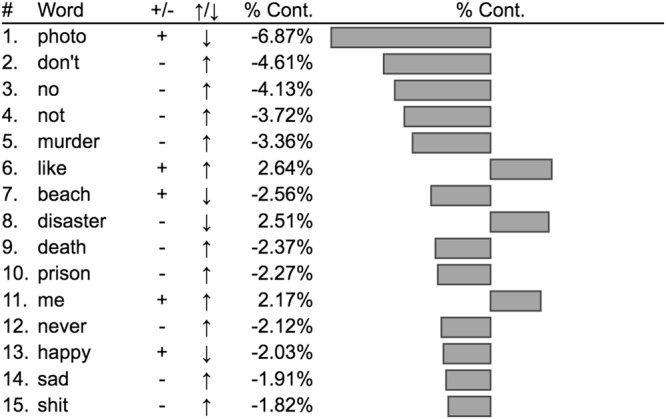
“Word shift graphs We averaged labMT happiness scores across observations in each class, after the removal of common neutral words and retweeted promotional material (38) , .”
BackgroundMethodSelf-citationDiscovering Shifts to Suicidal Ideation from Mental Health Content in Social Media
De Choudhury, M., Kiciman, E., Dredze, M., Coppersmith, G., & Kumar, M. (2016) · Proceedings of the 2016 CHI Conference on Human Factors in Computing Systems · doi:10.1145/2858036.2858207 · Cited by 683 · cited 1×
“In addition to physical ailments, predictive screening methods have successfully identified markers in social media data for a number of mental health issues, including addiction (6), depression (712), PostTraumatic Stress Disorder (PTSD) (13,14), and suicidal ideation (15).”
BackgroundBrief screening instrument for post-traumatic stress disorder
Brewin, C. R., Rose, S., Andrews, B., Green, J., Tata, P., McEvedy, C., Turner, S., & Foa, E. B. (2002) · British Journal of Psychiatry · doi:10.1192/bjp.181.2.158 · Cited by 623 · cited 2×
“The Trauma Screening Questionnaire (TSQ) was used to screen for PTSD (31).”
BackgroundMethod
Research works printed but not linked: 1
- Park, M., Cha, C. & Cha, M. Depressive moods of users portrayed in Twitter. In Proceedings of the ACM SIGKDD Workshop on healthcare informatics (HI-KDD) (pp. 1–8) (2012).
Cited by
Social Media and Mental Health: Benefits, Risks, and Opportunities for Research and Practice
Naslund, J. A., Bondre, A., Torous, J., & Aschbrenner, K. A. (2020) · Journal of Technology in Behavioral Science · doi:10.1007/s41347-020-00134-x · Cited by 1,194
Detecting depression and mental illness on social media: an integrative review
Guntuku, S. C., Yaden, D. B., Kern, M. L., Ungar, L. H., & Eichstaedt, J. C. (2017) · Current Opinion in Behavioral Sciences · doi:10.1016/j.cobeha.2017.07.005 · Cited by 722
“[11] predicted user depression and posttraumatic stress-disorder (PTSD) status from text and Twitter meta-data that preceded a reported first episode (see Figure 2 for examples of meta-data) with relatively high Areas under the Receiver Operating Characteristic (ROC) curve (AUCs) of .”
BackgroundFacebook language predicts depression in medical records
Eichstaedt, J. C., Smith, R. J., Merchant, R. M., Ungar, L. H., Crutchley, P., Preoţiuc-Pietro, D., Asch, D. A., & Schwartz, H. A. (2018) · Proceedings of the National Academy of Sciences · doi:10.1073/pnas.1802331115 · Cited by 643
“The fact that language content captures the depressionrelated variance in the other feature groups is consistent with what has been seen in previous work (6, 7, 18).”
BackgroundResultInfluentialMethods in predictive techniques for mental health status on social media: a critical review
Chancellor, S., & De Choudhury, M. (2020) · npj Digital Medicine · doi:10.1038/s41746-020-0233-7 · Cited by 557
Instagram photos reveal predictive markers of depression
Reece, A. G., & Danforth, C. M. (2017) · EPJ Data Science · doi:10.1140/epjds/s13688-017-0110-z · Cited by 519
Self-citationDetection of Depression-Related Posts in Reddit Social Media Forum
Tadesse, M. M., Lin, H., Xu, B., & Yang, L. (2019) · IEEE Access · doi:10.1109/access.2019.2909180 · Cited by 463
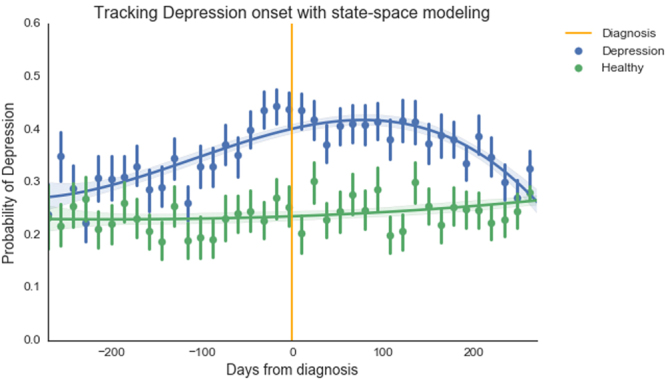
“[22] found out that the first stage of depression may be detectable from Twitter data several months prior to its diagnosis with 0.”
BackgroundPredicting Anxiety, Depression and Stress in Modern Life using Machine Learning Algorithms
Priya, A., Garg, S., & Tigga, N. P. (2020) · Procedia Computer Science · doi:10.1016/j.procs.2020.03.442 · Cited by 458
Predicting Infectious Disease Using Deep Learning and Big Data
Chae, S., Kwon, S., & Lee, D. (2018) · International Journal of Environmental Research and Public Health · doi:10.3390/ijerph15081596 · Cited by 322
A Review of Machine Learning and Deep Learning Approaches on Mental Health Diagnosis
Iyortsuun, N. K., Kim, S.-H., Jhon, M., Yang, H.-J., & Pant, S. (2023) · Healthcare · doi:10.3390/healthcare11030285 · Cited by 276
“[56] utilized textual data from 204 individual Twitter users and extracted 279,951 tweets carrying signs of depression to build a supervised learning model with different classifiers.”
BackgroundMethodMental Health Prediction Using Machine Learning: Taxonomy, Applications, and Challenges
Chung, J., & Teo, J. (2022) · Applied Computational Intelligence and Soft Computing · doi:10.1155/2022/9970363 · Cited by 216
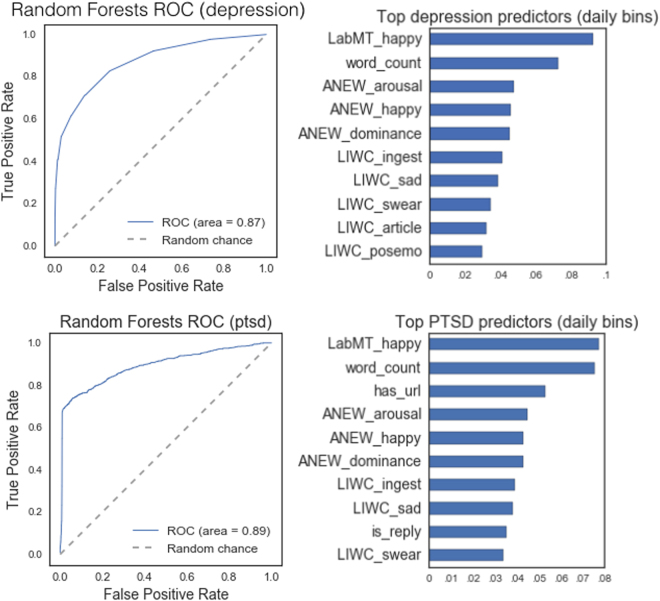
“…Accuracy: 96.36% Wu et al., 2016 [40] Bipolar disorder (i) 21 subjects of bipolar disorder (ii) 21 healthy controls LASSO Accuracy: 71%AUC: 0.714 Reece et al., 2017 [41] PTSD (i) 63 PTSD (ii) 111 healthy controls Random forest AUC: 0.89 )ere are two categories for detecting the PTSD…”
BackgroundMethodInfluentialALSAGRI, H. S., & YKHLEF, M. (2020) · IEICE Transactions on Information and Systems · doi:10.1587/transinf.2020edp7023 · Cited by 192
Chancellor, S., Baumer, E. P. S., & De Choudhury, M. (2019) · Proceedings of the ACM on Human-Computer Interaction · doi:10.1145/3359249 · Cited by 172
“who consistently referred to humans with Scientific and PersonCentered discourse [141].”
BackgroundInfluentialSquires, M., Tao, X., Elangovan, S., Gururajan, R., Zhou, X., Acharya, U. R., & Li, Y. (2023) · Brain Informatics · doi:10.1186/s40708-023-00188-6 · Cited by 224
“Reece et al. [31] used a random forest classifier to detect depression indicators in a Twitter corpus.”
BackgroundMethodInfluentialUsing Social Media for Mental Health Surveillance: A Review
Skaik, R., & Inkpen, D. (2021) · ACM Computing Surveys · doi:10.1145/3422824 · Cited by 143
“…et al. [2018]; Burnap et al. [2017]; De Choudhury et al. [2017a]; Colombo et al. [2016]; Coppersmith et al. [2015b]; Doan et al. [2017]; Huang et al. [2014]; Karmen et al. [2015]; Kavuluru et al. [2016]; Kumar et al. [2015]; Mowery et al. [2017a]; Nguyen et al. [2014, 2017b]; Reece et al. [2017]”
BackgroundHasib, K. M., Islam, M. R., Sakib, S., Akbar, M. A., Razzak, I., & Alam, M. S. (2023) · IEEE Transactions on Computational Social Systems · doi:10.1109/tcss.2023.3263128 · Cited by 175
Tejaswini, V., Babu, K. S., & Sahoo, B. (2022) · ACM Transactions on Asian and Low-Resource Language Information Processing · doi:10.1145/3569580 · Cited by 176
“According to Reece et al. [21], there is a 0.87AUC chance that depression can be detected early from Twitter data.”
Survey on AI-Based Multimodal Methods for Emotion Detection
Marechal, C., Mikołajewski, D., Tyburek, K., Prokopowicz, P., Bougueroua, L., Ancourt, C., & Węgrzyn-Wolska, K. (2019) · Lecture Notes in Computer Science · doi:10.1007/978-3-030-16272-6_11 · Cited by 137
Identifying substance use risk based on deep neural networks and Instagram social media data
Hassanpour, S., Tomita, N., DeLise, T., Crosier, B., & Marsch, L. A. (2019) · Neuropsychopharmacology · doi:10.1038/s41386-018-0247-x · Cited by 125
Individuals with depression express more distorted thinking on social media
Bathina, K. C., ten Thij, M., Lorenzo‐Luaces, L., Rutter, L. A., & Bollen, J. (2021) · Nature Human Behaviour · doi:10.1038/s41562-021-01050-7 · Cited by 174
Ensemble Hybrid Learning Methods for Automated Depression Detection
Ansari, L., Ji, S., Chen, Q., & Cambria, E. (2022) · IEEE Transactions on Computational Social Systems · doi:10.1109/tcss.2022.3154442 · Cited by 158
“Several Social Network Sites (SNS) such as Reddit, Twitter, Facebook, and Weibo have been utilized for research about depression and other mental state disorders such as postpartum depression [11] and post-traumatic stress disorder (PTSD) [12].”
MethodIdentifying Depression on Reddit: The Effect of Training Data
Pirina, I., & Çöltekin, Ç. (2018) · Proceedings of the 2018 EMNLP Workshop SMM4H: The 3rd Social Media Mining for Health Applications Workshop & Shared Task · doi:10.18653/v1/w18-5903 · Cited by 115
“ing results for detecting depression from the writing samples, particularly from social media texts (Ramirez-Esparza et al., 2008; Coppersmith et al., 2015; Reece et al., 2017; Lynn et al., 2018).”
BackgroundAnxious Depression Prediction in Real-time Social DataPreprint
Kumar, A., Sharma, A., & Arora, A. (2019) · SSRN Electronic Journal · doi:10.2139/ssrn.3383359 · Cited by 135
Sensing Technologies for Monitoring Serious Mental Illnesses
Abdullah, S., & Choudhury, T. (2018) · IEEE MultiMedia · doi:10.1109/mmul.2018.011921236 · Cited by 118
Gao, J. G., Zhang, Y., & Zhou, T. (2019) · Physics Reports · doi:10.1016/j.physrep.2019.05.002 · Cited by 138
“[671] predicted depression and PTSD users (see Figure 42) based on depression histories and Twitter behaviors of 204 individuals.”
BackgroundSocial Media Use and Mental Health: A Global Analysis
Ulvi, O., Karamehic-Muratovic, A., Baghbanzadeh, M., Bashir, A., Smith, J., & Haque, U. (2022) · Epidemiologia · doi:10.3390/epidemiologia3010002 · Cited by 111
“(2017) built models to predict the emergence of depression and PTSD by using learning algorithms analyzing the linguistic patterns in Tweets of the sample months before a clinical diagnosis of depression [48].”
BackgroundMethodDetection of Suicidal Ideation on Social Media: Multimodal, Relational, and Behavioral Analysis
Ramírez‐Cifuentes, D., Freire, A., Baeza-Yates, R. A., Puntí, J., Bravo, P. M., Velazquez, D. A., Gonfaus, J. M., & Gonzàlez, J. (2020) · Journal of Medical Internet Research · doi:10.2196/17758 · Cited by 154
“State-of-the-art approaches for the detection of mental disorders in social media involve the use of machine learning techniques mainly based on textual features extracted from the posts [8-11].”
BackgroundBirnbaum, M. L., Ernala, S. K., Rizvi, A. F., Arenare, E., R. Van Meter, A., De Choudhury, M., & Kane, J. M. (2019) · npj Schizophrenia · doi:10.1038/s41537-019-0085-9 · Cited by 109
Ernala, S. K., Birnbaum, M. L., Candan, K. A., Rizvi, A. F., Sterling, W. A., Kane, J. M., & De Choudhury, M. (2019) · Proceedings of the 2019 CHI Conference on Human Factors in Computing Systems · doi:10.1145/3290605.3300364 · Cited by 106
Detecting Signs of Depression in Tweets in Spanish: Behavioral and Linguistic Analysis
Leis, Á., Ronzano, F., Mayer, M. Á., Furlong, L. I., & Sanz, F. (2019) · Journal of Medical Internet Research · doi:10.2196/14199 · Cited by 136
“Additional research might be carried out to examine specific depression types and determine if there are social media features that can contribute to classifying users or tweets to the different diagnosis of depression [69].”
Mao, K., Zhang, W., Wang, D. B., Li, A., Jiao, R., Zhu, Y., Wu, B., Zheng, T., Qian, L., Lyu, W., et al. (2023) · IEEE Transactions on Affective Computing · doi:10.1109/taffc.2022.3154332 · Cited by 98
“However, most depressed people do not have access to qualified psychological treatment due to economic conditions (low-/mid-income population) or living constraints (in rural regions) [25].”
BackgroundMohamed, E. S., Naqishbandi, T. A., Bukhari, S. A. C., Rauf, I., Sawrikar, V., & Hussain, A. (2023) · Healthcare Analytics · doi:10.1016/j.health.2023.100185 · Cited by 148
Gooding, P., & Kariotis, T. (2021) · JMIR Mental Health · doi:10.2196/24668 · Cited by 100
“In terms of explicit reference to ethics, 10 studies included a specific section on the ethical issues raised by their work [64,73,80,87,92,98,99,105,163,187] and 10 others included a broad re fe rence to key e th ica l i s sues [64,70,122,124,126,133,140,152,184].”
BackgroundThe use of machine learning techniques in trauma-related disorders: a systematic review
Ramos-Lima, L. F., Waikamp, V., Antonelli-Salgado, T., Passos, I. C., & Freitas, L. H. M. (2020) · Journal of Psychiatric Research · doi:10.1016/j.jpsychires.2019.12.001 · Cited by 98
Ricard, B. J., Marsch, L. A., Crosier, B., & Hassanpour, S. (2018) · Journal of Medical Internet Research · doi:10.2196/11817 · Cited by 95
“In previous work on predicting MDD based on user-generated data, a random forest model trained on user-generated Twitter data showed promising results for predicting depression [14].”
InfluentialYang, K., Zhang, T., & Ananiadou, S. (2022) · Information Processing & Management · doi:10.1016/j.ipm.2022.102961 · Cited by 116
Role of Emotion in Excessive Use of Twitter During COVID-19 Imposed Lockdown in India
Arora, A., Chakraborty, P., Bhatia, M. P. S., & Mittal, P. (2020) · Journal of Technology in Behavioral Science · doi:10.1007/s41347-020-00174-3 · Cited by 106
Smartphones and the Neuroscience of Mental Health
Gillan, C. M., & Rutledge, R. B. (2021) · Annual Review of Neuroscience · doi:10.1146/annurev-neuro-101220-014053 · Cited by 90
“Language derived from Twitter posts, for example, has been shown to closely mirror that from other more traditional sources in terms of its ability to track depression status (De Choudhury et al. 2013, Reece et al. 2017).”
ResultDetecting the magnitude of depression in Twitter users using sentiment analysis
Stephen, J. J., & Prabu, P. (2019) · International Journal of Electrical and Computer Engineering (IJECE) · doi:10.11591/ijece.v9i4.pp3247-3255 · Cited by 81
“[2] proposed an approach for analyzing the sentiments from the comments posted on social media using a Lexicon based approach.”
BackgroundTerra, M., Baklola, M. I., Ali, S. A. A., & El-Bastawisy, K. (2023) · The Egyptian Journal of Neurology Psychiatry and Neurosurgery · doi:10.1186/s41983-023-00681-z · Cited by 112
Laacke, S., Mueller, R., Schomerus, G., & Salloch, S. (2021) · The American Journal of Bioethics · doi:10.1080/15265161.2020.1863515 · Cited by 74
“Using additional variables, such as average word count per tweet and happiness of tweet language, ML classifiers were trained (Reece et al. 2017).”
BackgroundMethodResultInfluentialExtracting health-related causality from twitter messages using natural language processing
Doan, S., Yang, E. W., Tilak, S. S., Li, P. W., Zisook, D. S., & Torii, M. (2019) · BMC Medical Informatics and Decision Making · doi:10.1186/s12911-019-0785-0 · Cited by 73
Real-world data and the patient perspective: the PROmise of social media?
McDonald, L., Malcolm, B., Ramagopalan, S. V., & Syrad, H. (2019) · BMC Medicine · doi:10.1186/s12916-018-1247-8 · Cited by 73
“Other studies have shown similar feasibility for detecting depression using only data from Twitter [40].”
BackgroundPredicting Depression Symptoms in an Arabic Psychological Forum
Alghamdi, N. S., Mahmoud, H. A. H., Abraham, A., Alanazi, S. A., & García‐Hernández, L. (2020) · IEEE Access · doi:10.1109/access.2020.2981834 · Cited by 94
“Reference [26] conducted a study on the prediction of depression and post-traumatic stress disorder (PTSD) status from tweets.”
BackgroundMethodMining Social Media Data for Biomedical Signals and Health-Related Behavior
Correia, R. B., Wood, I. B., Bollen, J., & Rocha, L. M. (2020) · Annual Review of Biomedical Data Science · doi:10.1146/annurev-biodatasci-030320-040844 · Cited by 84
Kim, J., Uddin, Z. A., Lee, Y. L., Nasri, F., Gill, H., Subramanieapillai, M., Lee, R., Udovica, A., Phan, L., Lui, L. M. W., et al. (2021) · Journal of Affective Disorders · doi:10.1016/j.jad.2020.08.091 · Cited by 80
Cai, Y., Wang, H., Ye, H., Jin, Y., & Gao, W. (2023) · Expert Systems with Applications · doi:10.1016/j.eswa.2023.119538 · Cited by 90
Plastic Surgery and Social Media: Examining Perceptions
Chopan, M., Sayadi, L. R., Clark, E. M., & Maguire, K. (2019) · Plastic & Reconstructive Surgery · doi:10.1097/prs.0000000000005445 · Cited by 71
Hinduja, S., Afrin, M., Mistry, S., & Krishna, A. (2022) · International Journal of Information Management Data Insights · doi:10.1016/j.jjimei.2022.100113 · Cited by 91
Artificial intelligence-assisted psychosis risk screening in adolescents: Practices and challenges
Cao, X.-J., & Liu, X.-Q. (2022) · World Journal of Psychiatry · doi:10.5498/wjp.v12.i10.1287 · Cited by 60
Detecting presence of PTSD using sentiment analysis from text data
Sawalha, J., Yousefnezhad, M., Shah, Z., Brown, M. R. G., Greenshaw, A. J., & Greiner, R. (2022) · Frontiers in Psychiatry · doi:10.3389/fpsyt.2021.811392 · Cited by 58
Depression detection for twitter users using sentiment analysis in English and Arabic tweets
Helmy, A., Nassar, R., & Ramdan, N. (2023) · Artificial Intelligence in Medicine · doi:10.1016/j.artmed.2023.102716 · Cited by 76
Richter, T., Fishbain, B., Richter-Levin, G., & Okon-Singer, H. (2021) · Journal of Personalized Medicine · doi:10.3390/jpm11100957 · Cited by 52
“The feature that contributed most to the analysis was an increase in the use of negative words among the depressed group, and the second highest contributing feature was a decrease in positive language in the depressed group [50].”
BackgroundScreening For Depression With Retrospectively Harvested Private Versus Public Text
Tlachac, M., & Rundensteiner, E. A. (2020) · IEEE Journal of Biomedical and Health Informatics · doi:10.1109/jbhi.2020.2983035 · Cited by 59
“Studies leveraging tweets implement a variety of machine learning models, including support vector classifiers (SVC) [10]–[12], regressions [11], [13], random forests (RF) [14], Naive Bayes classifiers [11], and neural networks [15].”
BackgroundMethodInfluentialSmall but Mighty: Affective Micropatterns for Quantifying Mental Health from Social Media Language
Loveys, K., Crutchley, P., Wyatt, E., & Coppersmith, G. (2017) · Proceedings of the Fourth Workshop on Computational Linguistics and Clinical Psychology –- From Linguistic Signal to Clinical Reality · doi:10.18653/v1/w17-3110 · Cited by 49
“Social media is, thus, one data source through which the early signs of mental illness and suicide can be detected (Reece et al., 2016; Coppersmith et al., 2016; Bryan et al., in press).”
BackgroundOphir, Y., Asterhan, C. S. C., & Schwarz, B. B. (2018) · Computers in Human Behavior · doi:10.1016/j.chb.2018.09.025 · Cited by 66
“non-explicit digital footprints as follows: We examine Facebook activity rather than public Twitter posts, which is the focus of most existing work in this field (e.g., Coppersmith, Dredze, Harman, Hollingshead, & Mitchell, 2015; Reece et al., 2016; Tsugawa et al., 2015).”
BackgroundHybrid machine learning models to detect signs of depression
Khan, S., & Alqahtani, S. (2023) · Multimedia Tools and Applications · doi:10.1007/s11042-023-16221-z · Cited by 50
“In 2017, Hassan and Hussain et al. [14] developed a computing model that uses a supervised learning algorithm to identify signs of depression in users with post-traumatic stress disorders.”
Cross-cultural differences in language markers of depression online
Loveys, K., Torrez, J. E., Fine, A. B., Moriarty, G., & Coppersmith, G. (2018) · Workshop on Computational Linguistics and Clinical Psychology (CLPsych) · doi:10.18653/v1/w18-0608 · Cited by 77
“…to discuss leisure (Coppersmith et al., 2015), self-care or exercise (Resnik et al., 2015b), are less likely to provide evidence of engagement in social activities (Resnik et al., 2015a), and are less likely to exhibit positivity in their online language (Resnik et al., 2015a; Reece et al., 2017).”
BackgroundQuantifying Feature Importance for Detecting Depression using Random Forest
AlSagri, H. S., & Ykhlef, M. (2020) · International Journal of Advanced Computer Science and Applications · doi:10.14569/ijacsa.2020.0110577 · Cited by 64
“[9] found that the computational analysis of Twitter data can be used to detect major changes in individual psychology.”
BackgroundUsing language in social media posts to study the network dynamics of depression longitudinally
Kelley, S., & Gillan, C. M. (2022) · Nature Communications · doi:10.1038/s41467-022-28513-3 · Cited by 75
Birnbaum, M. L., Norel, R., Meter, A. V., Ali, A. F., Arenare, E., Eyigöz, E., Agurto, C., Germano, N., Kane, J. M., & Cecchi, G. (2020) · Schizophrenia · doi:10.1038/s41537-020-00125-0 · Cited by 54
Web-browsing patterns reflect and shape mood and mental health
Kelly, C., & Sharot, T. (2024) · Nature Human Behaviour · doi:10.1038/s41562-024-02065-6 · Cited by 65
“Knowledge of the relationship between online information-seeking patterns and mental health can inform the development of tools that could complement existing interventions, such as screen time awareness tools 18,19 , and digital phenotyping methods 20–26 .”
Methodologies for Monitoring Mental Health on Twitter: Systematic Review
Cara, N. H. D., Maggio, V., Davis, O. S. P., & Haworth, C. M. A. (2023) · Journal of Medical Internet Research · doi:10.2196/42734 · Cited by 58
“For instance, it is known that personal pronouns are a useful feature in the prediction of depression [82,92].”
Nanath, K., Balasubramanian, S., Shukla, V., Islam, N., & Kaitheri, S. (2022) · Technological Forecasting and Social Change · doi:10.1016/j.techfore.2022.121560 · Cited by 49
“The first approach combines social media data with questionnaires, where individuals self-report mental illness, and the analysis adds social media posts (De Choudhury et al., 2013; Reece et al., 2017).”
Son, Y., Clouston, S. A. P., Kotov, R., Eichstaedt, J. C., Bromet, E. J., Luft, B. J., & Schwartz, H. A. (2023) · Psychological Medicine · doi:10.1017/s0033291721002294 · Cited by 42
“…setting, past work has shown that AI-based language techniques can distinguish Twitter users that have publicly disclosed a diagnosis of the condition from random selections of users (e.g. Coppersmith, Dredze, & Harman, 2014; Preotiuc-Pietro, Sap, Schwartz, & Ungar, 2015; Reece et al. 2017).”
O’Dea, B., Boonstra, T. W., Larsen, M. E., Nguyen, T., Venkatesh, S., & Christensen, H. M. (2021) · PLoS ONE · doi:10.1371/journal.pone.0251787 · Cited by 58
“Using cross-validation methods, Reece et al [14] found that depression among Twitter users was predicted by differences in word count, references to ingestion, sadness, swear words, article words, and positive emotion.”
MethodResultInfluentialSocial network structure is predictive of health and wellness
Lin, S., Faust, L., Robles-Granda, P., Kajdanowicz, T., & Chawla, N. V. (2019) · PLOS ONE · doi:10.1371/journal.pone.0217264 · Cited by 41
“Questions Level #Participants (# Male, # Female) Stress Felt nervous and stressed 1 14 (12,2) 2 95 (58,37) 3 134 (52,82) 4 82 (24,58) Happiness Would you say that you are very happy 1 40 (14,26) 2 84 (38,46) 3 144 (64,80) 4 57 (30,27) Positive attitude I take a positive attitude toward myself 1 2 (0,2) 2 23 (8,15) 3 6…”
Ríssola, E. A., Aliannejadi, M., & Crestani, F. (2022) · Information Processing & Management · doi:10.1016/j.ipm.2022.102890 · Cited by 50
Leveraging Domain Knowledge to Improve Depression Detection on Chinese Social Media
Guo, Z., Ding, N., Zhai, M., Zhang, Z., & Li, Z. (2023) · IEEE Transactions on Computational Social Systems · doi:10.1109/tcss.2023.3267183 · Cited by 44
“Reece et al. [21] collected Twitter posts of 204 users, established an RF model to distinguish depressed users by extracting sentiment and language style features of the posts.”
MethodHollingshead, K., Ireland, M. E., & Loveys, K. (2017) · doi:10.18653/v1/w17-31 · Cited by 44
Predicting eating disorders from Internet activity
Sadeh‐Sharvit, S., Fitzsimmons‐Craft, E. E., Taylor, C. B., & Yom‐Tov, E. (2020) · International Journal of Eating Disorders · doi:10.1002/eat.23338 · Cited by 39
“Another study demonstrated that depression and posttraumatic stress disorder can be identified in Twitter users, based on the content of their posts (Reece et al., 2017).”
BackgroundKołodziej, J., & González–Vélez, H. (2019) · Lecture notes in computer science · doi:10.1007/978-3-030-16272-6 · Cited by 40
Findings of the Shared Task on Detecting Signs of Depression from Social Media
Sampath, K., Thenmozhi, D., Chakravarthi, B. R., & Jerin Mahibha, C. (2022) · Workshop on Language Technology for Equality, Diversity, Inclusion (LT-EDI) · doi:10.18653/v1/2022.ltedi-1.51 · Cited by 38
“In addition to this, many custom data sets (Al Hanai et al., 2018; Morales and Levitan, 2016), arose that aims to detect mental illness from various social media platforms like Twitter (Reece et al., 2017; Tsug-awa et al., 2015; Deshpande and Rao, 2017; Lin et al., 2020), Facebook (Eichstaedt et al., 2018), Reddit (Wo…”
BackgroundDepression Detection Using Digital Traces on Social Media: A Knowledge-aware Deep Learning Approach
Zhang, W., Xie, J., Zhang, Z., & Liu, X. (2024) · Journal of Management Information Systems · doi:10.1080/07421222.2024.2340822 · Cited by 74
“…± 0.003 0.685 ± 0.002 [65] 0.723 ± 0.003 0.760 ± 0.002 0.820 ± 0.001 0.720 ± 0.001 [11] 0.716 ± 0.029 0.722 ± 0.026 0.730 ± 0.022 0.716 ± 0.029 [67] 0.729 ± 0.012 0.717 ± 0.011 0.708 ± 0.013 0.729 ± 0.011 [13] 0.623 ± 0.006 0.573 ± 0.005 0.570 ± 0.002 0.622 ± 0.005 AUC, area under the ROC…”
MethodInfluentialBot stamina: examining the influence and staying power of bots in online social networks
Schuchard, R., Crooks, A. T., Stefanidis, A., & Croitoru, A. (2019) · Applied Network Science · doi:10.1007/s41109-019-0164-x · Cited by 45
Sampath, K., & Thenmozhi, D. (2022) · IFIP advances in information and communication technology · doi:10.1007/978-3-031-16364-7_11 · Cited by 65
Schick, A., Rauschenberg, C., Ader, L., Daemen, M., Wieland, L. M., Paetzold, I., Postma, M. R., Schulte‐Strathaus, J. C. C., & Reininghaus, U. (2022) · Psychological Medicine · doi:10.1017/s0033291722003336 · Cited by 51
Future of machine learning in paediatrics
Clarke, S. L. N., Parmesar, K., Saleem, M. A., & Ramanan, A. V. (2021) · Archives of Disease in Childhood · doi:10.1136/archdischild-2020-321023 · Cited by 40
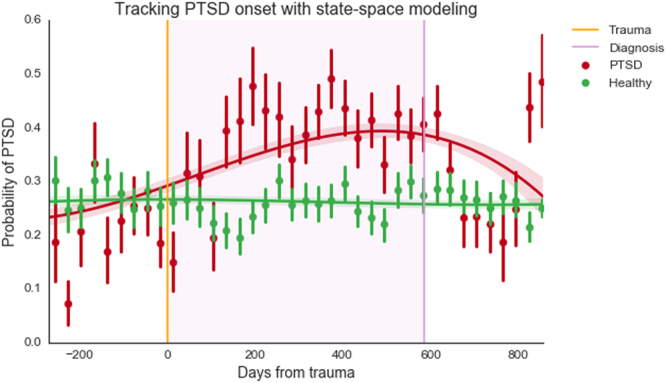
“25 Interestingly, the model detected an increased probability of PTSD within 6 months of a traumatic event, versus an average of 19 months for a formal diagnosis within the adult cohort.”
BackgroundSentimental wildfire: a social-physics machine learning model for wildfire nowcasting
Lever, J., & Arcucci, R. (2022) · Journal of Computational Social Science · doi:10.1007/s42001-022-00174-8 · Cited by 34
“Social Media has already been implemented to detect and predict aspects of influenza spread [13], social unrest [14, 20], polling and election election outcomes [21], mental illness [22] and addiction [23], as well as general natural disasters [11, 24] and finally wildfires [8, 25].”
Farruque, N., Goebel, R. G., Sivapalan, S., & Zai͏̈ane, O. R. (2024) · Language Resources and Evaluation · doi:10.1007/s10579-024-09720-4 · Cited by 48
“…in the language used in social media posts (Coppersmith et al., 2015; De Choud-hury & De, 2014; De Choudhury et al., 2013; Losada & Crestani, 2016; Reece et al., 2017; Rude et al., 2004; Seabrook et al., 2018; Shen et al., 2017; Trotzek et al., 2018; Yadav et al., 2020; Yazdavar et al., 2017).”
Birnbaum, M. L., Kulkarni, P., Meter, A. V., Chen, V., Rizvi, A. F., Arenare, E., Choudhury, M. D., & Kane, J. M. (2020) · JMIR Mental Health · doi:10.2196/19348 · Cited by 33
“Similar methods have been employed successfully in psychiatry using digital data extracted from social media sites [26-33].”
MethodDeep Learning and Holt-Trend Algorithms for Predicting Covid-19 Pandemic
Aldhyani, T. H. H., Alrasheed, M., Al-Adhaileh, M. H., Alqarni, A. A., Alzahrani, M. Y., & Alahmadi, A. H. (2021) · Computers, materials & continua/Computers, materials & continua (Print) · doi:10.32604/cmc.2021.014498 · Cited by 31
Hobbs, K., Monette, P., Owoyemi, P., Beard, C., Rauch, S. L., Ressler, K. J., & Vahia, I. V. (2019) · Journal of Medical Internet Research · doi:10.2196/13218 · Cited by 26
“They found their computational models could distinguish content from healthy and depressed subjects and demonstrated improved accuracy in correctly diagnosing depression and PTSD as compared with the general performance of practitioners [9].”
Stupinski, A. M., Alshaabi, T., Arnold, M., Adams, J. L., Minot, J. R., Price, M., Dodds, P. S., & Danforth, C. M. (2022) · JMIR Mental Health · doi:10.2196/33685 · Cited by 45
“Previous studies have analyzed the social media content of consenting individuals who have a diagnosed disorder, identifying early markers of depression in Twitter feeds [17,18] and Instagram photographs [19], predicting postpartum depression in Facebook activity [20], and classifying messages from Twitter users self-…”
BackgroundSelf-citationMishra, S., Tripathy, H. K., Thakkar, H. K., Garg, D., Kotecha, K. V., & Pandya, S. (2021) · Frontiers in Public Health · doi:10.3389/fpubh.2021.795007 · Cited by 28
Early Risk Detection of Anorexia on Social Media
Ramírez‐Cifuentes, D., Mayans, M. A., & Freire, A. (2018) · Lecture notes in computer science · doi:10.1007/978-3-030-01437-7_1 · Cited by 35
“Based on the related work done for detecting mental illnesses in online social platforms, the analysed data is obtained either by diagnosing participants with the usage of surveys [14, 26, 30], or by crawling directly the data from public online sources like Reddit, Twitter or Facebook [2,11,24].”
BackgroundNiederkrotenthaler, T., Till, B., & García, D. (2018) · Journal of Affective Disorders · doi:10.1016/j.jad.2018.11.071 · Cited by 31
Kolliakou, A., Bakolis, I., Chandran, D., Derczynski, L., Werbeloff, N., Osborn, D., Bontcheva, K., & Stewart, R. J. (2020) · Scientific Reports · doi:10.1038/s41598-020-57835-9 · Cited by 34
Gong, C., Saha, K., & Chancellor, S. (2021) · Proceedings of the ACM on Human-Computer Interaction · doi:10.1145/3476039 · Cited by 34
“In sum, our research supports the use of social media data for modeling stress [39, 77, 78] and to temporally forecast and track behavior [25, 72].”
ResultMachine learning of language use on Twitter reveals weak and non-specific predictions
Kelley, S., Mhaonaigh, C. N., Burke, L., Whelan, R., & Gillan, C. M. (2022) · npj Digital Medicine · doi:10.1038/s41746-022-00576-y · Cited by 39
“For our main analyses we chose a relatively low word count threshold per user to maximise our sample size, including participants with at least 5 days of Tweets 9 .”
BackgroundMethodTao, X., Shannon-Honson, A., Delaney, P., Dann, C. E., Xie, H., Li, Y., & O’Neill, S. (2023) · Computers and Education Artificial Intelligence · doi:10.1016/j.caeai.2022.100116 · Cited by 35
Owen, D. C., Lynham, A. J., Smart, S. E., Pardiñas, A. F., & Camacho-Collados, J. (2024) · Journal of Medical Internet Research · doi:10.2196/59225 · Cited by 41
“In a similar experimental setup for the prediction of depression in Twitter users [43], another traditional ML algorithm, random forests, was deployed using Linguistic Inquiry and Word Count (LIWC) features derived from post text.”
Phiri, D., Makowa, F., Amelia, V. L., Phiri, Y. V. A., Dlamini, L. P., & Chung, M. (2025) · Journal of Medical Internet Research · doi:10.2196/59002 · Cited by 58
Using Twitter Social Media for Depression Detection in the Canadian Population
Skaik, R., & Inkpen, D. Z. (2020) · Artificial Intelligence and Cloud Computing Conference (AICCC) · doi:10.1145/3442536.3442553 · Cited by 39
Unimodal approaches for emotion recognition: A systematic review
Tomar, P. S., Mathur, K., & Suman, U. (2022) · Cognitive Systems Research · doi:10.1016/j.cogsys.2022.10.012 · Cited by 38
Quillivic, R., Gayraud, F., Auxéméry, Y., Vanni, L., Peschanski, D., Eustache, F., Dayan, J., & Mesmoudi, S. (2024) · Scientific Reports · doi:10.1038/s41598-024-61557-7 · Cited by 24
Aldkheel, A., & Zhou, L. (2023) · Journal of Healthcare Informatics Research · doi:10.1007/s41666-023-00152-3 · Cited by 51
“For instance, LIWC has been sued to extract personal pronoun, conjunction, negation, and auxiliary verbs [18, 24, 34, 38, 47, 61].”
InfluentialBarnes, S. J. (2021) · Computers in Human Behavior · doi:10.1016/j.chb.2021.106967 · Cited by 23
“The research uses a combination of text analytics and Hidden Markov Models that has been used in a number of recent studies (Chen et al., 2020; Ng et al., 2020; Reece et al., 2017; Roy & Hasan, 2021; Suh, 2015; Wang et al., 2016).”
MethodLanguage sentiment predicts changes in depressive symptoms
Hur, J. K., Heffner, J., Feng, G. W., Joormann, J., & Rutledge, R. B. (2024) · Proceedings of the National Academy of Sciences · doi:10.1073/pnas.2321321121 · Cited by 49
Review of Advancements in Depression Detection Using Social Media Data
Dalal, S., Jain, S., & Dave, M. (2024) · IEEE Transactions on Computational Social Systems · doi:10.1109/tcss.2024.3448624 · Cited by 35
Automatic gender detection in Twitter profiles for health-related cohort studies
Yang, Y.-C., Al-garadi, M., Love, J., Perrone, J., & Sarker, A. (2021) · medRxiv · doi:10.1093/jamiaopen/ooab042 · Cited by 24
Metadata
- Authors
- Reece, A. G., Reagan, A. J., Lix, K. L. M., Dodds, P. S., Danforth, C. M., & Langer, E. J.
- Affiliations
- Harvard University (US)
- University of Vermont (US)
- Stanford University (US)
- Corresponding author
- Reece, Andrew G.
- Danforth, Christopher M.
- ORCID
- Venue
- Scientific Reports
- Published
- 2017-10-11
- Volume
- 7
- Issue
- 1
- Pages
- 13006-13006
- ISSN
- 2045-2322 (ISSN-L)
- PMC
- PMC5636873
- OpenAlex
- W2512937600
- Semantic Scholar
- 1290aa325025d705edc3b04d244eab2766779755
- Cited by
- 401
- References
- 49
- Citations by year
- 2026: 21 · 2025: 48 · 2024: 44 · 2023: 57 · 2022: 65 · 2021: 68 · 2020: 41 · 2019: 36 · 2018: 15 · 2017: 6
- FWCI
- 38.39
- Type
- journal article
- Language
- en
- Open access
- gold
- doi.org
- Licence
- cc-by
- creativecommons.org/licenses/by/4.0 (tdm)
- creativecommons.org/licenses/by/4.0 (vor)
- Locations
- Scientific Reports (publishedVersion, cc-by)
- PubMed Central (publishedVersion, cc-by)
- PubMed (publishedVersion)
- arXiv (Cornell University) (submittedVersion)
- Digital Access to Scholarship at Harvard (DASH) (Harvard University) (submittedVersion, cc-by)
- ScholarWorks -A service of University of Vermont Libraries (University of Vermont) (submittedVersion, cc-by)
- DOAJ (DOAJ: Directory of Open Access Journals) (submittedVersion)
- arXiv (Cornell University)
- Funders
- National Science Foundation (1447634)
- Harvard University
- Topics
- Social Sciences › Psychology › Social Psychology › Mental Health via Writing
- Physical Sciences › Computer Science › Artificial Intelligence › Emotion and Mood Recognition
- Social Sciences › Psychology › Experimental and Cognitive Psychology › Mental Health Research Topics
- Keywords
- depression, post-traumatic stress disorder, Twitter, social media, early detection, language style, affect, computational psychiatry, early screening
- MeSH terms
- Depression, Humans, Stress Disorders, Post-Traumatic, Disease Progression, Social Media
About these checks
Registry, retraction, Cites and statistics results are computed, not judged, with one exception: a printed reference that no index lists is read once by a model before it counts as a citation error. Claims are extracted by a model and kept only when their quote appears verbatim in the text; each cited source is then checked, with a model’s help, for whether it says what the claim relies on. Those verdicts can be wrong — read the claim’s quote and the cited source before relying on one.
Statistics and arithmetic are recomputed, not judged.
Confidence bands are shown only for fields calibrated on our annotated test set. None is calibrated yet, so no band is shown.
What counts as a claim ›How we measure confidence ›How we check this ›
Are you an author, or do you see a problem with this page? Request a review
Data sources
Bibliographic data: Semantic Scholar, OpenAlex, Crossref.
Contains information from the Semantic Scholar Academic Graph Datasets, made available under the ODC Attribution License (ODC-BY 1.0).
Semantic Scholar’s data is described in: Kinney, R., et al. (2023). The Semantic Scholar Open Data Platform. arXiv:2301.10140.
