

Forecasting the onset and course of mental illness with Twitter data
Open accessThe DOI matches its Crossref record; 50 of the 50 references it cites were found in a registry or an index.
Abstract
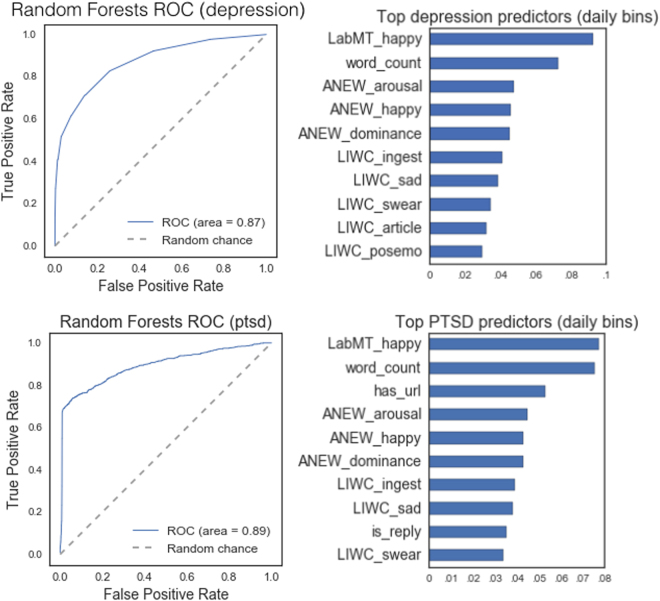
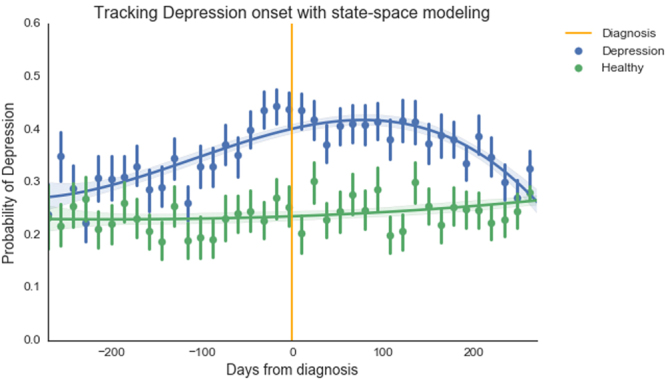
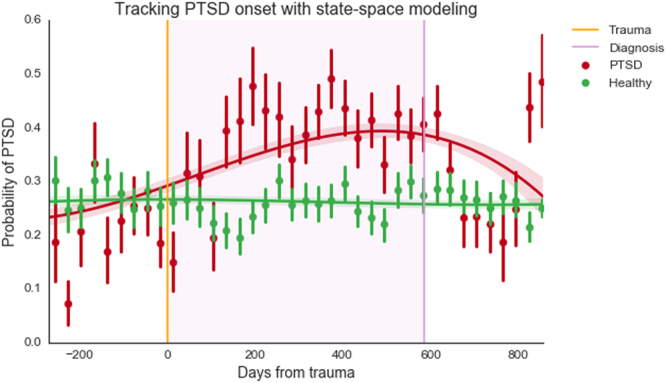
We developed computational models to predict the emergence of depression and Post-Traumatic Stress Disorder in Twitter users. Twitter data and details of depression history were collected from 204 individuals (105 depressed, 99 healthy). We extracted predictive features measuring affect, linguistic style, and context from participant tweets (N = 279,951) and built models using these features with supervised learning algorithms. Resulting models successfully discriminated between depressed and healthy content, and compared favorably to general practitioners’ average success rates in diagnosing depression, albeit in a separate population. Results held even when the analysis was restricted to content posted before first depression diagnosis. State-space temporal analysis suggests that onset of depression may be detectable from Twitter data several months prior to diagnosis. Predictive results were replicated with a separate sample of individuals diagnosed with PTSD (N users = 174, N tweets = 243,775). A state-space time series model revealed indicators of PTSD almost immediately post-trauma, often many months prior to clinical diagnosis. These methods suggest a data-driven, predictive approach for early screening and detection of mental illness.
Overview
The claims and statistics of this paper haven’t been checked yet.
Free: it reads the open-access text and checks the first 5 claims that cite a source we can check. Create a free account to check every claim.
Integrity signals
Registry
Cites
Statistics
Figures
Verification
Claims the paper makes
The claims and statistics of this paper haven’t been checked yet.
Free: it reads the open-access text and checks the first 5 claims that cite a source we can check. Create a free account to check every claim.
Claims other papers make about this one
Each is checked against this paper’s own text: does it say what the citing paper says it does?
The source backs part of the claim, not all of it — or backs it for a different population, condition or comparison.
In the citing paper
“For PTSD in particular, although studies have yet to validate models in a clinical setting, past work has shown that AI-based language techniques can distinguish Twitter users that have publicly disclosed a diagnosis of the condition from random selections of users (e.g. Coppersmith, Dredze, & Harman, 2014; Preotiuc-Pietro, Sap, Schwartz, & Ungar, 2015; Reece et al. 2017).”
From World Trade Center responders in their own words: predicting PTSD symptom trajectories with AI-based language analyses of interviews (2023) · cites this paper as Reece et al. 2017
Experimental — accuracy not yet measuredThe cited source says what the claim attributes to it.
In the citing paper
“In Reece et al, 52 the LabMT was the first predictor in the random forest model to detect PTSD on Twitter data.”
From Linguistic markers for identifying post-traumatic stress disorder and associated symptoms: a systematic literature review (2025) · cites this paper as [52]
The cited source says what the claim attributes to it.
In the citing paper
“The first 2 studies leverage social media data and rely on selfreported PTSD diagnoses, which may contribute to their higher AUC values.”
From Linguistic markers for identifying post-traumatic stress disorder and associated symptoms: a systematic literature review (2025) · cites this paper as [52]
The check wasn’t confident either way, so it gives no verdict — never disputed.
In the citing paper
“From the forest plot highlights studies with notably higher AUC scores, particularly Reece et al, 52 Kirinde Gamaarachchige and Inkpen, 84 and Schultebraucks et al. 43”
From Linguistic markers for identifying post-traumatic stress disorder and associated symptoms: a systematic literature review (2025) · cites this paper as [52]
Experimental — accuracy not yet measured
Self-check
Percentages, sums and reported differences re-computed from the paper’s own numbers.
The self-check needs the paper’s full text.
Citations
Cites
The CES-D Scale: A Self-Report Depression Scale for Research in the General Population
Radloff, L. S. (1977) · Applied Psychological Measurement · doi:10.1177/014662167700100306 · Cited by 53,267
The Parable of Google Flu: Traps in Big Data Analysis
Lazer, D., Kennedy, R., King, G., & Vespignani, A. (2014) · Science · doi:10.1126/science.1248506 · Cited by 2,523
Reputation as a sufficient condition for data quality on Amazon Mechanical Turk
Peer, E., Vosgerau, J., & Acquisti, A. (2014) · Behavior Research Methods · doi:10.3758/s13428-013-0434-y · Cited by 1,618 · cited 1×
“MTurk workers who have completed at least 100 tasks, with a minimum 95% approval rating, have been found to provide reliable, valid survey responses (32).”
BackgroundPredicting Depression via Social Media
De Choudhury, M., Gamon, M., Counts, S., & Horvitz, E. (2021) · Proceedings of the International AAAI Conference on Web and Social Media · doi:10.1609/icwsm.v7i1.14432 · Cited by 1,579
Clinical diagnosis of depression in primary care: a meta-analysis
Mitchell, A. J., Vaze, A., & Rao, S. (2009) · The Lancet · doi:10.1016/s0140-6736(09)60879-5 · Cited by 1,251 · cited 6×
“Precision, recall, specificity, negative predictive value, and F1 accuracy scores are reported, and general practitioners’ unassisted diagnostic accuracy rates as reported in Mitchell, Vaze, and Rao28 (MVR) and Taubman-Ben-Ari et al.22 (TBA) are used as informal benchmarks for depression and PTSD, respectively.”
BackgroundInfluentialFerrari, A. J., Somerville, A. J., Baxter, A. J., Norman, R., Patten, S. B., Vos, T., & Whiteford, H. A. (2013) · Psychological Medicine · doi:10.1017/s0033291712001511 · Cited by 1,230 · cited 1×
“Depression has emerged as the leading mental health condition of interest among computational social scientists (712), as it is a relatively common mental disorder (16) and influences a range of behaviors and patterns of communication (17).”
BackgroundLanguage use of depressed and depression-vulnerable college students
Rude, S., Gortner, E.-M., & Pennebaker, J. (2004) · Cognition & Emotion · doi:10.1080/02699930441000030 · Cited by 1,018 · cited 1×
“This trajectory matches closely with average improvement time frames observed in therapeutic programs (45).”
BackgroundTemporal patterns of happiness and information in a global social network: hedonometrics and Twitter
Dodds, P. S., Harris, K. D., Kloumann, I. M., Bliss, C. A., & Danforth, C. M. (2011) · PLoS ONE · doi:10.1371/journal.pone.0026752 · Cited by 809 · cited 2×
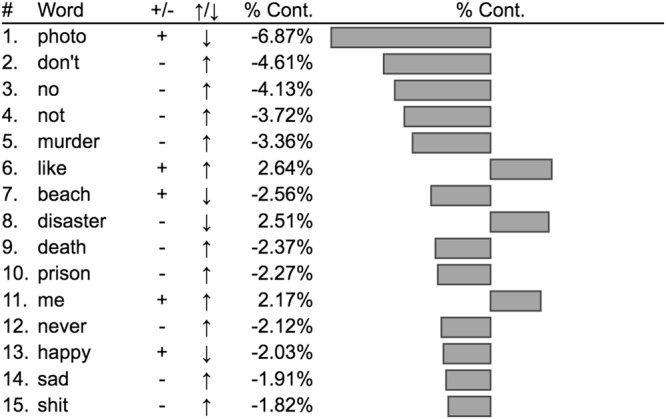
“Word shift graphs We averaged labMT happiness scores across observations in each class, after the removal of common neutral words and retweeted promotional material (38) , .”
BackgroundMethodSelf-citationDiscovering Shifts to Suicidal Ideation from Mental Health Content in Social Media
De Choudhury, M., Kiciman, E., Dredze, M., Coppersmith, G., & Kumar, M. (2016) · Proceedings of the 2016 CHI Conference on Human Factors in Computing Systems · doi:10.1145/2858036.2858207 · Cited by 683 · cited 1×
“In addition to physical ailments, predictive screening methods have successfully identified markers in social media data for a number of mental health issues, including addiction (6), depression (712), PostTraumatic Stress Disorder (PTSD) (13,14), and suicidal ideation (15).”
BackgroundBrief screening instrument for post-traumatic stress disorder
Brewin, C. R., Rose, S., Andrews, B., Green, J., Tata, P., McEvedy, C., Turner, S., & Foa, E. B. (2002) · British Journal of Psychiatry · doi:10.1192/bjp.181.2.158 · Cited by 623 · cited 2×
“The Trauma Screening Questionnaire (TSQ) was used to screen for PTSD (31).”
BackgroundMethod
Research works printed but not linked: 1
- Park, M., Cha, C. & Cha, M. Depressive moods of users portrayed in Twitter. In Proceedings of the ACM SIGKDD Workshop on healthcare informatics (HI-KDD) (pp. 1–8) (2012).
Cited by
Items 301–400 of 402
Estimating Mental Health Using Human-generated Big Data and Machine Learning
Fukazawa, Y. (2022) · The Brain & Neural Networks · doi:10.3902/jnns.29.78 · Cited by 2
Learning Techniques for Depression Detection: A Comparative Studies
Das, A., Debbarama, M. K., & Barik, R. K. (2023) · International Conference on Intelligent Systems, Advanced Computing and Communication (ISACC) · doi:10.1109/isacc56298.2023.10083576 · Cited by 1
“Forecasting the onset and course of mental illness with Twitter data [20] 105 depressed users out of 204 1200 –Random Forest 0.”
BackgroundDiscerning mental illnesses from social media posts using machine and deep learning algorithms
Harish, R., Vaid, A., Byakod, S. S., Kumar, A., & Arya, A. (2023) · AIP conference proceedings · doi:10.1063/5.0143052 · Cited by 1
Ploug, T. (2023) · Philosophy & Technology · doi:10.1007/s13347-023-00652-5 · Cited by 1
Application of Big Data Analytics in Precision Medicine: Lesson for Ethiopia
Woldemariam, M. T., & Alemneh, D. G. (2023) · Journal of Information & Knowledge Management · doi:10.1142/s0219649223500533 · Cited by 2
Dhaker, T., Kumar, A., & Abirami, G. (2023) · International Journal of Scientific Research in Computer Science Engineering and Information Technology · doi:10.32628/cseit2390510 · Cited by 2
Predicting Depression on Twitter with Word Embedding by Pretrained Language Model
Zheqi, S., & Paik, I. (2023) · International Conference on Awareness Science and Technology (iCAST) · doi:10.1109/icast57874.2023.10359279 · Cited by 1
“[ 2] AlSagri and Ykhlef used different machine learning algorithms and feature datasets to define a binary classification problem to identify whether a person is depressed based on his or her tweets and Twitter profile activity.”
BackgroundMethodDepression Detection and Accuracy Analysis Using Various Machine Learning Algorithms on Twitter
Johri, P., Tyagi, A., Sharma, M., & Bhardwaj, D. (2023) · International Conference on Communication, Security and Artificial Intelligence (ICCSAI) · doi:10.1109/iccsai59793.2023.10421313 · Cited by 1
BXCNN: A novel depression detection model
Xi, H., Zhong, H., & Wang, Y. (2024) · Applied and Computational Engineering · doi:10.54254/2755-2721/68/20241448
Kumar, Y., Kaur, I., Odeh, M., Boparai, R. S., & Ijaz, M. F. (2023) · International Engineering Conference on Electrical, Energy, and Artificial Intelligence (EICEEAI) · doi:10.1109/eiceeai60672.2023.10590324 · Cited by 1
Mental Health Harmony: Insights from the Machine Learning Frontier
Nithiyasree, P., Subramani, K., Soorya, S., Arundhathi, T., & Harshitha, V. (2024) · International Conference on Smart Technologies and Systems for Next Generation Computing (ICSTSN) · doi:10.1109/icstsn61422.2024.10671266 · Cited by 1
Exploring Personality and Emotion in Risk Prediction of Depression
Wei, J., & Zhou, J. (2024) · ACIS International Conference on Software Engineering, Artificial Intelligence, Networking and Parallel/Distributed Computing (SNPD) · doi:10.1109/snpd61259.2024.10673965 · Cited by 1
“Our research work was largely inspired by Zanwar [8] and Reece [14].”
MethodSaraswat, A., & Arya, P. P. (2025) · Lecture notes in computer science · doi:10.1007/978-3-031-86193-2_7 · Cited by 1
Lim, C. C. W., Huo, Y., Chiu, V., Tachimori, H., & Leung, J. (2021) · International Electronic Conference on Environmental Research and Public Health (ECERPH) · doi:10.3390/ecerph-3-09018 · Cited by 1
An Ontology-based Sentiment Analysis Model towards Classification of Drug Reviews.
Sridevi, U. K., & Shanthi, P. (2021) · Cited by 1
Prediksi Penyebaran Informasi di Twitter dengan Metode Pembelajaran Mesin dengan Fitur Linimasa
Haryadi, L. S., & Suteja, B. R. (2021) · Jurnal Teknik Informatika dan Sistem Informasi · doi:10.28932/jutisi.v7i1.3324 · Cited by 1
“Aktivitas linimasa telah dimanfaatkan untuk mendeteksi apakah pengguna adalah bot atau asli[17], lalu tingkat depresi seseorang[18], apakah mengandung ujaran kebencian[19] seperti pada Tabel IV.”
BackgroundVICSOM: VIsual Clues from SOcial Media for psychological assessmentPreprint
Dehshibi, M. M., Pons, G., Baiani, B., & Masip, D. (2019) · arXiv (Cornell University) · doi:10.48550/arxiv.1905.06203 · Cited by 3
“Different researchers have used SNS data to plan the path of disease occurrences [5, 39].”
Estimating Anxiety based on individual level engagements on YouTube & Google Search Engine.Preprint
Zaman, A., Zhang, B., Silenzio, V., Hoque, M. E., & Kautz, H. (2020) · arXiv (Cornell University) · Cited by 2
Weger, R., Lossio-Ventura, J. A., Rose-McCandlish, M., Shaw, J. S., Sinclair, S., Pereira, F., Chung, J., & Atlas, L. Y. (2022) · doi:10.31234/osf.io/xczdg · Cited by 1
The Expression of Happiness in Social Media of Individuals Diagnosed With DepressionPreprint
Bucur, A.-M., Chulvi, B., Cosma, A., & Rosso, P. (2023) · doi:10.36227/techrxiv.23264507.v1 · Cited by 1
Quillivic, R., Gayraud, F., Auxéméry, Y., Vanni, L., Peschanski, D., Eustache, F., Dayan, J., & Mesmoudi, S. (2023) · Research Square · doi:10.21203/rs.3.rs-3747882/v1 · Cited by 1
Huang, Y., Pan, X., Su, L., Sun, Y., Mo, Y., & Ma, Q. (2019) · Social Influence · doi:10.1080/15534510.2019.1695658
“information popularity is influenced by celebrity involvement, users’ interest and so on (Lasswell, 1948; Reece et al., 2017).”
BackgroundDer Mensch – ein unterentwickelter Computer?
Gründer, G. (2020) · Springer eBooks · doi:10.1007/978-3-662-61713-7_4
Machine Learning Approaches for Psychological Research Review
Jabłońska, M. R., & Pólkowski, Z. (2021) · Lecture notes on data engineering and communications technologies · doi:10.1007/978-981-15-8335-3_69
Sisti, D. A., & Smith, W. (2021) · Oxford University Press eBooks · doi:10.1093/oxfordhb/9780190947750.013.35
Farruque, N., Goebel, R. G., & Zai͏̈ane, O. R. (2021) · arXiv (Cornell University) · doi:10.48550/arxiv.2106.12797
“There have been many studies that identify and monitor depression through social media posts in various social media, such as, Twitter (Reece et al. 2017; De Choudhury 2013a; De Choudhury et al. 2013b), Facebook (Schwartz et al. 2014; Moreno et al. 2011) and online forums (Yates, Cohan, and…”
BackgroundMalik, M., & Naaz, S. (2021) · Lecture notes on data engineering and communications technologies · doi:10.1007/978-981-16-0965-7_31
Analysis of complex socio-economical systems
Bokányi, E. (2019) · Eötvös Loránd Tudományegyetem · doi:10.15476/elte.2019.054
BEET: Behavior Engagement Emotion Trigger – A AI-based model to maximize audience engagement
Badawy, W. (2021) · Menoufia Journal of Electronic Engineering Research · doi:10.21608/mjeer.2021.193089
Investigating Depression Semantics on Reddit
Agarwal, S., Keertan, M., Singh, P., Shah, J., & Sanjeev, N. (2021) · Communications in computer and information science · doi:10.1007/978-3-030-92310-5_75
Man: An Underdeveloped Computer?
Gründer, G. (2022) · Springer eBooks · doi:10.1007/978-3-662-64225-2_4
Overview of the role of big data in mental health: A scoping review (Preprint)Preprint
Ahmed, A., Aziz, S., Angus, M., Alzubaidi, M. S., Abd-Alrazaq, A. A., Giannicchi, A., & Househ, M. S. (2021) · doi:10.2196/preprints.32424
Affect Dynamic Signatures of Psychosis Risk Across Multiple Timescales and ContextsPreprint
Li, L. Y., Schiffman, J. E., & Martin, E. A. (2021) · PsyArXiv (OSF Preprints) · doi:10.31234/osf.io/wxhyq
Early Detection of Depression in Women using Machine Learning Methods
(2019) · International Journal of Innovative Technology and Exploring Engineering · doi:10.35940/ijitee.b1093.1292s19
AI-based Mental Health Diagnosis and Prognosis of Youth during COVID-19
Hanna, B. S. H., & Hanna, A. S. H. (2021) · International Journal of Intelligent Computing Research · doi:10.20533/ijicr.2042.4655.2021.0134
Beyond Risk: Individual Mental Health Trajectories from Large-Scale Social Media Data
Bollen, J., ten Thij, M., Lorenzo‐Luaces, L., & Rutter, L. A. (2022) · Studies in computational intelligence · doi:10.1007/978-3-031-04431-1_12 · Cited by 1
A Tutorial on Collecting and Processing Longitudinal Social Media Data
Leffler, G. M., & Tong, X. (2022) · International Journal of Arts Humanities & Social Science · doi:10.56734/ijahss.v3n10a2
DDdeep: deep learning-based text analysis for depression illness detection on social media postsPreprint
Keyvanpour, M. R., Mehrmolaei, S., & Gholami, F. (2022) · Research Square · doi:10.21203/rs.3.rs-2313393/v1
Travma Sonrası Stres Bozukluğunun Derin Öğrenme Yöntemleri ile Tespiti
Seven, E., Turguner, C., & Aydın, M. A. (2022) · El-Cezeri Fen ve Mühendislik Dergisi · doi:10.31202/ecjse.1133463
Machine Learning approach for detecting mental health on Twitter using chrome extension
Kale, R., Pereira, B., Shah, Y., & Varghese, D. (2022) · IEEE Global Conference for Advancement in Technology (GCAT) · doi:10.1109/gcat55367.2022.9971892
Mental Health Studies: A Review
Wesley, R., & Pham, H. (2023) · Springer series in reliability engineering · doi:10.1007/978-3-031-21232-1_15
Decision: Precision diagnostics in children — R1/PR7
(2023) · Cambridge Prisms Precision Medicine · doi:10.1017/pcm.2023.4.pr7
Recommendation: Precision diagnostics in children — R1/PR6
(2023) · Cambridge Prisms Precision Medicine · doi:10.1017/pcm.2023.4.pr6
Author comment: Precision diagnostics in children — R1/PR5
Dimitri, P. (2023) · Cambridge Prisms Precision Medicine · doi:10.1017/pcm.2023.4.pr5
Decision: Precision diagnostics in children — R0/PR4
(2022) · Cambridge Prisms Precision Medicine · doi:10.1017/pcm.2023.4.pr4
Recommendation: Precision diagnostics in children — R0/PR3
(2022) · Cambridge Prisms Precision Medicine · doi:10.1017/pcm.2023.4.pr3
Review: Precision diagnostics in children — R0/PR2
(2022) · Cambridge Prisms Precision Medicine · doi:10.1017/pcm.2023.4.pr2
Author comment: Precision diagnostics in children — R0/PR1
Dimitri, P. (2022) · Cambridge Prisms Precision Medicine · doi:10.1017/pcm.2023.4.pr1
An Analogy of CNN and LSTM Model for Depression Detection with Multiple Epoch
Sharma, N., & Chaurasia, S. (2023) · Lecture notes in electrical engineering · doi:10.1007/978-981-99-0047-3_47
DEPRESSION DETECTION IN SOCIAL MEDIA BY MACHINE LEARNING ALGORITHMS
H, D. S. K. Y. (2023) · IARJSET · doi:10.17148/iarjset.2023.10594
Twitter Sentiment Analysis on Russia Ukraine War
Chaudhari, V., Dumka, A., Rastogi, N., Ashok, A., & Pant, B. (2023) · Lecture notes in networks and systems · doi:10.1007/978-981-19-9888-1_49
The Expression of Happiness in Social Media of Individuals Diagnosed With DepressionPreprint
Bucur, A.-M., Chulvi, B., Cosma, A., & Rosso, P. (2023) · TechRxiv · doi:10.36227/techrxiv.23264507
Emoji Based Sentiment Classification Using Machine Learning Approach
Verma, P., & Srivastava, R. (2023) · Communications in computer and information science · doi:10.1007/978-3-031-48781-1_15
Priyadarshana, Y. H. P. P., Liang, Z., & Piumarta, I. (2023) · doi:10.2196/preprints.55181
Automatic analysis of X (Twitter) data for supporting depression diagnosis
Królak, A., Wiktorski, T., & Żmudzińska, A. (2023) · Human Technology · doi:10.14254/1795-6889.2023.19-3.4
“…used in data mining and analysis for depression detection are Facebook (Islam et al., 2018; Eichstaedt et al., 2018), Twitter (De Choudhuryet al., 2013 April; Collingwood, 2016; Tadesse, Lin, Xu, & Yang, 2020; Reece et al., 2017) and Reddit (Tadesse, Lin, Xu, & Yang, 2019; Cacheda et al., 2019).”
MethodInfluentialXu, X., An, F., Wu, S., Wang, H., Kang, Q., Wang, Y., Zhu, T., Zhang, B., Huang, W., Liu, X., et al. (2024) · Frontiers in Psychiatry · doi:10.3389/fpsyt.2024.1309501
Mehta, U. M., Bagali, K. B., & Kommanapalli, S. (2024) · Springer eBooks · doi:10.1007/978-981-97-0503-0_10
Metode Pembelajaran Mesin Untuk Menilai Data Depresi Dan Kesehatan Mental
Anastasia, M., Maulivia, V. S., & Suharjito, S. (2024) · INTECOMS Journal of Information Technology and Computer Science · doi:10.31539/intecoms.v7i3.9584
Chandrasekaran, R., Kotaki, S., & Nagaraja, A. H. (2024) · doi:10.2196/preprints.63362
The Future of Psychiatric Research
Bhuyan, D., & Bhuyan, T. (2024) · Academic Bulletin of Mental Health · doi:10.25259/abmh_24_2024
O’Dea, B., Batterham, P. J., Braund, T. A., Chakouch, C., Larsen, M. E., Berk, M., Torok, M. H., Christensen, H. M., & Glozier, N. (2024) · Research Square · doi:10.21203/rs.3.rs-5041714/v1
Mazumdar, S., Dey, S., Patra, S., Mondal, S., Adhikary, A., & Paria, A. (2024) · Information systems engineering and management · doi:10.1007/978-3-031-71125-1_3
AbdElminaam, D. S., Ashraf, M., Yehia, K., Loay, A., & Raafat, D. (2024) · International Mobile, Intelligent, and Ubiquitous Computing Conference (MIUCC) · doi:10.1109/miucc62295.2024.10783591
“For more related work about global mental health disorder trends can be found in the following research paper ( [6, 7, 8, 9, 10, 11, 12, 13, 14, 15, 16] ) III.”
Deciphering Depression: Linguistic Analysis of Social Media Data
J, M. C. S., Raja, M., S, S. K. C., Shirley, C. P., Venkatesan, R., & Sheril Angel, J. (2024) · International Conference on Automation, Computing and Renewable Systems (ICACRS) · doi:10.1109/icacrs62842.2024.10841767
Hilty, D. M., Ahuja, S., Naslund, J. A., Crawford, A. S., & Sartorius, N. (2024) · Springer eBooks · doi:10.1007/978-3-031-59936-1_3
Miller, L., Lhaksampa, T. C., Walker, A., Aguirre, C. A., DeCamp, M. W., Harrigian, K., Meuchel, J. M., Meyer, A. M., Nesbitt, B., Sthapit, S., et al. (2025) · doi:10.2196/preprints.74212
Alavijeh, S. Z., Yang, X., Noorian, Z., Ghenai, A., & Zarrinkalam, F. (2025) · EPJ Data Science · doi:10.1140/epjds/s13688-025-00549-7 · Cited by 2
“These studies often focus on predicting disorders such as depression [2], suicidal thoughts [3], post-traumatic stress disorder (PTSD) [4], and bipolar disorder [5] based on textual content.”
Sharma, B., Gill, S., Phogat, R., & Kirar, A. (2025) · IGI Global eBooks · doi:10.4018/979-8-3693-7398-9.ch017
Computational Attitudes to Drug Discovery in Anxiety
Attri, M., Raghav, A., Vatsha, P., Agrawal, M., Singhal, M., Chaudhary, H., Sahoo, N. K., & Prajapati, B. G. (2025) · Wiley eBooks · doi:10.1002/9781394242474.ch15
Exploring the Impact of Social Media on Mental Health and Well-Being: A Multi-dimensional Analysis
Ali, V., Muntean, C. H., & Yaqoob, A. (2025) · Communications in computer and information science · doi:10.1007/978-3-031-85902-1_16 · Cited by 1
Vizer, L. M., Pierce, J., Ji, Y., Bucher, M. A., Liu, M., Ungar, L., Giorgi, S., Xing, Z., House, S. L., Beaudoin, F. L., et al. (2025) · NPP—Digital Psychiatry and Neuroscience · doi:10.1038/s44277-025-00028-x · Cited by 3
Machine Learning Approach to Analyze Factors Affecting Student Mental Health
Kamruzzaman, M., Rahman, A., Islam, T., Foysal, S., & Islam, T. (2025) · International Conference on Electrical, Computer and Communication Engineering · doi:10.1109/ecce64574.2025.11013902
“Reece et al. [17] utilized data extracted from the social media platform Twitter using the “Hidden Markov Model” simulation showed strong evidence of a linkage between detecting mental health conditions and screening social media data using machine learning algorithms.”
Panic Attack Frequency Detection Using Machine Learning Algorithm
Nasiruddin, K. M., Haque, M. J., Hasan, J., Shams, M. S. A., & Shefat, S. N. (2024) · International Conference on Computing Advancements (ICCA) · doi:10.1145/3723178.3723313
“%) within a Twitter dataset [10], whereas decision trees obtained 92% accuracy as regards suicide risk prediction using tweets from one hundred thirty-five participants [11].”
Boraste, P., & Deshmukh, M. S. (2025) · AIP conference proceedings · doi:10.1063/5.0289459 · Cited by 1
Role of AI in Reshaping Emotional Well-Being: The Pros and Cons
Sharma, P., & Gandhi, M. (2025) · Advances in computational intelligence and robotics book series · doi:10.4018/979-8-3373-3658-9.ch009 · Cited by 1
Detection and Analysis of Depression in Women Using Machine Learning Approaches
Poonam, K., & Goel, N. (2025) · International Journal of Latest Technology in Engineering Management & Applied Science · doi:10.51583/ijltemas.2025.1407000044
Zade, S., Potdukhe, N., Verma, P., Bhadane, S. N., Rewatkar, R. M., & Ruthvika, J. (2025) · International Conference on Intelligent Cyber Physical Systems and Internet of Things (ICoICI) · doi:10.1109/icoici65217.2025.11254907
“Reece et al. [14] applied ensemble methods to Twitter data for early depression screening.”
Additional file 1 of Sentiment and structure in word co-occurrence networks on Twitter
Fudolig, M. I., Alshaabi, T., Arnold, M., Danforth, C. M., & Dodds, P. S. (2022) · Figshare · doi:10.6084/m9.figshare.19174036
Self-citationAssessment and Treatment of Posttraumatic Stress Disorder via Digital Mental Health Technology
Kuhn, E. R., Hallenbeck, H. W., & Owen, J. E. (2025) · Psychiatric Clinics of North America · doi:10.1016/j.psc.2025.08.025 · Cited by 1
A Survey of Mental Disorder Detection Using Transfer Learning with Social Media Data
Zaware, G. B., & Dhanaraj, R. K. (2026) · Lecture notes in networks and systems · doi:10.1007/978-3-032-14194-1_38
Hyperparameter-Tuned Neural Networks for Binary Text Classification in Mental Health Detection
Maheshwari, R., Pradhan, R., & Sharma, D. K. (2025) · IEEE Global Conference for Advancement in Technology (GCAT) · doi:10.1109/gcat66372.2025.11368583
“It is common for people with this illness to also have other mental disorders that have been dormant [1, 2].”
Mahmood, A., Sharma, K., Suman, S., Sharma, A. P. G. K., Sharma, C., & Chaudhary, V. K. (2025) · International Conference on Innovations and Emerging Technologies in AI & Communication Systems (IETACS) · doi:10.1109/ietacs68750.2025.11385630
“The CNNs capture the spatial hierarchy of features directly from the input image without any manual intervention [18].”
Effectiveness of Hybrid AI and Human Suicide Detection Within Digital Peer Support
Shukla, S., Balaji, P., McMillan, I. O., Avalos, M. R. A., Nagra, H., & Dana, Z. (2026) · Journal of Clinical Medicine · doi:10.3390/jcm15051929 · Cited by 4
Helmy, A. (2026) · Journal of Electrical Systems and Information Technology · doi:10.1186/s43067-025-00294-x · Cited by 1
Eisenhauer, C. (2021) · theses.fr (ABES) · doi:10.70675/760b3df4z633cz420dza2bdz95dc31ce2fba
Jung, Y., Vo, T. H. A., Moon, H. S., Choi, J. Y., Oh, H., Lee, U., Kim, E. J., Lee, T. Y., & Lee, U. (2026) · CHI Conference on Human Factors in Computing Systems · doi:10.1145/3772318.3790970
Liu, H., Zhang, W., Xie, J., Kim, B., Zhang, Z., Chai, Y., & Ram, S. (2026) · doi:10.2196/preprints.98535
Machine Learning Techniques for Depression Detection: A Systematic Review
Murty, D. O., Tyagi, N., Banerjee, S., & Das, P. (2026) · International Conference on Advancing Sustainable Solutions through Technologies (ICASST) · doi:10.1109/icasst68917.2026.11484241
“As an ensemble learning algorithm, multiple decision trees are built using sub-samples of the total training dataset during the training phase, and the prediction of all the decision trees are used to improve classification results and avoid overfitting [37], [88].”
Madhavi, P. R., & Sri, K. R. (2026) · International Conference on Emerging Systems and Intelligent Computing (ESIC) · doi:10.1109/esic68176.2026.11496033
“More research shows that language and behavioral features are important for text-based classifiers: for example, Reece et al. (2017) predicted PTSD and depression using Twitter data with RF classifiers (1200 trees) [15], and Frontiers (2021) trained ensemble classifiers on language cues and social…”
Sazzad, S. I., Rahman, S., & Afroge, S. (2025) · International Conference on Computer and Information Technology (ICCIT) · doi:10.1109/iccit68739.2025.11490512
Mental Health Prediction from Digital Conversations via Transformer-Based NLP Models
Panda, S., & Rathor, S. (2026) · International Conference on Emerging Technologies and Engineering Systems (ICETES) · doi:10.1109/icetes68504.2026.11518627
“Scholars seek to find verbal, conceptual, and contextual indications of mental trouble through the application of machine learning and deep learning techniques on vast social media data sets [4].”
Social Media-Based Depression Prediction and Assessment: Methods, Challenges, and Future Directions
Chen, M. (2026) · US-China Education Review A · doi:10.17265/2161-623x/2026.05.012
“Many studies have used this approach to extract key textual features for predicting depression (Tsugawa et al., 2015; Reece et al., 2017; Wongkoblap, Vadillo, & Curcin, 2018; Cheng et al., 2017).”
Natural Language Processing for Mental Health: Analyzing Language Patterns for Depression Detection
Satpute, R. S., & Bode, S. (2025) · International Conference on Emerging Engineering Technologies and Applications (IC-EETA) · doi:10.1109/ic-eeta66496.2025.11548335
Explainable Depression Detection From Text Using Machine Learning and Transformer-Based Models
Ashish, D. D., Ghosh, A., Arifuzzaman, M., & Hossain, M. E. (2026) · IEEE International Conference on Quantum Photonics, Artificial Intelligence & Networking (QPAIN) · doi:10.1109/qpain69676.2026.11545832
“This has led to the accumulation of large amounts of text, which can then be analyzed using NLP methods for mental health trends [4], [5].”
Collecting data from YouTube using the official API: A tutorial and a ready-to-use tool
Moinier, K. (2026) · Behavior Research Methods · doi:10.3758/s13428-026-03116-8
“For instance, social media data have been used for early screening and detection of mental illness (Reece et al., 2017), tracking and predicting political preferences (Ceron et al., 2014), examining attitudes toward global events (Liyih et al., 2024), and inferring psychological traits from digital…”
Bao, E., Pérez, A., & Parapar, J. (2026) · Science Progress · doi:10.1177/00368504261467483 · Cited by 1
Saravanan, V., Navuluru, S. K., Ibrahim, K. Z., & Tamil, L. (2026) · IEEE International Symposium on Cluster, Cloud and Internet Computing Workshops (CCGridW) · doi:10.1109/ccgridw69005.2026.00056
“Twitter shows particular potential for detecting depression and PTSD [4], as users with depressive symptoms often post content containing emotional or negative language [5, 6].”
Mimault, T., Quillivic, R., Gayraud, F., Mesmoudi, S., Léveillée, S., Dayan, J., & Auxéméry, Y. (2026) · Journal of Family Violence · doi:10.1007/s10896-026-01173-3
Metadata
- Authors
- Reece, A. G., Reagan, A. J., Lix, K. L. M., Dodds, P. S., Danforth, C. M., & Langer, E. J.
- Affiliations
- Harvard University (US)
- University of Vermont (US)
- Stanford University (US)
- Corresponding author
- Reece, Andrew G.
- Danforth, Christopher M.
- ORCID
- Venue
- Scientific Reports
- Published
- 2017-10-11
- Volume
- 7
- Issue
- 1
- Pages
- 13006-13006
- ISSN
- 2045-2322 (ISSN-L)
- PMC
- PMC5636873
- OpenAlex
- W2512937600
- Semantic Scholar
- 1290aa325025d705edc3b04d244eab2766779755
- Cited by
- 401
- References
- 49
- Citations by year
- 2026: 21 · 2025: 48 · 2024: 44 · 2023: 57 · 2022: 65 · 2021: 68 · 2020: 41 · 2019: 36 · 2018: 15 · 2017: 6
- FWCI
- 38.39
- Type
- journal article
- Language
- en
- Open access
- gold
- doi.org
- Licence
- cc-by
- creativecommons.org/licenses/by/4.0 (tdm)
- creativecommons.org/licenses/by/4.0 (vor)
- Locations
- Scientific Reports (publishedVersion, cc-by)
- PubMed Central (publishedVersion, cc-by)
- PubMed (publishedVersion)
- arXiv (Cornell University) (submittedVersion)
- Digital Access to Scholarship at Harvard (DASH) (Harvard University) (submittedVersion, cc-by)
- ScholarWorks -A service of University of Vermont Libraries (University of Vermont) (submittedVersion, cc-by)
- DOAJ (DOAJ: Directory of Open Access Journals) (submittedVersion)
- arXiv (Cornell University)
- Funders
- National Science Foundation (1447634)
- Harvard University
- Topics
- Social Sciences › Psychology › Social Psychology › Mental Health via Writing
- Physical Sciences › Computer Science › Artificial Intelligence › Emotion and Mood Recognition
- Social Sciences › Psychology › Experimental and Cognitive Psychology › Mental Health Research Topics
- Keywords
- depression, post-traumatic stress disorder, Twitter, social media, early detection, language style, affect, computational psychiatry, early screening
- MeSH terms
- Depression, Humans, Stress Disorders, Post-Traumatic, Disease Progression, Social Media
About these checks
Registry, retraction, Cites and statistics results are computed, not judged, with one exception: a printed reference that no index lists is read once by a model before it counts as a citation error. Claims are extracted by a model and kept only when their quote appears verbatim in the text; each cited source is then checked, with a model’s help, for whether it says what the claim relies on. Those verdicts can be wrong — read the claim’s quote and the cited source before relying on one.
Statistics and arithmetic are recomputed, not judged.
Confidence bands are shown only for fields calibrated on our annotated test set. None is calibrated yet, so no band is shown.
What counts as a claim ›How we measure confidence ›How we check this ›
Are you an author, or do you see a problem with this page? Request a review
Data sources
Bibliographic data: Semantic Scholar, OpenAlex, Crossref.
Contains information from the Semantic Scholar Academic Graph Datasets, made available under the ODC Attribution License (ODC-BY 1.0).
Semantic Scholar’s data is described in: Kinney, R., et al. (2023). The Semantic Scholar Open Data Platform. arXiv:2301.10140.
