

Acute Psychological Stress Disrupts Attentional Bias to Threat-Related Stimuli
Open accessThe DOI matches its Crossref record; 52 of the 53 references it cites were found in a registry or an index.
Abstract
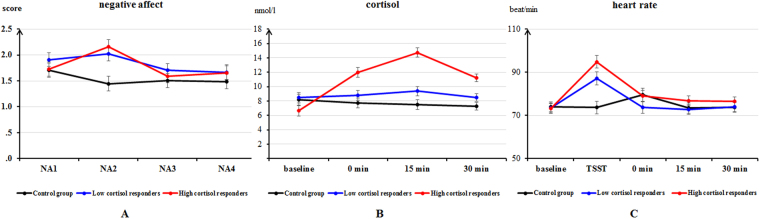
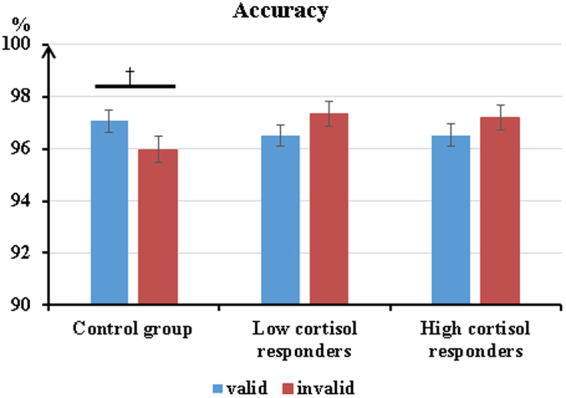
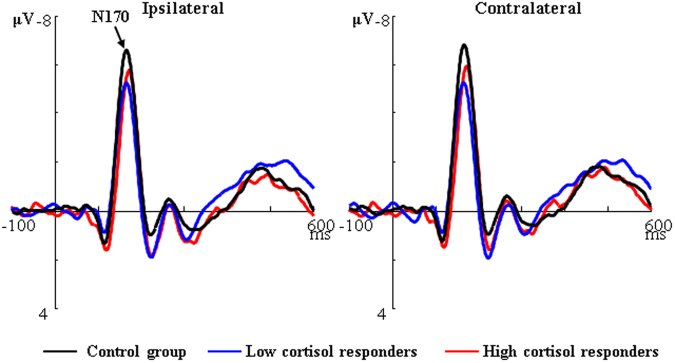
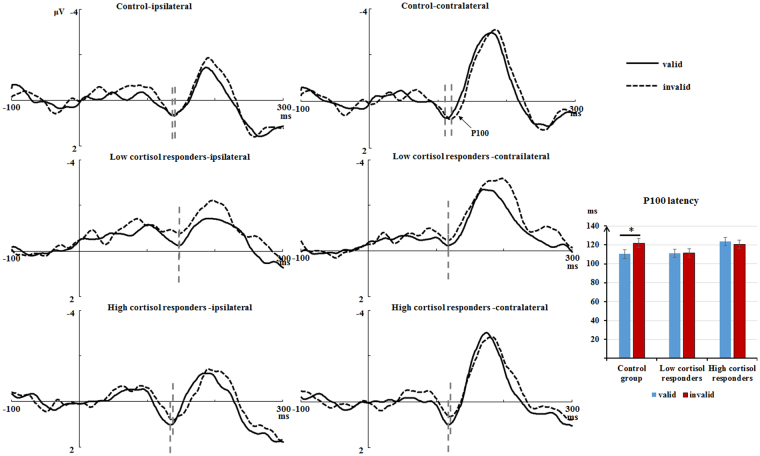
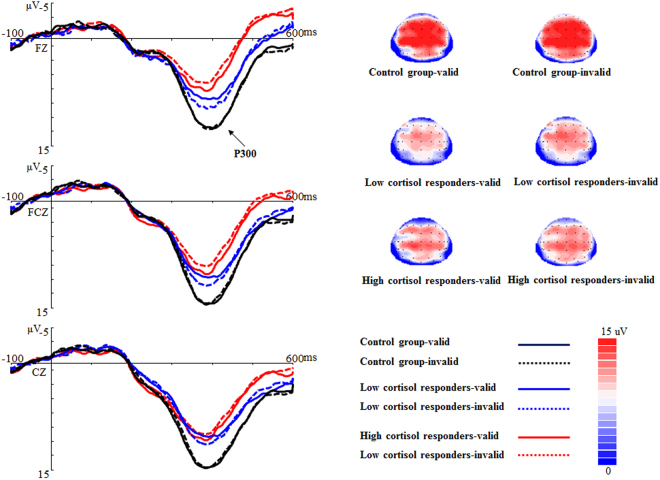
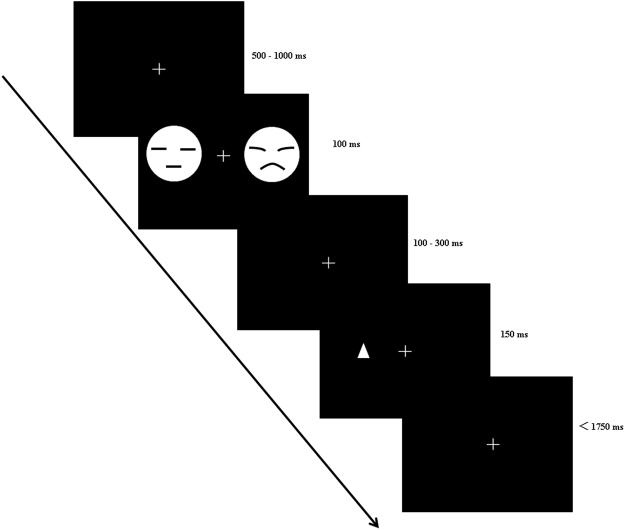
The present study investigated the effect of acute stress on attentional bias to threat using behavioral and ERP methods. Sixty-two male participants were randomly assigned to a stress condition (Trier Social Stress Test) or a control condition. To examine the impact of stress-induced cortisol on attentional bias to threat, participants in the stress group were split into Low- and High cortisol responders. All participants were then administered a modified dot probe task in which the cues were neutral and angry faces. Behavioral results showed a pattern of attentional bias toward threat in the Control group but not in the stress group. For the ERPs, the P100 peaked earlier for the angry-cued targets than the neutral-cued targets in the Control group, which suggests a rapid, adaptive response toward threat. However, this effect was not observed in the stress group, suggesting a suppressed attentional bias under stress. In addition, the stress group (including both Low and High cortisol responders) showed reduced P300 amplitude to target onset than the Control group. These results suggest that acute stress disrupts attentional bias to threat including a reduction in early bias to threat in addition to a subsequent change of attention allocation.
Overview
The claims and statistics of this paper haven’t been checked yet.
Free: it reads the open-access text and checks the first 5 claims that cite a source we can check. Create a free account to check every claim.
Integrity signals
Registry
Cites
Statistics
Figures
Verification
Claims the paper makes
The claims and statistics of this paper haven’t been checked yet.
Free: it reads the open-access text and checks the first 5 claims that cite a source we can check. Create a free account to check every claim.
Claims other papers make about this one
Each is checked against this paper’s own text: does it say what the citing paper says it does?
The cited source says what the claim attributes to it.
In the citing paper
“Other forms of stress have produced opposing patterns, whereby attentional biases to threatening faces were suppressed after acute psychosocial stress (Jiang et al., 2017), in contrast to the aforementioned effects observed after physical stress.”
From Toward objective characterizations of suicide risk: A narrative review of laboratory-based cognitive and behavioral tasks (2023) · cites this paper as Jiang et al., 2017
Self-check
Percentages, sums and reported differences re-computed from the paper’s own numbers.
The self-check needs the paper’s full text.
Citations
Cites
Development and validation of brief measures of positive and negative affect: The PANAS scales.
Watson, D., Clark, L. A., & Tellegen, A. (1988) · Journal of Personality and Social Psychology · doi:10.1037/0022-3514.54.6.1063 · Cited by 32,433
(1970) · Cited by 24,983
Kirschbaum, C., Pirke, K.-M., & Hellhammer, D. H. (2008) · Neuropsychobiology · doi:10.1159/000119004 · Cited by 6,093
Dickerson, S. S., & Kemeny, M. E. (2004) · Psychological Bulletin · doi:10.1037/0033-2909.130.3.355 · Cited by 5,881
Neural regulation of endocrine and autonomic stress responses
Ulrich-Lai, Y. M., & Herman, J. P. (2009) · Nature Reviews Neuroscience · doi:10.1038/nrn2647 · Cited by 3,318
Stress signalling pathways that impair prefrontal cortex structure and function
Arnsten, A. F. T. (2009) · Nature Reviews Neuroscience · doi:10.1038/nrn2648 · Cited by 3,299
Attentional bias in emotional disorders
MacLeod, C., Mathews, A., & Tata, P. (1986) · Journal of Abnormal Psychology · doi:10.1037/0021-843x.95.1.15 · Cited by 3,152
Electrophysiological Studies of Face Perception in Humans
Bentin, S., Allison, T., Puce, A., Perez, E., & McCarthy, G. (1996) · Journal of Cognitive Neuroscience · doi:10.1162/jocn.1996.8.6.551 · Cited by 3,076
A Solution for Reliable and Valid Reduction of Ocular Artifacts, Applied to the P300 ERP
Semlitsch, H. V., Anderer, P., Schuster, P., & Presslich, O. (1986) · Psychophysiology · doi:10.1111/j.1469-8986.1986.tb00696.x · Cited by 2,020
Kirschbaum, C., Kudielka, B. M., Gaab, J., Schommer, N. C., & Hellhammer, D. H. (1999) · Psychosomatic Medicine · doi:10.1097/00006842-199903000-00006 · Cited by 1,890
Sex differences in HPA axis responses to stress: a review
Kudielka, B. M., & Kirschbaum, C. (2005) · Biological Psychology · doi:10.1016/j.biopsycho.2004.11.009 · Cited by 1,624
Kudielka, B. M., Hellhammer, D. H., & Wüst, S. (2009) · Psychoneuroendocrinology · doi:10.1016/j.psyneuen.2008.10.004 · Cited by 963
A cognitive model of selective processing in anxiety
Mathews, A., & Mackintosh, B. (1998) · Cognitive Therapy and Research · doi:10.1023/a:1018738019346 · Cited by 756
Kirschbaum, C., Prussner, J. C., Stone, A. A., Federenko, I., Gaab, J., Lintz, D., Schommer, N., & Hellhammer, D. H. (1995) · Psychosomatic Medicine · doi:10.1097/00006842-199509000-00009 · Cited by 666
Electrophysiological Correlates of Rapid Spatial Orienting Towards Fearful Faces
Pourtois, G. (2004) · Cerebral Cortex · doi:10.1093/cercor/bhh023 · Cited by 661
Automatic attention to emotional stimuli: Neural correlates
Carretié, L., Hinojosa, J. A., Martín‐Loeches, M., Mercado, F., & Tapia, M. (2004) · Human Brain Mapping · doi:10.1002/hbm.20037 · Cited by 585
Clark, V. P., & Hillyard, S. A. (1996) · Journal of Cognitive Neuroscience · doi:10.1162/jocn.1996.8.5.387 · Cited by 581
P300 as a clinical assay: rationale, evaluation, and findings
Polich, J. (2000) · International Journal of Psychophysiology · doi:10.1016/s0167-8760(00)00127-6 · Cited by 480
Cardiovascular and neuroendocrine adjustment to public speaking and mental arithmetic stressors
AL'ABSI, M., BONGARD, S., BUCHANAN, T., PINCOMB, G. A., LICINIO, J., & LOVALLO, W. R. (1997) · Psychophysiology · doi:10.1111/j.1469-8986.1997.tb02397.x · Cited by 423
Self-citationSocial anxiety and attention away from emotional faces
Mansell, W., Clark, D. M., Ehlers, A., & Chen, Y.-P. (1999) · Cognition & Emotion · doi:10.1080/026999399379032 · Cited by 397 · cited 8×
“, corticosteroids) within one month of testing; (2) no past or present neurological or psychiatric diagnoses; (3) no periodontitis or any wounds in the mouth; (4) no cold or other medication within the previous two weeks; (5) no overnight shift work or irregular circadian rhythms; (6) no excessive alcohol (more than t…”
BackgroundMethodResultInfluentialNeuroendocrine and psychometric evaluation of a placebo version of the ‘Trier Social Stress Test’
Het, S., Rohleder, N., Schoofs, D., Kirschbaum, C., & Wolf, O. T. (2009) · Psychoneuroendocrinology · doi:10.1016/j.psyneuen.2009.02.008 · Cited by 394
Beyond Fear: Rapid Spatial Orienting Toward Positive Emotional Stimuli
Brosch, T., Sander, D., Pourtois, G., & Scherer, K. R. (2008) · Psychological Science · doi:10.1111/j.1467-9280.2008.02094.x · Cited by 332
van Marle, H. J. F., Hermans, E. J., Qin, S., & Fernández, G. (2009) · Biological Psychiatry · doi:10.1016/j.biopsych.2009.05.014 · Cited by 317
Theoretical Overview of P3a and P3b
Polich, J. (2003) · Detection of Change · doi:10.1007/978-1-4615-0294-4_5 · Cited by 293
Effects of stress and anxiety on the processing of threat stimuli
Mogg, K., Mathews, A., Bird, C., & Macgregor-Morris, R. (1990) · Journal of Personality and Social Psychology · doi:10.1037/0022-3514.59.6.1230 · Cited by 289
Time-course of attention for threatening pictures in high and low trait anxiety
Koster, E. H. W., Verschuere, B., Crombez, G., & Van Damme, S. (2005) · Behaviour Research and Therapy · doi:10.1016/j.brat.2004.08.004 · Cited by 274
Applicability of the Positive and Negative Affect Scale in Chinese
Ting-zhong, Y. (2003) · Zhongguo xinli weisheng zazhi · Cited by 263
Plessow, F., Fischer, R., Kirschbaum, C., & Goschke, T. (2011) · Journal of Cognitive Neuroscience · doi:10.1162/jocn_a_00024 · Cited by 234
Attentional bias to angry faces using the dot-probe task? It depends when you look for it
Cooper, R. M., & Langton, S. R. H. (2006) · Behaviour Research and Therapy · doi:10.1016/j.brat.2005.10.004 · Cited by 228
Attentional Bias to Threat: Roles of Trait Anxiety, Stressful Events, and Awareness
Mogg, K., Bradley, B. P., & Hallowell, N. (1994) · The Quarterly Journal of Experimental Psychology Section A · doi:10.1080/14640749408401099 · Cited by 201
Bakvis, P., Roelofs, K., Kuyk, J., Edelbroek, P. M., Swinkels, W. A. M., & Spinhoven, P. (2009) · Epilepsia · doi:10.1111/j.1528-1167.2008.01862.x · Cited by 195
Stress Potentiates Early and Attenuates Late Stages of Visual Processing
Shackman, A. J., Maxwell, J. S., McMenamin, B. W., Greischar, L. L., & Davidson, R. J. (2011) · The Journal of Neuroscience · doi:10.1523/jneurosci.3384-10.2011 · Cited by 191
The empathic, physiological resonance of stress
Buchanan, T. W., Bagley, S. L., Stansfield, R. B., & Preston, S. D. (2012) · Social Neuroscience · doi:10.1080/17470919.2011.588723 · Cited by 189
Self-citationEnhanced neural reactivity and selective attention to threat in anxiety
Eldar, S., Yankelevitch, R., Lamy, D., & Bar-Haim, Y. (2010) · Biological Psychology · doi:10.1016/j.biopsycho.2010.07.010 · Cited by 185
The effects of stress-induced cortisol responses on approach–avoidance behavior
Roelofs, K., Elzinga, B. M., & Rotteveel, M. (2005) · Psychoneuroendocrinology · doi:10.1016/j.psyneuen.2005.02.008 · Cited by 153
Affective primes suppress attention bias to threat in socially anxious individuals
Helfinstein, S. M., White, L. K., Bar‐Haim, Y., & Fox, N. A. (2008) · Behaviour Research and Therapy · doi:10.1016/j.brat.2008.03.011 · Cited by 139
Acute stress reduces speech fluency
Buchanan, T. W., Laures-Gore, J. S., & Duff, M. C. (2014) · Biological Psychology · doi:10.1016/j.biopsycho.2014.02.005 · Cited by 136
Self-citationBooij, S. H., Bouma, E., de Jonge, P., Ormel, J., & Oldehinkel, A. J. (2012) · Psychoneuroendocrinology · doi:10.1016/j.psyneuen.2012.08.004 · Cited by 126
Santesso, D. L., Meuret, A. E., Hofmann, S. G., Mueller, E. M., Ratner, K. G., Roesch, E. B., & Pizzagalli, D. A. (2008) · Neuropsychologia · doi:10.1016/j.neuropsychologia.2007.12.013 · Cited by 125
Masked fearful faces modulate the orienting of covert spatial attention.
Carlson, J. M., & Reinke, K. S. (2008) · Emotion · doi:10.1037/a0012653 · Cited by 124
Granger, D. A., Weisz, J. R., McCracken, J. T., Ikeda, S. C., & Douglas, P. (1996) · Child Development · doi:10.1111/j.1467-8624.1996.tb01912.x · Cited by 119
Roelofs, K., Bakvis, P., Hermans, E. J., van Pelt, J., & van Honk, J. (2007) · Biological Psychology · doi:10.1016/j.biopsycho.2006.09.002 · Cited by 119
ERP and fMRI correlates of endogenous and exogenous focusing of visual‐spatial attention
Natale, E., Marzi, C. A., Girelli, M., Pavone, E. F., & Pollmann, S. (2006) · European Journal of Neuroscience · doi:10.1111/j.1460-9568.2006.04756.x · Cited by 112
Granger, D. A., Weisz, J. R., McCracken, J. T., Ikeda, S. C., & Douglas, P. (1996) · Child Development · doi:10.2307/1131777 · Cited by 83
Fu, S., Caggiano, D. M., Greenwood, P. M., & Parasuraman, R. (2005) · Cognitive Brain Research · doi:10.1016/j.cogbrainres.2004.11.014 · Cited by 76
Influence of acute stress on response inhibition in healthy men: An ERP study
Dierolf, A. M., Fechtner, J., Böhnke, R., Wolf, O. T., & Naumann, E. (2017) · Psychophysiology · doi:10.1111/psyp.12826 · Cited by 72
Developing and piloting a dot-probe measure of attentional bias for test anxiety
Putwain, D. W., Langdale, H. C., Woods, K. A., & Nicholson, L. J. (2011) · Learning and Individual Differences · doi:10.1016/j.lindif.2011.02.002 · Cited by 61
The role of rumination, attentional biases and stress in psychological distress
Morrison, R., & O'Connor, R. C. (2008) · British Journal of Psychology · doi:10.1348/000712607x216080 · Cited by 60
Thomas, S. J., Gonsalvez, C. J., & Johnstone, S. J. (2013) · Biological Psychology · doi:10.1016/j.biopsycho.2013.05.012 · Cited by 51
Cortisol, stress, and attentional bias toward threat
McHugh, R. K., Behar, E., Gutner, C. A., Geem, D., & Otto, M. W. (2010) · Anxiety, Stress, & Coping · doi:10.1080/10615801003596969 · Cited by 43
Evidence for Diminished P3 Amplitudes in PTSDa
Metzger, L. J., Orr, S. P., Lasko, N. B., Berry, N. J., & Pitman, R. K. (1997) · Annals of the New York Academy of Sciences · doi:10.1111/j.1749-6632.1997.tb48315.x · Cited by 31
Ceballos, N. A., Giuliano, R. J., Wicha, N. Y. Y., & Graham, R. (2012) · Journal of Studies on Alcohol and Drugs · doi:10.15288/jsad.2012.73.761 · Cited by 30
Research works printed but not linked: 1
- Zheng XH State-Trait test report in Changchun Chin. Mental. Health. J. 1993 7 2 60 62
Cited by
Narvaez Linares, N. F., Charron, V., Ouimet, A. J., Labelle, P. R., & Plamondon, H. (2020) · Neurobiology of Stress · doi:10.1016/j.ynstr.2020.100235 · Cited by 147
Stress, working memory, and academic performance: a neuroscience perspective
Almarzouki, A. F. (2024) · Stress · doi:10.1080/10253890.2024.2364333 · Cited by 136
von Dawans, B., Strojny, J., & Domes, G. (2021) · Neuroscience & Biobehavioral Reviews · doi:10.1016/j.neubiorev.2020.11.026 · Cited by 91
Quantitative Personality Predictions From a Brief EEG Recording
Li, W., Wu, C., Hu, X., Chen, J., Fu, S., Wang, F., & Zhang, D. (2020) · IEEE Transactions on Affective Computing · doi:10.1109/taffc.2020.3008775 · Cited by 39
Rojas‐Thomas, F., Artigas, C., Wainstein, G., Morales, J.-P., Arriagada, M., Soto, D., Dagnino‐Subiabre, A., Silva, J., & López, V. (2023) · Neurobiology of Stress · doi:10.1016/j.ynstr.2023.100551 · Cited by 31
Metadata
- Authors
- Jiang, C., Buchanan, T. W., Yao, Z., Zhang, K., Wu, J., & Zhang, L.
- Affiliations
- Chinese Academy of Sciences (CN)
- Saint Louis University (US)
- Shenzhen University (CN)
- Corresponding author
- Zhang, Liang
- Venue
- Scientific Reports
- Published
- 2017-11-03
- Volume
- 7
- Issue
- 1
- Pages
- 14607-14607
- ISSN
- 2045-2322 (ISSN-L)
- PMC
- PMC5668362
- OpenAlex
- W2766076014
- Semantic Scholar
- 28ee6f55f6b805da379b151b2531cc4038b02d8c
- Cited by
- 30
- References
- 53
- Citations by year
- 2026: 1 · 2025: 2 · 2024: 6 · 2023: 6 · 2022: 3 · 2021: 4 · 2020: 5 · 2019: 3
- FWCI
- 1.19
- Type
- journal article
- Language
- en
- Update notices
- Open access
- gold
- doi.org
- Licence
- cc-by
- creativecommons.org/licenses/by/4.0 (tdm)
- creativecommons.org/licenses/by/4.0 (vor)
- Locations
- Scientific Reports (publishedVersion, cc-by)
- Europe PMC (PubMed Central) (publishedVersion, cc-by)
- PubMed Central (publishedVersion, cc-by)
- PubMed (publishedVersion)
- Institutional Repository of Institute of Psychology, Chinese Academy of Sciences (Institute of Psychology, Chinese Academy of Sciences) (submittedVersion)
- Funders
- National Natural Science Foundation of China (81371203)
- Topics
- Life Sciences › Neuroscience › Behavioral Neuroscience › Stress Responses and Cortisol
- Life Sciences › Neuroscience › Cognitive Neuroscience › Neural and Behavioral Psychology Studies
- Social Sciences › Psychology › Experimental and Cognitive Psychology › Anxiety, Depression, Psychometrics, Treatment, Cognitive Processes
- Keywords
- acute psychological stress, attentional bias to threat, threat processing, cortisol, Trier Social Stress Test, P100, P300, dot-probe task, angry faces, event-related potentials, attention allocation
- MeSH terms
- Attentional Bias, Brain, Electroencephalography, Emotions, Evoked Potentials, Heart Rate, Humans, Hydrocortisone, Male, Neuropsychological Tests, Random Allocation, Saliva, Social Behavior, Stress, Psychological, Visual Perception, Resilience, Psychological, Young Adult
About these checks
Registry, retraction, Cites and statistics results are computed, not judged, with one exception: a printed reference that no index lists is read once by a model before it counts as a citation error. Claims are extracted by a model and kept only when their quote appears verbatim in the text; each cited source is then checked, with a model’s help, for whether it says what the claim relies on. Those verdicts can be wrong — read the claim’s quote and the cited source before relying on one.
Statistics and arithmetic are recomputed, not judged.
Confidence bands are shown only for fields calibrated on our annotated test set. None is calibrated yet, so no band is shown.
What counts as a claim ›How we measure confidence ›How we check this ›
Are you an author, or do you see a problem with this page? Request a review
Data sources
Bibliographic data: Semantic Scholar, OpenAlex, Crossref.
Contains information from the Semantic Scholar Academic Graph Datasets, made available under the ODC Attribution License (ODC-BY 1.0).
Semantic Scholar’s data is described in: Kinney, R., et al. (2023). The Semantic Scholar Open Data Platform. arXiv:2301.10140.
