

Brain-to-Brain Synchrony during Naturalistic Social Interactions
Open accessThe DOI matches its Crossref record; 76 of the 78 references it cites were found in a registry or an index; 5 of the 63 sources its claims cite were checked for support.
Abstract
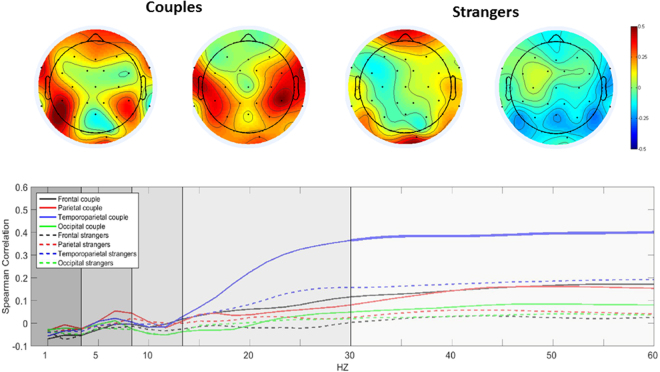
The evolution of humans as a highly social species tuned the brain to the social world; yet the mechanisms by which humans coordinate their brain response online during social interactions remain unclear. Using hyperscanning EEG recordings, we measured brain-to-brain synchrony in 104 adults during a male-female naturalistic social interaction, comparing romantic couples and strangers. Neural synchrony was found for couples, but not for strangers, localized to temporal-parietal structures and expressed in gamma rhythms. Brain coordination was not found during a three-minute rest, pinpointing neural synchrony to social interactions among affiliative partners. Brain-to-brain synchrony was linked with behavioral synchrony. Among couples, neural synchrony was anchored in moments of social gaze and positive affect, whereas among strangers, longer durations of social gaze and positive affect correlated with greater neural synchrony. Brain-to-brain synchrony was unrelated to episodes of speech/no-speech or general content of conversation. Our findings link brain-to-brain synchrony to the degree of social connectedness among interacting partners, ground neural synchrony in key nonverbal social behaviors, and highlight the role of human attachment in providing a template for two-brain coordination.
Overview
CoChat Summary
TL;DR
Using hyperscanning EEG during a naturalistic male-female interaction, the study found brain-to-brain gamma synchrony localized to temporal-parietal areas in romantic couples but not strangers. This neural synchrony was linked to social gaze and positive affect and was absent during rest, suggesting social connectedness and nonverbal behavior shape two-brain coordination.
Key findings
- Couples showed significant temporal-parietal gamma (30–60 Hz) power correlation during interaction, R = 0.389, p = 0.0028, whereas strangers did not, R = 0.102, p = 0.10; couples had higher gamma correlation than strangers, t = −3.02, p = 0.004.
- Gamma synchrony was not significant at rest for couples (R = 0.16, p = 0.10) or strangers (R = 0.07, p = 0.10), but among couples it increased significantly from rest to interaction, t = 3.8801, p = 0.00075.
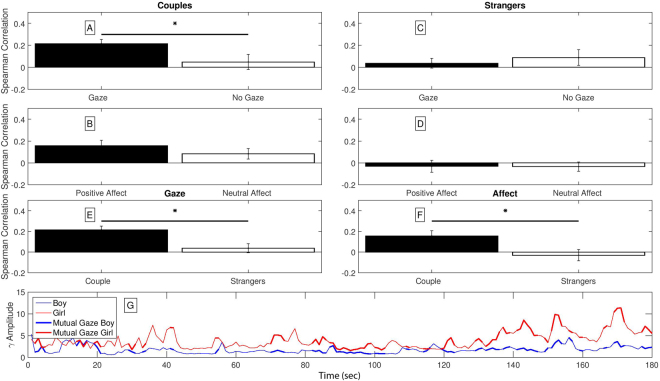
- Couples spent more time in social gaze than strangers (M = 93%, SD = 2.08 vs. M = 78.66%, SD = 1.66; t = 19.86, p = 0.0001), and couples’ gamma synchrony was higher during social gaze than no gaze, t = 2.03, p = 0.05; positive affect showed a marginal effect, t = 1.57, p = 0.065.
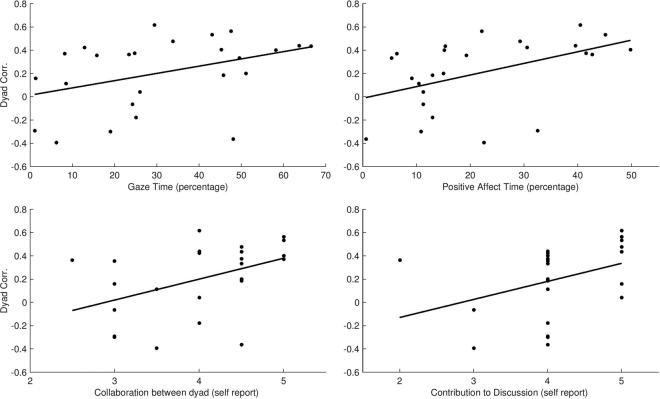
- Among strangers, longer social gaze and positive affect correlated with greater gamma synchrony, R = 0.431, p = 0.0323 and R = 0.566, p = 0.0031, respectively; speech duration and conversation content did not differ between groups.
Methods
- 104 healthy adults initially participated as 52 male-female dyads: 24 cohabitating romantic couples and 25 stranger dyads in final analyses after exclusions (final sample 98 individuals).
- Participants completed a 3-minute rest and then a 5-minute naturalistic positive “fun day” conversation while simultaneous 32-electrode EEG was recorded; interactions were videotaped and micro-coded for gaze, affect, and speech.
- EEG power was analyzed by frequency bands and ROIs using Spearman correlations between partners, with Stockwell transform for continuous data, LORETA for source estimation, and FDR correction for multiple comparisons.
Limitations
- The paper states that hyperscanning EEG during naturalistic interaction affords less exact brain localization and less exact task-parameter modeling than fMRI or MEG, and that EEG source localization could not pinpoint exact regions.
- The paper states that no third group of familiar non-romantic friends was included, so familiarity could not be fully separated from romantic love.
- The paper notes that the positive-affect finding was marginal and should be treated with caution, and that the strangers’ collaboration correlation did not survive FDR correction; evident from the design, the correlational approach cannot establish causal direction.
Model-written summary. Check it against the paper before relying on it.
Integrity signals
Registry
Cites
Statistics
Figures
Verification
Claims the paper makes
3 Valid · 2 Not valid · 39 Not checked · 57 Own results and interpretations
None of the sources cited for this claim have been checked yet.
In the paper
“Gamma activity recorded from temporal-parietal areas has been linked with a range of social abilities that support social connectedness, such as theory-of-mind, cognitive appraisal, and emotion regulation8,35,36.”
§ Brain-to-Brain Synchrony during Naturalistic Social Interactions > Introduction
What the sources say
- Not checked yetcites [8] Cohen, M. X., David, N., Vogeley, K. & Elger, C. E. Gamma-band activity in the human superior temporal sulcus during mentalizing from nonverbal social cues. Psychophysiology46 (2009). 18992070 source
- Not checked yetcites [35] Kang J-H The modulation of parietal gamma oscillations in the human electroencephalogram with cognitive reappraisal Neuroreport 2012 23 995 999 10.1097/WNR.0b013e32835a6475 23076117 source
- Could not verifycites [36] Symons AE El-Deredy W Schwartze M Kotz SA The Functional Role of Neural Oscillations in Non-Verbal Emotional Communication Front. Hum. Neurosci. 2016 10 239 10.3389/fnhum.2016.00239 27252638 PMC4879141 sourceExperimental — accuracy not yet measured
Our copy's gamma sections ('Perception of Emotion from Facial Expressions > Gamma (>30 Hz)' and the Conclusion) tie gamma to feature integration, sensory selection and the binding of emotionally salient input, localised to amygdala, OFC, STS and later occipital/parietal/prefrontal responses (Luo et al., 2007–2010; Sato et al., 2011; Jung et al., 2011; Müsch et al., 2014) — so it does touch gamma in temporal/parietal regions, but only for emotion perception from facial expressions. No passage in our copy links gamma to theory of mind, cognitive appraisal or emotion regulation (searched: 'theory of mind', 'temporoparietal junction', 'mentalizing', 'social cognition', 'cognitive appraisal', 'emotion regulation', 'reappraisal'); the only social-cognition mention is beta band activity and biological motion (Pavlova, 2012; Jabbi et al., 2015, Beta section). The claim's substantive association is therefore neither stated nor contradicted by our copy, and no alternative source is named in it (the citing sentence carries three reference numbers, 8, 35, 36). (LLM, conf=0.65)
plainstates an association- Asserted: passes — The authors put it forward as true.
- Checkable: passes — It can be checked against evidence.
- Load-bearing: passes — The paper’s conclusions depend on it.
- Based: passes — The paper gives a reason why it holds.
The cited sources support only part of this claim — read each source’s verdict below.
In the paper
“Overall, these studies indicate that the degree of social connectedness among partners impacts the level of neural synchrony in temporal-parietal structures.”
§ Brain-to-Brain Synchrony during Naturalistic Social Interactions > Introduction
What the sources say
- Partly supportedcites [29] Dikker S Silbert LJ Hasson U Zevin JD On the Same Wavelength: Predictable Language Enhances Speaker-Listener Brain-to-Brain Synchrony in Posterior Superior Temporal Gyrus J. Neurosci. 2014 34 6267 6272 10.1523/JNEUROSCI.3796-13.2014 24790197 PMC4004812 sourceExperimental — accuracy not yet measured
The Results and Discussion (page numbers unavailable in our copy) report greater speaker–listener synchrony in left posterior superior temporal gyrus when language is more predictable. They do not examine whether the partners’ degree of social connectedness affects that synchrony; the reported factor is linguistic predictability. (LLM, conf=0.86)
- Partly supportedcites [31] Tang H Interpersonal brain synchronization in the right temporo-parietal junction during face-to-face economic exchange Soc. Cogn. Affect. Neurosci. 2015 11 23 32 10.1093/scan/nsv092 26211014 PMC4692317 sourceExperimental — accuracy not yet measured
Tang et al. (2016) do report the substance of the claim: the Discussion states that interpersonal brain synchronization in rTPJ 'increased with shared intentionality between partners', and the fNIRS Results give the supporting statistic — coherence in CH14 positively correlated with shared intentionality for face-to-face (r = 0.28, P = 0.046) but not for face-blocked (r = 0.02, P = 0.89), with no other channels significant. However, the source's construct is 'shared intentionality' (sharing psychological states), not 'social connectedness' as such, and the association is a modest correlation confined to one rTPJ channel under face-to-face interaction only; the authors hedge it as possibly 'an indicator of shared intentionality' rather than something that 'impacts' synchrony. The causal, unconditional phrasing of the citing sentence and its generalization to temporo-parietal structures beyond rTPJ go beyond what this paper shows. (LLM, conf=0.72)
- Not checked yetcites [32] Liu N NIRS-based hyperscanning reveals inter-brain neural synchronization during cooperative Jenga game with face-to-face communication Front. Hum. Neurosci. 2016 10 1 11 27014019 PMC4782164
hedgedstates a cause- Asserted: passes — The authors put it forward as true.
- Checkable: passes — It can be checked against evidence.
- Load-bearing: passes — The paper’s conclusions depend on it.
- Based: passes — The paper gives a reason why it holds.
- Partly supported
The cited sources support only part of this claim — read each source’s verdict below.
In the paper
“For our couples, who have been in a committed relationship for some time, such familiarity can lead to greater neural synchrony, when familiar actions56 and communications57 are incorporated as neural predictions and pave the way for greater brain coordination.”
§ Brain-to-Brain Synchrony during Naturalistic Social Interactions > Discussion
What the sources say
- Partly supportedcites [56] Grush R The emulation theory of representation: motor control, imagery, and perception Behav. Brain Sci. 2004 27 377 442 15736871 sourceExperimental — accuracy not yet measured
Our copy of Grush's target article (with commentaries and reply) does support the mechanistic half of the claim: the nervous system runs forward models/emulators that turn a current motor command into a neural prediction of its sensory consequences (sect. 5.3, 'the perceptual system is producing a prediction - an a priori estimate - of what the next visual scene will be on the basis of the current visual scene and the current motor command'), that these emulators are plastic and trained by prior experience (sect. 2.2; Stein's reply 'the best trainer of the emulator/memory is experience'), and, tentatively, that an 'external biomechanical emulator' can model the movements of other individuals (sect. R10). What our copy nowhere addresses is the distinctive part of the claim: couples in committed relationships, partner familiarity, and any resulting inter-brain neural synchrony or 'brain coordination' — searched for 'neural synchrony', 'interpersonal', 'joint action between two people', 'couples' with no passage. The synchrony-in-couples conclusion therefore rests on the citing authors, not on this source. (LLM, conf=0.68)
- Not checked yetcites [57] Schwanenflugel PJ Shoben EJ The influence of sentence constraint on the scope of facilitation for upcoming words J. Mem. Lang. 1985 24 232 252 10.1016/0749-596X(85)90026-9 source
plainstates a cause- Asserted: passes — The authors put it forward as true.
- Checkable: passes — It can be checked against evidence.
- Load-bearing: passes — The paper’s conclusions depend on it.
- Based: passes — The paper gives a reason why it holds.
- Partly supported
The cited sources support only part of this claim — read each source’s verdict below.
In the paper
“As behavioral synchrony is linked with attachment status, with couples and close friends expressing more synchrony than strangers26,34, it is reasonable to expect that romantic partners in a long-term relationship would display more behavioral and neural synchrony as compared to strangers and that neural synchrony would localize to temporo-parietal areas.”
§ Brain-to-Brain Synchrony during Naturalistic Social Interactions > Introduction
What the sources say
- Not checked yetcites [26] Ulmer-Yaniv A Affiliation, reward, and immune biomarkers coalesce to support social synchrony during periods of bond formation in humans Brain Behav. Immun. 2016 56 SRC- 130 139 10.1016/j.bbi.2016.02.017 26902915 source
- Partly supportedcites [34] Latif N Barbosa AV Vatiokiotis-Bateson E Castelhano MS Munhall KG Movement coordination during conversation PLoS One 2014 9 1 10 10.1371/journal.pone.0105036 PMC4132081 25119189 sourceExperimental — accuracy not yet measured
Latif et al. (2014) support the close-friends half of the claim: Experiment 1 Results (Movement Analysis) state 'Friends show significantly higher correlations than strangers at all lags' (Fig. 2 caption) and 'friends had higher correlation than strangers (p<0.0001)' (Fig. 3), and the Abstract reports that 'individuals familiar with each other coordinated their movements more frequently'. However, our copy contains nothing on romantic couples or attachment status: the study used only friend pairs and stranger pairs, and searches for 'couples / romantic partners / attachment' returned only friend-vs-stranger passages (Introduction, Discussion). The 'linked with attachment status' framing and the couples extension are therefore not attributable to this source. (LLM, conf=0.80)
plainstates an association- Asserted: passes — The authors put it forward as true.
- Checkable: passes — It can be checked against evidence.
- Load-bearing: passes — The paper’s conclusions depend on it.
- Based: passes — The paper gives a reason why it holds.
A result the paper reports from its own data — it cites no other source for it, so there is none to check. The quote shows it is in the paper.
In the paper
“and positive affect, t (two tailed) = 2.53, p = 0.015 (Fig. 2E,F).”
§ Brain-to-Brain Synchrony during Naturalistic Social Interactions > Results > Connecting Behavioral and Neural Synchrony
plainstates an association- Asserted: passes — The authors put it forward as true.
- Checkable: passes — It can be checked against evidence.
- Load-bearing: passes — The paper’s conclusions depend on it.
- Based: passes — The paper gives a reason why it holds.
57 more claims
Create a free account to see all 101 claims and to verify the 58 references still open.
- It may state two separate claims as one. 17
- Probably not a substantial claim. 28
Claims other papers make about this one
Each is checked against this paper’s own text: does it say what the citing paper says it does?
The source backs part of the claim, not all of it — or backs it for a different population, condition or comparison.
In the citing paper
“Another electroencephalography study tested neural alignment between romantic dyads and unacquainted dyads, and found elevated coupling in the DMN during mutual gaze and smiling107.”
From The default mode network: where the idiosyncratic self meets the shared social world (2021) · cites this paper as [107]
Experimental — accuracy not yet measuredThe source backs part of the claim, not all of it — or backs it for a different population, condition or comparison.
In the citing paper
“Social synchrony is essential for human bonding and has been associated with positive affect and prosocial behavior.[ 50 ]”
From Loneliness and the Social Brain: How Perceived Social Isolation Impairs Human Interactions (2021) · cites this paper as [50]
Experimental — accuracy not yet measured
Statistics that don’t add up
Each reported p-value recomputed from its test statistic and degrees of freedom, each partial η² from its F, and each ratio, mean difference or B printed with a p checked against its own confidence interval.
Rated minor: it would not touch a result — a value no result rests on, a p-value that stays on the same side of the significance level, or a conflict that is clerical, resolved elsewhere in the paper, or outside its own findings.
In the paper
“F (2,148) = 7.48, p = 0.02”
§ Brain-to-Brain Synchrony during Naturalistic Social Interactions > Results > Connecting Behavioral and Neural Synchrony
Reported p = .02 · recomputed p < .001
Statistics recomputed
Every reported test result, recomputed from its test statistic and degrees of freedom. A result shows as not adding up only once an independent check has confirmed it.
- Doesn’t add upF(2, 148) = 7.48reported p = .02 · recomputed p < .001
“F (2,148) = 7.48, p = .02”
- ConsistentF(1, 148) = 12.64reported p = 0 · recomputed p < .001
“F (1,148) = 12.64, p = .00”
Self-check
Percentages, sums and reported differences re-computed from the paper’s own numbers.
Self-check results appear here once an independent check has confirmed them.
Citations
Cites
Controlling the False Discovery Rate: A Practical and Powerful Approach to Multiple Testing
Benjamini, Y., & Hochberg, Y. (1995) · Journal of the Royal Statistical Society Series B: Statistical Methodology · doi:10.1111/j.2517-6161.1995.tb02031.x · Cited by 109,482
(2014) · Climate Change 2013 – The Physical Science Basis · doi:10.1017/cbo9781107415324.004 · Cited by 23,880
(1969) · Cited by 18,340
Oostenveld, R., Fries, P., Maris, E., & Schoffelen, J.-M. (2011) · Computational Intelligence and Neuroscience · doi:10.1155/2011/156869 · Cited by 10,323
Social Relationships and Mortality Risk: A Meta-analytic Review
Holt-Lunstad, J., Smith, T. B., & Layton, J. B. (2010) · PLoS Medicine · doi:10.1371/journal.pmed.1000316 · Cited by 7,272 · cited 2×
“We conducted two separate frequency calculations; (1) continuous: for the rest and the social interaction paradigms and (2) epochs-based analyses: only for the social interaction paradigm.”
BackgroundMethodMental Models: Towards a Cognitive Science of Language, Inference, and Consciousness
Ford, M., & Johnson-Laird, P. N. (1985) · Language · doi:10.2307/414498 · Cited by 4,419
Statistics corner: A guide to appropriate use of correlation coefficient in medical research.
(2012) · Europe PMC (PubMed Central) · Cited by 4,239
An internal model for sensorimotor integration
Wolpert, D. M., Ghahramani, Z., & Jordan, M. I. (1995) · Science · doi:10.1126/science.7569931 · Cited by 3,553
Localization of the complex spectrum: the S transform
Stockwell, R. G., Mansinha, L., & Lowe, R. P. (1996) · IEEE Transactions on Signal Processing · doi:10.1109/78.492555 · Cited by 3,486
ERPLAB: an open-source toolbox for the analysis of event-related potentials
Lopez-Calderon, J., & Luck, S. J. (2014) · Frontiers in Human Neuroscience · doi:10.3389/fnhum.2014.00213 · Cited by 2,584
Research works printed but not linked: 1
- Feldman R a). The neurobiology of mammalian parenting and the biosocial context of human caregiving Horm. Behav. 101016jyhbeh10001 2015 77 SRC- 3 17 26453928
Cited by
Items 101–200 of 474
Culture, Mind, and Brain: Emerging Concepts, Models, and Applications
Kirmayer, L. J., Worthman, C. M., Kitayama, S., Lemelson, R., & Cummings, C. (2020) · Cambridge University Press eBooks · doi:10.1017/9781108695374 · Cited by 32
Do siblings influence one another? Unpacking processes that occur during sibling conflict
Borairi, S., Plamondon, A., Rodrigues, M., Sokolovic, N., Perlman, M., & Jenkins, J. M. (2022) · Child Development · doi:10.1111/cdev.13842 · Cited by 32
“…an important underlying mechanism to such contagion and many aspects of human functioning have been shown to synchronize across people, including brain activity, emotions, and physiology (Atzil et al., 2014; Kinreich et al., 2017; Lee et al., 2017; Miller et al., 2019; Sethre-Hofstad et al., 2002).”
Distinct social behavior and inter-brain connectivity in Dyads with autistic individuals
Moreau, Q., Brun, F., Ayrolles, A., Nadel, J., & Dumas, G. (2024) · Social Neuroscience · doi:10.1080/17470919.2024.2379917 · Cited by 32
“…al., 2017), shared attention (Hirsch et al., 2017), face-to-face deception (Zhang et al., 2017), social connected-ness among interacting partners (Kinreich et al., 2017), empathy (Mengotti et al., 2013), verbal interactions (Hirsch et al., 2018), but also coordination (Zamm et al., 2018),…”
Sened, H., Zilcha‐Mano, S., & Shamay‐Tsoory, S. (2022) · Frontiers in Human Neuroscience · doi:10.3389/fnhum.2022.955238 · Cited by 32
“strangers (Kinreich et al., 2017), different types of repeated contact with caregivers during development (Yaniv et al.”
BackgroundInfluentialAbraham, E., Posner, J. E., WICKRAMARATNE, P. J., Aw, N., van Dijk, M. T., Cha, J., Weissman, M. M., & Talati, A. (2020) · Social Cognitive and Affective Neuroscience · doi:10.1093/scan/nsaa118 · Cited by 32
“, 2016), and a hyper-scanning EEG study found a neural concordance among partners, but not strangers, localized in temporal-parietal structures, which was linked to behavioral synchrony among couples (Kinreich et al., 2017).”
BackgroundHybrid Harmony: A Multi-Person Neurofeedback Application for Interpersonal Synchrony
Chen, P., Hendrikse, S. C. F., Sargent, K., Romani, M., Oostrik, M., Wilderjans, T. F., Koole, S. L., Dumas, G., Medine, D., & Dikker, S. (2021) · Frontiers in Neuroergonomics · doi:10.3389/fnrgo.2021.687108 · Cited by 30
“Importantly, social behavior has also been shown to serve as an (exogenous) source of interpersonal synchrony (Figures 1B,E): Behaviors such as joint action, language, eye contact, touch, and cooperation drive synchrony in various social contexts (Dumas et al., 2010; Dikker et al., 2014, 2021; Kinreich et al., 2017; G…”
BackgroundInfluentialLong, Y., Zhong, M., Aili, R., Zhang, H., Fang, X., & Lu, C. (2022) · Brain stimulation · doi:10.1016/j.brs.2022.12.009 · Cited by 30
Lin, J.-F. L., Imada, T., Meltzoff, A. N., Hiraishi, H., Ikeda, T., Takahashi, T., Hasegawa, C., Yoshimura, Y., Kikuchi, M., Hirata, M., et al. (2022) · Cerebral Cortex · doi:10.1093/cercor/bhac330 · Cited by 30
“These analytical methods include correlations of amplitude envelopes ( Kawasaki et al. 2013; Kinreich et al. 2017; Zamm et al. 2018), coherence-based measures (Babiloni et al. 2006; Reindl et al. 2018), phase-locking values (Dumas et al. 2010; Yun et al. 2012; Pérez et al. 2017), phase lag index…”
Kurihara, Y., Takahashi, T., & Osu, R. (2022) · Scientific Reports · doi:10.1038/s41598-022-10049-7 · Cited by 29
“Recently, to elucidate the neural mechanisms of interpersonal coordination, hyperscanning has been used to examine the synchronization of two or more brains (inter-brain synchronization) [13][14] during a variety of interaction tasks from simple joint tapping tasks [15][16] to complex natural tasks, such as conversati…”
BackgroundMethodIntra- and inter-brain synchrony oscillations underlying social adjustment
Vicente, U., Ara, A., & Marco‐Pallarés, J. (2023) · Scientific Reports · doi:10.1038/s41598-023-38292-6 · Cited by 28
Buil, A., Sankey, C., Caeymaex, L., Apter, G., Gratier, M., & Devouche, É. (2019) · Early Human Development · doi:10.1016/j.earlhumdev.2019.104939 · Cited by 28
Prior, N. H. (2020) · Frontiers in Psychology · doi:10.3389/fpsyg.2020.01370 · Cited by 28
Experience-Dependent Counselor-Client Brain Synchronization during Psychological Counseling
Zhang, Y., Meng, T., Yang, Y., & Hu, Y. (2020) · eNeuro · doi:10.1523/eneuro.0236-20.2020 · Cited by 28
“In short, IBS might be influenced by interpersonal closeness/connect-edness (Kinreich et al., 2017) and understanding/sharing (Stephens et al., 2010).”
BackgroundInfluentialMultimodal interpersonal synchrony: Systematic review and meta-analysis
Ohayon, S., & Gordon, I. (2024) · Behavioural Brain Research · doi:10.1016/j.bbr.2024.115369 · Cited by 29
Mechanisms for individual, group-based and crowd-based attention to social information
Ristic, J., & Capozzi, F. (2022) · Nature Reviews Psychology · doi:10.1038/s44159-022-00118-z · Cited by 27
Prior, N. H., Smith, E., Dooling, R. J., & Ball, G. F. (2019) · Journal of comparative psychology · doi:10.1037/com0000201 · Cited by 27
“, 2011), reflects the relationship of the social partners (Kinreich et al., 2017), and may even galvanize individuals to respond to group threats (Mu et al.”
BackgroundProvenzi, L., Lindstedt, J., Coen, K. D., Gasparini, L., Peruzzo, D., Grumi, S., Arrigoni, F., & Ahlqvist‐Björkroth, S. (2021) · Brain Sciences · doi:10.3390/brainsci11060816 · Cited by 26
Léné, P., Karran, A. J., Labonté-LeMoyne, É., Sénécal, S., Frédette, M., Johnson, K., & Léger, P. (2021) · Brain and Behavior · doi:10.1002/brb3.2270 · Cited by 27
Saul, M. A., He, X., Black, S., & Charles, F. (2022) · Frontiers in Psychology · doi:10.3389/fpsyg.2021.568921 · Cited by 26
“, 2016) or if members of the dyad were strangers compared to acquaintances (Atzil et al., 2012; Kinreich et al., 2017).”
BackgroundVecchio, A., & Pascalis, V. D. (2020) · Symmetry · doi:10.3390/sym12101712 · Cited by 27
Inter-brain neural dynamics in biological and artificial intelligence systems
Zhang, X., Phi, N. T., Li, Q., Gorzek, R. C., Zwingenberger, N., Huang, S., Zhou, J. L., Kingsbury, L., Raam, T., Wu, Y. E., et al. (2025) · Nature · doi:10.1038/s41586-025-09196-4 · Cited by 25
Defining immediate effects of sensitive periods on infant neurobehavioral function
Sullivan, R. M., & Opendak, M. M. (2020) · Current Opinion in Behavioral Sciences · doi:10.1016/j.cobeha.2020.08.006 · Cited by 25
“The literature had already highlighted the ability of social stimuli to modify neural oscillations throughout human development [76,77], although the attachment figure (biological or adoptive caregiver) is documented to be particularly effective [67,78].”
BackgroundThe Reality of “Real-Life” Neuroscience: A Commentary on Shamay-Tsoory and Mendelsohn (2019)
Holleman, G. A., Hooge, I. T. C., Kemner, C., & Hessels, R. S. (2020) · Perspectives on Psychological Science · doi:10.1177/1745691620917354 · Cited by 25
“…and behavioral dynamics of parent-child interactions (Reindl, Gerloff, Scharke, & Konrad, 2018) may differ fundamentally from interactions between romantic partners (Kinreich, Djalovski, Kraus, Louzoun, & Feldman, 2017) or from student–teacher interactions in a classroom (Dikker et al., 2017).”
BackgroundChen, Y., Liu, S., Hao, Y., Zhao, Q., Ren, J., Piao, Y., Wang, L., Yang, Y., Jin, C., Wang, H., et al. (2024) · NeuroImage · doi:10.1016/j.neuroimage.2024.120733 · Cited by 24
“Gamma oscillations are related to social interactions and emotional processing (Bas¸ar, 2013), particularly during natural interactions and mutual gazing between romantic partners (Kinreich et al., 2017).”
BackgroundTowards an informational account of interpersonal coordination
Chidichimo, E., Luppi, A. I., Mediano, P. A. M., Leong, V., Dumas, G., Canales‐Johnson, A., & Bethlehem, R. A. I. (2025) · Nature reviews. Neuroscience · doi:10.1038/s41583-025-00989-0 · Cited by 24
“The driving interpersonal factors include familiarity 23–25 , mutual attraction 26 , aligned affective states 27,28 , cooperative or competitive contexts 29 and social cues 6,30 .”
A neurodynamic model of inter-brain coupling in the gamma band
Moreau, Q., Adel, L., Douglas, C. L., Ranjbaran, G., & Dumas, G. (2022) · Journal of Neurophysiology · doi:10.1152/jn.00224.2022 · Cited by 24
Shao, C., Zhang, X., Wu, Y., Zhang, W., & Sun, B. (2023) · Brain Sciences · doi:10.3390/brainsci13050833 · Cited by 23
“Recently, several hyperscanning studies focused on romantic couples have revealed a unique interbrain mechanism when they engage in interpersonal touch [24,25], social gaze [26], free conversation [27], and cooperation [28,29].”
BackgroundCollective Emotion: A Framework for Experimental Research
Chung, V., Grèzes, J., & Pacherie, É. (2023) · Emotion Review · doi:10.1177/17540739231214533 · Cited by 23
Shemyakina, N. V., & Nagornova, Z. V. (2021) · Human Physiology · doi:10.1134/s0362119721010126 · Cited by 23
The four conceptualizations of social connection
Baek, E. C., Pourafshari, R., & Bayer, J. (2025) · Nature Reviews Psychology · doi:10.1038/s44159-025-00455-9 · Cited by 22
“That is, people tend to synchronize more with others who are subjectively closer to them 90,98,99 and synchronizing with others leads to a greater sense of subjective social connection 32,88,100,101 .”
Social and nonsocial synchrony are interrelated and romantically attractive
Cohen, M., Abargil, M., Ahissar, M., & Atzil, S. (2024) · Communications Psychology · doi:10.1038/s44271-024-00109-1 · Cited by 23
Do Brain Oscillations Orchestrate Memory?
Luo, W., & Guan, J. (2018) · Brain Science Advances · doi:10.26599/bsa.2018.9050008 · Cited by 23
“Furthermore, studies indicate that distinct brain oscillations correlate to neural system developments [42, 43] and high level cognitive functions including social interaction [13, 44], language processing [9, 45], motor control [9, 29, 40, 46, 47], attention [8, 9, 48−50], sensory information processing [9], working…”
BackgroundInterpersonal neural synchronization could predict the outcome of mate choice
Yuan, D., Zhang, R., Liu, J., Feng, D., Hu, Y., Li, X., Wang, Y., & Zhou, X. (2021) · Neuropsychologia · doi:10.1016/j.neuropsychologia.2021.108112 · Cited by 21
Empathy at birth: Mother's cortex synchronizes with that of her newborn in pain
Bembich, S., Saksida, A., Mastromarino, S., Travan, L., Risio, G. D., Cont, G., & Demarini, S. (2022) · European Journal of Neuroscience · doi:10.1111/ejn.15641 · Cited by 21
“Functional synchronization between human brains have been observed later in life, both in adults (Cui et al., 2012; Kinreich et al., 2017; Liu et al., 2017; Montague et al., 2002; Pan et al., 2017) and children (Miller et al., 2019; Reindl et al., 2018; Santamaria F I GURE 6 Interpersonal brain…”
BackgroundGendron, M., Mesquita, B., & Barrett, L. F. (2020) · Culture, Mind, and Brain · doi:10.1017/9781108695374.010 · Cited by 20
Interpersonal neural synchrony across levels of interpersonal closeness and social interactivity
Carollo, A., Bizzego, A., Schäfer, V. T., Pletti, C., Hoehl, S., & Esposito, G. (2025) · NeuroImage · doi:10.1016/j.neuroimage.2025.121532 · Cited by 20
Wang, J., Meng, F., Xu, C., Zhang, Y., Liang, K., Han, C., Gao, Y., Yu, X., Li, Z., Zeng, X., et al. (2024) · Nature Neuroscience · doi:10.1038/s41593-024-01824-y · Cited by 20
“To elucidate the interbrain relationship of iEEG signals between cooperating participants, we separately calculated correlation coefficients between activities of two interacting brains 50,51,79,80 at longer and shorter time-scales.”
Caputo, G. (2019) · Journal of Trauma & Dissociation · doi:10.1080/15299732.2019.1597807 · Cited by 20
Richard, C., Karić, M. S., McConnell, M., Poole, J., Rupp, G., Fink, A., Meghdadi, A. H., & Berka, C. (2021) · Frontiers in Human Neuroscience · doi:10.3389/fnhum.2021.611886 · Cited by 20
“This study replicated results from previous studies implicating inter-brain gamma activity with core elements of social cognition that underlie social connectedness (Kinreich et al., 2017; Barraza et al., 2020).”
BackgroundResultSynchrony with distress in affective empathy and compassion
Dor‐Ziderman, Y., Cohen, D., Levit‐Binnun, N., & Golland, Y. (2021) · Psychophysiology · doi:10.1111/psyp.13889 · Cited by 20
Guthrie, T. D., Benadjaoud, Y. Y., & Chavez, R. S. (2021) · Cerebral Cortex · doi:10.1093/cercor/bhab355 · Cited by 20
Nazneen, T., Islam, I. B., Sajal, M. S. R., Jamal, W., Amin, M. A., Vaidyanathan, R., Chau, T. T., & Mamun, K. A. (2022) · Frontiers in Computational Neuroscience · doi:10.3389/fncom.2022.875282 · Cited by 20
“Correlation between different frequencies (theta and alpha) was used to investigate the coordination and comprehension of speech rhythm (Kawasaki et al., 2013) and differences between interactions between strangers and couples in alpha, beta, and gamma (Kinreich et al., 2017).”
MethodEvidence for cultural differences in affect during mother–infant interactions
Salih, M. A., Abargil, M., Badarneh, S., Selle, N. K., Irani, M., & Atzil, S. (2023) · Scientific Reports · doi:10.1038/s41598-023-31907-y · Cited by 20
Correlates of interpersonal physiological synchrony and sources of empirical heterogeneity
Gordon, I., & Bartsch, R. P. (2026) · Nature Reviews Psychology · doi:10.1038/s44159-026-00535-4 · Cited by 20
Kang, K., Orlandi, S., Leung, J., Akter, M., Lorenzen, N., Chau, T. T., & Thaut, M. H. (2023) · European Journal of Neuroscience · doi:10.1111/ejn.16036 · Cited by 19
“Furthermore, the deeper baseline social connectedness between child and mother (affiliative pair) compared with child and therapist (strangers) might have provided a more labile substrate for interbrain synchronization in CP dyads (Kinreich et al., 2017).”
BackgroundSexual coordination in a whole-brain map of prairie vole pair bonding
Gustison, M. L., Muñoz-Castañeda, R., Osten, P., & Phelps, S. M. (2024) · eLife · doi:10.7554/elife.87029 · Cited by 19
“…fish, bats, mice, and humans, researchers using a variety of biological measures find that social interactions are accompanied by coordinated neural states ( Hasson et al., 2012 ; Kingsbury et al., 2019 ; Kinreich et al., 2017 ; Long et al., 2020 ; Vu et al., 2020 ; Zhang and Yartsev, 2019 ).”
BackgroundInfluentialEnhanced neural synchronization during social communications between dyads with high autistic traits
Peng, X., Li, T., Liu, G., Ni, W., & Li, Y. (2024) · Cerebral Cortex · doi:10.1093/cercor/bhae027 · Cited by 19
Simar, C., Cebolla, A.-M., Chartier, G., Petieau, M., Bontempi, G., Berthoz, A., & Cheron, G. A. (2020) · Frontiers in Neuroscience · doi:10.3389/fnins.2020.588357 · Cited by 19
“…was related to BCI application and less often to behavioral states identification, although previous work studied mental states directly linked to emotions (Kim et al., 2013; Schindler and Bublatzky, 2020) and social interactions (Kinreich et al., 2017; Liu et al., 2018; Czeszumski et al., 2020).”
BackgroundPseudo‐mutual gazing enhances interbrain synchrony during remote joint attention tasking
Chuang, C., & Hsu, H. (2023) · Brain and Behavior · doi:10.1002/brb3.3181 · Cited by 18
“Imaging modalities, such as electroencephalograph (EEG) (Dikker et al., 2017, 2021; Kinreich et al., 2017), functional magnetic resonance imaging (fMRI), functional near-infrared spectroscopy (fNIRS) (Dravida et al., 2020), and magnetoencephalography (Dumas et al., 2010; Xu et al., 2018), have been…”
InfluentialParanoia: From Passive Social-Threat Perception to Misattunement in Social Interaction
Hajdúk, M., Sasson, N. J., Park, S., & Pinkham, A. E. (2024) · Clinical Psychological Science · doi:10.1177/21677026231218639 · Cited by 18
“Neurophysiological studies using EEG hyper-scanning paradigms have shown that social partners synchronize their brain activity during social interactions and that the degree of synchrony is higher in people with higher social connectedness (Dumas et al., 2010; Kinreich et al., 2017).”
Zada, Z., Nastase, S. A., Speer, S. P. H., Mwilambwe-Tshilobo, L., Tsoi, L., Burns, S. M., Falk, E. B., Hasson, U., & Tamir, D. (2025) · Neuron · doi:10.1016/j.neuron.2025.11.004 · Cited by 18
“…asynchronous protocol: first recording a subject speaking and then playing the speech back to multiple listeners at a later time (Chang et al., 2023; Jiang et al., 2012; Kinreich et al., 2017; Liu et al., 2022; Nguyen et al., 2022; Silbert et al., 2014; Stephens et al., 2010; Zadbood et al., 2017).”
Horowitz‐Kraus, T., & Gashri, C. (2023) · Biology · doi:10.3390/biology12020241 · Cited by 18
Grootjans, Y., Harrewijn, A., Fornari, L., Janssen, T. W. P., de Bruijn, E. R. A., van Atteveldt, N., & Franken, I. H. A. (2024) · Developmental Cognitive Neuroscience · doi:10.1016/j.dcn.2024.101391 · Cited by 17
“These studies have shown that inter-brain synchrony is higher in closer relationships (Djalovski et al., 2021; Kinreich et al., 2017) and might be influenced by difficulties with social processing (e.g. in people with autism spectrum disorders (Key et al., 2022) or social anxiety symptoms (Deng et…”
BackgroundEvolutionary origin and the development of consciousness
Kanaev, I. A. (2021) · Neuroscience & Biobehavioral Reviews · doi:10.1016/j.neubiorev.2021.12.034 · Cited by 17
“parenting couples, and in mother-child pairs (Azhari et al., 2020; Kinreich et al., 2017; Markova et al., 2019).”
Boukarras, S., Ferri, D., Borgogni, L., & Aglioti, S. M. (2024) · Frontiers in Integrative Neuroscience · doi:10.3389/fnint.2024.1321130 · Cited by 13
“Non-directional inter-brain synchrony in romantic couples has been found to be significantly higher than in control dyads across different tasks and neural measures (Kinreich et al., 2017; Djalovski et al., 2021).”
BackgroundSemertzidis, N. A., Vranic-Peters, M. J., Fang, X. Z., Patibanda, R., Saini, A., Elvitigala, D. S., Zambetta, F., & Mueller, F. (2024) · CHI Conference on Human Factors in Computing Systems · doi:10.1145/3613904.3641983 · Cited by 17
“It has been argued that this synchronization is extremely benefcial to humanity’s evolutionary development and success as a species, facilitates social behavior, and suggests that the boundaries of consciousness may go beyond the individual [10, 39, 45, 81, 90].”
InfluentialBolton, T. A. W., Jochaut, D., Giraud, A., & Ville, D. V. D. (2019) · Journal of Visualized Experiments · doi:10.3791/59083 · Cited by 16
The role of self-representation in emotional contagion
Wang, D., Liu, C., & Chen, W. (2024) · Frontiers in Human Neuroscience · doi:10.3389/fnhum.2024.1361368 · Cited by 17
Kykyri, V., Nyman‐Salonen, P., Tschacher, W., Tourunen, A., Penttonen, M., & Seikkula, J. (2024) · Psychotherapy Research · doi:10.1080/10503307.2024.2361432 · Cited by 15
“Interpersonal synchrony has been studied in, for example, movements (Ramseyer & Tschacher, 2010), physiological responses (Palumbo et al., 2017), and even brain activity (Kinreich et al., 2017).”
Grasso‐Cladera, A., Costa‐Cordella, S., Mattoli-Sánchez, J., Vilina, E., Santander, V., Hiltner, S. E., & Parada, F. J. (2024) · Social Neuroscience · doi:10.1080/17470919.2024.2409758 · Cited by 16
Empathy aligns brains in synchrony
Schwartz, L., Lévy, J., Shapira, Y., Salomonski, C., Hayut, O., Zagoory‐Sharon, O., & Feldman, R. (2025) · iScience · doi:10.1016/j.isci.2025.112642 · Cited by 15
“59,97,98 This focus was supported by extensive evidence demonstrating the crucial role of alpha and beta band synchronization across various social contexts.”
Self-citationŠpiláková, B., Shaw, D. J., Czekóová, K., Mareček, R., & Brázdil, M. (2019) · Human Brain Mapping · doi:10.1002/hbm.24861 · Cited by 15
“…within the TPJ and STS has been reported during economic exchanges (Jahng et al., 2017; Tang et al., 2016; Zhang et al., 2017), cooperative joint-action (Abe et al., 2019), and communicative tasks (Hirsch, Zhang, Noah, & Ono, 2017; Kinreich et al., 2017; Rojiani et al., 2018; Wilson et al., 2008).”
BackgroundRolison, M. J., Naples, A. J., Rutherford, H. J. V., & McPartland, J. C. (2020) · Frontiers in Psychiatry · doi:10.3389/fpsyt.2020.00246 · Cited by 15
“Our finding of a relationship between gamma activity and social function aligns with prior research demonstrating correlated resting gamma activity in familiar, but not unfamiliar, dyads (42).”
BackgroundResultBizzego, A., Azhari, A., & Esposito, G. (2021) · Neuroinformatics · doi:10.1007/s12021-021-09558-z · Cited by 15
“Another subset of behavioural synchrony considers turn-taking behaviours, where mother and child reciprocally respond to each other, though not necessarily at the same time (Delaherche et al., 2012; Kinreich et al., 2017; Nguyen et al., 2021).”
BackgroundSemertzidis, N. A., Zambetta, F., & Mueller, F. (2023) · ACM Transactions on Computer-Human Interaction · doi:10.1145/3603621 · Cited by 15
“It has been demonstrated that inter-brain synchrony is much greater when measured between people with close relationships, such as family members and romantic partners [28,71,71,83,83,154,174].”
BackgroundLo, F.-Y., Su, C., & Chen, C.-H. (2024) · Cyberpsychology Behavior and Social Networking · doi:10.1089/cyber.2023.0020 · Cited by 15
“24 The synchronization between two or more individuals is considered an indicator of shared attention, interpersonal interaction or social dynamics.”
Mendoza-Armenta, A. A., Blanco-Téllez, P., García-Alcántar, A. G., Ceballos-González, I., Hernández-Mustieles, M. A., Ramírez-Mendoza, R. A., Lozoya-Santos, J. D. J., & Ramírez-Moreno, M. A. (2024) · Sensors · doi:10.3390/s24061776 · Cited by 15
“Brain-to-brain synchrony, also called neural synchrony or inter-brain coupling, refers to the coordination of the brain response of at least two individuals to a stimulus and the increase in these similar activity patterns over time [13,14].”
BackgroundFrom Micro to Macro: The Combination of Consciousness
Young, A., Robbins, I., & Shelat, S. (2022) · Frontiers in Psychology · doi:10.3389/fpsyg.2022.755465 · Cited by 15
Chen, P., Kirk, U., & Dikker, S. (2022) · Frontiers in Psychology · doi:10.3389/fpsyg.2022.915345 · Cited by 15
Papoutselou, E., Harrison, S. C., Mai, G., Buck, B., Patil, N. P., Wiggins, I. M., & Hartley, D. E. H. (2023) · European Journal of Neuroscience · doi:10.1111/ejn.16233 · Cited by 15
“Additionally, neural synchrony is fostered when interacting with “ familiar ” and “ significant ” partners and when exhibiting joint attention to mutually important stimuli (Djalovski et al., 2021; Kinreich et al., 2017; Pan et al., 2017).”
BackgroundCarollo, A., Stella, M., Lim, M., Bizzego, A., & Esposito, G. (2025) · NeuroImage · doi:10.1016/j.neuroimage.2025.121087 · Cited by 14
Brain-to-brain communication during musical improvisation: a performance case study
Ramírez-Moreno, M. A., Cruz-Garza, J. G., Acharya, A., Chatufale, G., Witt, W., Gelok, D., Reza, G., & Contreras-Vidal, J. L. (2022) · F1000Research · doi:10.12688/f1000research.123515.1 · Cited by 14
An evaluation of inter-brain EEG coupling methods in hyperscanning studies
Xu, X., Kong, Q., Zhang, D., & Zhang, Y. (2022) · Cognitive Neurodynamics · doi:10.1007/s11571-022-09911-1 · Cited by 14
“Kinreich et al. (2017) conducted Spearman correlation analysis on the power spectrum of EEG data in an interbrain study.”
Pfaus, J. G., Safron, A., & Zakreski, E. (2023) · Sexual Medicine Reviews · doi:10.1093/sxmrev/qead034 · Cited by 15
Brain-to-brain communication during musical improvisation: a performance case study
Ramírez-Moreno, M. A., Cruz-Garza, J. G., Acharya, A., Chatufale, G., Witt, W., Gelok, D., Reza, G., & Contreras-Vidal, J. L. (2023) · F1000Research · doi:10.12688/f1000research.123515.4 · Cited by 14
“23 Regarding neural synchrony metrics, among the most common are coherence, 17 phase coherence, 16 phase locking value (PLV) and phase locking index (PLI), 15 Granger causality, 20 correlation, 21 wavelet transform coherence (WTC), 22 graph theory, and partial directed coherence (PDC).”
The topology of interpersonal neural network in weak social ties
Kurihara, Y., Takahashi, T., & Osu, R. (2024) · Scientific Reports · doi:10.1038/s41598-024-55495-7 · Cited by 14
“…social ties (romantic partners) display greater EEG gamma bands (30–60 Hz) synchronization when gazing at each other and expressing positive emotion in naturalistic conversation than pairs with weaker social ties (strangers), but not in theta (4-7 Hz), alpha (8-12 Hz), or beta (13-30 Hz) bands 10 .”
BackgroundThe Neurobiology of Affiliation; Maternal-Infant Bonding to Life Within Social Groups
Feldman, R. (2020) · Elsevier eBooks · doi:10.1016/b978-0-12-819641-0.00058-x · Cited by 14
Self-citationA systematic review of hyperscanning in clinical encounters
Adel, L., Moses, L., Irvine, E., Greenway, K. T., Dumas, G., & Lifshitz, M. (2025) · Neuroscience & Biobehavioral Reviews · doi:10.1016/j.neubiorev.2025.106248 · Cited by 13
“This finding aligns with research showing that individuals who are more familiar with each other exhibit greater neural synchronization (Kinreich et al., 2017).”
Sensitive infant care tunes a frontotemporal interbrain network in adolescence
Schwartz, L., Hayut, O., Lévy, J., Gordon, I., & Feldman, R. (2024) · Scientific Reports · doi:10.1038/s41598-024-73630-2 · Cited by 13
“Studies have shown that interbrain synchrony increases when partners are within an attachment bond, including parents and children 68,69 , romantic partners 70 , close friends 71 , and patients and therapists 72 .”
BackgroundMethodSelf-citationAzhari, A., Rai, A., & Chua, Y. H. V. (2025) · Brain Sciences · doi:10.3390/brainsci15101113 · Cited by 13
“For instance, Kinreich [13] found enhanced IBS in the temporoparietal junction (TPJ) among couples compared to strangers, pointing to the influence of relationship familiarity on neural coupling.”
Capacity for social contingency detection continues to develop across adolescence
Hermans, K. S. F. M., Kirtley, O. J., Kasanova, Z., Achterhof, R., Hagemann, N., Hiekkaranta, A. P., Lecei, A., Zapata-Fonseca, L. I., Lafit, G., Fossión, R., et al. (2021) · Social Development · doi:10.1111/sode.12567 · Cited by 13
Ceccato, C., Pruss, E., Vrins, A., Prinsen, J., & Alimardani, M. (2023) · CHI Conference Extended Abstracts on Human Factors in Computing Systems (CHI EA) · doi:10.1145/3544549.3585910 · Cited by 14
“Research has indicated that individuals who are familiar with one another tend to exhibit a higher level of synchrony [27].”
BackgroundCosta‐Cordella, S., Grasso‐Cladera, A., & Parada, F. J. (2024) · Review of General Psychology · doi:10.1177/10892680231224399 · Cited by 13
“Synchrony is another critical metric in psychotherapy research (Feldman et al., 2011; Kinreich et al., 2017; Kodama et al., 2018; Lunkenheimer et al., 2021; Moreau et al., 2022; Slov´ak et al., 2014).”
Background“Brain art: Brain-computer interfaces for artistic expression”
Friedman, D. A. (2020) · Brain-Computer Interfaces · doi:10.1080/2326263x.2020.1756573 · Cited by 13
Bizzego, A., Azhari, A., & Esposito, G. (2021) · Neuroinformatics · doi:10.1007/s12021-021-09551-6 · Cited by 14
“This assumption is validated by the robust inter-brain coupling shown to exist in romantic dyads in previous studies (Kinreich et al., 2017; Pan et al., 2017).”
ResultChen, I., Hsu, H., Chen, C., Chang, M.-H., Wei, C.-S., & Chuang, C. (2025) · NeuroImage · doi:10.1016/j.neuroimage.2025.121217 · Cited by 12
“This right temporal-temporal link significance is similarly consistent with previous research (Djalovski et al., 2021; Kinreich et al., 2017; Schwartz et al., 2022) during interactions between attachment partners, which suggests its role in the formation of affiliative bonds.”
Intersubject correlation as a predictor of attention: a systematic review
Liu, Q., Lin, Y., & Zhang, W. (2025) · BMC Psychology · doi:10.1186/s40359-025-02879-7 · Cited by 12
“For example, by using multimodal data integration techniques that combine the strengths of EEG and fMRI to provide a more comprehensive understanding of the relationship between ISC and attention by simultaneously recording high temporal and spatial resolution data [80].”
Partner similarity and social cognitive traits predict social interaction success among strangers
Dziura, S. L., Hosangadi, A., Shariq, D. A., Merchant, J. S., & Redcay, E. (2023) · Social Cognitive and Affective Neuroscience · doi:10.1093/scan/nsad045 · Cited by 12
“…and social relationships as well; in particular, close relational ties show greater neural synchrony while interacting when compared to strangers (Kinreich et al. , 2017; Pan et al. , 2017; Reindl et al. , 2018; Djalovski et al. , 2021), and friends show more similar neural responses than…”
BackgroundWhy behaviour matters: Studying inter-brain coordination during child-caregiver interaction
Haresign, I. M., Phillips, E., & Wass, S. V. (2024) · Developmental Cognitive Neuroscience · doi:10.1016/j.dcn.2024.101384 · Cited by 12
“…coordination is higher during periods of mutual gaze compared with non-mutual gaze in adult-child dyads (Leong et al., 2017) and adult-adult dyads (Kinreich et al., 2017; Luft et al., 2022) – although our own work which aimed to use identical methods to the Leong study failed to replicate these…”
Muscat, S.-A., Hartelius, G., Crouch, C., & Morin, K. W. (2022) · Psych · doi:10.3390/psych4010012 · Cited by 13
“For example, a study using hyperscanning EEG (Kinreich et al., 2017 [64]) measured the brain-to-brain synchrony during male–female social interactions in 104 adults, comparing strangers with romantic couples; neural synchrony was measured between romantic couples but not between strangers.”
BackgroundInfluentialSchreiner, L., Wipprecht, A., Olyanasab, A., Sieghartsleitner, S., Pretl, H., & Guger, C. (2025) · Frontiers in Human Neuroscience · doi:10.3389/fnhum.2025.1516776 · Cited by 11
“…technique that records brain activity from multiple individuals during collaborative tasks, has opened new avenues for exploring neural synchronization and shared cognitive processes in artistic settings (Hasson et al., 2012; Babiloni and Astolfi, 2014; Dikker et al., 2017; Kinreich et al., 2017).”
Introduction: Co-constructing Culture, Mind, and Brain
Kirmayer, L. J., Worthman, C. M., & Kitayama, S. (2020) · Cambridge University Press eBooks · doi:10.1017/9781108695374.002 · Cited by 11
Pinto, T. M., Jongenelen, I., Lamela, D. J. P. D. V., Pasion, R., Morais, A., & Costa, R. A. (2023) · BMC Psychology · doi:10.1186/s40359-023-01070-0 · Cited by 11
Harding, C., Aloysius, A., Bell, N., Edney, S. K., Gordon, Z., Lewis, H., Sweeting, M., & Murphy, R. (2020) · Journal of Neonatal Nursing · doi:10.1016/j.jnn.2020.09.001 · Cited by 11
From story to heartbeats: Physiological synchrony in theater audiences.
Carter, F., Richardson, M., Levordashka, A., Campbell, S., Samuels, B., Stanton Fraser, D., & Gilchrist, I. D. (2026) · Psychology of Aesthetics, Creativity, and the Arts · doi:10.1037/aca0000699 · Cited by 10
Atilla, F., Alimardani, M., Kawamoto, T., & Hiraki, K. (2023) · Social Neuroscience · doi:10.1080/17470919.2023.2228545 · Cited by 10
“mother-child inter-brain synchrony during a positive social context (Kinreich et al., 2017), and when the dyad attended positive stimuli in the form of audio (Azhari et al.”
BackgroundBrain-to-brain communication during musical improvisation: a performance case study
Ramírez-Moreno, M. A., Cruz-Garza, J. G., Acharya, A., Chatufale, G., Witt, W., Gelok, D., Reza, G., & Contreras-Vidal, J. L. (2023) · F1000Research · doi:10.12688/f1000research.123515.3 · Cited by 11
Yang, M., Fan, H., Lee, H.-J., Woudsma, K., Lin, K. S., Liang, J.-S., & Lin, F. (2024) · Scientific Reports · doi:10.1038/s41598-024-68905-7 · Cited by 10
“For example, gamma-band neural synchrony in the temporal-parietal area was found for interactions between couples but not for strangers 28 .”
BackgroundThe neurosociological paradigm of the metaverse
Maslova, O., Shusharina, N. N., & Pyatin, V. F. (2025) · Frontiers in Psychology · doi:10.3389/fpsyg.2024.1371876 · Cited by 10
Feng, Y., Hemmeryckx, B., Frederix, L., Lox, M., Wu, J., Heggermont, W., Lu, H. R., Gallacher, D. J., Oyen, R., LIJNEN, H. R., et al. (2018) · Quantitative Imaging in Medicine and Surgery · doi:10.21037/qims.2018.09.05 · Cited by 10
Metadata
- Authors
- Kinreich, S., Djalovski, A., Kraus, L., Louzoun, Y., & Feldman, R.
- Affiliations
- Bar-Ilan University (IL)
- Reichman University (IL)
- Corresponding author
- Feldman, Ruth
- Venue
- Scientific Reports
- Published
- 2017-12-06
- Volume
- 7
- Issue
- 1
- Pages
- 17060-17060
- ISSN
- 2045-2322 (ISSN-L)
- PMC
- PMC5719019
- OpenAlex
- W2772502723
- Semantic Scholar
- 10efdff5e233a5f7f8bd6e9d7a7a872190d02ecc
- Cited by
- 402
- References
- 78
- Citations by year
- 2026: 41 · 2025: 66 · 2024: 51 · 2023: 45 · 2022: 53 · 2021: 38 · 2020: 74 · 2019: 21 · 2018: 13
- FWCI
- 42.27
- Type
- journal article
- Language
- en
- Open access
- gold
- doi.org
- Licence
- cc-by
- creativecommons.org/licenses/by/4.0 (tdm)
- creativecommons.org/licenses/by/4.0 (vor)
- Locations
- Scientific Reports (publishedVersion, cc-by)
- PubMed Central (publishedVersion, cc-by)
- PubMed (publishedVersion)
- DOAJ (DOAJ: Directory of Open Access Journals) (submittedVersion)
- Topics
- Social Sciences › Psychology › Social Psychology › Action Observation and Synchronization
- Life Sciences › Neuroscience › Cognitive Neuroscience › Neural dynamics and brain function
- Life Sciences › Neuroscience › Endocrine and Autonomic Systems › Neuroendocrine regulation and behavior
- Keywords
- brain-to-brain synchrony, neuronal synchronization, social interaction, romantic partners, strangers, social gaze, positive affect, temporal-parietal cortex, gamma oscillations, behavioral synchrony, social connectedness, attachment
- MeSH terms
- Adult, Brain, Electroencephalography, Female, Humans, Interpersonal Relations, Male, Social Behavior, Gamma Rhythm
About these checks
Registry, retraction, Cites and statistics results are computed, not judged, with one exception: a printed reference that no index lists is read once by a model before it counts as a citation error. Claims are extracted by a model and kept only when their quote appears verbatim in the text; each cited source is then checked, with a model’s help, for whether it says what the claim relies on. Those verdicts can be wrong — read the claim’s quote and the cited source before relying on one.
The claim verdicts this report counts are experimental: their accuracy is not yet measured.
A language model drew the claims from the paper on 2026-10-05, under version 3 of the claim definition (model deepseek-v4.1-flash, prompt extract-v3).
A second model labelled each claim on 2026-10-05 (model jev-1.13-20260917, definition revision gold-guideline-v0.2).
Cited sources are checked with a language model’s help (qwen3.8-omni-flash and gpt-6-sol).
Statistics and arithmetic are recomputed, not judged.
Confidence bands are shown only for fields calibrated on our annotated test set. None is calibrated yet, so no band is shown.
What counts as a claim ›How we measure confidence ›How we check this ›
Are you an author, or do you see a problem with this page? Request a review
Data sources
Bibliographic data: Semantic Scholar, OpenAlex, Crossref.
Contains information from the Semantic Scholar Academic Graph Datasets, made available under the ODC Attribution License (ODC-BY 1.0).
Semantic Scholar’s data is described in: Kinney, R., et al. (2023). The Semantic Scholar Open Data Platform. arXiv:2301.10140.
