

An application of machine learning to haematological diagnosis
Open accessThe DOI matches its Crossref record; 42 of the 42 references it cites were found in a registry or an index.
Abstract
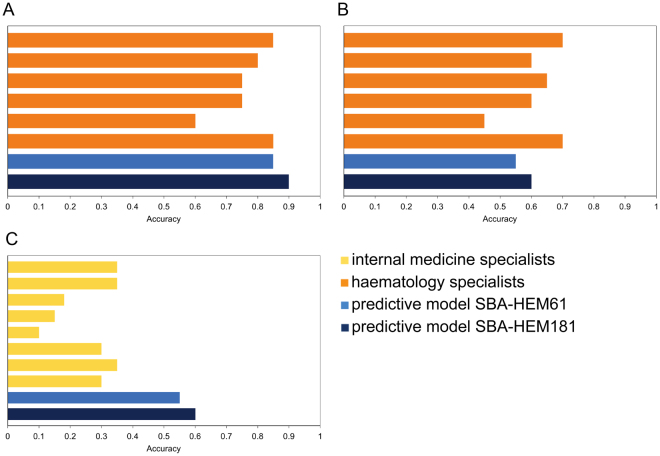
Quick and accurate medical diagnoses are crucial for the successful treatment of diseases. Using machine learning algorithms and based on laboratory blood test results, we have built two models to predict a haematologic disease. One predictive model used all the available blood test parameters and the other used only a reduced set that is usually measured upon patient admittance. Both models produced good results, obtaining prediction accuracies of 0.88 and 0.86 when considering the list of five most likely diseases and 0.59 and 0.57 when considering only the most likely disease. The models did not differ significantly, which indicates that a reduced set of parameters can represent a relevant “fingerprint” of a disease. This knowledge expands the model’s utility for use by general practitioners and indicates that blood test results contain more information than physicians generally recognize. A clinical test showed that the accuracy of our predictive models was on par with that of haematology specialists. Our study is the first to show that a machine learning predictive model based on blood tests alone can be successfully applied to predict haematologic diseases. This result and could open up unprecedented possibilities for medical diagnosis.
Overview
The claims and statistics of this paper haven’t been checked yet.
Free: it reads the open-access text and checks the first 5 claims that cite a source we can check. Create a free account to check every claim.
Integrity signals
Registry
Cites
Statistics
Figures
Verification
Claims the paper makes
The claims and statistics of this paper haven’t been checked yet.
Free: it reads the open-access text and checks the first 5 claims that cite a source we can check. Create a free account to check every claim.
Claims other papers make about this one
Each is checked against this paper’s own text: does it say what the citing paper says it does?
The cited source says what the claim attributes to it.
In the citing paper
“Hematology and serology can benefit from microscope-integrated AIs 42 that diagnose common conditions 43 or count blood cells of various types 44 -repetitive tasks that are easy to augment with CNNs.”
From Deep learning-enabled medical computer vision (2021) · cites this paper as [43]
Self-check
Percentages, sums and reported differences re-computed from the paper’s own numbers.
The self-check needs the paper’s full text.
Citations
Cites
Breiman, L. (2001) · Machine Learning · doi:10.1023/a:1010933404324 · Cited by 133,538
LIBSVM: A library for support vector machines
Chang, C.-C., & Lin, C.-J. (2011) · ACM Transactions on Intelligent Systems and Technology · doi:10.1145/1961189.1961199 · Cited by 40,918
The Nature of Statistical Learning Theory
Vapnik, V. N. (1995) · doi:10.1007/978-1-4757-2440-0 · Cited by 39,138
SMOTE synthetic minority over-sampling technique
Chawla, N. V., Bowyer, K. W., Hall, L. O., & Kegelmeyer, W. P. (2002) · Journal of Artificial Intelligence Research · doi:10.1613/jair.953 · Cited by 32,865
UCI Machine Learning Repository
Asuncion, A. (2007) · Medical Entomology and Zoology · Cited by 25,416
An introduction to ROC analysis
Fawcett, T. (2006) · Pattern Recognition Letters · doi:10.1016/j.patrec.2005.10.010 · Cited by 21,879 · cited 1×
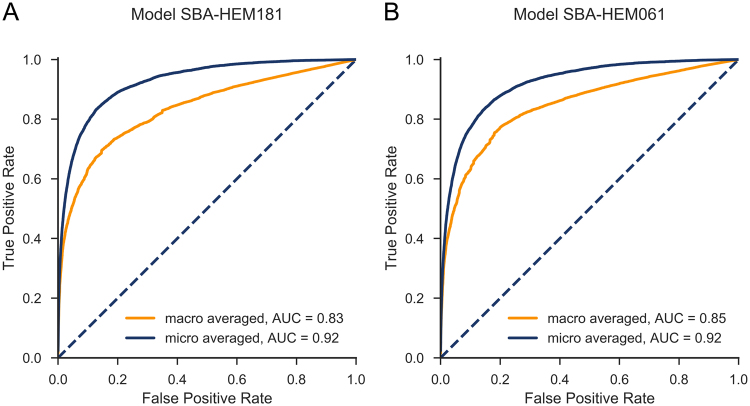
“For two-class problems and scoring classifiers (i.e., a classifier that produces a score for each possible class and predicts the class with the maximum score), ROC curves are produced in a straightforward manner by ordering the maximum scores and varying the decision threshold 25 .”
BackgroundDermatologist-level classification of skin cancer with deep neural networks
Esteva, A., Kuprel, B., Novoa, R. A., Ko, J., Swetter, S. M., Blau, H. M., & Thrun, S. (2017) · Nature · doi:10.1038/nature21056 · Cited by 14,362 · cited 1×
“Recently, a model capable of classifying skin cancers based on images of the skin was presented that achieves a level of competence comparable to that of a dermatologist 7 .”
BackgroundMachine learning: Trends, perspectives, and prospects
Jordan, M. I., & Mitchell, T. M. (2015) · Science · doi:10.1126/science.aaa8415 · Cited by 9,955 · cited 1×
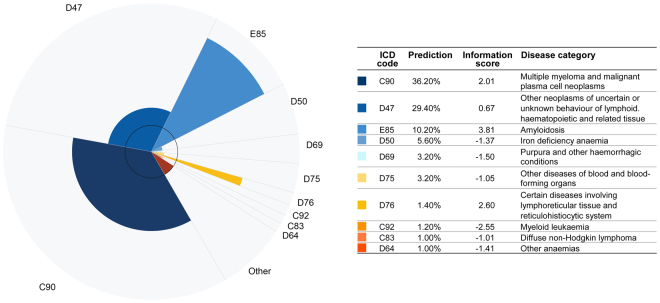
“In these two equations (1, 2), r is the radius (information score) and ø the angle (predicted probability) of disease x.”
BackgroundEnsemble methods in machine learning
Dietterich, T. G. (2000) · Lecture Notes in Computer Science · doi:10.1007/3-540-45014-9_1 · Cited by 8,408
A systematic analysis of performance measures for classification tasks
Sokolova, M., & Lapalme, G. (2009) · Information Processing & Management · doi:10.1016/j.ipm.2009.03.002 · Cited by 7,515 · cited 1×
“We applied two approaches suitable for observing overall classifier performance in multi-class problems: macro-averaging and micro-averaging 26 .”
Method
Research works printed but not linked: 2
- Kononenko, I. In Proc. 4th European Working Session on Learning. 91–98 (1989).
- Conover, W. Statistics of the Kolmogorov-Smirnov type in Practical nonparametric statistics, 428–473 (John Wiley & Sons, 1999).
Cited by
Deep learning-enabled medical computer vision
Esteva, A., Chou, K., Yeung, S., Naik, N., Madani, A., Mottaghi, A., Liu, Y., Topol, E., Dean, J., & Socher, R. (2021) · npj Digital Medicine · doi:10.1038/s41746-020-00376-2 · Cited by 1,406
Artificial intelligence in drug development: Present status and future prospects
Mak, K.-K., & Pichika, M. R. (2019) · Drug Discovery Today · doi:10.1016/j.drudis.2018.11.014 · Cited by 1,018
A Structure-Based Drug Discovery Paradigm
Batool, M., Ahmad, B., & Choi, S. (2019) · International Journal of Molecular Sciences · doi:10.3390/ijms20112783 · Cited by 744
Deep learning in drug discovery: opportunities, challenges and future prospects
Lavecchia, A. (2019) · Drug Discovery Today · doi:10.1016/j.drudis.2019.07.006 · Cited by 353
Translational AI and deep learning in diagnostic pathology
Serag, A., Ion-Margineanu, A., Qureshi, H., McMillan, R., Saint Martin, M.-J., Diamond, J., O'Reilly, P., & Hamilton, P. (2019) · Frontiers in Medicine · doi:10.3389/fmed.2019.00185 · Cited by 274
“There are AI apps being researched and developed in health care from emergency call assessment of myocardial risk (6) to blood test analysis (7) to drug discovery (8).”
BackgroundArtificial Intelligence in Healthcare: Review, Ethics, Trust Challenges & Future Research Directions
Kumar, P., Chauhan, S., & Awasthi, L. K. (2023) · Engineering Applications of Artificial Intelligence · doi:10.1016/j.engappai.2023.105894 · Cited by 218
Botlagunta, M., Botlagunta, M. D., Myneni, M. B., Lakshmi, D., Nayyar, A., Gullapalli, J. S., & Shah, M. A. (2023) · Scientific Reports · doi:10.1038/s41598-023-27548-w · Cited by 193
COVID-19 diagnosis by routine blood tests using machine learning
Kukar, M., Gunčar, G., Vovko, T., Podnar, S., Černelč, P., Brvar, M., Zalaznik, M., Notar, M., Moškon, S., & Notar, M. (2021) · Scientific Reports · doi:10.1038/s41598-021-90265-9 · Cited by 179
Self-citationNwanosike, E. M., Conway, B. R., Merchant, H. A., & Hasan, S. S. (2022) · International Journal of Medical Informatics · doi:10.1016/j.ijmedinf.2021.104679 · Cited by 136
Ensemble learning model for diagnosing COVID-19 from routine blood tests
AlJame, M., Ahmad, I., Imtiaz, A., & Mohammed, A. (2020) · Informatics in Medicine Unlocked · doi:10.1016/j.imu.2020.100449 · Cited by 162
“As reported in the study [27], it is difficult for even an experienced physician to extract all the information contained in routine blood tests.”
Gangwal, A., Ansari, A., Ahmad, I., Azad, A. K., & Sulaiman, W. M. A. W. (2024) · Computers in Biology and Medicine · doi:10.1016/j.compbiomed.2024.108734 · Cited by 167
Machine learning and artificial intelligence in haematology
Shouval, R., Fein, J. A., Savani, B. N., Mohty, M., & Nagler, A. (2020) · British Journal of Haematology · doi:10.1111/bjh.16915 · Cited by 140
“34 IBM Watson for Oncology uses machine-learning algorithms and nat-ural language processing of the EMR to combine patient and disease features, published literature, available clinical trials and leading oncologists’ experience to suggest and rank treat-ment options.”
Suicide Risk Assessment Using Machine Learning and Social Networks: a Scoping Review
Castillo-Sánchez, G., Marques, G., Dorronzoro, E., Rivera-Romero, O., Franco, M., & Díez, I. D. L. T. (2020) · Journal of Medical Systems · doi:10.1007/s10916-020-01669-5 · Cited by 130
Sanchez-Martinez, S., Camara, O., Piella, G., Cikes, M., González-Ballester, M. Á., Miron, M., Vellido, A., Gómez, E., Fraser, A. G., & Bijnens, B. (2022) · Frontiers in Cardiovascular Medicine · doi:10.3389/fcvm.2021.765693 · Cited by 85
Using Machine Learning to Identify Health Outcomes from Electronic Health Record Data
Wong, J., Horwitz, M. E. M., Zhou, L., & Toh, S. (2018) · Current Epidemiology Reports · doi:10.1007/s40471-018-0165-9 · Cited by 121
Data Driven Approach for Eye Disease Classification with Machine Learning
Malik, S., Kanwal, N., Asghar, M. N., Sadiq, M. A. A., Karamat, I., & Fleury, M. (2019) · Applied Sciences · doi:10.3390/app9142789 · Cited by 127
The Value of Artificial Intelligence in Laboratory Medicine
Paranjape, K., Schinkel, M., Hammer, R. D., Schouten, B., Nannan Panday, R. S., Elbers, P. W. G., Kramer, M. H. H., & Nanayakkara, P. (2021) · American Journal of Clinical Pathology · doi:10.1093/ajcp/aqaa170 · Cited by 89
Automated prediction of mastitis infection patterns in dairy herds using machine learning
Hyde, R. M., Down, P. M., Bradley, A. J., Breen, J. E., Hudson, C. D., Leach, K. A., & Green, M. J. (2020) · Scientific Reports · doi:10.1038/s41598-020-61126-8 · Cited by 109
Alaoui, Y. E., Elomri, A., Qaraqe, M., Padmanabhan, R., Taha, R. Y., Omri, H. E., Omri, A. E., & Aboumarzouk, O. M. (2022) · Journal of Medical Internet Research · doi:10.2196/36490 · Cited by 92
Machine learning and artificial intelligence in the service of medicine: Necessity or potentiality?
Alsuliman, T., Humaidan, D., & Sliman, L. (2020) · Current Research in Translational Medicine · doi:10.1016/j.retram.2020.01.002 · Cited by 79
Heg.IA: an intelligent system to support diagnosis of Covid-19 based on blood tests
de Freitas Barbosa, V. A., Gomes, J. C., de Santana, M. A., Albuquerque, J. E. D. A., de Souza, R. G., de Souza, R. E., & dos Santos, W. P. (2022) · Research on Biomedical Engineering · doi:10.1007/s42600-020-00112-5 · Cited by 77
Artificial Intelligence in Brain Tumour Surgery—An Emerging Paradigm
Williams, S. C., Horsfall, H. L., Funnell, J. P., HANRAHAN, J. G., Khan, D. Z., Muirhead, W. R., Stoyanov, D. V., & Marcus, H. J. (2021) · Cancers · doi:10.3390/cancers13195010 · Cited by 89
Oyewola, D. O., Dada, E. G., Misra, S., & Damaševičius, R. (2022) · Applied Artificial Intelligence · doi:10.1080/08839514.2022.2033473 · Cited by 85
“Deep learning methods can be used to classify image blood samples into infected and uninfected data sets (Fuhad et al. 2020; Gunčar et al. 2018) and to segment leucocytes from blood smear images (Kadry et al. 2021).”
MethodTransforming Health Care With Artificial Intelligence: Redefining Medical Documentation
Bongurala, A. R., Save, D., Virmani, A., & Kashyap, R. (2024) · Mayo Clinic Proceedings: Digital Health · doi:10.1016/j.mcpdig.2024.05.006 · Cited by 72
Qiu, H., Luo, L. K., Su, Z., Zhou, L., Wang, L., & Chen, Y. (2020) · BMC Medical Informatics and Decision Making · doi:10.1186/s12911-020-1101-8 · Cited by 76
Integration of artificial intelligence in clinical laboratory medicine: Advancements and challenges
Xie, H., Jia, Y. H., & Liu, S. (2024) · Interdisciplinary medicine · doi:10.1002/inmd.20230056 · Cited by 85
Salazar-Reyna, R., Aleu, F. G., Gutiérrez, E. M. A. G., Díaz-Ramírez, J., Garza‐Reyes, J. A., & Kumar, A. (2020) · Management Decision · doi:10.1108/md-01-2020-0035 · Cited by 63
Işıksaçan, Z., D’Alessandro, A., Wolf, S. M., McKenna, D. H., Tessier, S. N., Kucukal, E., Gökaltun, A., William, N., Sandlin, R. D., Bischof, J. C., et al. (2023) · Proceedings of the National Academy of Sciences · doi:10.1073/pnas.2115616120 · Cited by 58
Machine learning approaches classify clinical malaria outcomes based on haematological parameters
Morang’a, C. M., Amenga-Etego, L. N.-K., Bah, S. Y., Appiah, V., Amuzu, D. S. Y., Amoako, N., Abugri, J., Oduro, A. R., Cunnington, A. J., Awandare, G. A., et al. (2020) · BMC Medicine · doi:10.1186/s12916-020-01823-3 · Cited by 58
“Previous ML studies have looked into haematological parameters more generally and to classify sickle cell anaemia using deep convolutional networks [41, 42], but did not classify clinical diagnosis.”
BackgroundFallah, N., Noonan, V. K., Waheed, Z., Rivers, C. S., Plashkes, T., Bedi, M., Etminan, M., Thorogood, N. P., Ailon, T. T., Chan, E., et al. (2021) · The Spine Journal · doi:10.1016/j.spinee.2021.08.003 · Cited by 52
Syed-Abdul, S., Firdani, R.-P., Chung, H., Uddin, M., Hur, M., Park, J. H., Kim, H. W., Gradišek, A., & Dovgan, E. (2020) · Scientific Reports · doi:10.1038/s41598-020-61247-0 · Cited by 55
An Ensemble Learning Model for COVID-19 Detection from Blood Test Samples
Abayomi‐Alli, O., Damaševičius, R., Maskeliūnas, R., & Misra, S. (2022) · Sensors · doi:10.3390/s22062224 · Cited by 60
Ambreen, S., Umar, M., Noor, A., Jain, H., & Ali, R. (2024) · European Journal of Medicinal Chemistry · doi:10.1016/j.ejmech.2024.117164 · Cited by 54
Feature Selection based Artificial Intelligence Techniques for the Prediction of COVID like Diseases
Dutta, P., Paul, S., Obaid, A. J., Pal, S., & Mukhopadhyay, K. (2021) · Journal of Physics Conference Series · doi:10.1088/1742-6596/1963/1/012167 · Cited by 55
“Such diversification is really fruitful in medical informatics (Gunčar et al., 2018).”
BackgroundBlood Diseases Detection using Classical Machine Learning Algorithms
Alsheref, F. K., & Hassan, W. (2019) · International Journal of Advanced Computer Science and Applications · doi:10.14569/ijacsa.2019.0100712 · Cited by 54
Ephraim, R. K. D., Kotam, G. P., Duah, E., Ghartey, F. N., Mathebula, E. M., & Mashamba-Thompson, T. P. (2024) · Smart Health · doi:10.1016/j.smhl.2024.100505 · Cited by 58
Fractional Dynamics Foster Deep Learning of COPD Stage Prediction
Yin, C., Udrescu, M., Gupta, G., Cheng, M., Lihu, A., Udrescu, L., Bogdan, P., Mannino, D. M., & Mihaicuta, S. D. (2023) · Advanced Science · doi:10.1002/advs.202203485 · Cited by 50
Artificial Intelligence Bias in Health Care: Web-Based Survey
Vorisek, C. N., Stellmach, C., Mayer, P. J., Klopfenstein, S. A. I., Bures, D., Diehl, A., Henningsen, M., Ritter, K., & Thun, S. (2023) · Journal of Medical Internet Research · doi:10.2196/41089 · Cited by 51
Krenzer, A., Makowski, K., Hekalo, A., Fitting, D., Troya, J., Zoller, W. G., Hann, A., & Puppe, F. (2022) · BioMedical Engineering OnLine · doi:10.1186/s12938-022-01001-x · Cited by 46
“We decided to use Docker([4]) for this task.”
BackgroundMethodInfluentialBayat, V., Phelps, S., Ryono, R. A., Lee, C., Parekh, H., Mewton, J., Sedghi, F., Etminani, P., & Holodniy, M. (2020) · Clinical Infectious Diseases · doi:10.1093/cid/ciaa1175 · Cited by 47
“Molecular-based tests are at present the reference standard method of confirming a COVID-19 diagnosis; however, it is becoming well established that it is a limited standard, with many false negatives possibly due to patient status, sample type, and testing sensitivity and quality.”
ResultInfluentialCovid-19 rapid test by combining a Random Forest-based web system and blood tests
Barbosa, V. A. D. F., Gomes, J. C., de Santana, M. A., de Lima, C. L., Calado, R. B., Júnior, C. R. B., Albuquerque, J. E. D. A., de Souza, R. G., de Araújo, R. J. E., Júnior, L. A. R. M., et al. (2021) · Journal of Biomolecular Structure and Dynamics · doi:10.1080/07391102.2021.1966509 · Cited by 45
Carobene, A., Cabitza, F., Bernardini, S., Gopalan, R., Lennerz, J. K., Weir, C., & Cadamuro, J. (2023) · Clinical Chemistry and Laboratory Medicine (CCLM) · doi:10.1515/cclm-2022-1030 · Cited by 42
Machine Learning in Prediction of Bladder Cancer on Clinical Laboratory Data
Tsai, I.-J., Shen, W.-C., Lee, C.-L., Wang, H., & Lin, C. (2022) · Diagnostics · doi:10.3390/diagnostics12010203 · Cited by 42
Differential diagnosis of bone marrow failure syndromes guided by machine learning
Gutierrez‐Rodrigues, F., Munger, E., Ma, X., Groarke, E. M., Tang, Y., Patel, B. A., Catto, L. F. B., Clé, D. V., Niewisch, M. R., Alves‐Paiva, R. M., et al. (2022) · Blood · doi:10.1182/blood.2022017518 · Cited by 41
Diagnosing brain tumours by routine blood tests using machine learning
Podnar, S., Kukar, M., Gunčar, G., Notar, M., Gošnjak, N., & Notar, M. (2019) · Scientific Reports · doi:10.1038/s41598-019-51147-3 · Cited by 43
Self-citationCadamuro, J. (2021) · Diagnostics · doi:10.3390/diagnostics11081399 · Cited by 50
Machine Learning Models for Early Prediction of Sepsis on Large Healthcare Datasets
Camacho-Cogollo, J. E., Bonet, I., Gil, B., & Iadanza, E. (2022) · Electronics · doi:10.3390/electronics11091507 · Cited by 46
Machine learning classification for field distributions of photonic modes
Barth, C., & Becker, C. (2018) · Communications Physics · doi:10.1038/s42005-018-0060-1 · Cited by 36
“Machine learning is currently applied to all aspects of science, from not only health sciences and psychology 2,3 , biology 4 – 6 and environmental 7 and material sciences 8,9 , but also to matters of everyday life from online security to fi nance and insurance.”
BackgroundKimura, K., Ai, T., Horiuchi, Y., Matsuzaki, A., Nishibe, K., Marutani, S., Saito, K., Kaniyu, K., Takehara, I., Uchihashi, K., et al. (2021) · Scientific Reports · doi:10.1038/s41598-021-82826-9 · Cited by 33
Chocholova, E., Bertok, T., Jane, E., Lorencova, L., Holazova, A., Belicka, L., Belicky, S., Mislovicova, D., Vikartovska, A., Imrich, R., et al. (2018) · Clinica Chimica Acta · doi:10.1016/j.cca.2018.02.031 · Cited by 31
Li, K.-Y., Burnside, N. G., de Lima, R. S., Villoslada, M., Sepp, K., Pinheiro, V. H. C., de Lima, B. R. C. A., Yang, M., Vain, A., & Sepp, K. (2021) · Remote Sensing · doi:10.3390/rs13163190 · Cited by 32
Flap failure prediction in microvascular tissue reconstruction using machine learning algorithms
Shi, Y.-C., Li, J., Li, S.-J., Li, Z., Zhang, H., Wu, Z., & Wu, Z. (2022) · World Journal of Clinical Cases · doi:10.12998/wjcc.v10.i12.3729 · Cited by 29
Bettanti, A., Beccari, A. R., & Biccarino, M. (2024) · Discover Artificial Intelligence · doi:10.1007/s44163-024-00188-3 · Cited by 36
Deif, M. A., Hammam, R. E., & Solyman, A. (2021) · International journal of intelligent engineering and systems · doi:10.22266/ijies2021.0430.16 · Cited by 28
Machine Learning to Quantitate Neutrophil NETosis
Elsherif, L., Sciaky, N., Metts, C. A., Modasshir, M., Rekleitis, I. M., Burris, C. A., Walker, J. A., Ramadan, N., Leisner, T. M., Holly, S. P., et al. (2019) · Scientific Reports · doi:10.1038/s41598-019-53202-5 · Cited by 30
Doewes, R. I., Nair, R., & Sharma, T. (2021) · World Journal of Engineering · doi:10.1108/wje-03-2021-0174 · Cited by 27
RetractedJahangirimehr, A., Shahvali, E. A., Rezaeijo, S. M., Khalighi, A., Honarmandpour, A., Honarmandpour, F., Labibzadeh, M., Bahmanyari, N., & Heydarheydari, S. (2022) · Clinical Nutrition ESPEN · doi:10.1016/j.clnesp.2022.07.011 · Cited by 27
Togo, M. V., Mastrolorito, F., Orfino, A., Graps, E. A., Tondo, A. R., Altomare, C., Ciriaco, F., Trisciuzzi, D., Nicolotti, O., & Amoroso, N. (2023) · Expert Opinion on Drug Metabolism & Toxicology · doi:10.1080/17425255.2023.2298827 · Cited by 25
“Outlined in Figure 2, ML algorithms within the AI domain are generally classified into three fundamental approaches: supervised learning [91,92], unsupervised learning [91,93], and reinforcement learning [94,95].”
Artificial intelligence in routine blood tests
Santos-Silva, M. A., Sousa, N., & Sousa, J. C. (2024) · Frontiers in Medical Engineering · doi:10.3389/fmede.2024.1369265 · Cited by 30
Diao, X., Huo, Y., Yan, Z., Wang, H., Yuan, J., Wang, Y., Cai, J., & Zhao, W. (2021) · JMIR Medical Informatics · doi:10.2196/19739 · Cited by 25
Machine Learning Applications in the Diagnosis of Benign and Malignant Hematological Diseases
Muhsen, I. N., Shyr, D. C., Sung, A. D., & Hashmi, S. K. (2020) · Clinical Hematology International · doi:10.2991/chi.k.201130.001 · Cited by 29
“Guncar et al. [35] have used the random forest method to create a model that is able to analyze patterns between the different blood indices (which are usually over-looked) to guide clinicians to the five most possible hematologic diagnoses (both benign and malignant) at an early stage of…”
MethodMadsen, A., Almås, B., Bruserud, I. S., Oehme, N. H. B., Nielsen, C. S., Roelants, M., Hundhausen, T., Ljubicic, M. L., Bjerknes, R., Mellgren, G., et al. (2022) · The Journal of Clinical Endocrinology & Metabolism · doi:10.1210/clinem/dgac155 · Cited by 23
COVID-19’s influence on cardiac function: a machine learning perspective on ECG analysis
Gomes, J. C., de Santana, M. A., Masood, A. I., de Lima, C. L., & dos Santos, W. P. (2023) · Medical & Biological Engineering & Computing · doi:10.1007/s11517-023-02773-7 · Cited by 26
Barton, M., Hamza, M., & Guevel, B. (2023) · Cureus · doi:10.7759/cureus.35037 · Cited by 24
“These tools have also been involved in the diagnosis of diabetic retinopathy, breast tumors, skin cancer, certain hematological diseases, and even coronary artery disease [6-10].”
BackgroundPredicting Hepatotoxicity Associated with Low-Dose Methotrexate Using Machine Learning
Hu, Q., Wang, H., & Xu, T. (2023) · Journal of Clinical Medicine · doi:10.3390/jcm12041599 · Cited by 23
Cuplov, V., & André, N. (2020) · Cancers · doi:10.3390/cancers12071944 · Cited by 22
Luchinin, A. S. (2024) · Clinical oncohematology · doi:10.21320/2500-2139-2023-16-1-27-36 · Cited by 29
Gunčar, G., Kukar, M., Smole, T., Moškon, S., Vovko, T. D., Podnar, S., Černelč, P., Brvar, M., Notar, M., Koster, M., et al. (2024) · Heliyon · doi:10.1016/j.heliyon.2024.e29372 · Cited by 25
“The proposed model builds upon our previous work in the field of machine learning-based diagnostics, such as hematological disorders (Gunčar et al., 2018), COVID-19 (Kukar et al.”
MethodResultSelf-citationOwens, D., Nguyen, D. Q., Dohopolski, M. J., Rousseau, J. F., Peterson, E. D., & Návar, A. M. (2025) · Stroke · doi:10.1161/strokeaha.125.051993 · Cited by 20
Integration of Federated Learning and Blockchain in Healthcare: A TutorialPreprint
Shahsavari, Y., Dambri, O. A., Baseri, Y., Hafid, A. S., & Makrakis, D. (2024) · TechRxiv · doi:10.36227/techrxiv.171340632.25905526/v1 · Cited by 27
The Value of Clinical Decision Support in Healthcare: A Focus on Screening and Early Detection
Schäfer, H., Lajmi, N., Valente, P., Pedrioli, A., Cigoianu, D., Hoehne, B., Schenk, M., Guo, C., Singhrao, R., Gmuer, D., et al. (2025) · Diagnostics · doi:10.3390/diagnostics15050648 · Cited by 26
“Although the clinical judgment of hematologists and internal specialists was still slightly better than the performance of the algorithm, non-hematology internal medicine specialists achieved an accuracy of 0.26 compared to an accuracy of 0.60 provided by the CDS [28].”
InfluentialMa, J., Cui, C., Tang, Y., Hu, Y., Dong, S., Zhang, J., Xie, X., Meng, J., Wang, Z., Zhang, W., et al. (2023) · Journal of Thrombosis and Haemostasis · doi:10.1016/j.jtha.2023.12.006 · Cited by 19
Al-Tawil, M. F., Daoud, S., Hatmal, M. M., & Taha, M. O. (2022) · RSC Advances · doi:10.1039/d2ra00136e · Cited by 18
Drug Repurposing: Insights into Current Advances and Future Applications
Bhatia, T., & Sharma, S. (2023) · Current Medicinal Chemistry · doi:10.2174/0109298673266470231023110841 · Cited by 19
Yazıcı, H., Uğurlu, O., Aygül, Y., Ugur, M., Şen, Y. K., & Yıldırım, M. (2024) · BMC Emergency Medicine · doi:10.1186/s12873-024-01023-9 · Cited by 17
“In several fields of medicine, ML has been used to help clinicians in diagnosis, treatment, and various modalities [10–14].”
MethodPredicting special care during the COVID-19 pandemic: a machine learning approach
Bezzan, V. P., & Rocco, C. D. (2021) · Health Information Science and Systems · doi:10.1007/s13755-021-00164-6 · Cited by 17
Decoding Drug Discovery: Exploring A-to-Z In Silico Methods for Beginners
Rasul, H. O., Ghafoor, D. D., Aziz, B. K., Hassan, B. A., Rashid, T. A., & Kıvrak, A. (2024) · Applied Biochemistry and Biotechnology · doi:10.1007/s12010-024-05110-2 · Cited by 24
Applications of Artificial Intelligence in Philadelphia-Negative Myeloproliferative Neoplasms
Elsayed, B., Elshoeibi, A. M., Elhadary, M. R., Ferih, K., Elsabagh, A. A., Rahhal, A. A. A., Abu‐Tineh, M., Afana, M., Abdulgayoom, M., & Yassin, M. A. (2023) · Diagnostics · doi:10.3390/diagnostics13061123 · Cited by 17
“Blood specimens from 19 patients with ET, 18 with PV, and 9 with PMF were used in gene expression microarray investigations.”
Walczak, S. (2018) · International Journal of Computers in Clinical Practice · doi:10.4018/ijccp.2018070103 · Cited by 18
Amjad, H., Hussain, Z., Hasan, M., & Hassan, M. U. (2025) · Scientific Reports · doi:10.1038/s41598-025-21279-w · Cited by 16
“Haider et al. in 37 used CPD from CBC for predictive modeling to differentiate between different types of leukemia.”
InfluentialSupervised Machine Learning Methods for Seasonal Influenza Diagnosis
Márquez‐Márquez, E., Barrón-Palma, E. V., Rodríguez, K., Savage, J., & Sánchez-Sandoval, A. L. (2023) · Diagnostics · doi:10.3390/diagnostics13213352 · Cited by 16
“…We applied three exclusion criteria: (1) age < 7 years, (2) patients with a negative in-fl uenza test but positive for another respiratory virus, and (3) no RT-qPCR result record. and leverage the interactions among these numerous attributes, it becomes a compelling tool in this domain [20].”
MethodArtificial intelligence in anti-obesity drug discovery: unlocking next-generation therapeutics
Gangwal, A., & Lavecchia, A. (2025) · Drug Discovery Today · doi:10.1016/j.drudis.2025.104333 · Cited by 17
Carou‐Senra, P., Rodríguez‐Pombo, L., Monteagudo-Vilavedra, E., Awad, A., Alvarez‐Lorenzo, C., Basit, A. W., Goyanes, Á., & Couce, M. L. (2023) · Nutrients · doi:10.3390/nu16010061 · Cited by 16
Negrini, D., Zecchin, P., Ruzzenente, A., Bagante, F., NITTO, S. D., Gelati, M., Salvagno, G. L., Danese, E., & Lippi, G. (2020) · Diagnostics · doi:10.3390/diagnostics10080551 · Cited by 15
Machine-learning based stacked ensemble model for accurate multi classification of CBC Anemia
El-Boghdady, A. M., Kishk, S. E., Ashour, M. M., & AbdElhalim, E. (2023) · MEJ Mansoura Engineering Journal · doi:10.58491/2735-4202.3144 · Cited by 14
Sikka, P., Nath, A., Paul, S. S., Jerome, A., Mishra, D. C., Rao, A. R., Balhara, A. K., Chaturvedi, K. K., Yadav, K. K., & Balhara, S. (2020) · Frontiers in Veterinary Science · doi:10.3389/fvets.2020.00518 · Cited by 14
Beltrami, A. P., Martino, M. D., Dalla, E., Malfatti, M. C., Caponnetto, F., Codrich, M., Stefanizzi, D., Fabris, M., Sozio, E., D’Aurizio, F., et al. (2022) · International Journal of Molecular Sciences · doi:10.3390/ijms23169161 · Cited by 16
Diagnostic significance of C-reactive protein and hematological parameters in acute toxoplasmosis
Sandri, V., Gonçalves, I. L., das Neves, G. M., & Paraboni, M. L. R. (2020) · Journal of Parasitic Diseases · doi:10.1007/s12639-020-01262-0 · Cited by 16
“Considering the infective diseases, ML techniques were used to identify dengue (Hair et al. 2019), bacterial infections (Rawson et al. 2019) and, more recently, COVID-19 (Banerjee et al. 2020; Brinati et al. Table 2 Classification metrics of the machine learning techniques into training set for…”
MethodAnemia detection and classification from blood samples using data analysis and deep learning*
Bahadure, N. B., Khomane, R. B., & Nittala, A. (2024) · Automatika · doi:10.1080/00051144.2024.2352317 · Cited by 13
Yu, D., Zhang, H., Song, Y., Tao, Y., Zhou, F., Wang, Z., Fu, R., Sun, T., Dong, H., Gu, W., et al. (2025) · Haematologica · doi:10.3324/haematol.2024.286123 · Cited by 15
Cardozo, G., Tirloni, S. F., Moro, A. R. P., & Marques, J. L. B. (2022) · JMIR Bioinformatics and Biotechnology · doi:10.2196/40473 · Cited by 15
“In their study, Gunčar et al [13] stated that laboratory tests have more information than health professionals commonly consider.”
BackgroundIntroduction to Bioinformatics, AI, and ML for Pharmaceuticals
Chavda, V. P., Vihol, D. R., Patel, A., Redwan, E. M. M. M., & Uversky, V. N. (2023) · Wiley eBooks · doi:10.1002/9781119865728.ch1 · Cited by 23
Karaglani, M., Agorastos, A., Παναγοπούλου, Μ., Parlapani, E., Athanasis, P., Bitsios, P., Tzitzikou, K., Θεοδοσίου, Θ., Iliopoulos, I., Bozikas, V., et al. (2024) · Translational Psychiatry · doi:10.1038/s41398-024-02946-4 · Cited by 14
“Machine learning (ML) techniques for their analysis offer the opportunity to build biosignatures (panels of biomarkers) of personalized clinical importance [21 – 23].”
BackgroundArtificial intelligence to assist specialists in the detection of haematological diseases
Díaz-del-Pino, S., Trelles‐Martínez, R., González-Fernández, F., & Guil, N. (2023) · Heliyon · doi:10.1016/j.heliyon.2023.e15940 · Cited by 12
“There are only a few examples where multiclass classification is used [24] and fewer when it is combined with thousands instead of hundreds of samples [25].”
BackgroundBallaz, S., Pulgar-Sánchez, M., Chamorro, K., & Fernández-Moreira, E. (2023) · Informatics in Medicine Unlocked · doi:10.1016/j.imu.2023.101312 · Cited by 13
Chhina, A., Trehan, K., Saini, M., Thakur, S., Kaur, M., Shahtaghi, N. R., Shivgotra, R., Soni, B., Modi, A., Bakrey, H., et al. (2023) · Current Pharmaceutical Design · doi:10.2174/1381612829666230807161421 · Cited by 13
Mishra, A. K. (2020) · Wiley eBooks · doi:10.1002/9781119602927.ch2 · Cited by 12
Machine learning based on holographic scattering spectrum for mixed pollutants analysis
Duan, Q., Xu, Z., Zheng, S., Chen, J., Feng, Y., Luo, R., & Lee, J. (2020) · Analytica Chimica Acta · doi:10.1016/j.aca.2020.10.060 · Cited by 12
Application of artificial intelligence in the diagnosis of haematological disorders
Almbaidin, H., Abeden, Z., Alhawamdeh, M., Nazman, H. N. M., Hamdani, H. Y., Yusoff, N. M., & Isa, A. (2024) · Biomedical Research and Therapy · doi:10.15419/bmrat.v11i12.945 · Cited by 12
Maskrey, M. K., & Wang, W. (2018) · Apress eBooks · doi:10.1007/978-1-4842-3381-8_8 · Cited by 11
Metadata
- Authors
- Gunčar, G., Kukar, M., Notar, M., Brvar, M., Černelč, P., Notar, M., & Notar, M.
- Affiliations
- Ljubljana University Medical Centre (SI)
- Venue
- Scientific Reports
- Published
- 2018-01-11
- Volume
- 8
- Issue
- 1
- Pages
- 411-411
- ISSN
- 2045-2322 (ISSN-L)
- PMC
- PMC5765139
- OpenAlex
- W2741016737
- Cited by
- 237
- References
- 41
- Citations by year
- 2026: 11 · 2025: 22 · 2024: 31 · 2023: 41 · 2022: 46 · 2021: 29 · 2020: 32 · 2019: 15 · 2018: 9
- FWCI
- 26.80
- Type
- journal article
- Language
- en
- Open access
- gold
- doi.org
- Licence
- cc-by
- creativecommons.org/licenses/by/4.0 (tdm)
- creativecommons.org/licenses/by/4.0 (vor)
- Locations
- Scientific Reports (publishedVersion, cc-by)
- PubMed Central (publishedVersion, cc-by)
- PubMed (publishedVersion)
- arXiv (Cornell University) (submittedVersion)
- DOAJ (DOAJ: Directory of Open Access Journals) (submittedVersion, cc-by-sa)
- arXiv (Cornell University)
- Topics
- Health Sciences › Health Professions › Health Information Management › Artificial Intelligence in Healthcare
- Physical Sciences › Computer Science › Computer Vision and Pattern Recognition › Digital Imaging for Blood Diseases
- Health Sciences › Medicine › Hematology › Hematological disorders and diagnostics
- Keywords
- laboratory diagnosis, disease classification, clinical decision support, general practitioners, diagnostic accuracy
- MeSH terms
- Machine Learning, Adult, Bayes Theorem, Hematologic Diseases, Humans, Models, Theoretical
About these checks
Registry, retraction, Cites and statistics results are computed, not judged, with one exception: a printed reference that no index lists is read once by a model before it counts as a citation error. Claims are extracted by a model and kept only when their quote appears verbatim in the text; each cited source is then checked, with a model’s help, for whether it says what the claim relies on. Those verdicts can be wrong — read the claim’s quote and the cited source before relying on one.
Statistics and arithmetic are recomputed, not judged.
Confidence bands are shown only for fields calibrated on our annotated test set. None is calibrated yet, so no band is shown.
What counts as a claim ›How we measure confidence ›How we check this ›
Are you an author, or do you see a problem with this page? Request a review
Data sources
Bibliographic data: Semantic Scholar, OpenAlex, Crossref.
Contains information from the Semantic Scholar Academic Graph Datasets, made available under the ODC Attribution License (ODC-BY 1.0).
Semantic Scholar’s data is described in: Kinney, R., et al. (2023). The Semantic Scholar Open Data Platform. arXiv:2301.10140.
