

A novel human induced pluripotent stem cell blood-brain barrier model: Applicability to study antibody-triggered receptor-mediated transcytosis
Open accessThe DOI matches its Crossref record; 67 of the 67 references it cites were found in a registry or an index.
Abstract
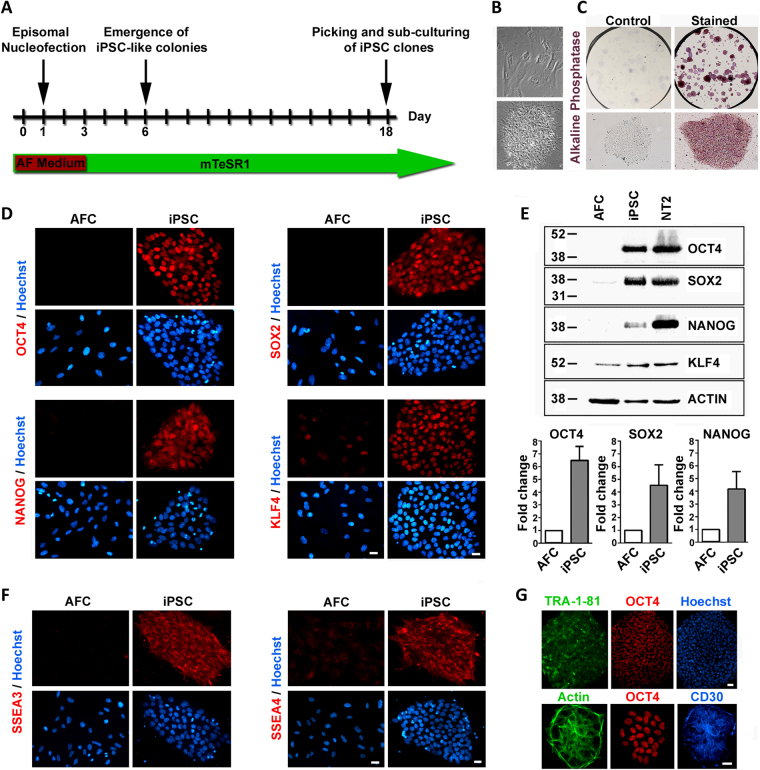
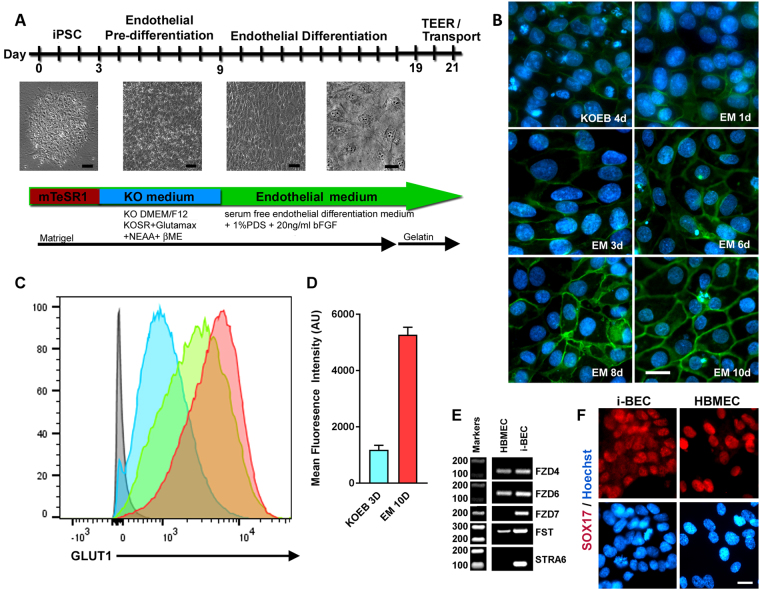
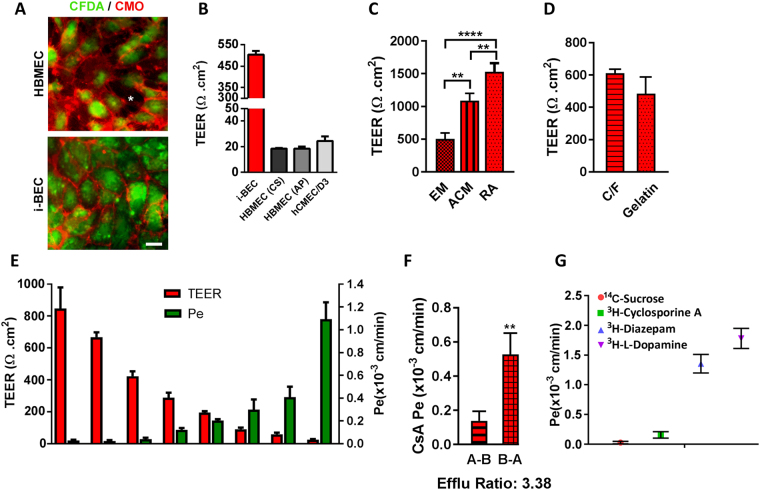
We have developed a renewable, scalable and transgene free human blood-brain barrier model, composed of brain endothelial cells (BECs), generated from human amniotic fluid derived induced pluripotent stem cells (AF-iPSC), which can also give rise to syngeneic neural cells of the neurovascular unit. These AF-iPSC-derived BECs (i-BEC) exhibited high transendothelial electrical resistance (up to 1500 Ω cm 2) inducible by astrocyte-derived molecular cues and retinoic acid treatment, polarized expression of functional efflux transporters and receptor mediated transcytosis triggered by antibodies against specific receptors. In vitro human BBB models enable pre-clinical screening of central nervous system (CNS)-targeting drugs and are of particular importance for assessing species-specific/selective transport mechanisms. This i-BEC human BBB model discriminates species-selective antibody- mediated transcytosis mechanisms, is predictive of in vivo CNS exposure of rodent cross-reactive antibodies and can be implemented into pre-clinical CNS drug discovery and development processes.
Overview
The claims and statistics of this paper haven’t been checked yet.
Free: it reads the open-access text and checks the first 5 claims that cite a source we can check. Create a free account to check every claim.
Integrity signals
Registry
Cites
Statistics
Figures
Verification
Claims the paper makes
The claims and statistics of this paper haven’t been checked yet.
Free: it reads the open-access text and checks the first 5 claims that cite a source we can check. Create a free account to check every claim.
Claims other papers make about this one
Each is checked against this paper’s own text: does it say what the citing paper says it does?
The source backs part of the claim, not all of it — or backs it for a different population, condition or comparison.
In the citing paper
“dhBMEC monolayers express a wide range of BBB markers, including tight junction (TJ) proteins (Fig. 1b), transporters, and efflux pumps, and typically attain transendothelial electrical resistance (TEER) > 1500 Ω cm2 [27, 28, 31, 34–37].”
From Role of iPSC-derived pericytes on barrier function of iPSC-derived brain microvascular endothelial cells in 2D and 3D (2019) · cites this paper as [36]
Experimental — accuracy not yet measuredThe cited source says what the claim attributes to it.
In the citing paper
“Other studies have shown mixed results regarding the effect of pericytes or other supporting cell types on TEER of dhBMEC monolayers [20, 33, 36, 41, 52–54].”
From Role of iPSC-derived pericytes on barrier function of iPSC-derived brain microvascular endothelial cells in 2D and 3D (2019) · cites this paper as [36]
Self-check
Percentages, sums and reported differences re-computed from the paper’s own numbers.
The self-check needs the paper’s full text.
Citations
Cites
1 retracted
Yamamizu, K., Iwasaki, M., Takakubo, H., Sakamoto, T., Ikuno, T., Miyoshi, M., Kondo, T., Nakao, Y., Nakagawa, M., Inoue, H., et al. (2017) · Stem Cell Reports · doi:10.1016/j.stemcr.2017.01.023 · Cited by 49
RetractedStructure and function of the blood–brain barrier
Abbott, N. J., Patabendige, A. A. K., Dolman, D. E. M., Yusof, S. R., & Begley, D. J. (2010) · Neurobiology of Disease · doi:10.1016/j.nbd.2009.07.030 · Cited by 5,185
Ghose, A. K., Viswanadhan, V. N., & Wendoloski, J. J. (1999) · Journal of Combinatorial Chemistry · doi:10.1021/cc9800071 · Cited by 3,068
Human induced pluripotent stem cells free of vector and transgene sequences
Yu, J., Hu, K., Smuga-Otto, K., Tian, S., Stewart, R., Slukvin, I. I., & Thomson, J. A. (2009) · Science · doi:10.1126/science.1172482 · Cited by 2,386
Establishment and Dysfunction of the Blood-Brain Barrier
Zhao, Z., Nelson, A. R., Betsholtz, C., & Zlokovic, B. V. (2015) · Cell · doi:10.1016/j.cell.2015.10.067 · Cited by 1,670
Blood‐brain barrier‐specific properties of a human adult brain endothelial cell line
Weksler, B. B., Subileau, E. A., Perrière, N., Charneau, P., Holloway, K., Leveque, M., Tricoire‐Leignel, H., Nicotra, A., Bourdoulous, S., Turowski, P., et al. (2005) · The FASEB Journal · doi:10.1096/fj.04-3458fje · Cited by 1,330
Derivation of human embryonic stem cells in defined conditions
Ludwig, T. E., Levenstein, M. E., Jones, J. M., Berggren, W. T., Mitchen, E. R., Frane, J. L., Crandall, L. J., Daigh, C. A., Conard, K. R., Piekarczyk, M. S., et al. (2006) · Nature Biotechnology · doi:10.1038/nbt1177 · Cited by 1,114
Quantitative targeted absolute proteomics of human blood-brain barrier transporters and receptors
Uchida, Y., Ohtsuki, S., Katsukura, Y., Ikeda, C., Suzuki, T., Kamiie, J., & Terasaki, T. (2011) · Journal of Neurochemistry · doi:10.1111/j.1471-4159.2011.07208.x · Cited by 881
Helms, H. C., Abbott, N. J., Burek, M., Cecchelli, R., Couraud, P.-O., Deli, M. A., Förster, C., Galla, H. J., Romero, I. A., Shusta, E. V., et al. (2016) · Journal of Cerebral Blood Flow & Metabolism · doi:10.1177/0271678x16630991 · Cited by 843
Approaches to transport therapeutic drugs across the blood–brain barrier to treat brain diseases
Gabathuler, R. (2010) · Neurobiology of Disease · doi:10.1016/j.nbd.2009.07.028 · Cited by 802
Derivation of blood-brain barrier endothelial cells from human pluripotent stem cells
Lippmann, E. S., Azarin, S. M., Kay, J. E., Nessler, R. A., Wilson, H. K., Al-Ahmad, A., Palecek, S. P., & Shusta, E. V. (2012) · Nature Biotechnology · doi:10.1038/nbt.2247 · Cited by 800
A cell culture model of the blood-brain barrier.
Rubin, L. L., Hall, D. E., Porter, S., Barbu, K., Cannon, C., Horner, H. C., Janatpour, M., Liaw, C. W., Manning, K., & Morales, J. (1991) · The Journal of cell biology · doi:10.1083/jcb.115.6.1725 · Cited by 765
Wnt/β-catenin signaling is required for CNS, but not non-CNS, angiogenesis
Daneman, R., Agalliu, D., Zhou, L., Kuhnert, F., Kuo, C. J., & Barres, B. A. (2009) · Proceedings of the National Academy of Sciences · doi:10.1073/pnas.0805165106 · Cited by 753
The Blood-Brain Barrier and Cancer: Transporters, Treatment, and Trojan Horses
Deeken, J. F., & Löscher, W. (2007) · Clinical Cancer Research · doi:10.1158/1078-0432.ccr-06-2854 · Cited by 721
Phase II and Phase III attrition rates 2011–2012
Arrowsmith, J., & Miller, P. (2013) · Nature Reviews Drug Discovery · doi:10.1038/nrd4090 · Cited by 697
Permeability Studies on In Vitro Blood–Brain Barrier Models: Physiology, Pathology, and Pharmacology
Deli, M. A., Ábrahám, C. S., Kataoka, Y., & Niwa, M. (2005) · Cellular and Molecular Neurobiology · doi:10.1007/s10571-004-1377-8 · Cited by 643
Andreone, B. J., Chow, B. W., Tata, A., Lacoste, B., Ben-Zvi, A., Bullock, K., Deik, A. A., Ginty, D. D., Clish, C. B., & Gu, C. (2017) · Neuron · doi:10.1016/j.neuron.2017.03.043 · Cited by 636
Modelling of the blood–brain barrier in drug discovery and development
Cecchelli, R., Berezowski, V., Lundquist, S., Culot, M., Renftel, M., Dehouck, M.-P., & Fenart, L. (2007) · Nature Reviews Drug Discovery · doi:10.1038/nrd2368 · Cited by 618
Engaging neuroscience to advance translational research in brain barrier biology
Neuwelt, E. A., Bauer, B., Fahlke, C., Fricker, G., Iadecola, C., Janigro, D., Leybaert, L., Molnár, Z., O'Donnell, M. E., Povlishock, J. T., et al. (2011) · Nature Reviews Neuroscience · doi:10.1038/nrn2995 · Cited by 579
Self-citationBlood-brain barrier drug targeting: the future of brain drug development.
Pardridge, W. M. (2003) · Molecular Interventions · doi:10.1124/mi.3.2.90 · Cited by 570
Lippmann, E. S., Al-Ahmad, A., Azarin, S. M., Palecek, S. P., & Shusta, E. V. (2014) · Scientific Reports · doi:10.1038/srep04160 · Cited by 508
A New Function for the LDL Receptor: Transcytosis of LDL across the Blood–Brain Barrier
Dehouck, B., Fenart, L., Dehouck, M.-P., Pierce, A., Torpier, G., & Cecchelli, R. (1997) · The Journal of Cell Biology · doi:10.1083/jcb.138.4.877 · Cited by 490
Live cell imaging distinguishes bona fide human iPS cells from partially reprogrammed cells
Chan, E. M., Ratanasirintrawoot, S., Park, I.-H., Manos, P. D., Loh, Y.-H., Huo, H., Miller, J. D., Hartung, O., Rho, J., Ince, T. A., et al. (2009) · Nature Biotechnology · doi:10.1038/nbt.1580 · Cited by 487
Kamiie, J., Ohtsuki, S., Iwase, R., Ohmine, K., Katsukura, Y., Yanai, K., Sekine, Y., Uchida, Y., Ito, S., & Terasaki, T. (2008) · Pharmaceutical Research · doi:10.1007/s11095-008-9532-4 · Cited by 478
In vitro models for the blood–brain barrier
Garberg, P., Ball, M., Borg, N., Cecchelli, R., Fenart, L., Hurst, R. D., Lindmark, T., Mabondzo, A., Nilsson, J. E., Raub, T. J., et al. (2005) · Toxicology in Vitro · doi:10.1016/j.tiv.2004.06.011 · Cited by 394
Self-citationShawahna, R., Uchida, Y., Declèves, X., Ohtsuki, S., Yousif, S., Dauchy, S., Jacob, A., Chassoux, F., Daumas-Duport, C., Couraud, P.-O., et al. (2011) · Molecular Pharmaceutics · doi:10.1021/mp200129p · Cited by 372
Golden, P. L., Maccagnan, T. J., & Pardridge, W. M. (1997) · Journal of Clinical Investigation · doi:10.1172/jci119125 · Cited by 369
Blood-brain barrier transcytosis of insulin in developing rabbits
Duffy, K. R., & Pardridge, W. M. (1987) · Brain Research · doi:10.1016/0006-8993(87)90236-8 · Cited by 358
A Stable and Reproducible Human Blood-Brain Barrier Model Derived from Hematopoietic Stem Cells
Cecchelli, R., Aday, S., Sevin, E., Almeida, C., Culot, M., Dehouck, L., Coisne, C., Engelhardt, B., Dehouck, M.-P., & Ferreira, L. (2014) · PLoS ONE · doi:10.1371/journal.pone.0099733 · Cited by 349
Förster, C., Burek, M., Romero, I. A., Weksler, B., Couraud, P., & Drenckhahn, D. (2008) · The Journal of Physiology · doi:10.1113/jphysiol.2007.146852 · Cited by 307
Drouin‐Ouellet, J., Sawiak, S. J., Cisbani, G., Lagacé, M., Kuan, W., Saint‐Pierre, M., Dury, R. J., Alata, W., St‐Amour, I., Mason, S. L., et al. (2015) · Annals of Neurology · doi:10.1002/ana.24406 · Cited by 288
Bacterial invasion and transcytosis in transfected human brain microvascular endothelial cells
Stins, M. F., Badger, J., & Sik Kim, K. (2001) · Microbial Pathogenesis · doi:10.1006/mpat.2000.0406 · Cited by 279
Appelt-Menzel, A., Cubukova, A., Günther, K., Edenhofer, F., Piontek, J., Krause, G., Stüber, T., Walles, H., Neuhaus, W., & Metzger, M. (2017) · Stem Cell Reports · doi:10.1016/j.stemcr.2017.02.021 · Cited by 274
Hoshi, Y., Uchida, Y., Tachikawa, M., Inoue, T., Ohtsuki, S., & Terasaki, T. (2013) · Journal of Pharmaceutical Sciences · doi:10.1002/jps.23575 · Cited by 254
Lim, R. G., Quan, C., Reyes-Ortiz, A. M., Lutz, S. E., Kedaigle, A. J., Gipson, T. A., Wu, J., Vatine, G. D., Stocksdale, J., Casale, M. S., et al. (2017) · Cell Reports · doi:10.1016/j.celrep.2017.04.021 · Cited by 253
Canfield, S. G., Stebbins, M. J., Morales, B. S., Asai, S. W., Vatine, G. D., Svendsen, C. N., Palecek, S. P., & Shusta, E. V. (2017) · Journal of Neurochemistry · doi:10.1111/jnc.13923 · Cited by 250
Ito, K., Uchida, Y., Ohtsuki, S., Aizawa, S., Kawakami, H., Katsukura, Y., Kamiie, J., & Terasaki, T. (2011) · Journal of Pharmaceutical Sciences · doi:10.1002/jps.22487 · Cited by 230
Nag, S., Venugopalan, R., & Stewart, D. J. (2007) · Acta Neuropathologica · doi:10.1007/s00401-007-0274-x · Cited by 226
Bernas, M. J., Cardoso, F. L., Daley, S. K., Weinand, M. E., Campos, A. R., Ferreira, A. J. G., Hoying, J. B., Witte, M. H., Brites, D., Persidsky, Y., et al. (2010) · Nature Protocols · doi:10.1038/nprot.2010.76 · Cited by 219
Osmolality of mammalian blood and of media for culture of mammalian cells
Waymouth, C. (1970) · In Vitro · doi:10.1007/bf02616113 · Cited by 183
Pluripotency can be rapidly and efficiently induced in human amniotic fluid-derived cells
Li, C., Zhou, J., Shi, G., Ma, Y., Yang, Y., Gu, J., Yu, H., Jin, S., Wei, Z., Chen, F., et al. (2009) · Human Molecular Genetics · doi:10.1093/hmg/ddp386 · Cited by 170
Receptor-mediated transcytosis of transferrin through blood-brain barrier endothelial cells
Descamps, L., Dehouck, M. P., Torpier, G., & Cecchelli, R. (1996) · American Journal of Physiology-Heart and Circulatory Physiology · doi:10.1152/ajpheart.1996.270.4.h1149 · Cited by 166
Closing the gap between the in-vivo and in-vitro blood–brain barrier tightness
Malina, K. C.-K., Cooper, I., & Teichberg, V. I. (2009) · Brain Research · doi:10.1016/j.brainres.2009.05.072 · Cited by 165
A functional in vitro model of rat blood–brain barrier for molecular analysis of efflux transporters
Perrière, N., Yousif, S., Cazaubon, S., Chaverot, N., Bourasset, F., Cisternino, S., Declèves, X., Hori, S., Terasaki, T., Deli, M., et al. (2007) · Brain Research · doi:10.1016/j.brainres.2007.02.091 · Cited by 163
Endothelial Wnt/β-catenin signaling reduces immune cell infiltration in multiple sclerosis
Lengfeld, J. E., Lutz, S. E., Smith, J. R., Diaconu, C., Scott, C., Kofman, S. B., Choi, C., Walsh, C. M., Raine, C. S., Agalliu, I., et al. (2017) · Proceedings of the National Academy of Sciences · doi:10.1073/pnas.1609905114 · Cited by 152
Agarwal, S., Uchida, Y., Mittapalli, R. K., Sane, R., Terasaki, T., & Elmquist, W. F. (2012) · Drug Metabolism and Disposition · doi:10.1124/dmd.112.044719 · Cited by 149
A novel platform for engineering blood‐brain barrier‐crossing bispecific biologics
Farrington, G. K., Caram‐Salas, N., Haqqani, A. S., Brunette, E., Eldredge, J., Pepinsky, B., Antognetti, G., Baumann, E., Ding, W., Garber, E., et al. (2014) · The FASEB Journal · doi:10.1096/fj.14-253369 · Cited by 147
Self-citationMuruganandam, A., Herx, L. M., Monette, R., Durkin, J. P., & Stanimirovic, D. B. (1997) · The FASEB Journal · doi:10.1096/fasebj.11.13.9367354 · Cited by 142
Self-citationKatt, M. E., Xu, Z. S., Gerecht, S., & Searson, P. C. (2016) · PLOS ONE · doi:10.1371/journal.pone.0152105 · Cited by 129
Modeling the blood–brain barrier using stem cell sources
Lippmann, E. S., Al-Ahmad, A., Palecek, S. P., & Shusta, E. V. (2013) · Fluids and Barriers of the CNS · doi:10.1186/2045-8118-10-2 · Cited by 122
Ponio, J. B.-D., El-Ayoubi, F., Glacial, F., Ganeshamoorthy, K., Driancourt, C., Godet, M., Perrière, N., Guillevic, O., Couraud, P. O., & Uzan, G. (2014) · PLoS ONE · doi:10.1371/journal.pone.0084179 · Cited by 108
Amniotic Fluid Cells Are More Efficiently Reprogrammed to Pluripotency Than Adult Cells
Galende, E., Karakikes, I., Edelmann, L., Desnick, R. J., Kerenyi, T., Khoueiry, G., Lafferty, J., McGinn, J. T., Brodman, M., Fuster, V., et al. (2010) · Cellular Reprogramming · doi:10.1089/cell.2009.0077 · Cited by 104
Drozd, A. M., Walczak, M. P., Piaskowski, S., Stoczyńska-Fidelus, E., Rieske, P., & Grzela, D. P. (2015) · Stem Cell Research & Therapy · doi:10.1186/s13287-015-0112-3 · Cited by 101
Deficiency of Endothelium-Specific Transcription Factor Sox17 Induces Intracranial Aneurysm
Lee, S., Kim, I., Ahn, J. S., Woo, D., Kim, S., Song, S., Koh, G. Y., Kim, H.-S., Jeon, B. H., & Kim, I. (2015) · Circulation · doi:10.1161/circulationaha.114.012568 · Cited by 84
Stanimirovic, D. B., Bani-Yaghoub, M., Perkins, M., & Haqqani, A. S. (2015) · Expert Opinion on Drug Discovery · doi:10.1517/17460441.2015.974545 · Cited by 83
Self-citationWebster, C. I., Caram‐Salas, N., Haqqani, A. S., Thom, G., Brown, L., Rennie, K., Yogi, A., Costain, W., Brunette, E., & Stanimirovic, D. B. (2016) · The FASEB Journal · doi:10.1096/fj.201500078 · Cited by 80
Self-citationSikorska, M., Sandhu, J. K., Deb‐Rinker, P., Jezierski, A., LeBlanc, J., Charlebois, C., Ribecco‐Lutkiewicz, M., Bani‐Yaghoub, M., & Walker, P. R. (2008) · Journal of Neuroscience Research · doi:10.1002/jnr.21635 · Cited by 70
Self-citationAbujarour, R., Valamehr, B. B., Robinson, M., Rezner, B., Vranceanu, F., & Flynn, P. (2013) · Scientific Reports · doi:10.1038/srep01179 · Cited by 67
Identification of UEA I-binding surface glycoproteins of cultured human endothelial cells
Hormia, M., Lehto, V.-P., & Virtanen, I. (1983) · Cell Biology International Reports · doi:10.1016/0309-1651(83)90136-4 · Cited by 64
Translational CNS medicines research
Palmer, A. M., & Alavijeh, M. S. (2012) · Drug Discovery Today · doi:10.1016/j.drudis.2012.05.001 · Cited by 64
Patel, R., Page, S., & Al‐Ahmad, A. J. (2017) · Journal of Neurochemistry · doi:10.1111/jnc.14040 · Cited by 64
Haqqani, A. S., Caram-Salas, N., Ding, W., Brunette, E., Delaney, C. E., Baumann, E., Boileau, E., & Stanimirovic, D. (2013) · Molecular Pharmaceutics · doi:10.1021/mp3004995 · Cited by 60
Self-citationTojais, N. F., Peghaire, C. R., Franzl, N., Larrieu-Lahargue, F., Jaspard‐Vinassa, B., Reynaud, A., Moreau, C., Couffinhal, T., Duplàa, C., & Dufourcq, P. (2014) · Cardiovascular Research · doi:10.1093/cvr/cvu133 · Cited by 54
Durieu-Trautmann, O., Chaverot, N., Perdomo, J. J., Gounon, P., Strosberg, A. D., & Couraud, P. (1991) · In Vitro Cellular & Developmental Biology - Animal · doi:10.1007/bf02631242 · Cited by 49
Beauchesne, É., Desjardins, P., Butterworth, R. F., & Hazell, A. S. (2010) · Neurochemistry International · doi:10.1016/j.neuint.2010.08.022 · Cited by 33
Electrophysiological properties of neurosensory progenitors derived from human embryonic stem cells
Needham, K., Hyakumura, T., Gunewardene, N., Dottori, M., & Nayagam, B. A. (2013) · Stem Cell Research · doi:10.1016/j.scr.2013.10.011 · Cited by 27
Special issue on CNS experimental medicine
Dawson, G. R., Dourish, C. T., & Goodwin, G. M. (2011) · Journal of Psychopharmacology · doi:10.1177/0269881111415342 · Cited by 13
Cited by
Strategies for delivering therapeutics across the blood–brain barrier
Terstappen, G. C., Meyer, A. H., Bell, R. D., & Zhang, W. (2021) · Nature Reviews Drug Discovery · doi:10.1038/s41573-021-00139-y · Cited by 1,138
Vatine, G. D., Barrile, R., Workman, M. J., Sances, S., Barriga, B. K., Rahnama, M., Barthakur, S., Kasendra, M., Lucchesi, C., Kerns, J., et al. (2019) · Cell stem cell · doi:10.1016/j.stem.2019.05.011 · Cited by 632
Park, T.-E., Mustafaoglu, N., Herland, A., Hasselkus, R., Mannix, R., FitzGerald, E. A., Prantil-Baun, R., Watters, A., Henry, O., Benz, M., et al. (2019) · Nature Communications · doi:10.1038/s41467-019-10588-0 · Cited by 594
Wevers, N. R., Kasi, D. G., Gray, T., Wilschut, K. J., Smith, B., van Vught, R., Shimizu, F., Sano, Y., Kanda, T., Marsh, G., et al. (2018) · Fluids and Barriers of the CNS · doi:10.1186/s12987-018-0108-3 · Cited by 353
Blood–brain-barrier organoids for investigating the permeability of CNS therapeutics
Bergmann, S., Lawler, S. E., Qu, Y., Fadzen, C. M., Wolfe, J. M., Regan, M. S., Pentelute, B. L., Agar, N. Y. R., & Cho, C.-F. (2018) · Nature Protocols · doi:10.1038/s41596-018-0066-x · Cited by 285
Metadata
- Authors
- Ribecco-Lutkiewicz, M., Sodja, C., Haukenfrers, J., Haqqani, A. S., Ly, D., Zachar, P., Baumann, E., Ball, M., Huang, J., Rukhlova, M., Martina, M., Liu, Q., Stanimirovic, D., Jezierski, A., & Bani-Yaghoub, M.
- Affiliations
- National Research Council Canada (CA)
- Corresponding author
- Jezierski, Anna
- Venue
- Scientific Reports
- Published
- 2018-01-30
- Volume
- 8
- Issue
- 1
- Pages
- 1873-1873
- ISSN
- 2045-2322 (ISSN-L)
- PMC
- PMC5789839
- OpenAlex
- W2806433337
- Cited by
- 148
- References
- 67
- Citations by year
- 2026: 7 · 2025: 13 · 2024: 12 · 2023: 19 · 2022: 19 · 2021: 17 · 2020: 25 · 2019: 24 · 2018: 12
- FWCI
- 8.77
- Type
- journal article
- Language
- en
- Open access
- gold
- doi.org
- Licence
- cc-by
- creativecommons.org/licenses/by/4.0 (tdm)
- creativecommons.org/licenses/by/4.0 (vor)
- Locations
- Scientific Reports (publishedVersion, cc-by)
- Europe PMC (PubMed Central) (publishedVersion, cc-by)
- PubMed Central (publishedVersion, cc-by)
- PubMed (publishedVersion)
- NPARC (submittedVersion)
- DOAJ (DOAJ: Directory of Open Access Journals) (submittedVersion)
- Topics
- Life Sciences › Neuroscience › Neurology › Barrier Structure and Function Studies
- Health Sciences › Medicine › Oncology › Drug Transport and Resistance Mechanisms
- Life Sciences › Biochemistry, Genetics and Molecular Biology › Molecular Biology › Pluripotent Stem Cells Research
- Keywords
- blood-brain barrier model, human induced pluripotent stem cells, brain endothelial cells, receptor-mediated transcytosis, transendothelial electrical resistance, efflux pumps, retinoic acid, CNS drug discovery
- MeSH terms
- Animals, Antibodies, Astrocytes, Biological Transport, Blood-Brain Barrier, Brain, Cell Differentiation, Cells, Cultured, Humans, Male, Neurons, Receptors, Cell Surface, Rats, Sprague-Dawley, Endothelial Cells, Rats, Induced Pluripotent Stem Cells, Transcytosis
About these checks
Registry, retraction, Cites and statistics results are computed, not judged, with one exception: a printed reference that no index lists is read once by a model before it counts as a citation error. Claims are extracted by a model and kept only when their quote appears verbatim in the text; each cited source is then checked, with a model’s help, for whether it says what the claim relies on. Those verdicts can be wrong — read the claim’s quote and the cited source before relying on one.
Statistics and arithmetic are recomputed, not judged.
Confidence bands are shown only for fields calibrated on our annotated test set. None is calibrated yet, so no band is shown.
What counts as a claim ›How we measure confidence ›How we check this ›
Are you an author, or do you see a problem with this page? Request a review
Data sources
Bibliographic data: Semantic Scholar, OpenAlex, Crossref.
Contains information from the Semantic Scholar Academic Graph Datasets, made available under the ODC Attribution License (ODC-BY 1.0).
Semantic Scholar’s data is described in: Kinney, R., et al. (2023). The Semantic Scholar Open Data Platform. arXiv:2301.10140.
