

New 5-Aryl-Substituted 2-Aminobenzamide-Type HDAC Inhibitors with a Diketopiperazine Group and Their Ameliorating Effects on Ischemia-Induced Neuronal Cell Death
Open accessThe DOI matches its Crossref record; 50 of the 50 references it cites were found in a registry or an index.
Abstract
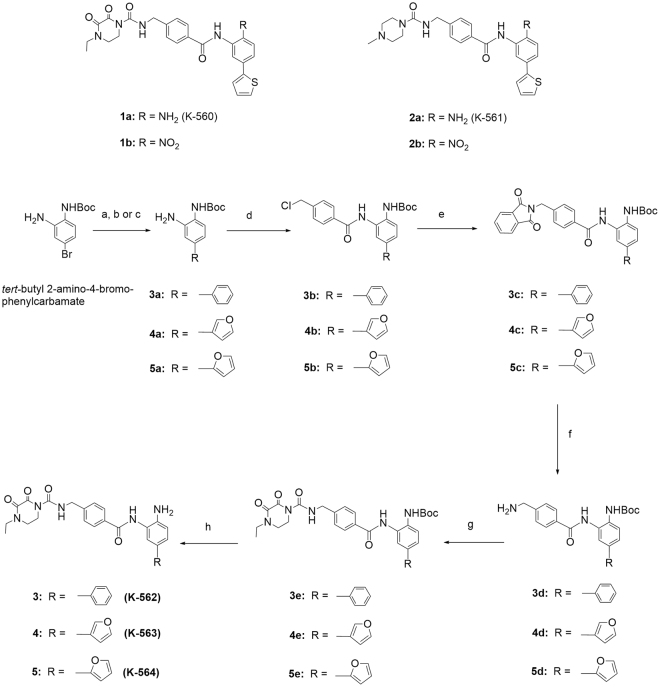
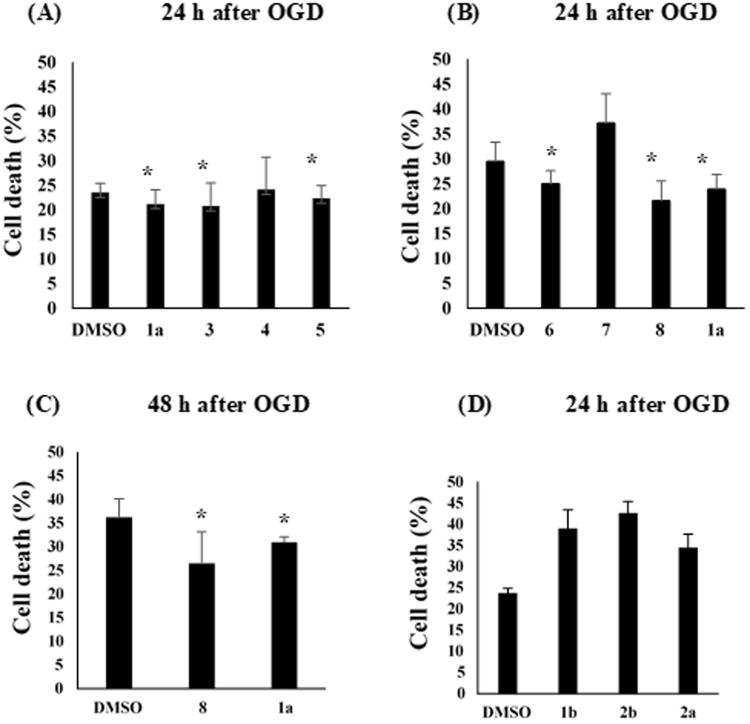
We previously synthesized new 5-thienyl-substituted 2-aminobenzamide-type HDAC1, 2 inhibitors with the (4-ethyl-2,3-dioxopiperazine-1-carboxamido) methyl group. K-560 (1a) protected against neuronal cell death in a Parkinson’s disease model by up-regulating the expression of XIAP. This finding prompted us to design new K-560-related compounds. We examined the structure activity relationship (SAR) for the neuronal protective effects of newly synthesized and known K-560 derivatives after cerebral ischemia. Among them, K-856 (8), containing the (4-methyl-2,5-dioxopiperazin-1-yl) methyl group, exhibited a promising neuronal survival activity. The SAR study strongly suggested that the attachment of a monocyclic 2,3- or 2,5-diketopiperazine group to the 2-amino-5-aryl (but not 2-nitro-5-aryl) scaffold is necessary for K-560-related compounds to exert a potent neuroprotective effect.
Overview
The claims and statistics of this paper haven’t been checked yet.
Free: it reads the open-access text and checks the first 5 claims that cite a source we can check. Create a free account to check every claim.
Integrity signals
Registry
Cites
Statistics
Figures
Verification
Claims the paper makes
The claims and statistics of this paper haven’t been checked yet.
Free: it reads the open-access text and checks the first 5 claims that cite a source we can check. Create a free account to check every claim.
Claims other papers make about this one
Each is checked against this paper’s own text: does it say what the citing paper says it does?
The source backs part of the claim, not all of it — or backs it for a different population, condition or comparison.
In the citing paper
“While most HDACi tend to employ a hydroxamic acid as a ZBG, class I HDACs (particularly HDACs 1–3) tend to be the only class of HDACs inhibited by 2-amino anilides as a ZBG (Figure 4A) [9–13].”
From Medicinal chemistry advances in targeting class I histone deacetylases (2023) · cites this paper as [10]
Experimental — accuracy not yet measured
Self-check
Percentages, sums and reported differences re-computed from the paper’s own numbers.
The self-check needs the paper’s full text.
Citations
Cites
A Randomized Trial of Intraarterial Treatment for Acute Ischemic Stroke
Berkhemer, O. A., Fransen, P. S. S., Beumer, D., van den Berg, L. A., Lingsma, H. F., Yoo, A. J., Schonewille, W. J., Vos, J. A., Nederkoorn, P. J., Wermer, M. J. H., et al. (2015) · New England Journal of Medicine · doi:10.1056/nejmoa1411587 · Cited by 6,657
Randomized Assessment of Rapid Endovascular Treatment of Ischemic Stroke
Goyal, M., Demchuk, A. M., Menon, B. K., Eesa, M., Rempel, J. L., Thornton, J., Roy, D., Jovin, T. G., Willinsky, R. A., Sapkota, B. L., et al. (2015) · New England Journal of Medicine · doi:10.1056/nejmoa1414905 · Cited by 6,083
Endovascular Therapy for Ischemic Stroke with Perfusion-Imaging Selection
Campbell, B. C. V., Mitchell, P. J., Kleinig, T. J., Dewey, H. M., Churilov, L., Yassi, N., Yan, B., Dowling, R. J., Parsons, M. W., Oxley, T. J., et al. (2015) · New England Journal of Medicine · doi:10.1056/nejmoa1414792 · Cited by 5,819
Stent-Retriever Thrombectomy after Intravenous t-PA vs. t-PA Alone in Stroke
Saver, J. L., Goyal, M., Bonafe, A., Diener, H.-C., Levy, E. I., Pereira, V. M., Albers, G. W., Cognard, C., Cohen, D. J., Hacke, W., et al. (2015) · New England Journal of Medicine · doi:10.1056/nejmoa1415061 · Cited by 5,193
Anticancer activities of histone deacetylase inhibitors
Bolden, J. E., Peart, M. J., & Johnstone, R. W. (2006) · Nature Reviews Drug Discovery · doi:10.1038/nrd2133 · Cited by 2,919 · cited 6×
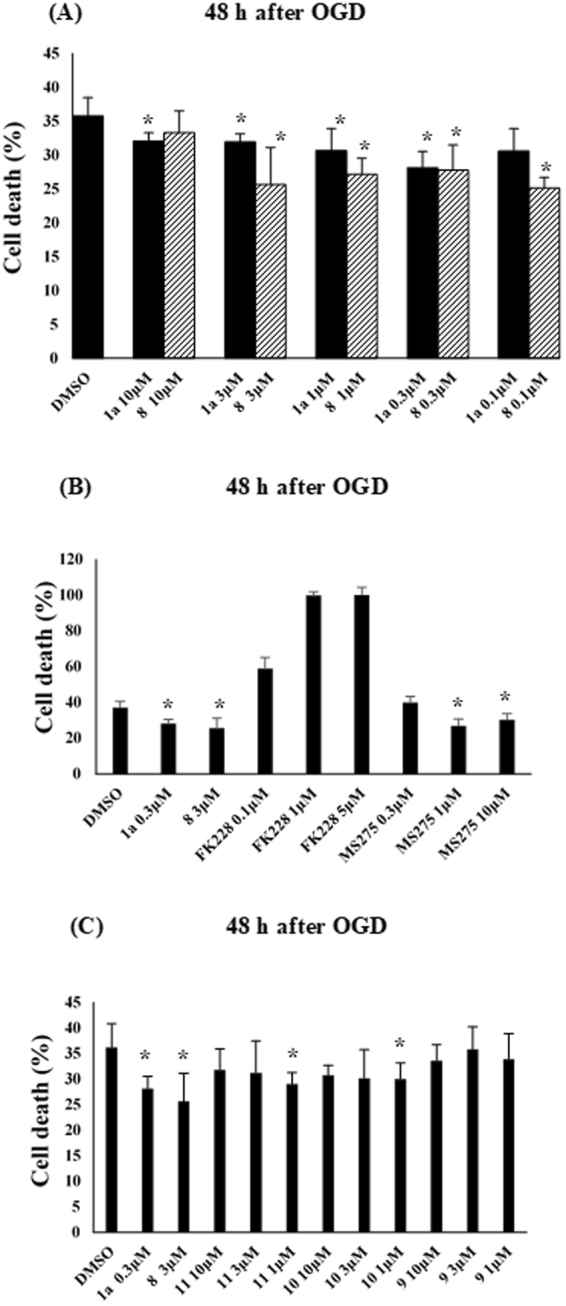
“4B) and with OP-857 (9), OP-858 (10), OP-859 (11) (each at 1, 3 or 10 μM), 1a (at 0.”
BackgroundMethodInfluentialTreatment Strategies for Acute Ischemic Stroke Caused by Carotid Artery Occlusion
Li, W., Yin, Q., Xu, G., & Liu, X. (2016) · Interventional Neurology · doi:10.1159/000445304 · Cited by 2,319
Histone deacetylase inhibitors and the promise of epigenetic (and more) treatments for cancer
Minucci, S., & Pelicci, P. G. (2006) · Nature Reviews Cancer · doi:10.1038/nrc1779 · Cited by 2,200 · cited 8×
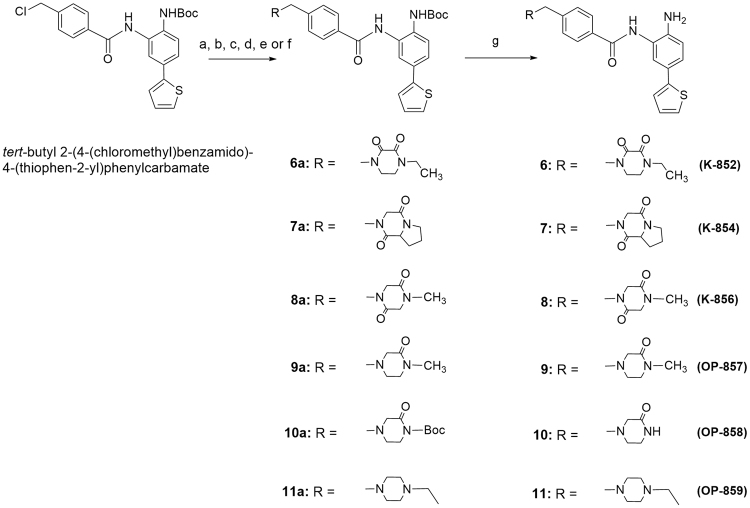
“This starting material was reacted with 4-ethyl-2,3-dioxo-1-piperazine, cyclo-L-prolylglycine, 1-methylpiperazine-2,5-dione, 1-methyl-piperazin-2-one, tert-butyl 3-oxopiperazine-1-carboxylate and 1-ethylpiperazine in the presence of sodium hydride (NaH) to yield the condensation products 6a, 7a, 8a, 9a, 10a and 11a, w…”
BackgroundMethodInfluentialSveinsson, O., Herrman, L., & Holmin, S. (2016) · Case Reports in Neurology · doi:10.1159/000452213 · Cited by 2,034
HDAC2 negatively regulates memory formation and synaptic plasticity
Guan, J.-S., Haggarty, S. J., Giacometti, E., Dannenberg, J.-H., Joseph, N., Gao, J., Nieland, T. J. F., Zhou, Y., Wang, X., Mazitschek, R., et al. (2009) · Nature · doi:10.1038/nature07925 · Cited by 1,644
Histone deacetylases and their inhibitors in cancer, neurological diseases and immune disorders
Falkenberg, K. J., & Johnstone, R. W. (2014) · Nature Reviews Drug Discovery · doi:10.1038/nrd4360 · Cited by 1,564
Histone deacetylase inhibitors: molecular mechanisms of action
Xu, W. S., Parmigiani, R. B., & Marks, P. A. (2007) · Oncogene · doi:10.1038/sj.onc.1210620 · Cited by 1,542
Histone-deacetylase inhibitors: novel drugs for the treatment of cancer
Johnstone, R. W. (2002) · Nature Reviews Drug Discovery · doi:10.1038/nrd772 · Cited by 1,515
Histone Deacetylase Inhibitors: Overview and Perspectives
Dokmanovic, M., Clarke, C., & Marks, P. A. (2007) · Molecular Cancer Research · doi:10.1158/1541-7786.mcr-07-0324 · Cited by 1,164
An epigenetic blockade of cognitive functions in the neurodegenerating brain
Gräff, J., Rei, D., Guan, J.-S., Wang, W.-Y., Seo, J., Hennig, K. M., Nieland, T. J. F., Fass, D. M., Kao, P. F., Kahn, M., et al. (2012) · Nature · doi:10.1038/nature10849 · Cited by 853
Histone deacetylase inhibitors: Potential in cancer therapy
Marks, P. A., & Xu, W. ‐. (2009) · Journal of Cellular Biochemistry · doi:10.1002/jcb.22185 · Cited by 712
Therapeutic application of histone deacetylase inhibitors for central nervous system disorders
Kazantsev, A. G., & Thompson, L. M. (2008) · Nature Reviews Drug Discovery · doi:10.1038/nrd2681 · Cited by 711
Goldberg, M., & Choi, D. (1993) · The Journal of Neuroscience · doi:10.1523/jneurosci.13-08-03510.1993 · Cited by 706
CLINICAL DEVELOPMENT OF HISTONE DEACETYLASE INHIBITORS AS ANTICANCER AGENTS
Drummond, D. C., Noble, C. O., Kirpotin, D. B., Guo, Z., Scott, G. K., & Benz, C. C. (2005) · Annual Review of Pharmacology and Toxicology · doi:10.1146/annurev.pharmtox.45.120403.095825 · Cited by 494 · cited 6×
“This starting material was reacted with 4-ethyl-2,3-dioxo-1-piperazine, cyclo-L-prolylglycine, 1-methylpiperazine-2,5-dione, 1-methyl-piperazin-2-one, tert-butyl 3-oxopiperazine-1-carboxylate and 1-ethylpiperazine in the presence of sodium hydride (NaH) to yield the condensation products 6a, 7a, 8a, 9a, 10a and 11a, w…”
BackgroundMethodInfluentialEpigenetic Priming of Memory Updating during Reconsolidation to Attenuate Remote Fear Memories
Gräff, J., Joseph, N. F., Horn, M. E., Samiei, A., Meng, J., Seo, J., Rei, D., Bero, A. W., Phan, T. X., Wagner, F., et al. (2014) · Cell · doi:10.1016/j.cell.2013.12.020 · Cited by 357
Lee, H.-Z., Kwitkowski, V. E., Del Valle, P. L., Ricci, M. S., Saber, H., Habtemariam, B. A., Bullock, J., Bloomquist, E., Li Shen, Y., Chen, X.-H., et al. (2015) · Clinical Cancer Research · doi:10.1158/1078-0432.ccr-14-3119 · Cited by 357
Clinical Studies of Histone Deacetylase Inhibitors
Prince, H. M., Bishton, M. J., & Harrison, S. J. (2009) · Clinical Cancer Research · doi:10.1158/1078-0432.ccr-08-2785 · Cited by 356 · cited 5×
“Figure 3A shows the percentage of neuronal cell death resulting from incubation with K-560 (1a), K-562 (3), K-563 (4), Figure 2.”
BackgroundMethodInfluentialIsoform-selective histone deacetylase inhibitors
Bieliauskas, A. V., & Pflum, M. K. H. (2008) · Chemical Society Reviews · doi:10.1039/b703830p · Cited by 350
Marks, P. (2003) · Current Opinion in Pharmacology · doi:10.1016/s1471-4892(03)00084-5 · Cited by 344
Deregulation of HDAC1 by p25/Cdk5 in Neurotoxicity
Kim, D., Frank, C. L., Dobbin, M. M., Tsunemoto, R. K., Tu, W., Peng, P. L., Guan, J.-S., Lee, B.-H., Moy, L. Y., Giusti, P., et al. (2008) · Neuron · doi:10.1016/j.neuron.2008.10.015 · Cited by 286
Rational Development of Histone Deacetylase Inhibitors as Anticancer Agents: A Review
Acharya, M. R., Sparreboom, A., Venitz, J., & Figg, W. D. (2005) · Molecular Pharmacology · doi:10.1124/mol.105.014167 · Cited by 235
Methot, J. L., Chakravarty, P. K., Chenard, M., Close, J., Cruz, J. C., Dahlberg, W. K., Fleming, J., Hamblett, C. L., Hamill, J. E., Harrington, P., et al. (2008) · Bioorganic & Medicinal Chemistry Letters · doi:10.1016/j.bmcl.2007.12.031 · Cited by 191
Moradei, O. M., Mallais, T. C., Frechette, S., Paquin, I., Tessier, P. E., Leit, S. M., Fournel, M., Bonfils, C., Trachy-Bourget, M.-C., Liu, J., et al. (2007) · Journal of Medicinal Chemistry · doi:10.1021/jm701079h · Cited by 166
SIK2 Is a Key Regulator for Neuronal Survival after Ischemia via TORC1-CREB
Sasaki, T., Takemori, H., Yagita, Y., Terasaki, Y., Uebi, T., Horike, N., Takagi, H., Susumu, T., Teraoka, H., Kusano, K.-I., et al. (2011) · Neuron · doi:10.1016/j.neuron.2010.12.004 · Cited by 165
Self-citationHistone Deacetylase-1 (HDAC1) Is a Molecular Switch between Neuronal Survival and Death
Bardai, F. H., Price, V., Zaayman, M., Wang, L., & D'Mello, S. R. (2012) · Journal of Biological Chemistry · doi:10.1074/jbc.m112.394544 · Cited by 134
Targeting Histone Deacetylases as a Multifaceted Approach to Treat the Diverse Outcomes of Stroke
Langley, B., Brochier, C., & Rivieccio, M. A. (2009) · Stroke · doi:10.1161/strokeaha.108.540229 · Cited by 115
Epigenetic Mechanisms in Cerebral Ischemia
Schweizer, S., Meisel, A., & Märschenz, S. (2013) · Journal of Cerebral Blood Flow & Metabolism · doi:10.1038/jcbfm.2013.93 · Cited by 110
Isoform-selective HDAC inhibitors: Closing in on translational medicine for the heart
McKinsey, T. A. (2010) · Journal of Molecular and Cellular Cardiology · doi:10.1016/j.yjmcc.2010.11.009 · Cited by 108
2,5-Diketopiperazines as Neuroprotective Agents
Cornacchia, C., Cacciatore, I., Baldassarre, L., Mollica, A., Feliciani, F., & Pinnen, F. (2011) · Mini-Reviews in Medicinal Chemistry · doi:10.2174/138955712798868959 · Cited by 102
Neuroprotective effects of novel small peptides in vitro and after brain injury
Faden, A. I., Movsesyan, V. A., Knoblach, S. M., Ahmed, F. A. K. M., & Černak, I. (2005) · Neuropharmacology · doi:10.1016/j.neuropharm.2005.04.001 · Cited by 96
Optimization of biaryl Selective HDAC1&2 Inhibitors (SHI-1:2)
Witter, D. J., Harrington, P., Wilson, K. J., Chenard, M., Fleming, J. C., Haines, B., Kral, A. M., Secrist, J. P., & Miller, T. A. (2008) · Bioorganic & Medicinal Chemistry Letters · doi:10.1016/j.bmcl.2007.11.047 · Cited by 93
López-Rodríguez, M. L., Morcillo, M. J., Fernández, E., Benhamú, B., Tejada, I., Ayala, D., Viso, A., Campillo, M., Pardo, L., Delgado, M., et al. (2005) · Journal of Medicinal Chemistry · doi:10.1021/jm048999e · Cited by 59
Guan, J., Mathai, S., Harris, P. W. R., Wen, J., Zhang, R., Brimble, M. A., & Gluckman, P. D. (2007) · Neuropharmacology · doi:10.1016/j.neuropharm.2007.08.010 · Cited by 57
Choong, C., Sasaki, T., Hayakawa, H., Yasuda, T., Baba, K., Hirata, Y., Uesato, S., & Mochizuki, H. (2015) · Neurobiology of Aging · doi:10.1016/j.neurobiolaging.2015.10.001 · Cited by 56
Self-citationSAR profiles of spirocyclic nicotinamide derived selective HDAC1/HDAC2 inhibitors (SHI-1:2)
Methot, J. L., Hamblett, C. L., Mampreian, D. M., Jung, J. O., Harsch, A., Szewczak, A. A., Dahlberg, W. K., Middleton, R. E., Hughes, B. L., Fleming, J. C., et al. (2008) · Bioorganic & Medicinal Chemistry Letters · doi:10.1016/j.bmcl.2008.10.052 · Cited by 47
Parallel medicinal chemistry approaches to selective HDAC1/HDAC2 inhibitor (SHI-1:2) optimization
Kattar, S. D., Surdi, L. M., Zabierek, A., Methot, J. L., Middleton, R. E., Hughes, B., Szewczak, A. A., Dahlberg, W. K., Kral, A. M., Ozerova, N., et al. (2009) · Bioorganic & Medicinal Chemistry Letters · doi:10.1016/j.bmcl.2008.12.083 · Cited by 29
Phenylglycine and phenylalanine derivatives as potent and selective HDAC1 inhibitors (SHI-1)
Wilson, K. J., Witter, D. J., Grimm, J. B., Siliphaivanh, P., Otte, K. M., Kral, A. M., Fleming, J. C., Harsch, A., Hamill, J. E., Cruz, J. C., et al. (2008) · Bioorganic & Medicinal Chemistry Letters · doi:10.1016/j.bmcl.2008.02.012 · Cited by 23
Zhu, Y., Li, H., Lü, S., Zheng, Y.-X., Wu, Z., Tang, W., Zhou, X. Y., & Lu, T. (2010) · European Journal of Medicinal Chemistry · doi:10.1016/j.ejmech.2010.01.010 · Cited by 22
Heidebrecht, R. W., Chénard, M., Close, J., Dahlberg, W. K., Fleming, J. C., Grimm, J. B., Hamill, J. E., Harsch, A., Haines, B. B., Hughes, B. L., et al. (2009) · Bioorganic & Medicinal Chemistry Letters · doi:10.1016/j.bmcl.2009.02.009 · Cited by 21
Stolfa, D. A., Stefanachi, A., Gajer, J. M., Nebbioso, A., Altucci, L., Cellamare, S., Jung, M., & Carotti, A. (2012) · ChemMedChem · doi:10.1002/cmdc.201200193 · Cited by 20
Hirata, Y., Hirata, M., Kawaratani, Y., Shibano, M., Taniguchi, M., Yasuda, M., Ohmomo, Y., Nagaoka, Y., Baba, K., & Uesato, S. (2012) · Bioorganic & Medicinal Chemistry Letters · doi:10.1016/j.bmcl.2012.01.053 · Cited by 14 · cited 6×
“Figure 3A shows the percentage of neuronal cell death resulting from incubation with K-560 (1a), K-562 (3), K-563 (4), Figure 2.”
BackgroundMethodInfluentialSelf-citationMartinello, R., Genta, S., Galizia, D., Geuna, E., Milani, A., Zucchini, G., Valabrega, G., & Montemurro, F. (2016) · Expert Opinion on Pharmacotherapy · doi:10.1080/14656566.2016.1236914 · Cited by 13
Synthesis and pharmacological activity of analogs of the endogenous neuropeptide cycloprolylglycine
Колясникова, К. Н., Vichuzhanin, M. V., Константинопольский, М. А., Trofimov, S. S., & Гудашева, Т. А. (2012) · Pharmaceutical Chemistry Journal · doi:10.1007/s11094-012-0741-0 · Cited by 12
FDA approves three different multiple myeloma drugs in one month
Ratner, M. (2016) · Nature Biotechnology · doi:10.1038/nbt0216-126 · Cited by 6
Uesato, S., Hirata, Y., & Sasaki, T. (2017) · Current Pharmaceutical Design · doi:10.2174/1381612822666161208143417 · Cited by 6
Self-citationНаркевич, В. Б., Ovchinnikova, I. P., Михайлович, К. П., & Кудрин, В. С. (2012) · Neurochemical Journal · doi:10.1134/s1819712412040101 · Cited by 2
Research works printed but not linked: 1
- Uesato, S. & Hirata, Y. Proceedings of Frontiers in Medicinal Chemistry (FMC), P172, Antwerp, Belgium September 14–16 (2015).
Cited by
Milazzo, G., Mercatelli, D., Di Muzio, G., Triboli, L., De Rosa, P., Perini, G., & Giorgi, F. M. (2020) · Genes · doi:10.3390/genes11050556 · Cited by 423
Strategies To Design Selective Histone Deacetylase Inhibitors
Melesina, J., Simoben, C. V., Praetorius, L., Bülbül, E. F., Robaa, D., & Sippl, W. (2021) · ChemMedChem · doi:10.1002/cmdc.202000934 · Cited by 118
Targeting post-translational histone modifying enzymes in glioblastoma
Kunadis, E., Lakiotaki, E., Korkolopoulou, P. A., & Piperi, C. (2020) · Pharmacology & Therapeutics · doi:10.1016/j.pharmthera.2020.107721 · Cited by 116
Current trends in development of HDAC-based chemotherapeutics
Cheshmazar, N., Hamzeh‐Mivehroud, M., Charoudeh, H. N., Hemmati, S., Melesina, J., & Dastmalchi, S. (2022) · Life Sciences · doi:10.1016/j.lfs.2022.120946 · Cited by 60
Targeting HDAC Complexes in Asthma and COPD
Zwinderman, M. R. H., de Weerd, S., & Dekker, F. J. (2019) · Epigenomes · doi:10.3390/epigenomes3030019 · Cited by 52
“Interestingly, aromatic substituents in position 4 lead to selective inhibition of HDAC1 and HDAC2 over HDAC3 [104,108,109].”
Background
Metadata
- Authors
- Hirata, Y., Sasaki, T., Kanki, H., Choong, C.-J., Nishiyama, K., Kubo, G., Hotei, A., Taniguchi, M., Mochizuki, H., & Uesato, S.
- Affiliations
- Kansai University (JP)
- The University of Osaka (JP)
- Osaka University of Pharmaceutical Sciences (JP)
- Corresponding author
- Sasaki, Tsutomu
- Uesato, Shinichi
- Venue
- Scientific Reports
- Published
- 2018-01-23
- Volume
- 8
- Issue
- 1
- Pages
- 1400-1400
- ISSN
- 2045-2322 (ISSN-L)
- PMC
- PMC5780423
- OpenAlex
- W2807656347
- Cited by
- 20
- References
- 50
- Citations by year
- 2024: 1 · 2023: 4 · 2022: 4 · 2021: 4 · 2020: 5 · 2019: 2
- FWCI
- 0.98
- Type
- journal article
- Language
- en
- Open access
- gold
- doi.org
- Licence
- cc-by
- creativecommons.org/licenses/by/4.0 (tdm)
- creativecommons.org/licenses/by/4.0 (vor)
- Locations
- Scientific Reports (publishedVersion, cc-by)
- PubMed Central (publishedVersion, cc-by)
- PubMed (publishedVersion)
- DOAJ (DOAJ: Directory of Open Access Journals) (submittedVersion)
- Funders
- Smoking Research Foundation
- Japan Society for the Promotion of Science (16K15317, 17F17413, 17H05700)
- Topics
- Life Sciences › Biochemistry, Genetics and Molecular Biology › Molecular Biology › Histone Deacetylase Inhibitors Research
- Life Sciences › Neuroscience › Neurology › Neuroprotection in Cerebral Ischemia
- Physical Sciences › Chemistry › Organic Chemistry › Heterocyclic Compound Synthesis and Bioactivity
- Keywords
- histone deacetylase inhibitors, diketopiperazines, cerebral ischemia, neuronal cell death, neuroprotection, XIAP, Parkinson's disease model, structure-activity relationship
- MeSH terms
- Animals, Benzamides, Cell Line, Brain Ischemia, Humans, Models, Biological, Neurons, Structure-Activity Relationship, Molecular Structure, Cell Death, Neuroprotective Agents, Rats, Diketopiperazines, Histone Deacetylase Inhibitors
About these checks
Registry, retraction, Cites and statistics results are computed, not judged, with one exception: a printed reference that no index lists is read once by a model before it counts as a citation error. Claims are extracted by a model and kept only when their quote appears verbatim in the text; each cited source is then checked, with a model’s help, for whether it says what the claim relies on. Those verdicts can be wrong — read the claim’s quote and the cited source before relying on one.
Statistics and arithmetic are recomputed, not judged.
Confidence bands are shown only for fields calibrated on our annotated test set. None is calibrated yet, so no band is shown.
What counts as a claim ›How we measure confidence ›How we check this ›
Are you an author, or do you see a problem with this page? Request a review
Data sources
Bibliographic data: Semantic Scholar, OpenAlex, Crossref.
Contains information from the Semantic Scholar Academic Graph Datasets, made available under the ODC Attribution License (ODC-BY 1.0).
Semantic Scholar’s data is described in: Kinney, R., et al. (2023). The Semantic Scholar Open Data Platform. arXiv:2301.10140.
