

PTPRS Regulates Colorectal Cancer RAS Pathway Activity by Inactivating Erk and Preventing Its Nuclear Translocation
Open accessThe DOI matches its Crossref record; 62 of the 62 references it cites were found in a registry or an index.
Abstract
Colorectal cancer (CRC) growth and progression is frequently driven by RAS pathway activation through upstream growth factor receptor activation or through mutational activation of KRAS or BRAF. Here we describe an additional mechanism by which the RAS pathway may be modulated in CRC. PTPRS, a receptor-type protein tyrosine phosphatase, appears to regulate RAS pathway activation through ERK. PTPRS modulates ERK phosphorylation and subsequent translocation to the nucleus. Native mutations in PTPRS, present in ~10% of CRC, may reduce its phosphatase activity while increasing ERK activation and downstream transcriptional signaling.
Overview
The claims and statistics of this paper haven’t been checked yet.
Free: it reads the open-access text and checks the first 5 claims that cite a source we can check. Create a free account to check every claim.
Integrity signals
Registry
Cites
Statistics
Figures
Verification
Claims the paper makes
The claims and statistics of this paper haven’t been checked yet.
Free: it reads the open-access text and checks the first 5 claims that cite a source we can check. Create a free account to check every claim.
Claims other papers make about this one
Each is checked against this paper’s own text: does it say what the citing paper says it does?
The cited source says what the claim attributes to it.
In the citing paper
“We previously reported that PTPRS negatively regulated ERK activity in CRC cells [34].”
From An integrative gene expression signature analysis identifies CMS4 KRAS-mutated colorectal cancers sensitive to combined MEK and SRC targeted therapy (2022) · cites this paper as [34]
Experimental — accuracy not yet measuredThe cited source says what the claim attributes to it.
In the citing paper
“suggesting these tumors may have non-canonical RAS pathway activation (e.g. through phosphatases such as PTPRS [34]) and may be candidates for MEKi treatment.”
From An integrative gene expression signature analysis identifies CMS4 KRAS-mutated colorectal cancers sensitive to combined MEK and SRC targeted therapy (2022) · cites this paper as [34]
Self-check
Percentages, sums and reported differences re-computed from the paper’s own numbers.
The self-check needs the paper’s full text.
Citations
Cites
Siegel, R. L., Miller, K. D., & Jemal, A. (2016) · CA: A Cancer Journal for Clinicians · doi:10.3322/caac.21332 · Cited by 16,003
Comprehensive molecular characterization of human colon and rectal cancer
The Cancer Genome Atlas Network (2012) · Nature · doi:10.1038/nature11252 · Cited by 8,499
Targeting the Raf-MEK-ERK mitogen-activated protein kinase cascade for the treatment of cancer
Roberts, P. J., & Der, C. J. (2007) · Oncogene · doi:10.1038/sj.onc.1210422 · Cited by 2,788
Panitumumab–FOLFOX4 Treatment and RAS Mutations in Colorectal Cancer
Douillard, J.-Y., Oliner, K. S., Siena, S., Tabernero, J., Burkes, R., Barugel, M., Humblet, Y., Bodoky, G., Cunningham, D., Jassem, J., et al. (2013) · New England Journal of Medicine · doi:10.1056/nejmoa1305275 · Cited by 2,263
De Roock, W., Claes, B., Bernasconi, D., De Schutter, J., Biesmans, B., Fountzilas, G., Kalogeras, K. T., Kotoula, V., Papamichael, D., Laurent-Puig, P., et al. (2010) · The Lancet Oncology · doi:10.1016/s1470-2045(10)70130-3 · Cited by 2,144
Molecular Genetics of Colorectal Cancer
Fearon, E. R. (2011) · Annual Review of Pathology: Mechanisms of Disease · doi:10.1146/annurev-pathol-011110-130235 · Cited by 1,805 · cited 2×
“For PTPRS, we see two localizations: (1) the cell membrane and (2) surrounding the nucleus.”
BackgroundHyperactive Ras in developmental disorders and cancer
Schubbert, S., Shannon, K., & Bollag, G. (2007) · Nature Reviews Cancer · doi:10.1038/nrc2109 · Cited by 1,583
Allegra, C. J., Jessup, J. M., Somerfield, M. R., Hamilton, S. R., Hammond, E. H., Hayes, D. F., McAllister, P. K., Morton, R. F., & Schilsky, R. L. (2009) · Journal of Clinical Oncology · doi:10.1200/jco.2009.21.9170 · Cited by 1,156
Genomic Correlates of Immune-Cell Infiltrates in Colorectal Carcinoma
Giannakis, M., Mu, X. J., Shukla, S. A., Qian, Z. R., Cohen, O., Nishihara, R., Bahl, S., Cao, Y., Amin-Mansour, A., Yamauchi, M., et al. (2016) · Cell Reports · doi:10.1016/j.celrep.2016.03.075 · Cited by 913
Reinhold, W. C., Sunshine, M., Liu, H., Varma, S., Kohn, K. W., Morris, J., Doroshow, J., & Pommier, Y. (2012) · Cancer Research · doi:10.1158/0008-5472.can-12-1370 · Cited by 887
Morrison, D. K. (2012) · Cold Spring Harbor Perspectives in Biology · doi:10.1101/cshperspect.a011254 · Cited by 831
Molecular Mechanisms of Resistance to Cetuximab and Panitumumab in Colorectal Cancer
Bardelli, A., & Siena, S. (2010) · Journal of Clinical Oncology · doi:10.1200/jco.2009.24.6116 · Cited by 746
PTPσ Is a Receptor for Chondroitin Sulfate Proteoglycan, an Inhibitor of Neural Regeneration
Shen, Y., Tenney, A. P., Busch, S. A., Horn, K. P., Cuascut, F. X., Liu, K., He, Z., Silver, J., & Flanagan, J. G. (2009) · Science · doi:10.1126/science.1178310 · Cited by 682
Morris, E. J., Jha, S., Restaino, C. R., Dayananth, P., Zhu, H., Cooper, A., Carr, D., Deng, Y., Jin, W., Black, S., et al. (2013) · Cancer Discovery · doi:10.1158/2159-8290.cd-13-0070 · Cited by 676
Laurent-Puig, P., Cayre, A., Manceau, G., Buc, E., Bachet, J.-B., Lecomte, T., Rougier, P., Lievre, A., Landi, B., Boige, V., et al. (2009) · Journal of Clinical Oncology · doi:10.1200/jco.2008.21.6796 · Cited by 673
ERK1/2 MAP kinases in cell survival and apoptosis
Lu, Z., & Xu, S. (2006) · IUBMB Life · doi:10.1080/15216540600957438 · Cited by 648
MEK1 and MEK2 inhibitors and cancer therapy: the long and winding road
Caunt, C. J., Sale, M. J., Smith, P. D., & Cook, S. J. (2015) · Nature Reviews Cancer · doi:10.1038/nrc4000 · Cited by 606
Negative feedback regulation of the ERK1/2 MAPK pathway
Lake, D., Corrêa, S. A. L., & Müller, J. (2016) · Cellular and Molecular Life Sciences · doi:10.1007/s00018-016-2297-8 · Cited by 565
The ERK Cascade: Distinct Functions within Various Subcellular Organelles
Wortzel, I., & Seger, R. (2011) · Genes & Cancer · doi:10.1177/1947601911407328 · Cited by 563
Tumours with class 3 BRAF mutants are sensitive to the inhibition of activated RAS
Yao, Z., Yaeger, R., Rodrik-Outmezguine, V. S., Tao, A., Torres, N. M., Chang, M. T., Drosten, M., Zhao, H., Cecchi, F., Hembrough, T., et al. (2017) · Nature · doi:10.1038/nature23291 · Cited by 562
MacKeigan, J. P., Murphy, L. O., & Blenis, J. (2005) · Nature Cell Biology · doi:10.1038/ncb1258 · Cited by 561
Steelman, L. S., Chappell, W. H., Abrams, S. L., Kempf, C. R., Long, J., Laidler, P., Mijatovic, S., Maksimovic-Ivanic, D., Stivala, F., Mazzarino, M. C., et al. (2011) · Aging · doi:10.18632/aging.100296 · Cited by 553
Ras-Dependent Induction of Cellular Responses by Constitutively Active Phosphatidylinositol-3 Kinase
Hu, Q., Klippel, A., Muslin, A. J., Fantl, W. J., & Williams, L. T. (1995) · Science · doi:10.1126/science.7701328 · Cited by 548
Mutational Analysis of the Tyrosine Phosphatome in Colorectal Cancers
Wang, Z., Shen, D., Parsons, D. W., Bardelli, A., Sager, J., Szabo, S., Ptak, J., Silliman, N., Peters, B. A., van der Heijden, M. S., et al. (2004) · Science · doi:10.1126/science.1096096 · Cited by 522
Chappell, W. H., Steelman, L. S., Long, J. M., Kempf, R. C., Abrams, S. L., Franklin, R. A., Bäsecke, J., Stivala, F., Donia, M., Fagone, P., et al. (2011) · Oncotarget · doi:10.18632/oncotarget.240 · Cited by 510
Inside the human cancer tyrosine phosphatome
Julien, S. G., Dubé, N., Hardy, S., & Tremblay, M. L. (2011) · Nature Reviews Cancer · doi:10.1038/nrc2980 · Cited by 495
Modulation of the proteoglycan receptor PTPσ promotes recovery after spinal cord injury
Lang, B. T., Cregg, J. M., DePaul, M. A., Tran, A. P., Xu, K., Dyck, S. M., Madalena, K. M., Brown, B. P., Weng, Y.-L., Li, S., et al. (2015) · Nature · doi:10.1038/nature13974 · Cited by 465
Tonks, N. K. (2013) · The FEBS Journal · doi:10.1111/febs.12077 · Cited by 432
Cross-cascade activation of ERKs and ternary complex factors by Rho family proteins
Frost, J. A. (1997) · The EMBO Journal · doi:10.1093/emboj/16.21.6426 · Cited by 414
Wennström, S., & Downward, J. (1999) · Molecular and Cellular Biology · doi:10.1128/mcb.19.6.4279 · Cited by 277
Transcriptional Pathway Signatures Predict MEK Addiction and Response to Selumetinib (AZD6244)
Dry, J. R., Pavey, S., Pratilas, C. A., Harbron, C., Runswick, S., Hodgson, D., Chresta, C., McCormack, R., Byrne, N., Cockerill, M., et al. (2010) · Cancer Research · doi:10.1158/0008-5472.can-09-1577 · Cited by 262
Inhibition of SHP2-mediated dephosphorylation of Ras suppresses oncogenesis
Bunda, S., Burrell, K., Heir, P., Zeng, L., Alamsahebpour, A., Kano, Y., Raught, B., Zhang, Z.-Y., Zadeh, G., & Ohh, M. (2015) · Nature Communications · doi:10.1038/ncomms9859 · Cited by 249
Identification of a Poor-Prognosis BRAF-Mutant–Like Population of Patients With Colon Cancer
Popovici, V., Budinska, E., Tejpar, S., Weinrich, S., Estrella, H., Hodgson, G., Van Cutsem, E., Xie, T., Bosman, F. T., Roth, A. D., et al. (2012) · Journal of Clinical Oncology · doi:10.1200/jco.2011.39.5814 · Cited by 236
The dual-specificity MAP kinase phosphatases: critical roles in development and cancer
Bermudez, O., Pagès, G., & Gimond, C. (2010) · American Journal of Physiology-Cell Physiology · doi:10.1152/ajpcell.00347.2009 · Cited by 230
ERK Inhibition Overcomes Acquired Resistance to MEK Inhibitors
Hatzivassiliou, G., Liu, B., O'Brien, C., Spoerke, J. M., Hoeflich, K. P., Haverty, P. M., Soriano, R., Forrest, W. F., Heldens, S., Chen, H., et al. (2012) · Molecular Cancer Therapeutics · doi:10.1158/1535-7163.mct-11-1010 · Cited by 211
A multigene mutation classification of 468 colorectal cancers reveals a prognostic role for APC
Schell, M. J., Yang, M., Teer, J. K., Lo, F. Y., Madan, A., Coppola, D., Monteiro, A. N. A., Nebozhyn, M. V., Yue, B., Loboda, A., et al. (2016) · Nature Communications · doi:10.1038/ncomms11743 · Cited by 207
Self-citationProtein tyrosine phosphatases in health and disease
Hendriks, W. J. A. J., Elson, A., Harroch, S., Pulido, R., Stoker, A., & den Hertog, J. (2013) · The FEBS Journal · doi:10.1111/febs.12000 · Cited by 160
Neuroendocrine dysplasia in mice lacking protein tyrosine phosphatase σ
Elchebly, M., Wagner, J., Kennedy, T. E., Lanctôt, C., Michaliszyn, E., Itié, A., Drouin, J., & Tremblay, M. L. (1999) · Nature Genetics · doi:10.1038/6859 · Cited by 158
Aicher, B., Lerch, M. M., Müller, T. H., Schilling, J., & Ullrich, A. (1997) · The Journal of Cell Biology · doi:10.1083/jcb.138.3.681 · Cited by 156
Wallace, M. J., Batt, J. A. E., Fladd, C., Henderson, J. T., Skarnes, W. C., & Rotin, D. (1999) · Nature Genetics · doi:10.1038/6866 · Cited by 133 · cited 1×
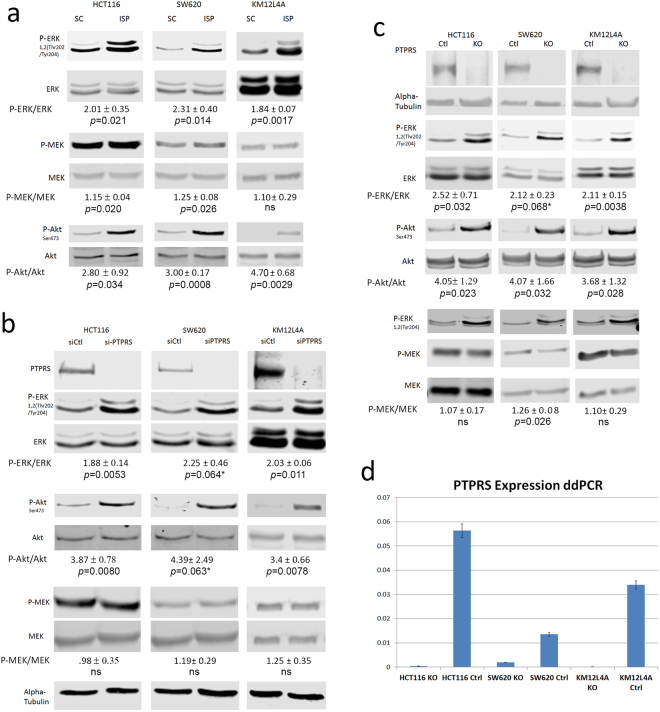
“The Intracellular Sigma Peptide (ISP) for inhibiting PTPRS activities and the scrambled ISP were designed and reported (19).”
ERK Nuclear Translocation Is Dimerization-independent but Controlled by the Rate of Phosphorylation
Lidke, D. S., Huang, F., Post, J. N., Rieger, B., Wilsbacher, J. L., Thomas, J. L., Pouysségur, J., Jovin, T. M., & Lenormand, P. (2009) · Journal of Biological Chemistry · doi:10.1074/jbc.m109.064972 · Cited by 133
Differential activity of MEK and ERK inhibitors in BRAF inhibitor resistant melanoma
Carlino, M. S., Todd, J. R., Gowrishankar, K., Mijatov, B., Pupo, G. M., Fung, C., Snoyman, S., Hersey, P., Long, G. V., Kefford, R. F., et al. (2014) · Molecular Oncology · doi:10.1016/j.molonc.2014.01.003 · Cited by 118
Improving prospects for targeting RAS
Singh, H., Longo, D. L., & Chabner, B. A. (2015) · Journal of Clinical Oncology · doi:10.1200/jco.2015.62.1052 · Cited by 107
Morris, L. G. T., Taylor, B. S., Bivona, T. G., Gong, Y., Eng, S., Brennan, C. W., Kaufman, A., Kastenhuber, E. R., Banuchi, V. E., Singh, B., et al. (2011) · Proceedings of the National Academy of Sciences · doi:10.1073/pnas.1111963108 · Cited by 104
Pestana, E. S., Tenev, T., Groß, S., Stoyanov, B., Ogata, M., & Böhmer, F. (1999) · Oncogene · doi:10.1038/sj.onc.1202794 · Cited by 81
Sacco, F., Tinti, M., Palma, A., Ferrari, E., Nardozza, A. P., van Huijsduijnen, R. H., Takahashi, T., Castagnoli, L., & Cesareni, G. (2009) · Journal of Biological Chemistry · doi:10.1074/jbc.m109.002758 · Cited by 70
Protein-Tyrosine Phosphatase Sigma Is Associated with Ulcerative Colitis
Muise, A. M., Walters, T. D., Wine, E., Griffiths, A. M., Turner, D., Duerr, R. H., Regueiro, M. D., Ngan, B., Xu, W., Sherman, P. M., et al. (2007) · Current Biology · doi:10.1016/j.cub.2007.06.013 · Cited by 62
Łaczmańska, I., Karpiński, P., Bębenek, M., Sedziak, T., Ramsey, D., Szmida, E., & Sasiadek, M. M. (2012) · Journal of Human Genetics · doi:10.1038/jhg.2012.119 · Cited by 59
Identification of PTPσ as an autophagic phosphatase
Martin, K. R., Xu, Y., Looyenga, B. D., Davis, R. J., Wu, C.-L., Tremblay, M. L., Xu, H. E., & MacKeigan, J. P. (2011) · Journal of Cell Science · doi:10.1242/jcs.080341 · Cited by 59
Wang, Z., Gao, Q., Shi, J., Guo, W., Yang, L., Liu, X., Liu, L., Ma, L., Duan, M., Zhao, Y., et al. (2015) · Hepatology · doi:10.1002/hep.27911 · Cited by 53
Self-citationProtein tyrosine phosphatase epsilon inhibits signaling by mitogen-activated protein kinases.
Toledano, H., Kraut, J., Sines, T., Granot-Attas, S., Shohat-Ophir, G., Gil-Henn, H., Yung, Y., & Elson, A. (2003) · PubMed · Cited by 47
Korff, S., Woerner, S. M., Yuan, Y. P., Bork, P., Doeberitz, M. V. K., & Gebert, J. F. (2008) · BMC Cancer · doi:10.1186/1471-2407-8-329 · Cited by 43
Schell, M. J., Yang, M., Missiaglia, E., Delorenzi, M., Soneson, C., Yue, B., Nebozhyn, M. V., Loboda, A., Bloom, G., & Yeatman, T. J. (2016) · Clinical Cancer Research · doi:10.1158/1078-0432.ccr-15-0143 · Cited by 42
Self-citationRole of Biologics in First-Line Treatment of Colorectal Cancer
Mahipal, A., & Grothey, A. (2016) · Journal of Oncology Practice · doi:10.1200/jop.2016.018382 · Cited by 39
Shp2 SUMOylation promotes ERK activation and hepatocellular carcinoma development
Deng, R., Zhao, X., Qu, Y., Chen, C., Zhu, C., Zhang, H., Yuan, H., Jin, H. Z., Liu, X., Wang, Y., et al. (2015) · Oncotarget · doi:10.18632/oncotarget.3323 · Cited by 35
ERK phosphorylation and nuclear accumulation: insights from single-cell imaging
Caunt, C. J., & McArdle, C. A. (2012) · Biochemical Society Transactions · doi:10.1042/bst20110662 · Cited by 34
Gu, J., Han, T., Ma, R., ZHU, Y.-L., JIA, Y.-N., Du, J., Chen, Y., Jiang, X., Xie, X., & Guo, X. (2013) · International Journal of Oncology · doi:10.3892/ijo.2013.2191 · Cited by 33
Murchie, R., Guo, C., Persaud, A. K., Muise, A. M., & Rotin, D. (2014) · Proceedings of the National Academy of Sciences · doi:10.1073/pnas.1315017111 · Cited by 28 · cited 3×
“Jeff MacKeigan (Laboratory of Systems Biology, Van Andel Research Institute, Grand Rapids, MI) (23).”
BackgroundMethodAdaptation of a RAS pathway activation signature from FF to FFPE tissues in colorectal cancer
Omolo, B., Yang, M., Lo, F. Y., Schell, M. J., Austin, S., Howard, K., Madan, A., & Yeatman, T. J. (2016) · BMC Medical Genomics · doi:10.1186/s12920-016-0225-2 · Cited by 25
Self-citationLiu, B., Fu, L., Zhang, C., Zhang, L., Zhang, Y., Ouyang, L., He, G., & Huang, J. (2015) · Oncotarget · doi:10.18632/oncotarget.3105 · Cited by 25
Yang, M., & Yeatman, T. J. (2017) · Expert Review of Precision Medicine and Drug Development · doi:10.1080/23808993.2017.1362316 · Cited by 3
Self-citationBarbero (2014) · doi:10.1016/j · Cited by 1
Cited by
Leung, K. K., Wilson, G. M., Kirkemo, L. L., Riley, N. M., Coon, J. J., & Wells, J. A. (2020) · Proceedings of the National Academy of Sciences · doi:10.1073/pnas.1917947117 · Cited by 83
“The expression of PTPRF and PTPRS, in particular, has been associated with decreased metastasis through the inactivation of EGFR signaling, emphasizing their importance as tumor suppressor proteins in numerous cancer contexts (66, 67).”
BackgroundSecreted ADAMTS-like proteins as regulators of connective tissue function
Taye, N., Redhead, C., & Hubmacher, D. (2024) · American Journal of Physiology-Cell Physiology · doi:10.1152/ajpcell.00680.2023 · Cited by 27
Yang, M., Davis, T. B., Pflieger, L., Nebozhyn, M. V., Loboda, A., Wang, H., Schell, M. J., Thota, R., Pledger, W. J., & Yeatman, T. J. (2022) · BMC Cancer · doi:10.1186/s12885-022-09344-3 · Cited by 22
“Striking correlation of MEKi resistance with SRC activation in 2250 CRCs We previously reported that PTPRS negatively regulated ERK activity in CRC cells [34].”
BackgroundSelf-citationRepurposing EGFR Inhibitor Utility in Colorectal Cancer in Mutant APC and TP53 Subpopulations
Yang, M., Schell, M. J., Loboda, A. P., Nebozhyn, M., Li, J., Teer, J. K., Pledger, W. J., & Yeatman, T. J. (2019) · Cancer Epidemiology Biomarkers & Prevention · doi:10.1158/1055-9965.epi-18-1383 · Cited by 25
“Using an integrated analytic approach we described previously (40), with the "lens" of gene expression, we identified a 2-gene mutation signature (APCþTP53; AP) to predict CTX-S, which was subsequently validated using two independent PDX datasets.”
MethodSelf-citationThe role of receptor‐type protein tyrosine phosphatases in cancer
Lv, Z., Wang, T., Cao, X., Sun, M., & Qu, Y. (2023) · Precision Medical Sciences · doi:10.1002/prm2.12090 · Cited by 24
“In colorectal cancer (CRC), PTPRS negatively regulates the activity of ERK (ERK1 and ERK2), the phosphorylation of which is a direct indicator of RAS pathway activation in promoting tumor cell growth and angiogenesis.(31)”
Background
Metadata
- Authors
- Davis, T. B., Yang, M., Schell, M. J., Wang, H., Ma, L., Pledger, W. J., & Yeatman, T. J.
- Affiliations
- Moffitt Cancer Center (US)
- Corresponding author
- Yeatman, Timothy J.
- Venue
- Scientific Reports
- Published
- 2018-06-18
- Volume
- 8
- Issue
- 1
- Pages
- 9296-9296
- ISSN
- 2045-2322 (ISSN-L)
- PMC
- PMC6006154
- OpenAlex
- W2808489475
- Cited by
- 27
- References
- 61
- Citations by year
- 2026: 3 · 2025: 3 · 2024: 5 · 2023: 4 · 2022: 3 · 2021: 2 · 2020: 5 · 2019: 2
- FWCI
- 0.80
- Type
- journal article
- Language
- en
- Open access
- gold
- doi.org
- Licence
- cc-by
- creativecommons.org/licenses/by/4.0 (tdm)
- creativecommons.org/licenses/by/4.0 (vor)
- Locations
- Scientific Reports (publishedVersion, cc-by)
- Europe PMC (PubMed Central) (publishedVersion, other-oa)
- PubMed Central (publishedVersion, cc-by)
- PubMed (publishedVersion)
- DOAJ (DOAJ: Directory of Open Access Journals) (submittedVersion)
- Funders
- National Institutes of Health
- National Cancer Institute (U01CA157960, P30CA076292)
- Topics
- Life Sciences › Biochemistry, Genetics and Molecular Biology › Molecular Biology › Protein Tyrosine Phosphatases
- Life Sciences › Biochemistry, Genetics and Molecular Biology › Molecular Biology › Protein Kinase Regulation and GTPase Signaling
- Life Sciences › Biochemistry, Genetics and Molecular Biology › Molecular Biology › Melanoma and MAPK Pathways
- Keywords
- PTPRS, colorectal cancer, Ras signaling, ERK1/2 phosphorylation, ERK nuclear translocation, receptor-type protein tyrosine phosphatase, KRAS, BRAF
- MeSH terms
- Cell Nucleus, Enzyme Activation, Humans, Mutation, Phosphorylation, Colorectal Neoplasms, Signal Transduction, Gene Expression Regulation, Neoplastic, ras Proteins, Mitogen-Activated Protein Kinase Kinases, Protein Transport, RNA, Small Interfering, Cell Line, Tumor, Extracellular Signal-Regulated MAP Kinases, Proto-Oncogene Proteins c-akt, Receptor-Like Protein Tyrosine Phosphatases, Class 2, ErbB Receptors
About these checks
Registry, retraction, Cites and statistics results are computed, not judged, with one exception: a printed reference that no index lists is read once by a model before it counts as a citation error. Claims are extracted by a model and kept only when their quote appears verbatim in the text; each cited source is then checked, with a model’s help, for whether it says what the claim relies on. Those verdicts can be wrong — read the claim’s quote and the cited source before relying on one.
Statistics and arithmetic are recomputed, not judged.
Confidence bands are shown only for fields calibrated on our annotated test set. None is calibrated yet, so no band is shown.
What counts as a claim ›How we measure confidence ›How we check this ›
Are you an author, or do you see a problem with this page? Request a review
Data sources
Bibliographic data: Semantic Scholar, OpenAlex, Crossref.
Contains information from the Semantic Scholar Academic Graph Datasets, made available under the ODC Attribution License (ODC-BY 1.0).
Semantic Scholar’s data is described in: Kinney, R., et al. (2023). The Semantic Scholar Open Data Platform. arXiv:2301.10140.
