

Development of an inducible anti-VEGF rAAV gene therapy strategy for the treatment of wet AMD
Open accessThe DOI matches its Crossref record; 47 of the 49 references it cites were found in a registry or an index.
Abstract
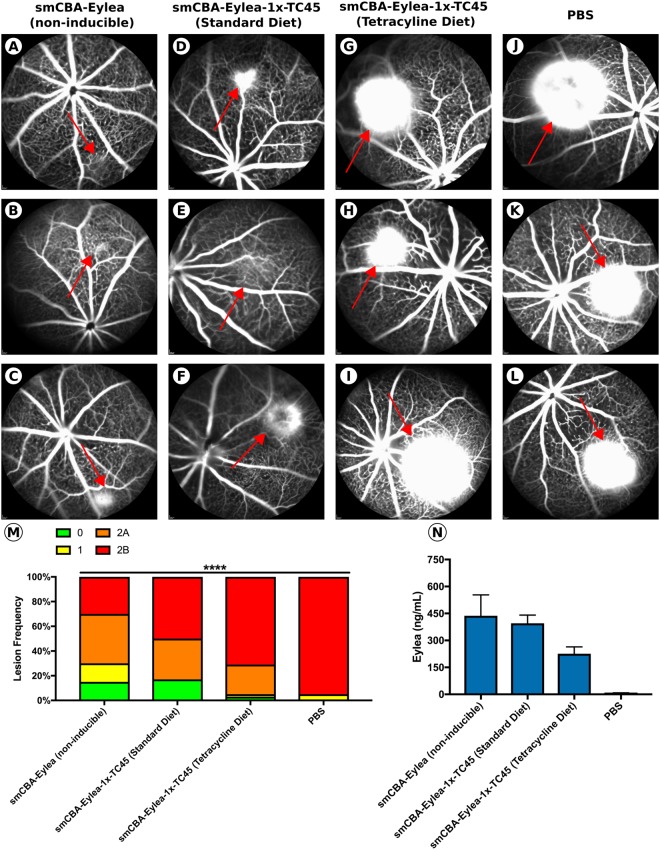
Vascular endothelial growth factor (VEGF) is a key mediator in the development and progression of choroidal neovascularization (CNV) in patients with wet age-related macular degeneration (AMD). As a consequence, current treatment strategies typically focus on the administration of anti-VEGF agents, such as Aflibercept (Eylea), that inhibit VEGF function. While this approach is largely successful at counteracting CNV progression, the treatment can require repetitive (i.e. monthly) intravitreal injections of the anti-VEGF agent throughout the patient’s lifetime, imposing a substantial financial and medical burden on the patient. Moreover, repetitive injection of anti-VEGF agents over a period of years may encourage progression of retinal and choroidal atrophy in patients with AMD, leading to a decrease in visual acuity. Herein, we have developed a single-injection recombinant adeno-associated virus (rAAV)-based gene therapy treatment for wet AMD that prevents CNV formation through inducible over-expression of Eylea. First, we demonstrate that by incorporating riboswitch elements into the rAAV expression cassette allows protein expression levels to be modulated in vivo through oral supplementation on an activating ligand (e.g. tetracycline). We subsequently utilized this technology to modulate the intraocular concentration of Eylea following rAAV delivery, leading to nearly complete (p = 0.0008) inhibition of clinically significant CNV lesions in an established mouse model of wet AMD. The results shown in this study pave the way for the development of a personalized gene therapy strategy for the treatment of wet AMD that is substantially less invasive and more clinically adaptable than the current treatment paradigm of repetitive bolus injections of anti-VEGF agents.
Overview
The claims and statistics of this paper haven’t been checked yet.
Free: it reads the open-access text and checks the first 5 claims that cite a source we can check. Create a free account to check every claim.
Integrity signals
Registry
Cites
Statistics
Figures
Verification
Claims the paper makes
The claims and statistics of this paper haven’t been checked yet.
Free: it reads the open-access text and checks the first 5 claims that cite a source we can check. Create a free account to check every claim.
Claims other papers make about this one
Each is checked against this paper’s own text: does it say what the citing paper says it does?
The source backs part of the claim, not all of it — or backs it for a different population, condition or comparison.
In the citing paper
“Riboswitches have gained considerable attention for rAAV ocular therapies because of their small size (100 bp cis-acting RNA sequence), adaptability to ligands, and the development of synthetic riboswitches [173,178,179].”
From Recombinant Adeno-Associated Viral Vectors (rAAV)-Vector Elements in Ocular Gene Therapy Clinical Trials and Transgene Expression and Bioactivity Assays (2020) · cites this paper as [179]
Experimental — accuracy not yet measuredThe cited source says what the claim attributes to it.
In the citing paper
“However, Reid et al. illustrated the functional viability of an inducible transgene system in a murine model of wet AMD (Reid et al., 2018) while others have demonstrated its capability in IRDs (Lh ´ eriteau et al., 2010).”
From Gene Therapy-Associated Uveitis (GTAU): Understanding and mitigating the adverse immune response in retinal gene therapy (2025) · cites this paper as Reid et al., 2018
Self-check
Percentages, sums and reported differences re-computed from the paper’s own numbers.
The self-check needs the paper’s full text.
Citations
Cites
Wong, W. L., Su, X., Li, X., Cheung, C. M. G., Klein, R., Cheng, C.-Y., & Wong, T. Y. (2014) · The Lancet Global Health · doi:10.1016/s2214-109x(13)70145-1 · Cited by 5,331
Bird, A. C., Bressler, N. M., Bressler, S. B., Chisholm, I. H., Coscas, G., Davis, M. D., de Jong, P. T. V. M., Klaver, C. C. W., Klein, B. E. K., Klein, R., et al. (1995) · Survey of Ophthalmology · doi:10.1016/s0039-6257(05)80092-x · Cited by 1,926
Ghasemi Falavarjani, K., & Nguyen, Q. D. (2013) · Eye · doi:10.1038/eye.2013.107 · Cited by 982
Clinical risk factors for age-related macular degeneration: a systematic review and meta-analysis
Chakravarthy, U., Wong, T. Y., Fletcher, A., Piault, E., Evans, C., Zlateva, G., Buggage, R., Pleil, A., & Mitchell, P. (2010) · BMC Ophthalmology · doi:10.1186/1471-2415-10-31 · Cited by 842
Pharmacokinetics and pharmacodynamics of the tetracyclines including glycylcyclines
Agwuh, K. N. (2006) · Journal of Antimicrobial Chemotherapy · doi:10.1093/jac/dkl224 · Cited by 806
Nishijima, K., Ng, Y.-S., Zhong, L., Bradley, J., Schubert, W., Jo, N., Akita, J., Samuelsson, S. J., Robinson, G. S., Adamis, A. P., et al. (2007) · The American Journal of Pathology · doi:10.2353/ajpath.2007.061237 · Cited by 707
Riboswitches and the RNA World
Breaker, R. R. (2012) · Cold Spring Harbor Perspectives in Biology · doi:10.1101/cshperspect.a003566 · Cited by 666
Krzystolik, M. G. (2002) · Archives of Ophthalmology · doi:10.1001/archopht.120.3.338 · Cited by 590 · cited 1×
“Lesion images from all groups were collated and randomized before being independently graded by three masked reviewers using the system described by Krzystolik et al., 2002 (See Supplemental Fig.”
MethodAttenuation of green fluorescent protein half-life in mammalian cells
Corish, P., & Tyler-Smith, C. (1999) · Protein Engineering, Design and Selection · doi:10.1093/protein/12.12.1035 · Cited by 559
FUNDUS AUTOFLUORESCENCE IMAGING: Review and Perspectives
SCHMITZ-VALCKENBERG, S., HOLZ, F. G., BIRD, A. C., & SPAIDE, R. F. (2008) · Retina · doi:10.1097/iae.0b013e318164a907 · Cited by 537
Cited by
Update on Retinal Vein Occlusion
Romano, F., Lamanna, F., Gabrielle, P., Teo, K. Y. C., Parodi, M. B., Iacono, P., Fraser‐Bell, S., Cornish, E. E., Nassisi, M., Viola, F., et al. (2023) · Asia-Pacific Journal of Ophthalmology · doi:10.1097/apo.0000000000000598 · Cited by 131
Engineering synthetic RNA devices for cell control
Dykstra, P. B., Kaplan, M., & Smolke, C. D. (2022) · Nature Reviews Genetics · doi:10.1038/s41576-021-00436-7 · Cited by 137
Buck, T., & Wijnholds, J. (2020) · International Journal of Molecular Sciences · doi:10.3390/ijms21124197 · Cited by 92
Brinks, J., van Dijk, E. H. C., Klaassen, I., Schlingemann, R. O., Kiełbasa, S. M., Emri, E., Quax, P. H. A., Bergen, A. A. B., Meijer, O. C., & Boon, C. J. F. (2021) · Progress in Retinal and Eye Research · doi:10.1016/j.preteyeres.2021.100994 · Cited by 89
The Theophylline Aptamer: 25 Years as an Important Tool in Cellular Engineering Research
Wrist, A., Sun, W., & Summers, R. M. (2020) · ACS Synthetic Biology · doi:10.1021/acssynbio.9b00475 · Cited by 72
Strobel, B., Duechs, M. J., Blazevic, D., Rechtsteiner, P., Braun, C., Kroker, K. S., Schmid, B., Ciossek, T., Gottschling, D., Hartig, J. S., et al. (2020) · ACS Synthetic Biology · doi:10.1021/acssynbio.9b00410 · Cited by 69
Small-Molecule Aptamer for Regulating RNA Functions in Mammalian Cells and Animals
Fukunaga, K., Dhamodharan, V., Miyahira, N., Nomura, Y., Mustafina, K., Oosumi, Y., Takayama, K., Kanai, A., & Yokobayashi, Y. (2023) · Journal of the American Chemical Society · doi:10.1021/jacs.2c12332 · Cited by 64
Strobel, B., Spöring, M., Klein, H., Blazevic, D., Rust, W., Sayols, S., Hartig, J. S., & Kreuz, S. (2020) · Nature Communications · doi:10.1038/s41467-020-14491-x · Cited by 57
Aptamer-Mediated Control of Polyadenylation for Gene Expression Regulation in Mammalian Cells
Spöring, M., Boneberg, R., & Hartig, J. S. (2020) · ACS Synthetic Biology · doi:10.1021/acssynbio.0c00222 · Cited by 40
Tickner, Z. J., & Farzan, M. (2021) · Pharmaceuticals · doi:10.3390/ph14060554 · Cited by 45
Aptamers in RNA-based switches of gene expression
Spöring, M., Finke, M., & Hartig, J. S. (2019) · Current Opinion in Biotechnology · doi:10.1016/j.copbio.2019.11.008 · Cited by 39
Design of Mammalian ON-Riboswitches Based on Tandemly Fused Aptamer and Ribozyme
Mustafina, K., Fukunaga, K., & Yokobayashi, Y. (2019) · ACS Synthetic Biology · doi:10.1021/acssynbio.9b00371 · Cited by 40
An adeno-associated virus variant enabling efficient ocular-directed gene delivery across species
Luo, S., Jiang, H., Li, Q., Qin, Y., Yang, S., Li, J., Xu, L., Gou, Y., Zhang, Y., Liu, F., et al. (2024) · Nature Communications · doi:10.1038/s41467-024-48221-4 · Cited by 39
Finke, M., Brecht, D., Stifel, J., Gense, K., Gamerdinger, M., & Hartig, J. S. (2021) · Nucleic Acids Research · doi:10.1093/nar/gkab233 · Cited by 41
Takahashi, K., & Yokobayashi, Y. (2019) · ACS Synthetic Biology · doi:10.1021/acssynbio.9b00177 · Cited by 35
Wood, E. H., Tang, P. H., la Huerta, I. D., Korot, E., Muscat, S. P., Palanker, D., & Williams, G. A. (2019) · Retina · doi:10.1097/iae.0000000000002449 · Cited by 38
Khachigian, L. M., Varcoe, R. L., Suoranta, T., Laham-Karam, N., & Ylä‐Herttuala, S. (2023) · Arteriosclerosis Thrombosis and Vascular Biology · doi:10.1161/atvbaha.122.318902 · Cited by 33
Genetic Aspects of Age-Related Macular Degeneration and Their Therapeutic Potential
Stradiotto, E., Allegrini, D., Fossati, G., Raimondi, R., Sorrentino, T., Tripepi, D., Barone, G., Inforzato, A., & Romano, M. R. (2022) · International Journal of Molecular Sciences · doi:10.3390/ijms232113280 · Cited by 29
Retinal Vein Occlusion–Background Knowledge and Foreground Knowledge Prospects—A Review
Lendzioszek, M., Bryl, A., Poppe, E., Zorena, K., & Mrugacz, M. (2024) · Journal of Clinical Medicine · doi:10.3390/jcm13133950 · Cited by 40
Eisenhut, P., Marx, N., Borsi, G., Papež, M., Ruggeri, C., Baumann, M., & Borth, N. (2023) · New Biotechnology · doi:10.1016/j.nbt.2023.11.003 · Cited by 37
Wang, Z., Zhang, Y., Xu, C., Peng, A., Qin, H., & Yao, K. (2025) · Biochemical Pharmacology · doi:10.1016/j.bcp.2025.116902 · Cited by 30
AAV- based vector improvements unrelated to capsid protein modification
Shitik, E. M., Shalik, I. K., & Yudkin, D. V. (2023) · Frontiers in Medicine · doi:10.3389/fmed.2023.1106085 · Cited by 30
“Reduced transgene expression proved to be directly correlated with increased efficiency of AAV particle assembly, reaching a maximum for highly toxic transgenes (89).”
BackgroundViral-vector-delivered anti-angiogenic therapies to the eye
Koponen, S., Kokki, E., Kinnunen, K., & Ylä-Herttuala, S. (2021) · Pharmaceutics · doi:10.3390/pharmaceutics13020219 · Cited by 24
“Laser induced CNV in mouse rAAV2/2-riboswitch intravitreal aflibercept wet AMD [70]”
BackgroundMethodInfluentialPurdy, R., John, M., Bray, A., Clare, A. J., Copland, D. A., Chan, Y. K., Henderson, R. H., Nerinckx, F., Leroy, B. P., Yang, P., et al. (2025) · Progress in Retinal and Eye Research · doi:10.1016/j.preteyeres.2025.101354 · Cited by 24
“The gene therapy was well-tolerated in neovascular AMD with only mild, anterior segment inflammation reported that responded well to steroids (Busbee et al., 2021).”
InfluentialProstaglandin-based rAAV-mediated glaucoma gene therapy in Brown Norway rats
Chern, K. J., Nettesheim, E. R., Reid, C. A., Li, N. W., Marcoe, G. J., & Lipinski, D. M. (2022) · Communications Biology · doi:10.1038/s42003-022-04134-w · Cited by 25
Self-citationRiboswitch-controlled IL-12 gene therapy reduces hepatocellular cancer in mice
Duechs, M. J., Kratzer, R. F., Vieyra-Garcia, P. A., Strobel, B., Schönberger, T., Groß, P., Aljayyoussi, G., Gupta, A., Lang, I., Klein, H., et al. (2024) · Frontiers in Immunology · doi:10.3389/fimmu.2024.1360063 · Cited by 20
“The reported lack of function of the K19 aptazyme to switch AAV-mediated transgene expression in the mouse eye (49) is likely partially due to the poor tet exposure in this organ (12).”
BackgroundOptimized riboswitch-regulated AAV vector for VEGF-B gene therapy
Eriksson, R. A. E., Nieminen, T., Galibert, L., Peltola, S. K., Tikkanen, P., Käyhty, P., Leinonen, H. M., Oruetxebarria, I., Lepola, S., Valkama, A. J., et al. (2022) · Frontiers in Medicine · doi:10.3389/fmed.2022.1052318 · Cited by 20
“(20), where it showed a dose-dependent induction of EGFP; in another report, it showed induction in HEK293T cells (15).”
BackgroundInfluentialDelivery of nVEGFi using AAV8 for the treatment of neovascular age-related macular degeneration
She, K., Su, J., Wang, Q., Liu, Y., Zhong, X., Jin, X., Zhao, Q., Xiao, J., Li, R., Deng, H., et al. (2022) · Molecular Therapy — Methods & Clinical Development · doi:10.1016/j.omtm.2022.01.002 · Cited by 16
“In addition, inducible regulation of transgene expression could be a promising approach for regulating antiVEGF agent dose to fit the patient-specific effective dose.(31,33) Despite gene augmentation or gene silencing, gene knockout by the CRISPR/ Cas system showed the potential to ablate pathologic angiogenesis and t…”
BackgroundEngineering U1-Based Tetracycline-Inducible Riboswitches to Control Gene Expression in Mammals
Rovira, E., Moreno, B., Razquin, N., Blázquez, L., Hernández-Alcoceba, R., Fortes, P., & Pastor, F. (2023) · ACS Nano · doi:10.1021/acsnano.3c01994 · Cited by 12
Optimization of Exon-Skipping Riboswitches and Their Applications to Control Mammalian Cell Fate
Nomura, Y., Kim, N., Zhu, B., Hamzah, M., Zhang, H., & Yokobayashi, Y. (2024) · ACS Synthetic Biology · doi:10.1021/acssynbio.4c00295 · Cited by 13
PDGF Receptor Alpha Signaling Is Key for Müller Cell Homeostasis Functions
Díaz‐Lezama, N., Wolf, A., Koch, S., Pfaller, A. M., Biber, J., Guillonneau, X., Langmann, T., & Grosche, A. (2021) · International Journal of Molecular Sciences · doi:10.3390/ijms22031174 · Cited by 11
“, expressing the therapeutic antibody via adeno-associated virus (AAV)-based vectors and as currently tested in clinical trials targeting the VEGF pathway ([71,72]; reviewed in [73]), we would speculate that unwarranted side effects on Müller cell homeostatic functions would be more pronounced.”
MethodTakahashi, K. A., Iida, T., Ishida, S., Crawford, B., Sakai, Y., Mochizuki, A., Tsujiuchi, R., Tanaka, S., & Imai, K. (2022) · DOAJ (DOAJ: Directory of Open Access Journals) · Cited by 10
RNA-based controllers for engineering gene and cell therapies
Takahashi, K., & Galloway, K. E. (2023) · Current Opinion in Biotechnology · doi:10.1016/j.copbio.2023.103026 · Cited by 10
“Similarly, riboswitch-mediated transgene expression control from adenoviral and AAV vectors has been demonstrated by Strobel et al. and Reid et al. [42,58].”
BackgroundTakahashi, K. A., Iida, T., Ishida, S., Crawford, B., Sakai, Y., Mochizuki, A., Tsujiuchi, R., Tanaka, S., & Imai, K. (2022) · Clinical ophthalmology · doi:10.2147/opth.s345403 · Cited by 11
“There is also interest in sustainedrelease delivery devices for both novel and approved agents, in oral anti-VEGF formulations,(53,54) and in gene therapy.(55,56) The diversity of subject areas covered in wAMD research within an elderly Japanese population was narrow, with some search terms returning little evidence.”
BackgroundLin, Y., Wang, J. Z., Niu, Y., Zhu, L., Duke, R. K., Duke, C. C., Murray, M. T., & Zhou, F. (2025) · Phytotherapy Research · doi:10.1002/ptr.70029 · Cited by 11
“Wet AMD, or neurovascular AMD, is characterized by anomalous choroidal neovascularization (CNV) within the central region of the retina (Smith and Kaiser 2014; Zhuang et al. 2011).”
InfluentialToutounchian, S., Ahmadbeigi, N., & Mansouri, V. (2022) · Journal of Ocular Pharmacology and Therapeutics · doi:10.1089/jop.2022.0022 · Cited by 10
“…have shown that the increased VA during the first years of treatment is not maintained in the upcoming years and despite monthly treatments, there is a gradual decrease in VA. 91 Third, a recent meta-analysis has shown that the intensity of treatment is directly related to the final visual outcome.”
Kläge, D., Müller, E., & Hartig, J. S. (2023) · RNA Biology · doi:10.1080/15476286.2023.2296203 · Cited by 10
Wood, E. H., Korot, E., Storey, P. P., Muscat, S. P., Williams, G. A., & Drenser, K. A. (2020) · Current Opinion in Ophthalmology · doi:10.1097/icu.0000000000000656 · Cited by 9
“Although there a wide variety of gene therapy trials currently underway for both inherited [28] and acquired retinal diseases (such as age-related macular degeneration [29]), the only FDA approved gene therapy for the eye is Voretigene neparvovec-rzyl mutations in the RPE65 .”
BackgroundLipinski, D. M. (2019) · Advances in Experimental Medicine and Biology · doi:10.1007/978-3-030-27378-1_13 · Cited by 8
Self-citationGene therapy for retinal diseases: From genetics to treatment
Khaparde, A., Mathias, G. P., Poornachandra, B., Thirumalesh, M. B., Shetty, R., & Ghosh, A. (2024) · Indian Journal of Ophthalmology · doi:10.4103/ijo.ijo_2902_23 · Cited by 10
“[29] described a wet AMD GT approach involving recombinant AAV‑based anti‑VEGF treatment.”
MethodOsterman, M. D., Song, Y. E., Nittala, M. G., Sadda, S. R., Scott, W. K., Stambolian, D., Pericak‐Vance, M. A., & Haines, J. L. (2022) · Investigative Ophthalmology & Visual Science · doi:10.1167/iovs.63.8.17 · Cited by 10
Cooperative binding of bivalent ligands yields new insights into the guanidine-II riboswitch
Steuer, J., Sinn, M., Eble, F., Rütschlin, S., Böttcher, T., Hartig, J. S., & Peter, C. (2024) · NAR Genomics and Bioinformatics · doi:10.1093/nargab/lqae132 · Cited by 6
“The ability to con-trol gene expression by utilizing a small molecule trigger offers many applications ranging from synthetic biology, functional genomics and pharmaceutical target validation, to prospects in gene therapy ( 2–5 ).”
BackgroundWasserman, S. R., Muron, S., Lee, H. R., Routh, M. L., Hepperla, A. J., Scoville, D. M., Huber, A. K., Umana, J. M., Pereira, N. E., Foley, C. A., et al. (2025) · Nucleic Acids Research · doi:10.1093/nar/gkaf345 · Cited by 6
“To combat this challenge, previous work has incorporated RNA-based strategies such as riboswitches or RNA interference to control rAAV transcript stability [ 64–66 ].”
Berkowitz, S. T., & Patel, S. N. (2020) · Ophthalmology Retina · doi:10.1016/j.oret.2020.08.005 · Cited by 6
Wang, J., Shi, X., Bo, Q., Wang, H., Wei, F., Liu, J., Wang, H., Zhang, L., Qi, Y., Li, Z., et al. (2021) · Asian Journal of Pharmaceutical Sciences · doi:10.1016/j.ajps.2021.04.001 · Cited by 7
Parsons, N., Annamalai, B., & Rohrer, B. (2023) · Translational Vision Science & Technology · doi:10.1167/tvst.12.7.17 · Cited by 6
Anti-Scg3 Gene Therapy to Treat Choroidal Neovascularization in Mice
Huang, C., Ji, L., Kaur, A., Tian, H., Waduge, P., Webster, K. A., & Li, W. (2023) · Biomedicines · doi:10.3390/biomedicines11071910 · Cited by 5
DNA- and RNA-based Gene Therapies in Ophthalmology
Ciulla, T. A., Pennesi, M. E., Kiss, S., & Cunningham, E. T. (2021) · International Ophthalmology Clinics · doi:10.1097/iio.0000000000000359 · Cited by 4
Modulating myoblast differentiation with RNA-based controllers
Dykstra, P. B., Rando, T. A., & Smolke, C. D. (2022) · PLoS ONE · doi:10.1371/journal.pone.0275298 · Cited by 3
“Recent examples include inducible control of gene therapy [11] and control of gene editing and transcriptional regulation with CRISPR [12].”
BackgroundExpression Cassette Design and Regulation of Transgene Expression
Keravala, A., & Gasmi, M. (2021) · International Ophthalmology Clinics · doi:10.1097/iio.0000000000000363 · Cited by 5
Ultrasound Control of Gene Expression in Human iPSCs via Heat Shock Promoters
Howells, A. R., Bell, K., Heo, H., Haideri, T., Jing, Y., & Lian, X. L. (2025) · Biotechnology and Bioengineering · doi:10.1002/bit.70050 · Cited by 2
“Inducible systems are critical tools in cutting ‐ edge biological research, allowing for precise spatiotemporal control of cellular processes (Ma et al. 2016; Chen et al. 2015; González et al. 2014; Reid et al. 2018; Kim et al. 2017; Yesbolatova et al. 2020).”
The Molecular Basis of Ocular Aging: Mechanisms, Pathologies, and Emerging Therapeutics
Zong, Y., Fan, Q., Qiu, S., Zhang, H., & Cen, Z. (2026) · Investigative Ophthalmology & Visual Science · doi:10.1167/iovs.67.8.13 · Cited by 2
“Strategies employing inducible gene expression systems—such as riboswitch-based post-transcriptional control, which has been used to regulate anti-VEGF expression in the retina 154 —offer a safeguard against the risks of permanent genetic modification.”
Yuan, Y., Kong, W., Liu, X., & Shi, G. (2023) · Current Medical Science · doi:10.1007/s11596-022-2684-3 · Cited by 2
Piroozmand, S., Latifi‐Navid, H., Soheili, Z., Hosseinkhani, S., Samiei, S., Behrooz, A. B., Ahmadieh, H., Leonardi, A., Ghavami, S., & Sheibani, N. (2026) · Investigative Ophthalmology & Visual Science · doi:10.1167/iovs.67.5.4 · Cited by 2
“18 Gene therapy–based approaches are emerging as promising strategies for sustained VEGF suppression with fewer interventions.”
Szulim, D., Kucharska, E., Machalińska, A., Kuprjanowicz, L., Czupryński, P., & Szczuko, M. (2026) · Nutrients · doi:10.3390/nu18121870 · Cited by 1
Effect of conbercept or ranibizumab in the treatment of wet age-related macular degeneration
Chai, T., Zhang, D., & Khan, Z. (2019) · Environmental Disease · doi:10.4103/ed.ed_5_19
“For example, in the treatment guidelines for wet AMD made by Chinese fundus disease group,[10] the pro re nata (PRN) regimen is recommended, namely intravitreal injection of drugs once a month for 3 months.”
La dégénérescence maculaire liée à l’âge en 2020
CHAUVAUD, D. (2020) · Bulletin de l Académie Nationale de Médecine · doi:10.1016/j.banm.2020.05.111 · Cited by 1
Wan, J., Zhang, F., Tan, M., wang, L., Hu, S., & Bian, W. (2022) · Research Square · doi:10.21203/rs.3.rs-1823280/v1
An AAV Vector for Inducible Gene Expression Preferentially in Muscles
Zhou, R., Le, Y., Jiang, Z., Zheng, X., Marinaro, C., Chen, S., Wang, B., Zhao, S., Chen, M., Furmanski, P., et al. (2023) · International Journal of Genetic Modifications and Recombinations · doi:10.37591/ijgmr.v01i02.127970 · Cited by 1
Eisenhut, P., Marx, N., Borsi, G., Papež, M., Ruggeri, C., Baumann, M., & Borth, N. (2024) · New Biotechnology · doi:10.1016/j.nbt.2024.09.001
Huang, C., Kaur, A., Ji, L., Tian, H., Webster, K. A., & Li, W. (2024) · Gene Therapy · doi:10.1038/s41434-024-00491-9
“Inducible anti-VEGF expression by AAV has been proposed as a way to alleviate potential long-term adverse effects of anti-VEGF gene therapy on healthy retinal vasculatures [18].”
AAV-mediated inducible co-expression of IL-10 and IL-1RN for ocular inflammatory diseases
Castro, B. F. M., Steel, J. C., & Layton, C. J. (2025) · Journal of Drug Delivery Science and Technology · doi:10.1016/j.jddst.2025.107591
Vascular regeneration and blood flow recovery in glaucoma
Waxman, S., & Polo, A. D. (2026) · Frontiers in Cell and Developmental Biology · doi:10.3389/fcell.2026.1851815
“In a mouse model of neovascular age-related macular degeneration, a single injection of AAV conferred lasting expression of a VEGF-neutralizing protein, with intraocular concentration of anti-VEGF adjustable through oral supplementation of an activating ligand (Reid et al., 2018).”
Mammalian therapeutic riboswitches: Engineering and custom ligands
Rovira, E., Moreno, B., Pastor, F., & Fortes, P. (2026) · Molecular Therapy — Nucleic Acids · doi:10.1016/j.omtn.2026.103000
“67 Additionally, a tetracycline-responding aptazyme (see the following text) was used to modulate IL12 expression from an AAV vector as immunotherapy in an orthotopic mouse model of hepatocellular carcinoma.”
Panos, G. D., Empeslidis, T., Amaxilati, E., Tsiropoulos, G. N., Topouzis, N., Konstas, P., Chatzimichail, E., Gatzioufas, Z., & Amoaku, W. M. K. (2026) · International Journal of Molecular Sciences · doi:10.3390/ijms27177786
“Doxycycline-responsive AAV systems have achieved repeated control in non human-primate retina [101]; a tetracycline-responsive RNA aptazyme modulated AAV-derived aflibercept and choroidal neovascularisation in mice [102].”
Metadata
- Authors
- Reid, C. A., Nettesheim, E. R., Connor, T. B., & Lipinski, D. M.
- Affiliations
- Medical College of Wisconsin (US)
- Corresponding author
- Lipinski, Daniel M.
- Venue
- Scientific Reports
- Published
- 2018-08-06
- Volume
- 8
- Issue
- 1
- Pages
- 11763-11763
- ISSN
- 2045-2322 (ISSN-L)
- PMC
- PMC6079038
- OpenAlex
- W2887127418
- Semantic Scholar
- 6e8b8c49b44f59eeb4f43f88eedb18782531b399
- Cited by
- 65
- References
- 49
- Citations by year
- 2026: 6 · 2025: 6 · 2024: 8 · 2023: 12 · 2022: 11 · 2021: 8 · 2020: 8 · 2019: 6
- FWCI
- 5.53
- Type
- journal article
- Language
- en
- Open access
- gold
- doi.org
- Licence
- cc-by
- creativecommons.org/licenses/by/4.0 (tdm)
- creativecommons.org/licenses/by/4.0 (vor)
- Locations
- Scientific Reports (publishedVersion, cc-by)
- Europe PMC (PubMed Central) (publishedVersion, cc-by)
- PubMed Central (publishedVersion, cc-by)
- PubMed (publishedVersion)
- DOAJ (DOAJ: Directory of Open Access Journals) (submittedVersion)
- Funders
- U.S. Department of Health & Human Services | NIH | National Eye Institute (P30 EY001931-37)
- Topics
- Health Sciences › Medicine › Ophthalmology › Retinal Diseases and Treatments
- Health Sciences › Medicine › Ophthalmology › Retinal Development and Disorders
- Life Sciences › Biochemistry, Genetics and Molecular Biology › Genetics › Virus-based gene therapy research
- Keywords
- neovascular age-related macular degeneration, choroidal neovascularization, recombinant adeno-associated virus, aflibercept, riboswitches, inducible gene expression, tetracycline, intravitreal gene delivery
- MeSH terms
- Dependovirus, Animals, Enzyme-Linked Immunosorbent Assay, Female, Humans, Mice, Inbred C57BL, Software, Genetic Therapy, Microscopy, Confocal, Choroidal Neovascularization, Vascular Endothelial Growth Factor A, Mice, Wet Macular Degeneration, HEK293 Cells, Riboswitch
About these checks
Registry, retraction, Cites and statistics results are computed, not judged, with one exception: a printed reference that no index lists is read once by a model before it counts as a citation error. Claims are extracted by a model and kept only when their quote appears verbatim in the text; each cited source is then checked, with a model’s help, for whether it says what the claim relies on. Those verdicts can be wrong — read the claim’s quote and the cited source before relying on one.
Statistics and arithmetic are recomputed, not judged.
Confidence bands are shown only for fields calibrated on our annotated test set. None is calibrated yet, so no band is shown.
What counts as a claim ›How we measure confidence ›How we check this ›
Are you an author, or do you see a problem with this page? Request a review
Data sources
Bibliographic data: Semantic Scholar, OpenAlex, Crossref.
Contains information from the Semantic Scholar Academic Graph Datasets, made available under the ODC Attribution License (ODC-BY 1.0).
Semantic Scholar’s data is described in: Kinney, R., et al. (2023). The Semantic Scholar Open Data Platform. arXiv:2301.10140.
