

Engineering of Primary Human B cells with CRISPR/Cas9 Targeted Nuclease
Open accessPublished version of a preprint
The DOI matches its Crossref record; 41 of the 41 references it cites were found in a registry or an index; 5 of the 19 sources its claims cite were checked for support.
Abstract
B cells offer unique opportunities for gene therapy because of their ability to secrete large amounts of protein in the form of antibody and persist for the life of the organism as plasma cells. Here, we report optimized CRISPR/Cas9 based genome engineering of primary human B cells. Our procedure involves enrichment of CD19 + B cells from PBMCs followed by activation, expansion, and electroporation of CRISPR/Cas9 reagents. We are able expand total B cells in culture 10-fold and outgrow the IgD+ IgM+ CD27− naïve subset from 35% to over 80% of the culture. B cells are receptive to nucleic acid delivery via electroporation 3 days after stimulation, peaking at Day 7 post stimulation. We tested chemically modified sgRNAs and Alt-R gRNAs targeting CD19 with Cas9 mRNA or Cas9 protein. Using this system, we achieved genetic and protein knockout of CD19 at rates over 70%. Finally, we tested sgRNAs targeting the AAVS1 safe harbor site using Cas9 protein in combination with AAV6 to deliver donor template encoding a splice acceptor- EGFP cassette, which yielded site-specific integration frequencies up to 25%. The development of methods for genetically engineered B cells opens the door to a myriad of applications in basic research, antibody production, and cellular therapeutics.
Overview
CoChat Summary
TL;DR
This paper reports optimized CRISPR/Cas9 genome engineering of primary human B cells using CD40L/IL4 expansion, electroporation of RNPs or Cas9 mRNA, and AAV6 donor delivery. It achieves >70% CD19 knockout and site-specific AAVS1 integration reported up to 25%, with results peaking at 18 ± 4% at MOI 250,000.
Key findings
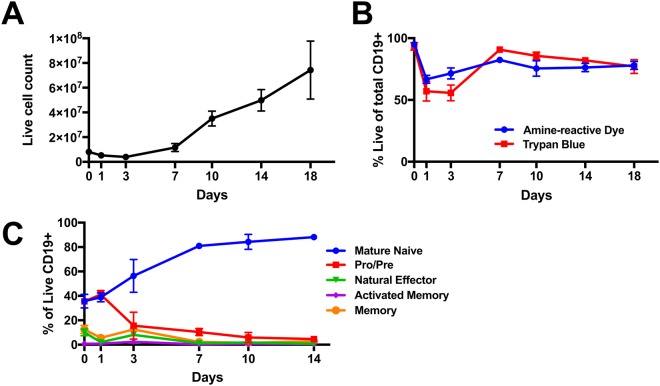
- CD19+ B cells expanded in culture, with the IgD+ IgM+ CD27− naïve subset increasing from 35 ± 6% to 81 ± 2% by day 7 and remaining over 80%; total B cells expanded 10-fold.
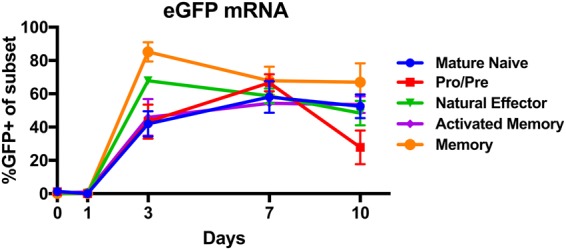
- B cells became permissive to mRNA electroporation by day 3, peaking at day 7; naïve B cell EGFP transfection was 41 ± 8% on day 3, 58 ± 9% on day 7, and 52 ± 7% on day 10.
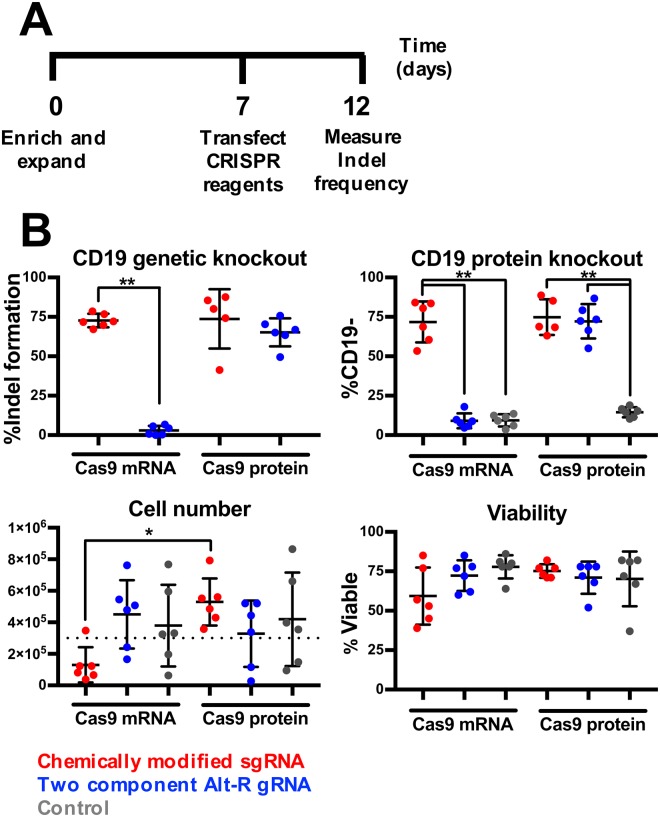
- Chemically modified sgRNA with Cas9 protein or Cas9 mRNA induced >70% CD19 indel formation (74 ± 19% and 72 ± 4%) and >70% CD19 protein loss (75 ± 11% and 72 ± 13%); Alt-R gRNA with Cas9 protein gave 65 ± 9% indels and 72 ± 11% CD19 knockout, while Alt-R gRNA with Cas9 mRNA gave no editing. RNP-treated cells showed better post-editing expansion (529,000 ± 150,000 cells, 75 ± 4% viability) than Cas9 mRNA-treated cells (130,000 ± 111,000 cells, 59 ± 18% viability).
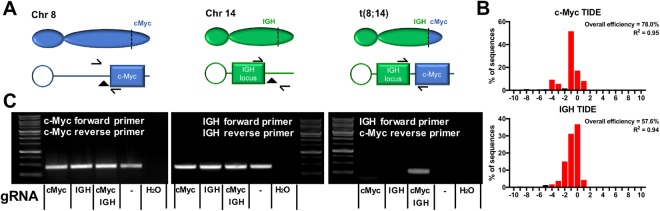
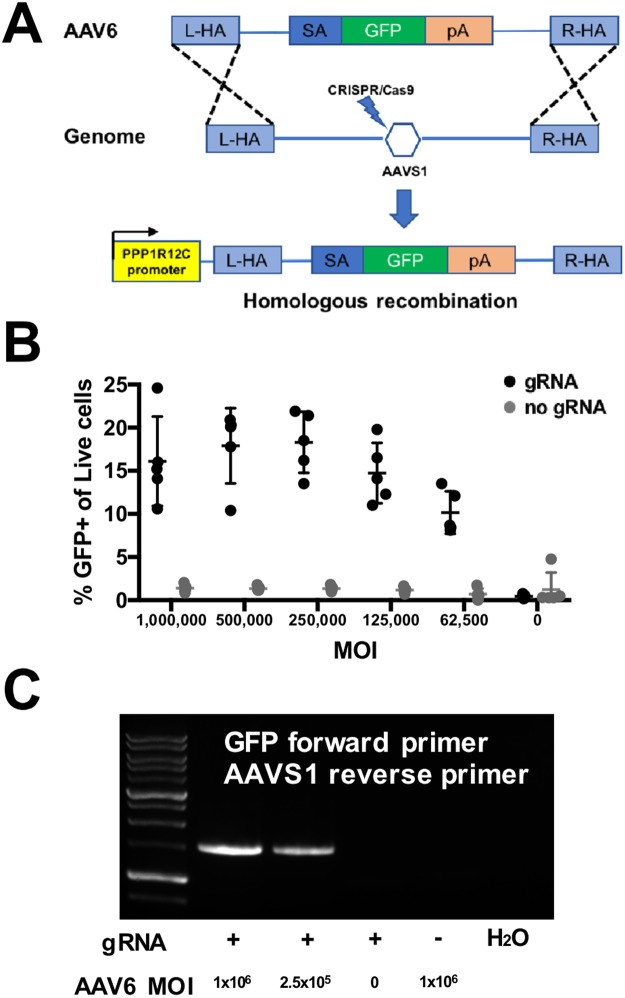
- AAV6 delivered a splice acceptor-EGFP donor to AAVS1, yielding EGFP expression at all MOIs tested and peaking at 18 ± 4% with MOI 250,000; the abstract and discussion report site-specific integration up to 25%. RNPs targeting MYC and IGH created individual DSBs at 78.0% and 56.6%, and the t(8;14) translocation was detected only when both RNPs were combined.
Methods
- Primary human PBMCs from de-identified healthy donors were obtained by leukapheresis; CD19+ B cells were isolated by immunomagnetic negative selection and expanded with CD40L multimer and IL4.
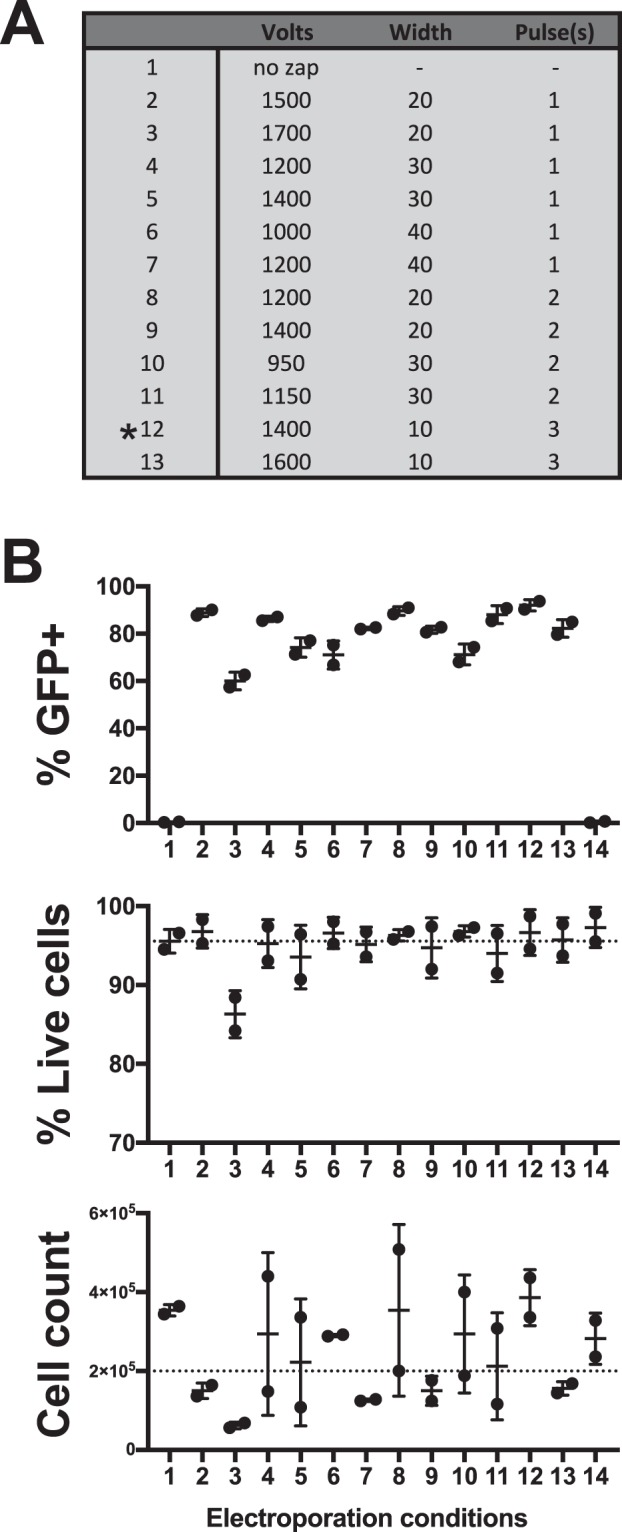
- Electroporation used the Neon Transfection System at 1400 V, 10 ms, 3 pulses; CRISPR formats included chemically modified sgRNA or Alt-R crRNA:tracrRNA with Cas9 protein or Cas9 mRNA. Editing was measured by TIDE and flow cytometry.
- AAV6 was used to deliver a splice acceptor-EGFP cassette with 500 bp homology arms to the AAVS1 safe harbor site; integration was assessed by EGFP expression and junction PCR. Statistical analysis used one-way ANOVA with p < 0.05.
Limitations
- The paper does not include a formal limitations section. It states that further work is required to fully realize therapeutic potential and that initial t(8;14) cultures showed no obvious transformed properties, with transformation to be studied in greater depth.
- Evident from the text: no in vivo engraftment, plasma cell maturation, antibody secretion, or therapeutic efficacy data are shown; these are discussed only as future applications.
- Evident from the text: no off-target analysis is reported, sample sizes are small (n = 2–6 in figures), and the AAVS1 integration efficiency varies between the reported peak of 18 ± 4% in results and “up to 25%” in the abstract/discussion.
Model-written summary. Check it against the paper before relying on it.
Integrity signals
Registry
Cites
Statistics
Figures
Verification
Claims the paper makes
4 Valid · 0 Not valid · 7 Not checked · 36 Own results and interpretations
The cited sources support only part of this claim — read each source’s verdict below.
In the paper
“The use of high quality Cas9 mRNA or protein and chemically modified guide RNAs (gRNAs) were demonstrated to increase the editing efficiency to over 75% in primary cell types14.”
§ Engineering of Primary Human B cells with CRISPR/Cas9 Targeted Nuclease > Introduction
What the sources say
- Partly supportedcites [14] Hendel A Chemically modified guide RNAs enhance CRISPR-Cas genome editing in human primary cells Nat. Biotechnol. 2015 33 985 989 10.1038/nbt.3290 26121415 PMC4729442 sourceExperimental — accuracy not yet measured
Hendel et al. (2015) do support the core mechanism — chemically modified (MS/MSP) synthesized sgRNAs co-delivered with Cas9 mRNA or Cas9 protein RNP greatly enhance editing in human primary cells versus plasmid delivery (Abstract/results: 48.7% and 47.9% indels in stimulated primary T cells with Cas9 mRNA + MS/MSP sgRNA vs. background for plasmid or unmodified sgRNA; 30.7% vs 12.8% for RNP delivery; 17.5–23.4% in CD34+ HSPCs). The only primary-cell figure exceeding 75% is a single dual-sgRNA experiment at CCR5 in T cells (73.9% MS and 93.1% MSP with Cas9 mRNA), and even there the MS-modified value is below 75%; in CD34+ HSPCs the dual-sgRNA combination reached only 37.8% and 43.0%, and unstimulated T cells 6.6–22.2%. The '>75%' magnitudes reported for the all-RNA platform (81–90% at IL2RG) are in the K562 cell line, not primary cells, so the claim's generalization of 'over 75% in primary cell types' overstates what this paper reports. (LLM, conf=0.82)
boostedstates a cause- Asserted: passes — The authors put it forward as true.
- Checkable: passes — It can be checked against evidence.
- Load-bearing: passes — The paper’s conclusions depend on it.
- Based: passes — The paper gives a reason why it holds.
- Partly supported
The cited sources support only part of this claim — read each source’s verdict below.
In the paper
“Additional work has demonstrated that Adeno Associated Virus Serotype 6 (AAV6) functions as a highly efficient DNA template donor for homologous recombination (HR) in both hematopoietic stem cells and T cells15,16.”
§ Engineering of Primary Human B cells with CRISPR/Cas9 Targeted Nuclease > Introduction
What the sources say
- Partly supportedcites [15] Wang J Highly efficient homology-driven genome editing in human T cells by combining zinc-finger nuclease mRNA and AAV6 donor delivery Nucleic Acids Res. 2016 44 e30 e30 10.1093/nar/gkv1121 26527725 PMC4756813 sourceExperimental — accuracy not yet measured
Our copy of Wang et al. (2016) fully supports the T-cell half: the Results (AAV serotype comparison and Figs. 2–5) show AAV6 gave the highest transduction (>75%) and, as a homology donor with ZFN mRNA, drove HDR at CCR5/AAVS1 in CD8+ and CD4+ T cells at 41–55% of alleles, concluding 'AAV6 vectors are an effective vehicle for delivering donor DNA templates to T cells.' The hematopoietic-stem-cell half is not supported: the only mention of HSCs is a general remark in the Discussion that precise nuclease editing 'may be especially important when the cellular target is a long-lived cell such as a hematopoietic stem cell or memory T cell'; no HSC/CD34+ experiment or AAV6-donor efficiency in HSCs appears anywhere in our copy (searched: hematopoietic stem cells, CD34, HSPC donor). Since the citing sentence does not state which of refs 15/16 covers which cell type, the HSC claim attributed here rests on another work. (LLM, conf=0.82)
- Partly supportedcites [16] Wang J Homology-driven genome editing in hematopoietic stem and progenitor cells using zinc finger nuclease mRNA and AAV6 donors Nat. Biotechnol. 2015 33 1256 1263 10.1038/nbt.3408 26551060 PMC4842001 sourceExperimental — accuracy not yet measured
Our copy fully supports the hematopoietic-stem-cell half: the Results section 'HDR-mediated editing in HSPCs by ZFN mRNA and AAV6 donors' concludes that AAV6 vectors are an effective vehicle for delivering homologous donor DNA templates to CD34+ HSPCs, with HDR frequencies of 15-40% at CCR5 and AAVS1, and the Discussion/'Efficient genome editing in primitive subsets of CD34+ HSPC' extends this to the most primitive CD34+CD133+CD90+ long-term-repopulating cells. The T-cell half is not supported: no passage in our copy reports AAV6 donor experiments in T cells (searched 'T cells Jurkat lymphocyte AAV6 donor editing'); all experiments are in mobilized-blood and fetal-liver CD34+ HSPCs, K562 and HEK293 cells. Since the citing sentence carries two citations without allocating parts, the T-cell claim attributed here rests on the other reference. (LLM, conf=0.80)
boostedstates a cause- Asserted: passes — The authors put it forward as true.
- Checkable: passes — It can be checked against evidence.
- Load-bearing: passes — The paper’s conclusions depend on it.
- Based: passes — The paper gives a reason why it holds.
- Partly supported
Every source the paper cites for this claim was checked and supports it.
In the paper
“recent advancements in CRISPR/Cas9 technologies have drastically improved editing efficiency in primary human cells14.”
§ Engineering of Primary Human B cells with CRISPR/Cas9 Targeted Nuclease > Introduction
What the sources say
- Supportedcites [14] Hendel A Chemically modified guide RNAs enhance CRISPR-Cas genome editing in human primary cells Nat. Biotechnol. 2015 33 985 989 10.1038/nbt.3290 26121415 PMC4729442 source
The Abstract and Results of our copy state that chemically synthesized and modified sgRNAs (MS, MSP) 'significantly enhance genome editing efficiencies in human primary T cells and CD34+ HSPCs', with concrete magnitudes: 48.7%/47.9% indel frequencies with Cas9 mRNA where unmodified or M-modified sgRNA gave none, a 2.4-fold improvement with RNP delivery (30.7% vs 12.8%), and up to 93.1% with dual modified sgRNAs in T cells. The paper also frames this as overcoming the difficulty of CRISPR-Cas editing in primary human cells, so the paraphrase that a recent CRISPR/Cas9 advancement markedly improved editing efficiency in primary human cells is supported; the only narrowing is that the specific advance reported is chemical sgRNA modification plus RNA/RNP delivery in T cells and CD34+ HSPCs rather than CRISPR/Cas9 advancements in general. (LLM, conf=0.85)
boostedstates a cause- Asserted: passes — The authors put it forward as true.
- Checkable: passes — It can be checked against evidence.
- Load-bearing: passes — The paper’s conclusions depend on it.
- Based: passes — The paper gives a reason why it holds.
- Supported
The cited sources support only part of this claim — read each source’s verdict below.
In the paper
“The site-specific nature of the CRISPR/Cas9 nuclease system makes it ideal for precision engineering of B cells and recent advancements in CRISPR/Cas9 technologies have drastically improved editing efficiency in primary human cells14.”
§ Engineering of Primary Human B cells with CRISPR/Cas9 Targeted Nuclease > Introduction
What the sources say
- Partly supportedcites [14] Hendel A Chemically modified guide RNAs enhance CRISPR-Cas genome editing in human primary cells Nat. Biotechnol. 2015 33 985 989 10.1038/nbt.3290 26121415 PMC4729442 sourceExperimental — accuracy not yet measured
Our copy supports the general substance: the Introduction (p. 1) states that CRISPR-Cas9 'generates site-specific DNA breaks' guided by a 20-nt Watson-Crick pairing region, and the Results (Abstract/Results pp. 2-4) report that chemically modified sgRNAs raised editing efficiency in human primary cells from background to 47.9-48.7% indels at CCR5 in stimulated T cells and 17.5-23.4% in CD34+ HSPCs, i.e. a large (multi-fold) improvement in primary human cells. What the source does not support is the B-cell framing: no passage in our copy mentions B cells; the only cell types studied are K562, CD3+ T cells (including unstimulated and CD4+/CD8+ subsets) and CD34+ hematopoietic stem and progenitor cells, so 'ideal for precision engineering of B cells' is the citing authors' extension to a cell type this paper did not examine. (LLM, conf=0.78)
plainstates a cause- Asserted: passes — The authors put it forward as true.
- Checkable: passes — It can be checked against evidence.
- Load-bearing: passes — The paper’s conclusions depend on it.
- Based: passes — The paper gives a reason why it holds.
- Partly supported
A result the paper reports from its own data — it cites no other source for it, so there is none to check. The quote shows it is in the paper.
In the paper
“B cell numbers remain roughly constant for 7 days before beginning to rapidly expand (Fig. 1A).”
§ Engineering of Primary Human B cells with CRISPR/Cas9 Targeted Nuclease > Results > Naïve B cells are activated and expanded in culture with CD40L and IL4
plainn = 3- Asserted: passes — The authors put it forward as true.
- Checkable: passes — It can be checked against evidence.
- Load-bearing: passes — The paper’s conclusions depend on it.
- Based: passes — The paper gives a reason why it holds.
26 more claims
Create a free account to see all 47 claims and to verify the 14 references still open.
- It may state two separate claims as one. 12
- Probably not a substantial claim. 7
Claims other papers make about this one
Each is checked against this paper’s own text: does it say what the citing paper says it does?
In the citing paper
“Along these lines, three independent groups introduced RNP complexes into human B cells that had been pre-activated with a cocktail of cytokines [8–10].”
From Highly efficient CRISPR-Cas9-mediated gene knockout in primary human B cells for functional genetic studies of Epstein-Barr virus infection (2021) · cites this paper as [10]
In the citing paper
“Results from these studies suggested that the efficiency of gene editing correlated with the level of B cell stimulation prior to nucleofection of the RNP complexes.”
From Highly efficient CRISPR-Cas9-mediated gene knockout in primary human B cells for functional genetic studies of Epstein-Barr virus infection (2021) · cites this paper as [10]
Citations
Cites
Easy quantitative assessment of genome editing by sequence trace decomposition
Brinkman, E. K., Chen, T., Amendola, M., & van Steensel, B. (2014) · Nucleic Acids Research · doi:10.1093/nar/gku936 · Cited by 2,390
Targeting a CAR to the TRAC locus with CRISPR/Cas9 enhances tumour rejection
Eyquem, J., Mansilla-Soto, J., Giavridis, T., van der Stegen, S. J. C., Hamieh, M., Cunanan, K. M., Odak, A., Gönen, M., & Sadelain, M. (2017) · Nature · doi:10.1038/nature21405 · Cited by 1,831
The c-myc oncogene driven by immunoglobulin enhancers induces lymphoid malignancy in transgenic mice
Adams, J. M., Harris, A. W., Pinkert, C. A., Corcoran, L. M., Alexander, W. S., Cory, S., Palmiter, R. D., & Brinster, R. L. (1985) · Nature · doi:10.1038/318533a0 · Cited by 1,779
Humoral Immunity Due to Long-Lived Plasma Cells
Slifka, M. K., Antia, R., Whitmire, J. K., & Ahmed, R. (1998) · Immunity · doi:10.1016/s1074-7613(00)80541-5 · Cited by 1,245
BCMA Is Essential for the Survival of Long-lived Bone Marrow Plasma Cells
O'Connor, B. P., Raman, V. S., Erickson, L. D., Cook, W. J., Weaver, L. K., Ahonen, C., Lin, L.-L., Mantchev, G. T., Bram, R. J., & Noelle, R. J. (2004) · The Journal of Experimental Medicine · doi:10.1084/jem.20031330 · Cited by 1,128
Chemically modified guide RNAs enhance CRISPR-Cas genome editing in human primary cells
Hendel, A., Bak, R. O., Clark, J. T., Kennedy, A. B., Ryan, D. E., Roy, S., Steinfeld, I., Lunstad, B. D., Kaiser, R. J., Wilkens, A. B., et al. (2015) · Nature Biotechnology · doi:10.1038/nbt.3290 · Cited by 1,090
Hockemeyer, D., Soldner, F., Beard, C., Gao, Q., Mitalipova, M., DeKelver, R. C., Katibah, G. E., Amora, R., Boydston, E. A., Zeitler, B., et al. (2009) · Nature Biotechnology · doi:10.1038/nbt.1562 · Cited by 1,056
Competence and competition: the challenge of becoming a long-lived plasma cell
Radbruch, A., Muehlinghaus, G., Luger, E. O., Inamine, A., Smith, K. G. C., Dörner, T., & Hiepe, F. (2006) · Nature Reviews Immunology · doi:10.1038/nri1886 · Cited by 1,030
Fc receptor but not complement binding is important in antibody protection against HIV
Hessell, A. J., Hangartner, L., Hunter, M., Havenith, C. E. G., Beurskens, F. J., Bakker, J. M., Lanigan, C. M. S., Landucci, G., Forthal, D. N., Parren, P. W. H. I., et al. (2007) · Nature · doi:10.1038/nature06106 · Cited by 901
Jensen, S., & Thomsen, A. R. (2012) · Journal of Virology · doi:10.1128/jvi.05738-11 · Cited by 604
The genetic landscape of mutations in Burkitt lymphoma
Love, C., Sun, Z., Jima, D., Li, G., Zhang, J., Miles, R., Richards, K. L., Dunphy, C. H., Choi, W. W. L., Srivastava, G., et al. (2012) · Nature Genetics · doi:10.1038/ng.2468 · Cited by 597
Adult Burkitt leukemia and lymphoma
Blum, K. A., Lozanski, G., & Byrd, J. C. (2004) · Blood · doi:10.1182/blood-2004-02-0405 · Cited by 579
Therapeutic antibodies for human diseases at the dawn of the twenty-first century
Brekke, O. H., & Sandlie, I. (2003) · Nature Reviews Drug Discovery · doi:10.1038/nrd984 · Cited by 550
Allman, D., & Pillai, S. (2008) · Current Opinion in Immunology · doi:10.1016/j.coi.2008.03.014 · Cited by 536
Plasma cell survival is mediated by synergistic effects of cytokines and adhesion-dependent signals
Cassese, G., Arce, S., Hauser, A. E., Lehnert, K., Moewes, B., Mostarac, M., Muehlinghaus, G., Szyska, M., Radbruch, A., & Manz, R. A. (2003) · The Journal of Immunology · doi:10.4049/jimmunol.171.4.1684 · Cited by 487 · cited 1×
“Plasma cells specifically upregulate multiple pathways to increase their ability to produce massive amounts of protein and receive pro survival signals from bone marrow stromal cells to extend their longevity 10 .”
Mechanisms that determine plasma cell lifespan and the duration of humoral immunity
Amanna, I. J., & Slifka, M. K. (2010) · Immunological Reviews · doi:10.1111/j.1600-065x.2010.00912.x · Cited by 343
Mcl-1 is essential for the survival of plasma cells
Peperzak, V., Vikström, I., Walker, J., Glaser, S. P., LePage, M., Coquery, C. M., Erickson, L. D., Fairfax, K., Mackay, F., Strasser, A., et al. (2013) · Nature Immunology · doi:10.1038/ni.2527 · Cited by 320
DeKelver, R. C., Choi, V. M., Moehle, E. A., Paschon, D. E., Hockemeyer, D., Meijsing, S. H., Sancak, Y., Cui, X., Steine, E. J., Miller, J. C., et al. (2010) · Genome Research · doi:10.1101/gr.106773.110 · Cited by 307
Synergy between PI3K Signaling and MYC in Burkitt Lymphomagenesis
Sander, S., Calado, D. P., Srinivasan, L., Köchert, K., Zhang, B., Rosolowski, M., Rodig, S. J., Holzmann, K., Stilgenbauer, S., Siebert, R., et al. (2012) · Cancer Cell · doi:10.1016/j.ccr.2012.06.012 · Cited by 300
B cells as antigen presenting cells
Rodríguez-Pinto, D. (2005) · Cellular Immunology · doi:10.1016/j.cellimm.2006.02.005 · Cited by 297
Recombinant human CD40 ligand stimulates B cell proliferation and immunoglobulin E secretion.
Spriggs, M. K., Armitage, R. J., Strockbine, L., Clifford, K. N., Macduff, B. M., Sato, T. A., Maliszewski, C. R., & Fanslow, W. C. (1992) · The Journal of experimental medicine · doi:10.1084/jem.176.6.1543 · Cited by 280
Wang, J., Exline, C. M., DeClercq, J. J., Llewellyn, G. N., Hayward, S. B., Li, P. W.-L., Shivak, D. A., Surosky, R. T., Gregory, P. D., Holmes, M. C., et al. (2015) · Nature Biotechnology · doi:10.1038/nbt.3408 · Cited by 261
Forthal, D. N. (2014) · Microbiology Spectrum · doi:10.1128/microbiolspec.aid-0019-2014 · Cited by 231
Boerma, E. G., Siebert, R., Kluin, P. M., & Baudis, M. (2009) · Leukemia · doi:10.1038/leu.2008.281 · Cited by 207
Al Abdallah, Q., Ge, W., & Fortwendel, J. R. (2017) · mSphere · doi:10.1128/msphere.00446-17 · Cited by 192
Autoimmune thyroid disease in systemic lupus erythematosus
Pyne, D., & Isenberg, D. A. (2002) · Annals of the Rheumatic Diseases · doi:10.1136/ard.61.1.70 · Cited by 173
Luo, X. M., Maarschalk, E., O'Connell, R. M., Wang, P., Yang, L., & Baltimore, D. (2009) · Blood · doi:10.1182/blood-2008-09-177139 · Cited by 167
Rau, R. (2002) · Annals of the Rheumatic Diseases · doi:10.1136/ard.61.suppl_2.ii70 · Cited by 159
Engineering Protein-Secreting Plasma Cells by Homology-Directed Repair in Primary Human B Cells
Hung, K. L., Meitlis, I., Hale, M., Chen, C.-Y., Singh, S., Jackson, S. W., Miao, C. H., Khan, I. F., Rawlings, D. J., & James, R. G. (2018) · Molecular Therapy · doi:10.1016/j.ymthe.2017.11.012 · Cited by 134
Wang, J., DeClercq, J. J., Hayward, S. B., Li, P. W.-L., Shivak, D. A., Gregory, P. D., Lee, G., & Holmes, M. C. (2016) · Nucleic Acids Research · doi:10.1093/nar/gkv1121 · Cited by 128
Rush, J. S., & Hodgkin, P. D. (2001) · European Journal of Immunology · doi:10.1002/1521-4141(200104)31:4<1150::aid-immu1150>3.0.co;2-v · Cited by 117
Forthal, D. N. (2015) · ASM Press eBooks · doi:10.1128/9781555817411.ch2 · Cited by 109
Hybrid Lentivirus-transposon Vectors with a Random Integration Profile in Human Cells
Staunstrup, N. H., Moldt, B., Mátés, L., Villesen, P., Jakobsen, M., Ivics, Z., Izsvák, Z., & Mikkelsen, J. G. (2009) · Molecular Therapy · doi:10.1038/mt.2009.10 · Cited by 96
Fusil, F., Calattini, S., Amirache, F., Mancip, J., Costa, C., Robbins, J. B., Douam, F., Lavillette, D., Law, M., Defrance, T., et al. (2015) · Molecular Therapy · doi:10.1038/mt.2015.148 · Cited by 54
Ling, C., Bhukhai, K., Yin, Z., Tan, M., Yöder, M. C., Leboulch, P., Payen, E., & Srivastava, A. (2016) · Scientific Reports · doi:10.1038/srep35495 · Cited by 45
Cytogenetics of Burkitt's lymphoma-leukaemia: a review.
Berger, R., & Bernheim, A. (1985) · PubMed · Cited by 41
CD40L-Tri, a novel formulation of recombinant human CD40L that effectively activates B cells
Naito, M., Hainz, U., Burkhardt, U. E., Fu, B., Ahove, D., Stevenson, K. E., Rajasagi, M., Zhu, B., Alonso, A., Witten, E., et al. (2013) · Cancer Immunology, Immunotherapy · doi:10.1007/s00262-012-1331-4 · Cited by 39
DNA nanomapping using CRISPR-Cas9 as a programmable nanoparticle
Mikheikin, A. L., Olsen, A., Leslie, K. A., Russell-Pavier, F. S., Yacoot, A., Picco, L., Payton, O., Toor, A. A., Chesney, A. E., Gimzewski, J. K., et al. (2017) · Nature Communications · doi:10.1038/s41467-017-01891-9 · Cited by 38
Generation of Human CD40-activated B cells
Liebig, T. M., Fiedler, A., Zoghi, S., Shimabukuro-Vornhagen, A., & von Bergwelt-Baildon, M. S. (2009) · Journal of Visualized Experiments · doi:10.3791/1373 · Cited by 16
Masumi, A., Ito, M., Mochida, K., Hamaguchi, I., Mizukami, T., Momose, H., Kuramitsu, M., Tsuruhara, M., Takizawa, K., Kato, A., et al. (2009) · Biochemical and Biophysical Research Communications · doi:10.1016/j.bbrc.2009.12.092 · Cited by 12
(2008) · American family physician
Cited by
A Genetically Engineered Primary Human Natural Killer Cell Platform for Cancer Immunotherapy
Pomeroy, E. J., Hunzeker, J. T., Kluesner, M. G., Lahr, W. S., Smeester, B. A., Crosby, M. R., Lonetree, C.-L., Yamamoto, K., Bendzick, L., Miller, J. S., et al. (2020) · Molecular Therapy · doi:10.1016/j.ymthe.2019.10.009 · Cited by 195
Self-citationB cells engineered to express pathogen-specific antibodies protect against infection
Moffett, H. F., Harms, C. K., Fitzpatrick, K. S., Tooley, M. R., Boonyaratanakornkit, J. B., & Taylor, J. J. (2019) · Science Immunology · doi:10.1126/sciimmunol.aax0644 · Cited by 151
Reprogramming the antigen specificity of B cells using genome-editing technologies
Voss, J. E., González-Martín, A., Andrabi, R., Fuller, R. P., Murrell, B., McCoy, L. E., Porter, K., Huang, D., Li, W., Sok, D., et al. (2019) · eLife · doi:10.7554/elife.42995 · Cited by 99
Mo, F., Duan, S., Jiang, X., Yang, X., Hou, X., Shi, W., Jumbo, J. C. C., Liu, A., Yin, S., Wang, W., et al. (2021) · Signal Transduction and Targeted Therapy · doi:10.1038/s41392-021-00462-1 · Cited by 86
Akram, F., Sahreen, S., Aamir, F., Haq, I. U., Malik, K. A., Imtiaz, M., Naseem, W., Nasir, N., & Waheed, H. M. (2022) · Molecular Biotechnology · doi:10.1007/s12033-022-00501-4 · Cited by 83
Metadata
- Authors
- Johnson, M. J., Laoharawee, K., Lahr, W. S., Webber, B. R., & Moriarity, B. S.
- Affiliations
- University of Minnesota (US)
- Corresponding author
- Moriarity, Branden S.
- Venue
- Scientific Reports
- Published
- 2018-08-14
- Volume
- 8
- Issue
- 1
- Pages
- 12144-12144
- ISSN
- 2045-2322 (ISSN-L)
- PMC
- PMC6092381
- OpenAlex
- W2950101654
- Cited by
- 92
- References
- 41
- Citations by year
- 2026: 9 · 2025: 5 · 2024: 15 · 2023: 11 · 2022: 14 · 2021: 16 · 2020: 12 · 2019: 10
- FWCI
- 2.57
- Type
- journal article
- Language
- en
- Open access
- gold
- doi.org
- Licence
- cc-by
- creativecommons.org/licenses/by/4.0 (tdm)
- creativecommons.org/licenses/by/4.0 (vor)
- Locations
- Scientific Reports (publishedVersion, cc-by)
- bioRxiv (Cold Spring Harbor Laboratory) (submittedVersion)
- Europe PMC (PubMed Central) (publishedVersion, other-oa)
- PubMed Central (publishedVersion, cc-by)
- PubMed (publishedVersion)
- DOAJ (DOAJ: Directory of Open Access Journals) (submittedVersion, cc-by-sa)
- Funders
- National Institutes of Health
- National Cancer Institute (P30CA077598)
- National Institute of Allergy and Infectious Diseases (R21AI128087)
- Topics
- Life Sciences › Biochemistry, Genetics and Molecular Biology › Molecular Biology › CRISPR and Genetic Engineering
- Health Sciences › Medicine › Oncology › CAR-T cell therapy research
- Life Sciences › Biochemistry, Genetics and Molecular Biology › Genetics › Virus-based gene therapy research
- Keywords
- CRISPR/Cas9 genome editing, electroporation, B cell expansion, naive B cells, AAVS1 safe harbor, AAV6, site-specific integration, Cas9, antibody production, gene therapy
- MeSH terms
- RNA, Guide, CRISPR-Cas Systems, B-Lymphocytes, Cells, Cultured, Endonucleases, Genetic Engineering, Humans, Electroporation, Antigens, CD19, Gene Knockout Techniques, Cell Engineering, Primary Cell Culture, CRISPR-Cas Systems, Healthy Volunteers
About these checks
Registry, retraction, Cites and statistics results are computed, not judged, with one exception: a printed reference that no index lists is read once by a model before it counts as a citation error. Claims are extracted by a model and kept only when their quote appears verbatim in the text; each cited source is then checked, with a model’s help, for whether it says what the claim relies on. Those verdicts can be wrong — read the claim’s quote and the cited source before relying on one.
The claim verdicts this report counts are experimental: their accuracy is not yet measured.
A language model drew the claims from the paper on 2026-11-21, under version 3 of the claim definition (model deepseek-v4.1-flash, prompt extract-v3).
A second model labelled each claim on 2026-11-21 (model jev-1.13-20260917, definition revision gold-guideline-v0.2).
Cited sources are checked with a language model’s help (qwen3.8-omni-flash).
Statistics and arithmetic are recomputed, not judged.
Confidence bands are shown only for fields calibrated on our annotated test set. None is calibrated yet, so no band is shown.
What counts as a claim ›How we measure confidence ›How we check this ›
Are you an author, or do you see a problem with this page? Request a review
Data sources
Bibliographic data: Semantic Scholar, OpenAlex, Crossref.
Contains information from the Semantic Scholar Academic Graph Datasets, made available under the ODC Attribution License (ODC-BY 1.0).
Semantic Scholar’s data is described in: Kinney, R., et al. (2023). The Semantic Scholar Open Data Platform. arXiv:2301.10140.
