

The DOI matches its Crossref record; 7 of the 7 references it cites were found in a registry or an index.
Parenting Stress Undermines Mother-Child Brain-to-Brain Synchrony: A Hyperscanning Study
Abstract
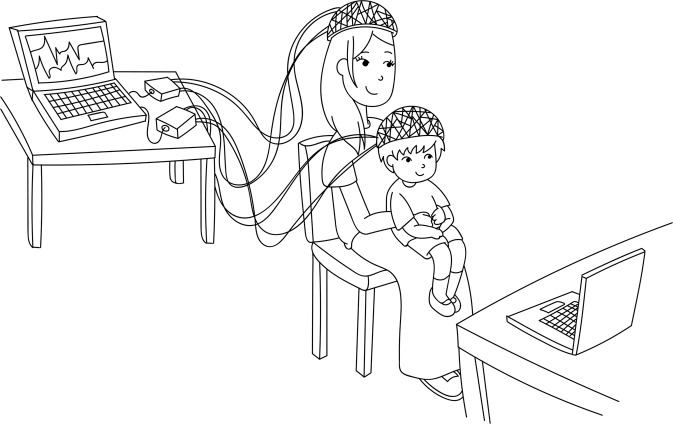
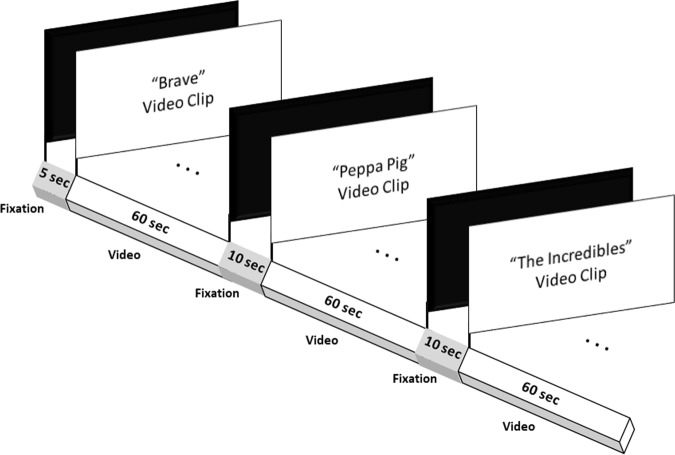
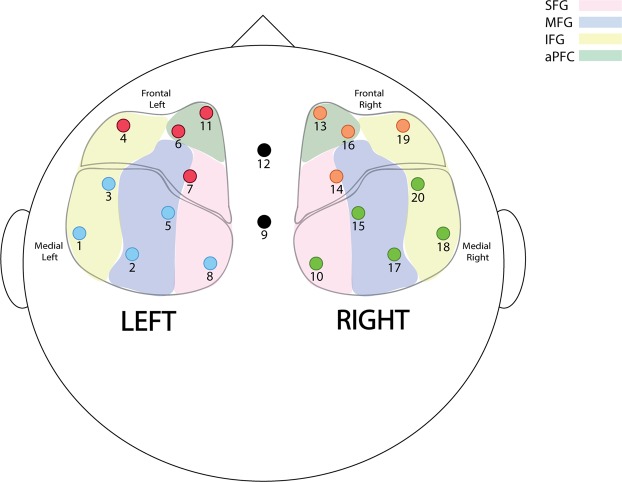
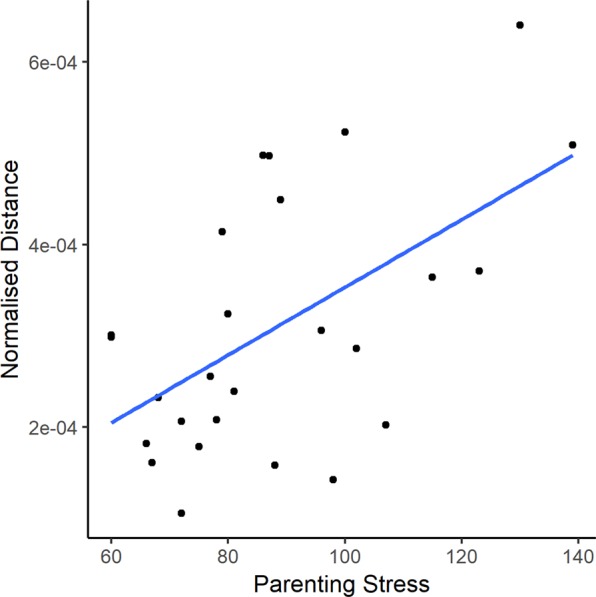
Synchrony refers to the coordinated interplay of behavioural and physiological signals that reflect the bi-directional attunement of one partner to the other’s psychophysiological, cognitive, emotional, and behavioral state. In mother-child relationships, a synchronous pattern of interaction indicates parental sensitivity. Parenting stress has been shown to undermine mother-child behavioural synchrony. However, it has yet to be discerned whether parenting stress affects brain-to-brain synchrony during everyday joint activities. Here, we show that greater parenting stress is associated with less brain-to-brain synchrony in the medial left cluster of the prefrontal cortex when mother and child engage in a typical dyadic task of watching animation videos together. This brain region overlaps with the inferior frontal gyrus, the frontal eye field, and the dorsolateral prefrontal cortex, which are implicated in inference of mental states and social cognition. Our result demonstrates the adverse effect of parenting stress on mother-child attunement that is evident at a brain-to-brain level. Mother-child brain-to-brain asynchrony may underlie the robust association between parenting stress and poor dyadic co-regulation. We anticipate our study to form the foundation for future investigations into mechanisms by which parenting stress impairs the mother-child relationship.
Overview
The claims and statistics of this paper haven’t been checked yet.
Run the check — free, no account needed. It reads the open-access text and checks the sources it cites.
Integrity signals
Registry
Cites
Statistics
Figures
Verification
Claims the paper makes
The claims and statistics of this paper haven’t been checked yet.
Run the check — free, no account needed. It reads the open-access text and checks the sources it cites.
Claims other papers make about this one
Each is checked against this paper’s own text: does it say what the citing paper says it does?
In the citing paper
“Since cascading levels of stress may decrease synchrony between interacting individuals [53],”
From Therapy Dog Welfare Revisited: A Review of the Literature (2021) · cites this paper as [53]
Self-check
Percentages, sums and reported differences re-computed from the paper’s own numbers.
The self-check needs the paper’s full text.
Citations
Cites
Effects of stress throughout the lifespan on the brain, behaviour and cognition
Lupien, S. J., McEwen, B. S., Gunnar, M. R., & Heim, C. (2009) · Nature Reviews Neuroscience · doi:10.1038/nrn2639 · Cited by 6,256
Baker, B. L., McIntyre, L. L., Blacher, J., Crnic, K., Edelbrock, C., & Low, C. (2003) · Journal of Intellectual Disability Research · doi:10.1046/j.1365-2788.2003.00484.x · Cited by 930
Parent–Infant Synchrony: Biological Foundations and Developmental Outcomes
Feldman, R. (2007) · Current Directions in Psychological Science · doi:10.1111/j.1467-8721.2007.00532.x · Cited by 640
Deater-Deckard, K. (2004) · doi:10.12987/yale/9780300103939.001.0001 · Cited by 400
The Biological Basis of Social Interaction
Frith, U., & Frith, C. (2001) · Current Directions in Psychological Science · doi:10.1111/1467-8721.00137 · Cited by 376
Feldman, R. (2012) · Monographs of the Society for Research in Child Development · doi:10.1111/j.1540-5834.2011.00660.x · Cited by 360
Barroso, N. E., Hungerford, G. M., Garcia, D., Graziano, P. A., & Bagner, D. M. (2016) · Psychological Assessment · doi:10.1037/pas0000257 · Cited by 203
Research works printed but not linked: 38
- Nelson-Coffey, S. K., Katherine Nelson-Coffey, S. & Stewart, D. Well-Being in parenting (2019). · DOI
- Deater-Deckard, K. & Scarr, S. Parenting stress among dual-earner mothers and fathers: Are there gender differences? J. Fam. Psychol. 10, 45 (1996). · DOI
- Oxford, M. L. & Lee, J. O. The effect of family processes on school achievement as moderated by socioeconomic context. J. Sch. Psychol. 49, 597–612 (2011). · DOI
- Pereira, J. et al. Parenting stress mediates between maternal maltreatment history and maternal sensitivity in a community sample (2012). · DOI · Paper page
- Chan, J. C., Nugent, B. M. & Bale, T. L. Parental advisory: Maternal and paternal stress can impact offspring neurodevelopment. Biol. Psychiatry 83, 886–894 (2018). · DOI · Paper page
- Jarvis, P. A. & Creasey, G. L. Parental stress, coping, and attachment in families with an 18-month-old infant. Infant Behav. Dev. 14, 383–395 (1991). · DOI
- Anthony, L. G. et al. The relationships between parenting stress, parenting behaviour and preschoolers’ social competence and behaviour problems in the classroom. Infant Child Dev. 14, 133–154 (2005). · DOI
- Williford, A. P., Calkins, S. D. & Keane, S. P. Predicting change in parenting stress across early childhood: child and maternal factors. J. Abnorm. Child Psychol. 35, 251–263 (2007). · DOI
- Bornstein, M. H. Mother-infant attunement: A multilevel approach via body, brain, and behavior. In: T. editor (Eds), The Infant Mind: Origins of the Social Brain, pp. 266–298 (Guilford, New York, 2013).
- Ambrose, H. N. & Menna, R. Physical and relational aggression in young children: the role of mother–child interactional synchrony. Early Child Dev. Care 183, 207–222 (2013). · DOI
- Bazhenova, O. V., Plonskaia, O. & Porges, S. W. Vagal reactivity and affective adjustment in infants during interaction challenges. Child Dev. 72, 1314–1326 (2001). · DOI · Paper page
- Gilbert, S. J. & Burgess, P. W. Executive function. Curr. Biol. 18, R110–4 (2008). · DOI · Paper page
- Ochsner, K. N., Silvers, J. A. & Buhle, J. T. Functional imaging studies of emotion regulation: a synthetic review and evolving model of the cognitive control of emotion. Ann. N. Y. Acad. Sci. 1251, E1–24 (2012). · DOI · Paper page
- Noriuchi, M., Kikuchi, Y., Mori, K. & Kamio, Y. The orbitofrontal cortex modulates parenting stress in the maternal brain. Sci. Rep. 9, 1658 (2019). · DOI
- Abidin, R. R. Parenting stress index–fourth edition (PSI-4). (Psychological Assessment Resources, Lutz, FL, 2012).
- Johnson, A. O. Test review: Parenting stress index, fourth edition (PSI-4) (2015). · DOI
- Brobst, J. B., Clopton, J. R. & Hendrick, S. S. Parenting children with autism spectrum disorders: The couple’s relationship. Focus Autism Other Dev. Disabl. 24, 38–49 (2009). · DOI
- Reitman, D., Currier, R. O. & Stickle, T. R. A critical evaluation of the parenting stress Index-Short form (PSI-SF) in a head start population. J. Clin. Child Adolesc. Psychol. 31, 384–392 (2002). · DOI · Paper page
- Lloyd-Fox, S., Blasi, A. & Elwell, C. E. Illuminating the developing brain: The past, present and future of functional near infrared spectroscopy (2010). · DOI
- Keogh, E. & Ratanamahatana, C. A. Exact indexing of dynamic time warping. Knowl. Inf. Syst. 7, 358–386 (2005). · DOI
- Senin, P. Dynamic time warping algorithm review, and Computer Science Department University of Hawaii (2008).
- Tuzcu, V. & Nas, S. Dynamic time warping as a novel tool in pattern recognition of ECG changes in heart rhythm disturbances. In: IEEE International Conference on Systems, Man and Cybernetics, volume 1, pp. 182–186 Vol. 1 (2005).
- Rath, T. M. & Manmatha, R. Word image matching using dynamic time warping. In: IEEE Computer Society Conference on Computer Vision and Pattern Recognition, 2003. Proceedings, volume 2, pp. II–II (2003).
- Myers, C. & Rabiner, L. A level building dynamic time warping algorithm for connected word recognition. IEEE Trans. Acoust. 29, 284–297 (1981). · DOI
- Rabiner, L., Rosenberg, A. & Levinson, S. Considerations in dynamic time warping algorithms for discrete word recognition. IEEE Trans. Acoust. 26, 575–582 (1978). · DOI
- Giorgino, T. Computing and visualizing dynamic time warping alignments in R: the dtw package. J. Stat. Softw. 31, 1–24 (2009). · DOI
- Suveg, C., Shaffer, A. & Davis, M. Family stress moderates relations between physiological and behavioral synchrony and child self-regulation in mother-preschooler dyads. Dev. Psychobiol. 58, 83–97 (2016). · DOI
- Frith, C. D. & Frith, U. Interacting minds–a biological basis. Science 286, 1692–1695 (1999). · DOI · Paper page
- Frith, C. & Frith, U. The physiological basis of theory of mind: functional neuroimaging studies. Understanding other minds: Perspectives from developmental cognitive neuroscience 2 (2000). · DOI
- Gallagher, H. L. et al. Reading the mind in cartoons and stories: an fMRI study of ‘theory of mind’ in verbal and nonverbal tasks. Neuropsychologia 38, 11–21 (2000). · DOI · Paper page
- Hala, S., Chandler, M. & Fritz, A. S. Fledgling theories of mind: Deception as a marker of three-year-olds’ understanding of false belief. Child Dev. 62, 83–97 (1991). · DOI
- Curci, A. & Rimé, B. The temporal evolution of social sharing of emotions and its consequences on emotional recovery: a longitudinal study. Emotion 12, 1404–1414 (2012). · DOI
- Anderson, C., Keltner, D., Tiedens, L. Z. & Leach, C. W. The emotional convergence hypothesis. The social life of emotions 2, 144 (2004). · DOI
- Ponnet, K. et al. The influence of mothers’ and fathers’ parenting stress and depressive symptoms on own and partner’s parent-child communication. Fam. Process 52, 312–324 (2013). · DOI
- Wang, M. & Saudino, K. J. Emotion regulation and stress. J. Adult Dev. 18, 95–103 (2011). · DOI
- Buchanan, T. W. et al. Medial prefrontal cortex damage affects physiological and psychological stress responses differently in men and women. Psychoneuroendocrinology 35, 56–66 (2010). · DOI · Paper page
- Cerqueira, J. J., Almeida, O. F. X. & Sousa, N. The stressed prefrontal cortex. left? right! Brain Behav. Immun. 22, 630–638 (2008). · DOI
- Euston, D. R., Gruber, A. J. & McNaughton, B. L. The role of medial prefrontal cortex in memory and decision making. Neuron 76, 1057–1070 (2012). · DOI · Paper page
Cited by
Sorted by citations
Strangers, Friends, and Lovers Show Different Physiological Synchrony in Different Emotional States
Bizzego, A., Azhari, A., Campostrini, N., Truzzi, A., Ng, L. Y., Gabrieli, G., Bornstein, M. H., Setoh, P., & Esposito, G. (2019) · Behavioral Sciences · doi:10.3390/bs10010011 · Cited by 85
Self-citationTherapy Dog Welfare Revisited: A Review of the Literature
Glenk, L. M., & Foltin, S. (2021) · Veterinary Sciences · doi:10.3390/vetsci8100226 · Cited by 71
Metadata
- Authors
- Azhari, A., Leck, W. Q., Gabrieli, G., Bizzego, A., Rigo, P., Setoh, P., Bornstein, M. H., & Esposito, G.
- Venue
- Scientific Reports
- Published
- 2019-08-06
- Volume
- 9
- Issue
- 1
- ISSN
- 2045-2322
- PMC
- PMC6684640
- Cited by
- 175
- References
- 7
- Language
- en
About these checks
Registry, retraction, Cites and statistics results are computed, not judged, with one exception: a printed reference that no index lists is read once by a model before it counts as a citation error. Claims are extracted by a model and kept only when their quote appears verbatim in the text; each cited source is then checked, with a model’s help, for whether it says what the claim relies on. Those verdicts can be wrong — read the claim’s quote and the cited source before relying on one.
Statistics and arithmetic are recomputed, not judged.
Confidence bands are shown only for fields calibrated on our annotated test set. None is calibrated yet, so no band is shown.
What counts as a claim ›How we measure confidence ›How we check this ›
Are you an author, or do you see a problem with this page? Request a review
