

The human-specific paralogs SRGAP2B and SRGAP2C differentially modulate SRGAP2A-dependent synaptic development
Open accessPublished version of a preprint
The DOI matches its Crossref record; 28 of the 28 references it cites were found in a registry or an index.
Abstract
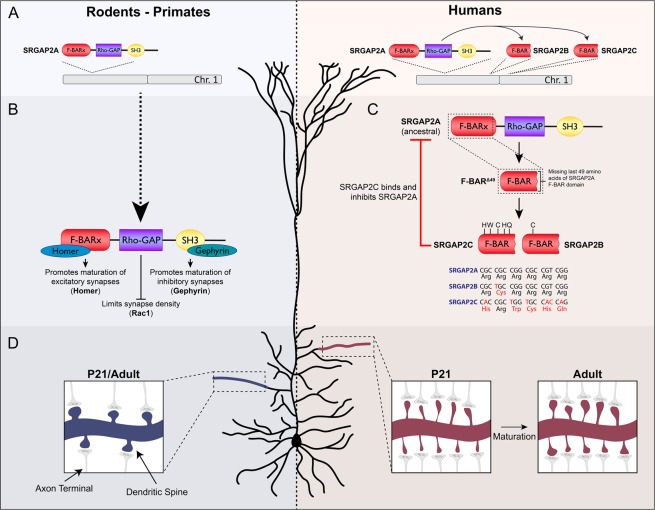
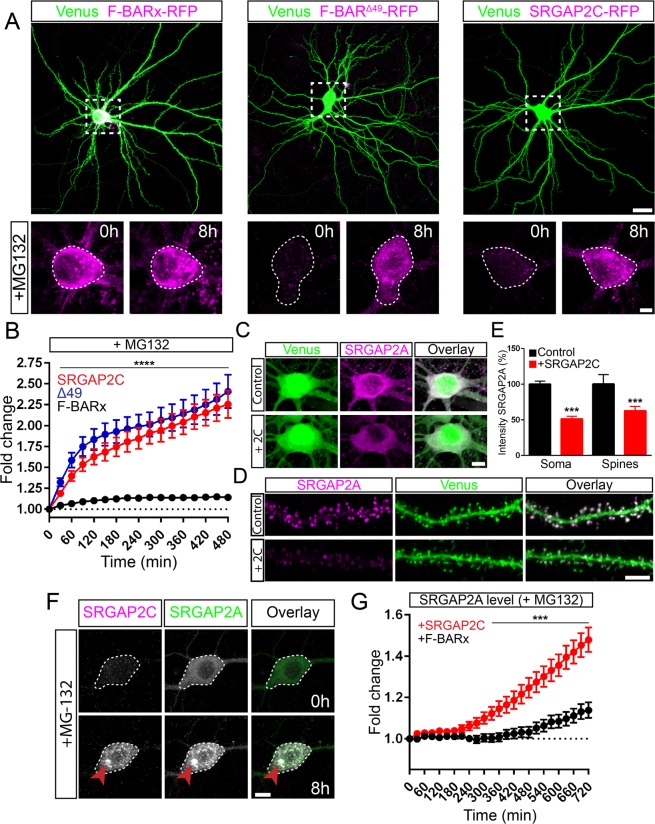
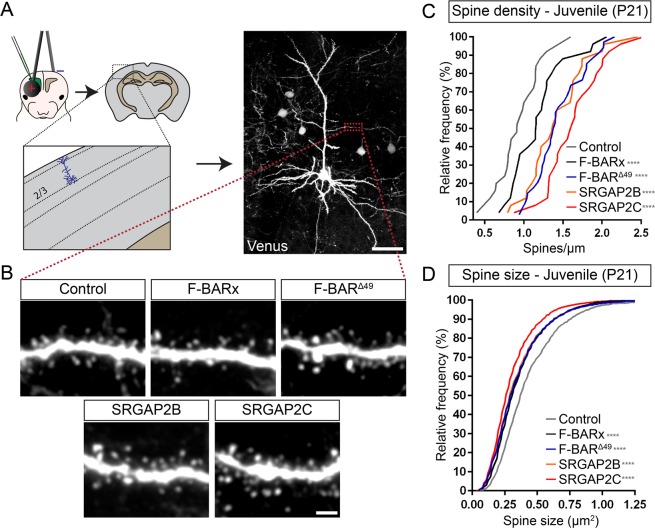
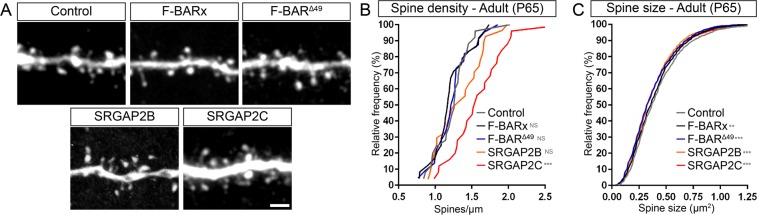
Human-specific gene duplications (HSGDs) have recently emerged as key modifiers of brain development and evolution. However, the molecular mechanisms underlying the function of HSGDs remain often poorly understood. In humans, a truncated duplication of SRGAP2A led to the emergence of two human-specific paralogs: SRGAP2B and SRGAP2C. The ancestral copy SRGAP2A limits synaptic density and promotes maturation of both excitatory (E) and inhibitory (I) synapses received by cortical pyramidal neurons (PNs). SRGAP2C binds to and inhibits all known functions of SRGAP2A leading to an increase in E and I synapse density and protracted synapse maturation, traits characterizing human cortical neurons. Here, we demonstrate how the evolutionary changes that led to the emergence of SRGAP2 HSGDs generated proteins that, in neurons, are intrinsically unstable and, upon hetero-dimerization with SRGAP2A, reduce SRGAP2A levels in a proteasome-dependent manner. Moreover, we show that, despite only a few non-synonymous mutations specifically targeting arginine residues, SRGAP2C is unique compared to SRGAP2B in its ability to induce long-lasting changes in synaptic density throughout adulthood. These mutations led to the ability of SRGAP2C to inhibit SRGAP2A function and thereby contribute to the emergence of human-specific features of synaptic development during evolution.
Overview
The claims and statistics of this paper haven’t been checked yet.
Free: it reads the open-access text and checks the first 5 claims that cite a source we can check. Create a free account to check every claim.
Integrity signals
Registry
Cites
Statistics
Figures
Verification
Claims the paper makes
The claims and statistics of this paper haven’t been checked yet.
Free: it reads the open-access text and checks the first 5 claims that cite a source we can check. Create a free account to check every claim.
Claims other papers make about this one
Each is checked against this paper’s own text: does it say what the citing paper says it does?
The source backs part of the claim, not all of it — or backs it for a different population, condition or comparison.
In the citing paper
“This approach was validated in deep-layer 5/6 human CPNs differentiated in vitro from pluripotent stem cells (PSCs) (Figures S1A and S1B), leading to a reduction in the levels of SRGAP2B/C proteins and thereby, as predicted by previous results,27,30 to increased levels of the ancestral protein SRGAP2A (Figure S1C).”
From Synaptic neoteny of human cortical neurons requires species-specific balancing of SRGAP2-SYNGAP1 cross-inhibition (2024) · cites this paper as [27]
Experimental — accuracy not yet measuredThe source backs part of the claim, not all of it — or backs it for a different population, condition or comparison.
In the citing paper
“Forced expression of SRGAP2B or SRGAP2C in developing mouse CPNs phenocopies a partial loss of SRGAP2A function, resulting in delayed synaptic maturation and increased density of excitatory and inhibitory synapses.24,27,29”
From Synaptic neoteny of human cortical neurons requires species-specific balancing of SRGAP2-SYNGAP1 cross-inhibition (2024) · cites this paper as [27]
Experimental — accuracy not yet measuredThe source backs part of the claim, not all of it — or backs it for a different population, condition or comparison.
In the citing paper
“At the molecular level, we found that downregulation of SRGAP2B/C increases SRGAP2A synaptic protein levels in human CPNs, as previously suggested in heterologous systems.27,28”
From Synaptic neoteny of human cortical neurons requires species-specific balancing of SRGAP2-SYNGAP1 cross-inhibition (2024) · cites this paper as [27]
Experimental — accuracy not yet measuredThe cited source says what the claim attributes to it.
In the citing paper
“SRGAP2B and SRGAP2C can form unstable heterodimers with SRGAP2A24 and are degraded by the proteasome in neurons.27,28”
From Synaptic neoteny of human cortical neurons requires species-specific balancing of SRGAP2-SYNGAP1 cross-inhibition (2024) · cites this paper as [27]
Self-check
Percentages, sums and reported differences re-computed from the paper’s own numbers.
The self-check needs the paper’s full text.
Citations
Cites
Matsuzaki, M., Ellis-Davies, G. C. R., Nemoto, T., Miyashita, Y., Iino, M., & Kasai, H. (2001) · Nature Neuroscience · doi:10.1038/nn736 · Cited by 1,802 · cited 1×
“When analyzing spine head size, which is linearly proportional to postsynaptic AMPA receptor content and therefore classically used as an index of synaptic maturation [18–20], we”
A novel source of arterial valve cells linked to bicuspid aortic valve without raphe in mice
Eley, L., Alqahtani, A. M., MacGrogan, D., Richardson, R. V., Murphy, L., Salguero-Jimenez, A., Sintes Rodriguez San Pedro, M., Tiurma, S., McCutcheon, L., Gilmore, A., et al. (2018) · eLife · doi:10.7554/elife.34110 · Cited by 1,138
Harris, K., & Stevens, J. (1989) · The Journal of Neuroscience · doi:10.1523/jneurosci.09-08-02982.1989 · Cited by 1,073 · cited 1×
“When analyzing spine head size, which is linearly proportional to postsynaptic AMPA receptor content and therefore classically used as an index of synaptic maturation [18–20], we”
Diversity of Human Copy Number Variation and Multicopy Genes
Sudmant, P. H., Kitzman, J. O., Antonacci, F., Alkan, C., Malig, M., Tsalenko, A., Sampas, N., Bruhn, L., Shendure, J., 1000 Genomes Project, et al. (2010) · Science · doi:10.1126/science.1197005 · Cited by 667 · cited 9×
“SRGAP2A and the emergence of the human-specific paralog SRGAP2C (A) The ancestral copy SRGAP2A, present in rodents, primates, and humans, was duplicated in the human lineage to form the truncated copies SRGAP2B and SRGAP2C.”
BackgroundInfluentialHuman-specific gene ARHGAP11B promotes basal progenitor amplification and neocortex expansion
Florio, M., Albert, M., Taverna, E., Namba, T., Brandl, H., Lewitus, E., Haffner, C., Sykes, A., Wong, F. K., Peters, J., et al. (2015) · Science · doi:10.1126/science.aaa1975 · Cited by 632 · cited 2×
“regulating brain development [2–4,8,22,23].”
A humanized version of Foxp2 affects cortico-basal ganglia circuits in mice
Enard, W., Gehre, S., Hammerschmidt, K., Hölter, S. M., Blass, T., Somel, M., Brückner, M. K., Schreiweis, C., Winter, C., Sohr, R., et al. (2009) · Cell · doi:10.1016/j.cell.2009.03.041 · Cited by 605 · cited 1×
“development [2–11].”
Human-Specific NOTCH2NL Genes Affect Notch Signaling and Cortical Neurogenesis
Fiddes, I. T., Lodewijk, G. A., Mooring, M., Bosworth, C. M., Ewing, A. D., Mantalas, G. L., Novak, A. M., van den Bout, A., Bishara, A., Rosenkrantz, J. L., et al. (2018) · Cell · doi:10.1016/j.cell.2018.03.051 · Cited by 595 · cited 2×
“regulating brain development [2–4,8,22,23].”
Ultrastructure of dendritic spines: correlation between synaptic and spine morphologies
Arellano, J. I. (2007) · Frontiers in Neuroscience · doi:10.3389/neuro.01.1.1.010.2007 · Cited by 529 · cited 1×
“When analyzing spine head size, which is linearly proportional to postsynaptic AMPA receptor content and therefore classically used as an index of synaptic maturation [18–20], we”
Evolution of the Human Nervous System Function, Structure, and Development
Sousa, A. M. M., Meyer, K. A., Santpere, G., Gulden, F. O., & Sestan, N. (2017) · Cell · doi:10.1016/j.cell.2017.06.036 · Cited by 517 · cited 1×
“Recently, significant progress has been made in cataloging human-specific genetic changes, especially with respect to evolution of the human brain [1].”
BackgroundHuman-Specific NOTCH2NL Genes Expand Cortical Neurogenesis through Delta/Notch Regulation
Suzuki, I. K., Gacquer, D., Van Heurck, R., Kumar, D., Wojno, M., Bilheu, A., Herpoel, A., Lambert, N., Cheron, J., Polleux, F., et al. (2018) · Cell · doi:10.1016/j.cell.2018.03.067 · Cited by 471
Self-citation
Cited by
An epigenetic barrier sets the timing of human neuronal maturation
Ciceri, G., Baggiolini, A., Cho, H. S., Kshirsagar, M., Benito-Kwiecinski, S., Walsh, R. M., Aromolaran, K. A., Gonzalez-Hernandez, A. J., Munguba, H., Koo, S. Y., et al. (2024) · Nature · doi:10.1038/s41586-023-06984-8 · Cited by 240
“By contrast, human paralogues of the postsynaptic SRGAP2A gene 52 are specifically associated with protracted synaptogenesis and spine morphogenesis by modulating ancestral gene function 53–55 .”
Complete sequencing of ape genomes
Yoo, D., Rhie, A., Hebbar, P., Antonacci, F., Logsdon, G. A., Solar, S. J., Antipov, D., Pickett, B. D., Safonova, Y., Montinaro, F., et al. (2025) · Nature · doi:10.1038/s41586-025-08816-3 · Cited by 225
Developmental mechanisms underlying the evolution of human cortical circuits
Vanderhaeghen, P., & Polleux, F. (2023) · Nature Reviews Neuroscience · doi:10.1038/s41583-023-00675-z · Cited by 173
Self-citationHuman-specific genetics: new tools to explore the molecular and cellular basis of human evolution
Pollen, A. A., Kilik, U., Lowe, C. B., & Camp, J. G. (2023) · Nature Reviews Genetics · doi:10.1038/s41576-022-00568-4 · Cited by 153
Human neuronal maturation comes of age: cellular mechanisms and species differences
Wallace, J. L., & Pollen, A. A. (2024) · Nature Reviews Neuroscience · doi:10.1038/s41583-023-00760-3 · Cited by 82
“By dimerizing with SRGAP2A and causing its degradation 221 , SRGAP2C inhibits the ancestral functions of SRGAP2A, which include interactions that promote an accumulation of AMPA and GABA A receptors 222 .”
A human-specific modifier of cortical connectivity and circuit function
Schmidt, E. R. E., Zhao, H. T., Park, J. M., Dipoppa, M., Monsalve-Mercado, M. M., Dahan, J. B., Rodgers, C. C., Lejeune, A., Hillman, E. M. C., Miller, K. D., et al. (2021) · Nature · doi:10.1038/s41586-021-04039-4 · Cited by 82
Self-citation(2019) · doi:10.1101/852970 · Cited by 82
Evolution and implications of de novo genes in humans
Broeils, L. A., Ruiz‐Orera, J., Snel, B., Hübner, N., & van Heesch, S. (2023) · Nature Ecology & Evolution · doi:10.1038/s41559-023-02014-y · Cited by 82
Cellular and Molecular Mechanisms Linking Human Cortical Development and Evolution
Libé-Philippot, B., & Vanderhaeghen, P. (2021) · Annual Review of Genetics · doi:10.1146/annurev-genet-071719-020705 · Cited by 78
Human-Specific Genes, Cortical Progenitor Cells, and Microcephaly
Heide, M., & Huttner, W. Β. (2021) · Cells · doi:10.3390/cells10051209 · Cited by 51
Retrotransposons as Drivers of Mammalian Brain Evolution
Ferrari, R., Grandi, N., Tramontano, E., & Dieci, G. (2021) · Life · doi:10.3390/life11050376 · Cited by 50
Okabe, S. (2020) · Molecular and cellular neurosciences · doi:10.1016/j.mcn.2020.103564 · Cited by 36
Neocortex expansion in development and evolution—from genes to progenitor cell biology
Pinson, A., & Huttner, W. Β. (2021) · Current Opinion in Cell Biology · doi:10.1016/j.ceb.2021.04.008 · Cited by 46
Rac-maninoff and Rho-vel: The symphony of Rho-GTPase signaling at excitatory synapses
Duman, J. G., Blanco, F. A., Cronkite, C. A., Ru, Q., Erikson, K., Mulherkar, S. A., Saifullah, A. B., Firozi, K., & Tolias, K. F. (2021) · Small GTPases · doi:10.1080/21541248.2021.1885264 · Cited by 40
Libé-Philippot, B., Iwata, R., Recupero, A. J., Wierda, K., Bernal Garcia, S., Hammond, L., van Benthem, A., Limame, R., Ditkowska, M., Beckers, S., et al. (2024) · Neuron · doi:10.1016/j.neuron.2024.08.021 · Cited by 38
Self-citationGenetic Mechanisms Underlying the Evolution of Connectivity in the Human Cortex
Schmidt, E. R. E., & Polleux, F. (2022) · Frontiers in Neural Circuits · doi:10.3389/fncir.2021.787164 · Cited by 36
Self-citationWhat Makes Us Human: Insights from the Evolution and Development of the Human Neocortex
Namba, T., & Huttner, W. Β. (2024) · Annual Review of Cell and Developmental Biology · doi:10.1146/annurev-cellbio-112122-032521 · Cited by 33
CTNND2 moderates the pace of synaptic maturation and links human evolution to synaptic neoteny
Assendorp, N., Fossati, M., Libé-Philippot, B., Christopoulou, E., Depp, M., Rapone, R., Dingli, F., Loew, D., Vanderhaeghen, P., & Charrier, C. (2024) · Cell Reports · doi:10.1016/j.celrep.2024.114797 · Cited by 32
Shabani, K., Pigeon, J., Zariouh, M. B. T., Liu, T., Saffarian, A., Komatsu, J., Liu, E., Danda, N., Lefebvre, M., Limame, R., et al. (2023) · Science Advances · doi:10.1126/sciadv.add5002 · Cited by 30
Genomic structural variation: A complex but important driver of human evolution
Soto, D. C., Uribe‐Salazar, J. M., Shew, C. J., Sekar, A., McGinty, S. P., & Dennis, M. Y. (2023) · American Journal of Biological Anthropology · doi:10.1002/ajpa.24713 · Cited by 26
Human-specific gene expansions contribute to brain evolution
(2025) · doi:10.1016/j.cell.2025.06.037 · Cited by 25
Salmon, C. K., Pribiag, H., Gizowski, C., Farmer, W. T., Cameron, S., Jones, E. V., Mahadevan, V., Bourque, C. W., Stellwagen, D., Woodin, M. A., et al. (2020) · Frontiers in Cellular Neuroscience · doi:10.3389/fncel.2020.00036 · Cited by 23
Clade-specific genes and the evolutionary origin of novelty; new tools in the toolkit
Wu, L., & Lambert, J. D. (2022) · Seminars in Cell and Developmental Biology · doi:10.1016/j.semcdb.2022.05.025 · Cited by 18
Molecular and cellular mechanisms of human cortical connectivity
Luria, V., Ma, S., Shibata, M., Pattabiraman, K., & Šestan, N. (2023) · Current Opinion in Neurobiology · doi:10.1016/j.conb.2023.102699 · Cited by 17
Bernal-Garcia, S., Schlotter, A. P., Pereira, D. B., Recupero, A. J., Polleux, F., & Hammond, L. A. (2025) · Cell Reports Methods · doi:10.1016/j.crmeth.2025.101179 · Cited by 17
Self-citationVaill, M., Kawanishi, K., Varki, N. M., Gagneux, P., & Varki, A. P. (2023) · Physiological Reviews · doi:10.1152/physrev.00040.2021 · Cited by 14
Human CLOCK enhances neocortical function
Liu, Y., Fontenot, M. R., Kulkarni, A., Khandelwal, N., Park, S. H. E., Criswell, C. J., Harper, M. J., Xu, P., Gupta, N., Gibson, J. R., et al. (2025) · Nature Neuroscience · doi:10.1038/s41593-025-01993-4 · Cited by 11
Obesity-Associated Differentially Methylated Regions in Colon Cancer
Milner, J. J., Chen, Z.-F., Grayson, J. M., & Shiao, S.-Y. P. K. (2022) · Journal of Personalized Medicine · doi:10.3390/jpm12050660 · Cited by 10
Loss of the polarity protein Par3 promotes dendritic spine neoteny and enhances learning and memory
Voglewede, M. M., Ozsen, E. N., Ivak, N. A., Bernabucci, M., Tang, R., Sun, M., Pang, Z. P., & Zhang, H. (2024) · iScience · doi:10.1016/j.isci.2024.110308 · Cited by 9
Genetic diversity and regulatory features of human-specific NOTCH2NL duplications
Real, T. D., Hebbar, P., Yoo, D., Antonacci, F., Pačar, I., Dubocanin, D., Diekhans, M., Mikol, G. J., Popoola, O. G., Mallory, B. J., et al. (2026) · Cell Genomics · doi:10.1016/j.xgen.2026.101194 · Cited by 9
Szigeti, K., Ihnatovych, I., Notari, E., Dorn, R. P., Maly, I. V., He, M., Birkaya, B. G., Prasad, S., Schwartz-Byrne, R., Indurthi, D. C., et al. (2024) · EBioMedicine · doi:10.1016/j.ebiom.2024.105093 · Cited by 9
Diaz-Salazar, C., Krzisch, M., Yoo, J., Nano, P. R., Bhaduri, A., Jaenisch, R., & Polleux, F. (2024) · bioRxiv (Cold Spring Harbor Laboratory) · doi:10.1101/2024.06.28.601266 · Cited by 8
Self-citationAlu-minating the Mechanisms Underlying Primate Cortex Evolution
Wang, J., Weatheritt, R. J., & Voineagu, I. (2022) · Biological Psychiatry · doi:10.1016/j.biopsych.2022.04.021 · Cited by 8
Leonardi, O., Lewerissa, E., Aprile, D., Barakat, T. S., Culotta, L., Deng, R., Haazen, L., Linda, K., Majoie, M., Mordelt, A., et al. (2025) · bioRxiv (Cold Spring Harbor Laboratory) · doi:10.1101/2025.01.21.634145 · Cited by 8
Human-specific SRGAP2 paralogs synchronize neotenic microglial maturation and synaptic development
Diaz-Salazar, C., Kim, J., Krzisch, M., Yoo, J., Nano, P. R., Bhaduri, A., Jaenisch, R., Paredes, M., & Polleux, F. (2026) · Neuron · doi:10.1016/j.neuron.2026.07.007 · Cited by 7
Self-citationAugust, I., Gagneux, P., Semendeferi, K., & Marchetto, M. C. (2025) · Evolutionary Anthropology Issues News and Reviews · doi:10.1002/evan.22054 · Cited by 6
Sandroni, V., & Chaumette, B. (2025) · Genes Brain & Behavior · doi:10.1111/gbb.70013 · Cited by 6
Purkinje cell intrinsic activity shapes cerebellar development and function
Osório, C., White, J. J., Torrents-Solé, P., Yang, J., Mandemaker, N., Olivero, F., Kirwan, F. M., Post, L. C., Hemmat, Z., de Winter, F., et al. (2026) · Nature Communications · doi:10.1038/s41467-026-70355-w · Cited by 6
Shabani, K., Pigeon, J., Zariouh, M. B. T., Liu, T., Saffarian, A., Komatsu, J., Liu, E., Danda, N., Limame, R., Bohl, D., et al. (2021) · bioRxiv (Cold Spring Harbor Laboratory) · doi:10.1101/2021.02.17.431707 · Cited by 5
Advancing evolutionary medicine with complete primate genomes and advanced biotechnologies
Ma, K., Yang, X., & Mao, Y. (2024) · Trends in Genetics · doi:10.1016/j.tig.2024.11.001 · Cited by 5
Human-specific genetic modifiers of cortical architecture and function
Zhao, H., & Schmidt, E. R. E. (2024) · Current Opinion in Genetics & Development · doi:10.1016/j.gde.2024.102241 · Cited by 5
Self-citationMudassir, B. U., Alotaibi, M. A., Kizilbash, N., Alruwaili, D., Alruwaili, A., Alenezi, M., & Agha, Z. (2023) · Heliyon · doi:10.1016/j.heliyon.2023.e19718 · Cited by 5
Anderson, A. G., Rogers, B. B., Barinaga, E. A., Loupe, J. M., WaMaina, E., Johnston, S. Q., Limbo, H. L., Gardner, E. A., Moyer, A. J., Gross, A. L., et al. (2026) · Cell Genomics · doi:10.1016/j.xgen.2026.101367 · Cited by 3
Molecular mechanisms of the specialization of human synapses in the neocortex
Christopoulou, E., & Charrier, C. (2024) · Current Opinion in Genetics & Development · doi:10.1016/j.gde.2024.102258 · Cited by 3
Uribe‐Salazar, J. M., Kaya, G., Weyenberg, K., Radke, B., Hino, K., Soto, D. C., Shiu, J.-L., Zhang, W., Ingamells, C., Haghani, N. K., et al. (2024) · bioRxiv (Cold Spring Harbor Laboratory) · doi:10.1101/2024.09.11.612570 · Cited by 3
Islam, M., & Behura, S. K. (2023) · Placenta · doi:10.1016/j.placenta.2023.12.019 · Cited by 3
Segmentally Duplicated Regulatory Elements Undergo Human-Specific Rewiring
Weaver, S., & Lowe, C. B. (2026) · Molecular Biology and Evolution · doi:10.1093/molbev/msag140 · Cited by 3
srGAP2 deactivates RhoA to control the duration of thrombin-mediated endothelial permeability
Rioja, A. L., Faulkner, A., & Mellor, H. (2022) · Vascular Biology · doi:10.1530/vb-21-0012 · Cited by 3
Conserved exchange of paralog proteins during neuronal differentiation
Di Fraia, D., Anitei, M., Mackmull, M.-T., Parca, L., Behrendt, L., Andres-Pons, A., Gilmour, D., Helmer Citterich, M., Kaether, C., Beck, M., et al. (2022) · Life Science Alliance · doi:10.26508/lsa.202201397 · Cited by 2
Conserved exchange of paralog proteins during neuronal differentiation
Di Fraia, D., Anitei, M., Mackmull, M.-T., Parca, L., Behrendt, L., Andres-Pons, A., Gilmour, D., Citterich, M. H., Kaether, C., Beck, M., et al. (2021) · doi:10.1101/2021.07.22.453347 · Cited by 2
Genomic basis of human-specific brain features
Mosti, F., & Silver, D. L. (2025) · Elsevier eBooks · doi:10.1016/b978-0-443-27380-3.00062-2 · Cited by 1
Martinez, S., Horvath, A., Johnson, L., Pushkarsky, T., Dubrovsky, L., Starosyla, D., Bastin, A., Sviridov, D., & Bukrinsky, M. (2026) · Glia · doi:10.1002/glia.70191 · Cited by 1
Pérez‐Sayáns, M., Vieira-e-Silva, F., Fernández–Rozadilla, C., Carracedo, Á., Carlés-González, S., Lorenzo‐Pouso, A. I., Jardón, A. P., Vila, P. G., García, A. G., Peñaranda, J. M. S., et al. (2025) · Medicina oral, patología oral y cirugía bucal · doi:10.4317/medoral.27658 · Cited by 1
Impact of Delayed Biospecimen Processing on Serum Proteomics in Samples from a Parabolic FlightPreprint
Momin, Z., Wang, Q., Krishnavajhala, A., Gingras, M., Santhanam, A., Walker, K., Qin, X., Mahjabeen, F., Margairaz, P., Blazianu, L., et al. (2025) · Research Square · doi:10.21203/rs.3.rs-7530087/v1 · Cited by 1
Human Neocortical Evolution and Neurological Disorders
SeanHill, R., & Walsh, C. A. (2023) · Wiley eBooks · doi:10.1002/9781119860914.ch26
Shabani, K., Pigeon, J., Zariouh, M. B. T., Liu, T., Saffarian, A., Kamatsu, J., Liu, E., Danda, N., Limame, R., Bohl, D., et al. (2021) · SSRN Electronic Journal · doi:10.2139/ssrn.3956656
Zhao, H., Anderson, T. R., & Schmidt, E. R. E. (2026) · bioRxiv (Cold Spring Harbor Laboratory) · doi:10.64898/2026.06.24.734394
Self-citationA female-specific role for Slit1 in prenatal stress-induced depression vulnerability
Xu, K., Chen, T., Yang, Y., Liu, W., Guo, H., Gong, Z., Ma, X., Liu, J., Lu, Y., Zhang, H., et al. (2026) · Neurotherapeutics · doi:10.1016/j.neurot.2026.e00916
Lineage-associated Human Divergently-paired Genes Exhibit Structural and Regulatory Characteristics
Duan, G., Zhang, S., Tang, B., Xiao, J., Zhang, Z., Cui, P., Yu, J., & Zhao, W. (2025) · Genomics Proteomics & Bioinformatics · doi:10.1093/gpbjnl/qzaf058
Li, Q., 赵伯恩, Yuan, Y., & Lai, L. (2026) · Scientific Reports · doi:10.1038/s41598-026-76837-7
The regulation of neuronal and synaptic development by Catenin-delta 2
Assendorp, N. (2021) · theses.fr (ABES) · doi:10.70675/f26804ceza459z4fa4z9dedz6e192328d811
SRGAP2 limits experience-dependent structural synaptic plasticity in adult cortical circuitsPreprint
Bernal-Garcia, S., Jiang, R., & Polleux, F. (2026) · bioRxiv (Cold Spring Harbor Laboratory) · doi:10.64898/2026.08.21.746251
Self-citationNeophytou, D. (2026) · CUNY Academic Works (City University of New York)
Metadata
- Authors
- Schmidt, E. R. E., Kupferman, J. V., Stackmann, M., & Polleux, F.
- Affiliations
- Mortimer B. Zuckerman Mind Brain Behavior Institute (US)
- Corresponding author
- Polleux, Franck
- Venue
- Scientific Reports
- Published
- 2019-12-10
- Volume
- 9
- Issue
- 1
- Pages
- 18692-18692
- ISSN
- 2045-2322 (ISSN-L)
- PMC
- PMC6904453
- OpenAlex
- W2995487222
- Cited by
- 55
- References
- 28
- Citations by year
- 2026: 6 · 2025: 7 · 2024: 14 · 2023: 13 · 2022: 5 · 2021: 8 · 2020: 2
- FWCI
- 2.26
- Type
- journal article
- Language
- en
- Open access
- gold
- doi.org
- Licence
- cc-by
- creativecommons.org/licenses/by/4.0 (tdm)
- creativecommons.org/licenses/by/4.0 (vor)
- Locations
- Scientific Reports (publishedVersion, cc-by)
- bioRxiv (Cold Spring Harbor Laboratory) (acceptedVersion, cc-by-nc-nd)
- PubMed Central (publishedVersion, cc-by)
- PubMed (publishedVersion)
- DOAJ (DOAJ: Directory of Open Access Journals) (submittedVersion)
- Funders
- U.S. Department of Health & Human Services | NIH | National Institute of Neurological Disorders and Stroke (NS067557)
- Topics
- Life Sciences › Biochemistry, Genetics and Molecular Biology › Genetics › Genetics and Neurodevelopmental Disorders
- Life Sciences › Neuroscience › Cellular and Molecular Neuroscience › Neuroscience and Neuropharmacology Research
- Life Sciences › Neuroscience › Developmental Neuroscience › Neurogenesis and neuroplasticity mechanisms
- Keywords
- synaptic development, synaptic density, synapse maturation, excitatory and inhibitory synapses, cortical pyramidal neurons, protein instability, proteasomal degradation, heterodimerization, non-synonymous mutations, human brain evolution, brain development
- MeSH terms
- Animals, Humans, Neurons, Synapses, Pyramidal Cells, Evolution, Molecular, Gene Duplication, GTPase-Activating Proteins, Organogenesis, Cell Line, Tumor, Mice, Primary Cell Culture
About these checks
Registry, retraction, Cites and statistics results are computed, not judged, with one exception: a printed reference that no index lists is read once by a model before it counts as a citation error. Claims are extracted by a model and kept only when their quote appears verbatim in the text; each cited source is then checked, with a model’s help, for whether it says what the claim relies on. Those verdicts can be wrong — read the claim’s quote and the cited source before relying on one.
Statistics and arithmetic are recomputed, not judged.
Confidence bands are shown only for fields calibrated on our annotated test set. None is calibrated yet, so no band is shown.
What counts as a claim ›How we measure confidence ›How we check this ›
Are you an author, or do you see a problem with this page? Request a review
Data sources
Bibliographic data: Semantic Scholar, OpenAlex, Crossref.
Contains information from the Semantic Scholar Academic Graph Datasets, made available under the ODC Attribution License (ODC-BY 1.0).
Semantic Scholar’s data is described in: Kinney, R., et al. (2023). The Semantic Scholar Open Data Platform. arXiv:2301.10140.
