

High uptake of Intermittent Preventive Treatment of malaria in pregnancy is associated with improved birth weight among pregnant women in Ghana
Open accessThe DOI matches its Crossref record; 25 of the 25 references it cites were found in a registry or an index; 15 of the 24 sources its claims cite were checked for support.
Abstract
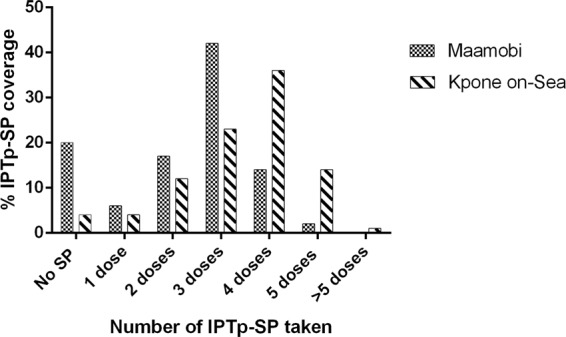
Despite the clinically proven advantages of intermittent preventive treatment of malaria in pregnancy (IPTp) with sulfadoxine-pyrimethamine (SP), utilisation has been low in many African countries. To increase uptake and achieve the desired effect, the World Health Organization revised the policy to a monthly administration. Assessing the coverage and impact of the revised policy on pregnancy and neonatal outcomes is, therefore, a necessity. A 2-parallel cross-sectional hospital-based study was carried out among pregnant women attending first antenatal care (ANC) and delivery. Maternal and cord blood samples were assayed for malaria parasites by quantitative PCR targeting both the 18S rDNA and the acidic terminal segment of Plasmodium falciparum var genes, and plasma SP levels were measured by liquid chromatography coupled to tandem mass spectrometry. Parasite prevalence was similar between the two study sites but decreased significantly between the first ANC (9% or 43%) and delivery (4% or 11%) based on the qPCR target. At delivery, 64.5% of women received ≥3 IPTp-SP dose, 15.5% received 2 doses and 6% had 1 dose. Taking ≥3 IPTp-SP doses was associated with an average birth weight increase of more than 0.165 kg. IPTp-SP uptake was associated with plasma SP level at delivery (OR = 32.3, p ≤ 0.005, 95% CI (13.3;78.4) for those that reported ≥3 IPTp-SP doses) while the same trend of improved birth weight was observed with high plasma SP levels. The new IPTp policy is well implemented and well utilised by women in the sites considered in this study and translates to the improved birth weight observed. This study confirms the interest and the clinical benefit expected from this policy change.
Overview
CoChat Summary
TL;DR
In two Ghanaian hospital sites, the revised monthly IPTp-SP policy achieved high uptake, with 64.5% of delivery-cohort women reporting ≥3 doses. Taking ≥3 IPTp-SP doses was associated with an average birth-weight increase of more than 0.165 kg, though statistical significance was site-specific.
Key findings
- Among 935 women at delivery, 603 (64.5%) received ≥3 IPTp-SP doses, 143 (15.3%) received 2, 53 (5.7%) received 1, and 136 (14.5%) received none; ≥3-dose uptake was 57.5% at Maamobi and 79.3% at Kpone on-Sea.
- ≥3 IPTp-SP doses was associated with an average birth-weight increase of >0.165 kg overall; in adjusted linear regression, Maamobi coefficient 0.166 kg (95% CI 0.07–0.26, p<0.005), Kpone on-Sea 0.201 kg (95% CI −0.07–0.48, p=0.15).
- IPTp-SP uptake was associated with detectable plasma SP at delivery: ≥3 doses OR 32.3 (95% CI 13.3–78.4, p<0.0001) and 1–2 doses OR 18.9 (95% CI 6.5–54.6, p<0.0001), versus no dose.
- P. falciparum prevalence fell from first ANC to delivery: by 18SqPCR from 9.4% to 4.4% at Maamobi and 8.9% to 3.0% at Kpone; by ATSqPCR from 42.2% to 12.6% and 43.1% to 8.7%, respectively. ≥3 doses showed lower qPCR infection odds but not significantly (overall OR 0.71, 95% CI 0.38–1.32, p=0.29).
Methods
- Two-parallel cross-sectional hospital-based study in Maamobi (urban) and Kpone on-Sea (semi-urban), southern Ghana; 1,922 pregnant women aged 18–45 were enrolled: 987 at first ANC and 935 at delivery.
- Maternal peripheral and cord blood were tested for malaria parasites by microscopy and qPCR targeting 18S rDNA and the ATS of P. falciparum var genes; plasma sulfadoxine/pyrimethamine levels were measured by LC-MS/MS; IPTp-SP uptake was obtained from ANC booklets.
- Multivariate linear regression assessed birth weight; multivariate logistic regression assessed P. falciparum infection and SP level; adjustments included gravidity, infection status, gestational age, and SP intake; Cohen’s Kappa tested qPCR concordance; analyses used Stata 13.0 and 0.05 significance.
Limitations
- The paper states that, as an observational field study, it did not control for all possible confounding factors.
- The paper notes possible unreliable disclosure of SP intake/self-medication or an undeclared first visit to a private clinic, because SP was detected in 28% of first-ANC samples at the urban site despite declarations; pre-first-ANC disclosures could not be verified.
- The paper attributes the lack of significant birth-weight effect at Kpone on-Sea to possible lack of power/site differences, including few/no IPTp non-receivers and unavailable G6PD data at Kpone; the cross-sectional design also cannot establish causality (evident from the text).
Model-written summary. Check it against the paper before relying on it.
Integrity signals
Registry
Cites
Statistics
Figures
Verification
Claims the paper makes
7 Valid · 1 Not valid · 6 Not checked · 68 Own results and interpretations
The cited sources support only part of this claim — read each source’s verdict below.
In the paper
“P. falciparum infection (either microscopically or sub-microscopically) during pregnancy is one of the major factors underlying low birth weight”
§ High uptake of Intermittent Preventive Treatment of malaria in pregnancy is associated with improved birth weight among pregnant women in Ghana > Discussion
What the sources say
- Supportedcites [13] Walker PGT Floyd J Kuile Fter Cairns M Estimated impact on birth weight of scaling up intermittent preventive treatment of malaria in pregnancy given sulphadoxine-pyrimethamine resistance in Africa: A mathematical model PLOS Med. 2017 14 e1002243 10.1371/journal.pmed.1002243 28245259 PMC5330448 source
The Introduction estimates that malaria caused nearly 20% of low-birthweight deliveries in malaria-endemic areas of Africa. The Results also estimate 750,000 malaria-attributable low-birthweight deliveries in 2015 in the absence of protection. These passages support the claim that infection during pregnancy is a major contributor to low birth weight. (LLM, conf=0.92)
- Partly supportedcites [16] Kayentao K Intermittent Preventive Therapy for Malaria During Pregnancy Using 2 vs 3 or More Doses of Sulfadoxine-Pyrimethamine and Risk of Low Birth Weight in Africa: Systematic Review and Meta-analysis JAMA 2013 309 594 10.1001/jama.2012.216231 23403684 PMC4669677 sourceExperimental — accuracy not yet measured
The passage labeled Abstract > Conclusions and Relevance (page unavailable) says that P. falciparum infection during pregnancy is associated with low birth weight in areas of stable malaria transmission in sub-Saharan Africa. It does not establish infection as a major underlying cause or address the citing sentence’s distinction between microscopic and submicroscopic infection. (LLM, conf=0.83)
- Partly supportedcites [22] Chico RM Chaponda EB Ariti C Chandramohan D Sulfadoxine-Pyrimethamine Exhibits Dose-Response Protection Against Adverse Birth Outcomes Related to Malaria and Sexually Transmitted and Reproductive Tract Infections Clin. Infect. Dis. 2017 64 1043 1051 10.1093/cid/cix026 28329383 PMC5399940 sourceExperimental — accuracy not yet measured
The Abstract links prevention of malaria in pregnancy with protection against low birth weight, and the Discussion treats malaria as a contributor to poor birth outcomes. But the passages do not establish that P. falciparum infection is a major cause of low birth weight or that both microscopic and submicroscopic infections have that effect; the Results chiefly compare birth outcomes by preventive-treatment dose within infection groups. No page numbers were provided in our copy. (LLM, conf=0.83)
plainstates a cause- Asserted: passes — The authors put it forward as true.
- Checkable: passes — It can be checked against evidence.
- Load-bearing: passes — The paper’s conclusions depend on it.
- Based: passes — The paper gives a reason why it holds.
- Supported
The cited sources support only part of this claim — read each source’s verdict below.
In the paper
“Despite the clinically proven advantages of intermittent preventive treatment of malaria in pregnancy (IPTp) with sulfadoxine-pyrimethamine (SP), utilisation has been low in many African countries.”
- Also stated in: § Introduction · boosted
“Despite the several established advantages of IPTp-SP, even across regions with a wide range of SP-resistant parasites6–11, uptake of the service by pregnant women was still low compared to ANC visits6,12,13.”
§ High uptake of Intermittent Preventive Treatment of malaria in pregnancy is associated with improved birth weight among pregnant women in Ghana > Abstract
What the sources say
- Not checked — no full text of the sourcecites [6] McClure EM Goldenberg RL Dent AE Meshnick SR A systematic review of the impact of malaria prevention in pregnancy on low birth weight and maternal anemia Int. J. Gynaecol. Obstet. Off. Organ Int. Fed. Gynaecol. Obstet. 2013 121 103 109 10.1016/j.ijgo.2012.12.014 23490427 source
- Partly supportedcites [12] Desai M Impact of Sulfadoxine-Pyrimethamine Resistance on Effectiveness of Intermittent Preventive Therapy for Malaria in Pregnancy at Clearing Infections and Preventing Low Birth Weight Clin. Infect. Dis. 2016 62 323 333 10.1093/cid/civ881 26486699 PMC4762476 sourceExperimental — accuracy not yet measured
The introductory passage (page unavailable) describes IPTp-SP’s benefits, including reduced risks of maternal anemia, low birth weight, and neonatal mortality. The Results, Delivery Module reports doses received by women at study sites in six countries, but does not establish that utilisation was low across many African countries. (LLM, conf=0.82)
- Supportedcites [13] Walker PGT Floyd J Kuile Fter Cairns M Estimated impact on birth weight of scaling up intermittent preventive treatment of malaria in pregnancy given sulphadoxine-pyrimethamine resistance in Africa: A mathematical model PLOS Med. 2017 14 e1002243 10.1371/journal.pmed.1002243 28245259 PMC5330448 source
The Introduction describes IPTp-SP as safe, efficacious, and cost-effective, then states that provision remains low across Africa. The Results likewise report that only 21.6% of at-risk pregnancies in areas of sustained transmission in mainland Africa received at least two courses in 2015. (LLM, conf=0.95)
boosted- Asserted: passes — The authors put it forward as true.
- Checkable: passes — It can be checked against evidence.
- Load-bearing: unclear — It is unclear whether the paper’s conclusions depend on it.
- Based: passes — The paper gives a reason why it holds.
- Also stated in: § Introduction · boosted
A result the paper reports from its own data — it cites no other source for it, so there is none to check. The quote shows it is in the paper.
In the paper
“SP level in both maternal peripheral and cord plasma was significantly associated with IPTp-SP uptake”
§ High uptake of Intermittent Preventive Treatment of malaria in pregnancy is associated with improved birth weight among pregnant women in Ghana > Results > Sulfadoxine-pyrimethamine concentration measurement
plainstates an association- Asserted: passes — The authors put it forward as true.
- Checkable: passes — It can be checked against evidence.
- Load-bearing: passes — The paper’s conclusions depend on it.
- Based: passes — The paper gives a reason why it holds.
A result the paper states — it cites no source for it, so there is none to check. The quote shows it is in the paper.
In the paper
“uptake of ≥3 IPTp-SP doses improves birth weight by more than 0.165 Kg”
§ High uptake of Intermittent Preventive Treatment of malaria in pregnancy is associated with improved birth weight among pregnant women in Ghana > Discussion
plainstates a cause- Asserted: passes — The authors put it forward as true.
- Checkable: passes — It can be checked against evidence.
- Load-bearing: passes — The paper’s conclusions depend on it.
- Based: passes — The paper gives a reason why it holds.
A result the paper reports from its own data — it cites no other source for it, so there is none to check. The quote shows it is in the paper.
In the paper
“When the plasma SP levels in the maternal peripheral blood at delivery were categorized into quartiles, the same pattern of improvement in birth weight was observed for women with high concentrations of SP in their blood at delivery.”
§ High uptake of Intermittent Preventive Treatment of malaria in pregnancy is associated with improved birth weight among pregnant women in Ghana > Results > Sulfadoxine-pyrimethamine concentration measurement
plainstates an association- Asserted: passes — The authors put it forward as true.
- Checkable: passes — It can be checked against evidence.
- Load-bearing: unclear — It is unclear whether the paper’s conclusions depend on it.
- Based: passes — The paper gives a reason why it holds.
36 more claims
Create a free account to see all 82 claims and to verify the 1 reference still open.
- It may state two separate claims as one. 24
- Probably not a substantial claim. 22
Self-check
Percentages, sums and reported differences re-computed from the paper’s own numbers.
Each contradiction between two passages listed here was confirmed by an independent check.
Rated minor: it would not touch a result — a value no result rests on, a p-value that stays on the same side of the significance level, or a conflict that is clerical, resolved elsewhere in the paper, or outside its own findings.
In the paper
§ High uptake of Intermittent Preventive Treatment of malaria in pregnancy is associated with improved birth weight among pregnant women in Ghana > Results > Coverage and impact of IPTp in the delivery cohorts
“an increase in birth weight of about 0.72 Kg was observed as compared with women who did not receive any IPTp-SP treatment.”
§ High uptake of Intermittent Preventive Treatment of malaria in pregnancy is associated with improved birth weight among pregnant women in Ghana > Results > Coverage and impact of IPTp in the delivery cohorts
“1 or 2 IPTp-SP uptakea | 0.072 | (−0.22; 0.37) | 0.63 |”
Citations
Cites
Epidemiology and burden of malaria in pregnancy
Desai, M., ter Kuile, F. O., Nosten, F., McGready, R., Asamoa, K., Brabin, B., & Newman, R. D. (2007) · The Lancet Infectious Diseases · doi:10.1016/s1473-3099(07)70021-x · Cited by 1,432
The burden of malaria in pregnancy in malaria-endemic areas
Steketee, R., Nahlen, B., Parise, M., & Menendez, C. (2001) · The American Journal of Tropical Medicine and Hygiene · doi:10.4269/ajtmh.2001.64.28 · Cited by 1,063
Hofmann, N., Mwingira, F., Shekalaghe, S., Robinson, L. J., Mueller, I., & Felger, I. (2015) · PLOS Medicine · doi:10.1371/journal.pmed.1001788 · Cited by 413
Parise, M. E., Ayisi, J. G., Nahlen, B. L., Schultz, L. J., Roberts, J. M., Misore, A., Muga, R., Oloo, A. J., & Steketee, R. W. (1998) · The American journal of tropical medicine and hygiene · doi:10.4269/ajtmh.1998.59.813 · Cited by 388
O. ter Kuile, F., van Eijk, A. M., & Filler, S. J. (2007) · JAMA · doi:10.1001/jama.297.23.2603 · Cited by 355
Kayentao, K., Garner, P., Maria van Eijk, A., Naidoo, I., Roper, C., Mulokozi, A., MacArthur, J. R., Luntamo, M., Ashorn, P., Doumbo, O. K., et al. (2013) · JAMA · doi:10.1001/jama.2012.216231 · Cited by 298
Impact of urban agriculture on malaria vectors in Accra, Ghana
Klinkenberg, E., McCall, P., Wilson, M. D., Amerasinghe, F. P., & Donnelly, M. J. (2008) · Malaria Journal · doi:10.1186/1475-2875-7-151 · Cited by 179
Desai, M., Gutman, J., Taylor, S. M., Wiegand, R. E., Khairallah, C., Kayentao, K., Ouma, P., Coulibaly, S. O., Kalilani, L., Mace, K. E., et al. (2016) · Clinical Infectious Diseases · doi:10.1093/cid/civ881 · Cited by 174
Asymptomatic Carriage of Plasmodium in Urban Dakar: The Risk of Malaria Should Not Be Underestimated
Diallo, A., Ndam, N. T., Moussiliou, A., Dos Santos, S., Ndonky, A., Borderon, M., Oliveau, S., Lalou, R., & Le Hesran, J.-Y. (2012) · PLoS ONE · doi:10.1371/journal.pone.0031100 · Cited by 154
Self-citationCottrell, G., Moussiliou, A., Luty, A. J. F., Cot, M., Fievet, N., Massougbodji, A., Deloron, P., & Tuikue Ndam, N. (2015) · Clinical Infectious Diseases · doi:10.1093/cid/civ122 · Cited by 151
Self-citation
Cited by
Eliot, L., Ahmed, A., Khan, H., & Patel, J. (2021) · Neuroscience & Biobehavioral Reviews · doi:10.1016/j.neubiorev.2021.02.026 · Cited by 360
Therapeutic Potential of Centella asiatica and Its Triterpenes: A Review
Sun, B., Wu, L., Wu, Y., Zhang, C., Qin, L., Hayashi, M., Kudo, M., Gao, M., & Liu, T. (2020) · Frontiers in Pharmacology · doi:10.3389/fphar.2020.568032 · Cited by 353
Brain aging mechanisms with mechanical manifestations
Blinkouskaya, Y., Caçoilo, A., Gollamudi, T., Jalalian, S., & Weickenmeier, J. (2021) · Mechanisms of Ageing and Development · doi:10.1016/j.mad.2021.111575 · Cited by 258
Potential use of mealworm frass as a fertilizer: Impact on crop growth and soil properties
Houben, D., Daoulas, G., Faucon, M.-P., & Dulaurent, A.-M. (2020) · Scientific Reports · doi:10.1038/s41598-020-61765-x · Cited by 229
Solution-processed two-dimensional materials for next-generation photovoltaics
Bellani, S., Bartolotta, A., Agresti, A., Calogero, G., Grancini, G., Di Carlo, A., Kymakis, E., & Bonaccorso, F. (2021) · Chemical Society Reviews · doi:10.1039/d1cs00106j · Cited by 207
Famiyeh, L., Chen, K., Xu, J., Sun, Y., Guo, Q., Wang, C., Lv, J., Tang, Y.-T., Yu, H., Snape, C., et al. (2021) · Science of The Total Environment · doi:10.1016/j.scitotenv.2021.147741 · Cited by 166
Song, S., Ee, A. W. L., Tan, J. K. N., Cheong, J. C., Chiam, Z., Arora, S., Lam, W. N., & Tan, H. T. W. (2021) · Journal of Cleaner Production · doi:10.1016/j.jclepro.2020.125664 · Cited by 168
Pathways and challenges towards a complete characterization of microgels
Scheffold, F. (2020) · Nature Communications · doi:10.1038/s41467-020-17774-5 · Cited by 163
Rasul, M., Cho, J., Shin, H.-S., & Hur, J. (2022) · Science of The Total Environment · doi:10.1016/j.scitotenv.2021.150304 · Cited by 154
Khan, M. N., Li, Y., Khan, Z., Chen, L., Liu, J., Hu, J., Wu, H., & Li, Z. (2021) · Journal of Nanobiotechnology · doi:10.1186/s12951-021-01026-9 · Cited by 154
Yang, C., & Lu, S. (2021) · The Science of The Total Environment · doi:10.1016/j.scitotenv.2021.150325 · Cited by 151
Youlten, S. E., Kemp, J. P., Logan, J. G., Ghirardello, E. J., Sergio, C. M., Dack, M. R. G., Guilfoyle, S. E., Leitch, V. D., Butterfield, N. C., Komla-Ebri, D., et al. (2021) · Nature Communications · doi:10.1038/s41467-021-22517-1 · Cited by 133
Acevedo‐Rocha, C. G., Li, A., D’Amore, L., Hoebenreich, S., Sanchis, J., Lubrano, P., Ferla, M. P., Garcia‐Borràs, M., Osuna, S., & Reetz, M. T. (2021) · Nature Communications · doi:10.1038/s41467-021-21833-w · Cited by 143
Antimicrobial gum bio-based nanocomposites and their industrial and biomedical applications
Zare, E. N., Makvandi, P., Borzacchiello, A., Tay, F. R., Ashtari, B., & Padil, V. V. T. (2019) · Chemical Communications · doi:10.1039/c9cc08207g · Cited by 118
Song, S., Lim, J. W., Lee, J. T. E., Cheong, J. C., Hoy, S. H., Hu, Q., Tan, J. K. N., Chiam, Z., Arora, S., Lum, T. Q. H., et al. (2021) · Waste Management · doi:10.1016/j.wasman.2021.10.011 · Cited by 124
The Effects of Long Duration Spaceflight on Sensorimotor Control and Cognition
Tays, G. D., Hupfeld, K. E., McGregor, H. R., Salazar, A. P., Dios, Y. E. D., Beltran, N. E., Reuter‐Lorenz, P. A., Kofman, I. S., Wood, S. J., Bloomberg, J. J., et al. (2021) · Frontiers in Neural Circuits · doi:10.3389/fncir.2021.723504 · Cited by 119
de Brito, M. M. (2021) · The Science of The Total Environment · doi:10.1016/j.scitotenv.2021.146236 · Cited by 107
Surendran, V., Rutledge, D., Colmon, R., & Chandrasekaran, A. (2021) · Biofabrication · doi:10.1088/1758-5090/abe1cf · Cited by 99
Chua, C. L. L., Hasang, W., Rogerson, S. J., & Teo, A. (2021) · Frontiers in Immunology · doi:10.3389/fimmu.2021.621382 · Cited by 114
Andrearczyk, V., Oreiller, V., Jreige, M., Vallières, M., Castelli, J., Elhalawani, H. M., Boughdad, S., Prior, J. O., & Depeursinge, A. (2021) · Lecture notes in computer science · doi:10.1007/978-3-030-67194-5_1 · Cited by 92
Cui, D., Yin, Y., Wang, J., Wang, Z., Ding, H., Ma, R., & Jiao, Z. (2019) · Frontiers in Plant Science · doi:10.3389/fpls.2019.01322 · Cited by 97
Tosi, S., Nieh, J. C., Brandt, A., Colli, M., Fourrier, J., Giffard, H., López, J. H., Malagnini, V., Williams, G. R., & Simon‐Delso, N. (2021) · Communications Biology · doi:10.1038/s42003-021-02336-2 · Cited by 92
Mohamadi, S., Sammen, S. S., Panahi, F., Ehteram, M., Kişi, Ö., Mosavi, A. H., Ahmed, A. N., El‐Shafie, A., & Al-Ansari, N. A. (2020) · Natural Hazards · doi:10.1007/s11069-020-04180-9 · Cited by 84
Structure and function relationship of OqxB efflux pump from Klebsiella pneumoniae
Bharatham, N., Bhowmik, P., Aoki, M., Okada, U., Sharma, S., Yamashita, E., Shanbhag, A. P., Rajagopal, S., Thomas, T., Sarma, M., et al. (2021) · Nature Communications · doi:10.1038/s41467-021-25679-0 · Cited by 86
Jai, T.-M. (., Fang, D., Bao, F. S., James, R. N., Chen, T., & Cai, W. (2021) · Journal of Interactive Marketing · doi:10.1016/j.intmar.2020.04.005 · Cited by 78
French, B., Wilson, S. K., Holmes, T., Kendrick, A. J., Rule, M. J., & Ryan, N. M. (2021) · Ecological Indicators · doi:10.1016/j.ecolind.2021.107415 · Cited by 80
NF-κB signaling in rheumatoid arthritis with focus on fibroblast-like synoviocytes
Samimi, L. N., Farhadi, E., Tahmasebi, M. N., Jamshidi, A., Vaziri, A. S., & Mahmoudi, M. (2020) · Autoimmunity Highlights · doi:10.1186/s13317-020-00135-z · Cited by 92
Multia, E., Tear, C. J. Y., Palviainen, M., Siljander, P. R. M., & Riekkola, M. (2019) · Analytica Chimica Acta · doi:10.1016/j.aca.2019.09.022 · Cited by 68
de Farias, E. C., di Noia, C., Han, C., Sala, E., Castelli, M., & Rundo, L. (2021) · Scientific Reports · doi:10.1038/s41598-021-00898-z · Cited by 78
Wu, Y., Zhou, Z., Pan, Y. J., Zhao, J., Bai, H., Chen, B., Zhang, X., Pu, F., Chen, J., & Xu, P. (2021) · Aquaculture · doi:10.1016/j.aquaculture.2021.736696 · Cited by 67
Sushentsev, N., Rundo, L., Blyuss, O. B., Nazarenko, T., Suvorov, А. Y., Gnanapragasam, V. J., Sala, E., & Barrett, T. (2021) · European Radiology · doi:10.1007/s00330-021-08151-x · Cited by 59
Materials promoting viral gene delivery
Kaygisiz, K., & Synatschke, C. V. (2020) · Biomaterials Science · doi:10.1039/d0bm01367f · Cited by 59
Sánchez, L. E., Rundo, L., Gill, A. B., Hoare, M., Serrão, E. M., & Sala, E. (2021) · Scientific Reports · doi:10.1038/s41598-021-87598-w · Cited by 70
Dehhaghi, M., Panahi, H. K. S., Aghbashlo, M., Lam, S. S., & Tabatabaei, M. (2021) · Energy · doi:10.1016/j.energy.2021.120259 · Cited by 61
Assress, H. A., Selvarajan, R., Nyoni, H. H., Mamba, B. B., & Msagati, T. A. M. (2021) · Reviews in Environmental Science and Bio/Technology · doi:10.1007/s11157-021-09594-w · Cited by 73
Human amniotic mesenchymal stem cells to promote/suppress cancer: two sides of the same coin
Jafari, A., Rezaei–Tavirani, M., Farhadihosseinabadi, B., Zali, H., & Niknejad, H. (2021) · Stem Cell Research & Therapy · doi:10.1186/s13287-021-02196-x · Cited by 61
Observing deep radiomics for the classification of glioma grades
Kobayashi, K., Miyake, M., Takahashi, M., & Hamamoto, R. (2021) · Scientific Reports · doi:10.1038/s41598-021-90555-2 · Cited by 61
On the Atlantic pelagic Sargassum's role in carbon fixation and sequestration
Hu, C., Wang, M., Lapointe, B. E., Brewton, R. A., & Hernandez, F. J. (2021) · The Science of The Total Environment · doi:10.1016/j.scitotenv.2021.146801 · Cited by 56
Rhoads, S. A., Cutler, J., & Marsh, A. A. (2021) · Social Cognitive and Affective Neuroscience · doi:10.1093/scan/nsab079 · Cited by 54
Impact of inter-reader contouring variability on textural radiomics of colorectal liver metastases
Rizzetto, F., Calderoni, F., Mattia, C. D., Defeudis, A., Giannini, V., Mazzetti, S., Vassallo, L., Ghezzi, S., Bianchi, A. S., Marsoni, S., et al. (2020) · European Radiology Experimental · doi:10.1186/s41747-020-00189-8 · Cited by 49
Genomic and transcriptomic perspectives on mycoremediation of polycyclic aromatic hydrocarbons
Park, H., & Choi, I. (2020) · Applied Microbiology and Biotechnology · doi:10.1007/s00253-020-10746-1 · Cited by 48
Brombal, L., Arfelli, F., Delogu, P., et al. (2019) · Scientific Reports · doi:10.1038/s41598-019-54131-z · Cited by 48
Decker, N., Wang, Y., & Huang, Q. (2020) · Journal of Manufacturing Systems · doi:10.1016/j.jmsy.2020.04.001 · Cited by 52
Nutritional profile of wild, pond-, gher- and cage-cultured tilapia in Bangladesh
Islam, S., Bhowmik, S., Majumdar, P. R., et al. (2021) · Heliyon · doi:10.1016/j.heliyon.2021.e06968 · Cited by 45
Fish predation on corals promotes the dispersal of coral symbionts
Grupstra, C. G. B., Rabbitt, K. M., Howe‐Kerr, L. I., & Correa, A. M. S. (2021) · Animal Microbiome · doi:10.1186/s42523-021-00086-4 · Cited by 59
Effect of phenolic compounds-capped AgNPs on growth inhibition of Aspergillus niger
Scroccarello, A., Molina-Hernández, J. B., Pelle, F. D., Ciancetta, J., Ferraro, G., Fratini, E., Valbonetti, L., Chaves‐López, C., & Compagnone, D. (2020) · Colloids and Surfaces B Biointerfaces · doi:10.1016/j.colsurfb.2020.111533 · Cited by 45
The Global Impact of Rheumatic Heart Disease
Rwebembera, J., Beaton, A., de Loizaga, S. R., Rocha, R. T. L., Nakagaayi, D., Ssinabulya, I., Okello, E., Fraga, C. L., Galdino, B. F., Nunes, M. C. P., et al. (2021) · Current Cardiology Reports · doi:10.1007/s11886-021-01592-2 · Cited by 45
Obiri, D., Erskine, I. J., Oduro, D., Kusi, K. A., Amponsah, J. A., Gyan, B. A., Adu‐Bonsaffoh, K., & Ofori, M. F. (2020) · Scientific Reports · doi:10.1038/s41598-020-64736-4 · Cited by 47
Self-citationLiu, F., Lu, G., Neubert, T., Lei, J., Chanrion, O., Østgaard, N., Li, D., Luque, A., Gordillo‐Vázquez, F. J., Reglero, V., et al. (2021) · Nature Communications · doi:10.1038/s41467-021-26914-4 · Cited by 51
Pacwa-Płociniczak, M., Biniecka, P., Bondarczuk, K., & Piotrowska‐Seget, Z. (2020) · Frontiers in Microbiology · doi:10.3389/fmicb.2020.02106 · Cited by 38
Sini Decoction Ameliorates Colorectal Cancer and Modulates the Composition of Gut Microbiota in Mice
Wang, Y., Zhang, X., Li, J., Zhang, Y., Guo, Y., Chang, Q., Chen, L., Wang, Y., Wang, S., Song, Y. J., et al. (2021) · Frontiers in Pharmacology · doi:10.3389/fphar.2021.609992 · Cited by 45
Müller‐Stöver, D., Thompson, R., Lu, C., Thomsen, T. P., Glæsner, N., & Bruun, S. (2020) · Waste Management · doi:10.1016/j.wasman.2020.10.034 · Cited by 37
Mehata, M. S., & Ratnesh, R. K. (2019) · Dalton Transactions · doi:10.1039/c9dt00989b · Cited by 36
Nana, R. R. D., Hawadak, J., Foko, L. P. K., Kumar, A., Chaudhry, S., Arya, A., & Singh, V. (2022) · Pathogens and Global Health · doi:10.1080/20477724.2022.2128563 · Cited by 40
Abbasifarid, E., Bolhassani, A., Irani, S., & Sotoodehnejadnematalahi, F. (2021) · PLoS ONE · doi:10.1371/journal.pone.0258599 · Cited by 37
Nourisa, J., Zeller‐Plumhoff, B., Helmholz, H., Luthringer-Feyerabend, B., Ivannikov, V., & Willumeit‐Römer, R. (2021) · Computational and Structural Biotechnology Journal · doi:10.1016/j.csbj.2021.07.005 · Cited by 43
Axame, W. K., Binka, F. N., & Kweku, M. (2022) · Advances in Public Health · doi:10.1155/2022/3955869 · Cited by 39
Trends of malaria infection in pregnancy in Ghana over the past two decades: a review
Osarfo, J., Ampofo, G. D., & Tagbor, H. K. (2022) · Malaria Journal · doi:10.1186/s12936-021-04031-3 · Cited by 43
Azeem, M., Zaman, T., Abbasi, A. M., Abid, M. A., Mozūratis, R., Alwahibi, M. S., & Elshikh, M. S. (2021) · Arabian Journal of Chemistry · doi:10.1016/j.arabjc.2021.103482 · Cited by 39
The role played by bacterial infections in the onset and metastasis of cancer
Khatun, S., Appidi, T., & Rengan, A. K. (2021) · Current Research in Microbial Sciences · doi:10.1016/j.crmicr.2021.100078 · Cited by 48
Azole antifungal resistance in fungal isolates from wastewater treatment plant effluents
Assress, H. A., Selvarajan, R., Nyoni, H. H., Ogola, H. J. O., Mamba, B. B., & Msagati, T. A. M. (2020) · Environmental Science and Pollution Research · doi:10.1007/s11356-020-10688-1 · Cited by 37
Dosoo, D., Malm, K., Oppong, F. B., Gyasi, R. K., Oduro, A. R., Williams, J. E., Atibilla, D., Peprah, N. Y., Twumasi, M. F., Owusu‐Agyei, S., et al. (2021) · BMJ Global Health · doi:10.1136/bmjgh-2021-005877 · Cited by 36
Rossetti, M. G., Patalay, P., Mackey, S., Allen, N. B., Batalla, A., Bellani, M., Chye, Y., Cousijn, J., Goudriaan, A. E., Hester, R., et al. (2021) · NeuroImage Clinical · doi:10.1016/j.nicl.2021.102636 · Cited by 33
Shalev, D., & Melamed, P. (2020) · Molecular and Cellular Endocrinology · doi:10.1016/j.mce.2020.111031 · Cited by 33
Malaria in pregnancy control and pregnancy outcomes: a decade’s overview using Ghana’s DHIMS II data
Ampofo, G. D., Osarfo, J., Aberese-Ako, M., Asem, L., Komey, M., Mohammed, W., Ofosu, A. A., & Tagbor, H. K. (2022) · Malaria Journal · doi:10.1186/s12936-022-04331-2 · Cited by 29
Roberts, B. H., Morrongiello, J. R., Morgan, D. L., King, A. J., Saunders, T. M., & Crook, D. A. (2021) · Scientific Reports · doi:10.1038/s41598-021-81727-1 · Cited by 36
Johnston, S. T., Faria, M., & Crampin, E. J. (2021) · Nanoscale Advances · doi:10.1039/d0na00774a · Cited by 27
Grasso, F., Bismuth, E., & Verney, R. (2021) · Scientific Reports · doi:10.1038/s41598-021-99502-7 · Cited by 28
Profiling malaria infection among under-five children in the Democratic Republic of Congo
Emina, J. B. O., Doctor, H. V., & Yé, Y. (2021) · PLoS ONE · doi:10.1371/journal.pone.0250550 · Cited by 33
Nagasawa, M., Tomimatsu, K., Terada, K., Kondo, K., Miyazaki, K., Miyazaki, M., Motooka, D., Okuzaki, D., Yoshida, T., Kageyama, S., et al. (2020) · Biochemical and Biophysical Research Communications · doi:10.1016/j.bbrc.2020.03.043 · Cited by 28
On numerical approximations of fractional-order spiking neuron models
AbdelAty, A. M., Fouda, M. E., & Eltawil, A. M. (2021) · Communications in Nonlinear Science and Numerical Simulation · doi:10.1016/j.cnsns.2021.106078 · Cited by 26
Genetic risk scores and personalization of care in fatty liver disease
Bianco, C., Tavaglione, F., Romeo, S., & Valenti, L. V. C. (2021) · Current Opinion in Pharmacology · doi:10.1016/j.coph.2021.08.014 · Cited by 26
Mlugu, E. M., Minzi, O., Asghar, M., Färnert, A., Kamuhabwa, A. A. R., & Aklillu, E. (2020) · Pathogens · doi:10.3390/pathogens9030207 · Cited by 25
“Similar studies have reported dose-dependent IPTp-SP impact on birth weight [11,30,35].”
ResultTavares, C. P., Sousa, I. C., Gomes, M. N., et al. (2021) · Ticks and Tick-borne Diseases · doi:10.1016/j.ttbdis.2021.101874 · Cited by 25
Gao, S., & DeLuca, T. H. (2021) · Geoderma · doi:10.1016/j.geoderma.2021.115572 · Cited by 25
Gómez, D. P., & Boudreau, F. (2021) · Frontiers in Cell and Developmental Biology · doi:10.3389/fcell.2021.732137 · Cited by 27
Task specificity and neural adaptations after balance learning in young adults
Bakker, L. B. M., Nandi, T., Lamoth, C. J. C., & Hortobágyi, T. (2021) · Human Movement Science · doi:10.1016/j.humov.2021.102833 · Cited by 24
Das, D., & Dutta, R. K. (2021) · Journal of Photochemistry and Photobiology A Chemistry · doi:10.1016/j.jphotochem.2021.113323 · Cited by 24
Ahadzie-Soglie, A., Addai‐Mensah, O., Abaka‐Yawson, A., Setroame, A. M., & Kwadzokpui, P. K. (2022) · PLoS ONE · doi:10.1371/journal.pone.0271211 · Cited by 35
Mama, A., Ahiabor, C., Tornyigah, B., Frempong, N. A., Kusi, K. A., Adu, B., Courtin, D., Houzé, S., Deloron, P., Ofori, M. F., et al. (2022) · Malaria Journal · doi:10.1186/s12936-022-04124-7 · Cited by 22
Self-citationDubey, A. K., Kumar, A., Kumar, N., Kumar, S., Meenakshi, Gautam, A., Ansari, M. A., Manika, N., Lal, S., Behera, S. K., et al. (2021) · Physiology and Molecular Biology of Plants · doi:10.1007/s12298-021-01103-1 · Cited by 25
Ismail, N. Z., Adebayo, I. A., Mohamed, W. A. S., Zain, N. N. M., & Arsad, H. (2021) · Molecular Biology Reports · doi:10.1007/s11033-021-06743-w · Cited by 25
Wei, L., Cui, C., Jiarui, X., Kaza, R. K., Naqa, I. E., & Dewaraja, Y. K. (2020) · EJNMMI Physics · doi:10.1186/s40658-020-00340-9 · Cited by 26
Donato, S., Vommaro, M. L., Tromba, G., et al. (2021) · Arthropod Structure & Development · doi:10.1016/j.asd.2021.101044 · Cited by 21
Legese, B., Abebe, M., & Fasil, A. (2020) · International Journal of Chronic Diseases · doi:10.1155/2020/2535843 · Cited by 33
Klapper, R., & Schröder, U. B. (2020) · Food Control · doi:10.1016/j.foodcont.2020.107574 · Cited by 19
Watanabe, Y., Takada, Y., Kotake, M., et al. (2021) · Aquaculture · doi:10.1016/j.aquaculture.2021.737641 · Cited by 19
Hassanshahi, G., Roohi, M. A., Esmaeili, S., Pourghadamyari, H., & Nosratabadi, R. (2021) · Cytokine · doi:10.1016/j.cyto.2021.155706 · Cited by 21
Narbutas, J., Chylinski, D., Egroo, M. V., Bahri, M. A., Koshmanova, E., Besson, G., Muto, V., Schmidt, C., Luxen, A., Balteau, E., et al. (2021) · Frontiers in Aging Neuroscience · doi:10.3389/fnagi.2021.666181 · Cited by 26
Muhammad, F. M., Majdzadeh, R., Nedjat, S., Sajadi, H. S., & Parsaeian, M. (2020) · BMC Public Health · doi:10.1186/s12889-020-09967-w · Cited by 22
Pitfalls in Scalp High-Frequency Oscillation Detection From Long-Term EEG Monitoring
Gerner, N., Thomschewski, A. C., Marcu, A., Trinka, E., & Höller, Y. (2020) · Frontiers in Neurology · doi:10.3389/fneur.2020.00432 · Cited by 20
Mirzadegan, E., Golshahi, H., & Kazemnejad, S. (2020) · International Immunopharmacology · doi:10.1016/j.intimp.2020.106595 · Cited by 20
Travica, N., Ried, K., Hudson, I. L., Sali, A., Scholey, A. B., & Pipingas, A. (2020) · Current Developments in Nutrition · doi:10.1093/cdn/nzaa038 · Cited by 23
Formisano, M., Franzone, F., Alisi, L., et al. (2021) · Therapeutics and Clinical Risk Management · doi:10.2147/tcrm.s293425 · Cited by 18
Zhang, C., Ni, P., Liang, S., Li, X., Tian, Y., Du, X., Wei, W., Meng, Y., Wei, J., Ma, X., et al. (2021) · Journal of Affective Disorders · doi:10.1016/j.jad.2021.10.125 · Cited by 18
Fujii, K., Takeishi, N., Hojo, M., Inaba, Y., & Kawahara, Y. (2020) · Scientific Reports · doi:10.1038/s41598-020-58064-w · Cited by 27
Kayyal, M., Bolhassani, A., Noormohammadi, Z., & Sadeghizadeh, M. (2021) · Molecular Biotechnology · doi:10.1007/s12033-021-00374-z · Cited by 17
Secondary coenzyme Q deficiency in neurological disorders
Guéguen, N., Baris, O. R., Lenaers, G., Reynier, P., & Spinazzi, M. (2021) · Free Radical Biology and Medicine · doi:10.1016/j.freeradbiomed.2021.01.017 · Cited by 14
Mild cognitive impairment classification using combined structural and diffusion imaging biomarkers
Pérez-González, J., Jiménez-Ángeles, L., Saavedra, K. R., Morales, E. B., Medina-Bañuelos, V., & Initiative, A. D. N. (2021) · Physics in Medicine and Biology · doi:10.1088/1361-6560/ac0e77 · Cited by 18
Das, D., & Dutta, R. K. (2020) · Journal of Photochemistry and Photobiology A Chemistry · doi:10.1016/j.jphotochem.2020.112709 · Cited by 15
Metadata
- Authors
- Quakyi, I., Tornyigah, B., Houze, P., Kusi, K. A., Coleman, N., Escriou, G., Laar, A., Cot, M., Fobil, J., Asare, G. Q., Deloron, P., Anang, A. K., Cottrell, G., Ofori, M. F., & Ndam, N. T.
- Affiliations
- University of Ghana (GH)
- Université Paris Cité (FR)
- Noguchi Memorial Institute for Medical Research (GH)
- Corresponding author
- Ndam, Nicaise Tuikue
- ORCID
- Venue
- Scientific Reports
- Published
- 2019-12-13
- Volume
- 9
- Issue
- 1
- Pages
- 19034-19034
- ISSN
- 2045-2322 (ISSN-L)
- PMC
- PMC6911095
- OpenAlex
- W2995003707
- Semantic Scholar
- f8e44167c5fe272f0fe69df50d2c6070b1bd5526
- Cited by
- 183
- References
- 25
- Citations by year
- 2026: 6 · 2025: 4 · 2024: 5 · 2023: 3 · 2022: 10 · 2021: 104 · 2020: 46 · 2019: 5
- FWCI
- 37.99
- Type
- journal article
- Language
- en
- Open access
- gold
- doi.org
- Licence
- cc-by
- creativecommons.org/licenses/by/4.0 (tdm)
- creativecommons.org/licenses/by/4.0 (vor)
- Locations
- Scientific Reports (publishedVersion, cc-by)
- Europe PMC (PubMed Central) (publishedVersion, cc-by)
- PubMed Central (publishedVersion, cc-by)
- PubMed (publishedVersion)
- DOAJ (DOAJ: Directory of Open Access Journals) (submittedVersion)
- Topics
- Health Sciences › Medicine › Public Health, Environmental and Occupational Health › Malaria Research and Control
- Health Sciences › Medicine › Pediatrics, Perinatology and Child Health › Global Maternal and Child Health
- Health Sciences › Medicine › Infectious Diseases › HIV/AIDS Research and Interventions
- Keywords
- intermittent preventive treatment in pregnancy, IPTp-SP, sulfadoxine-pyrimethamine, malaria in pregnancy, birth weight, treatment uptake, Plasmodium falciparum, prenatal care
- MeSH terms
- Adolescent, Adult, Birth Weight, Drug Combinations, Female, Ghana, Humans, Malaria, Middle Aged, Plasmodium falciparum, Pregnancy, Pyrimethamine, Sulfadoxine, Cohort Studies, Pregnancy Complications, Parasitic, Prevalence, Multivariate Analysis, Linear Models, Young Adult
About these checks
Registry, retraction, Cites and statistics results are computed, not judged, with one exception: a printed reference that no index lists is read once by a model before it counts as a citation error. Claims are extracted by a model and kept only when their quote appears verbatim in the text; each cited source is then checked, with a model’s help, for whether it says what the claim relies on. Those verdicts can be wrong — read the claim’s quote and the cited source before relying on one.
The claim verdicts this report counts are experimental: their accuracy is not yet measured.
A language model drew the claims from the paper on 2026-10-10, under version 3 of the claim definition (model deepseek-v4.1-flash, prompt extract-v3).
A second model labelled each claim on 2026-10-10 (model jev-1.13-20260917, definition revision gold-guideline-v0.2).
Cited sources are checked with a language model’s help (gpt-6-sol).
Statistics and arithmetic are recomputed, not judged.
Confidence bands are shown only for fields calibrated on our annotated test set. None is calibrated yet, so no band is shown.
What counts as a claim ›How we measure confidence ›How we check this ›
Are you an author, or do you see a problem with this page? Request a review
Data sources
Bibliographic data: Semantic Scholar, OpenAlex, Crossref.
Contains information from the Semantic Scholar Academic Graph Datasets, made available under the ODC Attribution License (ODC-BY 1.0).
Semantic Scholar’s data is described in: Kinney, R., et al. (2023). The Semantic Scholar Open Data Platform. arXiv:2301.10140.
