

Multi-omics analysis of multiple missions to space reveal a theme of lipid dysregulation in mouse liver
Open accessThe DOI matches its Crossref record; 69 of the 69 references it cites were found in a registry or an index.
Abstract
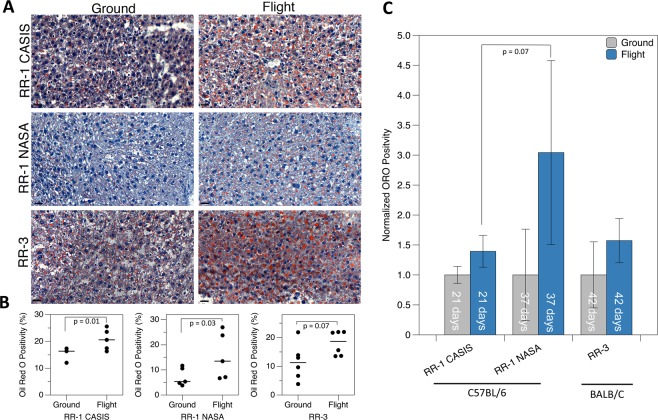
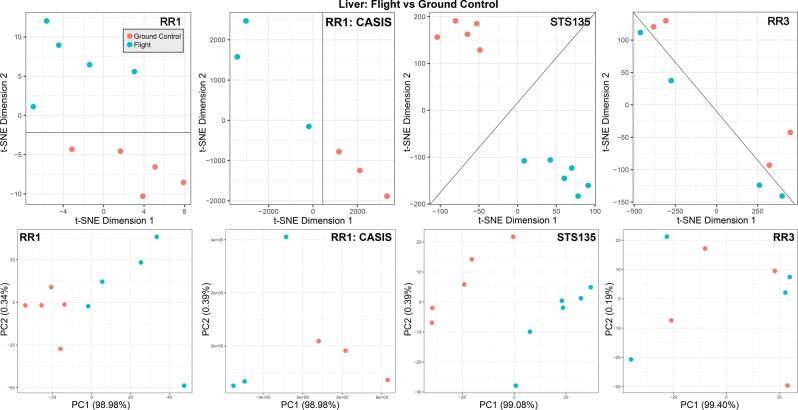
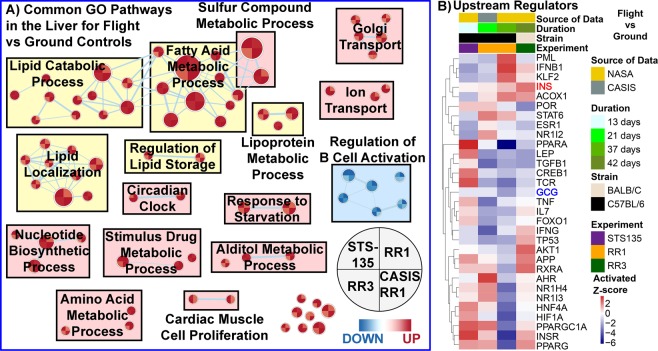
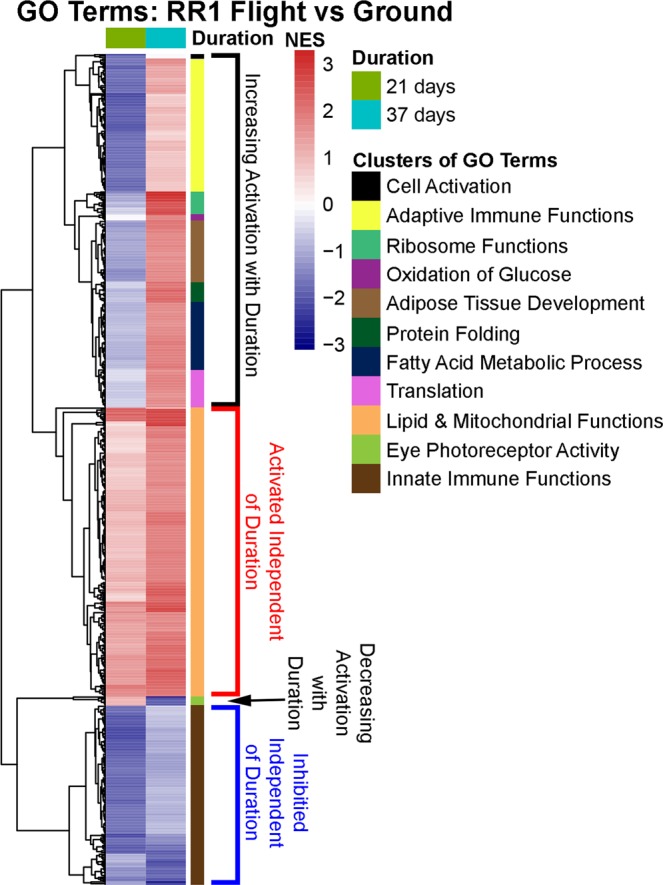
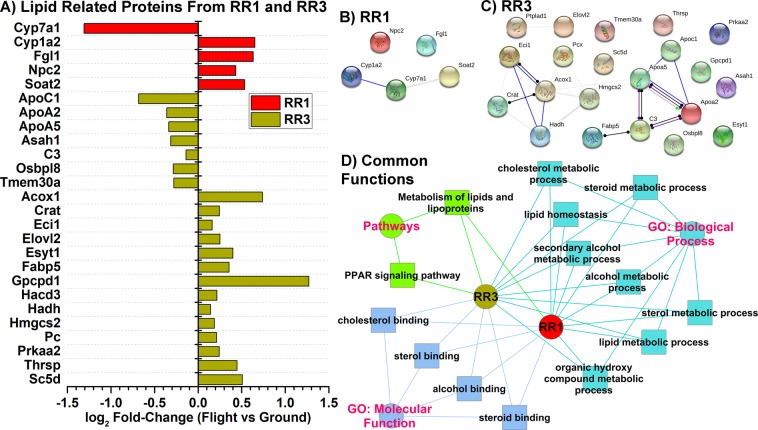
Spaceflight has several detrimental effects on the physiology of astronauts, many of which are recapitulated in rodent models. Mouse studies performed on the Space Shuttle showed disruption of lipid metabolism in liver. However, given that these animals were not sacrificed on-orbit and instead returned live to earth, it is unclear if these disruptions were solely induced by space stressors (e.g. microgravity, space radiation) or in part explained by the stress of return to Earth. In this work we analyzed three liver datasets from two different strains of mice (C57BL/6 (Jackson) & BALB/c (Taconic)) flown aboard the International Space Station (ISS). Notably, these animals were sacrificed on-orbit and exposed to varying spaceflight durations (i.e. 21, 37, and 42 days vs 13 days for the Shuttle mice). Oil Red O (ORO) staining showed abnormal lipid accumulation in all space-flown mice compared to ground controls regardless of strain or exposure duration. Similarly, transcriptomic analysis by RNA-sequencing revealed several pathways that were affected in both strains related to increased lipid metabolism, fatty acid metabolism, lipid and fatty acid processing, lipid catabolic processing, and lipid localization. In addition, key upstream regulators were predicted to be commonly regulated across all conditions including Glucagon (GCG) and Insulin (INS). Moreover, quantitative proteomic analysis showed that a number of lipid related proteins were changed in the livers during spaceflight. Taken together, these data indicate that activation of lipotoxic pathways are the result of space stressors alone and this activation occurs in various genetic backgrounds during spaceflight exposures of weeks to months. If similar responses occur in humans, a prolonged change of these pathways may result in the development of liver disease and should be investigated further.
Overview
The claims and statistics of this paper haven’t been checked yet.
Free: it reads the open-access text and checks the first 5 claims that cite a source we can check. Create a free account to check every claim.
Integrity signals
Registry
Cites
Statistics
Figures
Verification
Claims the paper makes
The claims and statistics of this paper haven’t been checked yet.
Free: it reads the open-access text and checks the first 5 claims that cite a source we can check. Create a free account to check every claim.
Claims other papers make about this one
Each is checked against this paper’s own text: does it say what the citing paper says it does?
The source backs part of the claim, not all of it — or backs it for a different population, condition or comparison.
In the citing paper
“We focused on the liver since we previously demonstrated that the liver regulates immune activity and lipid dysregulation during spaceflight (Beheshti et al., 2019).”
From Comprehensive Multi-omics Analysis Reveals Mitochondrial Stress as a Central Biological Hub for Spaceflight Impact (2020) · cites this paper as Beheshti et al., 2019
Experimental — accuracy not yet measuredThe source backs part of the claim, not all of it — or backs it for a different population, condition or comparison.
In the citing paper
“As stated earlier, lipid dysregulation with spaceflight originates from the liver (Beheshti et al., 2019).”
From Comprehensive Multi-omics Analysis Reveals Mitochondrial Stress as a Central Biological Hub for Spaceflight Impact (2020) · cites this paper as Beheshti et al., 2019
Experimental — accuracy not yet measuredThe source backs part of the claim, not all of it — or backs it for a different population, condition or comparison.
In the citing paper
“Pro-inflammatory responses negatively regulate PPARα in rodent models of atherosclerosis and early NAFLD that could be affecting astronauts as well75,76,79,80.”
From Key points for the development of antioxidant cocktails to prevent cellular stress and damage caused by reactive oxygen species (ROS) during manned space missions (2021) · cites this paper as [76]
Experimental — accuracy not yet measuredThe cited source says what the claim attributes to it.
In the citing paper
“and the results from our analyses are consistent with those from previous studies (Beheshti et al., 2019; Suomalainen and Battersby, 2018) and are supported by multiple other omics studies (Bezdan et al., 2020; Gertz et al., 2020).”
From Comprehensive Multi-omics Analysis Reveals Mitochondrial Stress as a Central Biological Hub for Spaceflight Impact (2020) · cites this paper as Beheshti et al., 2019
The cited source says what the claim attributes to it.
In the citing paper
“Two mouse strains were previously found to have accumulated lipids in the liver due to spaceflight exposure (Beheshti et al., 2019).”
From Comprehensive Multi-omics Analysis Reveals Mitochondrial Stress as a Central Biological Hub for Spaceflight Impact (2020) · cites this paper as Beheshti et al., 2019
Self-check
Percentages, sums and reported differences re-computed from the paper’s own numbers.
The self-check needs the paper’s full text.
Citations
Cites
Subramanian, A., Tamayo, P., Mootha, V. K., Mukherjee, S., Ebert, B. L., Gillette, M. A., Paulovich, A., Pomeroy, S. L., Golub, T. R., Lander, E. S., et al. (2005) · Proceedings of the National Academy of Sciences · doi:10.1073/pnas.0506580102 · Cited by 53,625
Cytoscape: A software Environment for integrated models of biomolecular interaction networks
Shannon, P., Markiel, A., Ozier, O., Baliga, N. S., Wang, J. T., Ramage, D., Amin, N., Schwikowski, B., & Ideker, T. (2003) · Genome Research · doi:10.1101/gr.1239303 · Cited by 51,888
STAR: ultrafast universal RNA-seq aligner
Dobin, A., Davis, C. A., Schlesinger, F., Drenkow, J., Zaleski, C., Jha, S., Batut, P., Chaisson, M., & Gingeras, T. R. (2013) · Bioinformatics · doi:10.1093/bioinformatics/bts635 · Cited by 51,709
Gene Ontology: tool for the unification of biology
Ashburner, M., Ball, C. A., Blake, J. A., Botstein, D., Butler, H., Cherry, J. M., Davis, A. P., Dolinski, K., Dwight, S. S., Eppig, J. T., et al. (2000) · Nature Genetics · doi:10.1038/75556 · Cited by 43,206
(2008) · Journal of Machine Learning Research · Cited by 33,051
Szklarczyk, D., Gable, A. L., Lyon, D., Junge, A., Wyder, S., Huerta-Cepas, J., Simonovic, M., Doncheva, N. T., Morris, J. H., Bork, P., et al. (2019) · Nucleic Acids Research · doi:10.1093/nar/gky1131 · Cited by 17,749
The Perseus computational platform for comprehensive analysis of (prote)omics data
Tyanova, S., Temu, T., Sinitcyn, P., Carlson, A., Hein, M. Y., Geiger, T., Mann, M., & Cox, J. (2016) · Nature Methods · doi:10.1038/nmeth.3901 · Cited by 8,803
Causal analysis approaches in Ingenuity Pathway Analysis
Krämer, A., Green, J., Pollard, J., & Tugendreich, S. (2014) · Bioinformatics · doi:10.1093/bioinformatics/btt703 · Cited by 5,724
The Reactome pathway Knowledgebase
Fabregat, A., Sidiropoulos, K., Garapati, P., Gillespie, M., Hausmann, K., Haw, R., Jassal, B., Jupe, S., Korninger, F., McKay, S., et al. (2016) · Nucleic Acids Research · doi:10.1093/nar/gkv1351 · Cited by 5,605
The Gene Ontology Resource: 20 years and still GOing strong
The Gene Ontology Consortium (2019) · Nucleic Acids Research · doi:10.1093/nar/gky1055 · Cited by 4,747
Research works printed but not linked: 1
- Fengler VH Macheiner T Sargsyan K Manifestation of Non-Alcoholic Fatty Liver Disease/Non-Alcoholic Steatohepatitis in Different Dietary Mouse Models. European Medical Journal Hepatology 2016 4 94 102
Cited by
Fundamental Biological Features of Spaceflight: Advancing the Field to Enable Deep-Space Exploration
Afshinnekoo, E., Scott, R. T., MacKay, M. J., Pariset, E., Cekanaviciute, E., Barker, R., Gilroy, S., Hassane, D., Smith, S. M., Zwart, S. R., et al. (2020) · Cell · doi:10.1016/j.cell.2020.10.050 · Cited by 478
“ISS, Shuttle, and microgravity ground-analog animal livers presented with damage contributing to increased lipid and fatty acid processing (Beheshti et al., 2019; Jonscher et al., 2016).”
BackgroundSelf-citationda Silveira, W. A., Fazelinia, H., Rosenthal, S. B., Laiakis, E. C., Kim, M. S., Meydan, C., Kidane, Y., Rathi, K. S., Smith, S. M., Stear, B., et al. (2020) · Cell · doi:10.1016/j.cell.2020.11.002 · Cited by 402
“As stated earlier, lipid dysregulation with spaceflight originates from the liver (Beheshti et al., 2019).”
InfluentialSelf-citationHuman Health during Space Travel: State-of-the-Art Review
Krittanawong, C., Singh, N. K., Scheuring, R. A., Urquieta, E., Bershad, E. M., Macaulay, T. R., Kaplin, S., Dunn, C., Kry, S. F., Russomano, T., et al. (2022) · Cells · doi:10.3390/cells12010040 · Cited by 170
“Another potential consequence of prolonged microgravity exposure is the possibility of increased fatty-acid processing [145], leading to the development of non-alcoholic fatty liver disease (NAFLD) and hepatic fibrosis [146,147].”
BackgroundNASA GeneLab: interfaces for the exploration of space omics data
Berrios, D. C., Galazka, J. M., Grigorev, K. A., Gebre, S., & Costes, S. V. (2020) · Nucleic Acids Research · doi:10.1093/nar/gkaa887 · Cited by 132
Self-citationHemolysis contributes to anemia during long-duration space flight
Trudel, G., Shahin, N., Ramsay, T., Laneuville, O., & Louati, H. (2022) · Nature Medicine · doi:10.1038/s41591-021-01637-7 · Cited by 127
Gómez, X., Sanon, S., Zambrano, K., Asquel, S., Bassantes, M., Morales, J. E., Otáñez, G., Pomaquero, C., Villarroel, S., Zurita, A., et al. (2021) · npj Microgravity · doi:10.1038/s41526-021-00162-8 · Cited by 92
Biological research and self-driving labs in deep space supported by artificial intelligence
Sanders, L. M., Scott, R. T., Yang, J. H., Qutub, A. A., Garcia Martin, H., Berrios, D. C., Hastings, J. J. A., Rask, J., Mackintosh, G., Hoarfrost, A. L., et al. (2023) · Nature Machine Intelligence · doi:10.1038/s42256-023-00618-4 · Cited by 49
“Findings derived from space-flown experiments leveraging these technologies include ocular/ retinal alterations 23,46 , liver dysfunction 47,48 , microRNA signatures 49 , mitochondrial stress 50 , gut microbiome alterations 51 and alternative splicing in space-grown plants 52 .”
BackgroundSelf-citationChoi, S. Y., Saravia-Butler, A., Shirazi‐Fard, Y., Leveson-Gower, D. B., Stodieck, L., Cadena, S. M., Beegle, J., Solis, S., Ronca, A. E., & Globus, R. K. (2020) · Scientific Reports · doi:10.1038/s41598-020-58898-4 · Cited by 56
Self-citationSpaceflight induces changes in gene expression profiles linked to insulin and estrogen
Mathyk, B. A., Tabetah, M., Karim, R. S., Zaksas, V., Kim, J., I, A. R., Muratani, M., Tasoula, A., Singh, R. S., Chen, Y.-K., et al. (2024) · Communications Biology · doi:10.1038/s42003-023-05213-2 · Cited by 48
“Further, the livers used in our analysis showed histologic evidence of lipid accumulation via Oil Red O staining in a prior study 68 .”
Self-citationGas sensing for space: Health and environmental monitoring
Silva, T. E. A., Burisch, F., & Güntner, A. T. (2024) · TrAC Trends in Analytical Chemistry · doi:10.1016/j.trac.2024.117790 · Cited by 51
Spaceflight alters host-gut microbiota interactions
González, E., Lee, M., Tierney, B. T., Lytell, N., Flores, P., Mishra, M., Beckett, L., Finkelstein, A., Mo, A., Walton, P., et al. (2024) · npj Biofilms and Microbiomes · doi:10.1038/s41522-024-00545-1 · Cited by 44
Advancing the Integration of Biosciences Data Sharing to Further Enable Space Exploration
Scott, R. T., Grigorev, K. A., Mackintosh, G., Gebre, S., Mason, C. E., Alto, M. E. D., & Costes, S. V. (2020) · Cell Reports · doi:10.1016/j.celrep.2020.108441 · Cited by 34
Self-citationHepatology in space: Effects of spaceflight and simulated microgravity on the liver
Vinken, M. (2022) · Liver International · doi:10.1111/liv.15444 · Cited by 37
NASA GeneLab Platform Utilized for Biological Response to Space Radiation in Animal Models
McDonald, J. T., Stainforth, R., Miller, J., Cahill, T., da Silveira, W. A., Rathi, K. S., Hardiman, G., Taylor, D. M., Costes, S. V., Chauhan, V., et al. (2020) · Cancers · doi:10.3390/cancers12020381 · Cited by 32
“The mechanisms of damage are common to highly ionizing radiation regardless of the source [94]; what is unique to chronic space radiation exposure is the combination of highly ionizing particles, low dose, and a low dose rate, which may have implications for DNA repair [17], mitochondrial pathways [16], and lipid path…”
BackgroundMethodInfluentialSelf-citationIntegrated RNA-seq Analysis Indicates Asynchrony in Clock Genes between Tissues under Spaceflight
Fujita, S.-I., Rutter, L. A., Ong, Q., & Muratani, M. (2020) · Life · doi:10.3390/life10090196 · Cited by 30
“the symptoms of which have been observed in mice during spaceflight [10].”
BackgroundThe biological effects of radiation-induced liver damage and its natural protective medicine
Li, T., Cao, Y., Li, B., & Dai, R. (2021) · Progress in Biophysics and Molecular Biology · doi:10.1016/j.pbiomolbio.2021.06.012 · Cited by 31
Millar‐Wilson, A., Ward, Ó., Duffy, E., & Hardiman, G. (2022) · iScience · doi:10.1016/j.isci.2022.105421 · Cited by 31
“Furthermore, multiple studies spanning metabolomics, transcriptomics, and proteomics have uncovered cell cycle perturbations during spaceflight.(12,120,121) One study carried out preanalysis integration using MetaboAnalyst, integrating transcriptomic and metabolomic data from NASA GeneLab.”
BackgroundMethodInfluentialSelf-citationKurosawa, R., Sugimoto, R., Imai, H., Atsuji, K., Yamada, K., Kawano, Y., Ohtsu, I., & Suzuki, K. (2021) · Scientific Reports · doi:10.1038/s41598-021-01129-1 · Cited by 28
NASA open science data repository: open science for life in space
Gebre, S., Scott, R. T., Saravia-Butler, A., Lopez, D. K., Sanders, L., & Costes, S. V. (2024) · Nucleic Acids Research · doi:10.1093/nar/gkae1116 · Cited by 37
Self-citationMicrogravity-induced alterations of mouse bones are compartment- and site-specific and vary with age
Coulombe, J. C., Sarazin, B. A., Mullen, Z., Ortega, A. M., Livingston, E. W., Bateman, T. A., Stodieck, L., Lynch, M. E., & Ferguson, V. L. (2021) · Bone · doi:10.1016/j.bone.2021.116021 · Cited by 24
Cahill, T., Cope, H., Bass, J. J., Overbey, E. G., Gilbert, R., da Silveira, W. A., Paul, A. M., Mishra, T., Herranz, R., Reinsch, S. S., et al. (2021) · International Journal of Molecular Sciences · doi:10.3390/ijms22179470 · Cited by 24
Self-citationHo, C. N. Q., Tran, M. T., Chung, Đ. C., Sơn, H. N., Tran, D. H., & Long, L. T. (2021) · International Journal of Molecular Sciences · doi:10.3390/ijms22094550 · Cited by 21
“A recent study showed that microgravity induced lipid dysregulation in the mouse liver [20], and SMG similarly affected rat liver function by altering the metabolism of loureirin B and the expression of major cytochrome P450 [21].”
BackgroundEffects of long‐term simulated microgravity on liver metabolism in rhesus macaques
Zong, B., Wang, Y., Wang, J., Zhang, P., Kan, G., Li, M., Feng, J., Wang, Y., Chen, X., Jin, R., et al. (2022) · The FASEB Journal · doi:10.1096/fj.202200544rr · Cited by 20
Vitry, G., Finch, R. H., McStay, G. P., Behesti, A., Dejean, S., Larose, T. L., Wotring, V. E., & da Silveira, W. A. (2022) · iScience · doi:10.1016/j.isci.2022.105213 · Cited by 21
Self-citationTranscriptomics analysis reveals molecular alterations underpinning spaceflight dermatology
Cope, H., Elsborg, J., Demharter, S., McDonald, J. T., Wernecke, C., Parthasarathy, H., Unadkat, H., Chatrathi, M., Claudio, J., Reinsch, S. S., et al. (2024) · Communications Medicine · doi:10.1038/s43856-024-00532-9 · Cited by 22
Self-citationProtective alleles and precision healthcare in crewed spaceflight
Rutter, L. A., MacKay, M. J., Cope, H., Szewczyk, N. J., Kim, J., Overbey, E. G., Tierney, B. T., Muratani, M., Lamm, B., Bezdan, D., et al. (2024) · Nature Communications · doi:10.1038/s41467-024-49423-6 · Cited by 18
“Counteracting risk for liver disease could be important, since space stressors may activate lipotoxic pathways that further elevate liver disease risk, potentially leading to lipid dysregulation and reduced immune activity in susceptible space fl ight participants 114,115 .”
BackgroundRNAseq Analysis of Rodent Spaceflight Experiments Is Confounded by Sample Collection Techniques
Polo, S.-H. L., Saravia-Butler, A., Boyko, V., Dinh, M. T., Chen, Y., Fogle, H. W., Reinsch, S. S., Ray, S., Chakravarty, K., Marcu, O., et al. (2020) · iScience · doi:10.1016/j.isci.2020.101733 · Cited by 25
Self-citationPotential Roles of YAP/TAZ Mechanotransduction in Spaceflight-Induced Liver Dysfunction
Li, W., Shu, X., Zhang, X., Zhang, Z., Sun, S., Li, N., & Long, M. (2023) · International Journal of Molecular Sciences · doi:10.3390/ijms24032197 · Cited by 17
“Abnormal lipid accumulation measured by oil red O staining was also visualized in all space-flown mice liver [18].”
BackgroundXiong, Y., Ma, C., Li, Q., Zhang, W., Zhao, H., Ren, P., Zhang, K., & Lei, X. (2023) · The FASEB Journal · doi:10.1096/fj.202301137r · Cited by 19
Alternative splicing diversifies the skeletal muscle transcriptome during prolonged spaceflight
Henrich, M., Ha, P., Wang, Y., Ting, K., Stodieck, L., Soo, C. B., Adams, J. S., & Chun, R. F. (2022) · Skeletal Muscle · doi:10.1186/s13395-022-00294-9 · Cited by 14
“[108]’s work was limited to transcriptomic investigations of the liver, their findings are consistent with the approximately 10× less differentially expressed genes that we identified in the BALB/c quadriceps following exposure to microgravity (70 DGE genes; see Fig.”
MethodResultIlangovan, H., Kothiyal, P., Hoadley, K. A., Elgart, S. R., Eley, G. D., & Eslami, P. (2024) · npj Microgravity · doi:10.1038/s41526-024-00379-3 · Cited by 16
“Space fl ight experiments, as well as those using analogs of space fl ight hazards like microgravity or radiation have demonstrated impacts on liver processes and metabolism which are associated with liver disease or the development of liver cancer 9 – 13 .”
How do gravity alterations affect animal and human systems at a cellular/tissue level?
Cialdai, F., Brown, A. M., Baumann, C. W., Angeloni, D., Baatout, S., Benchoua, A., Bereiter-Hahn, J., Bottai, D., Buchheim, J., Calvaruso, M., et al. (2023) · npj Microgravity · doi:10.1038/s41526-023-00330-y · Cited by 12
“Studies carried out in rodents have reported that microgravity induces alterations in liver metabolism, causing a pathophysiological state similar to fatty liver disease, a condition that can affect the processes of absorption, distribution, metabolism, and excretion of drugs 57,58 .”
Batch effect correction methods for NASA GeneLab transcriptomic datasets
Sanders, L., Chok, H., Samson, F., Acuna, A. U., Polo, S.-H. L., Boyko, V., Chen, Y., Dinh, M. T., Gebre, S., Galazka, J. M., et al. (2023) · Frontiers in Astronomy and Space Sciences · doi:10.3389/fspas.2023.1200132 · Cited by 12
“To increase statistical power of a study, researchers often combine individual datasets with similar experimental conditions (Beheshti et al., 2019; da Silveira et al., 2020; Malkani et al., 2020).”
BackgroundSelf-citationCahill, T., da Silveira, W. A., Renaud, L., Wang, H., Williamson, T., Chung, D., Chan, S. S. L., Overton, I. M., & Hardiman, G. (2023) · Scientific Reports · doi:10.1038/s41598-022-26976-4 · Cited by 13
“2C), along with the PPAR signalling pathway involving FABP2 , CD36 , and SLC27A4 , consistent with studies demonstrating spaceflight-induced lipid accumulation in the liver 32 .”
BackgroundSelf-citationRu, M., He, J., Bai, Y., Zhang, K., Shi, Q., Gao, F., Wang, Y., Li, B., & Shen, L. (2024) · Biomolecules · doi:10.3390/biom14060682 · Cited by 11
“These findings are consistent with previous studies suggesting that hepatic lipid accumulation may be attributed to microgravity [9,14].”
BackgroundMethodResultInfluentialMetabolic stress in space: ROS-induced mutations in mice hint at a new path to cancer
Štolc, V., Karhánek, M., Freund, F., Griko, Y. V., Loftus, D. J., & Ohayon, M. M. (2024) · Redox Biology · doi:10.1016/j.redox.2024.103398 · Cited by 9
Mitochondrial Effects in the Liver of C57BL/6 Mice by Low Dose, High Energy, High Charge Irradiation
Barnette, B. L., Yu, Y., Ullrich, R. L., & Emmett, M. R. (2021) · International Journal of Molecular Sciences · doi:10.3390/ijms222111806 · Cited by 12
Corti, G., Kim, J., Enguita, F. J., Guarnieri, J. W., Grossman, L. I., Costes, S. V., Fuentealba, M., Scott, R. T., Magrini, A., Sanders, L., et al. (2024) · Communications Biology · doi:10.1038/s42003-024-06944-6 · Cited by 9
“The authors then used machine learning technique to identify two potential drugs to mitigate miRNA dysregulation.”
Self-citationDerobertmasure, A., Toh, L. S., Wotring, V. E., Williams, P. M., Morbidelli, L., Stingl, J., Vinken, M., Ramadan, R., Chhun, S., & Boutouyrie, P. (2025) · European Journal of Pharmaceutical Sciences · doi:10.1016/j.ejps.2025.107063 · Cited by 11
Casaletto, J. A., Scott, R. T., Myrick, M., Mackintosh, G., Chok, H., Saravia-Butler, A., Hoarfrost, A., Galazka, J. M., Sanders, L., & Costes, S. V. (2025) · Scientific Reports · doi:10.1038/s41598-024-81394-y · Cited by 9
“Previous AWG publications identified multi-omic lipid dysregulation in space-flown mouse liver 2 and disruption of mitochondrial function in space-flown mouse and human tissues 5 .”
Self-citationXiong, Y. B., Guo, J., Yu, W., Zeng, D., Song, C., Zhou, L., Nadtochii, L. A., Baranenko, D., Xiao, D., Zhou, Y., et al. (2025) · International Journal of Molecular Sciences · doi:10.3390/ijms26073094 · Cited by 8
“In multiple spaceflight missions involving mice and rats, the liver system also exhibited varying degrees of lipid deposition, degeneration, and inflammatory damage [20,53].”
An, R. (2022) · Frontiers in Cell and Developmental Biology · doi:10.3389/fcell.2022.997365 · Cited by 9
“Similar conclusions can be made with spaceflight diseases such as nonalcoholic fatty liver disease (Beheshti et al., 2019), related to MRTF (Zhang L.”
BackgroundLocatelli, L., Castiglioni, S., & Maier, J. A. M. (2022) · Frontiers in Bioengineering and Biotechnology · doi:10.3389/fbioe.2022.862059 · Cited by 6
Designing a Novel Monitoring Approach for the Effects of Space Travel on Astronauts’ Health
Sakharkar, A., & Yang, J. P. (2023) · Life · doi:10.3390/life13020576 · Cited by 10
“Moreover, consistent with previous studies [54,55], our results showed that space travel significantly affects astronauts’ liver function and liver metabolism.”
ResultGu, L., Wang, W., Gu, Y., Cao, J., & Wang, C. (2023) · Metabolites · doi:10.3390/metabo13091020 · Cited by 10
“Increasing studies have indicated that irradiation resulted in lipid accumulation, evidenced by elevated triacylglycerol and cholesterol levels in plasma, liver or lung tissues [12,62–64].”
BackgroundCameron, S. J. S., Edwards, A., Lambert, R. J., Stroud, M. A., & Mur, L. A. J. (2023) · International Journal of Molecular Sciences · doi:10.3390/ijms24054850 · Cited by 5
“A broader appreciation and utilisation of multi-omic investigation a also evident, but these cases have focused more on genomics and transcriptomics [17].”
BackgroundPharmacological Innovations in Space: Challenges and Future Perspectives
Aksoyalp, Z. Ş., Temel, A., & Karpuz, M. (2024) · Pharmaceutical Research · doi:10.1007/s11095-024-03788-x · Cited by 9
“Otherwise, increased lipid accumulation in the livers of mice exposed to microgravity has been detected [45].”
Microgravity’s effects on miRNA-mRNA regulatory networks in a mouse model of segmental bone defects
Gautam, A., Chakraborty, N., Dimitrov, G. I., Hoke, A. V., Miller, S., Swift, K. A., Sowe, B., Conley, C., Kacena, M. A., & Hammamieh, R. (2024) · PLoS ONE · doi:10.1371/journal.pone.0313768 · Cited by 6
Guarnieri, J. W., Maghsoudi, Z., Kim, J., Bya, P., Widjaja, G. A., Barker, R., Burke, M., Cen, Z., Fazelinia, H., Tsoy, S., et al. (2025) · SSRN Electronic Journal · doi:10.2139/ssrn.5087025 · Cited by 6
Self-citationLi, B., Li, T., Han, C., Liu, Y., Zhong, X., Cao, Y., & Deng, Y. (2022) · Space Science & Technology · doi:10.34133/2022/9791283 · Cited by 6
“The dysregulation of the PPARα signaling pathway can lead to the production of markers that are considered to be the precursors of early nonalcoholic fatty liver- (NAFLD-) like symptoms [38, 39].”
BackgroundInfluentialVisualizing Omics Data from Spaceflight Samples using the NASA GeneLab Platform
Berrios, D. C., Weitz, E. M., Grigorev, K. A., Costes, S. V., Gebre, S., & Beheshti, A. (2020) · EPiC series in computing · doi:10.29007/rh7n · Cited by 4
“Recently it has been observed that spaceflight might increase chances of liver disease, specifically non-alcoholic fatty liver disease [2].”
BackgroundMethodInfluentialSelf-citationBeyond Low Earth Orbit: Biological Research, Artificial Intelligence, and Self-Driving Labs
Sanders, L. M., Yang, J. H., Scott, R. T., Qutub, A. A., Martin, H. G., Berrios, D. C., Hastings, J. J. A., Rask, J., Mackintosh, G., Hoarfrost, A. L., et al. (2021) · arXiv · doi:10.48550/arxiv.2112.12582
Self-citationSpaceflight causes strain-dependent gene expression changes in the kidneys of mice
Finch, R. H., Vitry, G., Siew, K., Walsh, S. B., Beheshti, A., Hardiman, G., & da Silveira, W. A. (2025) · npj Microgravity · doi:10.1038/s41526-025-00465-0 · Cited by 8
Self-citationGravitational and mechanical forces drive mitochondrial translationPreprint
Wakigawa, T., Kimura, Y., Mito, M., Tsubaki, T., Lee, M., Nakamura, K., Khan, A. H., Saito, H., Yamamori, T., Yamazaki, T., et al. (2023) · bioRxiv (Cold Spring Harbor Laboratory) · doi:10.1101/2023.01.18.524628 · Cited by 3
Casaletto, J. A., Zhao, T., Yeung, J., Ansari, A., Raj, A., Mishra, A., Fry, A., Sun, K., Lendahl, S., Guan, W., et al. (2025) · bioRxiv (Cold Spring Harbor Laboratory) · doi:10.1101/2025.02.17.638732 · Cited by 3
“Several systems have been shown to be impacted in both male and female organisms, including the cardiovascular[1], musculoskeletal[2], immune[3], neurologic[4], hepatic[5], and ophthalmologic[6] systems to name a few.”
Self-citationInfluence of gut microbiome on metabolic diseases: a new perspective based on microgravity
Wu, W., Ren, J., Han, M., & Huang, B. (2024) · Journal of Diabetes & Metabolic Disorders · doi:10.1007/s40200-024-01394-7 · Cited by 2
“…instance, a multi-omics study conducted during a 42-day flight on the International Space Station (ISS) in mice revealed changes in pathways related to lipid acid metabolism, processing, catabolism, and localization, which may contribute to the development of non-alcoholic fatty liver disease [29].”
Chen, P., Chen, J., Xu, N., Wang, W., Hou, L., Sun, B., Lan, H., Liu, W., Shen, Q., Yu, Y., et al. (2026) · BMC Microbiology · doi:10.1186/s12866-025-04616-x · Cited by 2
“Consequently, liver dysfunction may be more pronounced in spaceflight, a hypothesis supported by studies involving mice aboard the spacecraft, which observed lipid dysregulation, lipid droplet accumulation and lose retinol from lipid droplets in the liver [3, 44].”
Nia, A. M., Shavkunov, A. S., Ullrich, R. L., & Emmett, M. R. (2020) · ACS Omega · doi:10.1021/acsomega.0c03047 · Cited by 2
The Amyloid Aggregation Study on Board the International Space Station, an Update
Berrone, E., Cardone, F., Corona, C., Sbriccoli, M., Favole, A., Porreca, F., Camerini, S., Casella, M., Crescenzi, M., Sirigu, S., et al. (2020) · Aerotecnica Missili & Spazio · doi:10.1007/s42496-020-00049-z · Cited by 2
Changes in the Cell Division of Chang Liver Cells Induced by Simulated Microgravity
Tran, M. T., Chung, Đ. C., Sơn, H. N., Ly, C. N., Nguyen, M. T. P., To, Q. M., Truong, N. H., Ho, C. N. Q., & Long, L. T. (2023) · Applied Sciences · doi:10.3390/app13137351 · Cited by 2
Effects of Space Flight on Inflammasome Activation in the Brain of Mice
Roy, U., Hadad, R., Rodriguez, A. A., Saju, A., Roy, D., Gil, M., Keane, R. W., Scott, R. T., Mao, X. W., & Vaccari, J. P. D. R. (2025) · Cells · doi:10.3390/cells14060417 · Cited by 2
“The following supporting information can be downloaded at https: //www.mdpi.com/article/10.3390/cells14060417/s1: Figure S1: Inflammasome proteins in the brain.”
InfluentialParabolic flight as a space-flight analogon impacts angiogenesis and lipid metabolism
Paar, V., Boxhammer, E., Marmullaku, F., Hoppe, U. C., Lichtenauer, M., & Jirak, P. (2025) · Life Sciences in Space Research · doi:10.1016/j.lssr.2025.04.002 · Cited by 3
Zhang, Y., Yang, Q., Xiaohui, D. U., Zhao, L., & Sun, Y. (2025) · Chinese Journal of Space Science · doi:10.11728/cjss2025.02.2024-0137 · Cited by 1
Helvacıoğlu, S., Cools, B., Ong, J., Waisberg, E., Lee, R. S., Lee, A. G., & Vinken, M. (2025) · Life Sciences in Space Research · doi:10.1016/j.lssr.2025.07.001 · Cited by 3
Casaletto, J. A., Zhao, T., Yeung, J., Ansari, A., Raj, A., Mishra, A., Fry, A., Sun, K., Lendahl, S., Guan, W., et al. (2026) · JMIRx Bio · doi:10.2196/73041 · Cited by 5
“Several systems have been shown to be impacted in both male and female organisms, including the cardiovascular [4], musculoskeletal [5], immune [6], neurologic [7], hepatic [8], and ophthalmologic [9] systems, to name a few.”
Self-citationLi, N., Zhang, X., Luo, H., Zhou, J., Du, Y., Zhang, Z., Lü, D., Zhang, Y., Lü, S., Luo, Q., et al. (2026) · Science Bulletin · doi:10.1016/j.scib.2026.01.072 · Cited by 1
From in vitro to in vacuo: a call for space toxicology research
Cools, B., & Vinken, M. (2026) · Toxicology · doi:10.1016/j.tox.2026.154431 · Cited by 1
Lipophagy Mitigates Radiation-induced Liver Lipid Disorders and Damage in Adolescent Mice
Zhang, Y. F., Xu, Y., Zhou, K., Wang, C. C., Xu, J. Y., Xu, Z. L., Yi, Y. Q., 卞坡, & Wang, T. (2026) · Radiation Research · doi:10.1667/rade-26-00008 · Cited by 1
Cardiovascular risks and hazards associated with deep space exploration
Brojakowska, A., Bisserier, M., Eskandari, A., Jagana, V., Khlgatian, M. K., Arakelyan, A., Fogarty, J., Kovacic, J. C., & Goukassian, D. A. (2026) · Communications Medicine · doi:10.1038/s43856-026-01728-x · Cited by 2
“Circadian dysregulation in space has been seen in various modelorganisms,includingalteredexpressionofcircadian-associatedgenes inskeletalmuscle 117 , liver 118 , and heart 86 .”
Gravitational and mechanical forces shape mitochondrial translation
Wakigawa, T., Kimura, Y., Mito, M., Tsubaki, T., Lee, M., Nakamura, K., Khan, A. H., Saito, H., Yamamori, T., Yamazaki, T., et al. (2026) · Nature Communications · doi:10.1038/s41467-026-74493-z · Cited by 8
Li, W., Xu, L., Wang, Y., Li, W., Maimaiti, M., Kou, B., Liu, C., Zhang, M., Xia, H., & Yuan, F. (2023) · Technology and Health Care · doi:10.3233/thc-220718 · Cited by 1
“Once severe RILD occurs, it will progress to liver failure with few effective treatments [4].”
An, R. (2022) · Preprints.org · doi:10.20944/preprints202207.0106.v1
An, R. (2022) · Preprints.org · doi:10.20944/preprints202207.0106.v2 · Cited by 1
Finch, R. H., Vitry, G., Siew, K., Walsh, S. B., Behesti, A., Hardiman, G., & da Silveira, W. A. (2024) · bioRxiv (Cold Spring Harbor Laboratory) · doi:10.1101/2024.03.13.584781 · Cited by 1
“In spaceflight, profibrotic markers have been observed in mouse lung tissue 18 , and lipid dysregulation has been observed in mouse liver tissue 19 .”
BackgroundMethodSelf-citationSanthanam, A., Momin, Z., Qin, X., Wang, Q., Krishnavajhala, A., Jiang, Q., Walker, K., Kalra, D., Gingras, M., Chao, H., et al. (2026) · bioRxiv (Cold Spring Harbor Laboratory) · doi:10.64898/2026.06.01.729304 · Cited by 2
Health Risks of Hypermutation in Mice on the International Space StationPreprint
Štolc, V., Karhánek, M., Freund, F., Griko, Y. V., Loftus, D. J., & Ohayon, M. M. (2022) · SSRN Electronic Journal · doi:10.2139/ssrn.4102633
Cools, B., Helvacıoğlu, S., & Vinken, M. (2024) · Elsevier eBooks · doi:10.1016/b978-0-443-22259-7.00021-7
Zhang, Y. F., Xu, Z., Wang, C., Xu, J., Xu, Y., Yi, Y. Q., Bian, P., & Wang, T. (2025) · Research Square · doi:10.21203/rs.3.rs-7033545/v1
Bayesian Optimization of Classification Models for Space Transcriptomic Data Using Machine Learning
Reyes-Rodríguez, S. J., Maya-Sandoval, V., Gómez-Montalvo, J., Avendaño-Vázquez, S. E., & Salazar-Colores, S. (2025) · Communications in computer and information science · doi:10.1007/978-3-032-09735-4_13
Metabolic and endocrine changes in spaceflight
O’Leary, K. S., Güner, Z., Mathyk, B. A., & Erenler, F. (2025) · Elsevier eBooks · doi:10.1016/b978-0-443-32904-3.00017-0
Henrich, M., Ha, P., Wang, Y., Ting, K., Stodieck, L., Soo, C. B., Adams, J. S., & Chun, R. (2022) · Figshare · doi:10.6084/m9.figshare.19947329
Exploring light and colour in space habitats: A scoping review of habitability studies
Qu, Y., Li, S., Chen, Z., & Kato, T. (2026) · Indoor and Built Environment · doi:10.1177/1420326x251410539 · Cited by 1
Automated behavioral segmentation and markerless pose tracking of mice during spaceflightPreprint
Kiffer, F. C., Scott, R. T., Martens, M. T., Mayo, A., Li, Y., Mendoza, M., Gautam, S., Huang, J., Bathwal, M., Jaikumar, S., et al. (2026) · bioRxiv (Cold Spring Harbor Laboratory) · doi:10.64898/2026.04.30.721950 · Cited by 1
“…) while data sharing, data standardization, and analysis-visualization tool development efforts through the NASA Open Science Data Repository( 30 ), Ames Life Sciences Data Archive, and GeneLab ( 53 ) supported numerous omics and phenotypic-physiological analyses from this same mission ( 54 – 63 ).”
Transcriptomics in Space: A Basic R Pipeline for Analyzing Bulk RNA-Sequencing Data
Olanrewaju, G. O., Szewczyk, N. J., & Willis, C. R. G. (2026) · Methods in molecular biology · doi:10.1007/978-1-0716-5174-2_5
Effects of microgravity on human physiology
Cools, B., Smith, M. B., Boutouyrie, P., Ciccone, V., Meulemeester, P. D., Fernandez‐Gonzalo, R., Frippiat, J., Oliver, B. G. G., Gentile, S., Goswami, N., et al. (2026) · Progress in Biophysics and Molecular Biology · doi:10.1016/j.pbiomolbio.2026.05.004
Hayslip, N., Kim, J., Ashiqueali, S., Zhu, X., Hussein, R., Alam, M. T., Garcia, D. N., Zanini, B. M., Kubik, A. J., Allen, N., et al. (2026) · GeroScience · doi:10.1007/s11357-026-02365-x · Cited by 2
Self-citationIbrahim, Z., Murphy, R. P., Cornélissen, G., Green, D. A., Arya, R., Cannegieter, S. C., & Goswami, N. (2026) · Research and Practice in Thrombosis and Haemostasis · doi:10.1016/j.rpth.2026.106840
“Spaceflight rodent studies identified clock-dependent dysregulation of skeletal muscle genes [56] and liver lipid metabolism across missions [58].”
Spaceflight multi-omics reveals vulnerabilities of human germ cell development
Li, Y., Gao, H., Xiong, J., Wang, N., Yuan, Y., Wang, L., Xu, J., Huang, W., Tan, G., He, X., et al. (2026) · Science Advances · doi:10.1126/sciadv.aee0143
Aging in Spaceflight, Oxidative Stress, and Microbiome Dysbiosis: A Comprehensive Review
Naney, C., Graves, J. L., & Harrison, S. H. (2026) · International Journal of Molecular Sciences · doi:10.3390/ijms27177644
Li, Y., & He, G.-J. (2026) · Shengming kexue · doi:10.3724/cbls.2026133
FAIRsharing record for: NASA GeneLab
FAIRsharing Team, & Costes, S. (2018) · FAIRsharing.org · doi:10.25504/fairsharing.64mr5a
Self-citation
Metadata
- Authors
- Beheshti, A., Chakravarty, K., Fogle, H., Fazelinia, H., Silveira, W. A. D., Boyko, V., Polo, S.-H. L., Saravia-Butler, A. M., Hardiman, G., Taylor, D., Galazka, J. M., & Costes, S. V.
- Affiliations
- Ames Research Center (US)
- Children's Hospital of Philadelphia (US)
- Queen's University Belfast (GB)
- Corresponding author
- Beheshti, Afshin
- Costes, Sylvain V.
- ORCID
- Venue
- Scientific Reports
- Published
- 2019-12-16
- Volume
- 9
- Issue
- 1
- Pages
- 19195-19195
- ISSN
- 2045-2322 (ISSN-L)
- PMC
- PMC6915713
- OpenAlex
- W2996338841
- Cited by
- 90
- References
- 69
- Citations by year
- 2026: 17 · 2025: 13 · 2024: 15 · 2023: 12 · 2022: 14 · 2021: 8 · 2020: 11
- FWCI
- 5.66
- Type
- journal article
- Language
- en
- Update notices
- correction (2020-01-27)
- Open access
- gold
- doi.org
- Licence
- cc-by
- creativecommons.org/licenses/by/4.0 (tdm)
- creativecommons.org/licenses/by/4.0 (vor)
- Locations
- Scientific Reports (publishedVersion, cc-by)
- Europe PMC (PubMed Central) (publishedVersion, cc-by)
- PubMed Central (publishedVersion, cc-by)
- PubMed (publishedVersion)
- DOAJ (DOAJ: Directory of Open Access Journals) (submittedVersion)
- Research Portal (Queen's University Belfast) (submittedVersion, cc-by)
- Funders
- National Aeronautics and Space Administration
- Ames Research Center
- Topics
- Health Sciences › Medicine › Physiology (medical) › Spaceflight effects on biology
- Life Sciences › Biochemistry, Genetics and Molecular Biology › Biochemistry › Lipid metabolism and biosynthesis
- Social Sciences › Political Science and International Relations › Space exploration and regulation
- Keywords
- spaceflight, lipid dysregulation, liver, lipid metabolism, fatty acid metabolism, lipotoxicity, microgravity, space radiation, mouse model, C57BL/6 mice, BALB/c mice, International Space Station, Space Shuttle, transcriptomics, proteomics, glucagon, insulin, lipid accumulation, liver disease
About these checks
Registry, retraction, Cites and statistics results are computed, not judged, with one exception: a printed reference that no index lists is read once by a model before it counts as a citation error. Claims are extracted by a model and kept only when their quote appears verbatim in the text; each cited source is then checked, with a model’s help, for whether it says what the claim relies on. Those verdicts can be wrong — read the claim’s quote and the cited source before relying on one.
Statistics and arithmetic are recomputed, not judged.
Confidence bands are shown only for fields calibrated on our annotated test set. None is calibrated yet, so no band is shown.
What counts as a claim ›How we measure confidence ›How we check this ›
Are you an author, or do you see a problem with this page? Request a review
Data sources
Bibliographic data: Semantic Scholar, OpenAlex, Crossref.
Contains information from the Semantic Scholar Academic Graph Datasets, made available under the ODC Attribution License (ODC-BY 1.0).
Semantic Scholar’s data is described in: Kinney, R., et al. (2023). The Semantic Scholar Open Data Platform. arXiv:2301.10140.
