

The DOI matches its Crossref record; 65 of the 65 references it cites were found in a registry or an index.
Prevalence, comorbidity, and breed differences in canine anxiety in 13,700 Finnish pet dogs
Open accessAbstract
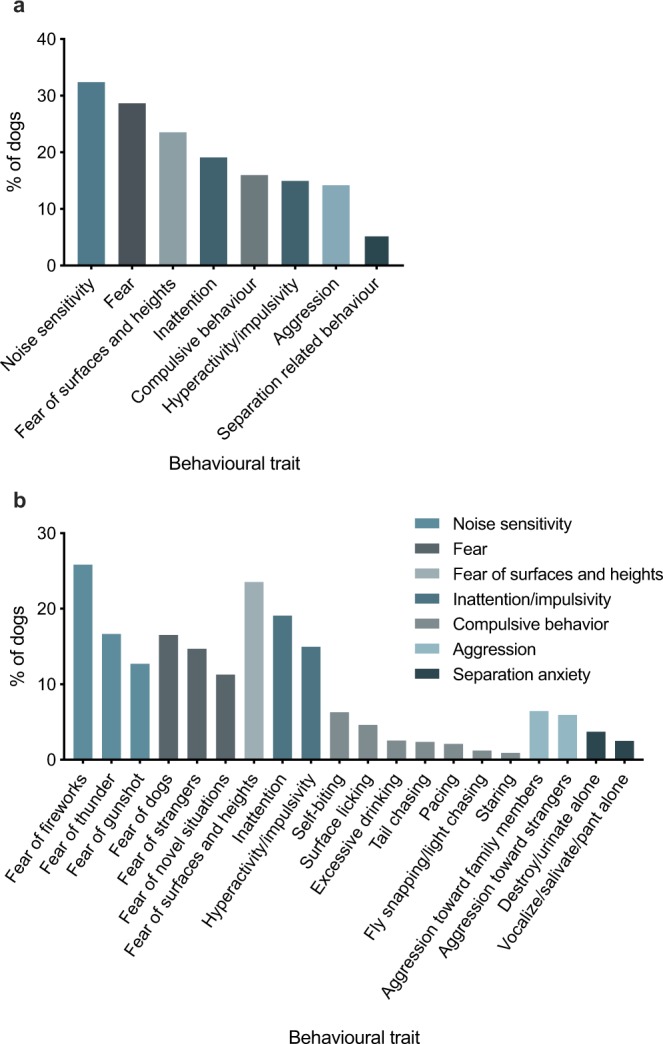
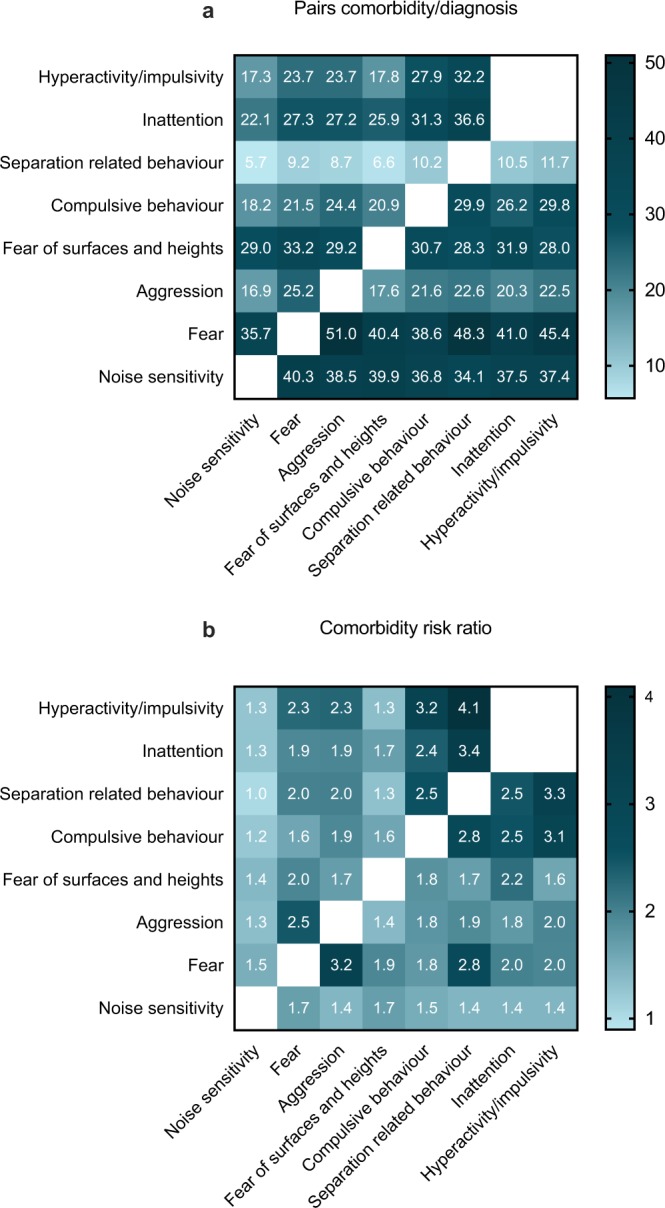
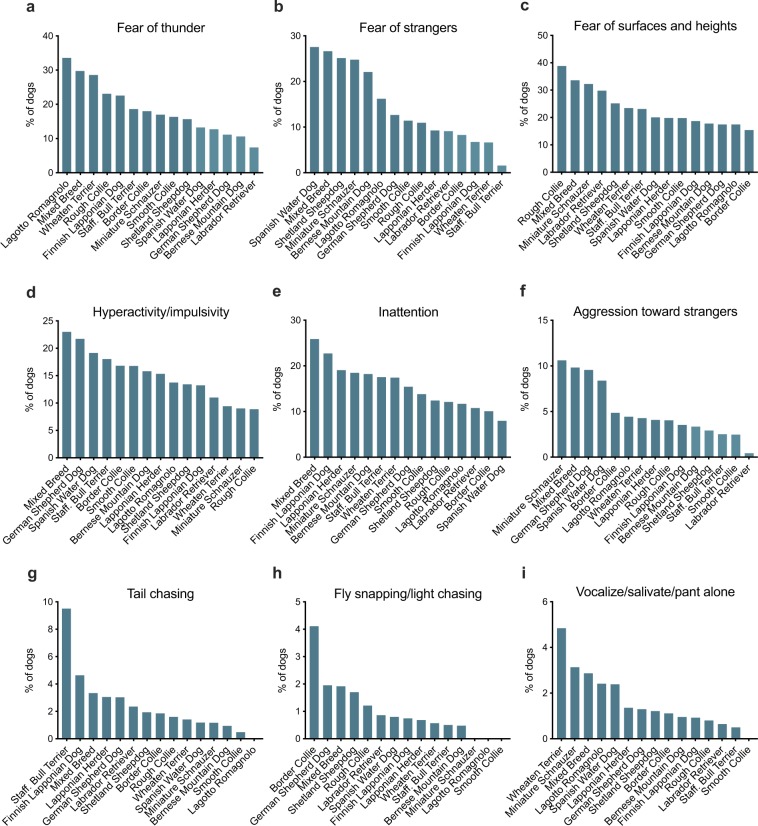
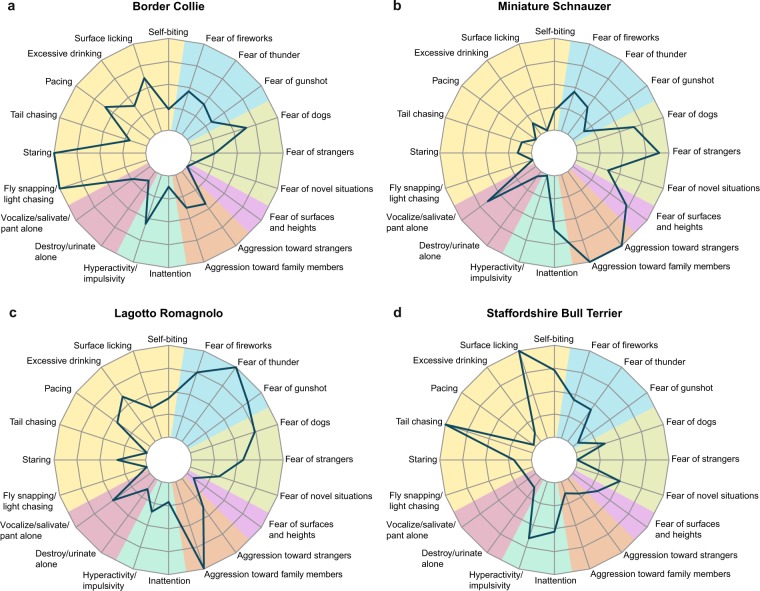
Behaviour problems and anxieties in dogs decrease their quality of life and may lead to relinquishment or euthanasia. Considering the large number of pet dogs and the commonness of these problematic behaviours, a better understanding of the epidemiology and related molecular and environmental factors is needed. We have here studied the prevalence, comorbidity, and breed specificity of seven canine anxiety-like traits: noise sensitivity, fearfulness, fear of surfaces and heights, inattention/impulsivity, compulsion, separation related behaviour and aggression with an online behaviour questionnaire answered by dog owners. Our results show that noise sensitivity is the most common anxiety-related trait with a prevalence of 32% in 13,700 Finnish pet dogs. Due to the high prevalence of noise sensitivity and fear, they were the most common comorbidities. However, when comparing the relative risk, the largest risk ratios were seen between hyperactivity/inattention, separation related behaviour and compulsion, and between fear and aggression. Furthermore, dog breeds showed large differences in prevalence of all anxiety-related traits, suggesting a strong genetic contribution. As a result, selective breeding focusing on behaviour may reduce the prevalence of canine anxieties. Anxious animals may suffer from chronic stress and thus, modified breeding policies could improve the welfare of our companion dogs.
Overview
The claims and statistics of this paper haven’t been checked yet.
Run the check — free, no account needed. It reads the open-access text and checks the sources it cites.
Integrity signals
Registry
Cites
Statistics
Figures
Verification
Claims the paper makes
The claims and statistics of this paper haven’t been checked yet.
Run the check — free, no account needed. It reads the open-access text and checks the sources it cites.
Claims other papers make about this one
Each is checked against this paper’s own text: does it say what the citing paper says it does?
The source backs part of the claim, not all of it — or backs it for a different population, condition or comparison.
In the citing paper
“Smaller dogs have been shown to be more prone to aggression, as well as other undesirable behaviours such as fear [142,155,156,157,158,159,160,161].”
From Ethical Concerns about Fashionable Dog Breeding (2024) · cites this paper as [142]
Experimental — accuracy not yet measuredThe source backs part of the claim, not all of it — or backs it for a different population, condition or comparison.
In the citing paper
“As the breeding of dogs can have an impact on their mental health, certain breeds may be more susceptible to issues such as fear of other dogs, separation anxiety [142], and sensitivity to touch.”
From Ethical Concerns about Fashionable Dog Breeding (2024) · cites this paper as [142]
Experimental — accuracy not yet measuredThe cited source says what the claim attributes to it.
In the citing paper
“The observed behavioural differences suggest that dog breeds have diverged not only morphologically and genetically but also behaviourally [142].”
From Ethical Concerns about Fashionable Dog Breeding (2024) · cites this paper as [142]
Self-check
Percentages, sums and reported differences re-computed from the paper’s own numbers.
The self-check needs the paper’s full text.
Citations
Cites
Impulsivity, compulsivity, and top-down cognitive control
Dalley, J. W., Everitt, B. J., & Robbins, T. W. (2011) · Neuron · doi:10.1016/j.neuron.2011.01.020 · Cited by 1,589
Hsu, Y., & Serpell, J. A. (2003) · Journal of the American Veterinary Medical Association · doi:10.2460/javma.2003.223.1293 · Cited by 709
Risk factors for relinquishment of dogs to an animal shelter
Patronek, G. J., Glickman, L. T., Beck, A. M., McCabe, G. P., & Ecker, C. (1996) · Journal of the American Veterinary Medical Association · doi:10.2460/javma.1996.209.03.572 · Cited by 514
Longevity and mortality of owned dogs in England
O'Neill, D. G., Church, D. B., McGreevy, P. D., Thomson, P. C., & Brodbelt, D. C. (2013) · The Veterinary Journal · doi:10.1016/j.tvjl.2013.09.020 · Cited by 352
Bennett, P. C., & Rohlf, V. (2006) · Applied Animal Behaviour Science · doi:10.1016/j.applanim.2006.03.009 · Cited by 351
Breed differences in canine aggression
Duffy, D. L., Hsu, Y., & Serpell, J. A. (2008) · Applied Animal Behaviour Science · doi:10.1016/j.applanim.2008.04.006 · Cited by 334
New, J. C., Salman, M. D., King, M., Scarlett, J. M., Kass, P. H., & Hutchison, J. M. (2000) · Journal of Applied Animal Welfare Science · doi:10.1207/s15327604jaws0303_1 · Cited by 324
Canine Anxieties and Phobias: An Update on Separation Anxiety and Noise Aversions
Sherman, B. L., & Mills, D. S. (2008) · Veterinary Clinics of North America Small Animal Practice · doi:10.1016/j.cvsm.2008.04.012 · Cited by 279
Gosling, S. D., Kwan, V. S. Y., & John, O. P. (2003) · Journal of Personality and Social Psychology · doi:10.1037/0022-3514.85.6.1161 · Cited by 273
Dog and owner demographic characteristics and dog personality trait associations
Kubinyi, E., Turcsán, B., & Miklósi, Á. (2009) · Behavioural Processes · doi:10.1016/j.beproc.2009.04.004 · Cited by 262
Breed-typical behaviour in dogs—Historical remnants or recent constructs?
Svartberg, K. (2006) · Applied Animal Behaviour Science · doi:10.1016/j.applanim.2005.06.014 · Cited by 255
Signalment factors, comorbidity, and trends in behavior diagnoses in dogs: 1,644 cases (1991–2001)
Bamberger, M., & Houpt, K. A. (2006) · Journal of the American Veterinary Medical Association · doi:10.2460/javma.229.10.1591 · Cited by 245
Evidence for an association between pet behavior and owner attachment levels
Serpell, J. A. (1996) · Applied Animal Behaviour Science · doi:10.1016/0168-1591(95)01010-6 · Cited by 238
Owner reports of attention, activity, and impulsivity in dogs: a replication study
Lit, L., Schweitzer, J. B., Iosif, A., & Oberbauer, A. M. (2010) · Behavioral and Brain Functions · doi:10.1186/1744-9081-6-1 · Cited by 235
Blackwell, E. J., Bradshaw, J. W. S., & Casey, R. A. (2013) · Applied Animal Behaviour Science · doi:10.1016/j.applanim.2012.12.004 · Cited by 223
Predictive validity of a method for evaluating temperament in young guide and service dogs
Duffy, D. L., & Serpell, J. A. (2012) · Applied Animal Behaviour Science · doi:10.1016/j.applanim.2012.02.011 · Cited by 220
A method for rating the individual distinctiveness of domestic cats
Feaver, J., Mendl, M., & Bateson, P. (1986) · Animal Behaviour · doi:10.1016/s0003-3472(86)80160-9 · Cited by 210
Overall, K. L., & Dunham, A. E. (2002) · Journal of the American Veterinary Medical Association · doi:10.2460/javma.2002.221.1445 · Cited by 206
Overall, K. L., Dunham, A. E., & Frank, D. (2001) · Journal of the American Veterinary Medical Association · doi:10.2460/javma.2001.219.467 · Cited by 204
Natural animal models of human psychiatric conditions: assessment of mechanism and validity
Overall, K. L. (2000) · Progress in Neuro-Psychopharmacology and Biological Psychiatry · doi:10.1016/s0278-5846(00)00104-4 · Cited by 200
Factors associated with aggressive responses in pet dogs
Hsu, Y., & Sun, L. (2010) · Applied Animal Behaviour Science · doi:10.1016/j.applanim.2010.01.013 · Cited by 200
Gilchrist, J., Sacks, J. J., White, D. J., & Kresnow, M. (2008) · Injury Prevention · doi:10.1136/ip.2007.016220 · Cited by 197
The effects of fear and anxiety on health and lifespan in pet dogs
Dreschel, N. A. (2010) · Applied Animal Behaviour Science · doi:10.1016/j.applanim.2010.04.003 · Cited by 180
Early Life Experiences and Exercise Associate with Canine Anxieties
Tiira, K., & Lohi, H. (2015) · PLoS ONE · doi:10.1371/journal.pone.0141907 · Cited by 168
Self-citationGenetic mapping of canine fear and aggression
Zapata, I., Serpell, J. A., & Alvarez, C. E. (2016) · BMC Genomics · doi:10.1186/s12864-016-2936-3 · Cited by 168
Wilsson, E., & Sundgren, P.-E. (1998) · Applied Animal Behaviour Science · doi:10.1016/s0168-1591(97)00093-2 · Cited by 161
Turcsán, B., Enikö Kubinyi, B., & Miklósi, Á. (2011) · Applied Animal Behaviour Science · doi:10.1016/j.applanim.2011.03.006 · Cited by 157
Prevalence, comorbidity, and behavioral variation in canine anxiety
Tiira, K., Sulkama, S., & Lohi, H. (2016) · Journal of Veterinary Behavior · doi:10.1016/j.jveb.2016.06.008 · Cited by 156
Self-citationA refinement and validation of the Monash Canine Personality Questionnaire (MCPQ)
Ley, J. M., Bennett, P. C., & Coleman, G. J. (2009) · Applied Animal Behaviour Science · doi:10.1016/j.applanim.2008.09.009 · Cited by 153
Highly heritable and functionally relevant breed differences in dog behaviour
MacLean, E. L., Snyder-Mackler, N., vonHoldt, B. M., & Serpell, J. A. (2019) · Proceedings of the Royal Society B: Biological Sciences · doi:10.1098/rspb.2019.0716 · Cited by 144
A canine chromosome 7 locus confers compulsive disorder susceptibility
Dodman, N. H., Karlsson, E. K., Moon-Fanelli, A. A., Galdzicka, M. M., Perloski, M., Shuster, L., Lindblad‐Toh, K., & Ginns, E. I. (2009) · Molecular Psychiatry · doi:10.1038/mp.2009.111 · Cited by 140
Kis, A., Bence, M., Lakatos, G., Pergel, E., Turcsán, B., Pluijmakers, J., Vas, J., Elek, Z., Brúder, I., Földi, L., et al. (2014) · PLoS ONE · doi:10.1371/journal.pone.0083993 · Cited by 138
Demographics and comorbidity of behavior problems in dogs
Dinwoodie, I. R., Dwyer, B., Zottola, V., Gleason, D., & Dodman, N. H. (2019) · Journal of Veterinary Behavior · doi:10.1016/j.jveb.2019.04.007 · Cited by 130
Wright, H. F., Mills, D. S., & Pollux, P. M. J. (2011) · International Journal of Comparative Psychology · doi:10.46867/ijcp.2011.24.02.03 · Cited by 129
Momozawa, Y., Tomoko, O., Satō, F., Kikusui, T., Takeuchi, Y., Mori, Y., & KUSUNOSE, R. (2003) · Applied Animal Behaviour Science · doi:10.1016/j.applanim.2003.08.001 · Cited by 126
Risk factors associated with behavioral problems in dogs
González‐Martínez, Á., Santamarina, G., Casalta, F. J. D., Rey, M. L. S., & Palomino, L. F. D. L. C. (2011) · Journal of Veterinary Behavior · doi:10.1016/j.jveb.2011.01.006 · Cited by 126
The epidemiology of behavioural problems in dogs and cats: a survey of veterinary practitioners
Fatjó, J., Ruiz-de-la-Torre, J. L., & Manteca, X. (2006) · Animal Welfare · doi:10.1017/s0962728600030268 · Cited by 125
Vas, J., Topál, J., Péch, É., & Miklósi, Á. (2006) · Applied Animal Behaviour Science · doi:10.1016/j.applanim.2006.03.017 · Cited by 123
Genetics of traits which determine the suitability of dogs as guide-dogs for the blind
Goddard, M. E., & Beilharz, R. G. (1983) · Applied Animal Ethology · doi:10.1016/0304-3762(83)90010-x · Cited by 120
A behaviour test on German Shepherd dogs: heritability of seven different traits
Rüfenacht, S., Gebhardt‐Henrich, S. G., Miyake, T., & Gaillard, C. (2002) · Applied Animal Behaviour Science · doi:10.1016/s0168-1591(02)00134-x · Cited by 116
Genetic Characterization of Dog Personality Traits
Ilska, J. J., Haskell, M. J., Blott, S. C., Sánchez-Molano, E., Polgár, Z., Lofgren, S. E., Clements, D. N., & Wiener, P. (2017) · Genetics · doi:10.1534/genetics.116.192674 · Cited by 107
McGreevy, P. D., & Masters, A. M. (2007) · Applied Animal Behaviour Science · doi:10.1016/j.applanim.2007.04.001 · Cited by 104
Goldstein‐Piekarski, A. N., Williams, L. M., & Humphreys, K. N. (2016) · Translational Psychiatry · doi:10.1038/tp.2016.108 · Cited by 104
Differences in background and outcome of three behavior problems of dogs
Takeuchi, Y., Ogata, N., Houpt, K. A., & Scarlett, J. M. (2001) · Applied Animal Behaviour Science · doi:10.1016/s0168-1591(00)00156-8 · Cited by 94
Storengen, L. M., & Lingaas, F. (2015) · Applied Animal Behaviour Science · doi:10.1016/j.applanim.2015.08.020 · Cited by 88
van der Waaij, E. H., Wilsson, E., & Strandberg, E. (2008) · Journal of Animal Science · doi:10.2527/jas.2007-0616 · Cited by 86
Environmental Effects on Compulsive Tail Chasing in Dogs
Tiira, K., Hakosalo, O., Kareinen, L., Thomas, A., Hielm-Björkman, A. K., Escriou, C., Arnold, P. D., & Lohi, H. (2012) · PLoS ONE · doi:10.1371/journal.pone.0041684 · Cited by 83
Self-citationWilsson, E., & Sinn, D. L. (2012) · Applied Animal Behaviour Science · doi:10.1016/j.applanim.2012.08.012 · Cited by 82
Reliability and validity of a questionnaire survey in canine anxiety research
Tiira, K., & Lohi, H. (2014) · Applied Animal Behaviour Science · doi:10.1016/j.applanim.2014.03.007 · Cited by 80
Self-citationMcConnell, P. B., & Baylis, J. R. (1985) · Zeitschrift für Tierpsychologie · doi:10.1111/j.1439-0310.1985.tb01396.x · Cited by 77
Col, R., Day, C., & Phillips, C. J. C. (2016) · Journal of Veterinary Behavior · doi:10.1016/j.jveb.2016.07.001 · Cited by 69
Serpell, J. A., & Duffy, D. L. (2016) · Frontiers in Veterinary Science · doi:10.3389/fvets.2016.00049 · Cited by 68
Investigating risk factors that predict a dog’s fear during veterinary consultations
Edwards, P. T., Hazel, S. J., Browne, M., Serpell, J. A., McArthur, M. L., & Smith, B. P. (2019) · PLoS ONE · doi:10.1371/journal.pone.0215416 · Cited by 66
Risk factors associated with stranger-directed aggression in domestic dogs
Flint, H. E., Coe, J. B., Serpell, J. A., Pearl, D. L., & Niel, L. (2017) · Applied Animal Behaviour Science · doi:10.1016/j.applanim.2017.08.007 · Cited by 64
“Boldness” in the domestic dog differs among breeds and breed groups
Starling, M. J., Branson, N., Thomson, P. C., & McGreevy, P. D. (2013) · Behavioural Processes · doi:10.1016/j.beproc.2013.04.008 · Cited by 62
Two novel genomic regions associated with fearfulness in dogs overlap human neuropsychiatric loci
Sarviaho, R., Hakosalo, O., Tiira, K., Sulkama, S., Salmela, E., Hytönen, M. K., Sillanpää, M. J., & Lohi, H. (2019) · Translational Psychiatry · doi:10.1038/s41398-018-0361-x · Cited by 54
Self-citationSONNTAG, Q., & OVERALL, K. L. (2014) · Revue Scientifique et Technique de l'OIE · doi:10.20506/rst.33.1.2270 · Cited by 49
Mirkó, E., Dóka, A., & Miklósi, Á. (2013) · Applied Animal Behaviour Science · doi:10.1016/j.applanim.2013.10.003 · Cited by 48
Investigating behavior assessment instruments to predict aggression in dogs
Bennett, S., Litster, A., Weng, H., Walker, S. L., & Luescher, A. U. (2012) · Applied Animal Behaviour Science · doi:10.1016/j.applanim.2012.08.005 · Cited by 44
Arvelius, P., Eken, H., Fikse, W. F., Strandberg, E., & Nilsson, K. (2014) · Journal of Animal Science · doi:10.2527/jas.2014-8169 · Cited by 44
Khoshnegah, J., Azizzadeh, M., & Mahmoodi Gharaie, A. (2011) · Applied Animal Behaviour Science · doi:10.1016/j.applanim.2011.02.003 · Cited by 42
Overall, K. L., Tiira, K., Broach, D., & Bryant, D. (2014) · Veterinary Clinics of North America Small Animal Practice · doi:10.1016/j.cvsm.2014.01.006 · Cited by 35
Self-citationHeritability of behavioural traits in domestic dogs: A meta-analysis
Hradecká, L., Bartoš, L., Svobodová, I., & Sales, J. (2015) · Applied Animal Behaviour Science · doi:10.1016/j.applanim.2015.06.006 · Cited by 26
Measuring fear in dogs by questionnaires: An exploratory study toward a standardized inventory
Temesi, A., Turcsán, B., & Miklósi, Á. (2014) · Applied Animal Behaviour Science · doi:10.1016/j.applanim.2014.09.009 · Cited by 23
Carrier, L. O., Ricketts, C. J., Perry, E. A., Anderson, R. E., & Walsh, C. J. (2016) · Journal of Veterinary Behavior · doi:10.1016/j.jveb.2016.12.011 · Cited by 10
Cited by
Sorted by citations
Puurunen, J., Hakanen, E., Salonen, M. K., Mikkola, S., Sulkama, S., Araujo, C., & Lohi, H. (2020) · Scientific Reports · doi:10.1038/s41598-020-60546-w · Cited by 96
Self-citationDomestic dog lineages reveal genetic drivers of behavioral diversification
Dutrow, E. V., Serpell, J. A., & Ostrander, E. A. (2022) · Cell · doi:10.1016/j.cell.2022.11.003 · Cited by 100
Mikkola, S., Salonen, M. K., Puurunen, J., Hakanen, E., Sulkama, S., Araujo, C., & Lohi, H. (2021) · Scientific Reports · doi:10.1038/s41598-021-88793-5 · Cited by 76
Self-citationPowell, L., Reinhard, C., Satriale, D., Morris, M., Serpell, J., & Watson, B. (2021) · Scientific Reports · doi:10.1038/s41598-021-87649-2 · Cited by 47
Recognizing and Mitigating Canine Stress during Animal Assisted Interventions
Townsend, L. D., & Gee, N. R. (2021) · Veterinary Sciences · doi:10.3390/vetsci8110254 · Cited by 44
Metadata
- Authors
- Salonen, M., Sulkama, S., Mikkola, S., Puurunen, J., Hakanen, E., Tiira, K., Araujo, C., & Lohi, H.
- Affiliations
- University of Helsinki (FI)
- Corresponding author
- Lohi, Hannes
- ORCID
- Venue
- Scientific Reports
- Published
- 2020-03-05
- Volume
- 10
- Issue
- 1
- Pages
- 2962-2962
- ISSN
- 2045-2322 (ISSN-L)
- PMC
- PMC7058607
- OpenAlex
- W3009145783
- Cited by
- 182
- References
- 65
- Citations by year
- 2026: 33 · 2025: 34 · 2024: 27 · 2023: 26 · 2022: 25 · 2021: 27 · 2020: 10
- FWCI
- 12.90
- Type
- journal article
- Language
- en
- Open access
- gold
- doi.org
- Locations
- Scientific Reports (publishedVersion, cc-by)
- PubMed Central (publishedVersion, cc-by)
- PubMed (publishedVersion)
- Työväentutkimus Vuosikirja (submittedVersion)
- Funders
- Academy of Finland (308887)
- Jane ja Aatos Erkon Säätiö
- Topics
- Life Sciences › Agricultural and Biological Sciences › Animal Science and Zoology › Human-Animal Interaction Studies
- Life Sciences › Agricultural and Biological Sciences › Animal Science and Zoology › Animal Behavior and Welfare Studies
- Health Sciences › Veterinary › Small Animals › Veterinary Orthopedics and Neurology
- Keywords
- canine anxiety, noise sensitivity, fearfulness, compulsive behavior, canine aggression, breed differences, comorbidities, prevalence, selective breeding, dog welfare
- MeSH terms
- Aggression, Animals, Anxiety Disorders, Behavior, Animal, Human-Animal Bond, Compulsive Behavior, Dog Diseases, Dogs, Fear, Female, Finland, Humans, Impulsive Behavior, Male, Quality of Life, Surveys and Questionnaires, Species Specificity, Comorbidity, Prevalence, Pets
About these checks
Registry, retraction, Cites and statistics results are computed, not judged, with one exception: a printed reference that no index lists is read once by a model before it counts as a citation error. Claims are extracted by a model and kept only when their quote appears verbatim in the text; each cited source is then checked, with a model’s help, for whether it says what the claim relies on. Those verdicts can be wrong — read the claim’s quote and the cited source before relying on one.
Statistics and arithmetic are recomputed, not judged.
Confidence bands are shown only for fields calibrated on our annotated test set. None is calibrated yet, so no band is shown.
What counts as a claim ›How we measure confidence ›How we check this ›
Are you an author, or do you see a problem with this page? Request a review
