

Secondary Metabolites Profiled in Cannabis Inflorescences, Leaves, Stem Barks, and Roots for Medicinal Purposes
Open accessThe DOI matches its Crossref record; 100 of the 102 references it cites were found in a registry or an index.
Abstract
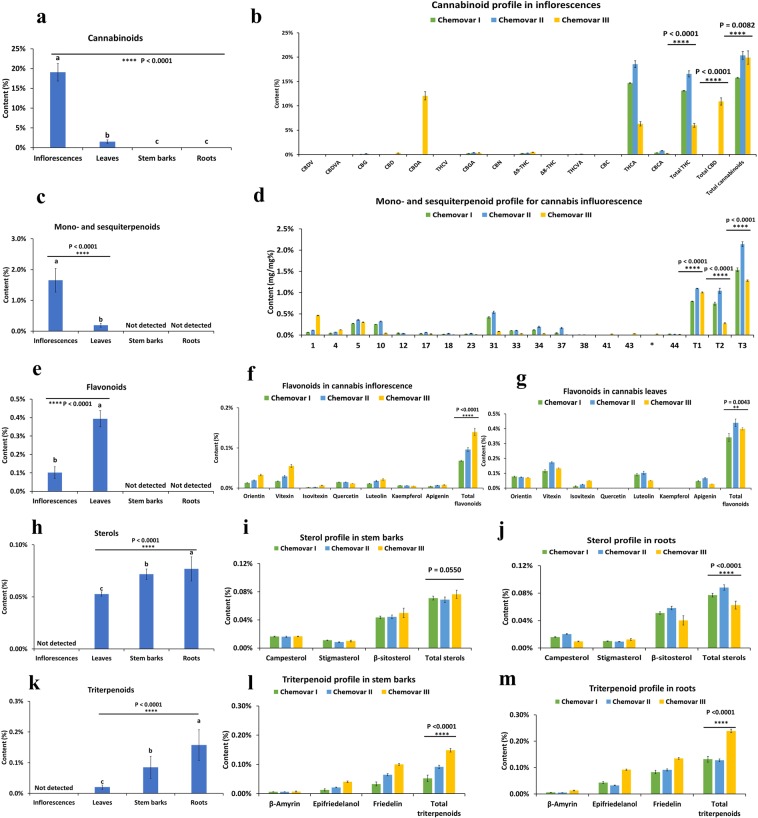
Cannabis research has historically focused on the most prevalent cannabinoids. However, extracts with a broad spectrum of secondary metabolites may have increased efficacy and decreased adverse effects compared to cannabinoids in isolation. Cannabis’s complexity contributes to the length and breadth of its historical usage, including the individual application of the leaves, stem barks, and roots, for which modern research has not fully developed its therapeutic potential. This study is the first attempt to profile secondary metabolites groups in individual plant parts comprehensively. We profiled 14 cannabinoids, 47 terpenoids (29 monoterpenoids, 15 sesquiterpenoids, and 3 triterpenoids), 3 sterols, and 7 flavonoids in cannabis flowers, leaves, stem barks, and roots in three chemovars available. Cannabis inflorescence was characterized by cannabinoids (15.77–20.37%), terpenoids (1.28–2.14%), and flavonoids (0.07–0.14%); the leaf by cannabinoids (1.10–2.10%), terpenoids (0.13–0.28%), and flavonoids (0.34–0.44%); stem barks by sterols (0.07–0.08%) and triterpenoids (0.05–0.15%); roots by sterols (0.06–0.09%) and triterpenoids (0.13–0.24%). This comprehensive profile of bioactive compounds can form a baseline of reference values useful for research and clinical studies to understand the “entourage effect” of cannabis as a whole, and also to rediscover therapeutic potential for each part of cannabis from their traditional use by applying modern scientific methodologies.
Overview
The claims and statistics of this paper haven’t been checked yet.
Free: it reads the open-access text and checks the first 5 claims that cite a source we can check. Create a free account to check every claim.
Integrity signals
Registry
Cites
Statistics
Figures
Verification
Claims the paper makes
The claims and statistics of this paper haven’t been checked yet.
Free: it reads the open-access text and checks the first 5 claims that cite a source we can check. Create a free account to check every claim.
Claims other papers make about this one
Each is checked against this paper’s own text: does it say what the citing paper says it does?
The source backs part of the claim, not all of it — or backs it for a different population, condition or comparison.
In the citing paper
“The most notorious specialized metabolites from Cannabis are cannabinoids—meroterpenoids (i.e., partial terpenoid derivative, also known as terpenophenolics) [1,2,3,4]—which are predominantly found in female flowers, although trace amounts may be present in other tissues like leaves and stems, with seeds and roots generally lacking psychoactive cannabinoids [5,6].”
From Exploring the Lesser-Known Bioactive Natural Products of Plant Species of the Genus Cannabis L.: Alkaloids, Phenolic Compounds, and Their Therapeutic Potential (2025) · cites this paper as [6]
Experimental — accuracy not yet measuredThe cited source says what the claim attributes to it.
In the citing paper
“These molecules, which vary significantly in their structure, biosynthetic pathways, and bioactivities, may offer therapeutic potential as anti-inflammatory, antioxidant, neuroprotective, and antimicrobial agents [5,6].”
Self-check
Percentages, sums and reported differences re-computed from the paper’s own numbers.
The self-check needs the paper’s full text.
Citations
Cites
The Endocannabinoid System as an Emerging Target of Pharmacotherapy
Pacher, P., Bátkai, S., & Kunos, G. (2006) · Pharmacological Reviews · doi:10.1124/pr.58.3.2 · Cited by 2,077
Cannabis sativa: The Plant of the Thousand and One Molecules
Andre, C. M., Hausman, J.-F., & Guerriero, G. (2016) · Frontiers in Plant Science · doi:10.3389/fpls.2016.00019 · Cited by 1,544
Taming THC: potential cannabis synergy and phytocannabinoid-terpenoid entourage effects.
Russo, E. B. (2011) · British Journal of Pharmacology · doi:10.1111/j.1476-5381.2011.01238.x · Cited by 1,535
Chemical constituents of marijuana: The complex mixture of natural cannabinoids
ElSohly, M. A., & Slade, D. (2005) · Life Sciences · doi:10.1016/j.lfs.2005.09.011 · Cited by 1,094
De Petrocellis, L., Ligresti, A., Moriello, A. S., Allarà, M., Bisogno, T., Petrosino, S., Stott, C. G., & Di Marzo, V. (2011) · British Journal of Pharmacology · doi:10.1111/j.1476-5381.2010.01166.x · Cited by 946
Agonistic properties of cannabidiol at 5-HT1a receptors
Russo, E. B., Burnett, A., Hall, B., & Parker, K. K. (2005) · Neurochemical Research · doi:10.1007/s11064-005-6978-1 · Cited by 878
Cannabidiol and (−)Δ 9 -tetrahydrocannabinol are neuroprotective antioxidants
Hampson, A. J., Grimaldi, M., Axelrod, J., & Wink, D. (1998) · Proceedings of the National Academy of Sciences · doi:10.1073/pnas.95.14.8268 · Cited by 850
History of cannabis as a medicine: a review
Zuardi, A. W. (2006) · Revista Brasileira de Psiquiatria · doi:10.1590/s1516-44462006000200015 · Cited by 730
Constituents of Cannabis sativa L. XVII. A review of the natural constituents
Turner, C. E., Elsohly, M. A., & Boeren, E. G. (1980) · Journal of Natural Products · doi:10.1021/np50008a001 · Cited by 599
Cannabinoids in medicine: A review of their therapeutic potential
Ben Amar, M. (2006) · Journal of Ethnopharmacology · doi:10.1016/j.jep.2006.02.001 · Cited by 543
Research works printed but not linked: 5
- 2. Ross, S. A. et al. Flavonoid glycosides and cannabinoids from the pollen of Cannabis sativa L. Phytochemical Analysis: An International. Journal of Plant Chemical and Biochemical Techniques 16, 45-48 (2005).
- 16. Deyo, R. & Musty, R. A cannabichromene (CBC) extract alters behavioral despair on the mouse tail suspension test of depression. In Proceedings 2003 Symposium on the Cannabinoids. International Cannabinoid Research Society: Cornwall, ON 146 (2003).
- 37. Turner, C. E., Elsohly, H. N., Lewis, G. S., Lopez-Santibanez, I. & Carranza, J. Constituents of Cannabis sativa L., XX: the cannabinoid content of Mexican variants grown in Mexico and in Mississippi, United States of America. Bulletin On Narcotics 34, 45-59 (1982).
- 57. Hillig, K. W. A systematic investigation of Cannabis, PhD thesis, Indiana University. (2005).
- 81. Vázquez, L. H., Palazon, J. & Navarro-Ocaña, A. The Pentacyclic Triterpenes α, β-amyrins: A Review of Sources and Biological Activities. In: Venketeshwer Rao (Eds.), Phytochemicals -A Global Perspective of Their Role in Nutrition and Health, (2012).
Cited by
Items 201–300 of 348
Botanical, pharmacological and toxicological properties of Trema orientalis: A Review
Niranjan, D., Shridhar, N. B., Vinuta, M. H., Manjunatha, S., Sunilchandra, U., Pradeep, B. S., Manju, G., & Revanna, P. S. (2023) · The Journal of Phytopharmacology · doi:10.31254/phyto.2023.12605 · Cited by 4
Hemp Cover Cropping and Disease Suppression in Winter Wheat of the Dryland Pacific Northwest
Hagerty, C. H., Shrestha, G., Wen, N., Kroese, D. R., Namdar, G. F., Paulitz, T. C., & Wysocki, D. J. (2024) · Agronomy · doi:10.3390/agronomy14122978 · Cited by 3
“This is primarily because hemp plants are rich in secondary metabolites [11,12].”
Park, S. H., Han, J. M., Kim, Y. H., Lee, H. J., Ryu, Y. B., Ryu, H. W., Jeong, J. C., Oh, S. M., & Kim, W. S. (2025) · Scientific Reports · doi:10.1038/s41598-025-16130-1 · Cited by 6
Elhendawy, M. A., Radwan, M. M., Ibrahim, E.-S., Wanas, A. S., Marzouk, A. A. E., Chandra, S., Godfrey, M., & ElSohly, M. A. (2025) · Methods and Protocols · doi:10.3390/mps8050100 · Cited by 3
“Cannabis has an extensive metabolic diversity from which more than 550 compounds have been identified [5].”
Serondo, H. U., Amri, H. E., Kazzouli, S. E., & Brahmi, N. E. (2025) · European Food Research and Technology · doi:10.1007/s00217-025-04915-7 · Cited by 4
Beleggia, R., Giovanniello, V., Menga, V., Suriano, S., & Trono, D. (2026) · Agronomy · doi:10.3390/agronomy16020157 · Cited by 3
Therapeutic use of cannabinoids in age-related pain: Current evidence and clinical perspectives
Pulone, S., Moulton, C., Nucera, S., Ilari, S., Muscoli, C., & Tasciotti, E. (2026) · Pharmacological Research · doi:10.1016/j.phrs.2026.108130 · Cited by 4
Liu, J., Zhang, C., Jiang, M., Ni, Y., Xu, Y., Wu, W., Huang, L., Newmaster, S. G., Kole, C., Wu, B., et al. (2023) · Planta · doi:10.1007/s00425-023-04104-4 · Cited by 4
Slosse, A., Durme, F. V., Samyn, N., Mangelings, D., & Heyden, Y. V. (2023) · Drug Testing and Analysis · doi:10.1002/dta.3574 · Cited by 3
Chu, S., Shi, Z., Xiao, J., & Wu, Y. (2024) · Scientific Reports · doi:10.1038/s41598-024-80300-w · Cited by 3
Woźniczka, K., Viapiana, A., Roszkowska, A., Plenis, A., Bączek, T., & Konieczyński, P. (2025) · Foods · doi:10.3390/foods14071208 · Cited by 3
“The pharmaceutical materials are Cannabis inflorescences (Cannabis flos), but the richness of various bioactive or nutritive compounds allows for using all morphological Cannabis plant parts in various applications [4].”
Jiang, H., Dong, Y., Pan, S., Zhou, H., & Cui, H. (2025) · ACS Omega · doi:10.1021/acsomega.4c10986 · Cited by 5
Laadraoui, J., Kabdy, H., Oufquir, S., Aitlarradia, M., Agouram, F., Aitbaba, A., Oubella, K., & El‐Mansoury, B. (2025) · IGI Global eBooks · doi:10.4018/979-8-3693-9112-9.ch005 · Cited by 4
Relations between biomass of (Smilax scobinicaulis) Fresh Roots and Daily Solar Radiation
Liao, B.-H. (2021) · International Journal of Science and Research Archive · doi:10.30574/ijsra.2021.4.1.0161 · Cited by 3
Chemical profiling of Cannabis sativa from eleven Tanzanian regions
Mhando, H. B., Sahini, M. G., & Makangara, J. J. (2023) · Heliyon · doi:10.1016/j.heliyon.2023.e15892 · Cited by 5
Nakkliang, K., Zongram, O., Areesantichai, C., & Rungsihirunrat, K. (2023) · Research Journal of Pharmacy and Technology · doi:10.52711/0974-360x.2023.00361 · Cited by 3
Arrieche, D. A., Olea, A. F., Jara‐Gutiérrez, C., Villena, J., Pardo-Baeza, J., García-Davis, S., Viteri, R., Taborga, L., & Carrasco, H. (2024) · Plants · doi:10.3390/plants13101409 · Cited by 5
Ahidar, N., Labhar, A., Benamari, O., Ahari, M., Salhi, A., Elyoussfi, A., & Amhamdi, H. (2024) · E3S Web of Conferences · doi:10.1051/e3sconf/202452701025 · Cited by 3
“In general, the CS plant has rather high levels of polyphenols, flavonoids , terpenoids , sterols and cannabinoids [6].”
BackgroundResultInfluentialBrikenstein, N., Birenboim, M., Kenigsbuch, D., & Shimshoni, J. A. (2024) · Medical Cannabis and Cannabinoids · doi:10.1159/000539192 · Cited by 3
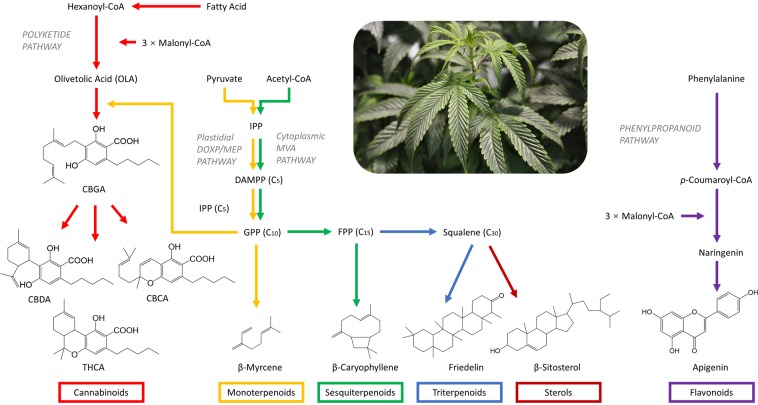
“The primary precursors for cannabinoids are hexanoyl-CoA, a product of the fatty acid synthesis pathway, and geranyl-pyrophosphate, produced through the methylerythritol phosphate pathway, a part of the more general terpenoid biosynthesis pathway [9, 10].”
BackgroundGreen Techniques for Extracting Triterpenoids from Cannabis Roots
Udomlarp, P., Boonnoun, P., Shotipruk, A., Goto, M., & Vimolmangkang, S. (2024) · ACS Sustainable Chemistry & Engineering · doi:10.1021/acssuschemeng.4c02920 · Cited by 3
Trema micranthum (L.) Blume as a new source of cannabinoids
Ribeiro, R., da Silva, Y. C., Finotti, R., Carneiro, G. R. A., dos Santos, G. R. C., Pereira, H. M. G., Padilha, M. C., & da Veiga, V. F. (2024) · Scientific Reports · doi:10.1038/s41598-024-80857-6 · Cited by 4
Process Development for GMP-Grade Full Extract Cannabis Oil: Towards Standardized Medicinal Use
Costa, M. D. C., Gomes, A. P., Vinhas, I., Rosa, J., Pereira, F., Moniz, S., Gonçalves, E. M., Pestana, M., Silva, M., Rodrigues, L. M., et al. (2025) · Pharmaceutics · doi:10.3390/pharmaceutics17070848 · Cited by 5
“The observed total cannabinoid content in the SOMA Í ’s C. sativa flower of 21.9 ± 2.2% aligns with, and in some cases exceeds, the range of 15.77–20.37% reported in the literature [34] for modern drug-type chemovars, further confirming the potency of the samples analyzed.”
InfluentialAhsan, S. M., Injamum-Ul-Hoque, M., Rahman, M. M., Kang, S., Lee, I., & Choi, H. W. (2025) · Plants · doi:10.3390/plants14152347 · Cited by 2
“In addition to THC and CBD, scientists are exploring the pharmacological possibilities of minor cannabinoids, such as “cannabigerol (CBG) and cannabichromene (CBC)” [4,5].”
Brownstein, K. J., Nieukirk, G. E., Edwards, J., Thomas, M., Nguyen, T. H., de Alarcón, P. A., Vermillion, K. E., & Gnanamony, M. (2025) · Journal of Cannabis Research · doi:10.1186/s42238-025-00316-5 · Cited by 2
“For the small number of researchers characterizing the chemical composition of hemp roots, a wide range of compound classes have been shown to be present, such as cannabinoids, flavonoids, and triterpenes (Huang et al. 2023; Jin et al. 2020; Stout et al. 2012).”
Naz, S., Kayani, H. A., Jamil, I., Nadeem, F., Qadir, R. A., & Qadir, S. A. (2025) · Plant Cell Tissue and Organ Culture (PCTOC) · doi:10.1007/s11240-025-03209-w · Cited by 4
“The cannabinoids are produced primarily in the glandular trichomes through the phenylpropanoid and terpenoid pathways (Jin et al. 2020).”
Monton, C., Charoenchai, L., Suksaeree, J., & Songsak, T. (2025) · Journal of Separation Science · doi:10.1002/jssc.70278 · Cited by 3
Thiry, M., Sergeant, K., Cocco, E., Григорьев, С. В., Iken, M., Hausman, J.-F., Renaut, J., Lutts, S., & Guerriero, G. (2025) · Industrial Crops and Products · doi:10.1016/j.indcrop.2025.121921 · Cited by 3
Laaboudi, F.-Z., Amri, O., & Rouabhia, M. (2025) · Microorganisms · doi:10.3390/microorganisms13102278 · Cited by 2
“The abundant cannabinoids in the cannabis plant are tetrahydrocannabinol (THC), cannabidiol (CBD), cannabinol (CBN), and cannabigerol (CBG) [4,5].”
Hnokaew, P., Arjin, C., Satsook, A., Halder, J. N., Tateing, S., Potapohn, N., & Sringarm, K. (2025) · BMC Veterinary Research · doi:10.1186/s12917-025-04985-5 · Cited by 3
“The variations in phytochemical content observed in previous studies may be attributed to differences in the plant parts, chemovars, extraction methods, and solvents used [70, 71].”
Mhuru, E. W., Tsakali, E., Manjeru, P., Mateva, K. I., Zishiri, R. M., Chaibva, P., Mhlahlayazi, T., & Maphosa, M. (2025) · Discover Plants. · doi:10.1007/s44372-025-00438-3 · Cited by 2
Akça, M., Gür, M., & Güder, A. (2025) · European Journal of Wood and Wood Products · doi:10.1007/s00107-025-02349-2 · Cited by 2
Spectroscopy-Based Evaluation of the Antioxidant Capacity of Hemp (Cannabis sativa)
Bartoszek, M., Polak, J., Gała, P., Zieliński, M., Nawrot, K., & Chorążewski, M. (2025) · International Journal of Molecular Sciences · doi:10.3390/ijms262311696 · Cited by 2
“Both THC and CBD exhibit antioxidant activities comparable to vitamins E and C [12], effectively scavenging free radicals, reducing metal ions, and counteracting oxidative stress [13].”
Terpenes and Flavonoids: Cannabis Essential Oil
Hughston, L., & Conarton, M. (2021) · Springer eBooks · doi:10.1007/978-3-030-68317-7_4 · Cited by 4
Ekren, S., Öztürk, G., Gökçöl, A., Ertekin, M., Geren, H., & İlker, E. (2023) · Crop Science · doi:10.1002/csc2.21057 · Cited by 2
DAB method transfer for potency of cannabinoids in dry cannabis flower
Karanfilova, I. C., Gjorgievska, V. S., Stefkov, G., Karapandzova, M., Trajkovska, A., Davkova, I., Acevska, J., Kulevanova, S., & Brezovska, K. (2022) · Macedonian Pharmaceutical Bulletin · doi:10.33320/maced.pharm.bull.2022.68.02.00 · Cited by 2
Optimization of Callus Formation In Cannabis sativa L.
Eskandari, N., Ebadi, A. A., & Salami, S. A. (2023) · Cell and Tissue Journal · doi:10.61186/jct.14.4.337 · Cited by 3
THC Content on a Dry Weight Basis: Implications for Hemp Legality
Sikora, F. J., Kariuki, S. K., Pearce, R. C., Hamilton, D., & Ji, H. (2024) · Journal of AOAC International · doi:10.1093/jaoacint/qsae048 · Cited by 2
ВИКОРИСТАННЯ ПРОДУКТІВ ПЕРЕРОБКИ НАСІННЯ КОНОПЕЛЬ ДЛЯ ВИГОТОВЛЕННЯ ХЛІБА
Gunko, S., Науменко, О., Гетьман, І. А., Королюк, К. Є., Лук’янчук, І. В., & Кузнєцова, І. В. (2024) · Food Resources · doi:10.31073/foodresources2024-22-06 · Cited by 9
Radosavljević-Stevanović, N. V., Andrić, F. L., Manojlović, D., & Ristivojević, P. M. (2024) · Journal of Planar Chromatography – Modern TLC · doi:10.1007/s00764-025-00329-z · Cited by 2
Haploid Production in Cannabis sativa: Recent Updates, Prospects, and Perspectives
Ahsan, S. M., Injamum-Ul-Hoque, M., Howlader, N. C., Rahman, M. M., Rahman, M. M., Haque, M. A., & Choi, H. W. (2025) · Biology · doi:10.3390/biology14060701 · Cited by 4
“Their biosynthesis is initiated via the phenylpropanoid pathway, where p-coumaroyl-CoA, derived from phenylalanine, combines with malonyl-CoA to produce naringenin, the central precursor for downstream flavonoid synthesis [15,20].”
Curtasu, M. V., Pallesen, B. E., & Nørskov, N. P. (2025) · Journal of Agricultural and Food Chemistry · doi:10.1021/acs.jafc.5c01299 · Cited by 3
Ortiz, J. E., Adarvez‐Feresin, C. W., Llalla-Córdova, O., Cristos, D., Garro, A., & Feresin, G. E. (2025) · Compounds · doi:10.3390/compounds5030035 · Cited by 4
Raminelli, A. O., Simei, J. L. Q., Guimarães, F. S., Zuardi, A. W., Hallak, J. E. C., Crippa, J. A. S., & Osório, F. L. (2025) · Cannabis and Cannabinoid Research · doi:10.1177/25785125251378242 · Cited by 2
Analytical strategies for herbal Cannabis samples in forensic applications: A comprehensive review
Slosse, A., Durme, F. V., Eliaerts, J., Samyn, N., Mangelings, D., & Heyden, Y. V. (2023) · Wiley Interdisciplinary Reviews Forensic Science · doi:10.1002/wfs2.1479 · Cited by 3
Kinyoda Alexander, B. A. M., Mwafaida, M. J., Mwashimba, G. P., & Muti, S. M. (2022) · Journal of Natural Products and Resources · doi:10.30799/jnpr.103.22080101 · Cited by 2
Tools and Techniques to Tap the Potential of Himalayan Bioactive Molecules
Shagun, S., & Masakapalli, S. K. (2023) · BENTHAM SCIENCE PUBLISHERS eBooks · doi:10.2174/9789815123289123010014 · Cited by 1
Mahadevan, V. P., Galagovsky, D., Knaden, M., & Hansson, B. S. (2024) · bioRxiv (Cold Spring Harbor Laboratory) · doi:10.1101/2024.02.24.581869 · Cited by 2
Uzair, M., Qaiser, H., Arshad, M., Tahseen, S., & Bashir, S. (2023) · Advances in medical diagnosis, treatment, and care (AMDTC) book series · doi:10.4018/978-1-6684-5652-1.ch008 · Cited by 3
Matteucci, E., Cattaneo, F., Zampini, I. C., Mercado, M. I., & Isla, M. I. (2024) · Lilloa · doi:10.30550/j.lil/1987 · Cited by 2
Araújo, T. C. D. L., de Souza, N. A. C., Pereira, E. A., de Sá, P. G. S., Santos, V. L. D. A., Silva, J. M. D. S., & Rolim, L. A. (2025) · Natural Product Research · doi:10.1080/14786419.2025.2565259 · Cited by 1
Senasri, N., Chumnanka, N., Sriyasak, P., Suwanpakdee, S., Sriputhorn, K., Sarnklong, C., & Wongmaneeprateep, S. (2025) · Journal of Parasitology Research · doi:10.1155/japr/6233585 · Cited by 1
“The total cannabinoids quanti fi ed in leaves were between 1.10% and 2.10% [15], which agreed with the previously reported amounts (1% – 2% and 1.40% – 1.75”
InfluentialWarsi, Z. I., Khatoon, K., Sarfraz, A., Khan, F., Bawankule, D. U., Israr, M., Parween, G., Singh, T., Beg, M. A., & Rahman, L. U. (2025) · Journal of Agricultural and Food Chemistry · doi:10.1021/acs.jafc.5c10683 · Cited by 2
Rodríguez, J. C. D., Benítez, R. B., & Romero, P. A. A. (2025) · Journal of Molecular Liquids · doi:10.1016/j.molliq.2025.129109 · Cited by 1
Analytical Techniques for Identification and Quantification of Cannabinoids
Azam, S., Loureiro, L., Vicente, A. A., & Vardanega, R. (2026) · Springer briefs in molecular science · doi:10.1007/978-3-032-11546-1_4 · Cited by 1
Ma, Y., Wei, X., Zhou, W., Xie, A., Chen, Y., Yang, C., Chen, L., Dong, L., & Ning, K. (2026) · Frontiers in Plant Science · doi:10.3389/fpls.2025.1687700 · Cited by 1
de Sá, P. G. S., Rocha, J. G. D. S., Silva, J. M. D. S., de Souza, N. A. C., Araújo, T. C. D. L., Santos, V. L. D. A., Menezes, P. M. N., Palheta, R. C., Silva, F. S., & Rolim, L. A. (2026) · Frontiers in Pharmacology · doi:10.3389/fphar.2026.1743428 · Cited by 2
“The spectrophotometric determination of total triterpene content confirmed the presence of this class of metabolites in CEECs at levels comparable to those previously reported for C. sativa roots (Jin et al., 2020).”
Cannabis: from crop to shop—some insights about stability to access quality control
da Costa-Oliveira, C., Gouvêa-Silva, J. G., Muniz, R. D. S. F., Felisberto, J. S., Mazzola, P. G., Pereira, R. C., Moreira, D. D. L., & Ramos, Y. J. (2026) · Journal of Cannabis Research · doi:10.1186/s42238-026-00409-9 · Cited by 4
Korkmaz, N., Yaman, C., Güçlü, E., Doğan, Ü., İmamoğlu, R., & Korkmaz, Ş. A. (2026) · Microchemical Journal · doi:10.1016/j.microc.2026.117551 · Cited by 1
Hemp-Derived Extracellular Vesicles: A Novel Frontier in Nanomedicine and Therapeutics
Azari, H., Moloudian, H., Koopaei, N. N., Sicard, R., Ganey, T. M., & Reynolds, B. A. (2026) · BioDrugs · doi:10.1007/s40259-026-00766-0 · Cited by 3
Protected Cultivation of Medicinal Hemp: A Climate-Resilient Strategy for Sustainable Production
Rabeea, T., Habib, U., Khan, M. S., Ishaq, M., & Zainab, Z. (2026) · doi:10.3390/blsf2025051013 · Cited by 1
Fernández, A., Wharton, A. A., Cosenza, L. P., Franchi, M. L., Mentasti, L., Scandura, I., & Barreto, G. P. (2026) · Springer eBooks · doi:10.1007/978-981-95-8064-4_12 · Cited by 1
Back to the roots: Cannabis sativa L. root metabolism, microbiomes, and biotechnological potential
Libik‐Konieczny, M., Hordyńska-Tomsia, N., Mazur, Z., Zieliński, K., Bibro, M., Kurczab, J., Gerszberg, A., Hnatuszko-Konka, K., Supel, P., Waligórski, P., et al. (2026) · Applied Microbiology and Biotechnology · doi:10.1007/s00253-026-13955-2 · Cited by 1
“This transcriptional signature is reflected in metabolomic profiles of terpenoid compounds identified in Cannabis roots, confirming their biosynthetic capacity and biotechnological potential (Jin et al. 2020).”
Khabbazi, S. D., Park, S., Ryu, B.-R., Filho, J. F. D. C. L., Yılmaz, G., Khabbazi, A. D., Singh, D., & Teotia, S. (2026) · Frontiers in Plant Science · doi:10.3389/fpls.2026.1890092 · Cited by 1
Jacuńska, W., Biel, W., Waligórski, P., Witkowicz, R., & Zych, S. (2026) · Animals · doi:10.3390/ani16172635 · Cited by 1
Omolola, A. F., & Olawumi, S. O. (2020) · Sumerianz Journal of Agriculture and Veterinary · doi:10.47752/sjav.312.174.177 · Cited by 2
Polyphenol Content and Antioxidant Activity of Native Cultivar of Cannabis sativa L. of Pakistan
Nawaz, H. H., Ahsan, A., Afzal, A., Sumrah, M. A., Jan, M., Ali, K., Arsalan, M., & Latif, R. (2022) · Pakistan Journal of Agricultural Research · doi:10.17582/journal.pjar/2022/35.3.514.522 · Cited by 1
Gómez-Velásquez, S., Heredia, Á. M. A., Moncada, S. B., González, J. E. P., & Ramírez, J. A. M. (2023) · Salud Colectiva · doi:10.18294/sc.2023.4385 · Cited by 4
“(26) How - ever, despite THC having an average composition of 89.4% of the total cannabinoids in the 87 sam - ples, the therapeutic non-psychoactive cannabinoid CBD had an average composition of 37.1%, which is a significant percentage in the total com - position of the 13 samples in which it was…”
InfluentialBitežnik, L., Dermastia, M., & Trdan, S. (2023) · Acta Biologica Slovenica · doi:10.14720/abs.66.1.12521 · Cited by 4
Anti-Melanogenic Effect of Cannabis sativa Stem Extracts Fermented with Weissella paramesenteroides
Kim, T., Kim, J.-W., Min, H., Park, J., Kim, G.-H., Kim, G.-H., Park, B., Kim, J. K., Park, Y., Kim, J. C., et al. (2023) · Microbiology and Biotechnology Letters · doi:10.48022/mbl.2303.03012 · Cited by 1
Tectona grandis Linn. : ANTIDIABETIC ACTIVITY OF THE FRACTIONS USING AN IN VIVO APPROACH
Sida, N. A., Mahmudah, R. L., Trinovitasari, N., Shofa, N., Parawansah, P., Nuralifah, N. , Rafid, A., & Risma (2024) · Medical Sains Jurnal Ilmiah Kefarmasian · doi:10.37874/ms.v9i1.1058 · Cited by 1
Puttharak, P., Wangnai, P., Puttharak, J., & Baisaeng, N. (2024) · Journal of Photochemistry and Photobiology B Biology · doi:10.1016/j.jphotobiol.2024.112890 · Cited by 1
Ntsoane, T., Nemukondeni, N., & Nemadodzi, L. E. (2024) · Metabolites · doi:10.3390/metabo14120712 · Cited by 1
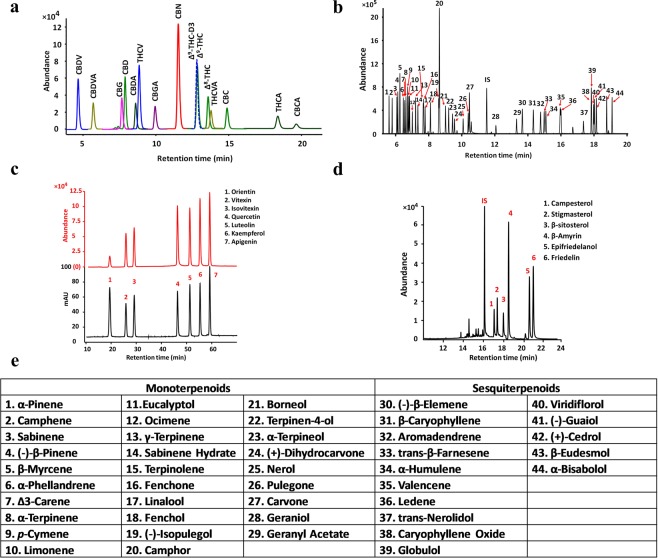
“For instance, Jin et al. [81] found 14 metabolites such as cannabidivarin (Cbdv), cannabidarinic acid (CBDVA), CBG, CBD, CBDA, THCV, CBGA, CBN, ( − )-Delta9-THC- D3, ( − )-Delta 9-THC, ( − )-Delta8-THC, getrahydrocannabivarin (THCVA), CBC, THCA, and cannabichromenic acid (CBCA) in the stems, leaves…”
Kongkeaw, A., Charoensook, R., Incharoen, T., Hwanhlem, N., & Tartrakoon, W. (2025) · International Journal of Agricultural Technology · doi:10.63369/ijat.2025.21.3.903-926 · Cited by 2
“However, using alcohol as the extraction solvent yielded the highest concentrations of friedelin and epifriedelinol, with values ranging from 0.205 mg/g DW to 0.059 mg/g DW. Similarly, Jin et al .”
InfluentialBoini, T., Misro, L., Radhakrishnan, T., Maurya, R. K., Rajeesh, V. R., & Natarajan, T. S. (2025) · Journal of Drug Research in Ayurvedic Sciences · doi:10.4103/jdras.jdras_445_24 · Cited by 1
Lamponi, S., Barletta, R., Geminiani, M., Trezza, A., Frusciante, L., Shabab, B., Nyong’a, C. N., & Santucci, A. (2025) · Pharmaceuticals · doi:10.3390/ph18071003 · Cited by 1
“…profile, with a clear emphasis on acidic cannabinoids like CBDA and THCA, as well as a broad spectrum of flavonoids, would strengthen the hypothesis that the cultivar selection, cultivation conditions, and extraction methods significantly influence the chemical composition of the extract [32].”
Liao, B.-H. (2021) · Journal of Bio Innovation · doi:10.46344/jbino.2021.v010i01.16 · Cited by 4
Pharmaceutical Applications of Hemp
Shields, C. M., & Kirk, R. D. (2022) · Springer eBooks · doi:10.1007/978-3-031-05144-9_5 · Cited by 1
Multiomics techniques for plant secondary metabolism engineering: Pathways to shape the bioeconomy
Li, M., Cai, S., You, S., & Liu, Y. (2022) · Elsevier eBooks · doi:10.1016/b978-0-323-91601-1.00013-4 · Cited by 2
[Idiopathic ostonecrosis of the scaphoid tarsal bone (Köhler's second disease)].
Bérard, J., & Fournet-Fayard, J. (1983) · PubMed · Cited by 1
Motsa, L., Seedat, N., Mekuto, L., & Sekoai, P. (2026) · Biomass Conversion and Biorefinery · doi:10.1007/s13399-026-07177-9
“They’ve been adopted in the cannabis residue industry, using clean, green techniques to extract bioactive secondary metabolites often missed by conventional processes [137 ].”
Ram, G. S. (2022) · International Research Journal of Ayurveda & Yoga · doi:10.47223/irjay.2021.41218
Singh, K., Kumar, B., Kumar, P., Sharma, J., Sharma, Y. P., & Gairola, S. (2022) · SSRN Electronic Journal · doi:10.2139/ssrn.4186550
Synthetic Biology Platform Unleashes the Power of Plants
Frey, T., & Williams, B. (2022) · Genetic Engineering & Biotechnology News · doi:10.1089/gen.42.10.16
The use of technical hemp processing products in animals and poultry feeding (review)
Denisenko, K., Duskaev, G. K., & Arinzhanova, M. S. (2022) · Животноводство и кормопроизводство · doi:10.33284/2658-3135-105-3-95 · Cited by 3
Cannabidiol as a Treatment for Schizophrenia
Lisboa, J. R., Simei, J. L. Q., Souza, J. D. R., & Gomes, F. V. (2023) · Psychiatric Annals · doi:10.3928/00485713-20230505-01
Cannabis terpenes as neuroprotective agents: A focus on α-bisabolol
Laws, J. S., Shrestha, S., & Smid, S. D. (2023) · Elsevier eBooks · doi:10.1016/b978-0-323-90036-2.00040-5
Dang, M., Arachchige, N. M., & Campbell, L. G. (2023) · doi:10.32920/24135147.v1
Dang, M., Arachchige, N. M., & Campbell, L. G. (2023) · doi:10.32920/24135147
Cagliero, C. (2023) · LCGC North America · doi:10.56530/lcgc.na.jy3865s3
Enhancing Cannabis Extraction Efficiency and Sustainability through Quantum Computing: A Review
M, M. R., A, T. C., Hassan, S., Zubaer, M. A., Awang, M. B., & Hasan, M. (2023) · Oriental Journal Of Chemistry · doi:10.13005/ojc/390604
Persello, A., Tadini, L., Rotasperti, L., Ballabio, F., Tagliani, A., Torricella, V., Jahns, P., Dalal, A., Moshelion, M., Camilloni, C., et al. (2024) · bioRxiv (Cold Spring Harbor Laboratory) · doi:10.1101/2024.02.24.581867
Morales, J., Deoraj, A., Felty, Q. H., Lagos, L. E., Yoo, C., & Roy, D. (2024) · bioRxiv (Cold Spring Harbor Laboratory) · doi:10.1101/2024.02.21.581481
Spontaneous pain dynamics characterized by stochasticity in awake human LFP with chronic painPreprint
Ryu, J., Kao, J. C., & Bari, A. (2024) · bioRxiv (Cold Spring Harbor Laboratory) · doi:10.1101/2024.02.22.581655
Bioengineering of Cannabis Plants from Lab to the Field: Challenges and Opportunities
Sayed, F., & Eisenreich, W. (2024) · Concepts and strategies in plant sciences · doi:10.1007/978-981-97-0176-6_24
Sirijan, M., Hutasingh, N., Khaksar, G., Pewlong, P., Pattarapipatkul, N., Tubtimrattana, A., Tansrisawad, N., Borompichaichartkul, C., & Sirikantaramas, S. (2024) · Research Square · doi:10.21203/rs.3.rs-4576630/v1
Addressing the role of endocannabinoid system in rabies infection and its potential for modulation
Hemachudha, P., & Hemachudha, T. (2024) · Elsevier eBooks · doi:10.1016/b978-0-323-95735-9.00014-0
Simonutti, M., Seimandi, G. M., Richard, G. A., Zabala, J. M., & Derita, M. (2024) · Combinatorial Chemistry & High Throughput Screening · doi:10.2174/0113862073319590240801112332 · Cited by 1
Metadata
- Authors
- Jin, D., Dai, K., Xie, Z., & Chen, J.
- Affiliations
- University of Alberta (CA)
- Corresponding author
- Chen, Jie
- Venue
- Scientific Reports
- Published
- 2020-02-24
- Volume
- 10
- Issue
- 1
- Pages
- 3309-3309
- ISSN
- 2045-2322 (ISSN-L)
- PMC
- PMC7039888
- OpenAlex
- W3007489329
- Semantic Scholar
- 350db17e8d81860488fb15419de5070fe0b0e95e
- Cited by
- 348
- References
- 102
- Citations by year
- 2026: 39 · 2025: 68 · 2024: 70 · 2023: 64 · 2022: 56 · 2021: 38 · 2020: 11
- FWCI
- 25.36
- Type
- journal article
- Language
- en
- Open access
- gold
- doi.org
- Licence
- cc-by
- creativecommons.org/licenses/by/4.0 (tdm)
- creativecommons.org/licenses/by/4.0 (vor)
- Locations
- Scientific Reports (publishedVersion, cc-by)
- PubMed Central (publishedVersion, cc-by)
- PubMed (publishedVersion)
- DOAJ (DOAJ: Directory of Open Access Journals) (submittedVersion, cc-by-sa)
- Topics
- Health Sciences › Medicine › Pharmacology (medical) › Cannabis and Cannabinoid Research
- Life Sciences › Agricultural and Biological Sciences › Plant Science › Medicinal Plant Research
- Life Sciences › Agricultural and Biological Sciences › Plant Science › Phytochemistry and Biological Activities
- Keywords
- Cannabis sativa, secondary metabolites, cannabinoids, terpenoids, flavonoids, sterols, triterpenoids, monoterpenoids, sesquiterpenes, inflorescence, leaves, stem bark, roots, entourage effect, medical cannabis, traditional uses
- MeSH terms
- Cannabinoids, Cannabis, Flavonoids, Sesquiterpenes, Sterols, Reproducibility of Results, Plant Leaves, Plant Roots, Plant Bark, Biosynthetic Pathways, Inflorescence, Secondary Metabolism
About these checks
Registry, retraction, Cites and statistics results are computed, not judged, with one exception: a printed reference that no index lists is read once by a model before it counts as a citation error. Claims are extracted by a model and kept only when their quote appears verbatim in the text; each cited source is then checked, with a model’s help, for whether it says what the claim relies on. Those verdicts can be wrong — read the claim’s quote and the cited source before relying on one.
Statistics and arithmetic are recomputed, not judged.
Confidence bands are shown only for fields calibrated on our annotated test set. None is calibrated yet, so no band is shown.
What counts as a claim ›How we measure confidence ›How we check this ›
Are you an author, or do you see a problem with this page? Request a review
Data sources
Bibliographic data: Semantic Scholar, OpenAlex, Crossref.
Contains information from the Semantic Scholar Academic Graph Datasets, made available under the ODC Attribution License (ODC-BY 1.0).
Semantic Scholar’s data is described in: Kinney, R., et al. (2023). The Semantic Scholar Open Data Platform. arXiv:2301.10140.
