

Secondary Metabolites Profiled in Cannabis Inflorescences, Leaves, Stem Barks, and Roots for Medicinal Purposes
Open accessThe DOI matches its Crossref record; 100 of the 102 references it cites were found in a registry or an index.
Abstract
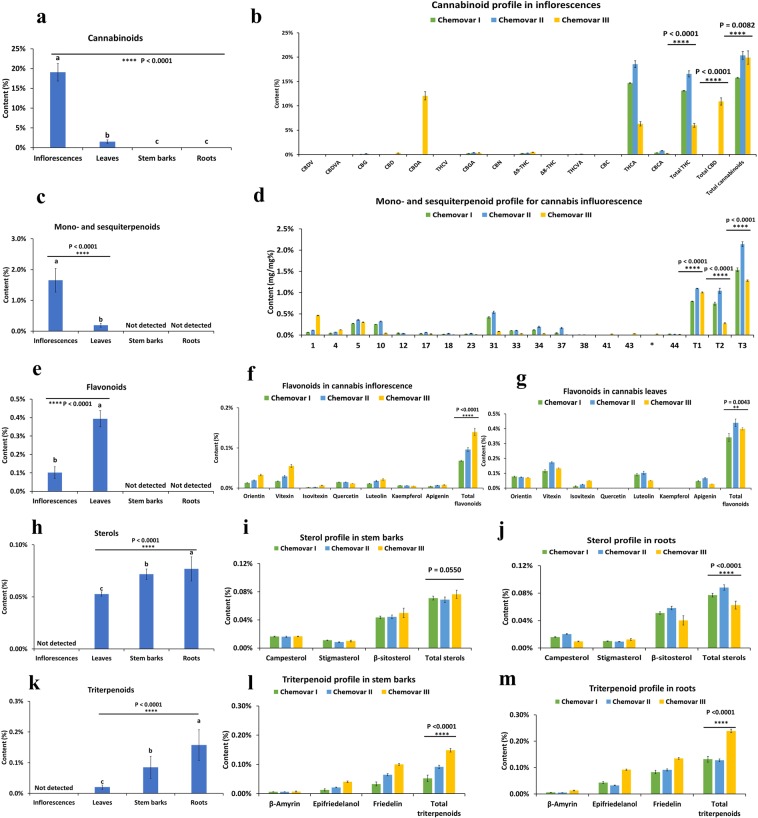
Cannabis research has historically focused on the most prevalent cannabinoids. However, extracts with a broad spectrum of secondary metabolites may have increased efficacy and decreased adverse effects compared to cannabinoids in isolation. Cannabis’s complexity contributes to the length and breadth of its historical usage, including the individual application of the leaves, stem barks, and roots, for which modern research has not fully developed its therapeutic potential. This study is the first attempt to profile secondary metabolites groups in individual plant parts comprehensively. We profiled 14 cannabinoids, 47 terpenoids (29 monoterpenoids, 15 sesquiterpenoids, and 3 triterpenoids), 3 sterols, and 7 flavonoids in cannabis flowers, leaves, stem barks, and roots in three chemovars available. Cannabis inflorescence was characterized by cannabinoids (15.77–20.37%), terpenoids (1.28–2.14%), and flavonoids (0.07–0.14%); the leaf by cannabinoids (1.10–2.10%), terpenoids (0.13–0.28%), and flavonoids (0.34–0.44%); stem barks by sterols (0.07–0.08%) and triterpenoids (0.05–0.15%); roots by sterols (0.06–0.09%) and triterpenoids (0.13–0.24%). This comprehensive profile of bioactive compounds can form a baseline of reference values useful for research and clinical studies to understand the “entourage effect” of cannabis as a whole, and also to rediscover therapeutic potential for each part of cannabis from their traditional use by applying modern scientific methodologies.
Overview
The claims and statistics of this paper haven’t been checked yet.
Free: it reads the open-access text and checks the first 5 claims that cite a source we can check. Create a free account to check every claim.
Integrity signals
Registry
Cites
Statistics
Figures
Verification
Claims the paper makes
The claims and statistics of this paper haven’t been checked yet.
Free: it reads the open-access text and checks the first 5 claims that cite a source we can check. Create a free account to check every claim.
Claims other papers make about this one
Each is checked against this paper’s own text: does it say what the citing paper says it does?
The source backs part of the claim, not all of it — or backs it for a different population, condition or comparison.
In the citing paper
“The most notorious specialized metabolites from Cannabis are cannabinoids—meroterpenoids (i.e., partial terpenoid derivative, also known as terpenophenolics) [1,2,3,4]—which are predominantly found in female flowers, although trace amounts may be present in other tissues like leaves and stems, with seeds and roots generally lacking psychoactive cannabinoids [5,6].”
From Exploring the Lesser-Known Bioactive Natural Products of Plant Species of the Genus Cannabis L.: Alkaloids, Phenolic Compounds, and Their Therapeutic Potential (2025) · cites this paper as [6]
Experimental — accuracy not yet measuredThe cited source says what the claim attributes to it.
In the citing paper
“These molecules, which vary significantly in their structure, biosynthetic pathways, and bioactivities, may offer therapeutic potential as anti-inflammatory, antioxidant, neuroprotective, and antimicrobial agents [5,6].”
Self-check
Percentages, sums and reported differences re-computed from the paper’s own numbers.
The self-check needs the paper’s full text.
Citations
Cites
The Endocannabinoid System as an Emerging Target of Pharmacotherapy
Pacher, P., Bátkai, S., & Kunos, G. (2006) · Pharmacological Reviews · doi:10.1124/pr.58.3.2 · Cited by 2,077
Cannabis sativa: The Plant of the Thousand and One Molecules
Andre, C. M., Hausman, J.-F., & Guerriero, G. (2016) · Frontiers in Plant Science · doi:10.3389/fpls.2016.00019 · Cited by 1,544
Taming THC: potential cannabis synergy and phytocannabinoid-terpenoid entourage effects.
Russo, E. B. (2011) · British Journal of Pharmacology · doi:10.1111/j.1476-5381.2011.01238.x · Cited by 1,535
Chemical constituents of marijuana: The complex mixture of natural cannabinoids
ElSohly, M. A., & Slade, D. (2005) · Life Sciences · doi:10.1016/j.lfs.2005.09.011 · Cited by 1,094
De Petrocellis, L., Ligresti, A., Moriello, A. S., Allarà, M., Bisogno, T., Petrosino, S., Stott, C. G., & Di Marzo, V. (2011) · British Journal of Pharmacology · doi:10.1111/j.1476-5381.2010.01166.x · Cited by 946
Agonistic properties of cannabidiol at 5-HT1a receptors
Russo, E. B., Burnett, A., Hall, B., & Parker, K. K. (2005) · Neurochemical Research · doi:10.1007/s11064-005-6978-1 · Cited by 878
Cannabidiol and (−)Δ 9 -tetrahydrocannabinol are neuroprotective antioxidants
Hampson, A. J., Grimaldi, M., Axelrod, J., & Wink, D. (1998) · Proceedings of the National Academy of Sciences · doi:10.1073/pnas.95.14.8268 · Cited by 850
History of cannabis as a medicine: a review
Zuardi, A. W. (2006) · Revista Brasileira de Psiquiatria · doi:10.1590/s1516-44462006000200015 · Cited by 730
Constituents of Cannabis sativa L. XVII. A review of the natural constituents
Turner, C. E., Elsohly, M. A., & Boeren, E. G. (1980) · Journal of Natural Products · doi:10.1021/np50008a001 · Cited by 599
Cannabinoids in medicine: A review of their therapeutic potential
Ben Amar, M. (2006) · Journal of Ethnopharmacology · doi:10.1016/j.jep.2006.02.001 · Cited by 543
Research works printed but not linked: 5
- 2. Ross, S. A. et al. Flavonoid glycosides and cannabinoids from the pollen of Cannabis sativa L. Phytochemical Analysis: An International. Journal of Plant Chemical and Biochemical Techniques 16, 45-48 (2005).
- 16. Deyo, R. & Musty, R. A cannabichromene (CBC) extract alters behavioral despair on the mouse tail suspension test of depression. In Proceedings 2003 Symposium on the Cannabinoids. International Cannabinoid Research Society: Cornwall, ON 146 (2003).
- 37. Turner, C. E., Elsohly, H. N., Lewis, G. S., Lopez-Santibanez, I. & Carranza, J. Constituents of Cannabis sativa L., XX: the cannabinoid content of Mexican variants grown in Mexico and in Mississippi, United States of America. Bulletin On Narcotics 34, 45-59 (1982).
- 57. Hillig, K. W. A systematic investigation of Cannabis, PhD thesis, Indiana University. (2005).
- 81. Vázquez, L. H., Palazon, J. & Navarro-Ocaña, A. The Pentacyclic Triterpenes α, β-amyrins: A Review of Sources and Biological Activities. In: Venketeshwer Rao (Eds.), Phytochemicals -A Global Perspective of Their Role in Nutrition and Health, (2012).
Cited by
Weston–Green, K., Clunas, H., & Naranjo, C. J. (2021) · Frontiers in Psychiatry · doi:10.3389/fpsyt.2021.583211 · Cited by 179
“The cannabis plant mainly contains monoterpenes and sesquiterpenes (33, 34), although others, such as triterpenes, have been detected in hemp roots, fibres, and hemp seed oil (35).”
BackgroundKopustinskienė, D. M., Masteiková, R., Lažauskas, R., & Bernatonienė, J. (2022) · Antioxidants · doi:10.3390/antiox11040660 · Cited by 174
“The highest amount of THC is found in female inflorescences of cannabis [17,18].”
BackgroundPatricio, F., Morales-Andrade, A. A., Patricio-Martínez, A., & Limón, I. D. (2020) · Frontiers in Pharmacology · doi:10.3389/fphar.2020.595635 · Cited by 129
“The proposal of phytocannabinoids as a potential promoter of dopaminergic neuroprotection in animal PD models began with the work of Lastres-Becker et al. (2005) (Table 2), who administered THC and CBD every 24 h for 2 weeks at a dose of 3 mg/kg i.p., one day after injury with 6-OHDA in the medial bundle of the forebr…”
BackgroundInfluentialCannabis Glandular Trichomes: A Cellular Metabolite Factory
Tanney, C. A. S., Backer, R. G. M., Geitmann, A., & Smith, D. L. (2021) · Frontiers in Plant Science · doi:10.3389/fpls.2021.721986 · Cited by 169
Isidore, E., Karim, H., & Ioannou, I. (2021) · Antioxidants · doi:10.3390/antiox10060942 · Cited by 110
“Various other triterpenoids including epifriedelin and β-amyrin have also been detected in smaller amounts [41,45,93].”
BackgroundThe Medicinal Natural Products of Cannabis sativa Linn.: A Review
Odieka, A. E., Obuzor, G. U., Oyedeji, O. O., Gondwe, M. M., Hosu, Y. S., & Oyedeji, A. O. (2022) · Molecules · doi:10.3390/molecules27051689 · Cited by 157
Kumar, P., Mahato, D. K., Kamle, M., Borah, R., Sharma, B., Pandhi, S., Tripathi, V. S., Yadav, H. S., Devi, S., Patil, U., et al. (2021) · Phytotherapy Research · doi:10.1002/ptr.7213 · Cited by 121
“Jin et al. (2020) recently discovered that the amount of sterols in inflorescences, leaves, roots, and stems increased as the amount of campesterol, stigmasterol, and sitosterol increased.”
BackgroundInfluentialCannabis: a multifaceted plant with endless potentials
Fordjour, E., Manful, C. F., Sey, A. A., Javed, R., Pham, T. H., Thomas, R., & Cheema, M. (2023) · Frontiers in Pharmacology · doi:10.3389/fphar.2023.1200269 · Cited by 129
“Sitosterol and sitosterol-D-glucoside were extracted from the plant’s roots in the same study using a mixture of methanol and chloroform solvent in a ratio of 9:1 (Jin et al., 2020).”
MethodNon-Cannabinoid Metabolites of Cannabis sativa L. with Therapeutic Potential
Lowe, H., Steele, B., Bryant, J., Toyang, N., & Ngwa, W. (2021) · Plants · doi:10.3390/plants10020400 · Cited by 97
“Secondary metabolites also provide nutritional value and include approximately 120 terpenoids (61 monoterpenes, 52 sesquiterpenoids, and 5 triterpenoids [2], over 26 flavonoids [2], lignans, stilbenes and derivatives such as dihydro-resveratrol (3,5,4’trihydroxybibenzyl) [3], cannabinaceous alkaloids such as cannabisa…”
BackgroundInfluentialBrousseau, V. D., Wu, B.-S., MacPherson, S., Morello, V., & Lefsrud, M. G. (2021) · Frontiers in Plant Science · doi:10.3389/fpls.2021.620021 · Cited by 133
Chemical composition and antioxidant potential of Cannabis sativa L. roots
Kornpointner, C., Sainz Martinez, A., Marinovic, S., Haselmair-Gosch, C., Jamnik, P., Schröder, K., Löfke, C., & Halbwirth, H. (2021) · Industrial Crops and Products · doi:10.1016/j.indcrop.2021.113422 · Cited by 89
Melzer, R., McCabe, P. F., & Schilling, S. (2022) · Current Opinion in Biotechnology · doi:10.1016/j.copbio.2022.102684 · Cited by 104
Zagórska-Dziok, M., Bujak, T., Ziemlewska, A., & Nizioł‐Łukaszewska, Z. (2021) · Molecules · doi:10.3390/molecules26040802 · Cited by 92
“Flavonoids were not found in root extract while inflorescences were characterized by a content of flavonoids about three times lower than the leaves [29].”
BackgroundCannabis sativa : origin and history, glandular trichome development, and cannabinoid biosynthesis
Xie, Z., Mi, Y., Kong, L., Gao, M., Chen, S., Chen, W., Meng, X., Sun, W., Chen, S., & Xu, Z. (2023) · Horticulture Research · doi:10.1093/hr/uhad150 · Cited by 105
“In Cannabis , the density of GTs per unit area is generally higher in female plants than that in male ones [115].”
BackgroundSelf-citationStefkov, G., Karanfilova, I. C., Gjorgievska, V. S., Trajkovska, A., Geškovski, N., Karapandzova, M., & Kulevanova, S. (2022) · Molecules · doi:10.3390/molecules27030975 · Cited by 78
“Yet, phytocannabinoids yield after sonication was found to be slightly lower than the yield obtained by one-day DM [50].”
MethodResultJin, D., Henry, P., Shan, J. J., & Chen, J. (2021) · Frontiers in Plant Science · doi:10.3389/fpls.2021.699530 · Cited by 78
Self-citationCannabidiol and terpenes from hemp – ingredients for future foods and processing technologies
Chen, C., & Pan, Z. (2021) · Journal of Future Foods · doi:10.1016/j.jfutfo.2022.01.001 · Cited by 78
Al-Khazaleh, A. K., Zhou, X., Bhuyan, D. J., Münch, G. W., Al-Dalabeeh, E. A., Jaye, K. M., & Chang, D. (2024) · Molecules · doi:10.3390/molecules29020410 · Cited by 80
The Chemistry of Cannabis and Cannabinoids
Duggan, P. J. (2021) · Australian Journal of Chemistry · doi:10.1071/ch21006 · Cited by 71
Cannabis sativa L.: Crop Management and Abiotic Factors That Affect Phytocannabinoid Production
Trancoso, I., de Souza, G. A. R., dos Santos, P. R., dos Santos, K. D., de Miranda, R. M. D. S. N., da Silva, A. L. P. M., Santos, D. Z., García-Tejero, I. F., & Campostrini, E. (2022) · Agronomy · doi:10.3390/agronomy12071492 · Cited by 83
“According to Jin et al. (2020) [117], the phytocannabinoid content decreased from inflorescences to leaves, stem bark, and roots.”
BackgroundInfluentialTraditional uses of Cannabis: An analysis of the CANNUSE database
Balant, M., Gras, A., Ruz, M., Vallès, J., Vitales, D., & Garnatje, T. (2021) · Journal of Ethnopharmacology · doi:10.1016/j.jep.2021.114362 · Cited by 58
Yousaf, M., Chang, D., Liu, Y., Liu, T., & Zhou, X. (2022) · Molecules · doi:10.3390/molecules27154961 · Cited by 74
Xu, J., Bai, M., Song, H., Yang, L., Zhu, D., & Liu, H. (2022) · Plant Foods for Human Nutrition · doi:10.1007/s11130-022-01013-x · Cited by 75
“14% flavonoids, are also found in hemp inflorescence [13].”
BackgroundSong, C., Saloner, A., Fait, A., & Bernstein, N. (2023) · Industrial Crops and Products · doi:10.1016/j.indcrop.2023.116969 · Cited by 69
Massuela, D. C., Hartung, J., Münz, S., Erpenbach, F., & Graeff‐Hönninger, S. (2022) · Plants · doi:10.3390/plants11010140 · Cited by 69
“These are synthetized and deposited mostly on glandular trichomes of cannabis inflorescences, although also found in lower concentrations in other plant tissue, as leaves and roots [9,10].”
BackgroundMorello, V., Brousseau, V. D., Wu, N., Wu, B.-S., MacPherson, S., & Lefsrud, M. G. (2022) · Plants · doi:10.3390/plants11212982 · Cited by 65
“Considerable efforts are aimed at investigating this plant’s secondary metabolites, including cannabinoids and terpenes [5,6].”
BackgroundChen, C., Wongso, I., Putnam, D. H., Khir, R., & Pan, Z. (2021) · Industrial Crops and Products · doi:10.1016/j.indcrop.2021.114051 · Cited by 63
Bardhi, K., Coates, S., Watson, C. J. W., & Lazarus, P. J. (2022) · Expert Review of Clinical Pharmacology · doi:10.1080/17512433.2022.2148655 · Cited by 59
“The cannabis plant contains more than 500 constituents [43], including cannabinoids, terpenes, flavonoids, alkaloids, and other minor compounds [44].”
BackgroundStasiłowicz-Krzemień, A., Sip, S., Szulc, P. M., & Cielecka‐Piontek, J. (2023) · Antioxidants · doi:10.3390/antiox12071390 · Cited by 57
“[58] showed that inflorescences and leaves are relatively abundant in cannabinoids, monoterpenoids, sesquiterpenoids, and flavonoids, while stem barks and roots contain triterpenoids and sterols.”
BackgroundAntiviral Activity of Jamaican Medicinal Plants and Isolated Bioactive Compounds
Lowe, H. I. C., Steele, B., Bryant, J., Fouad, E., Toyang, N. J., & Ngwa, W. F. (2021) · Molecules · doi:10.3390/molecules26030607 · Cited by 47
“sativa produces an estimated 545 [26] chemical compounds belonging to biogenetic classes [27].”
BackgroundEržen, M., Košir, I. J., Ocvirk, M., Kreft, S., & Čerenak, A. (2021) · Plants · doi:10.3390/plants10050966 · Cited by 42
“In the past, cannabis inflorescences have been used in traditional medicine for the treatment of various diseases, such as acute pain, wound healing, insomnia, cough, and mania, which are also the subject of modern medicine studies related to cannabinoids [35].”
BackgroundMultivariate classification of cannabis chemovars based on their terpene and cannabinoid profiles
Birenboim, M., Chalupowicz, D., Maurer, D., Barel, S., Chen, Y., Fallik, E., Paz‐Kagan, T., Rapaport, T., Sadeh, A., Kengisbuch, D., et al. (2022) · Phytochemistry · doi:10.1016/j.phytochem.2022.113215 · Cited by 47
Secondary Terpenes in Cannabis sativa L.: Synthesis and Synergy
Chacon, F. T., Raup‐Konsavage, W. M., Vrana, K. E., & Kellogg, J. J. (2022) · Biomedicines · doi:10.3390/biomedicines10123142 · Cited by 55
Judžentienė, A., Garjonytė, R., & Būdienė, J. (2023) · Molecules · doi:10.3390/molecules28134928 · Cited by 45
“Campesterol, sitosterol and stigmasterol are considered the three most typical phytosterols found in the cannabis plant [26,70].”
BackgroundBirenboim, M., Kengisbuch, D., Chalupowicz, D., Maurer, D., Barel, S., Chen, Y., Fallik, E., Paz‐Kagan, T., & Shimshoni, J. A. (2022) · Phytochemistry · doi:10.1016/j.phytochem.2022.113445 · Cited by 40
Cabianca, A., Müller, L., Pawlowski, K., & Dahlin, P. (2021) · Plants · doi:10.3390/plants10020292 · Cited by 56
Identification of Phenotypic Characteristics in Three Chemotype Categories in the Genus Cannabis
Jin, D., Henry, P., Shan, J. J., & Chen, J. (2021) · HortScience · doi:10.21273/hortsci15607-20 · Cited by 44
Self-citationCicaloni, V., Salvini, L., Vitalini, S., & Garzoli, S. (2022) · Separations · doi:10.3390/separations9040090 · Cited by 39
Chemical constituents of industrial hemp roots and their anti-inflammatory activities
Huang, S., Li, H., Xu, J., Zhou, H., Seeram, N. P., Ma, H., & Gu, Q. (2023) · Journal of Cannabis Research · doi:10.1186/s42238-022-00168-3 · Cited by 38
Ahsan, S. M., Injamum-Ul-Hoque, M., Shaffique, S., Ayoobi, A., Rahman, M. A., Rahman, M. M., & Choi, H. W. (2024) · Plants · doi:10.3390/plants13192774 · Cited by 45
“This botanical species is taxonomically bifurcated into C. sativa and drug-type varieties, a classification predicated on their utilization purpose and the distinctive chemical profiles of their inflorescences [1].”
BackgroundInfluentialJin, D., Henry, P., Shan, J. J., & Chen, J. (2021) · PLoS ONE · doi:10.1371/journal.pone.0253387 · Cited by 43
“Each strain was analyzed for chemical composition using methods established in our previous study [33] and labelled as “THC dominant”, “balanced”, and “CBD dominant”.”
MethodSelf-citationSuttithumsatid, W., Shah, M. A., Bibi, S., & Panichayupakaranant, P. (2022) · Current Research in Food Science · doi:10.1016/j.crfs.2022.07.002 · Cited by 44
“Variation of cannabinoid content usually depends on cannabis chemovars and cultivated area (Jin et al., 2020).”
BackgroundInfluentialFerrini, F., Fraternale, D., Zeppa, S. D., Verardo, G., Gorassini, A., Carrabs, V., Albertini, M. C., & Sestili, P. (2021) · Molecules · doi:10.3390/molecules26164889 · Cited by 35
“(2020) [9] have completely profiled the groups of secondary metabolites in the individual parts of the plant, highlighting the presence of sterols (β-sitosterol, stigmasterol, campesterol) and triterpenoids (friedelin and epi-friedelanol) in mature C.”
BackgroundPost-Harvest Operations to Generate High-Quality Medicinal Cannabis Products: A Systemic Review
Ubeed, H. M. S. A., Wills, R. B. H., & Chandrapala, J. (2022) · Molecules · doi:10.3390/molecules27051719 · Cited by 42
“[29], leaves are rich in cannabinoids (1.”
BackgroundReichel, P., Münz, S., Hartung, J., Kotiranta, S., & Graeff‐Hönninger, S. (2022) · Plants · doi:10.3390/plants11202695 · Cited by 41
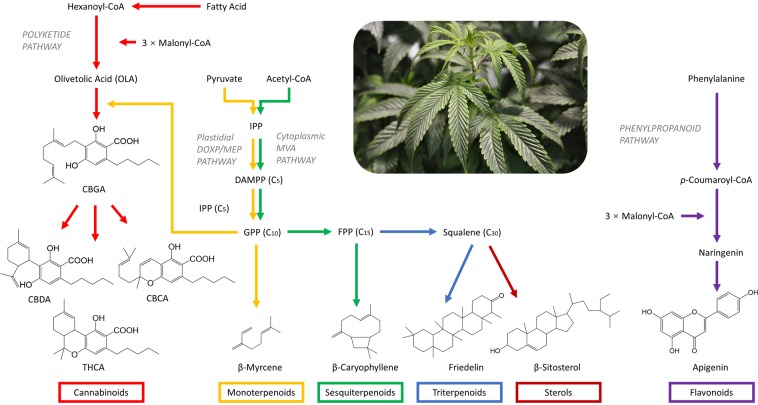
“The formation of these compounds is preceded by a cascade of metabolic processes that can be divided into three different pathways: (1) the polyketide synthase (PKS), (2) the mevalonic acid (MVA)–cytosolic mevalonate (MEV) and (3) the plastidial methylerythritol Plants 2022, 11, 2695. https://doi.org/10.3390/plants112…”
BackgroundInfluentialDehnavi, M. M., Ebadi, A., Peirovi, A., Taylor, G., & Salami, S. A. (2022) · Plants · doi:10.3390/plants11010129 · Cited by 38
“They stated that the comprehensive profile of bioactive metabolites can rediscover therapeutic potential for each part of cannabis from their traditional use [48].”
BackgroundZandkarimi, F., Decatur, J. D., Casali, J., Gordon, T., Skibola, C. F., & Nuckolls, C. P. (2023) · Molecules · doi:10.3390/molecules28020833 · Cited by 38
Naim‐Feil, E., Elkins, A. C., Malmberg, M. M., Ram, D., Tran, J., SPANGENBERG, G. C., Rochfort, S. J., & Cogan, N. O. I. (2023) · Plants · doi:10.3390/plants12030493 · Cited by 38
Dang, M., Arachchige, N. M., & Campbell, L. G. (2022) · Frontiers in Plant Science · doi:10.3389/fpls.2021.797425 · Cited by 35
Fuentes, G., Iglesias, A., Orallo, D. E., Fangio, M. F., Ramos, F., Mitton, G., Fuselli, S., Maggi, M., & Ramírez, C. L. (2022) · Biocatalysis and Agricultural Biotechnology · doi:10.1016/j.bcab.2022.102575 · Cited by 35
‘Cannabis’ ontologies I: Conceptual issues with Cannabis and cannabinoids terminology
Riboulet-Zemouli, K. (2020) · Drug Science Policy and Law · doi:10.1177/2050324520945797 · Cited by 32
“Hence, the most common and well-characterised phy-toconstituents are found only in trace amounts outside of the EGT found on the leaves, flowers, and fruits (Jin et al., 2020).”
Chemistry and Biological Activities of Cannflavins of the Cannabis Plant
Abdel-Kader, M. S., Radwan, M. M., Metwaly, A. M., Eissa, I. H., Hazekamp, A., & ElSohly, M. A. (2023) · Cannabis & Cannabinoid Research · doi:10.1089/can.2023.0128 · Cited by 28
“17 Cannflavins are prenylated methoxyluteolin derivatives.”
Ran, T., Xu, Z., Yang, W. Z., Liu, D., & Wu, D. (2024) · Animal nutrition · doi:10.1016/j.aninu.2024.01.003 · Cited by 30
Bueno, J., & Greenbaum, E. A. (2021) · Journal of Natural Products · doi:10.1021/acs.jnatprod.0c01034 · Cited by 29
Hemp (Cannabis sativa L.) research priorities: Opinions from United States hemp stakeholders
Ellison, S. L. (2021) · GCB Bioenergy · doi:10.1111/gcbb.12794 · Cited by 34
Shakil, S. S. M., Gowan, M., Hughes, K., Azam, M. N. K., & Ahmed, M. N. (2021) · Journal of Cannabis Research · doi:10.1186/s42238-021-00063-3 · Cited by 33
Minor, Nonterpenoid Volatile Compounds Drive the Aroma Differences of Exotic Cannabis
Oswald, I. W. H., Paryani, T. R., Sosa, M. E., Ojeda, M. A., Altenbernd, M. R., Grandy, J. J., Shafer, N. S., Ngo, K., Peat, J. R., Melshenker, B. G., et al. (2023) · ACS Omega · doi:10.1021/acsomega.3c04496 · Cited by 28
Phytocannabinoids—A Green Approach toward Non-Alcoholic Fatty Liver Disease Treatment
Berk, K., Bzdęga, W., Konstantynowicz-Nowicka, K., Charytoniuk, T., Żywno, H., & Chabowski, A. (2021) · Journal of Clinical Medicine · doi:10.3390/jcm10030393 · Cited by 25
“Most of the phytocannabinoids are found in female Cannabis inflorescence [70].”
BackgroundFerrini, F., Zeppa, S. D., Fraternale, D., Carrabs, V., Annibalini, G., Verardo, G., Gorassini, A., Albertini, M. C., Ismail, T., Fimognari, C., et al. (2022) · Antioxidants · doi:10.3390/antiox11050860 · Cited by 30
“The variability of secondary metabolites in the plant determines the taxonomy in two subgroups or chemotypes, depending on the enzyme involved in cannabinoid biosynthesis [2].”
BackgroundPino, S., Espinoza, L., Jara‐Gutiérrez, C., Villena, J., Olea, A. F., & Díaz, K. (2023) · Plants · doi:10.3390/plants12091772 · Cited by 27
Antitumor Effects of Cannabis sativa Bioactive Compounds on Colorectal Carcinogenesis
Silva‐Reis, R., Silva, A. M. S., Oliveira, P. A., & Cardoso, S. M. (2023) · Biomolecules · doi:10.3390/biom13050764 · Cited by 30
“Different terpene synthases can further modify these precursors to produce a variety of monoterpenes, sesquiterpenes, and diterpenes [38,39].”
BackgroundBoucher, R., Germain, H., & Desgagné-Penix, I. (2025) · Plants · doi:10.3390/plants14091372 · Cited by 23
Industrial Applications of Hemp Fiber in Europe and Evolving Regulatory Landscape
Cortés, J. G., Ryu, B. R., Pauli, C. S., Royano, L., & Park, S. (2024) · Journal of Natural Fibers · doi:10.1080/15440478.2024.2435047 · Cited by 35
“(Jin et al. 2020).”
Antinociceptive effects of minor cannabinoids, terpenes and flavonoids in Cannabis
Rodriguez, C. E., Ouyang, L., & Kandasamy, R. (2021) · Behavioural Pharmacology · doi:10.1097/fbp.0000000000000627 · Cited by 28
“Others, such as β-amyrin, have been detected in fibers (Gutiérrez and del Río, 2005). ɑ- and β-amyrin Although β-amyrin has been detected alone in Cannabis (Jin et al., 2020), studies of antinociception have used mixtures of both ɑ- and β-amyrin.”
BackgroundHaddou, S., Loukili, E. H., Hbika, A., Chahine, A., & Hammouti, B. (2022) · Materials Today Proceedings · doi:10.1016/j.matpr.2022.10.215 · Cited by 26
Suman, S., Loveleen, L., Bhandari, M. M., Syed, A., Bahkali, A. H., Manchanda, R., & Nimesh, S. (2022) · Artificial Cells Nanomedicine and Biotechnology · doi:10.1080/21691401.2022.2149543 · Cited by 26
Does the “Entourage Effect” in Cannabinoids Exist? A Narrative Scoping Review
Simei, J. L. Q., Souza, J. D. R., Lisboa, J. R., Campos, A. C., Guimarães, F. S., Zuardi, A. W., & Crippa, J. A. S. (2024) · Cannabis and Cannabinoid Research · doi:10.1089/can.2023.0052 · Cited by 34
“37 The distribution of phytocannabinoids and other metabolites within the cannabis plant varies depending on the location within the plant (a phenomenon known as ‘‘phy-tochemical polymorphism’’ 2,38 ).”
Simei, J. L. Q., Souza, J. D. R., Pedrazzi, J. F. C., Guimarães, F. S., Campos, A. C., Zuardi, A. W., Hallak, J. E. C., & Crippa, J. A. S. (2024) · Pharmaceuticals · doi:10.3390/ph17121644 · Cited by 34
Mastellone, G., Marengo, A., Sgorbini, B., Scaglia, F., Capetti, F., Gai, F., Peiretti, P. G., Rubiolo, P., & Cagliero, C. (2022) · Plants · doi:10.3390/plants11030419 · Cited by 27
“In particular, the cannabinoids in the freeze-dried samples were about 0.2% of the total content, in agreement with data reported on hemp stems and leaves [9] (ranging from 0.1 to 2%), while for the oven-dried ones the percentage decreased to 0.05%.”
InfluentialSchanknecht, E., Bachari, A., Nassar, N., Piva, T. J., & Mantri, N. L. (2023) · International Journal of Molecular Sciences · doi:10.3390/ijms24010859 · Cited by 30
The preservation and augmentation of volatile terpenes in cannabis inflorescence
Bueno, J., Leuer, E., Kearney, M., Green, E. H., & Greenbaum, E. A. (2020) · Journal of Cannabis Research · doi:10.1186/s42238-020-00035-z · Cited by 25
Irawan, A., Buffington, H., Ateş, S., & Bionaz, M. (2025) · Journal of Cannabis Research · doi:10.1186/s42238-025-00279-7 · Cited by 27
“Different from the Cannabis-drug type, which can contain nearly 20% total cannabinoids in the inflorescence and < 5% in the leaves (Jin et al. 2020), hemp contains approximately between 5–6% total cannabinoids in the flower (Hillig and Mahlberg 2004) with less can-nabinoids in the leaves (Fetterman…”
InfluentialKhoury, A. A., Sleiman, R., Atoui, A., Hindieh, P., Maroun, R. G., Bailly, J., & Khoury, A. E. (2021) · Archives of Microbiology · doi:10.1007/s00203-021-02444-x · Cited by 25
Masłowski, M., Aleksieiev, A., Miedzianowska, J., Efenberger-Szmechtyk, M., & Strzelec, K. (2022) · Polymers · doi:10.3390/polym14071460 · Cited by 21
Naim‐Feil, E., Breen, E. J., Pembleton, L. W., Spooner, L. E., SPANGENBERG, G. C., & Cogan, N. O. I. (2022) · Frontiers in Plant Science · doi:10.3389/fpls.2022.858519 · Cited by 22
Oh, C. M., Choi, J. Y., Bae, I. A., Kim, H. T., Hong, S. S., Noah, J. K., & Boo, Y. C. (2022) · Molecules · doi:10.3390/molecules27092781 · Cited by 22
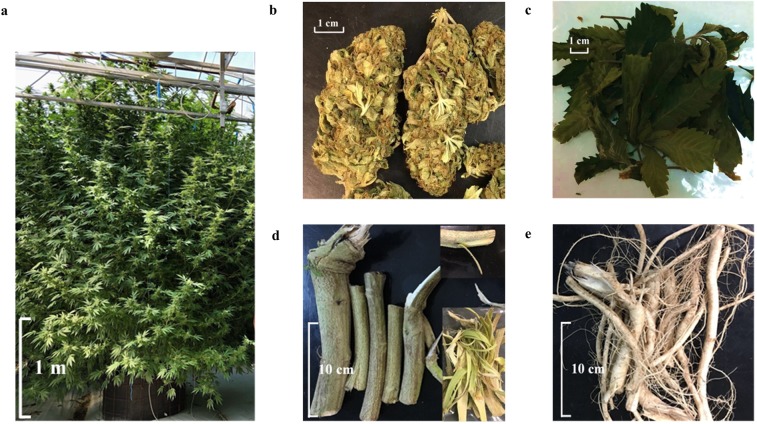
“flowers, leaves, stem barks, and roots of three chemotypes of cannabis [25].”
BackgroundWiles, D., Shanbhag, B. K., O’Brien, M., Doblin, M. S., Bacic, A., & Beddoe, T. (2022) · Phytochemistry · doi:10.1016/j.phytochem.2022.113380 · Cited by 25
Siracusa, L., Ruberto, G., & Cristino, L. (2023) · Molecules · doi:10.3390/molecules28083387 · Cited by 34
Murovec, J., Eržen, J., Flajšman, M., & Vodnik, D. (2022) · Frontiers in Plant Science · doi:10.3389/fpls.2022.786161 · Cited by 28
Kim, Y., Kim, W., Kim, S.-H., Sim, K.-S., Kim, K.-H., Cho, K.-H., Kwon, G.-S., Lee, J.-B., & Kim, J. H. (2023) · Molecules · doi:10.3390/molecules28093814 · Cited by 24
“A previous study investigating the chemical profile of different parts of hemp reported that cannabinoids and flavonoids were relatively abundant in inflorescences and leaves, whereas stem barks and root contained high amounts of triterpenoids and sterols [3].”
BackgroundSagili, S. U. K. R., Addo, P. W., MacPherson, S., Shearer, M., Taylor, N., Paris, M., Lefsrud, M. G., & Orsat, V. (2023) · ACS Food Science & Technology · doi:10.1021/acsfoodscitech.3c00129 · Cited by 27
Mastellone, G., Marengo, A., Sgorbini, B., Rubiolo, P., & Cagliero, C. (2022) · Industrial Crops and Products · doi:10.1016/j.indcrop.2022.115476 · Cited by 21
Gagné, V., Merindol, N., Boucher, R., Boucher, N., & Desgagné-Penix, I. (2024) · Frontiers in Pharmacology · doi:10.3389/fphar.2024.1465136 · Cited by 19
Novel Insights into the Nature of Intraspecific Genome Size Diversity in Cannabis sativa L.
Balant, M., González, R. R., Garcia, S., Garnatje, T., Pellicer, J., Vallès, J., Vitales, D., & Hidalgo, O. (2022) · Plants · doi:10.3390/plants11202736 · Cited by 22
Basak, M., Broadway, M., Lewis, J., Starkey, H., Bloomquist, M., Peszlen, I., Davis, J., Lucia, L. A., & Pal, L. (2025) · BioResources · doi:10.15376/biores.20.2.basak · Cited by 22
“Hemp root contains 0.13% to 0.24% triterpenoids, 0.06 to 0.09% sterols, and 0.001% to 0.004% cannabinoids (Jin et al. 2020).”
InfluentialWitkamp, R. F. (2022) · Annual Review of Food Science and Technology · doi:10.1146/annurev-food-052720-092845 · Cited by 23
Yeo, H. C., Reddy, V. A., Mun, B., Leong, S. H., Dhandapani, S., Sarojam, R., & Jang, I. (2022) · International Journal of Molecular Sciences · doi:10.3390/ijms23158310 · Cited by 22
“To obtain stem samples, trichomes were brushed off from the stems of HB cultivar plants; they were few in number and had very low levels of secondary metabolites, unlike the trichomes of flowers [60].”
BackgroundEvaluating Cannabis sativa L.’s neuroprotection potential: From bench to bedside
Laws, J. S., & Smid, S. D. (2022) · Phytomedicine · doi:10.1016/j.phymed.2022.154485 · Cited by 19
Frusciante, L., Geminiani, M., Shabab, B., Olmastroni, T., Roncucci, N., Mastroeni, P., Salvini, L., Lamponi, S., Trezza, A., & Santucci, A. (2025) · International Journal of Molecular Sciences · doi:10.3390/ijms26020548 · Cited by 23
“Vitexin, another flavonoid detected at 0.63% in our extract but nearly absent in Chen et al.’s findings, aligns with Jin et al.’s report of its presence in an acid hydrolyzation extract of C. sativa leaves [75].”
InfluentialTremlová, B., Mikulaskova, H., Hajduchová, K., Jančíková, S., Kaczorová, D., Zeljkovıć, S. Ć., & Đorđević, Đ. (2021) · Foods · doi:10.3390/foods10061418 · Cited by 25
“Moreover, the levels of flavonoids are normally higher in cannabis leaves than in inflorescences [23].”
BackgroundContents of Cannabinoids in Hemp Varieties Grown in Maryland
Chen, X., Deng, H. F., Heise, J. A., Puthoff, D. P., Bou-Abboud, N., Yu, H., & Peng, J. (2021) · ACS Omega · doi:10.1021/acsomega.1c04992 · Cited by 22
Ahidar, N., Labhar, A., Benamari, O., Ahari, M., Salhi, A., Elyoussfi, A., & Amhamdi, H. (2023) · Ecological Engineering & Environmental Technology · doi:10.12912/27197050/175125 · Cited by 20
“These results are con - sistent with those found by Jin et al .”
BackgroundResultUsing advanced biotechnological techniques to improve cannabis cultivars
Shujat, S., Robinson, G. I., Norouzkhani, F., & Kovalchuk, I. (2024) · Biocatalysis and Agricultural Biotechnology · doi:10.1016/j.bcab.2024.103250 · Cited by 21
Sopian, Y., Satsook, A., Arjin, C., Lumsangkul, C., Sringarm, K., Sivapirunthep, P., & Chaosap, C. (2024) · Poultry Science · doi:10.1016/j.psj.2024.104117 · Cited by 19
“…of CR supplementation, which could maintain growth performance comparable to the control, might be due to the content of phyto-chemicals in C. sativa , such as alkaloids, cannabinoids, fl avonoids, phenolics, steroids, and terpenoids (Isahq et al., 2015; Jin et al., 2020; Nakkliang et al., 2022).”
BackgroundMethodInfluentialReyes‐Garcés, N., & Myers, C. (2021) · Journal of Separation Science · doi:10.1002/jssc.202001265 · Cited by 17
Spano, M., Matteo, G. D., Ingallina, C., Sobolev, A. P., Giusti, A. M., Vinci, G., Cammarone, S., Tortora, C., Lamelza, L., Prencipe, S. A., et al. (2022) · Foods · doi:10.3390/foods11223658 · Cited by 35
Oihabi, M. E., Soultana, M., Imad, E. F., Lanjri, H. F., Allal, L. B., Ammari, M., & Lanjri, A. F. (2024) · Case Studies in Chemical and Environmental Engineering · doi:10.1016/j.cscee.2024.100906 · Cited by 19
Oña, G., Balant, M., Bouso, J. C., Gras, A., Vallès, J., Vitales, D., & Garnatje, T. (2021) · Cannabis and Cannabinoid Research · doi:10.1089/can.2021.0095 · Cited by 25
“31 Variability in chemical composition of material used in experiments makes it very difficult to compare the results.”
Medicinal Plants - Chemical, Biochemical, and Pharmacological Approaches
de Oliveira, M. S., Andrade, E. H. D. A., Kumar, R., & Mali, S. N. (2023) · IntechOpen eBooks · doi:10.5772/intechopen.107682 · Cited by 19
Kobtrakul, K., Rani, D., Binalee, A., Udomlarp, P., Srichai, T., De‐Eknamkul, W., & Vimolmangkang, S. (2023) · Frontiers in Plant Science · doi:10.3389/fpls.2023.1242584 · Cited by 22
Metadata
- Authors
- Jin, D., Dai, K., Xie, Z., & Chen, J.
- Affiliations
- University of Alberta (CA)
- Corresponding author
- Chen, Jie
- Venue
- Scientific Reports
- Published
- 2020-02-24
- Volume
- 10
- Issue
- 1
- Pages
- 3309-3309
- ISSN
- 2045-2322 (ISSN-L)
- PMC
- PMC7039888
- OpenAlex
- W3007489329
- Semantic Scholar
- 350db17e8d81860488fb15419de5070fe0b0e95e
- Cited by
- 348
- References
- 102
- Citations by year
- 2026: 39 · 2025: 68 · 2024: 70 · 2023: 64 · 2022: 56 · 2021: 38 · 2020: 11
- FWCI
- 25.36
- Type
- journal article
- Language
- en
- Open access
- gold
- doi.org
- Licence
- cc-by
- creativecommons.org/licenses/by/4.0 (tdm)
- creativecommons.org/licenses/by/4.0 (vor)
- Locations
- Scientific Reports (publishedVersion, cc-by)
- PubMed Central (publishedVersion, cc-by)
- PubMed (publishedVersion)
- DOAJ (DOAJ: Directory of Open Access Journals) (submittedVersion, cc-by-sa)
- Topics
- Health Sciences › Medicine › Pharmacology (medical) › Cannabis and Cannabinoid Research
- Life Sciences › Agricultural and Biological Sciences › Plant Science › Medicinal Plant Research
- Life Sciences › Agricultural and Biological Sciences › Plant Science › Phytochemistry and Biological Activities
- Keywords
- Cannabis sativa, secondary metabolites, cannabinoids, terpenoids, flavonoids, sterols, triterpenoids, monoterpenoids, sesquiterpenes, inflorescence, leaves, stem bark, roots, entourage effect, medical cannabis, traditional uses
- MeSH terms
- Cannabinoids, Cannabis, Flavonoids, Sesquiterpenes, Sterols, Reproducibility of Results, Plant Leaves, Plant Roots, Plant Bark, Biosynthetic Pathways, Inflorescence, Secondary Metabolism
About these checks
Registry, retraction, Cites and statistics results are computed, not judged, with one exception: a printed reference that no index lists is read once by a model before it counts as a citation error. Claims are extracted by a model and kept only when their quote appears verbatim in the text; each cited source is then checked, with a model’s help, for whether it says what the claim relies on. Those verdicts can be wrong — read the claim’s quote and the cited source before relying on one.
Statistics and arithmetic are recomputed, not judged.
Confidence bands are shown only for fields calibrated on our annotated test set. None is calibrated yet, so no band is shown.
What counts as a claim ›How we measure confidence ›How we check this ›
Are you an author, or do you see a problem with this page? Request a review
Data sources
Bibliographic data: Semantic Scholar, OpenAlex, Crossref.
Contains information from the Semantic Scholar Academic Graph Datasets, made available under the ODC Attribution License (ODC-BY 1.0).
Semantic Scholar’s data is described in: Kinney, R., et al. (2023). The Semantic Scholar Open Data Platform. arXiv:2301.10140.
