

Secondary Metabolites Profiled in Cannabis Inflorescences, Leaves, Stem Barks, and Roots for Medicinal Purposes
Open accessThe DOI matches its Crossref record; 100 of the 102 references it cites were found in a registry or an index.
Abstract
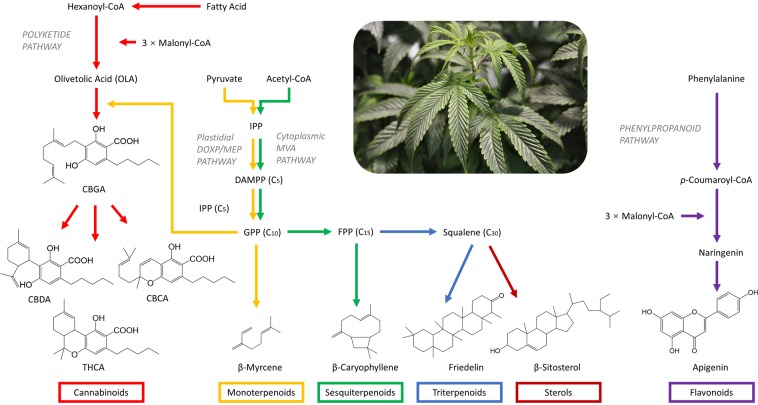
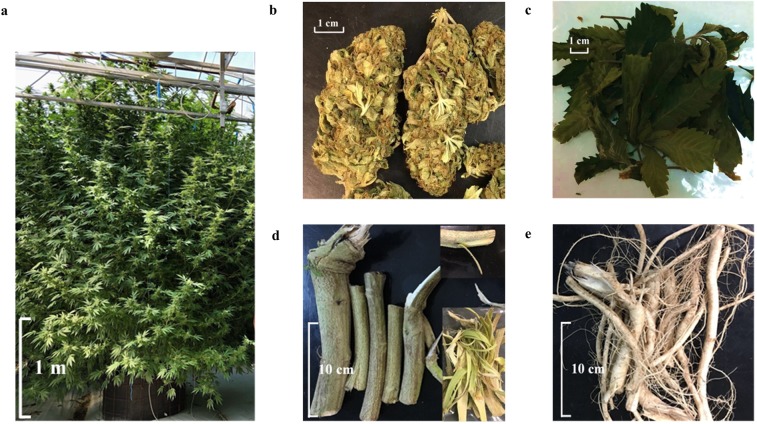
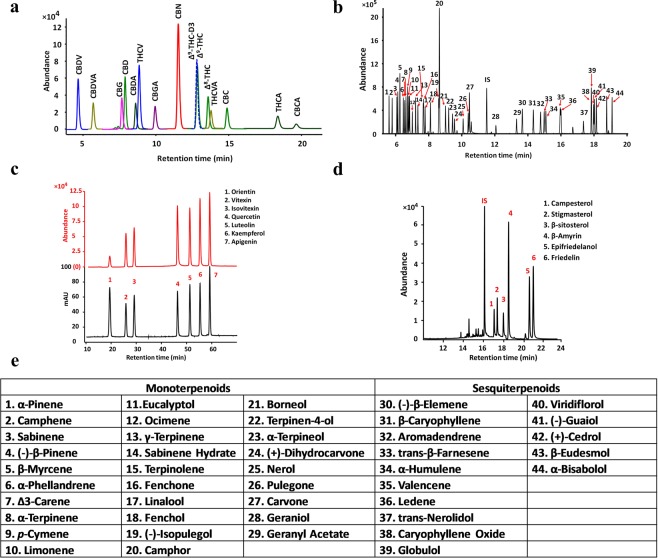
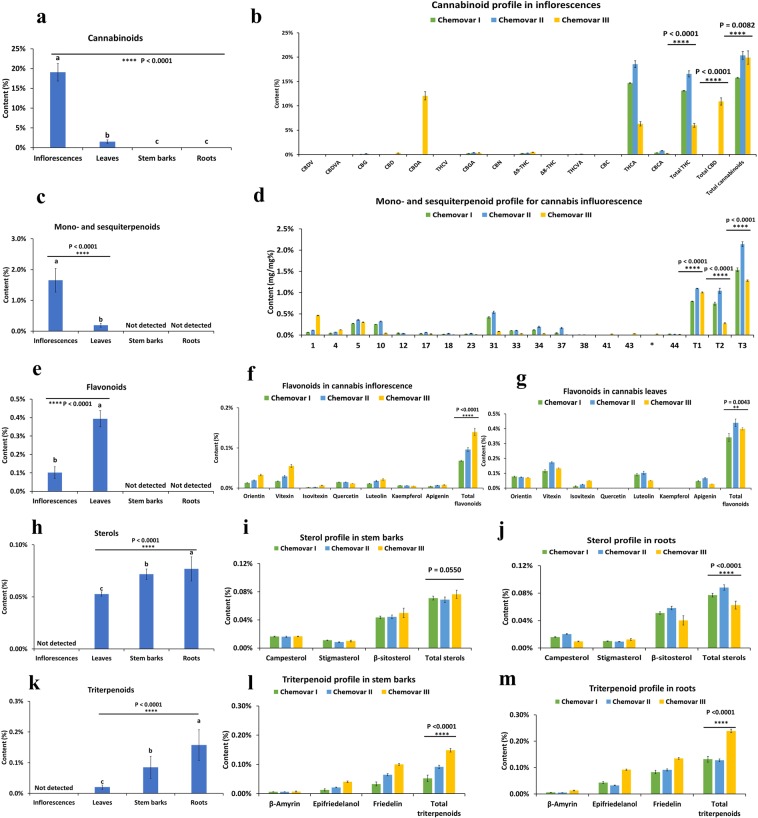
Cannabis research has historically focused on the most prevalent cannabinoids. However, extracts with a broad spectrum of secondary metabolites may have increased efficacy and decreased adverse effects compared to cannabinoids in isolation. Cannabis’s complexity contributes to the length and breadth of its historical usage, including the individual application of the leaves, stem barks, and roots, for which modern research has not fully developed its therapeutic potential. This study is the first attempt to profile secondary metabolites groups in individual plant parts comprehensively. We profiled 14 cannabinoids, 47 terpenoids (29 monoterpenoids, 15 sesquiterpenoids, and 3 triterpenoids), 3 sterols, and 7 flavonoids in cannabis flowers, leaves, stem barks, and roots in three chemovars available. Cannabis inflorescence was characterized by cannabinoids (15.77–20.37%), terpenoids (1.28–2.14%), and flavonoids (0.07–0.14%); the leaf by cannabinoids (1.10–2.10%), terpenoids (0.13–0.28%), and flavonoids (0.34–0.44%); stem barks by sterols (0.07–0.08%) and triterpenoids (0.05–0.15%); roots by sterols (0.06–0.09%) and triterpenoids (0.13–0.24%). This comprehensive profile of bioactive compounds can form a baseline of reference values useful for research and clinical studies to understand the “entourage effect” of cannabis as a whole, and also to rediscover therapeutic potential for each part of cannabis from their traditional use by applying modern scientific methodologies.
Overview
The claims and statistics of this paper haven’t been checked yet.
Free: it reads the open-access text and checks the first 5 claims that cite a source we can check. Create a free account to check every claim.
Integrity signals
Registry
Cites
Statistics
Figures
Verification
Claims the paper makes
The claims and statistics of this paper haven’t been checked yet.
Free: it reads the open-access text and checks the first 5 claims that cite a source we can check. Create a free account to check every claim.
Claims other papers make about this one
Each is checked against this paper’s own text: does it say what the citing paper says it does?
The source backs part of the claim, not all of it — or backs it for a different population, condition or comparison.
In the citing paper
“The most notorious specialized metabolites from Cannabis are cannabinoids—meroterpenoids (i.e., partial terpenoid derivative, also known as terpenophenolics) [1,2,3,4]—which are predominantly found in female flowers, although trace amounts may be present in other tissues like leaves and stems, with seeds and roots generally lacking psychoactive cannabinoids [5,6].”
From Exploring the Lesser-Known Bioactive Natural Products of Plant Species of the Genus Cannabis L.: Alkaloids, Phenolic Compounds, and Their Therapeutic Potential (2025) · cites this paper as [6]
Experimental — accuracy not yet measuredThe cited source says what the claim attributes to it.
In the citing paper
“These molecules, which vary significantly in their structure, biosynthetic pathways, and bioactivities, may offer therapeutic potential as anti-inflammatory, antioxidant, neuroprotective, and antimicrobial agents [5,6].”
Self-check
Percentages, sums and reported differences re-computed from the paper’s own numbers.
The self-check needs the paper’s full text.
Citations
Cites
The Endocannabinoid System as an Emerging Target of Pharmacotherapy
Pacher, P., Bátkai, S., & Kunos, G. (2006) · Pharmacological Reviews · doi:10.1124/pr.58.3.2 · Cited by 2,077
Cannabis sativa: The Plant of the Thousand and One Molecules
Andre, C. M., Hausman, J.-F., & Guerriero, G. (2016) · Frontiers in Plant Science · doi:10.3389/fpls.2016.00019 · Cited by 1,544
Taming THC: potential cannabis synergy and phytocannabinoid-terpenoid entourage effects.
Russo, E. B. (2011) · British Journal of Pharmacology · doi:10.1111/j.1476-5381.2011.01238.x · Cited by 1,535
Chemical constituents of marijuana: The complex mixture of natural cannabinoids
ElSohly, M. A., & Slade, D. (2005) · Life Sciences · doi:10.1016/j.lfs.2005.09.011 · Cited by 1,094
De Petrocellis, L., Ligresti, A., Moriello, A. S., Allarà, M., Bisogno, T., Petrosino, S., Stott, C. G., & Di Marzo, V. (2011) · British Journal of Pharmacology · doi:10.1111/j.1476-5381.2010.01166.x · Cited by 946
Agonistic properties of cannabidiol at 5-HT1a receptors
Russo, E. B., Burnett, A., Hall, B., & Parker, K. K. (2005) · Neurochemical Research · doi:10.1007/s11064-005-6978-1 · Cited by 878
Cannabidiol and (−)Δ 9 -tetrahydrocannabinol are neuroprotective antioxidants
Hampson, A. J., Grimaldi, M., Axelrod, J., & Wink, D. (1998) · Proceedings of the National Academy of Sciences · doi:10.1073/pnas.95.14.8268 · Cited by 850
History of cannabis as a medicine: a review
Zuardi, A. W. (2006) · Revista Brasileira de Psiquiatria · doi:10.1590/s1516-44462006000200015 · Cited by 730
Constituents of Cannabis sativa L. XVII. A review of the natural constituents
Turner, C. E., Elsohly, M. A., & Boeren, E. G. (1980) · Journal of Natural Products · doi:10.1021/np50008a001 · Cited by 599
Cannabinoids in medicine: A review of their therapeutic potential
Ben Amar, M. (2006) · Journal of Ethnopharmacology · doi:10.1016/j.jep.2006.02.001 · Cited by 543
Research works printed but not linked: 5
- 2. Ross, S. A. et al. Flavonoid glycosides and cannabinoids from the pollen of Cannabis sativa L. Phytochemical Analysis: An International. Journal of Plant Chemical and Biochemical Techniques 16, 45-48 (2005).
- 16. Deyo, R. & Musty, R. A cannabichromene (CBC) extract alters behavioral despair on the mouse tail suspension test of depression. In Proceedings 2003 Symposium on the Cannabinoids. International Cannabinoid Research Society: Cornwall, ON 146 (2003).
- 37. Turner, C. E., Elsohly, H. N., Lewis, G. S., Lopez-Santibanez, I. & Carranza, J. Constituents of Cannabis sativa L., XX: the cannabinoid content of Mexican variants grown in Mexico and in Mississippi, United States of America. Bulletin On Narcotics 34, 45-59 (1982).
- 57. Hillig, K. W. A systematic investigation of Cannabis, PhD thesis, Indiana University. (2005).
- 81. Vázquez, L. H., Palazon, J. & Navarro-Ocaña, A. The Pentacyclic Triterpenes α, β-amyrins: A Review of Sources and Biological Activities. In: Venketeshwer Rao (Eds.), Phytochemicals -A Global Perspective of Their Role in Nutrition and Health, (2012).
Cited by
Items 101–200 of 348
Chemical profiling of Cannabis varieties cultivated for medical purposes in southeastern Brazil
Carvalho, V. M., de Almeida, F. G., Vieira, A. C. D. M., Rocha, E. D., Cabral, L. M., & Strongin, R. M. (2022) · Forensic Science International · doi:10.1016/j.forsciint.2022.111309 · Cited by 19
Birenboim, M., Kenigsbuch, D., & Shimshoni, J. A. (2023) · Phytochemical Analysis · doi:10.1002/pca.3205 · Cited by 16
Mastellone, G., Marengo, A., Sgorbini, B., Rubiolo, P., Anderson, J. L., & Cagliero, C. (2023) · Journal of Chromatography B · doi:10.1016/j.jchromb.2023.123967 · Cited by 16
Addo, P. W., Gariépy, Y., Shearer, M., Taylor, N., MacPherson, S., Raghavan, V., Orsat, V., & Lefsrud, M. G. (2024) · Industrial Crops and Products · doi:10.1016/j.indcrop.2024.119015 · Cited by 15
Napiroon, T., Tanruean, K., Poolprasert, P., Bacher, M., Balslev, H., Poopath, M., & Santimaleeworagun, W. (2021) · PeerJ · doi:10.7717/peerj.11446 · Cited by 15
“37% of dry weight using modern drug analysis (Jin et al., 2020).”
MethodRazlog, R., Kruger, C. A., & Abrahamse, H. (2022) · Integrative Cancer Therapies · doi:10.1177/15347354221092706 · Cited by 17
Enhancing drying efficiency and terpene retention of cannabis using cold plasma pretreatment
Das, P. C., Heydari, M. M., Baik, O., Zhang, L., & Tabil, L. G. (2025) · Industrial Crops and Products · doi:10.1016/j.indcrop.2025.120669 · Cited by 16
Effect of Drying Methods on Chemical and Sensory Properties of Cannabis sativa Leaves
Kwaśnica, A., Pachura, N., Carbonell-Barrachina, Á. A., Issa‐Issa, H., Szumny, D., Figiel, A., Masztalerz, K., Klemens, M., & Szumny, A. J. (2023) · Molecules · doi:10.3390/molecules28248089 · Cited by 14
“On the other hand, in the triterpenoid profile, friedelin appeared to be the main component, followed by epifriedelanol and β -amyrin [35].”
BackgroundResultInfluentialMworia, J. K., Kibiti, C. M., Ngeranwa, J., & Ngugi, M. P. (2021) · African Health Sciences · doi:10.4314/ahs.v21i1.50 · Cited by 14
Šenkyřík, J. B., Křivánková, T., Kaczorová, D., & Štefelová, N. (2023) · Plants · doi:10.3390/plants12081664 · Cited by 16
“However, glandular tricho es are also partially located on leaves, where phytocannabinoids ay also be present in lo er a ounts co pared to flo ers [11,12].”
BackgroundInfluentialCapetti, F., Rubiolo, P., Mastellone, G., Marengo, A., Sgorbini, B., & Cagliero, C. (2022) · Advances in Sample Preparation · doi:10.1016/j.sampre.2022.100014 · Cited by 13
Noppawan, P., Bainier, C., Lanot, A., McQueen‐Mason, S. J., Supanchaiyamat, N., Attard, T. M., & Hunt, A. J. (2022) · Royal Society Open Science · doi:10.1098/rsos.211699 · Cited by 16
Should oncologists trust cannabinoids?
Creangă-Murariu, I., Filipiuc, L.-E., Cuciureanu, M. D., Tamba, B.-I., & Alexa‐Stratulat, T. (2023) · Frontiers in Pharmacology · doi:10.3389/fphar.2023.1211506 · Cited by 13
“Cannabis inflorescence and leaves have also been used to treat epilepsy, glaucoma, insomnia, and pain (Brunetti et al., 2020; Jin et al., 2020).”
BackgroundLu, H. T., Li, W., Deseo, M. A., Stevens, G. W., Bacic, A., Doblin, M. S., & Mumford, K. A. (2023) · Separation and Purification Technology · doi:10.1016/j.seppur.2023.124754 · Cited by 13
Laws, J. S., & Smid, S. D. (2023) · NeuroToxicology · doi:10.1016/j.neuro.2023.12.004 · Cited by 13
Immunostimulatory and Antibacterial Effects of Cannabis sativa L. Leaves on Broilers
Balenović, M., Janječić, Z., Savić, V., Kasap, A., Popović, M., Šimpraga, B., Sokolović, M., Bedeković, D., Kiš, G., Zglavnik, T., et al. (2024) · Animals · doi:10.3390/ani14081159 · Cited by 13
“For the determination of the total cannabinoids in the hemp samples, we adapted the method described by Jin et al. [23] and Saingam and Sakunpak [44].”
BackgroundMethodBirenboim, M., Rinnan, Å., Kengisbuch, D., & Shimshoni, J. A. (2022) · Chemometrics and Intelligent Laboratory Systems · doi:10.1016/j.chemolab.2022.104717 · Cited by 16
Abendroth, J. A., Gondhalekar, A. D., Scharf, M. E., & Couture, J. J. (2023) · Arthropod-Plant Interactions · doi:10.1007/s11829-023-09948-x · Cited by 19
“While hundreds of cannabinoids exist (Jin et al. 2020), the most notable and researched cannabinoids are cannabidiol (CBD) and tetrahydrocannabinol (THC) because of their pharmacological activity in most animals (Small and Beckstead 1973, McPartland et al.”
BackgroundMahendran, G., & Vimolmangkang, S. (2024) · Plant Cell Tissue and Organ Culture (PCTOC) · doi:10.1007/s11240-023-02675-4 · Cited by 15
Charting the Cannabis plant chemical space with computational metabolomics
Myoli, A., Choene, M. S., Kappo, A. P., Madala, N. E., van der Hooft, J. J. J., & Tugizimana, F. (2024) · Metabolomics · doi:10.1007/s11306-024-02125-y · Cited by 13
“When considering the plant parts or plant tissues of Cannabis , cannabinoids are widely known to be abundant in the flowers (inflorescence) of the plant compared to the other plant tissues (Jin et al., 2020).”
BackgroundCamargo, F. D. G., Santamaría-Torres, M. A., Cala, M. P., Guevara‐Suarez, M., Restrepo, S., Sánchez‐Camargo, A. D. P., Fernández‐Niño, M., Corujo, M., Gallo-Molina, A. C., Cifuentes, J., et al. (2023) · Metabolites · doi:10.3390/metabo13070788 · Cited by 14
Phytocannabinoids in neuromodulation: From omics to epigenetics
Banerjee, S., Saha, D., Sharma, R., Jaidee, W., Puttarak, P., Chaiyakunapruk, N., & Chaoroensup, R. (2024) · Journal of Ethnopharmacology · doi:10.1016/j.jep.2024.118201 · Cited by 16
Azad, M. O. K., Ryu, B. R., Rana, M. S., Rahman, M. H., Lim, J. D., & Lim, Y.-S. (2021) · Processes · doi:10.3390/pr9050837 · Cited by 13
“HME facilitates in the breakdown or deformation of the molecul r structure of the extruded molecules [15].”
BackgroundQuantitative and qualitative spectroscopic parameters determination of major cannabinoids
Birenboim, M., Fallik, E., Kengisbuch, D., & Shimshoni, J. A. (2022) · Journal of Luminescence · doi:10.1016/j.jlumin.2022.119387 · Cited by 15
Pecyna, A., Buczaj, A., Różyło, R., & Kobus, Z. (2023) · Applied Sciences · doi:10.3390/app13084889 · Cited by 13
Yoon, H. I., Lee, S. H., Ryu, D. H., Choi, H. L., Park, S. H., Jung, J. H., Kim, H., & Yang, J. (2024) · Frontiers in Plant Science · doi:10.3389/fpls.2024.1365298 · Cited by 15
Evaluating the Metabolomic Profile and Anti-Pathogenic Properties of Cannabis Species
Monyela, S., Kayoka‐Kabongo, P. N., Ngezimana, W., & Nemadodzi, L. E. (2024) · Metabolites · doi:10.3390/metabo14050253 · Cited by 14
Larvicidal Activity of Hemp Extracts and Cannabidiol against the Yellow Fever Mosquito Aedes aegypti
Martínez Rodríguez, E. J., Phelan, P. L., Canas, L., Acosta, N., Rakotondraibe, H. L., & Piermarini, P. M. (2024) · Insects · doi:10.3390/insects15070517 · Cited by 11
“Numerous strains of hemp varieties are available with highly diverse secondary metabolite profiles [13,54,55].”
BackgroundHahm, S., Lee, B., Bok, G., Kim, S., & Park, J. S. (2023) · Agronomy · doi:10.3390/agronomy13061497 · Cited by 12
Muller, M., & de Villiers, A. J. (2025) · Journal of Chromatography A · doi:10.1016/j.chroma.2025.466023 · Cited by 12
El-Mernissi, R., Menyiy, N. E., Zouhri, A., El-Mernissi, Y., Diai, F., Siddique, F., Dabiellil, F., Almaary, K. S., Amhamdi, H., Abboussi, O., et al. (2024) · Open Chemistry · doi:10.1515/chem-2024-0119 · Cited by 12
Kaminski, K. P., Hoeng, J., Lach-Falcone, K., Goffman, F. D., Schlage, W. K., & Latino, D. A. R. S. (2025) · Molecules · doi:10.3390/molecules30132784 · Cited by 15
“In contrast, roots lack trichomes entirely and do not actively produce cannabinoids or terpenes, though they may contain other secondary metabolites with potential biological activity [41].”
Jensen, R. H., Rønn, M., Thorsteinsson, M. M., Olijhoek, D., Nielsen, M. O., & Nørskov, N. P. (2022) · Metabolites · doi:10.3390/metabo12010077 · Cited by 12
“The higher bioactivity of Futura 75 compared to Finola may not only be related to differences between varieties, but could also be related to differences in the production of secondary metabolites due to harvest year and period [11,36,37].”
BackgroundInfluentialBitežnik, L., Štukelj, R., & Flajšman, M. (2024) · Plants · doi:10.3390/plants13081117 · Cited by 16
Elicitation as a tool to improve the accumulation of secondary metabolites in Cannabis sativa
Trono, D. (2024) · Phytochemistry Reviews · doi:10.1007/s11101-024-10019-z · Cited by 15
“3), in their aglycone and glycosylated form, as the most abundant molecules (Jin et al. 2020).”
InfluentialKitts-Morgan, S. E., Sams, R. A., & Muir, W. W. (2025) · Frontiers in Veterinary Science · doi:10.3389/fvets.2025.1556975 · Cited by 12
“Blood samples were collected immediately before the PM PO dose on study days 21, 26, and 31 (days 5, 10, and 15 after initiation of Phase 3) for determinations of all target analytes (Figure 1).”
THC shows activity against cultured Plasmodium falciparum
de Sousa, A. C. C., Combrinck, J. M., Maepa, K., & Egan, T. J. (2021) · Bioorganic & Medicinal Chemistry Letters · doi:10.1016/j.bmcl.2021.128442 · Cited by 9
Industrial hemp by-product valorization
Moliterni, V. M. C., Pojić, M., & Tiwari, B. (2022) · Industrial Hemp · doi:10.1016/b978-0-323-90910-5.00007-5 · Cited by 9
Lee, S., Kim, E. J., Kwon, E., Oh, S. J., Cho, M., Kim, C. M., Lee, W., & Hong, J. (2023) · Molecules · doi:10.3390/molecules28248082 · Cited by 11
Martinidou, E., Palmieri, L., Sordo, M., Masuero, D., Ourda, M., Delucchi, L., Fusani, P., Tremml, V., Poulopoulou, I., Gauly, M., et al. (2023) · Frontiers in Plant Science · doi:10.3389/fpls.2023.1269613 · Cited by 8
Prabsangob, N., Hangsalad, S., & Harnsilawat, T. (2024) · Molecules · doi:10.3390/molecules29112511 · Cited by 10
“Although CBD and CBD-infused food products are commercially available, the daily intake of more than 2 mg/kg CBD is suggested to be unsafe [16].”
BackgroundLi, M., Wu, Q., Guo, F., Ouyang, Y., Ao, D., You, S., & Liu, Y. (2024) · Planta · doi:10.1007/s00425-024-04448-5 · Cited by 10
“The medical value of cannabis is due to its complex chemistry, which includes over 550 chemical compounds including the specialized can-nabinoids (Jin et al. 2020).”
Francisco, V. P., Cerny, M., Valentin, R., Milone-Delacourt, F., Paillard, A., & Alignan, M. (2024) · Journal of Chromatography B · doi:10.1016/j.jchromb.2024.124316 · Cited by 10
Saiyasombat, W., Yimpetch, C., Chathiran, W., Chimasangkanan, J., & Srichamnong, W. (2024) · NFS Journal · doi:10.1016/j.nfs.2024.100209 · Cited by 8
Comprehensive Profiling of Terpenes and Terpenoids in Different Cannabis Strains Using GC × GC-TOFMS
Kaur, J., Sun, N., & Hill, J. E. (2023) · Separations · doi:10.3390/separations10090500 · Cited by 11
Al-Salihi, S. A. A., & Ford, K. L. (2023) · Journal of Plant Biochemistry and Biotechnology · doi:10.1007/s13562-022-00823-z · Cited by 7
Exploring the historical, botanical, and taxonomical foundations of cannabis
Pant, S. P., Joshi, S. S., Bisht, D., & Bisht, M. (2024) · Elsevier eBooks · doi:10.1016/b978-0-443-15489-8.00001-3 · Cited by 11
Liu, Y., Li, S., Shen, M., Guo, F., Li, M., Cai, S., Huang, J., Wu, J., Li, X., Peng, L., et al. (2024) · Industrial Crops and Products · doi:10.1016/j.indcrop.2024.120239 · Cited by 8
Anti-Aging Properties of Cannabis sativa Leaf Extract against UVA Irradiation
Luangpraditkun, K., Pimjuk, P., Phimnuan, P., Wisanwattana, W., Wisespongpand, C., Waranuch, N., & Viyoch, J. (2024) · Cosmetics · doi:10.3390/cosmetics11020045 · Cited by 9
Kaminsky, N., Hubert, J., Guerin, C., Mazlani, M., Kotland, A., Pozzobon, V., Marant, B., Mailhac, H., & Poigny, S. (2024) · Molecules · doi:10.3390/molecules29235792 · Cited by 9
“Several studies have reported the accumulation of epifriedelanol and friedelin in hemp roots cultivated in soil [6], in aeroponic hemp roots [25], and in hemp hairy roots [39,40].”
InfluentialN’Goka, V., Oyegue-Liabagui, S. L., Obiang, C. S., Begouabe, H., Ntandou, G. F. N., Imboumy-Limoukou, R. K., Biteghe-Bi-Essone, J. C., Kumulungui, B., Lékana-Douki, J. B., & Abena, A. A. (2023) · Plants · doi:10.3390/plants12183271 · Cited by 6
“These compounds are known to be abundant in plant leaves [56].”
Mahou, Y., Jaafar, D. M. B., Moudani, N. A., Jeddi, M., Chda, A., Fettoukh, N., Fikri-Benbrahim, K., Aarab, L., Bouri, A. E., Stambouli, H., et al. (2024) · Journal of Herbmed Pharmacology · doi:10.34172/jhp.2025.51481 · Cited by 7
Vinciguerra, V., Martile, M. D., Bufalo, D. D., & Garzoli, S. (2023) · Sustainable Chemistry and Pharmacy · doi:10.1016/j.scp.2023.101269 · Cited by 8
Oliveira, A. P. D. S., Costa, M. D. C., & Bicho, M. (2024) · IntechOpen eBooks · doi:10.5772/intechopen.113841 · Cited by 8
Cannabis Roots: Therapeutic, Biotechnological and Environmental Aspects
Gagné, V., Boucher, N., & Desgagné-Penix, I. (2024) · Cannabis & Cannabinoid Research · doi:10.1089/can.2023.0168 · Cited by 6
Latif, S., Qureshi, R., Rauf, A., NoshinIlyas, Hussain, Q., Shah, S. S. H., Rehman, S., Khan, A. M., Khan, N., Abdel-Maksoud, M. A., et al. (2025) · Scientific Reports · doi:10.1038/s41598-025-86469-y · Cited by 6
Cannabis: Zone Aspects of Raw Plant Components in Sport—A Narrative Review
Flangea, C., Vlad, M., Popescu, R., Dumitraşcu, V., Rață, A. L., Tryfon, M. E., Balasoiu, B., & Vlad, C. S. (2025) · Nutrients · doi:10.3390/nu17050861 · Cited by 7
Carvalho, V. M., de Almeida, F., Aguiar, A. F. L., Pereira, F. C., & Rocha, E. D. (2021) · Brazilian Journal of Analytical Chemistry · doi:10.30744/brjac.2179-3425.ar-42-2021 · Cited by 6
Cui, Q., Li, J., & Yu, C. (2022) · Textile Research Journal · doi:10.1177/00405175221114929 · Cited by 6
“Cannabis has multifarious applications, including in the textile, construction, paper and cosmetic sectors.1 Some studies indicate that cannabis contains at least 104 cannabinoids, 120 terpenoids, 26 flavonoids and 11 steroids.2–7 Dan Jin et al.8 found that cannabis inflorescence includes cannabinoids (15.77–20.37%),…”
BackgroundInfluentialAppau, Y., Gordon, P. K., Kumordzie, S., Kyene, M. O., & Atta-Adjei, P. (2023) · Heliyon · doi:10.1016/j.heliyon.2023.e23640 · Cited by 6
“In general, it prefers sites that experience high rainfall and the form it takes is dependent on the individuals ’ access to water, thus, it can grow from 8 ft to 20 ft in height [41,42].”
BackgroundChen, L., Li, H., Zhou, H.-J., Zhang, G., Zhang, Y., Wang, Y., Wang, M., Yang, H. Q., & Gao, W. Y. (2024) · Antioxidants · doi:10.3390/antiox13060749 · Cited by 10
“…highly expressed in the plant in fl orescence, but at relatively lower levels in the leaf and the stem. of the plant ( In terms of fl avonoids, the total fl avonoid content in the leaves exceeded that in other parts of the plant (in fl orescence and stem bark) [26]. inflorescence and stem bark) [26].”
Cannabidiol in anxiety disorders: Current and future perspectives
Simei, J. L. Q., Souza, J. D. R., Lisboa, J. R., Guimarães, F. S., & Crippa, J. A. S. (2024) · International review of neurobiology · doi:10.1016/bs.irn.2024.05.003 · Cited by 9
Exploring phenotypic and genetic variability in hemp (Cannabis sativa)
Trubanová, N., Pender, G., McCabe, P. F., Melzer, R., & Schilling, S. (2026) · Genetic Resources and Crop Evolution · doi:10.1007/s10722-025-02700-9 · Cited by 9
Active hydraulics and odd elasticity of muscle fibersPreprint
Shankar, S., & Mahadevan, L. (2022) · bioRxiv (Cold Spring Harbor Laboratory) · doi:10.1101/2022.02.20.481216 · Cited by 6
Reichel, P., Münz, S., Hartung, J., & Graeff‐Hönninger, S. (2024) · Agronomy · doi:10.3390/agronomy14112565 · Cited by 5
Genotoxicity study of Cannabis sativa L. extract
Costa, A. C., Gasparotto, A., Pereira, C. A. C., Lourenço, E. L. B., Garcia, A. A. K., & Joaquim, H. P. G. (2024) · Toxicology Reports · doi:10.1016/j.toxrep.2024.101864 · Cited by 6
“In addition to cannabinoids, other secondary metabolites of Cannabis , such as alkaloids, terpenes, flavonoids, phenolic acids, lignans, cinnamates, and saponins, have shown pharmacological effects [5].”
Das, P. C., Baik, O., & Tabil, L. G. (2025) · Drying Technology · doi:10.1080/07373937.2025.2478396 · Cited by 6
Chaiwangrach, N., Mukda, S., Temkitthawon, P., Nuengchamnong, N., Pinmanee, S., Somboon, T., Boonnoun, P., & Ingkaninan, K. (2025) · Scientia Pharmaceutica · doi:10.3390/scipharm93020027 · Cited by 5
Boussetta, O., Elrherabi, A., Nasr, F. A., Loukili, E. H., Yahyaoui, M. I., Amrani, N., Chebaibi, M., Asehraou, A., Bouhrim, M., Al-Zharani, M. M., et al. (2025) · Food Science & Nutrition · doi:10.1002/fsn3.70894 · Cited by 4
“…to the plant's aroma and potential therapeutic properties, phenolic and polyphenolic compounds; around 46 compounds known for their antioxidant activities, sugars; about 34 different types present in the plant, and ketones and aldehydes; approximately 25 compounds identified (Jin et al. 2020).”
Carvalho, V. M., Carmo, J. D. S., dos Santos, L. M. G., de Almeida, F., Rocha, E. D., Vieira, A. C. D. M., Ferreira, J. A. B., Jacob, S. D. C., Strongin, R. M., & da Silva, A. J. R. (2023) · Revista Brasileira de Farmacognosia · doi:10.1007/s43450-023-00412-8 · Cited by 7
Basak, D., Kashyap, R., Borah, D., & Saikia, H. (2024) · Surfaces and Interfaces · doi:10.1016/j.surfin.2024.104865 · Cited by 5
Herwig, N., Utgenannt, S., Nickl, F., Möbius, P., Nowak, L., SCHULZ, O., & Fischer, M. (2024) · Cannabis and Cannabinoid Research · doi:10.1089/can.2024.0127 · Cited by 9
Chaiwangrach, N., Waranuch, N., Temkitthawon, P., Wongwad, E., Nuengchamnong, N., Usuwanthim, K., Saesong, T., Rakkhetkorn, Y., Pisutthanan, S., & Ingkaninan, K. (2024) · Phytomedicine Plus · doi:10.1016/j.phyplu.2024.100635 · Cited by 6
Acute oral toxicity of Cannabis sativa L. co-products in mice
Balafrej, T., Skalli, S., Benaich, S., Labyad, A., Akoh, R., Mskini, F. Z. E., Mehdad, S., Zaid, Y., Abboussi, O., MOUHADDACH, A., et al. (2023) · Notulae Scientia Biologicae · doi:10.55779/nsb15311591 · Cited by 8
Mekarunothai, A., Bacher, M., Buathong, R., Intarasam, S., Tayana, N., Kongkiatpaiboon, S., Charoenrat, T., & Napiroon, T. (2024) · PeerJ · doi:10.7717/peerj.16774 · Cited by 5
Lazare, S., Golshmid, P., Krassin, A., Simhon, E., Lapidot‐Cohen, T., & Dag, A. (2024) · Plant Science · doi:10.1016/j.plantsci.2024.112210 · Cited by 6
Are cannabidiol (CBD) levels in consumer food products well tested?—A review
Siddiqui, S. A., Fidan, H., Stankov, S., Mehdizadeh, M., Ambartsumov, T. G., Kharazmi, M. S., Singh, S., & Jafari, S. M. (2023) · Food Frontiers · doi:10.1002/fft2.308 · Cited by 5
Effect of Hemp Extraction Procedures on Cannabinoid and Terpenoid Composition
Chacon, F. T., Raup‐Konsavage, W. M., Vrana, K. E., & Kellogg, J. J. (2024) · Plants · doi:10.3390/plants13162222 · Cited by 12
“These phytochemical families can be found in copious amounts in the trichrome structures of female hemp inflorescence, and in smaller quantities within the leaves [3].”
BackgroundHahm, S., Lee, Y., Lee, K.-Y., & Park, J. S. (2024) · Horticulturae · doi:10.3390/horticulturae10111165 · Cited by 4
“C. sativa is significant as a medicinal plant, with over 150 cannabinoids and various compounds discovered [3–5].”
Exploring Natural Analgesics for Chronic Pain Management: Cannabinoids and other Phytoconstituents
Bjørklund, G., Oleshchuk, O., Гонтова, Т. М., Кланца, М. П., Lukanyuk, M. I., Денефіль, О. В., Коshovyi, O., Shanaida, V., & Shanaida, M. (2025) · Current Medicinal Chemistry · doi:10.2174/0109298673330732241017135054 · Cited by 6
Sirijan, M., Hutasingh, N., Khaksar, G., Pewlong, P., Pattarapipatkul, N., Tubtimrattana, A., Tansrisawad, N., Borompichaichartkul, C., & Sirikantaramas, S. (2025) · LWT · doi:10.1016/j.lwt.2025.117499 · Cited by 4
Sopian, Y., Sahatsanon, K., Satsook, A., Arjin, C., Sringarm, K., Lumsangkul, C., Sivapirunthep, P., & Chaosap, C. (2025) · Animals · doi:10.3390/ani15050759 · Cited by 4
“It has been reported that C. sativa contains more than 150 cannabinoids and a wide range of other substances, including flavonoids, terpenoids, and alkaloids, which exhibit anti-inflammatory, antimicrobial, and neuroprotective properties [4,5].”
Fatty Acid Composition and Bioactive Profiles in the Aerial Parts of Cannabis sativa
Jacuńska, W., Biel, W., Tokarczyk, G., Biernacka, P., Bieńkiewicz, G., & Janda, K. (2025) · Molecules · doi:10.3390/molecules30091947 · Cited by 4
Garrido-Gala, J., Corral, C., García-Valverde, M. T., Hidalgo-García, J., Ferreiro‐Vera, C., & Martínez-Quesada, J. J. (2025) · Plants · doi:10.3390/plants14101469 · Cited by 4
“More recently, this species is experiencing a revamped interest due to the plant richness in hundreds of identified bioactive phytochemicals [4,5], produced through the secondary metabolism, particularly terpenes and phytocannabinoids harboring different pharmacological activities with potential…”
Ghachi, H. E., Oukhrib, M., Aziz, F., Benrazzouk, K., Gamrani, H., Soulimani, R., & Boukhzar, L. (2025) · Journal of Ethnopharmacology · doi:10.1016/j.jep.2025.120058 · Cited by 4
ATR-FTIR and GC–MS chemical profiling of Cannabis sativa L. cultivated in Ondo state, Nigeria
Awonyemi, O. I., Akpambang, V. O. E., & Elekofehinti, O. O. (2026) · Microchemical Journal · doi:10.1016/j.microc.2026.117697 · Cited by 4
Liao, B.-H. (2020) · International Journal of Science and Research Archive · doi:10.30574/ijsra.2020.1.2.0026 · Cited by 4
“Discussion Understanding medicinal species is very difficult at STEDS [1-14, 25- 29].”
BackgroundInfluentialLiao, B.-H. (2020) · Journal of Drug Delivery and Therapeutics · doi:10.22270/jddt.v10i6-s.4450 · Cited by 4
Liao, B.-H. (2020) · EAS Journal of Pharmacy and Pharmacology · doi:10.36349/easjpp.2020.v02i06.003 · Cited by 4
“However, understanding the links between total biomass of roots cuticle of medical plants and dynamics of daily solar radiation along elevation is unknown, as well as the links between total biomass of roots cuticle of plants and daily solar radiation is difficult finding along elevation and environmental factors [1-1…”
BackgroundInfluentialLiao, B.-H. (2020) · Sumerianz Journal of Agriculture and Veterinary · doi:10.47752/sjav.312.178.182 · Cited by 4
“However, understanding the elevation effect on the links between biomass of stems cuticle of this plant species and elevation is very difficult, because elevation effect on biomass of stems cuticle of medicinal species [2-26].”
BackgroundResultInfluentialDalei, M. K., Dehuri, M., Palai, S., Mohanty, B., Kuppusamy, S. G., & Panda, M. (2022) · Journal of Environmental Biology · doi:10.22438/jeb/43/5/mrn-3074 · Cited by 4
Cosner, J., & Grant, J. F. (2023) · Environmental Entomology · doi:10.1093/ee/nvad063 · Cited by 5
“Most hemp grown in Tennessee is produced to meet the demand for cannabidiol (CBD), a nonpsychoactive cannabinoid, by prioritizing female flower development with high densities of trichomes harboring these secondary metabolites (Fischedick et al. 2010, Jin et al. 2020).”
BackgroundComparative analysis of bioactive compounds in various organs of Iranian okra accessions
Mohammadzadeh, Z., Shojaeiyan, A., Ayyari, M., Tohidfar, M., Mokhtassi‐Bidgoli, A., & Atighi, M. R. (2023) · South African Journal of Botany · doi:10.1016/j.sajb.2023.07.039 · Cited by 4
Monton, C., Chanduaykit, W., Mongkhonvanich, T., Srikaenchan, S., Suksaeree, J., Charoenchai, L., & Songsak, T. (2024) · Arabian Journal of Chemistry · doi:10.1016/j.arabjc.2024.105847 · Cited by 4
Antiviral effect of cannabidiol on K18 ‐ hACE2 transgenic mice infected with SARS ‐ CoV ‐2
Polat, H. Ü., Yalcin, H. A., Köm, D., Aksoy, Ö., Abacı, İ., Tas, A. C., Serhatlı, M., & Onarıcı, S. (2024) · Journal of Cellular and Molecular Medicine · doi:10.1111/jcmm.70030 · Cited by 5
Surfactant-assisted electrochemical sensor for phytocannabinoids
Montiel, N. F., Sleegers, N., Barich, H., Beltrán, V., & Wael, K. D. (2024) · Microchemical Journal · doi:10.1016/j.microc.2024.112055 · Cited by 4
Hemp Hay (Cannabis sativa L.) in Grazing Goats’ Diet: Effects on Oxidative and Inflammatory Status
Zicarelli, F., Lotito, D., Iommelli, P., Amato, R., Mahayri, T. M., Musco, N., Pacifico, E., Infascelli, F., Tudisco, R., Moniello, G., et al. (2025) · Animals · doi:10.3390/ani15030364 · Cited by 5
Relation between plant average height of (Cremastra appendiculata) and elevations
Liao, B.-H. (2020) · GSC Advanced Research and Reviews · doi:10.30574/gscarr.2020.5.2.0089 · Cited by 6
A rapid method for sex identification in Cannabis sativa using high resolution melt analysis
Gilchrist, E. J., Hegebarth, D., Wang, S., Quilichini, T. D., Sawler, J., Toh, S. Y., Foley, C., & Page, J. E. (2021) · Botany · doi:10.1139/cjb-2021-0168 · Cited by 7
The impact of biotechnology and genomics on an ancient crop: Cannabis sativa
Gilchrist, E. J., Wang, S., & Quilichini, T. D. (2022) · Elsevier eBooks · doi:10.1016/b978-0-323-91601-1.00009-2 · Cited by 7
Metadata
- Authors
- Jin, D., Dai, K., Xie, Z., & Chen, J.
- Affiliations
- University of Alberta (CA)
- Corresponding author
- Chen, Jie
- Venue
- Scientific Reports
- Published
- 2020-02-24
- Volume
- 10
- Issue
- 1
- Pages
- 3309-3309
- ISSN
- 2045-2322 (ISSN-L)
- PMC
- PMC7039888
- OpenAlex
- W3007489329
- Semantic Scholar
- 350db17e8d81860488fb15419de5070fe0b0e95e
- Cited by
- 348
- References
- 102
- Citations by year
- 2026: 39 · 2025: 68 · 2024: 70 · 2023: 64 · 2022: 56 · 2021: 38 · 2020: 11
- FWCI
- 25.36
- Type
- journal article
- Language
- en
- Open access
- gold
- doi.org
- Licence
- cc-by
- creativecommons.org/licenses/by/4.0 (tdm)
- creativecommons.org/licenses/by/4.0 (vor)
- Locations
- Scientific Reports (publishedVersion, cc-by)
- PubMed Central (publishedVersion, cc-by)
- PubMed (publishedVersion)
- DOAJ (DOAJ: Directory of Open Access Journals) (submittedVersion, cc-by-sa)
- Topics
- Health Sciences › Medicine › Pharmacology (medical) › Cannabis and Cannabinoid Research
- Life Sciences › Agricultural and Biological Sciences › Plant Science › Medicinal Plant Research
- Life Sciences › Agricultural and Biological Sciences › Plant Science › Phytochemistry and Biological Activities
- Keywords
- Cannabis sativa, secondary metabolites, cannabinoids, terpenoids, flavonoids, sterols, triterpenoids, monoterpenoids, sesquiterpenes, inflorescence, leaves, stem bark, roots, entourage effect, medical cannabis, traditional uses
- MeSH terms
- Cannabinoids, Cannabis, Flavonoids, Sesquiterpenes, Sterols, Reproducibility of Results, Plant Leaves, Plant Roots, Plant Bark, Biosynthetic Pathways, Inflorescence, Secondary Metabolism
About these checks
Registry, retraction, Cites and statistics results are computed, not judged, with one exception: a printed reference that no index lists is read once by a model before it counts as a citation error. Claims are extracted by a model and kept only when their quote appears verbatim in the text; each cited source is then checked, with a model’s help, for whether it says what the claim relies on. Those verdicts can be wrong — read the claim’s quote and the cited source before relying on one.
Statistics and arithmetic are recomputed, not judged.
Confidence bands are shown only for fields calibrated on our annotated test set. None is calibrated yet, so no band is shown.
What counts as a claim ›How we measure confidence ›How we check this ›
Are you an author, or do you see a problem with this page? Request a review
Data sources
Bibliographic data: Semantic Scholar, OpenAlex, Crossref.
Contains information from the Semantic Scholar Academic Graph Datasets, made available under the ODC Attribution License (ODC-BY 1.0).
Semantic Scholar’s data is described in: Kinney, R., et al. (2023). The Semantic Scholar Open Data Platform. arXiv:2301.10140.
