

Surveillance of Enterococcus spp. reveals distinct species and antimicrobial resistance diversity across a One-Health continuum
Open accessThe DOI matches its Crossref record; 82 of the 82 references it cites were found in a registry or an index.
Abstract
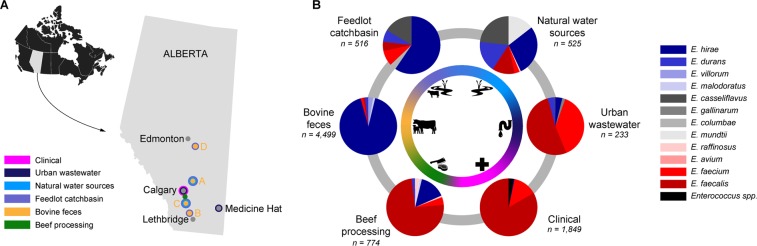
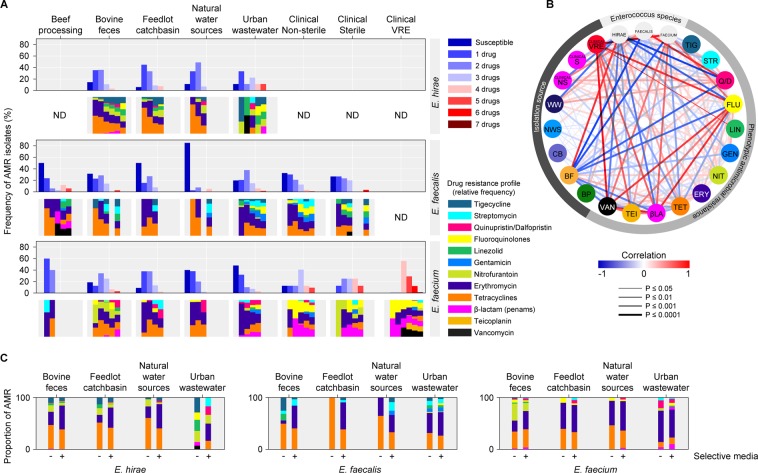
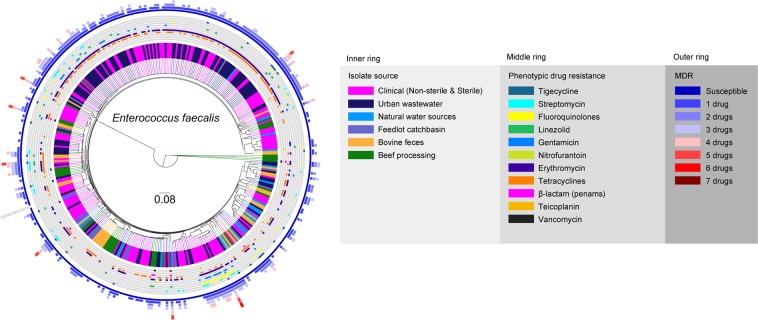
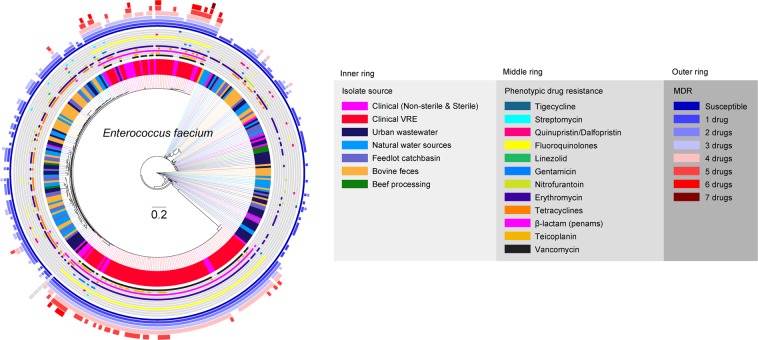
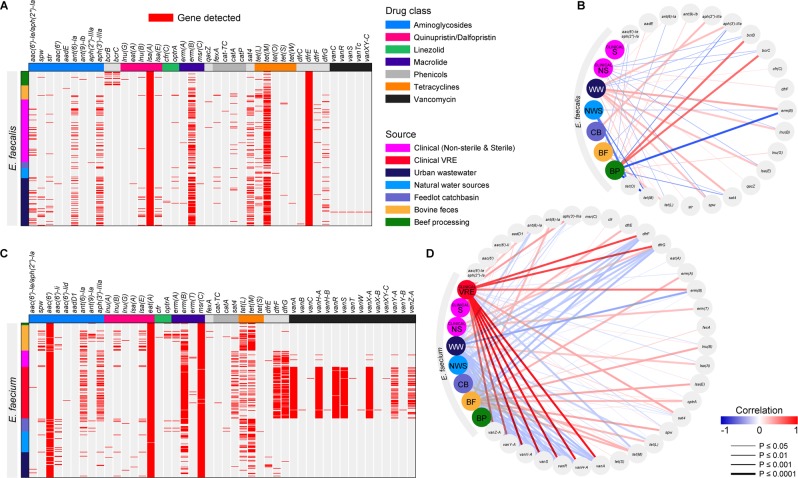
For a One-Health investigation of antimicrobial resistance (AMR) in Enterococcus spp., isolates from humans and beef cattle along with abattoirs, manured fields, natural streams, and wastewater from both urban and cattle feedlot sources were collected over two years. Species identification of Enterococcus revealed distinct associations across the continuum. Of the 8430 isolates collected,Enterococcus faecium and Enterococcus faecalis were the main species in urban wastewater (90%) and clinical human isolates (99%);Enterococcus hirae predominated in cattle (92%) and feedlot catch-basins (60%), whereas natural streams harbored environmental Enterococcus spp. Whole-genome sequencing of E. faecalis(n = 366 isolates) and E. faecium(n = 342 isolates), revealed source clustering of isolates, indicative of distinct adaptation to their respective environments. Phenotypic resistance to tetracyclines and macrolides encoded by tet(M)and erm(B)respectively, was prevalent among Enterococcus spp. regardless of source. For E. faecium from cattle, resistance to β-lactams and quinolones was observed among 3% and 8% of isolates respectively, compared to 76% and 70% of human clinical isolates. Clinical vancomycin-resistant E. faecium exhibited high rates of multi-drug resistance, with resistance to all β-lactam, macrolides, and quinolones tested. Differences in the AMR profiles among isolates reflected antimicrobial use practices in each sector of the One-Health continuum.
Overview
The claims and statistics of this paper haven’t been checked yet.
Free: it reads the open-access text and checks the first 5 claims that cite a source we can check. Create a free account to check every claim.
Integrity signals
Registry
Cites
Statistics
Figures
Verification
Claims the paper makes
The claims and statistics of this paper haven’t been checked yet.
Free: it reads the open-access text and checks the first 5 claims that cite a source we can check. Create a free account to check every claim.
Claims other papers make about this one
Each is checked against this paper’s own text: does it say what the citing paper says it does?
The cited source says what the claim attributes to it.
In the citing paper
“While certain strains that harbor ARGs are known to be nosocomial pathogens, food borne strains are rarely problematic (Zaheer et al., 2020).”
From Exploring the resistome of probiotics, starter cultures, and cheeses via metagenomic analysis (2025) · cites this paper as Zaheer et al., 2020
Self-check
Percentages, sums and reported differences re-computed from the paper’s own numbers.
The self-check needs the paper’s full text.
Citations
Cites
SPAdes: A New Genome Assembly Algorithm and Its Applications to Single-Cell Sequencing
Bankevich, A., Nurk, S., Antipov, D., Gurevich, A. A., Dvorkin, M., Kulikov, A. S., Lesin, V. M., Nikolenko, S. I., Pham, S., Prjibelski, A. D., et al. (2012) · Journal of Computational Biology · doi:10.1089/cmb.2012.0021 · Cited by 25,987
Prokka: rapid prokaryotic genome annotation
Seemann, T. (2014) · Bioinformatics · doi:10.1093/bioinformatics/btu153 · Cited by 18,818
A Simple, Fast, and Accurate Algorithm to Estimate Large Phylogenies by Maximum Likelihood
Guindon, S., & Gascuel, O. (2003) · Systematic Biology · doi:10.1080/10635150390235520 · Cited by 16,806
Carattoli, A., Zankari, E., García-Fernández, A., Voldby Larsen, M., Lund, O., Villa, L., Møller Aarestrup, F., & Hasman, H. (2014) · Antimicrobial Agents and Chemotherapy · doi:10.1128/aac.02412-14 · Cited by 4,877
Antiseptics and Disinfectants: Activity, Action, and Resistance
McDonnell, G., & Russell, A. D. (1999) · Clinical Microbiology Reviews · doi:10.1128/cmr.12.1.147 · Cited by 4,780
Jolley, K. A., Bray, J. E., & Maiden, M. C. J. (2018) · Wellcome Open Research · doi:10.12688/wellcomeopenres.14826.1 · Cited by 3,551
Mobile Genetic Elements Associated with Antimicrobial Resistance
Partridge, S. R., Kwong, S. M., Firth, N., & Jensen, S. O. (2018) · Clinical Microbiology Reviews · doi:10.1128/cmr.00088-17 · Cited by 2,751
The rise of the Enterococcus: beyond vancomycin resistance
Arias, C. A., & Murray, B. E. (2012) · Nature Reviews Microbiology · doi:10.1038/nrmicro2761 · Cited by 1,776
The ecology, epidemiology and virulence of Enterococcus
Fisher, K., & Phillips, C. (2009) · Microbiology · doi:10.1099/mic.0.026385-0 · Cited by 1,227
Update on acquired tetracycline resistance genes
Roberts, M. C. (2005) · FEMS Microbiology Letters · doi:10.1016/j.femsle.2005.02.034 · Cited by 1,010
Research works printed but not linked: 4
- 13. WHO. Guidelines for drinking-water quality. 3rd Edition. World Health Organization. Geneva, Switzerland. (2004).
- 21. Lebreton, F., Willems, R. J. L. & Gilmore, M. S. Enterococcus Diversity, Origins in Nature, and Gut Colonization in Enterococci: From Commensals to Leading Causes of Drug Resistant Infection. (eds. Gilmore, M. S. et al.) Available from: https://www.ncbi.nlm.nih.gov/books/NBK190427/ (Boston: Massachusetts Eye and Ear Infirmary, 2014). 24649513
- 84. Clinical & Laboratory Standards Institute Guidelines. M02-A12: Performance Standards For Antimicrobial Disk Susceptibility Tests; Approved Standard – 12th Edition (2015).
- 85. Critically important antimicrobials for human medicine, 6th revision. World Health Organization. https://www.who.int/foodsafety/publications/antimicrobials-sixth/en/ accessed on October 09, 2019 (2018).
Cited by
Items 101–200 of 288
Velázquez-Meza, M. E., Galarde-López, M., Cornejo‐Juárez, P., Carrillo-Quiroz, B. A., Velázquez-Acosta, C., Bobadilla-del-Valle, M., Ponce‐de‐León, A., & Alpuche-Aranda, C. M. (2024) · Microorganisms · doi:10.3390/microorganisms12040645 · Cited by 14
Peptine, L.-D., Zaharia, A. E., Maftei, N.-M., Răileanu, C.-R., Matache, E.-R., Alice-Crina, C., Chesaru, B. I., Dana, T. I., Oana-Maria, D., Mititelu-Tarțău, L., et al. (2026) · Microorganisms · doi:10.3390/microorganisms14020428 · Cited by 16
“Interdisciplinary care models, involving infectious disease specialists, microbiologists, and clinical pharmacists, have proven essential for optimising treatment and reducing mortality associated with infections caused by multidrug-resistant organisms [83].”
Silago, V., Oravcová, K., Matthews, L., Mshana, S. E., Claus, H., & Seni, J. (2024) · International Journal of Infectious Diseases · doi:10.1016/j.ijid.2024.107208 · Cited by 14
Upreti, C., Kumar, P., Durso, L. M., & Palmer, K. L. (2024) · Applied and Environmental Microbiology · doi:10.1128/aem.00876-24 · Cited by 14
“For this, we downloaded all E. faecalis genomes from the National Center for Biotechnology Information (NCBI) Refseq, available as of 1 September 2021, along with genomes from a recent large-scale One Health investigation of enterococci (25).”
Challenges and considerations for whole-genome-based antimicrobial resistance plasmid investigations
Beh, J. Q., Wick, R. R., Howden, B. P., Connor, C. H., & Webb, J. R. (2025) · Antimicrobial Agents and Chemotherapy · doi:10.1128/aac.01097-25 · Cited by 14
“This is particularly useful for outbreak investigations and for studying plasmid sharing across One Health sectors (26–28).”
Nüesch‐Inderbinen, M., Biggel, M., Haussmann, A., Treier, A., Heyvaert, L., Cernela, N., & Stephan, R. (2023) · Frontiers in Microbiology · doi:10.3389/fmicb.2023.1150070 · Cited by 15
Messele, Y. E., Trott, D. J., Hasoon, M. F., Veltman, T., McMeniman, J. P., Kidd, S. P., Petrovski, K. R., & Low, W. Y. (2023) · Antibiotics · doi:10.3390/antibiotics12071122 · Cited by 14
“Whilst some genetic similarity has been found among enterococci isolated from animals and those causing human infections [20], other studies have reported that animalderived and human-derived enterococci are genetically distinct populations [21,22].”
BackgroundAntimicrobial resistance in Enterococcus isolated from western Canadian cow-calf herds
Fossen, J. D., Campbell, J., Gow, S., Erickson, N., & Waldner, C. (2024) · BMC Veterinary Research · doi:10.1186/s12917-023-03843-6 · Cited by 14
“The most prominent species recovered in the current cow-calf herds was E. casseliflavus which was also the primary species recovered in the USDA 2007-08 cow-calf study [8] and the second most recovered species in the 2017 cow-calf samples [1, 10].”
BackgroundMethodResultInfluentialCurrent insights into the effects of cationic biocides exposure on Enterococcus spp.
Pereira, A. P. D., Antunes, P., Peixe, L. M. S. V., Freitas, A. R., & Novais, C. (2024) · Frontiers in Microbiology · doi:10.3389/fmicb.2024.1392018 · Cited by 14
Murray, S. A., Holbert, A. C., Norman, K. N., Lawhon, S. D., Sawyer, J. E., & Scott, H. M. (2022) · Antibiotics · doi:10.3390/antibiotics11010106 · Cited by 13
“Additionally, in recent surveillance of all enterococci across the One Health continuum, Enterococcus hirae was the most common species isolated from cattle, followed by Enterococcus villorum and then Enterococcus faecium [13].”
BackgroundExploring the resistome of probiotics, starter cultures, and cheeses via metagenomic analysis
Rozman, V., Stopnišek, N., Lorbeg, P. M., Obermajer, T., Kušar, D., & Matijašić, B. B. (2025) · Food Control · doi:10.1016/j.foodcont.2025.111173 · Cited by 12
Fukuda, A., Nakajima, C., Suzuki, Y., & Usui, M. (2024) · Journal of Global Antimicrobial Resistance · doi:10.1016/j.jgar.2024.01.022 · Cited by 12
Santiago, G. S., Dropa, M., Martone-Rocha, S., dos Santos, T. P., Gomes, V. T. D. M., Barbosa, M. R. F., & Razzolini, M. T. P. (2024) · Journal of Water and Health · doi:10.2166/wh.2024.098 · Cited by 13
Agga, G. E., Galloway, H. O., Appala, K., Mahmoudi, F., Kasumba, J., Loughrin, J. H., & Conte, E. D. (2023) · Preventive Veterinary Medicine · doi:10.1016/j.prevetmed.2023.105930 · Cited by 12
Solaiman, S., Patterson, R., Davey, K., Katz, Y., Payne-Sturges, D., Sapkota, A. R., & Micallef, S. A. (2022) · Journal of Applied Microbiology · doi:10.1111/jam.15570 · Cited by 11
“However, they did share some traits with feedlot enterococci which predominantly build up resistance against antibiotics used in animal operations, including tetracycline and macrolides such as erythromycin (Zaheer et al., 2020), as seen in our study.”
ResultUnveiling the pollution of bacteria in water samples through optic sensor
Saylan, Y. (2023) · Microchemical Journal · doi:10.1016/j.microc.2023.109057 · Cited by 11
Pérez-Molina, J. A., Crespillo‐Andújar, C., Trigo, E., Chamorro-Tojeiro, S., Arsuaga, M., Olavarrieta, L., Navia, B., Martín, O., Monge‐Maíllo, B., Norman, F., et al. (2023) · PLoS neglected tropical diseases · doi:10.1371/journal.pntd.0011490 · Cited by 11
“hirae is a common coloniser of animal species, especially cattle, and can be easily isolated from cattle manure and water samples from feeding basins [67,68].”
BackgroundMills, M. C., Davis, A., Lancaster, E., Choi, B., Martin, J. F., Winston, R. J., & Lee, J. (2024) · Water Research · doi:10.1016/j.watres.2024.121873 · Cited by 13
Antimicrobial Resistance in Enterococcus spp. Isolates from Red Foxes (Vulpes vulpes) in Latvia
Terentjeva, M., Ķibilds, J., Avsejenko, J., Cīrulis, A., Labecka, L., & Bērziņš, A. (2024) · Antibiotics · doi:10.3390/antibiotics13020114 · Cited by 10
“Despite AMR patterns in Enterococcus spp. from clinical and animal production sectors being reported to share sector-specific antibiotic-consumption-related traits, resistant enterococci may serve as vectors for the further dissemination of AMR in the human–animal–environment interface [23,24].”
BackgroundResultInfluentialAbdullahi, I. N., Lozano, C., Zarazaga, M., Latorre-Fernández, J., Hallstrøm, S., Rasmussen, A., Stegger, M., & Torres, C. (2024) · Current Microbiology · doi:10.1007/s00284-024-03737-2 · Cited by 10
“Other virulence genes that contribute to the colonization and persistence of enterococcal infections were also identified in most of the isolates [45, 46].”
BackgroundIdentification of key drivers of antimicrobial resistance in Enterococcus using machine learning
Kim, J. I., Manuele, A., Maguire, F., Zaheer, R., McAllister, T. A., & Beiko, R. G. (2024) · Canadian Journal of Microbiology · doi:10.1139/cjm-2024-0049 · Cited by 11
Self-citationKim, M. S., Kim, M., Yeo, Y.-G., Lee, Y., & Han, J. (2024) · Frontiers in Veterinary Science · doi:10.3389/fvets.2023.1283487 · Cited by 9
Ha, J.-S., Kim, J., Lee, N., & Paik, H. (2024) · Microbial Pathogenesis · doi:10.1016/j.micpath.2024.106875 · Cited by 9
An Updated Review of Enterococcus cecorum Infections in Poultry
Higuita, J., Arango, M., Forga, A. J., Cortes, D., & Graham, D. B. (2025) · Avian Diseases · doi:10.1637/aviandiseases-d-24-00098 · Cited by 9
The Slow Pandemic: Emergence of Antimicrobial Resistance in the Postadvent of SARS‐CoV‐2 Pandemic
Osunla, A. C., Oloye, F. F., Kayode, A. J., Femi-Oloye, O. P., Okiti, A. F., Servos, M. R., & Giesy, J. P. (2025) · Global Health · doi:10.1155/ghe3/3172234 · Cited by 13
“Te presence of multidrug efux pump genes, including sugE, PmpM, mexAB-oprM, and mexEF-oprN, in the BAC-degrading community suggests that these efux pumps and oxidase enzymes contribute to the enhancement of microbial resistance to QACs [72, 73].”
SILVA, V. Y. N. E. D., Freitas, C., Ribeiro, J., Igrejas, G., & Poeta, P. A. C. Q. D. (2025) · FEMS Microbes · doi:10.1093/femsmc/xtaf005 · Cited by 9
“Enterococcus spp. are also commonly isolated from water contaminated by se wa ge or fecal wastes, making them reliable bacteriological indicators of fecal contamination (Zaheer et al. 2020 ).”
Yang, B., Yang, J., Chen, R., Chai, J., Wei, X., Zhao, J., Zhao, Y., Deng, F., & Li, Y. (2024) · Microorganisms · doi:10.3390/microorganisms12122409 · Cited by 9
“This study enhances our understanding of the interactions between ARGs, viruses, and their potential microbial hosts of pigs.”
Raju, N. P., Ansari, A., Patil, G., Sheeraz, M. S., Kukade, S., Kumar, S., Kapley, A., & Qureshi, A. (2024) · Journal of Basic Microbiology · doi:10.1002/jobm.202400330 · Cited by 9
“M genes, erm ( erythromycin resistance ), ox (beta ‐ lactamase ), van (vancomycin resistance), and qnr (quinolone resistance) genes, respectively [156 – 158].”
Jamal, R., Li, X., & Weidhaas, J. (2021) · Journal of Microbiological Methods · doi:10.1016/j.mimet.2021.106146 · Cited by 9
Antimicrobial resistance determinants in silage
Nagy, S. Á., Tóth, A. G., Papp, M., Kaplan, S., & Solymosi, N. (2022) · Scientific Reports · doi:10.1038/s41598-022-09296-5 · Cited by 10
Rahman, N., McCullough, T. M., Flores-Orozco, D., Walkowiak, S., Farzan, A., Shekarriz, S., Surette, M. G., Çiçek, N., & Derakhshani, H. (2025) · Animal Microbiome · doi:10.1186/s42523-025-00432-w · Cited by 9
“In addition to the nosocomial infections, E. faecium can cause urinary tract infections, endocarditis, abdominal and biliary tract infections, and wound infections [68].”
Strong, K. M., Marasco, K., Invik, J., Ganshorn, H., Reid‐Smith, R. J., Waldner, C., Otto, S. J. G., Kastelic, J. P., & Checkley, S. (2023) · Frontiers in Veterinary Science · doi:10.3389/fvets.2023.1155772 · Cited by 9
“Antimicrobialresistant bacteria and genetic material coding for AMR could be transmitted to people in various ways along the beef production continuum, including: direct contact between livestock and humans; environmental contamination by sewage or waste contaminating water, food or other fomites; and contamination du…”
BackgroundMethodResultInfluentialAntibiotic Resistance Profile and Detection in ESKAPE Pathogens
Agrawal, A., & Patel, A. K. (2024) · Springer eBooks · doi:10.1007/978-981-99-8799-3_2 · Cited by 11
Selective pressure of various levels of erythromycin on the development of antibiotic resistance
Wang, T., Yi, X., Le, T., Sivachidambaram, V., & Zhou, Z. (2025) · Environmental Pollution · doi:10.1016/j.envpol.2025.125757 · Cited by 8
Rupcheva, M. Y., Kostadinov, K. R., Kalchev, Y., Gardzheva, P., Hristozova, E., Rachkovska, Z., Lengerova, G., Angelova, A., Murdjeva, M., & Petrov, M. M. (2025) · Antibiotics · doi:10.3390/antibiotics14100982 · Cited by 7
“This finding is supported by publications that link the pandemic to the wider use of broad-spectrum antibiotics and the weakening of control mechanisms in hospitals [40,41].”
Rani, V., Aye, N. K., Saksena, R., Dabi, K. C., Mannan, M. A.-U., & Gaind, R. (2024) · European Journal of Clinical Microbiology & Infectious Diseases · doi:10.1007/s10096-024-04784-0 · Cited by 8
“Enterococci show intrinsic resistance to various antibiotics such as aminoglycosides, most cephalosporins, clindamycin and trimethoprim-sulfameth-oxazole [2].”
Cardoso, S. N., Loc'h, A. L., Marques, I., Almeida, A., Sousa, S. R., Saavedra, M. J., Anastácio, S., & Silveira, E. (2023) · One Health & Implementation Research · doi:10.20517/ohir.2023.30 · Cited by 7
AlJindan, R. Y., Mahmoud, N., AlEraky, D. M., Almandil, N. B., AbdulAzeez, S., & Borgio, J. F. (2024) · Journal of Infection and Public Health · doi:10.1016/j.jiph.2024.05.051 · Cited by 8
Kuzma, J., Palcová, L., Timko, J., Bastová, V., Janošcová, V., & Chmelař, D. (2022) · Folia Microbiologica · doi:10.1007/s12223-022-01002-2 · Cited by 7
Kang, X., Wei, Y., Fan, X., Luo, S., Luo, X., Zhao, S., & Wang, G. (2022) · Microbial Pathogenesis · doi:10.1016/j.micpath.2022.105745 · Cited by 9
Habib, I., Ghazawi, A., Lakshmi, G. B., Mohamed, M.-Y. I., Li, D., Khan, M. A., & Sahibzada, S. (2022) · Foods · doi:10.3390/foods11203190 · Cited by 7
“The erm(B) and erm(A) genes encode a ribosomal methylase and are referred to as the critical genes in enterococci conferring erythromycin resistance, and the methylase could also switch resistance to streptogramin B and lincosamides [20].”
BackgroundShirvani, F., Hassanzadeh, R., Attaran, B., Ghandchi, G., Abdollahi, N., Gholinejad, Z., Sheikhi, Z., Behzad, A., Fallah, F., Azimi, L., et al. (2023) · BMC Pediatrics · doi:10.1186/s12887-023-04238-0 · Cited by 7
“They can serve as opportunistic pathogens and are known as the common cause of urinary tract infections, bacteremia, endocarditis, burn and surgical site wound infections, abdomen, and biliary infections [4].”
BackgroundChuang, W.-L., Chang, F.-C., Kuo, C.-F., & Lin, C. (2025) · Infection and Drug Resistance · doi:10.2147/idr.s536057 · Cited by 6
“31 Fluoroquinolone resistance genes such as rpsJ and tetB (48) 15 were also detected in all isolates, although phenotypic resistance to fluoroquinolones varied across strains.”
Thoenen, L., Hummerjohann, J., Schwendimann, L., & Marti, E. (2025) · Frontiers in Microbiology · doi:10.3389/fmicb.2025.1649307 · Cited by 8
Genomic Characterization of Enterococcus casseliflavus Isolated from Beef Cows and Calves
Zaidi, S.-E.-Z., Zaheer, R., Zovoilis, A., Fossen, J. D., Domselaar, G. V., Waldner, C., & McAllister, T. A. (2025) · Microorganisms · doi:10.3390/microorganisms13040907 · Cited by 6
“In surveillance studies, enterococci serve as an indicator of antimicrobial resistance, and a previously high prevalence of tetracycline and macrolide resistance genes was found in Enterococcus hirae , the dominant species in feedlot cattle [6,11,40].”
InfluentialSelf-citationSaeed, M. H., Kujawska, M., Ellen, K., Acuna-Gonzalez, A., Bernabeu, M., Collado, M. C., Mommers, M., van Best, N., Hall, L. J., & Neuhaus, K. (2025) · Gut Microbes · doi:10.1080/19490976.2025.2516699 · Cited by 6
Kowalewicz, C., Michaël, T., Frétin, D., Wattiau, P., & Boland, C. (2022) · MicrobiologyOpen · doi:10.1002/mbo3.1341 · Cited by 8
“This suggests that it might be silent or involved in resistance to other antibiotics (Smoglica et al., 2022) such as macrolides (Portillo et al., 2000; Zaheer et al., 2020).”
BackgroundResultInfluentialShobo, C. O., Amoako, D. G., Allam, M., Ismail, A., Essack, S. Y., & Bester, L. A. (2023) · Global Health · doi:10.1155/2023/6639983 · Cited by 6
“faecalis) is a good indicator bacterium in hospital environment monitoring, and being Grampositive cocci, these opportunistic pathogens not only form noxious bioflms on implanted medical devices and catheters but also they cause abdominal infections, urinary tract infections, surgical site wound infections, bacteremia…”
BackgroundMalidareh, E. B., Ahanjan, M., Marghmalek, S. A., & Goli, H. R. (2022) · Molecular Biology Reports · doi:10.1007/s11033-022-07627-3 · Cited by 6
Tarek, N., Azmy, A. F., Khairalla, A. S., Abdel-Fattah, M., Jefri, O. A., Shaban, M., El-Sayed, A. A. A., & EL-Gendy, A. O. (2023) · Heliyon · doi:10.1016/j.heliyon.2023.e16253 · Cited by 8
“Enterococci are highly tolerant to different environmental conditions, such as varying pH levels, a wide range of temperatures (from 10 C to >45 C), and salt concentrations [2].”
Backgroundde Farias, B. O., Saggioro, E. M., Montenegro, K. S., Magaldi, M., Santos, H. S. O., Pimenta, R. L., Bianco, K., & Clementino, M. M. (2025) · Chemosphere · doi:10.1016/j.chemosphere.2025.144109 · Cited by 7
Maldonado, M. P., Ofori-Darko, D., Nichols, V., French, J., Spence, K. L., Reid‐Smith, R. J., & Parmley, E. J. (2025) · Canadian Journal of Microbiology · doi:10.1139/cjm-2024-0189 · Cited by 5
Genomic and Bioinformatic Insights Into Enterococcus faecalis From Retail Meats in Nigeria
Osunla, A. C., Akinbobola, A., Elshafea, A., Yeboah, E. E. A., Bakare, O. S., Fayanju, A., Fatoba, D. O., Boamah, B., & Amoako, D. G. (2025) · International Journal of Microbiology · doi:10.1155/ijm/7325430 · Cited by 6
“Temporal and geographic analyses revealed that ST ST16 was the most broadly distributed, identi fi ed in multiple countries and across diverse ecological contexts, suggesting a well-adapted and potentially mobile lineage [9, 36].”
Suárez, L., Balbuena, S. D. V., Mejía, I. L. B., Loera-Piedra, A., Espinoza, C. D., González, A., Contreras-Rodríguez, A., Aquino-Andrade, A., Martínez‐Díaz, S. F., & Aguilera‐Arreola, M. G. (2025) · Microorganisms · doi:10.3390/microorganisms13102414 · Cited by 5
“Withing these niches, E. faecalis contributes to host homeostasis by preventing the colonization by pathogenic bacteria, supporting nutrient metabolism, and modulating immune responses [1,2].”
Lauková, A., Bino, E., Zábolyová, N., Maďar, M., & Simonová, M. P. (2025) · Processes · doi:10.3390/pr13113552 · Cited by 5
de Farias, B. O., Montenegro, K. S., Nascimento, A. P. A., Magaldi, M., Gonçalves-Brito, A. S., Flores, C., Moreira, T. C., Neves, F. P. G., Bianco, K., & Clementino, M. M. (2023) · Current Microbiology · doi:10.1007/s00284-023-03418-6 · Cited by 5
Wang, J., Ma, T., Xie, Y., Li, K., Luo, C., Teng, C., Yi, B., Chen, L., & Zhang, H. (2025) · Computational and Structural Biotechnology Journal · doi:10.1016/j.csbj.2025.03.025 · Cited by 7
“On the other hand, Actinobacillus and Enterococcus are harmful Gram-negative bacterium, which are associated with diseases and infections, such as, pneumonia, septicemia and urinary tract infections [47 – 51].”
Occurrence of vanHAX and Related Genes beyond the Actinobacteria Phylum
Yushchuk, O., Binda, E., Fedorenko, V., & Marinelli, F. (2022) · Genes · doi:10.3390/genes13111960 · Cited by 5
Advances in Foodborne Pathogen Analysis
Bhunia, A. K., Bisha, B., Gehring, A., & Brehm‐Stecher, B. F. (2020) · Foods · doi:10.3390/foods9111635 · Cited by 5
“are ubiquitous in nature, and although foodborne transmission is rare, their intrinsic antibiotic resistance and their prevalence in the feedlot, beef processing, urban or surface water and clinical environments raises concern for the dissemination of AMR via horizontal gene transfer among these interactive biospheres…”
BackgroundUnderstanding the ambiguity behind Enterococcus as a probiotic ally or a pathogenic adversary
Elnar, A. G., & Kim, G. (2025) · Critical Reviews in Microbiology · doi:10.1080/1040841x.2025.2562926 · Cited by 6
“Notably, commensal enterococci rarely exhibit anti-microbial resistance beyond their intrinsic resistance profiles (Zaheer et al. 2020) and are genotypically different from nosocomial enterococci (Montealegre et al. 2016; Hanchi et al. 2018).”
Recent Progress in Organic Small‐Molecule Antibacterial Agents
Huang, X., Meng, Y. B., Zhou, P., Wang, M., & Cheng, Z. (2026) · ChemBioChem · doi:10.1002/cbic.202500729 · Cited by 4
Mussa, E. A. M., Al‐Maleki, A. R., Aljaberi, M. A. A., Alsalahi, A., Desa, M. N. M., Jasni, A. S., Ramanoon, S. Z., Abdallah, A. M., & Hamat, R. A. (2025) · Diagnostics · doi:10.3390/diagnostics15101213 · Cited by 4
“Furthermore, tet genes have been extensively investigated across diverse contexts, revealing that enterococci exhibit significant bio-adaptability and a propensity for the rapid emergence of resistant strains upon exposure to antibacterial agents, particularly tetracyclines [5,33–36].”
Knysz, P., Szkucik, K., & Gondek, M. (2025) · BMC Veterinary Research · doi:10.1186/s12917-025-04849-y · Cited by 4
Agga, G. E., Galloway, H. O., & Netthisinghe, A. M. P. (2022) · Frontiers in Antibiotics · doi:10.3389/frabi.2022.1052316 · Cited by 4
“(Zaheer et al., 2020) The present study notes that TETisolates were less diverse than generic and ERY isolates, with fewer number of species identified and dominated by three species which accounted for 95% of the total TET isolates (Table 2).”
BackgroundNikmanesh, B., Yazdansetad, S., Konkori, M., Sadredinamin, M., Ghalavand, Z., & Nojookambari, N. Y. (2024) · Canadian Journal of Infectious Diseases and Medical Microbiology · doi:10.1155/2024/5529598 · Cited by 5
“Current treatment options such as linezolid, daptomycin, quinupristin/dalfopristin, and tigecycline have shown promising efcacy against VRE infections [53].”
BackgroundCardoso, O., Donato, M. M., Henriques, S. C., & Ramos, F. (2025) · Microorganisms · doi:10.3390/microorganisms13061389 · Cited by 5
Corrêa, F. E. L., Zanella, R. C., Cassiolato, A. P., Paiva, A. D., Okura, M. H., Conceição, N., & de Oliveira, A. G. (2022) · Environmental Microbiology Reports · doi:10.1111/1758-2229.13043 · Cited by 4
Matle, I., Atanda, A. C., Pierneef, R., Magwedere, K., & Mafuna, T. (2023) · Genomics · doi:10.1016/j.ygeno.2023.110742 · Cited by 4
León, I. M., Auvermann, B. W., Bush, K. J., Casey, K. D., Pinchak, W. E., Levent, G., Vinasco, J., Lawhon, S. D., Smith, J. K., Scott, H. M., et al. (2025) · Applied Microbiology · doi:10.3390/applmicrobiol5030063 · Cited by 3
Mwatondo, M. H., Chiyenge, M., Rocha, A. Y., & Silverman, A. I. (2025) · ACS ES&T Water · doi:10.1021/acsestwater.5c00285 · Cited by 3
Purohit, H. V., Chakraborty, J., Kothari, R. K., & Bhatt, A. R. (2026) · Probiotics and Antimicrobial Proteins · doi:10.1007/s12602-026-11029-3 · Cited by 3
“Enterococcus spp., for example, are encountered across human and animal hosts and are also recovered from wastewater and other environmental interfaces, highlighting their relevance across One Health domains [94 ].”
Genome Analysis of an Enterococcal Prophage, Entfac.MY
Yazdanizad, M., Fard, R. M. N., Shahedin, G. J., Salehi, M., Dumanloo, M., & Saboor-Yaraghi, A. A. (2022) · Avicenna Journal of Medical Biotechnology · doi:10.18502/ajmb.v14i3.9826 · Cited by 3
“In addition, enterococci are commonly found in wastewater or fecal contaminated water 3 .”
BackgroundŞenol, F. F., Tanrıverdi, E. S., Aytaç, Ö., Toraman, Z. A., & Otlu, B. (2023) · Medicina · doi:10.3390/medicina59122081 · Cited by 3
“Therefore, the severity of illness and immune suppression can be directly associated with prolonged hospital and/or indiscriminate antibiotics use, and these are major risk factors for the nosocomial acquisition of drug-resistant enterococci [2].”
BackgroundGensler, C. A., Hempstead, S. C., Keelara, S., Fedorka–Cray, P. J., Urie, N. J., Wiedenheft, A. M., Stuart, K. L., Marshall, K. L., & Jacob, M. E. (2024) · Foodborne Pathogens and Disease · doi:10.1089/fpd.2023.0089 · Cited by 3
An economic assessment of alternative antimicrobial use scenarios on pig farms
Shrestha, S., da Costa, M. R., Correia‐Gomes, C., Nevel, A., McGowan, A., & Tongue, S. C. (2024) · Frontiers in Veterinary Science · doi:10.3389/fvets.2024.1381499 · Cited by 3
Freitas, A. A. R., Faria, A. R., Mendes, L. T., Merquior, V. L. C., Neves, D. M., Pires, J. R., & Teixeira, L. M. (2024) · Brazilian Journal of Microbiology · doi:10.1007/s42770-024-01527-3 · Cited by 3
“The four virulence genes more frequently detected in the present study ( ace , eeP , efaA , and gelE ) are commonly reported among enterococcal strains, particularly E. faecalis , isolated from different sources [36, 42, 43].”
InfluentialDias, D., Fonseca, C. M. D., Mendo, S., & Caetano, T. (2022) · Chemosphere · doi:10.1016/j.chemosphere.2022.136644 · Cited by 3
Role and Relation of Microbiome to Address Antimicrobial Resistance
Bhattacharya, C., Dinc, M. T., Basu, S., Chaudhuri, R., Fu, C., Cervantes, G., Adhikari, U. D., Panja, R., Qiu, J., Aditya, A., et al. (2024) · Springer eBooks · doi:10.1007/978-3-031-65986-7_6 · Cited by 3
Seafood as a source of antibiotic resistant Enterococcus spp
Albini, E., Leoni, F., Massacci, F. R., Pieralisi, S., Orsini, S., Blasi, F., Gregorio, A. D., Coccitto, S. N., Cinthi, M., D’Achille, G., et al. (2024) · Applied Food Research · doi:10.1016/j.afres.2024.100604 · Cited by 2
Ullah, M. A., Islam, M. S., Rana, M. L., Hassan, J., & Rahman, M. T. (2025) · Animal Research and One Health · doi:10.1002/aro2.101 · Cited by 2
“In addition to its clinical relevance, E. faecalis is frequently isolated from various environmental sources, including water, soil, and food products [10].”
Munene, A. K., Bebora, L. C., Mwangi, P., Mbindyo, C. M., Ndeto, K., Gathenya, C., Ndimbu, G., & Maingi, J. M. (2025) · PAMJ - One Health · doi:10.11604/pamj-oh.2025.18.14.46978 · Cited by 2
Chakroborty, N., Fahim, N. A. I., Islam, M. S., Rana, M. L., Ferdous, F. B., Atiq, M. N., Sobur, M. A., Ahammed, M., Saha, S., & Rahman, M. T. (2026) · International Journal of Microbiology · doi:10.1155/ijm/4082070 · Cited by 2
“Beyond healthcare settings, E. faecalis has been detected in food-producing animals, particularly poultry, raising concerns over zoonotic transmission [7].”
Antimicrobial Resistance in Enterococci of Dairy Origin—A Review
Ледина, Т., Munjić, M. D., Kurčubić, V., Lazić, I. B., & Lončina, J. (2026) · Dairy · doi:10.3390/dairy7010018 · Cited by 2
“The most frequently detected tetracycline resistance genes in non-clinical E. faecalis and E. faecium are tetM , which encodes ribosomal protection proteins, and tetL , which encodes an efflux pump [3,87–92].”
Tartor, Y. H., Enany, M. E., Elsheshtawy, H. M., Kishk, R. M., Ali, E. M., Mahboub, H. H. H., Saad, A. M., Hashem, M. A., & Ramadan, H. H. (2026) · Scientific Reports · doi:10.1038/s41598-026-36572-5 · Cited by 2
“In a study carried out by Zaheer et al. 63 , E. faecalis ST21 clone was recovered from different niches including beef processing, urban wastewater and human clinical sources.”
Yang, H., Li, P., Jiao, J., Li, T., Li, Y., Diao, Z., Li, T., Li, H., Pan, Y., Wang, J., et al. (2026) · International Journal of Food Microbiology · doi:10.1016/j.ijfoodmicro.2026.111726 · Cited by 2
Wongsuk, T., Homkaew, A., Oonanant, W., Phumisantiphong, U., Nutalai, D., Utaranark, P., & Boonsilp, S. (2026) · PLoS ONE · doi:10.1371/journal.pone.0343967 · Cited by 2
“However, vancomycin resistance was observed more frequently in E. faecium than in E. faecalis , consistent with the results of previous studies [23,24].”
Ribeiro, J., Lameiras, R., SILVA, V. Y. N. E. D., Igrejas, G., Nunes, F. C., Ribeiro, A. I., Mateus, T. L., & Poeta, P. A. C. Q. D. (2026) · Antibiotics · doi:10.3390/antibiotics15040379 · Cited by 2
“The coexistence of these resistance and virulence genes enhances the potential of Enterococcus spp. to act as reservoirs and vectors of AMR within the One Health framework, linking human, animal, and environmental health [14,15].”
Simon, M. T., Moses, M. P., & Samson, M. S. (2023) · Journal Of Advanced Pharmacy Education And Research · doi:10.51847/uj8zz3w5dt · Cited by 2
Jariyapamornkoon, N., Boonkam, P., & Suanpairintr, N. (2023) · Veterinary World · doi:10.14202/vetworld.2023.2497-2503 · Cited by 2
“Enterococcus spp. is known to be intrinsically resistant to various antibacterial drugs [14], with E. faecium isolates being more resistant than E. faecalis [35].”
BackgroundImpactos causados no meio ambiente por resíduos antimicrobianos de uso veterinário
Portella, D. N., Faria, E. C., Hennequin, I. S., dos Santos, J. T., Alves, J. C., & Galeb, L. D. A. G. (2023) · Brazilian Journal of Animal and Environmental Research · doi:10.34188/bjaerv6n4-049 · Cited by 2
Onaran, B., Cengiz, G., & Göncüoğlu, M. (2023) · PubMed Central · doi:10.22099/ijvr.2023.47465.6855 · Cited by 2
“This could lead to reduced effectiveness of antibiotics in treating infections in both animals and humans, ultimately compromising medical interventions (Leclercq, 1997; Zaheer et al ., 2020).”
BackgroundOrak, F., Yalçınkaya, K. T., Aydın, F., Karakaya, E., Doğaner, A., Müştak, İ. B., Aral, M., & Ipek, S. (2024) · Journal of Clinical Practice and Research · doi:10.14744/cpr.2024.03419 · Cited by 2
Cytotoxic Activity of Vancomycin-Resistant Enterococci Isolated from Hospitalised Patients
Szczuka, E., Rolnicka, D., & Wesołowska, M. (2024) · Pathogens · doi:10.3390/pathogens13100827 · Cited by 2
“E. faecalis and E. faecium are implicated in the majority of healthcare-associated Enterococcus spp. infections [5,6].”
BackgroundThe application of bacteriophage ZCEC5 to control multi-drug resistant E. coli in dairy products
Fouad, M. T., El-Shenawy, M., Fawzy, S., Senna, A. A., & El‐Shibiny, A. (2023) · Egyptian Journal of Chemistry · doi:10.21608/ejchem.2023.210228.7971 · Cited by 2
Macrolides, Azalides, and Ketolides
Prescott, J. F., & Baptiste, K. E. (2024) · Wiley eBooks · doi:10.1002/9781119654629.ch12 · Cited by 3
Metagenomics and limnological studies of riverine ecosystems
Mahato, S., Islam, S. S., Karmakar, S., & Midya, S. (2024) · Elsevier eBooks · doi:10.1016/b978-0-443-13659-7.00016-3 · Cited by 1
Mrenoshki, D., Lucente, M. S., Corrente, M., Grassi, A., Sambro, L. D., Parisi, A., Elia, G., Zarea, A. A. K., Tempesta, M., & Greco, G. (2024) · Acta Tropica · doi:10.1016/j.actatropica.2024.107305 · Cited by 1
Antimicrobial Stewardship in Food‐producing Animals
Speksnijder, D. C., Page, S. W., Wagenaar, J. A., & Prescott, J. F. (2024) · Wiley eBooks · doi:10.1002/9781119654629.ch23 · Cited by 1
Ourtirane, R., Connil, N., & Bendali, F. (2025) · Microbial Pathogenesis · doi:10.1016/j.micpath.2025.107736 · Cited by 1
Lin, W.-R., Liu, R.-C., Yen, C.-L., & Wang, P. (2025) · Water Science & Technology · doi:10.2166/wst.2025.110 · Cited by 1
Metadata
- Authors
- Zaheer, R., Cook, S. R., Barbieri, R., Goji, N., Cameron, A., Petkau, A., Polo, R. O., Tymensen, L., Stamm, C., Song, J., Hannon, S., Jones, T., Church, D., Booker, C. W., Amoako, K., Van Domselaar, G., Read, R. R., & McAllister, T. A.
- Affiliations
- Agriculture and Agri-Food Canada (CA)
- Canadian Food Inspection Agency (CA)
- Public Health Agency of Canada (CA)
- Alberta Health Services (CA)
- University of Calgary (CA)
- Corresponding author
- McAllister, Tim A.
- ORCID
- Venue
- Scientific Reports
- Published
- 2020-03-03
- Volume
- 10
- Issue
- 1
- Pages
- 3937-3937
- ISSN
- 2045-2322 (ISSN-L)
- PMC
- PMC7054549
- OpenAlex
- W3010340539
- Cited by
- 262
- References
- 82
- Citations by year
- 2026: 34 · 2025: 44 · 2024: 55 · 2023: 42 · 2022: 50 · 2021: 26 · 2020: 9
- FWCI
- 10.61
- Type
- journal article
- Language
- en
- Update notices
- correction (2020-08-04)
- Open access
- gold
- doi.org
- Licence
- cc-by
- creativecommons.org/licenses/by/4.0 (tdm)
- creativecommons.org/licenses/by/4.0 (vor)
- Locations
- Scientific Reports (publishedVersion, cc-by)
- PubMed Central (publishedVersion, cc-by)
- PubMed (publishedVersion)
- Federal Open Science Repository of Canada / Le Dépôt fédéral de science ouverte du Canada (submittedVersion, cc-by)
- Funders
- Beef Cattle Research Council (Project FOS 10.13)
- Genomics Research and Development Initiative of the Government of Canada (001)
- Topics
- Health Sciences › Medicine › Microbiology (medical) › Antibiotic Resistance in Bacteria
- Physical Sciences › Environmental Science › Pollution › Pharmaceutical and Antibiotic Environmental Impacts
- Health Sciences › Medicine › Infectious Diseases › Antibiotic Use and Resistance
- Keywords
- Enterococcus, antimicrobial resistance, One Health, Enterococcus faecium, Enterococcus faecalis, Enterococcus hirae, vancomycin resistance, tetracycline resistance, macrolide resistance, beta-lactam resistance, quinolone resistance, multidrug resistance, municipal wastewater, beef cattle, feedlot, natural streams, antimicrobial use, whole genome sequencing, source clustering
- MeSH terms
- Whole Genome Sequencing, Anti-Bacterial Agents, Humans, Phylogeny, Enterococcus faecalis, Tetracyclines, Virulence, Quinolones, Enterococcus, Enterococcus faecium, beta-Lactam Resistance, Macrolides, Drug Resistance, Bacterial
About these checks
Registry, retraction, Cites and statistics results are computed, not judged, with one exception: a printed reference that no index lists is read once by a model before it counts as a citation error. Claims are extracted by a model and kept only when their quote appears verbatim in the text; each cited source is then checked, with a model’s help, for whether it says what the claim relies on. Those verdicts can be wrong — read the claim’s quote and the cited source before relying on one.
Statistics and arithmetic are recomputed, not judged.
Confidence bands are shown only for fields calibrated on our annotated test set. None is calibrated yet, so no band is shown.
What counts as a claim ›How we measure confidence ›How we check this ›
Are you an author, or do you see a problem with this page? Request a review
Data sources
Bibliographic data: Semantic Scholar, OpenAlex, Crossref.
Contains information from the Semantic Scholar Academic Graph Datasets, made available under the ODC Attribution License (ODC-BY 1.0).
Semantic Scholar’s data is described in: Kinney, R., et al. (2023). The Semantic Scholar Open Data Platform. arXiv:2301.10140.
