

Surveillance of Enterococcus spp. reveals distinct species and antimicrobial resistance diversity across a One-Health continuum
Open accessThe DOI matches its Crossref record; 82 of the 82 references it cites were found in a registry or an index.
Abstract
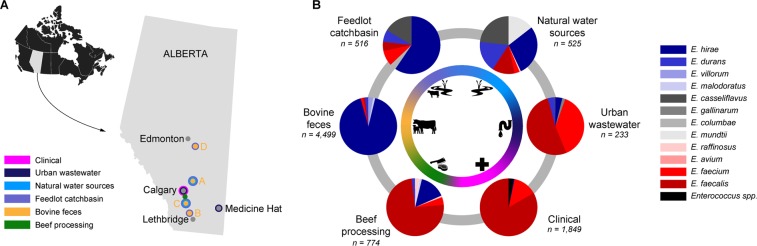
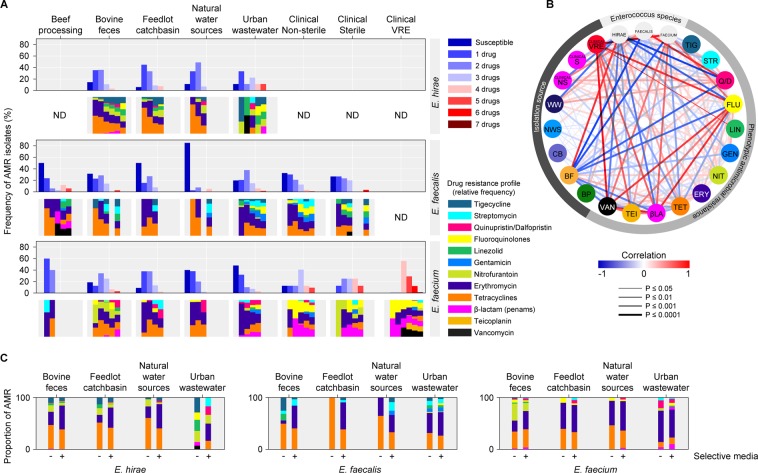
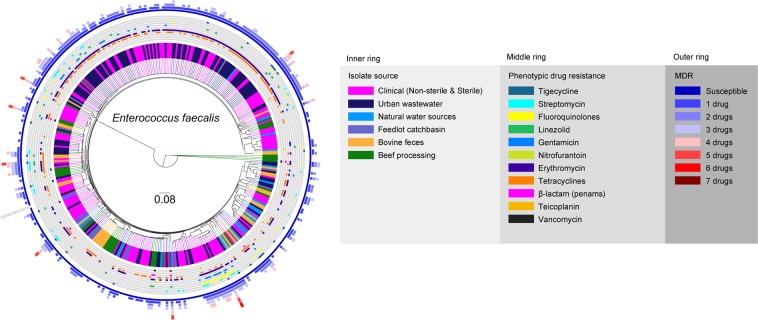
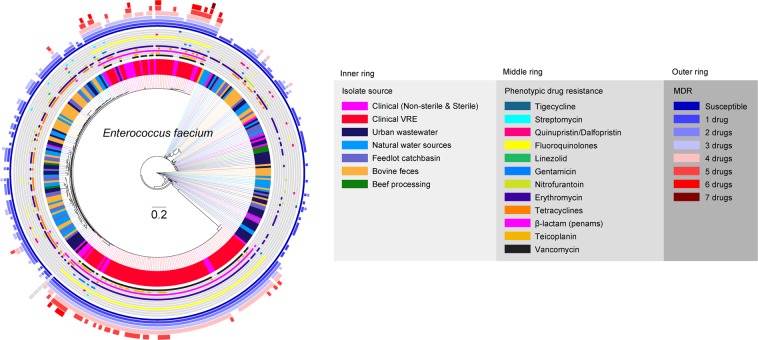
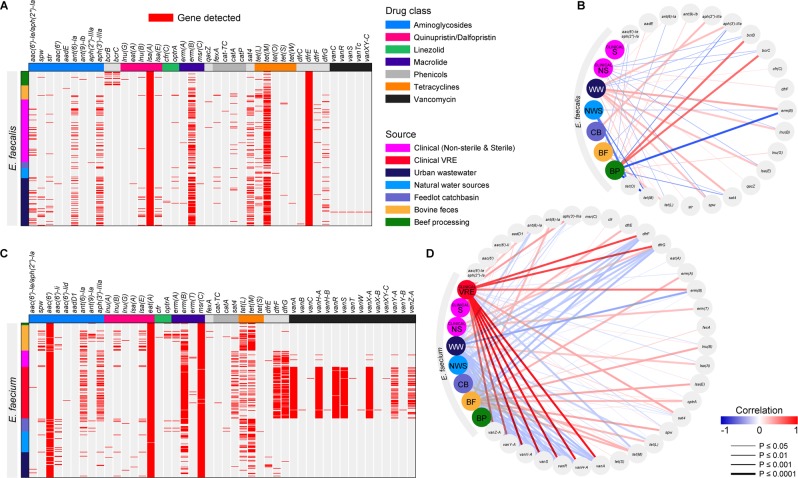
For a One-Health investigation of antimicrobial resistance (AMR) in Enterococcus spp., isolates from humans and beef cattle along with abattoirs, manured fields, natural streams, and wastewater from both urban and cattle feedlot sources were collected over two years. Species identification of Enterococcus revealed distinct associations across the continuum. Of the 8430 isolates collected,Enterococcus faecium and Enterococcus faecalis were the main species in urban wastewater (90%) and clinical human isolates (99%);Enterococcus hirae predominated in cattle (92%) and feedlot catch-basins (60%), whereas natural streams harbored environmental Enterococcus spp. Whole-genome sequencing of E. faecalis(n = 366 isolates) and E. faecium(n = 342 isolates), revealed source clustering of isolates, indicative of distinct adaptation to their respective environments. Phenotypic resistance to tetracyclines and macrolides encoded by tet(M)and erm(B)respectively, was prevalent among Enterococcus spp. regardless of source. For E. faecium from cattle, resistance to β-lactams and quinolones was observed among 3% and 8% of isolates respectively, compared to 76% and 70% of human clinical isolates. Clinical vancomycin-resistant E. faecium exhibited high rates of multi-drug resistance, with resistance to all β-lactam, macrolides, and quinolones tested. Differences in the AMR profiles among isolates reflected antimicrobial use practices in each sector of the One-Health continuum.
Overview
The claims and statistics of this paper haven’t been checked yet.
Free: it reads the open-access text and checks the first 5 claims that cite a source we can check. Create a free account to check every claim.
Integrity signals
Registry
Cites
Statistics
Figures
Verification
Claims the paper makes
The claims and statistics of this paper haven’t been checked yet.
Free: it reads the open-access text and checks the first 5 claims that cite a source we can check. Create a free account to check every claim.
Claims other papers make about this one
Each is checked against this paper’s own text: does it say what the citing paper says it does?
The cited source says what the claim attributes to it.
In the citing paper
“While certain strains that harbor ARGs are known to be nosocomial pathogens, food borne strains are rarely problematic (Zaheer et al., 2020).”
From Exploring the resistome of probiotics, starter cultures, and cheeses via metagenomic analysis (2025) · cites this paper as Zaheer et al., 2020
Self-check
Percentages, sums and reported differences re-computed from the paper’s own numbers.
The self-check needs the paper’s full text.
Citations
Cites
SPAdes: A New Genome Assembly Algorithm and Its Applications to Single-Cell Sequencing
Bankevich, A., Nurk, S., Antipov, D., Gurevich, A. A., Dvorkin, M., Kulikov, A. S., Lesin, V. M., Nikolenko, S. I., Pham, S., Prjibelski, A. D., et al. (2012) · Journal of Computational Biology · doi:10.1089/cmb.2012.0021 · Cited by 25,987
Prokka: rapid prokaryotic genome annotation
Seemann, T. (2014) · Bioinformatics · doi:10.1093/bioinformatics/btu153 · Cited by 18,818
A Simple, Fast, and Accurate Algorithm to Estimate Large Phylogenies by Maximum Likelihood
Guindon, S., & Gascuel, O. (2003) · Systematic Biology · doi:10.1080/10635150390235520 · Cited by 16,806
Carattoli, A., Zankari, E., García-Fernández, A., Voldby Larsen, M., Lund, O., Villa, L., Møller Aarestrup, F., & Hasman, H. (2014) · Antimicrobial Agents and Chemotherapy · doi:10.1128/aac.02412-14 · Cited by 4,877
Antiseptics and Disinfectants: Activity, Action, and Resistance
McDonnell, G., & Russell, A. D. (1999) · Clinical Microbiology Reviews · doi:10.1128/cmr.12.1.147 · Cited by 4,780
Jolley, K. A., Bray, J. E., & Maiden, M. C. J. (2018) · Wellcome Open Research · doi:10.12688/wellcomeopenres.14826.1 · Cited by 3,551
Mobile Genetic Elements Associated with Antimicrobial Resistance
Partridge, S. R., Kwong, S. M., Firth, N., & Jensen, S. O. (2018) · Clinical Microbiology Reviews · doi:10.1128/cmr.00088-17 · Cited by 2,751
The rise of the Enterococcus: beyond vancomycin resistance
Arias, C. A., & Murray, B. E. (2012) · Nature Reviews Microbiology · doi:10.1038/nrmicro2761 · Cited by 1,776
The ecology, epidemiology and virulence of Enterococcus
Fisher, K., & Phillips, C. (2009) · Microbiology · doi:10.1099/mic.0.026385-0 · Cited by 1,227
Update on acquired tetracycline resistance genes
Roberts, M. C. (2005) · FEMS Microbiology Letters · doi:10.1016/j.femsle.2005.02.034 · Cited by 1,010
Research works printed but not linked: 4
- 13. WHO. Guidelines for drinking-water quality. 3rd Edition. World Health Organization. Geneva, Switzerland. (2004).
- 21. Lebreton, F., Willems, R. J. L. & Gilmore, M. S. Enterococcus Diversity, Origins in Nature, and Gut Colonization in Enterococci: From Commensals to Leading Causes of Drug Resistant Infection. (eds. Gilmore, M. S. et al.) Available from: https://www.ncbi.nlm.nih.gov/books/NBK190427/ (Boston: Massachusetts Eye and Ear Infirmary, 2014). 24649513
- 84. Clinical & Laboratory Standards Institute Guidelines. M02-A12: Performance Standards For Antimicrobial Disk Susceptibility Tests; Approved Standard – 12th Edition (2015).
- 85. Critically important antimicrobials for human medicine, 6th revision. World Health Organization. https://www.who.int/foodsafety/publications/antimicrobials-sixth/en/ accessed on October 09, 2019 (2018).
Cited by
Bacterial Antibiotic Resistance: The Most Critical Pathogens
Mancuso, G., Midiri, A., Gerace, E., & Biondo, C. (2021) · Pathogens · doi:10.3390/pathogens10101310 · Cited by 1,332
Antibiotic Resistance in Bacteria—A Review
Urban-Chmiel, R., Marek, A., Stępień-Pyśniak, D., Wieczorek, K., Dec, M., Nowaczek, A., & Osek, J. (2022) · Antibiotics · doi:10.3390/antibiotics11081079 · Cited by 580
Denissen, J., Reyneke, B., Waso-Reyneke, M., Havenga, B., Barnard, T., Khan, S., & Khan, W. (2022) · International Journal of Hygiene and Environmental Health · doi:10.1016/j.ijheh.2022.114006 · Cited by 395
Kim, J. I., Maguire, F., Tsang, K. K., Gouliouris, T., Peacock, S. J., McAllister, T. A., McArthur, A. G., & Beiko, R. G. (2022) · Clinical Microbiology Reviews · doi:10.1128/cmr.00179-21 · Cited by 256
Self-citationEnterococci, from Harmless Bacteria to a Pathogen
Ramos, S., Silva, V., Dapkevicius, M., Igrejas, G., & Poeta, P. (2020) · Microorganisms · doi:10.3390/microorganisms8081118 · Cited by 182
“Furthermore, such strains also commonly carry resistance genes to other classes of antimicrobials, such as fluoroquinolones, macrolides, and tetracyclines [7].”
BackgroundWastewater surveillance of antibiotic-resistant bacterial pathogens: A systematic review
Tiwari, A., Kurittu, P., Al-Mustapha, A. I., Heljanko, V., Johansson, V., Thakali, O., Mishra, S. K., Lehto, K.-M., Lipponen, A., Oikarinen, S., et al. (2022) · Frontiers in Microbiology · doi:10.3389/fmicb.2022.977106 · Cited by 187
“All traditional DNA-based methods have the common limitation, that they cannot differentiate between viable and dead cells as DNA can also persist for a certain amount of time in dead cells or even as extracellular DNA (Nocker and Camper, 2006; Zaiko et al., 2018; Rytkönen et al., 2021).”
BackgroundVancomycin Resistance in Enterococcus and Staphylococcus aureus
Li, G., Walker, M. J., & Oliveira, D. M. P. D. (2022) · Microorganisms · doi:10.3390/microorganisms11010024 · Cited by 186
Antibiotics in Food Chain: The Consequences for Antibiotic Resistance
Kumar, S. B., Arnipalli, S. R., & Ziouzenkova, O. (2020) · Antibiotics · doi:10.3390/antibiotics9100688 · Cited by 164
“This continuum of antibiotic resistance concept was proposed to describe the progressive interconnecting influence of human, industrial, agricultural, and wild environments [12].”
BackgroundEnterococcus faecium: evolution, adaptation, pathogenesis and emerging therapeutics
Wei, Y., Araya, D. P., & Palmer, K. L. (2024) · Nature Reviews Microbiology · doi:10.1038/s41579-024-01058-6 · Cited by 170
“Additionally, wastewater treatment plants collect liquids from a wide diversity of environmental sources and serve as meeting spots for all types of E. faecium strains; indeed, recent phylogenetic analyses found wastewater isolates spread across all clustering groups 31,43,55 .”
Systematic review of wastewater surveillance of antimicrobial resistance in human populations
Chau, K., Barker, L., Budgell, E. P., Vihta, K. D., Sims, N. F., Kasprzyk‐Hordern, B., Harriss, E., Crook, D. W., Read, D. S., Walker, A. S., et al. (2022) · Environment International · doi:10.1016/j.envint.2022.107171 · Cited by 165
Microbial Resistance to Antibiotics and Effective Antibiotherapy
Chiş, A. A., Rus, L. L., Morgovan, C., Arseniu, A. M., Frum, A., Vonica-Țincu, A. L., Gligor, F. G., Mureșan, M.-L., & Dobrea, C. M. (2022) · Biomedicines · doi:10.3390/biomedicines10051121 · Cited by 152
Dadashi, M., Sharifian, P., Bostanshirin, N., Hajikhani, B., Bostanghadiri, N., Khosravi-Dehaghi, N., van Belkum, A., & Darban‐Sarokhalil, D. (2021) · Frontiers in Medicine · doi:10.3389/fmed.2021.720647 · Cited by 107
“Therefore, the emergence of VRE has prompted the use of novel and modified therapeutic agents including linezolid, daptomycin, and tigecycline, although resistance to those agents has already been reported in clinical settings (19, 20).”
BackgroundBoccella, M., Santella, B., Pagliano, P., Filippis, A. D., Casolaro, V., Galdiero, M., Borrelli, A., Capunzo, M., Boccia, G., & Franci, G. (2021) · Antibiotics · doi:10.3390/antibiotics10121552 · Cited by 115
“, along with the increased incidence rate, is their increasing resistance to antimicrobial agents [23,24].”
BackgroundThe multifaceted lifestyle of enterococci: genetic diversity, ecology and risks for public health
Cattoir, V. (2021) · Current Opinion in Microbiology · doi:10.1016/j.mib.2021.10.013 · Cited by 99
Terzić-Vidojević, A., Veljović, K., Popović, N., Tolinački, M., & Golić, N. (2021) · Foods · doi:10.3390/foods10112753 · Cited by 95
“The high frequency of antibiotic resistance in the tested dairy enterococcal isolates was in accordance with published data on the results of extensive use of antibiotics in livestock production [18,23,71,75].”
BackgroundResultRegulation of Resistance in Vancomycin-Resistant Enterococci: The VanRS Two-Component System
Guffey, A. A., & Loll, P. J. (2021) · Microorganisms · doi:10.3390/microorganisms9102026 · Cited by 80
Hazra, M., & Durso, L. M. (2022) · Antibiotics · doi:10.3390/antibiotics11010114 · Cited by 78
“Enterococci possess an intrinsic ability to resist a wide spectrum of antibiotics, including cephalosporins and aminoglycosides [68].”
BackgroundBertelli, C., Gray, K. L., Woods, N., Lim, A. C., Tilley, K. E., Winsor, G. L., Hoad, G. R., Roudgar, A., Spencer, A., Peltier, J., et al. (2022) · Microbial Genomics · doi:10.1099/mgen.0.000818 · Cited by 66
“Datasets of 20, 100 and 1000 draft Enterococcus faecium genomes [37, 38] ran in 22 min, 59 min and 14 h, respectively.”
Emerging enterococcus pore-forming toxins with MHC/HLA-I as receptors
Xiong, X., Tian, S., Yang, P., Lebreton, F., Bao, H., Sheng, K., Yin, L., Chen, P., Zhang, J., Qi, W., et al. (2022) · Cell · doi:10.1016/j.cell.2022.02.002 · Cited by 59
“Searching public databases revealed two more toxins (Epx3 and Epx4) at the beginning of our study, and our most recent search identified four additional homologs (Epxs5–8) (Goncharov et al., 2016; Manson et al., 2019; Poyet et al., 2019; Rushton-Green et al., 2019; Tyson et al., 2018; Weigand et al., 2014; Zaheer et a…”
BackgroundDissemination of Enterococcal Genetic Lineages: A One Health Perspective
Marques, J. N. D. M., Coelho, M., Santana, A. R., Pinto, D., & Semedo‐Lemsaddek, T. (2023) · Antibiotics · doi:10.3390/antibiotics12071140 · Cited by 62
“Multidrug resistance to macrolides, tetracyclines, streptogramins, and glycopeptides has been observed in both clinical and animal/veterinary enterococci [38].”
BackgroundColl, F., Gouliouris, T., Blane, B., Yeats, C., Raven, K. E., Ludden, C., Khokhar, F., Wilson, H. J., Roberts, L. W., Harrison, E. M., et al. (2024) · The Lancet Microbe · doi:10.1016/s2666-5247(23)00297-5 · Cited by 55
Gholipour, S., Shamsizadeh, Z., Halabowski, D., Gwenzi, W., & Nikaeen, M. (2023) · The Science of The Total Environment · doi:10.1016/j.scitotenv.2023.168056 · Cited by 52
Matsumura, Y., Yamamoto, M., Gomi, R., Tsuchido, Y., Shinohara, K., Noguchi, T., & Nagao, M. (2025) · Clinical Microbiology Reviews · doi:10.1128/cmr.00140-22 · Cited by 57
Let Me Upgrade You: Impact of Mobile Genetic Elements on Enterococcal Adaptation and Evolution
Johnson, C. N., Sheriff, E. K., Duerkop, B. A., & Chatterjee, A. (2021) · Journal of Bacteriology · doi:10.1128/jb.00177-21 · Cited by 50
Behera, B. K., Dehury, B., Rout, A. K., Patra, B., Mantri, N. L., Chakraborty, H. J., Sarkar, D. J., Kaushik, N. K., Bansal, V., Singh, I., et al. (2021) · Gene Reports · doi:10.1016/j.genrep.2021.101372 · Cited by 51
Alzahrani, O. M., Fayez, M., Alswat, A. S., Alkafafy, M., Mahmoud, S. F., Al-Marri, T., Almuslem, A., Ashfaq, H., & Yusuf, S. (2022) · Antibiotics · doi:10.3390/antibiotics11030380 · Cited by 50
“Different tetracycline-resistance genes were identified in the Enterococcus species [28,58].”
BackgroundTreated wastewater reuse and its impact on soil properties and potato and corn growth
Jaoude, L. A., Kamaleddine, F., Said, R. B., Mohtar, R. H., Dbaibo, R., & Yanni, S. F. (2024) · The Science of The Total Environment · doi:10.1016/j.scitotenv.2024.178130 · Cited by 47
Fatoba, D. O., Amoako, D. G., Akebe, A. L. K., Ismail, A., & Essack, S. Y. (2021) · Journal of Environmental Management · doi:10.1016/j.jenvman.2021.114101 · Cited by 49
Antibiotic-resistant microbial populations in urban receiving waters and wastewaters from Tanzania
Ripanda, A., Rwiza, M. J., Nyanza, E. C., Miraji, H., Bih, N. L., Mzula, A., Mwega, E., Njau, K. N., Vuai, S. A. H., & Machunda, R. L. (2022) · Environmental Chemistry and Ecotoxicology · doi:10.1016/j.enceco.2022.10.003 · Cited by 43
Grudlewska‐Buda, K., Skowron, K., Bauza-Kaszewska, J., Budzyńska, A., Wiktorczyk-Kapischke, N., Wilk, M., Wujak, M., & Paluszak, Z. (2023) · BMC Microbiology · doi:10.1186/s12866-023-02834-9 · Cited by 45
“are defined as potentially opportunistic pathogens causing life-threatening infections, which mainly affect hospitalized patients [4].”
BackgroundAmuasi, G. R., Dsani, E., Owusu-Nyantakyi, C., Owusu, F. A., Mohktar, Q., Nilsson, P., Adu, B., Hendriksen, R. S., & Egyir, B. (2023) · Frontiers in Microbiology · doi:10.3389/fmicb.2023.1254896 · Cited by 41
Hourigan, D., Stefanovic, E., Hill, C., & Ross, R. P. (2024) · BMC Microbiology · doi:10.1186/s12866-024-03243-2 · Cited by 40
“The teicoplanin resistance gene VanZ , often co-localises with the VanA gene cluster and Tn1546, was detected in 46% of isolates [77].”
BackgroundInfluentialEnterococci as a One Health indicator of antimicrobial resistance
Zaidi, S.-E.-Z., Zaheer, R., Zovoilis, A., & McAllister, T. A. (2024) · Canadian Journal of Microbiology · doi:10.1139/cjm-2024-0024 · Cited by 42
Self-citationMareković, I., Markanović, M., Lešin, J., & Ćorić, M. (2024) · Pathogens · doi:10.3390/pathogens13110966 · Cited by 40
“[35].”
Genomic insights into antibiotic resistance and mobilome of lactic acid bacteria and bifidobacteria
Rozman, V., Mohar Lorbeg, P., Treven, P., Accetto, T., Janežič, S., Rupnik, M., & Bogovič Matijašić, B. (2023) · Life Science Alliance · doi:10.26508/lsa.202201637 · Cited by 36
“(enterococci) is widespread and considerably well described, as some strains are important nosocomial pathogens (3, 13).”
BackgroundInfluentialZhang, Q., Wang, S., Zhang, X., Zhang, K., Li, Y., Yin, Y., Zhang, R., & Zhang, Z. (2022) · Frontiers in Immunology · doi:10.3389/fimmu.2022.938972 · Cited by 36
“coli and is considered to be a robust organism capable of withstanding various environmental pressures (23).”
BackgroundMcConn, B. R., Kraft, A. L., Durso, L. M., Ibekwe, A. M., Frye, J. G., Wells, J. E., Tobey, E., Ritchie, S., Williams, C. F., Cook, K. L., et al. (2024) · The Science of The Total Environment · doi:10.1016/j.scitotenv.2024.172190 · Cited by 36
Cebeci, T. (2024) · Scientific Reports · doi:10.1038/s41598-024-63984-y · Cited by 39
“Other studies reported the prevalence of Enterococcus spp. on cattle in a slaughterhouse with a recovery rate of E. hirae , ranging from 8 to 92% 13,38 .”
Adator, E. H., Walker, M., Narváez-Bravo, C. A., Zaheer, R., Goji, N., Cook, S. R., Tymensen, L. D., Hannon, S. J., Church, D. L., Booker, C. W., et al. (2020) · Microorganisms · doi:10.3390/microorganisms8030448 · Cited by 41
Self-citationMakowska, N., Bresa, K., Koczura, R., Philips, A., Nowis, K., & Mokracka, J. (2020) · The Science of The Total Environment · doi:10.1016/j.scitotenv.2020.144176 · Cited by 35
Davis, B. C., Keenum, I. M., Calarco, J., Liguori, K., Milligan, E., Pruden, A. J., & Harwood, V. J. (2022) · Water Research X · doi:10.1016/j.wroa.2022.100161 · Cited by 42
“Recent progress has been made in applying culture-based methods for monitoring antibiotic resistant Enterococcus spp. in the environment, with emphasis on human and animal wastewater, and hospital wastewater pollution (Gouliouris et al., 2019; Savin et al., 2020; Zaheer et al., 2020).”
BackgroundInfluentialRogers, L., Strong, K. M., Cork, S. C., McAllister, T. A., Liljebjelke, K. A., Zaheer, R., & Checkley, S. (2021) · Frontiers in Public Health · doi:10.3389/fpubh.2021.599285 · Cited by 42
Self-citationChen, H., Wang, X., Yin, Y., Li, S., Zhang, Y., Wang, Q., & Wang, H. (2019) · BMC Microbiology · doi:10.1186/s12866-019-1537-0 · Cited by 34
Cho, S., Barrett, J. B., Frye, J. G., & Jackson, C. R. (2020) · Microorganisms · doi:10.3390/microorganisms8091338 · Cited by 38
“The high prevalence of ant(6)-Ia was also observed in other studies, not only for human and animals but also for environmental water [4,13,30,32,33].”
BackgroundWynendaele, E., Debunne, N., Janssens, Y., Spiegeleer, A. D., Verbeke, F., Tack, L., Welden, S. V., Goossens, E., Knappe, D., Hoffmann, R., et al. (2022) · BMC Biology · doi:10.1186/s12915-022-01317-z · Cited by 33
Mbanga, J., Amoako, D. G., Abia, A. L. K., Allam, M., Ismail, A., & Essack, S. Y. (2021) · Frontiers in Microbiology · doi:10.3389/fmicb.2021.648454 · Cited by 34
Holman, D. B., Klima, C. L., Gzyl, K. E., Zaheer, R., Service, C., Jones, T. H., & McAllister, T. A. (2021) · Microbiology Spectrum · doi:10.1128/spectrum.01980-21 · Cited by 35
Self-citationSanderson, H., Gray, K. L., Manuele, A., Maguire, F., Khan, A., Liu, C., Rudrappa, C. N., Nash, J. J., Robertson, J. A., Bessonov, K., et al. (2022) · Microbial Genomics · doi:10.1099/mgen.0.000880 · Cited by 36
“The dataset for this study encompassed 1766 genomes: 334 E. faecium genomes from Alberta, Canada [2] and 1432 from the UK [1].”
Self-citationComparative Genomic Analysis of Enterococci across Sectors of the One Health Continuum
Zaidi, S.-E.-Z., Zaheer, R., Poulin‐Laprade, D., Scott, A., Rehman, M. A., Diarra, M. S., Topp, E., Domselaar, G. V., Zovoilis, A., & McAllister, T. A. (2023) · Microorganisms · doi:10.3390/microorganisms11030727 · Cited by 32
“faecalis are often associated with human infections [9].”
BackgroundMethodSelf-citationAdator, E. H., Narváez-Bravo, C. A., Zaheer, R., Cook, S. R., Tymensen, L. D., Hannon, S. J., Booker, C. W., Church, D. L., Read, R., & McAllister, T. A. (2020) · Microorganisms · doi:10.3390/microorganisms8060885 · Cited by 37
“Isolates were categorized as MDR if they showed resistance to antimicrobial agents in ≥2 different antimicrobial classes [49,50].”
Self-citationIdentification and phylogenetic analysis of Enterococcus isolates using MALDI-TOF MS and VITEK 2
Kim, S.-H., Chon, J., Jeong, H.-W., Song, K., Kim, D., Bae, D., Kim, H., & Seo, K. (2023) · AMB Express · doi:10.1186/s13568-023-01525-y · Cited by 30
Iancu, A. V., Arbune, M., ZAHARIA, E. A., Tutunaru, D., Maftei, N.-M., Peptine, L.-D., Țocu, G., & Gurău, G. (2023) · Applied Sciences · doi:10.3390/app13063866 · Cited by 32
ESKAPE Pathogens: Looking at Clp ATPases as Potential Drug Targets
Motiwala, T., Mthethwa, Q., Achilonu, I., & Khoza, T. (2022) · Antibiotics · doi:10.3390/antibiotics11091218 · Cited by 31
Abdullahi, I. N., Lozano, C., Juárez-Fernández, G., Höfle, Ú., Simón, C., Rueda, S., Martínez, A., Martínez-Álvarez, S. A., Eguizábal, P., Martínez-Cámara, B., et al. (2023) · European Journal of Clinical Microbiology & Infectious Diseases · doi:10.1007/s10096-023-04579-9 · Cited by 29
Kwit, R., Zając, M., Śmiałowska-Węglińska, A., Skarżyńska, M., Bomba, A., Lalak, A., Skrzypiec, E., Wojdat, D., Koza, W., Mikos-Wojewoda, E., et al. (2023) · Pathogens · doi:10.3390/pathogens12060836 · Cited by 29
“faecium is common and species-specific [32,36].”
BackgroundGião, J., Leão, C., Albuquerque, T., Clemente, L., & Amaro, A. (2022) · Antibiotics · doi:10.3390/antibiotics11050615 · Cited by 31
“mundtii, which is very common in cattle [37,40].”
BackgroundZarzecka, U., Zadernowska, A., & Chajęcka‐Wierzchowska, W. (2021) · Food Microbiology · doi:10.1016/j.fm.2021.103900 · Cited by 31
Caddey, B., Shaukat, W., Tang, K. L., & Barkema, H. W. (2025) · Journal of Antimicrobial Chemotherapy · doi:10.1093/jac/dkaf008 · Cited by 27
Thomsen, J., Abdulrazzak, N. M., Alrand, H., Menezes, G. A., Moubareck, C. A., Everett, D., Senok, A. C., & Podbielski, A. (2023) · Frontiers in Public Health · doi:10.3389/fpubh.2023.1275778 · Cited by 27
Pradal, I., Casado, A., del Río, B., Rodríguez-Lucas, C., Fernández, M., Álvarez, M. A., & Ladero, V. (2023) · Viruses · doi:10.3390/v15010179 · Cited by 28
“This has led to the use of last resort antibiotics such as daptomycin (a lipopeptide antibiotic), linezolid (an oxazolidinone), and their combination with the above antibiotics [6,11,12].”
BackgroundInfluentialKirsch, J. M., Ely, S., Stellfox, M. E., Hullahalli, K., Luong, P., Palmer, K. L., Tyne, D. V., & Duerkop, B. A. (2023) · PLoS Pathogens · doi:10.1371/journal.ppat.1011424 · Cited by 27
Adegoke, A. A., Madu, C. E., Reddy, P., Stenström, T. A., & Okoh, A. I. (2022) · Frontiers in Environmental Science · doi:10.3389/fenvs.2021.797992 · Cited by 29
“Varying antibiotic susceptibility profiles are expected from various sectors of one health continuum due to varying application of antibiotics (Zaheer et al., 2020).”
BackgroundEnterococcal Phages: Food and Health Applications
Rodríguez-Lucas, C., & Ladero, V. (2023) · Antibiotics · doi:10.3390/antibiotics12050842 · Cited by 29
Tvrdá, E., Bučko, O., Rojková, K., Ďuračka, M., Kunová, S., Kováč, J., Benko, F., & Kačániová, M. (2021) · Animals · doi:10.3390/ani11113320 · Cited by 25
Spread of vancomycin-resistant Enterococcus faecium ST133 in the aquatic environment in Switzerland
Biggel, M., Nüesch‐Inderbinen, M., Raschle, S., Stevens, M. J. A., & Stephan, R. (2021) · Journal of Global Antimicrobial Resistance · doi:10.1016/j.jgar.2021.08.002 · Cited by 25
Smoglica, C., Vergara, A., Angelucci, S., Festino, A. R., Antonucci, A. M., Marsilio, F., & Francesco, C. E. D. (2022) · Antibiotics · doi:10.3390/antibiotics11020223 · Cited by 24
Ibekwe, A. M., Obayiuwana, A., & Murinda, S. E. (2023) · Water · doi:10.3390/w16010116 · Cited by 25
A closer look on the variety and abundance of the faecal resistome of wild boar
Dias, D., Fonseca, C. M. D., Mendo, S., & Caetano, T. (2021) · Environmental Pollution · doi:10.1016/j.envpol.2021.118406 · Cited by 26
Dias, D., Fonseca, C. M. D., Caetano, T., & Mendo, S. (2022) · The Science of The Total Environment · doi:10.1016/j.scitotenv.2022.153831 · Cited by 26
Rozman, V., Mohar Lorbeg, P., Treven, P., Accetto, T., Golob, M., Zdovc, I., & Bogovič Matijašić, B. (2022) · Gut Microbes · doi:10.1080/19490976.2022.2127438 · Cited by 21
Lopes, J., de LENCASTRE, H., & Conceição, T. (2024) · Frontiers in Microbiology · doi:10.3389/fmicb.2024.1466990 · Cited by 21
Saengsuwan, P., Singkhamanan, K., Madla, S., Ingviya, N., & Romyasamit, C. (2021) · PeerJ · doi:10.7717/peerj.11478 · Cited by 21
Nocera, F. P., Ferrara, G., Scandura, E., Ambrosio, M., Fiorito, F., & Martino, L. D. (2021) · Animals · doi:10.3390/ani12010085 · Cited by 21
“[45] which studied the antibiotypes of E.”
Ultrasound‐Mediated Antibiotic Delivery to In Vivo Biofilm Infections: A Review
Liu, J. D., Treeck, K. E. V., Marston, W. A., Papadopoulou, V., & Rowe, S. E. (2024) · ChemBioChem · doi:10.1002/cbic.202400181 · Cited by 20
Zaidi, S.-E.-Z., Zaheer, R., Barbieri, R., Cook, S. R., Hannon, S. J., Booker, C. W., Church, D. L., Domselaar, G. V., Zovoilis, A., & McAllister, T. A. (2022) · Frontiers in Microbiology · doi:10.3389/fmicb.2022.859990 · Cited by 22
Self-citationMorandi, S., Silvetti, T., Lopreiato, V., Piccioli-Cappelli, F., Trevisi, E., & Brasca, M. (2024) · Food Microbiology · doi:10.1016/j.fm.2024.104492 · Cited by 20
Feedlot Cattle Antimicrobial Use Surveillance Network: A Canadian Journey
Hannon, S. J., Brault, S. A., Otto, S. J. G., Morley, P. S., McAllister, T. A., Booker, C. W., & Gow, S. (2020) · Frontiers in Veterinary Science · doi:10.3389/fvets.2020.596042 · Cited by 20
Self-citationLeigh, R. J., McKenna, C., McWade, R., Lynch, B., & Walsh, F. (2022) · Journal of Medical Microbiology · doi:10.1099/jmm.0.001590 · Cited by 18
Kalinowska, A., Jankowska, K. M., Fudala‐Książek, S., Pierpaoli, M., & Łuczkiewicz, A. (2020) · The Science of The Total Environment · doi:10.1016/j.scitotenv.2020.142998 · Cited by 18
Nüesch-Inderbinen, M., Haussmann, A., Treier, A., Zurfluh, K., Biggel, M., & Stephan, R. (2022) · Journal of Food Protection · doi:10.4315/jfp-21-431 · Cited by 21
Rosel, A. C., Rab, G., Prieto, B. D., Stöger, A., Peischl, N., Chakeri, A., Mo, S. S., Böck, H., Fuchs, K., Sucher, J., et al. (2022) · International Journal of Molecular Sciences · doi:10.3390/ijms231911276 · Cited by 20
“faecalis isolates carried dfrE, which, unlike dfrF, is considered intrinsic [62,63].”
BackgroundQuantifying antimicrobial resistance in food-producing animals in North America
Mediouni, M., Diallo, A. B., & Makarenkov, V. (2025) · Frontiers in Microbiology · doi:10.3389/fmicb.2025.1542472 · Cited by 17
Lengliz, S., Cheriet, S., Raddaoui, A., Klibi, N., Chéhida, N. B., Najar, T., & Abbassi, M. S. (2022) · Journal of Applied Microbiology · doi:10.1111/jam.15461 · Cited by 18
Antimicrobial resistance among canine enterococci in the northeastern United States, 2007–2020
Osman, M., Altier, C., & Cazer, C. L. (2023) · Frontiers in Microbiology · doi:10.3389/fmicb.2022.1025242 · Cited by 19
“are known to be intrinsically resistant to a number of antimicrobial agents, including cephalosporins, clindamycin, and colistin, and exhibit low-level resistance to β-lactams and aminoglycosides (Zaheer et al., 2020).”
BackgroundCRISPR-Cas9 system: A potent tool to fight antibiotic resistance in bacteria
Moitra, A., Chakraborty, A., & Dam, B. (2024) · The Microbe · doi:10.1016/j.microb.2024.100184 · Cited by 19
Antimicrobial Resistance of Waste Water Microbiome in an Urban Waste Water Treatment Plant
Tsvetanova, Z., & Boshnakov, R. (2024) · Water · doi:10.3390/w17010039 · Cited by 17
Szőke, Z., Fauszt, P., Mikolás, M., Dávid, P., Szilágyi-Tolnai, E., Pesti‐Asbóth, G., Homoki, J. R., Kovács-Forgács, I. N., Gal, F., Stündl, L., et al. (2025) · Scientific Reports · doi:10.1038/s41598-025-89432-z · Cited by 21
Freitas, A. R., Tedim, A. P., Almeida-Santos, A. C., Duarte, B., Elghaieb, H., Abbassi, M. S., Hassen, A., Novais, C., & Peixe, L. M. S. V. (2022) · Microorganisms · doi:10.3390/microorganisms10030632 · Cited by 17
“Widespread genomic-surveillance studies suggest, however, that such identity between human clinical and non-clinical strains seems rare [7,8], despite the great bias of studies’ balance towards a greater focus on the hospital setting [9].”
BackgroundChen, W., Wang, Q., Wu, H., Xia, P., Tian, R., Li, R., & Xia, L. (2023) · The Science of The Total Environment · doi:10.1016/j.scitotenv.2023.168683 · Cited by 18
Radisic, V., Grevskott, D. H., Junghardt, N., Øvreås, L., & Marathe, N. P. (2024) · MicrobiologyOpen · doi:10.1002/mbo3.1397 · Cited by 17
“These ARGs have also been shown to be prevalent in Enterococcus spp. strains from sewage from different countries like South Africa (Mbanga et al., 2021), Tunisia (Ben Said et al., 2015), and Canada (Zaheer et al., 2020).”
BackgroundCooper, A. L., Wong, A., Tamber, S., Blais, B. W., & Carrillo, C. D. (2024) · Microorganisms · doi:10.3390/microorganisms12040709 · Cited by 16
“For example, Zaheer et al. also reported high levels of tetracycline and macrolide resistance in Enterococcus from human clinical and cattle sources and trimethoprim resistance in up to 83% of clinical Enterococcus faecium isolates [81].”
BackgroundYang, Q., Zhang, M., Tu, Z., Sun, Y., Zhao, B., Cheng, Z., Chen, L., Zhong, Z., Ye, Y., & Xia, Y. (2024) · Applied Microbiology and Biotechnology · doi:10.1007/s00253-024-13326-9 · Cited by 17
“…frequently found in clinical and urban wastewater carried by clinical strains (Zaheer et al. 2020), and the risk always arises when sat4 forms the cluster of aadE/ant(6)-la - sat4 - aph(3 ′ )- IIIa , which is commonly associated with insertion elements from Tn5405 transposons (Zaheer et al. 2020).”
BackgroundPark, J.-H., Bae, K.-S., Kang, J., Park, E.-R., & Yoon, J. (2024) · Antibiotics · doi:10.3390/antibiotics13111072 · Cited by 18
Retrospective analysis of antimicrobial resistance associated with bovine respiratory disease
Kos, D., Jelinski, M. D., & Ruzzini, A. C. (2025) · Applied and Environmental Microbiology · doi:10.1128/aem.01909-24 · Cited by 17
“Surveillance of human enteropathogens associated with bovids, such as Escherichia , Salmonella , Campylobacter, and Enterococcus, has also contributed to our knowledge of food-related AMR (19–21).”
Messele, Y. E., Hasoon, M. F., Trott, D. J., Veltman, T., McMeniman, J. P., Kidd, S. P., Low, W. Y., & Petrovski, K. R. (2022) · Animals · doi:10.3390/ani12192690 · Cited by 16
“hirae was reported elsewhere as the most predominant species detected in beef cattle [19].”
BackgroundInfluentialFarkas, A., Coman, C., Szekeres, E., Teban-Man, A., Carpa, R., & Butiuc-Keul, A. L. (2022) · Antibiotics · doi:10.3390/antibiotics11091213 · Cited by 18
“Clinical strains with resistance to macrolides, tetracyclines, streptogramins and glycopeptides were described previously [40].”
BackgroundDias, D., Hipólito, D., Figueiredo, A. M., Fonseca, C. M. D., Caetano, T., & Mendo, S. (2022) · Animals · doi:10.3390/ani12192572 · Cited by 16
“faecalis is intrinsically resistant to this antibiotic [30,31].”
BackgroundEnterococcus Species: Multifaceted Probiotic Potential and Safety Considerations
John, O. P., Afolabi, K. O., Ngene, A. C., Tanimowo, W. O., Adewoyin, M. A., Osho, M. B., & Reuben, R. C. (2026) · Microorganisms · doi:10.3390/microorganisms14040815 · Cited by 14
“Enterococci enter and thrive in various environmental niches, primarily due to the discharge of fecal matter from humans, animals, and sewage, as well as agricultural runoff [50].”
González‐Villarreal, J., González-Lozano, K. J., Aréchiga‐Carvajal, E. T., Morlett-Chávez, J. A., Luévanos‐Escareño, M. P., Balagurusamy, N., & Salinas-Santander, M. A. (2022) · Experimental and Therapeutic Medicine · doi:10.3892/etm.2022.11689 · Cited by 16
“), a number of which are present in water, soil, plants and the intestinal microbiota of humans and animals; however, their diversity is often dictated by geographical area (6) and often develop as opportunistic pathogens causing severe infections in humans (Table I) (7).”
BackgroundSepordeh, S., Jafari, A. M., Bazzaz, S., Abbasi, A., Aslani, R., Houshmandi, S., & Rad, A. H. (2023) · Current Pharmaceutical Biotechnology · doi:10.2174/1389201025666230912123849 · Cited by 17
Metadata
- Authors
- Zaheer, R., Cook, S. R., Barbieri, R., Goji, N., Cameron, A., Petkau, A., Polo, R. O., Tymensen, L., Stamm, C., Song, J., Hannon, S., Jones, T., Church, D., Booker, C. W., Amoako, K., Van Domselaar, G., Read, R. R., & McAllister, T. A.
- Affiliations
- Agriculture and Agri-Food Canada (CA)
- Canadian Food Inspection Agency (CA)
- Public Health Agency of Canada (CA)
- Alberta Health Services (CA)
- University of Calgary (CA)
- Corresponding author
- McAllister, Tim A.
- ORCID
- Venue
- Scientific Reports
- Published
- 2020-03-03
- Volume
- 10
- Issue
- 1
- Pages
- 3937-3937
- ISSN
- 2045-2322 (ISSN-L)
- PMC
- PMC7054549
- OpenAlex
- W3010340539
- Cited by
- 262
- References
- 82
- Citations by year
- 2026: 34 · 2025: 44 · 2024: 55 · 2023: 42 · 2022: 50 · 2021: 26 · 2020: 9
- FWCI
- 10.61
- Type
- journal article
- Language
- en
- Update notices
- correction (2020-08-04)
- Open access
- gold
- doi.org
- Licence
- cc-by
- creativecommons.org/licenses/by/4.0 (tdm)
- creativecommons.org/licenses/by/4.0 (vor)
- Locations
- Scientific Reports (publishedVersion, cc-by)
- PubMed Central (publishedVersion, cc-by)
- PubMed (publishedVersion)
- Federal Open Science Repository of Canada / Le Dépôt fédéral de science ouverte du Canada (submittedVersion, cc-by)
- Funders
- Beef Cattle Research Council (Project FOS 10.13)
- Genomics Research and Development Initiative of the Government of Canada (001)
- Topics
- Health Sciences › Medicine › Microbiology (medical) › Antibiotic Resistance in Bacteria
- Physical Sciences › Environmental Science › Pollution › Pharmaceutical and Antibiotic Environmental Impacts
- Health Sciences › Medicine › Infectious Diseases › Antibiotic Use and Resistance
- Keywords
- Enterococcus, antimicrobial resistance, One Health, Enterococcus faecium, Enterococcus faecalis, Enterococcus hirae, vancomycin resistance, tetracycline resistance, macrolide resistance, beta-lactam resistance, quinolone resistance, multidrug resistance, municipal wastewater, beef cattle, feedlot, natural streams, antimicrobial use, whole genome sequencing, source clustering
- MeSH terms
- Whole Genome Sequencing, Anti-Bacterial Agents, Humans, Phylogeny, Enterococcus faecalis, Tetracyclines, Virulence, Quinolones, Enterococcus, Enterococcus faecium, beta-Lactam Resistance, Macrolides, Drug Resistance, Bacterial
About these checks
Registry, retraction, Cites and statistics results are computed, not judged, with one exception: a printed reference that no index lists is read once by a model before it counts as a citation error. Claims are extracted by a model and kept only when their quote appears verbatim in the text; each cited source is then checked, with a model’s help, for whether it says what the claim relies on. Those verdicts can be wrong — read the claim’s quote and the cited source before relying on one.
Statistics and arithmetic are recomputed, not judged.
Confidence bands are shown only for fields calibrated on our annotated test set. None is calibrated yet, so no band is shown.
What counts as a claim ›How we measure confidence ›How we check this ›
Are you an author, or do you see a problem with this page? Request a review
Data sources
Bibliographic data: Semantic Scholar, OpenAlex, Crossref.
Contains information from the Semantic Scholar Academic Graph Datasets, made available under the ODC Attribution License (ODC-BY 1.0).
Semantic Scholar’s data is described in: Kinney, R., et al. (2023). The Semantic Scholar Open Data Platform. arXiv:2301.10140.
