

Surveillance of Enterococcus spp. reveals distinct species and antimicrobial resistance diversity across a One-Health continuum
Open accessThe DOI matches its Crossref record; 82 of the 82 references it cites were found in a registry or an index.
Abstract
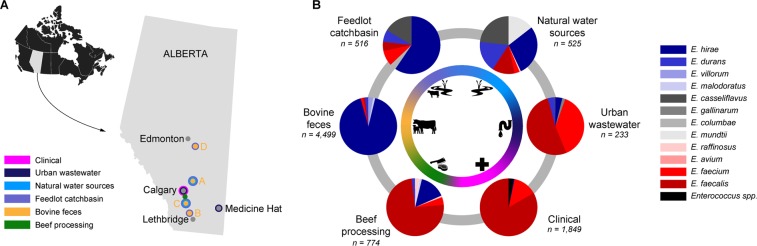
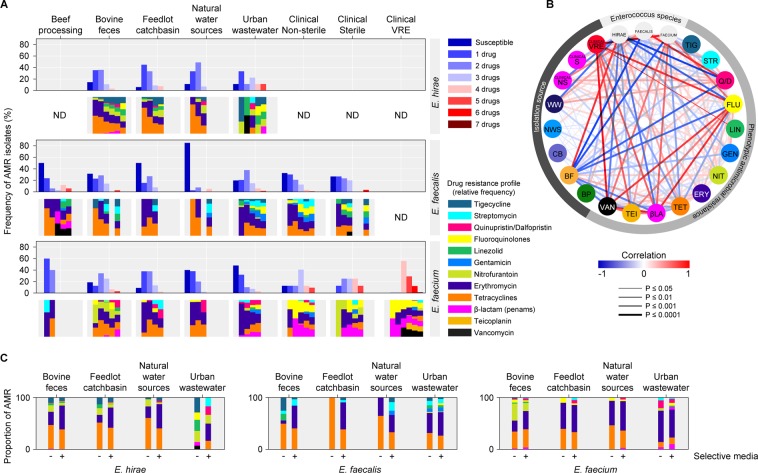
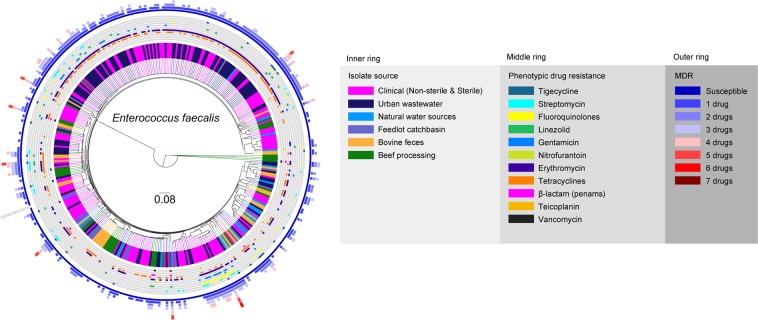
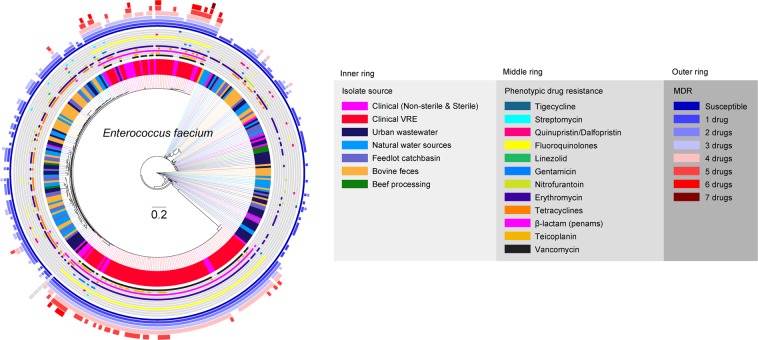
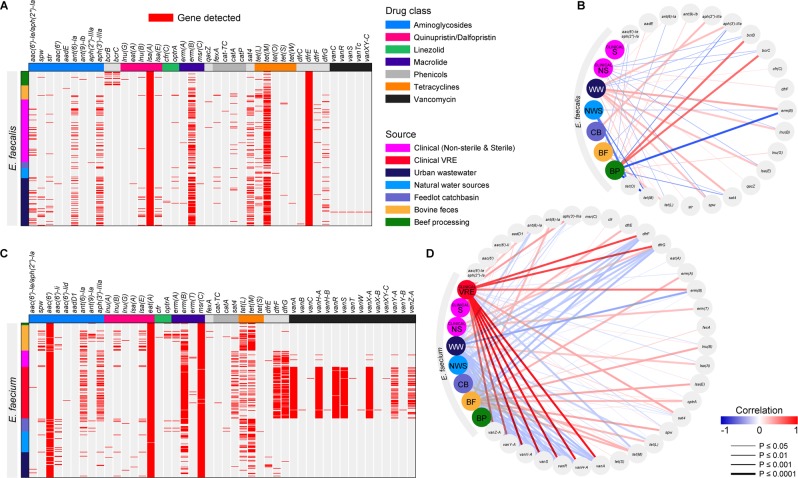
For a One-Health investigation of antimicrobial resistance (AMR) in Enterococcus spp., isolates from humans and beef cattle along with abattoirs, manured fields, natural streams, and wastewater from both urban and cattle feedlot sources were collected over two years. Species identification of Enterococcus revealed distinct associations across the continuum. Of the 8430 isolates collected,Enterococcus faecium and Enterococcus faecalis were the main species in urban wastewater (90%) and clinical human isolates (99%);Enterococcus hirae predominated in cattle (92%) and feedlot catch-basins (60%), whereas natural streams harbored environmental Enterococcus spp. Whole-genome sequencing of E. faecalis(n = 366 isolates) and E. faecium(n = 342 isolates), revealed source clustering of isolates, indicative of distinct adaptation to their respective environments. Phenotypic resistance to tetracyclines and macrolides encoded by tet(M)and erm(B)respectively, was prevalent among Enterococcus spp. regardless of source. For E. faecium from cattle, resistance to β-lactams and quinolones was observed among 3% and 8% of isolates respectively, compared to 76% and 70% of human clinical isolates. Clinical vancomycin-resistant E. faecium exhibited high rates of multi-drug resistance, with resistance to all β-lactam, macrolides, and quinolones tested. Differences in the AMR profiles among isolates reflected antimicrobial use practices in each sector of the One-Health continuum.
Overview
The claims and statistics of this paper haven’t been checked yet.
Free: it reads the open-access text and checks the first 5 claims that cite a source we can check. Create a free account to check every claim.
Integrity signals
Registry
Cites
Statistics
Figures
Verification
Claims the paper makes
The claims and statistics of this paper haven’t been checked yet.
Free: it reads the open-access text and checks the first 5 claims that cite a source we can check. Create a free account to check every claim.
Claims other papers make about this one
Each is checked against this paper’s own text: does it say what the citing paper says it does?
The cited source says what the claim attributes to it.
In the citing paper
“While certain strains that harbor ARGs are known to be nosocomial pathogens, food borne strains are rarely problematic (Zaheer et al., 2020).”
From Exploring the resistome of probiotics, starter cultures, and cheeses via metagenomic analysis (2025) · cites this paper as Zaheer et al., 2020
Self-check
Percentages, sums and reported differences re-computed from the paper’s own numbers.
The self-check needs the paper’s full text.
Citations
Cites
SPAdes: A New Genome Assembly Algorithm and Its Applications to Single-Cell Sequencing
Bankevich, A., Nurk, S., Antipov, D., Gurevich, A. A., Dvorkin, M., Kulikov, A. S., Lesin, V. M., Nikolenko, S. I., Pham, S., Prjibelski, A. D., et al. (2012) · Journal of Computational Biology · doi:10.1089/cmb.2012.0021 · Cited by 25,987
Prokka: rapid prokaryotic genome annotation
Seemann, T. (2014) · Bioinformatics · doi:10.1093/bioinformatics/btu153 · Cited by 18,818
A Simple, Fast, and Accurate Algorithm to Estimate Large Phylogenies by Maximum Likelihood
Guindon, S., & Gascuel, O. (2003) · Systematic Biology · doi:10.1080/10635150390235520 · Cited by 16,806
Carattoli, A., Zankari, E., García-Fernández, A., Voldby Larsen, M., Lund, O., Villa, L., Møller Aarestrup, F., & Hasman, H. (2014) · Antimicrobial Agents and Chemotherapy · doi:10.1128/aac.02412-14 · Cited by 4,877
Antiseptics and Disinfectants: Activity, Action, and Resistance
McDonnell, G., & Russell, A. D. (1999) · Clinical Microbiology Reviews · doi:10.1128/cmr.12.1.147 · Cited by 4,780
Jolley, K. A., Bray, J. E., & Maiden, M. C. J. (2018) · Wellcome Open Research · doi:10.12688/wellcomeopenres.14826.1 · Cited by 3,551
Mobile Genetic Elements Associated with Antimicrobial Resistance
Partridge, S. R., Kwong, S. M., Firth, N., & Jensen, S. O. (2018) · Clinical Microbiology Reviews · doi:10.1128/cmr.00088-17 · Cited by 2,751
The rise of the Enterococcus: beyond vancomycin resistance
Arias, C. A., & Murray, B. E. (2012) · Nature Reviews Microbiology · doi:10.1038/nrmicro2761 · Cited by 1,776
The ecology, epidemiology and virulence of Enterococcus
Fisher, K., & Phillips, C. (2009) · Microbiology · doi:10.1099/mic.0.026385-0 · Cited by 1,227
Update on acquired tetracycline resistance genes
Roberts, M. C. (2005) · FEMS Microbiology Letters · doi:10.1016/j.femsle.2005.02.034 · Cited by 1,010
Research works printed but not linked: 4
- 13. WHO. Guidelines for drinking-water quality. 3rd Edition. World Health Organization. Geneva, Switzerland. (2004).
- 21. Lebreton, F., Willems, R. J. L. & Gilmore, M. S. Enterococcus Diversity, Origins in Nature, and Gut Colonization in Enterococci: From Commensals to Leading Causes of Drug Resistant Infection. (eds. Gilmore, M. S. et al.) Available from: https://www.ncbi.nlm.nih.gov/books/NBK190427/ (Boston: Massachusetts Eye and Ear Infirmary, 2014). 24649513
- 84. Clinical & Laboratory Standards Institute Guidelines. M02-A12: Performance Standards For Antimicrobial Disk Susceptibility Tests; Approved Standard – 12th Edition (2015).
- 85. Critically important antimicrobials for human medicine, 6th revision. World Health Organization. https://www.who.int/foodsafety/publications/antimicrobials-sixth/en/ accessed on October 09, 2019 (2018).
Cited by
Items 201–288 of 288
Phenolics as Novel Quorum Sensing Inhibitors: Evidence from Computational and Experimental Studies
Dweba, Y., S’thebe, N. W., Balogun, F. O., & Sabiu, S. (2025) · Springer eBooks · doi:10.1007/978-3-642-36202-6_255-1 · Cited by 1
Mothé, D. A. C., de Castro, A. R. B., Novaes, M. Z., Bessa‐Neto, F. O., Cayô, R., Vicente, C. R., Buss, G., Gonçalves, S. S., & dos Santos, K. V. (2025) · Tropical Medicine & International Health · doi:10.1111/tmi.70033 · Cited by 1
Zhang, Q., Ding, L., Xie, X., Ru, L., Li, Q., Yao, C., Sölkner, J., & Jiang, R. (2025) · Frontiers in Microbiology · doi:10.3389/fmicb.2025.1688472 · Cited by 1
Sangiorgio, G., Filannino, I. M. P., Migliorisi, G., Bongiorno, D., Musso, N., Privitera, G. F., Santuccio, G., Leotta, D., Calvo, M., & Stefani, S. (2025) · Frontiers in Cellular and Infection Microbiology · doi:10.3389/fcimb.2025.1726074 · Cited by 1
Munene, A. K., Mwangi, P. M., Bebora, L. C., Mbindyo, C. M., & Maingi, J. M. (2026) · Veterinary World · doi:10.14202/vetworld.2026.1-14 · Cited by 1
“No vancomycin-resistant enterococci (VRE) isolates were detected, mirroring results from food-producing animals in Russia [36] and representing an encouraging finding given the clinical importance of vancomycin [37].”
Hoogstra, S. J., Klaas, C., Kuelker, J., Mahoney, D. B. J., Lubberts, M., Carrillo, C. D., Golden, A., Martín, I., McAllister, T. A., Zaheer, R., et al. (2026) · One Health · doi:10.1016/j.onehlt.2026.101440 · Cited by 1
“E. faecalis and E. faecium are frequently associated with nosocomial infections in humans [20] and were the only species present in significant abundance across all three One Health sectors in this study.”
InfluentialSelf-citationPrevalence of Antibiotic-Resistant Enterococci in an Anthropogenic-Affected River Section
Tsvetanova, Z., Boshnakov, R., Kim, T. C., & Najdenski, H. M. (2026) · Water · doi:10.3390/w18101149 · Cited by 1
Cheese and Its Microbes Under the Light of One Health—A Comprehensive Review
Dapkevicius, M. D. L. E., de Sousa, T., Silveira, M. D. G. A., Poeta, P., & Malcata, F. X. (2026) · Foods · doi:10.3390/foods15111935 · Cited by 2
“Current AMR surveillance systems remain fragmented and largely rely on cross-sectional sampling approaches that do not fully capture AMR evolution across processing stages [73,82].”
de Vos, M. G. J., Jansen, V., Bouhlali, O., Vlasblom, A. A., Zandbergen, L. E., van der Windt, I. S., Sey, C. I., Kool, J., Nijland, R., de Jong, A., et al. (2026) · Antimicrobial Agents and Chemotherapy · doi:10.1128/aac.00078-26 · Cited by 1
“Moreover, the increased emergence and spread of antimicrobial resistance in urobiome-associated species (21–23) necessitates investigation of their evolvability of antimicrobial resistance.”
Rahaman, M., Rahman, M. M., Arafat, K. Y., Gilman, M. A. A., Siddique, N., Sultana, T., Das, Z. C., Talukder, A. K., Islam, T., Rahman, M. A., et al. (2026) · Veterinary Medicine and Science · doi:10.1002/vms3.71060 · Cited by 1
Grudlewska‐Buda, K., Wiktorczyk-Kapischke, N., Sędzicka, A., Soboń, S., Budzyńska, A., Czuba, J., & Skowron, K. (2026) · Biology · doi:10.3390/biology15131056 · Cited by 1
“Similar observations have been reported in environmental studies investigating aquatic ecosystems, where Enterococcus populations were shown to vary depending on anthropogenic pressure, wastewater contamination, and climatic conditions [32–34].”
Nascimento, A. P. A., de Farias, B. O., Gonçalves-Brito, A. S., Magaldi, M., Flores, C., Quidorne, C. S., Montenegro, K. S., Bianco, K., & Clementino, M. M. (2023) · Journal of Applied Microbiology · doi:10.1093/jambio/lxad215 · Cited by 3
Enterococci in the food industry: friends or foes?
Foka, F. E. T., Manganyi, M. C., Kumar, A., & Mufhandu, H. T. (2024) · Elsevier eBooks · doi:10.1016/b978-0-443-13932-1.00015-5 · Cited by 2
Mezbaha Atık Sularından İzole Edilen Enterococcus Türlerinin Moleküler Karakterizasyonu
Güngör, N., Gündoğ, D. A., Güngör, C., & Onmaz, N. E. (2024) · Erciyes Üniversitesi Veteriner Fakültesi Dergisi · doi:10.32707/ercivet.1455401 · Cited by 1
Santiago, G. S. (2022) · Digital Library of Theses and Dissertations (Universidade de São Paulo) · doi:10.11606/d.6.2022.tde-29112022-181811 · Cited by 2
Caracterização molecular de isolados ambientais de Enterococcus faecalis e Enterococcus faecium
dos Santos, L. D. R. (2021) · Digital Library of Theses and Dissertations (Universidade de São Paulo) · doi:10.11606/d.60.2021.tde-29092021-084059 · Cited by 1
O7-4 調剤薬局と呼吸器専門医の協力による気管支喘息患者の吸入アドヒアランス向上を促す試み(O7 吸入指導と診療連携,口演,第61回日本アレルギー学会秋季学術大会)
駒瀬, 裕., 山口, 裕., 森田, あ., 小野, 綾., 奥平, 毅., 平本, 千., 波多野, 智., & 向井秀人 (2011) · アレルギー
Vankomisine Dirençli Enterococcus faecium: Kısa Bir Derleme
GÜMÜŞ, H. (2023) · Arşiv Kaynak Tarama Dergisi · doi:10.17827/aktd.1246260
Dănăilă, C., Ungureanu, M.-C., & Petcu, L.-E. (2022) · Romanian Archives of Microbiology and Immunology · doi:10.54044/rami.2022.02.06
Nouri, E., & Asadpour, L. (2023) · Iranian Journal of Medical Microbiology · doi:10.30699/ijmm.17.3.339
Wasselin, V. (2022) · theses.fr (ABES) · doi:10.70675/88eabc79z4b3bz44c5zb803z30dec7989e8b · Cited by 1
Pandrangi, S. L., Kishore, G., Nikhilesh, G. S. S., & Lanka, S. (2024) · Springer eBooks · doi:10.1007/978-981-99-8799-3_5
AFROZ, T. (2024) · Journal Of Vocational Health Studies · doi:10.20473/jvhs.v7.i3.2024.200-205
Antimicrobial Resistance in food-producing environment: a One Health approach
(2024) · Frontiers research topics · doi:10.3389/978-2-8325-5255-1
Antipathogenic and probiotic potential of enterococci found in the entrails of the palmetto bug
Aziz, K., Munir, M., & Zaidi, A. (2024) · Biologia · doi:10.1007/s11756-024-01796-1
“The members of the genus Enterococcus are intrinsically resistant to several antibiotics, including aminoglycosides and erythromycin, and hence, the strains are considered safe because of minimum chances of dissemination (Li et al. 2018, Zaheer et al. 2020, Fugaban et al. 2021, Tóth et al. 2021).”
Risk stratification of residual abscess after surgical treatment for gastroduodenal perforation
Ishikawa, K., Yao, S., Kumode, T., Tanino, K., Matsui, Y., Honma, S., Hosokawa, S., Murakami, T., Kan, T., & Nakajima, S. (2024) · Annals of Gastroenterological Surgery · doi:10.1002/ags3.12877
de Andrade, J. P., Pereira, L. F. M., Rezende, J. V. F., Soares, C. F., & Martins, N. R. D. S. (2024) · Veterinary Record Case Reports · doi:10.1002/vrc2.1045
Kovács, Á. M., Ombula, K. D., Nyaga, F. W., & Csivincsik, Á. (2024) · Preprints.org · doi:10.20944/preprints202411.2321.v1
Identification of Gram‐Positive Bacteria
Bernard, K. A. (2023) · ClinMicroNow · doi:10.1002/9781683674849.cmph0021
Identification of Gram‐Positive Bacteria
Bernard, K. A. (2023) · ClinMicroNow · doi:10.1002/9781683670438.cmph0021
Onaran, B., Burtaçgiray, E., & Turan, İ. (2024) · Journal of Applied Biological Sciences · doi:10.71336/jabs.1302
“This can lead to reduced effectiveness of antibiotics in treating infections in both animals and humans, ultimately compromising medical interventions [1].”
Abdullahi, I. N., & Trabelsi, I. (2025) · Avian Pathology · doi:10.1080/03079457.2025.2485106
“Vancomycin-resistant E. faecalis -ST179 is often found in urban wastewater and human clinical samples (Zaheer et al ., 2020).”
Nassri, I., Harmouzi, H., Ouali, A. E., Tahri, L., & Rifi, S. K. (2025) · Groundwater for Sustainable Development · doi:10.1016/j.gsd.2025.101481
Microbial and Viral Dynamics and Diversity in an Activated-Sludge Wastewater Treatment Plant
Ghiazza, C., Lizasoain, A., Victoria, M., & Ferrando, L. (2025) · Water Air & Soil Pollution · doi:10.1007/s11270-025-08265-8
“Their greater environmental persistence compared to E. coli and coliforms, and their resistance to disinfection and stressors typical of WWTP environments, make them more reliable for tracking microbial risks (Sobsey & Bartram, 2003; Zaheer et al., 2020).”
Maugeri, G., Calvo, M., Scalia, G., & Stefani, S. (2025) · Diagnostics · doi:10.3390/diagnostics15172128
“Overall, the above-mentioned culture protocol derived from previously published studies, including some modifications such as the vancomycin discs’ addition [8,13,14].”
Slavokhotova, A. A., Shelenkov, A. A., Mikhaylova, Y., Petrova, L., Геннадьевич, Г. В., Zamyatin, M. N., & Акимкин, В. Г. (2025) · Antibiotics · doi:10.3390/antibiotics14090858
“The genomic resistance profile corresponded well with the phenotypic testing results, and all isolates were additionally found to carry macrolide ( ermB or msrC ) and tetracycline ( tet(L) and tet(M) ) resistance genes, which were often encountered in clinical strains [43].”
Cao, M., Cao, F., Wang, C., Yan, X., Dong, F., Zhang, S., Abousaad, S., Yang, L., Abouzeid, A., Wang, Y., et al. (2025) · Veterinary Sciences · doi:10.3390/vetsci12090880
“Resistance trends in E. faecium vary across regions and over time, shaped by local antibiotic usage and infection control measures [5,11].”
InfluentialPavithra, C. U., Ragunathan, R., & Gomathi, E. (2025) · Research Square · doi:10.21203/rs.3.rs-7509244/v1
Genomic surveillance of Enterococcus faecalis in South Africa
Soderholm, N., & Carroll, L. (2024) · University Library of Skövde (University of Skövde) · doi:10.5281/zenodo.11210133
Chau, K. K. (2022) · Oxford University Research Archive (ORA) (University of Oxford) · doi:10.5287/ora-nbaa25zp8 · Cited by 2
Wynendaele, E., Debunne, N., Janssens, Y., Spiegeleer, A. D., Verbeke, F., Tack, L., Welden, S. V., Goossens, E., Knappe, D., Hoffmann, R., et al. (2022) · Figshare · doi:10.6084/m9.figshare.20167016
Ascensão, F. P. C. F. (2022) · Portuguese National Funding Agency for Science, Research and Technology (RCAAP Project by FCT) · doi:10.34626/vj0c-ge03
Wynendaele, E., Debunne, N., Janssens, Y., Spiegeleer, A. D., Verbeke, F., Tack, L., Welden, S. V., Goossens, E., Knappe, D., Hoffmann, R., et al. (2022) · Figshare · doi:10.6084/m9.figshare.20167037
Coelho, M. D. S. (2023) · Portuguese National Funding Agency for Science, Research and Technology (RCAAP Project by FCT) · Cited by 1
Optimising the invasion of HeLa cells by bacteria from the human microbiome
Ruíz Pérez, P., Hernandez-Fernaud, J. R., & Donate‐Correa, J. (2024) · RIULL (Universidad de La Laguna)
Daigle, J. (2024) · Mspace (University of Manitoba) · Cited by 1
Nunes, P. M. A. (2023) · Repositório Comum (Repositório Científico de Acesso Aberto de Portugal)
Silva, J. G. S. O. E. (2021) · Portuguese National Funding Agency for Science, Research and Technology (RCAAP Project by FCT)
„EGY EGÉSZSÉG NAP - ONE HEALTH DAY” KONFERENCIA : Tanulmánykötet / Proceedings
Tari, T., Nagy, E., Csinincsik, Á., Nagy, G., & Jánoska, F. (2024) · Üdvözöljük a Publicatio oldalán (University of West Hungary)
Human bite as the etiology of a rare case of enterococcus faecalis cerebral abscess
Ajayi, A. O., Edun-Ajayi, M., Uthman, U., Jabir, K., & Afolayan, A.-G. O. (2026) · The Egyptian Journal of Neurosurgery : the official publication of the Egyptian Society of Neurological Surgeons/Egyptian journal of neurosurgery · doi:10.1186/s41984-025-00511-9
“Even though E. faecalis is an oral commensal and ubiquitous in the human body [8], of all the articles reviewed by the authors, only two cases of E. faecalis cerebral abscess were found, one of penetrating brain injury from a pencil in a school-age child reported by Gupta A. et al. [9] and another…”
Davis, B. N., Euteneuer, C. F., Mijangos, K. J., Vargas, A., Bruha, K. M., & Davis, P. H. (2026) · Pathogens · doi:10.3390/pathogens15020203
“This is significant because Enterococcus spp. has intrinsic resistance to multiple classes of antibiotics including cephalosporins, trimethoprim–sulfamethoxazole, β -lactams, and aminoglycosides [66].”
Gut Microbial Diversity of Apis mellifera (Linnaeus)
Sharma, S., Nagar, S., Sewak, N., & Kumar, A. (2026) · Indian Journal of Entomology · doi:10.55446/ije.2026.3539
“These species are considered friendly bacteria of the gastrointestinal tract in mammals, along with human beings (Zaheer et al., 2020).”
Drug resistant eskapee pathogens in clinical isolates and hospital effluent.
Masalane, N. S. (2024) · ResearchSpace (University of KwaZulu-Natal)
Hashimoto, Y., Suzuki, M., Dao, T. D., Kasuga, I., Vu, T. M. H., Takemura, T., Abe, H., Hasebe, F., Tsuda, Y., Nomura, T., et al. (2026) · Proceedings of the National Academy of Sciences · doi:10.64898/2026.03.26.714403
Salami, W. O. (2026) · German Journal of Microbiology · doi:10.51585/gjm.2026.2.0063 · Cited by 1
Feumba, R., Njikeu, O., & Basile, A. O. A. (2026) · H2Open Journal · doi:10.1016/j.htopen.2026.100026
Sudarshan, A., Rillera, M. G., Tran, N., Riedel, T. E., Ellington, A. D., & Bhadra, S. (2026) · PeerJ · doi:10.7717/peerj.21310
Casado, A., Álvarez, M. A., & Ladero, V. (2026) · Food Bioscience · doi:10.1016/j.fbio.2026.109264
Mwatondo, M. H., & Silverman, A. I. (2026) · ACS ES&T Water · doi:10.1021/acsestwater.6c00384
Fialho, N., Marques, J. N. D. M., Crespo, M. T. B., & Semedo‐Lemsaddek, T. (2026) · Antibiotics · doi:10.3390/antibiotics15070657
“This aligns with studies reporting E. faecalis as frequent in animal hosts, while variation in other species, including E. hirae and Enterococcus cecorum , reflects host species, age, and agricultural practices [26,46–48].”
InfluentialKim, J. I., Zaheer, R., Zovoilis, A., Domselaar, G. V., Zaidi, S.-E.-Z., Haight, T., Beiko, R. G., & McAllister, T. A. (2026) · Microbiology · doi:10.1099/mic.0.001720
“A total of 647 sequenced enterococci isolates from clinical, agricultural, municipal wastewater, agricultural wastewater and natural water sources of Alberta, Canada, with corresponding categorical resistant/susceptible phenotypes were used in this study (BioProject PRJNA604849) [1, 24].”
Self-citationPandova, M., Petrova, R., Kizheva, Y. K., Ivanov, S., & Hristova, P. (2026) · Microbiology Research · doi:10.3390/microbiolres17070132
“These results are consistent with the observations reported by Zaheer et al. (2020) [48], who identified little to no nitrofurantoin resistance among their E. faecalis isolates.”
Galys, H., Kretschmer, F., & Arthofer, P. (2026) · Water Reuse · doi:10.2166/wrd.2026.034
Davies, J., Ireland-Hughes, J., Stronati, S., Smith, R. P., Oastler, C. E., Nuñéz-García, J., Anjum, M. F., & AbuOun, M. (2026) · Microbiology Spectrum · doi:10.1128/spectrum.01476-26
“Escherichia and Enterococcus spp. were specifically considered given their relevance as indicator microorganisms for AMR (3, 20, 21), as well as being fecal indicator bacteria (22) and including clinically relevant species associated with human and animal infections (20, 23).”
Cádiz, L., Navarrete, F., Torres, P., Rivera, P., Cordero, P., Gómez, S. U., & Hidalgo, H. (2026) · Poultry · doi:10.3390/poultry5040052
Buitrago, S. P., Garzón‐Ospina, D., Largo-Latorre, L. S., Hernández-Zambrano, L. J., & Espinosa, A. (2026) · Environmental Monitoring and Assessment · doi:10.1007/s10661-026-15762-8
“Some members of these genera are known from clinical, fecal, wastewater, or antimicrobial resistance surveillance contexts (Moradigaravand et al., 2016; Santajit & Indrawattana, 2016; Zaheer et al., 2020).”
Yue, J., Yao, T., Chen, N., Wei, H., Cheng, A., Rong, C., Wang, H., Li, H., Liu, J., Hua, M., et al. (2026) · Microbiology Spectrum · doi:10.1128/spectrum.03982-25
“Recent studies from China report that compared with ST16, ST179 exhibits slightly reduced biofilm formation but carries a broader set of virulence determinants and multidrug resistance genes (36).”
InfluentialPatel, K., Chavan, M., Shah, J., & Chatterjee, S. (2026) · Archives of Microbiology · doi:10.1007/s00203-026-05077-0
“…AMR monitoring, veterinary surveillance, environmental sampling and clinical epidemiology is essential for understanding transmission pathways, identifying emerging high risk clones and developing effective interventions to mitigate the global spread of MDR E. faecium (Zaheer et al. 2020).”
Furlan, J. P. R., Alves, E. K. D. P., Gervasoni, L. F., Bordin, J. T., Ou, H., Dossouvi, K. M., Rossi, G. A. M., Stehling, E. G., Lincopán, N., Ruan, Z., et al. (2026) · Veterinary Microbiology · doi:10.1016/j.vetmic.2026.111227
Enterococci in Meat: Understanding Consequences on Health and Food Safety
Idris, A. (2026) · Nigerian Journal of Biotechnology and Life Sciences · doi:10.67601/njbls.v3i2c.75
“E. hirae is the most common enterococci in livestock faeces (Zaheer et al., 2020).”
Threedeach, S., Moungsree, S., Thummakul, D., Netchu, K., & Suwanprapa, M. (2025) · Princess of Naradhiwas University Journal
National surveillance of antimicrobial use and antimicrobial resistance in Canadian feedlots
Gow, S., Bergen, R., Booker, C. W., Butters, A., Dorin, C., Dimmers, G., Erickson, N., Hannon, S. J., Steve, H., Ramsay, D. E., et al. (2021) · American Association of Bovine Practitioners Conference Proceedings · Cited by 11
Self-citationLam, A. Y. T. (n.d.) · PolyU Institutional Research Archive (Hong Kong Polytechnic University) · Cited by 1
Sikiru, A. B., Egena, A. S. S., Sejian, V., Amao, S. R., & Isa, N. B. M. (2026) · Research Square · doi:10.21203/rs.3.rs-10244401/v1
Narimisa, N., Navidifar, T., Hameed, T. T., Mohammadzadeh, R., Abdoli, F., Ghamari, M., Nourollahi, D., Ansari, F., Ansari, A., & Bostanghadiri, N. (2026) · MicrobiologyOpen · doi:10.1002/mbo3.70434
“Regardless of the Enterococcus spp. the high levels of anti-microbial resistance in enterococcal infections limit the available antibiotic treatments (Zaheer et al. 2020).”
InfluentialIdentifying genetic markers associated with mobile genetic elements in Enterococcus faecium
Kheswa, C. (n.d.) · Murdoch University Research Portal · Cited by 1
van den Bergh, J., Orsel, K., Agunos, A., Charlebois, A., Gow, S., Reid‐Smith, R. J., & Nóbrega, D. B. (2026) · Zoonoses and Public Health · doi:10.1111/zph.70102
Hoogstra, S. J., Anastasiadis, C., Kelly, B., Cooper, A. L., Mathu Malar, C., Dong, Y., Kuelker, J., Lauzon, K., Langlois, A., Poulin‐Laprade, D., et al. (2026) · Microbiology Resource Announcements · doi:10.1128/mra.01097-26
Al-Joboury, N. A. (2026) · Al-Zahraa Journal for Health and Medical Sciences · doi:10.66723/zjhms.2026.169883.1109
Metadata
- Authors
- Zaheer, R., Cook, S. R., Barbieri, R., Goji, N., Cameron, A., Petkau, A., Polo, R. O., Tymensen, L., Stamm, C., Song, J., Hannon, S., Jones, T., Church, D., Booker, C. W., Amoako, K., Van Domselaar, G., Read, R. R., & McAllister, T. A.
- Affiliations
- Agriculture and Agri-Food Canada (CA)
- Canadian Food Inspection Agency (CA)
- Public Health Agency of Canada (CA)
- Alberta Health Services (CA)
- University of Calgary (CA)
- Corresponding author
- McAllister, Tim A.
- ORCID
- Venue
- Scientific Reports
- Published
- 2020-03-03
- Volume
- 10
- Issue
- 1
- Pages
- 3937-3937
- ISSN
- 2045-2322 (ISSN-L)
- PMC
- PMC7054549
- OpenAlex
- W3010340539
- Cited by
- 262
- References
- 82
- Citations by year
- 2026: 34 · 2025: 44 · 2024: 55 · 2023: 42 · 2022: 50 · 2021: 26 · 2020: 9
- FWCI
- 10.61
- Type
- journal article
- Language
- en
- Update notices
- correction (2020-08-04)
- Open access
- gold
- doi.org
- Licence
- cc-by
- creativecommons.org/licenses/by/4.0 (tdm)
- creativecommons.org/licenses/by/4.0 (vor)
- Locations
- Scientific Reports (publishedVersion, cc-by)
- PubMed Central (publishedVersion, cc-by)
- PubMed (publishedVersion)
- Federal Open Science Repository of Canada / Le Dépôt fédéral de science ouverte du Canada (submittedVersion, cc-by)
- Funders
- Beef Cattle Research Council (Project FOS 10.13)
- Genomics Research and Development Initiative of the Government of Canada (001)
- Topics
- Health Sciences › Medicine › Microbiology (medical) › Antibiotic Resistance in Bacteria
- Physical Sciences › Environmental Science › Pollution › Pharmaceutical and Antibiotic Environmental Impacts
- Health Sciences › Medicine › Infectious Diseases › Antibiotic Use and Resistance
- Keywords
- Enterococcus, antimicrobial resistance, One Health, Enterococcus faecium, Enterococcus faecalis, Enterococcus hirae, vancomycin resistance, tetracycline resistance, macrolide resistance, beta-lactam resistance, quinolone resistance, multidrug resistance, municipal wastewater, beef cattle, feedlot, natural streams, antimicrobial use, whole genome sequencing, source clustering
- MeSH terms
- Whole Genome Sequencing, Anti-Bacterial Agents, Humans, Phylogeny, Enterococcus faecalis, Tetracyclines, Virulence, Quinolones, Enterococcus, Enterococcus faecium, beta-Lactam Resistance, Macrolides, Drug Resistance, Bacterial
About these checks
Registry, retraction, Cites and statistics results are computed, not judged, with one exception: a printed reference that no index lists is read once by a model before it counts as a citation error. Claims are extracted by a model and kept only when their quote appears verbatim in the text; each cited source is then checked, with a model’s help, for whether it says what the claim relies on. Those verdicts can be wrong — read the claim’s quote and the cited source before relying on one.
Statistics and arithmetic are recomputed, not judged.
Confidence bands are shown only for fields calibrated on our annotated test set. None is calibrated yet, so no band is shown.
What counts as a claim ›How we measure confidence ›How we check this ›
Are you an author, or do you see a problem with this page? Request a review
Data sources
Bibliographic data: Semantic Scholar, OpenAlex, Crossref.
Contains information from the Semantic Scholar Academic Graph Datasets, made available under the ODC Attribution License (ODC-BY 1.0).
Semantic Scholar’s data is described in: Kinney, R., et al. (2023). The Semantic Scholar Open Data Platform. arXiv:2301.10140.
