

The DOI matches its Crossref record; 77 of the 77 references it cites were found in a registry or an index.
Selective USP7 inhibition elicits cancer cell killing through a p53-dependent mechanism.
Open accessAbstract
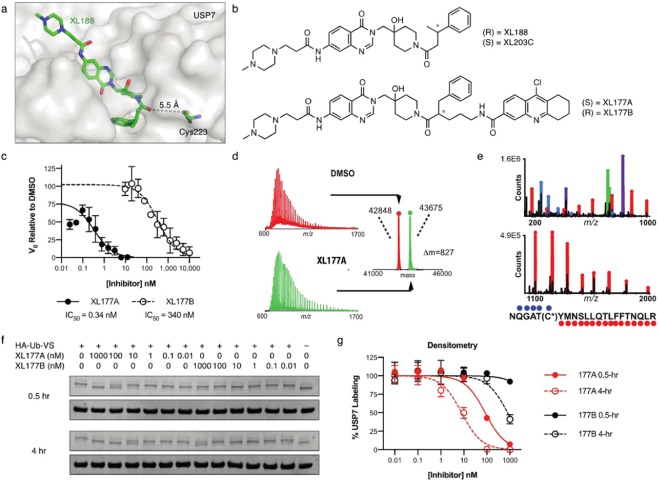
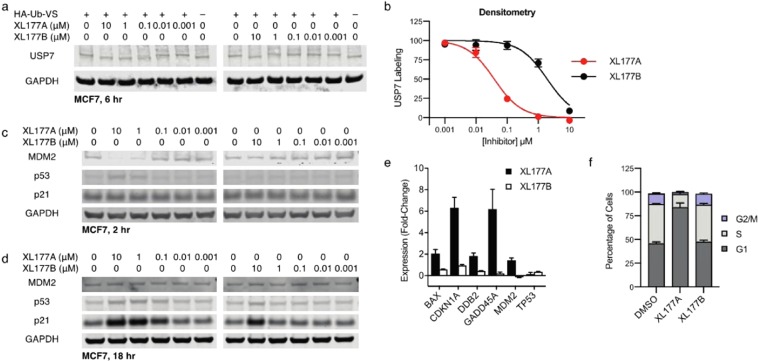
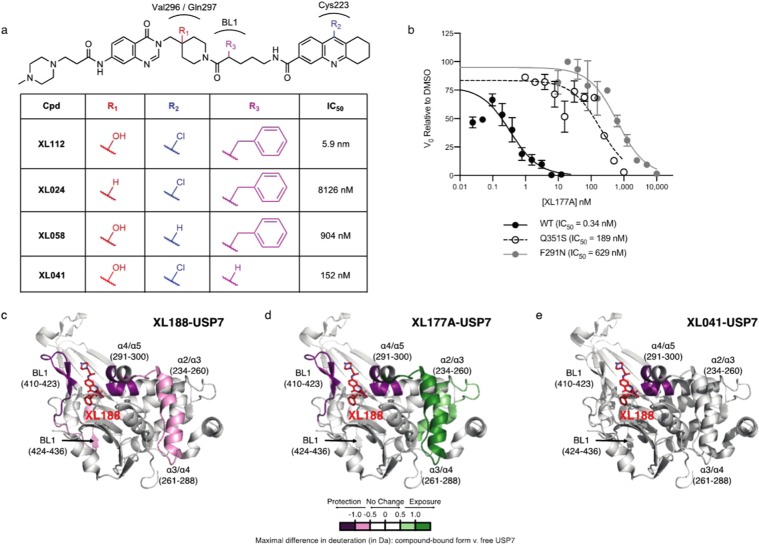
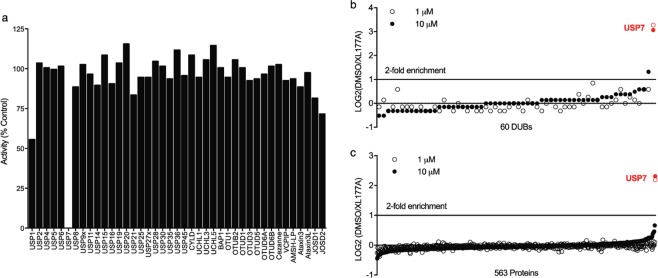
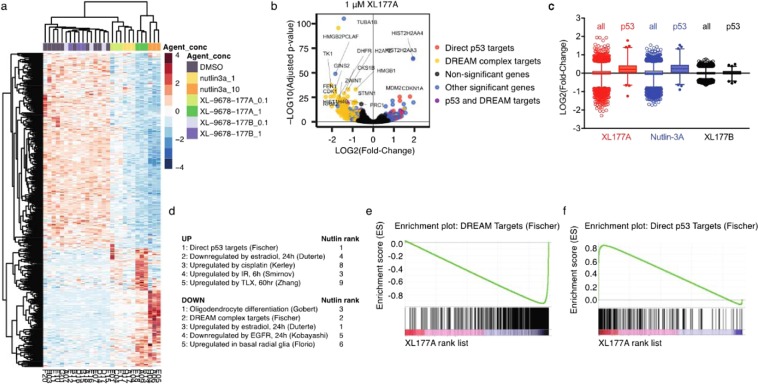
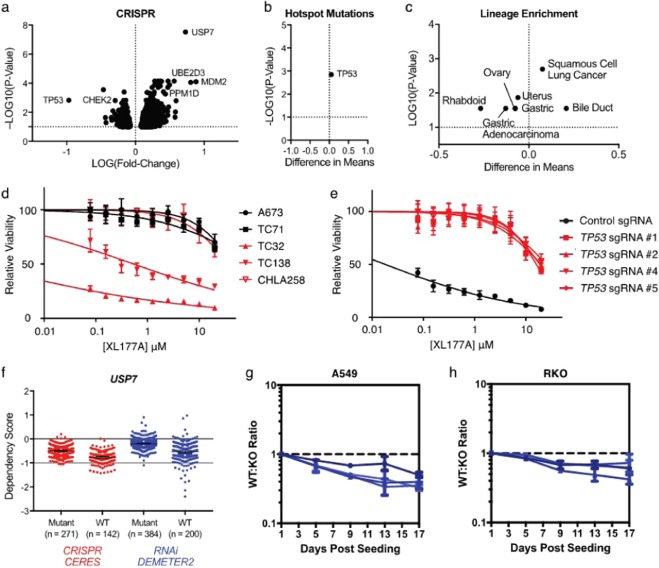
Ubiquitin specific peptidase 7 (USP7) is a deubiquitinating enzyme (DUB) that removes ubiquitin tags from specific protein substrates in order to alter their degradation rate and sub-cellular localization. USP7 has been proposed as a therapeutic target in several cancers because it has many reported substrates with a role in cancer progression, including FOXO4, MDM2, N-Myc, and PTEN. The multi-substrate nature of USP7, combined with the modest potency and selectivity of early generation USP7 inhibitors, has presented a challenge in defining predictors of response to USP7 and potential patient populations that would benefit most from USP7-targeted drugs. Here, we describe the structure-guided development of XL177A, which irreversibly inhibits USP7 with sub-nM potency and selectivity across the human proteome. Evaluation of the cellular effects of XL177A reveals that selective USP7 inhibition suppresses cancer cell growth predominantly through a p53-dependent mechanism: XL177A specifically upregulates p53 transcriptional targets transcriptome-wide, hotspot mutations in TP53 but not any other genes predict response to XL177A across a panel of ~500 cancer cell lines, and TP53 knockout rescues XL177A-mediated growth suppression of TP53 wild-type (WT) cells. Together, these findings suggest TP53 mutational status as a biomarker for response to USP7 inhibition. We find that Ewing sarcoma and malignant rhabdoid tumor (MRT), two pediatric cancers that are sensitive to other p53-dependent cytotoxic drugs, also display increased sensitivity to XL177A.
Overview
The claims and statistics of this paper haven’t been checked yet.
Run the check — free, no account needed. It reads the open-access text and checks the sources it cites.
Integrity signals
Registry
Cites
Statistics
Figures
Verification
Claims the paper makes
The claims and statistics of this paper haven’t been checked yet.
Run the check — free, no account needed. It reads the open-access text and checks the sources it cites.
Claims other papers make about this one
Each is checked against this paper’s own text: does it say what the citing paper says it does?
In the citing paper
“USP7 inhibitors predominantly kill cancer cells by inducing p53-dependent apoptosis (Schauer et al., 2020).”
From USP7 Is a Master Regulator of Genome Stability (2020) · cites this paper as Schauer et al., 2020
Self-check
Percentages, sums and reported differences re-computed from the paper’s own numbers.
The self-check needs the paper’s full text.
Citations
Cites
Moderated estimation of fold change and dispersion for RNA-seq data with DESeq2
Love, M. I., Huber, W., & Anders, S. (2014) · Genome Biology · doi:10.1186/s13059-014-0550-8 · Cited by 95,106
VMD: visual molecular dynamics
Humphrey, W., Dalke, A., & Schulten, K. (1996) · Journal of Molecular Graphics · doi:10.1016/0263-7855(96)00018-5 · Cited by 66,952
Subramanian, A., Tamayo, P., Mootha, V. K., Mukherjee, S., Ebert, B. L., Gillette, M. A., Paulovich, A., Pomeroy, S. L., Golub, T. R., Lander, E. S., et al. (2005) · Proceedings of the National Academy of Sciences · doi:10.1073/pnas.0506580102 · Cited by 53,625
limma powers differential expression analyses for RNA-sequencing and microarray studies
Ritchie, M. E., Phipson, B., Wu, D., Hu, Y., Law, C. W., Shi, W., & Smyth, G. K. (2015) · Nucleic Acids Research · doi:10.1093/nar/gkv007 · Cited by 40,458
Ror2 signaling regulates Golgi structure and transport through IFT20 for tumor invasiveness
Nishita, M., Park, S.-Y., Nishio, T., Kamizaki, K., Wang, Z., Tamada, K., Takumi, T., Hashimoto, R., Otani, H., Pazour, G. J., et al. (2017) · Scientific Reports · doi:10.1038/s41598-016-0028-x · Cited by 15,947
The Molecular Signatures Database Hallmark Gene Set Collection
Liberzon, A., Birger, C., Thorvaldsdóttir, H., Ghandi, M., Mesirov, J. P., & Tamayo, P. (2015) · Cell Systems · doi:10.1016/j.cels.2015.12.004 · Cited by 13,807
Molecular signatures database (MSigDB) 3.0
Liberzon, A., Subramanian, A., Pinchback, R., Thorvaldsdóttir, H., Tamayo, P., & Mesirov, J. P. (2011) · Bioinformatics · doi:10.1093/bioinformatics/btr260 · Cited by 7,111
Scalable Algorithms for Molecular Dynamics Simulations on Commodity Clusters
Bowers, K., Chow, E., Xu, H.-G., Dror, R., Eastwood, M., Gregersen, B. A., Klepeis, J., Kolossváry, I., Moraes, M. A., Sacerdoti, F. D., et al. (2006) · International Conference on Software Composition · doi:10.1145/1188455.1188544 · Cited by 3,905
Defining a Cancer Dependency Map
Tsherniak, A., Vazquez, F., Montgomery, P. G., Weir, B. A., Kryukov, G., Cowley, G. S., Gill, S., Harrington, W. F., Pantel, S., Krill-Burger, J. M., et al. (2017) · Cell · doi:10.1016/j.cell.2017.06.010 · Cited by 3,276
Self-citationOPLS3: A Force Field Providing Broad Coverage of Drug-like Small Molecules and Proteins
Harder, E. D., Damm, W., Maple, J. R., Wu, C., Reboul, M., Xiang, J. Y., Wang, L., Lupyan, D., Dahlgren, M. K., Knight, J. L., et al. (2015) · Journal of Chemical Theory and Computation · doi:10.1021/acs.jctc.5b00864 · Cited by 3,104
Research works printed but not linked: 1
- Rohland, N. & Reich, D. Cost-effective, high-throughput DNA sequencing. Genome Res. 939–946, https://doi.org/10.1101/gr.128124.111.22 (2011). · DOI
Cited by
Sorted by citations
Items 101–128 of 128
Shen, X., Wang, R., Su, F., Guo, J., Zhao, D. L., Yuan, F., Zhang, T., & Hou, X. (2026) · PeerJ · doi:10.7717/peerj.20702 · Cited by 1
Klink, N., Urban, S., Seier, J. A., Adhikari, B., Schwalm, M. P., Müller, J., Dorsch, M., Steinbach, P., Jung, J., Vogt, M., et al. (2026) · Nature Communications · doi:10.1038/s41467-026-72295-x · Cited by 1
USP7 inhibition perturbs proteostasis and tumorigenesis in triple-negative breast cancer
Kim, A., Gopalakrishnan, P., Suarez-Pizarro, M., Chen, C. C., Wang, X., McCoy, S. M., Umesh, N., Mordant, A. L., Barker, N. K., Herring, L. E., et al. (2026) · npj Breast Cancer · doi:10.1038/s41523-026-00974-5 · Cited by 1
Targeting deubiquitinating enzymes in cancer: navigating context-dependence for precision medicine
Khamjan, N. A. (2025) · ONCOLOGIE · doi:10.1515/oncologie-2025-0359 · Cited by 1
Ma, C.-C., Jin, C., Guo, N.-J., Liu, H. F., Yin, Q.-G., Wang, Y., Liu, Y.-F., Zhang, Y., Wang, N., Lu, G., et al. (2026) · Bioorganic Chemistry · doi:10.1016/j.bioorg.2026.110067 · Cited by 1
Liu, X., Doherty, L. M., Felix, A., & Buhrlage, S. J. (2022) · Wiley eBooks · doi:10.1002/9781119774198.ch7
Self-citationDEUBIQUITINASES AND THEIR INHIBITORS: CHALLENGES AND RECENT ADVANCES
Hewitt, P. R., Barker, O., Helm, M., Jacq, X., O'Dowd, C. R., Page, N., Rountree, J. S. S., & Harrison, T. (2022) · Medicinal chemistry reviews · doi:10.1021/mc-2022-vol57.ch15
Enhanced ISGylation reduces respiratory distress following Francisella novicida infectionPreprint
Upton, E. M., Luhmann, E. K., Zhang, Y., Ripley, B. M., Meyerholz, D. K., & Radoshevich, L. (2023) · bioRxiv (Cold Spring Harbor Laboratory) · doi:10.1101/2023.09.19.558558
Chromatin Perturbation Promotes Susceptibility to Hypomethylating AgentsPreprint
Schneider, C., Alexe, G., Merickel, L. A., Meyer, A., Swift, M. L., Serafim, R. B., Basanthakumar, A. T., Taillon, A., Salhotra, S., Boniolo, F., et al. (2025) · bioRxiv (Cold Spring Harbor Laboratory) · doi:10.1101/2025.07.28.666975
Self-citationXu, X., 张乃霞, & Shi, L. (2025) · Health and Metabolism · doi:10.53941/hm.2025.100029
Lü, M., Li, X., Ma, L., Wang, X., Ma, J., Zhao, J., & Lu, Q. (2025) · IUBMB Life · doi:10.1002/iub.70061 · Cited by 1
Abbasi, M., Váz, P., Silva, J., & Martins, P. (2025) · Lecture notes in computer science · doi:10.1007/978-3-032-08455-2_3
Understanding and targeting USP8 function in endocytosis and Cushing’s disease
Waltrich-Augusto, T. (2021) · theses.fr (ABES) · doi:10.70675/c3fbf146zfc5cz4287zac17z3003fddee1a0
Decoding Deubiquitinases: Roles, Mechanisms, and Therapeutic Implications
Kabra, A. (2026) · Biophysica · doi:10.3390/biophysica6020035
Transcriptional remodeling of ubiquitin regulatory networks during trained immunityPreprint
Santelices, J., Schaefer, Z., Gachunga, W., Celeste, C., & Parker, I. (2026) · bioRxiv (Cold Spring Harbor Laboratory) · doi:10.64898/2026.05.06.723281
Proteome-wide Ubiquitinome Profiling Reveals Substrate-specific Dynamics Within the USP7 Network
van der Meer, J. W., van der Knaap, J. A., Sijm, A., Bezstarosti, K., Dekkers, D. H. W., Doff, W. A. S., Demmers, J., & Verrijzer, C. P. (2026) · Molecular & Cellular Proteomics · doi:10.1016/j.mcpro.2026.101602
The role of USP19 in human diseases: from molecular function to clinical relevance
Wang, Q., Cao, H., Wei, H., Wang, X., Luo, T., & Yin, J. (2026) · Frontiers in Immunology · doi:10.3389/fimmu.2026.1877228
Oliveira, R. I., Franco, C. H., Mano, M., Habboub, R., Eisenbarth, D., Leal, A. S., & Salvador, J. A. R. (2026) · Biomedicine & Pharmacotherapy · doi:10.1016/j.biopha.2026.119750
Deubiquitinase inhibitors: from evolving concepts to preclinical evaluation
Maubach, G., Hamann, L., Stein, M., Haak, E., & Naumann, M. (2026) · Drug Discovery Today · doi:10.1016/j.drudis.2026.104751
FLT3-ITD signals for CEBPA and p53 proteolysis by the ubiquitin-proteosome pathwayPreprint
Saunthararajah, Y., Gu, X., Biswas, S., Zahran, Z. A. M., Bae, S., Balusu, R., Jha, B. K., & Maciejewski, J. P. (2026) · Research Square · doi:10.21203/rs.3.rs-10436387/v1
Targeting USP7 in sarcomas: opportunities and challenges
Franzese, S., & Cassinelli, G. (2026) · Biochemical Pharmacology · doi:10.1016/j.bcp.2026.118319
El‐Sehrawy, A. A. M. A., Al‐Khreisat, M. J., Kubaev, A., Rajapov, A., Ismail, S. H., Alhasso, B., Kaur, I., & Bainsal, N. (2026) · Hematological Oncology · doi:10.1002/hon.70239
PRDX1 facilitates USP7-dependent stabilization of SCD1 and promotes bladder cancer progression
Wang, L., Yang, J., Wan, S., Li, K., Jiao, P., Deng, Y., Liu, H., Chen, S., 司小强, & Yang, L. (2026) · Cellular Signalling · doi:10.1016/j.cellsig.2026.112882
Choi, M., & Baek, K. (2026) · International Journal of Molecular Sciences · doi:10.3390/ijms27188049
Zhang, Y., Zhu, L., Xia, L., Cheng, H., Zhu, W., & Wang, H. (2026) · Neoplasia · doi:10.1016/j.neo.2026.101378
BindingDB (2024) · UC San Diego · doi:10.7270/q2t72nnm
Metadata
- Authors
- Schauer, N. J., Liu, X., Magin, R. S., Doherty, L. M., Chan, W. C., Ficarro, S. B., Hu, W., Roberts, R. M., Iacob, R. E., Stolte, B., Giacomelli, A. O., Perera, S., McKay, K., Boswell, S. A., Weisberg, E. L., Ray, A., Chauhan, D., Dhe-Paganon, S., Anderson, K. C., Griffin, J. D., Li, J., Hahn, W. C., Sorger, P. K., Engen, J. R., Stegmaier, K., Marto, J. A., & Buhrlage, S. J.
- Affiliations
- Harvard University (US)
- Brigham and Women's Hospital (US)
- Dana-Farber Cancer Institute (US)
- Northeastern University (US)
- Broad Institute (US)
- University of Vermont (US)
- Corresponding author
- Buhrlage, Sara J.
- ORCID
- Schauer, Nathan J.
- Liu, Xiaoxi
- Magin, Robert S.
- Doherty, Laura M.
- Chan, Wai Cheung
- Ficarro, Scott B.
- Hu, Wanyi
- Iacob, Roxana E.
- Giacomelli, Andrew O.
- Boswell, Sarah A.
- Weisberg, Ellen L.
- Ray, Arghya
- Chauhan, Dharminder
- Griffin, James D.
- Li, Jianing
- Hahn, William C.
- Sorger, Peter K.
- Engen, John R.
- Stegmaier, Kimberly
- Marto, Jarrod A.
- Buhrlage, Sara J.
- Venue
- Scientific Reports
- Published
- 2020-03-24
- Volume
- 10
- Issue
- 1
- Pages
- 5324-5324
- ISSN
- 2045-2322 (ISSN-L)
- PMC
- PMC7093416
- OpenAlex
- W3013382443
- Cited by
- 125
- References
- 77
- Citations by year
- 2026: 18 · 2025: 26 · 2024: 18 · 2023: 15 · 2022: 22 · 2021: 21 · 2020: 5
- FWCI
- 5.19
- Type
- journal article
- Language
- en
- Open access
- gold
- doi.org
- Locations
- Scientific Reports (publishedVersion, cc-by)
- PubMed Central (publishedVersion, cc-by)
- PubMed (publishedVersion)
- Open access LMU (Ludwid Maxmilian's Universitat Munchen) (submittedVersion, cc-by)
- Funders
- U.S. Department of Health & Human Services | National Institutes of Health
- St. Baldrick's Foundation
- Topics
- Life Sciences › Biochemistry, Genetics and Molecular Biology › Molecular Biology › Ubiquitin and proteasome pathways
- Health Sciences › Medicine › Oncology › Cancer-related Molecular Pathways
- Life Sciences › Biochemistry, Genetics and Molecular Biology › Molecular Biology › Protein Degradation and Inhibitors
- Keywords
- USP7, p53, TP53 mutation, predictive biomarkers, structure-based drug design, tumor cell growth inhibition, Ewing sarcoma, malignant rhabdoid tumor, childhood cancer, MDM2, FOXO4, PTEN, MYCN
- MeSH terms
- Ubiquitin-Specific Peptidase 7, Antineoplastic Agents, Humans, Protease Inhibitors, Tumor Suppressor Protein p53, Apoptosis, Cell Line, Tumor, Cell Proliferation, Ubiquitination, MCF-7 Cells
About these checks
Registry, retraction, Cites and statistics results are computed, not judged, with one exception: a printed reference that no index lists is read once by a model before it counts as a citation error. Claims are extracted by a model and kept only when their quote appears verbatim in the text; each cited source is then checked, with a model’s help, for whether it says what the claim relies on. Those verdicts can be wrong — read the claim’s quote and the cited source before relying on one.
Statistics and arithmetic are recomputed, not judged.
Confidence bands are shown only for fields calibrated on our annotated test set. None is calibrated yet, so no band is shown.
What counts as a claim ›How we measure confidence ›How we check this ›
Are you an author, or do you see a problem with this page? Request a review
