

Habitual use of GPS negatively impacts spatial memory during self-guided navigation
Open accessThe DOI matches its Crossref record; 46 of the 46 references it cites were found in a registry or an index.
Abstract
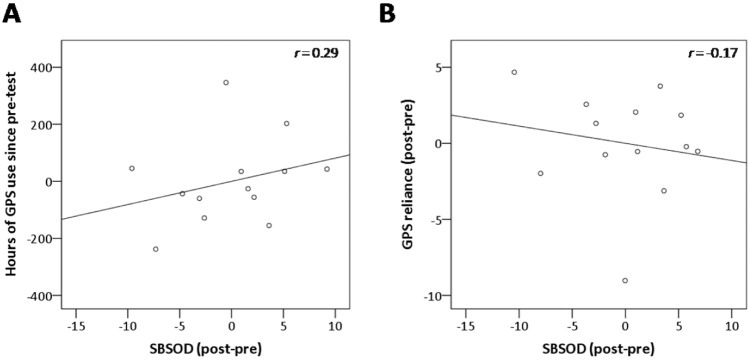
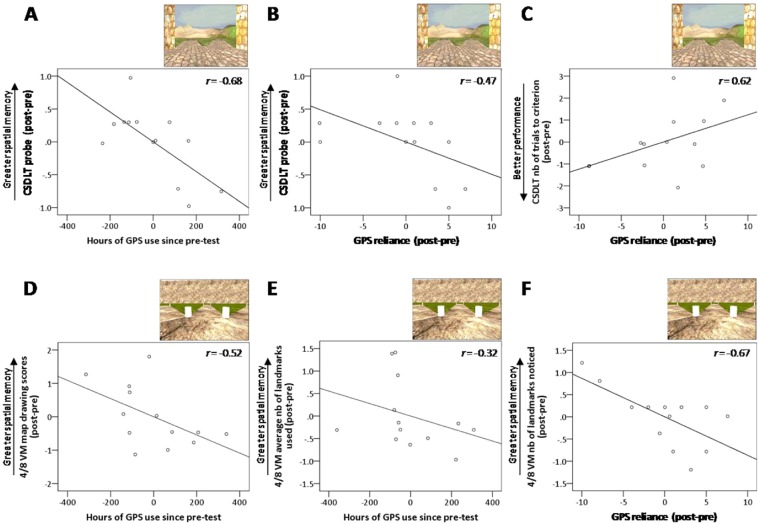
Global Positioning System (GPS) navigation devices and applications have become ubiquitous over the last decade. However, it is unclear whether using GPS affects our own internal navigation system, or spatial memory, which critically relies on the hippocampus. We assessed the lifetime GPS experience of 50 regular drivers as well as various facets of spatial memory, including spatial memory strategy use, cognitive mapping, and landmark encoding using virtual navigation tasks. We first present cross-sectional results that show that people with greater lifetime GPS experience have worse spatial memory during self-guided navigation, i.e. when they are required to navigate without GPS. In a follow-up session, 13 participants were retested three years after initial testing. Although the longitudinal sample was small, we observed an important effect of GPS use over time, whereby greater GPS use since initial testing was associated with a steeper decline in hippocampal-dependent spatial memory. Importantly, we found that those who used GPS more did not do so because they felt they had a poor sense of direction, suggesting that extensive GPS use led to a decline in spatial memory rather than the other way around. These findings are significant in the context of society's increasing reliance on GPS.
Overview
The claims and statistics of this paper haven’t been checked yet.
Free: it reads the open-access text and checks the first 5 claims that cite a source we can check. Create a free account to check every claim.
Integrity signals
Registry
Cites
Statistics
Figures
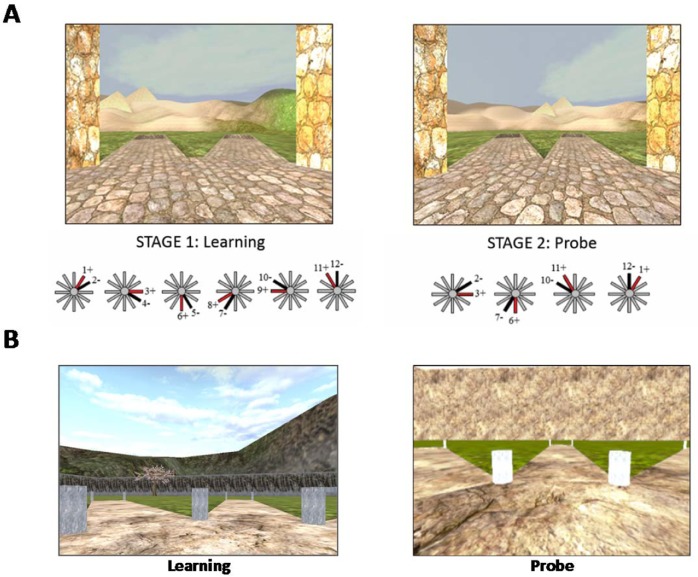
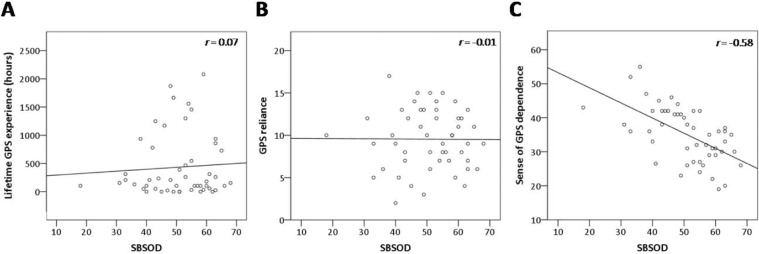
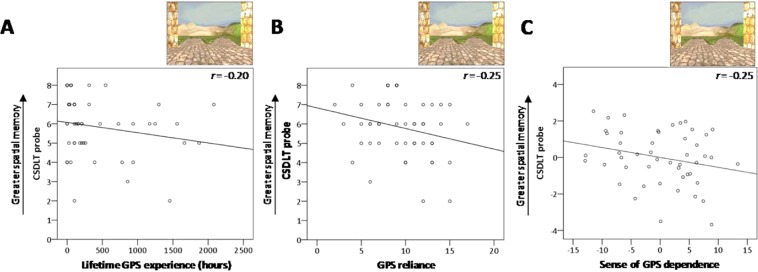
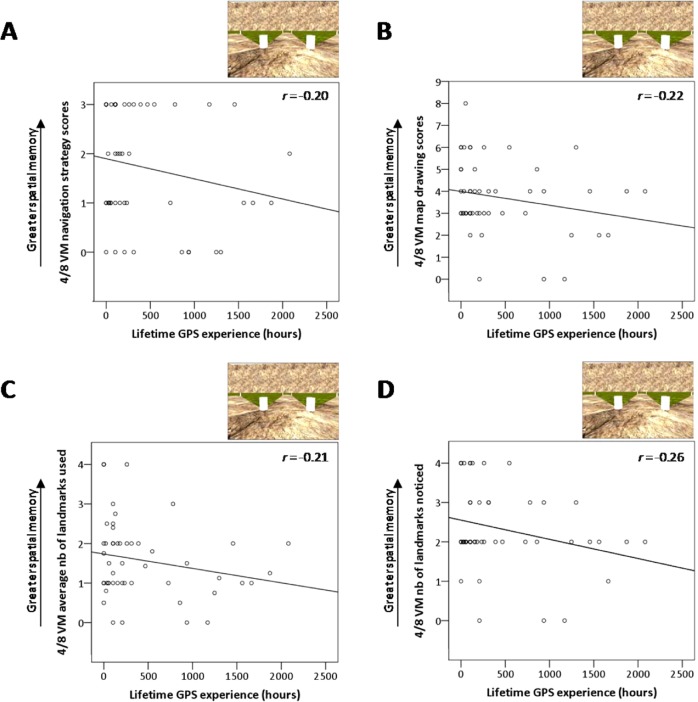
Verification
Claims the paper makes
The claims and statistics of this paper haven’t been checked yet.
Free: it reads the open-access text and checks the first 5 claims that cite a source we can check. Create a free account to check every claim.
Claims other papers make about this one
Each is checked against this paper’s own text: does it say what the citing paper says it does?
The cited source doesn’t support the claim as written.
In the citing paper
“and thus are more likely to be prone to negative effects on spatial learning, such as passive reliance on navigation aids and thus lesser engagement with the environment (Dahmani & Bohbot, 2020; Ishikawa, 2019; Ruginski et al., 2019).”
From The influence of landmark visualization style on task performance, visual attention, and spatial learning in a real-world navigation task (2024) · cites this paper as Dahmani & Bohbot, 2020
Checked by a reasoning model — may be wrong.
Experimental — accuracy not yet measuredThe source backs part of the claim, not all of it — or backs it for a different population, condition or comparison.
In the citing paper
“In these experiments, navigational aids, by replacing internal computations with external cues, remove the requirement that the spatial layout is learned by the navigator at all; and thus, when they are asked to remember it later, show poorer spatial memory.”
From This is not the way: global directional cues do not improve spatial learning in an immersive virtual environment (2025) · cites this paper as Dahmani & Bohbot, 2020
Experimental — accuracy not yet measuredThe source backs part of the claim, not all of it — or backs it for a different population, condition or comparison.
In the citing paper
“Indeed, people with lower spatial abilities rely more on mobile maps – which was also the case in our study, regardless of the landmark visualization style – and thus are more likely to be prone to negative effects on spatial learning, such as passive reliance on navigation aids and thus lesser engagement with the environment (Dahmani & Bohbot, 2020; Ishikawa, 2019; Ruginski et al., 2019).”
From The influence of landmark visualization style on task performance, visual attention, and spatial learning in a real-world navigation task (2024) · cites this paper as Dahmani & Bohbot, 2020
Experimental — accuracy not yet measuredThe source backs part of the claim, not all of it — or backs it for a different population, condition or comparison.
In the citing paper
“AI already pervasively interacts with our nervous systems by influencing, reinforcing, and changing our behaviors and cognitive processes.”
From AI and Neurotechnology (2023) · cites this paper as [10]
Experimental — accuracy not yet measuredThe cited source says what the claim attributes to it.
In the citing paper
“Past empirical research has demonstrated that over-reliance on mobile maps negatively influences wayfinders’ spatial knowledge acquisition of the traversed environment in the short term and further contributes to the long-term deterioration of their spatial abilities (Dahmani & Bohbot, 2020; Ishikawa, 2019; Ruginski et al., 2019).”
From The influence of landmark visualization style on task performance, visual attention, and spatial learning in a real-world navigation task (2024) · cites this paper as Dahmani & Bohbot, 2020
4 more claims about this paper
Create a free account to see every claim other papers make about this one.
Self-check
Percentages, sums and reported differences re-computed from the paper’s own numbers.
The self-check needs the paper’s full text.
Citations
Cites
(1978) · UA Campus Repository (The University of Arizona) · Cited by 8,010
LOSS OF RECENT MEMORY AFTER BILATERAL HIPPOCAMPAL LESIONS
Scoville, W. B., & Milner, B. (1957) · Journal of Neurology, Neurosurgery & Psychiatry · doi:10.1136/jnnp.20.1.11 · Cited by 7,322
Cognitive maps in rats and men
Tolman, E. C. (1948) · Psychological Review · doi:10.1037/h0061626 · Cited by 6,641
Place navigation impaired in rats with hippocampal lesions
Morris, R. G. M., Garrud, P., Rawlins, J. N. P., & O'Keefe, J. (1982) · Nature · doi:10.1038/297681a0 · Cited by 6,340
Navigation-related structural change in the hippocampi of taxi drivers
Maguire, E. A., Gadian, D. G., Johnsrude, I. S., Good, C. D., Ashburner, J., Frackowiak, R. S. J., & Frith, C. D. (2000) · Proceedings of the National Academy of Sciences · doi:10.1073/pnas.070039597 · Cited by 3,225
Statistical tests, P values, confidence intervals, and power: a guide to misinterpretations
Greenland, S., Senn, S. J., Rothman, K. J., Carlin, J. B., Poole, C., Goodman, S. N., & Altman, D. G. (2016) · European Journal of Epidemiology · doi:10.1007/s10654-016-0149-3 · Cited by 3,200
Psychological Assessment Resources
Abidin, R. R. (1995) · Medical Entomology and Zoology · Cited by 3,147
Squire, L. R. (1984) · The Biology of Learning · doi:10.1007/978-3-642-70094-1_32 · Cited by 2,107
Remembrance of places passed: Spatial memory in rats.
Olton, D. S., & Samuelson, R. J. (1976) · Journal of Experimental Psychology: Animal Behavior Processes · doi:10.1037//0097-7403.2.2.97 · Cited by 1,998
Resampling-Based Multiple Testing: Examples and Methods for p-Value Adjustment.
Martin, M. A., Westfall, P. H., & Young, S. S. (1994) · Biometrics · doi:10.2307/2533464 · Cited by 1,699
Research works printed but not linked: 3
- Burnett, G. E. & Lee, K. In International conference of traffic and transport psychology (2005).
- Wessel, G., Ziemkiewicz, C., Chang, R. & Sauda, E. In Proceedings of the International Conference on Advanced Visual Interfaces. 207–214 (ACM) (2010).
- Mishkin, M. & Petri, H. L. In Neuropsychology of memory (eds. L. R. Squire & N. Butters) 287–296 (Guilford Press, 1984).
Cited by
Items 101–200 of 285
Opportunity meets self-constitution
Schubert, C. (2020) · International Review of Economics · doi:10.1007/s12232-020-00360-y · Cited by 5
Evaluating Threat Cues for the Enhancement of Safety in Virtual Navigation
Buzard, A. M., Davidson, J. A., Tighe, E. E., Zhao, Y. N., Bodenheimer, B., Creem-Regehr, S. H., & Stefanucci, J. K. (2023) · IEEE International Symposium on Mixed and Augmented Reality Adjunct (ISMAR-Adjunct) · doi:10.1109/ismar-adjunct60411.2023.00035 · Cited by 5
“In addition, increased use of GPS generally reduces spatial learning or the formation of cognitive maps [4] and those who have lower spatial ability often rely more on these applications [14], which means that certain navigators may be more affected by a loss of these applications in critical…”
BackgroundOrienteering as a Tool for Cognitive Research: An Implementation Guide
Waddington, E. E., & Heisz, J. J. (2024) · Journal of Visualized Experiments · doi:10.3791/66833 · Cited by 5
Yavuz, E., Manley, E., Gahnstrom, C. J., Goodroe, S. C., Coutrot, A., Hornberger, M., & Spiers, H. J. (2024) · Spatial Cognition and Computation · doi:10.1080/13875868.2024.2319735 · Cited by 7
“To characterize reliance on GPS, the GPS reliance scale was used (Dahmani & Bohbot, 2020).”
Collaborative learning in older age and the role of familiarity: evidence from the map task
Wolfe, K., Crompton, C. J., Hoffman, P., Wolters, M. K., & MacPherson, S. E. (2024) · Aging Neuropsychology and Cognition · doi:10.1080/13825585.2024.2432879 · Cited by 5
“Prior work has found that active navigating is beneficial in wayfinding (Waddington et al., 2024), more so than passive navigating (Dahmani & Bohbot, 2020), and especially so for older adults (Jebara et al., 2014; Meade et al., 2019; Sauzéon et al., 2016).”
Homo smartphonus: Psychological Aspects of Smartphone Use—A Literature Review
Sorokowski, P., & Sobczak, M. (2025) · Multimodal Technologies and Interaction · doi:10.3390/mti9080083 · Cited by 4
Tolsgaard, M. G., Grierson, L., Pusic, M. V., & Turner, L. (2026) · Medical Education · doi:10.1111/medu.70309 · Cited by 4
How to Help Older Adults Navigate Through VR? Effects in Outdoor–Indoor Transition Environments
Zuo, Y., & Zhou, J. (2024) · International Journal of Human-Computer Interaction · doi:10.1080/10447318.2024.2405276 · Cited by 4
“Mobile navigation systems potentially supported landmark knowledge but fell short of adequately supporting survey knowledge (i.e. allocentric cognitive representations of the environment) (Dahmani & Bohbot, 2020; Ishikawa et al., 2008; Kapaj et al., 2023).”
Lee, T. O., & Neeson, T. M. (2025) · Virtual Reality · doi:10.1007/s10055-025-01169-2 · Cited by 4
Individual differences in spatial navigation: A multi-scale perspective
ZHANG, F., Meixuan, C. H. E. N., Pu, Y., & Kong, X. (2023) · Advances in Psychological Science · doi:10.3724/sp.j.1042.2023.01642 · Cited by 4
Audio Feedback with the Use of a Smartphone in Sailing Training among Windsurfers
Tarnas, J., Cyma-Wejchenig, M., Schaffert, N., & Stemplewski, R. (2023) · Applied Sciences · doi:10.3390/app13053357 · Cited by 4
Ambiguity Collapse by LLMs: A Taxonomy of Epistemic RisksPreprint
Gur-Arieh, S., Wang, A., & Fazelpour, S. (2026) · SSRN Electronic Journal · doi:10.2139/ssrn.6118186 · Cited by 4
Liu, Y., Gu, Y., Gong, C., Zhu, J., & Zhu, B. (2024) · Current Psychology · doi:10.1007/s12144-024-06459-7 · Cited by 3
“The SBSOD has found extensive application in experiments related to spatial cognition and ability (Dahmani & Bohbot, 2020).”
Miola, L., Muffato, V., Boldrini, A., Pazzaglia, F., & Meneghetti, C. (2024) · Cognitive Research Principles and Implications · doi:10.1186/s41235-024-00605-2 · Cited by 3
McWhorter, C., Hegarty, M., Baylis, K., & Montello, D. R. (2025) · International Journal of Disaster Risk Reduction · doi:10.1016/j.ijdrr.2025.105446 · Cited by 3
AI in Academic Libraries, Part Two: Resistance and the Search for Ethical Uses
Monnier, R., Noe, M., & Gibson, E. (2025) · College & Research Libraries News · doi:10.5860/crln.86.5.218 · Cited by 3
Wayfinding behaviours in natural environments
Wattne, O. E., & Volden, F. S. (2025) · Journal of Navigation · doi:10.1017/s0373463325101367 · Cited by 3
Yong, J. C., Lim, A. J. Y., Tan, E., & Chan, S. (2026) · Behavioral Sciences · doi:10.3390/bs16050650 · Cited by 3
Teipel, S. J., Amaefule, C. O., Lüdtke, S., Göerß, D., Faraza, S., Bruhn, S., & Kirste, T. (2022) · Frontiers in Psychology · doi:10.3389/fpsyg.2022.882446 · Cited by 3
“Previous work has shown that habitual use of navigation aids may decrease spatial memory performance even in cognitively healthy people (Dahmani and Bohbot, 2020).”
BackgroundAssessing the cognition of movement trajectory visualizations: interpreting speed and direction
Bae, C. J., & Dodge, S. (2023) · Cartography and Geographic Information Science · doi:10.1080/15230406.2022.2157879 · Cited by 3
“(b) GPS reliance is measured using the GPS reliance scale of the McGill GPS questionnaire (Dahmani & Bohbot, 2020).”
MethodTowards neuroadaptive navigation assistance to reduce spatial de-skilling
Fabrikant, S. I. (2024) · Cognitive Processing · doi:10.1007/s10339-024-01209-w · Cited by 3
“…smart devices is impacting our attentional resources, and consistently off-loading demanding tasks to technology is beginning to limit our innate (neuro) cognitive (spatial) abilities (Aporta and Higgs 2005; Dahmani and Bohbot 2020; Ishikawa et al. 2008; Ruginski et al. 2022; Sugimoto et al. 2022).”
BackgroundChatGPT is likely reducing opportunity for support, friendship and learned kindness in research
Millard, J. W., Christie, A. P., Dicks, L. V., Isip, J. E., Johnson, T. F., Skinner, G., & Spake, R. (2024) · Methods in Ecology and Evolution · doi:10.1111/2041-210x.14395 · Cited by 3
“The invention of writing affected the way individuals and societies remember (Ong & Hartley, 2013); textile mechanisation helped concentrate populations into industrial cities (Chapman, 1990); satellite navigation affects our ability to orient in the world (Dahmani & Bohbot, 2020).”
Deskilling: The Atrophy of Cognitive and Social Aptitudes
Thiele, L. P. (2025) · Springer eBooks · doi:10.1007/978-3-031-82086-1_4 · Cited by 3
Rowe, L. I. (2026) · Education Sciences · doi:10.3390/educsci16081291 · Cited by 3
Motoric engagement, but not decision-making, during encoding influences route memory
Sivashankar, Y., He, P., Sauzeon, H., & Fernandes, M. A. (2024) · Spatial Cognition and Computation · doi:10.1080/13875868.2024.2359929 · Cited by 3
“Given the prevalent use of navigational aids (such as Google Maps TM ), it is critical to examine whether reliance on such devices helps or hampers our memory for spatial routes (Dahmani & Bohbot, 2020).”
Testing a Model of Human Spatial Navigation Attitudes towards Global Navigation Satellite Systems
Moret‐Tatay, C., Boccia, M., Teghil, A., & Guariglia, C. (2022) · Sensors · doi:10.3390/s22093470 · Cited by 3
“Moreover, the literature has claimed that depending on GNSS to navigate may have a harmful effect on brain areas such as the hippocampus, which is involved in memory and navigation [11,12].”
BackgroundOne face, millions of faces: Computer vision as hyperobject
Yiu, S. (2021) · Philosophy of Photography · doi:10.1386/pop_00048_1 · Cited by 3
García-Falgueras, A. (2024) · Psychology & Psychological Research International Journal · doi:10.23880/pprij-16000438 · Cited by 3
Yüksel, E., Boogaart, Z., & Weisberg, S. M. (2025) · Cognitive Research: Principles and Implications · doi:10.1186/s41235-025-00654-1 · Cited by 2
Including or Excluding Free Will
Runyan, J. D. (2024) · Springer eBooks · doi:10.1007/978-3-031-61187-2_7 · Cited by 2
Joers, J. M., & Luca, E. W. D. (2024) · Technology Knowledge and Learning · doi:10.1007/s10758-024-09805-7 · Cited by 2
“…al., 2022; Henkel, 2014; Siler et al., 2022; Gardony et al., 2015; Fenech et al., 2010; Moritz et al., 2018; Eskritt & Ma, 2014; Pyke & LeFevre, 2011; Kelly & Risko, 2019; O’Hara & Payne, 1998) and it even might impact our brain structure (Dahmani & Bohbot, 2020; Fasoli, 2021; Firth et al., 2019).”
Describing Explored Places through OpenStreetMap Data
Schade, E., Savino, G.-L., Niess, J., & Schöning, J. (2025) · International Conference on Human Factors in Computing Systems · doi:10.1145/3706598.3713695
“Frequent usage can impair the users’ spatial cognition, thereby reinforcing their reliance on them [11, 21].”
Unlocking context-aware mobile map adaptation: a VR navigation user study
Bartling, M., Kapaj, A., Cheng, B., Xu, Z., Griffin, A. L., & Fabrikant, S. I. (2025) · Cartography and Geographic Information Science · doi:10.1080/15230406.2025.2512075 · Cited by 2
“…destination, over-reliance on such navigation aids negatively influences wayfinders’ short-and long-term spatial learning of the environment, and dete-riorates their innate spatial abilities (Dahmani & Bohbot, 2020; Ishikawa, 2019; Ruginski et al., 2019; see also the review by Miola et al., 2024).”
Navig-AI-tion: Navigation by Contextual AI and Spatial Audio
Lystbæk, M. N., Adams, H., Ananda, R. K., Gonzalez, E. J., Ballan, L., Wu, Q., Colaço, A., Tan, P., & Gonzalez-Franco, M. (2026) · CHI Conference Extended Abstracts on Human Factors in Computing Systems (CHI EA) · doi:10.1145/3772363.3799295 · Cited by 2
“Modern turn-by-turn navigation excels at getting us from A to B, but growing evidence suggests that this could come at the cost of understanding and remembering the spaces we navigate [6, 7, 11].”
Being Where? Putting Memory, Technology, and Wayfinding Together Again
Mingon, M., Gillett, A. J., & Sutton, J. (2026) · Review of Philosophy and Psychology · doi:10.1007/s13164-026-00816-0 · Cited by 2
Risks of automation in medicine - a review article for the obstetrics case
Fournel, J., Feragen, A., & Tolsgaard, M. G. (2026) · Danish Medical Journal · doi:10.61409/a10250852 · Cited by 2
García-Navarra, S., Solares, L., & Mendez, M. (2026) · Behavioural Brain Research · doi:10.1016/j.bbr.2026.116227 · Cited by 2
On Technology and the Ecology of Thinking: Thinking and Aliveness in the Brave New World
Selek, M. (2026) · International Journal of Applied Psychoanalytic Studies · doi:10.1002/aps.70060 · Cited by 2
Extreme Cognitive Assistance and Open Futures
Sharadin, N. (2026) · Journal of Ethics and Social Philosophy · doi:10.26556/jesp.v31i4.6237 · Cited by 2
Subramanya, S., Krishnan, S., & Azad, N. (2026) · Information Systems Frontiers · doi:10.1007/s10796-026-10804-5 · Cited by 2
Technological neuropsychology: Assessing cognition in a digital world
Federico, G. (2026) · Brain and Cognition · doi:10.1016/j.bandc.2026.106473 · Cited by 2
Sharadin, N. (2026) · Cambridge University Press eBooks · doi:10.1017/9781009766081 · Cited by 2
When the Cave Becomes Home: From Mixed Signals to Crossed Wires in the Digital World
Knoop, C.-I., Stanley, M., Sadarić, A., & Morrison, D. E., III (2024) · Academicus International Scientific Journal · doi:10.7336/academicus.2024.30.02 · Cited by 2
THE CHALLENGE OF ARTIFICIAL INTELLIGENCE
Kharkova, I., & Holmes, W. (2022) · Anthem Press eBooks · doi:10.2307/j.ctv307fgt5.14 · Cited by 2
Zhang, X., & Iwaki, S. (2024) · Lecture notes in computer science · doi:10.1007/978-3-031-60458-4_17 · Cited by 2
Hohl, R., de Oliveira, R. M., Gonçalves, S. S., Sá, P. M. K., & Shigaeff, N. (2025) · Perceptual and Motor Skills · doi:10.1177/00315125251338644 · Cited by 2
“Conversely, the combination of our increasingly sedentary lifestyle and reliance on global positioning system (GPS) technology has reduced the need for hippocampal-dependent spatial memory, leading to declines in navigation ability (Dahmani & Bohbot, 2020).”
Tekstirobotid ja laiendatud vaim. Kuidas mõista tehisintellekti rolli akadeemilise teksti loomes?
Puusepp, V. (2025) · Eesti ja soome-ugri keeleteaduse ajakiri Journal of Estonian and Finno-Ugric Linguistics · doi:10.12697/jeful.2025.16.1.06 · Cited by 2
Échelle de cognition numérique (NUMERICOG)
Virgo, J., Tarpin-Bernard, F., de Chalvron, S., Reynaud, E., Fruitet, J., Palluel-Germain, R., Vallet, G. T., & Osiurak, F. (2023) · European Review of Applied Psychology · doi:10.1016/j.erap.2023.100873 · Cited by 2
Is AI sparking a cognitive revolution that will lead to mediocrity and conformity?
Messner, W. (2025) · The Conversation · doi:10.64628/aai.j55vehgnq · Cited by 2
Competitive and Complementary ToolsPreprint
Krakauer, D. C. (2026) · arXiv (Cornell University) · doi:10.48550/arxiv.2607.18460 · Cited by 2
“…with the control that heavier users did not begin with a poorer sense of direction, evidence that use drives the decline rather than the reverse[3, 44], whereas highly trained experts tolerate near-ubiquitous tool use, including abacus experts who retain a mental surrogate[15, 14].…”
InfluentialIntelligence as Loop PerformancePreprint
Dobson, R. (2026) · SSRN Electronic Journal · doi:10.2139/ssrn.7293899 · Cited by 2
Landmark selection preferences of young students under orientation task within street environment
Fang, Z., Wang, L., Yang, F., & Guan, F. (2021) · Journal of Location Based Services · doi:10.1080/17489725.2021.2006347 · Cited by 1
“The existing navigation applications CONTACT Zhixiang Fang zxfang@whu.edu.cn © 2021 Informa UK Limited, trading as Taylor & Francis Group mainly provide the turn-by-turn route information (Dahmani and Bohbot 2020).”
MethodAutomated Mobility: A Comparison between Aviation and Automotive
Khamis, A. M., & Goswami, P. (2023) · IEEE International Conference on Smart Mobility (SM) · doi:10.1109/sm57895.2023.10112503 · Cited by 1
“For example, a study at McGill University [19] showed that extensive GPS use led to a decline in spatial memory rather than the other way around.”
BackgroundThe cognitive map and its intrinsic mechanisms
Wenyan, W. U., & Wang, L. (2023) · Advances in Psychological Science · doi:10.3724/sp.j.1042.2023.01856 · Cited by 1
AI-Powered Communication Frameworks in Industry: Analyzing Challenges, Opportunities and Impact.
Kumar, A. (2025) · Journal of Information Systems Engineering & Management · doi:10.52783/jisem.v10i23s.4558 · Cited by 1
“AI has also enhanced operationalization [18].”
Pennell, M. (2025) · Pedagogy Critical Approaches to Teaching Literature Language Composition and Culture · doi:10.1215/15314200-11625210 · Cited by 1
Jaswal, T., Burles, F., & Iaria, G. (2025) · Brain Sciences · doi:10.3390/brainsci15060622 · Cited by 1
“Conceptually, the association between map-reading and ecological navigation has presumably been decreasing with the high uptake of turn-by-turn GPS and other computerized navigational aids [38], which has decreased the need for more ‘traditional’ map-reading skills [39,40].”
The necessity of motoric engagement in enhancing route memory
Sivashankar, Y., He, P., Tsapoitis, P., Skorski, E., & Fernandes, M. A. (2025) · British Journal of Psychology · doi:10.1111/bjop.70007 · Cited by 1
Territory(ies)-Body(ies): Textiles and Embodied Experiences That Produce Maps
Sánchez-Aldana, E., Duarte, A. M. B., Victoria, M. T., & González, M. P. (2025) · TEXTILE · doi:10.1080/14759756.2025.2524885 · Cited by 1
Impact of virtual landmarks on children’s navigation preferences
Sun, J., & Wu, K.-C. (2025) · Aslib Journal of Information Management · doi:10.1108/ajim-01-2025-0045 · Cited by 1
Limiting the negative effect of GPS dependence on spatial knowledge with landmark-based instructions
Zhang, Y., & Li, J. (2025) · Journal of Environmental Psychology · doi:10.1016/j.jenvp.2025.102813 · Cited by 1
Augmented human intelligence goes beyond the AGI mirage
Lissack, M. R., & Meagher, B. (2025) · Discover Artificial Intelligence · doi:10.1007/s44163-025-00683-1 · Cited by 1
“Dahmani and Boh-bot [11] found a significant negative correlation between lifetime GPS experience and spatial memory strategy use (r = -0.20), with longitudinal data showing progressive decline in spatial cognitive abilities.”
InfluentialKapaj, A., Hilton, C. W., & Fabrikant, S. I. (2024) · DROPS (Schloss Dagstuhl – Leibniz Center for Informatics) · doi:10.4230/lipics.cosit.2024.13 · Cited by 1
From alienated organs to alienated minds: understanding AI through the lens of somatic alienation
Kabadayı, B. K. (2026) · AI & Society · doi:10.1007/s00146-025-02838-1 · Cited by 1
“A study in the field showed that reliance on GPS for self ‐ guided navigation diminishes spatial memory, with regular GPS users performing significantly worse on spatial recall tasks than non ‐ users (Dahmani and Bohbot 2020).”
The silent accumulation: AI as mental contaminant
Šucha, V. (2026) · Frontiers in Artificial Intelligence · doi:10.3389/frai.2026.1755151 · Cited by 1
“Risko and Gilbert (2016) formalised cognitive offloading using external tools to reduce internal cognitive demands, and substantial work has examined how delegation affects memory (Sparrow et al., 2011), spatial cognition (Dahmani and Bohbot, 2020), and reasoning (Wilmer et al., 2017).”
Bini, G., & Quattrociocchi, W. (2026) · AI & Society · doi:10.1007/s00146-026-03227-y · Cited by 1
“Educational systems have repeatedly negotiated the obsolescence of skills rendered redundant by technology, from the displacement of slide rules by calculators (Banks 2011; Pea 1987) to the decline of paper-based navigation after GPS (Dahmani and Bohbot 2020).”
Cognitive Entanglements: A Postphenomenological Approach to Generative AI in Education
Stefano, L. D. (2026) · Communications in computer and information science · doi:10.1007/978-3-032-31853-4_22 · Cited by 1
LandmarkLens: Predicting and Presenting Effective Landmarks for Mixed-Reality Urban Exploration
Li, C., Sechayk, Y., Hwang, J., Froehlich, J. E., & Igarashi, T. (2026) · ACM Symposium on User Interface Software and Technology (UIST) · doi:10.1145/3830398.3830505 · Cited by 1
“Over time, this impairs users’ spatial knowledge acquisition [6, 20, 40], and undermines the ability to navigate independently [13, 21].”
Niche‐tracking as a collecting method: Habitat‐targeted search strategies for taxon‐focused botany
Marinho, L. C., Waga, I. M., & Cardoso, D. (2026) · Plants People Planet · doi:10.1002/ppp3.70261 · Cited by 1
Click, swipe & tap … how digital habits rewire cognition
Federico, G., & Osiurak, F. (2026) · New Ideas in Psychology · doi:10.1016/j.newideapsych.2026.101311 · Cited by 1
Effect of spatial training on space-number mapping: a situated cognition account
Julie, L., & Badets, A. (2025) · Psychological Research · doi:10.1007/s00426-025-02078-4 · Cited by 1
Chalk vs. Click: Rethinking Medical Teaching in the Digital Age
Bhattacharya, S., Bhattacharya, K., Bhattacharya, N., & Bhattacharya, N. (2025) · Indian Journal of Surgery · doi:10.1007/s12262-025-04422-9 · Cited by 1
The Eastern Association of Electroencephalographers: A Canadian/USA success story
Goodman, M. H., Hwang, P., Burnham, C. D., Moshé, S. L., Barry, J. M., & Holmes, G. L. (2025) · Clinical Neurophysiology Practice · doi:10.1016/j.cnp.2025.08.002 · Cited by 1
“…and epileptologists, offering a platform where young researchers can engage directly with leading Bohbot et al., 2017, Bohbot et al., 2007, Dahmani and Bohbot, 2020, Dahmani et al., 2018 Boyle et al., 2009, Dade et al., 2002, Lundstr ¨ om et al., 2008, Small et al., 2001 (Albouy et al.,…”
Ordinary ethical navigation. An account of moral understanding
Ouellette-Dubé, M. (2022) · doi:10.51363/unifr.lth.2022.007 · Cited by 1
Navigation in real-world environments
Kessler, F., Frankenstein, J., & Rothkopf, C. A. (2024) · Elsevier eBooks · doi:10.1016/b978-0-12-820480-1.00091-7 · Cited by 1
Resende, K. A. (2024) · Digital Library of Theses and Dissertations (Universidade de São Paulo) · doi:10.11606/t.8.2024.tde-15012025-184446 · Cited by 1
Zhang, X., & Iwaki, S. (2025) · Research Square · doi:10.21203/rs.3.rs-6491443/v1 · Cited by 1
Stone, B. W. (2025) · The Conversation · doi:10.64628/aai.rnaguh9dk · Cited by 1
EEG-Based Cognitive Load Classification During Landmark-Based VR NavigationPreprint
An, J., Cheng, B., Rudyka, D., Donati, E., & Fabrikant, S. I. (2025) · arXiv (Cornell University) · doi:10.48550/arxiv.2509.14056 · Cited by 1
“Although such systems offer efficiency and convenience, a growing body of research suggests that they negatively affect spatial learning performance [1–7].”
Mazurkiewicz, B. (2023) · reposiTUm (TU Wien) · doi:10.34726/hss.2023.100421 · Cited by 1
Please Follow the Signs: Considering Existing Navigational Aids in Indoor Navigation Services
Wang, W. (2023) · reposiTUm (TU Wien) · doi:10.34726/hss.2023.37191 · Cited by 1
How Is It Used? Understanding Navigation System Use and Its Relation to Spatial Ability
Kunz, A. T. (2023) · eScholarship (California Digital Library) · Cited by 1
Waddington, E. E. (2023) · MacSphere (McMaster University) · doi:10.71548/21575 · Cited by 1
Watzlawick in the Infosphere: Meaning, Paradox, and the Algorithmic Construction of RealityPreprint
Scala, A. (2026) · SSRN Electronic Journal · doi:10.2139/ssrn.6136791 · Cited by 1
Gradual Cognitive Externalization: From Modeling Cognition to Constituting ItPreprint
Zhao, Z. (2026) · arXiv (Cornell University) · doi:10.48550/arxiv.2604.04387 · Cited by 1
“…autonomy preservation : the same coupling that enables integration creates dependency risks; GPS users show degraded spatial memory from habitual offloading (Dahmani and Bohbot 2020), and coupled systems may amplify rather than represent preferences (Pariser 2011; Parasuraman and Manzey 2010).”
Elimadi, M. (2023) · theses.fr (ABES) · doi:10.70675/6f392efbzce69z448bz8b0az6924272d331a · Cited by 1
Solipsistic Superintelligence is Unlikely to be CooperativePreprint
Trivedi, R., Jaques, N., Cross, L., Vezhnevets, A. S., & Leibo, J. Z. (2026) · arXiv (Cornell University) · doi:10.48550/arxiv.2606.03237 · Cited by 1
“(Dahmani & Bohbot, 2020) showed that GPS users demonstrated weaker cognitive map formation compared to those who navigated without assistance.”
Study on Brain Structure Network of Individuals with Different Space Navigation AbilityPreprint
Wang, H. H., Yanhai, Z., Chang, L., Bai, W., & Chi, L. (2022) · Research Square · doi:10.21203/rs.3.rs-2333831/v1
The Rapid Sense of Direction (RSOD) Scale: a short and reliable measure of sense of direction.Preprint
Jaswal, T., Burles, F., & Iaria, G. (2024) · PsyArXiv (OSF Preprints) · doi:10.31234/osf.io/93nwb
(2024) · The MIT Press eBooks · doi:10.7551/mitpress/14561.003.0015
Effects of brain lesions on human spatial navigation
Li, A., Lei, X., & Rosenbaum, R. S. (2024) · Elsevier eBooks · doi:10.1016/b978-0-12-820480-1.00153-4
Chao, Q., & Lv, B. (2024) · International Conference on Inventive Computing and Informatics (ICICI) · doi:10.1109/icici62254.2024.00117
“GPS [22]-[23] is an advanced technology based on satellite navigation that is widely used around the world.”
BackgroundIshikawa, T. (2024) · Springer eBooks · doi:10.1007/978-3-031-25900-5_117-1
Gaarde, M. B., & Gerlach, C. (2025) · Behavioral Sciences · doi:10.3390/bs15030334
“For example, there is a widespread use of GPSs nowadays, and studies (e.g., Dahmani & Bohbot, 2020) indicate that GPS usage can impact the sense of direction.”
Préserver son intelligence à l’heure de l’IA
Lachaux, J.-P. (2025) · Cerveau & Psycho · doi:10.3917/cerpsy.176.0066
Modes of Interaction with Navigation Apps
Jung, J. Y., & Steinberger, T. (2025) · CHI Conference on Human Factors in Computing Systems · doi:10.1145/3706598.3714180
“Out of such concerns, researchers have proposed that navigation apps be designed to lessen reliance on them by promoting more active engagement by users with their environment by, for example, leveraging non-visual sensory inputs [e.g., 13, 15, 18].”
Ethical impacts of a NLP-based ML framework: the case of AI2
Dessureault, J.-S., & Massicotte, D. (2025) · AI and Ethics · doi:10.1007/s43681-025-00731-7
Metadata
- Authors
- Dahmani, L., & Bohbot, V. D.
- Affiliations
- McGill University (CA)
- Douglas Mental Health University Institute (CA)
- Corresponding author
- Bohbot, Véronique D.
- Venue
- Scientific Reports
- Published
- 2020-04-14
- Volume
- 10
- Issue
- 1
- Pages
- 6310-6310
- ISSN
- 2045-2322 (ISSN-L)
- PMC
- PMC7156656
- OpenAlex
- W3015865106
- Cited by
- 212
- References
- 46
- Citations by year
- 2026: 50 · 2025: 49 · 2024: 49 · 2023: 28 · 2022: 22 · 2021: 9 · 2020: 5
- FWCI
- 5.92
- Type
- journal article
- Language
- en
- Open access
- gold
- doi.org
- Licence
- cc-by
- creativecommons.org/licenses/by/4.0 (tdm)
- creativecommons.org/licenses/by/4.0 (vor)
- Locations
- Scientific Reports (publishedVersion, cc-by)
- PubMed Central (publishedVersion, cc-by)
- PubMed (publishedVersion)
- Topics
- Social Sciences › Psychology › Experimental and Cognitive Psychology › Spatial Cognition and Navigation
- Life Sciences › Neuroscience › Cognitive Neuroscience › Memory and Neural Mechanisms
- Social Sciences › Geography, Planning and Development › Geography Education and Pedagogy
- Keywords
- GPS navigation, spatial memory, hippocampus, cognitive mapping, sense of direction, cognitive decline, virtual navigation
- MeSH terms
- Adult, Cross-Sectional Studies, Female, Follow-Up Studies, Hippocampus, Humans, Longitudinal Studies, Male, Memory Disorders, Geographic Information Systems, Young Adult, Spatial Memory, Spatial Navigation
About these checks
Registry, retraction, Cites and statistics results are computed, not judged, with one exception: a printed reference that no index lists is read once by a model before it counts as a citation error. Claims are extracted by a model and kept only when their quote appears verbatim in the text; each cited source is then checked, with a model’s help, for whether it says what the claim relies on. Those verdicts can be wrong — read the claim’s quote and the cited source before relying on one.
Statistics and arithmetic are recomputed, not judged.
Confidence bands are shown only for fields calibrated on our annotated test set. None is calibrated yet, so no band is shown.
What counts as a claim ›How we measure confidence ›How we check this ›
Are you an author, or do you see a problem with this page? Request a review
Data sources
Bibliographic data: Semantic Scholar, OpenAlex, Crossref.
Contains information from the Semantic Scholar Academic Graph Datasets, made available under the ODC Attribution License (ODC-BY 1.0).
Semantic Scholar’s data is described in: Kinney, R., et al. (2023). The Semantic Scholar Open Data Platform. arXiv:2301.10140.
