

Habitual use of GPS negatively impacts spatial memory during self-guided navigation
Open accessThe DOI matches its Crossref record; 46 of the 46 references it cites were found in a registry or an index.
Abstract
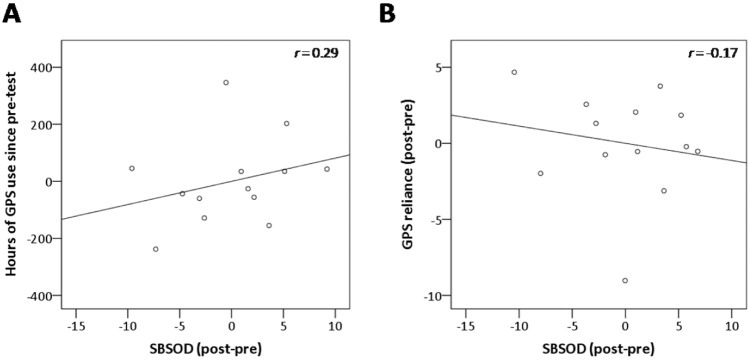
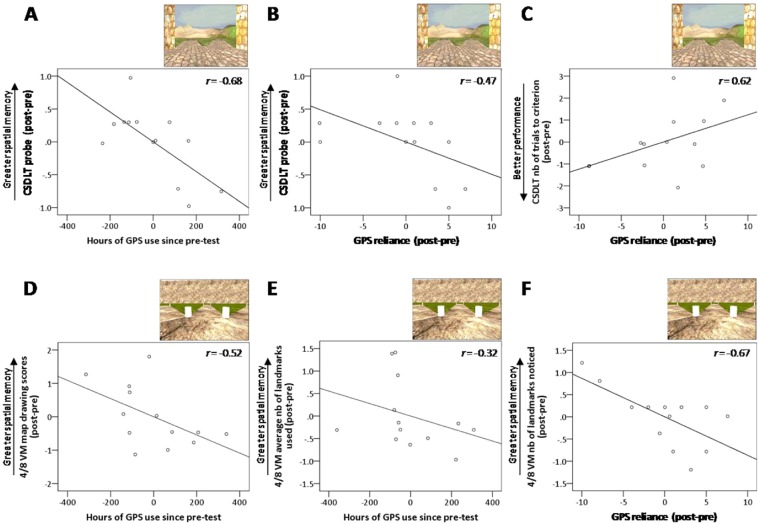
Global Positioning System (GPS) navigation devices and applications have become ubiquitous over the last decade. However, it is unclear whether using GPS affects our own internal navigation system, or spatial memory, which critically relies on the hippocampus. We assessed the lifetime GPS experience of 50 regular drivers as well as various facets of spatial memory, including spatial memory strategy use, cognitive mapping, and landmark encoding using virtual navigation tasks. We first present cross-sectional results that show that people with greater lifetime GPS experience have worse spatial memory during self-guided navigation, i.e. when they are required to navigate without GPS. In a follow-up session, 13 participants were retested three years after initial testing. Although the longitudinal sample was small, we observed an important effect of GPS use over time, whereby greater GPS use since initial testing was associated with a steeper decline in hippocampal-dependent spatial memory. Importantly, we found that those who used GPS more did not do so because they felt they had a poor sense of direction, suggesting that extensive GPS use led to a decline in spatial memory rather than the other way around. These findings are significant in the context of society's increasing reliance on GPS.
Overview
The claims and statistics of this paper haven’t been checked yet.
Free: it reads the open-access text and checks the first 5 claims that cite a source we can check. Create a free account to check every claim.
Integrity signals
Registry
Cites
Statistics
Figures
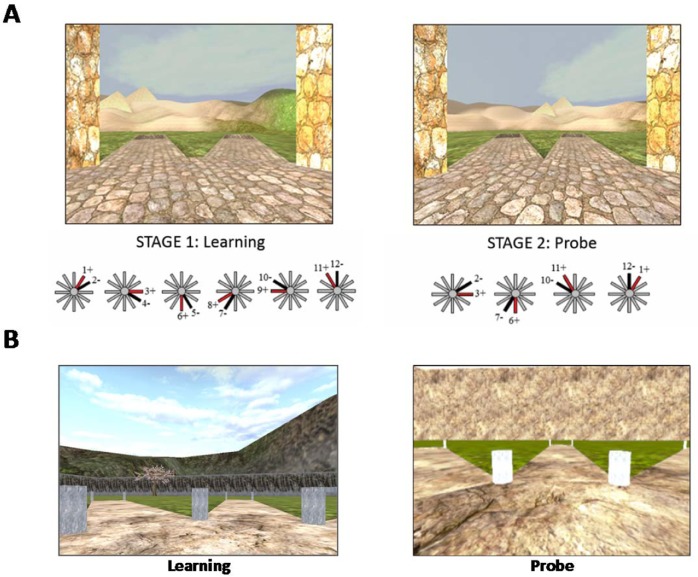
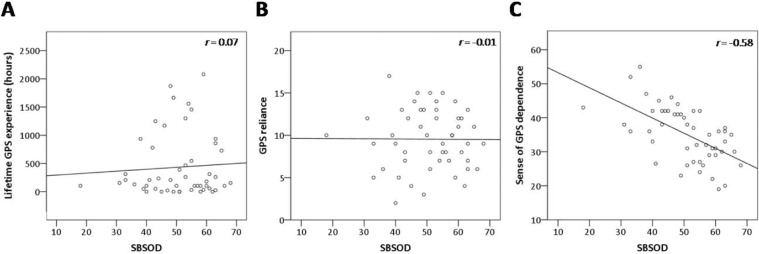
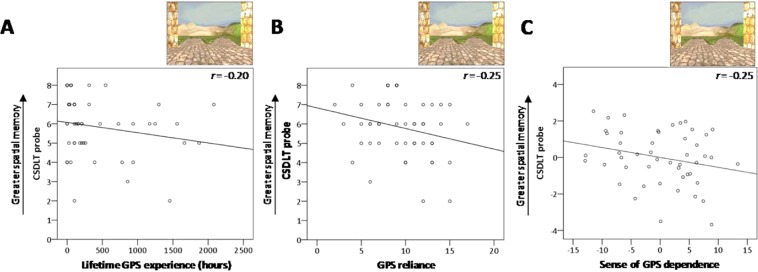
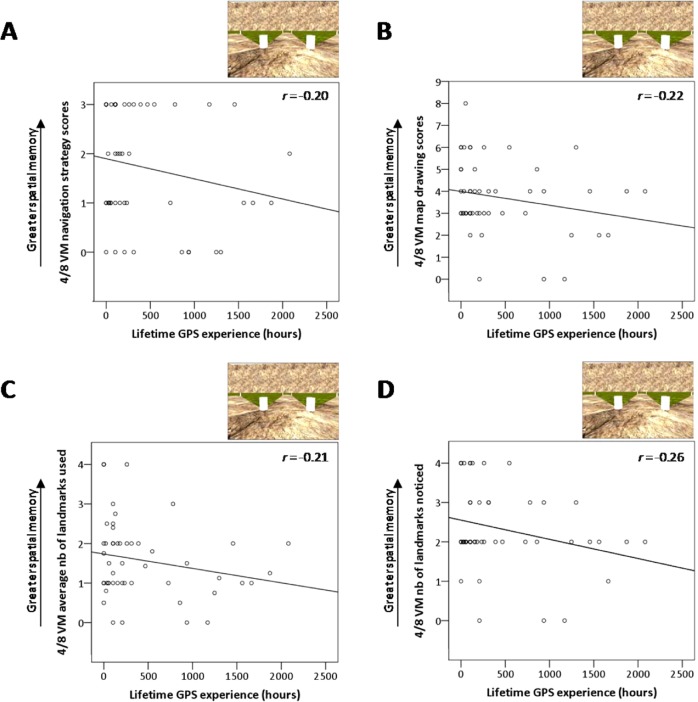
Verification
Claims the paper makes
The claims and statistics of this paper haven’t been checked yet.
Free: it reads the open-access text and checks the first 5 claims that cite a source we can check. Create a free account to check every claim.
Claims other papers make about this one
Each is checked against this paper’s own text: does it say what the citing paper says it does?
The cited source doesn’t support the claim as written.
In the citing paper
“and thus are more likely to be prone to negative effects on spatial learning, such as passive reliance on navigation aids and thus lesser engagement with the environment (Dahmani & Bohbot, 2020; Ishikawa, 2019; Ruginski et al., 2019).”
From The influence of landmark visualization style on task performance, visual attention, and spatial learning in a real-world navigation task (2024) · cites this paper as Dahmani & Bohbot, 2020
Checked by a reasoning model — may be wrong.
Experimental — accuracy not yet measuredThe source backs part of the claim, not all of it — or backs it for a different population, condition or comparison.
In the citing paper
“In these experiments, navigational aids, by replacing internal computations with external cues, remove the requirement that the spatial layout is learned by the navigator at all; and thus, when they are asked to remember it later, show poorer spatial memory.”
From This is not the way: global directional cues do not improve spatial learning in an immersive virtual environment (2025) · cites this paper as Dahmani & Bohbot, 2020
Experimental — accuracy not yet measuredThe source backs part of the claim, not all of it — or backs it for a different population, condition or comparison.
In the citing paper
“Indeed, people with lower spatial abilities rely more on mobile maps – which was also the case in our study, regardless of the landmark visualization style – and thus are more likely to be prone to negative effects on spatial learning, such as passive reliance on navigation aids and thus lesser engagement with the environment (Dahmani & Bohbot, 2020; Ishikawa, 2019; Ruginski et al., 2019).”
From The influence of landmark visualization style on task performance, visual attention, and spatial learning in a real-world navigation task (2024) · cites this paper as Dahmani & Bohbot, 2020
Experimental — accuracy not yet measuredThe source backs part of the claim, not all of it — or backs it for a different population, condition or comparison.
In the citing paper
“AI already pervasively interacts with our nervous systems by influencing, reinforcing, and changing our behaviors and cognitive processes.”
From AI and Neurotechnology (2023) · cites this paper as [10]
Experimental — accuracy not yet measuredThe cited source says what the claim attributes to it.
In the citing paper
“Past empirical research has demonstrated that over-reliance on mobile maps negatively influences wayfinders’ spatial knowledge acquisition of the traversed environment in the short term and further contributes to the long-term deterioration of their spatial abilities (Dahmani & Bohbot, 2020; Ishikawa, 2019; Ruginski et al., 2019).”
From The influence of landmark visualization style on task performance, visual attention, and spatial learning in a real-world navigation task (2024) · cites this paper as Dahmani & Bohbot, 2020
4 more claims about this paper
Create a free account to see every claim other papers make about this one.
Self-check
Percentages, sums and reported differences re-computed from the paper’s own numbers.
The self-check needs the paper’s full text.
Citations
Cites
(1978) · UA Campus Repository (The University of Arizona) · Cited by 8,010
LOSS OF RECENT MEMORY AFTER BILATERAL HIPPOCAMPAL LESIONS
Scoville, W. B., & Milner, B. (1957) · Journal of Neurology, Neurosurgery & Psychiatry · doi:10.1136/jnnp.20.1.11 · Cited by 7,322
Cognitive maps in rats and men
Tolman, E. C. (1948) · Psychological Review · doi:10.1037/h0061626 · Cited by 6,641
Place navigation impaired in rats with hippocampal lesions
Morris, R. G. M., Garrud, P., Rawlins, J. N. P., & O'Keefe, J. (1982) · Nature · doi:10.1038/297681a0 · Cited by 6,340
Navigation-related structural change in the hippocampi of taxi drivers
Maguire, E. A., Gadian, D. G., Johnsrude, I. S., Good, C. D., Ashburner, J., Frackowiak, R. S. J., & Frith, C. D. (2000) · Proceedings of the National Academy of Sciences · doi:10.1073/pnas.070039597 · Cited by 3,225
Statistical tests, P values, confidence intervals, and power: a guide to misinterpretations
Greenland, S., Senn, S. J., Rothman, K. J., Carlin, J. B., Poole, C., Goodman, S. N., & Altman, D. G. (2016) · European Journal of Epidemiology · doi:10.1007/s10654-016-0149-3 · Cited by 3,200
Psychological Assessment Resources
Abidin, R. R. (1995) · Medical Entomology and Zoology · Cited by 3,147
Squire, L. R. (1984) · The Biology of Learning · doi:10.1007/978-3-642-70094-1_32 · Cited by 2,107
Remembrance of places passed: Spatial memory in rats.
Olton, D. S., & Samuelson, R. J. (1976) · Journal of Experimental Psychology: Animal Behavior Processes · doi:10.1037//0097-7403.2.2.97 · Cited by 1,998
Resampling-Based Multiple Testing: Examples and Methods for p-Value Adjustment.
Martin, M. A., Westfall, P. H., & Young, S. S. (1994) · Biometrics · doi:10.2307/2533464 · Cited by 1,699
Research works printed but not linked: 3
- Burnett, G. E. & Lee, K. In International conference of traffic and transport psychology (2005).
- Wessel, G., Ziemkiewicz, C., Chang, R. & Sauda, E. In Proceedings of the International Conference on Advanced Visual Interfaces. 207–214 (ACM) (2010).
- Mishkin, M. & Petri, H. L. In Neuropsychology of memory (eds. L. R. Squire & N. Butters) 287–296 (Guilford Press, 1984).
Cited by
State of the art and practice in AI in education
Holmes, W., & Tuomi, I. (2022) · European Journal of Education · doi:10.1111/ejed.12533 · Cited by 1,093
Shanmugasundaram, M., & Tamilarasu, A. (2023) · Frontiers in Cognition · doi:10.3389/fcogn.2023.1203077 · Cited by 291
Extending Minds with Generative AI
Clark, A. (2025) · Nature Communications · doi:10.1038/s41467-025-59906-9 · Cited by 174
Ubal, M., Tambasco, P., Martínez, S. L., & Correa, M. G. (2023) · Revista Interuniversitaria de Investigación en Tecnología Educativa · doi:10.6018/riite.584501 · Cited by 113
Macnamara, B. N., Berber, I., Çavuşoğlu, M. C., Krupinski, E. A., Nallapareddy, N., Nelson, N. E., Smith, P. J., Wilson-Delfosse, A. L., & Ray, S. (2024) · Cognitive Research: Principles and Implications · doi:10.1186/s41235-024-00572-8 · Cited by 97
Shamsuddinova, S., Heryani, P., & Naval, M. A. (2024) · International Journal of Educational Research · doi:10.1016/j.ijer.2024.102326 · Cited by 97
How anxiety and growth mindset are linked to navigation ability: Impacts of exploration and GPS use
He, C., & Hegarty, M. (2020) · Journal of Environmental Psychology · doi:10.1016/j.jenvp.2020.101475 · Cited by 67
GeoFM: how will geo-foundation models reshape spatial data science and GeoAI?
Janowicz, K., Mai, G., Huang, W., Zhu, R., Lao, N., & Cai, L. (2025) · International Journal of Geographical Information Science · doi:10.1080/13658816.2025.2543038 · Cited by 77
“Just as the widespread use of digital navigation systems has impacted our spatial memory (Dahmani and Bohbot, 2020), habitual use of GenAI/FM may reduce spatial thinking more broadly.”
Rethinking GPS navigation: creating cognitive maps through auditory clues
Clemenson, G. D., Maselli, A., Fiannaca, A. J., Miller, A., & González-Franco, M. (2021) · Scientific Reports · doi:10.1038/s41598-021-87148-4 · Cited by 74
Understanding the influence of digital technology on human cognitive functions: A narrative review
de Barros, E. C. (2024) · IBRO Neuroscience Reports · doi:10.1016/j.ibneur.2024.11.006 · Cited by 68
Griesbauer, E., Manley, E., Wiener, J. M., & Spiers, H. J. (2021) · Hippocampus · doi:10.1002/hipo.23395 · Cited by 66
Eye movement‐related brain potentials during assisted navigation in real‐world environments
Wunderlich, A., & Gramann, K. (2021) · European Journal of Neuroscience · doi:10.1111/ejn.15095 · Cited by 57
Spatial thinking, cognitive mapping, and spatial awareness
Ishikawa, T. (2021) · Cognitive Processing · doi:10.1007/s10339-021-01046-1 · Cited by 55
Cheng, B., Wunderlich, A., Gramann, K., Lin, E., & Fabrikant, S. I. (2022) · Frontiers in Virtual Reality · doi:10.3389/frvir.2022.981625 · Cited by 49
Artificial Intelligence (AI) and Workplace Communication: Promises, Perils, and Recommended Policy
Quaquebeke, N. V., & Gerpott, F. H. (2024) · Journal of Leadership & Organizational Studies · doi:10.1177/15480518241289644 · Cited by 50
“This aligns with work on “ digital amnesia, ” where constant use of technology impaired human skills normally used for respective behaviors (e.g., effects of GPS on spatial navigation or Google on memory; Dahmani & Bohbot, 2020; Sparrow et al., 2011).”
Qiu, Z., Ashour, M., Zhou, X., & Kalantari, S. (2024) · Advanced Engineering Informatics · doi:10.1016/j.aei.2024.102635 · Cited by 47
“Additional studies have supported this outlook by showing that a reliance on passive navigational technologies can negatively affect navigators’ spatial memory [1, 32].”
Evaluating Augmented Reality Landmark Cues and Frame of Reference Displays with Virtual Reality
Zhao, Y. N., Stefanucci, J. K., Creem-Regehr, S. H., & Bodenheimer, B. (2023) · IEEE Transactions on Visualization and Computer Graphics · doi:10.1109/tvcg.2023.3247078 · Cited by 49
“However, researchers from various disciplines have demonstrated that following simple turn-by-turn navigation instructions can degrade a user’s navigation skills and spatial cognition [19,26,42,43,79].”
BackgroundHow is GPS used? Understanding navigation system use and its relation to spatial ability
Topete, A., He, C., Protzko, J., Schooler, J. W., & Hegarty, M. (2024) · Cognitive Research · doi:10.1186/s41235-024-00545-x · Cited by 37
“…concern that a particular function of the smartphone—navigation systems—may have a detrimental impact on the acquisition and maintenance of both spatial knowledge of the environment and actual navigation ability (Dahmani & Bohbot, 2020; Ishi-kawa, 2019; McKinlay, 2016; Ruginski et al., 2019).”
BackgroundInfluentialVendrell, M., & Johnston, S.-K. (2026) · Computers and Education: Artificial Intelligence · doi:10.1016/j.caeai.2026.100572 · Cited by 43
Designing mobile spatial navigation systems from the user’s perspective: an interdisciplinary review
Ruginski, I. T., Giudice, N. A., Creem-Regehr, S. H., & Ishikawa, T. (2022) · Spatial Cognition and Computation · doi:10.1080/13875868.2022.2053382 · Cited by 46
“…al., 2013; Hejtmánek et al., 2018; Ishikawa et al., 2008) and others lead to long-term deficits (e.g., degradation of spatial cognitive skills and awareness; Dahmani & Bohbot, 2020; Ishikawa, 2019; Ruginski et al., 2019), the problem of when and how to best use these systems remains multi-faceted.”
InfluentialTorkamaan, H., Steinert, S., Pera, M. S., Kudina, O., Freire, S. K., Verma, H., Kelly, S., Sekwenz, M.-T., Yang, J., van Nunen, K., et al. (2024) · Behaviour and Information Technology · doi:10.1080/0144929x.2024.2431068 · Cited by 43
Shalu, Verma, N., Dev, K., Bhardwaj, A. B., & Kumar, K. (2025) · Annals of Neurosciences · doi:10.1177/09727531251359872 · Cited by 42
“12 15 The sheer amount of digital information and diver-sions can overwhelm the brain, making it more difficult to retain and comprehend what is being learned.”
Media, technology, and the sins of memory
Schacter, D. L. (2022) · Memory, Mind & Media · doi:10.1017/mem.2021.3 · Cited by 40
“Viewing the previously discussed studies from the perspective of the aforementioned distinctions, I think that there is solid evidence for an impairing effect of technology at a task-specific level, such as reduced memory for a photographed item (Henkel 2014; Tamir et al 2018) and impaired memory for routes on which o…”
BackgroundThe extended hollowed mind: why foundational knowledge is indispensable in the age of AI
Klein, C. R., & Klein, R. (2025) · Frontiers in Artificial Intelligence · doi:10.3389/frai.2025.1719019 · Cited by 41
“…that while GPS is remarkably efficient, its over-reliance is correlated with poorer performance on spatial cognition tasks and a reduced ability to form accurate ‘cognitive maps’ of one’s environment (Dahmani and Bohbot, 2020; Hejtmánek et al., 2018; Ishikawa et al., 2008; Ruginski et al., 2019).”
Orienteering experts report more proficient spatial processing and memory across adulthood
Waddington, E. E., & Heisz, J. J. (2023) · PLoS ONE · doi:10.1371/journal.pone.0280435 · Cited by 39
Virtual Global Landmark: An Augmented Reality Technique to Improve Spatial Navigation Learning
Singh, A. K., Liu, J., Cortes, C., & Lin, C. (2021) · CHI Conference Extended Abstracts on Human Factors in Computing Systems (CHI EA) · doi:10.1145/3411763.3451634 · Cited by 39
“Thus, the use of these systems has lead to a loss of navigational ability [4, 11, 16, 17] in their users.”
BackgroundVideo gaming, but not reliance on GPS, is associated with spatial navigation performance
Yavuz, E., He, C., Gahnstrom, C. J., Goodroe, S. C., Coutrot, A., Hornberger, M., Hegarty, M., & Spiers, H. J. (2024) · Journal of Environmental Psychology · doi:10.1016/j.jenvp.2024.102296 · Cited by 36
Dual-process theory and decision-making in large language models
Brady, O., Nulty, P., Zhang, L., Ward, T. E., & McGovern, D. P. (2025) · Nature Reviews Psychology · doi:10.1038/s44159-025-00506-1 · Cited by 33
“For instance, widespread use of smartphones and the internet are believed to have altered memory processes and reduced attention spans 188,189 and GPS has eroded navigation and spatial reasoning skills 190,191 .”
Naylor, A. W., Ford, J. D., Pearce, T. D., Fawcett, D., Clark, D. G., & Alstine, J. V. (2021) · PLoS ONE · doi:10.1371/journal.pone.0258048 · Cited by 35
Cheng, B., Lin, E., Wunderlich, A., Gramann, K., & Fabrikant, S. I. (2023) · Frontiers in Neuroscience · doi:10.3389/fnins.2023.1024583 · Cited by 34
Effects of simulated augmented reality cueing in a virtual navigation task
Stefanucci, J. K., Brickler, D., Finney, H. C., Wilson, E., Drew, T., & Creem-Regehr, S. H. (2022) · Frontiers in Virtual Reality · doi:10.3389/frvir.2022.971310 · Cited by 33
“Relatedly, as described above, when people actively use GPS in order to navigate their environments, it also hinders their ability to learn environmental layout (Ruginski et al., 2019), as well as their spatial memory for the environment (Hejtmánek et al., 2018; Dahmani and Bohbot, 2020).”
BackgroundWest, G. L., Patai, E. Z., Coutrot, A., Hornberger, M., Bohbot, V. D., & Spiers, H. J. (2023) · Journal of Cognitive Neuroscience · doi:10.1162/jocn_a_01956 · Cited by 30
“Further highlighting this observation, a recent study found that people who rely more on the in-car GPS systems to navigate, over time, displayed a steeper decline in hippocampal-dependent spatial memory performance (Dahmani & Bohbot, 2020).”
Self-citationComparing minds and machines: implications for financial stability
Buckmann, M., Haldane, A., & Hüser, A. (2021) · Oxford Review of Economic Policy · doi:10.1093/oxrep/grab017 · Cited by 29
Using virtual global landmark to improve incidental spatial learning
Liu, J., Singh, A. K., & Lin, C. (2022) · Scientific Reports · doi:10.1038/s41598-022-10855-z · Cited by 28
Redesigning navigational aids using virtual global landmarks to improve spatial knowledge retrieval
Liu, J., Singh, A. K., Wunderlich, A., Gramann, K., & Lin, C. (2022) · npj Science of Learning · doi:10.1038/s41539-022-00132-z · Cited by 29
“The simple turn-by-turn instructions provided by a GPS assistance system do not require processing of environmental information and could thus negatively impact the construction of mental maps 32 – 34 .”
MethodDeskilling of medical professionals: an unintended consequence of AI implementation?
Dias Duran, L. D. (2021) · Giornale di Filosofia · Cited by 29
Human Augmentation Technologies for Employee Well-Being: A Research and Development Agenda
Ho, B. Q., Otsuki, M., Kishita, Y., Kobayakawa, M., & Watanabe, K. (2022) · International Journal of Environmental Research and Public Health · doi:10.3390/ijerph19031195 · Cited by 27
“Pertaining to this topic, the following research questions need to be addressed: How can physical movement be synchronized with augmented telework? How can employees acquire tacit knowledge? How can the safety of employees be ensured? Fulfilling potential capabilities—As new technologies are introduced in society, we…”
BackgroundArtificial Intelligence: Solutions in Special Education
Ahmad, W., Shokeen, R., & Raj, R. (2024) · Advances in educational technologies and instructional design book series · doi:10.4018/979-8-3693-5538-1.ch017 · Cited by 28
The distribution of ecotourism activities and potential consequences for the Saudi desert ecosystem
Alrawaf, T. I., Abubakar, I. R., Alshabibi, N. M., Al-Matar, K. M., Dano, U. L., Abdalla, E. M. E., Farooqi, M. A., Alshihri, F. S., Alzenifeer, B. M., & Al-Odah, M. A. (2023) · Journal of Arid Environments · doi:10.1016/j.jaridenv.2023.104950 · Cited by 26
Freedom and the Machine: Technological Criticisms in Adam Smith’s Thought
Bunn, P. D. (2022) · Political Research Quarterly · doi:10.1177/10659129221091579 · Cited by 25
“Many find themselves unable to competently navigate areas familiar or unfamiliar without the aid of these devices (Dahmani and Bohbot 2020).”
BackgroundOverloaded minds and machines: a cognitive load framework for human-AI symbiosis
Wang, P., Liu, H., Zou, L., & PAAS, F. G. W. C. (2026) · Artificial Intelligence Review · doi:10.1007/s10462-026-11510-z · Cited by 25
“…offloading have been raised in design and knowledge-work contexts (Rinta-Kahila et al. 2023 ; Shukla et al. 2025 ) and in medicine (Natali et al. 2025 ), and habitual reliance on GPS navigation has been associated with poorer spatial memory during unaided navigation (Dahmani and Bohbot 2020 ).”
GPS use and navigation ability: A systematic review and meta-analysis
Miola, L., Muffato, V., Sella, E., Meneghetti, C., & Pazzaglia, F. (2024) · Journal of Environmental Psychology · doi:10.1016/j.jenvp.2024.102417 · Cited by 24
Kapaj, A., Lanini-Maggi, S., Hilton, C., Cheng, B., & Fabrikant, S. I. (2023) · Cartography and Geographic Information Science · doi:10.1080/15230406.2023.2183525 · Cited by 24
“…an over-reliance on location-aware mobile maps shifts users’ attention away from task-relevant features in the environment and thus deteriorates spatial learning in general populations (Dahmani & Bohbot, 2020; Gardony et al., 2015; Hejtmánek et al., 2018; Ishikawa, 2019; Ruginski et al., 2019).”
BackgroundMethodInfluentialMuffato, V., Borella, E., Pazzaglia, F., & Meneghetti, C. (2022) · International Journal of Environmental Research and Public Health · doi:10.3390/ijerph19031225 · Cited by 24
“Regarding the relationship found between VSWM capacity and higher GPS use, this appears to be in contrast with evidence suggesting that GPS may not facilitate the construction of cognitive maps [24,25].”
ResultRoute learning with augmented reality navigation aids
Yount, Z. F., Kass, S. J., & Arruda, J. E. (2022) · Transportation Research Part F Traffic Psychology and Behaviour · doi:10.1016/j.trf.2022.05.019 · Cited by 23
Homo Promptus: Predicting the impact of generative AI on human memory and creativity
Linden, K., Hachem, H.-H., & Kondyli, V. (2025) · Memory Mind & Media · doi:10.1017/mem.2025.10012 · Cited by 22
“…impairments have been documented: increased usage of GPS navigation technology has been linked to a decline in hippocampal-dependent spatial memory (Dahmani and Bohbot 2020), and the act of taking digital photographs has been found to decrease recall accuracy for image details (Henkel 2014).”
Review of Traffic Assignment and Future Challenges
Elimadi, M., Abbas‐Turki, A., Koukam, A., Dridi, M., & Mualla, Y. (2024) · Applied Sciences · doi:10.3390/app14020683 · Cited by 22
Waddington, E. E., Allison, D. J., Calabrese, E. M., Pekos, C., Lee, A., Walsh, J. J., & Heisz, J. J. (2024) · PLoS ONE · doi:10.1371/journal.pone.0303785 · Cited by 22
Embodied AI: Emerging Risks and Opportunities for Policy ActionPreprint
Perlo, J., Robey, A., Barez, F., Floridi, L., & Mökander, J. (2025) · arXiv (Cornell University) · doi:10.48550/arxiv.2509.00117 · Cited by 23
“Humans also might lose the ability to perform various tasks as responsibilities are increasingly outsourced or delegated to EAI systems [101]—as an existing example, humans can lose natural abilities to navigate their environment when they outsource navigation to automated GPS systems [123].”
Berger, S., & Rossi, F. (2023) · Communications of the ACM · doi:10.1145/3529088 · Cited by 21
Kapaj, A., Hilton, C., Lanini-Maggi, S., & Fabrikant, S. I. (2024) · Spatial Cognition & Computation · doi:10.1080/13875868.2024.2328099 · Cited by 20
“…that over-reliance on mobile maps negatively influences wayfinders’ spatial knowledge acquisition of the traversed environment in the short term and further contributes to the long-term deterioration of their spatial abilities (Dahmani & Bohbot, 2020; Ishikawa, 2019; Ruginski et al., 2019).”
BackgroundInfluentialMiola, L., Meneghetti, C., Muffato, V., & Pazzaglia, F. (2022) · Journal of Environmental Psychology · doi:10.1016/j.jenvp.2022.101952 · Cited by 16
Rage against the authority machines: how to design artificial moral advisors for moral enhancement
Landes, E., Voinea, C., & Uszkai, R. (2024) · AI & Society · doi:10.1007/s00146-024-02135-3 · Cited by 18
“Take the example of constantly using GPS maps and AI assistance for orientation: this leads to the loss of orientation abilities (Dahmani and Bohbot 2020).”
Memory sins in applied settings: What kind of progress?
Schacter, D. L. (2022) · Journal of Applied Research in Memory and Cognition · doi:10.1037/mac0000078 · Cited by 18
“There is yet little evidence against which to assess these possibilities, but a study by Dahmani and Bohbot (2020) revealed that greater self-reported lifetime GPS experience in 50 drivers was associated with worse spatial learning and memory performance on two virtual maze tasks.”
Hilton, C. W., Kapaj, A., & Fabrikant, S. I. (2024) · Attention Perception & Psychophysics · doi:10.3758/s13414-024-02864-z · Cited by 17
“Interestingly, this LPC old/new effect is also reduced under divided attention conditions (Curran, 2004), and divided attention is one of the primary explanatory factors in spatial learning deficits associated with navigation aid use (Dahmani & Bohbot, 2020).”
Contextual memory engrams, and the neuromodulatory influence of the locus coeruleus
Grella, S. L., & Donaldson, T. N. (2024) · Frontiers in Molecular Neuroscience · doi:10.3389/fnmol.2024.1342622 · Cited by 16
“And in the modern world, it has been shown that people with higher lifetime global position system (GPS) experience have worse spatial memory when they have to navigate without a GPS (Dahmani and Bohbot, 2020).”
BackgroundHow Do In-Car Navigation Aids Impair Expert Navigators’ Spatial Learning Ability?
Ying, Q., Dong, W., & Fabrikant, S. I. (2024) · Annals of the American Association of Geographers · doi:10.1080/24694452.2024.2356858 · Cited by 18
“Furthermore, a longitudinal study by Dahmani and Bohbot (2020) reported that individuals who used navigation aids showed a steeper decline in spatial memory over time.”
BackgroundBerger, V. (2024) · L'Harmattan Kiadó eBooks · doi:10.56037/978-963-646-019-8 · Cited by 16
The artificial intelligence (AI) competence paradox: how AI reshapes clinical expertise
Nilsson, C. (2025) · Transforming Government People Process and Policy · doi:10.1108/tg-02-2025-0048 · Cited by 16
Spatial Navigation in Childhood and Aging
Tansan, M., Nguyen, K. V., & Newcombe, N. S. (2022) · Annual Review of Developmental Psychology · doi:10.1146/annurev-devpsych-121020-031846 · Cited by 17
Authentic and Creative Assessment in a World with AI
Miserandino, M. (2025) · Teaching of Psychology · doi:10.1177/00986283241260370 · Cited by 15
“Reliance on GPS to navigate one ’ s way around the world prevents people from forming good mental maps of an area (Dahmani & Bohbot, 2020).”
Alfabetización e inteligencia artificial
Gatti, A. (2024) · Journal of Neuroeducation · doi:10.1344/joned.v5i1.46108 · Cited by 14
Dialogues with AI Reduce Beliefs in Misinformation but Build No Lasting Discernment Skills
Rani, A., Danry, V., Liang, P. P., Lippman, A., & Maes, P. (2026) · CHI Conference on Human Factors in Computing Systems · doi:10.1145/3772318.3790656 · Cited by 14
“As AI becomes increasingly sophisticated, ensuring these tools build critical thinking skills rather than cognitive dependency becomes essential for maintaining public resilience to misinformation.”
Artificial Intelligence Framework for the Inter-American Development Group
Vargas, F., & Muente, A. (2025) · doi:10.18235/0013377 · Cited by 15
Lakehal, A., Lepreux, S., Efstratiou, C., Kolski, C., & Nicolaou, P. (2023) · Information · doi:10.3390/info14070353 · Cited by 13
“As shown by Gardony and colleagues, such systems do not provide opportunities to develop spatial skills, and they tend to reduce spatial awareness [12,13].”
Fabrikant, S. I. (2023) · Journal of Location Based Services · doi:10.1080/17489725.2023.2258100 · Cited by 13
“…has already shown to influence our daily space-time behaviour (Brügger, Richter, and Fabrikant 2019; Ruginski et al. 2022; Thrash et al. 2019) and negatively impact our attentional and cognitive spatial abilities and resources (Aporta and Higgs 2005; Dahmani and Bohbot 2020; Sugimoto et al. 2022).”
BackgroundDecker, D., & Merkt, M. (2024) · Journal of Computer Assisted Learning · doi:10.1111/jcal.12945 · Cited by 13
Getting LOST : A conceptual framework for supporting and enhancing spatial navigation in aging
Weisberg, S. M., Ebner, N. C., & Seidler, R. D. (2024) · WIREs Cognitive Science · doi:10.1002/wcs.1669 · Cited by 12
Liao, H., Meng, J., Zhou, Y., & Dong, W. (2025) · International Journal of Digital Earth · doi:10.1080/17538947.2025.2542960 · Cited by 12
“However, long-term GPS use has generally been associated with reduced spatial learning and orientation skills, though exceptions exist (Dahmani and Bohbot 2020; Ruginski et al. 2019; Topete et al. 2024; Yavuz et al. 2024; Ying, Dong, and Fabrikant 2024).”
GPS Digital Nudge to Limit Road Crashes in Non-Expert Drivers
Nori, R., Zucchelli, M. M., Giancola, M., Palmiero, M., Verde, P., Giannini, A. M., & Piccardi, L. (2022) · Behavioral Sciences · doi:10.3390/bs12060165 · Cited by 14
“In addition, Dahmani and Bohot [40] show, by a longitudinal study, that GPS use was associated with a steeper decline in spatial memory.”
Vestibulo-spatial navigation: pathways and sense of direction
Zachou, A., & Bronstein, A. M. (2023) · Journal of Neurophysiology · doi:10.1152/jn.00422.2022 · Cited by 12
Lanini-Maggi, S., Hilton, C. W., & Fabrikant, S. I. (2023) · Journal of Environmental Psychology · doi:10.1016/j.jenvp.2023.102151 · Cited by 13
Sustainable digital rent: a transformative framework for value dynamics in the digital age
Özdilek, Ü. (2024) · Frontiers in Sustainability · doi:10.3389/frsus.2024.1442311 · Cited by 12
Takasu, A., Kogure, H., Dai, Z., Yamada, Y., Nakayama, M., Bechara, R., Gotoda, T., & Mıura, Y. (2025) · Journal of Gastroenterology and Hepatology · doi:10.1111/jgh.17040 · Cited by 11
“While GPS improved travel efficiency, it also reduced cognitive engagement, promoted stimulus–response behavior, and impaired navigation performance when GPS was removed [22].”
Yan, W., Li, J., Mi, C., Wang, W., Xu, Z., Xiong, W., Tang, L., Wang, S., Li, Y., & Wang, S. (2022) · Frontiers in Psychology · doi:10.3389/fpsyg.2022.983019 · Cited by 11
“The Chinese translation of the GPS dependence scale (Dahmani and Bohbot, 2020) was used to assess the GPS experience of the participants, which mainly assesses the individual’s actual use of GPS, especially walking or driving to a new or known target location, by using the GPS-based navigation apps…”
BackgroundMethodInfluentialHilton, C. W., Kapaj, A., & Fabrikant, S. I. (2023) · Journal of Cognition · doi:10.5334/joc.307 · Cited by 11
Mindware: Critical Thinking in Everyday Life
Eigenauer, J. D. (2024) · Journal of Intelligence · doi:10.3390/jintelligence12020017 · Cited by 12
Navigating Your Way! Increasing the Freedom of Choice During Wayfinding
Mazurkiewicz, B., Kattenbeck, M., & Giannopoulos, I. (2021) · International Conference Geographic Information Science · doi:10.4230/lipics.giscience.2021.ii.9 · Cited by 7
“At the same time, empirical evidence has been collected which suggests an adverse impact of wayfinding assistance systems on spatial cognition and knowledge acquisition (see e.g., [6]).”
BackgroundThe Paradox of Augmentation: A Theoretical Model of AI‐Induced Skill Atrophy
Ganuthula, V. R. R., & Singh, M. K. (2026) · Human Behavior and Emerging Technologies · doi:10.1155/hbe2/8303770 · Cited by 10
Determinants of individual navigation ability
Yavuz, E., & Spiers, H. J. (2026) · Nature Reviews Psychology · doi:10.1038/s44159-026-00544-3 · Cited by 9
Metacognitive training facilitates optimal cognitive offloading
Ngai, C., & Gilbert, S. J. (2026) · Cognitive Research Principles and Implications · doi:10.1186/s41235-026-00714-0 · Cited by 10
“For example, reliance on cognitive offloading may reduce internal memory for to-be-remembered information (Sparrow et al., 2011), and excessive use of tools such as GPS devices could potentially lead to a decline in navigation abilities (Dahmani & Bohbot, 2020; Hejtmánek et al., 2018).”
Cruz-Carrillo, G., Trujillo-Villarreal, L. A., Ángeles-Valdéz, D., Concha, L., Garza‐Villarreal, E. A., & Camacho‐Morales, A. (2022) · Neuroscience · doi:10.1016/j.neuroscience.2022.12.021 · Cited by 10
A Systematic Review of the Use of Augmented Reality in Pedestrian Navigation
Yu, Z., Gagnon, H. C., Stefanucci, J. K., Creem-Regehr, S. H., & Bodenheimer, B. (2025) · ACM Computing Surveys · doi:10.1145/3770917 · Cited by 8
“Besides, both maps and smartphones require users to divert their attention from their immediate surroundings, potentially decreasing situational awareness.”
Park, J., Kim, M., & Han, S. (2026) · arXiv (Cornell University) · doi:10.48550/arxiv.2603.24391 · Cited by 8
“68 with device usage [3, 4, 5].”
Ambiguity Collapse by LLMs: A Taxonomy of Epistemic Risks
Gur-Arieh, S., Wang, A., & Fazelpour, S. (2026) · ACM Conference on Fairness, Accountability, and Transparency (FAccT) · doi:10.1145/3805689.3806469 · Cited by 7
“For example, people who rely on search engines retain where to find information rather than the information itself [152], and heavy GPS users form weaker spatial memories when navigating on their own [40].”
Beaudoin, M. E., Jones, K. M., Jerome, B., Martinez, D., George, T., & Pandža, N. B. (2024) · Frontiers in Psychology · doi:10.3389/fpsyg.2024.1335864 · Cited by 7
Park, H., Dixit, M., & Pariafsai, F. (2024) · Applied Sciences · doi:10.3390/app14104012 · Cited by 7
Are the Internet and AI affecting our memory? What the science says
Pearson, H. (2025) · Nature · doi:10.1038/d41586-025-00292-z · Cited by 7
How Humanity Has Always Feared Change: Are You Afraid of Artificial Intelligence?
Véras, M. M. S. (2025) · Cureus · doi:10.7759/cureus.83602 · Cited by 7
Create your own path: social cerebellum in sequence-based self-guided navigation
Li, M., Haihambo, N. P., Bylemans, T., Ma, Q., Heleven, E., Baeken, C., Baetens, K., Deroost, N., & Overwalle, F. V. (2024) · Social Cognitive and Affective Neuroscience · doi:10.1093/scan/nsae015 · Cited by 7
“In contrast to social navigation, research on spatial navigation has focused on self-guided navigation, where participants actively decide which routes to take unaided (Dahmani and Bohbot, 2020).”
BackgroundMark it out! Spontaneous cognitive offloading in route planning
Florean, I., Stragà, M., Mäntylä, T., & Missier, F. D. (2024) · Thinking & Reasoning · doi:10.1080/13546783.2024.2413151 · Cited by 6
“According to some scholars, intensive use of GPS technology could even impair spatial memory in the long term (Dahmani & Bohbot, 2020), although the available evidence is too limited to draw any firm conclusion.”
Wang, S., Liu, B., Feng, Y., & Meng, L. (2024) · Cartography and Geographic Information Science · doi:10.1080/15230406.2024.2409915 · Cited by 6
“An overreliance on such aids may also impair human spatial ability in the long run (Dahmani & Bohbot, 2020; Gramann et al., 2017; McKinlay, 2016).”
Social justice and translator training and education in a time of (non-)equitable tech
Desjardins, R., & Florentin, V. (2024) · Linguistica Antverpiensia New Series – Themes in Translation Studies · doi:10.52034/lans-tts.v23i.786 · Cited by 6
“Dahmani and Bohbot (2020) cite GPS as an example where, over time, over-reliance on GPS technology thwarts our internal (human) navigation system.”
Look at me! Can a pedagogical agent facilitate orientation and support learning in VR?
Decker, D., & Merkt, M. (2025) · Educational Technology Research and Development · doi:10.1007/s11423-025-10531-9 · Cited by 6
“…navigation using GPS tools is an important area in which many people rely on digital support, even though current research implies detrimental effect on the construction of mental spatial representations (Dahmani & Bohbot, 2020; Gardony et al., 2015; Hejtmánek et al., 2018; Ishikawa et al., 2008).”
Reconsidering What It Means to Be “Gifted” in the Age of AI
Sternberg, R. J. (2025) · Gifted Education International · doi:10.1177/02614294251371557 · Cited by 6
Large Language Models as Search Engines: Societal Challenges
Sadeddine, Z., Maxwell, W., Varoquaux, G. P., & Suchanek, F. M. (2025) · ACM SIGIR Forum · doi:10.1145/3769733.3769746 · Cited by 7
“Similarly to how technologies such as engines or GPS have impacted related human skills [Sparrow et al., 2011; Dahmani and Bohbot, 2020], the use of LLMs could thus result in a dip in critical thinking skills.”
Azimi, S., Mostafavi, M. A., Best, K. L., & Dommès, A. (2023) · Lecture notes in computer science · doi:10.1007/978-3-031-34612-5_4 · Cited by 6
Enmeshed with the digital: satellite navigation and the phenomenology of drivers’ spaces
Berger, V. (2023) · Mobilities · doi:10.1080/17450101.2023.2285304 · Cited by 4
“Additionally, Dahmani and Bohbot (2020, 11) have found that negative consequences for spatial cognitive skills and spatial memory are dose-dependent, in that they are positively correlated with the frequency of use.”
BackgroundInfluentialFree Choice Navigation in the Real World: Giving Back Freedom to Wayfinders
Mazurkiewicz, B., Kattenbeck, M., & Giannopoulos, I. (2023) · ISPRS International Journal of Geo-Information · doi:10.3390/ijgi12020027 · Cited by 6
Magnetosensation: the unsolved mystery
Lam, B. Y. K., & Malkemper, E. P. (2026) · Physiological Reviews · doi:10.1152/physrev.00032.2025 · Cited by 7
Metadata
- Authors
- Dahmani, L., & Bohbot, V. D.
- Affiliations
- McGill University (CA)
- Douglas Mental Health University Institute (CA)
- Corresponding author
- Bohbot, Véronique D.
- Venue
- Scientific Reports
- Published
- 2020-04-14
- Volume
- 10
- Issue
- 1
- Pages
- 6310-6310
- ISSN
- 2045-2322 (ISSN-L)
- PMC
- PMC7156656
- OpenAlex
- W3015865106
- Cited by
- 212
- References
- 46
- Citations by year
- 2026: 50 · 2025: 49 · 2024: 49 · 2023: 28 · 2022: 22 · 2021: 9 · 2020: 5
- FWCI
- 5.92
- Type
- journal article
- Language
- en
- Open access
- gold
- doi.org
- Licence
- cc-by
- creativecommons.org/licenses/by/4.0 (tdm)
- creativecommons.org/licenses/by/4.0 (vor)
- Locations
- Scientific Reports (publishedVersion, cc-by)
- PubMed Central (publishedVersion, cc-by)
- PubMed (publishedVersion)
- Topics
- Social Sciences › Psychology › Experimental and Cognitive Psychology › Spatial Cognition and Navigation
- Life Sciences › Neuroscience › Cognitive Neuroscience › Memory and Neural Mechanisms
- Social Sciences › Geography, Planning and Development › Geography Education and Pedagogy
- Keywords
- GPS navigation, spatial memory, hippocampus, cognitive mapping, sense of direction, cognitive decline, virtual navigation
- MeSH terms
- Adult, Cross-Sectional Studies, Female, Follow-Up Studies, Hippocampus, Humans, Longitudinal Studies, Male, Memory Disorders, Geographic Information Systems, Young Adult, Spatial Memory, Spatial Navigation
About these checks
Registry, retraction, Cites and statistics results are computed, not judged, with one exception: a printed reference that no index lists is read once by a model before it counts as a citation error. Claims are extracted by a model and kept only when their quote appears verbatim in the text; each cited source is then checked, with a model’s help, for whether it says what the claim relies on. Those verdicts can be wrong — read the claim’s quote and the cited source before relying on one.
Statistics and arithmetic are recomputed, not judged.
Confidence bands are shown only for fields calibrated on our annotated test set. None is calibrated yet, so no band is shown.
What counts as a claim ›How we measure confidence ›How we check this ›
Are you an author, or do you see a problem with this page? Request a review
Data sources
Bibliographic data: Semantic Scholar, OpenAlex, Crossref.
Contains information from the Semantic Scholar Academic Graph Datasets, made available under the ODC Attribution License (ODC-BY 1.0).
Semantic Scholar’s data is described in: Kinney, R., et al. (2023). The Semantic Scholar Open Data Platform. arXiv:2301.10140.
