

The DOI matches its Crossref record; 91 of the 91 references it cites were found in a registry or an index; 1 of the 45 sources its claims cite were checked for support.
The use of commercial computerised cognitive games in older adults: a meta-analysis
Open accessAbstract
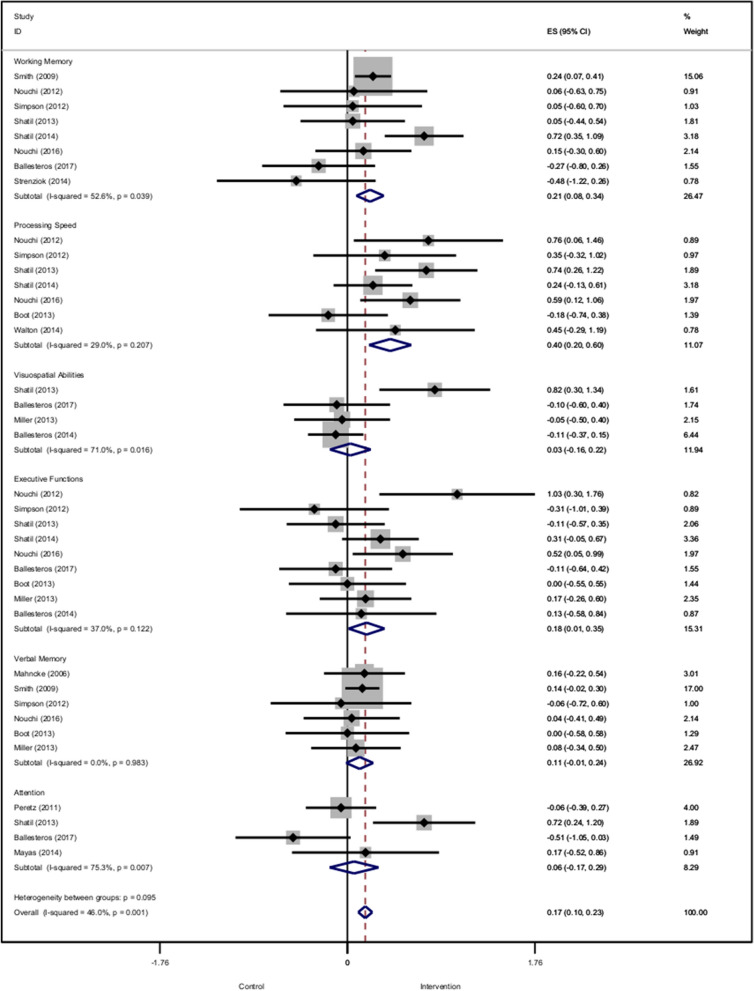
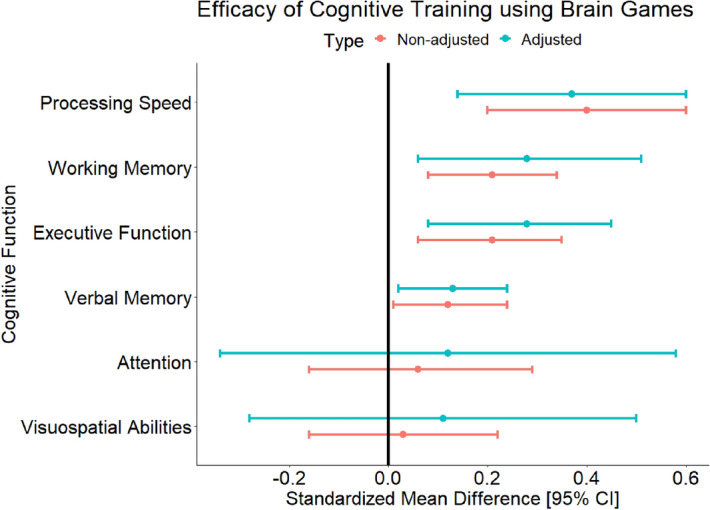
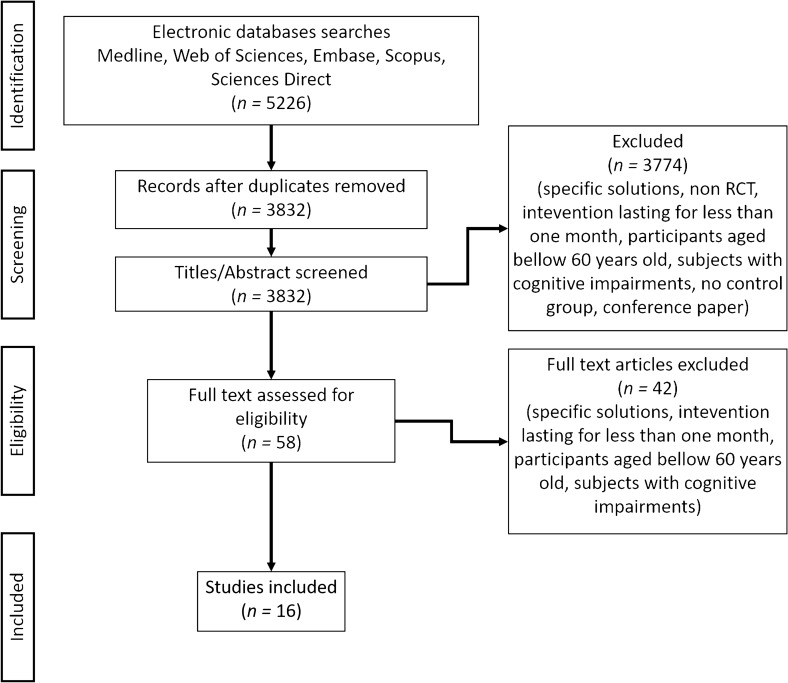
Brain training programs are currently one effective solution to prevent cognitive decline in healthy aging. We conducted a meta-analysis of randomized controlled trials assessing the use of commercially available computerised cognitive games to improve cognitive function in people aged above 60 years old without cognitive impairment. 1,543 participants from sixteen studies were included in the meta-analysis. Statistically significant improvements were observed for processing speed (SMD increased 0.40 [95% CI 0.20–0.60], p < 0.001), working memory (0.21 [95% CI 0.08–0.34], p = 0.001), executive function (0.21 [95% CI 0.06–0.35], p = 0.006), and for verbal memory (0.12 [95% CI 0.01–0.24, p = 0.031), but not for attention or visuospatial abilities. No relationship between the age of the participants and the amount of training was found. Commercially available computerised cognitive games are effective in improving cognitive function in participants without cognitive impairment aged over 60 years.
Overview
CoChat Summary
TL;DR
This meta-analysis of 16 randomized controlled trials found that commercially available computerised cognitive games produced small-to-moderate improvements in processing speed, working memory, executive function, and verbal memory in cognitively healthy adults over 60. No significant effects were found for attention or visuospatial abilities, and neither participant age nor total training duration was associated with outcomes.
Key findings
- Across 16 studies and 1,543 participants (774 intervention, 769 control; mean age 70 [5] years), statistically significant improvements were found for processing speed (g = 0.40 [95% CI 0.20–0.60], p < 0.001), working memory (g = 0.21 [0.08–0.34], p = 0.001), executive function (g = 0.21 [0.06–0.35], p = 0.006), and verbal memory (g = 0.12 [0.01–0.24], p = 0.031).
- No statistically significant effects were observed for attention (g = 0.06 [−0.16–0.29], p = 0.59) or visuospatial abilities (g = 0.03 [−0.16–0.22], p = 0.18).
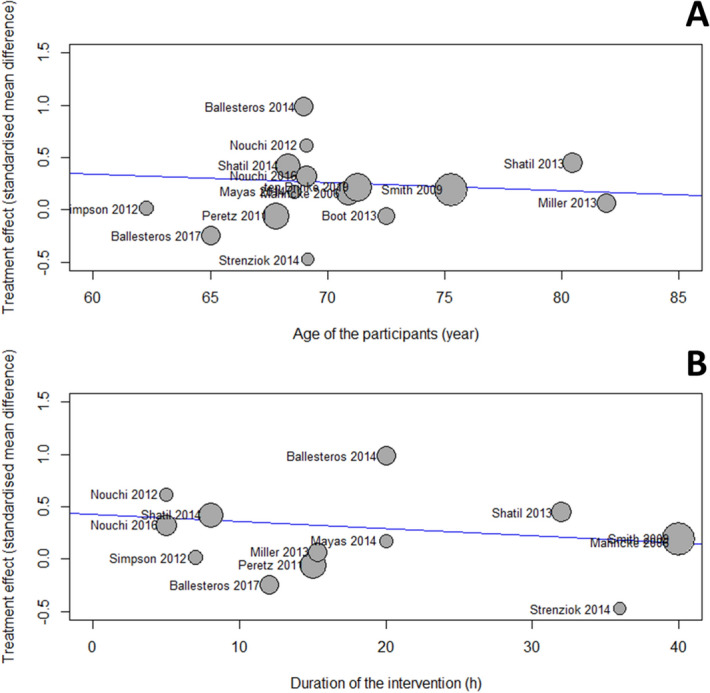
- Meta-regression found no significant association between outcomes and participant age (β = −0.008, SE = 0.020, p = 0.69) or total training duration (β = −0.007, SE = 0.006, p = 0.24).
- Of 1,543 participants, 1,344 (87.1%) completed the majority of exercises; dropout did not differ between groups (83 experimental vs. 116 control, p = 0.41). One study reported 81 training-related adverse effects among 487 participants (77% mild, 22% moderate, 1% severe), with no difference between intervention and control.
Methods
- Systematic review and meta-analysis of randomized controlled trials identified from PubMed, Web of Sciences, Embase, Scopus, and ScienceDirect through 31 December 2019, using PICOS criteria: cognitively healthy participants aged over 60, commercially available computerised cognitive games, minimum 1-month training, active or passive control, and untrained cognitive outcomes.
- Sixteen studies were included; outcomes covered processing speed, working memory, executive function, verbal memory, attention, and visuospatial abilities.
- Treatment effect was standardized mean difference using Hedge’s g in random-effects models; outliers were removed, heterogeneity assessed with tau², publication bias assessed with funnel plots, Egger’s test, and trim-and-fill, and meta-regression examined age and training dose.
Limitations
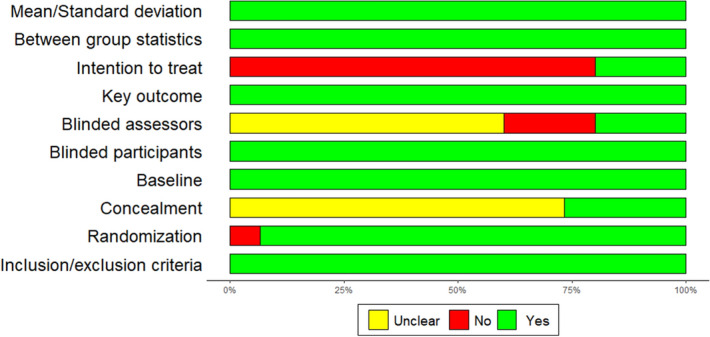
- The paper states that included studies often had relatively small sample sizes and were likely underpowered; assessors were rarely blinded, only 3 of 16 studies used intention-to-treat analysis, and only 4 of 16 were registered.
- The authors state that meta-regression results must be interpreted cautiously due to the small number of studies, and that the analysis was limited to commercially available computerised cognitive games, excluded grey literature, and did not include combined cognitive-physical interventions.
- The text makes evident that attention and visuospatial analyses each included only 4 studies, so null findings may reflect small sample size; the paper also notes insufficient participant characteristics to perform subgroup analyses.
Model-written summary. Check it against the paper before relying on it.
Integrity signals
Registry
Cites
Statistics
Figures
Verification
Claims the paper makes
1 Valid · 0 Not valid · 27 Not checked · 31 Own results and interpretations
The sources with a verdict support this claim; the rest weren’t checked yet, have no full text we could read, or their verdicts aren’t rated yet.
In the paper
“the results of only 3 out of the 16 studies19–21 were analyzed in intention-to-treat”
§ The use of commercial computerised cognitive games in older adults: a meta-analysis > Results
What the sources say
- Check pendingcites [19] Mahncke, H. W. et al. Memory enhancement in healthy older adults using a brain plasticity-based training program: A randomized, controlled study. Proc. Natl. Acad. Sci. U.S.A. 103, 12523–12528 (2006). source
- Check pendingcites [20] Nouchi, R., Saito, T., Nouchi, H. & Kawashima, R. Small acute benefits of 4 weeks processing speed training games on processing speed and inhibition performance and depressive mood in the healthy elderly people: Evidence from a randomized control trial. Front. Aging Neurosci. 8, 302 (2016). source
- Supportedcites [21] Smith, G. E. et al. A cognitive training program based on principles of brain plasticity: results from the improvement in memory with plasticity-based adaptive cognitive training (IMPACT) study. J. Am. Geriatr. Soc. 57, 594–603 (2009). source
The Methods > Analysis section of our copy states that 'A predefined analysis plan specified sample size, the ITT population, and the statistical approach' and that the linear mixed models 'allow the use of the entire ITT group', with the Results reported under the heading 'Training Effects on Outcome Measures (ITT Sample)' (n = 487; ET = 242; AC = 245). So the IMPACT study is indeed one of the studies whose results were analysed in intention-to-treat, which is the part this citation is offered for. The tally '3 out of the 16 included studies' is the citing authors' own review-level count and is not, and need not be, stated in this paper. (LLM, conf=0.85)
plain- Asserted: passes — The authors put it forward as true.
- Checkable: passes — It can be checked against evidence.
- Load-bearing: unclear — It is unclear whether the paper’s conclusions depend on it.
- Based: passes — The paper gives a reason why it holds.
A result the paper reports from its own data — it cites no other source for it, so there is none to check. The quote shows it is in the paper.
In the paper
“We did not find any significant associations between the age of the participants and the outcome (β = − 0.008, SE = 0.020, p = 0.69)”
§ The use of commercial computerised cognitive games in older adults: a meta-analysis > Results
plainn = 16- Asserted: passes — The authors put it forward as true.
- Checkable: passes — It can be checked against evidence.
- Load-bearing: unclear — It is unclear whether the paper’s conclusions depend on it.
- Based: passes — The paper gives a reason why it holds.
- Rests on an assumption not shown here.
A result the paper reports from its own data — it cites no other source for it, so there is none to check. The quote shows it is in the paper.
In the paper
“Statistically significant improvements were observed for processing speed (SMD increased 0.40 [95% CI 0.20–0.60], p < 0.001), working memory (0.21 [95% CI 0.08–0.34], p = 0.001)”
- Also stated in: § Results · plain
“The effect of ccCG on working memory is small and statistically significant (g = 0.21 [0.08–0.34], p = 0.001), 0.28 [0.06–0.51] with the adjusted model.”
§ The use of commercial computerised cognitive games in older adults: a meta-analysis > Abstract
plainstates a causen = 917 ·- Asserted: passes — The authors put it forward as true.
- Checkable: passes — It can be checked against evidence.
- Load-bearing: passes — The paper’s conclusions depend on it.
- Based: passes — The paper gives a reason why it holds.
- Rests on 2 assumptions not shown here.
- Also stated in: § Results · plain
A result the paper reports from its own data — it cites no other source for it, so there is none to check. The quote shows it is in the paper.
In the paper
“0.13 [0.02–0.24] for the adjusted model”
§ The use of commercial computerised cognitive games in older adults: a meta-analysis > Results
plainstates an associationn = 907 ·- Asserted: passes — The authors put it forward as true.
- Checkable: passes — It can be checked against evidence.
- Load-bearing: passes — The paper’s conclusions depend on it.
- Based: passes — The paper gives a reason why it holds.
- Rests on 2 assumptions not shown here.
A result the paper reports from its own data — it cites no other source for it, so there is none to check. The quote shows it is in the paper.
In the paper
“the adjusted value is 0.11 [− 0.27–0.50]”
§ The use of commercial computerised cognitive games in older adults: a meta-analysis > Results
plainn = 216- Asserted: passes — The authors put it forward as true.
- Checkable: passes — It can be checked against evidence.
- Load-bearing: unclear — It is unclear whether the paper’s conclusions depend on it.
- Based: passes — The paper gives a reason why it holds.
- Rests on 2 assumptions not shown here.
27 more claims
Create a free account to see all 59 claims and to verify the 38 references still open.
- It may state two separate claims as one. 18
- Probably not a substantial claim. 14
Self-check
Percentages, sums and reported differences re-computed from the paper’s own numbers.
Each contradiction between two passages listed here was confirmed by an independent check.
Rated minor: it would not touch a result — a value no result rests on, a p-value that stays on the same side of the significance level, or a conflict that is clerical, resolved elsewhere in the paper, or outside its own findings.
In the paper
§ The use of commercial computerised cognitive games in older adults: a meta-analysis > Discussion
“Only one study reported some minor adverse effects, suggesting that ccCG is safe.”
§ The use of commercial computerised cognitive games in older adults: a meta-analysis > Discussion
“81 training-related adverse effects were reported (77% mild, 22% moderate, 1% severe)”
Rated minor: it would not touch a result — a value no result rests on, a p-value that stays on the same side of the significance level, or a conflict that is clerical, resolved elsewhere in the paper, or outside its own findings.
In the paper
§ The use of commercial computerised cognitive games in older adults: a meta-analysis > Results
“For the domain of working memory, 9 studies, with 917 participants, were included20–26,29,30.”
§ The use of commercial computerised cognitive games in older adults: a meta-analysis > Results
“The forest plot revealed two outlier studies26,31 that reported extremely large SMD”
Citations
Cites
Preferred Reporting Items for Systematic Reviews and Meta-Analyses: the PRISMA statement
Moher, D., Liberati, A., Tetzlaff, J., Altman, D. G., & for the PRISMA Group (2009) · BMJ · doi:10.1136/bmj.b2535 · Cited by 83,823
Preferred reporting items for systematic reviews and meta-analyses: the PRISMA Statement.
(2009) · PubMed Central · Cited by 44,859
Liberati, A., Altman, D. G., Tetzlaff, J., Mulrow, C., Gøtzsche, P. C., Ioannidis, J. P. A., Clarke, M., Devereaux, P. J., Kleijnen, J., & Moher, D. (2009) · PLoS Medicine · doi:10.1371/journal.pmed.1000100 · Cited by 28,164
Cochrane Handbook for Systematic Reviews of Interventions: Cochrane Book Series
(2008) · doi:10.1002/9780470712184 · Cited by 25,048
Preferred Reporting Items for Systematic Reviews and Meta-Analyses: The PRISMA Statement
Moher, D., Liberati, A., Tetzlaff, J., & Altman, D. G. (2009) · Journal of Clinical Epidemiology · doi:10.1016/j.jclinepi.2009.06.005 · Cited by 19,575
Cochrane Handbook for Systematic Reviews of Interventions
(2019) · doi:10.1002/9781119536604 · Cited by 14,828
Borenstein, M., Hedges, L. V., Higgins, J. P. T., & Rothstein, H. R. (2009) · doi:10.1002/9780470743386 · Cited by 14,225
Liberati, A., Altman, D. G., Tetzlaff, J., Mulrow, C., Gøtzsche, P. C., Ioannidis, J. P. A., Clarke, M., Devereaux, P. J., Kleijnen, J., & Moher, D. (2009) · Annals of Internal Medicine · doi:10.7326/0003-4819-151-4-200908180-00136 · Cited by 10,349
Borenstein, M., Hedges, L. V., Higgins, J. P. T., & Rothstein, H. R. (2021) · doi:10.1002/9781119558378 · Cited by 9,799
Sterne, J. A. C., Sutton, A. J., Ioannidis, J. P. A., Terrin, N., Jones, D. R., Lau, J., Carpenter, J., Rucker, G., Harbord, R. M., Schmid, C. H., et al. (2011) · BMJ · doi:10.1136/bmj.d4002 · Cited by 7,709
Cited by
Commercial Off-The-Shelf Video Games for Reducing Stress and Anxiety: Systematic Review
Pallavicini, F., Pepe, A., & Mantovani, F. (2021) · JMIR Mental Health · doi:10.2196/28150 · Cited by 146
A meta-analysis of technology use and cognitive aging
Benge, J. F., & Scullin, M. K. (2025) · Nature Human Behaviour · doi:10.1038/s41562-025-02159-9 · Cited by 104
Bonnechère, B., Klass, M., Langley, C., & Sahakian, B. J. (2021) · Scientific Reports · doi:10.1038/s41598-021-91867-z · Cited by 82
Self-citationNguyen, L., Murphy, K. A., & Andrews, G. (2021) · Neuropsychology Review · doi:10.1007/s11065-021-09515-2 · Cited by 78
Cognitive flexibility training for impact in real-world settings
Lee, L. Y., Healy, M. P., Fischer, N. L., Tong, K., Chen, S. A., Sahakian, B. J., & Kourtzi, Z. (2024) · Current Opinion in Behavioral Sciences · doi:10.1016/j.cobeha.2024.101413 · Cited by 65
Self-citationAbd-Alrazaq, A. A., Alajlani, M., Alhuwail, D., Toro, C. T., Giannicchi, A., Ahmed, A., Makhlouf, A., & Househ, M. S. (2021) · JMIR Serious Games · doi:10.2196/34592 · Cited by 64
Abd-Alrazaq, A. A., Alhuwail, D., Al-Jafar, E., Ahmed, A., Shuweihdi, F., Reagu, S. M., & Househ, M. S. (2022) · JMIR Serious Games · doi:10.2196/35202 · Cited by 56
Beyond “Use It or Lose It”: The Impact of Engagement on Cognitive Aging
Stine‐Morrow, E. A. L., & Manavbasi, I. E. (2022) · Annual Review of Developmental Psychology · doi:10.1146/annurev-devpsych-121020-030017 · Cited by 54
Houben, S., & Bonnechère, B. (2022) · International Journal of Environmental Research and Public Health · doi:10.3390/ijerph19137748 · Cited by 52
Self-citationAbd-Alrazaq, A. A., Alhuwail, D., Ahmed, A., & Househ, M. S. (2022) · JMIR Serious Games · doi:10.2196/36123 · Cited by 51
White, B. K., Martin, A., & White, J. A. (2022) · The Lancet Regional Health - Western Pacific · doi:10.1016/j.lanwpc.2022.100528 · Cited by 49
Saragih, I. D., Everard, G. J., & Lee, B. (2022) · Ageing Research Reviews · doi:10.1016/j.arr.2022.101740 · Cited by 46
Harnessing digital health interventions to bridge the gap in prevention for older adults
Daniels, K., & Bonnechère, B. (2024) · Frontiers in Public Health · doi:10.3389/fpubh.2023.1281923 · Cited by 43
Self-citationRobot-Delivered Cognitive Stimulation Games for Older Adults: Usability and Acceptability Evaluation
Gasteiger, N., Ahn, H. S., Gasteiger, C., Lee, C., Lim, J., Fok, C., MacDonald, B. A., Kim, G. H., & Broadbent, E. (2021) · ACM Transactions on Human-Robot Interaction · doi:10.1145/3451882 · Cited by 42
Artificial intelligence-driven serious games in health care: scoping review
Abd-alrazaq, A., Abuelezz, I., Hassan, A., AlSammarraie, A., Alhuwail, D., Irshaidat, S., Abu Serhan, H., Ahmed, A., Alabed Alrazak, S., & Househ, M. (2022) · JMIR Serious Games · doi:10.2196/39840 · Cited by 39
Leung, C., Wong, K. C., So, W. W. Y., Tse, Z. C. K., Li, D., Cao, Y., & Shum, D. (2022) · PsyCh Journal · doi:10.1002/pchj.565 · Cited by 39
Manser, P., & de Bruin, E. D. (2021) · Frontiers in Aging Neuroscience · doi:10.3389/fnagi.2021.734012 · Cited by 39
Makmee, P., & Wongupparaj, P. (2022) · Psychosocial Intervention · doi:10.5093/pi2022a10 · Cited by 35
Li, W., Yue, L., & Xiao, S. (2022) · Frontiers in Public Health · doi:10.3389/fpubh.2022.886974 · Cited by 30
Abd-Alrazaq, A. A., Abuelezz, I., AlSaad, R., Al-Jafar, E., Ahmed, A., Aziz, S., Nashwan, A. J., & Sheikh, J. I. (2023) · Journal of Medical Internet Research · doi:10.2196/43607 · Cited by 29
A game-factors approach to cognitive benefits from video-game training: A meta-analysis
Smith, E. T., & Basak, C. (2023) · PLOS ONE · doi:10.1371/journal.pone.0285925 · Cited by 28
Zuo, X., Tang, Y., Chen, Y., & Zhou, Z. (2024) · JMIR Serious Games · doi:10.2196/55785 · Cited by 28
Wei, J., Hou, J., Mu, T., Sun, J., Li, S., Wu, H., Su, B., & Zhang, T. (2022) · JAMA Network Open · doi:10.1001/jamanetworkopen.2022.0970 · Cited by 27
EEG-Based Engagement Monitoring in Cognitive Games
Ahmed, Y. K., Ferguson-Pell, M., Adams, K. D., & Rincon, A. M. R. (2025) · Sensors · doi:10.3390/s25072072 · Cited by 25
Bonnechère, B., Rintala, A., Spooren, A. I. F., Lamers, I., & Feys, P. (2021) · Brain Sciences · doi:10.3390/brainsci11091187 · Cited by 23
Self-citationWu, Y., Zang, M., Wang, B., & Guo, W. (2023) · PeerJ · doi:10.7717/peerj.15108 · Cited by 23
Abd-Alrazaq, A. A., Ahmed, A., Alali, H., Aldardour, A., & Househ, M. S. (2022) · JMIR Serious Games · doi:10.2196/36754 · Cited by 22
Kukkohovi, S., Siira, H. J., Arolaakso, S., Miettunen, J., & Elo, S. (2023) · Aging Clinical and Experimental Research · doi:10.1007/s40520-023-02459-y · Cited by 20
Isernia, S., Cabinio, M., Tella, S. D., Pazzi, S., Vannetti, F., Gerli, F., Mosca, I. E., Lombardi, G., Macchi, C., Sorbi, S., et al. (2021) · Journal of Alzheimer s Disease · doi:10.3233/jad-210347 · Cited by 19
User-centered design strategies for age-friendly mobile news apps
Jiang, Q., Deng, L., Zhang, J., & Pengbo, Y. (2024) · Sage Open · doi:10.1177/21582440241285393 · Cited by 18
Can Mobile Technology Help Prevent the Burden of Dementia in Low- and Mid-Income Countries?
Bonnechère, B., & Sahakian, B. J. (2020) · Frontiers in Public Health · doi:10.3389/fpubh.2020.554938 · Cited by 18
Self-citationLiang, C., Subramaniam, P., Goh, N. S. M. R., Tay, K. W., & Moustafa, A. A. (2023) · Healthcare · doi:10.3390/healthcare11212822 · Cited by 18
The performance of serious games for enhancing attention in cognitively impaired older adults
Abd-Alrazaq, A. A., Abuelezz, I., Al-Jafar, E., Denecke, K., Househ, M. S., Aziz, S., Ahmed, A., Aljaafreh, A., AlSaad, R., & Sheikh, J. I. (2023) · npj Digital Medicine · doi:10.1038/s41746-023-00863-2 · Cited by 16
Esmaeilzadeh, S., Kumpulainen, S., & Pesola, A. J. (2022) · Frontiers in Psychology · doi:10.3389/fpsyg.2022.855703 · Cited by 15
Effects of game-based digital interventions for mental disorders: A meta-analysis
Zhan, J., Liu, C., Wang, Z., Cai, Z., & He, J. (2024) · Journal of Affective Disorders · doi:10.1016/j.jad.2024.07.095 · Cited by 15
Research on Influencing Factors of Adoption Behavior of Mobile Readers Based on Meta-Analysis
Zhou, H., Liu, J., & Cui, X. (2021) · Mathematical Problems in Engineering · doi:10.1155/2021/5082594 · Cited by 14
Park, J., Wiese, L. K., & Holt, J. (2023) · Clinical Gerontologist · doi:10.1080/07317115.2023.2277333 · Cited by 14
Chuderski, A., & Chinta, S. R. (2024) · Brain Research · doi:10.1016/j.brainres.2024.149022 · Cited by 14
Heilmann, F., Knöbel, S., & Lautenbach, F. (2024) · BMC Psychology · doi:10.1186/s40359-024-02017-9 · Cited by 14
Schaefer, S. Y., Hooyman, A., Haikalis, N. K., Essikpe, R., Lohse, K. R., Duff, K. M., & Wang, P. (2022) · Experimental Brain Research · doi:10.1007/s00221-022-06478-5 · Cited by 14
Funghi, G., Meli, C., Cavagna, A., Bisoffi, L., Zappini, F., Papagno, C., & Dodich, A. (2024) · Archives of Gerontology and Geriatrics · doi:10.1016/j.archger.2024.105405 · Cited by 13
Ishibashi, G. A., dos Santos, G., Moreira, A. P. B., Verga, C. E. R., da Silva, G. A., Ordonez, T. N., de Moraes, L. C., Lessa, P. P., Brucki, S. M. D., & da Silva, T. B. L. (2023) · Arquivos de Neuro-Psiquiatria · doi:10.1055/s-0043-1764413 · Cited by 13
Choi, J., Shin, J., Jo, I., Kim, D., Song, H., Yoon, C., Oh, H., Kim, Y., Bae, G., & Park, S. (2019) · Molecular Immunology · doi:10.1016/j.molimm.2019.09.002 · Cited by 13
Effectiveness of remote neuropsychological interventions: A systematic review
Despoti, A., Megari, K., Tsiakiri, A., Toumaian, M., Koutzmpi, V., Liozidou, A., & Tsapanou, A. (2024) · Applied Neuropsychology Adult · doi:10.1080/23279095.2024.2382814 · Cited by 12
Ownby, R. L., & Kim, J. H. (2021) · Frontiers in Aging Neuroscience · doi:10.3389/fnagi.2021.766311 · Cited by 12
Cognitive Training During Midlife: A Systematic Review and Meta-Analysis
Zhu, C., Arunogiri, S., Li, Q., Thomas, E. H. X., & Gurvich, C. (2024) · Neuropsychology Review · doi:10.1007/s11065-024-09649-z · Cited by 11
Chaldogeridis, A., & Tsiatsos, Τ. (2022) · Applied Sciences · doi:10.3390/app12199785 · Cited by 11
Gamification and Immersive Experiences: A Gamified Approach for Promoting Active Aging
Nacimiento-García, E., González, C. S. G., Colombo-Ruano, L., & Vela, F. L. G. (2024) · Applied Sciences · doi:10.3390/app142310880 · Cited by 11
Li, A., Qiang, W., Li, J., Geng, Y., Qiang, Y., & Zhao, J. (2025) · BMC Geriatrics · doi:10.1186/s12877-025-06341-6 · Cited by 10
Transparency in Cognitive Training Meta-analyses: A Meta-review
Sandoval‐Lentisco, A., López‐Nicolás, R., Tortajada, M., López-López, J. A., & Sánchez‐Meca, J. (2024) · Neuropsychology Review · doi:10.1007/s11065-024-09638-2 · Cited by 10
Moore, A. L., Miller, T. M., & Ledbetter, C. R. (2021) · Frontiers in Psychology · doi:10.3389/fpsyg.2021.749898 · Cited by 9
Cognitive benefits of the attentional vs exergame training in older adults
Moret, B., Kolasińska, A. B., Nucci, M., Campana, G., Zini, F., Gáspari, M., & Stablum, F. (2023) · Aging & Mental Health · doi:10.1080/13607863.2023.2228220 · Cited by 8
Ferizaj, D., Stamm, O., Perotti, L., Martin, E. M., Ophey, A., Rekers, S., Scharfenberg, D., Oelgeschläger, T., Barcatta, K., Seiler, S., et al. (2024) · Trials · doi:10.1186/s13063-024-08277-5 · Cited by 8
Effect of Brain Training Game on Mild Cognitive Impairment (MCI) in Older Adults
Arshad, H., Anwar, K., Khattak, H. G., Amjad, I., & Majeed, Y. (2021) · Pakistan Journal of Medical and Health Sciences · doi:10.53350/pjmhs211592272 · Cited by 8
Outcome measurement of cognitive impairment and dementia in serious digital games: a scoping review
Longley, V., Wilkey, J., & Opdebeeck, C. (2024) · Disability and Rehabilitation Assistive Technology · doi:10.1080/17483107.2024.2405894 · Cited by 7
Chew, J. L., Zeng, Z., Tan, T. H. B., Chew, P., Ali, N. B., Wang, H., Ong, M., Raymond, R., Pek, K., Wang, D., et al. (2024) · International Journal of Environmental Research and Public Health · doi:10.3390/ijerph22010042 · Cited by 7
Safaei, A., Rahmanian, M., Oraki, M., & Zinchenko, A. (2022) · Perceptual and Motor Skills · doi:10.1177/00315125221078982 · Cited by 7
Effects of different types of leisure activities on working memory across the adult lifespan
Cansino, S., Torres-Trejo, F., Estrada-Manilla, C., & Ruiz‐Velasco, S. (2024) · Psychological Research · doi:10.1007/s00426-024-01998-x · Cited by 7
Tapia, J. L., Puertas, F. J., & Duñabeitia, J. A. (2022) · Frontiers in Behavioral Neuroscience · doi:10.3389/fnbeh.2022.779990 · Cited by 7
Ha, J.-Y., & Park, H.-J. (2022) · Archives of Gerontology and Geriatrics · doi:10.1016/j.archger.2022.104829 · Cited by 7
Forte, G., Favieri, F., Corbo, I., Chirico, I., Chattat, R., Vedova, A. M. D., Pecchinenda, A., & Casagrande, M. (2025) · Journal of Aging Research · doi:10.1155/jare/4397025 · Cited by 5
Goharinejad, S., Goharinezhad, S., Moulaei, K., Krüger, B., & Spittler, T. (2026) · INQUIRY The Journal of Health Care Organization Provision and Financing · doi:10.1177/00469580251413101 · Cited by 5
Harrington, K., Craven, M. P., Wilson, M. L., & Landowska, A. (2022) · JMIR Serious Games · doi:10.2196/32489 · Cited by 5
Nieto‐Vieites, A., Mallo, S. C., Pérez‐Blanco, L., Felpete, A., Lojo‐Seoane, C., Facal-Mayo, D., Juncos‐Rabadán, O., & Pereiro, A. X. (2023) · Behaviour and Information Technology · doi:10.1080/0144929x.2023.2220042 · Cited by 5
Game-Based Learning for Fostering Digital Literacy in Older Adults: An Intergenerational Approach
Perim, C. M., Sousa, C., & Damásio, M. J. (2024) · Lecture notes in computer science · doi:10.1007/978-3-031-61543-6_18 · Cited by 5
Exploring the Use of Voice Assistants in Nursing Homes
Cerezo, E., Lacuesta, R., Gallardo, J., & Aguelo, A. (2025) · International Journal of Human-Computer Interaction · doi:10.1080/10447318.2025.2470282 · Cited by 5
Velloso, V. F., Montoya, V. H., Bomilcar, I., de Almeida, J., & Mograbi, D. C. (2025) · Scientific Reports · doi:10.1038/s41598-025-19583-6 · Cited by 4
Sutton, E., Catling, J. C., Zanten, J. V., & Segaert, K. (2025) · Psychological Research · doi:10.1007/s00426-025-02110-7 · Cited by 4
Jahani, N., Dehnou, V. V., Eslami, R., & Gahreman, D. E. (2025) · Journal of Exercise Science & Fitness · doi:10.1016/j.jesf.2025.100385 · Cited by 4
Eye-guided video games improve reading in healthy older adults
Pedrini, R., Costantini, C., Polato, S., de Lira, C. A. B., Facchin, A., & Daini, R. (2025) · International Journal of Human-Computer Studies · doi:10.1016/j.ijhcs.2025.103540 · Cited by 4
Abd-Alrazaq, A. A., Abuelezz, I., Hassan, A. O., Khalifa, M., Ahmed, A., Aldardour, A., Al-Jafar, E., Alam, T., Shah, Z., & Househ, M. S. (2022) · Studies in health technology and informatics · doi:10.3233/shti220673 · Cited by 4
Cansino, S., Torres-Trejo, F., Estrada-Manilla, C., & Ruiz‐Velasco, S. (2024) · Journal of Cognitive Enhancement · doi:10.1007/s41465-024-00312-2 · Cited by 3
Application of digital health products in community-dwelling older adults: A scoping review
Guo, Y., Peng, R., Zhang, C., Li, X., Du, Y., Chen, Y., Lu, Y., Li, Z., & Feng, H. (2025) · Geriatric Nursing · doi:10.1016/j.gerinurse.2025.103420 · Cited by 3
mHealth-Based Gamification Interventions to Promote Health Among Older Adults: Scoping Review
Chen, X., Zhu, Y., Jiang, D., Huang, J., Xie, Q., Chen, Y., Chang, J., Huang, W., Ning, H., & Feng, H. (2026) · JMIR mhealth and uhealth · doi:10.2196/82368 · Cited by 3
The Impact of Competition on the Effectiveness of Cognitive Games
Mirzakhani, S., & Moradi, H. (2021) · International Serious Games Symposium (ISGS) · doi:10.1109/isgs54702.2021.9685013 · Cited by 3
Huynh, K., Jamadar, S. D., Lampit, A., Siddiqui, M. N., Stout, J. C., & Georgiou‐Karistianis, N. (2025) · Journal of Neurology · doi:10.1007/s00415-024-12855-7 · Cited by 3
Berretta, S. A., Abaya, N. M., Parrish, E. M., McBride, L. E., Moore, R. C., Ackerman, R. A., Harvey, P. D., Pinkham, A. E., & Depp, C. A. (2025) · NPP—Digital Psychiatry and Neuroscience · doi:10.1038/s44277-024-00024-7 · Cited by 3
Talukdar, R., Aslam, M., Reddy, D. N., Nabi, Z., Shava, U., Ravikanth, V. V., Avanthi, S. U., & Bale, G. (2020) · Digestive Diseases and Sciences · doi:10.1007/s10620-020-06517-7 · Cited by 3
Park, D. C., & Smith, E. T. (2022) · Medical Research Archives · doi:10.18103/mra.v10i10.3192 · Cited by 3
Bonnechère, B., & Klass, M. (2023) · Games for Health Journal · doi:10.1089/g4h.2022.0120 · Cited by 3
Self-citationCarrasco, P. M., Montenegro-Peña, M., Crespo, D. P., Rodríguez‐Rojo, I. C., Barabash, A., Rubio, B. M., Dolado, A. M., Maestú, F., & Delgado‐Losada, M. L. (2024) · Cognitive Processing · doi:10.1007/s10339-024-01202-3 · Cited by 2
Asada, T., Tanaka, M., Araki, W., Lebowitz, A., & Kakuma, T. (2024) · Journal of Alzheimer s Disease · doi:10.3233/jad-231165 · Cited by 2
Zając-Lamparska, L. (2024) · BMC Research Notes · doi:10.1186/s13104-024-06844-2 · Cited by 2
Bridging the Gap Between Brain Health Guidelines and Real-world Implementation
Correa, D. J., Jordan, J. T., & Said, R. R. (2025) · CONTINUUM Lifelong Learning in Neurology · doi:10.1212/cont.0000000000001579 · Cited by 2
Gamified Mobile Health Interventions for Mental Well-Being of Older Adults
Nguyen, T.-T., Chai, J. C. M., Eiring, Ø., Wang, W., O’Donnell, R. R., & Nguyen, H. D. (2021) · Lecture notes in computer science · doi:10.1007/978-3-030-77685-5_29 · Cited by 2
Goel, P., & Bajaj, M. K. (2022) · International Journal of Science and Research (IJSR) · doi:10.21275/sr221122123352 · Cited by 2
Enhancing Cognitive Performance and Monitoring through a Mobile App: Insights from the Rodi Study
Γιαννοπούλου, Π., Vlamos, P., & Papalaskari, M.-A. (2023) · International Journal of Online and Biomedical Engineering (iJOE) · doi:10.3991/ijoe.v19i18.44879 · Cited by 1
Zhang, Y., Siow, C. Z., Dou, W., Obo, T., & Kubota, N. (2025) · Communications in computer and information science · doi:10.1007/978-981-96-4753-8_23 · Cited by 1
Li, Y., Liu, H., Liu, H., Xu, L., Liao, S., Bao, J., Xi, Y., & Song, X. (2025) · Games for Health Journal · doi:10.1089/g4h.2025.0015 · Cited by 1
Vetrivel, S. C., Sabareeshwari, V., Ambikapathi, R., Arun, V. P., & Sowmiya, K. C. (2025) · Wiley eBooks · doi:10.1002/9781394275397.ch1 · Cited by 1
Digital Games for Cognitive Enhancement in Healthy Older Adults: A Scoping Review
Chung, S. J., An, J., Paik, J., & An, S. J. L. (2025) · Games for Health Journal · doi:10.1177/2161783x251397928 · Cited by 1
Wang, Z., Liu, Y., Liu, C., & Li, G. (2026) · Brain Sciences · doi:10.3390/brainsci16010078 · Cited by 1
Exergaming and Cognitive Function Research: A Bibliometric Visualization Analysis Using CiteSpace
Li, Y., Han, Q., & Kim, S. M. (2026) · INQUIRY The Journal of Health Care Organization Provision and Financing · doi:10.1177/00469580261432417 · Cited by 1
Savior: An Interactive Game Device for Environmental Protection
Guo, Z., & Wang, L. (2021) · International Conference on Orange Technology (ICOT) · doi:10.1109/icot54518.2021.9680643 · Cited by 1
Marzuki, A. A. (2021) · Apollo (University of Cambridge) · doi:10.17863/cam.70408
Treino cognitivo com recurso a novas tecnologias: um estudo em contexto psiquiátrico
Teixeira, L. F. D. C., Ferreira, R., & Câmara, J. (2021) · Portuguese National Funding Agency for Science, Research and Technology (RCAAP Project by FCT) · doi:10.34640/universidademadeira2021teixeiraferreiracamara
Les jeux vidéo cérébraux: Un outil efficace pour lutter contre le déclin cognitif
Bonnechère, B. (2022) · médecine/sciences · doi:10.1051/medsci/2022015
Self-citationBrain Training Games: An Effective Tool in the Fight Against Dementia
Bonnechère, B. (2022) · Frontiers for Young Minds · doi:10.3389/frym.2022.904425
Self-citation
Metadata
- Authors
- Bonnechère, B., Langley, C., & Sahakian, B. J.
- Affiliations
- Université Libre de Bruxelles (BE)
- University of Cambridge (GB)
- Corresponding author
- Bonnechère, Bruno
- Venue
- Scientific Reports
- Published
- 2020-09-17
- Volume
- 10
- Issue
- 1
- Pages
- 15276-15276
- ISSN
- 2045-2322 (ISSN-L)
- PMC
- PMC7498601
- OpenAlex
- W3087686032
- Semantic Scholar
- ecfec379ecf3a73dcd2c4b478023037a256f4c85
- Cited by
- 126
- References
- 91
- Citations by year
- 2026: 15 · 2025: 25 · 2024: 23 · 2023: 19 · 2022: 24 · 2021: 17 · 2020: 2
- FWCI
- 1.95
- Type
- journal article
- Language
- en
- Open access
- gold
- doi.org
- Licence
- cc-by
- creativecommons.org/licenses/by/4.0 (tdm)
- creativecommons.org/licenses/by/4.0 (vor)
- Locations
- Scientific Reports (publishedVersion, cc-by)
- PubMed (publishedVersion)
- PubMed Central (publishedVersion, cc-by)
- Dépôt institutionnel de l'Université libre de Bruxelles (Université Libre de Bruxelles) (submittedVersion, other-oa)
- Apollo (University of Cambridge) (submittedVersion, cc-by)
- Apollo (cc-by)
- Apollo
- Funders
- Fondation Philippe Wiener - Maurice Anspach
- Wellcome Trust Collaborative Award (200181/Z/15/Z)
- NIHR MedTech and in vitro diagnostic Co-operative
- NIHR Cambridge Biomedical Research Centre (BRC) Mental Health theme
- Topics
- Social Sciences › Psychology › Experimental and Cognitive Psychology › Cognitive Abilities and Testing
- Health Sciences › Medicine › Psychiatry and Mental health › Dementia and Cognitive Impairment Research
- Social Sciences › Psychology › Experimental and Cognitive Psychology › Cognitive Functions and Memory
- Keywords
- brain training, older adults, healthy aging, cognitive decline prevention, processing speed, working memory, executive function, verbal memory
- MeSH terms
- Healthy Aging, Aged, Aged, 80 and over, Brain, Cognition, Dementia, Female, Humans, Male, Memory, Short-Term, Middle Aged, Video Games, Executive Function, Cognitive Dysfunction, Memory, Episodic
About these checks
Registry, retraction, Cites and statistics results are computed, not judged, with one exception: a printed reference that no index lists is read once by a model before it counts as a citation error. Claims are extracted by a model and kept only when their quote appears verbatim in the text; each cited source is then checked, with a model’s help, for whether it says what the claim relies on. Those verdicts can be wrong — read the claim’s quote and the cited source before relying on one.
A language model drew the claims from the paper on 2026-11-14, under version 3 of the claim definition (model deepseek-v4.1-flash, prompt extract-v3).
A second model labelled each claim on 2026-11-14 (model jev-1.13-20260917, definition revision gold-guideline-v0.2).
Cited sources are checked with a language model’s help (qwen3.8-omni-flash).
Statistics and arithmetic are recomputed, not judged.
Confidence bands are shown only for fields calibrated on our annotated test set. None is calibrated yet, so no band is shown.
What counts as a claim ›How we measure confidence ›How we check this ›
Are you an author, or do you see a problem with this page? Request a review
Data sources
Bibliographic data: Semantic Scholar, OpenAlex, Crossref.
Contains information from the Semantic Scholar Academic Graph Datasets, made available under the ODC Attribution License (ODC-BY 1.0).
Semantic Scholar’s data is described in: Kinney, R., et al. (2023). The Semantic Scholar Open Data Platform. arXiv:2301.10140.
