

The DOI matches its Crossref record; 91 of the 91 references it cites were found in a registry or an index; 1 of the 45 sources its claims cite were checked for support.
The use of commercial computerised cognitive games in older adults: a meta-analysis
Open accessAbstract
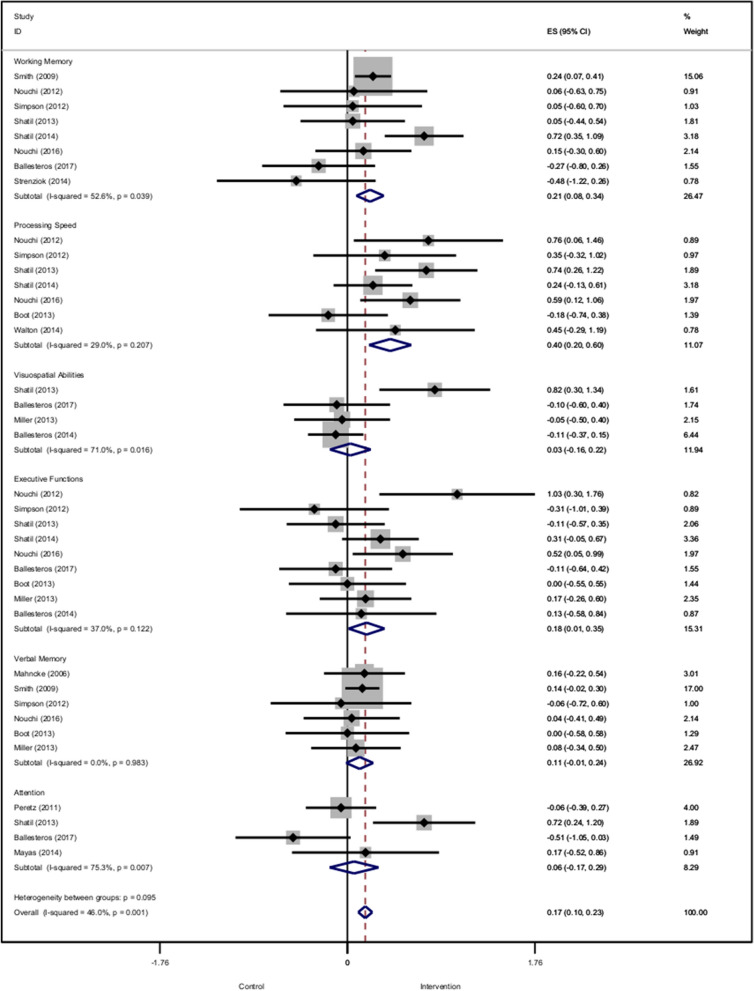
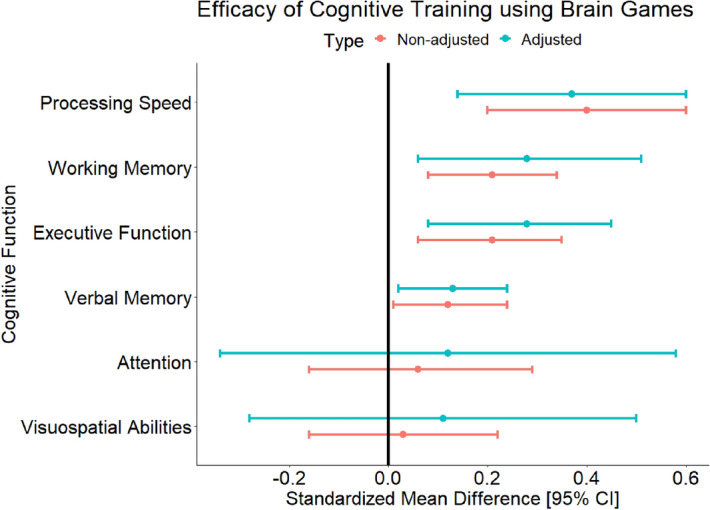
Brain training programs are currently one effective solution to prevent cognitive decline in healthy aging. We conducted a meta-analysis of randomized controlled trials assessing the use of commercially available computerised cognitive games to improve cognitive function in people aged above 60 years old without cognitive impairment. 1,543 participants from sixteen studies were included in the meta-analysis. Statistically significant improvements were observed for processing speed (SMD increased 0.40 [95% CI 0.20–0.60], p < 0.001), working memory (0.21 [95% CI 0.08–0.34], p = 0.001), executive function (0.21 [95% CI 0.06–0.35], p = 0.006), and for verbal memory (0.12 [95% CI 0.01–0.24, p = 0.031), but not for attention or visuospatial abilities. No relationship between the age of the participants and the amount of training was found. Commercially available computerised cognitive games are effective in improving cognitive function in participants without cognitive impairment aged over 60 years.
Overview
CoChat Summary
TL;DR
This meta-analysis of 16 randomized controlled trials found that commercially available computerised cognitive games produced small-to-moderate improvements in processing speed, working memory, executive function, and verbal memory in cognitively healthy adults over 60. No significant effects were found for attention or visuospatial abilities, and neither participant age nor total training duration was associated with outcomes.
Key findings
- Across 16 studies and 1,543 participants (774 intervention, 769 control; mean age 70 [5] years), statistically significant improvements were found for processing speed (g = 0.40 [95% CI 0.20–0.60], p < 0.001), working memory (g = 0.21 [0.08–0.34], p = 0.001), executive function (g = 0.21 [0.06–0.35], p = 0.006), and verbal memory (g = 0.12 [0.01–0.24], p = 0.031).
- No statistically significant effects were observed for attention (g = 0.06 [−0.16–0.29], p = 0.59) or visuospatial abilities (g = 0.03 [−0.16–0.22], p = 0.18).
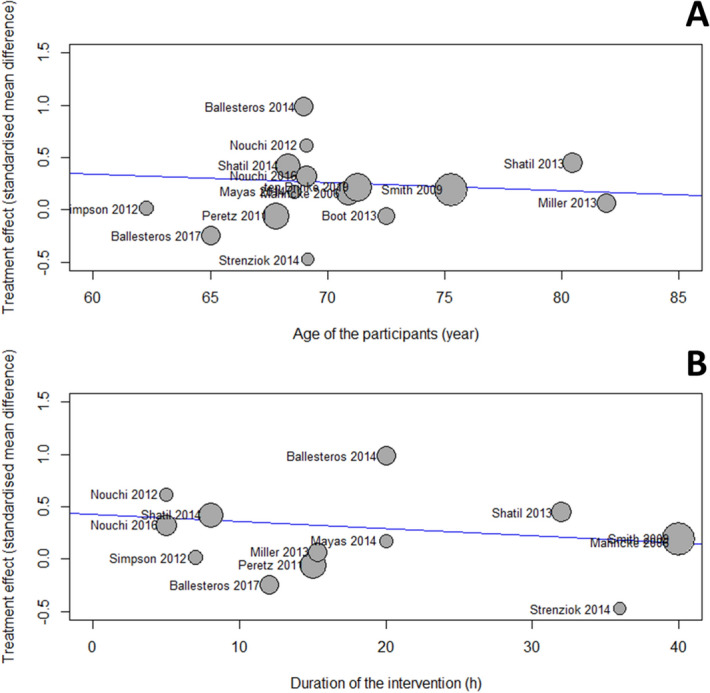
- Meta-regression found no significant association between outcomes and participant age (β = −0.008, SE = 0.020, p = 0.69) or total training duration (β = −0.007, SE = 0.006, p = 0.24).
- Of 1,543 participants, 1,344 (87.1%) completed the majority of exercises; dropout did not differ between groups (83 experimental vs. 116 control, p = 0.41). One study reported 81 training-related adverse effects among 487 participants (77% mild, 22% moderate, 1% severe), with no difference between intervention and control.
Methods
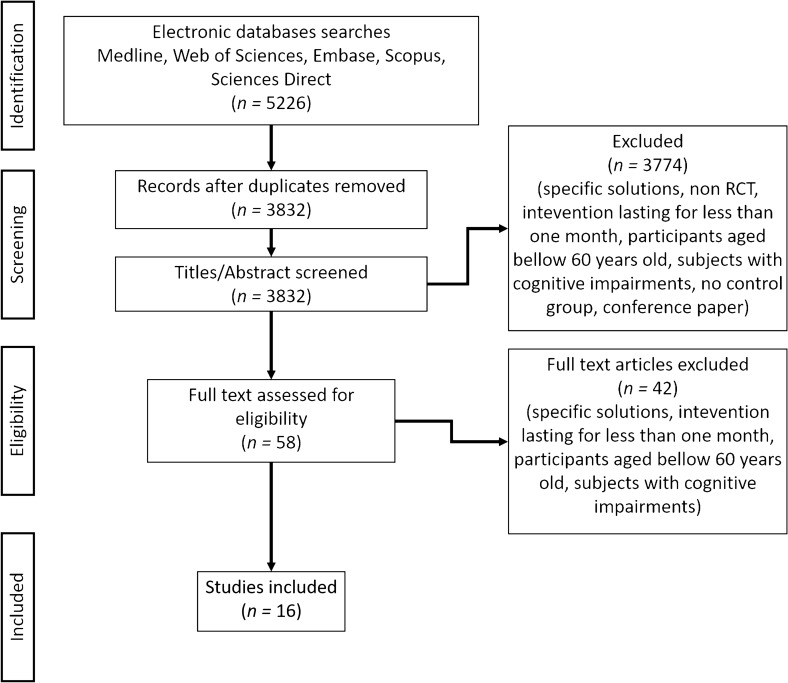
- Systematic review and meta-analysis of randomized controlled trials identified from PubMed, Web of Sciences, Embase, Scopus, and ScienceDirect through 31 December 2019, using PICOS criteria: cognitively healthy participants aged over 60, commercially available computerised cognitive games, minimum 1-month training, active or passive control, and untrained cognitive outcomes.
- Sixteen studies were included; outcomes covered processing speed, working memory, executive function, verbal memory, attention, and visuospatial abilities.
- Treatment effect was standardized mean difference using Hedge’s g in random-effects models; outliers were removed, heterogeneity assessed with tau², publication bias assessed with funnel plots, Egger’s test, and trim-and-fill, and meta-regression examined age and training dose.
Limitations
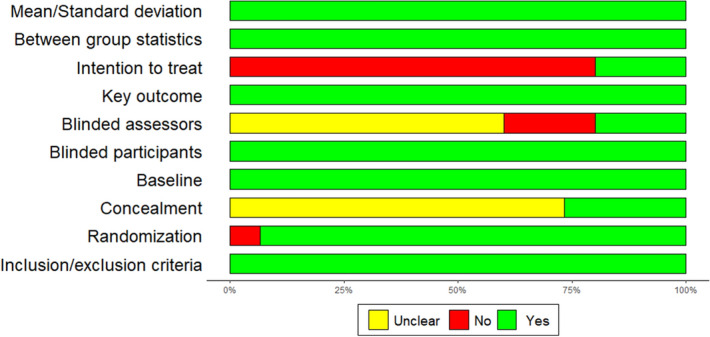
- The paper states that included studies often had relatively small sample sizes and were likely underpowered; assessors were rarely blinded, only 3 of 16 studies used intention-to-treat analysis, and only 4 of 16 were registered.
- The authors state that meta-regression results must be interpreted cautiously due to the small number of studies, and that the analysis was limited to commercially available computerised cognitive games, excluded grey literature, and did not include combined cognitive-physical interventions.
- The text makes evident that attention and visuospatial analyses each included only 4 studies, so null findings may reflect small sample size; the paper also notes insufficient participant characteristics to perform subgroup analyses.
Model-written summary. Check it against the paper before relying on it.
Integrity signals
Registry
Cites
Statistics
Figures
Verification
Claims the paper makes
1 Valid · 0 Not valid · 27 Not checked · 31 Own results and interpretations
The sources with a verdict support this claim; the rest weren’t checked yet, have no full text we could read, or their verdicts aren’t rated yet.
In the paper
“the results of only 3 out of the 16 studies19–21 were analyzed in intention-to-treat”
§ The use of commercial computerised cognitive games in older adults: a meta-analysis > Results
What the sources say
- Check pendingcites [19] Mahncke, H. W. et al. Memory enhancement in healthy older adults using a brain plasticity-based training program: A randomized, controlled study. Proc. Natl. Acad. Sci. U.S.A. 103, 12523–12528 (2006). source
- Check pendingcites [20] Nouchi, R., Saito, T., Nouchi, H. & Kawashima, R. Small acute benefits of 4 weeks processing speed training games on processing speed and inhibition performance and depressive mood in the healthy elderly people: Evidence from a randomized control trial. Front. Aging Neurosci. 8, 302 (2016). source
- Supportedcites [21] Smith, G. E. et al. A cognitive training program based on principles of brain plasticity: results from the improvement in memory with plasticity-based adaptive cognitive training (IMPACT) study. J. Am. Geriatr. Soc. 57, 594–603 (2009). source
The Methods > Analysis section of our copy states that 'A predefined analysis plan specified sample size, the ITT population, and the statistical approach' and that the linear mixed models 'allow the use of the entire ITT group', with the Results reported under the heading 'Training Effects on Outcome Measures (ITT Sample)' (n = 487; ET = 242; AC = 245). So the IMPACT study is indeed one of the studies whose results were analysed in intention-to-treat, which is the part this citation is offered for. The tally '3 out of the 16 included studies' is the citing authors' own review-level count and is not, and need not be, stated in this paper. (LLM, conf=0.85)
plain- Asserted: passes — The authors put it forward as true.
- Checkable: passes — It can be checked against evidence.
- Load-bearing: unclear — It is unclear whether the paper’s conclusions depend on it.
- Based: passes — The paper gives a reason why it holds.
A result the paper reports from its own data — it cites no other source for it, so there is none to check. The quote shows it is in the paper.
In the paper
“We did not find any significant associations between the age of the participants and the outcome (β = − 0.008, SE = 0.020, p = 0.69)”
§ The use of commercial computerised cognitive games in older adults: a meta-analysis > Results
plainn = 16- Asserted: passes — The authors put it forward as true.
- Checkable: passes — It can be checked against evidence.
- Load-bearing: unclear — It is unclear whether the paper’s conclusions depend on it.
- Based: passes — The paper gives a reason why it holds.
- Rests on an assumption not shown here.
A result the paper reports from its own data — it cites no other source for it, so there is none to check. The quote shows it is in the paper.
In the paper
“Statistically significant improvements were observed for processing speed (SMD increased 0.40 [95% CI 0.20–0.60], p < 0.001), working memory (0.21 [95% CI 0.08–0.34], p = 0.001)”
- Also stated in: § Results · plain
“The effect of ccCG on working memory is small and statistically significant (g = 0.21 [0.08–0.34], p = 0.001), 0.28 [0.06–0.51] with the adjusted model.”
§ The use of commercial computerised cognitive games in older adults: a meta-analysis > Abstract
plainstates a causen = 917 ·- Asserted: passes — The authors put it forward as true.
- Checkable: passes — It can be checked against evidence.
- Load-bearing: passes — The paper’s conclusions depend on it.
- Based: passes — The paper gives a reason why it holds.
- Rests on 2 assumptions not shown here.
- Also stated in: § Results · plain
A result the paper reports from its own data — it cites no other source for it, so there is none to check. The quote shows it is in the paper.
In the paper
“0.13 [0.02–0.24] for the adjusted model”
§ The use of commercial computerised cognitive games in older adults: a meta-analysis > Results
plainstates an associationn = 907 ·- Asserted: passes — The authors put it forward as true.
- Checkable: passes — It can be checked against evidence.
- Load-bearing: passes — The paper’s conclusions depend on it.
- Based: passes — The paper gives a reason why it holds.
- Rests on 2 assumptions not shown here.
A result the paper reports from its own data — it cites no other source for it, so there is none to check. The quote shows it is in the paper.
In the paper
“the adjusted value is 0.11 [− 0.27–0.50]”
§ The use of commercial computerised cognitive games in older adults: a meta-analysis > Results
plainn = 216- Asserted: passes — The authors put it forward as true.
- Checkable: passes — It can be checked against evidence.
- Load-bearing: unclear — It is unclear whether the paper’s conclusions depend on it.
- Based: passes — The paper gives a reason why it holds.
- Rests on 2 assumptions not shown here.
27 more claims
Create a free account to see all 59 claims and to verify the 38 references still open.
- It may state two separate claims as one. 18
- Probably not a substantial claim. 14
Self-check
Percentages, sums and reported differences re-computed from the paper’s own numbers.
Each contradiction between two passages listed here was confirmed by an independent check.
Rated minor: it would not touch a result — a value no result rests on, a p-value that stays on the same side of the significance level, or a conflict that is clerical, resolved elsewhere in the paper, or outside its own findings.
In the paper
§ The use of commercial computerised cognitive games in older adults: a meta-analysis > Discussion
“Only one study reported some minor adverse effects, suggesting that ccCG is safe.”
§ The use of commercial computerised cognitive games in older adults: a meta-analysis > Discussion
“81 training-related adverse effects were reported (77% mild, 22% moderate, 1% severe)”
Rated minor: it would not touch a result — a value no result rests on, a p-value that stays on the same side of the significance level, or a conflict that is clerical, resolved elsewhere in the paper, or outside its own findings.
In the paper
§ The use of commercial computerised cognitive games in older adults: a meta-analysis > Results
“For the domain of working memory, 9 studies, with 917 participants, were included20–26,29,30.”
§ The use of commercial computerised cognitive games in older adults: a meta-analysis > Results
“The forest plot revealed two outlier studies26,31 that reported extremely large SMD”
Citations
Cites
Preferred Reporting Items for Systematic Reviews and Meta-Analyses: the PRISMA statement
Moher, D., Liberati, A., Tetzlaff, J., Altman, D. G., & for the PRISMA Group (2009) · BMJ · doi:10.1136/bmj.b2535 · Cited by 83,823
Preferred reporting items for systematic reviews and meta-analyses: the PRISMA Statement.
(2009) · PubMed Central · Cited by 44,859
Liberati, A., Altman, D. G., Tetzlaff, J., Mulrow, C., Gøtzsche, P. C., Ioannidis, J. P. A., Clarke, M., Devereaux, P. J., Kleijnen, J., & Moher, D. (2009) · PLoS Medicine · doi:10.1371/journal.pmed.1000100 · Cited by 28,164
Cochrane Handbook for Systematic Reviews of Interventions: Cochrane Book Series
(2008) · doi:10.1002/9780470712184 · Cited by 25,048
Preferred Reporting Items for Systematic Reviews and Meta-Analyses: The PRISMA Statement
Moher, D., Liberati, A., Tetzlaff, J., & Altman, D. G. (2009) · Journal of Clinical Epidemiology · doi:10.1016/j.jclinepi.2009.06.005 · Cited by 19,575
Cochrane Handbook for Systematic Reviews of Interventions
(2019) · doi:10.1002/9781119536604 · Cited by 14,828
Borenstein, M., Hedges, L. V., Higgins, J. P. T., & Rothstein, H. R. (2009) · doi:10.1002/9780470743386 · Cited by 14,225
Liberati, A., Altman, D. G., Tetzlaff, J., Mulrow, C., Gøtzsche, P. C., Ioannidis, J. P. A., Clarke, M., Devereaux, P. J., Kleijnen, J., & Moher, D. (2009) · Annals of Internal Medicine · doi:10.7326/0003-4819-151-4-200908180-00136 · Cited by 10,349
Borenstein, M., Hedges, L. V., Higgins, J. P. T., & Rothstein, H. R. (2021) · doi:10.1002/9781119558378 · Cited by 9,799
Sterne, J. A. C., Sutton, A. J., Ioannidis, J. P. A., Terrin, N., Jones, D. R., Lau, J., Carpenter, J., Rucker, G., Harbord, R. M., Schmid, C. H., et al. (2011) · BMJ · doi:10.1136/bmj.d4002 · Cited by 7,709
Whiteford, H. A., Degenhardt, L., Rehm, J., Baxter, A. J., Ferrari, A. J., Erskine, H. E., Charlson, F. J., Norman, R. E., Flaxman, A. D., Johns, N., et al. (2013) · The Lancet · doi:10.1016/s0140-6736(13)61611-6 · Cited by 6,006
Ngandu, T., Lehtisalo, J., Solomon, A., Levälahti, E., Ahtiluoto, S., Antikainen, R., Bäckman, L., Hänninen, T., Jula, A., Laatikainen, T., et al. (2015) · The Lancet · doi:10.1016/s0140-6736(15)60461-5 · Cited by 3,689
Outlier and influence diagnostics for meta-analysis
Viechtbauer, W., & Cheung, M. W.-L. (2010) · Research Synthesis Methods · doi:10.1002/jrsm.11 · Cited by 2,949
Methods to estimate the between‐study variance and its uncertainty in meta‐analysis
Veroniki, A. A., Jackson, D., Viechtbauer, W., Bender, R., Bowden, J., Knapp, G., Kuss, O., Higgins, J. P., Langan, D., & Salanti, G. (2016) · Research Synthesis Methods · doi:10.1002/jrsm.1164 · Cited by 1,685
Long-term Effects of Cognitive Training on Everyday Functional Outcomes in Older Adults
Willis, S. L., Tennstedt, S. L., Marsiske, M., Ball, K., Elias, J., Koepke, K. M., Morris, J. N., Rebok, G. W., Unverzagt, F. W., Stoddard, A. M., et al. (2006) · JAMA · doi:10.1001/jama.296.23.2805 · Cited by 1,496
Rebok, G. W., Ball, K., Guey, L. T., Jones, R. N., Kim, H., King, J. W., Marsiske, M., Morris, J. N., Tennstedt, S. L., Unverzagt, F. W., et al. (2014) · Journal of the American Geriatrics Society · doi:10.1111/jgs.12607 · Cited by 965
Lampit, A., Hallock, H., & Valenzuela, M. (2014) · PLoS Medicine · doi:10.1371/journal.pmed.1001756 · Cited by 891
Effect Size Guidelines, Sample Size Calculations, and Statistical Power in Gerontology
Brydges, C. R. (2019) · Innovation in Aging · doi:10.1093/geroni/igz036 · Cited by 826
Shi, L., & Lin, L. (2019) · Medicine · doi:10.1097/md.0000000000015987 · Cited by 818
Smith, G. E., Housen, P., Yaffe, K., Ruff, R., Kennison, R. F., Mahncke, H. W., & Zelinski, E. M. (2009) · Journal of the American Geriatrics Society · doi:10.1111/j.1532-5415.2008.02167.x · Cited by 785
Improving fluid intelligence with training on working memory: a meta-analysis
Au, J., Sheehan, E., Tsai, N., Duncan, G. J., Buschkuehl, M., & Jaeggi, S. M. (2015) · Psychonomic Bulletin & Review · doi:10.3758/s13423-014-0699-x · Cited by 727
Computerized Cognitive Training with Older Adults: A Systematic Review
Kueider, A. M., Parisi, J. M., Gross, A. L., & Rebok, G. W. (2012) · PLoS ONE · doi:10.1371/journal.pone.0040588 · Cited by 656
Correcting for Bias in Psychology: A Comparison of Meta-Analytic Methods
Carter, E. C., Schönbrodt, F. D., Gervais, W. M., & Hilgard, J. (2019) · Advances in Methods and Practices in Psychological Science · doi:10.1177/2515245919847196 · Cited by 588
Beddington, J., Cooper, C. L., Field, J., Goswami, U., Huppert, F. A., Jenkins, R., Jones, H. S., Kirkwood, T. B. L., Sahakian, B. J., & Thomas, S. M. (2008) · Nature · doi:10.1038/4551057a · Cited by 554
Self-citationKarssemeijer, E. G. A. (., Aaronson, J. A. (., Bossers, W. J. (., Smits, T. (., Olde Rikkert, M. G. M. (., & Kessels, R. P. C. (. (2017) · Ageing Research Reviews · doi:10.1016/j.arr.2017.09.003 · Cited by 503
Mahncke, H. W., Connor, B. B., Appelman, J., Ahsanuddin, O. N., Hardy, J. L., Wood, R. A., Joyce, N. M., Boniske, T., Atkins, S. M., & Merzenich, M. M. (2006) · Proceedings of the National Academy of Sciences · doi:10.1073/pnas.0605194103 · Cited by 502
Chandrashekar, P. (2018) · mHealth · doi:10.21037/mhealth.2018.03.02 · Cited by 359
Testing for funnel plot asymmetry of standardized mean differences
Pustejovsky, J. E., & Rodgers, M. A. (2019) · Research Synthesis Methods · doi:10.1002/jrsm.1332 · Cited by 354
Nouchi, R., Taki, Y., Takeuchi, H., Hashizume, H., Akitsuki, Y., Shigemune, Y., Sekiguchi, A., Kotozaki, Y., Tsukiura, T., Yomogida, Y., et al. (2012) · PLoS ONE · doi:10.1371/journal.pone.0029676 · Cited by 347
Mental health: there’s an app for that
Anthes, E. (2016) · Nature · doi:10.1038/532020a · Cited by 333
van der Lee, S. J., Wolters, F. J., Ikram, M. K., Hofman, A., Ikram, M. A., Amin, N., & van Duijn, C. M. (2018) · The Lancet Neurology · doi:10.1016/s1474-4422(18)30053-x · Cited by 298
Sherman, D. S., Mauser, J., Nuno, M., & Sherzai, D. (2017) · Neuropsychology Review · doi:10.1007/s11065-017-9363-3 · Cited by 281
The Distracted Mind: Ancient Brains in a High-Tech World
Gazzaley, A. H., & Rosen, L. (2016) · Project Muse (Johns Hopkins University) · Cited by 272
Education and Risk of Dementia: Dose-Response Meta-Analysis of Prospective Cohort Studies
Xu, W., Tan, L., Wang, H.-F., Tan, M.-S., Tan, L., Li, J.-Q., Zhao, Q.-F., & Yu, J.-T. (2016) · Molecular Neurobiology · doi:10.1007/s12035-015-9211-5 · Cited by 258
Peretz, C., Korczyn, A. D., Shatil, E., Aharonson, V., Birnboim, S., & Giladi, N. (2011) · Neuroepidemiology · doi:10.1159/000323950 · Cited by 237
Does Cognitive Training Prevent Cognitive Decline?: A Systematic Review
Butler, M., McCreedy, E., Nelson, V. A., Desai, P., Ratner, E., Fink, H. A., Hemmy, L. S., McCarten, J. R., Barclay, T. R., Brasure, M., et al. (2018) · Annals of Internal Medicine · doi:10.7326/m17-1531 · Cited by 236
Schmucker, C. M., Blümle, A., Schell, L. K., Schwarzer, G., Oeller, P., Cabrera, L., von Elm, E., Briel, M., Meerpohl, J. J., & on behalf of the OPEN consortium (2017) · PLOS ONE · doi:10.1371/journal.pone.0176210 · Cited by 227
Wang, H., MacDonald, S. W. S., Dekhtyar, S., & Fratiglioni, L. (2017) · PLoS Medicine · doi:10.1371/journal.pmed.1002251 · Cited by 201
Computerised cognitive training for preventing dementia in people with mild cognitive impairment
Gates, N. J., Vernooij, R. W. M., Nisio, M. D., Karim, S., March, E. G., Martínez, G., & Rutjes, A. W. (2019) · Cochrane Database of Systematic Reviews · doi:10.1002/14651858.cd012279.pub2 · Cited by 195
Ballesteros, S., Prieto, A., Mayas, J., Toril, P., Pita, C., Ponce de León, L., Reales, J. M., & Waterworth, J. (2014) · Frontiers in Aging Neuroscience · doi:10.3389/fnagi.2014.00277 · Cited by 189
Shatil, E. (2013) · Frontiers in Aging Neuroscience · doi:10.3389/fnagi.2013.00008 · Cited by 189
Hardy, J. L., Nelson, R. A., Thomason, M. E., Sternberg, D. A., Katovich, K., Farzin, F., & Scanlon, M. (2015) · PLoS ONE · doi:10.1371/journal.pone.0134467 · Cited by 183
Bamidis, P. D., Fissler, P., Papageorgiou, S. G., Zilidou, V., Konstantinidis, E. I., Billis, A. S., Romanopoulou, E., Karagianni, M., Beratis, I., Tsapanou, A., et al. (2015) · Frontiers in Aging Neuroscience · doi:10.3389/fnagi.2015.00152 · Cited by 164
Strenziok, M., Parasuraman, R., Clarke, E., Cisler, D., Thompson, J. C., & Greenwood, P. M. (2013) · NeuroImage · doi:10.1016/j.neuroimage.2013.07.069 · Cited by 137
Shah, T. M., Weinborn, M., Verdile, G., Sohrabi, H. R., & Martins, R. N. (2017) · Neuropsychology Review · doi:10.1007/s11065-016-9338-9 · Cited by 129
Zelinski, E. M., Spina, L. M., Yaffe, K., Ruff, R., Kennison, R. F., Mahncke, H. W., & Smith, G. E. (2011) · Journal of the American Geriatrics Society · doi:10.1111/j.1532-5415.2010.03277.x · Cited by 127
Boot, W. R., Champion, M., Blakely, D. P., Wright, T., Souders, D. J., & Charness, N. (2013) · Frontiers in Psychology · doi:10.3389/fpsyg.2013.00031 · Cited by 127
Cognitive Training Improves Sleep Quality and Cognitive Function among Older Adults with Insomnia
Haimov, I., & Shatil, E. (2013) · PLoS ONE · doi:10.1371/journal.pone.0061390 · Cited by 126
van het Reve, E., & de Bruin, E. D. (2014) · BMC Geriatrics · doi:10.1186/1471-2318-14-134 · Cited by 111
Barban, F., Annicchiarico, R., Pantelopoulos, S. A., Federici, A., Perri, R., Fadda, L., Carlesimo, G. A., Ricci, C., Giuli, S., Scalici, F., et al. (2015) · International Journal of Geriatric Psychiatry · doi:10.1002/gps.4328 · Cited by 111
Training versus engagement as paths to cognitive enrichment with aging.
Stine-Morrow, E. A. L., Payne, B. R., Roberts, B. W., Kramer, A. F., Morrow, D. G., Payne, L., Hill, P. L., Jackson, J. J., Gao, X., Noh, S. R., et al. (2014) · Psychology and Aging · doi:10.1037/a0038244 · Cited by 109
Barcelos, N., Shah, N., Cohen, K., Hogan, M. J., Mulkerrin, E., Arciero, P. J., Cohen, B. D., Kramer, A. F., & Anderson-Hanley, C. (2015) · Journal of the International Neuropsychological Society · doi:10.1017/s1355617715001083 · Cited by 108
Gates, N. J., Rutjes, A. W., Nisio, M. D., Karim, S., Chong, L., March, E. G., Martínez, G., & Vernooij, R. W. M. (2020) · Cochrane Database of Systematic Reviews · doi:10.1002/14651858.cd012277.pub3 · Cited by 105
Computer-based cognitive training for older adults: Determinants of adherence
Turunen, M., Hokkanen, L., Bäckman, L., Stigsdotter-Neely, A., Hänninen, T., Paajanen, T., Soininen, H., Kivipelto, M., & Ngandu, T. (2019) · PLOS ONE · doi:10.1371/journal.pone.0219541 · Cited by 100
Staff, R. T., Hogan, M. J., Williams, D. S., & Whalley, L. J. (2018) · BMJ · doi:10.1136/bmj.k4925 · Cited by 98
Slegers, K., van Boxtel, M. P. J., & Jolles, J. (2009) · Aging Clinical and Experimental Research · doi:10.1007/bf03324898 · Cited by 95
Speed of Processing Training in the ACTIVE Study: How Much Is Needed and Who Benefits?
Ball, K., Ross, L. A., Roth, D. L., & Edwards, J. D. (2013) · Journal of Aging and Health · doi:10.1177/0898264312470167 · Cited by 94
Gates, N. J., Rutjes, A. W., Nisio, M. D., Karim, S., Chong, L., March, E. G., Martínez, G., & Vernooij, R. W. M. (2019) · Cochrane Database of Systematic Reviews · doi:10.1002/14651858.cd012277.pub2 · Cited by 92
Novel Television-Based Cognitive Training Improves Working Memory and Executive Function
Shatil, E., Mikulecká, J., Bellotti, F., & Bureš, V. (2014) · PLoS ONE · doi:10.1371/journal.pone.0101472 · Cited by 91
Effect of a Computerized Brain Exercise Program on Cognitive Performance in Older Adults
Miller, K. J., Dye, R. V., Kim, J., Jennings, J. L., O'Toole, E., Wong, J., & Siddarth, P. (2013) · The American Journal of Geriatric Psychiatry · doi:10.1016/j.jagp.2013.01.077 · Cited by 90
Mayas, J., Parmentier, F. B. R., Andrés, P., & Ballesteros, S. (2014) · PLoS ONE · doi:10.1371/journal.pone.0092269 · Cited by 85
Sahakian, B. J., Bruhl, A. B., Cook, J., Killikelly, C., Savulich, G., Piercy, T., Hafizi, S., Perez, J., Fernandez-Egea, E., Suckling, J., et al. (2015) · Philosophical Transactions of the Royal Society B: Biological Sciences · doi:10.1098/rstb.2014.0214 · Cited by 85
Self-citationNetwork connectivity of motor control in the ageing brain
Michely, J., Volz, L. J., Hoffstaedter, F., Tittgemeyer, M., Eickhoff, S. B., Fink, G. R., & Grefkes, C. (2018) · NeuroImage: Clinical · doi:10.1016/j.nicl.2018.02.001 · Cited by 81
Neural Plastic Effects of Cognitive Training on Aging Brain
Leung, N. T. Y., Tam, H. M. K., Chu, L., Kwok, T. C. Y., Chan, F. H. W., LAM, L. C. W., Woo, J., & Lee, T. M. C. (2015) · Neural Plasticity · doi:10.1155/2015/535618 · Cited by 79
ten Brinke, L. F., Best, J. R., Chan, J. L., Ghag, C., Erickson, K. I., Handy, T. C., & Liu-Ambrose, T. Y. L. (2019) · The Journals of Gerontology Series A · doi:10.1093/gerona/glz115 · Cited by 74
Memory Training in the ACTIVE Study: How Much is Needed and Who Benefits?
Rebok, G. W., Langbaum, J. B. S., Jones, R. N., Gross, A. L., Parisi, J. M., Spira, A. P., Kueider‐Paisley, A., Petras, H., & Brandt, J. (2012) · Journal of Aging and Health · doi:10.1177/0898264312461937 · Cited by 72
Buitenweg, J. I. V., van de Ven, R. M., Prinssen, S., Murre, J. M. J., & Ridderinkhof, K. R. (2017) · Frontiers in Human Neuroscience · doi:10.3389/fnhum.2017.00529 · Cited by 68
Predictions of Alzheimer’s disease treatment and care costs in European countries
Cimler, R., Marešová, P., Kühnová, J., & Kuča, K. (2019) · PLoS ONE · doi:10.1371/journal.pone.0210958 · Cited by 68
Jin, Y., Jing, M., & Ma, X. (2019) · Journal of Medical Internet Research · doi:10.2196/14210 · Cited by 65
Adcock, M., Thalmann, M., Schättin, A., Gennaro, F., & de Bruin, E. D. (2019) · Frontiers in Aging Neuroscience · doi:10.3389/fnagi.2019.00304 · Cited by 63
Shao, Y., Mang, J., Li, P.-L., Wang, J., Deng, T., & Xu, Z. (2015) · PLoS ONE · doi:10.1371/journal.pone.0130831 · Cited by 62
Improved Processing Speed: Online Computer-based Cognitive Training in Older Adults
Simpson, T. N., Camfield, D., Pipingas, A., Macpherson, H., & Stough, C. K. K. (2012) · Educational Gerontology · doi:10.1080/03601277.2011.559858 · Cited by 61
Hudes, R., Rich, J. B., Troyer, A. K., Yusupov, I., & Vandermorris, S. (2019) · Psychology and Aging · doi:10.1037/pag0000340 · Cited by 61
Ballesteros, S., Mayas, J., Prieto, A., Ruiz-Marquez, E., Toril, P., & Reales, J. M. (2017) · Frontiers in Aging Neuroscience · doi:10.3389/fnagi.2017.00354 · Cited by 60
Reasoning Training in the ACTIVE Study: How Much Is Needed and Who Benefits?
Willis, S. L., & Caskie, G. I. L. (2013) · Journal of Aging and Health · doi:10.1177/0898264313503987 · Cited by 52
Education as protector against dementia, but what exactly do we mean by education?
Then, F. S., Luck, T., Angermeyer, M. C., & Riedel-Heller, S. G. (2016) · Age and Ageing · doi:10.1093/ageing/afw049 · Cited by 50
Zahodne, L. B., Meyer, O. L., Choi, E., Thomas, M. L., Willis, S. L., Marsiske, M., Gross, A. L., Rebok, G. W., & Parisi, J. M. (2015) · Psychology and Aging · doi:10.1037/pag0000042 · Cited by 49
Gates, N. J., Rutjes, A. W., Di Nisio, M., Karim, S., Chong, L.-Y., March, E., Martínez, G., & Vernooij, R. W. (2019) · Cochrane Database of Systematic Reviews · doi:10.1002/14651858.cd012278.pub2 · Cited by 46
Nouchi, R., Saito, T., Nouchi, H., & Kawashima, R. (2016) · Frontiers in Aging Neuroscience · doi:10.3389/fnagi.2016.00302 · Cited by 45
Walton, C. C., Kavanagh, A., Downey, L. A., Lomas, J. E., Camfield, D., & Stough, C. K. K. (2014) · Translational Neuroscience · doi:10.1515/tnsci-2015-0003 · Cited by 44
Payne, B. R., & Stine-Morrow, E. A. L. (2017) · Frontiers in Aging Neuroscience · doi:10.3389/fnagi.2017.00256 · Cited by 44
Home-Based, Adaptive Cognitive Training for Cognitively Normal Older adults: Initial Efficacy Trial
Lee, H. K., Kent, J. D., Wendel, C., Wolinsky, F. D., Foster, E. D., Merzenich, M. M., & Voss, M. W. (2020) · The Journals of Gerontology: Series B · doi:10.1093/geronb/gbz073 · Cited by 38
The ACTIVE Cognitive Training Interventions and Trajectories of Performance Among Older Adults
Jones, R. N., Marsiske, M., Ball, K., Rebok, G. W., Willis, S. L., Morris, J. N., & Tennstedt, S. L. (2012) · Journal of Aging and Health · doi:10.1177/0898264312461938 · Cited by 30
Improvements in Attention Following Cognitive Training With the Novel “Decoder” Game on an iPad
Savulich, G., Thorp, E., Piercy, T., Peterson, K. A., Pickard, J. D., & Sahakian, B. J. (2019) · Frontiers in Behavioral Neuroscience · doi:10.3389/fnbeh.2019.00002 · Cited by 25
Self-citationSix-Year Training Improves Everyday Memory in Healthy Older People. Randomized Controlled Trial
Hernández, C. R., Turrero, A., & Ortiz, T. (2016) · Frontiers in Aging Neuroscience · doi:10.3389/fnagi.2016.00135 · Cited by 20
Roheger, M., Kessler, J., & Kalbe, E. (2019) · Cognitive and Behavioral Neurology · doi:10.1097/wnn.0000000000000195 · Cited by 18
A Technology-Enabled Concussion Care Pathway Reduces Costs and Enhances Care
Alberts, J. L., Modic, M. T., Udeh, B. L., Zimmerman, N. M., Cherian, K., Lu, X., Gray, R. S., Figler, R., Russman, A., & Linder, S. M. (2019) · Physical Therapy · doi:10.1093/ptj/pzz141 · Cited by 18
Feng, W. G., Yokoyama, J. S., Yu, S., Chen, Y., Cheng, Y., Bonham, L. W., Wang, D., Shen, Y., Wu, W., & Li, C. (2015) · Journal of Alzheimer s Disease · doi:10.3233/jad-150039 · Cited by 14
Wilms, I. L. (2020) · Heliyon · doi:10.1016/j.heliyon.2020.e03254 · Cited by 13
Danassi, E. (2014) · Advances in experimental medicine and biology · doi:10.1007/978-3-319-08939-3_18 · Cited by 10
(2006) · Europe PMC (PubMed Central)
Cited by
Commercial Off-The-Shelf Video Games for Reducing Stress and Anxiety: Systematic Review
Pallavicini, F., Pepe, A., & Mantovani, F. (2021) · JMIR Mental Health · doi:10.2196/28150 · Cited by 146
A meta-analysis of technology use and cognitive aging
Benge, J. F., & Scullin, M. K. (2025) · Nature Human Behaviour · doi:10.1038/s41562-025-02159-9 · Cited by 104
Bonnechère, B., Klass, M., Langley, C., & Sahakian, B. J. (2021) · Scientific Reports · doi:10.1038/s41598-021-91867-z · Cited by 82
Self-citationNguyen, L., Murphy, K. A., & Andrews, G. (2021) · Neuropsychology Review · doi:10.1007/s11065-021-09515-2 · Cited by 78
Cognitive flexibility training for impact in real-world settings
Lee, L. Y., Healy, M. P., Fischer, N. L., Tong, K., Chen, S. A., Sahakian, B. J., & Kourtzi, Z. (2024) · Current Opinion in Behavioral Sciences · doi:10.1016/j.cobeha.2024.101413 · Cited by 65
Self-citation
Metadata
- Authors
- Bonnechère, B., Langley, C., & Sahakian, B. J.
- Affiliations
- Université Libre de Bruxelles (BE)
- University of Cambridge (GB)
- Corresponding author
- Bonnechère, Bruno
- Venue
- Scientific Reports
- Published
- 2020-09-17
- Volume
- 10
- Issue
- 1
- Pages
- 15276-15276
- ISSN
- 2045-2322 (ISSN-L)
- PMC
- PMC7498601
- OpenAlex
- W3087686032
- Semantic Scholar
- ecfec379ecf3a73dcd2c4b478023037a256f4c85
- Cited by
- 126
- References
- 91
- Citations by year
- 2026: 15 · 2025: 25 · 2024: 23 · 2023: 19 · 2022: 24 · 2021: 17 · 2020: 2
- FWCI
- 1.95
- Type
- journal article
- Language
- en
- Open access
- gold
- doi.org
- Licence
- cc-by
- creativecommons.org/licenses/by/4.0 (tdm)
- creativecommons.org/licenses/by/4.0 (vor)
- Locations
- Scientific Reports (publishedVersion, cc-by)
- PubMed (publishedVersion)
- PubMed Central (publishedVersion, cc-by)
- Dépôt institutionnel de l'Université libre de Bruxelles (Université Libre de Bruxelles) (submittedVersion, other-oa)
- Apollo (University of Cambridge) (submittedVersion, cc-by)
- Apollo (cc-by)
- Apollo
- Funders
- Fondation Philippe Wiener - Maurice Anspach
- Wellcome Trust Collaborative Award (200181/Z/15/Z)
- NIHR MedTech and in vitro diagnostic Co-operative
- NIHR Cambridge Biomedical Research Centre (BRC) Mental Health theme
- Topics
- Social Sciences › Psychology › Experimental and Cognitive Psychology › Cognitive Abilities and Testing
- Health Sciences › Medicine › Psychiatry and Mental health › Dementia and Cognitive Impairment Research
- Social Sciences › Psychology › Experimental and Cognitive Psychology › Cognitive Functions and Memory
- Keywords
- brain training, older adults, healthy aging, cognitive decline prevention, processing speed, working memory, executive function, verbal memory
- MeSH terms
- Healthy Aging, Aged, Aged, 80 and over, Brain, Cognition, Dementia, Female, Humans, Male, Memory, Short-Term, Middle Aged, Video Games, Executive Function, Cognitive Dysfunction, Memory, Episodic
About these checks
Registry, retraction, Cites and statistics results are computed, not judged, with one exception: a printed reference that no index lists is read once by a model before it counts as a citation error. Claims are extracted by a model and kept only when their quote appears verbatim in the text; each cited source is then checked, with a model’s help, for whether it says what the claim relies on. Those verdicts can be wrong — read the claim’s quote and the cited source before relying on one.
A language model drew the claims from the paper on 2026-11-14, under version 3 of the claim definition (model deepseek-v4.1-flash, prompt extract-v3).
A second model labelled each claim on 2026-11-14 (model jev-1.13-20260917, definition revision gold-guideline-v0.2).
Cited sources are checked with a language model’s help (qwen3.8-omni-flash).
Statistics and arithmetic are recomputed, not judged.
Confidence bands are shown only for fields calibrated on our annotated test set. None is calibrated yet, so no band is shown.
What counts as a claim ›How we measure confidence ›How we check this ›
Are you an author, or do you see a problem with this page? Request a review
Data sources
Bibliographic data: Semantic Scholar, OpenAlex, Crossref.
Contains information from the Semantic Scholar Academic Graph Datasets, made available under the ODC Attribution License (ODC-BY 1.0).
Semantic Scholar’s data is described in: Kinney, R., et al. (2023). The Semantic Scholar Open Data Platform. arXiv:2301.10140.
