

A proteomic platform to identify off-target proteins associated with therapeutic modalities that induce protein degradation or gene silencing
Open accessPublished version of a preprint
The DOI matches its Crossref record; 50 of the 57 references it cites were found in a registry or an index.
Abstract
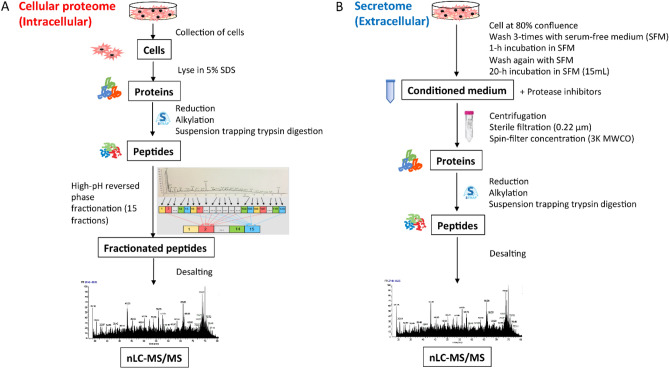
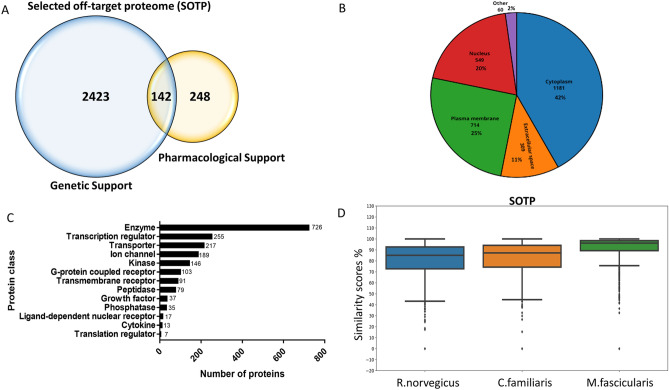
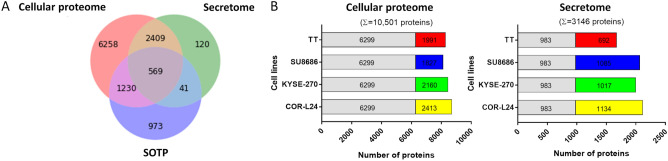
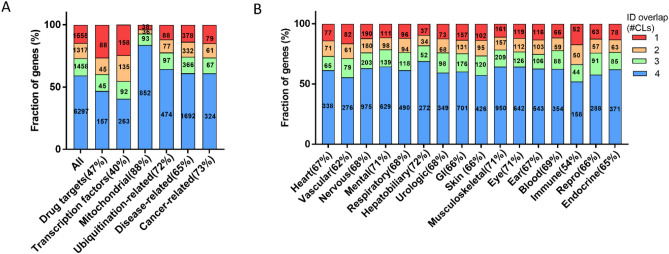
Novel modalities such as PROTAC and RNAi have the ability to inadvertently alter the abundance of endogenous proteins. Currently available in vitro secondary pharmacology assays, which evaluate off-target binding or activity of small molecules, do not fully assess the off-target effects of PROTAC and are not applicable to RNAi. To address this gap, we developed a proteomics-based platform to comprehensively evaluate the abundance of off-target proteins. First, we selected off-target proteins using genetics and pharmacology evidence. This process yielded 2813 proteins, which we refer to as the "selected off-target proteome" (SOTP). An iterative algorithm was then used to identify four human cell lines out of 932. The 4 cell lines collectively expressed ~ 80% of the SOTP based on transcriptome data. Second, we used mass spectrometry to quantify the intracellular and extracellular proteins from the selected cell lines. Among over 10,000 quantifiable proteins identified, 1828 were part of the predefined SOTP. The SOTP was designed to be easily modified or expanded, owing to the rational selection process developed and the label free LC-MS/MS approach chosen. This versatility inherent to our platform is essential to design fit-for-purpose studies that can address the dynamic questions faced in investigative toxicology.
Overview
The claims and statistics of this paper haven’t been checked yet.
Free: it reads the open-access text and checks the first 5 claims that cite a source we can check. Create a free account to check every claim.
Integrity signals
Registry
Cites
Statistics
Figures
Verification
Claims the paper makes
The claims and statistics of this paper haven’t been checked yet.
Free: it reads the open-access text and checks the first 5 claims that cite a source we can check. Create a free account to check every claim.
Claims other papers make about this one
Each is checked against this paper’s own text: does it say what the citing paper says it does?
The check wasn’t confident either way, so it gives no verdict — never disputed.
In the citing paper
“a Safetyome tool, a curated resource centered on drug safety–critical genes/proteins and their associated AEs.”
From A large-scale concordance study of toxicity findings across preclinical species and humans for small molecules and biologics (2026) · cites this paper as Liu et al., 2021
Experimental — accuracy not yet measured
Self-check
Percentages, sums and reported differences re-computed from the paper’s own numbers.
The self-check needs the paper’s full text.
Citations
Cites
Santos, A. G., da Rocha, G. O., & de Andrade, J. B. (2019) · Scientific Reports · doi:10.1038/s41598-018-37186-2 · Cited by 8,495
DrugBank 5.0: a major update to the DrugBank database for 2018
Wishart, D. S., Feunang, Y. D., Guo, A. C., Lo, E. J., Marcu, A., Grant, J. R., Sajed, T., Johnson, D., Li, C., Sayeeda, Z., et al. (2018) · Nucleic Acids Research · doi:10.1093/nar/gkx1037 · Cited by 8,404
Double-slit photoelectron interference in strong-field ionization of the neon dimer
Kunitski, M., Eicke, N., Huber, P., Köhler, J., Zeller, S., Voigtsberger, J., Schlott, N., Henrichs, K., Sann, H., Trinter, F., et al. (2019) · Nature Communications · doi:10.1038/s41467-018-07882-8 · Cited by 8,162
Double-slit photoelectron interference in strong-field ionization of the neon dimer
Kunitski, M., Eicke, N., Huber, P., Köhler, J., Zeller, S., Voigtsberger, J., Schlott, N., Henrichs, K., Sann, H., Trinter, F., et al. (2019) · Institutional Repository of Leibniz Universität Hannover (Leibniz Universität Hannover) · doi:10.15488/5174 · Cited by 8,161
The Cancer Cell Line Encyclopedia enables predictive modelling of anticancer drug sensitivity
Barretina, J., Caponigro, G., Stransky, N., Venkatesan, K., Margolin, A. A., Kim, S., Wilson, C. J., Lehár, J., Kryukov, G. V., Sonkin, D., et al. (2012) · Nature · doi:10.1038/nature11003 · Cited by 7,950
Biopython: freely available python tools for computational molecular biology and bioinformatics
Cock, P. J. A., Antao, T., Chang, J. T., Chapman, B. A., Cox, C. J., Dalke, A., Friedberg, I., Hamelryck, T., Kauff, F., Wilczynski, B., et al. (2009) · Bioinformatics · doi:10.1093/bioinformatics/btp163 · Cited by 6,080
Causal analysis approaches in Ingenuity Pathway Analysis
Krämer, A., Green, J., Pollard, J., & Tugendreich, S. (2014) · Bioinformatics · doi:10.1093/bioinformatics/btt703 · Cited by 5,724
Network pharmacology: the next paradigm in drug discovery
Hopkins, A. L. (2008) · Nature Chemical Biology · doi:10.1038/nchembio.118 · Cited by 4,622
The unified medical language system (UMLS): integrating biomedical terminology
Bodenreider, O. (2004) · Nucleic Acids Research · doi:10.1093/nar/gkh061 · Cited by 4,356
The Human Transcription Factors
Lambert, S. A., Jolma, A., Campitelli, L. F., Das, P. K., Yin, Y., Albu, M., Chen, X., Taipale, J., Hughes, T. R., & Weirauch, M. T. (2018) · Cell · doi:10.1016/j.cell.2018.01.029 · Cited by 3,399
Next-generation characterization of the Cancer Cell Line Encyclopedia
Ghandi, M., Huang, F. W., Jané-Valbuena, J., Kryukov, G. V., Lo, C. C., McDonald, E. R., Barretina, J., Gelfand, E. T., Bielski, C. M., Li, H., et al. (2019) · Nature · doi:10.1038/s41586-019-1186-3 · Cited by 3,394
Hopkins, A. L., & Groom, C. R. (2002) · Nature Reviews Drug Discovery · doi:10.1038/nrd892 · Cited by 3,305
On the Dependency of Cellular Protein Levels on mRNA Abundance
Liu, Y., Beyer, A., & Aebersold, R. (2016) · Cell · doi:10.1016/j.cell.2016.03.014 · Cited by 3,221
A census of human cancer genes
Futreal, P. A., Coin, L., Marshall, M., Down, T., Hubbard, T., Wooster, R., Rahman, N., & Stratton, M. R. (2004) · Nature Reviews Cancer · doi:10.1038/nrc1299 · Cited by 3,184
A comprehensive map of molecular drug targets
Santos, R., Ursu, O., Gaulton, A., Bento, A. P., Donadi, R. S., Bologa, C. G., Karlsson, A., Al-Lazikani, B., Hersey, A., Oprea, T. I., et al. (2017) · Nature Reviews Drug Discovery · doi:10.1038/nrd.2016.230 · Cited by 2,427
Feiner, N., Motone, F., Meyer, A., & Kuraku, S. (2019) · Scientific Reports · doi:10.1038/s41598-019-40055-1 · Cited by 1,987
Correlation of mRNA and protein in complex biological samples
Maier, T., Güell, M., & Serrano, L. (2009) · FEBS Letters · doi:10.1016/j.febslet.2009.10.036 · Cited by 1,802
MitoCarta2.0: an updated inventory of mammalian mitochondrial proteins
Calvo, S. E., Clauser, K. R., & Mootha, V. K. (2016) · Nucleic Acids Research · doi:10.1093/nar/gkv1003 · Cited by 1,251
Polypharmacology: Challenges and Opportunities in Drug Discovery: Miniperspective
Anighoro, A., Bajorath, J., & Rastelli, G. (2014) · Journal of Medicinal Chemistry · doi:10.1021/jm5006463 · Cited by 1,131
Jackson, A. L., & Linsley, P. S. (2010) · Nature Reviews Drug Discovery · doi:10.1038/nrd3010 · Cited by 1,083
Lessons in PROTAC Design from Selective Degradation with a Promiscuous Warhead
Bondeson, D. P., Smith, B. E., Burslem, G. M., Buhimschi, A. D., Hines, J., Jaime-Figueroa, S., Wang, J., Hamman, B. D., Ishchenko, A., & Crews, C. M. (2018) · Cell Chemical Biology · doi:10.1016/j.chembiol.2017.09.010 · Cited by 923
PROteolysis TArgeting Chimeras (PROTACs) — Past, present and future
Pettersson, M., & Crews, C. M. (2019) · Drug Discovery Today: Technologies · doi:10.1016/j.ddtec.2019.01.002 · Cited by 800
Off-target toxicity is a common mechanism of action of cancer drugs undergoing clinical trials
Lin, A., Giuliano, C. J., Palladino, A., John, K. M., Abramowicz, C., Yuan, M. L., Sausville, E. L., Lukow, D. A., Liu, L., Chait, A. R., et al. (2019) · Science Translational Medicine · doi:10.1126/scitranslmed.aaw8412 · Cited by 754
Reducing safety-related drug attrition: the use of in vitro pharmacological profiling
Bowes, J., Brown, A. J., Hamon, J., Jarolimek, W., Sridhar, A., Waldron, G., & Whitebread, S. (2012) · Nature Reviews Drug Discovery · doi:10.1038/nrd3845 · Cited by 748
España, G., Hogea, C., Guignard, A., ten Bosch, Q. A., Morrison, A. C., Smith, D. L., Scott, T. W., Schmidt, A., & Perkins, T. A. (2019) · PLOS ONE · doi:10.1371/journal.pone.0210041 · Cited by 744
Electrocardiogram generation with a bidirectional LSTM-CNN generative adversarial network
Zhu, F., Ye, F., Fu, Y., Liu, Q., & Shen, B. (2019) · Scientific Reports · doi:10.1038/s41598-019-42516-z · Cited by 540
Combinatorial Optimization: Theory and Algorithms
Korte, B., & Vygen, J. (2012) · Algorithms and Combinatorics · doi:10.1007/978-3-642-24488-9 · Cited by 507
Polypharmacology – Foe or Friend?
Peters, J.-U. (2013) · Journal of Medicinal Chemistry · doi:10.1021/jm400856t · Cited by 465
Mapping the Degradable Kinome Provides a Resource for Expedited Degrader Development
Donovan, K. A., Ferguson, F. M., Bushman, J. W., Eleuteri, N. A., Bhunia, D., Ryu, S., Tan, L., Shi, K., Yue, H., Liu, X., et al. (2020) · Cell · doi:10.1016/j.cell.2020.10.038 · Cited by 359
Self-citationGlobal Proteome Analysis of the NCI-60 Cell Line Panel
Gholami, A. M., Hahne, H., Wu, Z., Auer, F. J., Meng, C., Wilhelm, M., & Kuster, B. (2013) · Cell Reports · doi:10.1016/j.celrep.2013.07.018 · Cited by 302
Hadzhiev, Y., Qureshi, H. K., Wheatley, L., Cooper, L., Jasiulewicz, A., Van Nguyen, H., Wragg, J. W., Poovathumkadavil, D., Conic, S., Bajan, S., et al. (2019) · Nature Communications · doi:10.1038/s41467-019-08487-5 · Cited by 256
Elhaik, E., Tatarinova, T., Chebotarev, D., Piras, I. S., Calò, C. M., De Montis, A., Atzori, M., Marini, M., Tofanelli, S., Francalacci, P., et al. (2016) · Nature Communications · doi:10.1038/ncomms13468 · Cited by 249
Poornima, P., Kumar, J. D., Zhao, Q., Blunder, M., & Efferth, T. (2016) · Pharmacological Research · doi:10.1016/j.phrs.2016.06.018 · Cited by 248
Altenhoff, A. M., Glover, N. M., Train, C.-M., Kaleb, K., Warwick Vesztrocy, A., Dylus, D., de Farias, T. M., Zile, K., Stevenson, C., Long, J., et al. (2018) · Nucleic Acids Research · doi:10.1093/nar/gkx1019 · Cited by 221
Coscia, F., Watters, K. M., Curtis, M., Eckert, M. A., Chiang, C. Y., Tyanova, S., Montag, A., Lastra, R. R., Lengyel, E., & Mann, M. (2016) · Nature Communications · doi:10.1038/ncomms12645 · Cited by 212
Compound promiscuity: what can we learn from current data?
Hu, Y., & Bajorath, J. (2013) · Drug Discovery Today · doi:10.1016/j.drudis.2013.03.002 · Cited by 161
Integrated Genomic Analysis of the Ubiquitin Pathway across Cancer Types
Ge, Z., Leighton, J. S., Wang, Y., Peng, X., Chen, Z., Chen, H., Sun, Y., Yao, F., Li, J., Zhang, H., et al. (2018) · Cell Reports · doi:10.1016/j.celrep.2018.03.047 · Cited by 125
Drug withdrawals and the lessons within.
Smith, D. A., & Schmid, E. F. (2006) · PubMed · Cited by 124
Proteome-wide Map of Targets of T790M-EGFR-Directed Covalent Inhibitors
Niessen, S., Dix, M. M., Barbas, S., Potter, Z. E., Lu, S., Brodsky, O., Planken, S., Behenna, D. C., Almaden, C., Gajiwala, K. S., et al. (2017) · Cell chemical biology · doi:10.1016/j.chembiol.2017.08.017 · Cited by 104
Phenotypes associated with genes encoding drug targets are predictive of clinical trial side effects
Nguyen, P. A., Born, D. A., Deaton, A. M., Nioi, P., & Ward, L. D. (2019) · Nature Communications · doi:10.1038/s41467-019-09407-3 · Cited by 101
Self-citationSafety pharmacology – a progressive approach
Redfern, W. S., Wakefield, I. D., Prior, H., Pollard, C. E., Hammond, T. G., & Valentin, J. (2002) · Fundamental & Clinical Pharmacology · doi:10.1046/j.1472-8206.2002.00098.x · Cited by 99
Reducing attrition in drug development: smart loading preclinical safety assessment
Roberts, R. A., Kavanagh, S. L., Mellor, H. R., Pollard, C. E., Robinson, S., & Platz, S. J. (2014) · Drug Discovery Today · doi:10.1016/j.drudis.2013.11.014 · Cited by 87
Shin, J., Rhim, J.-H., Kwon, Y. M., Choi, S. Y., Shin, S., Ha, C., & Lee, C. (2019) · Scientific Reports · doi:10.1038/s41598-019-39650-z · Cited by 78
Papoian, T., Chiu, H.-J., Elayan, I., Jagadeesh, G., Khan, I. A., Laniyonu, A. A., Li, C. X., Saulnier, M., Simpson, N. E., & Yang, B. (2015) · Nature Reviews Drug Discovery · doi:10.1038/nrd3845-c1 · Cited by 77
Zuhl, A. M., Nolan, C. E., Brodney, M. A., Niessen, S., Atchison, K., Houle, C., Karanian, D. A., Ambroise, C., Brulet, J. W., Beck, E. M., et al. (2016) · Nature Communications · doi:10.1038/ncomms13042 · Cited by 73
Multi-use of the sea: A wide array of opportunities from site-specific cases across Europe
Bocci, M., Sangiuliano, S. J., Sarretta, A., Ansong, J. O., Buchanan, B., Kafas, A., Caña-Varona, M., Onyango, V., Papaioannou, E. A., Ramieri, E., et al. (2019) · PLoS ONE · doi:10.1371/journal.pone.0215010 · Cited by 56
In Vitro Safety Pharmacology Profiling: What Else Beyond Herg?
Hamon, J., Whitebread, S., Techer-Etienne, V., Coq, H. L., Azzaoui, K., & Urbán, L. (2009) · Future Medicinal Chemistry · doi:10.4155/fmc.09.51 · Cited by 51
Polypharmacology in Drug Development: A Minireview of Current Technologies
Tan, Z., Chaudhai, R., & Zhang, S. (2016) · ChemMedChem · doi:10.1002/cmdc.201600067 · Cited by 49
Probabilistic models of genetic variation in structured populations applied to global human studies
Hao, W., Song, M., & Storey, J. D. (2015) · Bioinformatics · doi:10.1093/bioinformatics/btv641 · Cited by 42
Rationalizing Secondary Pharmacology Screening Using Human Genetic and Pharmacological Evidence
Deaton, A. M., Fan, F., Zhang, W., Nguyen, P. A., Ward, L. D., & Nioi, P. (2018) · Toxicological Sciences · doi:10.1093/toxsci/kfy265 · Cited by 29
Self-citationIntegrative proteomic and phosphoproteomic profiling of prostate cell lines
Katsogiannou, M., Boyer, J.-B., Valdeolivas, A., Rémy, É., Calzone, L., Audebert, S., Rocchi, P., Camoin, L., & Baudot, A. (2019) · PLoS ONE · doi:10.1371/journal.pone.0224148 · Cited by 23
Kaleb, K., Vesztrocy, A. W., Altenhoff, A., & Dessimoz, C. (2019) · F1000Research · doi:10.12688/f1000research.17548.2 · Cited by 19
Predicting G protein-coupled receptor downstream signaling by tissue expression
Hao, Y., & Tatonetti, N. P. (2016) · Bioinformatics · doi:10.1093/bioinformatics/btw510 · Cited by 17
Kolb (2001) · doi:10.1002/1521-3773(20010601)40:11<2004::aid-anie2004>3.0.co;2-5
Cited by
Proteolysis-targeting chimeras with reduced off-targets
Nguyen, T. M., Sreekanth, V., Deb, A., Kokkonda, P., Tiwari, P. K., Donovan, K. A., Shoba, V., Chaudhary, S. K., Mercer, J. A. M., Lai, S., et al. (2024) · Nature Chemistry · doi:10.1038/s41557-023-01379-8 · Cited by 139
Expanding Chemical Probe Space: Quality Criteria for Covalent and Degrader Probes
Hartung, I. V., Rudolph, J., Mader, M. M., Mulder, M. P. C., & Workman, P. (2023) · Journal of Medicinal Chemistry · doi:10.1021/acs.jmedchem.3c00550 · Cited by 115
Using human genetics to improve safety assessment of therapeutics
Carss, K., Deaton, A. M., Río-Espínola, A. D., Diogo, D., Fielden, M. R., Kulkarni, D. A., Moggs, J. G., Newham, P., Nelson, M. R., Sistare, F. D., et al. (2022) · Nature Reviews Drug Discovery · doi:10.1038/s41573-022-00561-w · Cited by 100
Self-citationTargeted Protein Degradation: Principles and Applications of the Proteasome
Kim, Y., Kim, E.-K., Chey, Y., Song, M.-J., & Jang, H. H. (2023) · Cells · doi:10.3390/cells12141846 · Cited by 55
Nano-Proteolysis Targeting Chimeras (Nano-PROTACs) in Cancer Therapy
Song, Y., Dong, Q., Ni, Y.-K., Xu, X., Chen, C.-X., & Chen, W. (2024) · International Journal of Nanomedicine · doi:10.2147/ijn.s448684 · Cited by 51
Metadata
- Authors
- Liu, X., Zhang, Y., Ward, L. D., Yan, Q., Bohnuud, T., Hernandez, R., Lao, S., Yuan, J., & Fan, F.
- Affiliations
- Amgen (United States) (US)
- Corresponding author
- Fan, Fan
- Venue
- Scientific Reports
- Published
- 2021-08-04
- Volume
- 11
- Issue
- 1
- Pages
- 15856-15856
- ISSN
- 2045-2322 (ISSN-L)
- PMC
- PMC8338952
- OpenAlex
- W3102038798
- Cited by
- 21
- References
- 57
- Citations by year
- 2026: 5 · 2025: 3 · 2024: 8 · 2023: 3 · 2022: 2
- FWCI
- 1.19
- Type
- journal article
- Language
- en
- Open access
- gold
- doi.org
- Licence
- cc-by
- creativecommons.org/licenses/by/4.0 (tdm)
- creativecommons.org/licenses/by/4.0 (vor)
- Locations
- Scientific Reports (publishedVersion, cc-by)
- bioRxiv (Cold Spring Harbor Laboratory) (acceptedVersion)
- Research Square (acceptedVersion, cc-by)
- PubMed Central (publishedVersion, cc-by)
- PubMed (publishedVersion)
- DOAJ (DOAJ: Directory of Open Access Journals) (submittedVersion, cc-by-sa)
- Funders
- Amgen
- Topics
- Physical Sciences › Chemistry › Spectroscopy › Advanced Proteomics Techniques and Applications
- Life Sciences › Biochemistry, Genetics and Molecular Biology › Molecular Biology › Protein Degradation and Inhibitors
- Physical Sciences › Chemistry › Spectroscopy › Mass Spectrometry Techniques and Applications
- Keywords
- PROTACs, RNA interference, protein degradation, gene silencing, cell line selection, off-target effects
- MeSH terms
- Humans, Neoplasms, Tumor Cells, Cultured, Biomarkers, Tumor, Gene Expression Regulation, Neoplastic, Proteome, Cell Proliferation
About these checks
Registry, retraction, Cites and statistics results are computed, not judged, with one exception: a printed reference that no index lists is read once by a model before it counts as a citation error. Claims are extracted by a model and kept only when their quote appears verbatim in the text; each cited source is then checked, with a model’s help, for whether it says what the claim relies on. Those verdicts can be wrong — read the claim’s quote and the cited source before relying on one.
Statistics and arithmetic are recomputed, not judged.
Confidence bands are shown only for fields calibrated on our annotated test set. None is calibrated yet, so no band is shown.
What counts as a claim ›How we measure confidence ›How we check this ›
Are you an author, or do you see a problem with this page? Request a review
Data sources
Bibliographic data: Semantic Scholar, OpenAlex, Crossref.
Contains information from the Semantic Scholar Academic Graph Datasets, made available under the ODC Attribution License (ODC-BY 1.0).
Semantic Scholar’s data is described in: Kinney, R., et al. (2023). The Semantic Scholar Open Data Platform. arXiv:2301.10140.
