

Benefits from one session of deep and slow breathing on vagal tone and anxiety in young and older adults
Open accessThe DOI matches its Crossref record; 100 of the 104 references it cites were found in a registry or an index; 23 of the 33 sources its claims cite were checked for support.
Abstract
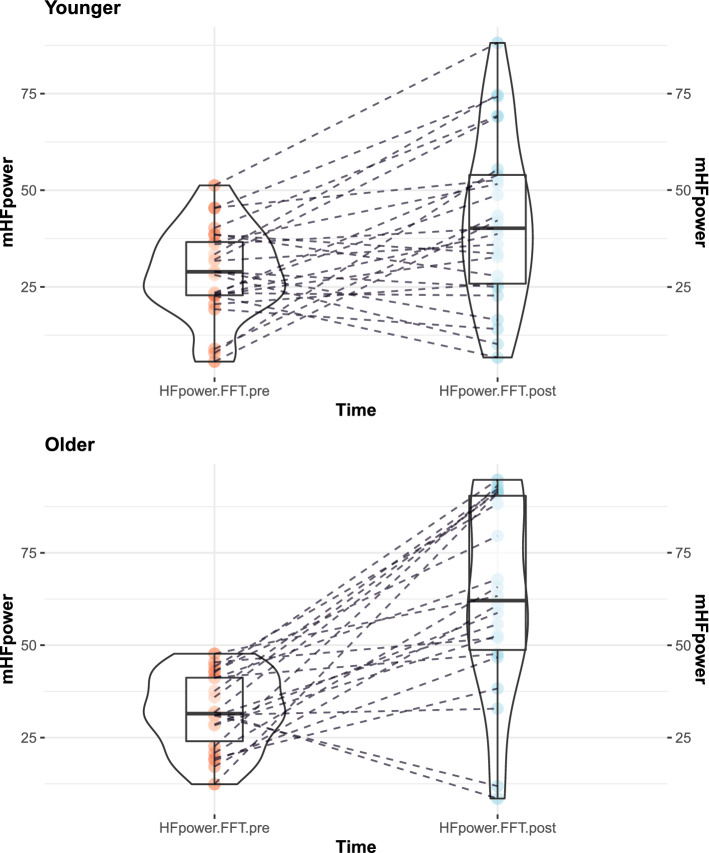
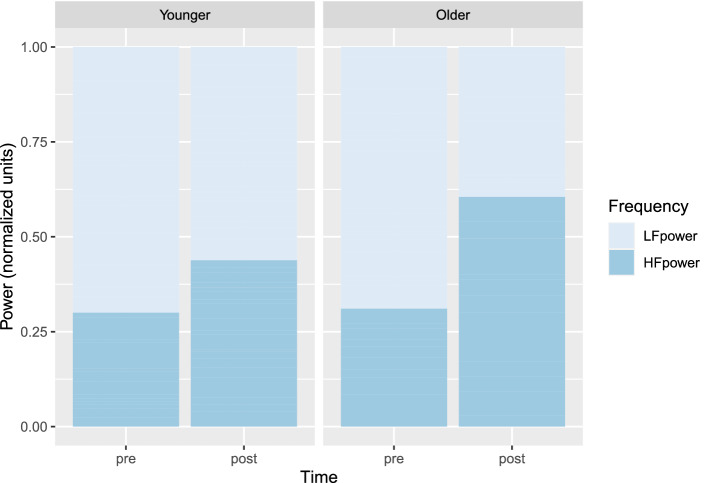
Anxiety is recognized as a major health issue and is quite prevalent among older adults. An efficient way to manage anxiety is abdominal breathing. Breathing exercises seem to reduce anxiety and to increase parasympathetic activity assessed by HRV indexes. Yet, the effect of abdominal breathing on physiological stress (HRV) and anxiety in older adults remains poorly understood. Therefore, the aim of this study is to test the effects of deep and slow breathing (DSB, low inhale/exhale ratio) on physiological stress and anxiety in older adults (n = 22) in comparison with younger ones (n = 25). DSB increased significantly HFpower and reduced state anxiety in both younger and older adults. Interestingly, the increased in HF power was significantly higher among older adults than younger ones. As expected, the ratio inhale/exhale being not equal, RMSSD did not increase following DSB. Thus, we provide evidence suggesting that DSB is more beneficial to older adults than younger ones to restore vagal outflow. Despite future work being required, those results provide relevant clinical application leads to manage state anxiety among older adults and to promote successfull aging.
Overview
CoChat Summary
## TL;DR
This study tested a single 5-minute deep and slow breathing (DSB) exercise in 25 younger adults and 22 older adults. DSB reduced self-reported state anxiety in both groups and increased HF power, with a larger HF increase in older adults.
## Key findings
- State anxiety decreased after DSB in the full sample and in both age groups; the paper reports this with a Wilcoxon test but the exact test statistics and p-values are not visible in the provided text.
- HF power increased significantly after DSB, with a main effect of Time and a significant Time × Group interaction in the ANOVA.
- The HF increase was larger in older adults than younger adults: the paper states older adults went from pre-test to post-test HF of “vs.” and younger adults from “vs.”, and post-test HF was significantly higher in older than younger adults.
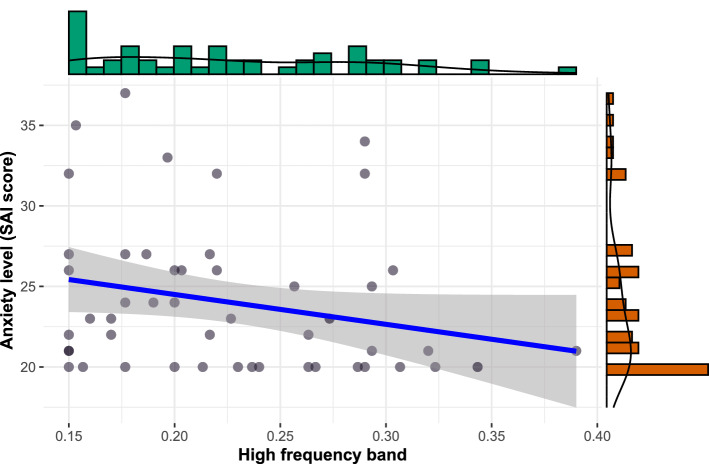
- Post-DSB HF was negatively associated with state anxiety (Spearman correlation), and RMSSD did not change significantly after DSB.
## Methods
- Pre–post within-subject experiment comparing younger adults (n = 25) and older adults (n = 22) after a 5-minute guided DSB exercise; the study was approved by an ethics committee and all participants gave informed consent.
- Sample: 47 final participants from an initial 71 enrolled; 8 were excluded on HADS/MMSE or BMI criteria and 16 more due to technical issues with physiological data.
- Measures and analysis: state anxiety was assessed with the Spielberger State Anxiety Inventory; physiological stress was assessed with HRV from an Empatica E4 wristband, focusing on HF power and RMSSD; Wilcoxon tests were used for anxiety, mixed 2×2 ANOVA for HRV, and Spearman correlation for post-DSB anxiety vs post-HF.
## Limitations
- The paper states that there was no control group, making it difficult to rule out alternative explanations such as test-retest effects.
- The paper states that sex differences were not analyzed separately even though autonomic functioning may differ by sex.
- The paper states that the breathing exercise was not individually adapted to each participant’s spontaneous respiration, and it also notes potential confounds such as physical activity, yoga, meditation, sedentariness, sleep, BMI, and other lifestyle factors.
Model-written summary. Check it against the paper before relying on it.
Integrity signals
Registry
Cites
Statistics
Figures
Verification
Claims the paper makes
16 Valid · 2 Not valid · 1 Not checked · 14 Own results and interpretations
The sources with a verdict support this claim; the rest weren’t checked yet, have no full text we could read, or their verdicts aren’t rated yet.
In the paper
“While being correlated with HF50, RMSSD seems to be less affected by respiration51,52.”
- Also stated in: § Discussion · hedged
“Furthermore, RMSSD appears less susceptible to variations in respiratory frequency51,66.”
§ Benefits from one session of deep and slow breathing on vagal tone and anxiety in young and older adults > Methods > Material
What the sources say
- Not matchedcites [51] Schipke J Arnold G Pelzer M Effect of respiration rate on short-term heart rate variability J. Clin. Basic Cardiol. 1999 2 92 95
Its entry has no title and year that we can search by.
- Not checked — no full text of the sourcecites [52] Penttilä J Time domain, geometrical and frequency domain analysis of cardiac vagal outflow: Effects of various respiratory patterns Clin. Physiol. (Oxford, England) 2001 21 365 376 10.1046/j.1365-2281.2001.00337.x 11380537 source
- Supportedcites [66] Quintana D Resting-state high-frequency heart rate variability is related to respiratory frequency in individuals with severe mental illness but not healthy controls Sci. Rep. 2016 6 37212 10.1038/srep37212 27853244 PMC5112550 source
The Methods section states that RMSSD may be less influenced by respiratory frequency than HF-HRV. The Discussion reports that RMSSD was not significantly associated with respiratory frequency in either group, whereas HF-HRV was associated with it in the severe-mental-illness group. The comparison supports the citing sentence's hedged wording, specifically for respiratory frequency. (LLM, conf=0.92)
hedged- Asserted: passes — The authors put it forward as true.
- Checkable: passes — It can be checked against evidence.
- Load-bearing: passes — The paper’s conclusions depend on it.
- Based: passes — The paper gives a reason why it holds.
- Also stated in: § Discussion · hedged
The cited sources support only part of this claim — read each source’s verdict below.
In the paper
“The reliability and accuracy of EMPATICA E4 for research on HR and HRV have been previously demonstrated through comparisons with electrocardiography (ECG) measurements45.”
§ Benefits from one session of deep and slow breathing on vagal tone and anxiety in young and older adults > Methods > Material
What the sources say
- Partly supportedcites [45] Schuurmans A Validity of the empatica e4 wristband to measure heart rate variability (hrv) parameters: A comparison to electrocardiography (ecg) J. Med. Syst. 2020 44 190 10.1007/s10916-020-01648-w 32965570 PMC7511462 sourceExperimental — accuracy not yet measured
The Conclusions report strong agreement with ECG-based VU-AMS recordings for mean HR and SDNN, supporting the E4’s potential for HR and HRV research while people are at rest. The Discussion reports significant differences for other HRV parameters and poor predictive value for RMSSD, so the unqualified claim of reliability and accuracy for HRV research overstates the findings. (LLM, conf=0.88)
boosted- Asserted: passes — The authors put it forward as true.
- Checkable: passes — It can be checked against evidence.
- Load-bearing: passes — The paper’s conclusions depend on it.
- Based: passes — The paper gives a reason why it holds.
- Partly supported
Every source the paper cites for this claim was checked and supports it.
In the paper
“The HF spectrum is a frequency domain measure (range from 0.15 to 0.4 Hz), called the respiratory band, that reflects parasympathetic or vagal activity on variations affecting the respiratory circle47.”
§ Benefits from one session of deep and slow breathing on vagal tone and anxiety in young and older adults > Methods > Material
What the sources say
- Supportedcites [47] Shaffer, F., McCraty, R. & Zerr, C. L. A healthy heart is not a metronome: An integrative review of the heart’s anatomy and heart rate variability. Front. Psychol.10.3389/fpsyg.2014.01040 (2014). PMC4179748 25324790 source
The High-frequency band section directly states that the 0.15–0.4 Hz HF band reflects parasympathetic or vagal activity. It also calls HF the respiratory band because it corresponds to heart-rate variations related to the respiratory cycle. (LLM, conf=0.95)
plainstates an association- Asserted: passes — The authors put it forward as true.
- Checkable: passes — It can be checked against evidence.
- Load-bearing: passes — The paper’s conclusions depend on it.
- Based: passes — The paper gives a reason why it holds.
- Supported
The cited sources support only part of this claim — read each source’s verdict below.
In the paper
“Higher vagal activity also predicts better emotion regulation strategies, such as avoidance of the negativity and positivity effect in aging91.”
§ Benefits from one session of deep and slow breathing on vagal tone and anxiety in young and older adults > Discussion
What the sources say
- Partly supportedcites [91] Mantantzis K Schlaghecken F Maylor EA Heart rate variability predicts older adults avoidance of negativity J. Gerontol. Ser. B 2020 75 1679 1688 10.1093/geronb/gby148 30521028 sourceExperimental — accuracy not yet measured
The Discussion (page unavailable) reports that higher resting heart rate variability predicted stronger negativity avoidance in older adults, which accounted for the observed positivity effect; it did not predict greater preference for positive faces. The Discussion also says that interpreting this association as better emotion-regulation capacity is a possibility requiring direct testing. Thus, the claim overstates the evidence for better emotion regulation. (LLM, conf=0.88)
plainstates an association- Asserted: passes — The authors put it forward as true.
- Checkable: passes — It can be checked against evidence.
- Load-bearing: unclear — It is unclear whether the paper’s conclusions depend on it.
- Based: passes — The paper gives a reason why it holds.
- Partly supported
Every source the paper cites for this claim was checked and supports it.
In the paper
“Even though we controlled for sleep quality and quantity and BMI, there are also potential confounds that may contribute to the present results, such as the practice of physical activity83, yoga84 or meditation85 and other lifestyle factors that are likely to influence HRV86,such as sedentariness87, a factor that is independent of physical inactivity88.”
§ Benefits from one session of deep and slow breathing on vagal tone and anxiety in young and older adults > Discussion
What the sources say
- Supportedcites [83] Luisa S-M Physical activity and heart rate variability in older adults Circulation 2014 129 2100 2110 10.1161/CIRCULATIONAHA.113.005361 24799513 PMC4038662 source
Citation 83 is attached to physical activity, not to yoga or meditation. The Discussion (page unavailable) reports that physical activity was associated with HRV indices in older adults, supporting its identification as a potential factor in the citing study’s results. (LLM, conf=0.91)
- Supportedcites [84] Tyagi A Cohen M Yoga and heart rate variability: A comprehensive review of the literature Int. J. Yoga 2016 9 97 113 10.4103/0973-6131.183712 27512317 PMC4959333 source
Citation 84 is attached to yoga practice. The Discussion (page unavailable) reports that yoga can affect cardiac autonomic regulation and that regular practitioners showed greater vagal tone than non-practitioners. This supports yoga practice as a potential influence on HRV, without claiming it confounded the citing study specifically. (LLM, conf=0.90)
- Supportedcites [85] Rådmark L Sidorchuk A Osika W Niemi M A systematic review and meta-analysis of the mpact of mindfulness based interventions on heart rate variability and inflammatory markers J. Clin. Med. 2019 10.3390/jcm8101638 31591316 PMC6833066 source
Citation 85 is attached to meditation, not to the separate examples of physical activity or yoga. The Introduction reports preliminary evidence that mindfulness practice may increase HRV, supporting meditation as a potential influence on the citing study’s HRV results. The source does not assess confounding in that study, but the citing sentence frames it as a possibility. (LLM, conf=0.87)
hedgedstates a possible cause- Asserted: passes — The authors put it forward as true.
- Checkable: passes — It can be checked against evidence.
- Load-bearing: unclear — It is unclear whether the paper’s conclusions depend on it.
- Based: passes — The paper gives a reason why it holds.
- Supported
9 more claims · 1 with their cited sources checked
Create a free account to see all 33 claims and every source verdict.
- It may state two separate claims as one. 10
- Probably not a substantial claim. 10
- The quote only partly states this claim. 1
Claims other papers make about this one
Each is checked against this paper’s own text: does it say what the citing paper says it does?
The cited source says what the claim attributes to it.
In the citing paper
“Alternatively, this could be indicative of breathwork being possibly able to help quickly, as suggested in very recent literature whereby just one session of slow, deep breathing had beneficial effects on anxiety and vagal tone in adults94, with vagal tone being measured, albeit indirectly, through HRV6.”
From Effect of breathwork on stress and mental health: A meta-analysis of randomised-controlled trials (2023) · cites this paper as [94]
Citations
Cites
Folstein, M. F., Folstein, S. E., & McHugh, P. R. (1975) · Journal of Psychiatric Research · doi:10.1016/0022-3956(75)90026-6 · Cited by 88,282
The Hospital Anxiety and Depression Scale
Zigmond, A. S., & Snaith, R. P. (1983) · Acta Psychiatrica Scandinavica · doi:10.1111/j.1600-0447.1983.tb09716.x · Cited by 47,139
Statistical Power Analysis for the Behavioral Sciences
Cohen, J. (2013) · doi:10.4324/9780203771587 · Cited by 25,373
Hirono, N., Mori, E., Ikejiri, Y., Imamura, T., Shimomura, T., Hashimoto, M., Yamashita, H., & Ikeda, M. (1997) · Brain and nerve · Cited by 21,030
Kok, J. S., Berg, I. J., & Scherder, E. J. A. (2013) · Dementia and Geriatric Cognitive Disorders Extra · doi:10.1159/000353441 · Cited by 20,589
Older Adults' Reasons for Using Technology while Aging in Place
Peek, S. T. M., Luijkx, K. G., Rijnaard, M. D., Nieboer, M. E., van der Voort, C. S., Aarts, S., van Hoof, J., Vrijhoef, H. J. M., & Wouters, E. J. M. (2016) · Gerontology · doi:10.1159/000430949 · Cited by 19,690
Sensitivity and False Alarm Rate of a Fall Sensor in Long-Term Fall Detection in the Elderly
Kangas, M., Korpelainen, R., Vikman, I., Nyberg, L., & Jämsä, T. (2015) · Gerontology · doi:10.1159/000362720 · Cited by 18,909
Heart Rate Variability: Standards of Measurement, Physiological Interpretation, and Clinical Use
Electrophysiology, T. F. O. T. E. S. O. C. T. N. A. (1996) · Circulation · doi:10.1161/01.cir.93.5.1043 · Cited by 17,159
Heart rate variability: Standards of measurement, physiological interpretation, and clinical use
Malik, M., Bigger, J. T., Camm, A. J., Kleiger, R. E., Malliani, A., Moss, A. J., & Schwartz, P. J. (1996) · European Heart Journal · doi:10.1093/oxfordjournals.eurheartj.a014868 · Cited by 15,289
Depression and quality of life in older persons: A review
Sivertsen, H., Bjørkløf, G. H., Engedal, K., Selbæk, G., & Helvik, A.-S. (2015) · Dementia and Geriatric Cognitive Disorders · doi:10.1159/000437299 · Cited by 14,152
Cited by
Effect of breathwork on stress and mental health: A meta-analysis of randomised-controlled trials
Fincham, G. W., Strauss, C., Montero-Marin, J., & Cavanagh, K. (2023) · Scientific Reports · doi:10.1038/s41598-022-27247-y · Cited by 224
Bentley, T. G. K., D’Andrea-Penna, G., Rakic, M., Arce, N., LaFaille, M., Berman, R., Cooley, K., & Sprimont, P. (2023) · Brain Sciences · doi:10.3390/brainsci13121612 · Cited by 229
Magnon, V., Vallet, G. T., Benson, A. C., Mermillod, M., Chaussé, P., Lacroix, A., Bouillon‐Minois, J., & Dutheil, F. (2022) · Cortex · doi:10.1016/j.cortex.2022.07.008 · Cited by 117
Self-citationBreathwork Interventions for Adults with Clinically Diagnosed Anxiety Disorders: A Scoping Review
Banushi, B., Brendle, M., Ragnhildstveit, A., Murphy, T., Moore, C., Egberts, J., & Robison, R. (2023) · Brain Sciences · doi:10.3390/brainsci13020256 · Cited by 58
“While protocols varied in terms of duration, number of sessions, and follow-up, studies outside of this review have reliably shown benefits for anxiety, depression, and cognition even after a single session [79,80] and in as little as five minutes [81,82].”
BackgroundVierra, J., Boonla, O., & Prasertsri, P. (2022) · Physiological Reports · doi:10.14814/phy2.15389 · Cited by 69
“Slow and deep breathing increases the parasympathetic activity, which signals the brain to calm the body down and manages the body's response to anxiety (Jerath et al., 2006; Magnon et al., 2021; Russo et al., 2017).”
BackgroundEfremov, A. (2024) · Clinical Psychopharmacology and Neuroscience · doi:10.9758/cpn.24.1197 · Cited by 54
“The cortex of the anterior and posterior insular lobes exhibit increased neuronal activity during breathing and during vagal testing (Valsava), so breathing exercises can be used to reduce sympathetic activity [22].”
BackgroundDeep breathing exercise at work: Potential applications and impact
Tavoian, D., & Craighead, D. H. (2023) · Frontiers in Physiology · doi:10.3389/fphys.2023.1040091 · Cited by 82
“A single bout of DBE (5–20 min) reportedly reduces subjective feelings of anxiety in generally healthy young and older adults (Yu et al., 2011; Magnon et al., 2021) and in men with alcohol dependence (Clark and Hirschman, 1990), while also reducing feelings of depression and anger-hostility in healthy adults (Yu et al.”
BackgroundLukic, Y. X., Teepe, G. W., Fleisch, E., & Kowatsch, T. (2022) · JMIR Serious Games · doi:10.2196/39186 · Cited by 32
“Investigating these separate phases is relevant as inhalation is associated with the sympathetic nervous system by inhibiting vagal outflow, and exhalation is associated with the parasympathetic nervous system by restoring vagal outflow [12,13].”
BackgroundA Contactless Breathing Pattern Recognition System Using Deep Learning and WiFi Signal
Fan, D., Yang, X., Zhao, N., Guan, L., Arslan, M. M., Ullah, M., Imran, M. A., & Abbasi, Q. H. (2024) · IEEE Internet of Things Journal · doi:10.1109/jiot.2024.3386645 · Cited by 39
“The system utilize the designed prototype based on WiFi signal and deep learning architecture to achieve the reliable measurement and recognition of respiratory patterns.”
Bile acid signalling and its role in anxiety disorders
Chen, S., Shao, Q., Chen, J., Lv, X., Ji, J., Liu, Y., & Song, Y. (2023) · Frontiers in Endocrinology · doi:10.3389/fendo.2023.1268865 · Cited by 36
Cortez-Vázquez, G., Adriaanse, M. C., Burchell, G. L., Ostelo, R., Panayiotou, G., & Vlemincx, E. (2024) · Applied Psychophysiology and Biofeedback · doi:10.1007/s10484-023-09611-4 · Cited by 39
“Prior research has suggested that a single session of non-VR breath control may be sufficient to enhance mental health and physiological indicators of stress (Lehrer et al., 2020; Magnon et al., 2021).”
BackgroundOku, Y. (2022) · The Journal of Physiological Sciences · doi:10.1186/s12576-022-00847-z · Cited by 34
“Older adults also benefit from DSB in terms of vagal tone and anxiety [138].”
BackgroundSun, J., Zhuo, J., Chu, H., Wang, J., Chen, T., Li, B., Lu, T., Zheng, H., Xu, Y., Dong, J., et al. (2023) · Scandinavian Journal of Medicine and Science in Sports · doi:10.1111/sms.14521 · Cited by 23
“19 Finally, the unique psychological conditioning of Qigong, such as meditation, leads to a decrease in sympathetic excitability and an increase in vagal excitability, which results in an improved HRV. 35 The abovementioned hypothesis about Qigong explains its beneficial use as a means of improving…”
BackgroundMorgan, S. P., Lengacher, C. A., & Seo, Y. (2024) · Journal of Holistic Nursing · doi:10.1177/08980101241273860 · Cited by 29
“The COVID-19 Yorkshire Rehabilitation Screen (Cahalan et al., 2022); Generalized Anxiety Disorder-7 (Gerbarg et al., 2023; Philip et al., 2022; Son et al., 2023); State-Trait Anxiety Inventory (Magnon et al., 2021; Plaza et al., 2022; Yilmaz & Bulut, 2020); Hospital Anxiety and Depression Scale (Rutkowski et al., 2022…”
InfluentialMorriss, R. K., Patel, S., Boutry, C., Patel, P., Guo, B., Briley, P. M., Butler, D. A., Craven, M. P., Duncan, A., Griffiths, C., et al. (2023) · The Lancet Psychiatry · doi:10.1016/s2215-0366(23)00007-x · Cited by 19
Calderone, A., Marafioti, G., Latella, D., Corallo, F., D'Aleo, P., Quartarone, A., & Calabrò, R. S. (2025) · Psychology Health & Medicine · doi:10.1080/13548506.2025.2458255 · Cited by 33
A Molecularly Defined Medullary Network for Control of Respiratory Homeostasis
Deng, T., Jing, X., Shao, L., Wang, Y., Fu, C., Yu, H., Wang, X., Zhao, X., Kong, F., Ji, Y., et al. (2025) · Advanced Science · doi:10.1002/advs.202412822 · Cited by 16
Klęczek, K., Rice, A., & Alimardani, M. (2024) · Sensors · doi:10.3390/s24134032 · Cited by 23
“The stress management intervention consisted of a breathing exercise, called “deep and slow breathing”, which has been previously proven e ff ective in reducing stress and slowing down heart rate measures [41,42].”
MethodMoradipoor, Y., Rejeh, N., Heravi‐Karimooi, M., Tadrisi, S. D., Dahmardehei, M., Bahrami, T., & Vaismoradi, M. (2022) · Geriatrics · doi:10.3390/geriatrics7030054 · Cited by 18
“Anxiety is a prevalent disorder in older patients, and they are at the high risk of anxiety disorders [8,9].”
BackgroundSaito, R., Yoshida, K., Sawamura, D., Watanabe, A., Tokikuni, Y., & Sakai, S. (2024) · Applied Psychophysiology and Biofeedback · doi:10.1007/s10484-024-09650-5 · Cited by 18
“Pre-training HF was also significantly positively correlated with the average coherence score in the HRVBF group ( r = 0.635, p = 0.002) but not in the control group ( r = 0.242, p = 0.317) (Table 3).”
InfluentialPeripheral immune and metabolic regulation of Aβ and Tau by exercise in Alzheimer’s disease
Yu, Y., & Chen, K. (2025) · Frontiers in Immunology · doi:10.3389/fimmu.2025.1678526 · Cited by 14
Dada, T., Gwal, R. S., Mahalingam, K., Chandran, D. S., Angmo, D., Gupta, S., Velpandian, T., & Deepak, K. K. (2024) · Journal of Glaucoma · doi:10.1097/ijg.0000000000002356 · Cited by 15
Enteric neuropathy and the vagus nerve: Therapeutic implications
Bonaz, B. L. (2024) · Neurogastroenterology & Motility · doi:10.1111/nmo.14842 · Cited by 17
“79 Slow, deep breathing can reduce visceral pain intensity.”
Luo, X. G., Li, S., Wu, Q., Xu, Y. J., Fang, R., Cheng, Y., & Zhang, B. (2025) · BMC Psychiatry · doi:10.1186/s12888-025-06532-w · Cited by 13
“CBT can help patients learn skills to manage panic symptoms and negative emotions, change maladaptive thinking patterns and behaviors, and gradually re-establish normal functioning [60, 61].”
Schwerdtfeger, A. R., Tatschl, J. M., & Rominger, C. (2025) · Journal of Medical Internet Research · doi:10.2196/69582 · Cited by 17
“The findings of study 1 generally align with research suggesting beneficial effects of slow breathing on emotional valence, perceived stress, and anxiety in controlled settings [18,59,60].”
Brief slow-paced breathing improves working memory, mood, and stress in college students
Pilcher, J. J., Byrne, K. A., Weiskittel, S. E., Clark, E. C., Brancato, M. G., Rosinski, M. L., & Spinelli, M. R. (2025) · Anxiety Stress & Coping · doi:10.1080/10615806.2025.2505897 · Cited by 10
“Furthermore, research implementing SPB practice with a longer exhalation has found improved mood and decreased perceived stress levels (Pilcher et al., 2025) as well as decreased state anxiety (Magnon et al., 2021).”
BreathePulse: Peripheral Guided Breathing via Implicit Airflow Cues for Information Work
Gemicioglu, T., Viranda, T., Zhao, Y., Yessenbayev, O., Arora, J., Wang, J., Lopes, P., Adams, A. T., & Choudhury, T. (2024) · Proceedings of the ACM on Interactive Mobile Wearable and Ubiquitous Technologies · doi:10.1145/3702211 · Cited by 12
Epstein, R., Aceret, J., Giordani, C., Zankich, V. R., & Zhang, L. (2024) · Scientific Reports · doi:10.1038/s41598-024-68328-4 · Cited by 10
Yang, S., Wu, Y., Zhan, Z., Pan, Y., & Jiang, J. (2024) · Frontiers in Neuroscience · doi:10.3389/fnins.2024.1367266 · Cited by 9
Wu, M., Fan, C., Zhao, X., Zhou, J., Liu, H., Li, H., Zhan, X., & Jiang, Z. (2024) · Mindfulness · doi:10.1007/s12671-024-02456-w · Cited by 10
“Deep and slow breathing exercises improve vagal tone, regulating negative emotions like anxiety and depression (Magnon et al., 2021).”
Practicing mindfulness in addressing the biodiversity crisis
Gerber, L. R., Reeves-Blurton, Z. A., Gueci, N., Iacona, G. D., Beaudette, J. A., & Pipe, T. B. (2023) · Conservation Science and Practice · doi:10.1111/csp2.12945 · Cited by 9
Johnson, M. A., Simonian, N., & Reggente, N. (2024) · Scientific Reports · doi:10.1038/s41598-024-75943-8 · Cited by 11
“…control (i.e., focused attention of breath while voluntarily manipulating, such as in Pranayama, deep slow breathing, diaphragmatic breathing, etc.) have shown extensively documented benefits for mental, physical, and cognitive health 20–23 , including effects from even a single session 24,25 .”
BackgroundAlcalde, A. I. P., Galán-del-Río, F., Fernández-Rodríguez, F. J., Frutos, M. D. L. P. S., García-Arrabé, M., Giménez, M.-J., & Ruíz-Ruíz, B. (2024) · Sensors · doi:10.3390/s24216874 · Cited by 10
Ertürk, Ç., & Özden, A. V. (2025) · Journal of Clinical Medicine · doi:10.3390/jcm14041046 · Cited by 11
“In addition, the findings regarding HRV values in both groups developed in favor of the parasympathetic nervous system, again in line with the literature [3,6].”
Breathwork for Chronic Stress and Mental Health: Does Choosing a Specific Technique Matter?
Siebieszuk, A., Płoński, A. F., & Baranowski, M. (2025) · Medical Sciences · doi:10.3390/medsci13030127 · Cited by 16
“Even brief, five-minute sessions of various breathwork techniques have been shown to enhance parasympathetic activation, reduce physiological arousal and perceived anxiety levels, and positively impact brain activity, HRV, and mood [93,117,139,233,234].”
Agyapong, B., Shalaby, R., Hay, K., Pattison, R., Eboreime, E., Korthuis, M., Wei, Y., & Agyapong, V. I. O. (2023) · Behavioral Sciences · doi:10.3390/bs13090749 · Cited by 33
Serrano‐Ibáñez, E. R., Czub, M., Cordero, C. O., López-Martínez, A. E., Ramírez‐Maestre, C., Piskorz, J., & Esteve, R. (2024) · Current Psychology · doi:10.1007/s12144-024-06745-4 · Cited by 10
“Magnon et al. (2021) showed that, in young adults and older adults, a single session of deep slow abdominal breathing not only reduced anxiety levels, but also increased vagal outflow.”
Magnon, V., Dutheil, F., & Vallet, G. T. (2022) · Physiology & Behavior · doi:10.1016/j.physbeh.2022.113911 · Cited by 10
Self-citationKulchar, R. J., & Haddad, M.-B. (2022) · Journal of Interprofessional Education & Practice · doi:10.1016/j.xjep.2022.100570 · Cited by 15
Neuromodulation for Gastroesophageal Reflux Disease: A Systematic Review
Woo, J. Y., Pikov, V., & Chen, J. D. Z. (2023) · Journal of Translational Gastroenterology · doi:10.14218/jtg.2023.00042 · Cited by 13
“…in combination with TEA, alleviates GERD symptoms 21 through targeting a number of GERD pathophysiologies: (1) increase parasympathetic activity, 41,42 thus mediating anti-hyperalgesia effects through cholinergic anti-inflammatory pathways, providing pain relief 43 ; (2) increases crural diaphragm…”
BackgroundPilcher, J. J., Byrne, K. A., Wilkinson, A. A., Pontiakos, M. A., Weiskittel, S. E., & Clark, E. C. (2025) · Advances in Mental Health · doi:10.1080/18387357.2025.2485919 · Cited by 5
Li, E., Cheng, W., Yuan, H., Chen, H., & Gao, X. R. (2025) · Journal of Psychosomatic Research · doi:10.1016/j.jpsychores.2025.112121 · Cited by 8
Acute effects of the 4-4-8 breathing technique on arterial stiffness in healthy young men
Kobayashi, R., & Negoro, H. (2024) · Cardiology Journal · doi:10.5603/cj.96299 · Cited by 8
“According to Vierra et al. [28], slow breathing helps improve HRV. Magnon et al. [10] reported that slow, deep breathing in healthy young participants significantly increased the HF value and restored vagal tone, similar to the findings of the present study.”
BackgroundResultPingali, H., & Hunter, S. D. (2022) · Autonomic Neuroscience · doi:10.1016/j.autneu.2022.103050 · Cited by 5
The A52 Breath Method: A Narrative Review of Breathwork for Mental Health and Stress Resilience
Little, A. G. (2025) · Stress and Health · doi:10.1002/smi.70098 · Cited by 15
Botchway, B. O. A., Kousiappa, I., Koupparis, A. M., Papacostas, S., Georgiades, S., Bashiardes, S., Hadjisavvas, A., Loucaides, G., Adamou, A., Christou, Y. P., et al. (2026) · Journal of Alzheimer s Disease · doi:10.1177/13872877261428636 · Cited by 5
Wang, B., Zhang, Q., Liu, K., Fu, L., Ao, C., Zhang, P., Lan, C., Wu, Q., Yang, F., Lü, Y., et al. (2025) · Journal of Anxiety Disorders · doi:10.1016/j.janxdis.2025.103026 · Cited by 10
Magnon, V., Dutheil, F., Tauveron, I., Mille, J., Baker, J. S., Brusseau, V., Silvert, L., Izaute, M., & Vallet, G. T. (2022) · BMJ Open · doi:10.1136/bmjopen-2021-060057 · Cited by 5
“To assess HRV, a chest belt monitor (Polar H10) will be used to measure accurately sinus variability of the heart rate.”
MethodInfluentialSelf-citationKwa, E. K., Cheong, S. K., Ong, L. K., & Lee, P. F. (2023) · Biomedizinische Technik/Biomedical Engineering · doi:10.1515/bmt-2023-0410 · Cited by 4
Gordon, C. M., Dugan, V., Hörmann, C., & Montoya, P. (2024) · Journal of Clinical Medicine · doi:10.3390/jcm13237226 · Cited by 6
“While this differs from our non-significant HRV results, possibly because the measures were taken only immediately after the breath session, it does show that types of breath work to train the HRV can improve overall anxiety and mental health [55].”
Stavrou, V. T., Vavougyios, G. D., Tsirimona, G., Boutlas, S., Santo, M., Hadjigeorgiou, G. M., Bargiotas, P., & Gourgoulianis, K. I. (2025) · Applied Sciences · doi:10.3390/app15052532 · Cited by 6
Ventilatory Pattern Influences Tolerance to Normobaric Hypoxia in Healthy Adults
Albertus-Cámara, I., Rochel-Vera, C., Lomas-Albaladejo, J. L., Ferrer-López, V., & González-Moro, I. M. (2023) · International Journal of Environmental Research and Public Health · doi:10.3390/ijerph20064935 · Cited by 6
“states of anxiety or stress is well known [11], and hypoxia can sometimes be a stressful stimulus for the organism.”
BackgroundQuintero-Diaz, K. J., Lesmes, Ó. A. G., & Ramos, E. S. (2025) · International Journal of Environmental Research and Public Health · doi:10.3390/ijerph22121854 · Cited by 3
“With respect to age, a marked increase was observed among women older than 50 years, consistent with evidence linking biological aging and psychosocial changes to greater susceptibility to anxiety [31,32].”
Buxton, J., Grose, H. M., DeLuca, J., Donofrio, T. P., LePre, V., Parrish, C., Gerhart, H. D., & Prins, P. (2024) · Journal of Human Kinetics · doi:10.5114/jhk/185935 · Cited by 3
“In contrast, SB reduces sympathetic tone and increases PSNS activity at rest (Magnon et al., 2021; Mason et al., 2013; Russo et al., 2017).”
BackgroundŞahan, T. Y., Soylu, Ç., Türker, D., Atalay, E. S., Demır, P., & Yıldırım, N. Ü. (2024) · Journal of the American Podiatric Medical Association · doi:10.7547/22-229 · Cited by 4
Czub, M., Kowal, M., Esteve, R., Serrano‐Ibáñez, E. R., Ruiz-Párraga, G. T., Ramírez‐Maestre, C., López-Martínez, A. E., Paccione, C. E., & Piskorz, J. (2024) · Stress and Health · doi:10.1002/smi.3496 · Cited by 7
McCurry, A. G., May, R. C., & Donaldson, D. I. (2024) · Aggressive Behavior · doi:10.1002/ab.70004 · Cited by 4
Seleng, J., Čelovská, D., Procka, P., Labuda, M., & Borik, Š. (2025) · Computers in Biology and Medicine · doi:10.1016/j.compbiomed.2025.109996 · Cited by 6
Quantitative cardiac autonomic outcomes of hydrotherapy in women during the first stage of labor
Dias, R. A., Cardoso, C. D. F., Ghimouz, R., Nono, D. A., Silva, J. A., Acuna, J. M., Baltatu, O. C., & Campos, L. A. (2023) · Frontiers in Medicine · doi:10.3389/fmed.2022.987636 · Cited by 8
“Deep breathing exercises have been used to reduce anxiety and to increase parasympathetic activity assessed by HRV indexes (71).”
MethodJoshi, A. M., Mehta, S. A., Dhakate, N. G., & Mehta, A. O. (2023) · Yoga Mimamsa · doi:10.4103/ym.ym_41_23 · Cited by 8
The Importance of Empathy, Social Determinants of Health, and Mental Well-being in Wound Care
Oropallo, A. (2024) · Advances in Skin & Wound Care · doi:10.1097/asw.0000000000000153 · Cited by 4
Yamada, M., & Ayabe, M. (2022) · IEEE Global Conference on Life Sciences and Technologies (LifeTech) · doi:10.1109/lifetech53646.2022.9754961 · Cited by 3
When does vagal activity benefit to the discrimination of highly overlapping memory traces?
Magnon, V., Mille, J., Purkart, R., Izaute, M., Chaussé, P., Dutheil, F., & Vallet, G. T. (2022) · International Journal of Psychophysiology · doi:10.1016/j.ijpsycho.2022.04.009 · Cited by 6
Self-citationMinimizing Ambulatory Setting Pediatric Healthcare-Induced Anxiety: A Case Review
Lerwick, J. L. (2024) · Annals of Pediatrics and Child Health · doi:10.47739/2373-9312.pediatrics1334 · Cited by 2
Simonian, N., Johnson, M. A., Lynch, C., Wang, G., Kumaravel, V. P., Kuhn, T. P., Schoeller, F., & Reggente, N. (2025) · PLOS mental health. · doi:10.1371/journal.pmen.0000269 · Cited by 3
Otsuka, H., Irie, K., Kogata, T., Onitsuka, A., & Inadomi, H. (2025) · PLoS ONE · doi:10.1371/journal.pone.0319649 · Cited by 7
Siedlecki, P., Ivanova, T. D., & Garland, S. J. (2025) · European Journal of Ageing · doi:10.1007/s10433-025-00863-z · Cited by 3
“Increased parasympathetic activity while slow breathing reduces anxiety and may even be more beneficial in older adults (Magnon et al. 2021).”
Kasap, M., & Aydın, R. (2025) · PLoS ONE · doi:10.1371/journal.pone.0336615 · Cited by 6
Laulan, P., & Rimmele, U. (2026) · International Journal of Psychophysiology · doi:10.1016/j.ijpsycho.2026.113418 · Cited by 3
Bartakke, R. R., Bhattad, M. S., Bargaje, P., et al. (2025) · International Journal of Clinical Pediatric Dentistry · doi:10.5005/jp-journals-10005-3020 · Cited by 2
“15 The improvement in SpO 2 levels post-BBPT further underscores the importance of incorporating breathing exercises in anxiety management protocols to maintain optimal oxygenation.”
Lukic, Y. X., Teepe, G. W., Fleisch, E., & Kowatsch, T. (2022) · doi:10.2196/preprints.39186 · Cited by 2
Quail, Z., Carter, M. M., & Young, C. (2023) · Journal of Ageing and Longevity · doi:10.3390/jal3020010 · Cited by 1
“Reduce impacts of stressful life or daily events Increase levels of happiness Decrease levels of worry Increase subjective wellbeing Improve poor or inadequate sleep Increase quality of life Increase life satisfaction Reduce sense of loneliness Increase social connectedness Improve sexual health Mindfulness-based stre…”
BackgroundPanic disorder and autonomic nervous system
Višňovský, J., Pavlov, J. P., Vaněk, J., Bocek, J., Nesnídal, V., & Ocisková, M. (2023) · Psychiatrie pro praxi · doi:10.36290/psy.2023.001 · Cited by 1
Slow, Deep Breathing Exercise Lowers Blood Pressure and Stress in Medical Students
Candrawati, S., Ganesha, E. A., Setiawan, R. H., Lestari, D. W. D., & Fatchurohmah, W. (2024) · Annals of Applied Sport Science · doi:10.61186/aassjournal.1407 · Cited by 5
Association Between Quality of Life, Anxiety, and Pain Among Older Adults
Massa, M., Μαντζώρου, Μ., Αδαμακίδου, Θ., Koreli, A., Apostolara, P., Δρακοπούλου, Μ., & Gerogianni, G. (2025) · Cureus · doi:10.7759/cureus.85522 · Cited by 2
Kip, A., Erle, T. M., & van Beest, I. (2025) · Psychophysiology · doi:10.1111/psyp.70081 · Cited by 1
Agrawal, S., Rakshasbhuvankar, A. A., Rath, C. P., Brown, J. A., McEvoy, P. M., Rao, S. C., & Patole, S. (2025) · Pediatric Research · doi:10.1038/s41390-025-04217-4 · Cited by 2
BreathRelax: A Game-Based Breathing System Combines Stress Relief and Engagement
Lin, C., Chu, E. T.-H., & Lee, C.-R. (2025) · IEEE Transactions on Human-Machine Systems · doi:10.1109/thms.2025.3582068 · Cited by 1
Getaneh, B., Kerler, J., Ganzorig, M., Muhl, C., Miller, A., Efiom-Ekaha, I., Belai, B., & Bove, C. (2025) · Pharmaceuticals · doi:10.3390/ph18091277 · Cited by 2
“Interventions to regulate vagal tone were proven successful in reducing anxiety in young and older adults [63].”
Chen, H., Ratanapakorn, T., Sukonpatip, M., Wang, X., & Eungpinichpong, W. (2025) · Journal of Integrative and Complementary Medicine · doi:10.1177/27683605251379352 · Cited by 1
Biéchy, J.-P., Charissou, C., Groléas, C., Skrysinski, T., Gobert, S., Amarantini, D., & Fautrelle, L. (2025) · PLoS ONE · doi:10.1371/journal.pone.0337431 · Cited by 1
Lachowicz, A. M., Houben, M., Ottaviani, C., Diest, I. V., Wampers, M., Cornelis, J. P., Myin‐Germeys, I., & Vaessen, T. (2026) · Applied Psychophysiology and Biofeedback · doi:10.1007/s10484-025-09760-8 · Cited by 5
“Although previous laboratory studies have shown that a single session can be effective (e.g., Magnon et al., 2021; Prinsloo et al., 2013; Szulczewski, 2019), these typically involve guided, immediate application in controlled settings.”
Brandebusemeyer, C., Georgi, F., & Arnrich, B. (2026) · Sensors · doi:10.3390/s26144376 · Cited by 5
Análise dos fatores relacionados à ansiedade de idosos de dois municípios do Noroeste do Paraná
de Oliveira, D. V., Pereira, A. P. D. S., Constant, J. P., et al. (2023) · Brazilian Journal of Health Review · doi:10.34119/bjhrv6n4-360 · Cited by 1
Palacios, G. R., Sánchez, C. M. C., & Galván, X. Y. R. (2024) · Acta Universitaria · doi:10.15174/au.2024.4049 · Cited by 2
Design of Virtual Reality Games for eHealth: Immersive Exercises to Reduce Anxiety
Stănică, I.-C., Hainagiu, S. M., Milicu, A., & Dascălu, M.-I. (2024) · IEEE International Conference on Automation, Quality and Testing, Robotics (AQTR) · doi:10.1109/aqtr61889.2024.10554213 · Cited by 5
“Breathing affects the balance of stimulation between sympathetic and parasympathetic nervous system and modulates the vagal effects on heart rate and perceived inner calm [11].”
BackgroundAnxiety Monitoring and Digital Meditation Aids
Kanniga Devi, R., & Muthuraman, P. (2024) · International Conference on Electrical Electronics and Computing Technologies (ICEECT) · doi:10.1109/iceect61758.2024.10739069 · Cited by 1
Márquez, A. C., Garcia-Casanovas, A., Ampatzoglou, A., Rojas-Rincón, J., Fernández-Capo, M., Gámiz, M., Garolera, M., & Porras-García, B. (2024) · medRxiv · doi:10.1101/2024.04.17.24305984 · Cited by 3
“…the effectiveness of breathing exercises in ER (Stromberg et al., 2015; Broderick, 2009) and reducing anxiety, depression, and stress (Jerath et al., 2015; Ma et al., 2017; Magnon, Dutheil & Vallet, 2021), this stage introduces a structured relaxation technique (i.e., deep breathing technique).”
BackgroundPrathanee, B., Buakanok, N., Pumnum, T., Ooppanasak, N., & Panyaek, N. (2024) · Research Square · doi:10.21203/rs.3.rs-4257094/v1 · Cited by 1
Effects of tcVNS and Multimodal Stimulation on Heart Rate Variability and Stress RegulationPreprint
Ha, S., Choi, S., Jeong, Y., Lee, S., Park, W., & Han, S. (2025) · Research Square · doi:10.1101/2025.06.22.25329895 · Cited by 2
Tepepa-Flores, L. E., Salgado, E. L. M., Trejo, B. D., Sánchez, J. E. P., & Perial, M. G. R. (2023) · Revista de Psicología de la Universidad Autónoma del Estado de México · doi:10.36677/rpsicologia.v12i29.20612
Madej, M., & Wereszczyńska, M. (2023) · Andragogy Adult Education and Social Marketing · doi:10.15503/andr2023.3.2
Using Emotion Regulation to Support Informed Literacy
VanDonkelaar, R. (2023) · Journal of Educational Research and Practice · doi:10.5590/jerap.2023.13.1.08 · Cited by 1
The Effect of Respiratory Exercise in The Elderly on Quality of Life and Anxiety
(2023) · Journal of Population Therapeutics and Clinical Pharmacology · doi:10.47750/jptcp.2023.30.15.018
The Effect Of Respiratory Exercise In The Elderly On Quality Of Life And Anxiety
(2023) · Journal of Population Therapeutics and Clinical Pharmacology · doi:10.47750/jptcp.2023.30.16.004
Pontificia Universidad Católica Madre y Maestra, S. D. L. C., Pereyra-Bencosme, K., Arango, D., IPS Sura Virtual, M., Lichtenstein, F., Instituto Butantan / CENTD - Bioinformatics, S. P., Mateo, G. A., Instituto Tecnológico de Santo Domingo, S. D., Gormaz-Bravo, A. S., Universidad del Desarrollo, C., et al. (2023) · Principles and Practice of Clinical Research Journal · doi:10.21801/ppcrj.2023.91.5
UN ESTUDIO SOBRE EL CONCEPTO DE ANGUSTIA
Vieira, F. F. P., & Neto, F. L. (2023) · Revista Interdisciplinar de Estudos em Saúde · doi:10.33362/ries.v1i1.3341
Johnson, M. A., Simonian, N., & Reggente, N. (2024) · doi:10.31234/osf.io/hb7wx
Joaquim, M. S., & Moreira, C. S. (2024) · bioRxiv (Cold Spring Harbor Laboratory) · doi:10.1101/2024.02.23.581710 · Cited by 1
“…successfully exploring the effectiveness of slow-breathing exercises in promoting parasympathetic stimulation (Bae et al., 2021; Komori, 2018; Laborde et al., 2022; Laborde, Hosang, et al., 2019; Laborde, Lentes, et al., 2019; Laborde et al., 2021; Magnon et al., 2021; You et al., 2021, 2022).”
BackgroundThakur, M. K. (2024) · Research Square · doi:10.21203/rs.3.rs-3995680/v1
Metadata
- Authors
- Magnon, V., Dutheil, F., & Vallet, G. T.
- Affiliations
- Centre National de la Recherche Scientifique (FR)
- Corresponding author
- Magnon, Valentin
- Venue
- Scientific Reports
- Published
- 2021-09-29
- Volume
- 11
- Issue
- 1
- Pages
- 19267-19267
- ISSN
- 2045-2322 (ISSN-L)
- PMC
- PMC8481564
- OpenAlex
- W3202887341
- Cited by
- 149
- References
- 104
- Citations by year
- 2026: 32 · 2025: 42 · 2024: 37 · 2023: 25 · 2022: 13
- FWCI
- 12.56
- Type
- journal article
- Language
- en
- Open access
- gold
- doi.org
- Licence
- cc-by
- creativecommons.org/licenses/by/4.0 (tdm)
- creativecommons.org/licenses/by/4.0 (vor)
- Locations
- Scientific Reports (publishedVersion, cc-by)
- Europe PMC (PubMed Central) (publishedVersion, other-oa)
- PubMed Central (publishedVersion, cc-by)
- PubMed (publishedVersion)
- Le dépôt institutionnel (Université du Québec à Trois-Rivières) (submittedVersion)
- HAL (submittedVersion)
- DOAJ (DOAJ: Directory of Open Access Journals) (submittedVersion, cc-by-sa)
- Funders
- European Commission
- European Regional Development Fund
- Topics
- Health Sciences › Medicine › Cardiology and Cardiovascular Medicine › Heart Rate Variability and Autonomic Control
- Life Sciences › Neuroscience › Neurology › Vagus Nerve Stimulation Research
- Social Sciences › Psychology › Social Psychology › Music Therapy and Health
- Keywords
- diaphragmatic breathing, vagal tone, heart rate variability, state anxiety, older adults, parasympathetic activity, age differences, physiological stress, successful aging, breathing exercises
- MeSH terms
- Adult, Aged, Anxiety, Autonomic Nervous System, Breathing Exercises, Heart Rate, Humans, Male, Middle Aged, Stress, Physiological, Vagus Nerve, Treatment Outcome, Young Adult
About these checks
Registry, retraction, Cites and statistics results are computed, not judged, with one exception: a printed reference that no index lists is read once by a model before it counts as a citation error. Claims are extracted by a model and kept only when their quote appears verbatim in the text; each cited source is then checked, with a model’s help, for whether it says what the claim relies on. Those verdicts can be wrong — read the claim’s quote and the cited source before relying on one.
The claim verdicts this report counts are experimental: their accuracy is not yet measured.
A language model drew the claims from the paper on 2026-10-10, under version 3 of the claim definition (model deepseek-v4.1-flash, prompt extract-v3).
A second model labelled each claim on 2026-10-10 (model jev-1.13-20260917, definition revision gold-guideline-v0.2).
Cited sources are checked with a language model’s help (gpt-6-sol).
Statistics and arithmetic are recomputed, not judged.
Confidence bands are shown only for fields calibrated on our annotated test set. None is calibrated yet, so no band is shown.
What counts as a claim ›How we measure confidence ›How we check this ›
Are you an author, or do you see a problem with this page? Request a review
Data sources
Bibliographic data: Semantic Scholar, OpenAlex, Crossref.
Contains information from the Semantic Scholar Academic Graph Datasets, made available under the ODC Attribution License (ODC-BY 1.0).
Semantic Scholar’s data is described in: Kinney, R., et al. (2023). The Semantic Scholar Open Data Platform. arXiv:2301.10140.
