

Benefits from one session of deep and slow breathing on vagal tone and anxiety in young and older adults
Open accessThe DOI matches its Crossref record; 102 of the 104 references it cites were found in a registry or an index; 23 of the 33 sources its claims cite were checked for support.
Abstract
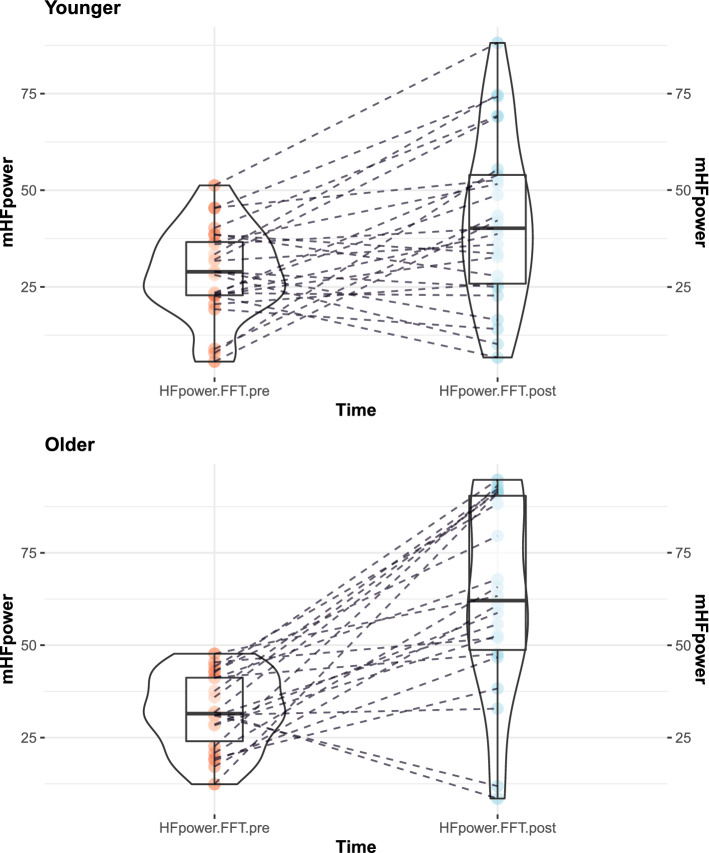
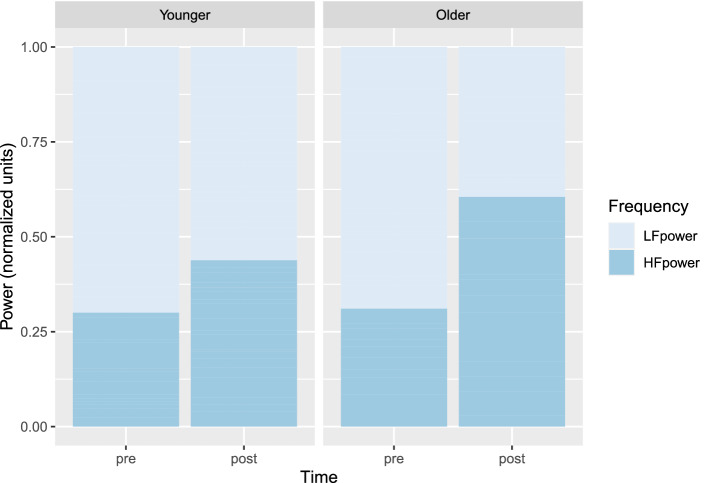
Anxiety is recognized as a major health issue and is quite prevalent among older adults. An efficient way to manage anxiety is abdominal breathing. Breathing exercises seem to reduce anxiety and to increase parasympathetic activity assessed by HRV indexes. Yet, the effect of abdominal breathing on physiological stress (HRV) and anxiety in older adults remains poorly understood. Therefore, the aim of this study is to test the effects of deep and slow breathing (DSB, low inhale/exhale ratio) on physiological stress and anxiety in older adults (n = 22) in comparison with younger ones (n = 25). DSB increased significantly HFpower and reduced state anxiety in both younger and older adults. Interestingly, the increased in HF power was significantly higher among older adults than younger ones. As expected, the ratio inhale/exhale being not equal, RMSSD did not increase following DSB. Thus, we provide evidence suggesting that DSB is more beneficial to older adults than younger ones to restore vagal outflow. Despite future work being required, those results provide relevant clinical application leads to manage state anxiety among older adults and to promote successfull aging.
Overview
CoChat Summary
## TL;DR
This study tested a single 5-minute deep and slow breathing (DSB) exercise in 25 younger adults and 22 older adults. DSB reduced self-reported state anxiety in both groups and increased HF power, with a larger HF increase in older adults.
## Key findings
- State anxiety decreased after DSB in the full sample and in both age groups; the paper reports this with a Wilcoxon test but the exact test statistics and p-values are not visible in the provided text.
- HF power increased significantly after DSB, with a main effect of Time and a significant Time × Group interaction in the ANOVA.
- The HF increase was larger in older adults than younger adults: the paper states older adults went from pre-test to post-test HF of “vs.” and younger adults from “vs.”, and post-test HF was significantly higher in older than younger adults.
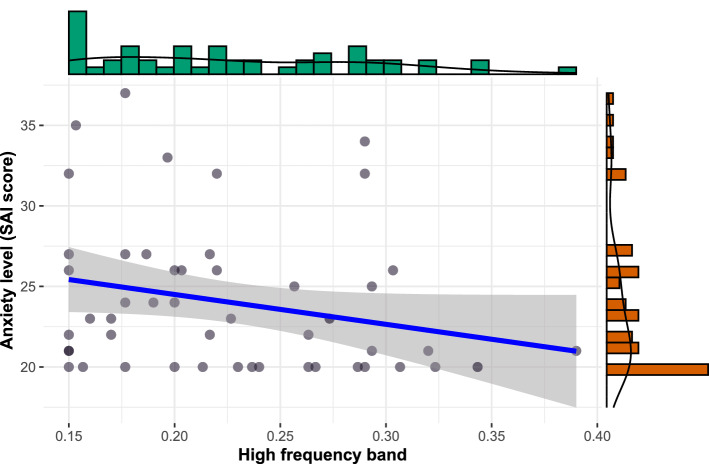
- Post-DSB HF was negatively associated with state anxiety (Spearman correlation), and RMSSD did not change significantly after DSB.
## Methods
- Pre–post within-subject experiment comparing younger adults (n = 25) and older adults (n = 22) after a 5-minute guided DSB exercise; the study was approved by an ethics committee and all participants gave informed consent.
- Sample: 47 final participants from an initial 71 enrolled; 8 were excluded on HADS/MMSE or BMI criteria and 16 more due to technical issues with physiological data.
- Measures and analysis: state anxiety was assessed with the Spielberger State Anxiety Inventory; physiological stress was assessed with HRV from an Empatica E4 wristband, focusing on HF power and RMSSD; Wilcoxon tests were used for anxiety, mixed 2×2 ANOVA for HRV, and Spearman correlation for post-DSB anxiety vs post-HF.
## Limitations
- The paper states that there was no control group, making it difficult to rule out alternative explanations such as test-retest effects.
- The paper states that sex differences were not analyzed separately even though autonomic functioning may differ by sex.
- The paper states that the breathing exercise was not individually adapted to each participant’s spontaneous respiration, and it also notes potential confounds such as physical activity, yoga, meditation, sedentariness, sleep, BMI, and other lifestyle factors.
Model-written summary. Check it against the paper before relying on it.
Integrity signals
Registry
Cites
Statistics
Figures
Verification
Claims the paper makes
16 Valid · 2 Not valid · 1 Not checked · 14 Own results and interpretations
The sources with a verdict support this claim; the rest weren’t checked yet, have no full text we could read, or their verdicts aren’t rated yet.
In the paper
“While being correlated with HF50, RMSSD seems to be less affected by respiration51,52.”
- Also stated in: § Discussion · hedged
“Furthermore, RMSSD appears less susceptible to variations in respiratory frequency51,66.”
§ Benefits from one session of deep and slow breathing on vagal tone and anxiety in young and older adults > Methods > Material
What the sources say
- Not matchedcites [51] Schipke J Arnold G Pelzer M Effect of respiration rate on short-term heart rate variability J. Clin. Basic Cardiol. 1999 2 92 95
Its entry has no title and year that we can search by.
- Not checked — no full text of the sourcecites [52] Penttilä J Time domain, geometrical and frequency domain analysis of cardiac vagal outflow: Effects of various respiratory patterns Clin. Physiol. (Oxford, England) 2001 21 365 376 10.1046/j.1365-2281.2001.00337.x 11380537 source
- Supportedcites [66] Quintana D Resting-state high-frequency heart rate variability is related to respiratory frequency in individuals with severe mental illness but not healthy controls Sci. Rep. 2016 6 37212 10.1038/srep37212 27853244 PMC5112550 source
The Methods section states that RMSSD may be less influenced by respiratory frequency than HF-HRV. The Discussion reports that RMSSD was not significantly associated with respiratory frequency in either group, whereas HF-HRV was associated with it in the severe-mental-illness group. The comparison supports the citing sentence's hedged wording, specifically for respiratory frequency. (LLM, conf=0.92)
hedged- Asserted: passes — The authors put it forward as true.
- Checkable: passes — It can be checked against evidence.
- Load-bearing: passes — The paper’s conclusions depend on it.
- Based: passes — The paper gives a reason why it holds.
- Also stated in: § Discussion · hedged
The cited sources support only part of this claim — read each source’s verdict below.
In the paper
“The reliability and accuracy of EMPATICA E4 for research on HR and HRV have been previously demonstrated through comparisons with electrocardiography (ECG) measurements45.”
§ Benefits from one session of deep and slow breathing on vagal tone and anxiety in young and older adults > Methods > Material
What the sources say
- Partly supportedcites [45] Schuurmans A Validity of the empatica e4 wristband to measure heart rate variability (hrv) parameters: A comparison to electrocardiography (ecg) J. Med. Syst. 2020 44 190 10.1007/s10916-020-01648-w 32965570 PMC7511462 sourceExperimental — accuracy not yet measured
The Conclusions report strong agreement with ECG-based VU-AMS recordings for mean HR and SDNN, supporting the E4’s potential for HR and HRV research while people are at rest. The Discussion reports significant differences for other HRV parameters and poor predictive value for RMSSD, so the unqualified claim of reliability and accuracy for HRV research overstates the findings. (LLM, conf=0.88)
boosted- Asserted: passes — The authors put it forward as true.
- Checkable: passes — It can be checked against evidence.
- Load-bearing: passes — The paper’s conclusions depend on it.
- Based: passes — The paper gives a reason why it holds.
- Partly supported
Every source the paper cites for this claim was checked and supports it.
In the paper
“The HF spectrum is a frequency domain measure (range from 0.15 to 0.4 Hz), called the respiratory band, that reflects parasympathetic or vagal activity on variations affecting the respiratory circle47.”
§ Benefits from one session of deep and slow breathing on vagal tone and anxiety in young and older adults > Methods > Material
What the sources say
- Supportedcites [47] Shaffer, F., McCraty, R. & Zerr, C. L. A healthy heart is not a metronome: An integrative review of the heart’s anatomy and heart rate variability. Front. Psychol.10.3389/fpsyg.2014.01040 (2014). PMC4179748 25324790 source
The High-frequency band section directly states that the 0.15–0.4 Hz HF band reflects parasympathetic or vagal activity. It also calls HF the respiratory band because it corresponds to heart-rate variations related to the respiratory cycle. (LLM, conf=0.95)
plainstates an association- Asserted: passes — The authors put it forward as true.
- Checkable: passes — It can be checked against evidence.
- Load-bearing: passes — The paper’s conclusions depend on it.
- Based: passes — The paper gives a reason why it holds.
- Supported
The cited sources support only part of this claim — read each source’s verdict below.
In the paper
“Higher vagal activity also predicts better emotion regulation strategies, such as avoidance of the negativity and positivity effect in aging91.”
§ Benefits from one session of deep and slow breathing on vagal tone and anxiety in young and older adults > Discussion
What the sources say
- Partly supportedcites [91] Mantantzis K Schlaghecken F Maylor EA Heart rate variability predicts older adults avoidance of negativity J. Gerontol. Ser. B 2020 75 1679 1688 10.1093/geronb/gby148 30521028 sourceExperimental — accuracy not yet measured
The Discussion (page unavailable) reports that higher resting heart rate variability predicted stronger negativity avoidance in older adults, which accounted for the observed positivity effect; it did not predict greater preference for positive faces. The Discussion also says that interpreting this association as better emotion-regulation capacity is a possibility requiring direct testing. Thus, the claim overstates the evidence for better emotion regulation. (LLM, conf=0.88)
plainstates an association- Asserted: passes — The authors put it forward as true.
- Checkable: passes — It can be checked against evidence.
- Load-bearing: unclear — It is unclear whether the paper’s conclusions depend on it.
- Based: passes — The paper gives a reason why it holds.
- Partly supported
Every source the paper cites for this claim was checked and supports it.
In the paper
“Even though we controlled for sleep quality and quantity and BMI, there are also potential confounds that may contribute to the present results, such as the practice of physical activity83, yoga84 or meditation85 and other lifestyle factors that are likely to influence HRV86,such as sedentariness87, a factor that is independent of physical inactivity88.”
§ Benefits from one session of deep and slow breathing on vagal tone and anxiety in young and older adults > Discussion
What the sources say
- Supportedcites [83] Luisa S-M Physical activity and heart rate variability in older adults Circulation 2014 129 2100 2110 10.1161/CIRCULATIONAHA.113.005361 24799513 PMC4038662 source
Citation 83 is attached to physical activity, not to yoga or meditation. The Discussion (page unavailable) reports that physical activity was associated with HRV indices in older adults, supporting its identification as a potential factor in the citing study’s results. (LLM, conf=0.91)
- Supportedcites [84] Tyagi A Cohen M Yoga and heart rate variability: A comprehensive review of the literature Int. J. Yoga 2016 9 97 113 10.4103/0973-6131.183712 27512317 PMC4959333 source
Citation 84 is attached to yoga practice. The Discussion (page unavailable) reports that yoga can affect cardiac autonomic regulation and that regular practitioners showed greater vagal tone than non-practitioners. This supports yoga practice as a potential influence on HRV, without claiming it confounded the citing study specifically. (LLM, conf=0.90)
- Supportedcites [85] Rådmark L Sidorchuk A Osika W Niemi M A systematic review and meta-analysis of the mpact of mindfulness based interventions on heart rate variability and inflammatory markers J. Clin. Med. 2019 10.3390/jcm8101638 31591316 PMC6833066 source
Citation 85 is attached to meditation, not to the separate examples of physical activity or yoga. The Introduction reports preliminary evidence that mindfulness practice may increase HRV, supporting meditation as a potential influence on the citing study’s HRV results. The source does not assess confounding in that study, but the citing sentence frames it as a possibility. (LLM, conf=0.87)
hedgedstates a possible cause- Asserted: passes — The authors put it forward as true.
- Checkable: passes — It can be checked against evidence.
- Load-bearing: unclear — It is unclear whether the paper’s conclusions depend on it.
- Based: passes — The paper gives a reason why it holds.
- Supported
9 more claims · 1 with their cited sources checked
Create a free account to see all 33 claims and every source verdict.
- It may state two separate claims as one. 10
- Probably not a substantial claim. 10
- The quote only partly states this claim. 1
Claims other papers make about this one
Each is checked against this paper’s own text: does it say what the citing paper says it does?
The cited source says what the claim attributes to it.
In the citing paper
“Alternatively, this could be indicative of breathwork being possibly able to help quickly, as suggested in very recent literature whereby just one session of slow, deep breathing had beneficial effects on anxiety and vagal tone in adults94, with vagal tone being measured, albeit indirectly, through HRV6.”
From Effect of breathwork on stress and mental health: A meta-analysis of randomised-controlled trials (2023) · cites this paper as [94]
Citations
Cites
Folstein, M. F., Folstein, S. E., & McHugh, P. R. (1975) · Journal of Psychiatric Research · doi:10.1016/0022-3956(75)90026-6 · Cited by 88,282
The Hospital Anxiety and Depression Scale
Zigmond, A. S., & Snaith, R. P. (1983) · Acta Psychiatrica Scandinavica · doi:10.1111/j.1600-0447.1983.tb09716.x · Cited by 47,139
Statistical Power Analysis for the Behavioral Sciences
Cohen, J. (2013) · doi:10.4324/9780203771587 · Cited by 25,373
Hirono, N., Mori, E., Ikejiri, Y., Imamura, T., Shimomura, T., Hashimoto, M., Yamashita, H., & Ikeda, M. (1997) · Brain and nerve · Cited by 21,039
Kok, J. S., Berg, I. J., & Scherder, E. J. A. (2013) · Dementia and Geriatric Cognitive Disorders Extra · doi:10.1159/000353441 · Cited by 20,589
Older Adults' Reasons for Using Technology while Aging in Place
Peek, S. T. M., Luijkx, K. G., Rijnaard, M. D., Nieboer, M. E., van der Voort, C. S., Aarts, S., van Hoof, J., Vrijhoef, H. J. M., & Wouters, E. J. M. (2016) · Gerontology · doi:10.1159/000430949 · Cited by 19,690
Sensitivity and False Alarm Rate of a Fall Sensor in Long-Term Fall Detection in the Elderly
Kangas, M., Korpelainen, R., Vikman, I., Nyberg, L., & Jämsä, T. (2015) · Gerontology · doi:10.1159/000362720 · Cited by 18,909
Heart Rate Variability: Standards of Measurement, Physiological Interpretation, and Clinical Use
Electrophysiology, T. F. O. T. E. S. O. C. T. N. A. (1996) · Circulation · doi:10.1161/01.cir.93.5.1043 · Cited by 17,159
Heart rate variability: Standards of measurement, physiological interpretation, and clinical use
Malik, M., Bigger, J. T., Camm, A. J., Kleiger, R. E., Malliani, A., Moss, A. J., & Schwartz, P. J. (1996) · European Heart Journal · doi:10.1093/oxfordjournals.eurheartj.a014868 · Cited by 15,289
Depression and quality of life in older persons: A review
Sivertsen, H., Bjørkløf, G. H., Engedal, K., Selbæk, G., & Helvik, A.-S. (2015) · Dementia and Geriatric Cognitive Disorders · doi:10.1159/000437299 · Cited by 14,152
An overview of heart rate variability metrics and norms
Shaffer, F., & Ginsberg, J. P. (2017) · Frontiers in Public Health · doi:10.3389/fpubh.2017.00258 · Cited by 7,185 · cited 3×
“040 ), no significant main effect of Time ( F(1, 46) = 0.”
BackgroundEffects of stress throughout the lifespan on the brain, behaviour and cognition
Lupien, S. J., McEwen, B. S., Gunnar, M. R., & Heim, C. (2009) · Nature Reviews Neuroscience · doi:10.1038/nrn2639 · Cited by 6,256
Akselrod, S., Gordon, D., Ubel, F. A., Shannon, D. C., Berger, A. C., & Cohen, R. J. (1981) · Science · doi:10.1126/science.6166045 · Cited by 5,079
Oxidative stress, aging, and diseases
Liguori, I., Russo, G., Curcio, F., Bulli, G., Aran, L., Della-Morte, D., Gargiulo, G., Testa, G., Cacciatore, F., Bonaduce, D., et al. (2018) · Clinical Interventions in Aging · doi:10.2147/cia.s158513 · Cited by 3,979
A Syndrome produced by Diverse Nocuous Agents
SELYE, H. (1936) · Nature · doi:10.1038/138032a0 · Cited by 3,903
Porges, S. W. (2007) · Biological Psychology · doi:10.1016/j.biopsycho.2006.06.009 · Cited by 3,415
Kubios HRV–heart rate variability analysis software.
Tarvainen, M. P., Niskanen, J.-P., Lipponen, J. A., Ranta-aho, P. O., & Karjalainen, P. A. (2014) · Computer Methods and Programs in Biomedicine · doi:10.1016/j.cmpb.2013.07.024 · Cited by 2,720
Laborde, S., Mosley, E., & Thayer, J. F. (2017) · Frontiers in Psychology · doi:10.3389/fpsyg.2017.00213 · Cited by 2,336
Stress and Heart Rate Variability: A Meta-Analysis and Review of the Literature
Kim, H.-G., Cheon, E.-J., Bai, D.-S., Lee, Y. H., & Koo, B.-H. (2018) · Psychiatry Investigation · doi:10.30773/pi.2017.08.17 · Cited by 2,308
Stress and Health: Psychological, Behavioral, and Biological Determinants
Schneiderman, N., Ironson, G., & Siegel, S. D. (2005) · Annual Review of Clinical Psychology · doi:10.1146/annurev.clinpsy.1.102803.144141 · Cited by 2,252
Epidemiology of anxiety disorders in the 21st century
Bandelow, B., & Michaelis, S. (2015) · Dialogues in Clinical Neuroscience · doi:10.31887/dcns.2015.17.3/bbandelow · Cited by 2,079
Aging Gracefully: Compensatory Brain Activity in High-Performing Older Adults
Cabeza, R., Anderson, N. D., Locantore, J. K., & McIntosh, A. R. (2002) · NeuroImage · doi:10.1006/nimg.2002.1280 · Cited by 1,964
Thayer, J. F., Hansen, A. L., Saus-Rose, E., & Johnsen, B. H. (2009) · Annals of Behavioral Medicine · doi:10.1007/s12160-009-9101-z · Cited by 1,872
Shaffer, F., McCraty, R., & Zerr, C. L. (2014) · Frontiers in Psychology · doi:10.3389/fpsyg.2014.01040 · Cited by 1,866
Knowing your own heart: Distinguishing interoceptive accuracy from interoceptive awareness
Garfinkel, S. N., Seth, A. K., Barrett, A. B., Suzuki, K., & Critchley, H. D. (2015) · Biological Psychology · doi:10.1016/j.biopsycho.2014.11.004 · Cited by 1,624
BEAUCHAINE, T. (2001) · Development and Psychopathology · doi:10.1017/s0954579401002012 · Cited by 1,466
The LF/HF ratio does not accurately measure cardiac sympatho-vagal balance
Billman, G. E. (2013) · Frontiers in Physiology · doi:10.3389/fphys.2013.00026 · Cited by 1,401
Heart rate variability: measurement and clinical utility.
Kleiger, R. E., Stein, P. K., & Bigger, J. T. (2005) · Annals of Noninvasive Electrocardiology · doi:10.1111/j.1542-474x.2005.10101.x · Cited by 1,290
Wegner, D. M., & Zanakos, S. (1994) · Journal of Personality · doi:10.1111/j.1467-6494.1994.tb00311.x · Cited by 1,245
A Syndrome Produced by Diverse Nocuous Agents
Selye, H. (1998) · The Journal of Neuropsychiatry and Clinical Neurosciences · doi:10.1176/jnp.10.2.230a · Cited by 924
Perkowski, R., & Perkowski, A. (2000) · Cited by 891
Sex differences in healthy human heart rate variability: A meta-analysis
Koenig, J., & Thayer, J. F. (2016) · Neuroscience & Biobehavioral Reviews · doi:10.1016/j.neubiorev.2016.03.007 · Cited by 860
Cabeza, R. (2004) · Cerebral Cortex · doi:10.1093/cercor/bhg133 · Cited by 779
The physiological effects of slow breathing in the healthy human
Russo, M. A., Santarelli, D. M., & O’Rourke, D. (2017) · Breathe · doi:10.1183/20734735.009817 · Cited by 665
Influence functions of the Spearman and Kendall correlation measures
Croux, C., & Dehon, C. (2010) · Statistical Methods & Applications · doi:10.1007/s10260-010-0142-z · Cited by 634
Human sinus arrhythmia as an index of vagal cardiac outflow.
Eckberg, D. L. (1983) · Journal of Applied Physiology · doi:10.1152/jappl.1983.54.4.961 · Cited by 633
The Aging Cardiovascular System
Paneni, F., Diaz Cañestro, C., Libby, P., Lüscher, T. F., & Camici, G. G. (2017) · Journal of the American College of Cardiology · doi:10.1016/j.jacc.2017.01.064 · Cited by 618
Heart rate variability and cognitive function: a systematic review
Forte, G., Favieri, F., & Casagrande, M. (2019) · Frontiers in Neuroscience · doi:10.3389/fnins.2019.00710 · Cited by 587
Penttilä, J., Helminen, A., Jartti, T., Kuusela, T., Huikuri, H. V., Tulppo, M. P., Coffeng, R., & Scheinin, H. (2001) · Clinical Physiology · doi:10.1046/j.1365-2281.2001.00337.x · Cited by 567
Neurobiological links between stress and anxiety
Daviu, N., Bruchas, M. R., Moghaddam, B., Sandi, C., & Beyeler, A. (2019) · Neurobiology of Stress · doi:10.1016/j.ynstr.2019.100191 · Cited by 512
How heart rate variability affects emotion regulation brain networks
Mather, M., & Thayer, J. F. (2018) · Current Opinion in Behavioral Sciences · doi:10.1016/j.cobeha.2017.12.017 · Cited by 510
Heart Rate Variability Biofeedback Increases Baroreflex Gain and Peak Expiratory Flow
Lehrer, P. M., Vaschillo, E., Vaschillo, B., Lu, S.-E., Eckberg, D. L., Edelberg, R., Shih, W. J., Lin, Y., Kuusela, T. A., Tahvanainen, K. U. O., et al. (2003) · Psychosomatic Medicine · doi:10.1097/01.psy.0000089200.81962.19 · Cited by 497
Considerations in the assessment of heart rate variability in biobehavioral research
Quintana, D. S., & Heathers, J. A. J. (2014) · Frontiers in Psychology · doi:10.3389/fpsyg.2014.00805 · Cited by 395
Dindo, L., Van Liew, J. R., & Arch, J. J. (2017) · Neurotherapeutics · doi:10.1007/s13311-017-0521-3 · Cited by 371
Pitfalls of assessment of autonomic function by heart rate variability
Hayano, J., & Yuda, E. (2019) · Journal of Physiological Anthropology · doi:10.1186/s40101-019-0193-2 · Cited by 349
Is threat the only modulator of attentional selectivity? Redefining the Easterbrook hypothesis
Sørensen, T. A., & Barratt, D. (2014) · Frontiers in Psychology · doi:10.3389/fpsyg.2014.01020 · Cited by 321
Cardiac coherence, self-regulation, autonomic stability, and psychosocial well-being
McCraty, R., & Zayas, M. A. (2014) · Frontiers in Psychology · doi:10.3389/fpsyg.2014.01090 · Cited by 313
Aging and the HPA axis: Stress and resilience in older adults
Gaffey, A. E., Bergeman, C. S., Clark, L. A., & Wirth, M. M. (2016) · Neuroscience & Biobehavioral Reviews · doi:10.1016/j.neubiorev.2016.05.036 · Cited by 273
Yoga and heart rate variability: a comprehensive review of the literature
Cohen, M., & Tyagi, A. (2016) · International Journal of Yoga · doi:10.4103/0973-6131.183712 · Cited by 269
Van Diest, I., Verstappen, K., Aubert, A. E., Widjaja, D., Vansteenwegen, D., & Vlemincx, E. (2014) · Applied Psychophysiology and Biofeedback · doi:10.1007/s10484-014-9253-x · Cited by 249
Physical Activity and Heart Rate Variability in Older Adults: The Cardiovascular Health Study
Soares-Miranda, L., Sattelmair, J., Chaves, P., Duncan, G. E., Siscovick, D. S., Stein, P. K., & Mozaffarian, D. (2014) · Circulation · doi:10.1161/circulationaha.113.005361 · Cited by 228
A lifespan view of anxiety disorders
Lenze, E. J., & Wetherell, J. L. (2011) · Dialogues in Clinical Neuroscience · doi:10.31887/dcns.2011.13.4/elenze · Cited by 227
Spectral Analysis of Heart Rate Variability: Time Window Matters
Li, K., Rüdiger, H., & Ziemssen, T. (2019) · Frontiers in Neurology · doi:10.3389/fneur.2019.00545 · Cited by 215
Aging, heart rate variability and patterns of autonomic regulation of the heart
Almeida-Santos, M. A., Barreto-Filho, J. A., Oliveira, J. L. M., Reis, F. P., da Cunha Oliveira, C. C., & Sousa, A. C. S. (2016) · Archives of Gerontology and Geriatrics · doi:10.1016/j.archger.2015.11.011 · Cited by 212
Schuurmans, A. A. T., de Looff, P., Nijhof, K. S., Rosada, C., Scholte, R. H. J., Popma, A., & Otten, R. (2020) · Journal of Medical Systems · doi:10.1007/s10916-020-01648-w · Cited by 210
Ogletree-Hughes, M. L., Stull, L. B., Sweet, W. E., Smedira, N. G., McCarthy, P. M., & Moravec, C. S. (2001) · Circulation · doi:10.1161/hc3301.094911 · Cited by 203
Filter properties of root mean square successive difference (RMSSD) for heart rate
Berntson, G. G., Lozano, D. L., & Chen, Y. (2005) · Psychophysiology · doi:10.1111/j.1469-8986.2005.00277.x · Cited by 201
Moreno-Peral, P., Conejo-Cerón, S., Motrico, E., Rodríguez-Morejón, A., Fernández, A., García-Campayo, J., Roca, M., Serrano-Blanco, A., Rubio-Valera, M., & Ángel Bellón, J. (2014) · Journal of Affective Disorders · doi:10.1016/j.jad.2014.06.021 · Cited by 192
Pinna, T., & Edwards, D. J. (2020) · Frontiers in Psychology · doi:10.3389/fpsyg.2020.01792 · Cited by 191
Steffen, P. R., Austin, T., DeBarros, A., & Brown, T. (2017) · Frontiers in Public Health · doi:10.3389/fpubh.2017.00222 · Cited by 189
Adrenal Aging and Its Implications on Stress Responsiveness in Humans
Yiallouris, A., Tsioutis, C., Agapidaki, E., Zafeiri, M., Agouridis, A. P., Ntourakis, D., & Johnson, E. O. (2019) · Frontiers in Endocrinology · doi:10.3389/fendo.2019.00054 · Cited by 186
Increased mortality among people with anxiety disorders: total population study.
Meier, S. M., Mattheisen, M., Mors, O., Mortensen, P. B., Laursen, T. M., & Penninx, B. W. (2016) · British Journal of Psychiatry · doi:10.1192/bjp.bp.115.171975 · Cited by 181
Changes in heart rate variability with age
REARDON, M., & MALIK, M. (1996) · Pacing and Clinical Electrophysiology · doi:10.1111/j.1540-8159.1996.tb03241.x · Cited by 180
Christophe, V., Antoine, P., Leroy, T., & Delelis, G. (2008) · European Review of Applied Psychology · doi:10.1016/j.erap.2008.07.001 · Cited by 165
Mehta, K. M., Simonsick, E. M., Penninx, B. W. J. H., Schulz, R., Rubin, S. M., Satterfield, S., & Yaffe, K. (2003) · Journal of the American Geriatrics Society · doi:10.1046/j.1532-5415.2003.51158.x · Cited by 162
Bretherton, B., Atkinson, L., Murray, A. R., Clancy, J. A., Deuchars, S. A., & Deuchars, J. (2019) · Aging · doi:10.18632/aging.102074 · Cited by 162
Hotta, H., & Uchida, S. (2010) · Geriatrics & Gerontology International · doi:10.1111/j.1447-0594.2010.00592.x · Cited by 154
Age and Sex Differences in Heart Rate Variability and Vagal Specific Patterns – Baependi Heart Study
Geovanini, G. R., Vasques, Ê. R., Alvim, R. D. O., Mill, J. G., Andreão, R. V., Vasques, B. K., Pereira, A. C., & Krieger, J. E. (2020) · Global Heart · doi:10.5334/gh.873 · Cited by 151
Pharmacotherapy of anxiety disorders: A critical review
Koen, N., & Stein, D. J. (2011) · Dialogues in Clinical Neuroscience · doi:10.31887/dcns.2011.13.4/nkoen · Cited by 151
Relative Timing Of Inspiration And Expiration Affects Respiratory Sinus Arrhythmia
Strauss‐Blasche, G., Moser, M., Voica, M., McLeod, D., Klammer, N., & Marktl, W. (2000) · Clinical and Experimental Pharmacology and Physiology · doi:10.1046/j.1440-1681.2000.03306.x · Cited by 149
A systematic review of the neural bases of psychotherapy for anxiety and related disorders
Brooks, S. J., & Stein, D. J. (2015) · Dialogues in Clinical Neuroscience · doi:10.31887/dcns.2015.17.3/sbrooks · Cited by 134
Normal Respiratory Rate and Peripheral Blood Oxygen Saturation in the Elderly Population
Rodríguez‐Molinero, A., Narvaiza, L., Ruiz, J., & Gálvez‐Barrón, C. (2013) · Journal of the American Geriatrics Society · doi:10.1111/jgs.12580 · Cited by 127
Pharmacotherapy of anxiety disorders: a critical review.
Koen, N., & Stein, D. J. (2011) · PubMed · Cited by 124
Overview of the anatomy, physiology, and pharmacology of the autonomic nervous system
Wehrwein, E. A., Orer, H. S., & Barman, S. M. (2016) · Comprehensive Physiology · doi:10.1002/j.2040-4603.2016.tb00714.x · Cited by 114
Acceptance and Commitment Therapy With Older Adults: Rationale and Considerations
Petkus, A. J., & Wetherell, J. L. (2013) · Cognitive and Behavioral Practice · doi:10.1016/j.cbpra.2011.07.004 · Cited by 108
Effect of respiration rate on short-term heart rate variability
Jd, S., Arnold, G., & Pelzer, M. (1999) · Journal für Kardiologie (Krause & Pachernegg GmbH) · Cited by 103
Aging and depression: Vulnerability and stress across adulthood
Karel, M. J. (1997) · Clinical Psychology Review · doi:10.1016/s0272-7358(97)00053-6 · Cited by 103
Human sinus node responses to repetitive, ramped carotid baroreceptor stimuli
Eckberg, D. L., & Eckberg, M. J. (1982) · American Journal of Physiology-Heart and Circulatory Physiology · doi:10.1152/ajpheart.1982.242.4.h638 · Cited by 100
MacKinnon, S., Gevirtz, R., McCraty, R., & Brown, M. (2013) · Applied Psychophysiology and Biofeedback · doi:10.1007/s10484-013-9226-5 · Cited by 87
Effects of paced respiration on anxiety reduction in a clinical population
Clark, M. E., & Hirschman, R. (1990) · Biofeedback and Self-Regulation · doi:10.1007/bf01011109 · Cited by 80
Schmidt, R., Gay, P., Courvoisier, D., Jermann, F., Ceschi, G., David, M., Brinkmann, K., & Van der Linden, M. (2009) · Journal of Personality Assessment · doi:10.1080/00223890902935738 · Cited by 77
Criterion and incremental validity of the emotion regulation questionnaire
Ioannidis, C. A., & Siegling, A. B. (2015) · Frontiers in Psychology · doi:10.3389/fpsyg.2015.00247 · Cited by 72
The measurement properties of a French language adaptation of the National Adult Reading Test
Mackinnon, A., Ritchie, K., & Mulligan, R. (1999) · International Journal of Methods in Psychiatric Research · doi:10.1002/mpr.54 · Cited by 71
Heart rate variability as a marker of healthy ageing
Tan, J. P. H., Beilharz, J. E., Vollmer-Conna, U. S., & Cvejic, E. (2018) · International Journal of Cardiology · doi:10.1016/j.ijcard.2018.08.005 · Cited by 71
Rapid Acting Antidepressants in Chronic Stress Models: Molecular and Cellular Mechanisms
Hare, B. D., Ghosal, S., & Duman, R. S. (2017) · Chronic Stress · doi:10.1177/2470547017697317 · Cited by 67
Zaffalon Júnior, J. R., Viana, A. O., de Melo, G. E. L., & De Angelis, K. (2018) · Physiological Reports · doi:10.14814/phy2.13873 · Cited by 66
Gurera, J. W., & Isaacowitz, D. M. (2019) · Progress in brain research · doi:10.1016/bs.pbr.2019.02.007 · Cited by 63
Rådmark, L., Sidorchuk, A., Osika, W., & Niemi, M. (2019) · Journal of Clinical Medicine · doi:10.3390/jcm8101638 · Cited by 63
Quintana, D. S., Elstad, M., Kaufmann, T., Brandt, C. L., Haatveit, B., Haram, M., Nerhus, M., Westlye, L. T., & Andreassen, O. A. (2016) · Scientific Reports · doi:10.1038/srep37212 · Cited by 61
The stress of life: a modern complaint?
Jackson, M. (2014) · The Lancet · doi:10.1016/s0140-6736(14)60093-3 · Cited by 55 · cited 6×
“100 ) and a significant one-way interaction ( F(1, 45) = 6.”
BackgroundInfluentialSedentariness: A Need for a Definition
Magnon, V., Dutheil, F., & Auxiette, C. (2018) · Frontiers in Public Health · doi:10.3389/fpubh.2018.00372 · Cited by 50
Self-citationhealthy lifestyle and cardiac vagal modulation over 10 years: whitehall II cohort study
Jandackova, V. K., Scholes, S., Britton, A., & Steptoe, A. (2019) · Journal of the American Heart Association · doi:10.1161/jaha.119.012420 · Cited by 39
The Female Heart: Sex Differences in the Dynamics of ECG in Response to Stress
Adjei, T., Xue, J., & Mandic, D. P. (2018) · Frontiers in Physiology · doi:10.3389/fphys.2018.01616 · Cited by 37
Heart Rate and Breathing Are Not Always in Phase During Resonance Frequency Breathing
Lehrer, P. M., Vaschillo, E. G., & Vidali, V. (2020) · Applied Psychophysiology and Biofeedback · doi:10.1007/s10484-020-09459-y · Cited by 37
Validation of a Short French State Test Worry and Emotionality Scale
Beaudoin, M., & Desrichard, O. (2009) · International Review of Social Psychology · Cited by 29
Cardiovascular Reflexes from Ventricular and Coronary Receptors
HAINSWORTH, R. (1995) · Advances in experimental medicine and biology · doi:10.1007/978-1-4615-1895-2_15 · Cited by 27
Influence of breathing patterns and orthostatic stress on postural control in older adults
Rodrigues, G. D., Gurgel, J. L., Gonçalves, T. R., Porto, F., & Soares, P. P. D. S. (2018) · Geriatrics and gerontology international/Geriatrics & gerontology international · doi:10.1111/ggi.13231 · Cited by 20
Chinagudi, S., Badami, S., Herur, A., Patil, S., GV, S., & Ankad, R. (2014) · National Journal of Physiology, Pharmacy and Pharmacology · doi:10.5455/njppp.2014.4.060520141 · Cited by 16
Heart Rate Variability Predicts Older Adults’ Avoidance of Negativity
Mantantzis, K., Schlaghecken, F., & Maylor, E. A. (2020) · The Journals of Gerontology: Series B · doi:10.1093/geronb/gby148 · Cited by 11
Effects of deep controlled breathing on heart rate variability in young adults
Grigorieva, D., Dimitriev, D. A., & Владимировна, С. Е. (2017) · The FASEB Journal · doi:10.1096/fasebj.31.1_supplement.724.2 · Cited by 3
What Impact Could Transcutaneous Vagal Nerve Stimulation Have on an Aging Population?
Bretherton, B., Deuchars, J., & Deuchars, S. A. (2019) · Bioelectronics in Medicine · doi:10.2217/bem-2019-0022 · Cited by 1
(1996) · PubMed
Cited by
Effect of breathwork on stress and mental health: A meta-analysis of randomised-controlled trials
Fincham, G. W., Strauss, C., Montero-Marin, J., & Cavanagh, K. (2023) · Scientific Reports · doi:10.1038/s41598-022-27247-y · Cited by 224
Bentley, T. G. K., D’Andrea-Penna, G., Rakic, M., Arce, N., LaFaille, M., Berman, R., Cooley, K., & Sprimont, P. (2023) · Brain Sciences · doi:10.3390/brainsci13121612 · Cited by 111
Magnon, V., Vallet, G. T., Benson, A. C., Mermillod, M., Chaussé, P., Lacroix, A., Bouillon‐Minois, J., & Dutheil, F. (2022) · Cortex · doi:10.1016/j.cortex.2022.07.008 · Cited by 117
Self-citationBreathwork Interventions for Adults with Clinically Diagnosed Anxiety Disorders: A Scoping Review
Banushi, B., Brendle, M., Ragnhildstveit, A., Murphy, T., Moore, C., Egberts, J., & Robison, R. (2023) · Brain Sciences · doi:10.3390/brainsci13020256 · Cited by 58
“While protocols varied in terms of duration, number of sessions, and follow-up, studies outside of this review have reliably shown benefits for anxiety, depression, and cognition even after a single session [79,80] and in as little as five minutes [81,82].”
BackgroundVierra, J., Boonla, O., & Prasertsri, P. (2022) · Physiological Reports · doi:10.14814/phy2.15389 · Cited by 69
“Slow and deep breathing increases the parasympathetic activity, which signals the brain to calm the body down and manages the body's response to anxiety (Jerath et al., 2006; Magnon et al., 2021; Russo et al., 2017).”
Background
Metadata
- Authors
- Magnon, V., Dutheil, F., & Vallet, G. T.
- Affiliations
- Centre National de la Recherche Scientifique (FR)
- Corresponding author
- Magnon, Valentin
- Venue
- Scientific Reports
- Published
- 2021-09-29
- Volume
- 11
- Issue
- 1
- Pages
- 19267-19267
- ISSN
- 2045-2322 (ISSN-L)
- PMC
- PMC8481564
- OpenAlex
- W3202887341
- Cited by
- 149
- References
- 104
- Citations by year
- 2026: 32 · 2025: 42 · 2024: 37 · 2023: 25 · 2022: 13
- FWCI
- 12.56
- Type
- journal article
- Language
- en
- Open access
- gold
- doi.org
- Licence
- cc-by
- creativecommons.org/licenses/by/4.0 (tdm)
- creativecommons.org/licenses/by/4.0 (vor)
- Locations
- Scientific Reports (publishedVersion, cc-by)
- Europe PMC (PubMed Central) (publishedVersion, other-oa)
- PubMed Central (publishedVersion, cc-by)
- PubMed (publishedVersion)
- Le dépôt institutionnel (Université du Québec à Trois-Rivières) (submittedVersion)
- HAL (submittedVersion)
- DOAJ (DOAJ: Directory of Open Access Journals) (submittedVersion, cc-by-sa)
- Funders
- European Commission
- European Regional Development Fund
- Topics
- Health Sciences › Medicine › Cardiology and Cardiovascular Medicine › Heart Rate Variability and Autonomic Control
- Life Sciences › Neuroscience › Neurology › Vagus Nerve Stimulation Research
- Social Sciences › Psychology › Social Psychology › Music Therapy and Health
- Keywords
- diaphragmatic breathing, vagal tone, heart rate variability, state anxiety, older adults, parasympathetic activity, age differences, physiological stress, successful aging, breathing exercises
- MeSH terms
- Adult, Aged, Anxiety, Autonomic Nervous System, Breathing Exercises, Heart Rate, Humans, Male, Middle Aged, Stress, Physiological, Vagus Nerve, Treatment Outcome, Young Adult
About these checks
Registry, retraction, Cites and statistics results are computed, not judged, with one exception: a printed reference that no index lists is read once by a model before it counts as a citation error. Claims are extracted by a model and kept only when their quote appears verbatim in the text; each cited source is then checked, with a model’s help, for whether it says what the claim relies on. Those verdicts can be wrong — read the claim’s quote and the cited source before relying on one.
The claim verdicts this report counts are experimental: their accuracy is not yet measured.
A language model drew the claims from the paper on 2026-10-10, under version 3 of the claim definition (model deepseek-v4.1-flash, prompt extract-v3).
A second model labelled each claim on 2026-10-10 (model jev-1.13-20260917, definition revision gold-guideline-v0.2).
Cited sources are checked with a language model’s help (gpt-6-sol).
Statistics and arithmetic are recomputed, not judged.
Confidence bands are shown only for fields calibrated on our annotated test set. None is calibrated yet, so no band is shown.
What counts as a claim ›How we measure confidence ›How we check this ›
Are you an author, or do you see a problem with this page? Request a review
Data sources
Bibliographic data: Semantic Scholar, OpenAlex, Crossref.
Contains information from the Semantic Scholar Academic Graph Datasets, made available under the ODC Attribution License (ODC-BY 1.0).
Semantic Scholar’s data is described in: Kinney, R., et al. (2023). The Semantic Scholar Open Data Platform. arXiv:2301.10140.
