

Targeted clearance of senescent cells using an antibody-drug conjugate against a specific membrane marker
Open accessThe DOI matches its Crossref record; 77 of the 77 references it cites were found in a registry or an index.
Abstract
A wide range of diseases have been shown to be influenced by the accumulation of senescent cells, from fibrosis to diabetes, cancer, Alzheimer’s and other age-related pathologies. Consistent with this, clearance of senescent cells can prolong healthspan and lifespan in in vivo models. This provided a rationale for developing a new class of drugs, called senolytics, designed to selectively eliminate senescent cells in human tissues. The senolytics tested so far lack specificity and have significant off-target effects, suggesting that a targeted approach could be more clinically relevant. Here, we propose to use an extracellular epitope of B2M, a recently identified membrane marker of senescence, as a target for the specific delivery of toxic drugs into senescent cells. We show that an antibody–drug conjugate (ADC) against B2M clears senescent cells by releasing duocarmycin into them, while an isotype control ADC was not toxic for these cells. This effect was dependent on p53 expression and therefore more evident in stress-induced senescence. Non-senescent cells were not affected by either antibody, confirming the specificity of the treatment. Our results provide a proof-of-principle assessment of a novel approach for the specific elimination of senescent cells using a second generation targeted senolytic against proteins of their surfaceome, which could have clinical applications in pathological ageing and associated diseases.
Overview
The claims and statistics of this paper haven’t been checked yet.
Free: it reads the open-access text and checks the first 5 claims that cite a source we can check. Create a free account to check every claim.
Integrity signals
Registry
Cites
Statistics
Figures
Verification
Claims the paper makes
The claims and statistics of this paper haven’t been checked yet.
Free: it reads the open-access text and checks the first 5 claims that cite a source we can check. Create a free account to check every claim.
Claims other papers make about this one
Each is checked against this paper’s own text: does it say what the citing paper says it does?
The source backs part of the claim, not all of it — or backs it for a different population, condition or comparison.
In the citing paper
“Each of these approaches eliminates senescent cells, although in some cases, activated macrophages and other non-senescent cell types are also affected96–99.”
From Cellular senescence and senolytics: the path to the clinic (2022) · cites this paper as [99]
Experimental — accuracy not yet measuredThe source backs part of the claim, not all of it — or backs it for a different population, condition or comparison.
In the citing paper
“Certain cell surface proteins tend to be more highly expressed by senescent cells than most other cell types, which prompted development of engineered chimeric antigen receptor (CAR) T cells, vaccines and antibody–drug conjugates targeting these cell surface markers.”
From Cellular senescence and senolytics: the path to the clinic (2022) · cites this paper as [99]
Experimental — accuracy not yet measured
Self-check
Percentages, sums and reported differences re-computed from the paper’s own numbers.
The self-check needs the paper’s full text.
Citations
Cites
A biomarker that identifies senescent human cells in culture and in aging skin in vivo.
Dimri, G. P., Lee, X., Basile, G., Acosta, M., Scott, G., Roskelley, C., Medrano, E. E., Linskens, M., Rubelj, I., & Pereira-Smith, O. (1995) · Proceedings of the National Academy of Sciences · doi:10.1073/pnas.92.20.9363 · Cited by 7,477
Clearance of p16Ink4a-positive senescent cells delays ageing-associated disorders
Baker, D. J., Wijshake, T., Tchkonia, T., LeBrasseur, N. K., Childs, B. G., van de Sluis, B., Kirkland, J. L., & van Deursen, J. M. (2011) · Nature · doi:10.1038/nature10600 · Cited by 3,670
Cellular Senescence: Defining a Path Forward
Gorgoulis, V., Adams, P. D., Alimonti, A., Bennett, D. C., Bischof, O., Bishop, C., Campisi, J., Collado, M., Evangelou, K., Ferbeyre, G., et al. (2019) · Cell · doi:10.1016/j.cell.2019.10.005 · Cited by 3,225
Naturally occurring p16Ink4a-positive cells shorten healthy lifespan
Baker, D. J., Childs, B. G., Durik, M., Wijers, M. E., Sieben, C. J., Zhong, J., A. Saltness, R., Jeganathan, K. B., Verzosa, G. C., Pezeshki, A., et al. (2016) · Nature · doi:10.1038/nature16932 · Cited by 2,876
Cellular senescence: from physiology to pathology
Muñoz-Espín, D., & Serrano, M. (2014) · Nature Reviews Molecular Cell Biology · doi:10.1038/nrm3823 · Cited by 2,818
The role of senescent cells in ageing
van Deursen, J. M. (2014) · Nature · doi:10.1038/nature13193 · Cited by 2,623
Senescence and tumour clearance is triggered by p53 restoration in murine liver carcinomas
Xue, W., Zender, L., Miething, C., Dickins, R. A., Hernando, E., Krizhanovsky, V., Cordon-Cardo, C., & Lowe, S. W. (2007) · Nature · doi:10.1038/nature05529 · Cited by 2,473
Senescent cells, tumor suppression, and organismal aging: good citizens, bad neighbors
Campisi, J. (2005) · Cell · doi:10.1016/j.cell.2005.02.003 · Cited by 2,379
Senolytics improve physical function and increase lifespan in old age
Xu, M., Pirtskhalava, T., Farr, J. N., Weigand, B. M., Palmer, A. K., Weivoda, M. M., Inman, C. L., Ogrodnik, M. B., Hachfeld, C. M., Fraser, D. G., et al. (2018) · Nature Medicine · doi:10.1038/s41591-018-0092-9 · Cited by 2,287
Strategies and challenges for the next generation of antibody–drug conjugates
Beck, A., Goetsch, L., Dumontet, C., & Corvaïa, N. (2017) · Nature Reviews Drug Discovery · doi:10.1038/nrd.2016.268 · Cited by 2,271
Cited by
Cellular senescence: the good, the bad and the unknown
Huang, W., Hickson, L. J., Eirin, A., Kirkland, J. L., & Lerman, L. O. (2022) · Nature Reviews Nephrology · doi:10.1038/s41581-022-00601-z · Cited by 1,150
Cellular senescence and senolytics: the path to the clinic
Chaib, S., Tchkonia, T., & Kirkland, J. L. (2022) · Nature Medicine · doi:10.1038/s41591-022-01923-y · Cited by 1,134
Cellular senescence: a key therapeutic target in aging and diseases
Zhang, L., Pitcher, L. E., Yousefzadeh, M. J., Niedernhofer, L. J., Robbins, P. D., & Zhu, Y. (2022) · Journal of Clinical Investigation · doi:10.1172/jci158450 · Cited by 631
“After internalization via endolysosomal trafficking, it can be cleaved by cathepsin B to release duocarmycin, causing selective cell death of SnCs (125).”
BackgroundMethodMetabolic changes in aging humans: current evidence and therapeutic strategies
Palmer, A. K., & Jensen, M. D. (2022) · Journal of Clinical Investigation · doi:10.1172/jci158451 · Cited by 331
“Other strategies under development to target the effects of senescent cells include “senomorphic” drugs, which aim to reduce the senescence-associated secretory phenotype, and emerging antibody-mediated therapies (121).”
BackgroundSenescence as a therapeutic target in cancer and age-related diseases
McHugh, D., Durán, I., & Gil, J. (2025) · Nature Reviews Drug Discovery · doi:10.1038/s41573-024-01074-4 · Cited by 197
“3-Deazaadenosine (3DA), an inhibitor of S -adenosyl homocysteinase (AHCY), has been shown to delay senescence. mTOR inhibitors can be both senomorphics and able to revert/delay senescence, depending on the setting. aSnC, altered SnC; B2M, β 2 -microglobulin; rSnC, reverted SnC (in which senescence phenotypes have been…”
Targeting Senescence: A Review of Senolytics and Senomorphics in Anti-Aging Interventions
Saliev, T., & Singh, P. B. (2025) · Biomolecules · doi:10.3390/biom15060860 · Cited by 160
“Poblocka et al. (2021) developed a targeted antibody–drug conjugate (ADC) that selectively eliminates senescent cells by binding to β 2-microglobulin (B2M), a surface marker enriched in senescence [17].”
Colucci, M., Sarill, M., Maddalena, M., Valdata, A., Troiani, M., Massarotti, M., Bolis, M., Bressan, S., Kohl, A., Robesti, D., et al. (2025) · Cancer Cell · doi:10.1016/j.ccell.2025.05.015 · Cited by 164
Cellular senescence in lung cancer: Molecular mechanisms and therapeutic interventions
Jha, S. K., Rubis, G. D., Devkota, S. R., Zhang, Y., Adhikari, R., Jha, L. A., Bhattacharya, K., Mehndiratta, S., Gupta, G., Singh, S. K., et al. (2024) · Ageing Research Reviews · doi:10.1016/j.arr.2024.102315 · Cited by 151
“CAR NK cells or CAR macrophages will be produced in a similar way to boost cytotoxic activity against senescent cells (Poblocka et al., 2021; Suda et al., 2021; Zhang et al., 2022).”
Lelarge, V., Capelle, R., Oger, F., Mathieu, T., & Le Calvé, B. (2024) · npj Aging · doi:10.1038/s41514-024-00138-4 · Cited by 140
Senescent Cells: A Therapeutic Target in Cardiovascular Diseases
Suda, M., Paul, K. H., Minamino, T., Miller, J. D., Lerman, A., Ellison-Hughes, G. M., Tchkonia, T., & Kirkland, J. L. (2023) · Cells · doi:10.3390/cells12091296 · Cited by 112
“cells through releasing duocarmycin near senescent cells [224].”
BackgroundTargeting senescence as an anticancer therapy
Bousset, L., & Gil, J. (2022) · Molecular Oncology · doi:10.1002/1878-0261.13312 · Cited by 105
Giroud, J., Bouriez, I., Paulus, H., Pourtier, A., Debacq-Chainiaux, F., & Pluquet, O. (2023) · International Journal of Molecular Sciences · doi:10.3390/ijms241310788 · Cited by 73
Strategies for senolytic drug discovery
Power, H., Valtchev, P., Dehghani, F., & Schindeler, A. (2023) · Aging Cell · doi:10.1111/acel.13948 · Cited by 95
“However, several studies have explored the potential of antibody conjugates (Poblocka et al., 2021), immunogen conjugates (Suda et al., 2021), proteosome targeting drugs (He, Zhang, et al., 2020), and galactose modified prodrugs (Cai et al., 2020; Guerrero et al., 2020).”
BackgroundEmerging insights in senescence: pathways from preclinical models to therapeutic innovations
Mansfield, L., Ramponi, V., Gupta, K., Stevenson, T., Mathew, A. B., Barinda, A. J., Herbstein, F., & Morsli, S. (2024) · npj Aging · doi:10.1038/s41514-024-00181-1 · Cited by 88
Therapeutic targeting of senescent cells in the CNS
Riessland, M., Ximerakis, M., Jarjour, A. A., Zhang, B., & Orr, M. E. (2024) · Nature Reviews Drug Discovery · doi:10.1038/s41573-024-01033-z · Cited by 77
“…for identifying surrogate markers of target engagement include characterization of the surface proteome of senescent cells to discover seno-antigen-specific proteins unique to these cell populations 220,221 , which can then be visualized using clinical imaging techniques, such as immuno-PET 222 .”
Liu, Y., Lomeli, I., & Kron, S. J. (2024) · Cells · doi:10.3390/cells13151281 · Cited by 77
“The major histocompatibility complex class I (MHC I) molecules or their component β 2 microglobulin ( β 2M) may be upregulated in stress-induced SnCs [172].”
BackgroundTargeting senescent cells with NKG2D-CAR T cells
Deng, Y., Kumar, A., Xie, K., Schaaf, K., Scifo, E., Morsy, S., Li, T., Ehninger, A., Bano, D., & Ehninger, D. (2024) · Cell Death Discovery · doi:10.1038/s41420-024-01976-7 · Cited by 75
Cherry, C., Andorko, J. I., Krishnan, K., Mejías, J. C., Nguyen, H. H., Stivers, K. B., Gray-Gaillard, E. F., Ruta, A., Han, J., Hamada, N., et al. (2023) · GeroScience · doi:10.1007/s11357-023-00785-7 · Cited by 66
“While SnCs and their impact on tissue physiology can be identified in vivo by immunofluorescence and using transgenic animals, there are no widely applicable markers to effectively and comprehensively identify these cells to further characterize their phenotype and secretome [16–18].”
BackgroundCellular Senescence as a Targetable Risk Factor for Cardiovascular Diseases
Kumar, M., Yan, P., Kuchel, G. A., & Xu, M. (2024) · JACC Basic to Translational Science · doi:10.1016/j.jacbts.2023.12.003 · Cited by 69
Calabrò, A., Accardi, G., Aiello, A., Caruso, C., Galimberti, D., & Candore, G. (2024) · International Journal of Molecular Sciences · doi:10.3390/ijms25031792 · Cited by 53
“This is supported by data showing cell death in the HCT116 model of chemotherapy-induced senescence, a well-studied example of stress-induced senescence [94].”
ResultImmune surveillance of senescent cells in aging and disease
Majewska, J., & Krizhanovsky, V. (2025) · Nature Aging · doi:10.1038/s43587-025-00910-5 · Cited by 58
Cellular senescence in cancer: molecular mechanisms and therapeutic targets
Jin, P., Duan, X., Li, L., Zhou, P., Zou, C., & Xie, K. (2024) · MedComm · doi:10.1002/mco2.542 · Cited by 57
DPP4 inhibition impairs senohemostasis to improve plaque stability in atherosclerotic mice
Herman, A. B., Tsitsipatis, D., Anerillas, C., Mazan-Mamczarz, K., Carr, A. E., Gregg, J. M., Wang, M., Zhang, J., Michel, M., Henry-Smith, C. A., et al. (2023) · Journal of Clinical Investigation · doi:10.1172/jci165933 · Cited by 50
“Importantly, both Cd9 mRNA (cluster 4) and B2m mRNA (cluster 5) were associated with senescence, underscoring the heterogeneity of senescent cells even within a single cell type such as VSMCs (48, 49).”
Timing and cell specificity of senescence drives postnatal lung development and injury
Yao, H., Wallace, J., Peterson, A. L., Scaffa, A., Rizal, S., Hegarty, K., Maeda, H., Chang, J. L., Oulhen, N., Kreiling, J. A., et al. (2023) · Nature Communications · doi:10.1038/s41467-023-35985-4 · Cited by 48
Enhancing immunity during ageing by targeting interactions within the tissue environment
Bracken, O. V., Maeyer, R. P. H. D., & Akbar, A. N. (2025) · Nature Reviews Drug Discovery · doi:10.1038/s41573-024-01126-9 · Cited by 46
“For example, Poblocka et al. 140 used an antibody–drug conjugate against β 2 m to induce cytotoxicity of senescent bladder cancer cell lines.”
Fatty acid synthase ( FASN ) signalome: A molecular guide for precision oncology
Menéndez, J. A., Cuyàs, E., Encinar, J. A., Steen, T. V., Verdura, S., Llop‐Hernández, À., López, J., Serrano‐Hervás, E., Osuna, S., Martín-Castillo, B., et al. (2024) · Molecular Oncology · doi:10.1002/1878-0261.13582 · Cited by 46
Activatable senoprobes and senolytics: Novel strategies to detect and target senescent cells
Morsli, S., Doherty, G. J., & Muñoz-Espín, D. (2022) · Mechanisms of Ageing and Development · doi:10.1016/j.mad.2021.111618 · Cited by 42
Targeting senescent cells for the treatment of age-associated diseases
Suda, M., Tchkonia, T., Kirkland, J. L., & Minamino, T. (2024) · The Journal of Biochemistry · doi:10.1093/jb/mvae091 · Cited by 40
Advancements in antibody-drug conjugates as cancer therapeutics
Fong, J. Y., Phuna, Z. X., Chong, D., Heryanto, C. M., Low, Y. S., Oh, K. C., Lee, Y., Ng, A. W. R., In, L. L. A., & Teo, M. Y. M. (2025) · Journal of the National Cancer Center · doi:10.1016/j.jncc.2025.01.007 · Cited by 48
Potential Clinical Implications of Senotherapies for Cardiovascular Disease
Suda, M., Katsuumi, G., Tchkonia, T., Kirkland, J. L., & Minamino, T. (2023) · Circulation Journal · doi:10.1253/circj.cj-23-0657 · Cited by 39
Extracellular Vesicles as “Very Important Particles” (VIPs) in Aging
Mas‐Bargues, C., & Alique, M. (2023) · International Journal of Molecular Sciences · doi:10.3390/ijms24044250 · Cited by 38
Greenberg, E. F., Voorbach, M. J., Smith, A. G., Reuter, D. R., Zhuang, Y., Wang, J.-Q., Wooten, D., Asque, E., Hu, M., Hoft, C., et al. (2024) · Heliyon · doi:10.1016/j.heliyon.2024.e36483 · Cited by 34
“Of note, β 2M-directed therapies have been reported to selectively eliminate senescent cells [55,57], lower alpha-synuclein levels, and improve motor function in a rodent PD model [57].”
BackgroundTargeting DNA damage in ageing: towards supercharging DNA repair
Bujarrabal-Dueso, A., Garinis, G. A., Robbins, P. D., Vijg, J., & Schumacher, B. (2025) · Nature Reviews Drug Discovery · doi:10.1038/s41573-025-01212-6 · Cited by 38
“Other antibody–drug conjugates targeting senescence-associated epitopes are directed against B2M, a highly expressed protein in SnCs 150 , and against apolipoprotein D (ApoD), which is expressed on senescent dermal fibroblasts, and resulted in reduced dermal SnCs and improved skin phenotypes 151 .”
Takaya, K., Asou, T., & Kishi, K. (2023) · International Journal of Molecular Sciences · doi:10.3390/ijms24065857 · Cited by 33
“There is a need for senolysis as a highly specific therapy to kill senescent cells; antibody-dependent cell-mediated cellular cytotoxicity targeting DPP4 [12], antibody–drug conjugates targeting B2M [29], and CAR T therapy targeting the urokinase plasminogen activator receptor (uPAR) [13] were discovered using antigen…”
Revolutionizing Diabetic Foot Ulcer Care: The Senotherapeutic Approach
Zhang, G., Samarawickrama, P. N., Gui, L., Ma, Y., Cao, M., Zhu, H., Li, W., Yang, H., Li, K., Yang, Y., et al. (2024) · Aging and Disease · doi:10.14336/ad.2024.0065 · Cited by 32
Ozdemir, S. A., Faizan, M. I., Kaur, G., Shaikh, S. B., Islam, K. U., & Rahman, I. (2025) · International Journal of Molecular Sciences · doi:10.3390/ijms26199687 · Cited by 35
Characterization of the HDAC/PI3K inhibitor CUDC-907 as a novel senolytic
Al-Mansour, F. S. H., Alraddadi, A. M., He, B., Saleh, A., Poblocka, M., Alzahrani, W., Cowley, S. M., & Macip, S. (2023) · Aging · doi:10.18632/aging.204616 · Cited by 30
Self-citationCounteracting Immunosenescence—Which Therapeutic Strategies Are Promising?
Hieber, C., Grabbe, S., & Bros, M. (2023) · Biomolecules · doi:10.3390/biom13071085 · Cited by 30
Escriche‐Navarro, B., Garrido, E. M. N., Sancenón, F., García‐Fernández, A., & Martínez‐Máñez, R. (2024) · Acta Biomaterialia · doi:10.1016/j.actbio.2024.01.002 · Cited by 31
Understanding and targeting senescence in kidney disease
Chanvillard, L., Mason, T., & Ferenbach, D. A. (2025) · Clinical Kidney Journal · doi:10.1093/ckj/sfaf190 · Cited by 34
“This opens the door for the development of innovative approaches such as CAR-T cells [83 ], antibody–drug conjugates [145 ], or even therapeutic vaccines that would direct immune effectors to specifically eliminate senescent cells specifically while sparing healthy tissue [146 ].”
CD28null T cells in aging and diseases: From biology to assessment and intervention
Guan, Y., Cao, M., Wu, X., Yan, J., Hao, Y., & Zhang, C. (2024) · International Immunopharmacology · doi:10.1016/j.intimp.2024.111807 · Cited by 28
A Critical Appraisal of the Utility of Targeting Therapy-Induced Senescence for Cancer Treatment
Saleh, T., Greenberg, E. F., Faber, A. C., Harada, H., & Gewirtz, D. A. (2025) · Cancer Research · doi:10.1158/0008-5472.can-24-2219 · Cited by 32
Senescent neutrophils: a hidden role in cancer progression
Rys, R. N., & Calcinotto, A. (2024) · Trends in Cell Biology · doi:10.1016/j.tcb.2024.09.001 · Cited by 28
Zhang, H., Zhou, H., Shen, X. M., Lin, X., Zhang, Y., Sun, Y., Zhou, Y., Zhang, L., & Zhang, D. (2023) · Frontiers in Cell and Developmental Biology · doi:10.3389/fcell.2023.1276707 · Cited by 28
Dhokia, V., Albati, A., Smith, H., Thomas, G., & Macip, S. (2024) · Biochemical Society Transactions · doi:10.1042/bst20231066 · Cited by 26
Self-citationVirus-Induced Membrane Fusion in Neurodegenerative Disorders
Osorio, C. P., Sfera, A., Anton, J. J., Thomas, K. G., Andronescu, C. V., Li, E., Yahia, R., Avalos, A. G., & Kozlakidis, Z. (2022) · Frontiers in Cellular and Infection Microbiology · doi:10.3389/fcimb.2022.845580 · Cited by 23
Advances in Nanotherapy for Targeting Senescent Cells
Shi, Y., Zhang, Y., Zhang, Y., Yao, J., Guo, J., Xu, X., & Wang, L. (2024) · International Journal of Nanomedicine · doi:10.2147/ijn.s469110 · Cited by 23
“53,54 One strategy for second-generation senolytics is to differentiate senescent cells from normal cells.”
BackgroundThe context-dependent effect of cellular senescence: From embryogenesis and wound healing to aging
Lavarti, R., Alvarez-Diaz, T., Marti, K., Kar, P., & Raju, R. P. (2025) · Ageing Research Reviews · doi:10.1016/j.arr.2025.102760 · Cited by 21
Therapy-induced senescence is finally escapable, what is next?
Saleh, T. (2024) · Cell Cycle · doi:10.1080/15384101.2024.2364579 · Cited by 24
“Subsequently, alternative senolytic approaches are being considered including the use of senescence-targeted CAR T cells [111], antibody-targeted senolytics [112], pharmacological conjugation of senolytics to senescence-specific substrates [113], and proteolysis-targeting chimera (PROTAC) [114].”
BackgroundZhou, T., Dou, H., Tan, J., Song, Y., Wang, F., & Wang, J. (2022) · Knowledge-Based Systems · doi:10.1016/j.knosys.2022.109242 · Cited by 23
Cellular Senescence in Cardiovascular Diseases: From Pathogenesis to Therapeutic Challenges
Li, D., Li, Y., Ding, H., Wang, Y., Xie, Y., & Zhang, X. (2023) · Journal of Cardiovascular Development and Disease · doi:10.3390/jcdd10100439 · Cited by 22
“Moreover, various antibody–drug conjugates (ADCs) have been identified as having the ability to effectively removing SNCs [157,158].”
BackgroundSenolytic Prodrugs: A Promising Approach to Enhancing Senescence‐Targeting Intervention
Chang, M., Dong, Y., Cruickshank‐Taylor, A. B., Gnawali, G. R., Bi, F., & Wang, W. (2024) · ChemBioChem · doi:10.1002/cbic.202400355 · Cited by 23
Cellular senescence in renal ischemia-reperfusion injury
Chen, Y., & Li, Y. (2025) · Chinese Medical Journal · doi:10.1097/cm9.0000000000003698 · Cited by 22
“[58] However, initial dosing regimens and the associated prolonged immunosuppressive side effects require further optimization.”
Liang, L., Everest‐Dass, A., Kostyuk, A. B., Khabir, Z., Zhang, R., Trushina, D. B., & Zvyagin, A. V. (2022) · Cells · doi:10.3390/cells11223644 · Cited by 20
The ageing immune system as a potential target of senolytics
Du, P. Y., Gandhi, A., Bawa, M., & Gromala, J. (2023) · Oxford Open Immunology · doi:10.1093/oxfimm/iqad004 · Cited by 22
“Alternatively, antibody-drug conjugates could similarly be investigated to deliver senolytics towards SnCs, in an attempt to localize drug actions [94, 95].”
BackgroundEmerging role of cellular senescence in normal lung development and perinatal lung injury
Dennery, P. A., & Yao, H. (2024) · Chinese Medical Journal - Pulmonary and Critical Care Medicine · doi:10.1016/j.pccm.2024.01.001 · Cited by 20
“45 Senes-cent M2 macrophages could serve to resolve inflammation and repair hyperoxic lung injury, or promote a pro-fibrotic transcriptional program after neonatal hyperoxia.”
BackgroundTargeting Senescent Cells as Therapy for CKD
Mylonas, K. J., & Ferenbach, D. A. (2023) · Kidney360 · doi:10.34067/kid.0000000000000316 · Cited by 23
Recent Advances in Strategies for Imaging Detection and Intervention of Cellular Senescence
Li, J., Bi, Z., Wang, L., Xia, Y., Xie, Y., & Liu, Y. (2022) · ChemBioChem · doi:10.1002/cbic.202200364 · Cited by 19
Senescent macrophages in cancer: roles in tumor progression and treatment opportunities
Wang, T., Liu, C. X., Hu, X., Yang, N., & Qiu, C. (2025) · Cancer Biology and Medicine · doi:10.20892/j.issn.2095-3941.2024.0589 · Cited by 24
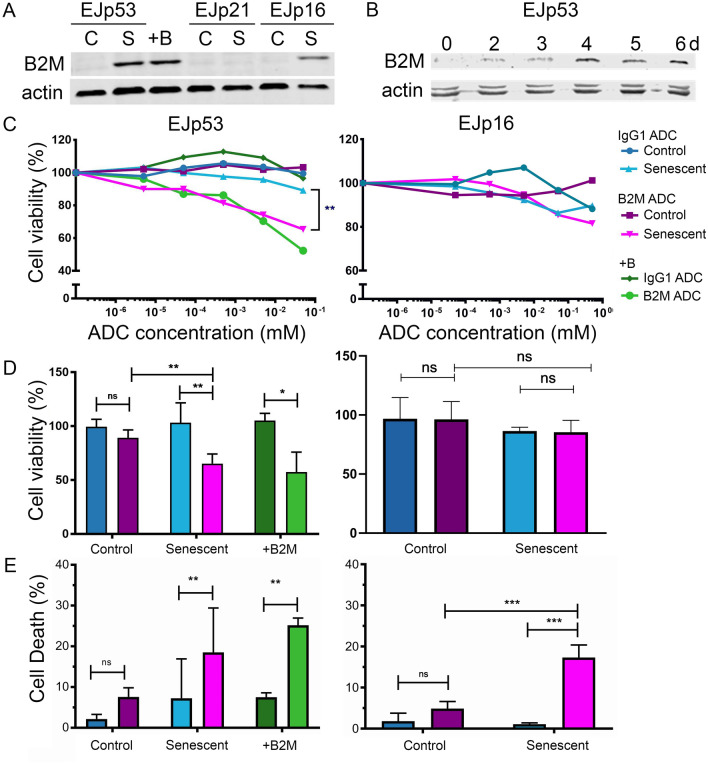
“An ADC targeting β 2-microglobulin has been shown to eliminate senescent cells by delivering duocarmycin into them; this effect is dependent on the expression of p53, and no toxicity has been observed in non-senescent cells treated with an isotype control ADC 206 .”
Zhou, H., Zheng, Z., Fan, C., & Zhou, Z. (2025) · Seminars in Cancer Biology · doi:10.1016/j.semcancer.2025.01.001 · Cited by 22
Amyloid-β Clearance with Monoclonal Antibodies: Transforming Alzheimer’s Treatment
Fatima, R., Khan, Y., Maqbool, M., Ramalingam, P. S., Khan, M. G., Bisht, A. S., & Hussain, M. S. (2025) · Current Protein and Peptide Science · doi:10.2174/0113892037362037250205143911 · Cited by 20
Targeting senescent cells in atherosclerosis: Pathways to novel therapies
Tian, Y., Shao, S., Feng, H., Zeng, R., Li, S., & Zhang, Q. (2024) · Ageing Research Reviews · doi:10.1016/j.arr.2024.102502 · Cited by 16
The Potent and Paradoxical Biology of Cellular Senescence in Cancer
Romesser, P. B., & Lowe, S. W. (2023) · Annual Review of Cancer Biology · doi:10.1146/annurev-cancerbio-061421-124434 · Cited by 16
Cellular Senescence, a Novel Area of Investigation for Metastatic Diseases
Faggioli, F., Velarde, M. C., & Wiley, C. D. (2023) · Cells · doi:10.3390/cells12060860 · Cited by 16
“A less cost-effective strategy would be to generate antibody–drug conjugates that combine monoclonal antibodies specific to senescence-surface antigens with toxins [161].”
BackgroundPiletska, E. V., Thompson, D. L., Jones, R. M., García‐Cruz, Á., Poblocka, M., Canfarotta, F., Norman, R., Macip, S., Jones, D. J. L., & Piletsky, S. A. (2022) · Nanoscale Advances · doi:10.1039/d2na00424k · Cited by 15
Self-citationGenetic and Epigenetic Interactions Involved in Senescence of Stem Cells
Iordache, F., Ionescu, A., & Alexandru, D. M. (2024) · International Journal of Molecular Sciences · doi:10.3390/ijms25179708 · Cited by 14
Wnuk, M., Sol‐Fernández, S. D., Błoniarz, D., Słaby, J., Szmatoła, T., Żebrowski, M., Martínez‐Vicente, P., Litwinienko, G., Moros, M., & Lewińska, A. (2024) · ACS Biomaterials Science & Engineering · doi:10.1021/acsbiomaterials.4c00771 · Cited by 14
Altab, G., Merry, B. J., Beckett, C. W., Raina, P., Lopes, I., Goljanek‐Whysall, K., & de Magalhães, J. P. (2025) · BMC Genomics · doi:10.1186/s12864-024-11051-1 · Cited by 14
“Conversely, B2m (β2-microglobulin), is linked to senescence [65], hinting at a potential role for senescence suppression in CR-mediated muscle ageing protraction.”
Phylloquinone improves endothelial function, inhibits cellular senescence, and vascular inflammation
Kieronska‐Rudek, A., Kij, A., Bar, A., Kurpińska, A., Mohaissen, T., Grosicki, M., Stojak, M., Sternak, M., Buczek, E., Proniewski, B., et al. (2024) · GeroScience · doi:10.1007/s11357-024-01225-w · Cited by 13
“…inhibition (TUBB2C [48], DNAJA1 [49]), DNA repair, including nucleotide excision and double strand breaks DNA repair (DDB1 [50], ACTN4 [51], OTUB1 [52], RBM3 [53], SPARC [54], DNAJA1 [49] KPNA2 [55],), and senescence (PSMS14 [56], PXDN [57], MMP1 [58], PSPH [59], ANXA5 [60], CD59 [61], B2M [62]).”
Chang, S., Liao, M.-C., Miyata, K. N., Pang, Y., Zhao, X. C., Peng, J., Rivard, A., Ingelfinger, J. R., Chan, J. S. D., & Zhang, S. (2025) · Translational research · doi:10.1016/j.trsl.2024.12.005 · Cited by 15
Bacca, L. F. G., Brandariz, J., Zacchi, F., Zivi, A., Mateo, J., & Labbé, D. P. (2025) · Gene · doi:10.1016/j.gene.2025.149774 · Cited by 16
Translating Senotherapeutic Interventions into the Clinic with Emerging Proteomic Technologies
Dey, A. K., Banarjee, R., Boroumand, M., Rutherford, D. V., Strassheim, Q., Nyunt, T., Olinger, B., & Basisty, N. (2023) · Biology · doi:10.3390/biology12101301 · Cited by 14
Sugiyama, Y., Harada, T., Kamei, Y., Yasuda, T., Mashimo, T., Nishikimi, A., & Maruyama, M. (2023) · Experimental Gerontology · doi:10.1016/j.exger.2023.112130 · Cited by 12
“Among these molecules, DPP4 and B2M have been proposed as potential targets, and senescent cells expressing these proteins were cleared from a cultured cell population by antibody-dependent cell-mediated cytotoxicity and an antibody-drug conjugate, respectively (Kim et al., 2017; Poblocka et al., 2021).”
BackgroundTargeted delivery strategy: A beneficial partner for emerging senotherapy
Zhang, Q., Li, S., Chen, F., Zeng, R., & Tong, R. (2022) · Biomedicine & Pharmacotherapy · doi:10.1016/j.biopha.2022.113737 · Cited by 15
Staels, W., Berthault, C., Bourgeois, S., Laville, V., Lourenço, C., Leu, N. D., & Scharfmann, R. (2024) · Molecular Metabolism · doi:10.1016/j.molmet.2024.101990 · Cited by 11
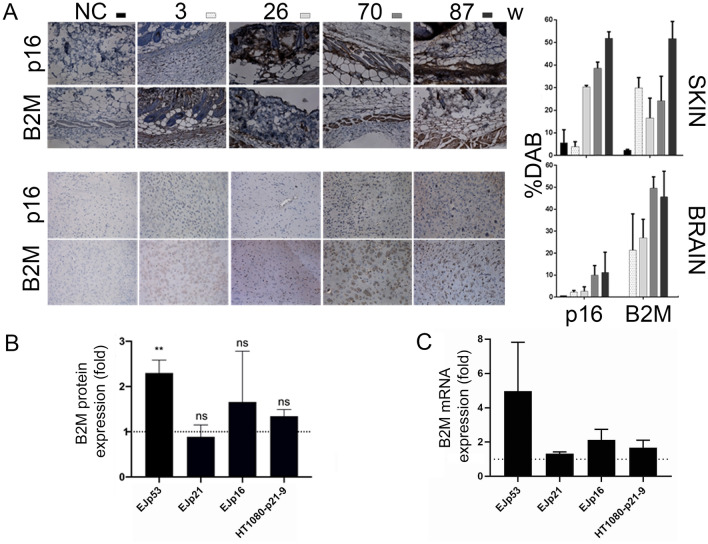
“B2M protein levels, a key MHC-I component, increase with age in mouse brain and skin tissues, as well as in human buccal cells [85].”
BackgroundSenescence- and Immunity-Related Changes in the Central Nervous System: A Comprehensive Review
Feng, H., Li, J., Wang, H., Wei, Z., & Feng, S. (2024) · Aging and Disease · doi:10.14336/ad.2024.0755 · Cited by 11
Navigating the paradox of senescence and chemoresistance in pancreatic cancer
Jeiroshi, A., Deng, J., Xu, Z., Comandatore, A., Xu, G., Glaviano, A., Morelli, L., Garajová, I., & Giovannetti, E. (2025) · Seminars in Cancer Biology · doi:10.1016/j.semcancer.2025.06.007 · Cited by 11
Cell‐Surface LAMP1 is a Senescence Marker in Aging and Idiopathic Pulmonary Fibrosis
Meca-Laguna, G., Qiu, M., Hou, Y., Barkovskaya, A., Shankar, A., Dixit, B., Rae, M. J., Boominathan, A., & Sharma, A. (2025) · Aging Cell · doi:10.1111/acel.70141 · Cited by 11
“…that have been used to target SEN in vitro and in vivo based on their surface proteome (surfaceome) include antibody-drug conjugates (ADCs) against B2M and ApoD (Poblocka et al. 2021; Takaya et al. 2023) and antibody-dependent cell-mediated cytotoxicity (ADCC) against DPP4 (Kim et al. 2017).”
InfluentialA Brain Anti-Senescence Transcriptional Program Triggered by Hypothalamic-Derived Exosomal microRNAs
Krarup, J., Araya, L., Álvarez, F., Bórquez, D. A., & Urrutia, P. J. (2024) · International Journal of Molecular Sciences · doi:10.3390/ijms25105467 · Cited by 11
“Interestingly, B2M is upregulated and accumulates on the surface of senescent cells [50], constituting a bona fide senescent marker [51].”
BackgroundInvolvement of astrocyte senescence in Alzheimer's disease
Tüzer, F., & Torres, C. A. (2022) · Current Opinion in Neurobiology · doi:10.1016/j.conb.2022.102594 · Cited by 13
A Comprehensive Review of the Antitumor Properties and Mechanistic Insights of Duocarmycin Analogs
Morcos, A., Jung, Y., Bustillos, J. G., Fuller, R. N., Molina, D. C., Bertucci, A., Boyle, K. E., Vazquez, M. E., & Wall, N. R. (2024) · Cancers · doi:10.3390/cancers16193293 · Cited by 12
Current strategies for senescence treatment: Focused on theranostic performance of nanomaterials
Cong, Y., Li, X., & Hong, H. (2025) · Journal of Controlled Release · doi:10.1016/j.jconrel.2025.113710 · Cited by 10
Ye, D., Feng, S., Yang, X., Su, Y., Zhang, J., Feng, H., Zhou, M., Zhou, B., Duan, L., Peng, T., et al. (2025) · Science Advances · doi:10.1126/sciadv.adu2958 · Cited by 10
Bo, M. D., Gambirasi, M., Vruzhaj, I., Cecchin, E., Pishdadian, A., Toffoli, G., & Safa, A. (2025) · International Journal of Molecular Sciences · doi:10.3390/ijms26114982 · Cited by 10
“Developmental Status : Senolytic MAbs, especially those formulated as ADCs, remain in the nascent phases of clinical research; however, an increasing array of preclinical studies reinforces their therapeutic potential [44].”
InfluentialLiu, W., Fan, B., Fang, T., Li, H., Zhang, J., Liu, B., & Liu, Z. (2025) · Acta Pharmaceutica Sinica B · doi:10.1016/j.apsb.2025.08.010 · Cited by 10
“Thus, targeting ß 2-microglobulin, an ADC linked to doxo-rubicin via a cleavage-enzymatic ligand, was designed to eliminate 35% of senescent cells in tumor cell lines 247 .”
Perspectives on using bacteriophages in biogerontology research and interventions
Gierlicka, I., Rattan, S. I. S., & Wnuk, M. (2022) · Chemico-Biological Interactions · doi:10.1016/j.cbi.2022.110098 · Cited by 10
Sfera, A., Imran, H., Sfera, D. O., Anton, J., Kozlakidis, Z., & Hazan, S. (2024) · International Journal of Molecular Sciences · doi:10.3390/ijms25115904 · Cited by 10
“MLR refers to the oral administration of natural cell membrane glycerophospholipids, along with kaempferol (3,4 ′ ,5,7-tetrahydroxyflavone), a flavonoid found in tea, broccoli, cabbage, kale, beans, endive, leek, tomato, strawberries, and grapes [176].”
BackgroundRejuvenation Strategy for Inducing and Enhancing Autoimmune Response to Eliminate Senescent Cells
Wang, X., Zhang, C., Su, J., Ren, S., Wang, X., Zhang, Y., Yuan, Z., He, X., Wu, X., Li, M., et al. (2025) · Aging and disease · doi:10.14336/ad.2024.0579 · Cited by 8
Rademacher, D. J., Exline, J. E., & Foecking, E. M. (2025) · Biomedicines · doi:10.3390/biomedicines13061400 · Cited by 10
“After internalization, the drug is cleaved from the antibody, releasing the toxin, which causes the death of the senescent cell [346].”
Alghamdi, E., & Kono, K. (2025) · Cancer Science · doi:10.1111/cas.70223 · Cited by 11
“Emerging senolytic modalities, such as proteolysis-targeting chimeras (PROTACs) [115] and antibody–drug conjugates targeting senescence-associated surface antigens [116], have demonstrated selectivity in preclinical models but remain in early developmental stages.”
Aging and immunity: the age-old tango
Fernández-Maestre, I., Harris, A. S., & Amor, C. (2025) · Genes & Development · doi:10.1101/gad.352644.125 · Cited by 8
“…antibodies designed to target cell surface markers have demonstrated the ability to clear senescent or proinflammatory cells both in vitro (Kim et al. 2017; Poblocka et al. 2021) and in vivo (Li et al. 2021a; Takaya et al. 2023; Ross et al. 2024), leading to improved tissue health in aging models.”
In vitro senescence and senolytic functional assays
Ryan, P., & Lee, J. (2025) · Biomaterials Science · doi:10.1039/d4bm01684j · Cited by 8
D ipeptidylpeptidase‐4‐targeted activatable fluorescent probes visualize senescent cells
Tanaka, H., Sugawara, S., Tanaka, Y., Loo, T. M., Tachibana, R., Abe, A., Kamiya, M., Urano, Y., & Takahashi, A. (2024) · Cancer Science · doi:10.1111/cas.16229 · Cited by 7
“In recent years, many novel therapeutic strategies have been implemented for cancer treatment and age-related disorders, 5 including senolytic and senomorphic/se-nostatic drugs, 4,6–8 Abs, 9–12 and chimeric antigen receptor (CAR) T cell therapy.”
BackgroundSenotherapeutics: Milestones, innovations, and future prospects
Atasever, E., Atayik, M. C., & Çakatay, U. (2025) · Advances in pharmacology · doi:10.1016/bs.apha.2025.01.021 · Cited by 7
Menéndez, J. A., Lupu, R., Martín-Castillo, B., Sardanyés, J., Alarcón, T., Verdura, S., & Cuyàs, E. (2025) · Frontiers in Immunology · doi:10.3389/fimmu.2025.1695244 · Cited by 7
Mitochondrial function maintenance and mitochondrial training in ageing and related diseases
Gao, G., Xie, Z., & Huang, H. (2025) · Journal of Holistic Integrative Pharmacy · doi:10.1016/j.jhip.2025.04.001 · Cited by 7
Brandariz, J., de Llobet, L., Esquefa, V., Aguilar, D., Salca, A., Arce-Gallego, S., Cresta Morgado, P., Sole, A., Agundez, L., Mir, G., et al. (2025) · Molecular Cancer Therapeutics · doi:10.1158/1535-7163.mct-24-0903 · Cited by 5
Senolytic Vaccines from the Central and Peripheral Tolerance Perspective
Vasilieva, M. I., Shatalova, R., Matveeva, K., Shindyapin, V., Minskaia, E., Ivanov, R., & Shevyrev, D. (2024) · Vaccines · doi:10.3390/vaccines12121389 · Cited by 5
“Relatively high specificity and efficiency in experiments on mice were demonstrated by removing senescent cells using cytotoxic antibodies or CAR-T therapy [69,180,193–195].”
Cellular senescence in colorectal cancer: its occurrence, effect and therapy
Liang, Y., Wang, M., Wang, X., Yang, Z., Wang, S., Li, F., Su, L., & Yang, L. (2025) · Frontiers in Oncology · doi:10.3389/fonc.2025.1580951 · Cited by 7
“For instance, b 2-microglobulin (B2M), a cell membrane marker widely expressed in aging tissues, and antibodies bound to doxorubicin could kill doxorubicin-induced senescent CRC cells (128).”
Chronic Kidney Disease and Cellular Senescence
Morevati, M., Tavenier, J., Scheibye‐Knudsen, M., Houlind, M. B., Hedayati, A., & Hornum, M. (2026) · International Journal of Molecular Sciences · doi:10.3390/ijms27073205 · Cited by 6
“For instance, a particular approach involves attaching cytotoxic medications to antibodies that are engineered to identify the senescent cell surface marker β 2-microglobulin [176].”
Metadata
- Authors
- Poblocka, M., Bassey, A. L., Smith, V. M., Falcicchio, M., Manso, A. S., Althubiti, M., Sheng, X., Kyle, A., Barber, R., Frigerio, M., & Macip, S.
- Affiliations
- University of Leicester (GB)
- Abzena (United Kingdom) (GB)
- Universitat Oberta de Catalunya (ES)
- Corresponding author
- Macip, Salvador
- ORCID
- Venue
- Scientific Reports
- Published
- 2021-10-13
- Volume
- 11
- Issue
- 1
- Pages
- 20358-20358
- ISSN
- 2045-2322 (ISSN-L)
- PMC
- PMC8514501
- OpenAlex
- W3207332839
- Cited by
- 137
- References
- 77
- Citations by year
- 2026: 17 · 2025: 38 · 2024: 39 · 2023: 24 · 2022: 19
- FWCI
- 12.88
- Type
- journal article
- Language
- en
- Open access
- gold
- doi.org
- Licence
- cc-by
- creativecommons.org/licenses/by/4.0 (tdm)
- creativecommons.org/licenses/by/4.0 (vor)
- Locations
- Scientific Reports (publishedVersion, cc-by)
- PubMed Central (publishedVersion, cc-by)
- PubMed (publishedVersion)
- DOAJ (DOAJ: Directory of Open Access Journals) (submittedVersion, cc-by-sa)
- The Oberta in Open Access (Universitat Oberta de Catalunya) (submittedVersion, cc-by)
- Funders
- BBSRC
- Topics
- Life Sciences › Biochemistry, Genetics and Molecular Biology › Cell Biology › Telomeres, Telomerase, and Senescence
- Life Sciences › Biochemistry, Genetics and Molecular Biology › Aging › Genetics, Aging, and Longevity in Model Organisms
- Life Sciences › Biochemistry, Genetics and Molecular Biology › Molecular Biology › Cell death mechanisms and regulation
- Keywords
- senolytics, senescent cells, antibody-drug conjugates, beta2-microglobulin, duocarmycin, p53, stress-induced senescence, extracellular epitope, pathological aging, healthspan
- MeSH terms
- Duocarmycins, Senotherapeutics, beta 2-Microglobulin, Cell Line, Gene Expression Regulation, Humans, Tumor Suppressor Protein p53, Cellular Senescence, Immunoconjugates
About these checks
Registry, retraction, Cites and statistics results are computed, not judged, with one exception: a printed reference that no index lists is read once by a model before it counts as a citation error. Claims are extracted by a model and kept only when their quote appears verbatim in the text; each cited source is then checked, with a model’s help, for whether it says what the claim relies on. Those verdicts can be wrong — read the claim’s quote and the cited source before relying on one.
Statistics and arithmetic are recomputed, not judged.
Confidence bands are shown only for fields calibrated on our annotated test set. None is calibrated yet, so no band is shown.
What counts as a claim ›How we measure confidence ›How we check this ›
Are you an author, or do you see a problem with this page? Request a review
Data sources
Bibliographic data: Semantic Scholar, OpenAlex, Crossref.
Contains information from the Semantic Scholar Academic Graph Datasets, made available under the ODC Attribution License (ODC-BY 1.0).
Semantic Scholar’s data is described in: Kinney, R., et al. (2023). The Semantic Scholar Open Data Platform. arXiv:2301.10140.
