

Social determinants and lifestyle factors for brain health: implications for risk reduction of cognitive decline and dementia
Open accessThe DOI matches its Crossref record; 48 of the 48 references it cites were found in a registry or an index.
Abstract
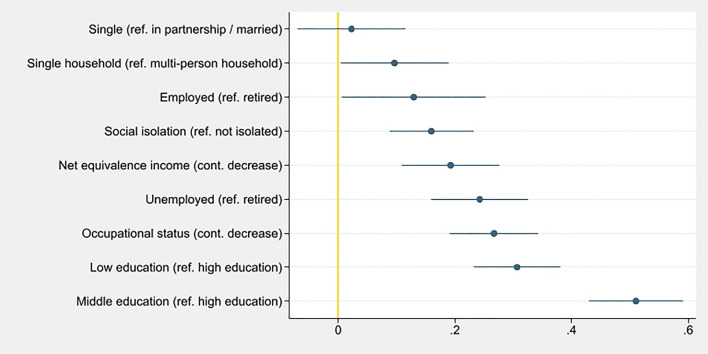
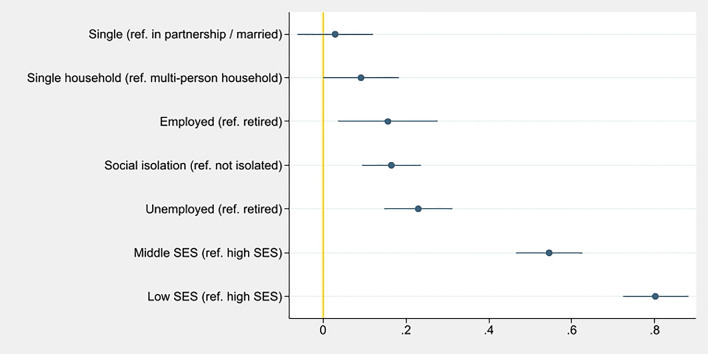
Substantial evidence indicates a huge potential for risk reduction of cognitive decline and dementia based on modifiable health and lifestyle factors. To maximize the chances for risk reduction, it is useful to investigate associations of social determinants and lifestyle for brain health. We computed the “LIfestyle for BRAin health” (LIBRA) score for baseline participants of the Leipzig Research Centre for Civilization Diseases (LIFE) Adult Study, a population-based urban cohort in Germany. LIBRA predicts dementia in midlife and early late life populations, comprising 12 modifiable risk factors (heart disease, kidney disease, diabetes, obesity, hypertension, hypercholesterolemia, alcohol consumption, smoking, physical inactivity, diet, depression, cognitive inactivity). Associations of social determinants (living situation, marital status, social isolation, education, net equivalence income, occupational status, socioeconomic status/SES, employment) with LIBRA were inspected using age- and sex-adjusted multivariable linear regression analysis. Z-standardization and sampling weights were applied. Participants (n = 6203) were M = 57.4 (SD = 10.6, range 40–79) years old and without dementia, 53.0% were women. Except for marital status, all considered social determinants were significantly associated with LIBRA. Beta coefficients for the association with higher LIBRA scores were most pronounced for low SES (β = 0.80, 95% CI [0.72–0.88]; p < 0.001) and middle SES (β = 0.55, 95% CI [0.47–0.62]; p < 0.001). Social determinants, particularly socioeconomic factors, are associated with lifestyle for brain health, and should thus be addressed in risk reduction strategies for cognitive decline and dementia. A social-ecological public health perspective on risk reduction might be more effective and equitable than focusing on individual lifestyle behaviors alone.
Overview
The claims and statistics of this paper haven’t been checked yet.
Free: it reads the open-access text and checks the first 5 claims that cite a source we can check. Create a free account to check every claim.
Integrity signals
Registry
Cites
Statistics
Figures
Verification
Claims the paper makes
The claims and statistics of this paper haven’t been checked yet.
Free: it reads the open-access text and checks the first 5 claims that cite a source we can check. Create a free account to check every claim.
Claims other papers make about this one
Each is checked against this paper’s own text: does it say what the citing paper says it does?
The cited source says what the claim attributes to it.
In the citing paper
“Important social disadvantage such as less education, more social isolation and lower socioeconomic status tend to cluster with health factors that predict cognitive decline and dementia. (30)”
From Dementia prevention, intervention, and care: 2024 report of the Lancet standing Commission (2024) · cites this paper as [30]
Self-check
Percentages, sums and reported differences re-computed from the paper’s own numbers.
The self-check needs the paper’s full text.
Citations
Cites
1 retracted
Dementia prevention, intervention, and care: 2020 report of the Lancet Commission
Livingston, G., Huntley, J., Sommerlad, A., Ames, D., Ballard, C., Banerjee, S., Brayne, C., Burns, A., Cohen-Mansfield, J., Cooper, C., et al. (2020) · The Lancet · doi:10.1016/s0140-6736(20)30367-6 · Cited by 10,430 · cited 1×
“Assigned values ranged from 1 to 7, representing professional categories from (1) farmer/ unskilled worker/semi-skilled worker to (7) freelance academics/civil servants in highest services/supervisors with ≥ 5 employees, based on the International Socio-Economic-Index of Occupational Status (ISEI) which uses the profe…”
BackgroundRetractedBundesgesundheitsblatt - Gesundheitsforschung - Gesundheitsschutz
(2013) · Bundesgesundheitsblatt - Gesundheitsforschung - Gesundheitsschutz · doi:10.1007/103.1437-1588 · Cited by 11,796
Social determinants of health inequalities
Marmot, M. (2005) · The Lancet · doi:10.1016/s0140-6736(05)71146-6 · Cited by 5,086
Ngandu, T., Lehtisalo, J., Solomon, A., Levälahti, E., Ahtiluoto, S., Antikainen, R., Bäckman, L., Hänninen, T., Jula, A., Laatikainen, T., et al. (2015) · The Lancet · doi:10.1016/s0140-6736(15)60461-5 · Cited by 3,689
Cognitive reserve in ageing and Alzheimer's disease
Stern, Y. (2012) · The Lancet Neurology · doi:10.1016/s1474-4422(12)70191-6 · Cited by 3,557
A standard international socio-economic index of occupational status
Ganzeboom, H. B. G., De Graaf, P. M., & Treiman, D. J. (1992) · Social Science Research · doi:10.1016/0049-089x(92)90017-b · Cited by 3,129
Lubben, J., Blozik, E., Gillmann, G., Iliffe, S., von Renteln Kruse, W., Beck, J. C., & Stuck, A. E. (2006) · The Gerontologist · doi:10.1093/geront/46.4.503 · Cited by 2,123
Participation Rates in Epidemiologic Studies
Galea, S., & Tracy, M. (2007) · Annals of Epidemiology · doi:10.1016/j.annepidem.2007.03.013 · Cited by 1,877
Golden, S. D., & Earp, J. A. L. (2012) · Health Education & Behavior · doi:10.1177/1090198111418634 · Cited by 1,394
Health lifestyle theory and the convergence of agency and structure
Cockerham, W. C. (2005) · Journal of Health and Social Behavior · doi:10.1177/002214650504600105 · Cited by 979
Research works printed but not linked: 2
- Risk Reduction of Cognitive Decline and Dementia. WHO Guidelines. (World Health Organization, 2019). 31219687
- Fitzgerald N Spaccarotella K Barriers to a healthy lifestyle: From individuals to public policy—An ecological perspective J. Ext. 2009 47 1 1 8
Cited by
Dementia prevention, intervention, and care: 2024 report of the Lancet standing Commission
Livingston, G., Huntley, J., Liu, K. Y., Costafreda, S. G., Selbæk, G., Alladi, S., Ames, D., Banerjee, S., Burns, A., Brayne, C., et al. (2024) · The Lancet · doi:10.1016/s0140-6736(24)01296-0 · Cited by 3,860
Wang, K., Fang, Y., Zheng, R., Zhao, X., Wang, S., Lu, J., Wang, W., Ning, G., Xu, Y., & Bi, Y. (2024) · EClinicalMedicine · doi:10.1016/j.eclinm.2024.102831 · Cited by 63
“24 Results from joint analysis also revealed that keeping a favorable lifestyle was associated with a lower risk of incident dementia and a slower rate of cognitive decline in different SES subgroups, which can be further con fi rmed by the Finnish Geriatric Intervention Study to Prevent Cognitive…”
BackgroundHao, W., Fu, C., Dong, C., Zhou, C., Sun, H., Xie, Z., & Zhu, D. (2023) · Human Reproduction · doi:10.1093/humrep/dead130 · Cited by 59
Ou, Y., Zhang, Y., Li, Y., Huang, S., Zhang, W., Deng, Y., Wu, B., Tan, L., Dong, Q., Pan, A., et al. (2023) · GeroScience · doi:10.1007/s11357-023-00994-0 · Cited by 45
“SES inequalities are one of the major contributors to the widening health gap [31], and also the major drivers of health and social policy [32].”
Sex/gender and socioeconomic differences in modifiable risk factors for dementia
Geraets, A. F. J., & Leist, A. K. (2023) · Scientific Reports · doi:10.1038/s41598-022-27368-4 · Cited by 43
Dukelow, T., Lawrence, E. G., Jacobson, L., Vassilev, P., Koychev, I. G., Muhammed, K., & Kennelly, S. (2023) · Frontiers in Psychology · doi:10.3389/fpsyg.2022.1070259 · Cited by 37
“Modifiable risk factors are unequally distributed in the general population due to their dependence on sociodemographic, cultural, and economic factors (Deckers et al., 2019; Röhr et al., 2022).”
BackgroundDaly, T. P. (2023) · Cerebral Circulation - Cognition and Behavior · doi:10.1016/j.cccb.2023.100193 · Cited by 28
“There is a burgeoning literature on social health [34] and social determinants of health [35] and their relationship with dementia, raising questions of health justice.”
BackgroundNeighborhood disadvantage reduces cognitive reserve independent of neuropathologic change
Kim, B.-R., Yannatos, I., Blam, K., Wiebe, D. J., Xie, S. X., McMillan, C. T., Mechanic-Hamilton, D. J., Wolk, D. A., & Lee, E. B. (2024) · Alzheimer s & Dementia · doi:10.1002/alz.13736 · Cited by 26
Race and Ethnicity in Lewy Body Dementia: A Narrative Review
Bayram, E., Holden, S. K., Fullard, M. E., & Armstrong, M. J. (2023) · Journal of Alzheimer s Disease · doi:10.3233/jad-230207 · Cited by 24
“As social factors play an important role in cognitive decline and dementia [51], inclusion of diverse populations and a closer look at underrepresented ethnoracial groups in dementia research can help advance diagnostic and therapeutic efforts.”
APOE ε4 carrier status moderates the effect of lifestyle factors on cognitive reserve
O’Shea, D. M., Zhang, A. S., Rader, K., Shakour, R., Besser, L. M., & Galvin, J. E. (2024) · Alzheimer s & Dementia · doi:10.1002/alz.14304 · Cited by 20
Borelli, W. V., Formoso, C. R., Bieger, A., Ferreira, P. L., Zimmer, E. R., Pascoal, T. A., Chaves, M. L. F., & Castilhos, R. M. (2023) · Alzheimer s & Dementia Diagnosis Assessment & Disease Monitoring · doi:10.1002/dad2.12408 · Cited by 18
Li, J. M., Boustani, M. A., & French, D. D. (2023) · Gerontology and Geriatric Medicine · doi:10.1177/23337214231190244 · Cited by 18
“Lifestyle interventions targeting modifiable risk factors are being evaluated for their impact on reducing the onset of dementia (Röhr et al., 2022).”
Backgroundde Havenon, A., Stulberg, E. L., Littig, L., Wong, K., Sarpong, D. F., Li, V., Sharma, R., Falcone, G. J., Williamson, J. D., Pajewski, N. M., et al. (2024) · Alzheimer s & Dementia · doi:10.1002/alz.14220 · Cited by 15
Heger, I., van Boxtel, M., Deckers, K., Bosma, H., Verhey, F., & Köhler, S. (2024) · International Psychogeriatrics · doi:10.1017/s1041610223000819 · Cited by 14
Pozzi, F. E., Remoli, G., Tremolizzo, L., Appollonio, I. M., Ferrarese, C., & Cuffaro, L. (2024) · Brain Sciences · doi:10.3390/brainsci14010055 · Cited by 14
Bernini, S., Conti, S., Perdixi, E., Jesuthasan, N., Costa, A. C., Severgnini, M., Ramusino, M. C., & Prinelli, F. (2024) · The journal of nutrition health & aging · doi:10.1016/j.jnha.2024.100040 · Cited by 13
“Indeed, the literature suggests that the conditions in which individuals are born, grow, live and age also affect their health status, providing evidence of the influence of lifestyle choices, social determinants and social hierarchy [30,38,46,47].”
DeJong, N. R., Jansen, J. F. A., van Boxtel, M. P. J., Schram, M. T., Stehouwer, C. D. A., van Greevenbroek, M. M. J., Kallen, C., Koster, A., Eussen, S. J. P. M., de Galan, B. E., et al. (2024) · Brain Communications · doi:10.1093/braincomms/fcae171 · Cited by 13
Olowoyo, P., Adeniji, O. A., Akinyemi, R., & Owolabi, M. O. (2024) · Cerebral Circulation - Cognition and Behavior · doi:10.1016/j.cccb.2024.100213 · Cited by 12
“For example, lack of or low education, lower occupational and income status, as well as social isolation, living alone, and being unemployed or retired may be associated with poorer lifestyle and thus, increased risk for cognitive decline and dementia [10].”
BackgroundLazaar, N., Beek, S. E. V., Rirash, A. F., Papma, J. M., Perales‐Puchalt, J., Shaw, A. R., Vidoni, E. D., & Franzen, S. (2025) · Dementia and Geriatric Cognitive Disorders · doi:10.1159/000543905 · Cited by 12
Desai, P., Bond, J., Dhana, A., Ng, T. K. S., Krueger, K. R., Dhana, K., Liu, X., Evans, D. A., & Rajan, K. B. (2025) · Neurology · doi:10.1212/wnl.0000000000213464 · Cited by 11
Mass incarceration and cognitive impairment in older adults: Setting a research agenda
Testa, A. M., Jackson, D. B., Kaufmann, C. N., Spira, A. P., & Thorpe, R. J. (2023) · Journal of the American Geriatrics Society · doi:10.1111/jgs.18355 · Cited by 11
Allostatic interoception and brain health: From neurodegeneration to social adversities
Migeot, J., & Ibáñez, A. (2025) · Encyclopedia of the Human Brain · doi:10.1016/b978-0-12-820480-1.00025-5 · Cited by 10
Röhr, S., Stephens, C. V., & Alpass, F. (2024) · International Journal of Geriatric Psychiatry · doi:10.1002/gps.6091 · Cited by 9
“23,46 Moreover, systemically disadvantaged populations are at greater risk for chronic diseases, including dementia risk ‐ related conditions like diabetes, cardiovascular disease, and obesity, which also tend to occur at much younger ages in deprived groups.”
BackgroundSelf-citationSocioeconomic disparities and cardio-cerebrovascular diseases: A nationwide cross-sectional study
Roh, J. W., Bae, S., Kim, M.-H., Park, J., Heo, S., Kim, M., Lee, O., Kim, Y., Im, E., Uhm, J., et al. (2024) · Journal of Global Health · doi:10.7189/jogh.14.04210 · Cited by 9
Chen, Q., Zhou, T., Zhang, C., & Zhong, X. (2024) · Heliyon · doi:10.1016/j.heliyon.2024.e27069 · Cited by 8
“Previous studies have reported on various factors associated with CI, such as age, physical inactivity, diabetes, and social-economic status [15 – 19].”
BackgroundRöhr, S., Gibson, R. H., & Alpass, F. (2024) · Scientific Reports · doi:10.1038/s41598-024-79583-w · Cited by 8
Self-citationShin, J., Tampi, R. R., Joshi, P., Jester, D. J., & Jeste, D. V. (2025) · International Psychogeriatrics · doi:10.1016/j.inpsyc.2025.100152 · Cited by 8
Stockdill, M., King, A. L., Johnson, M., Karim, Z. A., Cooper, D., & Armstrong, T. S. (2024) · Neuro-Oncology Practice · doi:10.1093/nop/npae016 · Cited by 8
Han, S., Byun, M. S., Yi, D., Jung, J., Kong, N., Chang, Y. Y., Keum, M., Jung, G. J., Lee, J.-Y., Lee, Y. S., et al. (2024) · The Journal of Prevention of Alzheimer s Disease · doi:10.14283/jpad.2024.131 · Cited by 8
Liu, R. M., Qi, X., Mao, W., Luo, H., Xu, Z., & Wu, B. (2025) · Archives of Gerontology and Geriatrics · doi:10.1016/j.archger.2025.105806 · Cited by 8
The principles of Population-Level Approaches to Dementia Risk Reduction (PLADRR)
Walsh, S., Röhr, S., Migeot, J., Bodryzlova, Y., Ma’u, E., Salemme, S., Marshall, C. R., Daly, T. P., Cheung, G., Stephan, B. C. M., et al. (2026) · PLoS Medicine · doi:10.1371/journal.pmed.1005059 · Cited by 7
“Though under-researched in the past [9], there is growing evidence based on the interplay among these factors and dementia risk [23,27].”
Self-citationHealth Behavior Change to Mitigate Dementia Risk: An Updated Review
Sanborn, V. E., Davis, J. D., & Korthauer, L. E. (2024) · Current Geriatrics Reports · doi:10.1007/s13670-024-00421-y · Cited by 7
“For example, social determinants of health (e.g., socioeconomic status, living situation) can affect educational and occupational opportunities that make it difficult to disentangle the effects of cognitive activity on dementia risk from the impact of these structural factors [50].”
Yang, L., Sun, Z., He, Q., Zhu, M., Sun, M., Zhao, H., Wang, Y., Li, J., Shi, Y., Lou, Z., et al. (2024) · Journal of Affective Disorders · doi:10.1016/j.jad.2024.11.005 · Cited by 7
Khanna, A., Govil, M., Ayele, N., & Saadi, A. (2024) · Seminars in Neurology · doi:10.1055/s-0044-1788976 · Cited by 7
“36 Other studies have also identi fi ed immigrant communities, across racial and/or ethnic groups, as being at higher risk of cognitive decline owing to unique barriers such as heightened social isolation exacerbated by the immigration experience, low acculturation to their host country, and…”
The future of Alzheimer’s disease risk prediction: a systematic review
Nazir, S. (2025) · Neurological Sciences · doi:10.1007/s10072-025-08167-x · Cited by 7
Maintaining Brain Health: An Imperative for Successful Aging and Business Performance
Imboden, M. T. (2024) · American Journal of Health Promotion · doi:10.1177/08901171241232042 · Cited by 6
Multimodal dementia identification using lifestyle and brain lesions, a machine learning approach
Akbarifar, A., Maghsoudpour, A., Mohammadian, F., Mohammadzaheri, M., & Ghaemi, O. (2024) · AIP Advances · doi:10.1063/5.0211527 · Cited by 6
da Costa, M. D. A., de Rezende, V. L., Bolan, S. J., Ebs, M. F. P., da Silva, G., Pellegrini, L. V., dos Santos, L. S., dos Santos, J. C. C., & Gonçalves, C. L. (2026) · Neurodegenerative Disease Management · doi:10.1080/17582024.2026.2623966 · Cited by 5
Irshad, C. V., Lekha, P. P. S., Azeez, E. P. A., & Muhammed, T. (2024) · Scientific Reports · doi:10.1038/s41598-024-76180-9 · Cited by 5
“Also, studies have documented that social disadvantages significantly impact health-related quality of life 85 , along with brain health and cognitive decline 86 .”
BackgroundLi, J., Szanton, S. L., & Li, J. (2025) · The Journal of Prevention of Alzheimer s Disease · doi:10.1016/j.tjpad.2025.100162 · Cited by 5
“Moreover, lifestyle factors also play a critical role; regular physical activity improves processing speed and executive function, and social engagement enhances memory and executive abilities, whereas toxin exposures and occupational hazards can impair performance [ 19 , 20 ].”
Имаева, А. Э., Владимировна, К. А., Kutsenko, V. A., Balanova, Y. А., Maksimov, S. A., Аркадьевна, М. Г., Kotova, M. B., Karamnova, N. S., Евстифеева, С. Е., Litinskaya, O. A., et al. (2023) · CARDIOVASCULAR THERAPY AND PREVENTION · doi:10.15829/1728-8800-2023-3789 · Cited by 5
Huang, Y. Q., Hothi, H., Weiss, S. M., Hoang, P., McGowan, J., Bier, N., Straus, S. E., & Watt, J. A. (2025) · Canadian Geriatrics Journal · doi:10.5770/cgj.28.868 · Cited by 4
“64–66) In our scoping review, studies did not differentiate gender from sex and study participants were predominantly men or male.”
Gupta, D. K., & Chaudhuri, A. (2025) · Muller Journal of Medical Sciences and Research · doi:10.4103/mjmsr.mjmsr_81_24 · Cited by 4
Bachmann, D., Wybitul, M., Studer, S. T., Saake, A., Rauen, K., Buchmann, A., von Rickenbach, B., Gruber, E., Nitsch, R. M., Höck, C., et al. (2025) · Annals of Neurology · doi:10.1002/ana.70022 · Cited by 5
“7,8 SES and LA are strongly related, 9,10 and the highest dementia risk has been found for individuals of low SES with unhealthy lifestyles.”
Lin, J. J. Y., Kuiper, J. R., Dickerson, A. S., Buckley, J. P., Volk, H. E., Rohlman, D. S., Lawrence, K. G., Jackson, W. B., Sandler, D. P., Engel, L. S., et al. (2024) · The Science of The Total Environment · doi:10.1016/j.scitotenv.2024.173387 · Cited by 3
Implementation of the Macao dementia policy: a scoping review for the way forward
Tang, P. K., Cen, Z., Zheng, Y., Shi, J., Hu, H., & Ung, C. O. L. (2024) · Frontiers in Public Health · doi:10.3389/fpubh.2024.1400172 · Cited by 3
Yin, W., Li, X., Chen, R., Zhan, Y., Jylhävä, J., Fang, F., & Hägg, S. (2025) · Biogerontology · doi:10.1007/s10522-024-10171-1 · Cited by 3
“However, the results are inconsistent (Del Brutto et al. 2019; Hajek et al. 2016, 2020; Röhr et al. 2022; Scholes and Liao 2023; Trevisan et al. 2016, 2017, 2020; Vidarsdottir et al. 2014; Yu and Liu 2020).”
Psychologists’ Role in Promoting Brain Health Equity in an Aging and Increasingly Diverse Society
Dotson, V. M., & Levy, S.-A. T. (2024) · Journal of Health Service Psychology · doi:10.1007/s42843-024-00112-4 · Cited by 3
“…often having a greater risk for negative health outcomes and experiencing greater barriers to quality health care and access to healthy behaviors that promote health, including brain health (Aranda et al., 2021; Hsieh et al., 2021; Lyu & Burr, 2016; Peterson et al., 2023; Rohr et al., 2022).”
Zheng, Y., Tang, P. K., Zhao, Y., Song, M., Hu, H., & Ung, C. O. L. (2025) · BMJ Open · doi:10.1136/bmjopen-2025-102523 · Cited by 2
“Such research findings will be highly useful to inform the optimisation and execution of the MDP. 44 Figure 2 An overview of the dementia care model after the launch of the dementia policy in Macao.”
Sourkatti, H., Aşuroğlu, T., Itkonen, M., Alahäivälä, A.-L. I., Tolppanen, A.-M., Ihalainen, J. A., & Forsberg, M. (2025) · Informatics in Medicine Unlocked · doi:10.1016/j.imu.2025.101703 · Cited by 2
MST in the wild: Optimizing the mnemonic similarity task for use in diverse environments
Azer, L., Vanderlip, C. R., Mayer, L. L., Ehlert, L., Sultzer, D. L., Shin, H., & Stark, C. E. L. (2025) · Neuropsychologia · doi:10.1016/j.neuropsychologia.2025.109341 · Cited by 2
“Many factors are considered when understanding the risk of dementia such as, sociodemographic factors (i.e., age, race/ ethnicity, etc.), APOE ε 4 carrier status, and lifestyle and health (Cosentino et al., 2008; Fang et al., 2025; Röhr et al., 2022; Vanderlip et al., 2024).”
Elderhood and the Sacrament of Communion: An Orthodox Theological Exploration of Gracefully Aging
Tia, T., COSMA, S. A., & Borza, H. V. (2024) · Religions · doi:10.3390/rel15030304 · Cited by 2
Yang, Y. J., Jiang, Y., Wen, M., & Wang, L. (2024) · International Journal of Geriatric Psychiatry · doi:10.1002/gps.70032 · Cited by 2
Differential effects of sex/gender on brain structure in diverse Alzheimer's disease cohorts
Levine, T. F., Kaplan, N., Chiao, C., Cross, C. L., Caldwell, J., & for the Health and Aging Brain Study (HABS‐HD) Study Team (2025) · Alzheimer s & Dementia Behavior & Socioeconomics of Aging · doi:10.1002/bsa3.70033 · Cited by 2
Cognitive health of elder working women in India: evidence from LASI survey
Ahmed, S., Shrivastava, S., & Kumari, P. (2025) · Discover Public Health · doi:10.1186/s12982-025-00428-6 · Cited by 1
“Socioeconomic determinants such as income, education, and gender affect cognitive health, although through the chain of mediating factors [13].”
Li, J., Szanton, S. L., & Li, J. (2025) · Journal of the American Medical Directors Association · doi:10.1016/j.jamda.2025.105844 · Cited by 1
DualAlign: Generating Clinically Grounded Synthetic Data
Li, R., Wang, X., & Yu, H. Q. (2026) · Findings of the Association for Computational Linguistics: ACL (Findings of ACL) · doi:10.18653/v1/2026.findings-acl.1405 · Cited by 1
Meunier, C. C., Corrada, M. M., Gilsanz, P., George, K. M., Kawas, C. H., Mungas, D., DeCarli, C. S., Meyer, O. L., Posis, A. I. B., & Whitmer, R. A. (2025) · Alzheimer s & Dementia Behavior & Socioeconomics of Aging · doi:10.1002/bsa3.70050 · Cited by 1
Li, R., Guo, Y., & Qiu, Y. (2025) · Drug and Alcohol Dependence · doi:10.1016/j.drugalcdep.2025.113006 · Cited by 1
Jackson, J. L., Wolfe, K. R., Gaynor, J. W., Suarez, L., Umfleet, L. G., Puder, R., Brown, K., Cassidy, A. R., & Gurvitz, M. Z. (2026) · Journal of the American Heart Association · doi:10.1161/jaha.125.042672 · Cited by 1
“50,51 For individuals with CHD, it is clear that SDOH contribute to poorer health outcomes, CHD incidence, prevalence, mortality, and morbidity, as well as reduced neurocognitive functioning and QoL.”
Wan, J., Xi, L., Hua, Y., Zhang, H., Yu, H., & Luo, X. (2026) · Geriatric Nursing · doi:10.1016/j.gerinurse.2026.103896 · Cited by 1
Applications and implicit assumptions in dementia risk scores: A scoping review of the LIBRA score
Kant, W. M. R., de Swart, W., Smit, J. M., Loog, M., & Krijthe, J. H. (2026) · Journal of Alzheimer s Disease Reports · doi:10.1177/25424823261416457 · Cited by 1
Chen, H., Wang, X.-L., Gao, J., Li, C., Huang, Q., Zhong, W.-F., Xie, J.-H., Liu, W., Liu, D., Li, Z., et al. (2026) · American Journal of Preventive Medicine · doi:10.1016/j.amepre.2026.108294 · Cited by 1
Recchia, D., Raymond, M., Berticat, C., & Artéro, S. (2026) · Advances in Nutrition · doi:10.1016/j.advnut.2026.100657 · Cited by 2
“…oral health, policies should foster environments that promote, for instance, physical activity [168], sleep quality [169], lifelong learning [170], and social inclusion [146], while reducing the structural barriers that perpetuate inequalities [171], to provide enduring resilience against dementia.”
Chang, J., Gao, P., Gao, Y., Wu, Z.-Y., Wang, Z.-B., Chen, O., Kulick, E. R., Zhao, G., & Tang, Y. (2026) · Journal of Advanced Research · doi:10.1016/j.jare.2026.07.036 · Cited by 1
Jones, R. C. F., Hayes, C. A., Hankes, M. J., Thorpe, R. J., & The Health and Aging Brain Study (HABS‐HD) Study Team (2026) · Alzheimer s & Dementia Behavior & Socioeconomics of Aging · doi:10.1002/bsa3.70100 · Cited by 1
Senescence in Aging, Within the Brain and Other Diseases: Mechanisms and Interventions
Chakrabarti, S. K., & Chattopadhyay, D. (2023) · Exploratory Research and Hypothesis in Medicine · doi:10.14218/erhm.2023.00018 · Cited by 1
de Almeida, F. I. L., Lopes, L. D. F., Silva, D. P., de Lima, G. F., de Lima, G. F., & Dantas, I. Q. (2024) · Brazilian Journal of Health Review · doi:10.34119/bjhrv7n2-065 · Cited by 1
McNaughton, E. P., Shen, K., Wang, J., Roenningen, A. E., Wiesman, A. I., Flores-Alonso, S. I., Bhatti, P., McIntosh, A. R., & Kent, B. A. (2026) · Neurobiology of Aging · doi:10.1016/j.neurobiolaging.2026.02.001 · Cited by 1
Shreedhar, S. (2026) · Research Square · doi:10.21203/rs.3.rs-8583744/v1 · Cited by 1
Miramontes, S., Ferguson, E. L., Zimmerman, S. C., Phelps, E., Oskotsky, B., Oskotsky, T., Capra, J. A., Tsoy, E., Sirota, M., & Glymour, M. M. (2026) · medRxiv · doi:10.64898/2026.03.02.26347451 · Cited by 1
“Although social and structural determinants of health have been associated with dementia incidence [28], they remain understudied in the context of MCI progression, partly because they are inconsistently captured in electronic health records (EHRs).”
Dotson, V. M., & Minto, L. R. (2024) · Elsevier eBooks · doi:10.1016/b978-0-12-820480-1.00186-8
Beidelman, E. T., Chakraborty, R., Jock, J., Kabudula, C. W., Phillips, M. L., Kahn, K., Eyal, K. C., Bassil, D. T., Berkman, L. F., Kobayashi, L. C., et al. (2024) · Social Science & Medicine · doi:10.1016/j.socscimed.2024.117217
Hameed, S., Shoukat, K., Nawaz, I., & Nasrullah, Z. (2025) · Journal of Health Wellness and Community Research · doi:10.61919/ke1mnt15
“Although global and regional data highlight the importance of these determinants, there remains a notable gap in locally relevant research, particularly within South Asian populations and among women, who constitute a vulnerable group both due to biological and sociocultural determinants (11,12).”
Li, J., & Li, J. (2025) · Journal of the American Medical Directors Association · doi:10.1016/j.jamda.2025.105697
Zhang, Y., Gülöksüz, S., Stehouwer, C. D. A., van Greevenbroek, M. M. J., Köhler, S., Eussen, S. J. P. M., Bosma, H., van Boxtel, M. P. J., Schram, M. T., Linden, D. E. J., et al. (2025) · Research Square · doi:10.1101/2025.06.16.25329671
SOCIAL PROCESSES. SOCIAL DYNAMICS
Basheva, O. A., Chernikova, E. F., Ogannisyan, M. G., Геннадьевна, Д. Е., & Vedunova, M. V. (2025) · Sociologicheskaja nauka i social naja praktika · doi:10.19181/snsp.2025.13.2.5
Adejumo, M., & Ayotomiwa, I. (2025) · Science Journal of Public Health · doi:10.11648/j.sjph.20251304.11
Prevalence of Cognitive Decline in Individuals With Diabetes in the United States
Patel, S., Joshi, M., Rawat, S., Agarwal, P., & Fastring, D. R. (2025) · Cureus · doi:10.7759/cureus.90408
“Individuals with higher incomes may have greater access to, and quality of, care than individuals with lower incomes [16,17].”
Κωνσταντοπούλου, Γ., Georgiou, E., Ampatzidis, G., Armeni, A. K., Manesis, N., Tsesmeli, S. Ν., Karaivazoglou, K., Batsidis, A., Εconomou, P., & Alexopoulos, P. (2026) · Journal of Brain Health · doi:10.65104/001c.162599
Activity Engagement Across Stages of Cognitive Health
Williams, C., Labyak, C. A., Arikawa, A. Y., Watermann, A., Chou, W., James, A. S., Holland, P., Dangiolo, M. B., Masternak, M. M., Golden, A. G., et al. (2025) · Healthcare · doi:10.3390/healthcare13212712
Loneliness and cognitive decline among U.S. adults: A stratified analysis of the BRFSS
Fasokun, M. E., Ogundare, T., Ogunyankin, F., Gordon, K., Ikugbayigbe, S., Michael, M., Hughes, K., & Akinyemi, O. A. (2026) · PLoS ONE · doi:10.1371/journal.pone.0339554
Modifiable Risk Factors for dementia, awareness of, and barriers to, brain health behaviours
Dukelow, T. (2024) · Trinity's Access to Research Output (TARA) (Trinity College Dublin)
Sharif, S., Khalid, M., Mazhar, A., & Khalid, M. (2025) · The Research of Medical Science Review · doi:10.5281/zenodo.17175073
Calidad de vida y deterioro cognitivo en adultos mayores
Reyes-Alpizar, E. A., López-Nolasco, B., & Cano-Estrada, E. A. (2025) · XIKUA Boletín Científico de la Escuela Superior de Tlahuelilpan · doi:10.29057/xikua.v13i26.14838
Socioeconomic differences in dementia risk, lifestyle, and relevant determinants of behavior
D'Sa, A., Crutzen, R., Bödenler, M., Diaz, A., Hanke, S., Hilberger, H., Thunborg, C., Mangialasche, F., & Bruinsma, J. (2026) · Journal of Alzheimer s Disease · doi:10.1177/13872877251414376
Drenthen, G. S., Backes, W. H., Köhler, S., Deckers, K., Schram, M. T., Eussen, S. J. P. M., Jansen, W. J., & Jansen, J. F. A. (2026) · GeroScience · doi:10.1007/s11357-026-02206-x
A Study on the Intersection and Impacts Among Lifestyle, Cognitive Health, and Retirement
Zhao, L., Yan, Y., & Leng, S. (2026) · Sustainability · doi:10.3390/su18073606
Röhr, S., & Alpass, F. (2026) · BMJ Open · doi:10.1136/bmjopen-2025-112021
“22 While there is growing recognition that dementia risk is embedded not just in bodies, but in environments people live in, 14 23 the very environments are increasingly threatened by the cascading effects of environmental degradation and climate change.”
Self-citationUmoh, M. E., Morales, E. E. G., Zhang, W., Brown, C. H., Oh, E. S., & Reed, N. S. (2026) · Journal of the American Geriatrics Society · doi:10.1111/jgs.70447
“Prior studies examining the role of SDOH on cognitive decline have identified important risk factors of adverse health events in patients with Alzheimer's disease (AD) and related dementias (ADRD) [3, 4].”
When the eye mirrors the brain : Common molecular signatures of diabetic neurodegeneration
Deàs-Just, A. (2026) · Tesis Doctorals en Xarxa (Consorci de Serveis Universitaris de Catalunya)
Röhr, S., Wittmann, F., Luppa, M., Köhler, S., Deckers, K., Rosenau, C., Betker, P., Bohmann, P., Brenner, H., Flöel, A., et al. (2026) · Alzheimer s & Dementia · doi:10.1002/alz.71477
Self-citationEnhancing global Alzheimer's disease drug outcomes by comprehensive African data integration
Isei, M. O., Okeowo, O. M., Okoye, C. N., & Sobodu, T. O. (2026) · Journal of Alzheimer s Disease · doi:10.1177/13872877261452117
Ammous, F., Smith, T., Scarlett, S., Hernández, B., McCrory, C., Kenny, R. A., Mitchell, C. M., & Faul, J. D. (2026) · medRxiv · doi:10.64898/2026.05.25.26354072
Raisa, D. S., Fitriana, L. A., & Darmawati, I. (2026) · Malahayati International Journal of Nursing and Health Science · doi:10.33024/minh.v9i3.2239
“…on cognitive function have largely focused on the elderly population due to the high risk of neurodegenerative diseases, recent evidence shows that cognitive impairment is also common in the productive age group (Friedman, Becofsky, Anderson, Bryant, Hunter, Ivey, & Lin, 2016; Röhr et al., 2022).”
Venkei, Z. G., & Savelieff, M. G. (2026) · Exploration of neuroscience · doi:10.37349/en.2026.1006139
Re, V. L., Gerfo, E. L., Rizzo, M., Miceli, V., Agnese, V., Bellavia, D., Colonna, I., Toscano, A., & Pinzani, M. (2026) · BMC Neurology · doi:10.1186/s12883-026-05164-1
“Now that risk reduction guidelines and lifestyle interventions are becoming increasingly important, it is crucial to identify who is at highest risk of brain impairment and may be targeted for an intervention strategy [21].”
Right hemisphere atrophy rate associates with naming recovery after left hemisphere ischaemic stroke
Neal, V., Faria, A. V., Zhang, W., Hillis, A. E., & Stockbridge, M. D. (2026) · Brain Communications · doi:10.1093/braincomms/fcag291
“…location, 39 overall brain health based on factors such as white matter hyperintensities 40,41 and brain age, 42 and other predictive factors including demographics 43 and social determinants of health 44 are all potential contributors to future models, though this list is by no means exhaustive.”
Social and socioeconomic factors and cognitive outcomes in multiple sclerosis
Kim, J., Ehde, D. M., Ng, Y. T., Janevic, M. R., VanNostrand, M., Alschuler, K. N., Fritz, N. E., & Kratz, A. L. (2026) · Multiple Sclerosis and Related Disorders · doi:10.1016/j.msard.2026.107440
Metadata
- Authors
- Röhr, S., Pabst, A., Baber, R., Engel, C., Glaesmer, H., Hinz, A., Schroeter, M. L., Witte, A. V., Zeynalova, S., Villringer, A., Löffler, M., & Riedel-Heller, S. G.
- Affiliations
- Trinity College Dublin (IE)
- Leipzig University (DE)
- University Hospital Leipzig (DE)
- Max Planck Institute for Human Cognitive and Brain Sciences (DE)
- Corresponding author
- Röhr, Susanne
- ORCID
- Venue
- Scientific Reports
- Published
- 2022-07-28
- Volume
- 12
- Issue
- 1
- Pages
- 12965-12965
- ISSN
- 2045-2322 (ISSN-L)
- PMC
- PMC9334303
- OpenAlex
- W4288428515
- Semantic Scholar
- 70f13b511eec5e78d8de6a3a7bf65d1bb5e69497
- Cited by
- 92
- References
- 48
- Citations by year
- 2026: 27 · 2025: 21 · 2024: 29 · 2023: 15
- FWCI
- 10.58
- Type
- journal article
- Language
- en
- Open access
- gold
- doi.org
- Licence
- cc-by
- creativecommons.org/licenses/by/4.0 (tdm)
- creativecommons.org/licenses/by/4.0 (vor)
- Locations
- Scientific Reports (publishedVersion, cc-by)
- PubMed Central (publishedVersion, cc-by)
- PubMed (publishedVersion)
- DOAJ (DOAJ: Directory of Open Access Journals) (submittedVersion, cc-by-sa)
- Funders
- Free State of Saxony
- Universität Leipzig
- Topics
- Health Sciences › Medicine › Psychiatry and Mental health › Dementia and Cognitive Impairment Research
- Social Sciences › Health › Health disparities and outcomes
- Health Sciences › Medicine › Cardiology and Cardiovascular Medicine › Cardiovascular Health and Risk Factors
- Keywords
- social determinants of health, lifestyle factors, brain health, cognitive decline, dementia risk, modifiable risk factors, socioeconomic status, social isolation, marital status, occupational status, employment, LIFE-Adult-Study, risk mitigation
- MeSH terms
- Adult, Aged, Brain, Dementia, Female, Humans, Life Style, Male, Middle Aged, Risk Factors, Risk Reduction Behavior, Cognitive Dysfunction, Social Determinants of Health
About these checks
Registry, retraction, Cites and statistics results are computed, not judged, with one exception: a printed reference that no index lists is read once by a model before it counts as a citation error. Claims are extracted by a model and kept only when their quote appears verbatim in the text; each cited source is then checked, with a model’s help, for whether it says what the claim relies on. Those verdicts can be wrong — read the claim’s quote and the cited source before relying on one.
Statistics and arithmetic are recomputed, not judged.
Confidence bands are shown only for fields calibrated on our annotated test set. None is calibrated yet, so no band is shown.
What counts as a claim ›How we measure confidence ›How we check this ›
Are you an author, or do you see a problem with this page? Request a review
Data sources
Bibliographic data: Semantic Scholar, OpenAlex, Crossref.
Contains information from the Semantic Scholar Academic Graph Datasets, made available under the ODC Attribution License (ODC-BY 1.0).
Semantic Scholar’s data is described in: Kinney, R., et al. (2023). The Semantic Scholar Open Data Platform. arXiv:2301.10140.
