

Judgments of learning distinguish humans from large language models in predicting memory
Open accessThe DOI matches its Crossref record; 40 of the 40 references it cites were found in a registry or an index.
Abstract
Large language models (LLMs) increasingly mimic human cognition in various language-based tasks. However, their capacity for metacognition—particularly in predicting memory performance—remains unexplored. Here, we introduce a cross-agent prediction model to assess whether ChatGPT-based LLMs align with human judgments of learning (JOL), a metacognitive measure where individuals predict their own future memory performance. We tested humans and LLMs on pairs of sentences, one of which was a garden-path sentence—a sentence that initially misleads the reader toward an incorrect interpretation before requiring reanalysis. By manipulating contextual fit (fitting vs. unfitting sentences), we probed how intrinsic cues (i.e., relatedness) affect both LLM and human JOL. Our results revealed that while human JOL reliably predicted actual memory performance, none of the tested LLMs (GPT-3.5-turbo, GPT-4-turbo, and GPT-4o) demonstrated comparable predictive accuracy. This discrepancy emerged regardless of whether sentences appeared in fitting or unfitting contexts. These findings indicate that, despite LLMs’ demonstrated capacity to model human cognition at the object-level, they struggle at the meta-level, failing to capture the variability in individual memory predictions. By identifying this shortcoming, our study underscores the need for further refinements in LLMs’ self-monitoring abilities, which could enhance their utility in educational settings, personalized learning, and human–AI interactions. Strengthening LLMs’ metacognitive performance may reduce the reliance on human oversight, paving the way for more autonomous and seamless integration of AI into tasks requiring deeper cognitive awareness.
Overview
The claims and statistics of this paper haven’t been checked yet.
Free: it reads the open-access text and checks the first 5 claims that cite a source we can check. Create a free account to check every claim.
Integrity signals
Registry
Cites
Statistics
Figures
Verification
Claims the paper makes
The claims and statistics of this paper haven’t been checked yet.
Free: it reads the open-access text and checks the first 5 claims that cite a source we can check. Create a free account to check every claim.
Claims other papers make about this one
Each is checked against this paper’s own text: does it say what the citing paper says it does?
The cited source says what the claim attributes to it.
In the citing paper
“In contrast, the task-based cognitive approaches discussed earlier in this paper36,38,40–43 do not commit this error. They use established experimental paradigms to empirically test whether human and LLM cognition converge or diverge on specific dimensions, without presupposing cognitive equivalence as a starting point.”
From Understanding large language models demands distinguishing human projection from machine cognition (2026) · cites this paper as [42]
Self-check
Percentages, sums and reported differences re-computed from the paper’s own numbers.
The self-check needs the paper’s full text.
Citations
Cites
Metacognition and cognitive monitoring: A new area of cognitive–developmental inquiry
Flavell, J. H. (1979) · American Psychologist · doi:10.1037/0003-066x.34.10.906 · Cited by 11,282
On the Dangers of Stochastic Parrots: Can Language Models Be Too Big? 🦜
Bender, E. M., Gebru, T., McMillan-Major, A., & Shmitchell, S. (2021) · Proceedings of the 2021 ACM Conference on Fairness, Accountability, and Transparency · doi:10.1145/3442188.3445922 · Cited by 6,988
Artificial Intelligence in Education: A Review
Chen, L., Chen, P., & Lin, Z. (2020) · IEEE Access · doi:10.1109/access.2020.2988510 · Cited by 4,133 · cited 3×
“This lack of metacognitive ability of LLMs is not confined to the classroom, it also hinders the basic interactions between humans and chatbots.”
Metamemory: A Theoretical Framework and New Findings
Nelson, T. O. (1990) · Psychology of Learning and Motivation · doi:10.1016/s0079-7421(08)60053-5 · Cited by 2,583 · cited 2×
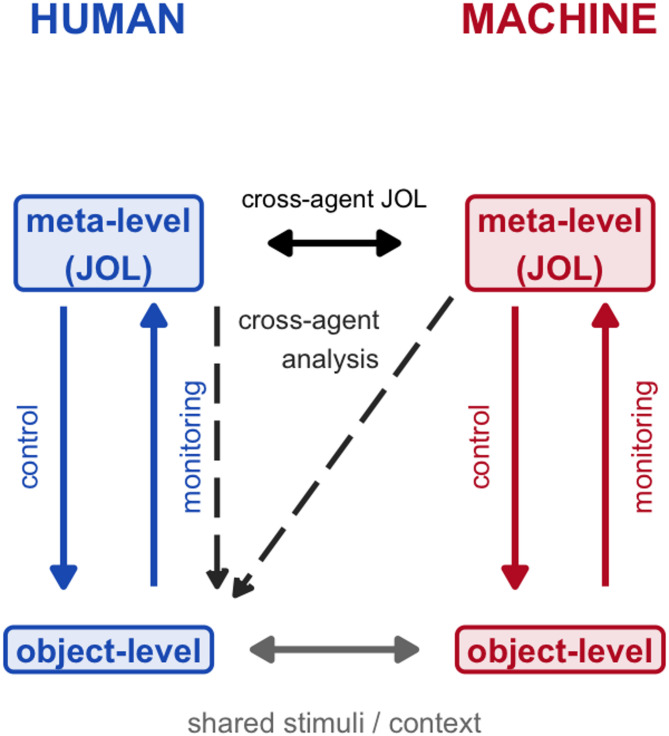
“This extension of the Nelson and Narens 15 framework is depicted in Fig.”
Monitoring one’s own knowledge during study: A cue-utilization approach to judgments of learning
Koriat, A. (1997) · Journal of Experimental Psychology: General · doi:10.1037/0096-3445.126.4.349 · Cited by 1,363 · cited 1×
“…for both LLMs and humans 25 as a basis for their predictive processing 26 , and the role of relatedness as an intrinsic cue in shaping human judgments during predicting 16,18 , we demonstrated the inability of LLMs to predict memory performance at the meta-level in the judgments of learning task.”
Emergent Abilities of Large Language Models
Wei, J., Tay, Y., Bommasani, R., Raffel, C., Zoph, B., Borgeaud, S., Yogatama, D., Bosma, M., Zhou, D., Metzler, D., et al. (2022) · arXiv · doi:10.48550/arxiv.2206.07682 · Cited by 1,264 · cited 1×
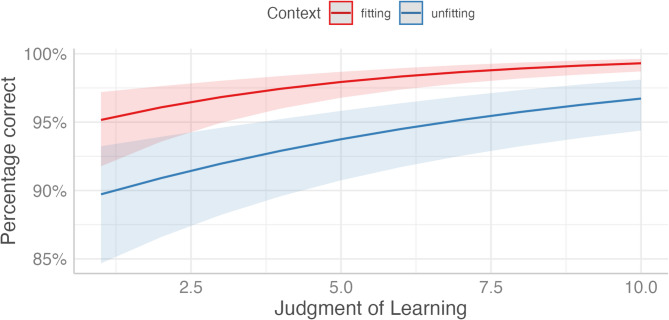
“These findings underscore the important roles of both JOL and context (fitting, unfitting) in predicting correct responses.”
ChatGPT Outperforms Crowd-Workers for Text-Annotation Tasks
Gilardi, F., Alizadeh, M., & Kubli, M. (2023) · arXiv · doi:10.48550/arxiv.2303.15056 · Cited by 1,207 · cited 1×
“Beyond their success in NLP, LLMs also reveal notable”
ChatGPT outperforms crowd workers for text-annotation tasks
Gilardi, F., Alizadeh, M., & Kubli, M. (2023) · Proceedings of the National Academy of Sciences · doi:10.1073/pnas.2305016120 · Cited by 1,197 · cited 1×
“Beyond their success in NLP, LLMs also reveal notable”
Artificial Intelligence trends in education: a narrative overview
Chassignol, M., Khoroshavin, A., Klimova, A., & Bilyatdinova, A. (2018) · Procedia Computer Science · doi:10.1016/j.procs.2018.08.233 · Cited by 956 · cited 1×
“However, our study demonstrated that AI’s predictive capability for recognition memory, an essential element of learning, is insufficient and requires improvement for AI-based applications to be considered reliable tools in education 32,33 .”
Out of One, Many: Using Language Models to Simulate Human Samples
Argyle, L. P., Busby, E. C., Fulda, N., Gubler, J. R., Rytting, C., & Wingate, D. (2023) · Political Analysis · doi:10.1017/pan.2023.2 · Cited by 783 · cited 2×
“LLMs, trained on massive sets of human-generated data, show advancements across various facets of natural language processing (NLP) (Manning et al., 6 ).”
The neural architecture of language: Integrative modeling converges on predictive processing
Schrimpf, M., Blank, I. A., Tuckute, G., Kauf, C., Hosseini, E. A., Kanwisher, N., Tenenbaum, J. B., & Fedorenko, E. (2021) · Proceedings of the National Academy of Sciences · doi:10.1073/pnas.2105646118 · Cited by 517
The Metacognitive Demands and Opportunities of Generative AI
Tankelevitch, L., Kewenig, V., Simkute, A., Scott, A. E., Sarkar, A., Sellen, A., & Rintel, S. (2024) · Proceedings of the CHI Conference on Human Factors in Computing Systems · doi:10.1145/3613904.3642902 · Cited by 493 · cited 1×
“Human metacognitive skills are increasingly necessary due to the expanding reliance on AI 13 .”
Shared computational principles for language processing in humans and deep language models
Goldstein, A., Zada, Z., Buchnik, E., Schain, M., Price, A., Aubrey, B., Nastase, S. A., Feder, A., Emanuel, D., Cohen, A., et al. (2022) · Nature Neuroscience · doi:10.1038/s41593-022-01026-4 · Cited by 447 · cited 1×
“By utilizing the acknowledged importance of prior context in language for both LLMs and humans 25 as a basis for their predictive processing 26 , and the role of relatedness as an intrinsic cue in shaping human judgments during predicting 16,18 , we demonstrated the inability of LLMs to predict…”
Can AI language models replace human participants?
Dillion, D., Tandon, N., Gu, Y., & Gray, K. (2023) · Trends in Cognitive Sciences · doi:10.1016/j.tics.2023.04.008 · Cited by 405 · cited 1×
“For instance, artificial intelligence (AI) is increasingly utilized across various facets of education including content development, teaching strategies, and assessment methods 31 .”
Emergent analogical reasoning in large language models
Webb, T., Holyoak, K. J., & Lu, H. (2023) · Nature Human Behaviour · doi:10.1038/s41562-023-01659-w · Cited by 404 · cited 1×
“Beyond their success in NLP, LLMs also reveal notable”
Using large language models in psychology
Demszky, D., Yang, D., Yeager, D. S., Bryan, C. J., Clapper, M., Chandhok, S., Eichstaedt, J. C., Hecht, C., Jamieson, J., Johnson, M., et al. (2023) · Nature Reviews Psychology · doi:10.1038/s44159-023-00241-5 · Cited by 369 · cited 2×
“This challenges the notion that LLMs simply echo the natural language statistically 4 , offering an opportunity to demonstrate the depth of their capabilities and potential.”
Two decades of structure building
Gernsbacher, M. A. (1997) · Discourse Processes · doi:10.1080/01638539709544994 · Cited by 333
Large Language Models as Simulated Economic Agents: What Can We Learn from Homo Silicus?
Horton, J., Filippas, A., & Manning, B. (2023) · National Bureau of Economic Research · doi:10.3386/w31122 · Cited by 329
Testing theory of mind in large language models and humans
Strachan, J. W. A., Albergo, D., Borghini, G., Pansardi, O., Scaliti, E., Gupta, S., Saxena, K., Rufo, A., Panzeri, S., Manzi, G., et al. (2024) · Nature Human Behaviour · doi:10.1038/s41562-024-01882-z · Cited by 299 · cited 1×
“Large language models (LLMs) continue to exhibit compliance with human behavior and cognitive processes on the whole, as indicated by studies coming from the increasingly rich literature on machine psychology 1–3 .”
A Turing Test of Whether AI Chatbots Are Behaviorally Similar to Humans
Mei, Q., Xie, Y., Yuan, W., & Jackson, M. O. (2024) · Proceedings of the National Academy of Sciences · doi:10.1073/pnas.2313925121 · Cited by 254 · cited 1×
“…collecting data from a model is not the same as obtaining responses from each individual, instead, it involves repeatedly retrieving information from the same integrated model, similar to the situation where one person is questioned recurrently rather than obtaining data from multiple people 10 .”
Ferreira, F., Christianson, K., & Hollingworth, A. (2001) · Journal of Psycholinguistic Research · doi:10.1023/a:1005290706460 · Cited by 174
Lu, Q., Qiu, B., Ding, L., et al. (2023) · Annual Meeting of the Association for Computational Linguistics · doi:10.48550/arxiv.2303.13809 · Cited by 164
Error Analysis Prompting Enables Human-Like Translation Evaluation in Large Language Models
Lu, Q., Qiu, B., Ding, L., Zhang, K., Kocmi, T., & Tao, D. (2024) · Findings of the Association for Computational Linguistics: ACL (Findings of ACL) · doi:10.18653/v1/2024.findings-acl.520 · Cited by 148
Turning large language models into cognitive models
Binz, M., & Schulz, E. (2024) · International Conference on Learning Representations · doi:10.48550/arxiv.2306.03917 · Cited by 134
Dunlosky, J., & Matvey, G. (2001) · Journal of Experimental Psychology: Learning, Memory, and Cognition · doi:10.1037//0278-7393.27.5.1180 · Cited by 118
Natural language processing in the era of large language models
Zubiaga, A. (2024) · Frontiers in Artificial Intelligence · doi:10.3389/frai.2023.1350306 · Cited by 81 · cited 1×
“It is uncertain whether upcoming models will maintain this current limitation or undergo a phase transition 37 , resulting in the emergence of being able to predict memory performance item-wise.”
Soderstrom, N. C., & McCabe, D. P. (2011) · Journal of Experimental Psychology: Learning, Memory, and Cognition · doi:10.1037/a0023548 · Cited by 71 · cited 1×
“Previous research on judgments of learning has primarily focused on lists of word pairs 18–20, 27, 28 .”
Durak, H. Y., & Onan, A. (2024) · Current Psychology · doi:10.1007/s12144-024-06072-8 · Cited by 71 · cited 1×
“Recent work in this direction provides concrete examples of how such meta-level processes can be engineered into LLMs: Wang et al. 34 introduce a recursive summarization technique that enables LLMs to maintain a dynamic memory across long-term dialogues.”
Mind meets machine: Unravelling GPT-4's cognitive psychologyPreprint
Dhingra, S., Singh, M., Vaisakh, S., Malviya, N., & Gill, S. S. (2023) · BenchCouncil Transactions on Benchmarks, Standards and Evaluations · doi:10.48550/arxiv.2303.11436 · Cited by 63
Recursively Summarizing Enables Long-Term Dialogue Memory in Large Language Models
Wang, Q., Fu, Y., Cao, Y., Wang, S., Tian, Z., & Ding, L. (2023) · arXiv · doi:10.48550/arxiv.2308.15022 · Cited by 55 · cited 1×
“For instance, Lu et al. 35 demonstrated that a multi-step Error Analysis Prompting approach, which incorporates elements of chain-of-thought reasoning and error analysis, markedly improved performance in evaluation tasks.”
Recursively summarizing enables long-term dialogue memory in large language models
Wang, Q., Fu, Y., Cao, Y., Wang, S., Tian, Z., & Ding, L. (2025) · Neurocomputing · doi:10.1016/j.neucom.2025.130193 · Cited by 55
From internal models toward metacognitive AI
Kawato, M., & Cortese, A. (2021) · Biological Cybernetics · doi:10.1007/s00422-021-00904-7 · Cited by 47
Large Language Models as Simulated Economic Agents: What Can We Learn from Homo Silicus?
Horton, J. J., Filippas, A., & Manning, B. S. (2023) · arXiv · doi:10.48550/arxiv.2301.07543 · Cited by 47
The effect of perceptual processing fluency and value on metacognition and remembering
Murphy, D. H., Huckins, S., Rhodes, M. G., & Castel, A. D. (2021) · Psychonomic Bulletin & Review · doi:10.3758/s13423-021-02030-8 · Cited by 43
Mind meets machine: Unravelling GPT-4’s cognitive psychology
Dhingra, S., Singh, M., S.B., V., Malviya, N., & Gill, S. S. (2023) · BenchCouncil Transactions on Benchmarks, Standards and Evaluations · doi:10.1016/j.tbench.2023.100139 · Cited by 42
The effects of categorical relatedness on judgements of learning (JOLs)
Matvey, G., Dunlosky, J. T., & Schwartz, B. L. (2006) · Memory · doi:10.1080/09658210500216844 · Cited by 33
On the parsing of garden-path sentences
Fujita, H. (2021) · Language Cognition and Neuroscience · doi:10.1080/23273798.2021.1922727 · Cited by 30 · cited 2×
“They function as a singular entity with all the information integrated 30 .”
Bai, L. (2025) · Current Psychology · doi:10.1007/s12144-024-07167-y · Cited by 20 · cited 1×
“These findings underscore the important roles of both JOL and context (fitting, unfitting) in predicting correct responses.”
Maxwell, N. P., & Huff, M. J. (2020) · Psychological Research · doi:10.1007/s00426-020-01342-z · Cited by 15 · cited 1×
“Previous research on judgments of learning has primarily focused on lists of word pairs 18–20, 27, 28 .”
Self-citationOpenAI, Achiam, J., Adler, S., Agarwal, S., Ahmad, L., Akkaya, I., Aleman, F. L., Almeida, D., Altenschmidt, J., Altman, S., et al. (2023) · arXiv · doi:10.48550/arxiv.2303.08774
Research works printed but not linked: 3
- Huff, M., & Ulakçı, E. Towards a Psychology of Machines: Large Language Models Predict Human Memory (No. arXiv:2403.05152). arXiv. http://arxiv.org/abs/2403.05152 (2024). · arXiv
- Peirce, J., Hirst, R., & MacAskill, M. Building experiments in PsychoPy (2nd edition). SAGE (2022).
- Fox, J. & Weisberg, S. An R companion to applied regression (Sage, 2010).
Cited by
Metacognition in LLMs: Foundations, Progress, and OpportunitiesPreprint
Liu, G., Gani, A., Lu, J., Thomas, J., Steyvers, M., & Cohan, A. (2026) · arXiv (Cornell University) · doi:10.48550/arxiv.2607.11881 · Cited by 9
“Other psychology-based methodologies include the use of judgments of learning (i.e., self-predictions of future memory performance) [117] or vectorized dimensional measurements of metacognitive capabilities of LLMs [244].”
InfluentialDo AI know what they know? Exploring metacognition in LLMs
Iqbal, S. (2026) · Intelligent Data Analysis · doi:10.1177/1088467x261436903 · Cited by 3
Alomar, E. H. (2026) · Sustainability · doi:10.3390/su18105059 · Cited by 2
HUMAN METACOGNITION IN AI-ASSISTED DECISION- MAKING
Schneider, L. (2025) · AIS Electronic Library (AISeL) · Cited by 1
Lemieux, A., Kutcher, S., Tietcheu, B. R. G., Seitz, G., Trickovic, J., Archibald, D., Grosjean, S., Hogg, W. E., & Johnston, S. (2026) · BMJ Open · doi:10.1136/bmjopen-2025-115673 · Cited by 1
Metadata
- Authors
- Huff, M., & Ulakci, E.
- Affiliations
- Leibniz-Institut für Wissensmedien (DE)
- Corresponding author
- Huff, Markus
- ORCID
- Huff, Markus
- Venue
- Scientific Reports
- Published
- 2025-10-07
- Volume
- 15
- Issue
- 1
- Pages
- 35030-35030
- ISSN
- 2045-2322 (ISSN-L)
- PMC
- PMC12504528
- OpenAlex
- W4414907014
- Cited by
- 9
- References
- 35
- Citations by year
- 2026: 8 · 2025: 1
- FWCI
- 5.13
- Type
- journal article
- Language
- en
- Open access
- gold
- doi.org
- Licence
- cc-by
- creativecommons.org/licenses/by/4.0 (tdm)
- creativecommons.org/licenses/by/4.0 (vor)
- Locations
- Scientific Reports (publishedVersion, cc-by)
- Europe PMC (PubMed Central) (publishedVersion, cc-by)
- PubMed (publishedVersion)
- PubMed Central (publishedVersion, cc-by)
- arXiv (Cornell University) (submittedVersion, cc-by-nc-sa)
- DOAJ (DOAJ: Directory of Open Access Journals) (submittedVersion, cc-by-sa)
- arXiv (Cornell University)
- Funders
- Leibniz-Institut für Wissensmedien
- Topics
- Life Sciences › Neuroscience › Cognitive Neuroscience › Memory Processes and Influences
- Physical Sciences › Computer Science › Artificial Intelligence › Topic Modeling
- Life Sciences › Neuroscience › Cognitive Neuroscience › Neurobiology of Language and Bilingualism
- Keywords
- judgments of learning, metacognition, large language models, memory prediction, garden-path sentences, contextual fit, self-monitoring, human-AI comparison, ChatGPT, personalized learning
- MeSH terms
- Metacognition, Large Language Models, Adult, Cognition, Female, Humans, Judgment, Language, Learning, Male, Memory, Young Adult
About these checks
Registry, retraction, Cites and statistics results are computed, not judged, with one exception: a printed reference that no index lists is read once by a model before it counts as a citation error. Claims are extracted by a model and kept only when their quote appears verbatim in the text; each cited source is then checked, with a model’s help, for whether it says what the claim relies on. Those verdicts can be wrong — read the claim’s quote and the cited source before relying on one.
Statistics and arithmetic are recomputed, not judged.
Confidence bands are shown only for fields calibrated on our annotated test set. None is calibrated yet, so no band is shown.
What counts as a claim ›How we measure confidence ›How we check this ›
Are you an author, or do you see a problem with this page? Request a review
Data sources
Bibliographic data: Semantic Scholar, OpenAlex, Crossref.
Contains information from the Semantic Scholar Academic Graph Datasets, made available under the ODC Attribution License (ODC-BY 1.0).
Semantic Scholar’s data is described in: Kinney, R., et al. (2023). The Semantic Scholar Open Data Platform. arXiv:2301.10140.
