

Cross-sectional study of the relationship between dietary inflammatory index and inflammatory hormonal and metabolic profiles in polycystic ovary syndrome
Open accessThe DOI matches its Crossref record; 51 of the 51 references it cites were found in a registry or an index; 5 of the 12 sources its claims cite were checked for support.
Abstract
Polycystic ovary syndrome (PCOS) is a prevalent endocrine disorder characterized by obesity, hyperandrogenism, and dyslipidemia, with chronic inflammation playing a key role in its pathogenesis. While the Dietary Inflammatory Index (DII) has been linked to metabolic diseases, its association with PCOS-specific hormonal and inflammatory markers remains underexplored. This cross-sectional study aimed to investigate relationships between DII scores and metabolic/hormonal profiles in 200 women with PCOS (aged 18-48 years) diagnosed using Rotterdam criteria. Participants' dietary intake was assessed using a validated 168-item food frequency questionnaire. Anthropometric measurements, biochemical markers (including fasting blood glucose (FBG), lipid profile, high-sensitive C-reactive protein (hs-CRP), and Erythrocyte sedimentation rate (ESR)), and hormonal levels (prolactin, follicle-stimulating hormone (FSH), Luteinizing hormone (LH), and total testosterone), and blood pressure were analyzed. Statistical analyses were performed using SPSS version 20.0 (IBM Corporation), employing multivariate linear regression with the ENTER method. Models were adjusted for age, BMI, smoking status, physical activity, and energy intake. The mean ± SD for the age of the participants was 38.23 ± 9.52 years. The mean BMI for the total sample was 24.40 ± 2.64 kg/m². Higher DII scores (indicating more pro-inflammatory diets) were significantly associated with elevated levels of FBG (β=+13.34, P < 0.001), hs-CRP (β=+1.18, P < 0.001), ESR (β=+3.39, P < 0.001), prolactin (β=+6.68, P < 0.001), FSH (β=+1.81, P < 0.001), and LH (β=+3.97, P < 0.001) in initial analyses. These associations remained significant after full adjustment (all P < 0.05). No significant relationships were observed between DII scores and lipid profiles or total testosterone levels after full adjustment (P > 0.05). These findings indicate that pro-inflammatory dietary patterns are associated with worsened inflammatory markers, glycemic control, and gonadotropin levels in women with PCOS. The results suggest a possible beneficial role of anti-inflammatory dietary interventions in PCOS management, although longitudinal studies are needed to establish causal relationships.
Overview
CoChat Summary
## TL;DR
This cross-sectional study of 200 women with PCOS found that more pro-inflammatory diets (higher DII) were associated with worse glycemic, inflammatory, and some hormonal markers. After full adjustment, higher DII remained associated with higher FBG, hs-CRP, ESR, prolactin, FSH, and LH, but not with lipid profiles or total testosterone.
## Key findings
- In 200 women with PCOS (mean age 38.23 ± 9.52 years; mean BMI 24.40 ± 2.64 kg/m²), the sample was split into low DII (n = 100) and high DII (n = 100) groups.
- Compared with the low DII group, the high DII group had higher levels of:
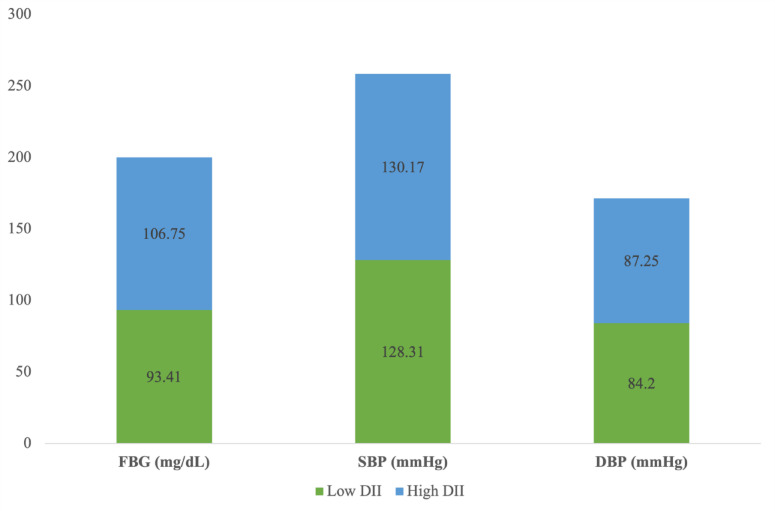
- FBG: 106.75 ± 8.60 vs 93.41 ± 9.35 mg/dL (P < 0.001)
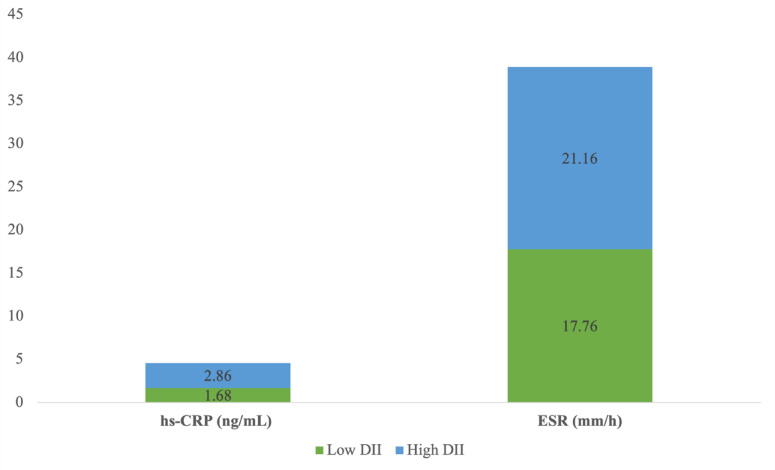
- hs-CRP: 2.86 ± 0.65 vs 1.68 ± 0.65 ng/mL (P < 0.001)
- ESR: 21.16 ± 2.72 vs 17.76 ± 2.74 mm/h (P < 0.001)
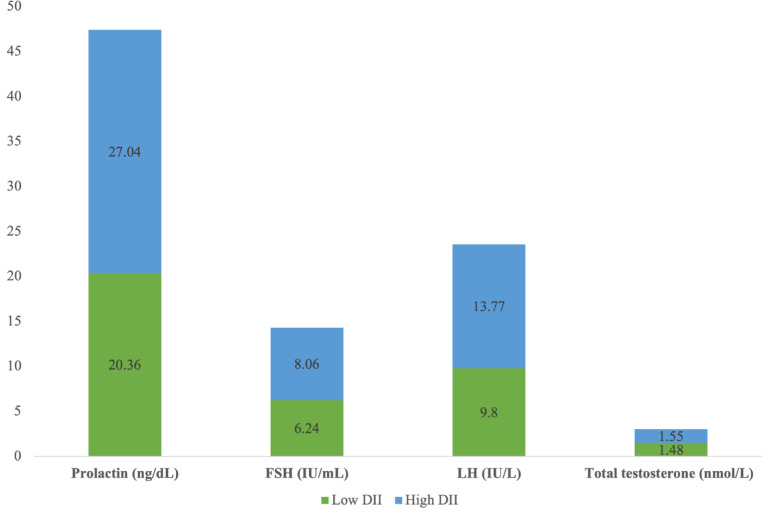
- Prolactin: 27.04 ± 3.46 vs 20.36 ± 2.56 ng/dL (P < 0.001)
- FSH: 8.06 ± 0.93 vs 6.24 ± 0.52 IU/mL (P < 0.001)
- LH: 13.77 ± 1.92 vs 9.80 ± 1.14 IU/L (P < 0.001)
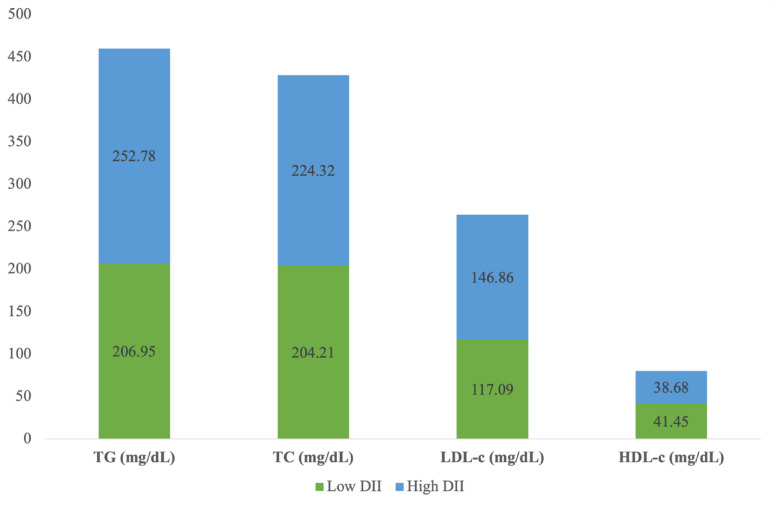
- In initial analyses, higher DII was also associated with worse lipid measures, but after full adjustment those associations did not persist; the paper states no significant relationships with lipid profiles or total testosterone after full adjustment.
- Multivariable models showed that the association with FBG remained significant after adjusting for age, BMI, smoking, physical activity, and energy intake, while TG lost significance in the fully adjusted model.
## Methods
- Observational, cross-sectional, single-center study conducted at Afzalipour Hospital clinics in Kerman, Iran, between January 2022 and September 2023.
- Included 200 women aged 18–48 years diagnosed with PCOS within the past 6 months using Rotterdam criteria; excluded pregnancy/lactation, ovarian surgery, autoimmune disease, cancer, T2DM, coronary heart disease, hyperthyroidism, immunosuppressive medication use, and special diets.
- Dietary intake over the past year was assessed with a validated 168-item FFQ; DII was calculated from 38 dietary parameters and participants were divided into low/high DII groups based on the median.
- Main analyses used independent t-tests/chi-square tests and multivariable linear regression, adjusting stepwise for age, BMI, smoking, physical activity, and energy intake.
## Limitations
- The paper explicitly states that the cross-sectional design prevents causal inference.
- The authors state they did not measure insulin, HOMA-IR, or SHBG, which could lead to residual confounding and limits interpretation of the FBG and testosterone-related findings.
- The paper notes residual confounding may remain despite adjustment for lifestyle factors.
- The paper states FFQs have inherent limitations, including recall bias.
- Evident from the text: the sample was predominantly Fars ethnicity (57.5%), which the authors say may limit generalizability of absolute DII scores to other populations.
Model-written summary. Check it against the paper before relying on it.
Integrity signals
Registry
Cites
Statistics
Figures
Verification
Claims the paper makes
4 Valid · 0 Not valid · 3 Not checked · 23 Own results and interpretations
A result the paper reports from its own data — it cites no other source for it, so there is none to check. The quote shows it is in the paper.
In the paper
“Higher DII scores (indicating more pro-inflammatory diets) were significantly associated with elevated levels of FBG (β=+13.34, P < 0.001), hs-CRP (β=+1.18, P < 0.001), ESR (β=+3.39, P < 0.001), prolactin (β=+6.68, P < 0.001), FSH (β=+1.81, P < 0.001), and LH (β=+3.97, P < 0.001) in initial analyses. These associations remained significant after full adjustment (all P < 0.05).”
- Also stated in: § Multivariate regression analysis · plain
“In addition, a positive correlation was observed between the DII and the serum levels of inflammatory mediators (hs-CRP, ESR) in all three models (P ≤ 0.001 for hs-CRP, and P ≤ 0.039 for ESR).”
§ Cross-sectional study of the relationship between dietary inflammatory index and inflammatory hormonal and metabolic profiles in polycystic ovary syndrome > Abstract
plainstates an association- Asserted: passes — The authors put it forward as true.
- Checkable: passes — It can be checked against evidence.
- Load-bearing: passes — The paper’s conclusions depend on it.
- Based: passes — The paper gives a reason why it holds.
- Also stated in: § Multivariate regression analysis · plain
A result the paper reports from its own data — it cites no other source for it, so there is none to check. The quote shows it is in the paper.
In the paper
“No significant relationships were observed between DII scores and lipid profiles or total testosterone levels after full adjustment (P > 0.05).”
§ Cross-sectional study of the relationship between dietary inflammatory index and inflammatory hormonal and metabolic profiles in polycystic ovary syndrome > Abstract
plain- Asserted: passes — The authors put it forward as true.
- Checkable: passes — It can be checked against evidence.
- Load-bearing: unclear — It is unclear whether the paper’s conclusions depend on it.
- Based: passes — The paper gives a reason why it holds.
A result the paper reports from its own data — it cites no other source for it, so there is none to check. The quote shows it is in the paper.
In the paper
“Higher DII scores (indicating more pro-inflammatory diets) were significantly associated with elevated levels of FBG (β=+13.34, P < 0.001), hs-CRP (β=+1.18, P < 0.001), ESR (β=+3.39, P < 0.001), prolactin (β=+6.68, P < 0.001), FSH (β=+1.81, P < 0.001), and LH (β=+3.97, P < 0.001) in initial analyses. These associations remained significant after full adjustment (all P < 0.05).”
- Also stated in: § Multivariate regression analysis · plain
“It was found that the highest DII score showed a significant relationship with an elevated level of prolactin, FSH, and LH (P < 0.001) in the first model. Although, this relationship was not seen in the serum level of free testosterone. This relationship remained statistically significant even after entering variables such as age, BMI, smoking status, physical activity, and energy intake.”
§ Cross-sectional study of the relationship between dietary inflammatory index and inflammatory hormonal and metabolic profiles in polycystic ovary syndrome > Abstract
plainstates an association- Asserted: passes — The authors put it forward as true.
- Checkable: passes — It can be checked against evidence.
- Load-bearing: passes — The paper’s conclusions depend on it.
- Based: passes — The paper gives a reason why it holds.
- Also stated in: § Multivariate regression analysis · plain
A result the paper reports from its own data — it cites no other source for it, so there is none to check. The quote shows it is in the paper.
In the paper
“No significant relationships were observed between DII scores and lipid profiles or total testosterone levels after full adjustment (P > 0.05).”
- Also stated in: § Discussion · hedged
“Importantly, while initial unadjusted models showed associations between DII and lipid parameters (TG, TC, LDL-c, HDL-c), these did not persist after adjusting for lifestyle factors, suggesting mediation by energy intake and physical activity patterns, which are known to independently influence lipid metabolism and systemic inflammation.”
§ Cross-sectional study of the relationship between dietary inflammatory index and inflammatory hormonal and metabolic profiles in polycystic ovary syndrome > Abstract
plain- Asserted: passes — The authors put it forward as true.
- Checkable: passes — It can be checked against evidence.
- Load-bearing: passes — The paper’s conclusions depend on it.
- Based: passes — The paper gives a reason why it holds.
- Also stated in: § Discussion · hedged
A result the paper reports from its own data — it cites no other source for it, so there is none to check. The quote shows it is in the paper.
In the paper
“Higher DII scores (indicating more pro-inflammatory diets) were significantly associated with elevated levels of FBG (β=+13.34, P < 0.001), hs-CRP (β=+1.18, P < 0.001), ESR (β=+3.39, P < 0.001), prolactin (β=+6.68, P < 0.001), FSH (β=+1.81, P < 0.001), and LH (β=+3.97, P < 0.001) in initial analyses. These associations remained significant after full adjustment (all P < 0.05).”
- Also stated in: § Multivariate regression analysis · plain
“In addition, a positive correlation was observed between the DII and the serum levels of inflammatory mediators (hs-CRP, ESR) in all three models (P ≤ 0.001 for hs-CRP, and P ≤ 0.039 for ESR).”
§ Cross-sectional study of the relationship between dietary inflammatory index and inflammatory hormonal and metabolic profiles in polycystic ovary syndrome > Abstract
plainstates an association- Asserted: passes — The authors put it forward as true.
- Checkable: passes — It can be checked against evidence.
- Load-bearing: passes — The paper’s conclusions depend on it.
- Based: passes — The paper gives a reason why it holds.
- Also stated in: § Multivariate regression analysis · plain
12 more claims
Create a free account to see all 30 claims and to verify the 1 reference still open.
- Probably not a substantial claim. 7
- It may state two separate claims as one. 7
Self-check
Percentages, sums and reported differences re-computed from the paper’s own numbers.
Self-check results appear here once an independent check has confirmed them.
Cited works that were retracted
Works this paper cites that were later retracted, from the retraction notices publishers deposit. Major when the notice came out before this paper was published.
A note, not an issue: for example, a cited work that was retracted only after this paper was published, which its authors could not have known.
In the paper
“Pkhaladze, L. et al. Treatment of lean PCOS teenagers: a follow-up comparison between Myo-Inositol and oral contraceptives. European Rev. Med. & Pharmacol. Sciences, 25 (23), 7476-85 (2021). 34919250”
Cited work 10.26355/eurrev_202112_27447 · retraction date not known · this paper published 2025-11-17
Citations
Cites
1 retracted
Pkhaladze, L., Russo, M., Unfer, V., Nordio, M., Basciani, S., & Khomasuridze, A. (2021) · European Review for Medical and Pharmacological Sciences · doi:10.26355/eurrev_202112_27447 · Cited by 20
Retracted(2004) · Fertility and Sterility · doi:10.1016/j.fertnstert.2003.10.004 · Cited by 9,050 · cited 1×
“Polycystic ovary syndrome (PCOS) is a prevalent endocrine disorder affecting 6–10% of reproductive-aged women, characterized by hyperandrogenism, ovulatory dysfunction, and polycystic ovarian morphology according to the Rotterdam criteria 1–3 .”
Designing and developing a literature-derived, population-based dietary inflammatory index
Shivappa, N., Steck, S. E., Hurley, T. G., Hussey, J. R., & Hébert, J. R. (2014) · Public Health Nutrition · doi:10.1017/s1368980013002115 · Cited by 2,731 · cited 1×
“The assessment of the diet’s inflammatory potential involved the computation of DII scores 35 .”
Profound Peripheral Insulin Resistance, Independent of Obesity, in Polycystic Ovary Syndrome
Dunaif, A., Segal, K. R., Futterweit, W., & Dobrjansky, A. (1989) · Diabetes · doi:10.2337/diab.38.9.1165 · Cited by 1,967 · cited 1×
“Women with PCOS often exhibit insulin resistance, which can lead to hyperinsulinemia and exacerbate hyperandrogenism 9,10 .”
Reliability and relative validity of an FFQ for nutrients in the Tehran Lipid and Glucose Study
Mirmiran, P., Hosseini Esfahani, F., Mehrabi, Y., Hedayati, M., & Azizi, F. (2010) · Public Health Nutrition · doi:10.1017/s1368980009991698 · Cited by 1,292 · cited 2×
“The dietary data of the participants over the past year was evaluated through the use of a 168-item food-frequency questionnaire (FFQ) 33 .”
Reproducibility and validity of dietary patterns assessed with a food-frequency questionnaire
Hu, F. B., Rimm, E., Smith-Warner, S. A., Feskanich, D., Stampfer, M. J., Ascherio, A., Sampson, L., & Willett, W. C. (1999) · The American Journal of Clinical Nutrition · doi:10.1093/ajcn/69.2.243 · Cited by 1,165 · cited 1×
“Following this, the energy density method was employed to standardize all food items for energy, and these energy-adjusted intakes were utilized to establish the DII 36 .”
The IMAGE Study Group, Greaves, C. J., Sheppard, K. E., Abraham, C., Hardeman, W., Roden, M., Evans, P. H., & Schwarz, P. (2011) · BMC Public Health · doi:10.1186/1471-2458-11-119 · Cited by 1,163 · cited 1×
“Notably, these studies also highlight the protective role of physical activity in attenuating dietary inflammation, suggesting that lifestyle interventions should be multidimensional 50 .”
Chronic Low Grade Inflammation in Pathogenesis of PCOS
Rudnicka, E., Suchta, K., Grymowicz, M., Calik-Ksepka, A., Smolarczyk, K., Duszewska, A. M., Smolarczyk, R., & Meczekalski, B. (2021) · International Journal of Molecular Sciences · doi:10.3390/ijms22073789 · Cited by 680
Polycystic ovary syndrome and cardiovascular disease: a premature association?
Legro, R. S. (2003) · Endocrine Reviews · doi:10.1210/er.2003-0004 · Cited by 466
Hariharan, R., Odjidja, E. N., Scott, D., Shivappa, N., Hébert, J. R., Hodge, A., & de Courten, B. (2022) · Obesity Reviews · doi:10.1111/obr.13349 · Cited by 361 · cited 1×
“Unhealthy diets high in saturated fat also lead to fatty acid infiltration of macrophages, perpetuating inflammation 51 .”
Spritzer, P. M., Lecke, S. B., Satler, F., & Morsch, D. M. (2015) · Reproduction · doi:10.1530/rep-14-0435 · Cited by 330 · cited 1×
“Concurrently, pro-inflammatory dietary patterns activate nuclear factor-kappa B (NF-κB) signaling, increasing the production of inflammatory cytokines such as interleukin-6 (IL-6) and tumor necrosis factor-alpha (TNF-α) 14,15 .”
Armanini, D., Boscaro, M., Bordin, L., & Sabbadin, C. (2022) · International Journal of Molecular Sciences · doi:10.3390/ijms23084110 · Cited by 324 · cited 1×
“Furthermore, chronic low-grade inflammation is commonly observed in this population, contributing to metabolic dysregulation and an increased risk of comorbidities such as T2DM and cardiovascular disease 13 .”
The role of low-grade inflammation in the polycystic ovary syndrome
Repaci, A., Gambineri, A., & Pasquali, R. (2011) · Molecular and Cellular Endocrinology · doi:10.1016/j.mce.2010.08.002 · Cited by 298 · cited 2×
“This insulin resistance may further exacerbate hyperandrogenism through increased ovarian steroidogenesis and reduced sex hormone-binding globulin production 18 , creating a vicious cycle of metabolic and endocrine dysfunction.”
Polycystic ovarian syndrome: Pathophysiology, molecular aspects and clinical implications
Diamanti-Kandarakis, E. (2008) · Expert Reviews in Molecular Medicine · doi:10.1017/s1462399408000598 · Cited by 294 · cited 3×
“Given the frequent anovulation in PCOS, hormonal sampling was not timed to specific menstrual cycle phases, consistent with prior PCOS studies 4 .”
O'Reilly, M. W., Taylor, A. E., Crabtree, N. J., Hughes, B. A., Capper, F., Crowley, R. K., Stewart, P. M., Tomlinson, J. W., & Arlt, W. (2014) · The Journal of Clinical Endocrinology & Metabolism · doi:10.1210/jc.2013-3399 · Cited by 283 · cited 1×
“Hyperandrogenemia in PCOS is a persistent feature, and single measurements have been shown to be diagnostically informative 32 , making our methodological approach reliable for this population.”
Grosso, G., Laudisio, D., Frias-Toral, E., Barrea, L., Muscogiuri, G., Savastano, S., & Colao, A. (2022) · Nutrients · doi:10.3390/nu14061137 · Cited by 255 · cited 1×
“Physical activity has been shown to mitigate these effects by enhancing insulin sensitivity, reducing adipose tissue inflammation, and improving lipid profiles, even in the presence of pro-inflammatory diets 41,42 .”
Jeanes, Y. M., & Reeves, S. (2017) · Nutrition Research Reviews · doi:10.1017/s0954422416000287 · Cited by 194 · cited 1×
“…high-glycemic-index foods promote advanced glycation end product (AGE)-receptor for AGE (RAGE) axis activation, worsening insulin resistance, while saturated fats activate Toll-like receptor 4 (TLR4) signaling, increasing the production of pro-inflammatory cytokines like IL-1β and IL-18 23,24 .”
Tabung, F. K., Steck, S. E., Ma, Y., Liese, A. D., Zhang, J., Caan, B., Hou, L., Johnson, K. C., Mossavar-Rahmani, Y., Shivappa, N., et al. (2015) · Cancer Causes & Control · doi:10.1007/s10552-014-0515-y · Cited by 193 · cited 2×
“Conversely, high-glycemic-index foods promote advanced glycation end product (AGE)-receptor for AGE (RAGE) axis activation, worsening insulin resistance, while saturated fats activate Toll-like receptor 4 (TLR4) signaling, increasing the production of pro-inflammatory cytokines like IL-1β and IL-18 23,24 .”
Diamanti‐Kandarakis, E., Katsikis, I., Piperi, C., Kandaraki, E., Piouka, A., Papavassiliou, A. G., & Panidis, D. (2008) · Clinical Endocrinology · doi:10.1111/j.1365-2265.2008.03247.x · Cited by 174
Azziz, R. (2004) · Reproductive BioMedicine Online · doi:10.1016/s1472-6483(10)61644-6 · Cited by 170 · cited 1×
“Women with PCOS often exhibit insulin resistance, which can lead to hyperinsulinemia and exacerbate hyperandrogenism 9,10 .”
Positive Effects of Physical Activity on Insulin Signaling
Małkowska, P. (2024) · Current Issues in Molecular Biology · doi:10.3390/cimb46060327 · Cited by 148
Fruzzetti, F., Perini, D., Russo, M., Bucci, F., & Gadducci, A. (2017) · Gynecological Endocrinology · doi:10.1080/09513590.2016.1236078 · Cited by 135
Signaling pathways and targeted therapeutic strategies for polycystic ovary syndrome
Wang, K., & Lǐ, Y. (2023) · Frontiers in Endocrinology · doi:10.3389/fendo.2023.1191759 · Cited by 128 · cited 1×
“Within the ovary, mechanistic target of rapamycin (mTOR) overactivation due to hyperinsulinemia disrupts folliculogenesis, while oxidative stress resulting from mitochondrial dysfunction impairs oocyte quality 17 .”
Adipose Tissue Dysfunction in Polycystic Ovary Syndrome
Bril, F., Ezeh, U., Amiri, M., Hatoum, S., Pace, L., Chen, Y.-H., Bertrand, F., Gower, B., & Azziz, R. (2023) · The Journal of Clinical Endocrinology & Metabolism · doi:10.1210/clinem/dgad356 · Cited by 123 · cited 1×
“…activates ovarian theca cells androgen synthesis through insulin receptor substrate (IRS-1/2)-mediated upregulation of steroidogenic enzymes, while insulin resistance in adipose tissue reduces sex hormone-binding globulin (SHBG) production, leading to elevated free testosterone 11,12 .”
Shorakae, S., Teede, H., de Courten, B., Lambert, G., Boyle, J., & Moran, L. (2015) · Seminars in Reproductive Medicine · doi:10.1055/s-0035-1556568 · Cited by 115
Di Lorenzo, M., Cacciapuoti, N., Lonardo, M. S., Nasti, G., Gautiero, C., Belfiore, A., Guida, B., & Chiurazzi, M. (2023) · Current Nutrition Reports · doi:10.1007/s13668-023-00479-8 · Cited by 108 · cited 1×
“…activates ovarian theca cells androgen synthesis through insulin receptor substrate (IRS-1/2)-mediated upregulation of steroidogenic enzymes, while insulin resistance in adipose tissue reduces sex hormone-binding globulin (SHBG) production, leading to elevated free testosterone 11,12 .”
Laouali, N., Mancini, F. R., Hajji-Louati, M., El Fatouhi, D., Balkau, B., Boutron-Ruault, M.-C., Bonnet, F., & Fagherazzi, G. (2019) · Diabetologia · doi:10.1007/s00125-019-04972-0 · Cited by 101
Hu, M., Zhang, Y., Li, X., Cui, P., Sferruzzi-Perri, A. N., Brännström, M., Shao, R., & Billig, H. (2020) · The Journal of Clinical Endocrinology & Metabolism · doi:10.1210/clinem/dgaa951 · Cited by 95 · cited 1×
“Third, an elevated omega-6/omega-3 ratio promotes prostaglandin E2 synthesis, which directly enhances androgen production in ovarian theca cells 37–39 .”
Kim, H.-Y., Lee, J., & Kim, J. (2018) · Nutrients · doi:10.3390/nu10050648 · Cited by 84
Association between Dietary Inflammatory Index (DII) and risk of prediabetes: a case-control study
Vahid, F., Shivappa, N., Karamati, M., Naeini, A. J., Hebert, J. R., & Davoodi, S. H. (2017) · Applied Physiology, Nutrition, and Metabolism · doi:10.1139/apnm-2016-0395 · Cited by 77 · cited 1×
“After accounting for potential confounders, the risk of T2DM was found to be 19 times greater in this group 48 .”
Mirabelli, M., Misiti, R., Sicilia, L., Brunetti, F. S., CHIEFARI, E. D., Brunetti, A., & FOTI, D. P. (2024) · International Journal of Molecular Sciences · doi:10.3390/ijms25189802 · Cited by 76 · cited 1×
“Adipose tissue hypoxia further exacerbates insulin resistance by triggering c-Jun N-terminal kinase (JNK) pathway activation 16 .”
Altieri, P., Cavazza, C., Pasqui, F., Morselli, A. M., Gambineri, A., & Pasquali, R. (2013) · Clinical Endocrinology · doi:10.1111/j.1365-2265.2012.04355.x · Cited by 75 · cited 1×
“Nutritional components play a critical role in modulating these pathways 18,19 .”
Wang, X., Li, T., Li, H., Li, D., Wang, X., Zhao, A., Liang, W., Xiao, R., & Xi, Y. (2022) · Nutrients · doi:10.3390/nu14122417 · Cited by 63 · cited 4×
“The DII serves as a validated tool to quantify the inflammatory potential of overall dietary patterns, with higher scores correlating with systemic inflammation markers 26 .”
InfluentialExercise Intensity Modulation of Hepatic Lipid Metabolism
Lira, F. S., Carnevali, L. C., Zanchi, N. E., dos Santos, R. V. T., Lavoie, J.-M., & Seelaender, M. C. L. (2012) · Journal of Nutrition and Metabolism · doi:10.1155/2012/809576 · Cited by 54 · cited 1×
“This aligns with evidence that exercise reduces hepatic VLDL secretion and improves HDL functionality, thereby mitigating dyslipidemia 45 .”
Polycystic ovary syndrome, diabetes and cardiovascular disease: risks and risk factors
Lakhani, K., Prelevic, G., Seifalian, A., Atiomo, W., & Hardiman, P. (2004) · Journal of Obstetrics and Gynaecology · doi:10.1080/01443610400007810 · Cited by 53
Yuan, J., Li, Z., Yu, Y., Wang, X., & Zhao, Y. (2025) · Frontiers in Nutrition · doi:10.3389/fnut.2025.1520695 · Cited by 51 · cited 1×
“Anti-inflammatory nutrients, such as omega-3 fatty acids and polyphenols, inhibit NF-κB signaling and upregulate peroxisome proliferator-activated receptor gamma (PPAR-γ), thereby improving insulin sensitivity 20–22 .”
Pahlavani, M., Ramalho, T., Koboziev, I., LeMieux, M. J., Jayarathne, S., Ramalingam, L., Filgueiras, L. R., & Moustaid-Moussa, N. (2017) · Journal of Investigative Medicine · doi:10.1136/jim-2017-000535 · Cited by 49 · cited 1×
“Anti-inflammatory nutrients, such as omega-3 fatty acids and polyphenols, inhibit NF-κB signaling and upregulate peroxisome proliferator-activated receptor gamma (PPAR-γ), thereby improving insulin sensitivity 20–22 .”
Wang, Q., Sun, Y., Xu, Q., Liu, W., Wang, P., Yao, J., Zhao, A., Chen, Y., & Wang, W. (2022) · Nutrition Research · doi:10.1016/j.nutres.2021.12.006 · Cited by 49 · cited 2×
“Our findings align with previous research linking pro-inflammatory diets to various chronic conditions sharing pathophysiological features with PCOS, including metabolic syndrome, T2DM, and cardiovascular disease 21,46–49 .”
Huang, W.-Q., Mo, X.-F., Ye, Y.-B., Shivappa, N., Lin, F.-Y., Huang, J., Hébert, J. R., Yan, B., & Zhang, C.-X. (2017) · British Journal of Nutrition · doi:10.1017/s0007114517001192 · Cited by 47 · cited 1×
“Emerging evidence suggests a potential link between DII and a reduced risk of chronic diseases, such as metabolic syndrome, T2DM, cancer, and cardiovascular disease, all of which share common metabolic features with PCOS 27–29 .”
Zhang, W., & Wu, F. (2024) · Scientific Reports · doi:10.1038/s41598-024-56970-x · Cited by 43 · cited 1×
“Third, an elevated omega-6/omega-3 ratio promotes prostaglandin E2 synthesis, which directly enhances androgen production in ovarian theca cells 37–39 .”
Khan, I., Kwon, M., Shivappa, N., Hébert, J. R., & Kim, M. K. (2020) · Nutrients · doi:10.3390/nu12041196 · Cited by 42
Khan, I., Kwon, M., Shivappa, N., Hébert, J. R., & Kim, M. K. (2020) · Nutrients · doi:10.3390/nu12020588 · Cited by 40 · cited 2×
“Similarly, another prospective study indicated a substantial link between the DII index and an elevated risk of cardiovascular diseases following a 5-year follow-up among 162,733 participants 46 .”
Karimzadeh, L., Behrouz, V., Sohrab, G., Hedayati, M., & Emami, G. (2022) · Journal of Food Science · doi:10.1111/1750-3841.16365 · Cited by 28
Self-citationZirak Sharkesh, E., Keshavarz, S. A., Nazari, L., & Abbasi, B. (2022) · Clinical Endocrinology · doi:10.1111/cen.14672 · Cited by 26 · cited 3×
“Our findings align with previous research linking pro-inflammatory diets to various chronic conditions sharing pathophysiological features with PCOS, including metabolic syndrome, T2DM, and cardiovascular disease 21,46–49 .”
Azarbayjani, K., Sadatmahalleh, S. J., Mottaghi, A., & Nasiri, M. (2024) · Scientific Reports · doi:10.1038/s41598-024-53958-5 · Cited by 23 · cited 2×
“Based on detecting clinically meaningful differences in hs-CRP levels between participants with higher versus lower DII scores (a continuous measure categorized post-hoc for analysis), we used parameters from previous studies 31 .”
Gałaś, A., Kulig, P., & Kulig, J. (2014) · European Journal of Clinical Nutrition · doi:10.1038/ejcn.2014.120 · Cited by 22 · cited 1×
“It aims to assess the inflammatory potential of an individual’s diet and facilitate comparisons across populations 25 .”
Jalilvand, A., Behrouz, V., Nikpayam, O., Sohrab, G., & Hekmatdoost, A. (2020) · Diabetes & Metabolic Syndrome Clinical Research & Reviews · doi:10.1016/j.dsx.2020.04.003 · Cited by 22 · cited 1×
“There is some evidence that food can be related to the inflammatory state of the human body 43 .”
Self-citationMirrazavi, Z. S., & Behrouz, V. (2024) · Clinical Nutrition · doi:10.1016/j.clnu.2024.01.005 · Cited by 22 · cited 1×
“Beyond its reproductive manifestations, PCOS involves a complex interplay of metabolic disturbances, including obesity, dyslipidemia, type 2 diabetes mellitus (T2DM), and insulin resistance, with 50–70% of affected women exhibiting impaired glucose metabolism 4–7 .”
Self-citationIMPROVE lifestyle in polycystic ovary syndrome: a systematic strategy
Pup, L. D., & Cagnacci, A. (2021) · Gynecological Endocrinology · doi:10.1080/09513590.2021.1871892 · Cited by 12 · cited 3×
“Concurrently, pro-inflammatory dietary patterns activate nuclear factor-kappa B (NF-κB) signaling, increasing the production of inflammatory cytokines such as interleukin-6 (IL-6) and tumor necrosis factor-alpha (TNF-α) 14,15 .”
Ghaemmaghamia, J., Mahdavib, R., Nikniazc, Z., & Assadid, Y. (2012) · Nutrition & Food Science · doi:10.1108/00346651211277708 · Cited by 9 · cited 6×
“Table 3 illustrates the relationship between the dietary inflammatory index and various metabolic, inflammatory, and hormonal factors.”
InfluentialAssociation of diet quality and hormonal status in exercising women with menstrual disturbances
Łagowska, K., Strock, N. C. A., Koltun, K. J., Williams, N. I., & Souza, M. J. D. (2022) · Applied Physiology, Nutrition, and Metabolism · doi:10.1139/apnm-2021-0789 · Cited by 7
Research works printed but not linked: 2
- Berek, J. S. Berek & Novak’s Gynecology Essentials (Lippincott Williams & Wilkins, 2020).
- ESHRE, T. R. & Group, A. S. P. C. W. Revised 2003 consensus on diagnostic criteria and long-term health risks related to polycystic ovary syndrome. Fertil. Steril. 81, 19–25 (2004). 14711538 · DOI · Paper page
Cited by
Nandagopal, P. B., Jayakrishnan, G., Kaithamattathil, A. V., & Manickam, V. (2026) · Frontiers in Reproductive Health · doi:10.3389/frph.2026.1821411 · Cited by 5
Modern approaches to the diagnosis and treatment of polycystic ovary syndrome in adolescent girls
Sibirskaya, E. V., Sharkov, S. M., Karapetyan, A. A., & Чатикян, И. А. (2026) · M Ya Studenikin Russian Pediatric Journal · doi:10.46563/2026-1-1-53-60
Metadata
- Authors
- Morshedzadeh, N., Behrouz, V., & Ahmadi, A. R.
- Affiliations
- Kerman University of Medical Sciences (IR)
- Isfahan University of Medical Sciences (IR)
- Corresponding author
- Behrouz, Vahideh
- Venue
- Scientific Reports
- Published
- 2025-11-17
- Volume
- 15
- Issue
- 1
- Pages
- 40211-40211
- ISSN
- 2045-2322 (ISSN-L)
- PMC
- PMC12623732
- OpenAlex
- W4416291645
- Semantic Scholar
- f98ddc539baad0b51a6a33c9faca0e4f1a2b3584
- Cited by
- 3
- References
- 49
- Citations by year
- 2026: 3
- FWCI
- 2.61
- Type
- journal article
- Language
- en
- Open access
- gold
- doi.org
- Licence
- cc-by-nc-nd
- creativecommons.org/licenses/by-nc-nd/4.0 (tdm)
- creativecommons.org/licenses/by-nc-nd/4.0 (vor)
- Locations
- Scientific Reports (publishedVersion, cc-by-nc-nd)
- Europe PMC (PubMed Central) (publishedVersion, cc-by-nc-nd)
- PubMed (publishedVersion)
- DOAJ (DOAJ: Directory of Open Access Journals) (submittedVersion, cc-by-sa)
- Funders
- Kerman University of Medical Sciences
- Student Research Committee, Tabriz University of Medical Sciences
- Topics
- Health Sciences › Medicine › Reproductive Medicine › Ovarian function and disorders
- Health Sciences › Medicine › Public Health, Environmental and Occupational Health › Nutritional Studies and Diet
- Health Sciences › Medicine › Endocrinology, Diabetes and Metabolism › Diet, Metabolism, and Disease
- Keywords
- polycystic ovary syndrome, Dietary Inflammatory Index, pro-inflammatory diet, chronic inflammation, C-reactive protein, erythrocyte sedimentation rate, fasting blood glucose, gonadotropins, prolactin, luteinizing hormone, follicle-stimulating hormone, hyperandrogenism, dyslipidemia, obesity, lipid profile, testosterone
- MeSH terms
- Adolescent, Adult, Blood Glucose, C-Reactive Protein, Cross-Sectional Studies, Diet, Female, Follicle Stimulating Hormone, Hormones, Humans, Inflammation, Luteinizing Hormone, Middle Aged, Polycystic Ovary Syndrome, Testosterone, Biomarkers, Body Mass Index, Metabolome, Young Adult
About these checks
Registry, retraction, Cites and statistics results are computed, not judged, with one exception: a printed reference that no index lists is read once by a model before it counts as a citation error. Claims are extracted by a model and kept only when their quote appears verbatim in the text; each cited source is then checked, with a model’s help, for whether it says what the claim relies on. Those verdicts can be wrong — read the claim’s quote and the cited source before relying on one.
The claim verdicts this report counts are experimental: their accuracy is not yet measured.
A language model drew the claims from the paper on 2026-10-10, under version 3 of the claim definition (model deepseek-v4.1-flash, prompt extract-v3).
A second model labelled each claim on 2026-10-10 (model jev-1.13-20260917, definition revision gold-guideline-v0.2).
Statistics and arithmetic are recomputed, not judged.
Confidence bands are shown only for fields calibrated on our annotated test set. None is calibrated yet, so no band is shown.
What counts as a claim ›How we measure confidence ›How we check this ›
Are you an author, or do you see a problem with this page? Request a review
Data sources
Bibliographic data: Semantic Scholar, OpenAlex, Crossref.
Contains information from the Semantic Scholar Academic Graph Datasets, made available under the ODC Attribution License (ODC-BY 1.0).
Semantic Scholar’s data is described in: Kinney, R., et al. (2023). The Semantic Scholar Open Data Platform. arXiv:2301.10140.
