

Scalable and accurate deep learning with electronic health records
Open accessThe DOI matches its Crossref record; 75 of the 75 references it cites were found in a registry or an index; 8 of the 19 sources its claims cite were checked for support.
Abstract
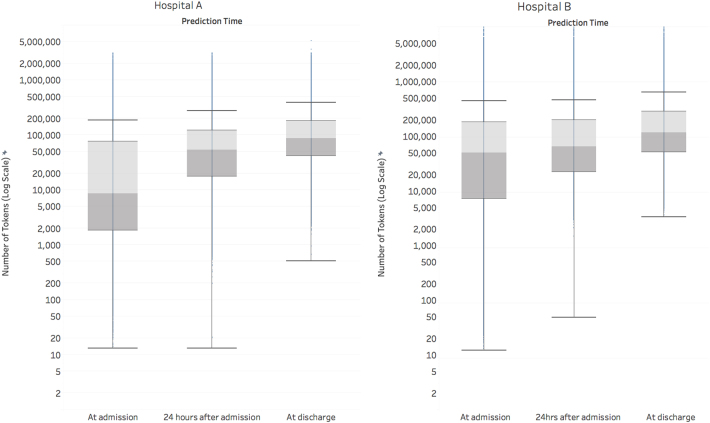
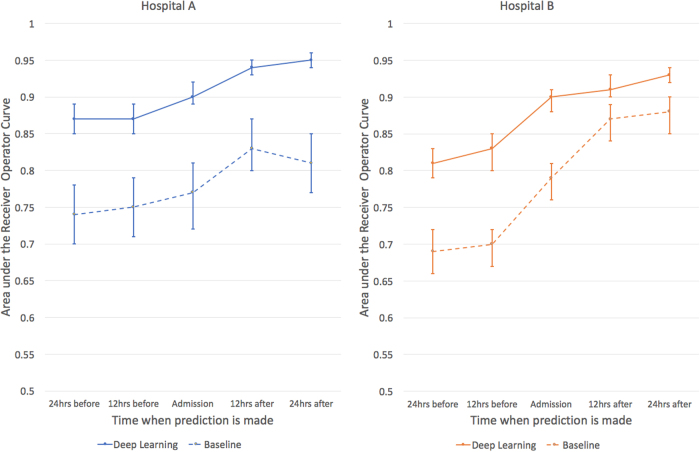
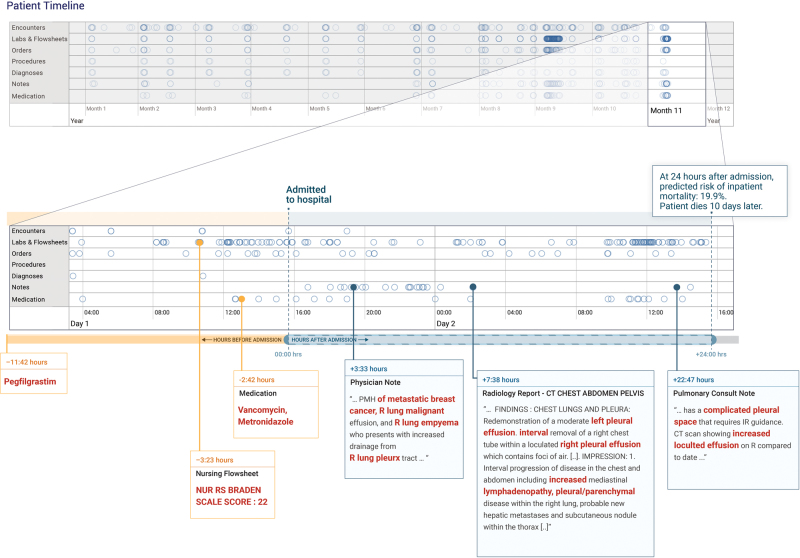
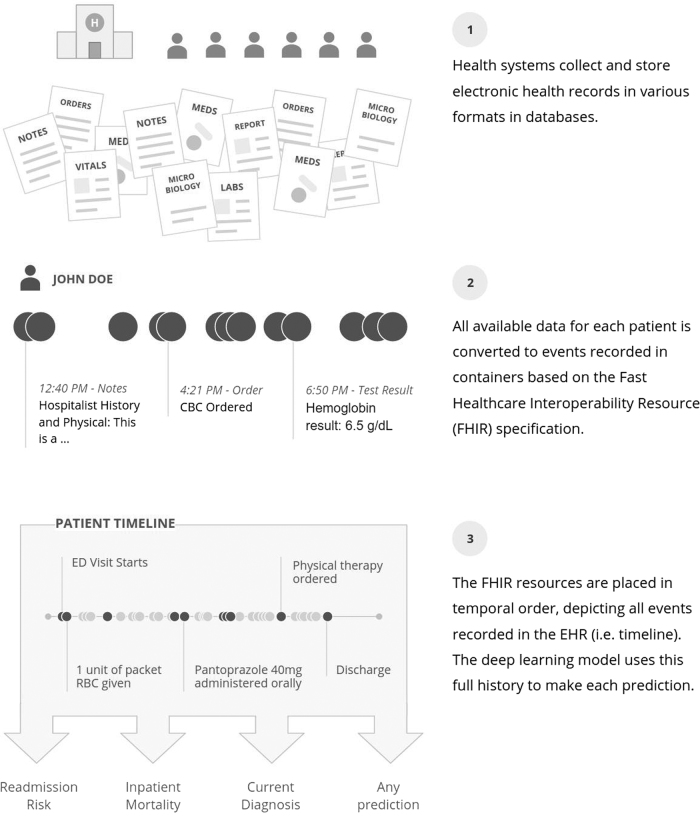
Predictive modeling with electronic health record (EHR) data is anticipated to drive personalized medicine and improve healthcare quality. Constructing predictive statistical models typically requires extraction of curated predictor variables from normalized EHR data, a labor-intensive process that discards the vast majority of information in each patient's record. We propose a representation of patients' entire raw EHR records based on the Fast Healthcare Interoperability Resources (FHIR) format. We demonstrate that deep learning methods using this representation are capable of accurately predicting multiple medical events from multiple centers without site-specific data harmonization. We validated our approach using de-identified EHR data from two US academic medical centers with 216,221 adult patients hospitalized for at least 24 h. In the sequential format we propose, this volume of EHR data unrolled into a total of 46,864,534,945 data points, including clinical notes. Deep learning models achieved high accuracy for tasks such as predicting: in-hospital mortality (area under the receiver operator curve [AUROC] across sites 0.93-0.94), 30-day unplanned readmission (AUROC 0.75-0.76), prolonged length of stay (AUROC 0.85-0.86), and all of a patient's final discharge diagnoses (frequency-weighted AUROC 0.90). These models outperformed traditional, clinically-used predictive models in all cases. We believe that this approach can be used to create accurate and scalable predictions for a variety of clinical scenarios. In a case study of a particular prediction, we demonstrate that neural networks can be used to identify relevant information from the patient's chart.
Overview
CoChat Summary
## TL;DR
This retrospective study shows that a single deep learning pipeline using raw EHR data in FHIR format can predict multiple outcomes across two academic hospitals without site-specific feature harmonization. The models outperformed traditional baselines for inpatient mortality, 30-day readmission, long length of stay, and discharge diagnosis prediction.
## Key findings
- The study included 216,221 hospitalizations from 114,003 unique patients; in-hospital death occurred in 2.3% (4,930/216,221), unplanned 30-day readmission in 12.9% (27,918/216,221), and long length of stay in 23.9%.
- For inpatient mortality at 24 h after admission, AUROC was 0.95 at Hospital A and 0.93 at Hospital B, versus 0.85 and 0.86 for the augmented Early Warning Score baseline.
- For 30-day readmission at discharge, AUROC was 0.77 at Hospital A and 0.76 at Hospital B, versus 0.70 and 0.68 for the modified HOSPITAL baseline; for long length of stay at 24 h, AUROC was 0.86 and 0.85, versus 0.76 and 0.74 for the modified Liu baseline.
- For predicting all discharge diagnoses (14,025 ICD-9 codes), weighted AUROC was 0.87/0.86 at admission and 0.90 at discharge for both hospitals; micro-F1 at discharge was 0.41 (Hospital A) and 0.40 (Hospital B).
## Methods
- Design: Retrospective study comparing deep learning models to traditional predictive models across two hospitals, with separate results reported for each site.
- Data/sample: De-identified EHR data from UCSF (2012–2016) and UCM (2009–2016), including adults 18+ with hospitalizations of 24 h or longer; UCM also included free-text notes.
- Analysis: Raw EHR data were converted into time-ordered FHIR-based token sequences and used to train three model types (LSTM, attention-based TANN, and boosted time-based decision stumps), with outputs ensembled; data were split 80/10/10 into development/validation/test sets and evaluated using AUROC, calibration curves, work-up-to-detection ratio, and micro-F1.
## Limitations
- The authors state it is a retrospective study, with “all of the usual limitations.”
- They state that prospective trials are needed to show that accurate predictions improve care.
- They note their approach does not harmonize data between sites, limiting transfer to new sites/cohorts; they also say the methods are computationally intensive and require specialized expertise.
- Evident from the text: the study’s diagnosis task is restricted to ICD-9 codes, and the authors caution that AUROC differences between hospitals, especially regarding notes, cannot be attributed solely to notes because the cohorts differed.
Model-written summary. Check it against the paper before relying on it.
Integrity signals
Registry
Cites
Statistics
Figures
Verification
Claims the paper makes
7 Valid · 0 Not valid · 6 Not checked · 33 Own results and interpretations
The cited sources support only part of this claim — read each source’s verdict below.
In the paper
“We are not aware of a study that predicts as many ICD codes as this study, but our micro-F1 score exceeds that shown on the smaller MIMIC-III dataset when predicting fewer diagnoses (0.40 vs 0.28).68”
§ Scalable and accurate deep learning with electronic health records > Discussion
What the sources say
- Partly supportedcites [68] Perotte A Diagnosis code assignment: models and evaluation metrics J. Am. Med. Inform. Assoc. 2014 21 231 237 10.1136/amiajnl-2013-002159 24296907 PMC3932472 sourceExperimental — accuracy not yet measured
The Results > Prediction models section reports a 27.6% F-measure for the flat SVM, consistent with the cited 0.28 after rounding. But Materials and methods > Datasets identifies the dataset as MIMIC II, not MIMIC-III; the Results also report a higher 39.5% F-measure for this paper’s hierarchy-based model. No page numbers are available in our copy. (LLM, conf=0.89)
hedged- Asserted: passes — The authors put it forward as true.
- Checkable: passes — It can be checked against evidence.
- Load-bearing: passes — The paper’s conclusions depend on it.
- Based: passes — The paper gives a reason why it holds.
- Rests on an assumption not shown here.
- Partly supported
The cited sources support only part of this claim — read each source’s verdict below.
In the paper
“A major challenge in using more of the data available for each patient has been the lack of standards and semantic interoperability of health data from multiple sites.25”
§ Scalable and accurate deep learning with electronic health records > Introduction > Related work
What the sources say
- Partly supportedcites [25] Sun H Semantic processing of EHR data for clinical research J. Biomed. Inform. 2015 58 247 259 10.1016/j.jbi.2015.10.009 26515501 sourceExperimental — accuracy not yet measured
The Introduction (p.1) and Conclusion (Section 5) of our copy clearly support the semantic-interoperability half of the claim: 'the semantic interoperability between different standards remains a challenge', and 'there is no single standard that could serve as the interoperability hub for all the existing clinical data sources and clinical applications', with the Abstract framing the whole paper as responding to 'a growing need to semantically process and integrate clinical data from different sources for clinical research' (multi-site sources are illustrated in Section 4.1.1: a German hospital Oracle database and an Italian regional IHE QED registry). However, the claim's 'lack of standards' is not what this paper says: the Introduction states that standards such as HL7, openEHR and ISO 13606 HAVE been developed to tackle storage and exchange of clinical data, and the residual problem is interoperability AMONG them plus the absence of one unifying hub standard, not an absence of standards. The claim also generalises the source's specific concern (secondary use/reuse of EHR data for clinical research applications) to 'using more of the data available for each patient'. (LLM, conf=0.70)
plainstates a cause- Asserted: passes — The authors put it forward as true.
- Checkable: passes — It can be checked against evidence.
- Load-bearing: passes — The paper’s conclusions depend on it.
- Based: passes — The paper gives a reason why it holds.
- Partly supported
Every source the paper cites for this claim was checked and supports it.
In the paper
“In the current study, we caution that the differences in AUROC across the two hospitals (one with and one without notes) cannot be ascribed to the presence or absence of notes given the difference in cohorts.45”
§ Scalable and accurate deep learning with electronic health records > Discussion
What the sources say
- Supportedcites [45] Walsh C Hripcsak G The effects of data sources, cohort selection, and outcome definition on a predictive model of risk of thirty-day hospital readmissions J. Biomed. Inform. 2014 52 418 426 10.1016/j.jbi.2014.08.006 25182868 PMC4261028 source
The Discussion states that cohort selection affects discriminatory performance and that comparing performance across studies requires the cohorts to be the same. This supports the citing authors’ caution against attributing their two hospitals’ AUROC difference to the presence or absence of notes when the cohorts also differ; the two-hospital comparison is their own study, not a result attributed to this source. (LLM, conf=0.90)
plain- Asserted: passes — The authors put it forward as true.
- Checkable: passes — It can be checked against evidence.
- Load-bearing: passes — The paper’s conclusions depend on it.
- Based: passes — The paper gives a reason why it holds.
- Supported
A result the paper reports from its own data — it cites no other source for it, so there is none to check. The quote shows it is in the paper.
In the paper
“For classifying all diagnosis codes, the weighted AUROCs at admission were 0.87 for Hospital A and 0.86 for Hospital B.”
§ Scalable and accurate deep learning with electronic health records > Results > Inferring discharge diagnoses
plain- Asserted: passes — The authors put it forward as true.
- Checkable: passes — It can be checked against evidence.
- Load-bearing: passes — The paper’s conclusions depend on it.
- Based: passes — The paper gives a reason why it holds.
- Rests on 2 assumptions not shown here.
A result the paper reports from its own data — it cites no other source for it, so there is none to check. The quote shows it is in the paper.
In the paper
“For predicting long length of stay, the AUROCs at 24 h after admission were 0.86 (95% CI 0.86–0.87) for Hospital A and 0.85 (95% CI 0.84–0.86) for Hospital B.”
§ Scalable and accurate deep learning with electronic health records > Results > Long length of stay
plain- Asserted: passes — The authors put it forward as true.
- Checkable: passes — It can be checked against evidence.
- Load-bearing: passes — The paper’s conclusions depend on it.
- Based: passes — The paper gives a reason why it holds.
- Rests on an assumption not shown here.
18 more claims
Create a free account to see all 46 claims and to verify the 2 references still open.
- It may state two separate claims as one. 16
- Probably not a substantial claim. 10
Claims other papers make about this one
Each is checked against this paper’s own text: does it say what the citing paper says it does?
The source backs part of the claim, not all of it — or backs it for a different population, condition or comparison.
In the citing paper
“The most important difference is that the study included co-morbidities, which have been proven to enable better predictions of disease progression trends and treatment outcomes.25,26”
From Development and validation of a screening tool for sepsis without laboratory results in the emergency department: a machine learning study (2025) · cites this paper as [26]
Experimental — accuracy not yet measuredThe source backs part of the claim, not all of it — or backs it for a different population, condition or comparison.
In the citing paper
“For both structured codes and unstructured notes, standardized vocabularies including FHIR [6] and UMLS CUIs [62,63] are introduced to transfer raw tokens into unique phrases to reduce the sparsity of the input data.”
From Deep representation learning of patient data from Electronic Health Records (EHR): A systematic review (2021) · cites this paper as [6]
Experimental — accuracy not yet measuredThe source backs part of the claim, not all of it — or backs it for a different population, condition or comparison.
In the citing paper
“Some FEMRs have tackled this problem by combining unstructured EHR data (i.e., text) with structured EMR data to boost performance on specific phenotyping and prediction tasks69,70.”
From The shaky foundations of large language models and foundation models for electronic health records (2023) · cites this paper as [69]
Experimental — accuracy not yet measuredThe cited source says what the claim attributes to it.
In the citing paper
“To improve performance and provide a degree of interpretability to the model, an attention mechanism is adopted in 13 studies [6,14,27,31,43,57,64,72,76–78,80,88].”
From Deep representation learning of patient data from Electronic Health Records (EHR): A systematic review (2021) · cites this paper as [6]
The cited source says what the claim attributes to it.
In the citing paper
“Advances in artificial intelligence (AI) are driving a revolution across science, enabling exciting new results across chemistry,80–82 biology,83,84 and medicine.85–88”
From Artificial Intelligence and Early Detection of Pancreatic Cancer: 2020 Summative Review (2021) · cites this paper as [85]
8 more claims about this paper
Create a free account to see every claim other papers make about this one.
Citations
Cites
Hochreiter, S., & Schmidhuber, J. (1997) · Neural Computation · doi:10.1162/neco.1997.9.8.1735 · Cited by 102,318 · cited 9×
“Patient records vary significantly in length and density of data-points (e.g. vital sign measurements in an intensive care unit vs outpatient clinic), so we formulated three deep learning neural-network model architectures that take advantage of such data in different ways: one based on recurrent neural networks (LSTM)…”
MethodInfluentialLeCun, Y., Bengio, Y., & Hinton, G. (2015) · Nature · doi:10.1038/nature14539 · Cited by 84,126
Scikit-learn: Machine Learning in Python
Pedregosa, F., Varoquaux, G., Gramfort, A., Michel, V., Thirion, B., Grisel, O., Blondel, M., Müller, A., Nothman, J., Louppe, G., et al. (2012) · arXiv · doi:10.48550/arxiv.1201.0490 · Cited by 71,016
APACHE II: A severity of disease classification system
KNAUS, W. A., DRAPER, E. A., WAGNER, D. P., & ZIMMERMAN, J. E. (1985) · Critical Care Medicine · doi:10.1097/00003246-198510000-00009 · Cited by 13,664
Representation Learning: A Review and New Perspectives
Bengio, Y., Courville, A., & Vincent, P. (2013) · IEEE Transactions on Pattern Analysis and Machine Intelligence · doi:10.1109/tpami.2013.50 · Cited by 13,001 · cited 1×
“Our central insight is that rather than explicitly harmonizing EHR data, mapping it into a highly curated set of structured predictors variables and then feeding those variables into a statistical model, we can instead learn to simultaneously harmonize inputs and predict medical events through direct feature learning…”
BackgroundMIMIC-III, a freely accessible critical care database
Johnson, A. E. W., Pollard, T. J., Shen, L., Lehman, L.-W. H., Feng, M., Ghassemi, M., Moody, B., Szolovits, P., Anthony Celi, L., & Mark, R. G. (2016) · Scientific Data · doi:10.1038/sdata.2016.35 · Cited by 8,141 · cited 1×
“ecord, which includes clinical free-text notes as well as large amounts of structured and semi-structured data. Because of the availability of Medical Information Mart for Intensive Care (MIMIC) data [48], many prior studies also have focused on ICU patients from a single center [92, 41]; other single-center studies h…”
MethodGulshan, V., Peng, L., Coram, M., Stumpe, M. C., Wu, D., Narayanaswamy, A., Venugopalan, S., Widner, K., Madams, T., Cuadros, J., et al. (2016) · JAMA · doi:10.1001/jama.2016.17216 · Cited by 7,697 · cited 1×
“Deep learning emerged as the preferred machine learning approach in machine perception problems ranging from computer vision to speech recognition, but has more recently proven useful in natural language processing, sequence prediction, and mixed modality data settings([36, 16, 21, 56]).”
BackgroundMandell, L. A., Wunderink, R. G., Anzueto, A., Bartlett, J. G., Campbell, G. D., Dean, N. C., Dowell, S. F., File, T. M., Musher, D. M., Niederman, M. S., et al. (2007) · Clinical Infectious Diseases · doi:10.1086/511159 · Cited by 6,202 · cited 1×
“of only 27 variables, rely on traditional generalized linear models, and are built using data at a single center. In clinical practice, simpler models are most commonly deployed, such as the CURB-65 [68, 60], which is a 5-factor model, or single-parameter warning scores [20, 45]. A major challenge in using more of the…”
MethodAPACHE II: a severity of disease classification system.
Knaus, W. A., Draper, E. S., Wagner, D. P., & Zimmerman, J. E. (1985) · PubMed · Cited by 6,034
Predicting the future - big data, machine learning, and clinical medicine
Obermeyer, Z., & Emanuel, E. J. (2016) · New England Journal of Medicine · doi:10.1056/nejmp1606181 · Cited by 3,652 · cited 1×
“In our case study, the model identified elements of the patient’s history and radiology findings to render its prediction, which are critical data-points that a clinician would also use [41].”
Method
Research works printed but not linked: 5
- Wu, Y. et al. Google’s neural machine translation system: bridging the gap between human and machine translation. arXiv [cs.CL] (2016).
- Aczon, M. et al. Dynamic mortality risk predictions in pediatric critical care using recurrent neural networks. arXiv [stat.ML] (2017).
- Suresh, H. et al. Clinical intervention prediction and understanding using deep networks. arXiv [cs.LG] (PMLR, Los Angeles, CA, USA, 2017).
- Razavian, N., Marcus, J. & Sontag, D. Multi-task prediction of disease onsets from longitudinal laboratory tests. In Proceedings of the 1st Machine Learning for Healthcare Conference, (eds F. Doshi-Velez, J. Fackler, D. Kale and B. Wallace, J. Wiens) Vol. 56, pp 73–100 (PMLR, Los Angeles, CA, 2016).
- Bahdanau, D., Cho, K. & Bengio, Y. Neural machine translation by jointly learning to align and translate. arXiv [cs.CL] (2014).
Cited by
Items 601–700 of 2,601
Shung, D. L., Huang, J., Castro, E., Tay, J. K., Simonov, M., Laine, L., Batra, R., & Krishnaswamy, S. (2021) · Scientific Reports · doi:10.1038/s41598-021-88226-3 · Cited by 33
Mori, M., Durant, T. J. S., Huang, C., Mortazavi, B. J., Coppi, A. C., Jean, R. A., Geirsson, A., Schulz, W. L., & Krumholz, H. M. (2021) · Circulation Cardiovascular Quality and Outcomes · doi:10.1161/circoutcomes.120.007363 · Cited by 31
Using Deep Learning to Identify High-Risk Patients with Heart Failure with Reduced Ejection Fraction
Wang, Z., Chen, X., Tan, X., Yang, L., Kannapur, K., Vincent, J. L., Kessler, G. N., Ru, B., & Yang, M. (2021) · Journal of health economics and outcomes research · doi:10.36469/jheor.2021.25753 · Cited by 35
Ahn, I., Gwon, H., Kang, H. J., Kim, Y., Seo, H., Choi, H., Cho, H. N., Kim, M., Jun, T. J., & Kim, Y. (2021) · JMIR Medical Informatics · doi:10.2196/32662 · Cited by 39
“Moreover, authors have used machine learning (ML)–based models to predict the LOS [7-9], prolonged hospitalization, and unplanned readmission [10] and to find biomarkers for critical diseases [11].”
Predicting inpatient medication orders from electronic health record data
Rough, K., Dai, A. M., Zhang, K., Xue, Y., Vardoulakis, L. M., Cui, C., Butte, A. J., Howell, M. D., & Rajkomar, A. (2020) · Clinical Pharmacology & Therapeutics · doi:10.1002/cpt.1826 · Cited by 28
Self-citationUmaMaheswaran, S. K., Kaur, G., Pankajam, A., Firos, A., Vashistha, P., Tripathi, V., & Mohammed, H. S. (2022) · Journal of Food Quality · doi:10.1155/2022/1447326 · Cited by 36
RetractedYang, Z., Lin, Y., Xu, Y., Hu, J., & Dong, S. (2023) · Knowledge-Based Systems · doi:10.1016/j.knosys.2023.111082 · Cited by 36
Mathis, M. R., Steffner, K. R., Subramanian, H., Gill, G., Girardi, N. I., Bansal, S., Bartels, K., Khanna, A. K., & Huang, J. (2024) · Journal of Cardiothoracic and Vascular Anesthesia · doi:10.1053/j.jvca.2024.02.004 · Cited by 33
Artificial Intelligence and Integrated Genotype–Phenotype Identification
Frey, L. J. (2018) · Genes · doi:10.3390/genes10010018 · Cited by 33
Deep learning for prediction of population health costs
Drewe-Boß, P., Enders, D., Walker, J., & Ohler, U. (2022) · BMC Medical Informatics and Decision Making · doi:10.1186/s12911-021-01743-z · Cited by 39
“…applied in the medical domain to task such as dermatologist level detection of skin cancer [8], prediction of various clinical outcomes from electronics health records [15], or the detection of diabetic retinopathy from retinal fundus photographs [10], showing the potential of this technology.”
BackgroundModeling Time Series Data with Deep Learning: A Review, Analysis, Evaluation and Future Trend
Ang, J.-S., Ng, K.-W., & Chua, F.-F. (2020) · International Conference on Information Technology and Multimedia (ICIMU) · doi:10.1109/icimu49871.2020.9243546 · Cited by 37
“This method is experimented in several works of time series modeling [1], [14], [15], however, not every dataset is able to benefit from this method [28].”
BackgroundMethodEarly identification of epilepsy surgery candidates: A multicenter, machine learning study
Wissel, B. D., Greiner, H. M., Glauser, T. A., Pestian, J. P., Kemme, A. J., Santel, D., Ficker, D. M., Mangano, F. T., Szczesniak, R. D., & Dexheimer, J. W. (2021) · Acta Neurologica Scandinavica · doi:10.1111/ane.13418 · Cited by 29
“35,36 In certain situations, deep learning outperforms traditional ML algorithms used here, but they require thousands of cases for training.”
BackgroundPredicting non-attendance in hospital outpatient appointments using deep learning approach
Dashtban, M. H., & Li, W. (2021) · Health Systems · doi:10.1080/20476965.2021.1924085 · Cited by 34
“(Rajkomar et al., 2018) further developed a scalable deep learning model using RNN for prediction across multiple centres without site-specific data harmonisation which is validated in read-mission task.”
MethodNguyen, M., Corbin, C. K., Eulalio, T. Y., Ostberg, N. P., Machiraju, G., Marafino, B. J., Baiocchi, M., Rose, C. C., & Chen, J. H. (2021) · Journal of the American Medical Informatics Association · doi:10.1093/jamia/ocab118 · Cited by 34
NeuroCartography: Scalable Automatic Visual Summarization of Concepts in Deep Neural Networks
Park, H., Das, N., Duggal, R., Wright, A. P., Shaikh, O., Hohman, F., & Chau, D. H. (2021) · IEEE Transactions on Visualization and Computer Graphics · doi:10.1109/tvcg.2021.3114858 · Cited by 39
“Fred Deep Neural Networks (DNNs) have demonstrated remarkable success in many applications, such as object detection [30, 60], speech recognition [13, 39], and data-driven health care [45, 46].”
BackgroundPredictive structured–unstructured interactions in EHR models: A case study of suicide prediction
Bayramli, I., Castro, V. M., Barak‐Corren, Y., Madsen, E. M., Nock, M. K., Smoller, J. W., & Reis, B. Y. (2022) · npj Digital Medicine · doi:10.1038/s41746-022-00558-0 · Cited by 30
AlSaad, R., Malluhi, Q. M., & Boughorbel, S. (2022) · BioData Mining · doi:10.1186/s13040-022-00289-8 · Cited by 35
“While the main purpose of these codes are for billing purposes, it has been widely shown that they are highly predictive of patient health outcome [34].”
BackgroundCroon, P. M., Selder, J. L., Allaart, C. P., Bleijendaal, H., Chamuleau, S. A. J., Hofstra, L., Išgum, I., Ziesemer, K. A., & Winter, M. M. (2022) · European Heart Journal - Digital Health · doi:10.1093/ehjdh/ztac035 · Cited by 41
“For example, Rajkomar et al.47 utilized a deep neural network (DNN) in a cohort of 216,221 adult patients hospitalized for more than 24 h for any cause and reported an AUC of 0.75–0.76 for 30-day hospital readmission using”
MethodInfluentialAutomatic Segmentation of Retinal Layers in Multiple Neurodegenerative Disorder Scenarios
Gende, M., Mallén, V., de Moura, J., Ciordía, B. C., García‐Martín, E., Sánchez, C. I., Novo, J., & Ortega, M. (2023) · IEEE Journal of Biomedical and Health Informatics · doi:10.1109/jbhi.2023.3313392 · Cited by 36
“In order to provide a robust measurement of these metrics, and following other similar approaches in the literature [64], [65], bootstrapping with 1000 repetitions was applied at the image level to all tests.”
MethodPerioperative intelligence: applications of artificial intelligence in perioperative medicine
Maheshwari, K., Ruetzler, K., & Saugel, B. (2020) · Journal of Clinical Monitoring and Computing · doi:10.1007/s10877-019-00379-9 · Cited by 28
“Even the best predictive models, developed by Google, for length of stay and readmission risk are imperfect and lack generalizability [8].”
MethodHype, Sustainability, and the Price of the Bigger-is-Better Paradigm in AI
Varoquaux, G. P., Luccioni, A. S., & Whittaker, M. (2025) · ACM Conference on Fairness, Accountability, and Transparency (FAccT) · doi:10.1145/3715275.3732006 · Cited by 128
“The largest source of medical data are probably electronic health records – Rajkomar et al. [98] reported performance of deep learning, though their appendices show that logistic regression achieves the same performance.”
Machine learning–based penetrance of genetic variants
Forrest, I. S., Vy, H. M. T., Rocheleau, G., Jordan, D. M., Petrazzini, B. O., Nadkarni, G. N., Cho, J. H., Ganapathi, M., Huang, K., Chung, W. K., et al. (2025) · Science · doi:10.1126/science.adm7066 · Cited by 34
Xiu, X., Qian, Q., & Wu, S. (2020) · JMIR Medical Informatics · doi:10.2196/18287 · Cited by 29
Patient similarity analytics for explainable clinical risk prediction
Fang, H. S. A., Tan, N. C., Tan, W. Y., Oei, R. W., Lee, M. L., & Hsu, W. (2021) · BMC Medical Informatics and Decision Making · doi:10.1186/s12911-021-01566-y · Cited by 39
“Page 14/19 using free text data within the dataset to enhance explainability, Lundberg et al presented several tools like dependence plots and explanation embeddings to better explain tree-based model outputs (18, 19).”
MethodCOINN: Crypto/ML Codesign for Oblivious Inference via Neural Networks
Hussain, S. U., Javaheripi, M., Samragh, M., & Koushanfar, F. (2021) · ACM SIGSAC Conference on Computer and Communications Security (CCS) · doi:10.1145/3460120.3484797 · Cited by 52
“…perform inference using the server’s trained DNN. Cloud-based inference, a.k.a. Machine Learning as a Service (MLaaS), is integrated in a wide range of real-world applications such as personal assistants [32], face authentication [40], medical diagnosis [4, 18, 19, 45], and health monitoring [3].”
MethodHan, T., & Sánchez-Azofeifa, A. G. (2022) · Remote Sensing · doi:10.3390/rs14133157 · Cited by 32
“Also, time series data have found many applications in image classification [24], healthcare [25], human recognition [26], and the steel industry [27].”
BackgroundRamakrishnaiah, Y., Maćešić, N., Webb, G. I., Peleg, A. Y., & Tyagi, S. (2023) · Journal of Biomedical Informatics · doi:10.1016/j.jbi.2023.104509 · Cited by 39
GenHPF: General Healthcare Predictive Framework for Multi-Task Multi-Source Learning
Hur, K., Oh, J., Kim, J., Kim, J., Lee, M. J., Cho, E., Moon, S.-E., Kim, Y., Atallah, L., & Choi, E. (2023) · IEEE Journal of Biomedical and Health Informatics · doi:10.1109/jbhi.2023.3327951 · Cited by 66
“…EHR embedding method begins by assigning a unique embedding for each element in V via a linear map ( i.e. , lookup table) f V [17], [21], [22], [35], [36], so that v k i can be converted to a vector v k i ∈ R d v , typically followed by pooling multiple feature values ( v 1 i , v 2 i , .…”
MethodInfluentialExploring the application and future outlook of Artificial intelligence in pancreatic cancer
Zhao, G., Chen, X., Zhu, M., Liu, Y., & Wang, Y. (2024) · Frontiers in Oncology · doi:10.3389/fonc.2024.1345810 · Cited by 32
“Innovative methodologies including cross-center collaboration and synthetic sample generation warrant exploration to surmount this challenge and bolster reliability (42).”
BackgroundLuo, L., Li, J., Lian, S., Zeng, X., Sun, L., Li, C., Huang, D., & Zhang, W. (2019) · Health Informatics Journal · doi:10.1177/1460458219881335 · Cited by 34
On Sharing Models Instead of Data using Mimic learning for Smart Health Applications
Baza, M., Salazar, A., Abdallah, M. M., Abdallah, M. M., & Akkaya, K. (2020) · IEEE International Conference on Informatics, IoT, and Enabling Technologies (ICIoT) · doi:10.1109/iciot48696.2020.9089457 · Cited by 37
“Recently, the research community increasingly incorporates machine learning algorithms in the EHRs domain [3].”
FHIR-PYrate: a data science friendly Python package to query FHIR servers
Hosch, R., Baldini, G., Parmar, V., Borys, K., Koitka, S., Engelke, M., Arzideh, K., Ulrich, M., & Nensa, F. (2023) · BMC Health Services Research · doi:10.1186/s12913-023-09498-1 · Cited by 29
“However, there also exist deep learning pipelines that use preprocessing and tokenization of FHIR resources to make predictions [31].”
BackgroundPotential uses of AI for perioperative nursing handoffs: a qualitative study
King, C. R., Shambe, A., & Abraham, J. (2023) · JAMIA Open · doi:10.1093/jamiaopen/ooad015 · Cited by 27
Exploring explainable AI features in the vocal biomarkers of lung disease
Chen, Z., Liang, N., Li, H., Zhang, H., Li, H., Yan, L., Hu, Z., Chen, Y., Zhang, Y., Wang, Y., et al. (2024) · Computers in Biology and Medicine · doi:10.1016/j.compbiomed.2024.108844 · Cited by 26
Self-citationCoupland, H., Scheidwasser, N., Katsiferis, A., Davies, M., Flaxman, S., Hulvej Rod, N., Mishra, S., Bhatt, S., & Unwin, H. J. T. (2025) · BMC Public Health · doi:10.1186/s12889-025-22705-4 · Cited by 26
“The findings of this study build on existing research demonstrating the strengths of DL for longitudinal data analysis in healthcare [36, 58, 59].”
Retracted: Machine Learning Techniques for Analysing Security Practises in Electronic Health Records
Saraswat, B. K., Saxena, A. K., & Vashist, P. C. (2023) · International Conference on Technological Advancements in Computational Sciences (ICTACS) · doi:10.1109/ictacs59847.2023.10390093 · Cited by 28
“EHRs are updated because they provide brief and clean, up-to-date, updated, and updated people’s fitness statistics, up-to-date legal healthcare professionals, and institutions who need it for prognosis, treatment, and research [1].”
BackgroundRetractedCarey, S., Pang, A., & de Kamps, M. (2024) · Future Healthcare Journal · doi:10.1016/j.fhj.2024.100177 · Cited by 34
“The proliferation of digital health records 11 may offer, via routinely collected data, a partial solution to the selection bias by capturing all population groups receiving healthcare.”
BackgroundCurrent Status and Future of Artificial Intelligence in Medicine
Basubrin, O. (2025) · Cureus · doi:10.7759/cureus.77561 · Cited by 44
“AI-powered tools can predict patient flow, optimize staffing levels, and automate administrative tasks, freeing up clinicians to focus on patient care [21].”
Advanced imaging techniques and artificial intelligence in pleural diseases: a narrative review
Marchi, G., Mercier, M., Cefalo, J., Salerni, C., Ferioli, M., Candoli, P., Gori, L., Cucchiara, F., Cenerini, G., Guglielmi, G., et al. (2025) · European Respiratory Review · doi:10.1183/16000617.0263-2024 · Cited by 32
“They support the early detection of diseases, risk stratification and the development of personalised treatment plans [83].”
Hughes, M. C., Pradier, M. F., Ross, A. S., McCoy, T. H., Perlis, R. H., & Doshi‐Velez, F. (2020) · JAMA Network Open · doi:10.1001/jamanetworkopen.2020.5308 · Cited by 26
Ribelles, N., Jerez, J. M., Rodríguez-Brazzarola, P., Jiménez, B., Díaz-Redondo, T., Mesa, H., Márquez, A., Sánchez‐Muñoz, A., Pajares, B., Carabantes, F., et al. (2020) · European Journal of Cancer · doi:10.1016/j.ejca.2020.11.030 · Cited by 28
Kim, C., Lee, G., Oh, H., Jeong, G.-J., Kim, S. W., Chun, E. J., Kim, Y., Lee, J., & Yang, D. H. (2021) · European Radiology · doi:10.1007/s00330-021-08296-9 · Cited by 26
Patient Health Representation Learning via Correlational Sparse Prior of Medical Features
Ma, X., Wang, Y., Chu, X., Ma, L., Tang, W., Zhao, J., Yuan, Y., & Wang, G. (2022) · IEEE Transactions on Knowledge and Data Engineering · doi:10.1109/tkde.2022.3230454 · Cited by 43
Spiking neural predictive coding for continually learning from data streams
Ororbia, A. G. (2023) · Neurocomputing · doi:10.1016/j.neucom.2023.126292 · Cited by 52
“ANNs continue to demonstrate their powerful function approximation abilities in an ever-growing variety of applications [49, 85, 91, 87], including many in computer vision [53, 39], speech [42, 72], and text processing [83, 20, 80].”
BackgroundTWIN: Personalized Clinical Trial Digital Twin Generation
Das, T., Wang, Z., & Sun, J. (2023) · ACM SIGKDD Conference on Knowledge Discovery and Data Mining (KDD) · doi:10.1145/3580305.3599534 · Cited by 55
“The risk detection is formed in three types: First, as either binary classification (e.g., the onset of a specific disease [8, 11, 16] or mortality [23]); Second, as multi-class classification (e.g., disease stage prediction [7] and disease categories [35]); Third, as multi-label classification…”
BackgroundPadula, W. V., Armstrong, D. G., Pronovost, P. J., & Saria, S. (2024) · BMJ Open · doi:10.1136/bmjopen-2023-082540 · Cited by 43
“11 For instance, Modified Early Warning Score systems have been developed to trigger intervention in patients with general deteriorations in health that could increase risk of cardiac arrest.”
BackgroundAI hybrid survival assessment for advanced heart failure patients with renal dysfunction
Zhang, G., Wang, Z., Tong, Z., Qin, Z., Su, C., Li, D., Xu, S., Li, K., Zhou, Z., Xu, Y., et al. (2024) · Nature Communications · doi:10.1038/s41467-024-50415-9 · Cited by 35
“Despite the potency, AI ’ s ‘ black-box ’ nature posed challenges in providing clear interpretations and transparency to clinicians, a key factor limiting the clinical implementation of many HF prognostic models 24,30,31 .”
Disease Trajectories from Healthcare Data: Methodologies, Key Results, and Future Perspectives
Jørgensen, I. F., Haue, A. D., Placido, D., Hjaltelin, J. X., & Brunak, S. (2024) · Annual Review of Biomedical Data Science · doi:10.1146/annurev-biodatasci-110123-041001 · Cited by 33
Rawat, K. S., & Yadav, M. (2025) · IEEE Internet of Things Journal · doi:10.1109/jiot.2025.3589025 · Cited by 39
“Countries worldwide are investing heavily in AI to remain competitive and maintain security [4].”
Atias, D., Ashri, S., Goldbourt, U., Benyamini, Y., Gilad-Bachrach, R., Hasin, T., Gerber, Y., & Obolski, U. (2025) · Annals of Epidemiology · doi:10.1016/j.annepidem.2025.07.024 · Cited by 37
Zhu, R., Tu, X., & Huang, J. X. (2019) · Studies in big data · doi:10.1007/978-3-030-33966-1_13 · Cited by 32
Understanding Early Childhood Obesity via Interpretation of Machine Learning Model Predictions
Pang, X., Forrest, C. B., Lê‐Scherban, F., & Masino, A. J. (2019) · International Conference on Machine Learning and Applications · doi:10.1109/icmla.2019.00235 · Cited by 36
“Machine learning models trained on electronic health records (EHRs) have been widely researched for the prediction and analysis of numerous health conditions [11]–[13].”
BackgroundIncremental Benefits of Machine Learning—When Do We Need a Better Mousetrap?
Engelhard, M., Návar, A. M., & Pencina, M. J. (2021) · JAMA Cardiology · doi:10.1001/jamacardio.2021.0139 · Cited by 26
In-hospital resource utilization prediction from electronic medical records with deep learning
Yu, K., Yang, Z., Wu, C., Huang, Y., & Xie, X. (2021) · Knowledge-Based Systems · doi:10.1016/j.knosys.2021.107052 · Cited by 26
Chen, Y., Yang, T., Gao, X., & Xu, A. (2021) · Frontiers of Medicine · doi:10.1007/s11684-021-0828-7 · Cited by 28
“Recurrent neural networks are suitable for integrating these data to build a generalizable system [21,22], which can help doctors record medical treatment and analyze and predict future medical events [23–26] such as mortality, readmission rate, and length of stay.”
MethodKyriazakos, S. A., Pnevmatikakis, A., Cesario, A., Kostopoulou, K., Boldrini, L., Valentini, V., & Scambia, G. (2021) · Frontiers in Digital Health · doi:10.3389/fdgth.2021.648190 · Cited by 25
“Some concerns are raised, however, regarding the readiness of EHRs systems to support machine-learning methods from a data quality standpoint (12).”
BackgroundMethodVan, V. T. S., Antonio, V. A. A., Siguin, C. P., Gordoncillo, N. P., Sescon, J. T., Go, C. K., & Miro, E. D. (2021) · Nutrition · doi:10.1016/j.nut.2021.111571 · Cited by 38
Ostberg, N. P., Zafar, M. A., Mukherjee, S. K., Ziganshin, B. A., & Elefteriades, J. A. (2022) · Journal of Thoracic and Cardiovascular Surgery · doi:10.1016/j.jtcvs.2021.12.045 · Cited by 29
Zhang, H., Zhang, J., Ni, W., Jiang, Y., Liu, K., Sun, D., & Li, J. (2022) · JMIR Medical Informatics · doi:10.2196/35239 · Cited by 36
“A comprehensive study on applying deep learning techniques to EHR data for a variety of prediction problems was reported in the study by Rajkomar et al [13].”
BackgroundEisenberg, L., Brossette, C., Rauch, J., Grandjean, A., Ottinger, H. D., Rissland, J., Schwarz, U., Graf, N. M., Beelen, D. W., Kiefer, S., et al. (2022) · American Journal of Hematology · doi:10.1002/ajh.26671 · Cited by 31
“On large EHR databases, recurrent deep neural networks, for example, using long short-term memory (LSTM) units, have demonstrated high prediction performances utilizing entire time series as model input.(16,37,38) A limitation of LSTMs is, however, their dependence on very large training data, which are not available…”
BackgroundTalwar, A., Lopez-Olivo, M. A., Huang, Y., Lin, Y., & Aparasu, R. R. (2023) · Exploratory Research in Clinical and Social Pharmacy · doi:10.1016/j.rcsop.2023.100317 · Cited by 29
Health Care AI and Patient Privacy— Dinerstein v Google
Duffourc, M., & Gerke, S. (2024) · JAMA · doi:10.1001/jama.2024.1110 · Cited by 30
Deepa, R., Sadu, V. B., C, P. G., & Sivasamy, A. (2024) · AIP Advances · doi:10.1063/5.0191990 · Cited by 35
Rancati, S., Bosoni, P., Schiaffini, R., Deodati, A., Mongini, P. A., Sacchi, L., Toffanin, C., & Bellazzi, R. (2024) · Diabetology · doi:10.3390/diabetology5060042 · Cited by 31
“For instance, time series forecasting models have been employed to predict patient vitals in intensive care units (ICUs) and monitor chronic conditions such as diabetes [8,9].”
The Future of Healthcare Is Digital: Unlocking the Potential of Mobile Health and E-Health Solutions
Giansanti, D. (2025) · Healthcare · doi:10.3390/healthcare13070802 · Cited by 31
“Furthermore, the integration of AI-driven analytics in electronic health records (EHRs) [7] is crucial for clinical decision-making and interoperability.”
Zhang, K., Wang, D., Lin, F., Xie, J., & Zhou, W. (2026) · iScience · doi:10.1016/j.isci.2026.115026 · Cited by 50
“34,43 SHAP assigns fair, quantitative contributions to individual features, supporting both global feature rankings and case-specific explanations—making it particularly popular in EHR-based predictive modeling.”
Self-citationCombining patient visual timelines with deep learning to predict mortality
Mayampurath, A. M., Sanchez-Pinto, L. N., Carey, K. A., Venable, L. R., & Churpek, M. M. (2019) · PLoS ONE · doi:10.1371/journal.pone.0220640 · Cited by 27
Rezaee, M., Putrenko, I., Takeh, A., Ganna, A., & Ingelsson, E. (2020) · PLoS ONE · doi:10.1371/journal.pone.0235758 · Cited by 25
Zuo, Z., & Zhao, K. (2020) · Journal of the Association for Information Science and Technology · doi:10.1002/asi.24415 · Cited by 31
“logistic regression has been proved to be comparable to the sophisticated machine learning algorithms such as artificial neural networks (e.g., Ayer et al., 2010; Rajkomar et al., 2018).”
MethodZong, N., Ngo, V., Stone, D. J., Wen, A., Zhao, Y., Yu, Y., Liu, S., Huang, M. S., Wang, C., & Jiang, G. (2021) · JMIR Medical Informatics · doi:10.2196/23586 · Cited by 36
A comprehensive EHR timeseries pre-training benchmark
McDermott, M., Nestor, B., Kim, E., Zhang, W., Goldenberg, A., Szolovits, P., & Ghassemi, M. (2021) · Proceedings of the Conference on Health, Inference, and Learning · doi:10.1145/3450439.3451877 · Cited by 24
“[27] examine overall hospital readmission in their work.”
BackgroundIdentification of pediatric respiratory diseases using a fine-grained diagnosis system
Yu, G., Yu, Z., Shi, Y., Wang, Y., Liu, X., Li, Z., Zhao, Y., Sun, F., Yu, Y., & Shu, Q. (2021) · Journal of Biomedical Informatics · doi:10.1016/j.jbi.2021.103754 · Cited by 31
Self-citationStenzl, A., Sternberg, C. N., Ghith, J., Serfass, L., Schijvenaars, B. J. A., & Sboner, A. (2022) · British Journal of Urology · doi:10.1111/bju.15662 · Cited by 27
Okawa, T., Mizuno, T., Hanabusa, S., Ikeda, T., Mizokami, F., Koseki, T., Takahashi, K., Yuzawa, Y., Tsuboi, N., Yamada, S., et al. (2022) · PLoS ONE · doi:10.1371/journal.pone.0262021 · Cited by 28
“Neural networks are able to learn representations of both key factors and their interactions from data [23], and gradient boosting decision trees support decision making, similar to a flowchart estimating the risk for an outcome [24].”
BackgroundShen, M.-Z., Hong, S., Wang, J., Zhang, X., Xu, L., Wang, Y., Yan, C., Chen, H., Chen, Y., Han, W., et al. (2022) · Frontiers in Cellular and Infection Microbiology · doi:10.3389/fcimb.2022.862526 · Cited by 28
Epileptic Seizure Detection using EEG Signals
Khan, I. M., Khan, M. M., & Farooq, O. (2022) · International Conference on Computing and Informatics (ICCI) · doi:10.1109/icci54321.2022.9756061 · Cited by 27
Explainable AI (XAI) Applied in Machine Learning for Pain Modeling: A Review
Madanu, R., Abbod, M., Hsiao, F., Chen, W., & Shieh, J.-S. (2022) · Technologies · doi:10.3390/technologies10030074 · Cited by 36
Explainable Deep Attention Active Learning for Sentimental Analytics of Mental Disorder
Ahmed, U., Jhaveri, R. H., Srivastava, G., & Lin, J. C. (2022) · ACM Transactions on Asian and Low-Resource Language Information Processing · doi:10.1145/3551890 · Cited by 37
“Artiicial Intelligence in Medicine (AIM) has the potential to improve the practice of medicine by enabling physicians as well as other medical professionals to analyze various data more naturally as well as accurately [33].”
BackgroundLifting Hospital Electronic Health Record Data Treasures: Challenges and Opportunities
Maletzky, A., Böck, C., Tschoellitsch, T., Roland, T., Ludwig, H., Thumfart, S., Giretzlehner, M., Hochreiter, S., & Meier, J. M. (2022) · JMIR Medical Informatics · doi:10.2196/38557 · Cited by 31
“Many prior studies have demonstrated how data science and machine learning (ML) can be applied to large databases of EHRs to successfully train models to predict many different patient-related outcomes, including mortality risk [1-4], length of hospital or intensive care unit (ICU) stays [1-3], cardiovascular decompen…”
BackgroundMachine learning model for predicting late recurrence of atrial fibrillation after catheter ablation
Budzianowski, J., Kaczmarek‐Majer, K., Rzeźniczak, J., Słomczyński, M., Wichrowski, F., Hiczkiewicz, D., Musielak, B., Grydz, Ł., Hiczkiewicz, J., & Burchardt, P. (2023) · Scientific Reports · doi:10.1038/s41598-023-42542-y · Cited by 32
“Although deep learning models provide high prediction accuracy 15 , explaining their predictions remains a challenging step, and as stated by the authors of 12 : “we cannot provide an explicit survival function or equation, and we cannot suggest specific cut-off values of predictors because of the…”
BackgroundDevelopment and evaluation of a large language model of ophthalmology in Chinese
Zheng, C., Ye, H., Guo, J., Yang, J., Fei, P., Yuan, Y., Huang, D., Huang, Y., Peng, J., Xie, X., et al. (2024) · British Journal of Ophthalmology · doi:10.1136/bjo-2023-324526 · Cited by 29
Learning Latent Space Representations to Predict Patient Outcomes: Model Development and Validation
Rongali, S., Rose, A. J., McManus, D. D., Bajracharya, A. S., Kapoor, A., Granillo, E., & Yu, H. Q. (2020) · Journal of Medical Internet Research · doi:10.2196/16374 · Cited by 30
“There have been promising results regarding the use of RNNs in clinical applications such as diagnosis predictions [6,37,38].”
BackgroundRevolutionising Acute Cardiac Care With Artificial Intelligence: Opportunities and Challenges
Doolub, G., Khurshid, S. S., Thériault-Lauzier, P., Lapalme, A. N., Tastet, O., So, D. Y. F., Langlais, É. L., Corbin, D., & Avram, R. (2024) · Canadian Journal of Cardiology · doi:10.1016/j.cjca.2024.06.011 · Cited by 41
Machine learning prediction of the adverse outcome for nontraumatic subarachnoid hemorrhage patients
Yu, D., Williams, G. W., Aguilar, D. A., Yamal, J., Maroufy, V., Wang, Y., Zhang, C., Huang, Y., Gu, Y., Talebi, Y., et al. (2020) · Annals of Clinical and Translational Neurology · doi:10.1002/acn3.51208 · Cited by 24
Health system utilization before age 1 among children later diagnosed with autism or ADHD
Engelhard, M., Berchuck, S. I., Garg, J., Henao, R., Olson, A., Rusincovitch, S. A., Dawson, G., & Kollins, S. H. (2020) · Scientific Reports · doi:10.1038/s41598-020-74458-2 · Cited by 26
Chi, C.-Y., Ao, S., Winkler, A., Fu, K.-C., Jie, X., Ho, Y., Huang, C., & Soltani, R. (2021) · Journal of Medical Internet Research · doi:10.2196/27798 · Cited by 27
Structure-aware siamese graph neural networks for encounter-level patient similarity learning
Gu, Y., Yang, X., Tian, L., Yang, H., Lv, J., Yang, C., Wang, J., Xi, J., Kong, G., & Zhang, W. (2022) · Journal of Biomedical Informatics · doi:10.1016/j.jbi.2022.104027 · Cited by 32
Blockchain technology and universal health coverage: Health data space in global migration
Côrte-Real, A., Nunes, T., Santos, C. C., & da Cunha, P. R. (2022) · Journal of Forensic and Legal Medicine · doi:10.1016/j.jflm.2022.102370 · Cited by 30
Chen, A., & Chen, D. O. (2022) · Scientific Reports · doi:10.1038/s41598-022-23011-4 · Cited by 35
Artificial Intelligence in Cardiology: Applications and Obstacles
Danilov, A., & Aronow, W. S. (2023) · Current Problems in Cardiology · doi:10.1016/j.cpcardiol.2023.101750 · Cited by 30
Baumgart, D. C. (2024) · npj Digital Medicine · doi:10.1038/s41746-024-01005-y · Cited by 33
“Healthcare facilities can become safer 16 and smarter 17 through AI enabled patient 18,19 and staff monitoring 20 , policy enforcement 21 , provider competency assessment 22,23 , and resource allocation 24,25 .”
Using Visualization to Build Transparency in a Healthcare Blockchain Application
Peral, J., Gallego, E., Gil, D., Tanniru, M. R., & Khambekar, P. K. (2020) · Sustainability · doi:10.3390/su12176768 · Cited by 29
FAIM: Fairness-aware interpretable modeling for trustworthy machine learning in healthcare
Liu, M., Ning, Y., Ke, Y., Shang, Y., Chakraborty, B., Ong, M. E. H., VAUGHAN, R. D., & Liu, N. (2024) · Patterns · doi:10.1016/j.patter.2024.101059 · Cited by 43
“40 Some fairness methods, particularly post-process methods, often sacrifice model performance, 41 raising concerns about their practicality.”
Artificial intelligence in outcomes research: a systematic scoping review
Graili, P., Ieraci, L., Hosseinkhah, N., & Argent-Katwala, M. (2021) · Expert Review of Pharmacoeconomics & Outcomes Research · doi:10.1080/14737167.2021.1886083 · Cited by 28
“…clinical registries have been established that contain large quantities of high-quality, healthcare data – leveraging these vast data repositories can help develop predictive algorithms that are able to incorporate the full range of variables in order to guide treat-ment recommendations [21].”
BackgroundSCEHR: Supervised Contrastive Learning for Clinical Risk Prediction using Electronic Health Records
Zang, C., & Wang, F. (2021) · Proceedings · doi:10.1109/icdm51629.2021.00097 · Cited by 37
“) based on longitudinal electronic health record (EHR) data [1], [2], [6] show great potentials in improving health care.”
BackgroundBhattacharya, S. (2022) · Geophysics · doi:10.1190/geo2021-0478.1 · Cited by 24
González, R., Herranz, C., Vela, E., Monterde, D., Contel, J. C., Sisó‐Almirall, A., Piera-Jiménez, J., Roca, J., & Cano, I. (2023) · Journal of Medical Internet Research · doi:10.2196/40846 · Cited by 20
“According to the state-of-the-art results [9-12], the proposed machine learning strategy used for computational modeling was adequate to achieve acceptable performance of the predictive models assessing mortality and readmission risks during the study period.”
MethodJung, K., Sudat, S. E. K., Kwon, N., Stewart, W. F., & Shah, N. H. (2019) · Journal of Biomedical Informatics · doi:10.1016/j.jbi.2019.103115 · Cited by 30
Self-citationContextual Embeddings from Clinical Notes Improves Prediction of SepsisPreprint
Amrollahi, F., Shashikumar, S. P., Razmi, F., & Nemati, S. (2021) · medRxiv · doi:10.1101/2021.03.02.21252779 · Cited by 38
“For instance, Rajkomar and colleagues 13 showed that a deep neural network trained on structured and unstructured EHR data not only can successfully predict in-hospital mortality but also can highlight the specific words in a clinical note that are correlated with a poor outcome.”
BackgroundLiu, F., Zhou, H., Wang, K., Yu, Y., Gao, Y., Sun, Z., Liu, S., Sun, S., Zou, Z., Li, Z., et al. (2025) · Cell Reports Medicine · doi:10.1016/j.xcrm.2025.102056 · Cited by 22
“For example, before applying AI to EHRs, one would normally need to convert the heterogeneous raw data into well-structured inputs, 5,7 which is not only labor-intensive but also prone to information loss.”
Self-citation
Metadata
- Authors
- Rajkomar, A., Oren, E., Chen, K., Dai, A. M., Hajaj, N., Hardt, M., Liu, P. J., Liu, X., Marcus, J., Sun, M., Sundberg, P., Yee, H., Zhang, K., Zhang, Y., Flores, G., Duggan, G. E., Irvine, J., Le, Q., Litsch, K., Mossin, A., Tansuwan, J., Wang, D., Wexler, J., Wilson, J., Ludwig, D., Volchenboum, S. L., Chou, K., Pearson, M., Madabushi, S., Shah, N. H., Butte, A. J., Howell, M. D., Cui, C., Corrado, G. S., & Dean, J.
- Affiliations
- Google (United States) (US)
- University of California, San Francisco (US)
- University of Chicago (US)
- Stanford University (US)
- Corresponding author
- Rajkomar, Alvin
- Venue
- npj Digital Medicine
- Published
- 2018-05-08
- Volume
- 1
- Issue
- 1
- Pages
- 18-18
- ISSN
- 2398-6352 (ISSN-L)
- PMC
- PMC6550175
- OpenAlex
- W2784499877
- Cited by
- 2,648
- References
- 72
- Citations by year
- 2026: 494 · 2025: 457 · 2024: 370 · 2023: 280 · 2022: 228 · 2021: 304 · 2020: 275 · 2019: 186 · 2018: 54
- FWCI
- 115.37
- Type
- journal article
- Language
- en
- Open access
- gold
- doi.org
- Licence
- cc-by
- creativecommons.org/licenses/by/4.0 (tdm)
- creativecommons.org/licenses/by/4.0 (vor)
- Locations
- npj Digital Medicine (publishedVersion, cc-by)
- arXiv (Cornell University) (publishedVersion)
- Europe PMC (PubMed Central) (publishedVersion, cc-by)
- PubMed Central (publishedVersion, cc-by)
- PubMed (publishedVersion)
- DOAJ (DOAJ: Directory of Open Access Journals) (submittedVersion, cc-by-sa)
- eScholarship (California Digital Library) (submittedVersion, cc-by)
- arXiv (Cornell University)
- Topics
- Physical Sciences › Computer Science › Artificial Intelligence › Machine Learning in Healthcare
- Health Sciences › Health Professions › Health Information Management › Electronic Health Records Systems
- Health Sciences › Health Professions › Health Information Management › Artificial Intelligence in Healthcare
- Keywords
- electronic health records, FHIR, deep learning, in-hospital mortality prediction, unplanned hospital readmission, length of hospital stay, hospital discharge diagnoses, clinical notes, data harmonization
About these checks
Registry, retraction, Cites and statistics results are computed, not judged, with one exception: a printed reference that no index lists is read once by a model before it counts as a citation error. Claims are extracted by a model and kept only when their quote appears verbatim in the text; each cited source is then checked, with a model’s help, for whether it says what the claim relies on. Those verdicts can be wrong — read the claim’s quote and the cited source before relying on one.
The claim verdicts this report counts are experimental: their accuracy is not yet measured.
A language model drew the claims from the paper on 2026-10-10, under version 3 of the claim definition (model deepseek-v4.1-flash, prompt extract-v3).
A second model labelled each claim on 2026-10-10 (model jev-1.13-20260917, definition revision gold-guideline-v0.2).
Cited sources are checked with a language model’s help (gpt-6-sol and qwen3.8-omni-flash).
Statistics and arithmetic are recomputed, not judged.
Confidence bands are shown only for fields calibrated on our annotated test set. None is calibrated yet, so no band is shown.
What counts as a claim ›How we measure confidence ›How we check this ›
Are you an author, or do you see a problem with this page? Request a review
Data sources
Bibliographic data: Semantic Scholar, OpenAlex, Crossref.
Contains information from the Semantic Scholar Academic Graph Datasets, made available under the ODC Attribution License (ODC-BY 1.0).
Semantic Scholar’s data is described in: Kinney, R., et al. (2023). The Semantic Scholar Open Data Platform. arXiv:2301.10140.
