

Real-world menstrual cycle characteristics of more than 600,000 menstrual cycles
Open accessThe DOI matches its Crossref record; 55 of the 55 references it cites were found in a registry or an index; 22 of the 66 sources its claims cite were checked for support.
Abstract
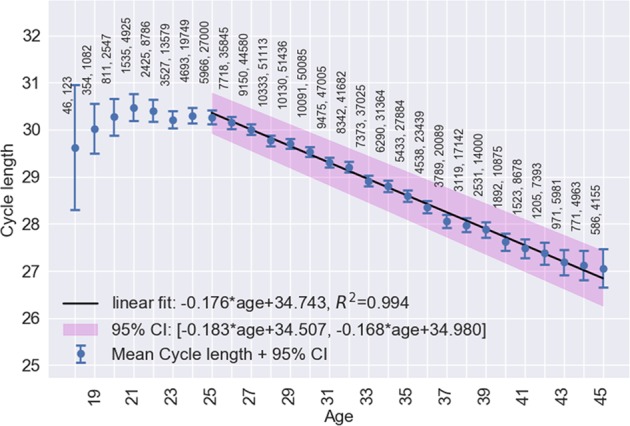
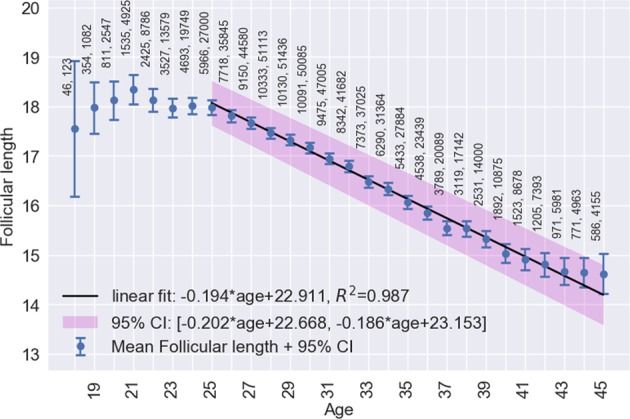
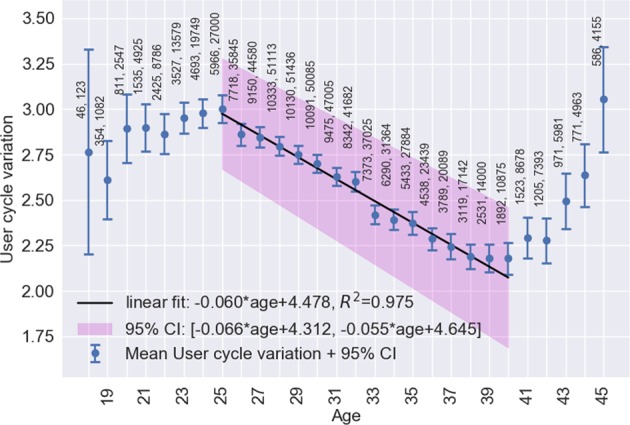
The use of apps that record detailed menstrual cycle data presents a new opportunity to study the menstrual cycle. The aim of this study is to describe menstrual cycle characteristics observed from a large database of cycles collected through an app and investigate associations of menstrual cycle characteristics with cycle length, age and body mass index (BMI). Menstrual cycle parameters, including menstruation, basal body temperature (BBT) and luteinising hormone (LH) tests as well as age and BMI were collected anonymously from real-world users of the Natural Cycles app. We analysed 612,613 ovulatory cycles with a mean length of 29.3 days from 124,648 users. The mean follicular phase length was 16.9 days (95% CI: 10–30) and mean luteal phase length was 12.4 days (95% CI: 7–17). Mean cycle length decreased by 0.18 days (95% CI: 0.17–0.18, R 2 = 0.99) and mean follicular phase length decreased by 0.19 days (95% CI: 0.19–0.20, R 2 = 0.99) per year of age from 25 to 45 years. Mean variation of cycle length per woman was 0.4 days or 14% higher in women with a BMI of over 35 relative to women with a BMI of 18.5–25. This analysis details variations in menstrual cycle characteristics that are not widely known yet have significant implications for health and well-being. Clinically, women who wish to plan a pregnancy need to have intercourse on their fertile days. In order to identify the fertile period it is important to track physiological parameters such as basal body temperature and not just cycle length.
Overview
CoChat Summary
## TL;DR
This app-based observational study analyzed 612,613 ovulatory menstrual cycles from 124,648 users and found that menstrual-cycle differences are driven mainly by follicular phase variation, not a fixed “day 14” ovulation pattern. Cycle length and follicular phase length decreased with age, while BMI had little effect except for greater cycle-length variation in BMI >35.
## Key findings
- The study analyzed 612,613 ovulatory cycles from 124,648 users; mean cycle length was 29.3 days, mean follicular phase length was 16.9 days (95% CI: 10–30), and mean luteal phase length was 12.4 days (95% CI: 7–17).
- Among 81,605 cycles (13%) that were 28 days long, mean follicular and luteal phase lengths were 15.4 and 12.6 days, respectively.
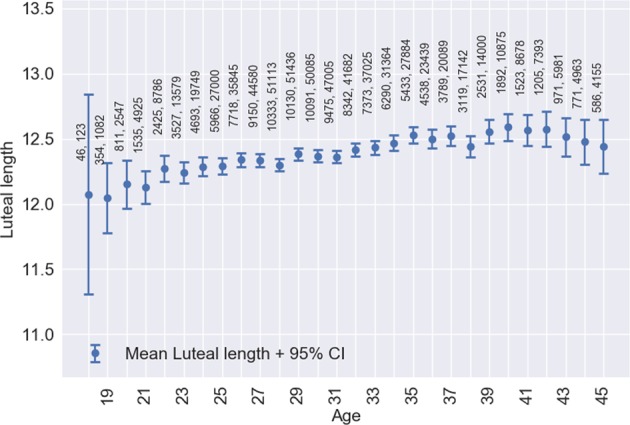
- Cycle length decreased with age: between the youngest and oldest age cohorts, mean cycle length was 2.9 days (10%) shorter (95% CI: 2.9–3.0), and follicular phase length was 3.2 days (20%) shorter (95% CI: 3.2–3.3); luteal phase length changed very little.
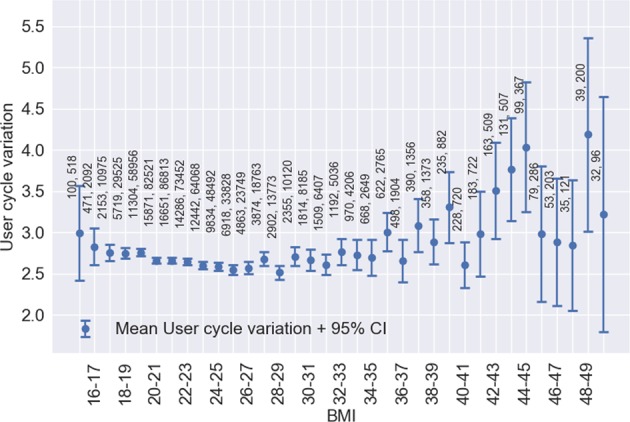
- In BMI analyses, women with BMI 35–50 had 0.4 days (14%) higher per-user cycle-length variation than women with BMI 18.5–25 (95% CI: 0.3–0.5), and underweight women had bleed length 0.2 days (5%) longer than the healthy-weight group.
- The paper reports that 18% of cycles had luteal phases of less than 11 days, and that very short cycles had much shorter follicular phases than normal-length cycles, while very long cycles had much longer follicular phases.
## Methods
- Prospective observational subanalysis of data from the Natural Cycles app, using daily basal body temperature (BBT), menstruation dates, optional urinary LH tests, plus age and BMI collected in-app.
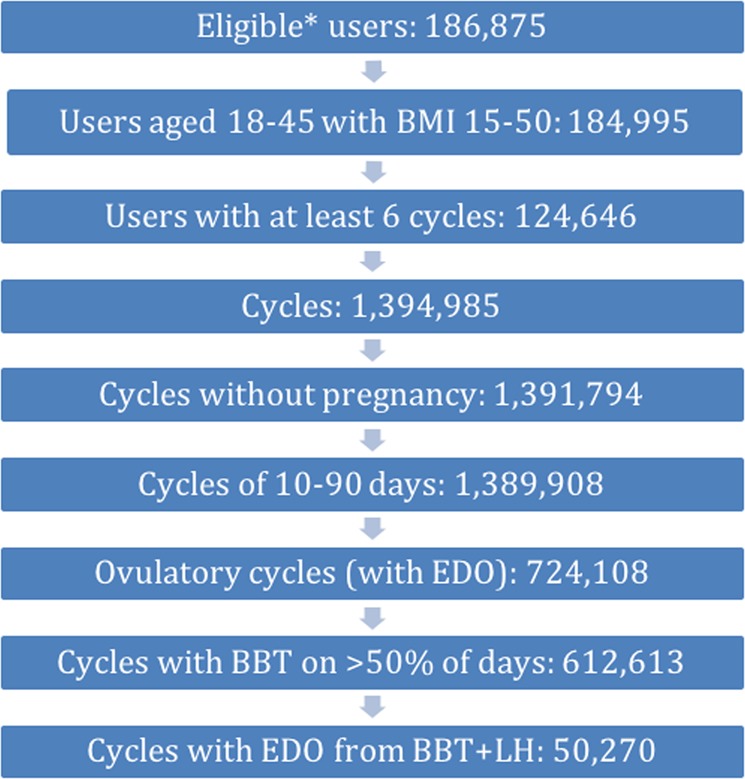
- Included users registered 1 Sept 2016 to 1 Feb 2019, aged 18–45, BMI 15–50, with no hormonal contraception in the prior 12 months; cycles required at least six complete cycles, length 10–90 days, and valid temperature entries on at least 50% of cycle days.
- Main analysis calculated mean cycle, bleed, follicular, and luteal phase lengths in ovulatory cycles, then compared cohorts by cycle length, age, and BMI; because of very large sample sizes, the authors used bootstrapped mean differences with 95% CIs rather than p values.
## Limitations
- The authors state that the study population came solely from app users and may not be representative of the wider population; they note that only 8% of women in the study were obese versus 15% in the general population.
- Only cycles with ovulation detected were included; of the 1.4 million cycles considered, 665,603 (48%) were excluded because ovulation was not detected, creating selection bias, which the paper explicitly acknowledges.
- The paper notes possible human error in self-reported bleeding, LH tests, and temperature measurements, and that measuring BBT and LH every 24 h limits phase-length precision.
Model-written summary. Check it against the paper before relying on it.
Integrity signals
Registry
Cites
Statistics
Figures
Verification
Claims the paper makes
15 Valid · 1 Not valid · 18 Not checked · 60 Own results and interpretations
The cited sources support only part of this claim — read each source’s verdict below.
In the paper
“It is, therefore, unsurprising that several studies have shown that calendar apps are not accurate in identifying the fertile window.35–38”
§ Real-world menstrual cycle characteristics of more than 600,000 menstrual cycles > Discussion
What the sources say
- Not checked — no full text of the sourcecites [35] Setton R Tierney C Tsai T The accuracy of web sites and cellular phone applications in predicting the fertile window Obstet. Gynecol. 2016 128 58 63 10.1097/AOG.0000000000001341 27275788 source
- Supportedcites [36] Freis A Plausibility of menstrual cycle apps claiming to support conception Front. Public Health 2018 6 98 10.3389/fpubh.2018.00098 29666788 PMC5891577 source
The Results (‘Apps Predicting the Fertile Days Based on Data of Previous Cycles’; page not provided) report that the tested calendar-based apps misstated ovulation when cycle length differed from the estimate. The Discussion says their method often missed the most fertile days because cycle length and ovulation day vary. This paper supports the claim as one of the studies cited, without itself needing to establish what every other cited study found. (LLM, conf=0.91)
- Partly supportedcites [37] Sohda S Suzuki K Igari I Relationship between the menstrual cycle and timing of ovulation revealed by new protocols: analysis of data from a self-tracking health app J. Med. Internet Res. 2017 19 e391 10.2196/jmir.7468 29180346 PMC5725625 sourceExperimental — accuracy not yet measured
The Discussion’s Principal Findings say that two existing calendar-based methods did not explain the study data well and were less accurate for certain cycle lengths. That supports concern about calendar-based ovulation predictions, but the paper evaluates prediction methods rather than the accuracy of calendar apps in identifying the fertile window. (LLM, conf=0.84)
- Supportedcites [38] Johnson S Marriott L Zinaman M Can apps and calendar methods predict ovulation with accuracy? Curr. Med. Res. Opin. 2018 34 1587 1594 10.1080/03007995.2018.1475348 29749274 source
The Discussion reports that this study's findings agree with two earlier studies that found low accuracy in apps' predictions of fertile windows. It also explains that wider predicted windows can include ovulation more often but offer poor precision for timing intercourse. (LLM, conf=0.91)
plain- Asserted: passes — The authors put it forward as true.
- Checkable: passes — It can be checked against evidence.
- Load-bearing: passes — The paper’s conclusions depend on it.
- Based: passes — The paper gives a reason why it holds.
Every source the paper cites for this claim was checked and supports it.
In the paper
“Available data, however, suggests that there may be significant variability in fertile days.1,4”
§ Real-world menstrual cycle characteristics of more than 600,000 menstrual cycles > Introduction
What the sources say
- Supportedcites [1] Wilcox AJ The timing of the ‘fertile window’ in the menstrual cycle: day specific estimates from a prospective study Br. Med. J. 2000 321 1259 1262 10.1136/bmj.321.7271.1259 11082086 PMC27529 source
The paper’s ‘What this study adds’ section states that the timing of the fertile window is highly variable, even among women who regard their cycles as regular. The Results section also reports ovulation occurring from day 8 to day 60, supporting variability in when fertile days occur. (LLM, conf=0.95)
- Supportedcites [4] Fehring RJ Schneider M Raviele K Variability in the phases of the menstrual cycle J. Obstet. Gynecol. Neonatal Nurs. 2006 35 376 384 10.1111/j.1552-6909.2006.00051.x 16700687 source
The Variability of Fertile Window section reports that the six fertile days fell anywhere between cycle days 4 and 23 across about 95% of cycles. This directly supports the hedged claim that fertile days may vary significantly. (LLM, conf=0.94)
hedged- Asserted: passes — The authors put it forward as true.
- Checkable: passes — It can be checked against evidence.
- Load-bearing: passes — The paper’s conclusions depend on it.
- Based: passes — The paper gives a reason why it holds.
- Supported
The sources with a verdict support this claim; the rest weren’t checked yet, have no full text we could read, or their verdicts aren’t rated yet.
In the paper
“but there is much greater variation than this.1,4–7”
§ Real-world menstrual cycle characteristics of more than 600,000 menstrual cycles > Introduction
What the sources say
- Supportedcites [1] Wilcox AJ The timing of the ‘fertile window’ in the menstrual cycle: day specific estimates from a prospective study Br. Med. J. 2000 321 1259 1262 10.1136/bmj.321.7271.1259 11082086 PMC27529 source
The Clinical guidelines section says the fertile window can occur much earlier or later than guidelines suggest. The Conclusions section reports that it falls entirely within the guideline days in only about 30% of women, supporting the claimed greater variation in its timing. (LLM, conf=0.90)
- Supportedcites [4] Fehring RJ Schneider M Raviele K Variability in the phases of the menstrual cycle J. Obstet. Gynecol. Neonatal Nurs. 2006 35 376 384 10.1111/j.1552-6909.2006.00051.x 16700687 source
The Implications of Findings section says menstrual-cycle parameters vary considerably even among healthy, regularly cycling women. The Variability of Follicular and Luteal Phases section explicitly finds a wider luteal-phase range than those listed in the medical and nursing textbooks in Table 3 (page unavailable in our copy). (LLM, conf=0.88)
- Not checked — no full text of the sourcecites [5] Mihm M Gangooly S Muttukrishna S The normal menstrual cycle in women Anim. Reprod. Sci. 2011 124 229 236 10.1016/j.anireprosci.2010.08.030 20869180 source
- Not checked — no full text of the sourcecites [6] Treloar AE Boynton RE Behn BG Brown BW Variation of the human menstrual cycle through reproductive life Int. J. Fertil. 1967 12 77 126 5419031 source
- Not checked — no full text of the sourcecites [7] Lenton EA Landgren B Sexton L Normal variation in the length of the luteal phase of the menstrual cycle: identification of the short luteal phase BJOG 1984 91 685 689 10.1111/j.1471-0528.1984.tb04831.x 6743610 source
plain- Asserted: passes — The authors put it forward as true.
- Checkable: passes — It can be checked against evidence.
- Load-bearing: passes — The paper’s conclusions depend on it.
- Based: passes — The paper gives a reason why it holds.
- Supported
Every source the paper cites for this claim was checked and supports it.
In the paper
“Besides the potential benefits to the individual, fertility awareness apps and the associated databases of fertility data provide a unique opportunity to examine a large number of menstrual cycles in order to improve understanding.25,26”
§ Real-world menstrual cycle characteristics of more than 600,000 menstrual cycles > Introduction
What the sources say
- Supportedcites [25] Liu, B. et al. Predicting pregnancy using large-scale data from a women’s health tracking mobile application.In The World Wide Web Conference (pp. 2999–3005) (ACM, 2019). PMC6752881 31538145 source
The Introduction describes health-tracking apps as a new data source and says they have already been used to study menstrual-cycle fluctuations and lengths. It also reports a dataset with tens of millions of observations from tens of thousands of women, supporting the claimed opportunity to study menstrual cycles at scale. (LLM, conf=0.91)
- Supportedcites [26] Symul, L., Wac, K., Hillard, P. & Salathe, M. Assessment of menstrual health status and evolution through mobile apps for fertility awareness. bioRxiv10.1101/385054 (2019). PMC6635432 31341953 source
The Abstract says menstrual-tracking apps provide an unparalleled view of menstrual health at population scale and reports data from over 2.7 million cycles. The Introduction and Discussion likewise describe using app-collected data to assess menstrual health and study fertility patterns. (LLM, conf=0.93)
plain- Asserted: passes — The authors put it forward as true.
- Checkable: passes — It can be checked against evidence.
- Load-bearing: passes — The paper’s conclusions depend on it.
- Based: passes — The paper gives a reason why it holds.
- Supported
Every source the paper cites for this claim was checked and supports it.
In the paper
“Nevertheless, the length of the luteal phase may also deviate significantly from 14 days.”
§ Real-world menstrual cycle characteristics of more than 600,000 menstrual cycles > Introduction
What the sources say
- Supportedcites [1] Wilcox AJ The timing of the ‘fertile window’ in the menstrual cycle: day specific estimates from a prospective study Br. Med. J. 2000 321 1259 1262 10.1136/bmj.321.7271.1259 11082086 PMC27529 source
The Clinical guidelines section (page not provided) reports that ovulation occurred exactly 14 days before the next menses in only 10% of the study's 28-day cycles. The interval from ovulation to the next menses ranged from 7 to 19 days, supporting the claim that luteal-phase length may differ substantially from 14 days. (LLM, conf=0.94)
hedged- Asserted: passes — The authors put it forward as true.
- Checkable: passes — It can be checked against evidence.
- Load-bearing: unclear — It is unclear whether the paper’s conclusions depend on it.
- Based: passes — The paper gives a reason why it holds.
- Supported
44 more claims
Create a free account to see all 94 claims and to verify the 3 references still open.
- It may state two separate claims as one. 25
- Probably not a substantial claim. 30
- The quote only partly states this claim. 1
Claims other papers make about this one
Each is checked against this paper’s own text: does it say what the citing paper says it does?
The source backs part of the claim, not all of it — or backs it for a different population, condition or comparison.
In the citing paper
“This process results in quasi-periodic hormone profiles with a cycle length of 25 to 35 days (Bakos et al., 1994;Harlow, 2000;Bull et al., 2019).”
From Hormonal regulation of ovarian follicle growth in humans: Model-based exploration of cycle variability and parameter sensitivities (2022) · cites this paper as Bull et al., 2019
Experimental — accuracy not yet measuredThe source backs part of the claim, not all of it — or backs it for a different population, condition or comparison.
In the citing paper
“In line with the literature (Bull et al., 2019), we implemented the model in a way that little variation occurs in the length of the luteal phase.”
From Hormonal regulation of ovarian follicle growth in humans: Model-based exploration of cycle variability and parameter sensitivities (2022) · cites this paper as Bull et al., 2019
Experimental — accuracy not yet measuredThe source backs part of the claim, not all of it — or backs it for a different population, condition or comparison.
In the citing paper
“Also, evident from this “big data” set is the variability in menstrual cycle duration between women and within menstrual cycles of the same woman, mostly as a result of variability in the duration of the follicular phase [39].”
From Temperature regulation in women: Effects of the menstrual cycle (2020) · cites this paper as [39]
Experimental — accuracy not yet measuredThe cited source says what the claim attributes to it.
In the citing paper
“The simulated average cycle length ranges from 22.7 to 27.8 days (Fig. A.6), which is within the physiological range (Bull et al., 2019).”
From Hormonal regulation of ovarian follicle growth in humans: Model-based exploration of cycle variability and parameter sensitivities (2022) · cites this paper as Bull et al., 2019
The cited source says what the claim attributes to it.
In the citing paper
“As earlier studies have already shown (11, 23–26), we found a significant decrease in cycle length with age (Table 1 and Figs. 2 and 3).”
From Women temporarily synchronize their menstrual cycles with the luminance and gravimetric cycles of the Moon (2021) · cites this paper as [26]
3 more claims about this paper
Create a free account to see every claim other papers make about this one.
Citations
Cites
An Introduction to the Bootstrap
Efron, B., & Tibshirani, R. J. (1994) · doi:10.1201/9780429246593 · Cited by 40,500
An Introduction to the Bootstrap
Efron, B., & Tibshirani, R. J. (1993) · doi:10.1007/978-1-4899-4541-9 · Cited by 21,230
(2000) · PubMed · Cited by 13,173
The Diagnosis of Polycystic Ovary Syndrome during Adolescence
Witchel, S. F., Oberfield, S., Rosenfield, R. L., Codner, E., Bonny, A., Ibáñez, L., Pena, A., Horikawa, R., Gomez-Lobo, V., Joel, D., et al. (2015) · Hormone Research in Paediatrics · doi:10.1159/000375530 · Cited by 3,113
An Introduction to the Bootstrap.
Buckland, S. T., Efron, B., & Tibshirani, R. J. (1994) · Biometrics · doi:10.2307/2532810 · Cited by 3,103
VARIATION OF THE HUMAN MENSTRUAL CYCLE THROUGH REPRODUCTIVE LIFE
TRELOAR, A. E., BOYNTON, R. E., BEHN, B. G., & BROWN, B. W. (1968) · Obstetrical & Gynecological Survey · doi:10.1097/00006254-196801000-00019 · Cited by 1,018 · cited 2×
“With increasing age, cycle length reduces and the timing of ovulation becomes earlier; the variation of a woman’s cycle length reduces with age until menopause.(5,6,8,9) Cycle characteristics also may be affected by ethnicity, high body mass index (BMI), stress and lifestyle factors.”
BackgroundResultPsychological impact of infertility
Cousineau, T. M., & Domar, A. D. (2007) · Best Practice & Research Clinical Obstetrics & Gynaecology · doi:10.1016/j.bpobgyn.2006.12.003 · Cited by 997 · cited 1×
“Anecdotally there is poor understanding of fertility amongst the general population, which can lead to both unintended pregnancies and delayed time to conception with associated psychological suffering for those wishing to start a family.(40) Fertility education delivered through an app has the potential to improve do…”
BackgroundResearch Commentary —Too Big to Fail: Large Samples and the p -Value Problem
Lin, M., Lucas, H. C., & Shmueli, G. (2013) · Information Systems Research · doi:10.1287/isre.2013.0480 · Cited by 972 · cited 1×
“Owing to the very large sample sizes in this study, P values were not calculated since they can be very small even if differences between cohorts are of no clinical significance.(49) Instead, effect size between two cohorts was estimated as a mean difference with a 95% confidence interval calculated from 200 bootstrap…”
MethodTorous, J., Nicholas, J., Larsen, M. E., Firth, J., & Christensen, H. (2018) · Evidence Based Mental Health · doi:10.1136/eb-2018-102891 · Cited by 790
(1977) · PubMed · Cited by 488
Cited by
Items 101–200 of 399
Nagpal, A., Schmalenberger, K. M., Barone, J., Mulligan, E. M., Stumper, A., Knol, L., Failenschmid, J. I., Kiesner, J., Peters, J. R., & Eisenlohr-Moul, T. A. (2025) · Psychoneuroendocrinology · doi:10.1016/j.psyneuen.2025.107584 · Cited by 24
A molecular staging model for accurately dating the endometrial biopsy
Teh, W. T., Chung, J., Holdsworth‐Carson, S. J., Donoghue, J. F., Healey, M., Rees, H. C., Bittinger, S. E., Obers, V., Sloggett, C., Kendarsari, R. I., et al. (2023) · Nature Communications · doi:10.1038/s41467-023-41979-z · Cited by 23
“Part of the variability in cycle length between women was due to age, with a consistent shorteningof the average cyclelength by about 3 days from 30 down to 27 days between ages 25 and 45 12,13 .”
InfluentialKomada, Y., Sato, M., Ikeda, Y., Kami, A., Masuda, C., & Shibata, S. (2021) · International Journal of Environmental Research and Public Health · doi:10.3390/ijerph18063245 · Cited by 23
“The mean variation in cycle length was 0.4 days or 14% higher in women with a BMI of over 35 relative to women with a BMI of 18.5–25 [10].”
BackgroundInfluentialSARS‐CoV ‐2 ( COVID ‐19) pandemic and a possible impact in the future of menstrual cycle research
Prado, R. C. R., Silveira, R., & Asano, R. Y. (2021) · Health Science Reports · doi:10.1002/hsr2.276 · Cited by 21
“The MC is a biological event that fills a large share of scientific studies, including animals(1-3) and humans.(4,6,7) Human's MC investigators describe that monitoring/identifying specific MC phases are among the oldest challenges in this field.”
BackgroundVidafar, P., & Spitschan, M. (2022) · Journal of Biological Rhythms · doi:10.1177/07487304221126785 · Cited by 17
“Two significant events occur during each of these phases: menstruation (bleeding occurs, signifying the end of the luteal phase and beginning of the follicular phase) and ovulation (egg is released, signifying the end of the follicular phase and beginning of the luteal phase; Allen et al., 2016; Bull et al., 2019).”
BackgroundInfluentialWegrzynowicz, A. K., Beckley, A., Eyvazzadeh, A. D., Levy, G., Park, J., & Klein, J. (2022) · Medicina · doi:10.3390/medicina58121853 · Cited by 19
“Only a small percentage of women ovulate on CD14, even for those with regular cycles [5,6].”
BackgroundAnalyzing User Reviews of the First Digital Contraceptive: Mixed Methods Study
Felice, M. C., Søndergaard, M. L. J., & Balaam, M. (2023) · Journal of Medical Internet Research · doi:10.2196/47131 · Cited by 24
“…about “the menstrual cycle” are being run using data from Natural Cycles users while intending to shed light on the general population’s menstrual cycle characteristics (eg, the study by Bull et al [36] only mentions lower obesity when comparing participants with women in the general population).”
Schieren, A., Koch, S., Pecht, T., & Simon, M. (2024) · Experimental and Clinical Endocrinology & Diabetes · doi:10.1055/a-2273-5602 · Cited by 28
“The same study reported that menstrual bleeding, which marks the beginning of the menstrual cycle [28], has an average duration of 4 days [29].”
BackgroundInfluential‘Everyone needs to be educated’: pupils’ voices on menstrual education
Brown, N., Forrest, L. J., Williams, R., Piasecki, J., & Bruinvels, G. (2024) · Reproductive Health · doi:10.1186/s12978-024-01862-6 · Cited by 30
“The menstrual cycle is a normal biological process for females [1] which occurs from puberty through adult-hood until menopause.”
BackgroundAlzueta, E., Gombert, M., Javitz, H. S., Yüksel, D., Perez-Amparan, E., Camacho, L., Kiss, O., de Zambotti, M., Sattari, N. S., Pena, A., et al. (2024) · Journal of Biological Rhythms · doi:10.1177/07487304241265018 · Cited by 21
“Indeed, the follicular phase is known to present greater variability than the luteal phase (Bull et al., 2019), and 5 days of additional testing was introduced to buffer for variability.”
Henry, S., Shirin, S., Goshtasebi, A., & Prior, J. C. (2024) · Human Reproduction · doi:10.1093/humrep/deae215 · Cited by 19
“Recent studies using menstrual cycle apps have shown a correlation of higher BMI with longer menstrual cycles, longer FP lengths, and shorter LP lengths (Bull et al. , 2019; Li et al. , 2023).”
A phenomenological-based model of the endometrial growth and shedding during the menstrual cycle
Arbeláez-Gómez, D., Benavides-López, S., Giraldo-Agudelo, M. P., Guzmán-Álvarez, J. P., Ramírez-Mazo, C., & Gómez-Echavarría, L. M. (2021) · Journal of Theoretical Biology · doi:10.1016/j.jtbi.2021.110922 · Cited by 16
Association between COVID-19 vaccines and the menstrual cycle in young Japanese women
Kajiwara, S., Akiyama, N., Baba, H., & Ohta, M. (2023) · Journal of Infection and Chemotherapy · doi:10.1016/j.jiac.2023.01.003 · Cited by 17
“The length variation of the menstrual cycle in this age group was large [39,40]; hence, many participants were excluded due to their irregular menstrual cycles.”
BackgroundPestana, J. E., Kershaw, K. A., & Graham, B. M. (2023) · Translational Psychiatry · doi:10.1038/s41398-023-02480-9 · Cited by 17
“Due to individual variability in menstrual cycle length [43], the day count method (‘ovulation to ovulation’ backwards counting) was used post hoc to confirm the menstrual phase at the time of each testing phase for each participant [44, 45], which is the recommended method in the absence of measures of ovulation [46]…”
MethodPournasiri, F., Zarei, M., Mainer-Pardos, E., Rubio‐Morales, A., & Nobarı, H. (2023) · BMC Women s Health · doi:10.1186/s12905-023-02819-w · Cited by 26
Adnan, T., Coull, B. A., Jukic, A. M. Z., & Mahalingaiah, S. (2021) · Current Opinion in Endocrinology Diabetes and Obesity · doi:10.1097/med.0000000000000682 · Cited by 22
A scoping review of the information provided by fertility smartphone applications
Ford, E. A., Peters, A. E., Roman, S. D., McLaughlin, E. A., Beckett, E., & Sutherland, J. M. (2021) · Human Fertility · doi:10.1080/14647273.2021.1871784 · Cited by 18
Can animal models resemble a premenstrual dysphoric condition?
Estrada-Camarena, E. M., & López‐Rubalcava, C. (2022) · Frontiers in Neuroendocrinology · doi:10.1016/j.yfrne.2022.101007 · Cited by 17
Variability of temperature measurements recorded by a wearable device by biological sex
Bruce, L. K., Kasl, P., Soltani, S., Viswanath, V., Hartogensis, W., Dilchert, S., Hecht, F. M., Chowdhary, A., Anglo, C., Pandya, L. S., et al. (2023) · Biology of Sex Differences · doi:10.1186/s13293-023-00558-z · Cited by 14
“Ovarian cycle-like 20–30 day oscillations of nightly temperature [29] were consistently detected in cyclic females but acyclic females and males lacked such periodicity (Fig.”
BackgroundMenstrual Cycle Tracking in Sports Research: Challenges, Progress, and Future Directions
Dole, A., Beaven, C. M., & Sims, S. T. (2023) · Physiologia · doi:10.3390/physiologia3040044 · Cited by 20
“Furthermore, they identified the follicular phase to be the most volatile phase and responsible for the high degree of MC variability [46,74].”
BackgroundMethodInfluentialBurma, J. S., Bailey, D. M., Johnson, N. E., Griffiths, J. K., Burkart, J. J., Soligon, C. A., Fletcher, E. K. S., Javra, R. M., Debert, C. T., Schneider, K., et al. (2024) · Experimental Physiology · doi:10.1113/ep092060 · Cited by 20
“Finally, a further complication of menstrual cycle research is the heterogeneous cycle lengths that females experience (Bull et al., 2019).”
The effects of temperature variation treatments on embryonic development: a mouse study
Moriyama, D. F., Makri, D., Maalouf, M.-N., Adamova, P., de Moraes, G. F. A., Pinheiro, M. D. O., Bernardineli, D. L., Massaia, I. F. D. S., Maalouf, W. E., & Turco, E. G. L. (2022) · Scientific Reports · doi:10.1038/s41598-022-06158-y · Cited by 16
Cho, I. Y., Chang, Y., Kang, J., Kim, Y., Sung, E., Shin, H., Wild, S. H., Byrne, C. D., & Ryu, S. (2022) · The Journal of Clinical Endocrinology & Metabolism · doi:10.1210/clinem/dgac068 · Cited by 22
Schleifenbaum, L., Stern, J., Driebe, J. C., Wieczorek, L. L., Gerlach, T. M., Arslan, R. C., & Penke, L. (2022) · Hormones and Behavior · doi:10.1016/j.yhbeh.2022.105202 · Cited by 15
Mammary Microvessels are Sensitive to Menstrual Cycle Sex Hormones
Moccia, C., Cherubini, M., Fortea, M., Akinbote, A., Padmanaban, P., Beltrán-Sastre, V., & Haase, K. (2023) · Advanced Science · doi:10.1002/advs.202302561 · Cited by 16
“[65] In order to shed light on the effects of E2 and P4 on vascularization and endothelial barrier function, we perfused our mammary-specific microvessels with hormone concentrations corresponding to the different phases of the menstrual cycle, as reported in.[66] Although hormone concentrations fluctuate during the m…”
MethodWegrzynowicz, A. K., Eyvazzadeh, A. D., & Beckley, A. (2024) · Seminars in Reproductive Medicine · doi:10.1055/s-0044-1791190 · Cited by 23
“The follicular phase lasts an average of 14 to 19 days, 5 and is the most variable phase of the cycle.”
Female Athlete and Sports-Related Concussions
Rizzone, K. H., & Ackerman, K. E. (2020) · Clinics in Sports Medicine · doi:10.1016/j.csm.2020.08.006 · Cited by 15
The association between alcohol intake and fecundability during menstrual cycle phases
Anwar, M. Y., Marcus, M., & Taylor, K. C. (2021) · Human Reproduction · doi:10.1093/humrep/deab121 · Cited by 21
“Given that at least one recent large observational study reported a slightly different length for luteal phase (Bull et al., 2019), in contrast to our approach which is based on 14 days length for luteal phase (Faust et al.”
ResultKarakoyun, T., Podhaisky, H.-P., Frenz, A.-K., Schuhmann‐Giampieri, G., Ushikusa, T. E., Schröder, D., Zvolanek, M., & Filho, A. L. D. S. (2021) · JMIR Medical Informatics · doi:10.2196/24633 · Cited by 12
“The use of personal, digital health informatics is becoming increasingly widespread, and self-tracking of menstruation using apps offers a convenient and easily accessible way for women to manage their own health, allowing them to compare past and average cycles and help identify regularity or irregularity [3,5,52].”
BackgroundÉcochard, R., Leiva, R. A., Bouchard, T. P., Boehringer, H., Iwaz, J., & Plotton, I. (2022) · Steroids · doi:10.1016/j.steroids.2022.108964 · Cited by 16
The global pandemic and changes in women’s reproductive health: an observational study
Haile, L. T., van de Roemer, N., Gemzell‐Danielsson, K., Perelló-Capó, J., Lete, I., Vannuccini, S., Koch, M., Hildebrandt, T., & Calaf, J. (2022) · The European Journal of Contraception & Reproductive Health Care · doi:10.1080/13625187.2021.2024161 · Cited by 13
“The sample demographics largely reflect women who would typically use the Daysy device or similar fertility devices, as other studies have had similar demographics [7,13].”
ResultSelf-citationA Mid-Cycle Rise in Positive and Drop in Negative Moods among Healthy Young Women: A Pilot Study
Hromatko, I., & Mikac, U. (2023) · Brain Sciences · doi:10.3390/brainsci13010105 · Cited by 15
“Considering the huge interindividual variability of phase lengths and hormonal fluctuations [54], the day counting methods rely on averages which may not reflect the true picture.”
MethodSocio-Ecological Challenges as Modulators of Women's Reproductive Trajectories
Nepomnaschy, P. A., Rowlands, A., Costa, A. P. P., & Salvante, K. G. (2020) · Annual Review of Anthropology · doi:10.1146/annurev-anthro-102317-045930 · Cited by 14
Zhang, Y., Shaukat, A., Zhang, H., Yang, Y.-F., Li, H., Li, G., Liu, Y., Liang, C., Kang, J., Li, S.-C., et al. (2024) · International Journal of Molecular Sciences · doi:10.3390/ijms252313150 · Cited by 18
“Normally, the superficial (functional) endometrial layer is sloughed during menstruation (menses) to prepare the endometrium for the next menstrual cycle, resulting in vaginal bleeding for an average of 5 days [59].”
Machine learning-based menstrual phase identification using wearable device data
Kilungeja, G., Graham, K., Liu, X., & Nasseri, M. (2025) · npj Women s Health · doi:10.1038/s44294-025-00078-8 · Cited by 28
“If pregnancy does not occur, hormone levels decline, and a new cycle begins 1 .”
“What if it's wrong?” Ovulation and fertility understanding of menstrual app users
Hohmann‐Marriott, B. E., & Starling, L. (2022) · SSM - Qualitative Research in Health · doi:10.1016/j.ssmqr.2022.100057 · Cited by 20
Impact of COVID-19 Vaccination on Menstrual Cycle: A Cross-Sectional Study From Karachi, Pakistan
Sualeh, M., Uddin, M. R., Junaid, N., Khan, M., Pario, A., & Ain, Q. (2022) · Cureus · doi:10.7759/cureus.28630 · Cited by 27
“Menstrual characteristics are not constant, and they vary from month to month throughout a person's life [7].”
BackgroundPost-Transcriptional Regulation of Gnrhr: A Checkpoint for Metabolic Control of Female Reproduction
Odle, A. K., MacNicol, M. C., Childs, G. V., & MacNicol, A. M. (2021) · International Journal of Molecular Sciences · doi:10.3390/ijms22073312 · Cited by 13
“The female HPG axis is especially remarkable in that it is programmed to cycle every 30 days in humans [1] and every 4–6 days in mice [2] and rats [3] in order to maintain follicular development and maturation in preparation for conception.”
BackgroundSides, K., Kilungeja, G., Tapia, M., Kreidl, O. P., Brinkmann, B. H., & Nasseri, M. (2023) · Frontiers in Network Physiology · doi:10.3389/fnetp.2023.1227228 · Cited by 15
Menstrual Cycle and Hormonal Contraceptive Symptom Severity and Frequency in Athletic Females
Kiemle-Gabbay, L., Valentin, S., Martin, D., & Forrest, L. J. (2024) · Women in Sport and Physical Activity Journal · doi:10.1123/wspaj.2023-0086 · Cited by 19
“The menstrual cycle (MC) is characterized by cyclical fl uctua-tions in endogenous female sex hormones, with a mean cycle length typically lasting 28 – 29 days (Bull et al., 2019; Fehring et al., 2006; Li et al., 2020).”
BackgroundSinai, D., Avni, C., & Toren, P. (2024) · Journal of Psychosomatic Research · doi:10.1016/j.jpsychores.2024.111809 · Cited by 12
Mackenzie, A. C. L., Chung, S. R., Hoppes, E., Mickler, A. K., & Cartwright, A. F. (2024) · PLoS ONE · doi:10.1371/journal.pone.0306491 · Cited by 16
What Every Gynecologist Should Know About Perimenopause
Verrilli, L. E., & Berga, S. L. (2020) · Clinical Obstetrics & Gynecology · doi:10.1097/grf.0000000000000578 · Cited by 16
Using Hormone Data and Age to Pinpoint Cycle Day within the Menstrual Cycle
Hills, E., Woodland, M. B., & Divaraniya, A. A. (2023) · Medicina · doi:10.3390/medicina59071348 · Cited by 17
“While this study demonstrates that both the follicular and luteal phases become shorter with age, other studies have reported that the luteal phase stays constant over the lifespan [20,32,33].”
BackgroundMethodResultInfluentialHow do women feel cold water swimming affects their menstrual and perimenopausal symptoms?
Pound, M., Massey, H. C., Roseneil, S., Williamson, R., Harper, C. M., Tipton, M., Shawe, J., Felton, M., & Harper, J. C. (2024) · Post Reproductive Health · doi:10.1177/20533691241227100 · Cited by 13
Self-citationThe DIY IVF cycle—harnessing the power of deeptech to bring ART to the masses
Brayboy, L. M., & Quaas, A. M. (2022) · Journal of Assisted Reproduction and Genetics · doi:10.1007/s10815-022-02691-x · Cited by 14
Michelekaki, E. A., Michaelides, M. A., Govindasamy, K., & Parpa, K. (2023) · Women · doi:10.3390/women3030034 · Cited by 16
Female sex steroids and epilepsy: Part 2. A practical and human focus on catamenial epilepsy
Alshakhouri, M., Sharpe, C. M., Bergin, P., & Sumner, R. L. (2024) · Epilepsia · doi:10.1111/epi.17820 · Cited by 11
“Backed by data from 600 000 menstrual cycles presented in Bull et al. 30 (Table 3), the solution is to adjust the length of the follicular phase only for cycles from 25 to 31 days and for long cycles.”
BackgroundMethodThomas, C., & Meléndez‐Torres, G. J. (2024) · Psychology in the Schools · doi:10.1002/pits.23192 · Cited by 18
Ovulatory cycle shifts in human motivational prioritisation of sex and food
Schleifenbaum, L., Stern, J., Driebe, J. C., Wieczorek, L. L., Gerlach, T. M., Arslan, R. C., & Penke, L. (2024) · Hormones and Behavior · doi:10.1016/j.yhbeh.2024.105542 · Cited by 13
“…of fertility (e.g. forward counting, backward counting 13 instead of the established 15 days to estimate the day of ovulation as reported by Bull et al. (2019) or using discrete fertile windows), and different model specifications (e.g. omitting random effects for (pre)-menstruation, using…”
Nagpal, A., Barone, J., Tauseef, H. A., Ross, J. M., Gray, Z. J., Schmalenberger, K. M., Shields, G. S., Slavich, G. M., & Eisenlohr-Moul, T. A. (2024) · Psychological Medicine · doi:10.1017/s0033291724001661 · Cited by 11
“Using normative data from Bull et al. (2019), which utilizes a large dataset of ovulatory cycles (over 600 000 cycles), we determined average lengths of the luteal and follicular phases for the observed cycle duration.”
MethodMimicking women’s endocrine milieu in mice for women’s health-related studies
Constantin, C., Matvienko, D., László, C., Scabia, V., Battista, L., Binz, P., Bruce, S. J., & Brisken, C. (2025) · npj Women s Health · doi:10.1038/s44294-025-00060-4 · Cited by 10
“Femalemicehaveapproximately4-dayreproductive cycles known as estrous cycles consisting of 4 stages, proestrus, estrus, metestrous, and diestrus while the human menstrual cycles last between 21 to35daysandaredividedintofollicularandlutealphase 41 .”
Challenges and future directions in menstrual cycle research
Jukic, A. M. Z. (2020) · Paediatric and Perinatal Epidemiology · doi:10.1111/ppe.12664 · Cited by 13
“Relatedly, some studies depend on fertility awareness methods (2,4,6) which may be designed specifically for women with regular, predictable menstrual cycles.”
BackgroundFreemas, J. A., Goss, C. S., Ables, R., Baker, T. B., Bruinvels, G., Mündel, T., Martin, B. J., Carter, S. J., Chapman, R. F., & Schlader, Z. J. (2023) · Journal of Applied Physiology · doi:10.1152/japplphysiol.00580.2022 · Cited by 15
Baranauskas, M. N., Freemas, J. A., Carter, S. J., Blodgett, J. M., Pedlar, C. R., & Bruinvels, G. (2023) · Journal of science and medicine in sport · doi:10.1016/j.jsams.2023.07.001 · Cited by 19
MacGregor, K. A., Ho, F. K. W., Celis-Morales, C. A., Pell, J. P., Gallagher, I. J., & Moran, C. N. (2023) · BMC Medicine · doi:10.1186/s12916-023-03195-w · Cited by 19
“The menstrual cycle phase is shown on a scale of 0–1 corresponding to the approximate phases: follicular phase, 0–0.54; luteal phase, 0.54–1 [38].”
BackgroundInfluentialThe effects of female sexual hormones on the endothelial glycocalyx
Potje, S. R., Martins, N. S., Benatti, M. N., Rodrigues, D., Bonato, V. L. D., & Tostes, R. C. (2023) · Current topics in membranes · doi:10.1016/bs.ctm.2023.02.005 · Cited by 15
Factors influencing menstrual regularity among female workers: a cross-sectional analysis study
Shim, J., Han, S.-W., & Baek, J. (2024) · BMC Women s Health · doi:10.1186/s12905-024-03142-8 · Cited by 23
“Bull et al. [31] found that the average change in the menstrual cycle length per person is 0.4 days or 14% higher among women with a BMI of 35 kg/m 2 or higher than those with a normal BMI.”
BackgroundInfluentialLafitte, A., Dupuit, M., Chassard, T., Barlier, K., Badier, N., Duclos, M., Toussaint, J., & Antero, J. (2024) · BMJ Open Sport & Exercise Medicine · doi:10.1136/bmjsem-2024-002078 · Cited by 13
Estradiol during (analogue-)trauma: Risk- or protective factor for intrusive re-experiencing?
Franke, L. K., Miedl, S. F., Danböck, S. K., Lohse, J., Liedlgruber, M., Bürkner, P., Pletzer, B. A., & Wilhelm, F. H. (2022) · Psychoneuroendocrinology · doi:10.1016/j.psyneuen.2022.105819 · Cited by 11
The menstrual cycle is influenced by weekly and lunar rhythms
Écochard, R., Leiva, R. A., Bouchard, T. P., van Lamsweerde, A., Pearson, J. T., Stanford, J. B., & Gronfier, C. (2024) · Fertility and Sterility · doi:10.1016/j.fertnstert.2023.12.009 · Cited by 11
Timing of Coronavirus Disease 2019 (COVID-19) Vaccination and Effects on Menstrual Cycle Changes
Edelman, A. B., Boniface, E. R., Male, V. H., Cameron, S. T., Benhar, E., Han, L. L., Matteson, K. A., van Lamsweerde, A., Pearson, J. T., & Darney, B. G. (2024) · Obstetrics and Gynecology · doi:10.1097/aog.0000000000005550 · Cited by 12
“15 To be eligible for this study, individuals must have consented to use of their data for research purposes, recorded at least one complete cycle after October 1, 2020, and provided details about their COVID-19 vaccination status.”
BackgroundMethodMizrachi, Y., Weissman, A., Rozen, G., Rogers, P. A. W., Stern, C. J., & Polyakov, A. (2022) · Reproductive BioMedicine Online · doi:10.1016/j.rbmo.2022.03.021 · Cited by 11
Li, K. K., Urteaga, I., Wiggins, C. H., et al. (2019) · arXiv (Cornell University) · doi:10.48550/arxiv.1909.11211 · Cited by 9
Sualeh, M., Uddin, M. R., Junaid, N., et al. (2022) · Research Square · doi:10.21203/rs.3.rs-1609845/v1 · Cited by 9
Wang, Y., Park, J. S., Zhang, C. Y., Jukic, A. M. Z., Baird, D. D., Coull, B. A., Hauser, R. B., Mahalingaiah, S., Zhang, S., & Curry, C. L. (2025) · Human Reproduction · doi:10.1093/humrep/deaf005 · Cited by 12
“…standard deviation of the mean for the population in the atypical category, we chose to define a typical cycle length as a cycle length between 23 and 35days, while atypical cycle lengths were outside of this range (Fraser et al. , 2011; Munro et al. , 2018; Bull et al. , 2019; Li et al. , 2020).”
Vanmeerhaeghe, A. F., Pujol-Marzo, M., Milà, R., Campos, B., Nevot-Casas, O., Casadevall-Sayeras, P., & Peña, J. (2025) · Healthcare · doi:10.3390/healthcare13101154 · Cited by 19
“In short, the total length of the menstrual cycle is used to calculate phases 2 and 3 retrospectively, based on prior research that assessed and predicted the duration of the follicular and luteal phases from thousands of menstrual cycles [22,23,25].”
Helfrich‐Förster, C., Domenie, E. D., Mitesser, O., Hovestadt, T., Ferlin, A., Wehr, T. A., Costa, R., & Montagnese, S. (2025) · Science Advances · doi:10.1126/sciadv.adw4096 · Cited by 12
Light Microscopy and Proteomic Patterns of Ovulation in Cervical Mucus
Fernandez-Hermida, Y., Vincenzoni, F., Milardi, D., Astorri, A. L., Urbani, A., Grande, G., & Azagra, R. (2022) · Life · doi:10.3390/life12111815 · Cited by 9
“Our findings are consistent with recent works that outlined that ovulation occurred at around day 18 of the cycle [10].”
BackgroundResultSalvatore, G. M., Bercovitz, I., & Arigo, D. (2024) · mHealth · doi:10.21037/mhealth-23-31 · Cited by 16
“MC tracking applications (apps) have been downloaded by millions worldwide (5) and are an extension of more traditional approaches such as paper records, digital calendars, and hormonal methods such as contraceptives (3).”
Pessali-Marques, B., Burden, A., Morse, C. I., & Onambélé-Pearson, G. L. (2024) · Journal of Functional Morphology and Kinesiology · doi:10.3390/jfmk9010038 · Cited by 11
“No differences were observed for the ST CSA, fat thickness, ST thickness, total body lean mass, thigh width, and thigh length across the MCPs in the current study.”
BackgroundGarcia, L., Asano, R. Y., Silveira, R., Hackney, A. C., Takito, M. Y., Kilpatrick, M. W., & Prado, R. C. R. (2022) · Research Quarterly for Exercise and Sport · doi:10.1080/02701367.2022.2036316 · Cited by 12
Tauseef, H. A., Coppersmith, D. D. L., Reid-Russell, A., Nagpal, A., Ross, J. M., Nock, M. K., & Eisenlohr-Moul, T. A. (2024) · Frontiers in Psychiatry · doi:10.3389/fpsyt.2024.1434499 · Cited by 8
Itoi, S., Sampei, M., Tatsumi, T., Osuga, Y., Koga, K., Narumi, S., & Morisaki, N. (2025) · npj Women s Health · doi:10.1038/s44294-025-00065-z · Cited by 14
“It is also worth noting that previous menstrual tracking app studies have studied populations of predominantly Caucasians 12 or app users from Europe/North America 10 , with limited data on the Asian population.”
Mitake, S., Wada‐Hiraike, O., Kashiwabara, K., Nakamura, A., Nasu, R., Hine, M., Matsuyama, Y., Fujii, T., & Osuga, Y. (2023) · Reproductive Medicine and Biology · doi:10.1002/rmb2.12516 · Cited by 6
Casto, K. V., Arthur, L. C., Lynch-Wells, S., & Blake, K. R. (2023) · Psychoneuroendocrinology · doi:10.1016/j.psyneuen.2023.106367 · Cited by 8
“Bull et al. (2019) found that the average luteal phase lasted 12.9 days, and our more conservative 5-day recruitment window is designed to capture women when progesterone is dominant.”
InfluentialNeural substrates underlying rhythmic coupling of female reproductive and thermoregulatory circuits
Grant, A. D., & Kriegsfeld, L. J. (2023) · Frontiers in Physiology · doi:10.3389/fphys.2023.1254287 · Cited by 7
“Of these potential applications, oncedaily ovulatory cycle monitoring has been realized at scale (Bull et al., 2019), with daily oral or skin temperature commonly used as an approximate marker of ovulation for the purposes of family planning (van de Velde, 1905; van de Velde, 1926; Buxton and Atkinson, 1948; de Mouzon…”
BackgroundBabir, F. J., Riddell, M. C., Adamo, L. M., Richards, D. L., & Gibala, M. J. (2023) · Scientific Reports · doi:10.1038/s41598-023-48063-y · Cited by 9
“Naturally cycling female participants (n = 11) completed both experimental trials between day 1–15 of their cycles which typically corresponds to the follicular phase 12 .”
SantaBarbara, K., Helms, E. R., Armour, M., & Harris, N. (2024) · International Journal of Sports Science & Coaching · doi:10.1177/17479541241228986 · Cited by 10
Labeling Self-Tracked Menstrual Health Records With Hidden Semi-Markov Models
Symul, L., & Holmes, S. (2021) · IEEE Journal of Biomedical and Health Informatics · doi:10.1109/jbhi.2021.3110716 · Cited by 15
Durgavich, L., Harwell, F. S., & Knott, C. D. (2022) · American Journal of Primatology · doi:10.1002/ajp.23420 · Cited by 12
The Duration of Menstrual Blood Loss: Historical to Current Understanding
Habiba, M. A., & Benagiano, G. (2023) · Reproductive Medicine · doi:10.3390/reprodmed4030015 · Cited by 10
“In relation to the latter, the mean duration of bleeding episodes was reported to be lower in women with higher ponderal index [21,46].”
BackgroundMethodInfluentialCurchoe, C. L. (2020) · EMJ Reproductive Health · doi:10.33590/emjreprohealth/20-00033 · Cited by 10
Seminal plasma induces receptivity-associated genes and pathways in endometrial epithelial organoids
van den Berg, J. S., Toros, M., Abendroth, M. S., Zhang, Y., Arends, B., Verpoest, W., Broekmans, F. J., & Steba, G. S. (2025) · Reproductive BioMedicine Online · doi:10.1016/j.rbmo.2025.104982 · Cited by 8
Is sex at birth a biological coin toss? Insights from a longitudinal and GWAS analysis
Wang, S., ROSNER, B. A., Huang, H., Rich-Edwards, J. W., Laden, F., Hart, J. E., Penney, K. L., & Chavarro, J. E. (2025) · Science Advances · doi:10.1126/sciadv.adu7402 · Cited by 6
Musulin, C., Yeshitila, N., & Harper, J. C. (2025) · Women s Health · doi:10.1177/17455057251362992 · Cited by 10
“[Mia][2] Physical symptoms, including pain, temperature fluctuations, heavy flow, acne, and bloating, were also commonly cited, with pain ranging from manageable to debilitating.”
InfluentialSelf-citationImmunometabolic insights into women's health across all ages
Matos-Silva, M., Lira, F. S., & Antunes, B. M. (2025) · Maturitas · doi:10.1016/j.maturitas.2025.108719 · Cited by 6
Bakolas, N. K. M., & Park, J. H. (2023) · Evolutionary Behavioral Sciences · doi:10.1037/ebs0000287 · Cited by 9
Endometrium as Control of Endometriosis in Experimental Research: Assessment of Sample Suitability
Szegeczki, V., Fazekas, L. Á., Kulcsár, M., Reglődi, D., Török, P., Orlik, B., Laganà, A. S., Jakab, A., & Juhász, T. (2022) · Diagnostics · doi:10.3390/diagnostics12040970 · Cited by 6
“As a normal menstrual cycle lasts between 25 and 35 days [45], the length of the treatment period was 24 days and samples were fixed in formalin solution on the 25th day.”
MethodZhao, X., Zhang, X., Wu, S., & Tan, J. (2022) · Frontiers in Endocrinology · doi:10.3389/fendo.2022.862500 · Cited by 8
Characteristics of menstrual cycles with or without intercourse in women with no known subfertility
Najmabadi, S., Schliep, K. C., Simonsen, S. E., Porucznik, C. A., Egger, M. J., & Stanford, J. B. (2022) · Human Reproduction Open · doi:10.1093/hropen/hoac039 · Cited by 7
“In theory, large data sets from women using menstrual and fertility tracking apps could be informative if women can be appropriately incentivized to record intercourse completely (Bull et al., 2019; Faust et al., 2019).”
BackgroundDemir, A., Hero, M. T., Holopainen, E., & Juul, A. (2022) · Frontiers in Endocrinology · doi:10.3389/fendo.2022.903831 · Cited by 10
“Thus, making the prediction of ovulation and appropriate timing for intercourse or natural cycle intrauterine insemination is rather challenging (2, 4).”
BackgroundKurahashi, K., Hashimoto, Y., Shiraishi, K., et al. (2023) · Cureus · doi:10.7759/cureus.48124 · Cited by 6
“We defined normal menstruation as a menstrual cycle of 25-30 days [20].”
MethodLi, K. K., Urteaga, I., Shea, A. A., Vitzthum, V. J., Wiggins, C. H., & Elhadad, N. (2021) · arXiv (Cornell University) · doi:10.48550/arxiv.2102.12439 · Cited by 7
Zintel, S., Schmidt, L. I., Neubauer, A. B., Stoffel, M., Rafiee, Y., Ditzen, B., & Sieverding, M. (2025) · Psychoneuroendocrinology · doi:10.1016/j.psyneuen.2025.107480 · Cited by 6
“As state of the art for cortisol measurements, we assessed cycle phase coded as luteal (yes, no) or follicular (yes, no) with calculations based on data by Bull et al. (2019), taking hormonal contraceptives (yes, no) and BMI (computed via height and weight) (Stoffel et al., 2021).”
Food-related exploration across the menstrual cycle
Nijboer, A. C. S., Sellitto, M., Ruitenberg, M. F. L., Kerkkänen, K. I. L., & Schomaker, J. (2024) · Appetite · doi:10.1016/j.appet.2024.107261 · Cited by 6
“As there is variation in the duration of phases both within and between women (Bull et al., 2019; Johnson et al., 2018), it is possible that ovulation not always occurred in the middle of their cycle.”
Retinal morphology across the menstrual cycle: insights from the UK Biobank
Reis, A. P. R., Ioannidou, E., Wagner, S. K., Struyven, R., Sun, Z., Foster, P. J., Khawaja, A. P., Petzold, A., Sivaprasad, S., Pontikos, N., et al. (2024) · npj Women s Health · doi:10.1038/s44294-024-00042-y · Cited by 7
“UKBB participants were categorised into three groups based on the duration of their menstrual cycles: 21 – 24, 25 – 30, and 31 – 35 days, as reported by Bull et al. 36 .”
InfluentialMenstrually-related mood disorders and postpartum depression: Convergent aspects in aetiology
Islas-Preciado, D., Estrada-Camarena, E. M., & Galea, L. A. M. (2024) · Frontiers in Neuroendocrinology · doi:10.1016/j.yfrne.2024.101171 · Cited by 13
MacGregor, K. A., Rodríguez-Sánchez, N., Virgilio, T. G. D., Barwell, N. D., Gallagher, I. J., & Moran, C. N. (2021) · Physiological Genomics · doi:10.1152/physiolgenomics.00088.2021 · Cited by 7
Cordova-Gomez, A., Wong, A. P., Sims, L. B., Doncel, G. F., & Dorflinger, L. J. (2023) · Frontiers in Reproductive Health · doi:10.3389/frph.2023.1210083 · Cited by 10
Metadata
- Authors
- Bull, J. R., Rowland, S. P., Scherwitzl, E. B., Scherwitzl, R., Danielsson, K. G., & Harper, J.
- Affiliations
- University College London (GB)
- Corresponding author
- Bull, Jonathan R.
- Venue
- npj Digital Medicine
- Published
- 2019-08-27
- Volume
- 2
- Issue
- 1
- Pages
- 83-83
- ISSN
- 2398-6352 (ISSN-L)
- PMC
- PMC6710244
- OpenAlex
- W2970585464
- Semantic Scholar
- 14b8c784b73216f7348e35914ac911a45dfb9283
- Cited by
- 404
- References
- 54
- Citations by year
- 2026: 60 · 2025: 49 · 2024: 76 · 2023: 80 · 2022: 62 · 2021: 50 · 2020: 25 · 2019: 2
- FWCI
- 32.00
- Type
- journal article
- Language
- en
- Open access
- gold
- doi.org
- Licence
- cc-by
- creativecommons.org/licenses/by/4.0 (tdm)
- creativecommons.org/licenses/by/4.0 (vor)
- Locations
- npj Digital Medicine (publishedVersion, cc-by)
- PubMed Central (publishedVersion, cc-by)
- PubMed (publishedVersion)
- DOAJ (DOAJ: Directory of Open Access Journals) (submittedVersion)
- UCL Discovery (University College London) (submittedVersion)
- Funders
- Full time employee of Natural Cycles Nordic AB
- Topics
- Health Sciences › Medicine › Public Health, Environmental and Occupational Health › Menstrual Health and Disorders
- Health Sciences › Medicine › Reproductive Medicine › Hypothalamic control of reproductive hormones
- Health Sciences › Medicine › Reproductive Medicine › Ovarian function and disorders
- Keywords
- menstrual cycle, cycle length, follicular phase, luteal phase, basal body temperature, body mass index, age, fertility monitoring, ovulation, fertility awareness
About these checks
Registry, retraction, Cites and statistics results are computed, not judged, with one exception: a printed reference that no index lists is read once by a model before it counts as a citation error. Claims are extracted by a model and kept only when their quote appears verbatim in the text; each cited source is then checked, with a model’s help, for whether it says what the claim relies on. Those verdicts can be wrong — read the claim’s quote and the cited source before relying on one.
The claim verdicts this report counts are experimental: their accuracy is not yet measured.
A language model drew the claims from the paper on 2026-10-09, under version 3 of the claim definition (model deepseek-v4.1-flash, prompt extract-v3).
A second model labelled each claim on 2026-10-09 (model jev-1.13-20260917, definition revision gold-guideline-v0.2).
Cited sources are checked with a language model’s help (gpt-6-sol).
Statistics and arithmetic are recomputed, not judged.
Confidence bands are shown only for fields calibrated on our annotated test set. None is calibrated yet, so no band is shown.
What counts as a claim ›How we measure confidence ›How we check this ›
Are you an author, or do you see a problem with this page? Request a review
Data sources
Bibliographic data: Semantic Scholar, OpenAlex, Crossref.
Contains information from the Semantic Scholar Academic Graph Datasets, made available under the ODC Attribution License (ODC-BY 1.0).
Semantic Scholar’s data is described in: Kinney, R., et al. (2023). The Semantic Scholar Open Data Platform. arXiv:2301.10140.
