

A pragmatic randomized waitlist-controlled effectiveness and cost-effectiveness trial of digital interventions for depression and anxiety
Open accessThe DOI matches its Crossref record; 39 of the 41 references it cites were found in a registry or an index.
Abstract
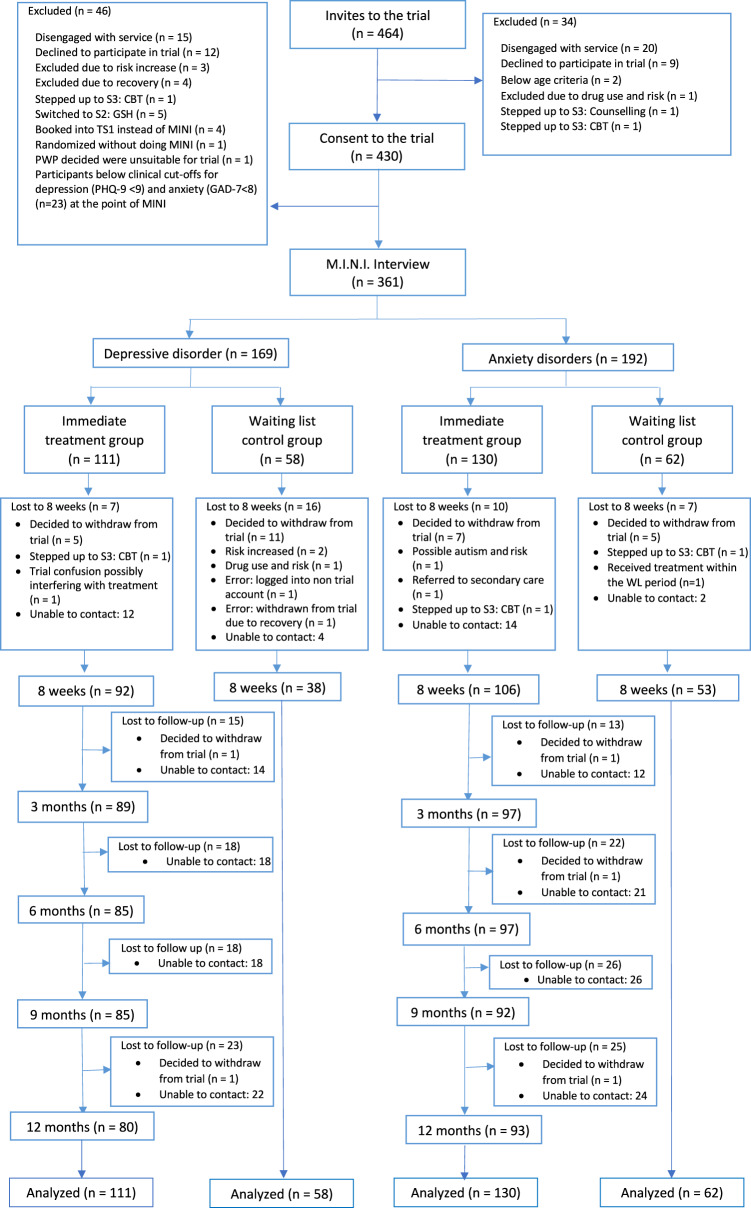
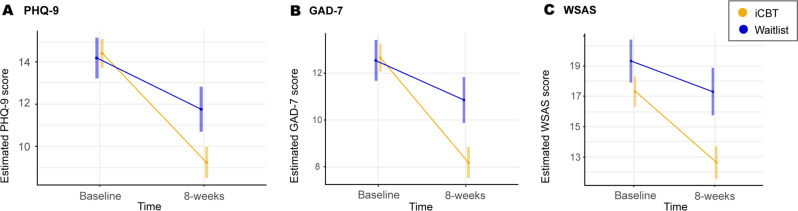
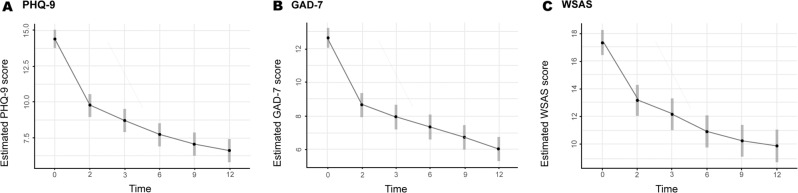
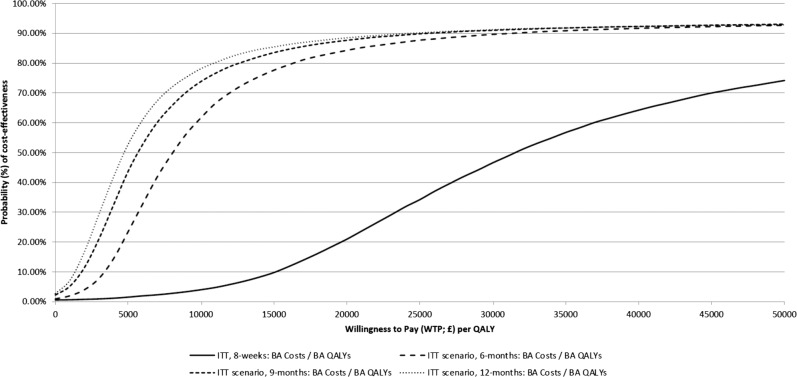
Utilization of internet-delivered cognitive behavioural therapy (iCBT) for treating depression and anxiety disorders in stepped-care models, such as the UK’s Improving Access to Psychological Therapies (IAPT), is a potential solution for addressing the treatment gap in mental health. We investigated the effectiveness and cost-effectiveness of iCBT when fully integrated within IAPT stepped-care settings. We conducted an 8-week pragmatic randomized controlled trial with a 2:1 (iCBT intervention: waiting-list) allocation, for participants referred to an IAPT Step 2 service with depression and anxiety symptoms (Trial registration: ISRCTN91967124). The primary outcomes measures were PHQ-9 (depressive symptoms) and GAD-7 (anxiety symptoms) and WSAS (functional impairment) as a secondary outcome. The cost-effectiveness analysis was based on EQ-5D-5L (preference-based health status) to elicit the quality-adjust life year (QALY) and a modified-Client Service Receipt Inventory (care resource-use). Diagnostic interviews were administered at baseline and 3 months. Three-hundred and sixty-one participants were randomized (iCBT, 241; waiting-list, 120). Intention-to-treat analyses showed significant interaction effects for the PHQ-9 ( b = −2.75, 95% CI −4.00, −1.50) and GAD-7 ( b = −2.79, 95% CI −4.00, −1.58) in favour of iCBT at 8-week and further improvements observed up to 12-months. Over 8-weeks the probability of cost-effectiveness was 46.6% if decision makers are willing to pay £30,000 per QALY, increasing to 91.2% when the control-arm’s outcomes and costs were extrapolated over 12-months. Results indicate that iCBT for depression and anxiety is effective and potentially cost-effective in the long-term within IAPT. Upscaling the use of iCBT as part of stepped care could help to enhance IAPT outcomes. The pragmatic trial design supports the ecological validity of the findings.
Overview
The claims and statistics of this paper haven’t been checked yet.
Free: it reads the open-access text and checks the first 5 claims that cite a source we can check. Create a free account to check every claim.
Integrity signals
Registry
Cites
Statistics
Figures
Verification
Claims the paper makes
The claims and statistics of this paper haven’t been checked yet.
Free: it reads the open-access text and checks the first 5 claims that cite a source we can check. Create a free account to check every claim.
Claims other papers make about this one
Each is checked against this paper’s own text: does it say what the citing paper says it does?
The source backs part of the claim, not all of it — or backs it for a different population, condition or comparison.
In the citing paper
“Although DMHTs have begun to be integrated into health care systems in Europe and Australia (16–20), they have not been well integrated into the U.S. health care system.”
From Banbury forum consensus statement on the path forward for digital mental health treatment (2021) · cites this paper as [20]
Experimental — accuracy not yet measuredThe cited source says what the claim attributes to it.
In the citing paper
“Emerging evidence supports the cost-effectiveness of guided DMHTs (20, 41).”
From Banbury forum consensus statement on the path forward for digital mental health treatment (2021) · cites this paper as [20]
The cited source says what the claim attributes to it.
In the citing paper
“In a recent randomised waitlist-controlled effectiveness and cost-effectiveness trial of digital interventions, it was found that 8-week iCBT for depression and anxiety is not only effective but also potentially cost-effective in the long-term within the improving access to psychological therapies programme (IAPT) in the UK”
Self-check
Percentages, sums and reported differences re-computed from the paper’s own numbers.
The self-check needs the paper’s full text.
Citations
Cites
The PHQ-9: Validity of a brief depression severity measure
Kroenke, K., Spitzer, R. L., & Williams, J. B. W. (2001) · Journal of General Internal Medicine · doi:10.1046/j.1525-1497.2001.016009606.x · Cited by 44,910
A Brief Measure for Assessing Generalized Anxiety Disorder: The GAD-7
Spitzer, R. L., Kroenke, K., Williams, J. B. W., & Löwe, B. (2006) · Archives of Internal Medicine · doi:10.1001/archinte.166.10.1092 · Cited by 31,765
(1998) · The Journal of Clinical Psychiatry · Cited by 19,139
(1998) · PubMed · Cited by 10,216
Development and preliminary testing of the new five-level version of EQ-5D (EQ-5D-5L)
Herdman, M., Gudex, C., Lloyd, A., Janssen, M., Kind, P., Parkin, D., Bonsel, G., & Badia, X. (2011) · Quality of Life Research · doi:10.1007/s11136-011-9903-x · Cited by 9,795
The Work and Social Adjustment Scale: a simple measure of impairment in functioning
Mundt, J. C., Marks, I. M., Shear, M. K., & Greist, J. M. (2002) · British Journal of Psychiatry · doi:10.1192/bjp.180.5.461 · Cited by 2,515
Scaling-up treatment of depression and anxiety: a global return on investment analysis
Chisholm, D., Sweeny, K., Sheehan, P., Rasmussen, B., Smit, F., Cuijpers, P., & Saxena, S. (2016) · The Lancet Psychiatry · doi:10.1016/s2215-0366(16)30024-4 · Cited by 1,451
Computer-based psychological treatments for depression: A systematic review and meta-analysis
Richards, D., & Richardson, T. (2012) · Clinical Psychology Review · doi:10.1016/j.cpr.2012.02.004 · Cited by 1,442
Self-citationExplanatory and Pragmatic Attitudes in Therapeutical Trials
Schwartz, D., & Lellouch, J. (2009) · Journal of Clinical Epidemiology · doi:10.1016/j.jclinepi.2009.01.012 · Cited by 1,252
Undertreatment of people with major depressive disorder in 21 countries
Thornicroft, G., Chatterji, S., Evans-Lacko, S., Gruber, M., Sampson, N., Aguilar-Gaxiola, S., Al-Hamzawi, A., Alonso, J., Andrade, L., Borges, G., et al. (2017) · British Journal of Psychiatry · doi:10.1192/bjp.bp.116.188078 · Cited by 1,121
Research works printed but not linked: 2
- Layard, R. & Clark, D. Thrive: The Power of Evidence-based Psychological Therapies (Penguin, UK, 2014).
- National Institute for Health and Care Excellence. Guide to the methods of technology appraisal. Process and methods. National Institute for Health and Care Excellence (2013). 27905712
Cited by
Digital interventions for the treatment of depression: a meta-analytic review
Moshe, I., Terhorst, Y., Philippi, P., Domhardt, M., Cuijpers, P., Cristea, I., Pulkki-Råback, L., Baumeister, H., & Sander, L. B. (2021) · Psychological Bulletin · doi:10.1037/bul0000334 · Cited by 390
Thieme, A., Hanratty, M., Lyons, M., Palacios, J., Marques, R. F., Morrison, C., & Doherty, G. (2023) · ACM Transactions on Computer-Human Interaction · doi:10.1145/3564752 · Cited by 171
Self-citationBanbury forum consensus statement on the path forward for digital mental health treatment
Mohr, D. C., Azocar, F., Bertagnolli, A., Choudhury, T., Chrisp, P., Frank, R., Harbin, H., Histon, T., Kaysen, D., Nebeker, C., et al. (2021) · Psychiatric Services · doi:10.1176/appi.ps.202000561 · Cited by 115
“Emerging evidence supports the costeffectiveness of guidedDMHTs (20, 41).”
Self-citationEffectiveness of a digital therapeutic as adjunct to treatment with medication in pediatric ADHD
Kollins, S. H., Childress, A. C., Heusser, A. C., & Lutz, J. G. (2021) · npj Digital Medicine · doi:10.1038/s41746-021-00429-0 · Cited by 125
Six, S. G., Byrne, K. A., Tibbett, T. P., & Pericot-Valverde, I. (2021) · JMIR Mental Health · doi:10.2196/32199 · Cited by 95
“The following data were extracted from each article: first author, year of publication, participants’ characteristics (ie, gender and age), population, and study length (Multimedia Appendix 3), as well as app name, app classification (ie, mobile or internet), presence of gamification elements, type of gamification ele…”
MethodResultGual-Montolio, P., Jaén, I., Martínez-Borba, V., Castilla, D., & Suso-Ribera, C. (2022) · International Journal of Environmental Research and Public Health · doi:10.3390/ijerph19137737 · Cited by 93
Evaluation of the Use of Digital Mental Health Platforms and Interventions: Scoping Review
Balcombe, L., & De Leo, D. (2022) · International Journal of Environmental Research and Public Health · doi:10.3390/ijerph20010362 · Cited by 76
Gkintoni, E., Vassilopoulos, S. P., & Νικολάου, Γ. (2025) · Medicina · doi:10.3390/medicina61030431 · Cited by 95
Eilert, N., Enrique, A., Wogan, R., Mooney, O., Timulak, L., & Richards, D. (2021) · Depression and Anxiety · doi:10.1002/da.23115 · Cited by 60
“All but one study (Richards et al., 2020) fell into Categories 3 and 4, thus only those categories were included in mixed‐effect models. cMixed‐effect models included 15 studies for anxiety and 13 for worry.”
BackgroundInfluentialSelf-citationJardine, J., Nadal, C., Robinson, S., Enrique, Á., Hanratty, M., & Doherty, G. J. (2024) · ACM Transactions on Computer-Human Interaction · doi:10.1145/3635472 · Cited by 76
How Kaiser Permanente Created a Mental Health and Wellness Digital Ecosystem
Mordecai, D., Histon, T., Neuwirth, E., Heisler, W. S., Kraft, A., Bang, Y., Franchino, K., Taillac, C., & Nixon, J. P. (2021) · NEJM Catalyst · doi:10.1056/cat.20.0295 · Cited by 56
Akkol‐Solakoglu, S., & Hevey, D. (2023) · Psycho-Oncology · doi:10.1002/pon.6097 · Cited by 55
Benjet, C. L., Zainal, N. H., Albor, Y., Alvis–Barranco, L., Tapias, N. E. C., Contreras‐Ibáñez, C. C., Cudris–Torres, L., de la Peña, F. R., González, N., Guerrero-López, B., et al. (2023) · JAMA Psychiatry · doi:10.1001/jamapsychiatry.2023.1675 · Cited by 63
Varma, M., Washington, P. Y., Chrisman, B., Kline, A., Leblanc, É., Paskov, K. M., Stockham, N., Jung, J.-Y., Sun, M., & Wall, D. P. (2022) · Journal of Medical Internet Research · doi:10.2196/31830 · Cited by 55
Digital interventions in mental health: Evidence syntheses and economic modelling
Gega, L., Jankovic, D., Saramago, P., Marshall, D., Dawson, S., Brabyn, S., Nikolaidis, G. F., Melton, H., Churchill, R., & Bojke, L. (2022) · Health Technology Assessment · doi:10.3310/rcti6942 · Cited by 48
Eilert, N., Wogan, R., Leen, A., & Richards, D. (2022) · JMIR Pediatrics and Parenting · doi:10.2196/33551 · Cited by 43
“Considering the recent advances in building an evidence base for internet-delivered interventions for anxiety and depression in adults [20,61], this study highlights the lack of equivalent interventions for CYP.”
BackgroundSelf-citationLi, E. T., Kealy, D., Doorn, K. A., McCollum, J. K., Curtis, J. T., Luo, X., & Silberschatz, G. (2024) · Psychotherapy Research · doi:10.1080/10503307.2024.2360448 · Cited by 57
Franklin, M. K., Enrique, Á., Palacios, J. E., & Richards, D. (2021) · Quality of Life Research · doi:10.1007/s11136-021-02833-1 · Cited by 52
Self-citationPredicting early dropout in online versus face-to-face guided self-help: A machine learning approach
Gonzalez Salas Duhne, P., Delgadillo, J., & Lutz, W. (2022) · Behaviour Research and Therapy · doi:10.1016/j.brat.2022.104200 · Cited by 38
The Economics of Treatment for Depression
Stecher, C. D., Cloonan, S., & Domino, M. E. (2023) · Annual Review of Public Health · doi:10.1146/annurev-publhealth-061022-040533 · Cited by 51
Lawler, K., Earley, C., Timulák, L., Enrique, Á., & Richards, D. (2021) · JMIR Formative Research · doi:10.2196/26221 · Cited by 54
Self-citationSchouten, S. E., Kip, H., Dekkers, T., Deenik, J., Beerlage-de Jong, N., Ludden, G. D. S., & Kelders, S. M. (2022) · Design for Health · doi:10.1080/24735132.2022.2145814 · Cited by 37
Jankovic, D., Bojke, L., Marshall, D., Saramago Goncalves, P., Churchill, R., Melton, H., Brabyn, S., & Gega, L. (2021) · Applied Health Economics and Health Policy · doi:10.1007/s40258-020-00607-3 · Cited by 36
“As a case in point, a recent within-trial economic evaluation [35] compared a DMHI against a waiting list control and showed that, for short-term observed outcomes (at 8 weeks), the evaluated DI was unlikely to be cost-effective, whereas for longer term estimated (extrapolated) outcomes (at 12 months), the DMHI could…”
ResultKleinau, E., Lamba, T., Jaskiewicz, W., Gorentz, K., Hungerbuehler, I., Rahimi, D., Kokota, D., Maliwichi, L., Jamu, E. S., Zumazuma, A., et al. (2024) · PLoS ONE · doi:10.1371/journal.pone.0303370 · Cited by 54
Benjet, C. L., Albor, Y., Alvis–Barranco, L., Contreras‐Ibáñez, C. C., Montoya, G. P. C., Cudris–Torres, L., González, N., Morelos, J. C., Gutiérrez–García, R. A., Medina‐Mora, M. E., et al. (2023) · Journal of Consulting and Clinical Psychology · doi:10.1037/ccp0000846 · Cited by 59
Palmer, C. E., Marshall, E., Millgate, E., Warren, G., Ewbank, M., Cooper, E., Lawes, S., Bouazzaoui, M., Smith, A., Hutchins-Joss, C., et al. (2025) · Journal of Medical Internet Research · doi:10.2196/69351 · Cited by 47
Moshe, I., Terhorst, Y., Paganini, S., Schlicker, S., Pulkki-Råback, L., Baumeister, H., Sander, L. B., & Ebert, D. D. (2022) · Journal of Medical Internet Research · doi:10.2196/38261 · Cited by 28
“As digital mental health interventions are being increasingly adopted by health care systems worldwide [13,47], the ability to identify patients at risk of dropout may provide valuable information to improve the adherence, and thus effectiveness, of digital interventions.”
Peake, E. E., Miller, I., Flannery, J., Chen, L., Lake, J. I., & Padmanabhan, A. (2024) · Journal of Medical Internet Research · doi:10.2196/48467 · Cited by 39
Horwitz, A. G., Mills, E. D., Sen, S., & Bohnert, A. S. B. (2024) · JAMA Network Open · doi:10.1001/jamanetworkopen.2024.22115 · Cited by 40
Bulaj, G. W., Clark, J. E., Ebrahimi, M., & Bald, E. M. (2021) · Frontiers in Pharmacology · doi:10.3389/fphar.2021.612602 · Cited by 32
Lee, C. T., Palacios, J., Richards, D., Hanlon, A. K., Lynch, K., Harty, S., Claus, N., Swords, L., O’Keane, V., Stephan, K. E., et al. (2023) · BMC Psychiatry · doi:10.1186/s12888-022-04462-5 · Cited by 25
Self-citationTaylor, K. M., Bradley, J., & Cella, M. (2022) · Psychology and Psychotherapy Theory Research and Practice · doi:10.1111/papt.12395 · Cited by 27
Evidence on Technology-Based Psychological Interventions in Diagnosed Depression: Systematic Review
Köhnen, M., Dreier, M., Seeralan, T., Kriston, L., Härter, M., Baumeister, H., & Liebherz, S. (2021) · JMIR Mental Health · doi:10.2196/21700 · Cited by 23
Harty, S., Enrique, Á., Akkol‐Solakoglu, S., Adegoke, A., Farrell, H., Connon, G., Ward, F., Kennedy, C., Chambers, D., & Richards, D. (2023) · International Journal of Mental Health Systems · doi:10.1186/s13033-023-00592-9 · Cited by 47
Self-citationPalacios, J. E., Adegoke, A., Wogan, R., Duffy, D. J., Earley, C., Eilert, N., Enrique, Á., Sollesse, S., Chapman, J. E., & Richards, D. (2022) · British Journal of Psychology · doi:10.1111/bjop.12614 · Cited by 24
Self-citationMiller, I., Peake, E., Strauss, G., Vierra, E., Koepsell, X., Shalchi, B., Padmanabhan, A., & Lake, J. (2023) · JMIR Formative Research · doi:10.2196/43260 · Cited by 19
“%) of the study participants had completed all mobile app modules by the end of the intervention period, which is comparable with other digital health intervention studies [86,87].”
ResultTimulak, L., Richards, D., Bhandal-Griffin, L., Healy, P., Azevedo, J., Connon, G., Martin, E., Kearney, A., O’Kelly, C., Enrique, A., et al. (2022) · Trials · doi:10.1186/s13063-022-06551-y · Cited by 19
Self-citationMelisse, B., Blankers, M., van den Berg, E. M., de Jonge, M., Lommerse, N. M., van Furth, E. F., Dekker, J., & de Beurs, E. (2023) · International Journal of Eating Disorders · doi:10.1002/eat.24003 · Cited by 26
Nadal, C., Earley, C., Enrique, Á., Sas, C., Richards, D., & Doherty, G. J. (2023) · ACM Transactions on Computer-Human Interaction · doi:10.1145/3617361 · Cited by 26
Self-citationSimmonds‐Buckley, M., Bennion, M. R., Kellett, S., Millings, A., Hardy, G. E., & Moore, R. K. (2020) · Journal of Medical Internet Research · doi:10.2196/17049 · Cited by 26
Franklin, M. K., Hunter, R. M., Enrique, Á., Palacios, J. E., & Richards, D. (2022) · Value in Health · doi:10.1016/j.jval.2021.11.1358 · Cited by 23
Self-citationPalacios, J. E., Enrique, Á., Mooney, O., Farrell, S., Earley, C., Duffy, D. J., Eilert, N., Harty, S., Timulák, L., & Richards, D. (2022) · Clinical Psychology & Psychotherapy · doi:10.1002/cpp.2743 · Cited by 23
Self-citationNadal, C., Earley, C., Enrique, Á., Viganò, N., Sas, C., Richards, D., & Doherty, G. J. (2021) · Contemporary Clinical Trials · doi:10.1016/j.cct.2021.106323 · Cited by 19
Self-citationCastilla, D., Haro, M. V. N., Suso‐Ribera, C., Díaz‐García, A., Zaragozá, I., & García‐Palacios, A. (2022) · BMC Psychiatry · doi:10.1186/s12888-022-03800-x · Cited by 20
Hollis, C. P., Hall, C. L., Khan, K., Novere, M. L., Marston, L., Jones, R., Hunter, R. M., Brown, B. J., Sanderson, C., Andrén, P., et al. (2023) · Health Technology Assessment · doi:10.3310/cpms3211 · Cited by 17
Enrique, Á., Eilert, N., Wogan, R., Earley, C., Duffy, D. J., Palacios, J. E., Timulák, L., & Richards, D. (2021) · Cognitive Therapy and Research · doi:10.1007/s10608-020-10200-6 · Cited by 18
Self-citationTsirmpas, C., Andrikopoulos, D., Fatouros, P., Eleftheriou, G., Anguera, J. A., Kontoangelos, K. A., & Papageorgiou, C. (2022) · Frontiers in Digital Health · doi:10.3389/fdgth.2022.868970 · Cited by 17
Lee, C. T., Harty, S., Adegoke, A., Palacios, J. E., Gillan, C. M., & Richards, D. (2023) · International Journal of Behavioral Medicine · doi:10.1007/s12529-023-10215-9 · Cited by 21
Self-citationBrettschneider, C., Heddaeus, D., Steinmann, M., Härter, M. C., Watzke, B., & König, H. (2020) · BMC Psychiatry · doi:10.1186/s12888-020-02829-0 · Cited by 17
Richardson, T. H., Enrique, Á., Earley, C., Adegoke, A., Hiscock, D., & Richards, D. (2022) · Frontiers in Public Health · doi:10.3389/fpubh.2022.739381 · Cited by 23
Self-citationOkorie, C. O., Ogba, F. N., Amujiri, B. A., Nwankwo, F. M., Oforka, T. O., Igu, N. C. N., Arua, C. C., Nwamuo, B. N., Okolie, C. N., Ogbu, E. O., et al. (2022) · Internet Interventions · doi:10.1016/j.invent.2022.100549 · Cited by 17
Omylinska‐Thurston, J., Aithal, S., Liverpool, S., Clark, R. D., Moula, Z., Wood, J., Viliardos, L., Rodríguez-Dorans, E., Farish-Edwards, F., Parsons, A. S., et al. (2024) · JMIR Mental Health · doi:10.2196/55500 · Cited by 18
Nelson, J., Kaplan, J., Simerly, G., Nutter, N., Edson-Heussi, A., Woodham, B., & Broman‐Fulks, J. J. (2025) · Current Psychology · doi:10.1007/s12144-025-07320-1 · Cited by 24
Improving Science That Uses Code
Thimbleby, H. (2023) · The Computer Journal · doi:10.1093/comjnl/bxad067 · Cited by 19
Eilert, N., Timulak, L., Duffy, D., Earley, C., Enrique, A., Kennedy, P., McCormack, C., Palacios, J., Wogan, R., & Richards, D. (2022) · Clinical Psychology & Psychotherapy · doi:10.1002/cpp.2619 · Cited by 11
“…larger reductions in depression and anxiety symptoms from baseline to 8 weeks than those in the waitlist control group (d = 0.55–0.63), with significant further improvements in symptoms observed in the iCBT group from 8 weeks to 12-month follow-up (for details, see D. Richards et al., 2020).”
BackgroundMethodResultInfluentialSelf-citationWogan, R., Enrique, Á., Adegoke, A., Earley, C., Sollesse, S., Gale, S., Chellingsworth, M., & Richards, D. (2021) · Internet Interventions · doi:10.1016/j.invent.2021.100443 · Cited by 13
Self-citationFranklin, M. K., & Alava, M. H. (2023) · Quality of Life Research · doi:10.1007/s11136-023-03443-9 · Cited by 14
Self-citationMcFadyen, J., Habicht, J., Dinu, L. M., Harper, R. J., Hauser, T. U., & Rollwage, M. (2026) · Communications Medicine · doi:10.1038/s43856-025-01321-8 · Cited by 19
Guided Internet-Delivered Treatment for Depression: Scoping Review
Børtveit, L., Dechsling, A., Sütterlin, S., Nordgreen, T., & Nordahl‐Hansen, A. (2022) · JMIR Mental Health · doi:10.2196/37342 · Cited by 14
Lee, C. T., Kelley, S. W., Palacios, J. E., Richards, D., & Gillan, C. M. (2023) · Psychological Medicine · doi:10.1017/s0033291723001368 · Cited by 14
Self-citationCumpanasoiu, D. C., Enrique, Á., Palacios, J. E., Duffy, D. J., McNamara, S., & Richards, D. (2023) · JMIR mhealth and uhealth · doi:10.2196/41815 · Cited by 13
Self-citationZainal, N. H., Benjet, C. L., Albor, Y., Núñez-Delgado, M. J., Cruz, R. Z., Contreras‐Ibáñez, C. C., Cudris–Torres, L., de la Peña, F. R., González, N., Guerrero-López, B., et al. (2025) · International Journal of Methods in Psychiatric Research · doi:10.1002/mpr.70005 · Cited by 9
Transdiagnostic psychological interventions for emotional disorders: A comprehensive meta-analysis
Jiménez-Orenga, N., Miguel, C., González-Robles, A., Fernández‐Álvarez, J., Grimaldos, J., Bretón-López, J. M., Botella, C., Cuijpers, P. J., García‐Palacios, A., Papola, D., et al. (2025) · Journal of Affective Disorders · doi:10.1016/j.jad.2025.119537 · Cited by 13
Bossarte, R. M., Kessler, R. C., Nierenberg, A. A., Chattopadhyay, A., Cuijpers, P. J., Enrique, Á., Foxworth, P. M., Gildea, S. M., Belnap, B. H., Haut, M. W., et al. (2022) · Trials · doi:10.1186/s13063-022-06438-y · Cited by 9
Self-citationAlbayrak, B., Cordier, L. J., Greve, S., Teschler, U., Dathe, A.-K., Felderhoff‐Müser, U., & Hüning, B. M. (2023) · JMIR Pediatrics and Parenting · doi:10.2196/40940 · Cited by 10
Gual-Montolio, P., Suso‐Ribera, C., García‐Palacios, A., Castilla, D., Zaragozá, I., & Bretón-López, J. M. (2023) · Internet Interventions · doi:10.1016/j.invent.2023.100601 · Cited by 14
Benjet, C. L., Kessler, R. C., Kazdin, A. E., Cuijpers, P. J., Albor, Y., Tapias, N. E. C., Contreras‐Ibáñez, C. C., González, M. S. D., Gildea, S. M., González, N., et al. (2022) · Trials · doi:10.1186/s13063-022-06255-3 · Cited by 10
Self-citationAkkol-Solakoglu, S., Hevey, D., & Richards, D. (2021) · Internet Interventions · doi:10.1016/j.invent.2021.100367 · Cited by 8
Self-citationMaltoni, J., Neufeld, C. B., Aminoff, V., & Andersson, G. (2025) · Internet Interventions · doi:10.1016/j.invent.2025.100854 · Cited by 10
Miki, A., Lau, M. A., & Moradian, H. (2021) · Journal of Occupational and Environmental Medicine · doi:10.1097/jom.0000000000002248 · Cited by 10
Castro, Ó., Salamanca-Sanabria, A., Alattas, A., Teepe, G. W., Leidenberger, K., Fleisch, E., Car, L. T., Müller‐Riemenschneider, F., & Kowatsch, T. (2024) · Archives of Public Health · doi:10.1186/s13690-024-01424-z · Cited by 11
Köhnen, M., Kriston, L., Härter, M. C., Baumeister, H., & Liebherz, S. (2020) · Journal of Medical Internet Research · doi:10.2196/24584 · Cited by 17
Eberhart, L. G., Seegan, P. L., Mcguire, J. F., Hu, H., Tripuraneni, B. R., & Miller, M. J. (2023) · Psychiatric Services · doi:10.1176/appi.ps.20220401 · Cited by 8
Duffy, D. J., Richards, D., Earley, C., & Timulák, L. (2023) · Frontiers in Digital Health · doi:10.3389/fdgth.2023.1139125 · Cited by 10
Self-citationO’Toole, M. S., Ramsdal, N. B., Nørskov, C. S., Roepstorff, I. G., Buskbjerg, C. R., Mads, B., Christiansen, & Elkjær, E. (2025) · Journal of Affective Disorders · doi:10.1016/j.jad.2025.119791 · Cited by 11
Eilert, N., Wogan, R., Adegoke, A., Earley, C., Duffy, D. J., Enrique, Á., Palacios, J. E., Timulák, L., & Richards, D. (2022) · Journal of Clinical Psychology · doi:10.1002/jclp.23403 · Cited by 7
Self-citationZhou, W., Chen, Y., Wu, H., Zhao, H., Li, Y., Shi, G., Wang, W., Liu, Y., Liao, Y., Zhang, H., et al. (2025) · Journal of Medical Internet Research · doi:10.2196/67567 · Cited by 8
Bradley, G., Rehackova, L., Devereaux, K., Bruce, T. A., Nunn, V., Gilfellon, L., Burrows, S., Cameron, A., Watson, R., Rumney, K., et al. (2025) · PLOS Digital Health · doi:10.1371/journal.pdig.0000752 · Cited by 11
Pigeon, W. R., Bishop, T. M., Bossarte, R. M., Schueller, S. M., & Kessler, R. C. (2023) · Contemporary Clinical Trials · doi:10.1016/j.cct.2023.107306 · Cited by 6
Mihalopoulos, C., Lee, Y. Y., Engel, L., Le, L. K., Tan, E. J., & Chatterton, M. L. (2021) · Australian Economic Review · doi:10.1111/1467-8462.12412 · Cited by 7
Gityamwi, N., Armes, J., Harris, J., Ream, E., Green, R., Ahankari, A. S., Callwood, A., Ip, A., Cockle‐Hearne, J., Grosvenor, W., et al. (2025) · PLOS Digital Health · doi:10.1371/journal.pdig.0000806 · Cited by 6
Albor, Y., González, N., Benjet, C. L., Salamanca-Sanabria, A., la Rosa, C. H.-D., Eslava-Torres, V. G., García-Alfaro, M. C., Melchor-Audirac, A., Montoya-Montero, L. I., & Suárez, K. (2024) · JMIR Formative Research · doi:10.2196/63298 · Cited by 8
Silverman, A. L., Ferguson, I., Bullis, J. R., Bajwa, H., Mei, S., & Beard, C. (2025) · Journal of Mood and Anxiety Disorders · doi:10.1016/j.xjmad.2025.100106 · Cited by 7
Kleinau, E., Lamba, T., Jaskiewicz, W., Gorentz, K., Hungerbuehler, I., Rahimi, D., Kokota, D., Maliwichi, L., Jamu, E. S., Zumazuma, A., et al. (2023) · medRxiv · doi:10.1101/2023.01.24.23284959 · Cited by 5
Holas, P., & Wardęszkiewicz, J. (2026) · Mindfulness · doi:10.1007/s12671-025-02738-x · Cited by 7
Darden, M., Carl, J. R., Smits, J. A. J., Otto, M. W., & Miller, C. B. (2024) · PLOS mental health. · doi:10.1371/journal.pmen.0000116 · Cited by 6
Benjet, C. L., Zainal, N. H., Albor, Y., Alvis–Barranco, L., Tapias, N. E. C., Contreras‐Ibáñez, C. C., Morelos, J. C., Cudris–Torres, L., de la Peña, F. R., González, N., et al. (2025) · JMIR Mental Health · doi:10.2196/64251 · Cited by 6
Reich, H., Hegerl, U., Rosenthal, A., & Allenhof, C. (2024) · Scientific Reports · doi:10.1038/s41598-024-62196-8 · Cited by 4
Clark, A., Appleton, R., Kalocsányiová, E., Gkaintatzi, E., & McCrone, P. (2022) · medRxiv · doi:10.1101/2022.12.01.22282817 · Cited by 5
Watkins, E. R., Phillips, D., Choueiri, H., Ford, A., Cook, H., Taylor, G. T., & Kessler, R. C. (2025) · Trials · doi:10.1186/s13063-025-09023-1 · Cited by 4
Hall, S. S., Hall, C., Partlett, C., Jeayes, A., Rattu, N. R., Henshaw, H., Martin, J., & Shoesmith, E. (2026) · PLOS Digital Health · doi:10.1371/journal.pdig.0001466 · Cited by 3
Oakley, B. F. M., Boatman, C. A., Doswell, S., Dittner, A. J., Clarke, A. D., Ozsivadjian, A., Kent, R., Judd, A., Baldoza, S. M., Hearn, A., et al. (2023) · PLoS ONE · doi:10.1371/journal.pone.0286792 · Cited by 3
Fournier, V., Talbot, F., Hadjistavropoulos, H. D., Titov, N., Dear, B. F., Lang, R., Saulnier, V., Hébert, H., & Cloutier, G. (2025) · Internet Interventions · doi:10.1016/j.invent.2025.100813 · Cited by 3
Balcombe, L., & Leo, D. D. (2022) · Frontiers in Digital Health · doi:10.3389/fdgth.2022.964251 · Cited by 4
Andrews, B., Klein, B., Corboy, D., McLaren, S., & Watson, S. (2023) · Counselling and Psychotherapy Research · doi:10.1002/capr.12667 · Cited by 7
Cheng, T., Fu, M., Zhang, B., Luo, L., & Guo, J. (2023) · Psychology Health & Medicine · doi:10.1080/13548506.2023.2224582 · Cited by 3
Aguilera, A., Avalos, M. R. A., Rosales, K., Reyes, Y., Hernandez-Ramos, R., Ramos, G., Garcia, E. R., Hoang, T., Ochoa‐Frongia, L., Fortuna, L. R., et al. (2023) · Contemporary Clinical Trials · doi:10.1016/j.cct.2023.107422 · Cited by 4
Addressing depression and behavioral health needs through a digital program at scale
Sharif-Sidi, Z., Shen, C. P., Wong, W., Hanson, R., Miller, L. A., Fickel, K., Green, E., Burns, J., Dunn, C., Somai, M. M., et al. (2021) · Healthcare · doi:10.1016/j.hjdsi.2021.100521 · Cited by 3
Pacheco, C. R., & Scheeringa, M. S. (2022) · The Cognitive Behaviour Therapist · doi:10.1017/s1754470x22000368 · Cited by 6
Areán, P. A., & Allred, R. (2022) · Elsevier eBooks · doi:10.1016/b978-0-323-90045-4.00011-3 · Cited by 3
Metadata
- Authors
- Richards, D., Enrique, A., Eilert, N., Franklin, M., Palacios, J., Duffy, D., Earley, C., Chapman, J., Jell, G., Sollesse, S., & Timulak, L.
- Affiliations
- Trinity College Dublin (IE)
- University of Sheffield (GB)
- Berkshire Healthcare NHS Foundation Trust (GB)
- Corresponding author
- Richards, Derek
- ORCID
- Venue
- npj Digital Medicine
- Published
- 2020-06-15
- Volume
- 3
- Issue
- 1
- Pages
- 85-85
- ISSN
- 2398-6352 (ISSN-L)
- PMC
- PMC7295750
- OpenAlex
- W3035328635
- Cited by
- 154
- References
- 41
- Citations by year
- 2026: 20 · 2025: 26 · 2024: 20 · 2023: 31 · 2022: 33 · 2021: 17 · 2020: 7
- FWCI
- 19.88
- Type
- journal article
- Language
- en
- Update notices
- correction (2020-06-30)
- Open access
- gold
- doi.org
- Licence
- cc-by
- creativecommons.org/licenses/by/4.0 (tdm)
- creativecommons.org/licenses/by/4.0 (vor)
- Locations
- npj Digital Medicine (publishedVersion, cc-by)
- PubMed Central (publishedVersion, cc-by)
- PubMed (publishedVersion)
- White Rose Research Online (University of Leeds, The University of Sheffield, University of York) (acceptedVersion)
- Arrow@dit (Dublin Institute of Technology) (submittedVersion, cc-by-nc-sa)
- DOAJ (DOAJ: Directory of Open Access Journals) (submittedVersion, cc-by-sa)
- Trinity's Access to Research Output (TARA) (Trinity College Dublin) (submittedVersion, cc-by)
- Lenus, The Irish Health Repository (Dr Steevens Hospital Library) (submittedVersion)
- Funders
- SilverCloud Health
- Berkshire Healthcare NHS Foundation Trust
- Topics
- Social Sciences › Psychology › Applied Psychology › Digital Mental Health Interventions
- Social Sciences › Psychology › Experimental and Cognitive Psychology › Anxiety, Depression, Psychometrics, Treatment, Cognitive Processes
- Health Sciences › Medicine › Psychiatry and Mental health › Mental Health Treatment and Access
- Keywords
- internet-based cognitive behavioral therapy, depression, anxiety, Improving Access to Psychological Therapies, cost-effectiveness, digital mental health interventions, quality-adjusted life years, functional disability, waitlist control
About these checks
Registry, retraction, Cites and statistics results are computed, not judged, with one exception: a printed reference that no index lists is read once by a model before it counts as a citation error. Claims are extracted by a model and kept only when their quote appears verbatim in the text; each cited source is then checked, with a model’s help, for whether it says what the claim relies on. Those verdicts can be wrong — read the claim’s quote and the cited source before relying on one.
Statistics and arithmetic are recomputed, not judged.
Confidence bands are shown only for fields calibrated on our annotated test set. None is calibrated yet, so no band is shown.
What counts as a claim ›How we measure confidence ›How we check this ›
Are you an author, or do you see a problem with this page? Request a review
Data sources
Bibliographic data: Semantic Scholar, OpenAlex, Crossref.
Contains information from the Semantic Scholar Academic Graph Datasets, made available under the ODC Attribution License (ODC-BY 1.0).
Semantic Scholar’s data is described in: Kinney, R., et al. (2023). The Semantic Scholar Open Data Platform. arXiv:2301.10140.
