

Digital inclusion as a social determinant of health
Open accessThe DOI matches its Crossref record; 21 of the 21 references it cites were found in a registry or an index.
Abstract
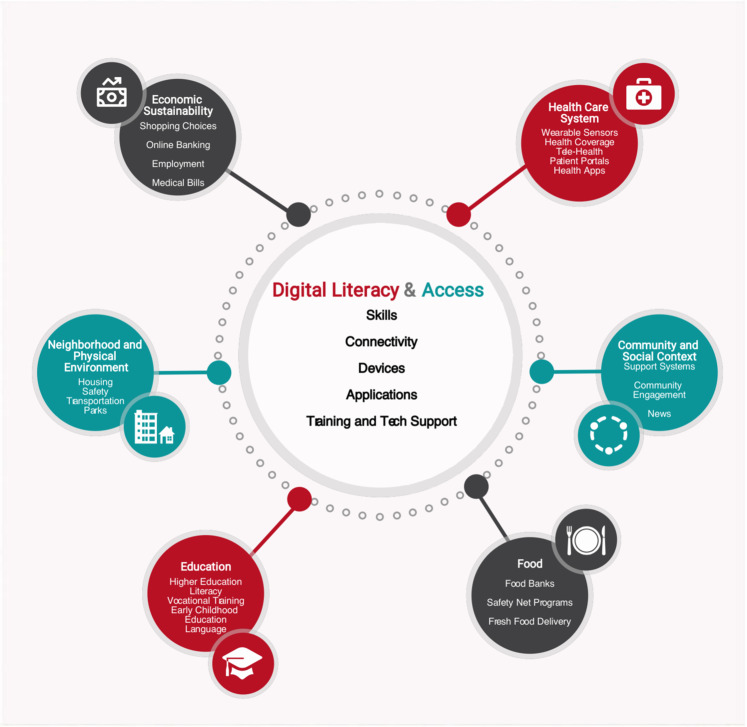
The use of digital tools and applications is steadily increasing and can support a range of health information needs 1 , 2 , 3 . As tools such as patient portals, health trackers, and remote monitoring devices see greater use, research suggests that tools such as health apps and patient portals can foster greater patient engagement, better support for patients outside of the clinic visit, and can improve health outcomes 3 , 4 , 5 , 6 , 7 , 8 , 9 . However, greater reliance on digital tools has the potential to increase disparities between those who have skills and access to digital tools and those who do not and thereby existing health disparities.
Overview
The claims and statistics of this paper haven’t been checked yet.
Free: it reads the open-access text and checks the first 5 claims that cite a source we can check. Create a free account to check every claim.
Integrity signals
Registry
Cites
Statistics
Figures
Verification
Claims the paper makes
The claims and statistics of this paper haven’t been checked yet.
Free: it reads the open-access text and checks the first 5 claims that cite a source we can check. Create a free account to check every claim.
Claims other papers make about this one
Each is checked against this paper’s own text: does it say what the citing paper says it does?
The source backs part of the claim, not all of it — or backs it for a different population, condition or comparison.
In the citing paper
“Research shows that social determinants of health (SDoHs)24 could potentially affect the acceptability of technology usage among racial and ethnic minority populations.”
From Association of Demographic and Socioeconomic Indicators With the Use of Wearable Devices Among Children (2023) · cites this paper as [24]
Experimental — accuracy not yet measured
Self-check
Percentages, sums and reported differences re-computed from the paper’s own numbers.
The self-check needs the paper’s full text.
Citations
Cites
Whitehead, L., & Seaton, P. (2016) · Journal of Medical Internet Research · doi:10.2196/jmir.4883 · Cited by 743
Beyond validation: getting health apps into clinical practice
Gordon, W. J., Landman, A., Zhang, H., & Bates, D. W. (2020) · npj Digital Medicine · doi:10.1038/s41746-019-0212-z · Cited by 326
Interventions to increase patient portal use in vulnerable populations: a systematic review
Grossman, L. V., Masterson Creber, R. M., Benda, N. C., Wright, D., Vawdrey, D. K., & Ancker, J. S. (2019) · Journal of the American Medical Informatics Association · doi:10.1093/jamia/ocz023 · Cited by 251
Self-citationPatient portals and broadband internet inequality
Perzynski, A. T., Roach, M. J., Shick, S., Callahan, B., Gunzler, D., Cebul, R., Kaelber, D. C., Huml, A., Thornton, J. D., & Einstadter, D. (2017) · Journal of the American Medical Informatics Association · doi:10.1093/jamia/ocx020 · Cited by 222
Self-citationPromise of and potential for patient-facing technologies to enable meaningful use
Ahern, D. K., Woods, S. S., Lightowler, M. C., Finley, S. W., & Houston, T. K. (2011) · American Journal of Preventive Medicine · doi:10.1016/j.amepre.2011.01.005 · Cited by 189
Alessa, T., Abdi, S., Hawley, M. S., & de Witte, L. (2018) · JMIR mhealth and uhealth · doi:10.2196/10723 · Cited by 160
Digital health technology and diabetes management: 数字化医疗技术与糖尿病管理
Cahn, A., Akirov, A., & Raz, I. (2018) · Journal of Diabetes · doi:10.1111/1753-0407.12606 · Cited by 102
Zhang, X., Hailu, B., Tabor, D. C., Gold, R., Sayre, M. H., Sim, I., Jean-Francois, B., Casnoff, C. A., Cullen, T., Thomas, V. A., et al. (2019) · Medical Care · doi:10.1097/mlr.0000000000001092 · Cited by 64
Sheon, A. R., Bolen, S. D., Callahan, B., Shick, S., & Perzynski, A. T. (2017) · JMIR Diabetes · doi:10.2196/diabetes.6751 · Cited by 62
Self-citationMcAlearney, A. S., Sieck, C. J., Hefner, J. L., Aldrich, A. M., Walker, D. M., Rizer, M. K., Moffatt-Bruce, S. D., & Huerta, T. R. (2016) · JMIR Research Protocols · doi:10.2196/resprot.6355 · Cited by 50
Self-citation
Research works printed but not linked: 1
- Gibbons, C. Digital Access Disparities: Policy and Practice Overview. Panel Discussion, Digital Skills and Connectivity as Social Determinants of Health. Sheon, A Conference Report: Digital Skills: A Hidden “Super” Social Determinant of Health: Interdisciplinary Association for Population Health Science. (2018).
Cited by
Items 101–200 of 599
Interoperability among hospitals treating populations that have been marginalized
Everson, J., Patel, V., Bazemore, A. W., & Phillips, R. L. (2023) · Health Services Research · doi:10.1111/1475-6773.14165 · Cited by 21
“Many individuals living in areas with high social deprivation may be at-risk due to systemic structural inequities in their communities including, as identified here, in the hospitals they depend on for care.(18,31) We found that the selection of measures to identify marginalized populations, and their association wit…”
BackgroundQiu, Y., Huang, H., Gai, J., & Leo, G. D. (2024) · Journal of Medical Internet Research · doi:10.2196/65541 · Cited by 32
“…as the age-based disparity in digital health technology uses results from objective barriers (eg, bad internet connections or no digital devices) [11-13] and subjective barriers such as health literacy [14], we excluded the sample without internet connections or digital devices to isolate the…”
Dzimitrowicz, H. E., Blakely, L. J., Jones, L. W., & LeBlanc, T. W. (2022) · American Society of Clinical Oncology Educational Book · doi:10.1200/edbk_350550 · Cited by 23
Campbell‐Salome, G., Jones, L. K., Walters, N., Morgan, K., Brangan, A., Ladd, I., McGowan, M. P., Wilemon, K. A., Schmidlen, T., Simmons, E., et al. (2023) · BMC Health Services Research · doi:10.1186/s12913-023-09304-y · Cited by 24
Health disparity in digital health technology design
Wu, Y., Li, Y., Baskys, A., Chok, J. I., Hoffman, J., & Roosan, D. (2024) · Health and Technology · doi:10.1007/s12553-024-00814-1 · Cited by 24
“In the era of rapid adoption of digital health, access to broadband internet and digital skills remain as common barriers to equitable digital health among the underserved [ 11 ].”
Advancing health equity and the role of digital health technologies: a scoping review
Bitomsky, L., Pfitzer, E., Nißen, M., & Kowatsch, T. (2025) · BMJ Open · doi:10.1136/bmjopen-2025-099306 · Cited by 29
Cuadros, D. F., Moreno, C. M., Miller, F. D., Omori, R., & MacKinnon, N. J. (2023) · Mayo Clinic Proceedings Digital Health · doi:10.1016/j.mcpdig.2023.04.004 · Cited by 27
Use of modern technologies for promoting health at the population level in India
Manapurath, R. M., Veetil, D. R., & Kamath, M. S. (2023) · The Lancet Regional Health - Southeast Asia · doi:10.1016/j.lansea.2023.100338 · Cited by 30
“6,7 The challenges of utilizing health technologies include disparities in fi nancial income, literacy rates, and cultural diversity.”
BackgroundDigital health technologies to transform women’s health innovation and inclusive research
Grace, B., Wise, L. A., Nieroda, M., Egbunike, J., & Usman, N. O. (2025) · BMJ · doi:10.1136/bmj-2025-085682 · Cited by 26
“37 A crucial consideration for inclusive research is that the current landscape of DHT in women’s health highlights a persistent focus on childbearing within the range of reproductive health intentions, 38 and in wider women’s health, a focus on reproduction and pregnancy.”
Innovative virtual care delivery in a Canadian paediatric tertiary-care centre
Goldbloom, E. B., Buba, M., Bhatt, M., Suntharalingam, S., & King, W. J. (2022) · Paediatrics & Child Health · doi:10.1093/pch/pxab104 · Cited by 19
Greenlee, M. C., Bolen, S. D., Chong, W. H., Dokun, A. O., Gonzalvo, J. D., Hawkins, M. A., Herman, W. H., Leake, E., Linder, B. L., & Conlin, P. R. (2023) · Diabetes Care · doi:10.2337/dc22-0621 · Cited by 20
Philpot, L. M., Ramar, P., Roellinger, D. L., Njeru, J. W., & Ebbert, J. O. (2024) · JMIR Formative Research · doi:10.2196/56493 · Cited by 25
Boshnjaku, A., Krasniqi, E., & Kamberi, F. (2025) · Frontiers in Public Health · doi:10.3389/fpubh.2025.1534139 · Cited by 27
“Lately, DHL has been tipped to be a super determinant of health rather than just the sum of its parts (5), whereas in association with internet connectivity has been also acknowledged as a “super social determinant of health” (6).”
Alami, H., Lehoux, P., Attieh, R., Fortin, J., Fleet, R. P., Niang, M., Offredo, K., Rouquet, R., Ahmed, M. A. A., & Ly, B. A. (2021) · Frontiers in Digital Health · doi:10.3389/fdgth.2021.721898 · Cited by 24
“These barriers may be further exacerbated in large low-income families requiring multiple devices and data sharing systems, which would require prioritizing the use of data for specific purposes; in this case, health often comes last (86).”
BackgroundInfluentialMurthy, S., Kamath, P., Godinho, M. A., Gudi, N., Jacob, A. G., & John, O. (2022) · BMJ Innovations · doi:10.1136/bmjinnov-2021-000903 · Cited by 24
Equity by design principles for digital health interventions
Bitomsky, L., Nißen, M., & Kowatsch, T. (2025) · International Journal for Equity in Health · doi:10.1186/s12939-025-02645-6 · Cited by 26
“Many low-income households share devices, limiting their ability to use DHIs [34, 36].”
Andrikopoulou, E. (2023) · Elsevier eBooks · doi:10.1016/b978-0-443-15980-0.00011-9 · Cited by 25
Strategies for Creating Inclusive Learning Environments through a Social Justice Lens
Dawson, B. A., Kilgore, W., & Rawcliffe, R. M. (2022) · Journal of Educational Research and Practice · doi:10.5590/jerap.2022.12.0.02 · Cited by 30
“Furthermore, it is imperative that the digital divide among racialized people is considered when developing online courses, given that many online courses include a variety of technologies, such as VoiceThread and Flipgrid (Sieck et al., 2021).”
The Impact of Clinical Decision Support on Health Disparities and the Digital Divide
Douthit, B. J., McCoy, A. B., & Nelson, S. D. (2023) · Yearbook of Medical Informatics · doi:10.1055/s-0043-1768722 · Cited by 20
“), access to information and technology is an important part of quality health care, creating a “digital divide” [10-12].”
BackgroundQuality of Life and Health Determinants of Informal Caregivers Aged 65 Years and Over
Buckinx, F., Adam, S., Aubertin‐Leheudre, M., Hubert, M. D. S., Mouton, A., Potier, F., Reginster, J., & Bruyère, O. (2023) · Epidemiologia · doi:10.3390/epidemiologia4040039 · Cited by 20
“In this sense, internet connectivity (i.e., access to technology) is a social determinant of health, as it can support a range of health information needs [25].”
BackgroundUse of tele-nursing in primary care: A qualitative study on its negative and positive aspects
Martínez, O. N., Martínez-Millana, A., & Traver, V. (2024) · Atención Primaria · doi:10.1016/j.aprim.2023.102843 · Cited by 46
Closing the Digital Divide in Interventions for Substance Use Disorder
Hampton, J., Mugambi, P., Caggiano, E. G., Eugene, R., Valente, A., Taylor, M. M., & Carreiro, S. (2024) · Journal of Psychiatry and Brain Science · doi:10.20900/jpbs.20240002 · Cited by 27
“Areas of limited or no connectivity are mostly in rural and select urban communities, and disproportionately affect those of lower socioeconomic status, people over the age of 65, and communities who identify as BIPOC [15].”
BackgroundArtificial Intelligence in Ischemic Heart Disease Prevention
Parsa, S., Shah, P., Doijad, R., & Rodríguez, F. (2025) · Current Cardiology Reports · doi:10.1007/s11886-025-02203-0 · Cited by 21
“Digital inclusion can be considered a social determinant of health [73].”
Disparities in Internet Access and COVID-19 Vaccination in New York City
Michaels, I. H., Pirani, S. J., & Carrascal, A. F. (2021) · Preventing Chronic Disease · doi:10.5888/pcd18.210143 · Cited by 17
Ng, S. W., Hwong, W. Y., Husin, M., Rahman, N. A., Nasir, N. H., Juval, K., & Sivasampu, S. (2022) · JMIR Formative Research · doi:10.2196/34485 · Cited by 24
Disparities in Access and Utilization of Electronic Health Record Patient Portals
Shah, A., & Fiala, M. A. (2025) · Journal of General Internal Medicine · doi:10.1007/s11606-025-09359-z · Cited by 22
“26 Lower healthcare provider encouragement and facilitation for EHR patient portal utilization may also play a role in these ineq-uities among these groups.”
Rauner, Y., & Stummer, H. (2025) · Digital Business · doi:10.1016/j.digbus.2025.100135 · Cited by 28
Health Equity and Actionable Disparities in Stroke: 2021 Update
Towfighi, A., & Ovbiagele, B. (2022) · Stroke · doi:10.1161/strokeaha.122.035816 · Cited by 19
Working towards a ready to implement digital literacy program
Alon, N., Perret, S., & Torous, J. B. (2023) · mHealth · doi:10.21037/mhealth-23-13 · Cited by 17
“This access and literacy gap are crucial to mitigate as digital inclusion is now considered a social determinant of health (19).”
Patel, S. K., Sreelal, B. S., Kalyani, S., Joy, S., Pravalika, T., Ramya, T., Khan, S., Archana, V., & Gandhi, A. P. (2023) · Medical Journal Armed Forces India · doi:10.1016/j.mjafi.2023.09.006 · Cited by 22
Chandrasekaran, R., Sharma, P. K., & Moustakas, E. (2023) · Reviews in Cardiovascular Medicine · doi:10.31083/j.rcm2411307 · Cited by 19
“Similar to prior research that has documented the importance of digital literacy [52–54], we found that CVD patients who are regular users of digital platforms and tools are more likely to utilize wearable devices.”
ResultDon’t judge a book or health app by its cover: User ratings and downloads are not linked to quality
Hyzy, M., Bond, R., Mulvenna, M. D., Bai, L., Frey, A.-L., Carracedo, J. M., Daly, R., & Leigh, S. (2024) · PLoS ONE · doi:10.1371/journal.pone.0298977 · Cited by 20
Towards a digital planetary health perspective: generative AI and the digital determinants of health
Lupton, D. A. (2025) · Health Promotion International · doi:10.1093/heapro/daaf153 · Cited by 19
“This Perspectives article is an attempt to go some way towards addressing this topic, bringing together the DDoH and the planetary health literatures with a specific focus on the impacts of these newest digital technologies on both human health and the environment.”
InfluentialTowards digital healthy ageing: the case of Agatha and priorities moving forward
Gariboldi, M. I., Chen, M., Wei, Y., Xu, S. Z., Galea, G., & Lee, S. (2023) · The Lancet Regional Health - Western Pacific · doi:10.1016/j.lanwpc.2022.100649 · Cited by 22
“13,20 For example, employment opportunities, educational attainment and social support systems are increasingly reliant on access to technology, as highlighted by the COVID-19 pandemic.”
BackgroundInterventions to enhance digital health equity in cardiovascular care
Mihan, A., & Spall, H. G. C. V. (2024) · Nature Medicine · doi:10.1038/s41591-024-02815-z · Cited by 17
Canadian Clinical Guidelines on Social Isolation and Loneliness in Older Adults
Conn, D. K., Billard, T., Dupuis‐Blanchard, S., Freedman, A., Hoang, P., Levasseur, M., Newall, N. E. G., Sullivan, M. P., & Wister, A. (2024) · Canadian Geriatrics Journal · doi:10.5770/cgj.27.772 · Cited by 22
“(40) An increased proportion of older adults are using technologies, and there are some educational or technical resources available to support them.”
Tang, A., Woldemariam, S. R., Roger, J. M., & Sirota, M. (2022) · Yearbook of Medical Informatics · doi:10.1055/s-0042-1742513 · Cited by 19
Ashfield, S., Donelle, L., Tryphonopoulos, P. D., Dubé, È., & Smith, M. J. (2024) · PLOS Global Public Health · doi:10.1371/journal.pgph.0003154 · Cited by 26
Internet Devices and Internet Access Among Migrant and Seasonal Farmworkers, North Carolina, 2023
Lee, J. G. L., Roby, M., Cofie, L. E., LePrevost, C. E., Harwell, E. L., Reed, E. C., Nieuwsma, J., Bloss, J., Anderson, G. C., Santillán-Deras, J. R., et al. (2024) · Public Health Reports · doi:10.1177/00333549241295632 · Cited by 15
Collaborative Digital Problem‐Solving: Power, Relationships, and Participation
Jacobs, G., & Castek, J. (2021) · Journal of Adolescent & Adult Literacy · doi:10.1002/jaal.1216 · Cited by 17
Self-citationBorda, A., Molnar, A., Heys, M., Musyimi, C. W., & Kostkova, P. (2023) · Frontiers in Public Health · doi:10.3389/fpubh.2023.1153971 · Cited by 14
“For example, citizen participation is often digitally-based, excluding those groups without access to the technology (7).”
BackgroundMoore, A., Ellis, J., Dellavalle, N. S., Akerson, M., Andazola, M., Campbell, E. G., & DeCamp, M. W. (2025) · Digital Health · doi:10.1177/20552076251337321 · Cited by 28
Abejirinde, I. O., Kishimoto, V., Pfisterer, K. J., Uddin, N., McGuire, K., Brual, J., Merriman, K., Agarwal, P., Smith, J., Alfred, M. C., et al. (2025) · npj Digital Medicine · doi:10.1038/s41746-025-01731-x · Cited by 17
“As such, internet access has been named a “ super social determinant of health ” because it impacts all other social determinants of health 18,22,28,29 .”
InfluentialRangachari, P., Arkoubi, K. A., & Shindi, R. S. (2025) · International Journal for Equity in Health · doi:10.1186/s12939-025-02663-4 · Cited by 25
“For instance, a partnership with a local library might involve hosting multilingual workshops on tele-health navigation, thereby increasing digital confidence and uptake among marginalized populations [35].”
InfluentialDigital Health Disparities: A Review of Barriers and Solutions for Racially Diverse Groups
Teke, J., Olawade, D. B., Leena, N., Weerasinghe, K., McLernon, S., & Moorley, C. (2025) · International Journal of Medical Informatics · doi:10.1016/j.ijmedinf.2025.106173 · Cited by 20
Swift, D. L., Ross, L. M., Laddu, D. R., Conroy, M. B., German, C. A., Evangelista, L. S., Marvel, F. A., Jerome, G. J., on behalf the American Heart Association Council on Lifestyle and Cardiometabolic Health, Council on Cardiovascular and Stroke Nursing, et al. (2026) · Circulation · doi:10.1161/cir.0000000000001441 · Cited by 13
Leveraging community Wi-Fi and spaces for digital health use
Spaulding, E. M., Miller, H. N., Metlock, F. E., Chepkorir, J., Benjasirisan, C., Hladek, M. D., & Han, H.-R. (2024) · Frontiers in Public Health · doi:10.3389/fpubh.2024.1418627 · Cited by 14
“Digital access and digital literacy are increasingly being recognized as overarching social determinants of health (20–22); thus, addressing these disparities in digital equity may subsequently help to reduce disparities in digital health use and improve access to care.”
BackgroundWatson, J. D., Xia, B., Dini, M. E., Silverman, A. L., Pierce, B. S., Chang, C., & Perrin, P. B. (2025) · PLOS Digital Health · doi:10.1371/journal.pdig.0000818 · Cited by 16
“Digital literacy has been shown to be a social determinant of health affecting healthcare outcomes [47,48].”
Lehoux, P., de Oliveira, R. R., Rivard, L., da Silva, H. P., Alami, H., Mörch, C., & Malas, K. (2023) · Journal of Medical Internet Research · doi:10.2196/48496 · Cited by 17
“Research shows that DAI solutions in health that are not properly designed or implemented increase digital health inequalities [9,10] and that their use requires more devices and data infrastructures that cause environmental harms (eg, material mining, e-waste disposal, and energy use) [11,12].”
García-Egea, A., Holst, A. S., Jacques‐Aviñó, C., Bueno, C. M., Berenguera, A., Vicente‐Hernández, M. M., Valls-Llobet, C., Pinzón-Sanabria, D., Pujolar-Díaz, G., & Medina‐Perucha, L. (2024) · Reproductive Health · doi:10.1186/s12978-023-01730-9 · Cited by 20
“Also, potential drawbacks stemming from the digital divide should be recognized, as it has the potential to exacerbate existing social inequities [43].”
BackgroundChandrasekaran, R., & Moustakas, E. (2025) · Journal of the American Medical Informatics Association · doi:10.1093/jamia/ocaf218 · Cited by 20
Casillas, A., Valdovinos, C., Wang, E. Y., Abhat, A., Mendez, C., Gutierrez, G., Portz, J. D., Brown, A. F., & Lyles, C. R. (2022) · Frontiers in Digital Health · doi:10.3389/fdgth.2022.944860 · Cited by 16
Farías, M. A., Badino, M., Martí, M., Báscolo, E., García-Saisó, S., & D'Agostino, M. J. (2023) · Revista Panamericana de Salud Pública · doi:10.26633/rpsp.2023.150 · Cited by 33
“…de la salud, entre ellos el acceso a herramientas tecnológicas, alfabetización digital e infraestruc-tura como internet de banda ancha, funcionan como barreras y facilitadores de la salud, influyen sobre los determinantes estructurales de la salud y repercuten en los resultados de salud (26).”
BackgroundSharma, Y., Saha, A., & Goldsack, J. C. (2024) · JMIR Public Health and Surveillance · doi:10.2196/51980 · Cited by 19
“Now, a similar expansion is necessary to account for the many factors that contribute to a lack of digital equity and inclusion, including SDOH [13], digital access and digital and health literacy [14-16], and community lived experiences [17].”
Radó, N., Békási, S., & Győrffy, Z. (2024) · JMIR Human Factors · doi:10.2196/55415 · Cited by 13
“However, there is a growing body of evidence indicating that greater reliance on digital tools has the potential to widen the gap between those who have digital skills and access to digital tools and those who do not, thereby increasing already existing health inequalities [3].”
BackgroundKataria, S., & Ravindran, V. K. (2021) · Rheumatology · doi:10.1093/rheumatology/keab674 · Cited by 17
Recent Academic Research on Clinically Relevant Digital Measures: Systematic Review
Shandhi, M. M. H., Goldsack, J. C., Ryan, K., Bennion, A., Kotla, A. V., Feng, A., Jiang, Y., Wang, W. K., HURST, T. L., Patena, J. V., et al. (2021) · Journal of Medical Internet Research · doi:10.2196/29875 · Cited by 14
Interstitial Lung Disease and Sarcoidosis
Sharp, M., Mustafa, A., Farah, N., & Bonham, C. A. (2023) · Clinics in Chest Medicine · doi:10.1016/j.ccm.2023.06.003 · Cited by 12
Johnson, S., Allen, J. C., Fernandez, L., Garikiparthy, V., Renovato, L., Land, M., Favela, L., Becerra, K., Belmares, R., Holland, N. A., et al. (2023) · Digital Health · doi:10.1177/20552076231154383 · Cited by 18
“16–18 Importantly, digital inclusion has been recently considered a social determinant of health with paramount importance and broadly includes the development of digital skills, access to devices, training, and tech support.(19) Developing a program for the community members of El Paso that provides retraining, reski…”
BackgroundInfluentialDigital health literacy among primary and secondary school teachers—a quantitative study
Rangnow, P., Fischer, L. M., Hartmann, A., Renninger, D., Stauch, L., Okan, O., & Dadaczynski, K. (2024) · Frontiers in Public Health · doi:10.3389/fpubh.2024.1334263 · Cited by 16
“…determinants, such as how an individual uses the health care system offerings or accesses social assistance programs that are increasingly, sometimes exclusively, available online (21, 22), thus, influencing the level to which an individual can meaningfully participate in modern society (22).”
BackgroundJia, H. (2024) · BMC Public Health · doi:10.1186/s12889-024-20730-3 · Cited by 17
Poduval, S., Arnold, L., Carta, E., Nimmons, D., STRATTON, I. M., Shaw, M., Bradbury, K. J., & Stevenson, F. A. (2025) · BMC Public Health · doi:10.1186/s12889-025-21418-y · Cited by 18
Trotter, T. J., Bumpass, D. B., Mears, S. C., Siegel, E. R., & Stambough, J. B. (2025) · Geriatric Orthopaedic Surgery & Rehabilitation · doi:10.1177/21514593251331539 · Cited by 11
“15 Recognizing that those who did not fi ll out their PROM at all, and those who did not fi ll it out via OPP, as both being more likely to have poorer health literacy could allow for accommoda-tions in order to hopefully achieve better physician-patient communication and improved health outcomes.”
Roberts, T. J., & Lennes, I. T. (2022) · The Cancer Journal · doi:10.1097/ppo.0000000000000579 · Cited by 12
Kulikowski, C. A. (2022) · Yearbook of Medical Informatics · doi:10.1055/s-0042-1742491 · Cited by 11
Harish, V., Samson, T. G., Diemert, L. M., Tuite, A. R., Mamdani, M., Khan, K., McGahan, A. M., Shaw, J., Das, S., & Rosella, L. C. (2022) · PLOS Digital Health · doi:10.1371/journal.pdig.0000164 · Cited by 15
Reasons for Not Pursuing Virtual Prenatal Care in 2020 Through 2021 and Policy Implications
Lee, J., & Manalew, W. S. (2023) · Telemedicine Journal and e-Health · doi:10.1089/tmj.2022.0492 · Cited by 13
“43 Our study also found that individuals covered by Medicaid had greater technology barriers.”
Re-envisioning Digital Equity and Connection Literacy for Older Adults
White, Z. M. (2023) · North Carolina Medical Journal · doi:10.18043/001c.73013 · Cited by 13
“The increasing reliance on digital tools across overlapping life domains will create further imbalances between “those who have skills and access to digital tools and those who do not” [5].”
Khubchandani, J., Sharma, S., England-Kennedy, E. S., Pai, A., & Banerjee, S. K. (2023) · Journal of Medicine Surgery and Public Health · doi:10.1016/j.glmedi.2023.100030 · Cited by 13
Lessons learned from a multi-site collaborative working toward a digital health use screening tool
Hernandez, A. M., Khoong, E. C., Kanwar, N., López-Solano, N., Rodriguez, J. A., Marchis, E. H. D., Nguyen, O. K., & Casillas, A. (2024) · Frontiers in Public Health · doi:10.3389/fpubh.2024.1421129 · Cited by 13
“Although healthcare systems are expanding initiatives to address social needs (16), significant gaps remain in specifically addressing digital inclusion, especially among those populations that are at greatest risk of facing barriers (11, 12, 14, 17–19).”
BackgroundHwang, M., Kim, G., Lee, S., & Park, Y. (2024) · Research in Community and Public Health Nursing · doi:10.12799/rcphn.2024.00766 · Cited by 15
Stephan, J., Gehrmann, J., Dehner, J., Stullich, A., & Richter, M. (2025) · Public Health · doi:10.1016/j.puhe.2024.12.057 · Cited by 11
Philp, F., Faux‐Nightingale, A., Bateman, J., Clark, H., Johnson, O., Klaire, V., Nevill, A. M., Parry, E. L., Warren, K., Pandyan, A. D., et al. (2022) · BMJ Open · doi:10.1136/bmjopen-2022-065709 · Cited by 10
Walsh, C., Sullivan, C., Bosworth, H. B., Wilson, S. M., Gierisch, J. M., Goodwin, K. B., McCant, F., Hoenig, H., Heyworth, L. K., Zulman, D. M., et al. (2023) · Journal of General Internal Medicine · doi:10.1007/s11606-023-08029-2 · Cited by 10
“…the increasing reliance on digital platforms and web-based tools to access health care positions digital literacy and internet connectivity as critical social determinants of health (SDOH) 15 – 17 and further emphasizes the importance of incorporating equity into virtual care design and deployment.”
BackgroundKim, J., Linos, E., Fishman, D. A., Dove, M. S., Hoch, J. S., & Keegan, T. H. M. (2023) · JMIR Cancer · doi:10.2196/44339 · Cited by 10
“This could be potentially due to lower eHealth literacy or higher computer stress among the oldest (≥70 years) compared with younger individuals [55-57].”
BackgroundArtese, A., Rawat, R., & Sung, A. D. (2023) · Current Opinion in Clinical Nutrition & Metabolic Care · doi:10.1097/mco.0000000000000970 · Cited by 12
Research status and hotspots of patient engagement: A bibliometric analysis
Man, C., Liu, T., Yan, S., Xie, Q., & Liu, H. (2024) · Patient Education and Counseling · doi:10.1016/j.pec.2024.108306 · Cited by 14
Teh, P., Kwok, A. O. J., Cheong, W. L., & Lee, S. W. H. (2024) · JMIR Formative Research · doi:10.2196/54101 · Cited by 13
“Digital inclusion is increasingly recognized as an essential social determinant of health and a necessary component of a healthy aging society [1].”
BackgroundSharma, P., Patten, C. A., Tilburt, J. C., Cheville, A. L., Pritchett, J. C., Brewer, L. C., White, R. O., Kelpin, S. S., Albertie, M. L., Brockman, T. A., et al. (2022) · Journal of Clinical and Translational Science · doi:10.1017/cts.2022.451 · Cited by 11
“Devising and refining such a tool with an inclusive person-centered design approach could optimize the ability to address digital inequities [12,13].”
MethodWray, C. M., Myers, U. S., Slightam, C. A., Dardashti, N., Heyworth, L. K., Lewinski, A. A., Kaboli, P. J., Edes, T. E., Trueman, K., & Zulman, D. M. (2024) · Journal of General Internal Medicine · doi:10.1007/s11606-023-08463-2 · Cited by 10
“…30, 31 • Focusing on high-risk patient populations 31, 32 Other interventions that have the potential to improve virtual care access for Veterans 33–35 : • Remove health system–created barriers (e.g., offer video visits to every patient, offer telephone visits if unable to mitigate barriers to…”
BackgroundJones, C., Cui, Y., Jeminiwa, R. N., Bajracharya, E., Chang, K., & Ma, T. (2024) · JMIR Diabetes · doi:10.2196/58327 · Cited by 16
“This digital divide increases with income disparities in both rural and urban areas [53].”
Gong, J., & Zaninotto, P. (2025) · International Journal of Environmental Research and Public Health · doi:10.3390/ijerph22060815 · Cited by 10
“Innovative tools like wearable sensors, smartphone-based GPS tracking, and real-time pollution monitors are often inaccessible in underserved communities due to cost, infrastructure limitations, or digital literacy barriers [48].”
Li, Z., Li, D., & Li, Z. (2025) · Digital Health · doi:10.1177/20552076251374114 · Cited by 11
“21”
Kini, S., Duluk, D., & Weinstein, J. M. (2023) · Frontiers in Digital Health · doi:10.3389/fdgth.2022.1082098 · Cited by 8
Vaidhyam, S., & Huang, K. (2023) · JMIR Human Factors · doi:10.2196/47982 · Cited by 14
“In addition, previous studies indicate that technological factors must be included as primary SDOH [28,29].”
BackgroundStrachan, G., Daneshvar, H., Carver, H., Greenhalgh, J., & Matheson, C. (2024) · Harm Reduction Journal · doi:10.1186/s12954-024-01012-y · Cited by 14
“However, despite this, participants in our study were concerned both with usability and technical knowledge related to devices which would assist their efforts to maximise the potential of the devices [19, 20].”
BackgroundThe opportunities and challenges of social media in interstitial lung disease: a viewpoint
Grewal, J. S., Kawano-Dourado, L. B., & Ryerson, C. J. (2021) · Respiratory Research · doi:10.1186/s12931-021-01843-4 · Cited by 10
Plunk, A. D., Carver, A., Minggia, C., Prasanna, K., Sheehan, B. E., Herman, M. C., Burwell, C. B., Moeller, F. G., Krist, A. H., & McQueen-Gibson, E. (2022) · Journal of Clinical and Translational Science · doi:10.1017/cts.2022.385 · Cited by 9
Hughes, M. C., Vernon, E., Kowalczyk, M., & Zhou, H. (2022) · Annals of Palliative Medicine · doi:10.21037/apm-21-3899 · Cited by 10
State of vulnerable populations in the techquity framework in Hungary
Győrffy, Z., Döbrössy, B. M., Radó, N., Boros, J., & Békási, S. (2023) · Frontiers in Public Health · doi:10.3389/fpubh.2023.1215325 · Cited by 8
Toward digital inclusion of older adults in e-health: a case study on support for physical activity
Revenäs, Å., Ström, L., Cicchetti, A., & Ehn, M. (2023) · Universal Access in the Information Society · doi:10.1007/s10209-023-01049-z · Cited by 11
“Digital inclusion, broadly defined as different strategies designed to ensure that all people have equal access, opportunities, and skills to benefit from digital technologies and systems [8], is essential in e-health [9].”
Is there a link between access to broadband and health outcomes?
Gawai, V. P., & Deller, S. C. (2024) · American Journal of Economics and Sociology · doi:10.1111/ajes.12608 · Cited by 12
Tsukada, Y. T., Aoki‐Kamiya, C., Mizuno, A., Nakayama, A., Ide, T., Aoyama, R., Honye, J., Hoshina, K., Ikegame, T., Inoue, K., et al. (2025) · Circulation Journal · doi:10.1253/circj.cj-23-0890 · Cited by 12
Monkman, H., & Lesselroth, B. (2025) · Healthcare Management Forum · doi:10.1177/08404704251356518 · Cited by 11
“15,16 We believe DHL is context-dependent, encapsulating skills that vary as a function of the device, operating system, application, health topic, or type of information.”
Seeing is believing: societal differences in AI awareness and the link to AI-related beliefs
Bentley, S. V., & Evans, D. (2025) · AI & Society · doi:10.1007/s00146-025-02554-w · Cited by 14
MaaS: Which resources are enablers, and who is being excluded?
Orozco-Fontalvo, M., Lopes, A. S., Vale, D., & Moura, F. (2025) · Transportation Research Part D Transport and Environment · doi:10.1016/j.trd.2025.104990 · Cited by 8
Qasrawi, R., Sabbah, H. A., Issa, G., Thwib, S., Amro, M., Atari, S., Tayyem, R., Bookari, K., Alawadhi, N., Allehdan, S., et al. (2025) · Frontiers in Digital Health · doi:10.3389/fdgth.2025.1555436 · Cited by 9
“Additionally, digital literacy plays a crucial role, as it encompasses the skills required to use digital tools effectively and safely (3).”
Digital health services and rural healthcare access: Evidence from China
Wan, X., Ao, Y., Huang, Z., & Yu, M. (2025) · Health Policy and Technology · doi:10.1016/j.hlpt.2025.101123 · Cited by 10
O’Connor, L., Dunkel, L., Weitz, A., Walkey, A. J., Lindenauer, P. K., & Soni, A. (2026) · PLOS Digital Health · doi:10.1371/journal.pdig.0001193 · Cited by 12
“These findings align with existing literature highlighting the tension between digital health innovation and system-level readiness [30,31,33,34].”
Social Determinants of Health Associated With Patient Portal Use in Pediatric Diabetes
Parker, R., Goldbloom, E. B., Mitsakakis, N., Terekhov, I., & Zuijdwijk, C. (2022) · Canadian Journal of Diabetes · doi:10.1016/j.jcjd.2022.04.002 · Cited by 8
Metadata
- Authors
- Sieck, C. J., Sheon, A., Ancker, J. S., Castek, J., Callahan, B., & Siefer, A.
- Affiliations
- The Ohio State University Wexner Medical Center (US)
- Case Western Reserve University (US)
- Weill Cornell Medicine (US)
- University of Arizona (US)
- Corresponding author
- Sieck, Cynthia J.
- Venue
- npj Digital Medicine
- Published
- 2021-03-17
- Volume
- 4
- Issue
- 1
- Pages
- 52-52
- ISSN
- 2398-6352 (ISSN-L)
- PMC
- PMC7969595
- OpenAlex
- W3136595486
- Cited by
- 597
- References
- 21
- Citations by year
- 2026: 117 · 2025: 140 · 2024: 134 · 2023: 124 · 2022: 60 · 2021: 21
- FWCI
- 95.23
- Type
- journal article
- Language
- en
- Open access
- gold
- doi.org
- Licence
- cc-by
- creativecommons.org/licenses/by/4.0 (tdm)
- creativecommons.org/licenses/by/4.0 (vor)
- Locations
- npj Digital Medicine (publishedVersion, cc-by)
- PubMed Central (publishedVersion, cc-by)
- PubMed (publishedVersion)
- DOAJ (DOAJ: Directory of Open Access Journals) (submittedVersion, cc-by-sa)
- Topics
- Health Sciences › Health Professions › General Health Professions › Health Literacy and Information Accessibility
- Health Sciences › Medicine › Geriatrics and Gerontology › Technology Use by Older Adults
- Social Sciences › Health › Health disparities and outcomes
- Keywords
- digital inclusion, social determinants of health, health disparities, digital divide, health apps, patient portals, remote monitoring, patient engagement, digital health equity
About these checks
Registry, retraction, Cites and statistics results are computed, not judged, with one exception: a printed reference that no index lists is read once by a model before it counts as a citation error. Claims are extracted by a model and kept only when their quote appears verbatim in the text; each cited source is then checked, with a model’s help, for whether it says what the claim relies on. Those verdicts can be wrong — read the claim’s quote and the cited source before relying on one.
Statistics and arithmetic are recomputed, not judged.
Confidence bands are shown only for fields calibrated on our annotated test set. None is calibrated yet, so no band is shown.
What counts as a claim ›How we measure confidence ›How we check this ›
Are you an author, or do you see a problem with this page? Request a review
Data sources
Bibliographic data: Semantic Scholar, OpenAlex, Crossref.
Contains information from the Semantic Scholar Academic Graph Datasets, made available under the ODC Attribution License (ODC-BY 1.0).
Semantic Scholar’s data is described in: Kinney, R., et al. (2023). The Semantic Scholar Open Data Platform. arXiv:2301.10140.
