

Digital inclusion as a social determinant of health
Open accessThe DOI matches its Crossref record; 21 of the 21 references it cites were found in a registry or an index.
Abstract
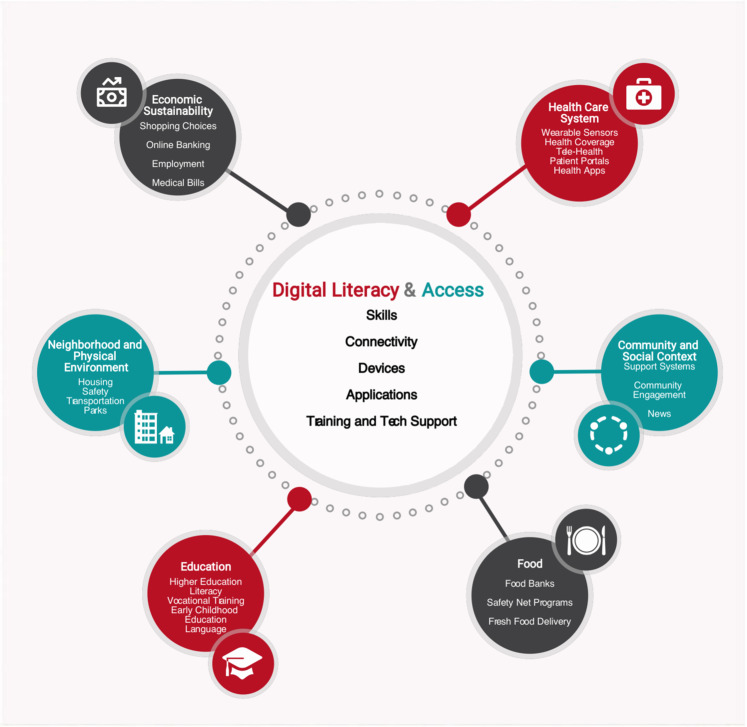
The use of digital tools and applications is steadily increasing and can support a range of health information needs 1 , 2 , 3 . As tools such as patient portals, health trackers, and remote monitoring devices see greater use, research suggests that tools such as health apps and patient portals can foster greater patient engagement, better support for patients outside of the clinic visit, and can improve health outcomes 3 , 4 , 5 , 6 , 7 , 8 , 9 . However, greater reliance on digital tools has the potential to increase disparities between those who have skills and access to digital tools and those who do not and thereby existing health disparities.
Overview
The claims and statistics of this paper haven’t been checked yet.
Free: it reads the open-access text and checks the first 5 claims that cite a source we can check. Create a free account to check every claim.
Integrity signals
Registry
Cites
Statistics
Figures
Verification
Claims the paper makes
The claims and statistics of this paper haven’t been checked yet.
Free: it reads the open-access text and checks the first 5 claims that cite a source we can check. Create a free account to check every claim.
Claims other papers make about this one
Each is checked against this paper’s own text: does it say what the citing paper says it does?
The source backs part of the claim, not all of it — or backs it for a different population, condition or comparison.
In the citing paper
“Research shows that social determinants of health (SDoHs)24 could potentially affect the acceptability of technology usage among racial and ethnic minority populations.”
From Association of Demographic and Socioeconomic Indicators With the Use of Wearable Devices Among Children (2023) · cites this paper as [24]
Experimental — accuracy not yet measured
Self-check
Percentages, sums and reported differences re-computed from the paper’s own numbers.
The self-check needs the paper’s full text.
Citations
Cites
Whitehead, L., & Seaton, P. (2016) · Journal of Medical Internet Research · doi:10.2196/jmir.4883 · Cited by 743
Beyond validation: getting health apps into clinical practice
Gordon, W. J., Landman, A., Zhang, H., & Bates, D. W. (2020) · npj Digital Medicine · doi:10.1038/s41746-019-0212-z · Cited by 326
Interventions to increase patient portal use in vulnerable populations: a systematic review
Grossman, L. V., Masterson Creber, R. M., Benda, N. C., Wright, D., Vawdrey, D. K., & Ancker, J. S. (2019) · Journal of the American Medical Informatics Association · doi:10.1093/jamia/ocz023 · Cited by 251
Self-citationPatient portals and broadband internet inequality
Perzynski, A. T., Roach, M. J., Shick, S., Callahan, B., Gunzler, D., Cebul, R., Kaelber, D. C., Huml, A., Thornton, J. D., & Einstadter, D. (2017) · Journal of the American Medical Informatics Association · doi:10.1093/jamia/ocx020 · Cited by 222
Self-citationPromise of and potential for patient-facing technologies to enable meaningful use
Ahern, D. K., Woods, S. S., Lightowler, M. C., Finley, S. W., & Houston, T. K. (2011) · American Journal of Preventive Medicine · doi:10.1016/j.amepre.2011.01.005 · Cited by 189
Alessa, T., Abdi, S., Hawley, M. S., & de Witte, L. (2018) · JMIR mhealth and uhealth · doi:10.2196/10723 · Cited by 160
Digital health technology and diabetes management: 数字化医疗技术与糖尿病管理
Cahn, A., Akirov, A., & Raz, I. (2018) · Journal of Diabetes · doi:10.1111/1753-0407.12606 · Cited by 102
Zhang, X., Hailu, B., Tabor, D. C., Gold, R., Sayre, M. H., Sim, I., Jean-Francois, B., Casnoff, C. A., Cullen, T., Thomas, V. A., et al. (2019) · Medical Care · doi:10.1097/mlr.0000000000001092 · Cited by 64
Sheon, A. R., Bolen, S. D., Callahan, B., Shick, S., & Perzynski, A. T. (2017) · JMIR Diabetes · doi:10.2196/diabetes.6751 · Cited by 62
Self-citationMcAlearney, A. S., Sieck, C. J., Hefner, J. L., Aldrich, A. M., Walker, D. M., Rizer, M. K., Moffatt-Bruce, S. D., & Huerta, T. R. (2016) · JMIR Research Protocols · doi:10.2196/resprot.6355 · Cited by 50
Self-citation
Research works printed but not linked: 1
- Gibbons, C. Digital Access Disparities: Policy and Practice Overview. Panel Discussion, Digital Skills and Connectivity as Social Determinants of Health. Sheon, A Conference Report: Digital Skills: A Hidden “Super” Social Determinant of Health: Interdisciplinary Association for Population Health Science. (2018).
Cited by
A framework for digital health equity
Richardson, S., Lawrence, K., Schoenthaler, A. M., & Mann, D. (2022) · npj Digital Medicine · doi:10.1038/s41746-022-00663-0 · Cited by 607
“For example, low-income households are more likely to share devices and to operate in connection with others 11 .”
BackgroundDigital health literacy as a super determinant of health: More than simply the sum of its parts
van Kessel, R., Wong, B. L. H., Clemens, T., & Brand, H. (2022) · Internet Interventions · doi:10.1016/j.invent.2022.100500 · Cited by 358
“Digital health literacy and internet connectivity have recently been acknowledged as “ super social determinants of health ” in that they have implications for the wider social determinants of health (Sieck et al., 2021).”
BackgroundWhitehead, L., Talevski, J., Fatehi, F., & Beauchamp, A. (2023) · Journal of Medical Internet Research · doi:10.2196/42719 · Cited by 261
“Disparities in digital health literacy may lead to further widening of existing health inequalities, and there is a need to ensure that digital technologies are accessible and usable by all [10,65].”
Focusing on Digital Health Equity
Lyles, C. R., Wachter, R. M., & Sarkar, U. (2021) · JAMA · doi:10.1001/jama.2021.18459 · Cited by 232
An introduction to digital determinants of health
Chidambaram, S., Jain, B., Jain, U., Mwavu, R., Baru, R., Thomas, B., Greaves, F., Jayakumar, S., Jain, P., Rojo, M., et al. (2024) · PLOS Digital Health · doi:10.1371/journal.pdig.0000346 · Cited by 175
Car, J., Ong, Q. C., Erlikh Fox, T., Leightley, D., Kemp, S. J., Švab, I., Tsoi, K. K. F., Sam, A. H., Kent, F. M., Hertelendy, A. J., et al. (2025) · JAMA Network Open · doi:10.1001/jamanetworkopen.2024.53131 · Cited by 226
Multilevel Determinants of Digital Health Equity: A Literature Synthesis to Advance the Field
Lyles, C. R., Nguyen, O. K., Khoong, E. C., Aguilera, A., & Sarkar, U. (2023) · Annual Review of Public Health · doi:10.1146/annurev-publhealth-071521-023913 · Cited by 137
van Kessel, R., Hrzic, R., O'Nuallain, E., Weir, E., Wong, B. L. H., Anderson, M., Baron-Cohen, S., & Mossialos, E. (2022) · Journal of Medical Internet Research · doi:10.2196/33819 · Cited by 137
“Digital technology can also further entrench established social determinants of health [24].”
BackgroundDigitalization impacts the COVID-19 pandemic and the stringency of government measures
Heinrichs, H., Mueller, F., Rohfleisch, L., Schulz, V., Talbot, S. R., & Kiessling, F. M. (2022) · Scientific Reports · doi:10.1038/s41598-022-24726-0 · Cited by 141
“Digital health, including competencies in communication and information technologies, internet, and broadband access, is classified as a determinant of health 53,54 .”
Golbus, J. R., López-Jiménez, F. A., Barac, A., Cornwell, W. K., Dunn, P. J., Forman, D. E., Martin, S. S., Schorr, E. N., & Supervía, M. (2023) · Circulation · doi:10.1161/cir.0000000000001150 · Cited by 151
“26 In addition, future digital CR evaluations should consider frailty and multimorbidity (above and beyond just aging) because these may affect patients’ abilities to use digital technologies and should consider inclusion of additional clinical populations (eg, patients with heart failure, adult…”
BackgroundBentley, S. V., Naughtin, C. K., McGrath, M. J., Irons, J. L., & Cooper, P. S. (2024) · AI and Ethics · doi:10.1007/s43681-024-00452-3 · Cited by 125
“On the other hand, digital inclusion has been shown to have a positive impact on health outcomes through the increasing use of health apps and patient portals, and for this reason is now classified as a social determinant of health [46, 47].”
Yang, R., Gao, S., & Jiang, Y. (2024) · BMC Geriatrics · doi:10.1186/s12877-024-05612-y · Cited by 130
Ji, H., Dong, J., Pan, W., & Yu, Y. (2024) · International Journal for Equity in Health · doi:10.1186/s12939-024-02150-2 · Cited by 162
“Some scholars even characterize digital health technology as a "super-determinant of social health" [74, 88].”
BackgroundOng, J. C. L., Seng, B. J. J., Law, J. Z. F., Low, L. L., Kwa, A. L. H., Giacomini, K. M., & Ting, D. S. W. (2024) · Cell Reports Medicine · doi:10.1016/j.xcrm.2023.101356 · Cited by 111
“87 With expanding applications of AI and digital health, it is imperative to devise strategies to bridge the digital divide in our pursuit of health equity.”
BackgroundVerweel, L., Newman, A. N. L., Michaelchuk, W. W., Packham, T., Goldstein, R. S., & Brooks, D. (2023) · International Journal of Medical Informatics · doi:10.1016/j.ijmedinf.2023.105114 · Cited by 143
Digital health and primary care: Past, pandemic and prospects
Pagliari, C. (2021) · Journal of Global Health · doi:10.7189/jogh.11.01005 · Cited by 89
Cardiovascular Disease Screening in Women: Leveraging Artificial Intelligence and Digital Tools
Adedinsewo, D. A., Pollak, A. W., Phillips, S. D., Smith, T. L., Svatikova, A., Hayes, S. N., Mulvagh, S. L., Norris, C., Roger, V. L., Noseworthy, P. A., et al. (2022) · Circulation Research · doi:10.1161/circresaha.121.319876 · Cited by 85
“55 A recent article highlighted access to digital tools and digital literacy as social determinants of health, 56 and this is likely to become more apparent as we continue to incorporate technology and digital tools in health care delivery.”
BackgroundHolko, M., Litwin, T. R., Munoz, F., Theisz, K. I., Salgin, L., Jenks, N. P., Holmes, B. W., Watson-McGee, P., Winford, E., & Sharma, Y. (2022) · npj Digital Medicine · doi:10.1038/s41746-022-00593-x · Cited by 85
van Kessel, R., Wong, B. L. H., Rubinić, I., O’Nuallain, E., & Czabanowska, K. (2022) · PLOS Digital Health · doi:10.1371/journal.pdig.0000013 · Cited by 126
“Simultaneously, as healthcare and public health continue to digitalise, access to health services may become jeopardised without sufficiently digital skills [6,13,22,24].”
BackgroundInfluentialMiller, L. M. S., Callegari, R. A., Abah, T., & Fann, H. (2024) · JMIR Aging · doi:10.2196/51675 · Cited by 149
Gandolfi, E., Ferdig, R. E., & Kratcoski, A. (2021) · Technology in Society · doi:10.1016/j.techsoc.2021.101637 · Cited by 122
Ngiam, N. H. W., Yee, W. Q., Teo, N., Yow, K. S., Soundararajan, A., Lim, J. X., Lim, H. A., Tey, A., Tang, K. W. A., Tham, C. Y. X., et al. (2022) · Journal of Medical Internet Research · doi:10.2196/40341 · Cited by 83
Health Disparities, Clinical Trials, and the Digital Divide
Adedinsewo, D. A., Eberly, L. A., Sokumbi, O., Rodriguez, J. A., Patten, C. A., & Brewer, L. C. (2023) · Mayo Clinic Proceedings · doi:10.1016/j.mayocp.2023.05.003 · Cited by 101
Digital health equity frameworks and key concepts: a scoping review
Kim, K. K., & Backonja, U. (2025) · Journal of the American Medical Informatics Association · doi:10.1093/jamia/ocaf017 · Cited by 102
Digital Solutions for Community and Primary Health Workers: Lessons From Implementations in Africa
Owoyemi, A., Osuchukwu, J. I., Azubuike, C., Ikpe, R. K., Nwachukwu, B. C., Akinde, C. B., Biokoro, G. W., Ajose, A. B., Nwokoma, E. I., Mfon, N. E., et al. (2022) · Frontiers in Digital Health · doi:10.3389/fdgth.2022.876957 · Cited by 78
“Studies conducted in Zambia, Tanzania, Uganda, Nigeria and Ethiopia reported use of solar lamps/chargers and power banks to recharge the smart phones (2, 3, 7, 8, 23, 26).”
BackgroundKhoong, E. C., Olazo, K., Rivadeneira, N. A., Thatipelli, S., Barr-Walker, J., Fontil, V., Lyles, C. R., & Sarkar, U. (2021) · npj Digital Medicine · doi:10.1038/s41746-021-00486-5 · Cited by 73
Agarwala, A., Patel, J., Stephens, J. D., Roberson, S. L., Scott, J., Beckie, T. M., & Jackson, E. A. (2023) · Circulation · doi:10.1161/cir.0000000000001171 · Cited by 79
Ebekozien, O., Fantasia, K., Farrokhi, F., Sabharwal, A., & Kerr, D. (2024) · Diabetes, Obesity and Metabolism · doi:10.1111/dom.15470 · Cited by 70
Moving Towards Equity With Digital Health Innovations for Stroke Care
Verma, A., Towfighi, A., Brown, A., Abhat, A., & Casillas, A. (2022) · Stroke · doi:10.1161/strokeaha.121.035307 · Cited by 65
The Role of Human-Centered Design in Healthcare Innovation: a Digital Health Equity Case Study
Levander, X. A., VanDerSchaaf, H., Barragán, V. G., Choxi, H., Hoffman, A., Morgan, E. A., Wong, E., Wusirika, R., & Cheng, A. (2023) · Journal of General Internal Medicine · doi:10.1007/s11606-023-08500-0 · Cited by 86
“18, 19 The COVID-19 pandemic only further highlighted these previously existing disparities in technology and service access, 20, 21 particularly as digital health became the main source of healthcare access during lockdown periods.”
Digital Health Equity: Addressing Power, Usability, and Trust to Strengthen Health Systems
Koehle, H., Kronk, C. A., & Lee, Y. J. (2022) · Yearbook of Medical Informatics · doi:10.1055/s-0042-1742512 · Cited by 91
“Health system biases further compound broader, societal inequities; biases in health research and practice contribute to reduced trust and alienation, further reducing access even when services are theoretically available [2–4].”
BackgroundA scoping review and expert consensus on digital determinants of health
van Kessel, R., Seghers, L.-E., Anderson, M., Schutte, N. M., Monti, G., Haig, M., Schmidt, J., Wharton, G., Román-Urrestarazu, A., Larrain, B., et al. (2025) · Bulletin of the World Health Organization · doi:10.2471/blt.24.292057 · Cited by 73
Alon, N., Macrynikola, N., Jester, D. J., Keshavan, M. S., Reynolds, C. F., Saxena, S., Thomas, M. L., Torous, J. B., & Jeste, D. V. (2024) · Psychiatry Research · doi:10.1016/j.psychres.2024.115854 · Cited by 81
Advancing digital health equity: Directions for behavioral and social science research
Jaworski, B. K., Hooper, M. W., Aklin, W. M., Jean‐Francois, B., Elwood, W. N., Belis, D., Riley, W. T., & Hunter, C. M. (2022) · Translational Behavioral Medicine · doi:10.1093/tbm/ibac088 · Cited by 67
Digital health literacy—a key factor in realizing the value of digital transformation in healthcare
Andersson, S. W., & González, M. M. P. (2025) · Frontiers in Digital Health · doi:10.3389/fdgth.2025.1461342 · Cited by 98
Optimising adolescent wellbeing in a digital age
Holly, L., Wong, B. L. H., van Kessel, R., Awah, I., Agrawal, A., & Ndili, N. (2023) · BMJ · doi:10.1136/bmj-2021-068279 · Cited by 71
Bendotti, H., Lawler, S., Chan, G., GARTNER, C. E., Ireland, D., & Marshall, H. (2023) · Digital Health · doi:10.1177/20552076231211634 · Cited by 75
“49 Given the disparities in smoking prevalence between demographic groups and variation in tobacco control legislation and smoking cessation services between countries, digital inclusion of priority populations on a national and international scale is vital for the success of AI interventions for…”
Kim, E. H., Jenness, J. L., Miller, A. B., Halabi, R., de Zambotti, M., Bagot, K. S., Baker, F. C., & Pratap, A. (2023) · JAMA Network Open · doi:10.1001/jamanetworkopen.2023.5681 · Cited by 53
A framework for equitable virtual rehabilitation in the metaverse era: challenges and opportunities
Véras, M. M. S., Labbé, D. R., Furlano, J. A., Zakus, D., Rutherford, D. J., Pendergast, B., & Kairy, D. (2023) · Frontiers in Rehabilitation Sciences · doi:10.3389/fresc.2023.1241020 · Cited by 57
“As rehabilitation professionals continue to rely on technological innovations to improve patient engagement, access, and outcomes, a new social determinant of health has been identified: the digital divide (22).”
BackgroundLuo, Y., YIP, P. S. F., & Zhang, Q. (2024) · Nature Human Behaviour · doi:10.1038/s41562-024-02048-7 · Cited by 67
“21 –23 and Supplementary Tables 6–8).”
Digital solutions for migrant and refugee health: a framework for analysis and action
Matlin, S. A., Hanefeld, J., Côrte-Real, A., da Cunha, P. R., de Gruchy, T., Manji, K., Netto, G., Nunes, T., Yüksel, İ. Ş., Takian, A., et al. (2024) · The Lancet Regional Health - Europe · doi:10.1016/j.lanepe.2024.101190 · Cited by 90
“104,105 In the context of digital solutions for the health of migrants and refugees, the involvement of these components of Fig.”
van Kolfschooten, H. (2023) · Journal of Law and the Biosciences · doi:10.1093/jlb/lsad031 · Cited by 52
Quantifying digital health inequality across a national healthcare system
Zhang, J., Gallifant, J., Pierce, R. L., Fordham, A., Teo, J., Celi, L., & Ashrafian, H. (2023) · BMJ Health & Care Informatics · doi:10.1136/bmjhci-2023-100809 · Cited by 52
Hernandez, M. R. F., & Rodríguez, F. (2022) · Current Cardiovascular Risk Reports · doi:10.1007/s12170-022-00711-0 · Cited by 55
“1) [107].”
Access to Technology and Digital Literacy as Determinants of Health and Health Care
Shaw, R. J. (2023) · Creative Nursing · doi:10.1177/10784535231211682 · Cited by 48
“Libraries, for instance, play a vital role by not only providing internet access but also offering a range of training services, from basic digital literacy to skills required for speci fi c devices and applications (Sieck et al., 2021).”
BackgroundTelehealth Use for Enhancing the Health of Rural Older Adults: A Systematic Mixed Studies Review
Rush, K. L., Singh, S., Seaton, C. L., Burton, L., Li, E., Jones, C., Davis, J. C., Hasan, K., Kern, B., & Janke, R. (2021) · The Gerontologist · doi:10.1093/geront/gnab141 · Cited by 62
Zeng, B., Rivadeneira, N. A., Wen, A., Sarkar, U., & Khoong, E. C. (2022) · Journal of Medical Internet Research · doi:10.2196/35828 · Cited by 57
“…early days of the pandemic, these data do not suggest a consistent widening of inequities between more advantaged and less advantaged populations [2,6,8,33], we also believe it is necessary to reevaluate these outcomes later in the pandemic once health care teams and patients had become more…”
Martins, M. V., Koert, E., Sylvest, R., Maeda, E., Moura‐Ramos, M., Hammarberg, K., & Harper, J. C. (2023) · Human Reproduction · doi:10.1093/humrep/dead253 · Cited by 63
“Digital health literacy is the most significant social determinant of health (Sieck et al. , 2021), but most digital health tools are not evidence-based (Jandoo, 2020).”
BackgroundMoney, A., Hall, A., Harris, D., Eost‐Telling, C., McDermott, J., & Todd, C. J. (2024) · JMIR Aging · doi:10.2196/46522 · Cited by 72
“Digital exclusion is viewed as a “super” social determinant of health [21] as it impacts a variety of areas of life, including leading to poorer health outcomes [22,23] and challenges with employment, housing, education, and finance.”
BackgroundPromises and Perils of Consumer Mobile Technologies in Cardiovascular Care
Varma, N., Han, J. K., PASSMAN, R. S., Rosman, L., Ghanbari, H., Noseworthy, P. A., Silva, J. N. A., Deshmukh, A. J., Sanders, P., Hindricks, G., et al. (2024) · Journal of the American College of Cardiology · doi:10.1016/j.jacc.2023.11.024 · Cited by 57
Chen, A., Ayub, M. H., Mishuris, R. G., Rodriguez, J. A., Gwynn, K. B., Lo, M. C., Noronha, C. F., Henry, T. L., Jones, D., Lee, W. W., et al. (2023) · Journal of General Internal Medicine · doi:10.1007/s11606-023-08190-8 · Cited by 53
Antonio, M. G., Williamson, A. K., Kameswaran, V., Bhogal, A. N.-B., Ankrah, E. A., Goulet, S., Wang, Y., Macias, G., James-Gist, J., Brown, L. K., et al. (2023) · Journal of Medical Internet Research · doi:10.2196/42586 · Cited by 51
“…efforts provide a conceptual framework for designing blended strategies for future randomized equity-focused telehealth interventions [93,94] by considering affordable, robust internet-enabled devices, digital literacy training, quality technical support, and designing web-based…”
BackgroundJetha, A., Bonaccio, S., Shamaee, A., Banks, C. G., Bültmann, U., Smith, P. M., Tompa, E., Tucker, L. B., Norman, C. D., & Gignac, M. A. M. (2023) · SSM - Qualitative Research in Health · doi:10.1016/j.ssmqr.2023.100293 · Cited by 70
Empowering Health Professionals with Digital Skills to Improve Patient Care and Daily Workflows
Ferreira, J. C., Elvas, L. B., Correia, R., & Mascarenhas, M. (2025) · Healthcare · doi:10.3390/healthcare13030329 · Cited by 88
“Data-driven insights can also lead to the identification of trends and disparities that inform public health initiatives, address social determinants of health, and enhance overall system effectiveness in a digital-first healthcare landscape [1,5].”
Wang, B., Asan, O., & Zhang, Y. (2023) · International Journal of Medical Informatics · doi:10.1016/j.ijmedinf.2023.105301 · Cited by 55
Smith, K., Hardy, A., Vinnikova, A., Blease, C., Milligan, L., Hidalgo‐Mazzei, D., Lambe, S., Marzano, L., Uhlhaas, P. J., Ostinelli, E. G., et al. (2024) · JMIR Mental Health · doi:10.2196/57155 · Cited by 51
“…vulnerable patients—including those with SMI—are often more likely to live with lower incomes, meaning that they are still less likely to own digital devices, to have access to broadband, or have acquired the digital literacy skills necessary to partake in technology use and reap the benefits [95].”
BackgroundBarker, W. N., Chang, W., Everson, J., Gabriel, M. H., Patel, V., Richwine, C., & Strawley, C. E. (2024) · Journal of Medical Internet Research · doi:10.2196/59791 · Cited by 60
Purnat, T. D., Nguyen, T., & Briand, S. C. (2023) · Springer eBooks · doi:10.1007/978-3-031-27789-4 · Cited by 70
Adewuyi, E. O., Auta, A., Adewuyi, M. I., Philip, A. A., Olutuase, V. O., Zhao, Y., & Khanal, V. (2024) · PLoS ONE · doi:10.1371/journal.pone.0307316 · Cited by 59
Inclusion of social determinants of health improves sepsis readmission prediction models
Amrollahi, F., Shashikumar, S. P., Meier, A., Ohno-Machado, L., Nemati, S., & Wardi, G. (2022) · Journal of the American Medical Informatics Association · doi:10.1093/jamia/ocac060 · Cited by 46
Considerations for Conducting Bring Your Own “Device” (BYOD) Clinical Studies
Demanuele, C., Lokker, C., Jhaveri, K. A., Tuttle, P. G., Sezgın, E., Geoghegan, C., Zou, K. H., Izmailova, E. S., & Carthy, M. M. (2022) · Digital Biomarkers · doi:10.1159/000525080 · Cited by 50
A perspective of massive open online courses (MOOCs) and public health
Bettiol, S. S., Psereckis, R., & Macintyre, K. (2022) · Frontiers in Public Health · doi:10.3389/fpubh.2022.1058383 · Cited by 79
“Digital health literacy (DHL) has been referred to as a “super social determinant of health,” (52) and the use of MOOCs to improve DHL skills of health care professionals (53) can be an effective strategy, with an opportunity to employ the process of co-creation in its design and development (54).”
BackgroundDisparate impacts on online information access during the Covid-19 pandemic
Suh, J., Horvitz, E., White, R. W., & Althoff, T. (2022) · Nature Communications · doi:10.1038/s41467-022-34592-z · Cited by 42
Unlock digital health promotion in LMICs to benefit the youth
Ferretti, A., Vayena, E., & Blasimme, A. (2023) · PLOS Digital Health · doi:10.1371/journal.pdig.0000315 · Cited by 44
“, technology access and literacy) among the social determinants of health [97,98].”
BackgroundAccess to digital health technologies: personalized framework and global perspectives
Narayan, S. M., Chung, M. K., Adedinsewo, D. A., Brant, L. C. C., Davis, L. L., Duncker, D., Hall, J. L., Han, J. K., Lam, C. S. P., Lewis, E. F., et al. (2025) · Nature Reviews Cardiology · doi:10.1038/s41569-025-01184-5 · Cited by 57
“Appropriate solutions can maintain patient engagement, enable remote monitoring, promote education, and improve diversity and enrolment in participant-centred clinical trials 29 .”
InfluentialKim, J., Cai, Z. R., Chen, M. L., Onyeka, S., Ko, J., & Linos, E. (2024) · JMIR Public Health and Surveillance · doi:10.2196/51279 · Cited by 41
“Our findings suggest that targeted patient education, particularly in the context of health technology literacy or tailored care, could ensure smooth care delivery [35,36].”
BackgroundAjayi, K. V., Wachira, E., Onyeaka, H. K., Montour, T., Olowolaju, S., & Garney, W. (2022) · JMIR mHealth and uHealth · doi:10.2196/39520 · Cited by 34
“These findings are similar to previous studies showing increased digital health use, especially among those with chronic diseases [19,23-25].”
BackgroundResultInfluentialThe digital transformation of hepatology: The patient is logged in
Wu, T. E., Simonetto, D. A., Halamka, J. D., & Shah, V. H. (2022) · Hepatology · doi:10.1002/hep.32329 · Cited by 35
“More importantly, the digital divide can propagate disparities in health outcomes as technologies are increasingly being developed and refined to address current limitations in care.[88] The COVID19 pandemic further illuminated this divide, when healthcare providers were forced to limit in- person visits for nonurgent…”
BackgroundStauch, L., Renninger, D., Rangnow, P., Hartmann, A., Fischer, L. M., Dadaczynski, K., & Okan, O. (2025) · Journal of Medical Internet Research · doi:10.2196/69170 · Cited by 65
“While digital health literacy has been identified as a super social determinant of health [21], van Kessel and colleagues [20] also link the concept to civic literacy, highlighting its role in the use of digital health services in a digitally transforming society (eg, telemedicine, eHealth…”
Interdisciplinary perspectives on digital technologies for global mental health
Kuhn, E. M., Saleem, M., Klein, T., Köhler, C., Fuhr, D. C., Lahutina, S., Minarik, A., Musesengwa, R., Neubauer, K., Olisaeloka, L., et al. (2024) · PLOS Global Public Health · doi:10.1371/journal.pgph.0002867 · Cited by 43
Miao, B. Y., Sushil, M., Xu, A., Wang, M., Arneson, D. V., Berkley, E., Subash, M., Vashisht, R., Rudrapatna, V. A., & Butte, A. J. (2024) · The Lancet Digital Health · doi:10.1016/s2589-7500(23)00244-3 · Cited by 37
“26,27 Our geographical analysis of these studies also matched this finding, which suggested that fewer facilities in disadvantaged communities in the USA are being used to recruit participants.”
ResultDeterminants of Digital Health Literacy: International Cross-Sectional Study
Qiu, C. S., Lunova, T., Greenfield, G., Kerr, G. K., Ergüven, Ö., Beaney, T. E., Hayhoe, B. W. J., Mayer, E. K., Majeed, A., & Neves, A. L. (2025) · Journal of Medical Internet Research · doi:10.2196/66631 · Cited by 48
“Population and cross-country comparisons can elucidate universal best practices with respect to health policies [12] and could help inform evidence-based policy interventions needed to address any inequities in digital health skills and maximize health outcomes across populations [13].”
Powell‐Wiley, T. M., Brewer, L. C., Burke, L. E., Hernández, R., Kaar, J. L., Kepper, M. M., Kline, C. E., Lopez, K. N., Roberson, S. L., Spees, C., et al. (2025) · Circulation · doi:10.1161/cir.0000000000001314 · Cited by 38
Lehoux, P., Rivard, L., de Oliveira, R. R., Mörch, C., & Alami, H. (2022) · International Journal of Medical Informatics · doi:10.1016/j.ijmedinf.2022.104933 · Cited by 38
Sezgın, E., Kocaballi, A. B., Dolcé, M., Skeens, M. A., Militello, L. K., Huang, Y., Stevens, J. H., & Kemper, A. R. (2024) · JMIR Human Factors · doi:10.2196/57114 · Cited by 39
“Although this is promising, further investigation is needed on how to leverage current communication technologies to close the gap in digital inclusion, improving the awareness of resources and access [41,42].”
Niyomyart, A., Ruksakulpiwat, S., Benjasirisan, C., Phianhasin, L., Nigussie, K., Thorngthip, S., Shamita, G., Thampakkul, J., & Begashaw, L. (2024) · JMIR mhealth and uhealth · doi:10.2196/54511 · Cited by 56
“Nevertheless, internet connectivity remains a critical obstacle for mHealth, as it was XSL • FO RenderX considered a super social determinant of health that affects other aspects of health equity [53].”
BackgroundSharing online clinical notes with patients: implications for nocebo effects and health equity
Blease, C. R. (2022) · Journal of Medical Ethics · doi:10.1136/jme-2022-108413 · Cited by 30
Alami, H., Lehoux, P., Shaw, S. E., Papoutsi, C., Rybczynska‐Bunt, S., & Fortin, J. (2022) · International Journal of Environmental Research and Public Health · doi:10.3390/ijerph191710591 · Cited by 38
“They “open the door” to other determinants of health, which are now mainly accessible online: employment, social assistance, education, housing, family and social networks, and health care services [121].”
Menstruation and social inequities in Spain: a cross-sectional online survey-based study
Medina‐Perucha, L., López‐Jiménez, T., Jacques‐Aviñó, C., Holst, A. S., Valls-Llobet, C., Munrós-Feliu, J., Bueno, C. M., Pinzón-Sanabria, D., Vicente‐Hernández, M. M., & Berenguera, A. (2023) · International Journal for Equity in Health · doi:10.1186/s12939-023-01904-8 · Cited by 41
“Also, to its potential drawbacks of being sources of “infodemics” [52] and generating further social inequities as a result of the digital divide [53], among other challenges [54].”
BackgroundChallenges for remote patient monitoring programs in rural and regional areas: a qualitative study
Tagne, J. F., Burns, K., O’Brein, T., Chapman, W. W., Cornell, P. Y., Huckvale, K., Ameen, I., Bishop, J. L., Buccheri, A., Reid, J., et al. (2025) · BMC Health Services Research · doi:10.1186/s12913-025-12427-z · Cited by 42
“Healthcare professionals reported micro, meso, and macro-level challenges intricately linked to digital determinants of health—factors such as digital literacy, internet connectivity, device affordability, and the availability of digital health tools and resources [31, 32].”
Naveenan, R. V., Liew, C. Y., & Kijkasiwat, P. (2024) · Social Indicators Research · doi:10.1007/s11205-024-03391-y · Cited by 34
“Currently, there is still an ongoing debate about how exactly financial inclusion influence health outcomes (Naili et al., 2023), e.g. whether other factors such as digital inclusion (Sieck et al., 2021) play a moderating role in this relationship, etc.”
Hall, S., Sattar, S., Ahmed, S., & Haase, K. R. (2021) · Seminars in Oncology Nursing · doi:10.1016/j.soncn.2021.151228 · Cited by 30
Kalyani, R. R., Allende-Vigo, M. Z., Antinori-Lent, K. J., Close, K. L., Das, S. R., Deroze, P., Edelman, S. V., El Sayed, N. A., Kerr, D., Neumiller, J. J., et al. (2024) · The Journal of Clinical Endocrinology & Metabolism · doi:10.1210/clinem/dgad745 · Cited by 25
Pan, T. H., Aung, M. N., Nam, E. W., Koyanagi, Y., Lee, H., Li, L., Kyaw, M. Y., Mulati, N., Moolphate, S., Ka, C. M. H., et al. (2024) · European Journal of Investigation in Health Psychology and Education · doi:10.3390/ejihpe14080154 · Cited by 32
“Digital skills and internet connectivity have been called the “super social determinants of health” [1].”
BackgroundWhat Determines the Acceptance and Use of eHealth by Older Adults in Poland?
Rój, J. (2022) · International Journal of Environmental Research and Public Health · doi:10.3390/ijerph192315643 · Cited by 32
Don’t Forget the Humble Text Message: 25 Years of Text Messaging in Health
Dobson, R., Whittaker, R., Abroms, L. C., Bramley, D. M., Free, C., McRobbie, H. J., Stowell, M., & Rodgers, A. (2024) · Journal of Medical Internet Research · doi:10.2196/59888 · Cited by 28
“These continued advancements risk excluding those with limited digital access, literacy, confidence, and motivation, thus exacerbating existing inequities in health outcomes [53,54].”
Nadipelli, V. R., Elwing, J., Oglesby, W. H., & El‐Kersh, K. (2022) · Pulmonary Circulation · doi:10.1002/pul2.12111 · Cited by 24
“This is particularly important as digital literacy and internet connectivity has been the “super social determinant of health” as they are intricately linked to all other SDoH.(29) It must be observed in the context of the role of digital outreach to impacted patient communities where the majority of modern patient ad…”
BackgroundInfluentialGoldstein, S. P., Tovar, A., Espel‐Huynh, H., & Stowers, K. C. (2023) · Psychosomatic Medicine · doi:10.1097/psy.0000000000001176 · Cited by 30
“This phenomenon is likely attributable to numerous inequities inherent in digital innovation (14); innovations developed based on the majority are often unsuccessfully translated to historically marginalized groups because of poor representation and inclusion in research throughout the “bench to bedside” pipeline, as…”
BackgroundDoo, F. X., & McGinty, G. B. (2023) · Journal of the American College of Radiology · doi:10.1016/j.jacr.2023.06.014 · Cited by 27
Baumgart, D. C. (2024) · npj Digital Medicine · doi:10.1038/s41746-024-01005-y · Cited by 33
“Figure 1 Digital inclusion 39 with engagement of all stakeholders, the reduction of barriers for those with disabilities and the elderly, are critically important for success and have become a social determinant of health.”
Khosravi, M., & Azar, G. (2024) · Cambridge Prisms Global Mental Health · doi:10.1017/gmh.2024.39 · Cited by 31
“It is suggested that initiatives promoting digital inclusion, such as affordable broadband, internet-enabled devices, digital literacy training, technical support and self-sufficient, collaborative application design, are crucial to enhance mHealth access in these settings (Sieck et al., 2021).”
BackgroundAlhussein, M., Patel, B., & Liu, X. M. (2023) · Telematics and Informatics Reports · doi:10.1016/j.teler.2023.100103 · Cited by 28
Kim, D. S., Eltahir, A. A., Ngo, S., & Rodríguez, F. (2024) · Current Atherosclerosis Reports · doi:10.1007/s11883-024-01249-9 · Cited by 25
“Digital inclusion was coined as the “activities necessary to ensure equitable access to and use of information and communication technologies” in a seminal paper by Sieck et al. [18].”
InfluentialCao, L., Chongsuvivatwong, V., & McNeil, E. B. (2022) · JMIR Human Factors · doi:10.2196/36962 · Cited by 22
“mHealth use is recognized as a fundamental social determinant of health [34], which facilitates access to medical care services and health outcomes [35,36].”
BackgroundBékási, S., Girasek, E., & Győrffy, Z. (2022) · International Journal for Equity in Health · doi:10.1186/s12939-022-01803-4 · Cited by 26
“As digital health technologies tend to form an increasing part of primary care, online platforms might represent both additional access and barrier for vulnerable populations [12, 38, 39].”
BackgroundHanebutt, R. A., & Mohyuddin, H. A. (2023) · Primary Care Clinics in Office Practice · doi:10.1016/j.pop.2023.04.002 · Cited by 26
Miller‐Rosales, C., Morden, N. E., Brunette, M. F., Busch, S. H., Torous, J. B., & Meara, E. R. (2023) · JAMA Network Open · doi:10.1001/jamanetworkopen.2023.23741 · Cited by 27
Leveraging Digital Health to Improve the Cardiovascular Health of Women
Azizi, Z., Adedinsewo, D. A., Rodríguez, F., Lewey, J., Merchant, R. M., & Brewer, L. C. (2023) · Current Cardiovascular Risk Reports · doi:10.1007/s12170-023-00728-z · Cited by 26
“Digital inclusion has been referred to as a key social determinant of health [36, 83] and should be investigated in conjunction with other known digital determinants of health to better understand its impact on cardiovascular outcomes and health inequity [10, 36, 84–86 • ].”
BackgroundAdewuyi, E. O., Akóṣílè, W., Olutuase, V. O., Philip, A. A., Olaleru, R., Adewuyi, M. I., Auta, A., & Khanal, V. (2024) · BMC Pregnancy and Childbirth · doi:10.1186/s12884-024-06722-6 · Cited by 31
“Further recognising its potential, Internet connectivity and digital literacy have been termed the “super social determinants of health” because of their capacity to influence other social determinants of health [52, 53].”
BackgroundRelationships between digital engagement and the mental health of older adults: Evidence from China
Liu, Z., & Li, Z. (2024) · PLoS ONE · doi:10.1371/journal.pone.0308071 · Cited by 29
Metadata
- Authors
- Sieck, C. J., Sheon, A., Ancker, J. S., Castek, J., Callahan, B., & Siefer, A.
- Affiliations
- The Ohio State University Wexner Medical Center (US)
- Case Western Reserve University (US)
- Weill Cornell Medicine (US)
- University of Arizona (US)
- Corresponding author
- Sieck, Cynthia J.
- Venue
- npj Digital Medicine
- Published
- 2021-03-17
- Volume
- 4
- Issue
- 1
- Pages
- 52-52
- ISSN
- 2398-6352 (ISSN-L)
- PMC
- PMC7969595
- OpenAlex
- W3136595486
- Cited by
- 597
- References
- 21
- Citations by year
- 2026: 117 · 2025: 140 · 2024: 134 · 2023: 124 · 2022: 60 · 2021: 21
- FWCI
- 95.23
- Type
- journal article
- Language
- en
- Open access
- gold
- doi.org
- Licence
- cc-by
- creativecommons.org/licenses/by/4.0 (tdm)
- creativecommons.org/licenses/by/4.0 (vor)
- Locations
- npj Digital Medicine (publishedVersion, cc-by)
- PubMed Central (publishedVersion, cc-by)
- PubMed (publishedVersion)
- DOAJ (DOAJ: Directory of Open Access Journals) (submittedVersion, cc-by-sa)
- Topics
- Health Sciences › Health Professions › General Health Professions › Health Literacy and Information Accessibility
- Health Sciences › Medicine › Geriatrics and Gerontology › Technology Use by Older Adults
- Social Sciences › Health › Health disparities and outcomes
- Keywords
- digital inclusion, social determinants of health, health disparities, digital divide, health apps, patient portals, remote monitoring, patient engagement, digital health equity
About these checks
Registry, retraction, Cites and statistics results are computed, not judged, with one exception: a printed reference that no index lists is read once by a model before it counts as a citation error. Claims are extracted by a model and kept only when their quote appears verbatim in the text; each cited source is then checked, with a model’s help, for whether it says what the claim relies on. Those verdicts can be wrong — read the claim’s quote and the cited source before relying on one.
Statistics and arithmetic are recomputed, not judged.
Confidence bands are shown only for fields calibrated on our annotated test set. None is calibrated yet, so no band is shown.
What counts as a claim ›How we measure confidence ›How we check this ›
Are you an author, or do you see a problem with this page? Request a review
Data sources
Bibliographic data: Semantic Scholar, OpenAlex, Crossref.
Contains information from the Semantic Scholar Academic Graph Datasets, made available under the ODC Attribution License (ODC-BY 1.0).
Semantic Scholar’s data is described in: Kinney, R., et al. (2023). The Semantic Scholar Open Data Platform. arXiv:2301.10140.
