

Digital inclusion as a social determinant of health
Open accessThe DOI matches its Crossref record; 21 of the 21 references it cites were found in a registry or an index.
Abstract
The use of digital tools and applications is steadily increasing and can support a range of health information needs 1 , 2 , 3 . As tools such as patient portals, health trackers, and remote monitoring devices see greater use, research suggests that tools such as health apps and patient portals can foster greater patient engagement, better support for patients outside of the clinic visit, and can improve health outcomes 3 , 4 , 5 , 6 , 7 , 8 , 9 . However, greater reliance on digital tools has the potential to increase disparities between those who have skills and access to digital tools and those who do not and thereby existing health disparities.
Overview
The claims and statistics of this paper haven’t been checked yet.
Free: it reads the open-access text and checks the first 5 claims that cite a source we can check. Create a free account to check every claim.
Integrity signals
Registry
Cites
Statistics
Figures
Verification
Claims the paper makes
The claims and statistics of this paper haven’t been checked yet.
Free: it reads the open-access text and checks the first 5 claims that cite a source we can check. Create a free account to check every claim.
Claims other papers make about this one
Each is checked against this paper’s own text: does it say what the citing paper says it does?
The source backs part of the claim, not all of it — or backs it for a different population, condition or comparison.
In the citing paper
“Research shows that social determinants of health (SDoHs)24 could potentially affect the acceptability of technology usage among racial and ethnic minority populations.”
From Association of Demographic and Socioeconomic Indicators With the Use of Wearable Devices Among Children (2023) · cites this paper as [24]
Experimental — accuracy not yet measured
Self-check
Percentages, sums and reported differences re-computed from the paper’s own numbers.
The self-check needs the paper’s full text.
Citations
Cites
Whitehead, L., & Seaton, P. (2016) · Journal of Medical Internet Research · doi:10.2196/jmir.4883 · Cited by 743
Beyond validation: getting health apps into clinical practice
Gordon, W. J., Landman, A., Zhang, H., & Bates, D. W. (2020) · npj Digital Medicine · doi:10.1038/s41746-019-0212-z · Cited by 326
Interventions to increase patient portal use in vulnerable populations: a systematic review
Grossman, L. V., Masterson Creber, R. M., Benda, N. C., Wright, D., Vawdrey, D. K., & Ancker, J. S. (2019) · Journal of the American Medical Informatics Association · doi:10.1093/jamia/ocz023 · Cited by 251
Self-citationPatient portals and broadband internet inequality
Perzynski, A. T., Roach, M. J., Shick, S., Callahan, B., Gunzler, D., Cebul, R., Kaelber, D. C., Huml, A., Thornton, J. D., & Einstadter, D. (2017) · Journal of the American Medical Informatics Association · doi:10.1093/jamia/ocx020 · Cited by 222
Self-citationPromise of and potential for patient-facing technologies to enable meaningful use
Ahern, D. K., Woods, S. S., Lightowler, M. C., Finley, S. W., & Houston, T. K. (2011) · American Journal of Preventive Medicine · doi:10.1016/j.amepre.2011.01.005 · Cited by 189
Alessa, T., Abdi, S., Hawley, M. S., & de Witte, L. (2018) · JMIR mhealth and uhealth · doi:10.2196/10723 · Cited by 160
Digital health technology and diabetes management: 数字化医疗技术与糖尿病管理
Cahn, A., Akirov, A., & Raz, I. (2018) · Journal of Diabetes · doi:10.1111/1753-0407.12606 · Cited by 102
Zhang, X., Hailu, B., Tabor, D. C., Gold, R., Sayre, M. H., Sim, I., Jean-Francois, B., Casnoff, C. A., Cullen, T., Thomas, V. A., et al. (2019) · Medical Care · doi:10.1097/mlr.0000000000001092 · Cited by 64
Sheon, A. R., Bolen, S. D., Callahan, B., Shick, S., & Perzynski, A. T. (2017) · JMIR Diabetes · doi:10.2196/diabetes.6751 · Cited by 62
Self-citationMcAlearney, A. S., Sieck, C. J., Hefner, J. L., Aldrich, A. M., Walker, D. M., Rizer, M. K., Moffatt-Bruce, S. D., & Huerta, T. R. (2016) · JMIR Research Protocols · doi:10.2196/resprot.6355 · Cited by 50
Self-citation
Research works printed but not linked: 1
- Gibbons, C. Digital Access Disparities: Policy and Practice Overview. Panel Discussion, Digital Skills and Connectivity as Social Determinants of Health. Sheon, A Conference Report: Digital Skills: A Hidden “Super” Social Determinant of Health: Interdisciplinary Association for Population Health Science. (2018).
Cited by
Items 201–300 of 599
Michel, A., Minton, L., Sullivan, C., Fontenot, H. B., & Lee, M. (2023) · The Journal of Perinatal & Neonatal Nursing · doi:10.1097/jpn.0000000000000705 · Cited by 8
Chaiyachati, K. H., Shea, J. A., Ward, M., Nelson, M. N., Ghosh, M., Reilly, J., Kelly, S., Chisholm, D. L., Barbati, Z., Hemmons, J. E., et al. (2023) · BMC Health Services Research · doi:10.1186/s12913-023-09684-1 · Cited by 11
Rotondi, A. J., Belnap, B. H., Rothenberger, S. D., Feldman, R., Hanusa, B. H., & Rollman, B. L. (2024) · JMIR Mental Health · doi:10.2196/52197 · Cited by 10
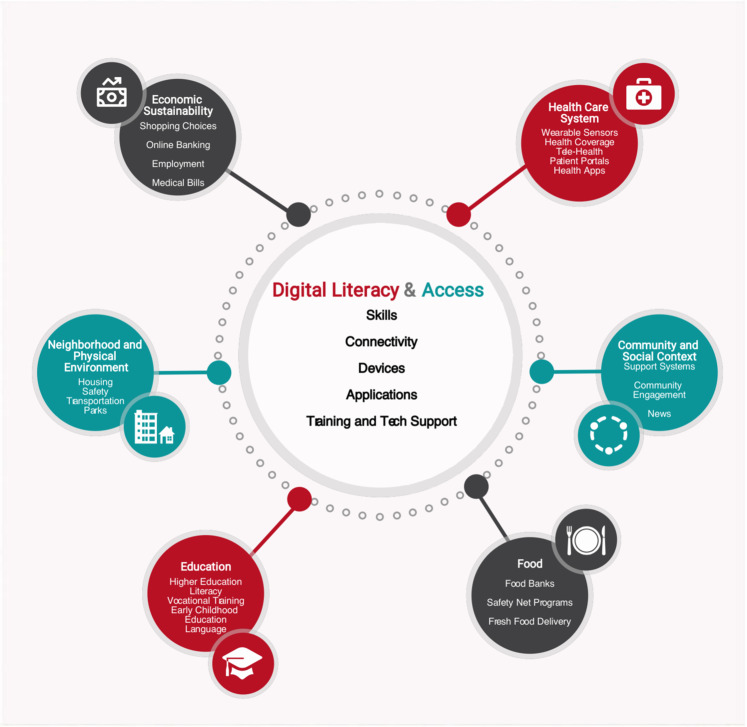
“…and internet connectivity, which include skills, confidence, connectivity and its ongoing affordability, level of access, devices, training, and technical support, have been called the “super social determinants of health” because they influence all other social determinants of health [43].”
BackgroundDigital Phenotyping for Mood Disorders: Methodology-Oriented Pilot Feasibility Study
Breitinger, S. A., Gardea‐Resendez, M., Langholm, C., Xiong, A. E., Laivell, J., Stoppel, C. J., Harper, L., Volety, R., Walker, A., D’Mello, R., et al. (2023) · Journal of Medical Internet Research · doi:10.2196/47006 · Cited by 17
“An essential element of our study is the consideration of digital literacy and access to broadband connectivity [32,33].”
Stephan, J., Gehrmann, J., Stullich, A., Hoffmann, L., & Richter, M. (2024) · BMJ Open · doi:10.1136/bmjopen-2023-081390 · Cited by 10
Franciosi, J. P., Berg, E. A., Rosen, J. M., Lee, J., Sandberg, K., Srinath, A. I., Setty, M., & Li, B. U. K. (2023) · Journal of Pediatric Gastroenterology and Nutrition · doi:10.1097/mpg.0000000000003754 · Cited by 8
“Social determinants of health (SDoH: economic stability, education, food, community/social context, neighborhood/physical environment, and health care system) have been associated with health care disparities (31).”
BackgroundDigital inclusion: A mixed-method study of user behavior and content on Twitter
Salzmann‐Erikson, M. (2023) · Digital Health · doi:10.1177/20552076231211277 · Cited by 10
Mulligan, K. (2022) · Global Health Promotion · doi:10.1177/17579759221126150 · Cited by 14
“people’s understanding and use of digital tools to gain ‘greater autonomy and control over health decision making’ (4) and improve access to other determinants of health – including food, housing, education, jobs and government services, which may be available only through online sources.”
BackgroundDigital Disability: A New Risk to Older People in Digital Societies
Zhang, K. (2024) · International Journal of Public Health · doi:10.3389/ijph.2024.1607303 · Cited by 12
Threats, M., & Gray, M. (2025) · Journal of Medical Internet Research · doi:10.2196/84393 · Cited by 8
“…include offline venue-based sampling methods to ensure a larger sample that is inclusive of LBQ+ women of color who may be impacted by the digital divide (eg, lacking digital literacy skills, having unreliable internet access at home, and having limited access to nonphone devices) [107,109,115].”
Hunt, E. R., Hantgan, S. L., & Jariwala, S. P. (2023) · Journal of Asthma · doi:10.1080/02770903.2023.2267122 · Cited by 7
“Digital health literacy and access to technology has been labeled a “super social determinant of health,” as it encompasses socioeconomic status, education, and physical environment (18).”
BackgroundBasem, J. I., Mani, R., Sun, S., Gilotra, K., Dianati‐Maleki, N., & Dashti, R. (2025) · Frontiers in Cardiovascular Medicine · doi:10.3389/fcvm.2025.1525966 · Cited by 9
“This provides practical limitations of AI/ML options that involve patient interaction and challenges providers to be able to engage in community programs or provide equivalent patient care through different modalities (241 – 243).”
AI-Y: An AI Checklist for Population Ethics Across the Global Context
Hswen, Y., Naslund, J. A., Hurley, M., Ragon, B., Handley, M. A., Fang, F., Haroz, E. E., Nabende, J. N., van Heerden, A. C., & Nsoesie, E. O. (2025) · Current Epidemiology Reports · doi:10.1007/s40471-025-00362-w · Cited by 9
“Digital literacy has been referred to as a"super social determinant of health"due to its influence on multiple factors affecting population health [109, 110].”
How the digital healthcare revolution leaves the most vulnerable behind
Ali, O., Pagliari, C., Dalgarno, E., & Verma, A. (2023) · Journal of Public Health · doi:10.1093/pubmed/fdad006 · Cited by 10
Sun, Z., Sun, W., Gao, H., Fa, R., Chen, S., & Qian, D. (2023) · International Journal of Environmental Research and Public Health · doi:10.3390/ijerph20054022 · Cited by 10
“, broadband router and Wi-Fi Internet), providing subsidies to rural residents for purchasing smartphones, and offering preferential Internet charges [52]; second, develop digital education and training programs to enhance digital skills, awareness, and the literacy of rural residents [53]; third, provide financial su…”
BackgroundRivard, L., Lehoux, P., de Oliveira, R. R., & Alami, H. (2023) · BMJ Leader · doi:10.1136/leader-2022-000697 · Cited by 11
Boztaş, G. D., Berigel, M., Altınay, Z., Altınay, F., Shadiev, R., & Dağlı, G. (2023) · Journal of Chinese Human Resource Management · doi:10.47297/wspchrmwsp2040-800504.20231403 · Cited by 9
Climate conscious health equity is essential to achieve climate-resilient digital healthcare
Lokmic-Tomkins, Z., Borda, A., & Skouteris, H. (2024) · The Journal of Climate Change and Health · doi:10.1016/j.joclim.2024.100301 · Cited by 9
“In this context, digital inclusion can be viewed as social determinant of health and a means of promoting equity [37].”
Malkowski, O. S., Townsend, N. P., Kelson, M. J., Foster, C. E., & Western, M. J. (2024) · PLoS ONE · doi:10.1371/journal.pone.0303061 · Cited by 9
Telehealth Research and Innovation for Veterans with Cancer: the THRIVE Center
Zullig, L. L., Makarov, D. V., Becker, D. J., Dardashti, N., Guzman, I., Kelley, M. J., Melnic, I., Padilla, J. J., Rojas, S., Thomas, J. R., et al. (2024) · JNCI Monographs · doi:10.1093/jncimonographs/lgae019 · Cited by 6
Digital Interventions for Older People Experiencing Homelessness: Systematic Scoping Review
Adams, E. R., Donaghy, E., Sanders, C., Wolters, M. K., Ng, L., St-Jean, C., Galan, R., & Mercer, S. W. (2024) · Journal of Medical Internet Research · doi:10.2196/63898 · Cited by 12
“Concurrently, Sieck et al [62] posit that improving digital literacy skills to access valuable digital tools is key to reducing disparities.”
InfluentialKarampatakis, G. D., Wood, H. E., Griffiths, C., Lea, N., Ashcroft, R. E., Day, B., Walker, N. M., Coulson, N., & Simoni, A. D. (2023) · Journal of Medical Internet Research · doi:10.2196/44886 · Cited by 9
“…to be at the forefront when adopting digital interventions in primary care, as the risk of the “digital divide” cannot be completely eliminated [60,61], and primary care is usually the major commissioner of health care services and has historically been seen as well positioned to tackle health…”
Return of Results in Digital Phenotyping: Ethical Considerations for Real-World Use Cases
Torous, J. B., & Blease, C. (2024) · The American Journal of Bioethics · doi:10.1080/15265161.2024.2298146 · Cited by 6
“…lower incomes, fewer years of education, older people, and minorities - are still less likely to own digital devices, or have access to broadband access or the digital literacy skills necessary to partake in, and reap the benefits of, digital phenotyping interventions (Sieck et al. 2021).”
BackgroundKelpin, S. S., Brockman, T. A., Decker, P. A., Young, A. M., Boehmer, K. R., Nguyen, A., Kamath, C. C., Sauver, J. S., Sinicrope, P. S., Sharma, P., et al. (2024) · Communications Medicine · doi:10.1038/s43856-024-00624-6 · Cited by 8
“National programshighlighttheneedfortranslationalresearchintoeffective,scalable techquitystrategiesthatpromotedigitalaccessandliteracyamongunder-servedpopulations(https://www.internetforall.gov/sites/default/ fi les/2022-05/digital-equity-act-info-sheet.pdf) 17 .”
Older adults in social housing: A systemically vulnerable population that needs to be prioritized
Dzerounian, J., Mahal, G., AlShenaiber, L., Angeles, R. N., Marzanek, F., Pirrie, M., & Agarwal, G. (2024) · Health Affairs Scholar · doi:10.1093/haschl/qxae154 · Cited by 6
“15 However, older adults in social housing have limited access to technology and low digital literacy, lacking practical skills, digital confidence, and financial support.”
Cooke, S., Nelson, D., Argin, A. A., Laparidou, D., Young, R. H., Waller, J., Kane, R., McInnerney, D., Quaife, S. L., Peake, M. D., et al. (2025) · Lung Cancer · doi:10.1016/j.lungcan.2025.108484 · Cited by 8
Nißen, M., Harperink, S., Joshi, P., Bischof, A. Y., Schachner, T., Lukic, Y. X., Schneider, F., Santhanam, P., von Wangenheim, F., Ollier, J., et al. (2025) · Journal of Medical Internet Research · doi:10.2196/67174 · Cited by 8
“Today, the delivery of DHIs is often skewed toward channels predominantly used by higher-SES individuals, such as workplace wellness initiatives and exclusive medical facilities, further hindering access [31].”
Social determinants of alcohol and tobacco use among Hispanic adolescents: a scoping review
Silmi, K. P., del Castillo, V., Segura, N., Cervantes, N. C., Valenzuela, A., Perez, Y., Pugh, E., Unger, J. B., & Gonzalez, M. R. (2025) · Frontiers in Psychiatry · doi:10.3389/fpsyt.2025.1568462 · Cited by 9
Ajayi, K. V., Flores, S., Fan, Q., Ezenwanne, F., Garney, W. R., & Wachira, E. (2023) · Patient Education and Counseling · doi:10.1016/j.pec.2023.107703 · Cited by 6
Examining Ethnic Disparities in Digital Healthcare Services Utilization: Insights from Israel
Obeid, S., Mashiach‐Eizenberg, M., Gur, A., & Lavy, I. (2023) · Journal of Multidisciplinary Healthcare · doi:10.2147/jmdh.s429121 · Cited by 6
Small, N., Masood, Y., Stevenson, F. A., Brown, B. C., Sanders, C., McMillan, B., Atherton, H., Mazumdar, T., Ara, N., Haqqani, H., et al. (2024) · Health Expectations · doi:10.1111/hex.13982 · Cited by 6
“25 Remote means of accessing and receiving care, also place an even greater emphasis on the need for good communication skills of practice staff and their patients to explain and understand patients' clinical need(s).”
BackgroundTelepractice for bilingual and multilingual people with aphasia: a scoping review
Taiebine, M., & Keegan, L. C. (2024) · Aphasiology · doi:10.1080/02687038.2024.2373434 · Cited by 16
“According to Sieck et al. (2021), digital literacy and Internet connectivity have been labeled as “super social determinants of health”, in addition to conventional social determinants.”
Rana, R., Ibrahim, B., Huri, H. Z., Wahab, I. A., Govindaraju, K., Shukeri, M. S. M., Ng, C. K., & Ong, S. C. (2024) · Research in Social and Administrative Pharmacy · doi:10.1016/j.sapharm.2024.07.004 · Cited by 8
Moecke, D. P., Holyk, T., Maddocks, S. T., Campbell, K. L., Ho, K., & Camp, P. G. (2024) · Physical Therapy · doi:10.1093/ptj/pzae175 · Cited by 9
Pope, N., Birnie, K. A., Noel, M. E., Dol, J., Li, D., MacNeil, M., Zientek, D., Surry, V., & Stinson, J. (2025) · Children · doi:10.3390/children12010077 · Cited by 10
Patten, C. A., Brockman, T. A., Kelpin, S. S., Sinicrope, P. S., Boehmer, K. R., Sauver, J. L. S., Lampman, M. A., Sharma, P., Reinicke, N. M., Huang, M. S., et al. (2022) · Contemporary Clinical Trials · doi:10.1016/j.cct.2022.106838 · Cited by 6
“Equity-guided implementation and dissemination of evidence-based interventions in rural populations necessitate attention to digital inclu-siveness as a social determinant of health [14 – 18].”
Human Rights Implications of the Digital Revolution in Health Care in India.
Ganesan, D. (2022) · PubMed Central · Cited by 6
Do Americans Lacking a Local Orthopaedic Surgeon Have Adequate Broadband for Telehealth?
Jella, T. K., Cwalina, T. B., Schmidt, J. E., Wu, V. S., Haglin, J. M., & Kamath, A. F. (2022) · Clinical Orthopaedics and Related Research · doi:10.1097/corr.0000000000002374 · Cited by 6
“Across several clinical disciplines, studies have shown that patients older than age 65, patients from racial or ethnic minority groups, and those from lower socioeconomic strata often have less comfort and experience with digital health services such as messaging or virtual visit scheduling through online patient por…”
BackgroundCohen, J. H., Maleku, A., Pyakurel, S., Suzuki, T., Raut, S., & Ishino, F. A. M. (2022) · International Journal of Environmental Research and Public Health · doi:10.3390/ijerph192416854 · Cited by 9
“Introduction The digital divide, or the gap between those who have affordable access, skills, and support to effectively engage online and those who do not [1] is a critical factor increasing social inequalities around healthcare and access to information on the COVID-19 pandemic [2,3].”
BackgroundGuo, M., Prayaga, R. B., Levitz, C. E., Kuo, E., Ruiz, E., Torres-Ozadali, E., & Escaron, A. L. (2023) · JMIR Cancer · doi:10.2196/43024 · Cited by 8
“According to the 2021 American Community Survey, 40% of low-income households do not have a mobile phone data plan, and among older adults, only approximately 50% own a smartphone [17].”
BackgroundCoproduction and Usability of a Smartphone App for Falls Reporting in Parkinson Disease
Wales, J., Moore, J., Naisby, J., Ratcliffe, N., Barry, G., Amjad, A., Godfrey, A., Standerline, G., Webster, E., & Morris, R. (2023) · Physical Therapy · doi:10.1093/ptj/pzad076 · Cited by 8
“30 In our study, the coproduction design ensured that the app was designed with the end-user in mind, and to that end, feedback on the app interface and content was positive (eg, size of buttons, tactile feedback, fall causes, and fall location).”
Digital Transformation in Measuring Social Determinants of Health: A Systematic Review
Liu, C., Wang, W. Y. C., & Khan, G. F. (2023) · Journal of Organizational and End User Computing · doi:10.4018/joeuc.328530 · Cited by 11
“This is because they are essential factors that impact all other SDOH (Bauerly et al., 2019; Clare, 2021; Early & Hernandez, 2021; Golder et al., 2010; Kickbusch et al., 2021; Sieck et al., 2021).”
BackgroundIndigenizing a Developing Country’s Digitization Agenda: Re-visioning ICTs in Ghana
Antwi, K., & Asante, W. (2024) · Springer eBooks · doi:10.1007/978-3-031-30438-5_12 · Cited by 8
Insufficient evidence for interactive or animated graphics for communicating probability
Ancker, J. S., Benda, N. C., & Zikmund‐Fisher, B. J. (2024) · Journal of the American Medical Informatics Association · doi:10.1093/jamia/ocae123 · Cited by 6
“28 Thus, we should rely on evidence before replacing them with interactive or animated ones.”
MethodSelf-citationSaberi, P., Eskaf, S., Campbell, C. K., Neilands, T. B., Sauceda, J. A., & Dubé, K. (2022) · mHealth · doi:10.21037/mhealth-21-54 · Cited by 7
“Similar to the ability to use social services and healthcare information, access and skill to use mobile technology are considered to be foundational social determinants of health (28).”
Online news coverage of infant formula shortage in the United States: A content analysis
Samuel, L., Goodstein, L., & Basch, C. H. (2022) · Dialogues in Health · doi:10.1016/j.dialog.2022.100065 · Cited by 7
The determinants of audit fees: an analytical study
Ramzy, W. A. (1988) · Cited by 6
Kim, H. H., Han, A., Lee, H.-J., Choi, J., Lee, H., & Cho, M. (2024) · Healthcare · doi:10.3390/healthcare12191913 · Cited by 16
“In contrast, those with low mobile literacy may struggle to utilize mobile-based services effectively [21].”
BackgroundConcept of digital health literacy revisited: Using text network and topic model analysis
Park, J. Y., Won, S., Choi, M., Kang, C. H., & Chew, H. S. J. (2025) · Digital Health · doi:10.1177/20552076251334537 · Cited by 7
“12,13,38 Given that reducing health disparities remains a central objective of the global health agenda, 39 research on the inequities associated with DHL is anticipated to grow rapidly, aligning with efforts to promote equitable access to digital health resources worldwide.”
Büyük, D. Ş., Çetinkaya, A., & Bılgın, N. (2025) · Public Health Nursing · doi:10.1111/phn.70005 · Cited by 6
“This situation causes older individuals to face greater difficulties in adapting to digital processes and acquiring digital skills, making them more dependent on support and ultimately leading to digital exclusion (Sieck et al. 2021).”
Linnestad, A.-M., Skogestad, I. J., Gay, C., Borge, C. R., Indredavik, B., Stubberud, J., & Lerdal, A. (2025) · Digital Health · doi:10.1177/20552076251380049 · Cited by 7
“17,18 Despite its importance, DHL in the context of stroke survivors has not been thoroughly examined.”
Im, H., Li, F., Stover, S., Abel, C., Farmer, J., García, C. M., Lee, J.-A., & Wyczalkowski, C. K. (2025) · Healthcare · doi:10.3390/healthcare13222869 · Cited by 10
“…and support healthy behaviors, healthcare institutions, local governments, and community partners could provide hands-on digital literacy training [58], offer subsidized devices [59], and provide low-cost internet service plans to enhance connectivity and engagement with online resources [58,60].”
Pan, T. H., Aung, M. N., Moolphate, S., Aung, T. N. N., Koyanagi, Y., Ka, C. M. H., Nam, E. W., van Dijk, J. A. G. M., & Yuasa, M. (2025) · Journal of Aging Research · doi:10.1155/jare/8080561 · Cited by 7
“In addition, internet connectivity and digital literacies have become “supersocial determinants of health” because it infuences “social determinants of health” such as educational attainment, economic sustainability, and the health-care system [10].”
Pilot study of an app-supported psychosocial prevention intervention: a mixed-methods approach
Gehrmann, J., Stephan, J., Dehner, J., Stullich, A., Richter, M., PE³PP study group, Ballaschke, O., Finke, F., Gabel, F., Grossmann, A., et al. (2025) · Pilot and Feasibility Studies · doi:10.1186/s40814-025-01737-y · Cited by 5
Haimi, M., & Inchi, L. (2025) · Healthcare · doi:10.3390/healthcare13233107 · Cited by 9
“The digital divide risks exacerbating health disparities if virtual care becomes predominant without addressing access barriers [13,31].”
InfluentialDuong, J. B., Walters, S. N., Carta, K. E., Jumonville, G. A., Carrasco, A. S., Fiallo, N. S., Romero-Reyes, D., Khurd, I. P., Ahle, M. W., Comer, J. S., et al. (2025) · npj Digital Medicine · doi:10.1038/s41746-025-02131-x · Cited by 7
Ji, H., Pan, W., & Xin, J. (2025) · Archives of Gerontology and Geriatrics · doi:10.1016/j.archger.2025.106124 · Cited by 9
Nearing, K. A. J., Dryden, E. M., Pimentel, C. B., Kernan, L. M., Hartz, S., Kelley, L. R., Lum, H. D., Hung, W. W., Kennedy, M. A., & Moo, L. R. (2024) · Cogent Gerontology · doi:10.1080/28324897.2024.2336899 · Cited by 7
“We argue that the dynamic interplay of these conditions gives rise to the digital divide as yet another salient social determinant of health for rural, older Veterans (Clare, 2021; Sieck et al., 2021).”
Burns, K., Bloom, S., Gilbert, C. A., Merner, B., Kalla, M., Sheri, S., Villanueva, C., Ikihele, A., Nazer, L. H., Sarmiento, R. F., et al. (2024) · JMIR Research Protocols · doi:10.2196/53855 · Cited by 6
“These factors occur on multiple levels affecting equity across the individual, interpersonal, community, and society settings [25,30,31].”
BackgroundEwing, A. P., Tounkara, F., Marshall, D., Henry, A. V., Abdel‐Rasoul, M., McElwain, S., Clark, J., Hefner, J. L., Zaire, P. J., Nolan, T. S., et al. (2024) · JMIR Cancer · doi:10.2196/53229 · Cited by 5
“Identifying growing OMR usage patterns and patient profiles could promote digital inclusion—a social determinant of health— and equitable web-based cancer education–based interventions to increase CRC screening among diverse groups [32].”
Zhong, L., Bather, J. R., Goodman, M. S., Kaiser‐Jackson, L., Volkmar, M., Bradshaw, R. L., Chambers, R. L., Chavez‐Yenter, D., Colonna, S. V., Maxwell, W., et al. (2025) · Health Services Research · doi:10.1111/1475-6773.14652 · Cited by 8
“Inequities exist in access to and use of patient portals [25], and other digital health tools, with digital inclusion being proposed as a “super” social determinant of health (SDOH) that affects several other SDOH such as healthcare access, housing, and access to community resources [26].”
Puthenpura, V., Hunter, M., & Marks, A. M. (2025) · Pediatric Blood & Cancer · doi:10.1002/pbc.31909 · Cited by 7
“Despite these challenges, the digital divide—the gap between those who have access to modern information and communication technology and those who do not—is narrowing [23–26].”
InfluentialXu, S. Z., Min, D., Cheng, Y., Wang, P., & Gao, Y. (2021) · Intelligent Medicine · doi:10.1016/j.imed.2021.08.002 · Cited by 5
Building a pandemic supply chain — equity over equality
Yee, V., Bajaj, S. S., & Stanford, F. C. (2022) · Nature Medicine · doi:10.1038/s41591-022-01748-9 · Cited by 5
Zaidi, M., GAZARIAN, P. K., Mattie, H., Sheldon, L. K., & Gakumo, C. A. (2023) · JMIR Aging · doi:10.2196/44777 · Cited by 6
“Therefore, digital inclusion emerges as a social determinant of health when specific populations, including older adults, face barriers owing to limited access, non-English language availability, or insufficient knowledge to use digital technology [21].”
BackgroundAnto‐Ocrah, M., Asiedu, M., Rao, S. V., DeSplinter, L., & Hollenbach, S. J. (2023) · Frontiers in Public Health · doi:10.3389/fpubh.2023.1228212 · Cited by 8
“Before we address issues of “digital inclusion,” “digital literacy,” and “digital access” (34), we must first understand what disease and wellness mean to the end user.”
BackgroundTang, C. Y., Bastani, A., Sidhu, B., Saberi, G., & Baker, E. (2024) · Healthcare · doi:10.3390/healthcare12111141 · Cited by 5
“One obvious barrier to engagement with telerehabilitation is having or being able to access telephone and/or video teleconference devices (e.g., a smart phone, computer, or tablet) with affordable Internet access and data [21].”
BackgroundInclusive online learning in Australia: Barriers and enablers
Marsden, L., Munn, L., Magee, L., Ferrinda, M., Pierre, J. S., & Third, A. (2024) · Education and Information Technologies · doi:10.1007/s10639-024-13012-3 · Cited by 18
“For this reason, digital inclusion has been positioned as critical to children’s rights and citizenship (Livingston and Third, 2017; Swist and Collin, 2015), to health (Sieck et al., 2021), and to social and economic participation (Helsper and Galácz, 2009).”
Patel, D. (2024) · Elsevier eBooks · doi:10.1016/b978-0-443-23901-4.00001-5 · Cited by 5
Bather, J. R., Goodman, M. S., Harris, A., Fiol, G. D., Hess, R., Wetter, D. W., Chavez‐Yenter, D., Zhong, L., Kaiser‐Jackson, L., Chambers, R. L., et al. (2025) · BMC Cancer · doi:10.1186/s12885-025-13495-4 · Cited by 6
A persisting parallel universe in diabetes care within America's capital
Kerr, D. E., Aram, M., Crosby, K. M., & GLANTZ, N. M. (2021) · EClinicalMedicine · doi:10.1016/j.eclinm.2021.101244 · Cited by 5
Addressing Equity and Social Needs: The New Frontier of Patient Engagement Research
Sieck, C. J., Nicks, S. E., Salem, J., DeVos, T. V., Thatcher, E., & Hefner, J. L. (2022) · Emerald Group Publishing Limited eBooks · doi:10.1108/s1474-823120220000021008 · Cited by 6
Self-citationWardana, B. E., Usman, N., Guilin, X., & Jiao, D. (2023) · Journal International Inspire Education Technology · doi:10.55849/jiiet.v2i3.466 · Cited by 21
“Specifically (Sieck et al., 2021), this study uses the theory of educational quality management as an analytical knife to describe the management of research objects (Estacio et al.”
MethodMejia, A. P., Granof, M., Mikkelson, J., Dwyer, B., Ryan, S., Lisowski, V., & Torous, J. B. (2025) · NEJM Catalyst · doi:10.1056/cat.25.0044 · Cited by 4
Oh, K. M., Hong, S.-S., Beran, K., Song, Y., & Lee, J. (2025) · Sage Open Aging · doi:10.1177/30495334251398089 · Cited by 8
“(Sieck et al., 2021; Sundar, 2020).”
Frost, H., Tooman, T., Aujla, N., Guthrie, B., Hanratty, B., Kaner, E., O'Donnell, A. J., Ogden, M., Pain, H. G., Shenkin, S. D., et al. (2024) · BMC Health Services Research · doi:10.1186/s12913-024-11274-8 · Cited by 4
“However, for all the benefits of providing information and moving communications into online platforms are for some, for others this further exacerbates health inequalities [49].”
BackgroundMin, D., Yun, J.-Y., Parslow, C., Jajodia, A., & Han, H.-R. (2025) · Journal of Medical Internet Research · doi:10.2196/55082 · Cited by 4
“The digital divide—one of the most significant social determinants of health [25]—was a theme that was particularly relevant to Korean American older adults and their caregivers in the PLAN trial [13].”
Ghazi, S. N., Behrens, A., Berglund, J. S., Berner, J., & Anderberg, P. (2025) · BMC Public Health · doi:10.1186/s12889-025-23894-8 · Cited by 5
“Digital technology has also been described as “super social determinants of health”, capable of addressing all other social determinants of health [32].”
Dong, J., Jiang, M., Xing, Y., Zhang, D., Kong, J., & Wang, H. (2025) · International Journal for Equity in Health · doi:10.1186/s12939-025-02720-y · Cited by 5
“While the concept and framework of digital health equity have been extensively explored in the academic literature [28–31], the specific policy tools implemented to ensure equitable access to DHTs and services remain insufficiently understood in practice.”
Nanyonga, S., Blanshard, P., Crevola, L. M., & Simeon‐Dubach, D. (2026) · Frontiers in Public Health · doi:10.3389/fpubh.2026.1710904 · Cited by 8
“This includes providing digital skills training, especially for recent adopters or those with devices that have limited functionality (65, 66).”
Kim, E. E., Kim, D., Kim, H.-J., & Son, Y. (2026) · Journal of Medical Internet Research · doi:10.2196/89102 · Cited by 5
“This variability suggests that DHL proficiency is not uniformly low among adults with CVD but is likely influenced by contextual and system-level factors [73].”
InfluentialClinical, Organizational and Regulatory, and Ethical and Social
John, R. B. (2022) · Blockchain in Healthcare Today · doi:10.30953/bhty.v5.199 · Cited by 5
The determinants of health assessment in the United States: A supervised learning approach
Coqueret, G. (2022) · Healthcare Analytics · doi:10.1016/j.health.2022.100106 · Cited by 4
Therapist perceptions of barriers to telehealth uptake in children's occupational therapy
Mills, C., Hazeltine, K., Zucco, A., Phan, T., & Baker, E. (2023) · Australian Occupational Therapy Journal · doi:10.1111/1440-1630.12875 · Cited by 7
Leventhal, E. L., Toner, E. R., Davidson, B., Boukhechba, M., Barnes, L. E., & Teachman, B. A. (2024) · Journal of Technology in Behavioral Science · doi:10.1007/s41347-024-00445-3 · Cited by 5
“It is estimated that 15–24% of Americans do not have consistent access to the Internet to support using mobile health technology, highlighting a key health disparity commonly experienced by rural individuals and those of lower socioeconomic status (Sieck et al., 2021).”
Challenges of innovation management in health system organizations: evidence from Germany
Rauner, Y., & Stummer, H. (2024) · International Journal of Healthcare Management · doi:10.1080/20479700.2024.2424702 · Cited by 4
“…outcome has already been demonstrated in research by Benda et al. [11] and Bauerly et al. [12] At the same time, consideration must be given to the fact that social inequality and a lack of access to digital tools for individual user groups can worsen healthcare provision for these groups [13].”
da Silva, L. C., O’Sullivan, K., Coyne, L. M., Palsson, T. S., Christensen, S. W., Hoegh, M., O’Keeffe, M., Langella, F., Blasco-Abadía, J., López, P. B., et al. (2024) · Digital Health · doi:10.1177/20552076241298480 · Cited by 7
“11 15 The implications extend beyond mere knowledge acquisition, directly in fl uencing health outcomes and the ability of individuals to make well-informed decisions regarding their own well-being or of those they are responsible for.”
Hesselbein, C., Bory, P., & Canali, S. (2024) · Information Communication & Society · doi:10.1080/1369118x.2024.2433548 · Cited by 12
“Indeed, digital infrastructures and devices can be understood as a new social determinant of health in a manner similar to wealth, education, and housing (Sieck et al., 2021).”
Digital Health Literacy in Patients With Hypertension: A Cross‐Sectional Study
Totaro, M., Cicolini, G., Bianconi, A., Fiore, M., Angelini, A., Ciampechini, G., Ferretti, M., Nonnis, C. L., Quaranta, P., Comparcini, D., et al. (2025) · Journal of Clinical Nursing · doi:10.1111/jocn.17811 · Cited by 6
Smart Health! Expanding the Need for New Literacies
Sørensen, K. (2023) · Springer eBooks · doi:10.1007/978-3-031-27789-4_6 · Cited by 7
How Collaboration Can Address Digital Poverty
Donaghy, D., & Crick, T. (2021) · ITNOW · doi:10.1093/itnow/bwab072 · Cited by 4
A Social Diagnosis of Digitally Mediated COVID-19 Trauma
Chiaraluce, C. A., Moles, K., Robinson, L., & Wiest, J. B. (2022) · American Behavioral Scientist · doi:10.1177/00027642221132185 · Cited by 8
“Sieck et al. (2021) articulate the necessity for digital access and skills to promote good health, “For example, applications for employment, housing, and other assistance programs, each of which influences an individual’s health, are increasingly, and sometimes exclusively, accessible online” (p.…”
BackgroundMobile health technology for diverse populations: challenges and opportunities
Diao, J. A., & Kvedar, J. C. (2021) · npj Digital Medicine · doi:10.1038/s41746-021-00500-w · Cited by 6
Key digital health literacy competencies for citizens – A Delphi study
Uitto, M., Hoffrén‐Mikkola, M., & Paakkari, L. T. (2025) · Digital Health · doi:10.1177/20552076251357375 · Cited by 5
“36 Poor IT skills and the need for guidance have been linked to non-use of personal health records and other digital health services.”
Dima, D. C., Sium, A., Giuliani, M., & Papadakos, J. (2025) · JCO Oncology Practice · doi:10.1200/op-25-00739 · Cited by 3
Rural Veteran Perceptions of a Virtual Health Resource Center in a Community-Based Setting
Marcotte, L. M., Theis, M., Geyer, J. R., Sayre, G. G., Rao, M., Pho, K., Gunnink, E. J., & Reddy, A. (2025) · Journal of General Internal Medicine · doi:10.1007/s11606-025-09980-y · Cited by 3
Oh, D., Lee, E. H., Kim, H., & Kim, E.-J. (2025) · Transportation Research Part A Policy and Practice · doi:10.1016/j.tra.2025.104825 · Cited by 8
Chen, Y., He, Y., Zhao, S., Wu, S., Zhou, J., Hu, L., & Lu, R. (2026) · Journal of Multidisciplinary Healthcare · doi:10.2147/jmdh.s557014 · Cited by 4
“32,33 This suggests that socioeconomic background and disparities in digital health literacy may serve as important potential confounders influencing doctor-patient communication and PL.”
Palomares, J. M., Molina‐Luque, R., León‐García, F., Casares-Rodríguez, I., García-Rodríguez, M., Villena-Esponera, M. P., & Molina‐Recio, G. (2026) · Journal of Medical Internet Research · doi:10.2196/75744 · Cited by 4
“This fact is particularly relevant for addressing health care disparities, including the digital divide, which can be mitigated through collaborative solutions developed in partnership with patients and stakeholders [35,36].”
Pan, T. H., Aung, M. N., Ka, C. M. H., Teo, E. W. C., Koyanagi, Y., Moolphate, S., Kyaw, M. Y., Mulati, N., Li, L., Nam, E. W., et al. (2026) · Journal of Aging and Environment · doi:10.1080/26892618.2026.2619977 · Cited by 4
Metadata
- Authors
- Sieck, C. J., Sheon, A., Ancker, J. S., Castek, J., Callahan, B., & Siefer, A.
- Affiliations
- The Ohio State University Wexner Medical Center (US)
- Case Western Reserve University (US)
- Weill Cornell Medicine (US)
- University of Arizona (US)
- Corresponding author
- Sieck, Cynthia J.
- Venue
- npj Digital Medicine
- Published
- 2021-03-17
- Volume
- 4
- Issue
- 1
- Pages
- 52-52
- ISSN
- 2398-6352 (ISSN-L)
- PMC
- PMC7969595
- OpenAlex
- W3136595486
- Cited by
- 597
- References
- 21
- Citations by year
- 2026: 117 · 2025: 140 · 2024: 134 · 2023: 124 · 2022: 60 · 2021: 21
- FWCI
- 95.23
- Type
- journal article
- Language
- en
- Open access
- gold
- doi.org
- Licence
- cc-by
- creativecommons.org/licenses/by/4.0 (tdm)
- creativecommons.org/licenses/by/4.0 (vor)
- Locations
- npj Digital Medicine (publishedVersion, cc-by)
- PubMed Central (publishedVersion, cc-by)
- PubMed (publishedVersion)
- DOAJ (DOAJ: Directory of Open Access Journals) (submittedVersion, cc-by-sa)
- Topics
- Health Sciences › Health Professions › General Health Professions › Health Literacy and Information Accessibility
- Health Sciences › Medicine › Geriatrics and Gerontology › Technology Use by Older Adults
- Social Sciences › Health › Health disparities and outcomes
- Keywords
- digital inclusion, social determinants of health, health disparities, digital divide, health apps, patient portals, remote monitoring, patient engagement, digital health equity
About these checks
Registry, retraction, Cites and statistics results are computed, not judged, with one exception: a printed reference that no index lists is read once by a model before it counts as a citation error. Claims are extracted by a model and kept only when their quote appears verbatim in the text; each cited source is then checked, with a model’s help, for whether it says what the claim relies on. Those verdicts can be wrong — read the claim’s quote and the cited source before relying on one.
Statistics and arithmetic are recomputed, not judged.
Confidence bands are shown only for fields calibrated on our annotated test set. None is calibrated yet, so no band is shown.
What counts as a claim ›How we measure confidence ›How we check this ›
Are you an author, or do you see a problem with this page? Request a review
Data sources
Bibliographic data: Semantic Scholar, OpenAlex, Crossref.
Contains information from the Semantic Scholar Academic Graph Datasets, made available under the ODC Attribution License (ODC-BY 1.0).
Semantic Scholar’s data is described in: Kinney, R., et al. (2023). The Semantic Scholar Open Data Platform. arXiv:2301.10140.
