

Digital inclusion as a social determinant of health
Open accessThe DOI matches its Crossref record; 21 of the 21 references it cites were found in a registry or an index.
Abstract
The use of digital tools and applications is steadily increasing and can support a range of health information needs 1 , 2 , 3 . As tools such as patient portals, health trackers, and remote monitoring devices see greater use, research suggests that tools such as health apps and patient portals can foster greater patient engagement, better support for patients outside of the clinic visit, and can improve health outcomes 3 , 4 , 5 , 6 , 7 , 8 , 9 . However, greater reliance on digital tools has the potential to increase disparities between those who have skills and access to digital tools and those who do not and thereby existing health disparities.
Overview
The claims and statistics of this paper haven’t been checked yet.
Free: it reads the open-access text and checks the first 5 claims that cite a source we can check. Create a free account to check every claim.
Integrity signals
Registry
Cites
Statistics
Figures
Verification
Claims the paper makes
The claims and statistics of this paper haven’t been checked yet.
Free: it reads the open-access text and checks the first 5 claims that cite a source we can check. Create a free account to check every claim.
Claims other papers make about this one
Each is checked against this paper’s own text: does it say what the citing paper says it does?
The source backs part of the claim, not all of it — or backs it for a different population, condition or comparison.
In the citing paper
“Research shows that social determinants of health (SDoHs)24 could potentially affect the acceptability of technology usage among racial and ethnic minority populations.”
From Association of Demographic and Socioeconomic Indicators With the Use of Wearable Devices Among Children (2023) · cites this paper as [24]
Experimental — accuracy not yet measured
Self-check
Percentages, sums and reported differences re-computed from the paper’s own numbers.
The self-check needs the paper’s full text.
Citations
Cites
Whitehead, L., & Seaton, P. (2016) · Journal of Medical Internet Research · doi:10.2196/jmir.4883 · Cited by 743
Beyond validation: getting health apps into clinical practice
Gordon, W. J., Landman, A., Zhang, H., & Bates, D. W. (2020) · npj Digital Medicine · doi:10.1038/s41746-019-0212-z · Cited by 326
Interventions to increase patient portal use in vulnerable populations: a systematic review
Grossman, L. V., Masterson Creber, R. M., Benda, N. C., Wright, D., Vawdrey, D. K., & Ancker, J. S. (2019) · Journal of the American Medical Informatics Association · doi:10.1093/jamia/ocz023 · Cited by 251
Self-citationPatient portals and broadband internet inequality
Perzynski, A. T., Roach, M. J., Shick, S., Callahan, B., Gunzler, D., Cebul, R., Kaelber, D. C., Huml, A., Thornton, J. D., & Einstadter, D. (2017) · Journal of the American Medical Informatics Association · doi:10.1093/jamia/ocx020 · Cited by 222
Self-citationPromise of and potential for patient-facing technologies to enable meaningful use
Ahern, D. K., Woods, S. S., Lightowler, M. C., Finley, S. W., & Houston, T. K. (2011) · American Journal of Preventive Medicine · doi:10.1016/j.amepre.2011.01.005 · Cited by 189
Alessa, T., Abdi, S., Hawley, M. S., & de Witte, L. (2018) · JMIR mhealth and uhealth · doi:10.2196/10723 · Cited by 160
Digital health technology and diabetes management: 数字化医疗技术与糖尿病管理
Cahn, A., Akirov, A., & Raz, I. (2018) · Journal of Diabetes · doi:10.1111/1753-0407.12606 · Cited by 102
Zhang, X., Hailu, B., Tabor, D. C., Gold, R., Sayre, M. H., Sim, I., Jean-Francois, B., Casnoff, C. A., Cullen, T., Thomas, V. A., et al. (2019) · Medical Care · doi:10.1097/mlr.0000000000001092 · Cited by 64
Sheon, A. R., Bolen, S. D., Callahan, B., Shick, S., & Perzynski, A. T. (2017) · JMIR Diabetes · doi:10.2196/diabetes.6751 · Cited by 62
Self-citationMcAlearney, A. S., Sieck, C. J., Hefner, J. L., Aldrich, A. M., Walker, D. M., Rizer, M. K., Moffatt-Bruce, S. D., & Huerta, T. R. (2016) · JMIR Research Protocols · doi:10.2196/resprot.6355 · Cited by 50
Self-citation
Research works printed but not linked: 1
- Gibbons, C. Digital Access Disparities: Policy and Practice Overview. Panel Discussion, Digital Skills and Connectivity as Social Determinants of Health. Sheon, A Conference Report: Digital Skills: A Hidden “Super” Social Determinant of Health: Interdisciplinary Association for Population Health Science. (2018).
Cited by
Items 301–400 of 599
The digital determinants of health: a new era for global public health
Shaw, J., Gross, N., Saldaña‐Tejeda, A., Atuire, C., Prainsack, B., Holly, L., & Kickbusch, I. (2026) · The Lancet · doi:10.1016/s0140-6736(26)01292-4 · Cited by 3
Dispatches From Eeyou Istchee: Cree Networks, Digital, and Social Inclusion
Toso, T., & Foward, S. (2023) · Social Inclusion · doi:10.17645/si.v11i3.6797 · Cited by 3
“…for Indigenous peoples across Canada have not been studied, we know that digital exclusion has been correlatedwith detrimental health outcomes (Sieck et al., 2021), lower educational outcomes (Drossel et al., 2020), and it has been demonstrated to exacerbate eco‐ nomic disadvantages and…”
BackgroundHogg, R. E., Wickens, R. A., O'Connor, S. R., Gidman, E., Ward, E., Pető, T., Burton, B. J. L., Knox, P. C., Lotery, A. J., Sivaprasad, S., et al. (2024) · Translational Vision Science & Technology · doi:10.1167/tvst.13.3.2 · Cited by 3
“12 During the study design phase, the small percentage of regular internet and smartphone users in the UK at that time, in particular, was considered a potential threat to the study.”
BackgroundAli, S. M., Gambin, A., Chadwick, H., Dixon, W. G., Crawford, A. S., & van der Veer, S. N. (2024) · International Journal for Equity in Health · doi:10.1186/s12939-024-02299-w · Cited by 6
“…guide (Annexure C) and process, with further considerations drawn from the digital health equity framework [18], the Dahlgren-Whitehead model of health determinants [20], literature considering ‘digital’ as a new social determinant of health [67, 74] and other relevant literature ([35, 42, 63]).”
MethodCho, M., Han, A., Lee, H., Choi, J., Lee, H., & Kim, H. H. (2025) · Healthcare · doi:10.3390/healthcare13101183 · Cited by 5
“Sieck et al. [67] suggested recognizing the level of access to devices and internet connectivity in the community and establishing initial service use and ongoing technical support for patients.”
Digital health model for equitable access to universal health coverage in Kenya
Wambua, R. N., Oduor, C., & Macharia, J. K. N. (2025) · Discover Health Systems · doi:10.1007/s44250-025-00314-7 · Cited by 4
“Tools and technologies in health created a continuum of care and improved medical diagnosis and treatment decisions based on data [3].”
Dockweiler, C., Stark, A. L., Albrecht, J., & Verlagsgesellschaft, N. (2023) · Nomos Verlagsgesellschaft mbH & Co. KG eBooks · doi:10.5771/9783748913641 · Cited by 5
Digital inclusion analysis for Brazil’s unified health system
Ferreira, S. K. D. S., & Junior, I. G. S. (2023) · Journal of Health Informatics · doi:10.59681/2175-4411.v15.i1.2023.967 · Cited by 6
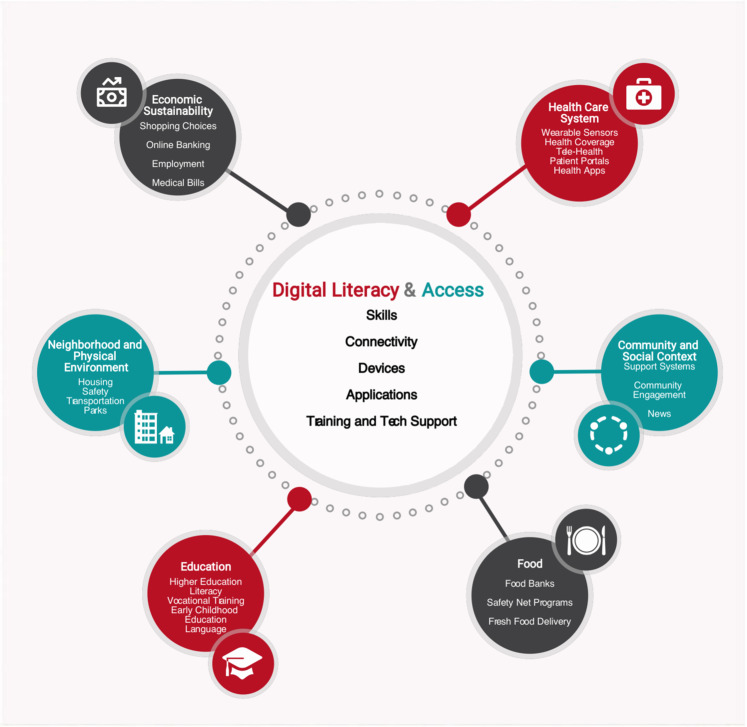
“Both digital inclusion and digital literacy factors have been called “Super Social Determinant of Health (SDO)”, due to this achieving all other SDO which influence the individual’s health, such as education, food, economic sustainability, and social context (7) .”
BackgroundDigital Communication Inequalities Among U.S. Adults Reporting Current Cigarette Use
Long, S. E., Lama, Y., & D'Angelo, H. (2023) · American Journal of Preventive Medicine · doi:10.1016/j.amepre.2023.09.025 · Cited by 3
Leedahl, S. N., Souza, K. F., Capolino, A., Brasher, M. S., Pascuzzi, E., Azzinaro, C., Ellison, T., Estus, E. L., & Maigret, M. (2023) · Journal of Elder Policy · doi:10.18278/jep.2.3.3 · Cited by 4
Visions for digital integrated cardiovascular care: HRS Digital Health Committee perspectives
Narayan, S. M., Wan, E. Y., Andrade, J. G., Silva, J. N. A., Bhatia, N. K., Deneke, T., Deshmukh, A. J., Chon, K. H., Erickson, L. A., Ghanbari, H., et al. (2024) · Cardiovascular Digital Health Journal · doi:10.1016/j.cvdhj.2024.02.003 · Cited by 4
Katz, C., Cohen, N., Attrash-Najjar, A., Glucklich, T., Jacobson, M., Varela, N., Filho, S. R. P., Chang, O. D., Haffejee, S., Mafigiri, D. K., et al. (2024) · Child Abuse & Neglect · doi:10.1016/j.chiabu.2024.106759 · Cited by 4
Teles, S., Viana, J., Freitas, A., Ribeiro, Ó. M., Alves, S., Ferreira, A. R., & Paúl, C. (2024) · BMC Geriatrics · doi:10.1186/s12877-024-05128-5 · Cited by 4
“Digital literacy is associated with younger age (with influential factors as e.g., digital nativity and ageism [73]), urban residency, and higher education [74], and has been high-lighted as a “super social determinant of health” [75].”
BackgroundFiol, G. D., Madsen, M. J., Bradshaw, R. L., Newman, M. G., Kaphingst, K. A., Tavtigian, S. V., & Camp, N. J. (2024) · JCO Clinical Cancer Informatics · doi:10.1200/cci-24-00142 · Cited by 3
Tan, L. O., Chia, M. S., Tok, N. Y. Y., Yoon, S., Fadziulah, E. N., Koon, T. H. P., Chan, C. M. F., Wang, C., Tan, S. R. F., & Chan, Y. H. (2025) · BMC Public Health · doi:10.1186/s12889-025-22281-7 · Cited by 5
“Research suggested that tools such as health apps and patient portals can foster greater patient engagement, better support for patients outside of the clinic visit, and can improve health outcomes [46].”
Jeong, C. H., Kim, B., & Bessette, M. (2025) · Qualitative Health Research · doi:10.1177/10497323251316194 · Cited by 3
“…as a key theme in our study, along with supporting literature that demonstrates a lack of such training (Latulipe et al., 2015; Nahm et al., 2020; Sieck et al., 2021), suggests that the development of this specialized training should be a priority for helping older adults integrate technology…”
Koo, G. H., Kim, S., Zhi, L., Johnson, T. J., Jung, S., & Hürdoğan, S. (2025) · Health Communication · doi:10.1080/10410236.2025.2479636 · Cited by 5
“Health is influenced by a broader social context, including race, sexual orientation, and how individuals engage with communication technologies and media (Sieck et al., 2021).”
Park, L. G., Kariuki, J. K., Hendriks, J., Gallagher, R. D., & Burke, L. E. (2025) · European Journal of Cardiovascular Nursing · doi:10.1093/eurjcn/zvaf242 · Cited by 6
Multichannel Healthcare Operations: The Impact of Video Visits on the Usage of In-Person Care
Lekwijit, S., Song, H., Terwiesch, C., & Chaiyachati, K. H. (2026) · Management Science · doi:10.1287/mnsc.2024.06271 · Cited by 6
Characterizing digital access in pediatric urology
Finkelstein, J. B., Rosoff, J. S., Tham, R. L., Perlman, C., & Nelson, C. P. (2023) · Journal of Pediatric Urology · doi:10.1016/j.jpurol.2023.04.007 · Cited by 3
Health Carework and Digital Inclusion as Super Social Determinant of Health
Chiaraluce, C. A., & Levine, L. (2024) · Studies in media and communications · doi:10.1108/s2050-206020240000025005 · Cited by 2
Raghuram, K., Noh, H., Lee, S., Hong, N. J. L., Kelly, E. N., & Shah, V. S. (2024) · Children · doi:10.3390/children11111272 · Cited by 3
“…BSID cognitive composite score 85, % (n/N) 37 (23/62) 18 (17/97) One particular issue that was highlighted was the need for language interpretation that appeared to be limited using virtual means and reflects the emerging recognition of digital inclusivity as a social determinant of health [34].”
Sakhuja, M., Yelton, B., Kavarana, S., Schaurer, L., Rumthao, J. R., Noblet, S. B., Arent, M. A., Macauda, M. M., Donelle, L., & Friedman, D. B. (2024) · Journal of Medical Internet Research · doi:10.2196/57040 · Cited by 3
Saron, H., Cleary, G., Marson, A. G., Ainsworth, J., Downing, J., Sandars, J. E., Whitty, L., Cheetham, S., Sinha, I. P., Carter, B., et al. (2025) · Rheumatology · doi:10.1093/rheumatology/keaf106 · Cited by 3
“Sociocultural technical issues such as digital equity/inequity [40], digital inclusion [41] and access to/familiarity with the required technology [22] need consideration.”
Ye, Q., Wang, W., Zeng, X., Kuang, Y., Geng, B., Song, Z., & Liu, N. (2025) · Journal of Medical Internet Research · doi:10.2196/64591 · Cited by 4
“DHL and internet access have lately been identified as “super social determinants of health” because of their influence on broader social determinants of health [10].”
Dong, J., Yu, S., Qin, Y., Jin, X., Xing, Y., & Wang, H. (2025) · Qualitative Health Research · doi:10.1177/10497323251324127 · Cited by 3
“However, increased reliance on digital tools could potentially widen disparities between those with the skills and access to these tools and those without, thereby ex-acerbating existing health inequities (Sieck et al., 2021).”
Quintal, C., Tavares, A. I., Ribeiro, I., Raposo, V., & Ferreira, P. L. (2025) · Journal of Primary Care & Community Health · doi:10.1177/21501319241312564 · Cited by 3
Acceptance of Digital Health in Portugal: An Example of Digital Divide
Lima, M. L., Camilo, C., Rodrigues, R. B., Campos, E. B., Espanha, R., Martins, H., & Sánchez‐García, J. (2025) · Portuguese Journal of Public Health · doi:10.1159/000546866 · Cited by 6
“For this reason, some authors refer to digital literacy and Internet connectivity as “super social determinants of health” because they influence all other social determinants of health [28].”
Cardiovascular Sciences Research Consortium Think Tank
Pundi, K. N., Bhavnani, S. P., Adigun, R. O., Vicente, J., Ghosh, R., Albert, D., Al-Siddiq, W., Benson, C., Fantana, A., Goldsack, J. C., et al. (2025) · JACC Advances · doi:10.1016/j.jacadv.2025.102059 · Cited by 3
Brundle, C., Johansson, J. F., Best, K., Clegg, A. P., Förster, A., Atkinson, T., Foster, M., Humphrey, S., Iliff, A., Inglis, J., et al. (2025) · BMJ Open · doi:10.1136/bmjopen-2025-102723 · Cited by 2
Gamified interventions for schizophrenia rehabilitation: A systematic scoping review
Yang, H., Chang, F., Zhu, D., Muroi, F., Liu, Z., Zhang, W., & Cai, J. (2025) · Clinical Psychology Review · doi:10.1016/j.cpr.2025.102651 · Cited by 4
Adewuyi, E. O., Auta, A., Omonaiye, O., Adewuyi, M. I., Olutuase, V. O., Adefemi, K., Odeyemi, O. A., Zhao, Y., Tessema, G. A., & Pereira, G. F. (2025) · PLoS ONE · doi:10.1371/journal.pone.0337438 · Cited by 5
“Internet access, a ‘super social determinant of health,’ influences employment, education, and healthcare [76,77].”
Sadat, A., & Shafi, M. Q. (2025) · Discover Public Health · doi:10.1186/s12982-025-01132-1 · Cited by 5
“We are digging deep into the relationship by posing the hypothesis that: H3 Anxiety has a significant negative impact on SWB. Internet connectivity and DHL are now categorized as ‘Social determinants of health’ [47].”
Perspective: Improving social connection and inclusion through equitable digital health solutions
Kwaśnicka, D., Kelly, J. T., Quested, E., Baldassar, L. V., Robinson, S., Sinnott, R., O’Halloran, P., Tiedemann, A., Flatau, P., Ogrin, R., et al. (2025) · npj Digital Medicine · doi:10.1038/s41746-025-02264-z · Cited by 4
Excluded by design: a qualitative study of inequalities in health and social care innovation
Tooman, T., Frost, H., Adams, R., Anand, A., Aujla, N., Bareham, B. K., Guthrie, B., Hanratty, B., Kaner, E., O'Donnell, A. J., et al. (2026) · International Journal for Equity in Health · doi:10.1186/s12939-025-02751-5 · Cited by 2
“There is a growing literature connecting social determinants of health with reduced life expectancy and identifying strategies to reduce the unequal distribution of services [40, 45, 46].”
Fischer, S. H., Röth, E., Khodyakov, D., Lee, Y., & Predmore, Z. (2026) · Telemedicine Journal and e-Health · doi:10.1177/15305627261425907 · Cited by 2
Khatib, I. A., Ndiaye, M., & Shamayleh, A. (2026) · Bulletin of the National Research Centre/Bulletin of the National Research Center · doi:10.1186/s42269-026-01419-6 · Cited by 5
Khan, M. H., Patel, B., Raza, M., Saji, A. S., Ahsan, A., Singh, P. K., Singh, A. K., & Akbar, A. (2026) · Health Science Reports · doi:10.1002/hsr2.72479 · Cited by 3
“Some communities have appointed patient advocates and community health workers to help patients eliminate the digital literacy and connectivity gap [ 41].”
Alcaraz, K. I., Cohen, C. M., & Connor, A. E. (2026) · Telemedicine Journal and e-Health · doi:10.1177/15305627261450362 · Cited by 2
“22,37 Prior research found that a lack of reliable transportation was associated with greater odds of telehealth use.”
ІНСТРУМЕНТИ СОЦІАЛЬНОЇ АДВОКАЦІЇ ПРАВ ТА ІНТЕРЕСІВ ВРАЗЛИВИХ ГРУП НАСЕЛЕННЯ
Лях, Т. Л., ПЕТРОВИЧ, В., & Spirin, A. (2022) · Humanitas · doi:10.32782/humanitas/2022.3.8 · Cited by 11
A Digital Literacy Program for Adults with Mental Health Conditions
Perret, S., Alon, N., & Torous, J. B. (2023) · ADULT LITERACY EDUCATION THE INTERNATIONAL JOURNAL OF LITERACY LANGUAGE AND NUMERACY · doi:10.35847/sperret.nalon.jtorous.5.1.49 · Cited by 2
The eHealth usage during COVID-19 pandemic 2020 year–Case of Poland
Jankowiak, M., & Rój, J. (2023) · PLoS ONE · doi:10.1371/journal.pone.0290502 · Cited by 4
“Lack of the appropriate skills and / or access to digital tools can increase the disparities in eHealth usage and thus health outcomes [19].”
BackgroundWalker, D. M., Hefner, J. L., MacEwan, S. R., Tosto, G. D., Sova, L. N., Gaughan, A. A., Huerta, T. R., & McAlearney, A. S. (2024) · JAMA Network Open · doi:10.1001/jamanetworkopen.2024.5091 · Cited by 2
Karakis, I., Kostandini, G., Tsamakis, K., & Zahirovic‐Herbert, V. (2024) · Online Journal of Public Health Informatics · doi:10.2196/52686 · Cited by 2
“Individuals with reduced income and less formal education are less inclined to possess a home broadband service or a mobile data plan subscription, necessitating their reliance on limited cell plan data or local public Wi-Fi hot spots [8,9].”
BackgroundExploring contexts for using digital food retail services in Canada: a qualitative study
Fernandez, M. A., Dugan, J., & Raine, K. D. (2024) · Applied Physiology, Nutrition, and Metabolism · doi:10.1139/apnm-2024-0173 · Cited by 4
Prins, G. B., Nizeyimana, E., Ernstzen, D. V., & Louw, Q. A. (2024) · Digital Health · doi:10.1177/20552076241282230 · Cited by 3
“68,69 The lack of digital literacy and exposure to technology in such settings could contribute to hesitancy or resistance towards adopting TR as part of their healthcare.”
BackgroundExploring Research Trends on Digital Health in Nursing Science in Korea: A Topic Modeling Approach
Kim, H. W., Choi, J., Kim, J., & Son, Y. (2024) · Advances in Nursing Science · doi:10.1097/ans.0000000000000543 · Cited by 3
“25,26 For several decades, evidence based practice (EBP) has been emphasized as a critical element in improving scientific knowledge and achieving excellence in patient care within the nursing discipline.”
Okpako, T., Kale, D., Perski, O., & Brown, J. (2024) · BMC Digital Health · doi:10.1186/s44247-024-00136-2 · Cited by 2
Gomez, R. J., Tomlinson, C. A., Reddish, N., & Reiss, D. (2024) · Health & Social Work · doi:10.1093/hsw/hlae039 · Cited by 3
Consumers’ expected information search behavior for a pharmaceutical treatment
Liu, Y., Fincham, J. E., & Sperry, M. L. (2025) · Frontiers in Pharmacology · doi:10.3389/fphar.2025.1466352 · Cited by 3
“Although research indicates that internet connectivity is generally linked to improved wellbeing (Vuorre and Przybylski, 2024), these digital tools have also raised signi fi cant access and privacy concerns, particularly among low-income, rural, and older populations (Sieck et al., 2021).”
Challenges in digital health literacy
Julesz, M. (2024) · Információs Társadalom · doi:10.22503/inftars.xxiv.2024.3.1 · Cited by 5
“Sieck et al. (2021, 1) and van Kessel et al. (2022, 2) argue that digital health literacy and internet connectivity are “super social determinants of health,” because they correlate with every other social determinant of health.”
Addressing tech-health equity with a rural public library telehealth model
Keesler, J. M., Funk, K., Deck, C. K., & Wilkerson, D. (2025) · Social Work in Mental Health · doi:10.1080/15332985.2025.2499086 · Cited by 4
“Telepractice is one strategy to leverage resources to reduce health disparities and improve accessibility for rural communities (Sieck et al., 2021).”
Chen, C. W., Durante, A. J., MAYNARD, M. G., Raymond, J. K., Reznik, M., Laffel, L. M., & Agarwal, S. (2025) · Diabetes Spectrum · doi:10.2337/ds24-0061 · Cited by 3
European digital transformation for Roma girls’ health: the case of Spain
Miranda, D. E., Terán-Tinedo, V., Bento, J. H. B., de Jong, T., & de Frutos‐Lucas, J. (2025) · Frontiers in Sociology · doi:10.3389/fsoc.2025.1562088 · Cited by 2
What do popular YouTube videos say about genetically modified foods? A content analysis
Basch, S. I., Samuel, L., & Fera, J. (2023) · Dialogues in Health · doi:10.1016/j.dialog.2023.100131 · Cited by 2
Garzon-Siatoya, W. T., Morales-Lara, A. C., & Adedinsewo, D. A. (2023) · Cardiovascular Innovations and Applications · doi:10.15212/cvia.2023.0024 · Cited by 6
Evaluation Strategies for Understanding Experiences With Virtual Care in Canada: Mixed Methods Study
Vanderhout, S. M., Goldbloom, E. B., Li, A., Newhook, D., Garcia, M., & Dulude, C. (2023) · Journal of Medical Internet Research · doi:10.2196/45287 · Cited by 2
“Given that digital inclusion has been identified as a social determinant of health [28,29], varied evaluation approaches may be required to ensure responses are representative of the entire patient and family population.”
Zörgő, S., Peters, G.-J., Jeney, A., Shaffer, D. W., Ruis, A. R., & Crutzen, R. (2024) · Open Research Europe · doi:10.12688/openreseurope.16119.2 · Cited by 3
Photoplethysmography rhythm interpretation: an essential skill in an era of novel technologies
Gue, Y. X., El‐Bouri, W. K., & Lip, G. Y. H. (2021) · European Heart Journal - Digital Health · doi:10.1093/ehjdh/ztab068 · Cited by 2
“It is sobering to remember that just under half the world’s population has no access to the internet(12) and that lack of internet access is associated with poorer health.(13) Taken together, strong evidence, strong data security, a workforce that is familiar and understands the technology, along with a focus on healt…”
BackgroundNagaraja, V. H., Dastidar, B. G., Suri, S., & Jani, A. R. (2024) · medRxiv · doi:10.1101/2024.02.10.24302616 · Cited by 3
Readability Analysis of Online Health Information on Gestational Diabetes
Samuel, L., Fera, J., & Basch, C. H. (2023) · Journal of Consumer Health on the Internet · doi:10.1080/15398285.2023.2171240 · Cited by 2
“Given the pervasive role of the internet in influencing health behavior, digital literacy has been recognized as a “super social determinant of health” (Sieck et al. 2021).”
BackgroundDigitale Gesundheitskompetenz – Schlüssel zur digitalen Transformation
Dratva, J. (2023) · Swiss Medical Forum ‒ Schweizerisches Medizin-Forum · doi:10.4414/smf.2023.09371 · Cited by 1
Harapan, E., Suherman, S., Utama, C., Wang, Y., & Zou, G. (2023) · Journal International Inspire Education Technology · doi:10.55849/jiiet.v2i3.473 · Cited by 1
“Before use (Sieck et al., 2021), the questionnaire is first examined by three education management experts (Guess et al.”
MethodHenderson-Sears, S. E., Stefanescu, A. R., Stefanescu, B. M., & Allen, J. D. (2023) · American Journal of Perinatology · doi:10.1055/a-2190-8288 · Cited by 1
“45,46 The reasons for consent refusal could be related to lack to access to internet, lack of digital skills or literacy, fi nancial, social, or other reasons.”
BackgroundLi, M., Huang, J., Budhathoki, C. B., Qiwei, L., Samuel, L. J., Szanton, S. L., Schrack, J. A., & Li, J. (2023) · Journal of Applied Gerontology · doi:10.1177/07334648231205417 · Cited by 1
“As Sieck et al. stated (Sieck et al., 2021), improved access to digital devices in diverse communities with different socioeconomic levels is needed to avoid the risk of digital technologies becoming another social determinant of health.”
BackgroundGamarel, K. E., Rodriguez-Bañuelos, A., Ubong, I.-A., Best, J. N., Jadwin-Cakmak, L. A., & Mitchell, J. W. (2024) · mHealth · doi:10.21037/mhealth-23-57 · Cited by 1
“Notably, these patterns occur at the neighborhood level whereby evidence suggest that neighborhoods with low-level incomes have the lowest internet subscription rates (36) and nearly half of low-income households rely on limited cellphone data plans or public wifi hotspots for online access (37).”
Addressing Diverse Learners' Needs Through Inclusivity
Williams, Z. (2024) · Advances in multimedia and interactive technologies book series · doi:10.4018/979-8-3693-1111-0.ch006 · Cited by 2
Targeted Digital Health Intervention in End‐of‐Life and Hospice Care: A Scoping Review
Jeon, M., Jeon, H., & Kim, S. (2025) · Journal of Advanced Nursing · doi:10.1111/jan.16734 · Cited by 6
Allen, S. (2025) · SSM - Population Health · doi:10.1016/j.ssmph.2025.101747 · Cited by 6
“This has led some researchers to suggest that internet access is a social determinant of health (Benda et al., 2020; Early & Hernandez, 2021; Sieck et al., 2021), but this claim remains under-studied (but see Li, 2022; Michaels et al., 2021).”
Patterns of Online Stress Management Information-Seeking Behavior in Hungary
Jóna, G., & Fedor, A. R. (2025) · International Journal of Environmental Research and Public Health · doi:10.3390/ijerph22040473 · Cited by 2
“As such, OSMIS behavior has the potential to reduce health inequalities while simultaneously improving mental well-being and resilience [20].”
Kim, Y., Shelley, M., & Lee, J. E. (2025) · Journal of Aging and Health · doi:10.1177/08982643251336801 · Cited by 3
“Urban areas typically offer better infrastructure and greater access to high-speed internet while rural areas face challenges such as limited technology accessibility and lower digital literacy (Douthit et al., 2015; Reddick et al., 2020; Sieck et al., 2021).”
Coven, S. L., McKean‐Cowdin, R., Scheurer, M. E., Johnson, K. J., Bauchet, L., Kruchko, C., Lau, C. C., Ostrom, Q. T., Villano, J. L., Yuan, Y., et al. (2025) · Neuro-Oncology Advances · doi:10.1093/noajnl/vdaf095 · Cited by 2
Tsukada, Y. T., Aoki‐Kamiya, C., Mizuno, A., Nakayama, A., Ide, T., Aoyama, R., Honye, J., Hoshina, K., Ikegame, T., Inoue, K., et al. (2025) · Journal of Cardiology · doi:10.1016/j.jjcc.2025.03.002 · Cited by 3
Ho, K., Dulas, M., Rahman, A., Choo, Z.-Y., Lee, W. W., & Alkureishi, M. A. (2025) · Springer eBooks · doi:10.1007/978-3-031-85546-7_4 · Cited by 2
Liaw, S. (2025) · Elsevier eBooks · doi:10.1016/b978-0-323-95260-6.00001-0 · Cited by 1
Artificial Intelligence and Social Determinants of Health
Morelli, V. (2025) · Rheumatic Disease Clinics of North America · doi:10.1016/j.pop.2025.07.003 · Cited by 1
Andersen, S. B., Mortensen, S. S., Lassen, A. J., & Jespersen, A. P. (2025) · Journal of Medical Humanities · doi:10.1007/s10912-025-09982-1 · Cited by 1
“As digital literacies gradually become a gatekeeper to welfare and healthcare, digital inclusion increasingly becomes a “super social determinant of health” as it addresses all other social determinants of health (Sieck et al. 2021).”
Espinoza, J., Babaei, M., Deavenport‐Saman, A., Solomon, O., Wee, C. P., Durazo-Arvizú, R., Sikder, A. T., Shah, P., Castillo, P., & Yin, L. (2025) · JMIR Formative Research · doi:10.2196/70341 · Cited by 1
“…Medical Informatics Association (AMIA) has published a statement expressing concerns that digital technology is widening health inequity generated by the digital divide rather than decreasing it [8], and the concept of digital inclusion has gained traction as a social determinant of health [9,10].”
Meddar, J. M., Mann, D., Schwartz, M., Park, H., Engelberg, R., & Khan, M. R. (2025) · PLoS ONE · doi:10.1371/journal.pone.0334887 · Cited by 2
“[19 ,64–67] Given these findings, further investigation is warranted on the independent associations between heightened technology use in the post-pandemic era and clinical outcomes, generally, and across various sociodemographic subgroups.”
Zhao, J., Su, C., Zhu, X., Cai, C., Liu, W., & Ma, X. (2025) · Journal of Medical Internet Research · doi:10.2196/79587 · Cited by 3
“In fact, digital literacy and internet connectivity have been termed “super social determinants of health” because of their foundational influence on all other determinants of health in the digital age [11].”
Leveraging large language models to bridge the digital divide in cardiovascular health research
Kim, D. S., Eltahir, A. A., Mantena, S., Doijad, R., Matabang, C., & Rodríguez, F. (2025) · npj Cardiovascular Health · doi:10.1038/s44325-025-00095-1 · Cited by 1
Tiwana, A., Gale, N. K., Mahay, M., Barker, T., Hasdell, R., Young, P., Korchinski, M., Schmitz, D., Luster, D., Ramji, A. S., et al. (2025) · International Journal for Equity in Health · doi:10.1186/s12939-025-02648-3 · Cited by 1
“Addressing these challenges is essential, as digital tools and digital literacy are now recognized as critical determinants of health because of their connection to other upstream factors [27, 28].”
Zhao, H., Yu, C., & Han, Z. (2025) · ISPRS International Journal of Geo-Information · doi:10.3390/ijgi14120496 · Cited by 1
“Research demonstrates that internet access improves health outcomes by enhancing medical information dissemination, enabling remote healthcare services, and fostering social connectivity to mitigate mental health risks [18].”
Ewing, A. P., Teteh, D., Zaire, P. J., Nelson, N., Chakraborty, S., Meade, C. D., & Gwede, C. K. (2026) · Journal of Racial and Ethnic Health Disparities · doi:10.1007/s40615-025-02772-4 · Cited by 1
Evaluating Access to Cellphones for Telehealth Among People Experiencing Homelessness
Agustin, R., Garber, K., Barthold, G., & Gustin, T. S. (2026) · Telemedicine Journal and e-Health · doi:10.1177/15305627261417926 · Cited by 1
“11 It is crucial to equip individuals with necessary skills to access information, obtain essential health care services, and secure employment opportunities.”
Golant, S. M. (2026) · Frontiers in Public Health · doi:10.3389/fpubh.2026.1724293 · Cited by 1
“Traveling to these places would be a better solution, but then they would face the usual physical accessibility challenges (93).”
Jiang, J., Zhong, Q., Yin, Z., Zhou, Q., Wang, Y., & Yan, Z. (2026) · International Journal of Behavioral Nutrition and Physical Activity · doi:10.1186/s12966-026-01874-4 · Cited by 4
“Research indicates that even when vulnerable groups successfully complete required operations, they may still derive limited practical value from the platform [124, 125].”
Rush, K. L., Seaton, C. L., Ross, R., Robertson, T., Louloudi, A.-I., Loewen, P. S., Haase, K. R., Jakobi, J. M., & Janke, R. (2026) · International Journal of Medical Informatics · doi:10.1016/j.ijmedinf.2026.106312 · Cited by 1
Nechuta, S., Bacon-Baguley, T. A., & Hamel, L. M. (2026) · JNCI Journal of the National Cancer Institute · doi:10.1093/jnci/djag040 · Cited by 1
Ageing in the City: perceptions of urban age-friendliness in three localities of Bogotá, 2023
Ortiz, Y. N. F., Peñaloza-Quintero, R. E., González-Cortés, J., & Mejía-Rocha, M. M. (2026) · International Journal for Equity in Health · doi:10.1186/s12939-026-02808-z · Cited by 2
“In communication and information, narratives high-lighted the existence of a “grey digital divide,” understood as the combination of technological, trust-related, and usability barriers that limit older people’s inclusion in community life [57].”
Stowell, M., Latimer, C. L., Nosa, V. H., McCool, J. P., Whittaker, R., & Dobson, R. (2026) · Journal of Health Psychology · doi:10.1177/13591053261429653 · Cited by 1
“This multifaceted concept is also complex in its effects, to the extent that digital inclusion has been proposed as a ‘super social determinant of health’ due to its potential impacts on all other social determinants of health (Sieck et al., 2021).”
The NHS App should focus on inequalities to improve population health
Laverty, A. A., Reidy, C., Sukriti, K. C., Papoutsi, C., Gudgin, B., Majeed, A., & Powell, J. (2026) · Journal of the Royal Society of Medicine · doi:10.1177/01410768261421427 · Cited by 1
Вершинина, И. А., & Martinenko, T. S. (2026) · Социодинамика · doi:10.25136/2409-7144.2026.5.78335 · Cited by 1
Liu, L. (2026) · Journal of Medical Internet Research · doi:10.2196/96762 · Cited by 3
“Treating these states as equivalent, or excluding hospitals with missing tele-health values altogether, may therefore obscure an important dimension of the hospital digital divide [18,19].”
Designing interdisciplinary education in digital public health: a position paper
Attard, C., Silva, A. M., Ahmed, S., Wong, B. L. H., Sultana, R., Albanese, E., & Tartari, E. (2026) · Frontiers in Public Health · doi:10.3389/fpubh.2026.1866630 · Cited by 2
“Health literacy is increasingly recognised as a key determinant of health equity and digital inclusion (23).”
Five Common Factors for Rural Faith Leader/Professional Telepractice Collaboration
Wilkerson, D., Keesler, J. M., & Presnell, J. (2026) · Springer eBooks · doi:10.1007/978-3-032-27336-9_8 · Cited by 1
Xia, K., Luo, L., Fan, C., Zhang, H., Yang, X., & Lin, C. (2026) · Frontiers in Oncology · doi:10.3389/fonc.2026.1844633 · Cited by 1
“At the same time, preventive and follow-up care increasingly depends on digital infrastructure, including patient portals, telehealth communication, appointment coordination, access to health information, and navigation of multistep screening pathways (10).”
Frigola, I. B., Coca-Villalba, F., Pérez-Lacasta, M. J., & Lavila, M. C. (2023) · Frontiers in Public Health · doi:10.3389/fpubh.2022.1033461 · Cited by 1
“According to (5), both digital literacy and Internet connectivity can be understood as “super [SDOH]” because they include all other social determinants related to health.”
BackgroundZörgő, S., Peters, G.-J., Jeney, A., Shaffer, D. W., Ruis, A. R., & Crutzen, R. (2023) · Open Research Europe · doi:10.12688/openreseurope.16119.1 · Cited by 1
“DHL is associated to both health and many of its determinants 6 .”
Digital value systems and sustainability
Brohman, M. K., Dawson, G. S., & Desouza, K. C. (2023) · Edward Elgar Publishing eBooks · doi:10.4337/9781800888807.00008 · Cited by 2
Metadata
- Authors
- Sieck, C. J., Sheon, A., Ancker, J. S., Castek, J., Callahan, B., & Siefer, A.
- Affiliations
- The Ohio State University Wexner Medical Center (US)
- Case Western Reserve University (US)
- Weill Cornell Medicine (US)
- University of Arizona (US)
- Corresponding author
- Sieck, Cynthia J.
- Venue
- npj Digital Medicine
- Published
- 2021-03-17
- Volume
- 4
- Issue
- 1
- Pages
- 52-52
- ISSN
- 2398-6352 (ISSN-L)
- PMC
- PMC7969595
- OpenAlex
- W3136595486
- Cited by
- 597
- References
- 21
- Citations by year
- 2026: 117 · 2025: 140 · 2024: 134 · 2023: 124 · 2022: 60 · 2021: 21
- FWCI
- 95.23
- Type
- journal article
- Language
- en
- Open access
- gold
- doi.org
- Licence
- cc-by
- creativecommons.org/licenses/by/4.0 (tdm)
- creativecommons.org/licenses/by/4.0 (vor)
- Locations
- npj Digital Medicine (publishedVersion, cc-by)
- PubMed Central (publishedVersion, cc-by)
- PubMed (publishedVersion)
- DOAJ (DOAJ: Directory of Open Access Journals) (submittedVersion, cc-by-sa)
- Topics
- Health Sciences › Health Professions › General Health Professions › Health Literacy and Information Accessibility
- Health Sciences › Medicine › Geriatrics and Gerontology › Technology Use by Older Adults
- Social Sciences › Health › Health disparities and outcomes
- Keywords
- digital inclusion, social determinants of health, health disparities, digital divide, health apps, patient portals, remote monitoring, patient engagement, digital health equity
About these checks
Registry, retraction, Cites and statistics results are computed, not judged, with one exception: a printed reference that no index lists is read once by a model before it counts as a citation error. Claims are extracted by a model and kept only when their quote appears verbatim in the text; each cited source is then checked, with a model’s help, for whether it says what the claim relies on. Those verdicts can be wrong — read the claim’s quote and the cited source before relying on one.
Statistics and arithmetic are recomputed, not judged.
Confidence bands are shown only for fields calibrated on our annotated test set. None is calibrated yet, so no band is shown.
What counts as a claim ›How we measure confidence ›How we check this ›
Are you an author, or do you see a problem with this page? Request a review
Data sources
Bibliographic data: Semantic Scholar, OpenAlex, Crossref.
Contains information from the Semantic Scholar Academic Graph Datasets, made available under the ODC Attribution License (ODC-BY 1.0).
Semantic Scholar’s data is described in: Kinney, R., et al. (2023). The Semantic Scholar Open Data Platform. arXiv:2301.10140.
