

Natural language processing applied to mental illness detection: a narrative review
Open accessThe DOI matches its Crossref record; 214 of the 214 references it cites were found in a registry or an index.
Abstract
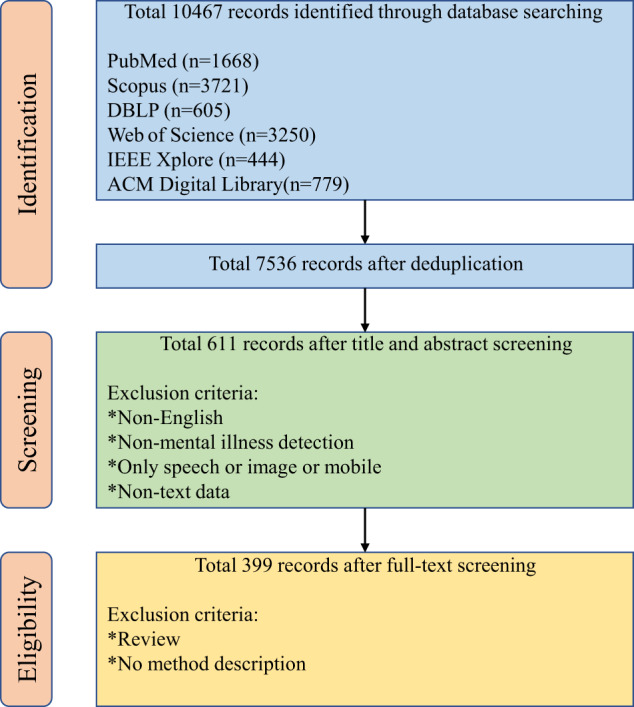
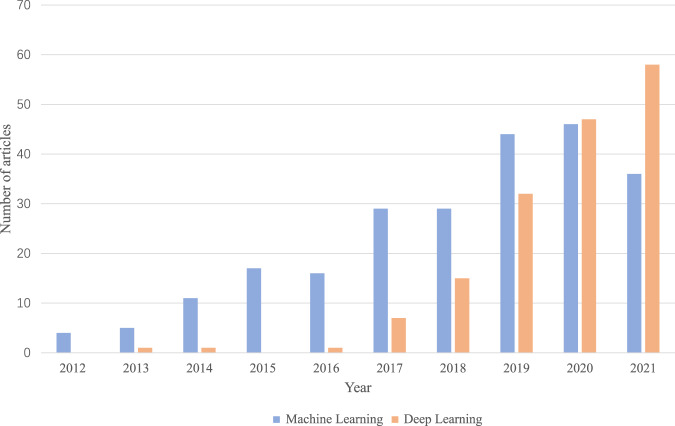
Mental illness is highly prevalent nowadays, constituting a major cause of distress in people’s life with impact on society’s health and well-being. Mental illness is a complex multi-factorial disease associated with individual risk factors and a variety of socioeconomic, clinical associations. In order to capture these complex associations expressed in a wide variety of textual data, including social media posts, interviews, and clinical notes, natural language processing (NLP) methods demonstrate promising improvements to empower proactive mental healthcare and assist early diagnosis. We provide a narrative review of mental illness detection using NLP in the past decade, to understand methods, trends, challenges and future directions. A total of 399 studies from 10,467 records were included. The review reveals that there is an upward trend in mental illness detection NLP research. Deep learning methods receive more attention and perform better than traditional machine learning methods. We also provide some recommendations for future studies, including the development of novel detection methods, deep learning paradigms and interpretable models.
Overview
The claims and statistics of this paper haven’t been checked yet.
Free: it reads the open-access text and checks the first 5 claims that cite a source we can check. Create a free account to check every claim.
Integrity signals
Registry
Cites
Statistics
Figures
Verification
Claims the paper makes
The claims and statistics of this paper haven’t been checked yet.
Free: it reads the open-access text and checks the first 5 claims that cite a source we can check. Create a free account to check every claim.
Claims other papers make about this one
Each is checked against this paper’s own text: does it say what the citing paper says it does?
The cited source says what the claim attributes to it.
In the citing paper
“In order to avoid missing studies, we crosschecked our study selection with existing literature reviews 8,10,13,17,19 and no additional studies were added.”
From Linguistic markers for identifying post-traumatic stress disorder and associated symptoms: a systematic literature review (2025) · cites this paper as [13]
Self-check
Percentages, sums and reported differences re-computed from the paper’s own numbers.
The self-check needs the paper’s full text.
Citations
Cites
Vaswani, A., Shazeer, N., Parmar, N., Uszkoreit, J., Jones, L., Gomez, A. N., Kaiser, L., & Polosukhin, I. (2017) · arXiv · doi:10.48550/arxiv.1706.03762 · Cited by 120,404 · cited 1×
“Recently, transformer architectures 147 were able to solve long-range dependencies using attention and recurrence.”
BackgroundHochreiter, S., & Schmidhuber, J. (1997) · Neural Computation · doi:10.1162/neco.1997.9.8.1735 · Cited by 102,318 · cited 13×
“RNN-based methods LSTM or GRU (some with attention mechanism) 32,133,136,232 – 234 Standard RNN structure: Long Short-Term Memory networks (LSTM) or Gate Recurrent Unit(GRU), and some studies add attention mechanism.”
MethodInfluentialLeCun, Y., Bengio, Y., & Hinton, G. (2015) · Nature · doi:10.1038/nature14539 · Cited by 84,126
Glove: Global Vectors for Word Representation
Pennington, J., Socher, R., & Manning, C. (2014) · Proceedings of the 2014 Conference on Empirical Methods in Natural Language Processing (EMNLP) · doi:10.3115/v1/d14-1162 · Cited by 34,071 · cited 1×
“There are many different embedding techniques, such as ELMo, GloVe word embedding 118 , word2vec 119 and contextual language encoder representations (e.g., bidirectional encoder representations from transformers (BERT) 120 and ALBERT[121).”
Method(2003) · Journal of Machine Learning Research · doi:10.5555/944919.944937 · Cited by 32,337
PRISMA-P Group, Moher, D., Shamseer, L., Clarke, M., Ghersi, D., Liberati, A., Petticrew, M., Shekelle, P., & Stewart, L. A. (2015) · Systematic Reviews · doi:10.1186/2046-4053-4-1 · Cited by 26,223
Learning Phrase Representations using RNN Encoder–Decoder for Statistical Machine Translation
Cho, K., van Merrienboer, B., Gulcehre, C., Bahdanau, D., Bougares, F., Schwenk, H., & Bengio, Y. (2014) · Proceedings of the 2014 Conference on Empirical Methods in Natural Language Processing (EMNLP) · doi:10.3115/v1/d14-1179 · Cited by 25,545 · cited 8×
“RNN-based methods LSTM or GRU (some with attention mechanism) 32,133,136,232 – 234 Standard RNN structure: Long Short-Term Memory networks (LSTM) or Gate Recurrent Unit(GRU), and some studies add attention mechanism.”
MethodInfluential"Why Should I Trust You?": Explaining the Predictions of Any Classifier
Ribeiro, M. T., Singh, S., & Guestrin, C. (2016) · Proceedings of the 22nd ACM SIGKDD International Conference on Knowledge Discovery and Data Mining · doi:10.1145/2939672.2939778 · Cited by 17,555
VADER: a parsimonious rule-based model for sentiment analysis of social media text
Hutto, C., & Gilbert, E. (2014) · Proceedings of the International AAAI Conference on Web and Social Media · doi:10.1609/icwsm.v8i1.14550 · Cited by 6,087
The Psychological Meaning of Words: LIWC and Computerized Text Analysis Methods
Tausczik, Y. R., & Pennebaker, J. W. (2010) · Journal of Language and Social Psychology · doi:10.1177/0261927x09351676 · Cited by 5,774
Research works printed but not linked: 21
- Khan A Husain MS Khan A Analysis of mental state of users using social media to predict depression! a survey Int. J. Adv. Res. Comput. Sci. 2018 9 100 106
- Trifan A Antunes R Matos S Oliveira JL Understanding depression from psycholinguistic patterns in social media texts Adv. Inf. Retr. 2020 12036 402
- Delahunty, F., Wood, I. D. & Arcan, M. First insights on a passive major depressive disorder prediction system with incorporated conversational chatbot. In Irish Conference on Artificial Intelligence and Cognitive Science (2018).
- Prakash, A., Agarwal, K., Shekhar, S., Mutreja, T. & Chakraborty, P. S. An ensemble learning approach for the detection of depression and mental illness over twitter data. In 2021 8th International Conference on Computing for Sustainable Global Development (INDIACom), pp. 565–570 (2021).
- Desmet, B. & Hoste, V. Recognising suicidal messages in dutch social media. In 9th International Conference on Language Resources and Evaluation (LREC), pp. 830–835 (2014).
- Zhou, D., Bousquet, O., Lal, T. N., Weston, J. & Schölkopf, B. Learning with local and global consistency. In Advances in Neural Information Processing Systems, pp. 321–328 (2004).
- Ghannay, S., Favre, B., Esteve, Y. & Camelin, N. Word embedding evaluation and combination. In Proc. Tenth International Conference on Language Resources and Evaluation (LREC’16), pp. 300–305 (2016).
- Mikolov, T., Chen, K., Corrado, G. & Dean, J. Efficient estimation of word representations in vector space. In Proc. 1st International Conference on Learning Representations (ICLR) Workshops Track. (2013).
- Devlin, J., Chang, M. W., Lee, K. & Toutanova, K. Bert: Pre-training of deep bidirectional transformers for languageunderstanding. In Proc. NAACL-HLT, pp. 4171–4186 (2019).
- Pascanu, R., Mikolov, T. & Bengio, Y. On the difficulty of training recurrent neural networks. In International Conference on Machine Learning, pp. 1310–1318 (2013).
- Bahdanau, D., Cho, K. & Bengio, Y. Neural machine translation by jointly learning to align and translate. In Proc. 3rd International Conference on Learning Representations (ICLR) (2015).
- Settles, B. Closing the loop: fast, interactive semi-supervised annotation with queries on features and instances. In Proc. 2011 Conference on Empirical Methods in Natural Language Processing, pp. 1467–1478 (2011).
- Maupomé, D. & Meurs, M. -J. Using topic extraction on social media content for the early detection of depression. In CLEF (Working Notes) vol. 2125 (2018)
- Wang, W. Y., Singh, S. & Li, J. Deep adversarial learning for nlp. In Proc. 2019 Conference of the North American Chapter of the Association for Computational Linguistics: Tutorials, pp. 1–5 (2019).
- Li, Y., Tian, X., Liu, T. & Tao, D. Multi-task model and feature joint learning. In Twenty-Fourth International Joint Conference on Artificial Intelligence (2015).
- Xu, Z., Pérez-Rosas, V. & Mihalcea, R. Inferring social media users’ mental health status from multimodal information. In Proc. 12th Language Resources and Evaluation Conference, pp. 6292–6299 (2020).
- Mittal, A. et al. Multi-modal detection of alzheimer’s disease from speech and text. In Proc. BIOKDD'21 (2021).
- Song, H., You, J., Chung, J. -W. & Park, J. C. Feature attention network: Interpretable depression detection from social media. In Proc. 32nd Pacific Asia Conference on Language, Information and Computation (2018).
- Stephen JJ Prabu P Detecting the magnitude of depression in twitter users using sentiment analysis Int. J. Electr. Comput. Eng. 2019 9 3247
- Mikolov, T., Sutskever, I., Chen, K., Corrado, G. S. & Dean, J. Distributed representations of words and phrases and their compositionality. In Advances in Neural Information Processing Systems, pp. 3111–3119 (2013).
- Bandyopadhyay, A., Achilles, L., Mandl, T., Mitra, M. & Saha, S. K. Identification of depression strength for users of online platforms: a comparison of text retrieval approaches. In Proc. CEUR Workshop Proceedings, vol. 2454, pp. 331–342 (2019).
Cited by
Items 101–200 of 475
A machine learning approach for text pattern diagnosis in mental health consultations
Juanita, S., Daeli, A. H., Syafrullah, M., Anggraeni, W., & Purnomo, M. H. (2025) · Decision Analytics Journal · doi:10.1016/j.dajour.2025.100572 · Cited by 16
Guerrero, G., Ávila, D., Silva, F., Pereira, A. M. D. J., & Fernández‐Caballero, A. (2023) · Internet Interventions · doi:10.1016/j.invent.2023.100679 · Cited by 12
Köckritz, J., İlgen, B., Cohrdes, C., & Hattab, G. (2025) · Scientific Reports · doi:10.1038/s41598-025-18413-z · Cited by 16
“For example, the analysis of language in patients with bipolar disorder 48 and other mental illnesses 49,50 has shown promising applications for early diagnosis, treatment evaluation, and ongoing mental health monitoring.”
Zhang, L., Chen, K., Li, S., Liu, S. K., & Wang, Z. (2025) · Current Issues in Molecular Biology · doi:10.3390/cimb47121061 · Cited by 13
“While conventional machine learning models (e.g., Support Vector Machines, decision trees) provided foundational classification capabilities [54], the advent of large language models (LLMs) has markedly advanced the field.”
Evaluating Emotional Detection & Classification Capabilities of GPT-2 & GPT-Neo Using Textual Data
Jain, B., Goyal, G., & Sharma, M. (2024) · International Conference on Cloud Computing, Data Science & Engineering (Confluence) · doi:10.1109/confluence60223.2024.10463396 · Cited by 17
“ChatGPT was tested on a few binary mental health condition detection tasks [3] but lacked explainability on detection results.”
Methodde Oliveira, A. C., Bessa, R. F., & Teles, A. S. (2024) · Cadernos de Saúde Pública · doi:10.1590/0102-311xen028824 · Cited by 15
“Several studies have used NLP techniques to detect manifestations of mental disorders in different textual data, including social media posts, interviews, and clinical notes 54 .”
Rkia, A., Adnane, F. A., Adda, M., & Lessard, L. (2024) · Procedia Computer Science · doi:10.1016/j.procs.2024.11.126 · Cited by 14
Characterizing Delusional Spirals through Human-LLM Chat Logs
Moore, J., Mehta, A., Agnew, W., Anthis, J. R., Louie, R., Mai, Y., Yin, P., Cheng, M., Paech, S. J., Klyman, K., et al. (2026) · Proceedings of the 2026 ACM Conference on Fairness, Accountability, and Transparency · doi:10.1145/3805689.3806443 · Cited by 15
Zhang, X., Ren, H., Wang, C., Zhang, Y., Zhou, Q., & Fan, J. (2024) · International Journal of Mental Health Nursing · doi:10.1111/inm.13295 · Cited by 14
A natural language model to automate scoring of autobiographical memories
Mistica, M., Haylock, P., Michalewicz, A., Raad, S., Fitzgerald, E., & Hitchcock, C. (2024) · Behavior Research Methods · doi:10.3758/s13428-024-02385-5 · Cited by 15
“A recent systematic review of NLP methods applied to mental health assessment (Zhang et al., 2022) indicated that most applications have focused on identifying or categorizing mental health symptoms.”
BackgroundMachine Learning for Depression Detection on Web and Social Media: A Systematic Review
Gan, L., Guo, Y., & Yang, T. (2024) · International Journal on Semantic Web and Information Systems · doi:10.4018/ijswis.342126 · Cited by 16
Hornstein, S., Scharfenberger, J., Lueken, U., Wundrack, R., & Hilbert, K. (2024) · npj Digital Medicine · doi:10.1038/s41746-024-01121-9 · Cited by 17
“Language is a rich source of information and machines can potentially extract meaningful information from text above human capabilities 16,17 .”
Reduced speech coherence in psychosis-related social media forum posts
Plank, L., & Zlomuzica, A. (2024) · Schizophrenia · doi:10.1038/s41537-024-00481-1 · Cited by 14
“Posts from social media forums such as Reddit can be analyzed ef fi ciently by means of natural language processing (NLP) 11 to understand processes related to substance abuse 12 , anxiety and depression 5,13,14 , suicidality 15 or bipolar disorder (BD) 16 .”
MethodInfluentialShukla, S. S. P., & Singh, M. P. (2024) · ACM Transactions on Asian and Low-Resource Language Information Processing · doi:10.1145/3689906 · Cited by 12
“The steps involved in pre-processing include text tokenisation, stop word removal, URL removal, punctuation removal, text lowercasing, lemmatisation, and elimination of non-English words [ 17 , 18 , 24 ].”
Marshall, N. J., Loades, M. E., Jacobs, C., Biddle, L., & Lambert, J. D. (2025) · Current Treatment Options in Psychiatry · doi:10.1007/s40501-025-00348-x · Cited by 11
“By analyzing these datasets, predictive AI can identify early warning signs of mental health problems in youth, potentially even before symptoms are clinically apparent [16].”
A CNN-Transformer Fusion Model for Proactive Detection of Schizophrenia Relapse from EEG Signals
Yasin, S., Adeel, M., Draz, U., Ali, T. M., Hijji, M., Ayaz, M., & Marei, A. M. (2025) · Bioengineering · doi:10.3390/bioengineering12060641 · Cited by 14
Extraction of use case diagram elements using natural language processing and network science
Malik, M. I., Sindhu, M. A., & Abbasi, R. A. (2023) · PLoS ONE · doi:10.1371/journal.pone.0287502 · Cited by 21
“NLP and Network Science have a broad range of applicability including text classification [18], Gatekeeping on Twitter [19], toxic comment classification [20], Rebels Identification [21], analysis of public discussions [22], social network infodemic [23], detection of mental illness [24], and role of ChatGPT in health…”
BackgroundHEAR4Health: a blueprint for making computer audition a staple of modern healthcare
Triantafyllopoulos, A., Kathan, A., Baird, A., Christ, L., Gebhard, A., Gerczuk, M., Karas, V., Hübner, T., Jing, X., Liu, S., et al. (2023) · Frontiers in Digital Health · doi:10.3389/fdgth.2023.1196079 · Cited by 15
“The wide variety of symptoms of these diseases, often manifesting as speech and language pathologies, along with their widespread prevalence, have made them prime targets for the computer audition community [6, 54, 55, 56].”
Muñoz, S., & Iglesias, C. Á. (2023) · Applied Sciences · doi:10.3390/app132111695 · Cited by 14
Hutto, A., Zikry, T. M., Bohac, B., Rose, T. L., Staebler, J., Slay, J., Cheever, C. R., Kosorok, M. R., & Nash, R. P. (2024) · Health Informatics Journal · doi:10.1177/14604582241296411 · Cited by 9
“67 There are potential healthcare uses for transformer-based pre-trained language models, such as BERT, and large language models (LLM), such as ChatGPT, but there is a large cost in terms of time, expertise, and data storage needed for training these models.”
InfluentialPradnyana, G. A., Anggraeni, W., Yuniarno, E. M., & Purnomo, M. H. (2025) · Online Social Networks and Media · doi:10.1016/j.osnem.2025.100307 · Cited by 14
Pre- Trained Language Models for Mental Health: An Empirical Study on Arabic Q&A Classification
Alhuzali, H., & Alasmari, A. (2025) · Healthcare · doi:10.3390/healthcare13090985 · Cited by 26
“This aligns with calls for further research on the application of NLP for mental health tasks, particularly in under-resourced languages like Arabic [9].”
Zanwar, S., Li, X., Wiechmann, D., Qiao, Y., & Kerz, E. (2023) · Findings of the Association for Computational Linguistics: ACL (Findings of ACL) · doi:10.18653/v1/2023.findings-acl.568 · Cited by 17
“…Natural Language Processing (NLP) is recognized as having transformative potential to support healthcare professionals and stakeholders in the early detection, treatment and prevention of mental disorders (for comprehensive reviews, see Calvo et al., 2017; Zhang et al., 2022; Zhou et al., 2022).”
BackgroundPredicting Forex Currency Fluctuations Using a Novel Bio-Inspired Modular Neural Network
Bormpotsis, C., Sedky, M., & Patel, A. (2023) · Big Data and Cognitive Computing · doi:10.3390/bdcc7030152 · Cited by 13
An Ensemble Approach to Question Classification: Integrating Electra Transformer, GloVe, and LSTM
Aburass, S., Dorgham, O. M., & Rumman, M. A. (2024) · International Journal of Advanced Computer Science and Applications · doi:10.14569/ijacsa.2024.0150148 · Cited by 16
Zhang, W., Kong, L., Lee, S., Chen, Y., Zhang, G., Wang, H., & Song, M. (2024) · Artificial Intelligence in Medicine · doi:10.1016/j.artmed.2024.102812 · Cited by 14
Zanwar, S., Wiechmann, D., Qiao, Y., & Kerz, E. (2022) · International Workshop on Health Text Mining and Information Analysis (LOUHI) · doi:10.18653/v1/2022.louhi-1.21 · Cited by 13
Human-machine interactions based on hand gesture recognition using deep learning methods
Zholshiyeva, L., Манбетова, Ж., Kaibassova, D., Kassymova, А., Tashenova, Z., Байжуманов, С., Yerzhanova, A., & Aikhynbay, K. (2023) · International Journal of Power Electronics and Drive Systems/International Journal of Electrical and Computer Engineering · doi:10.11591/ijece.v14i1.pp741-748 · Cited by 10
Mental Health Prediction using Machine Learning
Govindaraj, M., Asha, V., Jayanth, H. C., Harshitha, D. G., Patil, H. V., & Devi, N. M. (2025) · International Conference on Intelligent Computing and Control Systems (ICICCS) · doi:10.1109/iciccs65191.2025.10984637 · Cited by 9
“Zhang et al. [8] discussed the use of natural language processing (NLP) methods in the detection of mental illness, recognizing the use of sentiment analysis and linguistic feature extraction in psychological evaluation.”
Chaturvedi, J., Chance, N., Mirza, L., Vernugopan, V., Velupillai, S. U., Stewart, R. J., & Roberts, A. (2023) · JMIR Formative Research · doi:10.2196/45849 · Cited by 11
“A similar review by Zhang et al [7] found an increasing trend in the use of NLP in the context of mental health research over the past decade.”
Advancing Mental Health Pre-Screening: A New Custom GPT for Psychological Distress Assessment
Tang, J., & Shang, Y. (2024) · IEEE International Conference on Cognitive Machine Intelligence (CogMI) · doi:10.1109/cogmi62246.2024.00030 · Cited by 19
“Inresponse to these challenges, recent research has increasingly focused on utilizing text data from social media platforms, including blogs, Twitter, Reddit, and Chinese Weibo [11].”
Using artificial intelligence for spiritual well-being: conceptualizing predictive models
Kumar, D., & Uchoi, E. (2025) · Journal of Spirituality in Mental Health · doi:10.1080/19349637.2025.2454427 · Cited by 12
“It means that CV analyzes the visual data, for instance, the facial expressions during spiritual practice to estimate how calm one is (T. Zhang et al., 2022).”
Irfan, S., Dhivya, G., Raghavendran, N., Babu, M. C., Jasperline, T., & Saravanakumar, R. (2025) · International Conference on Data Science, Agents & Artificial Intelligence (ICDSAAI) · doi:10.1109/icdsaai65575.2025.11011535 · Cited by 8
“Natural Language Processing (NLP) methods extract useful information from spoken and written language [12, 13].”
Moran, L. H., Kee, S. C., Wiese, C. W., Arriaga, R. I., Abdullah, S., & Sherrill, A. M. (2025) · Cognitive and Behavioral Practice · doi:10.1016/j.cbpra.2025.06.007 · Cited by 12
Zhu, J., Jin, R., Kenne, D. R., Phan, N., & Ku, W. (2024) · Journal of Medical Internet Research · doi:10.2196/53968 · Cited by 13
“In addition, Zhang et al [17] used NLP to characterize changes in mental health support groups on Reddit during the pandemic.”
Maternal mental health monitoring in an online community: a natural language processing approach
Zhu, Z. (2024) · Behaviour and Information Technology · doi:10.1080/0144929x.2024.2333927 · Cited by 9
“There is a growing scholarly interest in employing NLP for the detection of mental illness (Zhang et al. 2022), and more recently in the domain of maternal health care (Banik 2023; Bartal et al. 2023; De Choudhury, Counts, and Horvitz 2013; Luo et al. 2020).”
Social Media as a Mirror: Reflecting Mental Health Through Computational Linguistics
Mobin, I., Akhter, A. F. M. S., Mridha, M. F., Mahmud, S. M. H., & Aung, Z. (2024) · IEEE Access · doi:10.1109/access.2024.3454292 · Cited by 15
“Their reviews synthesized current methodologies and highlighted emerging trends in the field [24], [25].”
BackgroundTay, J. L., Htun, K. K., & Sim, K. (2024) · Brain Sciences · doi:10.3390/brainsci14090878 · Cited by 12
“Whilst existing reviews focused on the use of AI to detect and diagnose mental conditions [16–18] or recommend certain treatments [18], there is, to date, no review of extant studies pertaining to the use of AI in the clinical prognostication of psychotic disorders.”
MethodAI-Driven Tools for Detecting and Monitoring Mental Health Conditions Though Behaviour Patterns
Kasaudhan, K. (2025) · International Journal of Preventive Medicine and Health · doi:10.54105/ijpmh.b1054.05030325 · Cited by 13
Rani, S., Ahmed, K. E. U., & Subramani, S. (2024) · Applied Sciences · doi:10.3390/app14041547 · Cited by 15
Huang, Y., Hou, Y., Li, C., & Ren, P. (2025) · European Child & Adolescent Psychiatry · doi:10.1007/s00787-025-02672-2 · Cited by 8
“Recent studies have shown that teacher-student relationships in schools are not merely mild background factors in adolescent development as previously thought [ 29 – 30 ]; conflicts within these relationships can directly lead to ado - lescent depression and self-injury [31– 32 ].”
Towards Intention Understanding in Suicidal Risk Assessment with Natural Language Processing
Ji, S. (2022) · Findings of the Association for Computational Linguistics: EMNLP (Findings of EMNLP) · doi:10.18653/v1/2022.findings-emnlp.297 · Cited by 24
“See the recent review of NLP applied to mental illness detection (Zhang et al., 2022).”
BackgroundSelf-citationRuocco, L., Zhuang, Y., Ng, R. T., Munthali, R. J., Hudec, K. L., Wang, A. Y., Vereschagin, M., & Vigo, D. (2024) · JAMIA Open · doi:10.1093/jamiaopen/ooae001 · Cited by 9
Kocol, O., Sabel, I., Timpano, K. R., & Grisham, J. R. (2025) · Journal of Obsessive-Compulsive and Related Disorders · doi:10.1016/j.jocrd.2025.100938 · Cited by 7
Arora, M. K., Singh, J., & Singh, A. (2024) · Social Network Analysis and Mining · doi:10.1007/s13278-023-01179-5 · Cited by 6
“Literature also suggests that there has been an upward trend in the natural language processing techniques applied to mental illness detection (Zhang et al. 2022).”
Liu, Z., Wu, Y., Zhang, H., Li, G., Ding, Z., & Hu, B. (2024) · IEEE Journal of Biomedical and Health Informatics · doi:10.1109/jbhi.2024.3393244 · Cited by 8
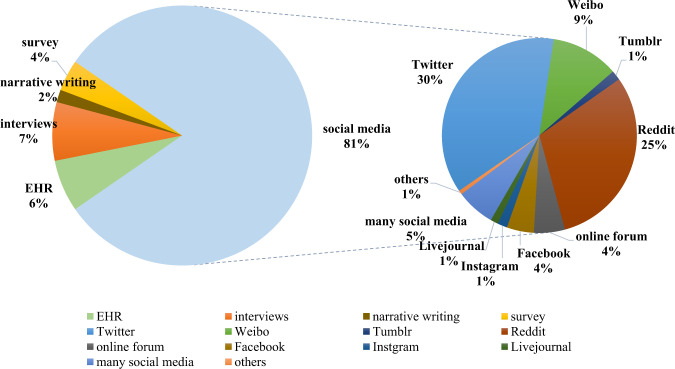
“Social media datasets usually have large sample sizes and low collection costs, and 81% of the studies using NLP techniques to detect mental illness utilized them [26].”
BackgroundDetection of Mental illness from social media Text
Chandu, J., Dhanush, S., Rohith, D., Kumar, T. S. G., Soman, K., & Kumar, S. S. (2024) · International Conference on Computing, Communication and Networking Technologies (ICCCNT) · doi:10.1109/icccnt61001.2024.10725304 · Cited by 6
“Natural language processing for the identification of mental illness: a narrative review Tianlin Zhang [3] reviewed 399 previous research works utilizing a variety of datasets, including social media, clinical notes, surveys, interviews, and methodology Review of a narrative that analyzes trends…”
MethodYao, L., & Jiao, H. (2023) · Chinese/English Journal of Educational Measurement and Evaluation · doi:10.59863/dqiz8440 · Cited by 10
Dixit, K. K., Pundir, S., Shrivastava, A., Kumar, C. P., Srivastava, A. P., & Singh, P. (2023) · IEEE Uttar Pradesh Section International Conference on Electrical, Electronics and Computer Engineering (UPCON) · doi:10.1109/upcon59197.2023.10434291 · Cited by 11
“The availability of large-scale textual information as well as recent developments in natural language processing (NLP) offer a potential path towards more accurate and effective mental health evaluation [2].”
BackgroundKhadivi, N., & Sato, S. (2023) · Journal of Data Science Informetrics and Citation Studies · doi:10.5530/jcitation.2.2.11 · Cited by 8
Wilbourne, P. L., Mirch-Kretschmann, S., Walker, D. D., Varghese, M., & Arnetoli, R. (2025) · JMIR Formative Research · doi:10.2196/64553 · Cited by 6
A counselor-inspired agent framework for AI counselors to enhance client engagement
Tang, Y., Kang, Y., Wang, Y., Wang, T. Y., Zhong, C., & Gong, J. (2025) · Technology in Society · doi:10.1016/j.techsoc.2025.103045 · Cited by 15
So, M., Sekizawa, Y., Hashimoto, S., Kashimura, M., Yamakage, H., & Watanabe, N. (2026) · Journal of Medical Internet Research · doi:10.2196/76902 · Cited by 9
An Overview of the Application of Sentiment Analysis in Mental Well-being
Zhang, J. (2023) · Applied and Computational Engineering · doi:10.54254/2755-2721/8/20230186 · Cited by 5
Adaptive Mental Health And Mood Uplifting Chatbot
Siddiqui, T., Sharma, A., & Arora, M. (2023) · International Conference on Computing, Communication and Networking Technologies (ICCCNT) · doi:10.1109/icccnt56998.2023.10308236 · Cited by 6
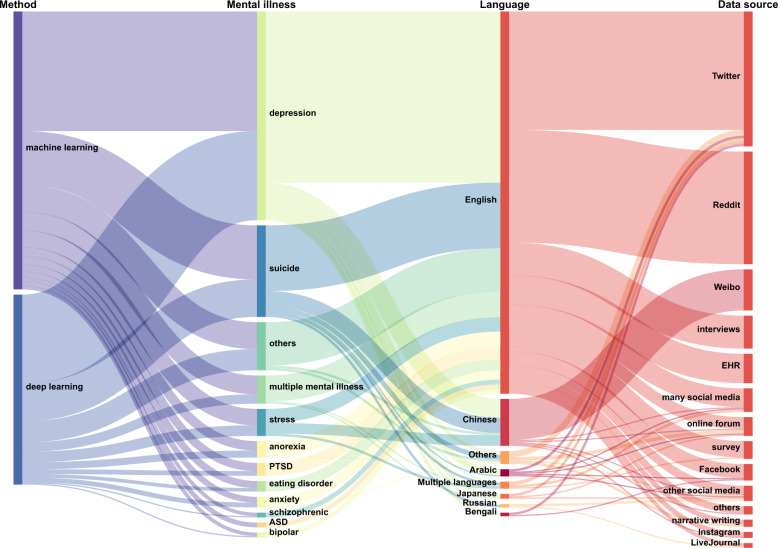
“[10] The study maps each method of NLP applied in mental health and highlights the distribution of different data sources through a Sankey diagram.”
MethodCappello, A., Murgia, Y., Giacobbe, D. R., Mora, S., Gazzarata, R., Rosso, N., Giacomini, M. L., & Bassetti, M. (2024) · Frontiers in Antibiotics · doi:10.3389/frabi.2024.1380380 · Cited by 5
Prediction of Mental Health Issues and Challenges Using Hybrid Machine and Deep Learning Techniques
Balraj, C. S. R., & Nagaraj, P. (2024) · Lecture notes in networks and systems · doi:10.1007/978-981-97-2069-9_2 · Cited by 5
Beech, A., Fan, H., Shu, J., Oyarzún, J. P., Nadel, P., Karaman, O. T., Vranos, S., Phelps, E. A., & Kredlow, M. A. (2025) · Journal of Affective Disorders · doi:10.1016/j.jad.2025.01.139 · Cited by 9
Motta, F., Morandini, P., Maffia, F., Vecellio, M. L., Tonutti, A., Santis, M. D., Costanzo, A., Puggioni, F., Savevski, V., & Selmi, C. F. (2023) · Frontiers in Medicine · doi:10.3389/fmed.2023.1179240 · Cited by 7
“Artificial intelligence (AI), particularly natural language processing (NLP) and machine learning, allows to perform complex analysis on large datasets and to extract punctual information from unstructured data (12, 13).”
BackgroundMental Health Monitoring in the Digital Age: A Comprehensive Analysis
Kansal, M., Singh, P., Srivastava, P. K., Singhal, R., Deep, N., & Singh, A. (2024) · Advances in medical technologies and clinical practice book series · doi:10.4018/979-8-3693-2359-5.ch011 · Cited by 5
The textual information intellectual analysis method for psychiatric diagnosis
Петраевский, В. А., & Kravets, A. G. (2024) · VESTNIK OF ASTRAKHAN STATE TECHNICAL UNIVERSITY SERIES MANAGEMENT COMPUTER SCIENCE AND INFORMATICS · doi:10.24143/2072-9502-2024-2-95-104 · Cited by 5
A Sentiment Analysis of News Articles Published Before and During the COVID-19 Pandemic
Montesinos-Yufa, H. M., & Musgrove, E. (2024) · International Journal on Data Science and Technology · doi:10.11648/j.ijdst.20241002.13 · Cited by 6
AI- and XR-Powered Digital Therapeutics (DTx) Innovations
Lee, A. G. (2024) · IntechOpen eBooks · doi:10.5772/intechopen.1006619 · Cited by 7
NLP as a Lens for Causal Analysis and Perception Mining to Infer Mental Health on Social MediaPreprint
Garg, M., Saxena, C., Naseem, U., Sohn, S., & Dorr, B. J. (2023) · doi:10.36227/techrxiv.21972974.v1 · Cited by 6
Evaluating Enhanced LLMs for Precise Mental Health Diagnosis from Clinical NotesPreprint
Boggavarapu, L., Srivastava, V., Varanasi, A. M., Lu, Y., & Bhaumik, R. (2024) · medRxiv · doi:10.1101/2024.12.16.24317648 · Cited by 7
Deep Learning Approaches for Predicting Mental States through Tweet Analysis
Rawat, N., Chauhan, S., & Awasthi, L. K. (2024) · International Conference on Innovative Trends in Information Technology (ICITIIT) · doi:10.1109/icitiit61487.2024.10580551 · Cited by 4
“While the significance of timely and effective intervention is evident, it is equally imperative to rev-olutionize how we identify and support individuals grappling with depression [14].”
BackgroundShukla, S. S. P., & Singh, M. P. (2025) · Applied Intelligence · doi:10.1007/s10489-025-06256-0 · Cited by 11
Patel, D., & Johnson, A. P. (2025) · IEEE Access · doi:10.1109/access.2025.3624864 · Cited by 8
“%) with less attention to personality disorders, particularly NPD [20].”
Seuffert, S., Mülfarth, R. R., Teutenberg, L., Thomas‐Odenthal, F., Usemann, P. L., Alexander, N., Jamalabadi, H., Nenadić, I., Straube, B., Hahn, T., et al. (2025) · Molecular Psychiatry · doi:10.1038/s41380-025-03347-9 · Cited by 8
“Similarly, in MDD and BD, linguistic features like lexical diversity, affective language use, and negative emotional tone have been linked to symptom severity [37, 38].”
Explainable AI for Mental Disorder Detection on Social Media: A Survey and Outlook
Ibrahimov, Y., Anwar, T., & Yuan, T. (2026) · IEEE Transactions on Artificial Intelligence · doi:10.1109/tai.2026.3688443 · Cited by 38
“Consequently, DL approaches have become dominant, often outperforming classical techniques without extensive feature design [11].”
InfluentialChatGPT for Mental Health Applications: A study on biases
Soun, R. S., & Nair, A. (2023) · International Conference on AI-ML Systems (AIMLSystems) · doi:10.1145/3639856.3639894 · Cited by 14
“Such approaches have proven useful for the social NLP research community to analyze and understand associations between users’ social media posts and mental health status [39].”
BackgroundDigital Psychiatry: Utilizing AI for Mental Health Assessment on Social Platforms
Shit, A., Roy, S., Maji, P., Majhi, A. A., & Sadhukhan, B. (2024) · International Conference on Intelligent Algorithms for Computational Intelligence Systems (IACIS) · doi:10.1109/iacis61494.2024.10721680 · Cited by 4
“Zhang et al. [18] provided a comprehensive analysis of mental illness detection using natural language processing (NLP) over the past decade, identifying ongoing trends, challenges, and future directions.”
BackgroundNurfadhilah, E., Yoganingrum, A., Latief, A. D., Widyasuri, A., Jarin, A., Afra, D. I. N., Gunarso, G., Komariah, K. S., Uliniansyah, M. T., Untariyati, N. A., et al. (2024) · Advances in computational intelligence and robotics book series · doi:10.4018/979-8-3693-7011-7.ch011 · Cited by 5
Wesselink, S. F. O., Beishuizen, A., Rinket, M. A., Krol, T., Doornink, H., & Veldkamp, B. P. (2025) · Intensive and Critical Care Nursing · doi:10.1016/j.iccn.2025.103941 · Cited by 4
A polycrisis threat model for AI
Bales, A. (2025) · AI & Society · doi:10.1007/s00146-025-02371-1 · Cited by 9
“For example, AI can infer facts about a person's mental health based on their social media posts (Guntuku et al. 2017; Ahmed et al. 2022; Zhang et al. 2022).”
Psychological Impact of Internet Blackouts: A Case Study With Machine Learning-Based Stress Analysis
Rafi, M. A. I., Islam, T., Hossain, G., & Hossain, M. M. (2025) · IEEE Access · doi:10.1109/access.2025.3568434 · Cited by 6
“Recognizing early signs of mental health disorders allows for timely interventions, which can save lives and improve overall well-being [56].”
The Impact of Artificial Intelligence on Neuroscience and Mental Health: A Perspective Review
Bonesteel, K., Bires, J. L., Pillay, S. S., & Naidoo, U. (2025) · AI in neuroscience. · doi:10.1089/ains.2024.0005 · Cited by 6
“24,25”
Chu, A. M. Y., Lam, B. S. Y., Tsang, J. T. Y., Tiwari, A., Yuk, H., Chan, J. N. L., & So, M. K. P. (2023) · npj Mental Health Research · doi:10.1038/s44184-023-00036-9 · Cited by 5
Isenberg, B. M., Becker, K. D., Wu, E. G., Park, H. S., Chu, W., Keenan‐Miller, D., & Chorpita, B. F. (2023) · Administration and Policy in Mental Health and Mental Health Services Research · doi:10.1007/s10488-023-01316-4 · Cited by 5
“…as an approach for transforming the data in chart notes into meaningful characterizations of treatment, and/ or using step codes (human or machine-derived) to predict practice codes through machine learning approaches (Calvo et al., 2017; He et al., 2017; Yehia et al., 2019 ; Zhang et al., 2022 ).”
BERT-Driven Natural Language Processing in Electronic Health Records for Improved Clinical Insights
Yadav, K., Sharma, M. K., Michaelson, J., Laxminarayanamma, K., Yadav, V. K., & Krishna, O. (2023) · International Conference on Artificial Intelligence for Innovations in Healthcare Industries (ICAIIHI) · doi:10.1109/icaiihi57871.2023.10489730 · Cited by 5
Comparison and Transformer Model and its Variant Algorithms in Natural Language Processing
Ma, Y. (2024) · International Conference on Networks, Multimedia and Information Technology (NMITCON) · doi:10.1109/nmitcon62075.2024.10698967 · Cited by 4
“He also pointed out the research gaps, technology transfer needs, and future research directions in this field [9].”
BackgroundAI-Enhanced Neurophysiological Assessment
Kumar, D., Kumar, P., Pal, S., & Singh, S. (2025) · Advances in psychology, mental health, and behavioral studies (APMHBS) book series · doi:10.4018/979-8-3693-9341-3.ch002 · Cited by 4
Chatbots as Tools for Psychoeducation and Self-Help in Mental Health
Sowbarnika, A., Patra, A., Kaur, L., Suresh, S., Srivastava, S., & Chawla, D. (2025) · Advances in medical technologies and clinical practice book series · doi:10.4018/979-8-3693-3112-5.ch003 · Cited by 8
McBride, L. E., Badal, V. D., Harvey, P. D., Pinkham, A. E., Aich, A., Parde, N., & Depp, C. A. (2025) · Journal of Psychiatric Research · doi:10.1016/j.jpsychires.2025.05.004 · Cited by 6
Privacy Aware Question-Answering System for Online Mental Health Risk Assessment
Chhikara, P., Pasupulety, U., Marshall, J., Chaurasia, D., & Kumari, S. (2023) · Workshop on Biomedical Language Processing (BioNLP) · doi:10.18653/v1/2023.bionlp-1.18 · Cited by 9
Language as a fingerprint: Self-supervised learning of user encodings using transformers
Rocca, R., & Yarkoni, T. (2022) · Findings of the Association for Computational Linguistics: EMNLP (Findings of EMNLP) · doi:10.18653/v1/2022.findings-emnlp.123 · Cited by 9
“and psychological assessment (see Chekroud et al. 2021; Zhang et al. 2022) - or for author-based conditioning in the context of contextualized text classification, language modeling and language generation (Flek, 2020; Hovy, 2018; Kanwal et al.”
Novel approach of Predicting Human Sentiment using Deep Learning
Shadadi, E., Kouser, S., Alamer, L., & Whig, P. (2022) · Journal of Computer Science and Engineering (JCSE) · doi:10.36596/jcse.v3i2.533 · Cited by 5
Artificial Intelligence in Mental Healthcare: Opportunities, Risks, and Regulations
Jafar, A., Shabnam, S., & Khan, A. (2025) · Advances in computational intelligence and robotics book series · doi:10.4018/979-8-3373-5072-1.ch014 · Cited by 3
Mok, C. H. Y., Cheng, C. P. W., & Chu, M. H. W. (2025) · Frontiers in Psychiatry · doi:10.3389/fpsyt.2025.1692177 · Cited by 4
“NLP was used to evaluate the mental states and functioning of patients by analyzing their patterns in daily life and interpersonal interactions (24 – 26).”
Using large language models as a scalable mental status evaluation technique
Wagner, M., Stephenson, C., Jagayat, J., Kumar, A., Shirazi, A., Alavi, N., & Omrani, M. (2025) · NPP—Digital Psychiatry and Neuroscience · doi:10.1038/s44277-025-00042-z · Cited by 7
“To address the scalability and objectivity challenges outlined above, recent advances in deep learning, particularly in NLP, offer promising tools to support mental health evaluation [25 – 29].”
How to set up a psychedelic study: Unique considerations for research involving human participants
Glennon, M. J., Bird, C., Yadav, P., Kleine, P., Suseelan, S., Boman-Markaki, C., Kotoula, V., Butler, M., Leech, R., Roseman, L., et al. (2026) · Neuroscience & Biobehavioral Reviews · doi:10.1016/j.neubiorev.2026.106657 · Cited by 5
Sindhu, V., & Gomathy, B. (2023) · International Conference on Applied Artificial Intelligence and Computing (ICAAIC) · doi:10.1109/icaaic56838.2023.10140883 · Cited by 3
Mental State-Based Dialogue System for Mental Health Care by Using GPT-3
Kaysar, M. N., & Shiramatsu, S. (2023) · Lecture notes in networks and systems · doi:10.1007/978-981-99-3043-2_74 · Cited by 4
Automatic Diagnosis of Medical Conditions Using Deep Learning With Symptom2Vec
Kim, M., & Joe, I. (2023) · IEEE Access · doi:10.1109/access.2023.3324376 · Cited by 5
“Additionally, there has been a rapid increase in NLP research, particularly in the field of mental health [35].”
BackgroundDetecting Multiple Mental Health Disorders with Large Language Models
Nanda, M., Inkpen, D. Z., & Dargél, A. (2024) · International Conference on Information Visualisation (IV) · doi:10.1109/iv64223.2024.00051 · Cited by 5
“Trend for use of NLP-related techniques for illness detection using machine and deep learning [23] is bolstered by the fact that users are allowed to maintain the right amount of anonymity over social media giving them the required confidence to express themselves freely [15].”
BackgroundSon, N. K., Sangaiah, A. K., Paramarthika, L. K. M., Rajendran, V., Bian, G., & Alenazi, M. J. F. (2025) · IEEE Transactions on Computational Social Systems · doi:10.1109/tcss.2025.3572596 · Cited by 4
“In diagnosis, predictive models and sentiment analysis are designed to detect early warning signs of mental disorders [26], [27].”
Samiun, M., Rony, M. K. K., Yeasmin, S., Manik, M. M. T. G., Debnath, A., Aziz, M. B., Tasnim, A. F., & Nilima, S. I. (2025) · Discover Public Health · doi:10.1186/s12982-025-00814-0 · Cited by 19
“Furthermore, clear guidelines and institutional policies should be established to define the roles and respon-sibilities of both human and machine in clinical decision-making [75].”
Elements of artificial intelligence in solving problems of text analysis
Katermina, T. S., Тагиров, К. М., & TAGIROV, T. (2022) · Computational nanotechnology · doi:10.33693/2313-223x-2022-9-2-35-44 · Cited by 3
Conway, K. P., McGrain, P. N., & Theodory, M. (2023) · International Journal of Environmental Research and Public Health · doi:10.3390/ijerph20166621 · Cited by 3
“Researchers are increasingly applying NLP techniques to social media platforms to detect depression and suicide, revealing opportunities and challenges [23].”
Background
Metadata
- Authors
- Zhang, T., Schoene, A. M., Ji, S., & Ananiadou, S.
- Affiliations
- University of Manchester (GB)
- Aalto University (FI)
- Corresponding author
- Ananiadou, Sophia
- Venue
- npj Digital Medicine
- Published
- 2022-04-08
- Volume
- 5
- Issue
- 1
- Pages
- 46-46
- ISSN
- 2398-6352 (ISSN-L)
- PMC
- PMC8993841
- OpenAlex
- W4223610593
- Semantic Scholar
- 099f8bf42b95a4c239bc338b05821b592c60f44b
- Cited by
- 476
- References
- 204
- Citations by year
- 2026: 101 · 2025: 144 · 2024: 124 · 2023: 85 · 2022: 22
- FWCI
- 14.07
- Type
- journal article
- Language
- en
- Open access
- gold
- doi.org
- Licence
- cc-by
- creativecommons.org/licenses/by/4.0 (tdm)
- creativecommons.org/licenses/by/4.0 (vor)
- Locations
- npj Digital Medicine (publishedVersion, cc-by)
- PubMed Central (publishedVersion, cc-by)
- PubMed (publishedVersion)
- Aaltodoc (Aalto University) (submittedVersion, cc-by)
- DOAJ (DOAJ: Directory of Open Access Journals) (submittedVersion)
- Research Explorer (The University of Manchester) (submittedVersion)
- Funders
- Alan Turing Institute
- Horizon 2020 Framework Programme (874703)
- Topics
- Social Sciences › Psychology › Social Psychology › Mental Health via Writing
- Physical Sciences › Computer Science › Artificial Intelligence › Sentiment Analysis and Opinion Mining
- Physical Sciences › Computer Science › Artificial Intelligence › Emotion and Mood Recognition
- Keywords
- mental disorder detection, natural language processing, early diagnosis, social media text analysis, clinical notes, deep learning, interpretable models, mental health services, text classification
About these checks
Registry, retraction, Cites and statistics results are computed, not judged, with one exception: a printed reference that no index lists is read once by a model before it counts as a citation error. Claims are extracted by a model and kept only when their quote appears verbatim in the text; each cited source is then checked, with a model’s help, for whether it says what the claim relies on. Those verdicts can be wrong — read the claim’s quote and the cited source before relying on one.
Statistics and arithmetic are recomputed, not judged.
Confidence bands are shown only for fields calibrated on our annotated test set. None is calibrated yet, so no band is shown.
What counts as a claim ›How we measure confidence ›How we check this ›
Are you an author, or do you see a problem with this page? Request a review
Data sources
Bibliographic data: Semantic Scholar, OpenAlex, Crossref.
Contains information from the Semantic Scholar Academic Graph Datasets, made available under the ODC Attribution License (ODC-BY 1.0).
Semantic Scholar’s data is described in: Kinney, R., et al. (2023). The Semantic Scholar Open Data Platform. arXiv:2301.10140.
