

Natural language processing applied to mental illness detection: a narrative review
Open accessThe DOI matches its Crossref record; 213 of the 213 references it cites were found in a registry or an index.
Abstract
Mental illness is highly prevalent nowadays, constituting a major cause of distress in people’s life with impact on society’s health and well-being. Mental illness is a complex multi-factorial disease associated with individual risk factors and a variety of socioeconomic, clinical associations. In order to capture these complex associations expressed in a wide variety of textual data, including social media posts, interviews, and clinical notes, natural language processing (NLP) methods demonstrate promising improvements to empower proactive mental healthcare and assist early diagnosis. We provide a narrative review of mental illness detection using NLP in the past decade, to understand methods, trends, challenges and future directions. A total of 399 studies from 10,467 records were included. The review reveals that there is an upward trend in mental illness detection NLP research. Deep learning methods receive more attention and perform better than traditional machine learning methods. We also provide some recommendations for future studies, including the development of novel detection methods, deep learning paradigms and interpretable models.
Overview
The claims and statistics of this paper haven’t been checked yet.
Free: it reads the open-access text and checks the first 5 claims that cite a source we can check. Create a free account to check every claim.
Integrity signals
Registry
Cites
Statistics
Figures
Verification
Claims the paper makes
The claims and statistics of this paper haven’t been checked yet.
Free: it reads the open-access text and checks the first 5 claims that cite a source we can check. Create a free account to check every claim.
Claims other papers make about this one
Each is checked against this paper’s own text: does it say what the citing paper says it does?
The cited source says what the claim attributes to it.
In the citing paper
“In order to avoid missing studies, we crosschecked our study selection with existing literature reviews 8,10,13,17,19 and no additional studies were added.”
From Linguistic markers for identifying post-traumatic stress disorder and associated symptoms: a systematic literature review (2025) · cites this paper as [13]
Self-check
Percentages, sums and reported differences re-computed from the paper’s own numbers.
The self-check needs the paper’s full text.
Citations
Cites
Vaswani, A., Shazeer, N., Parmar, N., Uszkoreit, J., Jones, L., Gomez, A. N., Kaiser, L., & Polosukhin, I. (2017) · arXiv · doi:10.48550/arxiv.1706.03762 · Cited by 120,404 · cited 1×
“Recently, transformer architectures 147 were able to solve long-range dependencies using attention and recurrence.”
BackgroundHochreiter, S., & Schmidhuber, J. (1997) · Neural Computation · doi:10.1162/neco.1997.9.8.1735 · Cited by 102,318 · cited 13×
“RNN-based methods LSTM or GRU (some with attention mechanism) 32,133,136,232 – 234 Standard RNN structure: Long Short-Term Memory networks (LSTM) or Gate Recurrent Unit(GRU), and some studies add attention mechanism.”
MethodInfluentialLeCun, Y., Bengio, Y., & Hinton, G. (2015) · Nature · doi:10.1038/nature14539 · Cited by 84,126
Glove: Global Vectors for Word Representation
Pennington, J., Socher, R., & Manning, C. (2014) · Proceedings of the 2014 Conference on Empirical Methods in Natural Language Processing (EMNLP) · doi:10.3115/v1/d14-1162 · Cited by 34,071 · cited 1×
“There are many different embedding techniques, such as ELMo, GloVe word embedding 118 , word2vec 119 and contextual language encoder representations (e.g., bidirectional encoder representations from transformers (BERT) 120 and ALBERT[121).”
Method(2003) · Journal of Machine Learning Research · doi:10.5555/944919.944937 · Cited by 32,337
PRISMA-P Group, Moher, D., Shamseer, L., Clarke, M., Ghersi, D., Liberati, A., Petticrew, M., Shekelle, P., & Stewart, L. A. (2015) · Systematic Reviews · doi:10.1186/2046-4053-4-1 · Cited by 26,223
Learning Phrase Representations using RNN Encoder–Decoder for Statistical Machine Translation
Cho, K., van Merrienboer, B., Gulcehre, C., Bahdanau, D., Bougares, F., Schwenk, H., & Bengio, Y. (2014) · Proceedings of the 2014 Conference on Empirical Methods in Natural Language Processing (EMNLP) · doi:10.3115/v1/d14-1179 · Cited by 25,545 · cited 8×
“RNN-based methods LSTM or GRU (some with attention mechanism) 32,133,136,232 – 234 Standard RNN structure: Long Short-Term Memory networks (LSTM) or Gate Recurrent Unit(GRU), and some studies add attention mechanism.”
MethodInfluential"Why Should I Trust You?": Explaining the Predictions of Any Classifier
Ribeiro, M. T., Singh, S., & Guestrin, C. (2016) · Proceedings of the 22nd ACM SIGKDD International Conference on Knowledge Discovery and Data Mining · doi:10.1145/2939672.2939778 · Cited by 17,555
VADER: a parsimonious rule-based model for sentiment analysis of social media text
Hutto, C., & Gilbert, E. (2014) · Proceedings of the International AAAI Conference on Web and Social Media · doi:10.1609/icwsm.v8i1.14550 · Cited by 6,087
The Psychological Meaning of Words: LIWC and Computerized Text Analysis Methods
Tausczik, Y. R., & Pennebaker, J. W. (2010) · Journal of Language and Social Psychology · doi:10.1177/0261927x09351676 · Cited by 5,774
Santomauro, D. F., Mantilla Herrera, A. M., Shadid, J., Zheng, P., Ashbaugh, C., Pigott, D. M., Abbafati, C., Adolph, C., Amlag, J. O., Aravkin, A. Y., et al. (2021) · The Lancet · doi:10.1016/s0140-6736(21)02143-7 · Cited by 5,444 · cited 6×
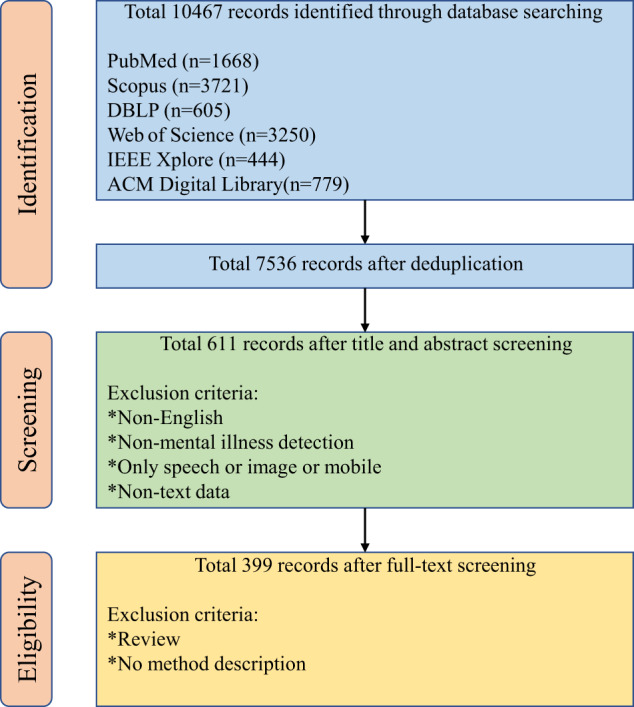
“Search query (1) AND (2) AND (3) AND (4)”
BackgroundMethodInfluentialALBERT: A Lite BERT for Self-supervised Learning of Language Representations
Lan, Z., Chen, M., Goodman, S., Gimpel, K., Sharma, P., & Soricut, R. (2019) · arXiv · doi:10.48550/arxiv.1909.11942 · Cited by 4,308
Deep Learning: Methods and Applications
Deng, L., & Yu, D. (2014) · Foundations and Trends® in Signal Processing · doi:10.1561/2000000039 · Cited by 3,480 · cited 1×
“Advances in deep learning methods have brought breakthroughs in many fi elds including computer vision 113 , NLP 114 , and signal processing 115 .”
BackgroundDeep learning for computer vision: A brief review
Voulodimos, A., Doulamis, N., Doulamis, A., & Protopapadakis, E. (2018) · Computational Intelligence and Neuroscience · doi:10.1155/2018/7068349 · Cited by 3,403 · cited 1×
“Advances in deep learning methods have brought breakthroughs in many fi elds including computer vision 113 , NLP 114 , and signal processing 115 .”
BackgroundRecent Trends in Deep Learning Based Natural Language Processing [Review Article]
Young, T., Hazarika, D., Poria, S., & Cambria, E. (2018) · IEEE Computational Intelligence Magazine · doi:10.1109/mci.2018.2840738 · Cited by 2,921
A survey on semi-supervised learning
van Engelen, J. E., & Hoos, H. H. (2020) · Machine Learning · doi:10.1007/s10994-019-05855-6 · Cited by 2,666 · cited 1×
“Semi-supervised learning 176 incorporates few labeled data and large amounts of unlabeled data into the training process, which can be used to facilitate annotation 177 or improve classi fi cation performance when labeled data is scarce.”
BackgroundNatural language processing: an introduction
Nadkarni, P. M., Ohno-Machado, L., & Chapman, W. W. (2011) · Journal of the American Medical Informatics Association · doi:10.1136/amiajnl-2011-000464 · Cited by 1,975 · cited 1×
“…a branch of arti fi cial intelligence (AI) technologies, has played an essential role in supporting the analysis and management of large scale textual data and facilitating various tasks such as information extraction, sentiment analysis 3 , emotion detection, and mental health surveillance 4 – 6 .”
Document clustering based on non-negative matrix factorization
Xu, W., Liu, X., & Gong, Y. (2003) · Proceedings of the 26th annual international ACM SIGIR conference on Research and development in informaion retrieval · doi:10.1145/860435.860485 · Cited by 1,860
Can we open the black box of AI?
Castelvecchi, D. (2016) · Nature · doi:10.1038/538020a · Cited by 1,773 · cited 1×
“Nevertheless, they are still treated as black boxes 201 and fail to explain the predictions.”
BackgroundGlobal Burden of Disease and the Impact of Mental and Addictive Disorders
Rehm, J., & Shield, K. D. (2019) · Current Psychiatry Reports · doi:10.1007/s11920-019-0997-0 · Cited by 1,388 · cited 2×
“According to the latest statistics, millions of people worldwide suffer from one or more mental disorders 1 .”
BackgroundA GENERAL PSYCHOEVOLUTIONARY THEORY OF EMOTION
PLUTCHIK, R. (1980) · Theories of Emotion · doi:10.1016/b978-0-12-558701-3.50007-7 · Cited by 1,370
Techniques for interpretable machine learning
Du, M., Liu, N., & Hu, X. (2019) · Communications of the ACM · doi:10.1145/3359786 · Cited by 1,268 · cited 1×
“The evaluation of a successful model does not only rely on performance, but also on its interpretability 197 , which is signi fi cant for guiding clinicians to understand not only what has been extracted from text but the reasoning underlying some prediction 198 – 200 .”
BackgroundTechniques for Interpretable Machine Learning
Du, M., Liu, N., & Hu, X. (2018) · arXiv · doi:10.48550/arxiv.1808.00033 · Cited by 1,261
Dumais, S. T. (2004) · Annual Review of Information Science and Technology · doi:10.1002/aris.1440380105 · Cited by 1,107
Benefits and drawbacks of electronic health record systems
Menachemi, N., & Collum (2011) · Risk Management and Healthcare Policy · doi:10.2147/rmhp.s12985 · Cited by 909
Contrastive Representation Learning: A Framework and Review
Le-Khac, P. H., Healy, G., & Smeaton, A. F. (2020) · IEEE Access · doi:10.1109/access.2020.3031549 · Cited by 862 · cited 1×
“…learning techniques, various learning techniques have emerged and accelerated NLP research, such as adversarial training 181 , contrastive learning 182 , joint learning 183 , reinforcement learning 184 and transfer learning 185 , which can also be utilized for the mental illness detection task.”
BackgroundA new ANEW: Evaluation of a word list for sentiment analysis in microblogs
Nielsen, F. Å. (2011) · arXiv (Cornell University) · doi:10.48550/arxiv.1103.2903 · Cited by 712
O’Mara-Eves, A., Thomas, J., McNaught, J., Miwa, M., & Ananiadou, S. (2015) · Systematic Reviews · doi:10.1186/2046-4053-4-5 · Cited by 681
Self-citationA Survey of Data Augmentation Approaches for NLP
Feng, S., Gangal, V., Wei, J., Chandar, S., Vosoughi, S., Mitamura, T., & Hovy, E. (2021) · Findings of the Association for Computational Linguistics: ACL-IJCNLP 2021 · doi:10.18653/v1/2021.findings-acl.84 · Cited by 670
Transfer Learning in Natural Language Processing
Ruder, S., Peters, M. E., Swayamdipta, S., & Wolf, T. (2019) · Proceedings of the 2019 Conference of the North · doi:10.18653/v1/n19-5004 · Cited by 587 · cited 1×
“…learning techniques, various learning techniques have emerged and accelerated NLP research, such as adversarial training 181 , contrastive learning 182 , joint learning 183 , reinforcement learning 184 and transfer learning 185 , which can also be utilized for the mental illness detection task.”
BackgroundMethods in predictive techniques for mental health status on social media: a critical review
Chancellor, S., & De Choudhury, M. (2020) · npj Digital Medicine · doi:10.1038/s41746-020-0233-7 · Cited by 557
AVEC 2014: 3D Dimensional Affect and Depression Recognition Challenge
Valstar, M., Schuller, B., Smith, K., Almaev, T., Eyben, F., Krajewski, J., Cowie, R., & Pantic, M. (2014) · Proceedings of the 4th International Workshop on Audio/Visual Emotion Challenge · doi:10.1145/2661806.2661807 · Cited by 472
Depression detection from social network data using machine learning techniques
Islam, M. R., Kabir, M. A., Ahmed, A., Kamal, A. R. M., Wang, H., & Ulhaq, A. (2018) · Health Information Science and Systems · doi:10.1007/s13755-018-0046-0 · Cited by 465
SenticNet 5: Discovering Conceptual Primitives for Sentiment Analysis by Means of Context Embeddings
Cambria, E., Poria, S., Hazarika, D., & Kwok, K. (2018) · Proceedings of the AAAI Conference on Artificial Intelligence · doi:10.1609/aaai.v32i1.11559 · Cited by 411
Knowledge Graph and Text Jointly Embedding
Wang, Z., Zhang, J., Feng, J., & Chen, Z. (2014) · Proceedings of the 2014 Conference on Empirical Methods in Natural Language Processing (EMNLP) · doi:10.3115/v1/d14-1167 · Cited by 406 · cited 1×
“Other emerging techniques like attention mechanism 187 , knowledge graph 188 , and commonsense reasoning 189 , can also be introduced for textual feature extraction.”
BackgroundDeep learning in mental health outcome research: a scoping review
Su, C., Xu, Z., Pathak, J., & Wang, F. (2020) · Translational Psychiatry · doi:10.1038/s41398-020-0780-3 · Cited by 368 · cited 1×
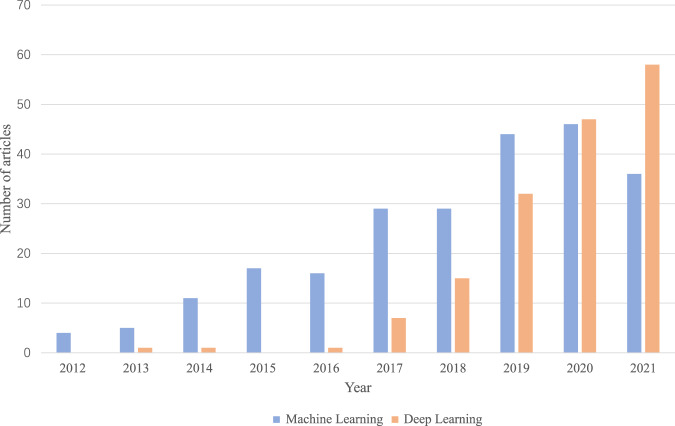
“For the task of mental illness detection from text, deep learning techniques have recently attracted more attention and shown better performance compared to machine learning ones 116 .”
MethodNatural language processing in mental health applications using non-clinical texts
CALVO, R. A., MILNE, D. N., HUSSAIN, M. S., & CHRISTENSEN, H. (2017) · Natural Language Engineering · doi:10.1017/s1351324916000383 · Cited by 362 · cited 1×
“Existing reviews introduce mainly the computational methods for mental health illness detection, they mostly focus on speci fi c mental illnesses (suicide 7 – 9 , depression 10 – 12 ), or speci fi c data sources (social media 13 – 15 , non-clinical texts 16 ).”
BackgroundAVEC 2017: Real-life Depression, and Affect Recognition Workshop and Challenge
Ringeval, F., Schuller, B., Valstar, M., Gratch, J., Cowie, R., Scherer, S., Mozgai, S., Cummins, N., Schmitt, M., & Pantic, M. (2017) · Proceedings of the 7th Annual Workshop on Audio/Visual Emotion Challenge · doi:10.1145/3133944.3133953 · Cited by 332
Depression and Self-Harm Risk Assessment in Online Forums
Yates, A., Cohan, A., & Goharian, N. (2017) · Proceedings of the 2017 Conference on Empirical Methods in Natural Language Processing · doi:10.18653/v1/d17-1322 · Cited by 323 · cited 1×
“Yates et al. established a depression dataset named “ Reddit Self-reported Depression Diagnosis" (RSDD) 24 , which contains about 9k depressed users and 100k control users.”
BackgroundDepression detection using emotion artificial intelligence
Deshpande, M., & Rao, V. (2017) · 2017 International Conference on Intelligent Sustainable Systems (ICISS) · doi:10.1109/iss1.2017.8389299 · Cited by 259
Suicidal Ideation Detection: A Review of Machine Learning Methods and Applications
Ji, S., Pan, S., Li, X., Cambria, E., Long, G., & Huang, Z. (2021) · IEEE Transactions on Computational Social Systems · doi:10.1109/tcss.2020.3021467 · Cited by 257 · cited 2×
“Existing reviews introduce mainly the computational methods for mental health illness detection, they mostly focus on speci fi c mental illnesses (suicide 7 – 9 , depression 10 – 12 ), or speci fi c data sources (social media 13 – 15 , non-clinical texts 16 ).”
BackgroundSelf-citationDetection of Suicide Ideation in Social Media Forums Using Deep Learning
Tadesse, M. M., Lin, H., Xu, B., & Yang, L. (2019) · Algorithms · doi:10.3390/a13010007 · Cited by 249
An Introductory Survey on Attention Mechanisms in NLP Problems
Hu, D. (2020) · Advances in Intelligent Systems and Computing · doi:10.1007/978-3-030-29513-4_31 · Cited by 247
Cheng, Q., Li, T. M., Kwok, C.-L., Zhu, T., & Yip, P. S. (2017) · Journal of Medical Internet Research · doi:10.2196/jmir.7276 · Cited by 235 · cited 1×
“Similarly, the area under the ROC curve (AUC-ROC) 60,171,172 is also used as a classi fi cation metric which can measure the true positive rate and false positive rate.”
MethodA Test Collection for Research on Depression and Language Use
Losada, D. E., & Crestani, F. (2016) · Lecture Notes in Computer Science · doi:10.1007/978-3-319-44564-9_3 · Cited by 231 · cited 1×
“Meanwhile, taking into account the timeliness of mental illness detection, where early detection is signi fi cant for early prevention, an error metric called early risk detection error was proposed 175 to measure the delay in decision.”
BackgroundTrotzek, M., Koitka, S., & Friedrich, C. M. (2020) · IEEE Transactions on Knowledge and Data Engineering · doi:10.1109/tkde.2018.2885515 · Cited by 226
Jackson, R. G., Patel, R., Jayatilleke, N., Kolliakou, A., Ball, M., Gorrell, G., Roberts, A., Dobson, R. J., & Stewart, R. (2017) · BMJ Open · doi:10.1136/bmjopen-2016-012012 · Cited by 221 · cited 1×
“…a branch of arti fi cial intelligence (AI) technologies, has played an essential role in supporting the analysis and management of large scale textual data and facilitating various tasks such as information extraction, sentiment analysis 3 , emotion detection, and mental health surveillance 4 – 6 .”
BackgroundEthical research protocols for social media health research
Benton, A., Coppersmith, G., & Dredze, M. (2017) · Proceedings of the First ACL Workshop on Ethics in Natural Language Processing · doi:10.18653/v1/w17-1612 · Cited by 219 · cited 1×
“During the research, the researchers should follow strict protocols similar to the guidelines 202 introduced by Bentan et al., to ensure the data is properly applied in healthcare research while protecting privacy to avoid further psychological distress.”
MethodA Depression Detection Model Based on Sentiment Analysis in Micro-blog Social Network
Wang, X., Zhang, C., Ji, Y., Sun, L., Wu, L., & Bao, Z. (2013) · Lecture Notes in Computer Science · doi:10.1007/978-3-642-40319-4_18 · Cited by 217
Attitudes Toward the Ethics of Research Using Social Media: A Systematic Review
Golder, S., Ahmed, S., Norman, G., & Booth, A. (2017) · Journal of Medical Internet Research · doi:10.2196/jmir.7082 · Cited by 211 · cited 1×
“However, normally Twitter does not allow the texts of downloaded tweets to be publicly shared, only the tweet identi fi ers — some/many of which may then disappear over time, so many datasets of actual tweets are not made publicly available 23 .”
BackgroundA machine learning approach predicts future risk to suicidal ideation from social media data
Roy, A., Nikolitch, K., McGinn, R., Jinah, S., Klement, W., & Kaminsky, Z. A. (2020) · npj Digital Medicine · doi:10.1038/s41746-020-0287-6 · Cited by 207 · cited 1×
“Similarly, the area under the ROC curve (AUC-ROC) 60,171,172 is also used as a classi fi cation metric which can measure the true positive rate and false positive rate.”
MethodSenseMood: Depression Detection on Social Media
Lin, C., Hu, P., Su, H., Li, S., Mei, J., Zhou, J., & Leung, H. (2020) · International Conference on Multimedia Retrieval · doi:10.1145/3372278.3391932 · Cited by 205 · cited 1×
“For example, many studies use multi-modal data resources, such as image 191 – 193 , and audio 194 – 196 , which perform better than the single-modal text-based model.”
BackgroundPark, A., Conway, M., & Chen, A. T. (2018) · Computers in Human Behavior · doi:10.1016/j.chb.2017.09.001 · Cited by 204 · cited 1×
“Unsupervised learning methods to discover patterns from unlabeled data, such as clustering data 55,104,105 , or by using LDA topic model 27 .”
MethodZogan, H., Razzak, I., Wang, X., Jameel, S., & Xu, G. (2022) · World Wide Web · doi:10.1007/s11280-021-00992-2 · Cited by 197
Reducing systematic review workload through certainty-based screening
Miwa, M., Thomas, J., O’Mara-Eves, A., & Ananiadou, S. (2014) · Journal of Biomedical Informatics · doi:10.1016/j.jbi.2014.06.005 · Cited by 190 · cited 1×
“Then, we used RobotAnalyst 17 , a tool that minimizes the human workload involved in the screening phase of reviews, by prioritizing the most relevant articles for mental illness based on relevancy feedback and active learning 18,19 .”
MethodSelf-citationKnowledge-aware Assessment of Severity of Suicide Risk for Early Intervention
Gaur, M., Alambo, A., Sain, J. P., Kursuncu, U., Thirunarayan, K., Kavuluru, R., Sheth, A., Welton, R., & Pathak, J. (2019) · The World Wide Web Conference · doi:10.1145/3308558.3313698 · Cited by 190 · cited 12×
“Lin et al. designed a CNN framework combined with a graph model to leverage tweet content and social interaction information 129 .”
BackgroundMethodInfluentialDetecting Stress Based on Social Interactions in Social Networks
Lin, H., Jia, J., Qiu, J., Zhang, Y., Shen, G., Xie, L., Tang, J., Feng, L., & Chua, T.-S. (2017) · IEEE Transactions on Knowledge and Data Engineering · doi:10.1109/tkde.2017.2686382 · Cited by 188 · cited 1×
“Lin et al. designed a CNN framework combined with a graph model to leverage tweet content and social interaction information 129 .”
MethodDepression Intensity Estimation via Social Media: A Deep Learning Approach
Ghosh, S., & Anwar, T. (2021) · IEEE Transactions on Computational Social Systems · doi:10.1109/tcss.2021.3084154 · Cited by 185 · cited 2×
“There are many studies (e.g., 133,134 ) based on LSTM or GRU, and some of them 135,136 exploited an attention mechanism 137 to fi nd signi fi cant word information from text.”
BackgroundMethodEthical issues in using social media for health and health care research
McKee, R. (2013) · Health Policy · doi:10.1016/j.healthpol.2013.02.006 · Cited by 180 · cited 1×
“Furthermore, when using some publicly available data, researchers need to acquire ethical approvals from institutional review boards and human research ethics committees 203,204 .”
Cooperative Multimodal Approach to Depression Detection in Twitter
Gui, T., Zhu, L., Zhang, Q., Peng, M., Zhou, X., Ding, K., & Chen, Z. (2019) · Proceedings of the AAAI Conference on Artificial Intelligence · doi:10.1609/aaai.v33i01.3301110 · Cited by 176 · cited 2×
“Reinforcement learning was also used in depression detection 143,144 to enable the model to pay more attention to useful information rather than noisy data by selecting indicator posts.”
MethodMultitask Learning for Mental Health Conditions with Limited Social Media Data
Benton, A., Mitchell, M., & Hovy, D. (2017) · Proceedings of the 15th Conference of the European Chapter of the Association for Computational Linguistics: Volume 1, Long Papers · doi:10.18653/v1/e17-1015 · Cited by 172
Semi-Supervised Approach to Monitoring Clinical Depressive Symptoms in Social Media
Yazdavar, A. H., Al-Olimat, H. S., Ebrahimi, M., Bajaj, G., Banerjee, T., Thirunarayan, K., Pathak, J., & Sheth, A. (2017) · Proceedings of the 2017 IEEE/ACM International Conference on Advances in Social Networks Analysis and Mining 2017 · doi:10.1145/3110025.3123028 · Cited by 165 · cited 1×
“Across all papers, few papers 108,109 used semi-supervised learning (models trained from large unlabeled data as additional information), including statistical model ssToT (semi-supervised topic modeling over time) 108 and classic semi-supervised algorithms (YATSI 110 and LLGC 111 ).”
MethodDetecting and Characterizing Mental Health Related Self-Disclosure in Social Media
Balani, S., & De Choudhury, M. (2015) · Proceedings of the 33rd Annual ACM Conference Extended Abstracts on Human Factors in Computing Systems · doi:10.1145/2702613.2732733 · Cited by 157 · cited 1×
“…Inquiry and Word Count (LIWC) 51 – 53 ) and statistics (n-gram 54 – 56 , term frequency-inverse document frequency (TF-IDF) 57 – 59 , length of sentences or passages 60 – 62 ) because these features can be easily obtained through text processing tools and are widely used in many NLP tasks.”
MethodBirjali, M., Beni‐Hssane, A., & Erritali, M. (2017) · Procedia Computer Science · doi:10.1016/j.procs.2017.08.290 · Cited by 157
A Time-Aware Transformer Based Model for Suicide Ideation Detection on Social Media
Sawhney, R., Joshi, H., Gandhi, S., & Shah, R. R. (2020) · Conference on Empirical Methods in Natural Language Processing (EMNLP) · doi:10.18653/v1/2020.emnlp-main.619 · Cited by 157
Predicting future mental illness from social media: A big-data approach
Thorstad, R., & Wolff, P. (2019) · Behavior Research Methods · doi:10.3758/s13428-019-01235-z · Cited by 154 · cited 1×
“Some tasks can be regarded as a classi fi cation problem, thus the most widely used standard evaluation metrics are Accuracy (AC), Precision (P), Recall (R), and F1-score (F1) 149,168 – 170 .”
MethodMultimodal Fusion of BERT-CNN and Gated CNN Representations for Depression Detection
Rodrigues Makiuchi, M., Warnita, T., Uto, K., & Shinoda, K. (2019) · Proceedings of the 9th International on Audio/Visual Emotion Challenge and Workshop · doi:10.1145/3347320.3357694 · Cited by 150
Prioritising references for systematic reviews with RobotAnalyst: A user study
Przybyła, P., Brockmeier, A. J., Kontonatsios, G., Le Pogam, M., McNaught, J., von Elm, E., Nolan, K., & Ananiadou, S. (2018) · Research Synthesis Methods · doi:10.1002/jrsm.1311 · Cited by 148
Self-citationDetecting Suicidal Ideation on Forums: Proof-of-Concept Study
Aladağ, A. E., Muderrisoglu, S., Akbas, N. B., Zahmacioglu, O., & Bingol, H. O. (2018) · Journal of Medical Internet Research · doi:10.2196/jmir.9840 · Cited by 147
Multi-kernel SVM based depression recognition using social media data
Peng, Z., Hu, Q., & Dang, J. (2017) · International Journal of Machine Learning and Cybernetics · doi:10.1007/s13042-017-0697-1 · Cited by 145
Using Social Media for Mental Health Surveillance: A Review
Skaik, R., & Inkpen, D. (2021) · ACM Computing Surveys · doi:10.1145/3422824 · Cited by 143
Anxious Depression Prediction in Real-time Social DataPreprint
Kumar, A., Sharma, A., & Arora, A. (2019) · SSRN Electronic Journal · doi:10.2139/ssrn.3383359 · Cited by 135
Understanding and Measuring Psychological Stress Using Social Media
Chandra Guntuku, S., Buffone, A., Jaidka, K., Eichstaedt, J. C., & Ungar, L. H. (2019) · Proceedings of the International AAAI Conference on Web and Social Media · doi:10.1609/icwsm.v13i01.3223 · Cited by 133
Suicide Risk Assessment Using Machine Learning and Social Networks: a Scoping Review
Castillo-Sánchez, G., Marques, G., Dorronzoro, E., Rivera-Romero, O., Franco, M., & Díez, I. D. L. T. (2020) · Journal of Medical Systems · doi:10.1007/s10916-020-01669-5 · Cited by 130 · cited 1×
“Existing reviews introduce mainly the computational methods for mental health illness detection, they mostly focus on speci fi c mental illnesses (suicide 7 – 9 , depression 10 – 12 ), or speci fi c data sources (social media 13 – 15 , non-clinical texts 16 ).”
BackgroundAdapting Deep Learning Methods for Mental Health Prediction on Social Media
Sekulic, I., & Strube, M. (2019) · Workshop on Noisy User-generated Text (W-NUT) · doi:10.18653/v1/d19-5542 · Cited by 129
Detecting Arabic Depressed Users from Twitter Data
Almouzini, S., Khemakhem, M. A., & Alageel, A. A. S. (2019) · Procedia Computer Science · doi:10.1016/j.procs.2019.12.107 · Cited by 129 · cited 1×
“…supervised learning, where they described one or more methods employed to detect mental illness: SVM 26,74 – 77 , Adaptive Boosting (AdaBoost) 71,78 – 80 , k-Nearest Neighbors (KNN) 38,81 – 83 , Decision Tree 84 – 87 , Random Forest 75,88 – 90 , Logistic Model Tree (LMT) 47,47,91,92 , Naive…”
MethodRodrigues, R., das Dores, R. M., Camilo-Junior, C. G., & Rosa, T. C. (2015) · International Journal of Medical Informatics · doi:10.1016/j.ijmedinf.2015.09.007 · Cited by 120
Overview of eRisk 2019 Early Risk Prediction on the Internet
Losada, D. E., Crestani, F., & Parapar, J. (2019) · Lecture notes in computer science · doi:10.1007/978-3-030-28577-7_27 · Cited by 120
Facebook Social Media for Depression Detection in the Thai Community
Katchapakirin, K., Wongpatikaseree, K., Yomaboot, P., & Kaewpitakkun, Y. (2018) · International Joint Conference on Computer Science and Software Engineering · doi:10.1109/jcsse.2018.8457362 · Cited by 112
Practical challenges in integrating genomic data into the electronic health record
Kho, A. N., Rasmussen, L. V., Connolly, J. J., Peissig, P. L., Starren, J., Hakonarson, H., & Hayes, M. G. (2013) · Genetics in Medicine · doi:10.1038/gim.2013.131 · Cited by 108 · cited 1×
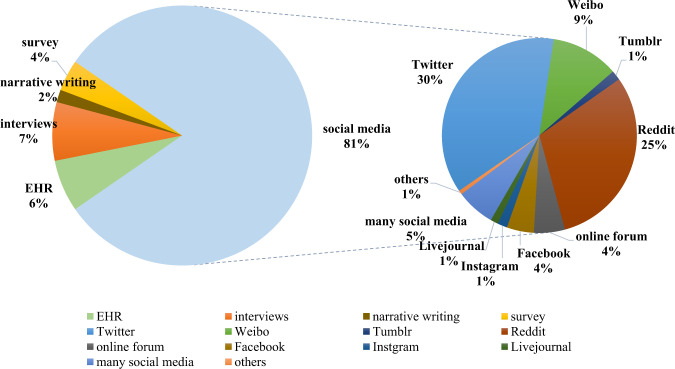
“In addition, most EHRs related to mental illness include clinical notes written in narrative form 29 .”
BackgroundSpeech vs. text: A comparative analysis of features for depression detection systems
Morales, M. R., & Levitan, R. (2016) · IEEE Spoken Language Technology Workshop (SLT) · doi:10.1109/slt.2016.7846256 · Cited by 106 · cited 1×
“Interviews Some work has been carried out to detect mental illness by interviewing users and then analyzing the linguistic information extracted from transcribed clinical interviews 33,34 .”
Background#suicidal - A Multipronged Approach to Identify and Explore Suicidal Ideation in Twitter
Sinha, P. P., Mishra, R., Sawhney, R., Mahata, D., Shah, R. R., & Liu, H. (2019) · ACM International Conference on Information and Knowledge Management (CIKM) · doi:10.1145/3357384.3358060 · Cited by 102 · cited 9×
“Twitter.”
BackgroundInfluentialA multitask framework to detect depression, sentiment and multi-label emotion from suicide notes
Ghosh, S., Ekbal, A., & Bhattacharyya, P. (2022) · Cognitive Computation · doi:10.1007/s12559-021-09828-7 · Cited by 102 · cited 2×
“Ghosh et al. developed a deep multi-task method 142 that modeled emotion recognition as a primary task and depression detection as a secondary task.”
BackgroundTran, T., & Kavuluru, R. (2017) · Journal of Biomedical Informatics · doi:10.1016/j.jbi.2017.06.010 · Cited by 101 · cited 2×
“Therefore, it is appropriate to use NLP techniques to assist in disease diagnosis on EHRs datasets, such as suicide screening 30 , depressive disorder identi fi cation 31 , and mental condition prediction 32 .”
MethodYoo, M., Lee, S., & Ha, T. (2018) · Information Processing & Management · doi:10.1016/j.ipm.2018.10.001 · Cited by 98
Identifying Depression on Twitter
Nadeem, M. (2016) · arXiv (Cornell University) · doi:10.48550/arxiv.1607.07384 · Cited by 98 · cited 1×
“…71,78 – 80 , k-Nearest Neighbors (KNN) 38,81 – 83 , Decision Tree 84 – 87 , Random Forest 75,88 – 90 , Logistic Model Tree (LMT) 47,47,91,92 , Naive Bayes (NB) 64,86,93,94 , Logistic Regression 37,95 – 97 , XGBoost 38,55,98,99 , and some ensemble models combining several methods 75,100 – 102 .”
Ricard, B. J., Marsch, L. A., Crosier, B., & Hassanpour, S. (2018) · Journal of Medical Internet Research · doi:10.2196/11817 · Cited by 95
Detection and Classification of mental illnesses on social media using RoBERTaPreprint
Murarka, A., Radhakrishnan, B., & Ravichandran, S. (2020) · arXiv (Cornell University) · doi:10.48550/arxiv.2011.11226 · Cited by 91
Gaur, M., Kursuncu, U., Alambo, A., Sheth, A., Daniulaityte, R., Thirunarayan, K., & Pathak, J. (2018) · Proceedings of the 27th ACM International Conference on Information and Knowledge Management · doi:10.1145/3269206.3271732 · Cited by 89
Aragón, M. E., López-Monroy, A. P., González, L. C., & Montes-y-Gómez, M. (2021) · IEEE Transactions on Affective Computing · doi:10.1109/taffc.2021.3075638 · Cited by 89
Automatic Detection and Classification of Cognitive Distortions in Mental Health Text
Shickel, B., Siegel, S., Heesacker, M., Benton, S. A., & Rashidi, P. (2020) · IEEE International Conference on Bioinformatics and Bioengineering (BIBE) · doi:10.1109/bibe50027.2020.00052 · Cited by 88
Rao, G., Zhang, Y., Zhang, L., Cong, Q., & Feng, Z. (2020) · IEEE Access · doi:10.1109/access.2020.2973737 · Cited by 88 · cited 11×
“Lin et al. designed a CNN framework combined with a graph model to leverage tweet content and social interaction information 129 .”
MethodInfluentialDetecting Depression in Social Media using Fine-Grained Emotions
Aragón, M. E., López-Monroy, A. P., González, L. C., & Montes-y-Gómez, M. (2019) · Conference of the North American Chapter of the Association for Computational Linguistics: Human Language Technologies (NAACL-HLT) · doi:10.18653/v1/n19-1151 · Cited by 87
A deep architecture for depression detection using posting, behavior, and living environment data
Wu, M. Y., Shen, C.-Y., Wang, E. T., & Chen, A. L. P. (2018) · Journal of Intelligent Information Systems · doi:10.1007/s10844-018-0533-4 · Cited by 86 · cited 1×
“RNN-based methods LSTM or GRU (some with attention mechanism) 32,133,136,232 – 234 Standard RNN structure: Long Short-Term Memory networks (LSTM) or Gate Recurrent Unit(GRU), and some studies add attention mechanism.”
MethodCost-Sensitive Boosting Pruning Trees for Depression Detection on Twitter
Tong, L., Liu, Z., Jiang, Z., Zhou, F., Chen, L., Lyu, J., Zhang, X., Zhang, Q., Sadka, A. H., Wang, Y., et al. (2022) · IEEE Transactions on Affective Computing · doi:10.1109/taffc.2022.3145634 · Cited by 85 · cited 2×
“Research conducted on social media data often leverages other auxiliary features to aid detection, such as social behavioral features 65,69 , user ’ s pro fi le 70,71 , or time features 72,73 .”
BackgroundMethodA review on recognizing depression in social networks: challenges and opportunities
Giuntini, F. T., Cazzolato, M. T., dos Reis, M. D. J. D., Campbell, A. T., Traina, A. J. M., & Ueyama, J. (2020) · Journal of Ambient Intelligence and Humanized Computing · doi:10.1007/s12652-020-01726-4 · Cited by 84 · cited 1×
“Existing reviews introduce mainly the computational methods for mental health illness detection, they mostly focus on speci fi c mental illnesses (suicide 7 – 9 , depression 10 – 12 ), or speci fi c data sources (social media 13 – 15 , non-clinical texts 16 ).”
Background3D mathematical modeling of calcium signaling in Alzheimer’s disease
Dave, D. D., & Jha, B. K. (2019) · Network Modeling Analysis in Health Informatics and Bioinformatics · doi:10.1007/s13721-019-0207-3 · Cited by 84
Depression Detection Using Machine Learning Techniques on Twitter Data
Govindasamy, K., & Naveen, P. (2021) · International Conference on Intelligent Computing and Control Systems (ICICCS) · doi:10.1109/iciccs51141.2021.9432203 · Cited by 84 · cited 1×
“…71,78 – 80 , k-Nearest Neighbors (KNN) 38,81 – 83 , Decision Tree 84 – 87 , Random Forest 75,88 – 90 , Logistic Model Tree (LMT) 47,47,91,92 , Naive Bayes (NB) 64,86,93,94 , Logistic Regression 37,95 – 97 , XGBoost 38,55,98,99 , and some ensemble models combining several methods 75,100 – 102 .”
Literature survey of statistical, deep and reinforcement learning in natural language processing
Sharma, A. R., & Kaushik, P. (2017) · 2017 International Conference on Computing, Communication and Automation (ICCCA) · doi:10.1109/ccaa.2017.8229841 · Cited by 83 · cited 1×
“…learning techniques, various learning techniques have emerged and accelerated NLP research, such as adversarial training 181 , contrastive learning 182 , joint learning 183 , reinforcement learning 184 and transfer learning 185 , which can also be utilized for the mental illness detection task.”
BackgroundPHASE: Learning Emotional Phase-aware Representations for Suicide Ideation Detection on Social Media
Sawhney, R., Joshi, H., Flek, L., & Shah, R. R. (2021) · Conference of the European Chapter of the Association for Computational Linguistics · doi:10.18653/v1/2021.eacl-main.205 · Cited by 83
A lexicon-based approach to detecting suicide-related messages on Twitter
Sarsam, S. M., Al‐Samarraie, H., Alzahrani, A. I., Alnumay, W. S., & Smith, A. P. (2020) · Biomedical Signal Processing and Control · doi:10.1016/j.bspc.2020.102355 · Cited by 81 · cited 1×
“Across all papers, few papers 108,109 used semi-supervised learning (models trained from large unlabeled data as additional information), including statistical model ssToT (semi-supervised topic modeling over time) 108 and classic semi-supervised algorithms (YATSI 110 and LLGC 111 ).”
MethodA Survey of Computational Methods for Online Mental State Assessment on Social Media
Ríssola, E. A., Losada, D. E., & Crestani, F. (2021) · ACM Transactions on Computing for Healthcare · doi:10.1145/3437259 · Cited by 81 · cited 1×
“Existing reviews introduce mainly the computational methods for mental health illness detection, they mostly focus on speci fi c mental illnesses (suicide 7 – 9 , depression 10 – 12 ), or speci fi c data sources (social media 13 – 15 , non-clinical texts 16 ).”
BackgroundTariq, S., Akhtar, N., Afzal, H., Khalid, S., Mufti, M. R., Hussain, S., Habib, A., & Ahmad, G. (2019) · IEEE Access · doi:10.1109/access.2019.2953087 · Cited by 80
Text-based depression detection on sparse dataPreprint
Dinkel, H., Wu, M., & Yu, K. (2019) · arXiv (Cornell University) · doi:10.48550/arxiv.1904.05154 · Cited by 78
Using linguistic and topic analysis to classify sub-groups of online depression communities
Nguyen, T., O’Dea, B., Larsen, M., Phung, D., Venkatesh, S., & Christensen, H. (2017) · Multimedia Tools and Applications · doi:10.1007/s11042-015-3128-x · Cited by 77 · cited 1×
“However, in most cases, we can apply these unsupervised models to extract additional features for developing supervised learning classi fi ers 56,85,106,107 .”
MethodA Systematic Literature Review of Technologies for Suicidal Behavior Prevention
Franco, M., Muñoz−Sánchez, J., de Abajo, B. S., Castillo-Sánchez, G., Hamrioui, S., & Díez, I. D. L. T. (2018) · Journal of Medical Systems · doi:10.1007/s10916-018-0926-5 · Cited by 76
Automatic identification of suicide notes with a transformer-based deep learning model
Zhang, T., Schoene, A. M., & Ananiadou, S. (2021) · Internet Interventions · doi:10.1016/j.invent.2021.100422 · Cited by 76
Self-citationHe, Q., Veldkamp, B. P., Glas, C. A. W., & de Vries, T. (2017) · Assessment · doi:10.1177/1073191115602551 · Cited by 74 · cited 1×
“…patterns (Part-of-Speech (POS) 45 – 47 , Bag-of-words (BoW) 48 – 50 , Linguistic Inquiry and Word Count (LIWC) 51 – 53 ) and statistics (n-gram 54 – 56 , term frequency-inverse document frequency (TF-IDF) 57 – 59 , length of sentences or passages 60 – 62 ) because these features can be easily…”
Towards Ordinal Suicide Ideation Detection on Social Media
Sawhney, R., Joshi, H., Gandhi, S., & Shah, R. R. (2021) · ACM International Conference on Web Search and Data Mining (WSDM) · doi:10.1145/3437963.3441805 · Cited by 74 · cited 3×
“…error) 173 and other new metrics (e.g., graded precision, graded recall, average hit rate, average closeness rate, average difference between overall depression levels) 139,174 are sometimes needed to indicate the difference between the predicted severity and the actual severity in a dataset.”
BackgroundMethodExtracting health-related causality from twitter messages using natural language processing
Doan, S., Yang, E. W., Tilak, S. S., Li, P. W., Zisook, D. S., & Torii, M. (2019) · BMC Medical Informatics and Decision Making · doi:10.1186/s12911-019-0785-0 · Cited by 73
Suicide Ideation Detection via Social and Temporal User Representations using Hyperbolic Learning
Sawhney, R., Joshi, H., Shah, R. R., & Flek, L. (2021) · Conference of the North American Chapter of the Association for Computational Linguistics: Human Language Technologies (NAACL-HLT) · doi:10.18653/v1/2021.naacl-main.176 · Cited by 73
Creating a Chinese suicide dictionary for identifying suicide risk on social media
Lv, M., Li, A., Liu, T., & Zhu, T. (2015) · PeerJ · doi:10.7717/peerj.1455 · Cited by 72
Mann, P., Paes, A., & Matsushima, E. H. (2020) · Proceedings of the International AAAI Conference on Web and Social Media · doi:10.1609/icwsm.v14i1.7313 · Cited by 72
Detection of Suicidality Among Opioid Users on Reddit: Machine Learning–Based Approach
Yao, H., Rashidian, S., Dong, X., Duanmu, H., Rosenthal, R. N., & Wang, F. (2020) · Journal of Medical Internet Research · doi:10.2196/15293 · Cited by 72 · cited 1×
“There are many studies (e.g., 133,134 ) based on LSTM or GRU, and some of them 135,136 exploited an attention mechanism 137 to fi nd signi fi cant word information from text.”
BackgroundDowns, J. M., Velupillai, S. U., Gkotsis, G., Holden, R., Kikoler, M., Dean, H., Fernandes, A. C., & Dutta, R. (2017) · Research Portal (King's College London) · Cited by 71
Generation and evaluation of artificial mental health records for Natural Language Processing
Ive, J., Viani, N., Kam, J., Yin, L., Verma, S., Puntis, S., Cardinal, R. N., Roberts, A., Stewart, R., & Velupillai, S. (2020) · npj Digital Medicine · doi:10.1038/s41746-020-0267-x · Cited by 71 · cited 3×
“Search query (1) AND (2) AND (3) AND (4)”
BackgroundDepression Risk Prediction for Chinese Microblogs via Deep-Learning Methods: Content Analysis
Wang, X., Chen, S., Li, T., Li, W., Zhou, Y., Zheng, J., Chen, Q., Yan, J., & Tang, B. (2020) · JMIR Medical Informatics · doi:10.2196/17958 · Cited by 71 · cited 2×
“Additionally, many researchers leveraged transformer-based pre-trained language representation models, including BERT 150,151 , DistilBERT 152 , Roberta 153 , ALBERT 150 , BioClinical BERT for clinical notes 31 , XLNET 154 , and GPT model 155 .”
BackgroundCommonsense Reasoning for Natural Language Processing
Sap, M., Shwartz, V., Bosselut, A., Choi, Y., & Roth, D. (2020) · Proceedings of the 58th Annual Meeting of the Association for Computational Linguistics: Tutorial Abstracts · doi:10.18653/v1/2020.acl-tutorials.7 · Cited by 69 · cited 1×
“Other emerging techniques like attention mechanism 187 , knowledge graph 188 , and commonsense reasoning 189 , can also be introduced for textual feature extraction.”
BackgroundEthics and Privacy in Social Media Research for Mental Health
Nicholas, J., Onie, S., & Larsen, M. E. (2020) · Current Psychiatry Reports · doi:10.1007/s11920-020-01205-9 · Cited by 69 · cited 1×
“Furthermore, when using some publicly available data, researchers need to acquire ethical approvals from institutional review boards and human research ethics committees 203,204 .”
Feature Engineering for Depression Detection in Social Media
Станкевич, М., Isakov, V., Devyatkin, D. A., & Smirnov, I. (2018) · International Conference on Pattern Recognition Applications and Methods · doi:10.5220/0006598604260431 · Cited by 68 · cited 3×
“Some studies 122 – 127 utilized standard CNN to construct classi fi cation models, and combined other features such as LIWC, TF-IDF, BOW, and POS.”
BackgroundAttention-Based Deep Entropy Active Learning Using Lexical Algorithm for Mental Health Treatment
Ahmed, U., Mukhiya, S. K., Srivastava, G., Lamo, Y., & Lin, J. C. (2021) · Frontiers in Psychology · doi:10.3389/fpsyg.2021.642347 · Cited by 68
Online suicide prevention through optimised text classification
Desmet, B., & Hoste, V. (2018) · Information Sciences · doi:10.1016/j.ins.2018.02.014 · Cited by 66
von Glischinski, M., Teismann, T., Prinz, S., Gebauer, J. E., & Hirschfeld, G. (2016) · Clinical Psychology & Psychotherapy · doi:10.1002/cpp.2007 · Cited by 65
A Transformer Based Approach To Detect Suicidal Ideation Using Pre-Trained Language Models
Haque, F., Nur, R. U., Jahan, S. A., Mahmud, Z., & Shah, F. M. (2020) · International Conference on Computer and Information Technology (ICCIT) · doi:10.1109/iccit51783.2020.9392692 · Cited by 63 · cited 4×
“Additionally, many researchers leveraged transformer-based pre-trained language representation models, including BERT 150,151 , DistilBERT 152 , Roberta 153 , ALBERT 150 , BioClinical BERT for clinical notes 31 , XLNET 154 , and GPT model 155 .”
BackgroundInfluentialUsing Machine Learning Algorithms to Detect Suicide Risk Factors on Twitter
Fodeh, S. J., Li, T., Menczynski, K., Burgette, T., Harris, A., Ilita, G., Rao, S., Gemmell, J. F., & Raicu, D. S. (2019) · IEEE ... International Conference on Data Mining workshops · doi:10.1109/icdmw.2019.00137 · Cited by 62 · cited 1×
“…to detect mental illness: SVM 26,74 – 77 , Adaptive Boosting (AdaBoost) 71,78 – 80 , k-Nearest Neighbors (KNN) 38,81 – 83 , Decision Tree 84 – 87 , Random Forest 75,88 – 90 , Logistic Model Tree (LMT) 47,47,91,92 , Naive Bayes (NB) 64,86,93,94 , Logistic Regression 37,95 – 97 , XGBoost…”
Characterization of time-variant and time-invariant assessment of suicidality on Reddit using C-SSRS
Gaur, M., Aribandi, V., Alambo, A., Kursuncu, U., Thirunarayan, K., Beich, J., Pathak, J., & Sheth, A. (2021) · PLoS ONE · doi:10.1371/journal.pone.0250448 · Cited by 59 · cited 1×
“For examples, the hybrid frameworks of CNN and LSTM models 156 – 160 Evaluation metrics .”
MethodUsing Weighted Nearest Neighbor to Benefit from Unlabeled Data
Driessens, K., Reutemann, P., Pfahringer, B., & Leschi, C. (2006) · Lecture notes in computer science · doi:10.1007/11731139_10 · Cited by 57
Zhong, Q.-Y., Karlson, E. W., Gelaye, B., Finan, S., Avillach, P., Smoller, J. W., Cai, T., & Williams, M. A. (2018) · BMC Medical Informatics and Decision Making · doi:10.1186/s12911-018-0617-7 · Cited by 57
Towards Suicide Prevention: Early Detection of Depression on Social Media
Leiva, V., & Freire, A. (2017) · Lecture notes in computer science · doi:10.1007/978-3-319-70284-1_34 · Cited by 56
Not Just Depressed: Bipolar Disorder Prediction on Reddit
Sekulic, I., Gjurković, M., & Šnajder, J. (2018) · Proceedings of the 9th Workshop on Computational Approaches to Subjectivity, Sentiment and Social Media Analysis · doi:10.18653/v1/w18-6211 · Cited by 56
Learning Models for Suicide Prediction from Social Media Posts
Wang, N., Fan, L., Shivtare, Y., Badal, V. D., Subbalakshmi, K. P., Chandramouli, R., & Lee, E. (2021) · Workshop on Computational Linguistics and Clinical Psychology (CLPsych) · doi:10.18653/v1/2021.clpsych-1.9 · Cited by 55
Suicide attempters classification: Toward predictive models of suicidal behavior
Delgado‐Gómez, D., Blasco-Fontecilla, H., Sukno, F. M., Ramos-Plasencia, M. S., & Baca‐García, E. (2012) · Neurocomputing · doi:10.1016/j.neucom.2011.08.033 · Cited by 52
Detection and Analysis of Stress using Machine Learning Techniques
Baheti, M. R. R., & Kinariwala, M. S. (2019) · International Journal of Engineering and Advanced Technology · doi:10.35940/ijeat.f8573.109119 · Cited by 52 · cited 1×
“…71,78 – 80 , k-Nearest Neighbors (KNN) 38,81 – 83 , Decision Tree 84 – 87 , Random Forest 75,88 – 90 , Logistic Model Tree (LMT) 47,47,91,92 , Naive Bayes (NB) 64,86,93,94 , Logistic Regression 37,95 – 97 , XGBoost 38,55,98,99 , and some ensemble models combining several methods 75,100 – 102 .”
Franz, P. J., Nook, E. C., Mair, P., & Nock, M. K. (2019) · Suicide and Life-Threatening Behavior · doi:10.1111/sltb.12569 · Cited by 50
Extracting depressive symptoms and their associations from an online depression community
Yao, X., Yu, G., Tang, J., & Zhang, J. (2021) · Computers in Human Behavior · doi:10.1016/j.chb.2021.106734 · Cited by 49 · cited 1×
“RNN-based methods LSTM or GRU (some with attention mechanism) 32,133,136,232 – 234 Standard RNN structure: Long Short-Term Memory networks (LSTM) or Gate Recurrent Unit(GRU), and some studies add attention mechanism.”
MethodThe Detection of Depression Using Multimodal Models Based on Text and Voice Quality Features
Solieman, H., & Pustozerov, E. (2021) · IEEE Conference of Russian Young Researchers in Electrical and Electronic Engineering · doi:10.1109/elconrus51938.2021.9396540 · Cited by 47 · cited 1×
“For examples, the hybrid frameworks of CNN and LSTM models 156 – 160 Evaluation metrics .”
MethodA Transformers Approach to Detect Depression in Social Media
Malviya, K., Roy, B., & Saritha, S. K. (2021) · International Conference on Artificial Intelligence and Smart Energy (ICAIS) · doi:10.1109/icais50930.2021.9395943 · Cited by 47 · cited 2×
“Additionally, many researchers leveraged transformer-based pre-trained language representation models, including BERT 150,151 , DistilBERT 152 , Roberta 153 , ALBERT 150 , BioClinical BERT for clinical notes 31 , XLNET 154 , and GPT model 155 .”
BackgroundObeid, J. S., Weeda, E. R., Matuskowitz, A. J., Gagnon, K., Crawford, T., Carr, C. M., & Frey, L. J. (2019) · BMC Medical Informatics and Decision Making · doi:10.1186/s12911-019-0894-9 · Cited by 45 · cited 2×
“Some studies 122 – 127 utilized standard CNN to construct classi fi cation models, and combined other features such as LIWC, TF-IDF, BOW, and POS.”
MethodPsychological Disorder Identifying Method Based on Emotion Perception over Social Networks
Zhou, T. H., Hu, G. L., & Wang, L. (2019) · International Journal of Environmental Research and Public Health · doi:10.3390/ijerph16060953 · Cited by 44
Exploring Eating Disorder Topics on Twitter: Machine Learning Approach
Zhou, S., Zhao, Y., Bian, J., Haynos, A. F., & Zhang, R. (2020) · JMIR Medical Informatics · doi:10.2196/18273 · Cited by 44
Detecting Cognitive Distortions Through Machine Learning Text Analytics
Simms, T., Ramstedt, C., Rich, M., Richards, M., Martinez, T., & Giraud-Carrier, C. (2017) · 2017 IEEE International Conference on Healthcare Informatics (ICHI) · doi:10.1109/ichi.2017.39 · Cited by 42 · cited 1×
“…mainly based on basic linguistic patterns (Part-of-Speech (POS) 45 – 47 , Bag-of-words (BoW) 48 – 50 , Linguistic Inquiry and Word Count (LIWC) 51 – 53 ) and statistics (n-gram 54 – 56 , term frequency-inverse document frequency (TF-IDF) 57 – 59 , length of sentences or passages 60 – 62 ) because…”
Suicidal Profiles Detection in Twitter
Mbarek, A., Jamoussi, S., Charfi, A., & Hamadou, A. B. (2019) · International Conference on Web Information Systems and Technologies · doi:10.5220/0008167600002366 · Cited by 42
Boag, W., Kovaleva, O., McCoy, T. H., Rumshisky, A., Szolovits, P., & Perlis, R. H. (2021) · Translational Psychiatry · doi:10.1038/s41398-020-01104-w · Cited by 41
Hwang, Y., Kim, H. J., Choi, H. J., & Lee, J. (2020) · Journal of Medical Internet Research · doi:10.2196/15700 · Cited by 39 · cited 3×
“Domain speci fi c ontologies, dictionaries and social attributes in social networks also have the potential to improve accuracy 65 – 68 .”
BackgroundUsing Twitter Social Media for Depression Detection in the Canadian Population
Skaik, R., & Inkpen, D. Z. (2020) · Artificial Intelligence and Cloud Computing Conference (AICCC) · doi:10.1145/3442536.3442553 · Cited by 39 · cited 1×
“…71,78 – 80 , k-Nearest Neighbors (KNN) 38,81 – 83 , Decision Tree 84 – 87 , Random Forest 75,88 – 90 , Logistic Model Tree (LMT) 47,47,91,92 , Naive Bayes (NB) 64,86,93,94 , Logistic Regression 37,95 – 97 , XGBoost 38,55,98,99 , and some ensemble models combining several methods 75,100 – 102 .”
Machine Learning of Concepts Hard Even for Humans: The Case of Online Depression Forums
Németh, R., Sík, D., & Máté, F. (2020) · International Journal of Qualitative Methods · doi:10.1177/1609406920949338 · Cited by 38 · cited 1×
“…71,78 – 80 , k-Nearest Neighbors (KNN) 38,81 – 83 , Decision Tree 84 – 87 , Random Forest 75,88 – 90 , Logistic Model Tree (LMT) 47,47,91,92 , Naive Bayes (NB) 64,86,93,94 , Logistic Regression 37,95 – 97 , XGBoost 38,55,98,99 , and some ensemble models combining several methods 75,100 – 102 .”
Automatic Identification of Suicide Notes from Linguistic and Sentiment Features
Schoene, A. M., & Dethlefs, N. (2016) · doi:10.18653/v1/w16-2116 · Cited by 37
Self-citationModeling Depression Symptoms from Social Network Data through Multiple Instance Learning.
Wongkoblap, A., Vadillo, M. A., & Ćurčin, V. (2019) · PubMed Central · Cited by 37
Self-Harm Detection for Mental Health Chatbots
Deshpande, S., & Warren, J. (2021) · Studies in health technology and informatics · doi:10.3233/shti210118 · Cited by 37
Predicting Mental Illness using Social Media Posts and Comments
kamal, M., Ur, S., Hussain, S., Nasir, A., Aslam, K., Tariq, S., & Farhan, M. (2020) · International Journal of Advanced Computer Science and Applications · doi:10.14569/ijacsa.2020.0111271 · Cited by 36 · cited 1×
“…71,78 – 80 , k-Nearest Neighbors (KNN) 38,81 – 83 , Decision Tree 84 – 87 , Random Forest 75,88 – 90 , Logistic Model Tree (LMT) 47,47,91,92 , Naive Bayes (NB) 64,86,93,94 , Logistic Regression 37,95 – 97 , XGBoost 38,55,98,99 , and some ensemble models combining several methods 75,100 – 102 .”
Rios, A., & Kavuluru, R. (2017) · Journal of Biomedical Informatics · doi:10.1016/j.jbi.2017.05.008 · Cited by 35 · cited 2×
“In some studies, they can not only detect mental illness, but also score its severity 122,139,155,173 .”
BackgroundA Multilevel Predictive Model for Detecting Social Network Users with Depression
Wongkoblap, A., Vadillo, M. A., & Ćurčin, V. (2018) · IEEE International Conference on Healthcare Informatics (ICHI) · doi:10.1109/ichi.2018.00022 · Cited by 35 · cited 1×
“The Scale Center for Epidemiological Studies Depression Scale (CES-D) questionnaire 40 with 20 multiple-choice questions is also designed for testing depression.”
MethodSaleem, S., Prasad, R., Vitaladevuni, S. N. P., Pacula, M., Crystal, M. A., Marx, B. P., Sloan, D. M., Vasterling, J. J., & Speroff, T. (2012) · International Conference on Computational Linguistics · Cited by 34
Voleti, R., Woolridge, S. M., Liss, J., Milanovic, M., Bowie, C. R., & Berisha, V. (2019) · Interspeech (USB) · doi:10.21437/interspeech.2019-2960 · Cited by 34
Depression Analysis of Bangla Social Media Data using Gated Recurrent Neural Network
Uddin, A. H., Bapery, D., & Arif, A. S. M. (2019) · International Conference on Advances in Science, Engineering and Robotics Technology (ICASERT) · doi:10.1109/icasert.2019.8934455 · Cited by 34 · cited 1×
“There are many studies (e.g., 133,134 ) based on LSTM or GRU, and some of them 135,136 exploited an attention mechanism 137 to fi nd signi fi cant word information from text.”
BackgroundDepression Detection from Social Media Profiles
Станкевич, М., Smirnov, I., Kiselnikova, N. V., & Ushakova, A. (2020) · Communications in computer and information science · doi:10.1007/978-3-030-51913-1_12 · Cited by 34
An Application for Classifying Depression in Tweets
Ziwei, B. Y., & Chua, H. N. (2019) · International Conference on Computing and Big Data (ICCBD) · doi:10.1145/3366650.3366653 · Cited by 32 · cited 1×
“…based on machine learning methods used supervised learning, where they described one or more methods employed to detect mental illness: SVM 26,74 – 77 , Adaptive Boosting (AdaBoost) 71,78 – 80 , k-Nearest Neighbors (KNN) 38,81 – 83 , Decision Tree 84 – 87 , Random Forest 75,88 – 90 ,…”
MethodWhat type of happiness are you looking for? - A closer look at detecting mental health from language
Arseniev‐Koehler, A., Mozgai, S., & Scherer, S. J. (2018) · Workshop on Computational Linguistics and Clinical Psychology (CLPsych) · doi:10.18653/v1/w18-0601 · Cited by 31 · cited 1×
“Interviews Some work has been carried out to detect mental illness by interviewing users and then analyzing the linguistic information extracted from transcribed clinical interviews 33,34 .”
BackgroundWang, B., Wu, Y., Taylor, N., Lyons, T., Liakata, M., Nevado‐Holgado, A. J., & Saunders, K. (2020) · Interspeech (USB) · doi:10.21437/interspeech.2020-3040 · Cited by 29
Depression and Anxiety Prediction Using Deep Language Models and Transfer Learning
Rutowski, T., Shriberg, E. E., Harati, A., Lü, Y., Chlebek, P., & Oliveira, R. (2020) · International Conference on Behavioral, Economic, and Socio-Cultural Computing · doi:10.1109/besc51023.2020.9348290 · Cited by 29 · cited 2×
“Rutowski et al. made use of transfer learning to pre-train a model on an open dataset, and the results illustrated the effectiveness of pre-training 140,141 .”
BackgroundDepression Detection on Social Media with Reinforcement Learning
Gui, T., Zhang, Q., Zhu, L., Xu, Z., Peng, M., & Huang, X. (2019) · Lecture notes in computer science · doi:10.1007/978-3-030-32381-3_49 · Cited by 27 · cited 2×
“Reinforcement learning was also used in depression detection 143,144 to enable the model to pay more attention to useful information rather than noisy data by selecting indicator posts.”
MethodHow Successful Is Transfer Learning for Detecting Anorexia on Social Media?
Úbeda, P. L., Plaza-del-Arco, F. M., Díaz–Galiano, M. C., & Valdivia, M. T. M. (2021) · Applied Sciences · doi:10.3390/app11041838 · Cited by 27 · cited 1×
“For example, pre-trained Transformer-based models can be transferred to anorexia detection in Spanish 186 , and reinforcement networks can be used to fi nd the sentence that best re fl ects the mental state.”
MethodDao, B., Nguyen, T., Phung, D., & Venkatesh, S. (2014) · Lecture notes in computer science · doi:10.1007/978-3-319-11749-2_30 · Cited by 26 · cited 1×
“Domain speci fi c ontologies, dictionaries and social attributes in social networks also have the potential to improve accuracy 65 – 68 .”
BackgroundAnalysis of Social Media Posts for Early Detection of Mental Health Conditions
Briand, A., Almeida, H., & Meurs, M. (2018) · Lecture notes in computer science · doi:10.1007/978-3-319-89656-4_11 · Cited by 26 · cited 4×
“The majority of the papers based on machine learning methods used supervised learning, where they described one or more methods employed to detect mental illness: SVM 26,74 – 77 , Adaptive Boosting (AdaBoost) 71,78 – 80 , k-Nearest Neighbors (KNN) 38,81 – 83 , Decision Tree 84 – 87 , Random Forest 75,88 – 90 , Logisti…”
BackgroundInfluentialAssessment of personal narrative writing in children with and without Autism Spectrum Disorder
Hilvert, E., Davidson, D. Z., & Gámez, P. B. (2019) · Research in Autism · doi:10.1016/j.rasd.2019.101453 · Cited by 26 · cited 3×
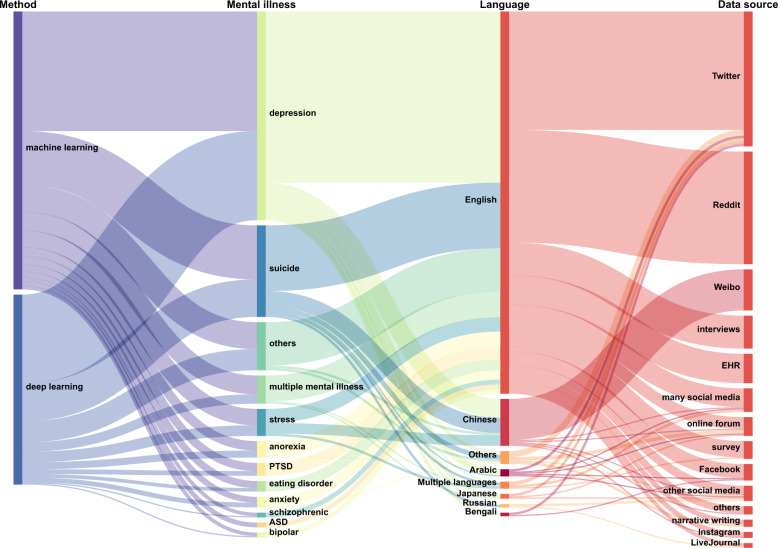
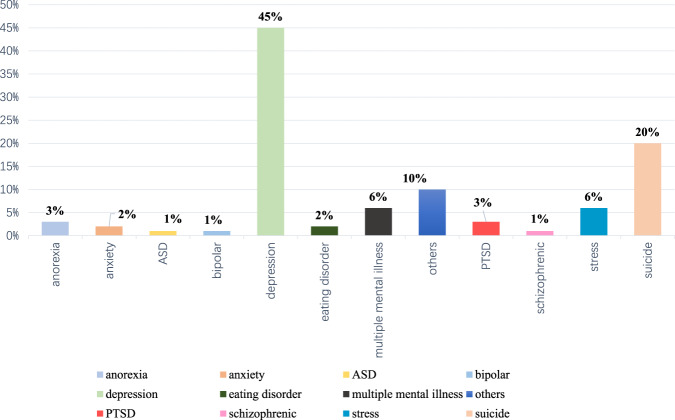
“%) account for the largest proportion; stress, anorexia, eating disorders, PTSD, bipolar disorder, anxiety, ASD and schizophrenia have corresponding datasets and have been analyzed using NLP (Fig.”
BackgroundInfluentialNatural Language Processing-Based Quantication of the Mental State of Psychiatric Patients
Mukherjee, S. S., Yu, J., Won, Y., McClay, M. J., Wang, L., Rush, A. J., & Sarkar, J. (2020) · Computational Psychiatry · doi:10.1162/cpsy_a_00030 · Cited by 26
Ghosh, S. K., Ekbal, A., & Bhattacharyya, P. (2022) · Scientific Reports · doi:10.1038/s41598-022-08438-z · Cited by 24
Prediction of Age, Sentiment, and Connectivity from Social Media Text
Nguyen, T., Phung, D., Adams, B., & Venkatesh, S. (2011) · Lecture notes in computer science · doi:10.1007/978-3-642-24434-6_17 · Cited by 23
Disorder recognition in clinical texts using multi-label structured SVM
Lin, W., Ji, D., & Lu, Y. (2017) · BMC Bioinformatics · doi:10.1186/s12859-017-1476-4 · Cited by 23
Predicting Depression for Japanese Blog Text
Hiraga, M. (2017) · Annual Meeting of the Association for Computational Linguistics: Student Research Workshop (ACL SRW) · doi:10.18653/v1/p17-3018 · Cited by 23 · cited 1×
“…71,78 – 80 , k-Nearest Neighbors (KNN) 38,81 – 83 , Decision Tree 84 – 87 , Random Forest 75,88 – 90 , Logistic Model Tree (LMT) 47,47,91,92 , Naive Bayes (NB) 64,86,93,94 , Logistic Regression 37,95 – 97 , XGBoost 38,55,98,99 , and some ensemble models combining several methods 75,100 – 102 .”
Detection of Depression in Social Media via Twitter Using Machine learning Approach
Kamite, S. R., & Kamble, V. B. (2020) · International Conference on Smart Innovations in Design, Environment, Management, Planning and Computing (ICSIDEMPC) · doi:10.1109/icsidempc49020.2020.9299641 · Cited by 23 · cited 1×
“…SVM 26,74 – 77 , Adaptive Boosting (AdaBoost) 71,78 – 80 , k-Nearest Neighbors (KNN) 38,81 – 83 , Decision Tree 84 – 87 , Random Forest 75,88 – 90 , Logistic Model Tree (LMT) 47,47,91,92 , Naive Bayes (NB) 64,86,93,94 , Logistic Regression 37,95 – 97 , XGBoost 38,55,98,99 , and some ensemble…”
Teenagers’ Stress Detection Based on Time-Sensitive Micro-blog Comment/Response Actions
Zhao, L., Jia, J., & Feng, L. (2015) · IFIP Advances in Information and Communication Technology · doi:10.1007/978-3-319-25261-2_3 · Cited by 22 · cited 1×
“Research conducted on social media data often leverages other auxiliary features to aid detection, such as social behavioral features 65,69 , user ’ s pro fi le 70,71 , or time features 72,73 .”
BackgroundMining Free-Text Medical Notes for Suicide Risk Assessment
Adamou, M., Antoniou, G., Greasidou, E., Lagani, V., Charonyktakis, P., & Tsamardinos, I. (2018) · Proceedings of the 10th Hellenic Conference on Artificial Intelligence · doi:10.1145/3200947.3201020 · Cited by 22 · cited 1×
“…– 50 , Linguistic Inquiry and Word Count (LIWC) 51 – 53 ) and statistics (n-gram 54 – 56 , term frequency-inverse document frequency (TF-IDF) 57 – 59 , length of sentences or passages 60 – 62 ) because these features can be easily obtained through text processing tools and are widely used in…”
Abed-Esfahani, P., Howard, D., Maslej, M. M., Patel, S., Mann, V., Goegan, S. A., & French, L. (2019) · CLEF (Working Notes) · Cited by 22
Predicting Social Network Users with Depression from Simulated Temporal Data
Wongkoblap, A., Vadillo, M. A., & Ćurčin, V. (2019) · IEEE EUROCON - International Conference on Computer as a Tool (EUROCON) · doi:10.1109/eurocon.2019.8861514 · Cited by 21 · cited 2×
“LSTM or GRU with multiple instance learning 145,146 Using multiple instance learning to get the possibility of post-level labels and improve the prediction of user-level labels.”
MethodDetecting depressed users in online forums
Shrestha, A., & Spezzano, F. (2019) · IEEE/ACM International Conference on Advances in Social Networks Analysis and Mining (ASONAM) · doi:10.1145/3341161.3343511 · Cited by 21
Predicting Multiple Risky Behaviors via Multimedia Content
Zhou, Y., Zhan, J., & Luo, J. (2017) · Lecture notes in computer science · doi:10.1007/978-3-319-67256-4_7 · Cited by 20
You're Making Me Depressed: Leveraging Texts from Contact Subsets to Predict Depression
Tlachac, M., Toto, E., & Rundensteiner, E. A. (2019) · IEEE-EMBS International Conference on Biomedical and Health Informatics (BHI ...) · doi:10.1109/bhi.2019.8834481 · Cited by 20 · cited 4×
“The majority of the papers based on machine learning methods used supervised learning, where they described one or more methods employed to detect mental illness: SVM 26,74 – 77 , Adaptive Boosting (AdaBoost) 71,78 – 80 , k-Nearest Neighbors (KNN) 38,81 – 83 , Decision Tree 84 – 87 , Random Forest 75,88 – 90 , Logisti…”
MethodInfluentialDeep Bag-of-Sub-Emotions for Depression Detection in Social Media
Lara, J. S., Aragón, M. E., Gonzalez, F. A., & Montes-y-Gómez, M. (2021) · Lecture notes in computer science · doi:10.1007/978-3-030-83527-9_5 · Cited by 20
Galiatsatos, D., Κωνσταντοπούλου, Γ., Anastassopoulos, G. C., Nerantzaki, M., Assimakopoulos, K., & Lymberopoulos, D. K. (2015) · International Conference on Engineering Applications of Neural Networks · doi:10.1145/2797143.2797159 · Cited by 19
Incorporating Forthcoming Events and Personality Traits in Social Media Based Stress Prediction
Li, N., Zhang, H., & Feng, L. (2021) · IEEE Transactions on Affective Computing · doi:10.1109/taffc.2021.3076294 · Cited by 19
BlueMemo: Depression Analysis through Twitter Posts
Hu, P., Lin, C., Su, H., Li, S., Han, X., Zhang, Y., & Mei, J. (2020) · International Joint Conference on Artificial Intelligence · doi:10.24963/ijcai.2020/760 · Cited by 18 · cited 9×
“Twitter.”
BackgroundInfluentialPaladin: an annotation tool based on active and proactive learning
Nghiem, M.-Q., Baylis, P., & Ananiadou, S. (2021) · Conference of the European Chapter of the Association for Computational Linguistics · doi:10.18653/v1/2021.eacl-demos.28 · Cited by 17 · cited 1×
“However, labeling the large amount of data at a high quality level is time-consuming and challenging, although there are methods that help reduce the human annotation burden 103 .”
MethodSelf-citationAutomatic Verbal Analysis of Interviews with Schizophrenic Patients
Xu, S., Yang, Z., Chakraborty, D., Tahir, Y., Maszczyk, T., Chua, Y. H. V., Dauwels, J., Thalmann, D., Magnenat‐Thalmann, N., Tan, B., et al. (2018) · IEEE International Conference on Digital Signal Processing (DSP) · doi:10.1109/icdsp.2018.8631830 · Cited by 16 · cited 1×
“…learning, where they described one or more methods employed to detect mental illness: SVM 26,74 – 77 , Adaptive Boosting (AdaBoost) 71,78 – 80 , k-Nearest Neighbors (KNN) 38,81 – 83 , Decision Tree 84 – 87 , Random Forest 75,88 – 90 , Logistic Model Tree (LMT) 47,47,91,92 , Naive Bayes…”
MethodDeep Learning Algorithm for Suicide Sentiment Prediction
Boukil, S., Adnani, F. E., Cherrat, L., Moutaouakkil, A. E. E., & Ezziyyani, M. (2019) · Advances in intelligent systems and computing · doi:10.1007/978-3-030-11884-6_24 · Cited by 15
Comparative Study: Different Techniques to Detect Depression Using Social Media
Mahdy, N., Magdi, D. A., Dahroug, A., & Rizka, M. A. (2020) · Lecture notes in networks and systems · doi:10.1007/978-981-15-3075-3_30 · Cited by 15
A Multitask Deep Learning Approach for User Depression Detection on Sina WeiboPreprint
Wang, Y., Wang, Z., Li, C., et al. (2020) · arXiv (Cornell University) · doi:10.48550/arxiv.2008.11708 · Cited by 15 · cited 1×
“LSTM or GRU with multi-task learning 142,235 – 237 Using multi-task learning to help illness detection get better result.”
BackgroundDetecting Social Anxiety with Online Social Network Data
Chang, M., & Tseng, C.-Y. (2020) · IEEE International Conference on Mobile Data Management (MDM) · doi:10.1109/mdm48529.2020.00073 · Cited by 14 · cited 1×
“Research conducted on social media data often leverages other auxiliary features to aid detection, such as social behavioral features 65,69 , user ’ s pro fi le 70,71 , or time features 72,73 .”
BackgroundAttention to Emotions: Detecting Mental Disorders in Social Media
Aragón, M. E., López-Monroy, A. P., González, L. C., & Montes-y-Gómez, M. (2020) · Lecture notes in computer science · doi:10.1007/978-3-030-58323-1_25 · Cited by 14
Text Classification to Automatically Identify Online Patients Vulnerable to Depression
Chomutare, T. (2014) · Lecture notes of the Institute for Computer Sciences, Social Informatics and Telecommunications Engineering · doi:10.1007/978-3-319-11564-1_13 · Cited by 13
Suicidal Ideation Detection via Social Media Analytics
Huang, Y., Liu, X., & Zhu, T. (2019) · Lecture notes in computer science · doi:10.1007/978-3-030-37429-7_17 · Cited by 13
He, L., & Luo, J. (2016) · IEEE International Conference on Big Data (BigData) · doi:10.1109/bigdata.2016.7841081 · Cited by 12
Crosslingual Depression Detection in Twitter Using Bilingual Word Alignments
Laritza, C.-G., Ortega-Mendoza, R. M., Villaseñor-Pineda, L., & Montes-y-Gómez, M. (2019) · Lecture notes in computer science · doi:10.1007/978-3-030-28577-7_2 · Cited by 12
Cross-Demographic Portability of Deep NLP-Based Depression Models
Rutowski, T., Shriberg, E. E., Harati, A., Lü, Y., Oliveira, R., & Chlebek, P. (2021) · IEEE Spoken Language Technology Workshop (SLT) · doi:10.1109/slt48900.2021.9383609 · Cited by 12 · cited 2×
“Rutowski et al. made use of transfer learning to pre-train a model on an open dataset, and the results illustrated the effectiveness of pre-training 140,141 .”
BackgroundAlam, U. (2020) · doi:10.1109/smartcomp50058.2020.00069 · Cited by 11
Machine Learning based Dataset for Finding Suicidal Ideation on Twitter
Chadha, A., & Kaushik, B. (2021) · International Conference on Intelligent Communication Technologies and Virtual Mobile Networks (ICICV) · doi:10.1109/icicv50876.2021.9388638 · Cited by 11
Kshatriya, B. S. A., Núñez, N. A., Gardea‐Resendez, M., Ryu, E., Coombes, B. J., Fu, S., Frye, M. A., Biernacka, J. M., & Wang, Y. (2021) · arXiv (Cornell University) · doi:10.48550/arxiv.2104.09644 · Cited by 11 · cited 5×
“The usage and development of these BERT-based models prove the potential value of large-scale pre-training models in the application of mental illness detection.”
BackgroundMethodInfluentialDepression Detection Among Social Media Users Using Machine Learning
Verma, P., Sharma, K., & Walia, G. S. (2021) · Advances in Intelligent Systems and Computing · doi:10.1007/978-981-15-5113-0_72 · Cited by 10 · cited 1×
“…one or more methods employed to detect mental illness: SVM 26,74 – 77 , Adaptive Boosting (AdaBoost) 71,78 – 80 , k-Nearest Neighbors (KNN) 38,81 – 83 , Decision Tree 84 – 87 , Random Forest 75,88 – 90 , Logistic Model Tree (LMT) 47,47,91,92 , Naive Bayes (NB) 64,86,93,94 , Logistic…”
Anonymous Prediction of Mental Illness in Social Media
Tadisetty, S., & Ghazinour, K. (2021) · IEEE Annual Computing and Communication Workshop and Conference (CCWC) · doi:10.1109/ccwc51732.2021.9376140 · Cited by 10
Guntuku, S. C., Giorgi, S., & Ungar, L. (2018) · Workshop on Computational Linguistics and Clinical Psychology (CLPsych) · doi:10.18653/v1/w18-0610 · Cited by 9 · cited 2×
“…patterns (Part-of-Speech (POS) 45 – 47 , Bag-of-words (BoW) 48 – 50 , Linguistic Inquiry and Word Count (LIWC) 51 – 53 ) and statistics (n-gram 54 – 56 , term frequency-inverse document frequency (TF-IDF) 57 – 59 , length of sentences or passages 60 – 62 ) because these features can be easily…”
Method
Research works printed but not linked: 22
- Khan A Husain MS Khan A Analysis of mental state of users using social media to predict depression! a survey Int. J. Adv. Res. Comput. Sci. 2018 9 100 106
- Trifan A Antunes R Matos S Oliveira JL Understanding depression from psycholinguistic patterns in social media texts Adv. Inf. Retr. 2020 12036 402
- Delahunty, F., Wood, I. D. & Arcan, M. First insights on a passive major depressive disorder prediction system with incorporated conversational chatbot. In Irish Conference on Artificial Intelligence and Cognitive Science (2018).
- Prakash, A., Agarwal, K., Shekhar, S., Mutreja, T. & Chakraborty, P. S. An ensemble learning approach for the detection of depression and mental illness over twitter data. In 2021 8th International Conference on Computing for Sustainable Global Development (INDIACom), pp. 565–570 (2021).
- Desmet, B. & Hoste, V. Recognising suicidal messages in dutch social media. In 9th International Conference on Language Resources and Evaluation (LREC), pp. 830–835 (2014).
- Zhou, D., Bousquet, O., Lal, T. N., Weston, J. & Schölkopf, B. Learning with local and global consistency. In Advances in Neural Information Processing Systems, pp. 321–328 (2004).
- Ghannay, S., Favre, B., Esteve, Y. & Camelin, N. Word embedding evaluation and combination. In Proc. Tenth International Conference on Language Resources and Evaluation (LREC’16), pp. 300–305 (2016).
- Mikolov, T., Chen, K., Corrado, G. & Dean, J. Efficient estimation of word representations in vector space. In Proc. 1st International Conference on Learning Representations (ICLR) Workshops Track. (2013).
- Devlin, J., Chang, M. W., Lee, K. & Toutanova, K. Bert: Pre-training of deep bidirectional transformers for languageunderstanding. In Proc. NAACL-HLT, pp. 4171–4186 (2019).
- Pascanu, R., Mikolov, T. & Bengio, Y. On the difficulty of training recurrent neural networks. In International Conference on Machine Learning, pp. 1310–1318 (2013).
- Bahdanau, D., Cho, K. & Bengio, Y. Neural machine translation by jointly learning to align and translate. In Proc. 3rd International Conference on Learning Representations (ICLR) (2015).
- Settles, B. Closing the loop: fast, interactive semi-supervised annotation with queries on features and instances. In Proc. 2011 Conference on Empirical Methods in Natural Language Processing, pp. 1467–1478 (2011).
- Maupomé, D. & Meurs, M. -J. Using topic extraction on social media content for the early detection of depression. In CLEF (Working Notes) vol. 2125 (2018)
- Wang, W. Y., Singh, S. & Li, J. Deep adversarial learning for nlp. In Proc. 2019 Conference of the North American Chapter of the Association for Computational Linguistics: Tutorials, pp. 1–5 (2019).
- Li, Y., Tian, X., Liu, T. & Tao, D. Multi-task model and feature joint learning. In Twenty-Fourth International Joint Conference on Artificial Intelligence (2015).
- Xu, Z., Pérez-Rosas, V. & Mihalcea, R. Inferring social media users’ mental health status from multimodal information. In Proc. 12th Language Resources and Evaluation Conference, pp. 6292–6299 (2020).
- Mittal, A. et al. Multi-modal detection of alzheimer’s disease from speech and text. In Proc. BIOKDD'21 (2021).
- Song, H., You, J., Chung, J. -W. & Park, J. C. Feature attention network: Interpretable depression detection from social media. In Proc. 32nd Pacific Asia Conference on Language, Information and Computation (2018).
- Stephen JJ Prabu P Detecting the magnitude of depression in twitter users using sentiment analysis Int. J. Electr. Comput. Eng. 2019 9 3247
- Mikolov, T., Sutskever, I., Chen, K., Corrado, G. S. & Dean, J. Distributed representations of words and phrases and their compositionality. In Advances in Neural Information Processing Systems, pp. 3111–3119 (2013).
- Bandyopadhyay, A., Achilles, L., Mandl, T., Mitra, M. & Saha, S. K. Identification of depression strength for users of online platforms: a comparison of text retrieval approaches. In Proc. CEUR Workshop Proceedings, vol. 2454, pp. 331–342 (2019).
- Zogan, H., Wang, X., Jameel, S. & Xu, G. Depression detection with multi-modalities using a hybrid deep learning model on social media. Preprint at arXiv https://arxiv.org/abs/2007.02847 (2020). PMC8795347 35106059 · arXiv
Cited by
Do AI chatbots improve students learning outcomes? Evidence from a meta‐analysis
Wu, R., & Yu, Z. (2024) · British Journal of Educational Technology · doi:10.1111/bjet.13334 · Cited by 576
Enhancing mental health with Artificial Intelligence: Current trends and future prospects
Olawade, D. B., Wada, O. Z., Odetayo, A., David-Olawade, A. C., Asaolu, F., & Eberhardt, J. (2024) · Journal of Medicine, Surgery, and Public Health · doi:10.1016/j.glmedi.2024.100099 · Cited by 514
“Natural Language Processing (NLP) techniques enable extracting valuable insights from written or spoken words [53,54].”
BackgroundNatural Language Processing for Smart Healthcare
Zhou, B., Yang, G., Shi, Z., & Ma, S. (2024) · IEEE Reviews in Biomedical Engineering · doi:10.1109/rbme.2022.3210270 · Cited by 230
“The data collected for such analysis may include text data such as social media posts, screening surveys, EHRs [220], and also speech data come from narrative interviews [221], etc. NLP techniques could also (automatically) provide effective psychotherapeutic interventions through web-based…”
BackgroundKhan, W., Daud, A., Khan, K., Muhammad, S., & Haq, R. (2023) · Natural Language Processing Journal · doi:10.1016/j.nlp.2023.100026 · Cited by 217
The now and future of ChatGPT and GPT in psychiatry
Cheng, S., Chang, C., Chang, W., Wang, H., Liang, C., Kishimoto, T., Chang, J. P., Kuo, J. S., & Su, K. (2023) · Psychiatry and Clinical Neurosciences · doi:10.1111/pcn.13588 · Cited by 188
Metadata
- Authors
- Zhang, T., Schoene, A. M., Ji, S., & Ananiadou, S.
- Affiliations
- University of Manchester (GB)
- Aalto University (FI)
- Corresponding author
- Ananiadou, Sophia
- Venue
- npj Digital Medicine
- Published
- 2022-04-08
- Volume
- 5
- Issue
- 1
- Pages
- 46-46
- ISSN
- 2398-6352 (ISSN-L)
- PMC
- PMC8993841
- OpenAlex
- W4223610593
- Semantic Scholar
- 099f8bf42b95a4c239bc338b05821b592c60f44b
- Cited by
- 476
- References
- 204
- Citations by year
- 2026: 101 · 2025: 144 · 2024: 124 · 2023: 85 · 2022: 22
- FWCI
- 14.07
- Type
- journal article
- Language
- en
- Open access
- gold
- doi.org
- Licence
- cc-by
- creativecommons.org/licenses/by/4.0 (tdm)
- creativecommons.org/licenses/by/4.0 (vor)
- Locations
- npj Digital Medicine (publishedVersion, cc-by)
- PubMed Central (publishedVersion, cc-by)
- PubMed (publishedVersion)
- Aaltodoc (Aalto University) (submittedVersion, cc-by)
- DOAJ (DOAJ: Directory of Open Access Journals) (submittedVersion)
- Research Explorer (The University of Manchester) (submittedVersion)
- Funders
- Alan Turing Institute
- Horizon 2020 Framework Programme (874703)
- Topics
- Social Sciences › Psychology › Social Psychology › Mental Health via Writing
- Physical Sciences › Computer Science › Artificial Intelligence › Sentiment Analysis and Opinion Mining
- Physical Sciences › Computer Science › Artificial Intelligence › Emotion and Mood Recognition
- Keywords
- mental disorder detection, natural language processing, early diagnosis, social media text analysis, clinical notes, deep learning, interpretable models, mental health services, text classification
About these checks
Registry, retraction, Cites and statistics results are computed, not judged, with one exception: a printed reference that no index lists is read once by a model before it counts as a citation error. Claims are extracted by a model and kept only when their quote appears verbatim in the text; each cited source is then checked, with a model’s help, for whether it says what the claim relies on. Those verdicts can be wrong — read the claim’s quote and the cited source before relying on one.
Statistics and arithmetic are recomputed, not judged.
Confidence bands are shown only for fields calibrated on our annotated test set. None is calibrated yet, so no band is shown.
What counts as a claim ›How we measure confidence ›How we check this ›
Are you an author, or do you see a problem with this page? Request a review
Data sources
Bibliographic data: Semantic Scholar, OpenAlex, Crossref.
Contains information from the Semantic Scholar Academic Graph Datasets, made available under the ODC Attribution License (ODC-BY 1.0).
Semantic Scholar’s data is described in: Kinney, R., et al. (2023). The Semantic Scholar Open Data Platform. arXiv:2301.10140.
