

Natural language processing applied to mental illness detection: a narrative review
Open accessThe DOI matches its Crossref record; 214 of the 214 references it cites were found in a registry or an index.
Abstract
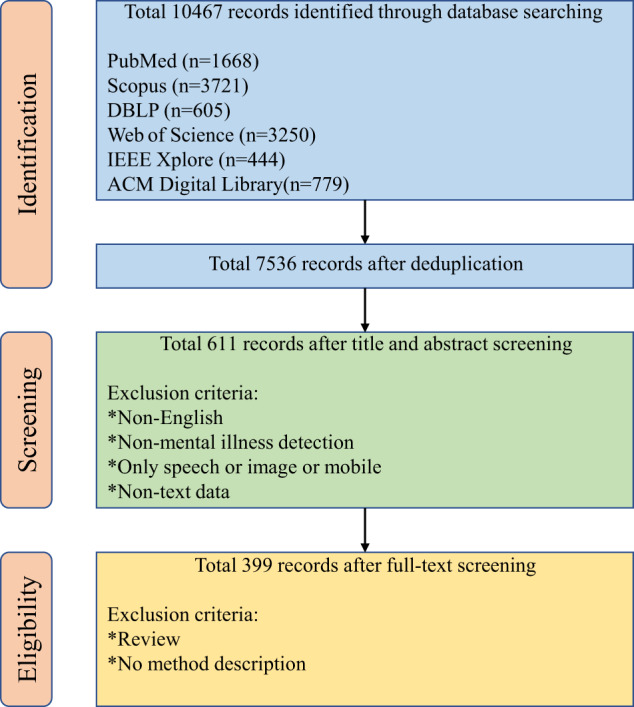
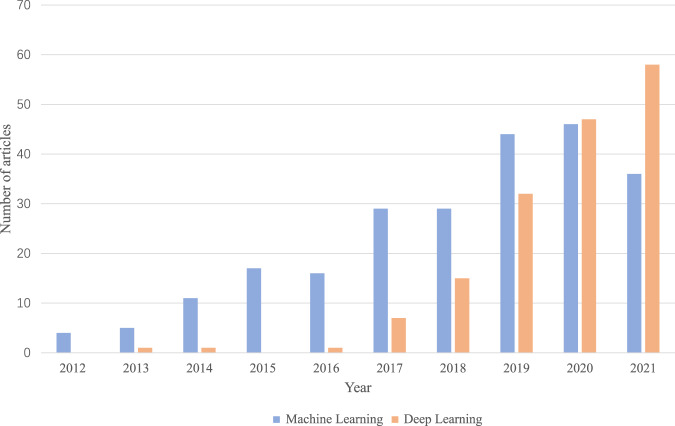
Mental illness is highly prevalent nowadays, constituting a major cause of distress in people’s life with impact on society’s health and well-being. Mental illness is a complex multi-factorial disease associated with individual risk factors and a variety of socioeconomic, clinical associations. In order to capture these complex associations expressed in a wide variety of textual data, including social media posts, interviews, and clinical notes, natural language processing (NLP) methods demonstrate promising improvements to empower proactive mental healthcare and assist early diagnosis. We provide a narrative review of mental illness detection using NLP in the past decade, to understand methods, trends, challenges and future directions. A total of 399 studies from 10,467 records were included. The review reveals that there is an upward trend in mental illness detection NLP research. Deep learning methods receive more attention and perform better than traditional machine learning methods. We also provide some recommendations for future studies, including the development of novel detection methods, deep learning paradigms and interpretable models.
Overview
The claims and statistics of this paper haven’t been checked yet.
Free: it reads the open-access text and checks the first 5 claims that cite a source we can check. Create a free account to check every claim.
Integrity signals
Registry
Cites
Statistics
Figures
Verification
Claims the paper makes
The claims and statistics of this paper haven’t been checked yet.
Free: it reads the open-access text and checks the first 5 claims that cite a source we can check. Create a free account to check every claim.
Claims other papers make about this one
Each is checked against this paper’s own text: does it say what the citing paper says it does?
The cited source says what the claim attributes to it.
In the citing paper
“In order to avoid missing studies, we crosschecked our study selection with existing literature reviews 8,10,13,17,19 and no additional studies were added.”
From Linguistic markers for identifying post-traumatic stress disorder and associated symptoms: a systematic literature review (2025) · cites this paper as [13]
Self-check
Percentages, sums and reported differences re-computed from the paper’s own numbers.
The self-check needs the paper’s full text.
Citations
Cites
Vaswani, A., Shazeer, N., Parmar, N., Uszkoreit, J., Jones, L., Gomez, A. N., Kaiser, L., & Polosukhin, I. (2017) · arXiv · doi:10.48550/arxiv.1706.03762 · Cited by 120,404 · cited 1×
“Recently, transformer architectures 147 were able to solve long-range dependencies using attention and recurrence.”
BackgroundHochreiter, S., & Schmidhuber, J. (1997) · Neural Computation · doi:10.1162/neco.1997.9.8.1735 · Cited by 102,318 · cited 13×
“RNN-based methods LSTM or GRU (some with attention mechanism) 32,133,136,232 – 234 Standard RNN structure: Long Short-Term Memory networks (LSTM) or Gate Recurrent Unit(GRU), and some studies add attention mechanism.”
MethodInfluentialLeCun, Y., Bengio, Y., & Hinton, G. (2015) · Nature · doi:10.1038/nature14539 · Cited by 84,126
Glove: Global Vectors for Word Representation
Pennington, J., Socher, R., & Manning, C. (2014) · Proceedings of the 2014 Conference on Empirical Methods in Natural Language Processing (EMNLP) · doi:10.3115/v1/d14-1162 · Cited by 34,071 · cited 1×
“There are many different embedding techniques, such as ELMo, GloVe word embedding 118 , word2vec 119 and contextual language encoder representations (e.g., bidirectional encoder representations from transformers (BERT) 120 and ALBERT[121).”
Method(2003) · Journal of Machine Learning Research · doi:10.5555/944919.944937 · Cited by 32,337
PRISMA-P Group, Moher, D., Shamseer, L., Clarke, M., Ghersi, D., Liberati, A., Petticrew, M., Shekelle, P., & Stewart, L. A. (2015) · Systematic Reviews · doi:10.1186/2046-4053-4-1 · Cited by 26,223
Learning Phrase Representations using RNN Encoder–Decoder for Statistical Machine Translation
Cho, K., van Merrienboer, B., Gulcehre, C., Bahdanau, D., Bougares, F., Schwenk, H., & Bengio, Y. (2014) · Proceedings of the 2014 Conference on Empirical Methods in Natural Language Processing (EMNLP) · doi:10.3115/v1/d14-1179 · Cited by 25,545 · cited 8×
“RNN-based methods LSTM or GRU (some with attention mechanism) 32,133,136,232 – 234 Standard RNN structure: Long Short-Term Memory networks (LSTM) or Gate Recurrent Unit(GRU), and some studies add attention mechanism.”
MethodInfluential"Why Should I Trust You?": Explaining the Predictions of Any Classifier
Ribeiro, M. T., Singh, S., & Guestrin, C. (2016) · Proceedings of the 22nd ACM SIGKDD International Conference on Knowledge Discovery and Data Mining · doi:10.1145/2939672.2939778 · Cited by 17,555
VADER: a parsimonious rule-based model for sentiment analysis of social media text
Hutto, C., & Gilbert, E. (2014) · Proceedings of the International AAAI Conference on Web and Social Media · doi:10.1609/icwsm.v8i1.14550 · Cited by 6,087
The Psychological Meaning of Words: LIWC and Computerized Text Analysis Methods
Tausczik, Y. R., & Pennebaker, J. W. (2010) · Journal of Language and Social Psychology · doi:10.1177/0261927x09351676 · Cited by 5,774
Research works printed but not linked: 21
- Khan A Husain MS Khan A Analysis of mental state of users using social media to predict depression! a survey Int. J. Adv. Res. Comput. Sci. 2018 9 100 106
- Trifan A Antunes R Matos S Oliveira JL Understanding depression from psycholinguistic patterns in social media texts Adv. Inf. Retr. 2020 12036 402
- Delahunty, F., Wood, I. D. & Arcan, M. First insights on a passive major depressive disorder prediction system with incorporated conversational chatbot. In Irish Conference on Artificial Intelligence and Cognitive Science (2018).
- Prakash, A., Agarwal, K., Shekhar, S., Mutreja, T. & Chakraborty, P. S. An ensemble learning approach for the detection of depression and mental illness over twitter data. In 2021 8th International Conference on Computing for Sustainable Global Development (INDIACom), pp. 565–570 (2021).
- Desmet, B. & Hoste, V. Recognising suicidal messages in dutch social media. In 9th International Conference on Language Resources and Evaluation (LREC), pp. 830–835 (2014).
- Zhou, D., Bousquet, O., Lal, T. N., Weston, J. & Schölkopf, B. Learning with local and global consistency. In Advances in Neural Information Processing Systems, pp. 321–328 (2004).
- Ghannay, S., Favre, B., Esteve, Y. & Camelin, N. Word embedding evaluation and combination. In Proc. Tenth International Conference on Language Resources and Evaluation (LREC’16), pp. 300–305 (2016).
- Mikolov, T., Chen, K., Corrado, G. & Dean, J. Efficient estimation of word representations in vector space. In Proc. 1st International Conference on Learning Representations (ICLR) Workshops Track. (2013).
- Devlin, J., Chang, M. W., Lee, K. & Toutanova, K. Bert: Pre-training of deep bidirectional transformers for languageunderstanding. In Proc. NAACL-HLT, pp. 4171–4186 (2019).
- Pascanu, R., Mikolov, T. & Bengio, Y. On the difficulty of training recurrent neural networks. In International Conference on Machine Learning, pp. 1310–1318 (2013).
- Bahdanau, D., Cho, K. & Bengio, Y. Neural machine translation by jointly learning to align and translate. In Proc. 3rd International Conference on Learning Representations (ICLR) (2015).
- Settles, B. Closing the loop: fast, interactive semi-supervised annotation with queries on features and instances. In Proc. 2011 Conference on Empirical Methods in Natural Language Processing, pp. 1467–1478 (2011).
- Maupomé, D. & Meurs, M. -J. Using topic extraction on social media content for the early detection of depression. In CLEF (Working Notes) vol. 2125 (2018)
- Wang, W. Y., Singh, S. & Li, J. Deep adversarial learning for nlp. In Proc. 2019 Conference of the North American Chapter of the Association for Computational Linguistics: Tutorials, pp. 1–5 (2019).
- Li, Y., Tian, X., Liu, T. & Tao, D. Multi-task model and feature joint learning. In Twenty-Fourth International Joint Conference on Artificial Intelligence (2015).
- Xu, Z., Pérez-Rosas, V. & Mihalcea, R. Inferring social media users’ mental health status from multimodal information. In Proc. 12th Language Resources and Evaluation Conference, pp. 6292–6299 (2020).
- Mittal, A. et al. Multi-modal detection of alzheimer’s disease from speech and text. In Proc. BIOKDD'21 (2021).
- Song, H., You, J., Chung, J. -W. & Park, J. C. Feature attention network: Interpretable depression detection from social media. In Proc. 32nd Pacific Asia Conference on Language, Information and Computation (2018).
- Stephen JJ Prabu P Detecting the magnitude of depression in twitter users using sentiment analysis Int. J. Electr. Comput. Eng. 2019 9 3247
- Mikolov, T., Sutskever, I., Chen, K., Corrado, G. S. & Dean, J. Distributed representations of words and phrases and their compositionality. In Advances in Neural Information Processing Systems, pp. 3111–3119 (2013).
- Bandyopadhyay, A., Achilles, L., Mandl, T., Mitra, M. & Saha, S. K. Identification of depression strength for users of online platforms: a comparison of text retrieval approaches. In Proc. CEUR Workshop Proceedings, vol. 2454, pp. 331–342 (2019).
Cited by
Items 201–300 of 475
Zanwar, S., Wiechmann, D., Qiao, Y., & Kerz, E. (2023) · Findings of the Association for Computational Linguistics: EACL · doi:10.18653/v1/2023.findings-eacl.113 · Cited by 16
“…as having transformative potential to support healthcare professionals in the diagnosis and treatment of mental disorders and enable people to lead healthy lives (see Guntuku et al. 2017; Thieme et al. 2020; Chancellor and De Choudhury 2020; Zhang et al. 2022 for recent overviews of this research).”
Interpretable Hierarchical Deep Learning Model for Noninvasive Alzheimer’s Disease Diagnosis
Zokaeinikoo, M., Kazemian, P., & Mitra, P. (2023) · INFORMS Journal on Data Science · doi:10.1287/ijds.2020.0005 · Cited by 3
Wang, Y., Yu, Y., Liu, Y., Ma, Y., & Pang, P. C. (2023) · JMIR Mental Health · doi:10.2196/49894 · Cited by 4
“ML-based and DL-based methods have been proven effective and used extensively for mental disorder detection, especially for depression and suicide [29].”
MethodDetecting Mental Health Disorders Using NLP
Tom, A., Das, G., Hemmige, J. B., Deshpande, P., Bangshi, S. R., Paduri, A. R., & Darapaneni, N. (2023) · IEEE Pune Section International Conference (PuneCon) · doi:10.1109/punecon58714.2023.10450025 · Cited by 3
“According to Zhang [30], the identification of mental illnesses, such as depression and suicide, has numerous applications.”
BackgroundLarge Language Models for Emotion Evolution Prediction
Leung, C. H. C., & Xu, Z. (2024) · Lecture notes in computer science · doi:10.1007/978-3-031-65154-0_1 · Cited by 4
Banerjee, P., Jana, C., Saha, J., & Chowdhury, C. (2024) · Multimedia Tools and Applications · doi:10.1007/s11042-024-19983-2 · Cited by 3
Detecting bipolar disorder on social media by post grouping and interpretable deep learning
Thamrin, S. A., Chen, E. E., & Chen, A. L. P. (2024) · Journal of Intelligent Information Systems · doi:10.1007/s10844-024-00884-7 · Cited by 3
“Although some studies have been conducted on detecting BD using social media data and machine learning techniques, the number of the studies is significantly smaller than that of depression (Zhang et al., 2022b).”
Lo, Y.-F., & Tai, Y. (2024) · Taiwanese Journal of Psychiatry · doi:10.4103/tpsy.tpsy_23_24 · Cited by 3
Machine Learning Driven Analysis of Mental Health Indicators in Social Media Posts
Garg, K., Garg, S., Dixit, H., & Pandey, K. (2024) · International Conference on Electronics and Sustainable Communication Systems (ICESC) · doi:10.1109/icesc60852.2024.10689856 · Cited by 3
“This paper [5] leverages the power of Natural Language Processing (referred as NLP onwards) algorithms in Machine Learning and state-of-art of the BERT model to refine and preprocess the data and to predict the results.”
MethodInsights from Artificial Intelligence and Green Finance: A Bibliometric Analysis
Rasheed, M. H., & Rasheed, M. S. (2024) · Palgrave studies in impact finance · doi:10.1007/978-3-031-65756-6_33 · Cited by 3
Roggendorf, P., & Волков, А. А. (2025) · International Journal of Health Governance · doi:10.1108/ijhg-11-2024-0140 · Cited by 4
The impact of artificial intelligence in early disease detection: A review
Saratkar, S., Thute, T., Choudhari, A., Raut, R., & Thakare, G. (2025) · AIP conference proceedings · doi:10.1063/5.0241977 · Cited by 3
Using Natural Language Processing as a Scalable Mental Status Evaluation TechniquePreprint
Wagner, M., Jagayat, J., Kumar, A., Shirazi, A., Alavi, N., & Omrani, M. (2023) · medRxiv · doi:10.1101/2023.12.15.23300047 · Cited by 3
“Deep learning methods have gained prominence in the field of mental illness detection, specifically in the task of natural language processing (NLP) [27, 10, 7, 4, 14].”
BackgroundFerrario, A., Sedláková, J., & Trachsel, M. (2024) · doi:10.2196/preprints.56569 · Cited by 3
Quillivic, R., Auxéméry, Y., Gayraud, F., Dayan, J., & Mesmoudi, S. (2025) · Journal of the American Medical Informatics Association · doi:10.1093/jamia/ocaf075 · Cited by 3
Automated Depression Detection Using CNN and Transformer-Based Pre-trained Language Models
Ramalakshmi, N. R., Kumar, M. G., & Raghavi, S. (2024) · IFIP advances in information and communication technology · doi:10.1007/978-3-031-73617-9_4 · Cited by 6
Harnessing the Power of NLP for Mental Health Diagnosis and Treatment
Narwaria, M., Mishra, R., Jaiswal, S., Dwivedi, V. K., Upadhyay, P., & Yadav, S. P. (2025) · IGI Global eBooks · doi:10.4018/979-8-3693-4203-9.ch005 · Cited by 2
Kohli, M., Juneja, M., Gupta, M., Kar, A. K., Sairam, S., Prakash, V. G., & Prathosh, A. P. (2025) · Biomedical Signal Processing and Control · doi:10.1016/j.bspc.2025.108034 · Cited by 3
Shi, Y., Zhang, Y., & Lei, L. (2025) · Cognitive Processing · doi:10.1007/s10339-025-01301-9 · Cited by 2
“Some studies have empirically investigated different types of cognitive distortions based on an analysis of lan - guage use by individuals with mental illness (Al-Mosaiwi and Johnstone 2018; Bathina et al. 2021; LeMoult et al. 2017 ; Rude et al. 2004 ; Zhang et al. 2022 ).”
Speech and Language Markers as Longitudinal Predictors of Youth Mental Health: A Systematic Review
Silva, M. S., Ahrens, J., Meister, F., & Palaniyappan, L. K. (2025) · Early Intervention in Psychiatry · doi:10.1111/eip.70102 · Cited by 3
Fatahillah, A. F., Yauwrentius, N. A., Faiza, P. R., Hasani, M. F., & Maulina, A. (2025) · Procedia Computer Science · doi:10.1016/j.procs.2025.09.069 · Cited by 2
Rao, K. S., Rajasekaran, V., Kotoju, R., & Shankar, L. S. (2025) · Lecture notes in networks and systems · doi:10.1007/978-981-96-9242-2_41 · Cited by 2
Leveraging AI and data science across the cervical cancer care continuum in developing economies
Wasswa, W., & Ware, A. (2025) · Discover Artificial Intelligence · doi:10.1007/s44163-025-00648-4 · Cited by 4
“Natural language processing models, through sentiment analysis, can be used to analyse patient narratives from digital platforms to assess emotional distress and recommend interventions [21].”
Sun, H., Zhang, N., Jiang, Y., Chen, H., Shi, Q., & Fang, J. (2026) · Scientific Reports · doi:10.1038/s41598-026-36804-8 · Cited by 6
“…or negative emotional content of texts such as social media posts and diaries, to reflect the overall mental health status of a population; (2)Psychological representation modeling 49,50 , which involves extracting language patterns that distinguish clinical populations from non-clinical ones 51 .”
Liu, W., Zhang, Z., Du, L., & Qiu, J. (2026) · Frontiers in Psychiatry · doi:10.3389/fpsyt.2026.1752423 · Cited by 2
“The application of AI in mental health screening has advanced signi fi cantly, evolving from basic sentiment analysis to sophisticated behavioral and linguistic modeling (16, 17).”
Natural Language Processing in Healthcare: From Unstructured Data to Clinical Intelligence
Kumar, D., Choudhary, N., Gupta, V., Tanwar, R., Bahmani, K., Antal, S., Jarora, S., Gupta, S., Shaikh, M. S., Webster, T. J., et al. (2026) · Intelligent Systems with Applications · doi:10.1016/j.iswa.2026.200698 · Cited by 3
Khunruksa, S., & Wangsiripitak, S. (2023) · International Conference on Business and Industrial Research (ICBIR) · doi:10.1109/icbir57571.2023.10147692 · Cited by 2
“In the same direction, the advancement of Natural Language Processing (NLP) has had a significant impact on the study of depression detection [12].”
BackgroundWang, S. B., Dempsey, W., Hunt, R. A., & Nock, M. K. (2023) · Oxford University Press eBooks · doi:10.1093/oxfordhb/9780197611272.013.34 · Cited by 3
Corthésy-Blondin, L., Lemyre, A., Poitras, M., & Guay, S. (2023) · Technology Mind and Behavior · doi:10.1037/tmb0000121 · Cited by 2
Rajput, S. Q., Memon, K., & Palli, G. H. (2024) · Mehran University Research Journal of Engineering and Technology · doi:10.22581/muet1982.2401.2175 · Cited by 3
Toloza, I. L. M., & Meza, J. A. D. (2024) · Revista Politécnica · doi:10.33333/rp.vol53n1.06 · Cited by 3
“…analizados, se identifica que las redes sociales más usadas fueron Twitter y Reddit, seguida de Facebook, cuyo resultado es similar al obtenido por Zhang et al. (2022), quienes consideran que estas redes sociales, además de ser de las más estudiadas y populares (Harrigian et al., 2020), se…”
BackgroundDepression Analysis of Twitter Dataset Using Natural Language Processing Techniques
Sathwik, A. S., Naseeba, B., Saiteja, B., Challa, N. P., Jajam, N., & KumarTalupuri, P. (2023) · International Conference on Computational Intelligence, Networks and Security (ICCINS) · doi:10.1109/iccins58907.2023.10450094 · Cited by 2
Mental Health Detection using Machine Learning
Naidu, P. B., Ruchitha, M. M. C., Yaswanth, P., Harika, B., Prabhu, P., & Sree, G. V. D. (2024) · International Journal of Innovative Science and Research Technology (IJISRT) · doi:10.38124/ijisrt/ijisrt24apr701 · Cited by 2
FROM FOXPRO TO POSTGRESQL: OPTIMIZATION, EFFECTIVE DATA MANAGEMENT, AND REPORT GENERATION
Markevich, D. V., Хомоненко, А. Д., & Ermakov, S. G. (2024) · H&ES Research · doi:10.36724/2409-5419-2024-16-1-21-30 · Cited by 2
Wolff, B., Glasson, E. J., & Pestell, C. (2024) · Journal of Research on Adolescence · doi:10.1111/jora.12981 · Cited by 2
Thamrin, S. A., & Chen, A. L. P. (2024) · IEEE International Conference on Healthcare Informatics (ICHI) · doi:10.1109/ichi61247.2024.00098 · Cited by 5
“Word embedding is a method used in many studies to extract text features from text data to detect mental disorders [1]–[4].”
MethodResultEvaluation of BERT-Based Models on Patient Data from French Social Media
Priol, E. L., Talmatkadi, M., Schück, S., Texier, N., & Burgun, A. (2024) · Studies in health technology and informatics · doi:10.3233/shti240556 · Cited by 2
Lange, M., Koliousis, A., Fayez, F., Gogarty, E., & Twumasi, R. (2025) · PLoS ONE · doi:10.1371/journal.pone.0315768 · Cited by 4
“Detection of general mental illnesses and even reliable estimation of population mental health is possible through analyses of social media posts, surveys, narrative writings, and interviews [47–50].”
Exploring mental health literacy on twitter: A machine learning approach
Lien, Y., Feng, H., Tseng, Y., Chen, C.-H., & Tseng, W.-H. (2025) · Journal of Affective Disorders · doi:10.1016/j.jad.2025.04.097 · Cited by 2
Insights from the civil-military integration during COVID-19 pandemic: a bibliometric assessment
Tan, Q., Rasheed, M. H., & Rasheed, M. S. (2025) · Discover Social Science and Health · doi:10.1007/s44155-025-00174-9 · Cited by 1
“Notably, the results it yields are both reliable and valid with respect to various facets of the human psyche, encompassing but not limited to the identification of mood, values, emotions, and communication modalities [31, 32].”
A Deep Learning Approach to Unveil Types of Mental Illness by Analyzing Social Media Posts
Dash, R., Udgata, S., Mohapatra, R., Dash, V., & Das, A. (2025) · Mathematical and Computational Applications · doi:10.3390/mca30030049 · Cited by 3
“However, nowadays, social media has become a unique platform for individuals to express their emotions and seek support more quickly [3–6].”
Xu, J., Zhou, Y., Liu, Q., Li, K., & Yang, H. (2025) · PLoS ONE · doi:10.1371/journal.pone.0321154 · Cited by 9
“…[3]) in recent years and the great achievements of deep learning in many fields such as image processing [4–6], object detection [7–8], and natural language processing [9–11], people have shown great interest in solving partial differential equations through data-driven deep learning methods.”
Memon, G. F., Syed, M. S. S., Saba, E., & Laghari, S. A. (2025) · VFAST Transactions on Software Engineering · doi:10.21015/vtse.v13i2.2139 · Cited by 2
A Narrative Review on Human Anxiety Detection in Social Media using Natural Language Processing
Senanayake, A., & Liyanage, S. R. (2023) · The journal of desk research review and analysis. · doi:10.4038/jdrra.v1i2.20 · Cited by 2
Deteccion de Ideas Suicidas en Twitter
Butron, J. B., Franco, D. B. L., & Usca, D. R. T. (2023) · Innovación y software · doi:10.48168/innosoft.s12.a97 · Cited by 1
DECISION SUPPORT CONCEPT FOR LIFECYCLE SUPPORT PROBLEMS OF COMPLEX TECHNICAL SYSTEMS
", M. I. T., Gusenitza, Y. N., ERA", Donchenko, A. A., Lyaskin, A. S., & "ERA", M. I. T. (2024) · H&ES Research · doi:10.36724/2409-5419-2024-16-1-31-38 · Cited by 2
Tuli, S., Verma, V. K., & Mathur, P. (2024) · International Conference on Computing, Communication and Networking Technologies (ICCCNT) · doi:10.1109/icccnt61001.2024.10725293 · Cited by 1
“These exchanges take the form of text posts, photos, videos, and shared links[14].”
BackgroundEmotion Aware AI for Mental Health Monitoring
Jadhav, S., Kushwaha, E., Tripathy, A., & Bhatia, C. K. (2024) · International Journal of Advanced Research in Science Communication and Technology · doi:10.48175/ijarsct-22114 · Cited by 3
Early detection of depression on Twitter using machine learning techniques and pre-processing steps
Kamil, R., & Abbas, A. R. (2025) · AIP conference proceedings · doi:10.1063/5.0254606 · Cited by 1
Detecting Depression: Employing Natural Language Processing and Random Forests
Gupta, M., Patki, S. M., & Valadi, J. K. (2025) · Smart innovation, systems and technologies · doi:10.1007/978-981-97-8096-9_8 · Cited by 1
Ho, M. Q., O’Connor, C., Rozenberg‐Ben‐Dror, K., Ahmed, M. S., & Slazinski, K. (2025) · Open Forum Infectious Diseases · doi:10.1093/ofid/ofaf113 · Cited by 2
Priya, B. V., Chinnammal, V., Srinu, N., K, S. S. K. P., Selvam, M. M., & Vijay, S. (2024) · International Conference on Innovative Computing, Intelligent Communication and Smart Electrical Systems (ICSES) · doi:10.1109/icses63760.2024.10910487 · Cited by 1
“Improving outcomes and successfully treating mental health depend on early prediction leading to timely treatments [4][5][6].”
Current Applications of Artificial Intelligence in Psychiatry
Kerna, N. A., Boulos, A., Abreu, M., Chigozie, I. K., Fide-Nwoko, F. U., Arube, E. R., Eziechi, E. S., Holets, H. M., Pruitt, K. D., Jomsky, B. M., et al. (2025) · Scientia. Technology, science and society. · doi:10.59324/stss.2025.2(4).10 · Cited by 2
“NLP methods have been applied to clinical notes and interview transcripts to detect symptom patterns, sentiment, and semantic structures (Zhang et al., 2022).”
Gender, Age, and Depression detection with BERT-based multitask model
Oulahbib, I., Benhaddi, M., & Hadaj, S. E. (2025) · International Conference on Innovative Research in Applied Science, Engineering and Technology (IRASET) · doi:10.1109/iraset64571.2025.11008193 · Cited by 1
“The DP problem is well-addressed in the literature, as high-lighted in [11], with more publications focusing on this issue compared to other mental illnesses, such as suicide, stress, and anxiety detection.”
Exploring Mental Health Status Correlations Through Topic Modeling on Social Media Data
Nanda, K., & Santhanalakshmi, S. (2025) · International Conference on Pervasive Computing and Social Networking (ICPCSN) · doi:10.1109/icpcsn65854.2025.11035345 · Cited by 1
“In [7] Tianlim Zhang et al. give a review on how ML and DL techniques are used in detecting mental health disorders using textual data from various sources like social media, posts, notes, interviews, etc., using various methods like neural networks, LSTM, SVM, trees, etc.”
Classification of Suicidal Texts Based on Emotional Change Detection Using LSTM
García-Galindo, M. D. C., Hernández-Castañeda, Á., García-Hernández, R. A., & Ledeneva, Y. N. (2025) · Lecture notes in computer science · doi:10.1007/978-3-031-96255-4_12 · Cited by 1
Examination of Machine Learning Algorithms in Diagnosis of Neurological and Mental Diseases
Hamidi, H., & Pourmazar, S. A. H. (2026) · International Journal of Engineering · doi:10.5829/ije.2026.39.02b.14 · Cited by 2
An AI-Driven Multifaceted Approach to Mental Health: Leveraging Technology for Mental Well-Being
Biswas, S., Patil, B. M., & Bhattacharjee, S. (2025) · Design science and innovation · doi:10.1007/978-981-96-4383-7_24 · Cited by 1
Thamrin, S. A., & Chen, A. L. P. (2025) · IEEE Transactions on Affective Computing · doi:10.1109/taffc.2025.3606887 · Cited by 1
“Besides, the post can be used to trace the user who posted it [19].”
InfluentialLim, D., Lee, K., Jo, J., Lim, H., Bae, H., & Kang, C. (2025) · Applied Sciences · doi:10.3390/app151810170 · Cited by 2
Nursaid, N., Ghaluh, B. M., & Wulandari, E. (2025) · Language Teaching Research · doi:10.1177/13621688251368636 · Cited by 5
Risk Analysis of Mental Health Using Chatbot Based on Text Detection Model
Nagaraju, M., Kakulapati, V., Vaishnavi, P., Neha, A. N. S. V., & Vaishnavi, M. (2025) · Lecture notes in electrical engineering · doi:10.1007/978-981-95-0269-1_165 · Cited by 1
A Perspective on Innovating Qualitative Research Methods to Optimise Women’s Health Research
Delanerolle, G., Pathiraja, V., Mudalige, T., Mbwele, B., Ikwuka, D. C., Cavalini, H. F. S., Isaiah, E., Eleje, L. İ., Peiris, K., Kemp, H. F., et al. (2025) · International Journal of Qualitative Methods · doi:10.1177/16094069251406147 · Cited by 3
“However, concerns about the technical expertise required and the perceived loss of depth and nuance in automated analysis have hindered widespread adoption (Zhang et al., 2022).”
Son, D., Kim, G., Oh, H., & Sundar, S. S. (2025) · Engineering Applications of Artificial Intelligence · doi:10.1016/j.engappai.2025.113447 · Cited by 1
Wagay, F. A., & Jahiruddin (2026) · Acta Psychologica · doi:10.1016/j.actpsy.2025.106191 · Cited by 2
Understanding mental health discourse on Reddit with transformers and explainability
Rodríguez, I. S., Bianchi, J., Pinelli, F., Panizza, F., Ricciardi, E., Pietrini, P., & Petrocchi, M. (2026) · Scientific Reports · doi:10.1038/s41598-026-35918-3 · Cited by 7
“This design aligns with calls to pair modern models with transparent interpretability practices in mental health NLP 14 .”
InfluentialMarafino, B. J., Kline‐Simon, A. H., Stavers-Sosa, I., Cronkite, D., Gerstley, L. D., Durojaiye, C., Kelley, A. M., Kiel, L. M., Ramaprasan, A., Carrell, D., et al. (2026) · BMC Psychiatry · doi:10.1186/s12888-026-07846-z · Cited by 2
“In fact, numerous studies demonstrate the utility of NLP-based prediction models for various psychiatric conditions [9, 10].”
Enhancing Depression Detection With Cognitive Distortion and User-Level Information
Wan, Y., Dong, Z., Jiang, B., Li, M., & Ju, S. (2026) · IEEE Journal of Biomedical and Health Informatics · doi:10.1109/jbhi.2026.3665518 · Cited by 1
“For Set sce i , we continue to categorize these data according to the type of cognitive distortion labels in order to construct the set of mind texts under the same label type Set sce i ,cd j , j ∈ [1 , 8] .”
Landau, C., Getty, P., Gruler, C., Stadje, R., Arampatzi, S., Mandal, A., Goel, A., Gurevych, I., Reif, A., & Grimm, O. (2026) · Frontiers in Digital Health · doi:10.3389/fdgth.2026.1616955 · Cited by 2
Mallarapu, S., Liu, X., Zargarian, P., Mottaghian, S., Suresha, R., Jain, V., & Bayat, A. (2026) · Computers · doi:10.3390/computers15030161 · Cited by 3
Federated Learning for Mental Health Disorder Detection: A CNN-LSTM Approach with Non-IID Data
Marron, G. A. C., Mamani-Aliaga, A., & Bustincio, R. W. C. (2025) · International Conference of the Chilean Computer Science Society (SCCC) · doi:10.1109/sccc67219.2025.11420615 · Cited by 1
“We propose a hybrid CNN-LSTM architecture as the core model, which combines the strengths of both architectures: CNNs for local feature extraction and LSTMs for handling sequential dependencies and long-term context, leading to improved performance in complex NLP tasks like Sentiment Analysis [2].”
InfluentialWhat is the retest reliability of computationally extractable speech and language markers?
Çokal, D., Villalba, M., Rui, H., Palominos, C., Böke, A., Homan, P., von Heusinger, K., Kambeitz, J. P., & Hinzen, W. (2026) · Computer Speech & Language · doi:10.1016/j.csl.2026.101981 · Cited by 4
Rohei, M. S., Varathan, K. D., Shivakumara, P., & Anuar, N. B. (2026) · PeerJ Computer Science · doi:10.7717/peerj-cs.3559 · Cited by 2
Detecting Mental Illness Using Face Recognition Techniques
Wasnik, P. A., & Pathak, S. (2026) · Communications in computer and information science · doi:10.1007/978-3-032-20907-8_17 · Cited by 1
Thamrin, S. A., & Chen, A. L. P. (2026) · Health Information Science and Systems · doi:10.1007/s13755-026-00446-x · Cited by 3
“Among social media platforms, datasets from Twitter are commonly used for mental disorder detection, including depression [50].”
Cornaglia, F., Hackmann, M. B., Hackmann, N., Vigliotti, V. S., & Turri, M. G. (2026) · Wellbeing Space and Society · doi:10.1016/j.wss.2026.100388 · Cited by 1
A scoping review on conversational AI in mental health: A human-centered perspective
Li, J., Li, H., Zhu, H., Walter, H., Banaschewski, T., Li, C., Li, X., & Zhang, Y. (2026) · International Journal of Medical Informatics · doi:10.1016/j.ijmedinf.2026.106460 · Cited by 5
A Systematic Review of Transformer-Based Models for Depression Detection
Zhou, S., Mohd, M., & Zakaria, L. Q. (2026) · Applied Sciences · doi:10.3390/app16105018 · Cited by 4
Transforming depression research: The role of artificial intelligence and computational modelling
Somkuwar, S. S., Hussain, U., Sahu, D. C., Sheikh, M. T., Sheikh, S. M., Gautam, M. M., Meshram, S. S., & Belgamwar, V. S. (2026) · In Silico Research in Biomedicine · doi:10.1016/j.insi.2026.100492 · Cited by 2
Natural Language Processing Applied to Psychiatric Clinical Notes: Scoping Review
Rao, S., Chen, X. R., Deng, G., Xie, J., Jiang, T., Li, T., Zhang, Y., & Jiang, H. (2026) · JMIR Medical Informatics · doi:10.2196/91249 · Cited by 2
“Some reviews are highly specialized, concentrating on specific aspects such as mental illness detection [17] or intervention tools [18].”
Hammad, R., & Rababah, S. (2026) · Frontiers in Artificial Intelligence · doi:10.3389/frai.2026.1861620 · Cited by 1
“The gathering of data is the basis of machine learning and NLP applications in medicine, and there are different ways to collect the necessary data from social media platforms, patients’ reviews, and clinical data (Parrott et al., 2020; Herrera-Peco et al., 2023; Zhang et al., 2022).”
Choey, M. (2023) · International conference Recent advances in natural language processing · doi:10.26615/978-954-452-092-2_028 · Cited by 1
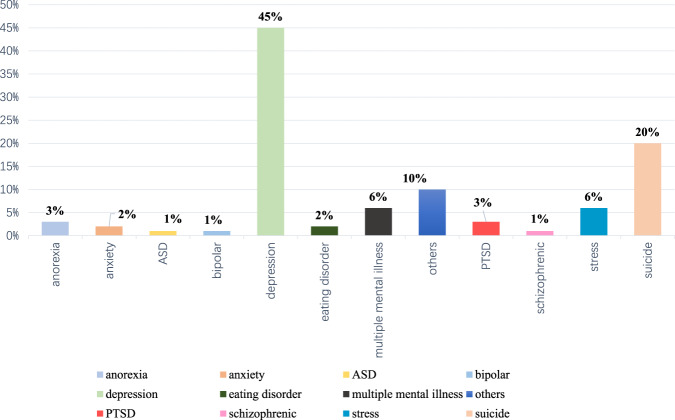
“In addition to depression and anxiety disorders, suicidal ideation, bipolar disorder, autism spectrum disorder (ASD), substance use disorder, and eating disorders such as bulimia and anorexia nervosa fall under the umbrella of mental illness (Zhang et al., 2022).”
BackgroundProbabilistic Performance Bounds for Evaluating Depression Models Given Noisy Self-Report Labels
Różański, R., Shriberg, E. E., Lü, Y., Harati, A., Rutowski, T., Chlebek, P., Goulart, T., & Oliveira, R. (2023) · IEEE International Conference on Bioinformatics and Biomedicine (BIBM) · doi:10.1109/bibm58861.2023.10385617 · Cited by 1
“Studies have explored the use of pre-computed features e.g. [6]–[9], Automatic Speech Recognition (ASR) combined with Natural Language Processing (NLP) e.g. [10]–[12], as well as acoustic signal processing e.g. [13]–[15].”
BackgroundMethodParamita, G. V., Andangsari, E. W., Kemala, A. P., Ali, M. M., Putri, T. M., & Puspita, K. I. (2023) · IEEE International Conference on Social Sciences and Intelligence Management (SSIM) · doi:10.1109/ssim59263.2023.10468872 · Cited by 2
“This approach helps researchers understand more about user mental health status [16,17].”
BackgroundIdentifying patients in need of psychological treatment with language representation models
Aygün, İ., Kaya, B., & Kaya, M. (2024) · Multimedia Tools and Applications · doi:10.1007/s11042-024-18992-5 · Cited by 1
Exploring the Potential of Machine Learning in Healthcare Accuracy Improvement
Veeramani, S., Ramesh, S. M., & Gomathy, B. (2023) · WSEAS Transactions on Computers archive · doi:10.37394/23205.2023.22.42 · Cited by 1
Design and Implementation of English Writing Aids Based on Natural Language Processing
Huang, R. (2024) · Journal of Electrical Systems · doi:10.52783/jes.3132 · Cited by 5
“Moreover, real-time feedback mechanisms ensure seamless interaction, providing instantaneous corrections and suggestions as users compose their text[15].”
BackgroundInnovative Approaches to Addressing Pediatric Mental Health
Maslow, G., Chung, R. J., Heilbron, N., & Walter, B. K. (2024) · Pediatric Clinics of North America · doi:10.1016/j.pcl.2024.07.019 · Cited by 2
Chien, C.-W., & Tai, Y. (2024) · Taiwanese Journal of Psychiatry · doi:10.4103/tpsy.tpsy_25_24 · Cited by 2
Hansen, L. B. P., Bernstorff, M., Enevoldsen, K., Kolding, S., Damgaard, J. G., Perfalk, E., Nielbo, K. L., Danielsen, A. A., & Østergaard, S. D. (2024) · Neuroscience Applied · doi:10.1016/j.nsa.2024.104420 · Cited by 1
Artificial intelligence in insanity evaluation. Potential opportunities and current challenges
Scarpazza, C., & Zangrossi, A. (2025) · International Journal of Law and Psychiatry · doi:10.1016/j.ijlp.2025.102082 · Cited by 6
Case Study to Role of Large Language Models in Prediction of the Future Illness
Thakar, H. A., Pradhan, V., Sarda, J. S., Brahma, B., & Bhoi, A. K. (2025) · Studies in computational intelligence · doi:10.1007/978-3-031-82516-3_13 · Cited by 2
Unified Mental Health Disorder Detection on Social Media
Dodun-Des-Perrieres, D., & Răschip, M. (2025) · IFIP advances in information and communication technology · doi:10.1007/978-3-031-96231-8_33 · Cited by 1
NLP as a Lens for Causal Analysis and Perception Mining to Infer Mental Health on Social MediaPreprint
Garg, M., Saxena, C., Naseem, U., Sohn, S., & Dorr, B. J. (2023) · doi:10.36227/techrxiv.21972974 · Cited by 2
Using natural language from a smartphone pregnancy app to identify maternal depressionPreprint
Krishnamurti, T., Allen, K., Hayani, L., Rodriguez, S. N., Rothenberger, S. D., Moses‐Kolko, E. L., & Simhan, H. N. (2023) · Research Square · doi:10.21203/rs.3.rs-2583296/v1 · Cited by 5
Natural language processing of narrative writing for depression screening in adolescentsPreprint
Yang, A. (2023) · PsyArXiv (OSF Preprints) · doi:10.31234/osf.io/5f9nb · Cited by 2
Barrios, J., Gabay, S., Cafiero, F., & Debbané, M. (2023) · PsyArXiv (OSF Preprints) · doi:10.31234/osf.io/s5cm3 · Cited by 3
Quillivic, R., Gayraud, F., Auxéméry, Y., Vanni, L., Peschanski, D., Eustache, F., Dayan, J., & Mesmoudi, S. (2023) · Research Square · doi:10.21203/rs.3.rs-3747882/v1 · Cited by 1
Exploratory analysis of suicidal tendency in depression investigation social media postPreprint
Mobin, I., Mridha, M. F., & MAHMUD, S. M. H. (2024) · Research Square · doi:10.21203/rs.3.rs-3823798/v1 · Cited by 2
Artificial Intelligence and Large Language Models in Mental Healthcare
Pradhan, D., Sahu, P. K., Tun, H. M., & Chatterjee, P. (2024) · Wiley eBooks · doi:10.1002/9781394297443.ch10 · Cited by 2
Metadata
- Authors
- Zhang, T., Schoene, A. M., Ji, S., & Ananiadou, S.
- Affiliations
- University of Manchester (GB)
- Aalto University (FI)
- Corresponding author
- Ananiadou, Sophia
- Venue
- npj Digital Medicine
- Published
- 2022-04-08
- Volume
- 5
- Issue
- 1
- Pages
- 46-46
- ISSN
- 2398-6352 (ISSN-L)
- PMC
- PMC8993841
- OpenAlex
- W4223610593
- Semantic Scholar
- 099f8bf42b95a4c239bc338b05821b592c60f44b
- Cited by
- 476
- References
- 204
- Citations by year
- 2026: 101 · 2025: 144 · 2024: 124 · 2023: 85 · 2022: 22
- FWCI
- 14.07
- Type
- journal article
- Language
- en
- Open access
- gold
- doi.org
- Licence
- cc-by
- creativecommons.org/licenses/by/4.0 (tdm)
- creativecommons.org/licenses/by/4.0 (vor)
- Locations
- npj Digital Medicine (publishedVersion, cc-by)
- PubMed Central (publishedVersion, cc-by)
- PubMed (publishedVersion)
- Aaltodoc (Aalto University) (submittedVersion, cc-by)
- DOAJ (DOAJ: Directory of Open Access Journals) (submittedVersion)
- Research Explorer (The University of Manchester) (submittedVersion)
- Funders
- Alan Turing Institute
- Horizon 2020 Framework Programme (874703)
- Topics
- Social Sciences › Psychology › Social Psychology › Mental Health via Writing
- Physical Sciences › Computer Science › Artificial Intelligence › Sentiment Analysis and Opinion Mining
- Physical Sciences › Computer Science › Artificial Intelligence › Emotion and Mood Recognition
- Keywords
- mental disorder detection, natural language processing, early diagnosis, social media text analysis, clinical notes, deep learning, interpretable models, mental health services, text classification
About these checks
Registry, retraction, Cites and statistics results are computed, not judged, with one exception: a printed reference that no index lists is read once by a model before it counts as a citation error. Claims are extracted by a model and kept only when their quote appears verbatim in the text; each cited source is then checked, with a model’s help, for whether it says what the claim relies on. Those verdicts can be wrong — read the claim’s quote and the cited source before relying on one.
Statistics and arithmetic are recomputed, not judged.
Confidence bands are shown only for fields calibrated on our annotated test set. None is calibrated yet, so no band is shown.
What counts as a claim ›How we measure confidence ›How we check this ›
Are you an author, or do you see a problem with this page? Request a review
Data sources
Bibliographic data: Semantic Scholar, OpenAlex, Crossref.
Contains information from the Semantic Scholar Academic Graph Datasets, made available under the ODC Attribution License (ODC-BY 1.0).
Semantic Scholar’s data is described in: Kinney, R., et al. (2023). The Semantic Scholar Open Data Platform. arXiv:2301.10140.
