

A framework for human evaluation of large language models in healthcare derived from literature review.
Open accessThe DOI matches its Crossref record; 107 of the 107 references it cites were found in a registry or an index.
Abstract
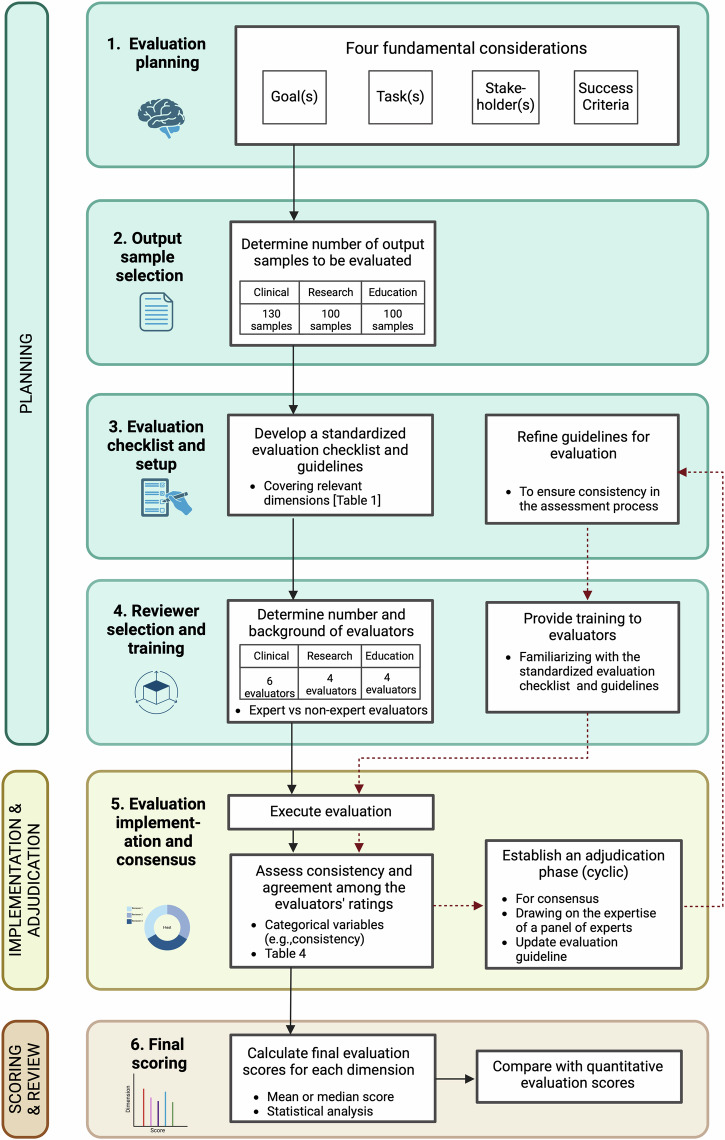
With generative artificial intelligence (GenAI), particularly large language models (LLMs), continuing to make inroads in healthcare, assessing LLMs with human evaluations is essential to assuring safety and effectiveness. This study reviews existing literature on human evaluation methodologies for LLMs in healthcare across various medical specialties and addresses factors such as evaluation dimensions, sample types and sizes, selection, and recruitment of evaluators, frameworks and metrics, evaluation process, and statistical analysis type. Our literature review of 142 studies shows gaps in reliability, generalizability, and applicability of current human evaluation practices. To overcome such significant obstacles to healthcare LLM developments and deployments, we propose QUEST, a comprehensive and practical framework for human evaluation of LLMs covering three phases of workflow: Planning, Implementation and Adjudication, and Scoring and Review. QUEST is designed with five proposed evaluation principles: Quality of Information, Understanding and Reasoning, Expression Style and Persona, Safety and Harm, and Trust and Confidence.
Overview
The claims and statistics of this paper haven’t been checked yet.
Free: it reads the open-access text and checks the first 5 claims that cite a source we can check. Create a free account to check every claim.
Integrity signals
Registry
Cites
Statistics
Figures
Verification
Claims the paper makes
The claims and statistics of this paper haven’t been checked yet.
Free: it reads the open-access text and checks the first 5 claims that cite a source we can check. Create a free account to check every claim.
Claims other papers make about this one
Each is checked against this paper’s own text: does it say what the citing paper says it does?
The cited source says what the claim attributes to it.
In the citing paper
“Healthcare evaluation frameworks already stress reliability, generalizability, human evaluation, safety, harm, trust, and confidence [24].”
From Machine Psychometrics: A Mathematical Psychology of Artificial Intelligence (2026) · cites this paper as [24]
In the citing paper
“Tam et al. 168 reviewed 142 papers on the human evaluation of LLM application in healthcare in general and find that generalizability, applicability, and reliability are lacking in current evaluation practices”
From Data extraction methods for systematic review (semi)automation: Update of a living systematic review (2025) · cites this paper as [168]
Self-check
Percentages, sums and reported differences re-computed from the paper’s own numbers.
The self-check needs the paper’s full text.
Citations
Cites
BLEU: a method for automatic evaluation of machine translation
Papineni, K., Roukos, S., Ward, T., & Zhu, W.-J. (2001) · Proceedings of the 40th Annual Meeting on Association for Computational Linguistics - ACL '02 · doi:10.3115/1073083.1073135 · Cited by 21,344
RoBERTa: A Robustly Optimized BERT Pretraining Approach
Liu, Y., Ott, M., Goyal, N., Du, J., Joshi, M., Chen, D., Levy, O., Lewis, M., Zettlemoyer, L., & Stoyanov, V. (2019) · arXiv · doi:10.48550/arxiv.1907.11692 · Cited by 16,515 · cited 1×
“Wealsoexcludedstudieswhichexamine onlynon-generativepretrainedlanguagemodelslikeBERT 59 , RoBERTa 60 , etc. and multimodal studies such as image-to-text or text-to-image application of generative LLMs.”
BackgroundLearning Transferable Visual Models From Natural Language Supervision
Radford, A., Kim, J. W., Hallacy, C., Ramesh, A., Goh, G., Agarwal, S., Sastry, G., Askell, A., Mishkin, P., Clark, J., et al. (2021) · arXiv · doi:10.48550/arxiv.2103.00020 · Cited by 15,293 · cited 1×
“There are also technical advancements of multimodal LLMs and text-to-image foundational models such as CLIP 58 .”
BackgroundBeyond Accuracy: What Data Quality Means to Data Consumers
Wang, R. Y., & Strong, D. M. (1996) · Journal of Management Information Systems · doi:10.1080/07421222.1996.11518099 · Cited by 4,672
Training language models to follow instructions with human feedback
Ouyang, L., Wu, J., Jiang, X., Almeida, D., Wainwright, C. L., Mishkin, P., Zhang, C., Agarwal, S., Slama, K., Ray, A., et al. (2022) · arXiv · doi:10.48550/arxiv.2203.02155 · Cited by 4,208
Large language models encode clinical knowledge
Singhal, K., Azizi, S., Tu, T., Mahdavi, S. S., Wei, J., Chung, H. W., Scales, N., Tanwani, A., Cole-Lewis, H., Pfohl, S., et al. (2023) · Nature · doi:10.1038/s41586-023-06291-2 · Cited by 4,083
Large Language Models Encode Clinical Knowledge
Singhal, K., Azizi, S., Tu, T., Mahdavi, S. S., Wei, J., Chung, H. W., Scales, N., Tanwani, A., Cole-Lewis, H., Pfohl, S., et al. (2022) · arXiv · doi:10.48550/arxiv.2212.13138 · Cited by 4,083
Charnock, D., Shepperd, S., Needham, G., & Gann, R. (1999) · Journal of Epidemiology and Community Health · doi:10.1136/jech.53.2.105 · Cited by 3,329
Ayers, J. W., Poliak, A., Dredze, M., Leas, E. C., Zhu, Z., Kelley, J. B., Faix, D. J., Goodman, A. M., Longhurst, C. A., Hogarth, M., et al. (2023) · JAMA Internal Medicine · doi:10.1001/jamainternmed.2023.1838 · Cited by 2,613
Llama 2: Open Foundation and Fine-Tuned Chat Models
Touvron, H., Martin, L., Stone, K., Albert, P., Almahairi, A., Babaei, Y., Bashlykov, N., Batra, S., Bhargava, P., Bhosale, S., et al. (2023) · arXiv · doi:10.48550/arxiv.2307.09288 · Cited by 2,604
Research works printed but not linked: 4
- 8. Lin, C.-Y. ROUGE: a package for automatic evaluation of summaries. Text Summarization Branches Out (Association for Computational Linguistics, Barcelona, Spain, 2004).
- 59. Devlin, J., Chang, M.-W., Lee, K. & Toutanova, K. Bert: pre-training of deep bidirectional transformers for language understanding. Proceedings of the 2019 Conference of the North {A}merican Chapter of the Association for Computational Linguistics: Human Language Technologies, Vol. 1 (Long and Short Papers) (eds Burstein, J Doran, C & Solorio, T.) 4171–4186 (Association for Computational Linguistics, 2019).
- 94. Parasuraman, A., Berry, L. L. & Zeithaml, V. A. Refinement and reassessment of the SERVQUAL scale. J. Retail. 67, 420 (1991).
- 97. Biggs, J. B. & Collis, K. F. Evaluating the Quality of Learning: The SOLO Taxonomy (Structure of the Observed Learning Outcome) (Academic Press, 2014).
Cited by
Items 201–300 of 495
Yang, N., Li, K., Liu, B., Chen, X., Jiang, A., Chang, Q., Gan, W., Zhu, L., Mou, W., Zeng, D., et al. (2026) · Intelligent Oncology · doi:10.1016/j.intonc.2026.100039 · Cited by 1
Evaluation Metrics and Ethical Concerns in the Design of Adaptive AI Chatbots
Krouska, A., Troussas, C., Mylonas, P., Voyiatzis, I., & Sgouropoulou, C. (2025) · South-East Europe Design Automation, Computer Engineering, Computer Networks and Social Media Conference (SEEDA-CECNSM) · doi:10.1109/seeda-cecnsm68644.2025.11329686 · Cited by 1
Park, C., Bae, S. H., Park, H. W., Oh, N. S., Kim, Y. J., Kim, Y.-W., Cho, T. J., Li, Y., Chai, J., Zhao, J., et al. (2026) · Journal of Microbiology and Biotechnology · doi:10.4014/jmb.2511.11050 · Cited by 1
“To evaluate the quality of responses generated by our domain-specialized METABOLISM focused on the gut-liver axis knowledge, we implemented a structured human expert assessment protocol such as QUEST (Tam et al ., 2024) A curated set of 3 prompts was designed to comprehensively cover biological and clinical topics rel…”
InfluentialValidation of the Use of a Large Language Model for Detecting Sentiment in Student Course Evaluation
Rowland, K., Wang, L., Bash, K. L., DeShetler, L. M., Vick, S., Nguyen, E., Rogers-Johnson, M., Anderson, L., Sweet, M., Fasula, K., et al. (2026) · Family Medicine · doi:10.22454/fammed.2026.142029 · Cited by 1
Bai, Y., Gabriel, A. S., & Finkelstein, J. (2025) · IEEE Annual Information Technology, Electronics and Mobile Communication Conference (IEMCON) · doi:10.1109/iemcon67450.2025.11381093 · Cited by 1
Li, C., Xia, W., Zhu, Z., Ng, M. S. N., & Fu, X. (2026) · Nursing Reports · doi:10.3390/nursrep16020074 · Cited by 1
Türe, Z., Maraş, G., Çetinkaya, F. İ., Tarkan, M., Eren, E. E., & Kılıç, A. U. (2026) · American Journal of Infection Control · doi:10.1016/j.ajic.2026.03.004 · Cited by 2
Brown, K. L., Malin, B., & Davis, S. E. (2026) · Journal of Biomedical Informatics · doi:10.1016/j.jbi.2026.105012 · Cited by 3
Knauer, R., Kalmring, M., & Rodner, E. (2026) · Frontiers in Digital Health · doi:10.3389/fdgth.2026.1789412 · Cited by 1
“Automated evaluation is still limited in its ability to provide such a comprehensive assessment; therefore, human evaluation remains the gold standard (84, 85).”
Cai, J., Chen, J., Yu, T., He, L., Chen, L., Qi, H., Zhan, X., Yu, W., Huang, X., & Huang, P. (2026) · Scientific Reports · doi:10.1038/s41598-026-46766-6 · Cited by 2
“They may have potential future roles as supportive tools, which would require additional validation 13[,23 .”
Wang, T., Chen, R., Liang, M., Ke, H., Wang, B., Ma, Z., Wang, A., Fan, N., Yuan, S. Y., & Zang, L. (2026) · npj Digital Medicine · doi:10.1038/s41746-026-02588-4 · Cited by 1
Rinderknecht, E., Alexa, R., Wülfing, C., Carl, N., May, M., & Frees, S. (2026) · Die Urologie · doi:10.1007/s00120-026-02818-3 · Cited by 1
Lemieux, A., Kutcher, S., Tietcheu, B. R. G., Seitz, G., Trickovic, J., Archibald, D., Grosjean, S., Hogg, W. E., & Johnston, S. (2026) · BMJ Open · doi:10.1136/bmjopen-2025-115673 · Cited by 1
“Based on the QUEST (for Quality of Information, Understanding and Reasoning, Expression Style and Persona, Safety and Harm, and Trust and Confidence) 73 and CLEAR (for Concise, Logical, Explicit, Adaptive, and Reflective) 70 frameworks and adapted from the work of digital health communication experts, 33 74–79 the Eva…”
Creating customized chatbots with ChatGPT to promote physical activity: a mini review
O’Malley, L., Halley, A., Willms, A., Edwards, I., & Liu, S. (2026) · Frontiers in Digital Health · doi:10.3389/fdgth.2026.1761193 · Cited by 1
Zhang, Y., Chen, H. Z., Xu, R., Lei, C., Han, D., Li, Y., & Wang, X. (2026) · Scientific Reports · doi:10.1038/s41598-026-44685-0 · Cited by 1
“Given the current lack of consensus regarding assessment metrics for medical LLMs 21 , we adopted the “QUEST framework” proposed by Tam et al. as our evaluation system, selecting five key dimensions: accuracy, comprehensiveness, logicality, readability, and satisfaction 9 .”
Tekdemir, H., Çıvgın, E., Akpınar, Ş., Ekici, O., Tekdemir, B. N., Özdemir, A. B., Altaş, E., Toker, A. S., Parlak, E. Ş., & Parlak, S. (2026) · Journal of Imaging Informatics in Medicine · doi:10.1007/s10278-026-01989-x · Cited by 2
AI and Common Goods: An Uneasy Relationship
Ferdman, A. (2026) · Topoi · doi:10.1007/s11245-026-10404-7 · Cited by 1
Wang, J., Zhan, Y. Y., Shen, Y., Cao, F., & Ling, J. (2026) · Frontiers in Public Health · doi:10.3389/fpubh.2026.1845389 · Cited by 1
“A study published in JAMA Network Open found that, in studies on LLMs’ responses to questions from radiotherapy patients, the health education information generated by the models was significantly more comprehensive and accurate than that in specialist texts (14).”
Luo, Y. T., Liu, T., Pang, P., & Kan, H. Y. (2026) · Frontiers in Psychology · doi:10.3389/fpsyg.2026.1783364 · Cited by 2
“…frameworks and design principles from the fields of human – computer interaction and large-scale dialogue system evaluation (Chang et al., 2024; Tam et al., 2024; Woodgate and Ajmeri, 2024), capturing the user-perceived value of the interaction through five core dimensions: relevance and…”
Chow, J., & Patlas, M. N. (2026) · Japanese Journal of Radiology · doi:10.1007/s11604-026-02009-2 · Cited by 1
A Comparative Evaluation of Large Language Models on Pediatric Board-Style Examinations
Schönberg, N., Deschler, D. J. P., Hauer, J., & Zeumer, M. (2026) · Hospital Pediatrics · doi:10.1542/hpeds.2025-009153 · Cited by 1
Çelik, G., Hekim, H. H., Filiz, M. B., & Toraman, N. F. (2026) · BMC Neurology · doi:10.1186/s12883-026-05005-1 · Cited by 1
“Although a minimum of five raters is generally recommended for content validity and rubric-based assessments, larger expert panels including up to 40 specialists are often used in complex medical studies to strengthen reliability and objectivity [23, 24, 30–33].”
InfluentialOurang, S. A., Kahler, B., Ha, W. N., Jafari, B., Zahedrozegar, S., & Nosrat, A. (2026) · Journal of Endodontics · doi:10.1016/j.joen.2026.05.010 · Cited by 3
Salazar, J., Singh, J.-J., & Vargas, M. J. S. (2026) · International Journal of Bank Marketing · doi:10.1108/ijbm-10-2025-0815 · Cited by 1
Ye, X., Qi, X., Fan, L., Yu, Q., Zhou, S., Ren, C., & Yang, D. (2026) · Journal of Medical Internet Research · doi:10.2196/87802 · Cited by 2
“Critical challenges—including model hallucinations, opaque decision-making processes, and inadequate evaluation frameworks— severely constrain the safe deployment and widespread adoption of LLMs in clinical practice [10].”
Khan, M. A., Chaudhary, V., Maazuddin, M., Sultan, I., Mehnaaz, S., & Pal, B. (2026) · Exploratory Research in Clinical and Social Pharmacy · doi:10.1016/j.rcsop.2026.100812 · Cited by 1
“23,25 A mean score ≥ 4 was considered indicative of acceptable response quality across evaluation domains.”
Turós, M., Soltész-Várhelyi, K., & Szűts, Z. (2026) · Education Sciences · doi:10.3390/educsci16060920 · Cited by 1
Çelik, G., Hekim, H. H., Filiz, M. B., Toraman, N. F., & Yapar, D. (2026) · BMC Pediatrics · doi:10.1186/s12887-026-07126-5 · Cited by 1
“Two key studies played a pivotal role in shaping our evaluation framework [25, 26].”
Karataş, S. Ş., & Öner, S. F. (2026) · Health Policy and Technology · doi:10.1016/j.hlpt.2026.101281 · Cited by 1
Isleyen, M., & Aydemir, A. (2026) · BMC Oral Health · doi:10.1186/s12903-026-09182-w · Cited by 1
“The multi-dimensional framework aligns with the approaches of Maia et al. and Tam et al., who demonstrated that single-metric accuracy alone is insufficient to capture clinically relevant dimensions of LLM response quality [12, 13].”
Huang, C., Wei, Y., Xu, N., Ju, Z., Lin, Z., Zhan, B., Weng, S., Lin, R., Yin, Y., Lin, S., et al. (2026) · Scientific Reports · doi:10.1038/s41598-026-61013-8 · Cited by 1
“Classic assessment paradigms for medical LLMs highlight five core evaluation dimensions: factual clinical accuracy, clinical decision reasoning, care completeness, safety risk identification, and practical clinical operability 18–21 .”
LLM-Based Knowledge Engineering for DSS Collaborative Knowledge Bases: Approach and Pilot Study
Gluhih, I. N., Glukhikh, K., & Glukhikh, D. I. (2026) · Machine Learning and Knowledge Extraction · doi:10.3390/make8070196 · Cited by 1
“Within the framework of a human evaluation approach [42], we developed a methodology for expert assessment of decision inference results.”
Chang, Y., & Chu, C. P. (2026) · Veterinary Pathology · doi:10.1177/03009858261461761 · Cited by 1
Tang, H., Peng, J., Li, H., Yang, X., Tang, D., Lin, X., & Xie, W. (2026) · Neurocomputing · doi:10.1016/j.neucom.2026.134634 · Cited by 1
Tan, M., Tang, S., Kan, S., Wu, B., Ni, Z., Zhang, H., & Ding, J. (2026) · Journal of Medical Internet Research · doi:10.2196/87288 · Cited by 1
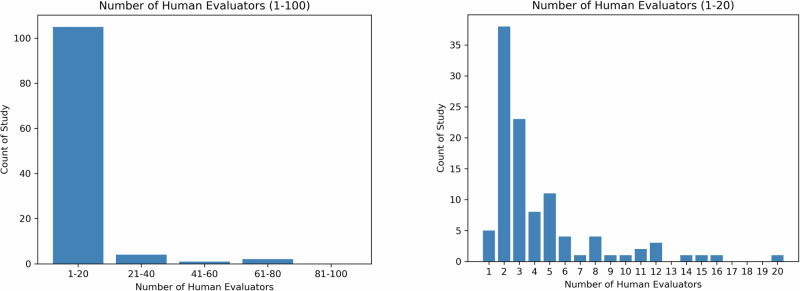
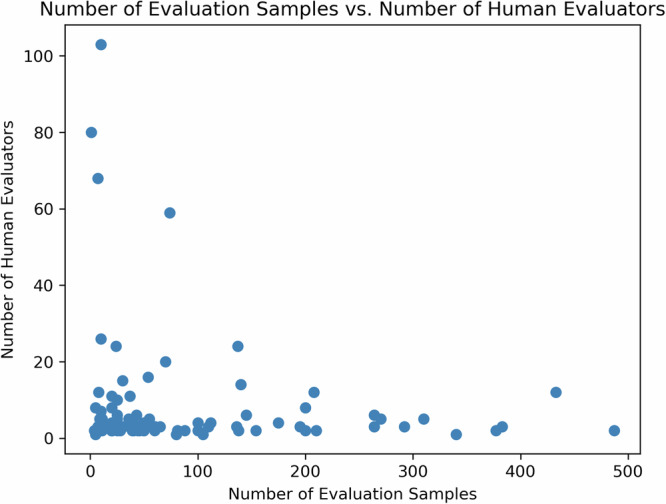
“A review of studies on the human evaluation of LLMs in health care indicated that most studies involve between 1 and 20 evaluators [34].”
Angioni, D., & Bello, F. D. (2026) · AboutOpen · doi:10.33393/ao.2026.3940 · Cited by 1
Lee, M., Cho, S., Yu, J. S., Yoon, J., Choi, J. H., Jung, K.-H., & Cho, J. (2026) · Journal of Medical Internet Research · doi:10.2196/92374 · Cited by 3
“It is also the modal practice in published LLM-in-health care evaluation, where median panel sizes of 2 ‐ 4 evaluators are typical [29].”
Artificial Intelligence in Clinical Nutrition: Current Uses, Challenges, and Opportunities
Mauldin, K., Pham, A. D., Dodaballapur, S., & Limketkai, B. N. (2026) · Nutrients · doi:10.3390/nu18162638 · Cited by 1
“Standardized human evaluation frameworks specifically developed for LLMs in healthcare that assess information quality, safety, and trustworthiness may further help ensure consistent assessment of generative AI tools as they apply to nutrition and dietary counseling [111].”
Kang, X., Ding, W., Matsumoto, K., Wang, L., Yu, H.-T., & Shi, X. (2026) · Information Fusion · doi:10.1016/j.inffus.2026.104702 · Cited by 1
Evaluating the First CE ‐Marked LLM ‐Based Chatbot for Evidence‐Based Neurology
Kirschner, P., Epping, P. H., Meuth, S. G., Pawlitzki, M., & Masanneck, L. (2026) · European Journal of Neurology · doi:10.1111/ene.70736 · Cited by 1
“As highlighted by a recent review on medical LLM evaluations, these factors influence the usability and safety of AI tools in clinical settings [22] and should be taken into account in future studies using a more advanced benchmark.”
The Reliability of Human Evaluation of Large Language Models in Health Care Settings: Scoping Review
Yang, E., Ko, S., & Woo, H. (2026) · Journal of Medical Internet Research · doi:10.2196/98184 · Cited by 2
“…of medical AI and LLMs, future human evaluations need to establish standardized frameworks that systematize evaluation indicators, criteria, and procedures while also considering evaluation designs that reflect the diverse situations and interactions of real-world health care settings [22,101].”
Xu, J., Yu, J., Zhou, W. A., Zhao, Y., & Shi, J. J. (2026) · Frontiers in Psychology · doi:10.3389/fpsyg.2026.1800821 · Cited by 1
“Recent frameworks for human evaluation of healthcare LLMs emphasize dimensions such as safety, expression style, and trust and confidence (Tam et al., 2024).”
Dynamic alignment of large language models for evidence-grounded heart failure decision support
Liu, L., Dong, C., Ba, Y., Yan, H., Tang, X., Sun, Y., Chen, H., Shi, B., Yu, Q., & Zhang, S. (2026) · Digital Health · doi:10.1177/20552076261487568 · Cited by 3
Qiao, J. C. (2026) · Vox Sanguinis · doi:10.1111/vox.70362 · Cited by 1
López, J. F., Polanco, J. G. C., & Trujillo, E. R. (2026) · Nutrients · doi:10.3390/nu18193233 · Cited by 1
“…and for regulatory oversight of deployed models both start from the premise that a single accuracy figure is an insufficient acceptance criterion [10,11], and reporting guidance for prediction models built on these systems now asks explicitly how the model version and its inputs were fixed [12].”
Entity-centric evaluation of large language model responses for medical question-answering tasks
Liu, Y., & Kolachalama, V. B. (2026) · PLOS Digital Health · doi:10.1371/journal.pdig.0001752 · Cited by 1
“…work employed physician annotations to evaluate the quality, credibility, and safety of medical LLM responses [14,15], while other studies proposed structured human evaluation protocols for assessing hallucination, factual consistency, diagnostic reasoning, and potential clinical harm [13,16].”
Cornelisse, E., Kousa, D., Menz, B. D., Murphy-Reuter, B., Shahnam, A., Chin-Yee, B. H., Calabro, R., Li, L. X., Ramsey, I., Abuhelwa, A. Y., et al. (2026) · Journal of Medical Internet Research · doi:10.2196/100531 · Cited by 1
An AI assistant for critically assessing and synthesizing clusters of journal articles
Cox, L. A. (2025) · Global Epidemiology · doi:10.1016/j.gloepi.2025.100207 · Cited by 1
Instruções de Uso de Medicamentos Suportadas por RAG em Grandes Modelos de Linguagem
dos Reis, D. N., Reis, Z. S. N., & da Rocha, L. C. D. (2025) · Revista Eletrônica de Iniciação Científica em Computação · doi:10.5753/reic.2025.6039 · Cited by 3
Theory of Mind Imitation by LLMs for Physician-Like Human EvaluationPreprint
Awasthi, R., Mishra, S. V., Raghu, C., Auron, M., Atreja, A., Mahapatra, D., Singh, N., Khanna, A. K., Cywiński, J. B., Maheshwari, K. K., et al. (2025) · medRxiv · doi:10.1101/2025.03.01.25323142 · Cited by 1
“(Elangovan et al. 2024; Tam et al. 2024; Awasthi et al. 2023).”
Self-citationShreibati, J. B. (2025) · Circulation · doi:10.1161/circulationaha.125.074009 · Cited by 1
Baldwin, J. D., Dinh, C., Mukerji, A., Sanghavi, N., & Gombar, S. (2025) · medRxiv · doi:10.1101/2025.07.01.25330655 · Cited by 1
“Frameworks like the recently proposed MedHELM 14,15 aim to standardize the evaluation of LLM outputs across tasks, but they do not yet assess whether responses are grounded in verifiable biomedical evidence.”
Reis, Z. S. N., de Albergaria, E. T., Pagano, A. S., Lage, E. M., de Oliveira, F. R., Dias, C. D. S., Oliveira, J. A., Pereira, G. M. V., de Oliveira, I. J. R., Mineiro, É. F., et al. (2025) · doi:10.12688/verixiv.1359.1 · Cited by 1
Performance Gains of LLMs With Humans in a World of LLMs Versus HumansPreprint
McCullum, L. B., Agassi, P. A., Celi, L. A., Ebner, D. K., Fernandes, C. O., Hicklen, R. S., Koumbia, M., Lehmann, L. S., & Restrepo, D. S. (2025) · arXiv (Cornell University) · doi:10.48550/arxiv.2505.08902 · Cited by 1
“How do we compare LLMs to human performance in a robust way when needed 18 ?”
Kuerbanjiang, W., Wang, X., Jiamaliding, Y., Maimaitiaili, M., & Yi, Y. (2025) · medRxiv · doi:10.1101/2025.10.30.25339199 · Cited by 1
From Feature-Based Models to Generative AI: Validity Evidence for Constructed Response ScoringPreprint
Casabianca, J. M., McCaffrey, D. F., Johnson, M., Alper, N., & Zubenko, V. (2026) · arXiv (Cornell University) · doi:10.48550/arxiv.2603.19280 · Cited by 1
Bian, J., Peng, Y., Mendonça, E. A., Banerjee, I., & Xu, H. (2026) · Journal of Biomedical Informatics · doi:10.1016/j.jbi.2026.105023 · Cited by 1
Self-citationHosters, B., Warmer, S., Hölzgen, T., Schramm, J., Tapp-Herrenbrück, M., Reinshagen, J., Majjouti, K., Arzideh, K., Idrissi-Yaghir, A., Bures, D., et al. (2026) · doi:10.2196/preprints.95359 · Cited by 1
Creeden, J., Olivecrona, M., & Soriano, A. (2026) · medRxiv · doi:10.64898/2026.06.11.26355467 · Cited by 1
The widening evaluation gap in medical large language model research 2023 to 2026Preprint
Tareaf, R. B., Al-Rajab, M., & Loucif, S. (2026) · arXiv (Cornell University) · doi:10.48550/arxiv.2609.11770 · Cited by 1
“Systematic reviews of individual applications establish what particular models achieve on particular tasks[6, 11, 12], but by construction examine a slice of the literature at a fixed moment.”
Machine Psychometrics: A Mathematical Psychology of Artificial Intelligence
Bogdan, A., & de Valois-Franklin, A. (2026) · arXiv · doi:10.48550/arxiv.2605.23952
“Healthcare evaluation frameworks already stress reliability, generalizability, human evaluation, safety, harm, trust, and confidence [24].”
Morel, D., & Verlingue, L. (2024) · Bulletin du Cancer · doi:10.1016/j.bulcan.2024.12.005
Innovations in Perioperative Medicine: Technologies to Improve Outcomes
Tan, J. M., & Khanna, A. K. (2025) · International Anesthesiology Clinics · doi:10.1097/aia.0000000000000479
“50 Despite these remarkable strides, the journey toward full AI integration is not without signi fi cant obstacles.”
Towards real-world molecular pathology diagnosis of cancer with cross-modal AIPreprint
Wang, X., Wang, Y., Hu, W., Zhang, Y., Zhang, X., Lu, C., Hu, J., Yan, Z., Liu, X., Duan, H., et al. (2025) · medRxiv · doi:10.1101/2025.07.07.25330997
Self-citationSchreier, O., Yazdani, A., Galdadas, I., Kabak, R., Gervasio, F. L., Mu, G., & Teodoro, D. (2025) · medRxiv · doi:10.1101/2025.07.14.25331486 · Cited by 1
Luo, J., Ma, J., Wang, T., Qiu, Y., Yang, Y., Qiu, H., Chen, G., & Wang, W. (2025) · medRxiv · doi:10.1101/2025.07.15.25331552
Beyond Accuracy: A Multidimensional Evaluation Framework for Medical LLM Applications (M-LEAF)
Pedagoška fakulteta, K. Z. L., Smodiš, R., Ivanišević, F., Univerza v Ljubljani, M. F. L., Karasmanakis, I., Univerza v Ljubljani, M. F. L., & Gams, M. (2025) · doi:10.70314/is.2025.gptzdravje.2
Üçdal, M. T. (2025) · Experimental Gerontology · doi:10.1016/j.exger.2025.112905
Smodiš, R., Ivanišević, F., Karasmanakis, I., Kocuvan, P., Horvat, T., & Gams, M. (2025) · Uporabna informatika · doi:10.31449/upinf.262
“…[17] ocenjuje, da bi integracija UI v zdravstveni sistem ZDA lahko letno prihranila med 5 % in 10 % zdravstvenega BDP. Prvi koraki so že vidni, saj nekateri zdravniki že uporabljajo VJM kot prevajalnike, pomočnike pri pripravi dokumentacije in kot podporo pri kliničnem odločanju [18] - [19].”
Xu, Y., Ma, J., Hu, Y., Liu, Y., Chen, Y., Feng, W., Zhang, C., Zhang, L., Zhang, X., & Huang, R. (2026) · Journal of Medical Internet Research · doi:10.2196/85290
Evaluating Generative AI and Human Performance in Question-Answer Validation Tasks
Opaiţ, E.-E., Duca, A., & Olariu, M.-E. (2025) · Procedia Computer Science · doi:10.1016/j.procs.2025.09.522
Improving Arabic clinical question quality through domain-adaptive masked language modeling
Ounachad, W., Khenchouch, M., Zeroual, I., & Farhaoui, Y. (2026) · Language Resources and Evaluation · doi:10.1007/s10579-026-09944-6
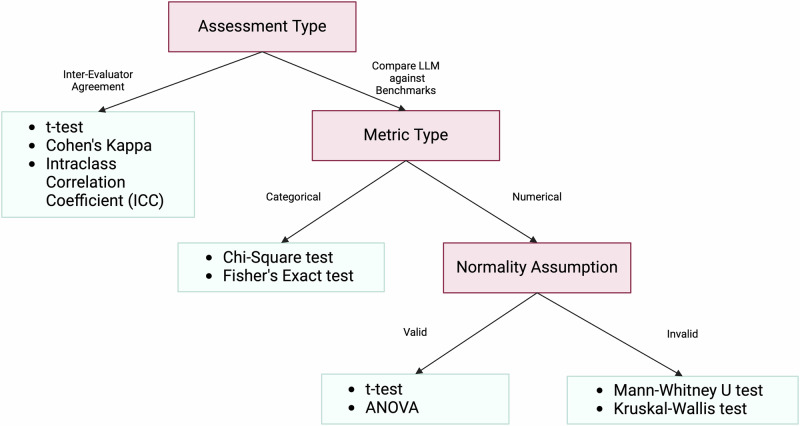
“Differences between models were tested using the paired Wilcoxon signed-rank test with Benjamini–Hochberg false-discovery-rate correction (Tam et al., 2024; van der Lee et al., 2021; Thomson et al., 2024).”
Application of Generative AI in Health Care: Systematic Review
Perera, C. N., Herath, H. M. K. K. M. B., & Mittal, M. (2025) · Studies in computational intelligence · doi:10.1007/978-981-95-2129-6_10 · Cited by 1
Kang, B., Kwon, K., Huilin, P., Hong, S.-G., Choi, S., & Oh, H. (2026) · JMIR Medical Informatics · doi:10.2196/87887
Synthetic Validation of Pediatric Trust Instruments Using Persona-Driven Large Language Models
Boone, E., Loban, K., Guadagno, E., & Poenaru, D. (2026) · Lecture notes in computer science · doi:10.1007/978-3-032-30813-9_9
Muteract: Interactive and Iterative Prompt Mutation Interface for LLM Developers and Evaluators
Meena, Y., Mondal, S., & Potta, M. P. (2025) · Interacción · doi:10.1145/3768633.3770129
“Their integration into knowledge work [23, 26], creative practices [58], and decision-making [40, 59] highlights not only technical advances but also new challenges in evaluating their performance and implications.”
Personalized Case- and Evidence-Based TBI Prognosis with Small Language Models
Manjunath, P., Adil, S. M., Wissel, B. D., Sexton, D. P., Lerner, B., & Dunn, T. (2025) · IEEE-EMBS International Conference on Biomedical and Health Informatics (BHI ...) · doi:10.1109/bhi67747.2025.11269507 · Cited by 1
“To structure this evaluation, we adopted the QUEST framework [28], a clinically grounded rubric for assessing medical reasoning in language model outputs.”
InFerActive: Interactive Tree-Based Exploration of LLM Sampling for Safety EvaluationPreprint
Hwangbo, J., Lee, S.-H., Jeon, H., Jang, K., Cheong, M., Yu, Y., & Seo, J. (2025) · arXiv (Cornell University) · doi:10.48550/arxiv.2512.10234
“Current human evaluation methodologies require evaluators to generate multiple responses, assess each individually, and perform statistical aggregation [17, 34, 53].”
InfluentialProença, S., Soares, J. I., Parra, J., Maia, G. H., Silva, S., Leite, J., Beniczky, S., & Jesus‐Ribeiro, J. (2025) · Epileptic Disorders · doi:10.1002/epd2.70156
Zhang, M., Zhao, N., Qin, J., Ye, G., & Tang, R. (2025) · arXiv (Cornell University) · doi:10.48550/arxiv.2507.08529
“The research adopted the Quality Evaluation System for Text (QUEST) framework for systematic evaluation [18], inviting 12 authoritative experts in the rare-disease field to conduct manual evaluation of model-generated content.”
Yan, Y., Zeng, L., Zhang, X., Li, J., Liu, X., Ru, P., Chang, C., & Jiang, X. (2025) · SSRN Electronic Journal · doi:10.2139/ssrn.5164455
Annevirta, J. (2025) · Aaltodoc (Aalto University)
Automatic background animation generation aligned with LLM-generated lyrics for children’s songs
Lee, S., Khairulov, T., Park, Y. C., Seo, W., & Lee, J. (2025) · Scientific Reports · doi:10.1038/s41598-025-30139-6
“Additionally, incorporating small-scale human evaluations with educators, parents, or child participants could provide valuable insights into perceptual quality, engagement, and educational effectiveness, complementing automated measures 66 .”
From data to diagnosis: a scoping review of NLP-based medical text summarisation methods
Dilani, K. (2025) · Информатика Экономика Управление - Informatics Economics Management · doi:10.47813/2782-5280-2025-4-4-2048-2055
Annak, İ. M., & ŞAHAN, D. (2026) · CIN Computers Informatics Nursing · doi:10.1097/cin.0000000000001458
Makohon, I., Najafi, M., Wu, J. F., Brochhausen, M., & Li, Y. (2026) · Journal of Computational Biology · doi:10.1177/15578666251411390 · Cited by 1
Li, L., Yang, X., Liu, S., & Deng, F. (2026) · Urban Science · doi:10.3390/urbansci10010056
“By convention, a difference is considered statistically significant if p 0.05, and highly significant if p 0.001 [39,40].”
InfluentialTrager, B. M., Hatch, O. J., Armstrong, K., Boyle, S. C., & LaBrie, J. W. (2026) · Journal of Psychology and AI · doi:10.1080/29974100.2026.2640258 · Cited by 1
“…and completeness; Stoyanov et al., 2015, 2016; Tao et al., 2017) and aligned with corresponding constructs in the QUEST framework for human evaluation of health-related chatbot outputs (e.g. clarity, relevance, comprehensiveness, safety and harm, and trust and confidence; Tam et al., 2024).”
Huo, X., Zhou, J., Ma, R., & Xue, Y. (2026) · Research Square · doi:10.21203/rs.3.rs-8551438/v1
Menderes, U.-B., Morar, D., & Vu, N. T. (2025) · IEEE International Conference on Bioinformatics and Biomedicine (BIBM) · doi:10.1109/bibm66473.2025.11356967
“This human-centered approach aligns with recent work advocating for evaluation frameworks grounded in real-world workflows and expert judgment, rather than automated metrics alone [2], [11], [16].”
MedEvalarena: A Self-Generated, Peer-Judged Benchmark for Medical ReasoningPreprint
Prem, P., Shidara, K., Kuppa, V., Wheeler, E., Liu, F., Alaa, A. M., & Bernardo, D. (2026) · medRxiv · doi:10.64898/2026.01.27.26344905 · Cited by 4
Rag-Based Fine-Tuning of an Llm-Enabled Spiritual Wisdom Chatbot
Arunkumar, J., Subbanna, N. K., Anand, S., & Rao, S. (2025) · International Conference for Advancement in Technology (ICONAT) · doi:10.1109/iconat66879.2025.11362904 · Cited by 1
“Therefore, it is important to assess LLMs through human evaluations as it ensures their effectiveness [27].”
Multi-risk assessment in coastal areas through the implementation of Artificial Intelligence methods
Barco, M. K. D. (n.d.) · ARCA (Università Ca' Foscari Venezia)
Shao, X., Sun, Y., Ju, X., & Cui, J. (2026) · Journal of Medical Systems · doi:10.1007/s10916-026-02344-x
Dubey, M., Chong, K. J., Pun, Y. R., Foo, L. Y., Ooi, M. G. M., TAN, I., Tan, D. S. P., Ngiam, K. Y., & Wee, H. L. (2026) · JCO Clinical Cancer Informatics · doi:10.1200/cci-25-00226
Co‐designing a Large Language Model Benchmarking Dataset for Primary Care with Nurses in Kenya
Musau, W., Obong’o, C. O., Wanjiru, S., Otiangala, D., Emmanuel-Fabula, M., & Mateen, B. A. (2025) · Ethnographic Praxis in Industry Conference Proceedings · doi:10.1111/epic.70016 · Cited by 1
Meshram, H. S., Batheja, V., Modasia, B., Puri, S., Bhagat, C., gadireddy, S. R., & Mathur, R. P. (2026) · Experimental and Clinical Transplantation · doi:10.6002/ect.2025.0233
Personalized Feedback Generation From Common Programming Approaches
Kandjimi, H., & Suleman, H. (2025) · International Conference on Education Technology and Computer · doi:10.1109/icetc66579.2025.11387503 · Cited by 1
“The questions were organized by level and category, adhering to the QUEST framework, which outlines essential principles and dimensions for assessing Large Language Models in Healthcare [27].”
SleepSensei-AI: Revolutionizing Sleep Coaching
Nazareth, P., Kesti, S., Nayak, A., Madhusudhan, G., & Pavan Kumar, A. (2025) · International Conference on Intelligent Computing, Information and Control Systems (ICOIICS) · doi:10.1109/icoiics67115.2025.11390256
Hou, Y.-N., Gubili, J., Jain, P., Lam, C. S., Chatterjee, A., & Mao, J. J. (2026) · JMIR Cancer · doi:10.2196/86073
“…safety and harm, and trust and confidence) framework for human evaluation of LLMs in health care as well as other RAG evaluation frameworks [9] and expert input, we arrived at 3 metrics to capture the quality of answers: (1) completeness (“Does the answer include all the pertinent…”
Metadata
- Authors
- Tam, T. Y. C., Sivarajkumar, S., Kapoor, S., Stolyar, A. V., Polanska, K., McCarthy, K. R., Osterhoudt, H., Wu, X., Visweswaran, S., Fu, S., Mathur, P., Cacciamani, G. E., Sun, C., Peng, Y., & Wang, Y.
- Affiliations
- University of Pittsburgh (US)
- University of Pittsburgh Medical Center (US)
- The University of Texas Health Science Center at Houston (US)
- Cleveland Clinic (US)
- University of Southern California (US)
- Weill Cornell Medicine (US)
- Corresponding author
- Wang, Yanshan
- ORCID
- Venue
- npj Digital Medicine
- Published
- 2024-09-28
- Volume
- 7
- Issue
- 1
- Pages
- 258-258
- ISSN
- 2398-6352 (ISSN-L)
- PMC
- PMC11437138
- OpenAlex
- W4402909345
- Cited by
- 424
- References
- 102
- Citations by year
- 2026: 270 · 2025: 149 · 2024: 5
- FWCI
- 39.64
- Type
- journal article
- Language
- en
- Open access
- gold
- doi.org
- Licence
- cc-by
- creativecommons.org/licenses/by/4.0 (tdm)
- creativecommons.org/licenses/by/4.0 (vor)
- Locations
- npj Digital Medicine (publishedVersion, cc-by)
- PubMed Central (publishedVersion, cc-by)
- PubMed (publishedVersion)
- arXiv (Cornell University) (submittedVersion)
- Digital Commons-TMC (Texas Medical Center) (submittedVersion)
- DOAJ (DOAJ: Directory of Open Access Journals) (submittedVersion, cc-by-sa)
- arXiv (Cornell University)
- Funders
- U.S. Department of Health & Human Services | National Institutes of Health (UL1TR001857, U24TR004111, R01LM014306)
- Topics
- Health Sciences › Medicine › Health Informatics › Artificial Intelligence in Healthcare and Education
- Physical Sciences › Computer Science › Artificial Intelligence › Explainable Artificial Intelligence (XAI)
- Physical Sciences › Computer Science › Artificial Intelligence › Ethics and Social Impacts of AI
- Keywords
- large language models, human evaluation, health care, generative AI, evaluation framework, evaluation metrics, assessment reliability, trust and confidence, evaluation principles
About these checks
Registry, retraction, Cites and statistics results are computed, not judged, with one exception: a printed reference that no index lists is read once by a model before it counts as a citation error. Claims are extracted by a model and kept only when their quote appears verbatim in the text; each cited source is then checked, with a model’s help, for whether it says what the claim relies on. Those verdicts can be wrong — read the claim’s quote and the cited source before relying on one.
Statistics and arithmetic are recomputed, not judged.
Confidence bands are shown only for fields calibrated on our annotated test set. None is calibrated yet, so no band is shown.
What counts as a claim ›How we measure confidence ›How we check this ›
Are you an author, or do you see a problem with this page? Request a review
Data sources
Bibliographic data: Semantic Scholar, OpenAlex, Crossref.
Contains information from the Semantic Scholar Academic Graph Datasets, made available under the ODC Attribution License (ODC-BY 1.0).
Semantic Scholar’s data is described in: Kinney, R., et al. (2023). The Semantic Scholar Open Data Platform. arXiv:2301.10140.
