

A framework for human evaluation of large language models in healthcare derived from literature review.
Open accessThe DOI matches its Crossref record; 107 of the 107 references it cites were found in a registry or an index.
Abstract
With generative artificial intelligence (GenAI), particularly large language models (LLMs), continuing to make inroads in healthcare, assessing LLMs with human evaluations is essential to assuring safety and effectiveness. This study reviews existing literature on human evaluation methodologies for LLMs in healthcare across various medical specialties and addresses factors such as evaluation dimensions, sample types and sizes, selection, and recruitment of evaluators, frameworks and metrics, evaluation process, and statistical analysis type. Our literature review of 142 studies shows gaps in reliability, generalizability, and applicability of current human evaluation practices. To overcome such significant obstacles to healthcare LLM developments and deployments, we propose QUEST, a comprehensive and practical framework for human evaluation of LLMs covering three phases of workflow: Planning, Implementation and Adjudication, and Scoring and Review. QUEST is designed with five proposed evaluation principles: Quality of Information, Understanding and Reasoning, Expression Style and Persona, Safety and Harm, and Trust and Confidence.
Overview
The claims and statistics of this paper haven’t been checked yet.
Free: it reads the open-access text and checks the first 5 claims that cite a source we can check. Create a free account to check every claim.
Integrity signals
Registry
Cites
Statistics
Figures
Verification
Claims the paper makes
The claims and statistics of this paper haven’t been checked yet.
Free: it reads the open-access text and checks the first 5 claims that cite a source we can check. Create a free account to check every claim.
Claims other papers make about this one
Each is checked against this paper’s own text: does it say what the citing paper says it does?
The cited source says what the claim attributes to it.
In the citing paper
“Healthcare evaluation frameworks already stress reliability, generalizability, human evaluation, safety, harm, trust, and confidence [24].”
From Machine Psychometrics: A Mathematical Psychology of Artificial Intelligence (2026) · cites this paper as [24]
In the citing paper
“Tam et al. 168 reviewed 142 papers on the human evaluation of LLM application in healthcare in general and find that generalizability, applicability, and reliability are lacking in current evaluation practices”
From Data extraction methods for systematic review (semi)automation: Update of a living systematic review (2025) · cites this paper as [168]
Self-check
Percentages, sums and reported differences re-computed from the paper’s own numbers.
The self-check needs the paper’s full text.
Citations
Cites
BLEU: a method for automatic evaluation of machine translation
Papineni, K., Roukos, S., Ward, T., & Zhu, W.-J. (2001) · Proceedings of the 40th Annual Meeting on Association for Computational Linguistics - ACL '02 · doi:10.3115/1073083.1073135 · Cited by 21,344
RoBERTa: A Robustly Optimized BERT Pretraining Approach
Liu, Y., Ott, M., Goyal, N., Du, J., Joshi, M., Chen, D., Levy, O., Lewis, M., Zettlemoyer, L., & Stoyanov, V. (2019) · arXiv · doi:10.48550/arxiv.1907.11692 · Cited by 16,515 · cited 1×
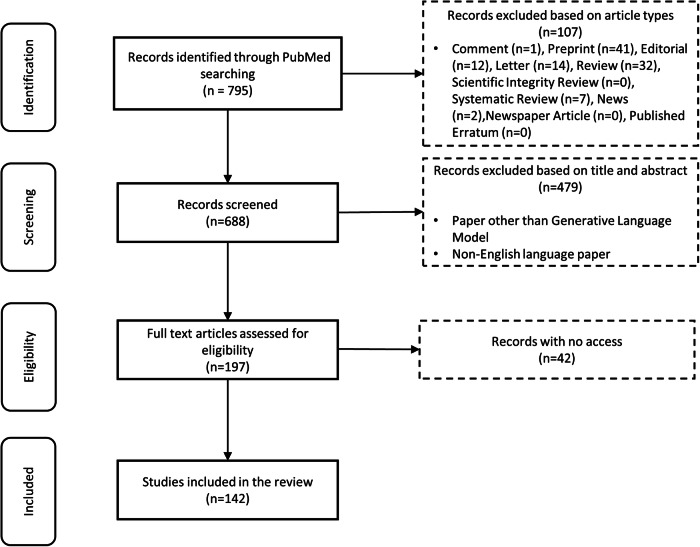
“Wealsoexcludedstudieswhichexamine onlynon-generativepretrainedlanguagemodelslikeBERT 59 , RoBERTa 60 , etc. and multimodal studies such as image-to-text or text-to-image application of generative LLMs.”
BackgroundLearning Transferable Visual Models From Natural Language Supervision
Radford, A., Kim, J. W., Hallacy, C., Ramesh, A., Goh, G., Agarwal, S., Sastry, G., Askell, A., Mishkin, P., Clark, J., et al. (2021) · arXiv · doi:10.48550/arxiv.2103.00020 · Cited by 15,293 · cited 1×
“There are also technical advancements of multimodal LLMs and text-to-image foundational models such as CLIP 58 .”
BackgroundBeyond Accuracy: What Data Quality Means to Data Consumers
Wang, R. Y., & Strong, D. M. (1996) · Journal of Management Information Systems · doi:10.1080/07421222.1996.11518099 · Cited by 4,672
Training language models to follow instructions with human feedback
Ouyang, L., Wu, J., Jiang, X., Almeida, D., Wainwright, C. L., Mishkin, P., Zhang, C., Agarwal, S., Slama, K., Ray, A., et al. (2022) · arXiv · doi:10.48550/arxiv.2203.02155 · Cited by 4,208
Large language models encode clinical knowledge
Singhal, K., Azizi, S., Tu, T., Mahdavi, S. S., Wei, J., Chung, H. W., Scales, N., Tanwani, A., Cole-Lewis, H., Pfohl, S., et al. (2023) · Nature · doi:10.1038/s41586-023-06291-2 · Cited by 4,083
Large Language Models Encode Clinical Knowledge
Singhal, K., Azizi, S., Tu, T., Mahdavi, S. S., Wei, J., Chung, H. W., Scales, N., Tanwani, A., Cole-Lewis, H., Pfohl, S., et al. (2022) · arXiv · doi:10.48550/arxiv.2212.13138 · Cited by 4,083
Charnock, D., Shepperd, S., Needham, G., & Gann, R. (1999) · Journal of Epidemiology and Community Health · doi:10.1136/jech.53.2.105 · Cited by 3,329
Ayers, J. W., Poliak, A., Dredze, M., Leas, E. C., Zhu, Z., Kelley, J. B., Faix, D. J., Goodman, A. M., Longhurst, C. A., Hogarth, M., et al. (2023) · JAMA Internal Medicine · doi:10.1001/jamainternmed.2023.1838 · Cited by 2,613
Llama 2: Open Foundation and Fine-Tuned Chat Models
Touvron, H., Martin, L., Stone, K., Albert, P., Almahairi, A., Babaei, Y., Bashlykov, N., Batra, S., Bhargava, P., Bhosale, S., et al. (2023) · arXiv · doi:10.48550/arxiv.2307.09288 · Cited by 2,604
Research works printed but not linked: 4
- 8. Lin, C.-Y. ROUGE: a package for automatic evaluation of summaries. Text Summarization Branches Out (Association for Computational Linguistics, Barcelona, Spain, 2004).
- 59. Devlin, J., Chang, M.-W., Lee, K. & Toutanova, K. Bert: pre-training of deep bidirectional transformers for language understanding. Proceedings of the 2019 Conference of the North {A}merican Chapter of the Association for Computational Linguistics: Human Language Technologies, Vol. 1 (Long and Short Papers) (eds Burstein, J Doran, C & Solorio, T.) 4171–4186 (Association for Computational Linguistics, 2019).
- 94. Parasuraman, A., Berry, L. L. & Zeithaml, V. A. Refinement and reassessment of the SERVQUAL scale. J. Retail. 67, 420 (1991).
- 97. Biggs, J. B. & Collis, K. F. Evaluating the Quality of Learning: The SOLO Taxonomy (Structure of the Observed Learning Outcome) (Academic Press, 2014).
Cited by
Items 301–400 of 495
Can AI Match Human Experts? Evaluating LLM-Generated Feedback on Resident Scholarly ProjectsPreprint
van Allen, Z., Forgues-Martel, S., Venables, M. J., Ghanney, Y., Villeneuve, A., Dongmo, J. B., Ahmed, M., Archibald, D., & Jolin‐Dahel, K. (2026) · medRxiv · doi:10.64898/2026.03.04.26346878 · Cited by 1
Zhang, H., & Liu, Y. (2026) · Hemodynamics · doi:10.1097/hd9.0000000000000015
Ethical and Regulatory Considerations in AI-Driven Healthcare
Sah, A. K., Kumar, R., Patel, S., Mishra, P. S., Doshi, H., & Mishra, R. (2026) · Advances in computational intelligence and robotics book series · doi:10.4018/979-8-3373-3121-8.ch009
Are Large Language Models the Swiss Army Knife or the Scalpel for Clinical Research?
Yu, P. P., & Hung, T. K. W. (2026) · JCO oncology advances. · doi:10.1200/oa-25-00215
O USO DO PECHA KUCHA NA ÁREA DA SAÚDE: RELATO DE EXPERIÊNCIA
Meireles, A. C. D. S., de Farias, D. R., Júnior, C. C. O., Sales, J. G. S., Sousa, Y. D. C., & Pinheiro, Y. V. F. (2026) · doi:10.22533/at.ed.1341126130115
The Perfection Paradox: From Architect to Curator in AI-Assisted API Design
Ahmad, M., Macvean, A., Geewax, J. J., & Karger, D. R. (2026) · CHI Conference Extended Abstracts on Human Factors in Computing Systems (CHI EA) · doi:10.1145/3772363.3798429
Deschepper, M., Rogge, H., & Colpaert, K. E. (2026) · JMIR Medical Informatics · doi:10.2196/90374
“We followed the QUEST (Quality of Information, Understanding and Reasoning, Expression Style and Persona, Safety and Harm, and Trust and Confidence) human evaluation framework [3] to set up our method in Appendix 1.1 in Multimedia Appendix 1.”
InfluentialБорисов, А. А., Burtsev, T., Kosov, P., Bobrovskaya, T. V., Vasilev, Y. A., Vladzymyrskyy, A. V., Omelyanskaya, O. V., Pamova, A. P., & Arzamasov, K. M. (2026) · Frontiers in Artificial Intelligence · doi:10.3389/frai.2026.1768005 · Cited by 1
Hany, M., Zidan, M. H. E.-D., Parmar, C. D., Shahmiri, S. S., Altabbaa, H., Shamarka, A. E., Amgad, A., Abdelkhalek, I., Assal, A. A., Abdou, M. E., et al. (2026) · Obesity Surgery · doi:10.1007/s11695-026-08562-z
“Future studies should expand to explicitly capture all QUEST dimensions, ensuring a comprehensive, standard - ized evaluation of LLMs in surgical contexts [15, 29].”
InfluentialAre we Designing for Humans or Just Users? A UX-First Approach to mHealth Sustainability
Mohammed, A. H., Wahab, N. A., Ibrahim, N., & Yaacob, M. N. (2026) · International Conference on Cognitive Systems and Computer Interaction (ICoSCI) · doi:10.1109/icosci66700.2026.11448030
Luo, J., Ma, J., Qiu, Y., Wang, T., Yang, Y., Qiu, G., Chen, H., Pang, J., & Wang, W. (2026) · npj Digital Medicine · doi:10.1038/s41746-026-02591-9
Iqbal, S., Ahmadi, M., Ahmadian, D., & Eskander, P. N. (2026) · Cureus · doi:10.7759/cureus.106804
“Indeed, hallucinations have been associated with a prompting strategy [21].”
Gendron, M. S., Djangone, A., Chambers, K., Caetta, A., & Roberts, D. S. (2026) · Journal of Decision System · doi:10.1080/12460125.2026.2656436
Evaluating Large Language Models for Transparent Quality-of-Care Measurement in Children with ADHDPreprint
Bannett, Y., Pillai, M., Huang, T. X., Luo, I., Güntürkün, F., & Hernandez‐Boussard, T. (2026) · medRxiv · doi:10.64898/2026.04.12.26350732
Yoon, H., Kim, Y. W., Kim, Y. H., Park, J., Kim, D., Baek, S., Park, J., Kim, K., Eom, H., Hong, J.-P., et al. (2026) · Muscle & Nerve · doi:10.1002/mus.70249
Hong, S., Greb, A. C., Shah-Riar, P., Zheng, H. M., & Limketkai, B. N. (2026) · Gastro Hep Advances · doi:10.1016/j.gastha.2026.100967
Evaluating the environmental impact of AI in healthcare is essential for planetary health
Foley, C., Bonnici, T., Calderwood, P., Reyburn, M., & Pearson, S. (2026) · BMJ · doi:10.1136/bmj.s677
McGee, A. E., Parsons, G., Zhaunova, L., Paul, A., Kazlou, A., Xu, Y., Stsefanovich, H., Klepchukova, A., & Meczner, A. (2026) · Digital Health · doi:10.1177/20552076261435861
O'Byrne, I., Pope, J. S., Byrne, P., Dahly, D. L., Judge, C. S., O'Donnell, M. J., Krewer, F., Li, M., Saif‐Ur‐Rahman, K., Conway, T., et al. (2026) · Journal of Clinical Epidemiology · doi:10.1016/j.jclinepi.2026.112272
Güler, I., Muir, L., Grieb, G., Moog, P., Kraus, A., & Stelling, H. (2026) · Journal of Hand Surgery (European Volume) · doi:10.1177/17531934261436305
“…of inter-run stability remain uncommon, leaving uncertainty about consistency under repeated testing (Bolgova et al., 2025; Gumilar et al., 2024; Hager et al., 2024; Jung et al., 2023; Lai et al., 2024; Liu et al., 2020; Meskó, 2023; Tam et al., 2024; Wei et al., 2024; Windisch et al., 2024).”
‘ Auditing for equity ’: Desiderata for auditing of biases in current data-driven health systems
Cheong, M. (2026) · Journal of Health Equity · doi:10.1080/29944694.2026.2626177
End-to-End Evaluation and Governance of an EHR-Embedded AI Agent for CliniciansPreprint
Shah, A., Hines, A., Downs, A., Bajet, D., Mui, P., Araujo, F., Offutt, L., Rutledge, A., & Jimenez, E. (2026) · arXiv (Cornell University) · doi:10.48550/arxiv.2604.27309
“Prior work has advanced clinical AI evaluation through benchmark suites, physician-authored rubrics, and prospective deployment trials [5, 6, 7, 8].”
Hadiprakoso, R. B., Dramaga, R., & Qomariasih, N. (2026) · Jurnal Ilmiah Ilmu Terapan Universitas Jambi|JIITUJ| · doi:10.22437/jiituj.v10i2.53435
Pise, A., Khairnar, S. M., Garces-Palacios, S., Gopal, K., Stukes, B., Balentine, C. J., Scott, D. J., Zeh, H., & Sankaranarayanan, G. (2026) · IEEE Conference on Virtual Reality and 3D User Interfaces Abstracts and Workshops (VRW) · doi:10.1109/vrw70859.2026.00177
“I Cannot Teach it Anything”: Human-in-the-Loop AI After Deployment in Clinical Documentation
Vase, S., & Andersen, T. O. (2026) · ACM Transactions on Computing for Healthcare · doi:10.1145/3815172 · Cited by 1
Gürses, K. M., Tezcan, H., Tunçez, A., Özen, Y., & Yalçın, M. U. (2026) · Frontiers in Cardiovascular Medicine · doi:10.3389/fcvm.2026.1808572
Yeh, Y., Shih, M., Backer, D. D., Celi, L. A., See, K. C., Fujii, T., Ling, L., Mongkolpun, W., Hu, H.-W., Chen, H.-Y., et al. (2026) · Annals of Intensive Care · doi:10.1016/j.aicoj.2026.100078
TEBScore: Trustworthy and Explainable AI May Be Within Reach?
Siddiqui, S. M., & Madisetti, V. K. (2026) · IEEE Access · doi:10.1109/access.2026.3693072
“In healthcare settings, human-centered evaluations show that reasoning quality, safety, style, and perceived trust must be assessed as distinct dimensions, and that task-level accuracy alone is insufficient for deployment decisions [20].”
Dobranski, N., Viscariello, N. N., Pitcher, G. M., Stam, A. M., Belliveau, J., Kirby, K. M., Solis, D. E., Ashford, J., Spears, H., Dalton, A., et al. (2026) · International Journal of Radiation Oncology*Biology*Physics · doi:10.1016/j.ijrobp.2026.05.003
Explainability and Reliability of Large Language Models in Health Systems
Darzehkonani, J. J., Zamanifar, A., & Gharehchopogh, F. S. (2026) · Springer eBooks · doi:10.1007/978-3-032-15088-2_3
Core Techniques for Explaining LLMs in Healthcare
Farhadi, A., & Siasifar, R. (2026) · Springer eBooks · doi:10.1007/978-3-032-15088-2_4 · Cited by 1
Fattore, G., Cortecci, M. B., Fasoli, R. A., Maggino, T., Mantellini, P., & Deandrea, S. (2026) · BMC Public Health · doi:10.1186/s12889-026-27717-2
“In contrast, the evaluation of LLMs may not require randomised controlled trials but instead calls for alternative, tailored research approaches [8].”
Geçer, A., Kaya, E., Kendirci, A. Ş., Paksoy, A., & Akgün, D. (2026) · Archives of Current Medical Research · doi:10.47482/acmr.1778992
USE CASES FOR LARGE LANGUAGE MODEL AI IN HEALTHCARE DATA ANALYTICS
Ротар, О. (2026) · Наука і техніка сьогодні · doi:10.52058/2786-6025-2026-4(58)-2593-2604
'Can AI Care?': Emotional Tone Analysis and Perceived Empathy in AI-Generated Health Advice
Irfan, M., Kärkkäinen, T., & Correia, A. (2026) · International Congress on Human-Computer Interaction, Optimization and Robotic Applications (ICHORA) · doi:10.1109/ichora69329.2026.11537121
“For example, AI may assign a high empathic score to a text based on lexical features but humans may perceive the same text as lacking genuine concern [30, 31].”
Evaluation Methods for LLM Safety and Reliability in Clinical and Healthcare Applications
Jha, A., Bhatele, K. R., & Mihir, P. (2026) · Advances in computational intelligence and robotics book series · doi:10.4018/979-8-3373-7862-6.ch005
Development and Multireader Evaluation of Radiological RAG-System
Erizhokov, R. A., Gordeev, A. E., Sakharova, P. A., Yafarova, A. A., Varyukhina, M. D., Blokhin, I. A., Omelyanskaya, O. V., Vladzymyrskyy, A. V., & Vasilev, Y. A. (2026) · Data · doi:10.3390/data11060143 · Cited by 1
“Thus, automated metrics should be regarded as supportive tools for pipeline debugging and monitoring, rather than as substitutes for multireader expert assessment in medical applications [37,40].”
Akalin, B., Topal, C., & Canat, L. (2026) · Research Square · doi:10.21203/rs.3.rs-9941676/v1
Latifoltojar, A., Orunmuyi, A. T., Wang, M., Vöö, S. A., Kayani, I. A., Oyibo, R., Gurung, K., Williams, J., Rashid, M., Lopes, A., et al. (2026) · npj Digital Medicine · doi:10.1038/s41746-026-02889-8
Limaye, D., Shah, R., & Jonelgadda, C. (2026) · Research Square · doi:10.21203/rs.3.rs-10047888/v1
Benito, G. V., Descalzo, M., Pujadas, S., Fernández, J., Calandrelli, M., & Petrone, P. (2026) · Computers in Biology and Medicine · doi:10.1016/j.compbiomed.2026.111806
Moore, R., Joshi, S., Yarmohammadi, M., Hassoon, A., Miller, L., Collica, S. C., Miller, M., Chen, L., Lawson, S. M., Huang, H., et al. (2026) · doi:10.2196/preprints.104515
Deva, R., Thapa, A., Mehta, Z., Kapile, S. K., Jalota, S., Karusala, N., & Ismail, A. (2026) · ACM Conference on Fairness, Accountability, and Transparency (FAccT) · doi:10.1145/3805689.3806721 · Cited by 1
“Metrics were finalized by reviewing insights from Phase 1, and was informed by reviewing literature on existing evaluation frameworks (such as QUEST [50]) after multiple discussions across Myna and the research team.”
Petruceli, J. S., Oliveira, M. C., Ferreira, T., & Sabino, J. A. (2026) · doi:10.5753/sbcas.2026.20861
“Models were not supervised fine-tuned in Portuguese, prompts were manually defined, and tests did not include integration with real clinical systems (PACS/RIS) [Wo ´ znicki et al. 2024, Tam et al. 2024].”
InfluentialValidating Large Language Model Extraction of Actuarial Variables from Unstructured Claims DocumentsPreprint
Lieberthal, R. D., Phan, V., Singh, J., Sottung, E., & Tran, R. (2026) · Research Square · doi:10.21203/rs.3.rs-10060223/v1
Transforming healthcare with large language models: Innovation, integration, and impact
Joshi, G., Ghai, B., Goutam, N., & Joshi, N. (2026) · Elsevier eBooks · doi:10.1016/b978-0-443-44344-2.00010-8
Zazueta, L., Covarrubias, B. L. L., Cota, C. X. N., Vázquez-Briseño, M., Hipólito, J. I. N., Romo-Cárdenas, G. S., & Avilés-Rodríguez, G. J. (2026) · Healthcare · doi:10.3390/healthcare14131865
“At the same time, proposals like those by Seo et al. [50], with hybrid expert-based evaluation, and Tam et al. [54], with structured human evaluation frameworks, formalize reproducible evaluation processes.”
InfluentialDelegating Educational Tasks to LLMs: A Content Analysis of Evaluation Approaches
Kirouchenassamy, B., Conrad, C., Somny, M., & Nebel, L. (2026) · Lecture notes in computer science · doi:10.1007/978-3-032-29760-0_27
Proceedings of the Workshop Neology and Large Language Models
(2026) · Language Resources and Evaluation Conference (LREC) · doi:10.63317/42jjvod2wgsc
A Comparative Evaluation of Semantic Ambiguity Detection in Two LLMs
Tamas, L. (2026) · Language Resources and Evaluation Conference (LREC) · doi:10.63317/49osn8x7xs7d
Pathways, Limitations, and Future Directions for Embedding Values in Large Models
Zhou, Y., & Teng, Y. (2026) · Philosophy of engineering and technology · doi:10.1007/978-981-95-8023-1_21 · Cited by 1
Pelizzari, N., Savardi, M., Arrigoni, L., Gregori, M., Conti, A., Tedesco, M., Tratta, E., Ceretti, E., Covolo, L., Visconti, M., et al. (2026) · JMIR Research Protocols · doi:10.2196/95782
Retrieval-augmented generation for medication safety: A case study using drug package inserts
Sun, Y., Wang, W., Cheng, W., Li, R., Liu, X., Pei, Q., Tang, J., & Yang, G. (2026) · International Journal of Medical Informatics · doi:10.1016/j.ijmedinf.2026.106599
An Instrument for Human-Based Evaluation of GenAI Educational Alignment
Ahmed, H., López‐Pernas, S., Vogelsmeier, L. V. D. E., Tukiainen, M., & Saqr, M. (2026) · Technology Knowledge and Learning · doi:10.1007/s10758-026-10005-8
Assessing AI and Neurologist Diagnostic Reasoning Against Neuropathological Ground TruthPreprint
Leng, Y., Noori, A., He, Y., Favaro, A., Dickson, J. R., Serrano‐Pozo, A., Avetisyan, M., Rodriguez, D., Rosenberg, E. S., Oakley, D. H., et al. (2026) · medRxiv · doi:10.64898/2026.07.07.26356930
“To quantify adjudication reliability, we computed pairwise Cohen’s kappa across two human adjudicators and a GPT-4o adjudicator 34 for agreement on diagnostic correctness, separately for DIAGNO and neurologist outputs (Figure 3A–”
Chen, R., Pan, Y., Liang, M., Wang, A., Ma, Z., Xi, Y., Fan, N., Yuan, S., Du, P., Wang, T., et al. (2026) · Journal of Medical Internet Research · doi:10.2196/87816
“This study was a cross-sectional observational evaluation conducted using an adapted QUEST-aligned human evaluation framework and the STROBE (Strengthening the Reporting of Observational Studies in Epidemiology) reporting guideline (Checklist 1) [20,21].”
Sezer, B., & Aydoğdu, T. (2026) · Caries Research · doi:10.1159/000553557
Navarro, J. L., Molina, A. I., & Lacave, C. (2025) · Revista de la Asociación Interacción Persona Ordenador (AIPO) · doi:10.65234/interaccion.128
Leveraging Advanced AI Frameworks for Dual PPAR α/γ Agonist Discovery in Alzheimer’s Disease
Chaturvedi, N., Mishra, V., Haque, S., Khatoon, S., Rawal, K., & Kumar, V. (2026) · ACS Chemical Neuroscience · doi:10.1021/acschemneuro.6c00148
Benchmarking de modelos de lenguaje en cardiología: contaminación, calibración y reproducibilidad
León, J. S. T., Cruz, L. C. D., & Cruz, G. A. D. (2026) · REC CardioClinics · doi:10.1016/j.rccl.2026.06.003 · Cited by 1
Venkatesh, S., DelSignore, M., Wu, X., Morris, M. M., Kerr, W. T., Visweswaran, S., Wang, Y., & Xia, Z. (2026) · Multiple Sclerosis and Related Disorders · doi:10.1016/j.msard.2026.108024
Self-citationBayala, Y. L. T., Ouedraogo, L. S. P.-W., Cissé, A. R., Kaboré, F., Yaméogo, R. A., Ouédraogo, A., Zongo, E., Tiendrébeogo, W. J. S. Z., & Ouedraogo, D. (2026) · European Review of Aging and Physical Activity · doi:10.1186/s11556-026-00428-8
“By analyzing and producing large amounts of textual data, they hold significant potential for patient education [6].”
InfluentialJiang, F., Yang, Q., Zheng, X., Yin, N., Zhang, J., Lan, T., Wu, Y., Lin, Y., Jiang, K., & Chen, Y. (2026) · Journal of Medical Internet Research · doi:10.2196/92663
Monfared, V., & Rawassizadeh, R. (2026) · medRxiv · doi:10.64898/2026.07.22.26358688
Jankowski, S., Mourad, C. J., Nowak, M., Richiardi, J., Rodriguez, W. B., Poncet, F., Gulizia, M., Labouchère, S. D., Harkness, E., Rotzinger, D. C., et al. (2026) · Radiology Advances · doi:10.1093/radadv/umag033
Deng, L., Chen, L., Liu, M., & Xu, J. (2026) · Research Square · doi:10.21203/rs.3.rs-10338870/v1
Yakusheva, K. K. (2026) · Institutional Repository of the University of Granada (University of Granada)
Allen, M. R., Tiyyala, V. M., Johal, A., Chekuri, A., Conner, E., Desai, N., Dykes, K., Jain, T., Jeong, A., Mitchell, W., et al. (2026) · Journal of Health Communication · doi:10.1080/10810730.2026.2707323
Trust-driven consensus reaching in human-AI hybrid large-scale group decision-making
Wang, X., Xu, X., & Zhang, W. (2026) · Frontiers in Artificial Intelligence · doi:10.3389/frai.2026.1886098
Safety, Alignment, and Robustness of Large Language Models: A Review
Moradi, M. (2026) · Computers, materials & continua/Computers, materials & continua (Print) · doi:10.32604/cmc.2026.086229
Zeng, J., Zhu, X., Shen, S., Li, S., Liu, X., Zhang, Q., & Cao, S. (2026) · Journal of Clinical Nursing · doi:10.1111/jocn.70478 · Cited by 1
Li, Z., Yuan, X., Chen, Y., Jin, R., Wei, Y., Liu, X., Weng, L., Su, H., & Chen, K. (2026) · Global Translational Medicine · doi:10.36922/gtm026200020
Sequeira, J. P. O. (2026) · Portuguese National Funding Agency for Science, Research and Technology (RCAAP Project by FCT)
Effect of evaluation prompt strategies on LLM-as-a-judge reliability in critical care
Yan, J.-Y., Chan, W.-S., Chiu, C., Chao, A., Hsiao, P., Ku, S., & Yeh, Y. (2026) · Anaesthesiology Intensive Therapy · doi:10.5114/ait/221943
Keuchel, M., Bisgin, P., Strube, T., Tschorn, N., Weltermann, L., & Meister, S. (2026) · JMIR Research Protocols · doi:10.2196/93509
“Others propose a systematic human approach for evaluating LLMs that support clinical tasks [22] or frameworks to evaluate the clinical skills of LLM-based applications [23-26].”
Preferred, Not Safer: Pairwise Preference Is a Poor Proxy for Clinical SafetyPreprint
Elhassan, F., Sasu, D., Kulinkina, A., Klein, L., & Hartley, M. (2026) · arXiv (Cornell University) · doi:10.48550/arxiv.2608.02617 · Cited by 1
“While prior critiques of medical LLM evaluation have emphasized that benchmark performance may not reflect real-world clinical reliability [23, 26], these concerns have largely been evaluated at the level of aggregate performance or task mismatch.”
CVI-Validated Indo-Transformer Framework for Intelligent Cooperative Supervision
Hidayat, S., Navissaturrisqi, A. F., & Pribadi, F. S. (2026) · Jurnal RESTI (Rekayasa Sistem dan Teknologi Informasi) · doi:10.29207/resti.v10i4.7606
Chen¹, Y., Ma, H., Wang, H., Chen, D., Jiang, R., Wang, H., & Yu, D. (2026) · Research Square · doi:10.21203/rs.3.rs-10228718/v1
pu, S., Liu, Y., & Wu, X. (2026) · Communications in computer and information science · doi:10.1007/978-981-92-0291-1_26
Self-citationDiao, S., Zhao, J., & Liu, X. (2026) · Frontiers in Medicine · doi:10.3389/fmed.2026.1903690
“Recent work has emphasized the need for structured human evaluation, domain-specific review, and safety-oriented governance before LLMs are integrated into healthcare workflows (17).”
Bragazzi, N. L., Ceylan, H. İ., & Garbarino, S. (2026) · doi:10.2196/preprints.108858
Gerardo, F., Custódio, P., & Faria, D. (2026) · REC CardioClinics · doi:10.1016/j.rccl.2026.07.004
A Multi-Domain Human Expert Evaluation of Clinical and Behavioral Knowledge in Large Language Models
Prahallad, P., Prahallad, P., & Desai, D. P. (2026) · International Conference on Electrical, Computer and Energy Technologies (ICECET) · doi:10.1109/icecet65726.2026.11632464
“[1]– [3], [8] This study evaluates the performance of ChatGPT Pro (v5.”
Liu, O. (2026) · Stout in Medical Science Biology and Chemistry · doi:10.61424/k0qrad59
Oliveira, G. C., Fong, S., Wang, Z., Lee, C., Zhao, X., Pham, D. K., Nhu, D., Jiang, Y., Liu, J., Xu, Z., et al. (2026) · arXiv (Cornell University) · doi:10.48550/arxiv.2608.12329
“Overall, AnchorSIPS exposes a clinically important failure mode in psychosis-risk NLP, where models can appear competent on final or coarse decisions while remaining unreliable at evidence extraction, grounding, and intermediate workflow consistency [12, 13, 15, 38].”
InfluentialGundidza, F., Kikuchi, M., & Ozono, T. (2026) · IEEE Access · doi:10.1109/access.2026.3723798
Kamaleddin, M. A., Mirjalili, M., Barzegar, R., Le, N. T., Cote, Z., Winkler, O., Burback, L., Zhang, Y., Zai͏̈ane, O. R., Monson, C. M., et al. (2026) · JMIR Medical Education · doi:10.2196/92964 · Cited by 1
“However, narrative feedback alignment was assessed qualitatively and illustratively in this study; it was not independently validated by blinded experts for accuracy, clinical appropriateness, safety, or educational utility [35,37].”
Borovoi, L., Bar, K., Lazar, S., Bernstine, T., Essa-Hadad, J., Kuodi, P., Rhone, N., & Edelstein, M. L. (2026) · doi:10.2196/preprints.109576
Klug, J., Burger, R., Bonnemain, J., Carrel, L., Raboud, M., Montaut, V., Leuenberger, A., Bikfalvi, A., Carra, G., Hartley, M., et al. (2026) · doi:10.2196/preprints.109644
Zhao, T., Zhou, Y., & Gu, Z. (2026) · Scientific Reports · doi:10.1038/s41598-026-68531-5
Xu, T., Yin, Y., Zhang, X., Wei, W., Yuan, J., Wang, H., Ding, G., Xue, W., Chen, Z., Xie, S., et al. (2026) · Journal of Medical Internet Research · doi:10.2196/98118
“They provide prelimi-nary support for the acceptability of LLM-assisted health education, while objective accuracy, clinical safety, comprehension, and behavioral effects remain complementary domains for purpose-designed evaluation [39].”
Lei, Q.-K., Wu, T.-X., Zhang, C.-L., & Zheng, Y. (2026) · Liver Research · doi:10.1016/j.livres.2026.08.001
Çörekci, A. M., Devran, S., Yakal, S., Uyanık, A. F., & Metin, G. (2026) · International Journal of Sports Science & Coaching · doi:10.1177/17479541261478878
Bannett, Y., Pillai, M., Huang, T., Luo, I., Güntürkün, F., & Hernandez‐Boussard, T. (2026) · doi:10.2196/preprints.108866
Bahl, R., Bansal, H., Buchanan, G. R., & Verspoor, K. M. (2026) · doi:10.2196/preprints.110590
Evaluation of Large Language Model-Generated Recommendations in Glaucoma Surgical Decision-Making
Toprak, M., Tuğan, B. Y., & Yüksel, N. (2026) · Seminars in Ophthalmology · doi:10.1080/08820538.2026.2725223
Lu, H., Huo, Y., Xie, R., Qu, Z., Li, Y., Wang, S., Zou, H., & Wang, Y. (2026) · Journal of Ophthalmology · doi:10.1155/joph/4163980
“Not only are patients increasingly turning to these systems for previsit guidance, but junior doctors and medical students are also adopting them as explanatory aids for clinical reasoning and self-directed learning [20].”
Self-citationLin, Y., Shao, Y., Mou, W., Zheng, Z., Zhu, R., Zhuang, Y., Tao, Y., Song, J., & Li, D. (2026) · doi:10.2196/preprints.110729
Metadata
- Authors
- Tam, T. Y. C., Sivarajkumar, S., Kapoor, S., Stolyar, A. V., Polanska, K., McCarthy, K. R., Osterhoudt, H., Wu, X., Visweswaran, S., Fu, S., Mathur, P., Cacciamani, G. E., Sun, C., Peng, Y., & Wang, Y.
- Affiliations
- University of Pittsburgh (US)
- University of Pittsburgh Medical Center (US)
- The University of Texas Health Science Center at Houston (US)
- Cleveland Clinic (US)
- University of Southern California (US)
- Weill Cornell Medicine (US)
- Corresponding author
- Wang, Yanshan
- ORCID
- Venue
- npj Digital Medicine
- Published
- 2024-09-28
- Volume
- 7
- Issue
- 1
- Pages
- 258-258
- ISSN
- 2398-6352 (ISSN-L)
- PMC
- PMC11437138
- OpenAlex
- W4402909345
- Cited by
- 424
- References
- 102
- Citations by year
- 2026: 270 · 2025: 149 · 2024: 5
- FWCI
- 39.64
- Type
- journal article
- Language
- en
- Open access
- gold
- doi.org
- Licence
- cc-by
- creativecommons.org/licenses/by/4.0 (tdm)
- creativecommons.org/licenses/by/4.0 (vor)
- Locations
- npj Digital Medicine (publishedVersion, cc-by)
- PubMed Central (publishedVersion, cc-by)
- PubMed (publishedVersion)
- arXiv (Cornell University) (submittedVersion)
- Digital Commons-TMC (Texas Medical Center) (submittedVersion)
- DOAJ (DOAJ: Directory of Open Access Journals) (submittedVersion, cc-by-sa)
- arXiv (Cornell University)
- Funders
- U.S. Department of Health & Human Services | National Institutes of Health (UL1TR001857, U24TR004111, R01LM014306)
- Topics
- Health Sciences › Medicine › Health Informatics › Artificial Intelligence in Healthcare and Education
- Physical Sciences › Computer Science › Artificial Intelligence › Explainable Artificial Intelligence (XAI)
- Physical Sciences › Computer Science › Artificial Intelligence › Ethics and Social Impacts of AI
- Keywords
- large language models, human evaluation, health care, generative AI, evaluation framework, evaluation metrics, assessment reliability, trust and confidence, evaluation principles
About these checks
Registry, retraction, Cites and statistics results are computed, not judged, with one exception: a printed reference that no index lists is read once by a model before it counts as a citation error. Claims are extracted by a model and kept only when their quote appears verbatim in the text; each cited source is then checked, with a model’s help, for whether it says what the claim relies on. Those verdicts can be wrong — read the claim’s quote and the cited source before relying on one.
Statistics and arithmetic are recomputed, not judged.
Confidence bands are shown only for fields calibrated on our annotated test set. None is calibrated yet, so no band is shown.
What counts as a claim ›How we measure confidence ›How we check this ›
Are you an author, or do you see a problem with this page? Request a review
Data sources
Bibliographic data: Semantic Scholar, OpenAlex, Crossref.
Contains information from the Semantic Scholar Academic Graph Datasets, made available under the ODC Attribution License (ODC-BY 1.0).
Semantic Scholar’s data is described in: Kinney, R., et al. (2023). The Semantic Scholar Open Data Platform. arXiv:2301.10140.
