

A scoping review of reporting gaps in FDA-approved AI medical devices
Open accessThe DOI matches its Crossref record; 55 of the 55 references it cites were found in a registry or an index.
Abstract
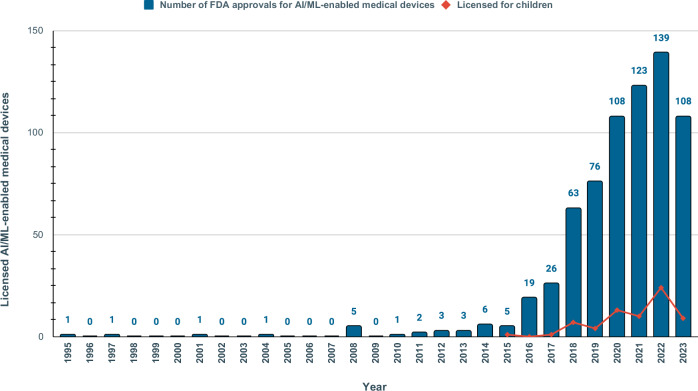
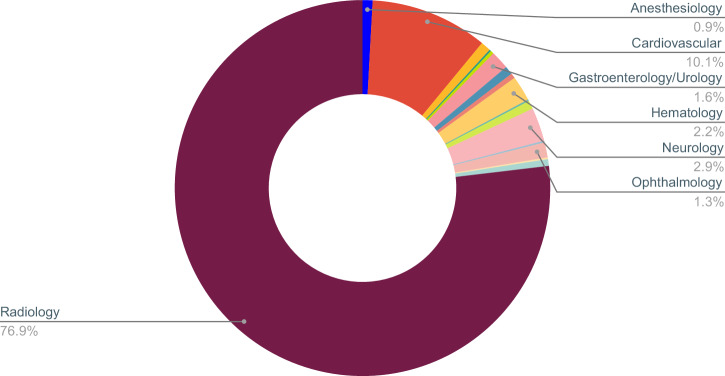
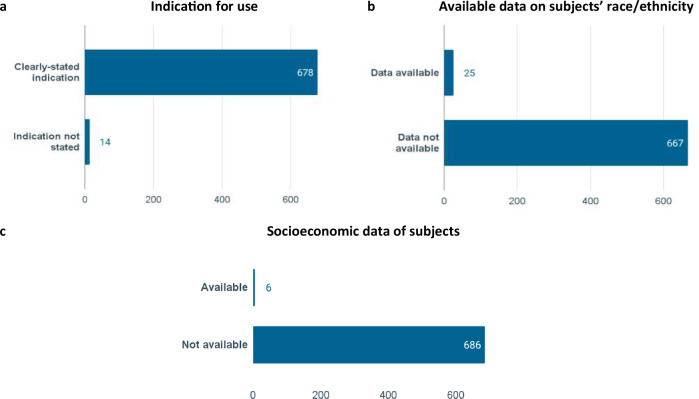
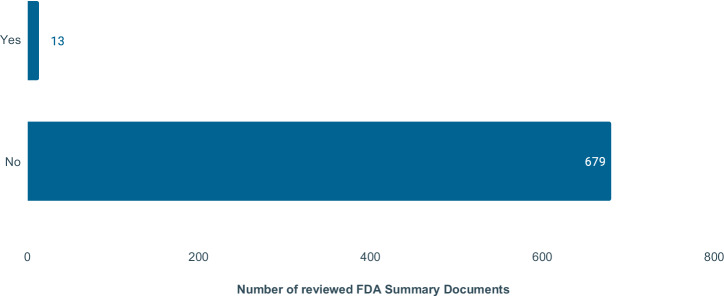
Machine learning and artificial intelligence (AI/ML) models in healthcare may exacerbate health biases. Regulatory oversight is critical in evaluating the safety and effectiveness of AI/ML devices in clinical settings. We conducted a scoping review on the 692 FDA-approved AI/ML-enabled medical devices approved from 1995-2023 to examine transparency, safety reporting, and sociodemographic representation. Only 3.6% of approvals reported race/ethnicity, 99.1% provided no socioeconomic data. 81.6% did not report the age of study subjects. Only 46.1% provided comprehensive detailed results of performance studies; only 1.9% included a link to a scientific publication with safety and efficacy data. Only 9.0% contained a prospective study for post-market surveillance. Despite the growing number of market-approved medical devices, our data shows that FDA reporting data remains inconsistent. Demographic and socioeconomic characteristics are underreported, exacerbating the risk of algorithmic bias and health disparity.
Overview
The claims and statistics of this paper haven’t been checked yet.
Free: it reads the open-access text and checks the first 5 claims that cite a source we can check. Create a free account to check every claim.
Integrity signals
Registry
Cites
Statistics
Figures
Verification
Claims the paper makes
The claims and statistics of this paper haven’t been checked yet.
Free: it reads the open-access text and checks the first 5 claims that cite a source we can check. Create a free account to check every claim.
Claims other papers make about this one
Each is checked against this paper’s own text: does it say what the citing paper says it does?
The source backs part of the claim, not all of it — or backs it for a different population, condition or comparison.
In the citing paper
“Regulatory bodies such as the U.S. Food and Drug Administration (FDA) and the European Medicines Agency (EMA) are increasingly emphasizing the need for transparency and accountability in AI-based medical devices [17,18].”
From Explainable AI in Clinical Decision Support Systems: A Meta-Analysis of Methods, Applications, and Usability Challenges (2025) · cites this paper as [18]
Experimental — accuracy not yet measuredThe source backs part of the claim, not all of it — or backs it for a different population, condition or comparison.
In the citing paper
“Most AI models therefore had not yet undergone the clinical scrutiny necessary for safe translation into practice13.”
From A quantitative analysis of global AI medical studies: gaps in randomized controlled trials (2026) · cites this paper as [13]
Experimental — accuracy not yet measuredThe check wasn’t confident either way, so it gives no verdict — never disputed.
In the citing paper
“A diagnostic pipeline that mimics the clinical process/reasoning of a physician, including chain of thought reasoning with LLM prompts, has shown performance boosts.22”
From Review of Artificial Intelligence for Clinical Use in Alzheimer's Disease and Related Dementias (2026) · cites this paper as [22]
Experimental — accuracy not yet measured
Self-check
Percentages, sums and reported differences re-computed from the paper’s own numbers.
The self-check needs the paper’s full text.
Citations
Cites
PRISMA Extension for Scoping Reviews (PRISMA-ScR): Checklist and Explanation
Tricco, A. C., Lillie, E., Zarin, W., O'Brien, K. K., Colquhoun, H., Levac, D., Moher, D., Peters, M. D. J., Horsley, T., Weeks, L., et al. (2018) · Annals of Internal Medicine · doi:10.7326/m18-0850 · Cited by 43,565 · cited 1×
“Thisscopingreviewwasconductedin accordancewiththePreferredReportingItemsforSystematicReviewsand Meta-AnalysesExtensionforScopingReviews(PRISMA-ScR)guidelines 71 .”
Zhang, Q., Wang, C., Zheng, M., Li, Y., Li, J., Zhang, L., Shang, X., & Yan, C. (2015) · Cerebrovascular Diseases · doi:10.1159/000369778 · Cited by 11,533
Projections of Global Mortality and Burden of Disease from 2002 to 2030
Mathers, C. D., & Loncar, D. (2006) · PLoS Medicine · doi:10.1371/journal.pmed.0030442 · Cited by 11,386
Dissecting racial bias in an algorithm used to manage the health of populations
Obermeyer, Z., Powers, B., Vogeli, C., & Mullainathan, S. (2019) · Science · doi:10.1126/science.aax2342 · Cited by 7,137 · cited 1×
“Initiatives promoting diversity in data collection and consideration of model performance across socioeconomic groups are paramount and must be incorporated in the assessment of market approval for emerging technologies 32 .”
BackgroundKey challenges for delivering clinical impact with artificial intelligence
Kelly, C. J., Karthikesalingam, A., Suleyman, M., Corrado, G., & King, D. (2019) · BMC Medicine · doi:10.1186/s12916-019-1426-2 · Cited by 3,136
Implementing Machine Learning in Health Care — Addressing Ethical Challenges
Char, D. S., Shah, N. H., & Magnus, D. (2018) · New England Journal of Medicine · doi:10.1056/nejmp1714229 · Cited by 1,857 · cited 1×
“Including ethics methods in both study protocols and future regulatory documents may minimize privacy concerns arising from the potential misuse, and increase end-user con fi dence 62,63 .”
MethodThe World Health Organization (WHO) approach to healthy ageing
Rudnicka, E., Napierała, P., Podfigurna, A., Męczekalski, B., Smolarczyk, R., & Grymowicz, M. (2020) · Maturitas · doi:10.1016/j.maturitas.2020.05.018 · Cited by 1,750 · cited 1×
“…National Institutes of Health (NIH) Inclusion Across the Lifespan policy aim to promote the participation of older adults in research studies, which may help equitize the potential impacts of algorithmic development for this population, considering unique ethical and clinical considerations 44,45 .”
BackgroundLiu, X., Cruz Rivera, S., Moher, D., Calvert, M. J., Denniston, A. K., The SPIRIT-AI and CONSORT-AI Working Group, SPIRIT-AI and CONSORT-AI Steering Group, Chan, A.-W., Darzi, A., Holmes, C., et al. (2020) · Nature Medicine · doi:10.1038/s41591-020-1034-x · Cited by 1,421
Do no harm: a roadmap for responsible machine learning for health care
Wiens, J., Saria, S., Sendak, M., Ghassemi, M., Liu, V. X., Doshi-Velez, F., Jung, K., Heller, K., Kale, D., Saeed, M., et al. (2019) · Nature Medicine · doi:10.1038/s41591-019-0548-6 · Cited by 1,266 · cited 1×
“Recentliterature strongly emphasizes the risks of increasing racial health disparity through the propagation of algorithmic bias 14 – 16 .”
BackgroundAddressing bias in big data and AI for health care: A call for open science
Norori, N., Hu, Q., Aellen, F. M., Faraci, F. D., & Tzovara, A. (2021) · Patterns · doi:10.1016/j.patter.2021.100347 · Cited by 903
Research works printed but not linked: 1
- Jiang, H. & Nachum, O. Identifying and correcting label bias in machine learning. Proc. Mach. Learn. Res. 108, 4621–4630 (2020).
Cited by
Items 101–200 of 226
A hybrid deployment model for generative artificial intelligence in hospitals
Griot, M., Hemptinne, C., Vanderdonckt, J. M., & Yüksel, D. (2025) · Machine Learning Health · doi:10.1088/3049-477x/addb51 · Cited by 2
Nakajo, M., Hirahara, D., Hirahara, M., Eizuru, Y., Tani, A., Kanzaki, F., Takumi, K., Kamimura, K., & Yoshiura, T. (2025) · Clinical Radiology · doi:10.1016/j.crad.2025.107187 · Cited by 2
Factors Impacting the Performance of Deep Learning Detection of Pulmonary Emboli
Sorin, V., Korfiatis, P. D., Langer, S. G., Hahn, L. D., Bratt, A. K., Cook, C. J., Sobek, J. D., Butler, C. S., Wald, C., Erickson, B. J., et al. (2025) · Journal of the American College of Radiology · doi:10.1016/j.jacr.2025.12.028 · Cited by 1
Application of machine learning in neuroradiology (literature review)
Konotopchyk, S. V., Shchehlov, D. V., Kolomiichenko, S. O., Ternytska, Y. P., Sydorenko, O. F., Mamonova, M. Y., Pysarenko, A. О., Svyrydiuk, V. O., & Vyval, М. B. (2025) · Ukrainian Interventional Neuroradiology and Surgery · doi:10.26683/2786-4855-2025-3(53)-54-64 · Cited by 1
AI technologies for smart pharmacology
Vișan, A. I., & Neguț, I. (2026) · Elsevier eBooks · doi:10.1016/b978-0-443-34059-8.00003-8 · Cited by 1
Terespolsky, S., Yassi, A., Ehrlich, R. I., Bruton, J., Lockhart, K., Wang, H., Klein, R., Sive, W., Statheros, J., & Spiegel, J. (2026) · Annals of Global Health · doi:10.5334/aogh.5064 · Cited by 2
Sociotechnical-systems analysis of IoT-AI convergence in cosmetic health
Makhseed, A., Arian, H., & Shuaib, A. S. (2026) · Frontiers in Medicine · doi:10.3389/fmed.2026.1677802 · Cited by 1
“These integration challenges mirror broader issues documented for machine learning medical devices (24) and IoT healthcare applications more generally (25).”
Mahmoud, R., soliman, S. H., Tahir, F., & Elmageed, N. E. A. (2026) · The Egyptian Journal of Radiology and Nuclear Medicine · doi:10.1186/s43055-026-01728-w · Cited by 1
Freyer, O., Buch, S., Bassily‐Marcus, A., Zenker, S., Pickering, B. W., Ostermann, M., Schönfelder, A., & Gilbert, S. (2026) · npj Digital Medicine · doi:10.1038/s41746-026-02609-2 · Cited by 1
“In Singh et al. ’ s FDA-wide analysis, imaging predominantly serves as the primary input modality, and quanti fi cation and feature localization are the most common AI functions 13 , aligning with the fact that most devices are developed for radiology and other imaging-focused specialties 28 .”
Artificial intelligence in sleep medicine I: Diagnosis, treatment, care, and research
Sharafkhaneh, A., Hirshkowitz, M., Razjouyan, J., BaHammam, A. S., Leppänen, T., Shin, C., Korkalainen, H., & Penzel, T. (2026) · Sleep Medicine Reviews · doi:10.1016/j.smrv.2026.102295 · Cited by 6
Nandagopal, S. (2026) · Journal of Medical Systems · doi:10.1007/s10916-026-02375-4 · Cited by 1
Ahmed, M. M., Okesanya, O. J., Othman, Z. K., Adebayo, U. O., Oso, T. A., & Lucero‐Prisno, D. E. (2026) · Informatics and Health · doi:10.1016/j.infoh.2026.03.002 · Cited by 1
Sodeify, R., Seyednazari, M. A., Dorosti, A. M., & Nourazarian, A. (2026) · Journal of Materials Science Materials in Medicine · doi:10.1007/s10856-026-07070-x · Cited by 3
“A systematic review of FDA-approved AI medical devices found that only 3.6% of approvals reported race or ethnicity data, and 99.1% did not provide socioeconomic data, revealing signi fi cant reporting gaps that may contribute to algorithmic bias [283].”
InfluentialCai, L., Meng, B., Huang, J., Ding, G., Ju, M., Wang, W.-W., Shi-jie, D., Lai, L., Wang, J., Yang, C.-X., et al. (2026) · LabMed discovery. · doi:10.1016/j.lmd.2026.100130 · Cited by 1
Ramalhete, L., Oliveira, V., Quintas, R., & Araújo, R. (2026) · AI in Medicine · doi:10.3390/aimed1020015 · Cited by 1
“We should verify, for example, that the model performs equally well on different demographic groups and does not systematically over-or under-diagnose certain populations, an area of active concern in medical AI [99].”
Safeguarding AI-driven digital health – An adaptation of the Swiss cheese model for safety
Denecke, K. (2026) · Digital Health · doi:10.1177/20552076261459551 · Cited by 3
“15,16 Because clinical knowledge evolves, a defined model lifecycle is required to prevent outdated recommendations due to outdated data in the trained model.”
Walston, S. L., Takita, H., Mitsuyama, Y., Sato, J., & Ueda, D. (2026) · European Radiology · doi:10.1007/s00330-026-12652-y · Cited by 1
“We can ’ t do calculations without data, after all, and this review is not the fi rst to note fewer studies than should be expected [33].”
Deep Learning-Enabled Cross-Device Calibration for Smartphone-Based Optical Biosensing: A Review
Zuo, H.-M., Geng, Q., Li, H.-Y., Tao, M.-X., Feng, Y.-X., & Geng, Z.-X. (2026) · IEEE Sensors Journal · doi:10.1109/jsen.2026.3716330
“…rejection rules, uncertainty thresholds, user-facing reacquisition instructions, and conditions that trigger targeted revalidation [104], [105], [107], [111]. such a system, model updates, adapter updates, camera-app changes, device allowlist changes, operating-system changes, or newly…”
InfluentialChun-wang, L. U. I., & Pusheng, W. A. N. G. (2026) · Frontiers in Medicine · doi:10.3389/fmed.2026.1894905 · Cited by 1
“The concept draws on published audits of FDA-authorized AI-enabled medical device summaries (5, 8) and sociotechnical scholarship on transparency and abstraction (3, 9).”
Ethical and Regulatory Issues in Governing AI-Enabled Software as a Medical Device: A Scoping Review
Ahsan, S., Obi, V. A. C., Noor, D., Senibi, R., Konwea, S. C., Khalid, H., & Amir, S. (2026) · Clinical Therapeutics · doi:10.1016/j.clinthera.2026.07.011 · Cited by 1
Toma, M., & YUSUPOV, D. (2026) · Bioengineering · doi:10.3390/bioengineering13091034 · Cited by 1
Rao, A., Jensen, M., Fisher, A. T., Blankemeier, L., Berens, P. M., Fereydooni, A., Lirette, S. T., Alkan, E., Kitamura, F. C., Chaves, J. M. Z., et al. (2026) · arXiv (Cornell University) · doi:10.48550/arxiv.2602.10364 · Cited by 4
Medical AI in the Americas: policy, validation, and representativeness
Americas, T. L. R. H. –. (2026) · The Lancet Regional Health - Americas · doi:10.1016/j.lana.2026.101579 · Cited by 1
After Clearance — Continuous Monitoring as the Foundation of Clinical AI Oversight
Agarwal, A. A., Sajjadian, A. N., Patel, K., & Daneshjou, R. (2026) · NEJM AI · doi:10.1056/aie2600807 · Cited by 1
Self-citationBell, J. A. H., Yeh, N., & Anderson, J. A. (2025) · The American Journal of Bioethics · doi:10.1080/15265161.2025.2457740
“An updated review of publicly accessible information regarding FDA approvals of AI medical devices reports that only 1% of approximately 1000 approvals had published research studies describing efficacy and outcome data (Muralidharan et al. 2024).”
Tomek, R. M., Hatoum, F. T., Whitney, H. M., & Giger, M. L. (2025) · SPIE Medical Imaging: Image Perception, Observer Performance, and Technology Assessment · doi:10.1117/12.3047343
Fotedar, N., & Masthi, N. R. R. (2025) · doi:10.2196/preprints.81501
An Overview of Artificial Intelligence in Neurology
Parker, T., & Brush, B. (2025) · Seminars in Neurology · doi:10.1055/a-2693-0547 · Cited by 2
Narvaez, D. P., Diaz-Canton, E. A., & Waisberg, F. (2025) · Oncología Clínica · doi:10.56969/oc.v30i2.206
AI Act Demands for Responsible Innovation: Where to go From Here?
Jessen, R., Yeung, K. K., & Ploem, M. C. (2025) · Journal of Endovascular Therapy · doi:10.1177/15266028251388730
Alam, A. (2025) · Advances in computational intelligence and robotics book series · doi:10.4018/979-8-3373-5462-0.ch010 · Cited by 1
Artificial intelligence in oncological imaging screening
Guo, Z., Xu, M., Zhong, C., Yin, X., Wang, B., & Jin, G. (2025) · International Journal of Surgery · doi:10.1097/js9.0000000000003858
Alertness to AI Algorithmic Biases in the Healthcare System
Sime, R., Foguem, C., Wamba, S. F., & Kamsu-Foguem, B. (2025) · Oklahoma International Publishing eBooks · doi:10.55432/978-1-6692-0009-3_3
Arbous, S. M. (2025) · Leiden Repository (Leiden University)
Detangling AI Transparency in the Medical Regulation SpacePreprint
Aranovich, T. D. C., Matulionytė, R., & Magrabi, F. (2025) · SSRN Electronic Journal · doi:10.2139/ssrn.5146021 · Cited by 4
Framework development to support AI-based medical technology innovation
dos Santos, J. M. P. D. A. (2025) · Portuguese National Funding Agency for Science, Research and Technology (RCAAP Project by FCT)
van de Sande, D., Grünhagen, D. J., Hilling, D. E., van der Ster, B. J. P., Smit, J. M., van Bommel, J., Verhoef, C. K., Gommers, D., & van Genderen, M. E. (2025) · NEJM AI · doi:10.1056/aics2401132 · Cited by 1
Socio-Institutional Issues and Policy Directions for Advanced Sports Policy in the AX Era
Kim, M., & Kwak, M. (2025) · 한국여성체육학회지 · doi:10.16915/jkapesgw.2025.12.39.4.1
Algorithmic fairness in context: liberty, opportunity, and well-being as ethical anchors
Perdana, A., Li, P., & Wangge, G. (2026) · AI and Ethics · doi:10.1007/s43681-025-00963-7 · Cited by 1
“[ 71 ].”
Artificial intelligence–guided robotic cardiac interventions: Precision and safety
Arora, A. (2026) · Elsevier eBooks · doi:10.1016/b978-0-443-45242-0.00009-8
Molodkin, I. V., Рыжкин, С. А., & Yakunin, A. G. (2025) · Meditsinskaya Fizika · doi:10.52775/1810-200x-2025-108-4-112-129
Developing Medical Devices and Technologies
Nazari, A. (2025) · Springer eBooks · doi:10.1007/978-3-031-36962-9_317-1
Deliberato, R. O., Tachinardi, U., & Mendonça, E. A. (2026) · Critical Care Science · doi:10.62675/2965-2774.20260314
“(17) This highlights not only the significant risks of deploying such technologies without thorough evaluation and oversight but also underscores the critical role of clinical informatics specialists in ensuring safe and effective integration into healthcare .”
Future of AI-Assisted Medical Devices in Precision Medicine: A Systemic Review
Khazaei, H., Solomon, A., Khazaei, D., Abbas, K., Etesami, F., & Balaguru, B. (2026) · International Journal of Research and Innovation in Applied Science · doi:10.51584/ijrias.2026.11010022
Computational intelligence in healthcare law: AI for ethical governance and regulatory challenges
Siṅgha, B., Kaunert, C., Balusamy, B., & Dhanaraj, R. K. (2025) · PhilPapers (PhilPapers Foundation)
Marjanović, M., & Latinović, L. (2026) · Serbian Journal of Engineering Management · doi:10.5937/sjem2600076m
Zahn, A., Mücke, M., Sellin, J., & Ateş, G. (2026) · Medical Education Online · doi:10.1080/10872981.2026.2639835
Farris, A. B., Zukić, D., & Solez, K. (2026) · Current Opinion in Nephrology & Hypertension · doi:10.1097/mnh.0000000000001174
On the purpose of artificial intelligence in critical care medicine
Drudi, C., Matta, S. C., Lee, H., O’Donoghue, S. C., D’Couto, H. T., Hamza, A., Gutiérrez, C. A., Nakasi, R., Byers, J., Tumukunde, M., et al. (2026) · Journal of Translational Critical Care Medicine · doi:10.1097/jtccm-d-25-00021
Dayma, K., Patel, P., Hildreth, K., & Jamaspishvili, T. (2026) · Research Square · doi:10.21203/rs.3.rs-9411603/v1
Dayma, K., Patel, P., Hildreth, K., & Jamaspishvili, T. (2026) · Research Square · doi:10.21203/rs.3.rs-9411603/v2
Balancing opportunities and risks of artificial intelligence in drug policy and regulation
Bareamichael, P. I., Dai, T., Socal, M. P., & Anderson, G. (2026) · American Journal of Health-System Pharmacy · doi:10.1093/ajhp/zxag124
Hung, M. J., Strickler, I., Jensen, A., Gunnell, B., Parry, A., Dyal, S., & Lipsky, M. S. (2026) · Journal of Imaging Informatics in Medicine · doi:10.1007/s10278-026-01974-4
Clinical AI/ML Model Testing and Validation
Pandey, A., Gupta, P., & Sehgal, N. K. (2026) · Springer eBooks · doi:10.1007/978-3-032-10808-1_6
The Challenges of Vision Language Models (VLMs)
Sharma, A., & Marwaha, L. (2026) · Advances in computational intelligence and robotics book series · doi:10.4018/979-8-3373-7315-7.ch007
Stage Classification of Alzheimer’s Disease MRI Data via Deep Neural Network Architectures
GÜVEN, A., Ezirmik, A. H., Ceylan, M. F., & Aydın, F. (2026) · Mühendislik Bilimleri ve Araştırmaları Dergisi · doi:10.46387/bjesr.1869200
What FDA Clearance Does, and Does Not, Mean for Artificial Intelligence
Rosen, K. L., & Mandl, K. D. (2026) · Annals of Internal Medicine · doi:10.7326/annals-26-00362
The Open-Box Fallacy: Why AI Deployment Needs a Calibrated Verification RegimePreprint
Konrad, P. M., Adam, T. L., Merrild, A. C. H., Terrenzi, R., Rosa, R. D., Tanyel, T., & Ayvaz, S. (2026) · arXiv (Cornell University) · doi:10.48550/arxiv.2605.10601
“%) contained a prospective study for post-market surveillance [22]; Dolin et al. [8] use this gap to argue for statistically valid post-deployment monitoring.”
Arima, H., & Kano, S. (2026) · JAPANES JOURNAL OF MEDICAL INSTRUMENTATION · doi:10.4286/jjmi.96.30
AI Medical Device Safety: Scoping Review with ☸️SAIMSARA
SAIMSARA (2026) · SAIMSARA Journal · doi:10.62487/saimsaraa33bf709
Mathur, S. (2025) · International Journal of Advances in Signal and Image Sciences · doi:10.29284/zdfexk19
SAIMSARA (2026) · SAIMSARA Journal · doi:10.62487/saimsarae25de34b
Warner, A. B., Solarz, B. B., Belyov, M., Bolanos, V., McCoy, A., Fujii, T., Lee, J.-M., Conlon, K. C., Gomez, M., Redd, B. A., et al. (2026) · Research Square · doi:10.21203/rs.3.rs-9522272/v1
Legal and ethical concerns of AI
Tarafdar, A., Sambhwani, L., Aryaa, H., Das, A., Sirohi, R., & Pandey, S. (2026) · Elsevier eBooks · doi:10.1016/b978-0-443-40501-3.00009-1
Zhao, Q., & Pohl, K. M. (2026) · Alcohol research · doi:10.35946/arcr.v46.1.03 · Cited by 1
“219,220 Unique to the field of alcohol research is that studies soon will be able to replace self-reported alcohol use with real-time quantitative measurements provided by noninvasive alcohol biosensors.”
Kim, H., Jonas, R. A., Ninomiya, T., Hong, R., Sitnilska, V., Howaldt, A., Ong, A. Y., Grün, M., Poschkamp, B., Zhou, Y., et al. (2026) · Research Square · doi:10.21203/rs.3.rs-9848475/v1 · Cited by 2
Jagannath, M., Sunderesan, A., Gupta, M. K., & Sudandiradoss, C. (2026) · Frontiers in Immunology · doi:10.3389/fimmu.2026.1869543
Cherecheș, R. M. (2026) · European Journal of Public Health · doi:10.1093/eurpub/ckag068
Academia and industry in the age of artificial intelligence: a narrative review
Bernstam, E. V., Johnson, T. R., & Alahdab, F. (2026) · BMJ Digital Health & AI · doi:10.1136/bmjdh-2026-000047
Singh, P., Saifi, N., Thayanithi, C. A., Elipe, A., & Peacock, R. (2026) · Elsevier eBooks · doi:10.1016/b978-0-443-44344-2.00023-6
The allegory of the cave: 10 years of AI shadows in radiology
Martín‐Noguerol, T., Úbeda, P. L., & Luna, A. (2026) · Magnetic Resonance Imaging · doi:10.1016/j.mri.2026.110738
Tănase, A. D., Zaharia, C., Dinu, Ş., Mureșan, C.-O., Bojoga, D. E., Cosoroabă, R.-M., & Crăciunescu, E. L. (2026) · Healthcare · doi:10.3390/healthcare14131867 · Cited by 1
“At the same time, recent analyses of authorized AI/ML medical technologies highlight persistent transparency gaps and heterogeneous reporting practices, raising practical questions for hospitals about how to evaluate tools, document due diligence, and sustain post-deployment monitoring [18,19].”
Human-centered ethics for artificial intelligence-integrated digital health ecosystems
Góra-Błaszczykowska, A., & Radhakrishnan, G. V. (2026) · Elsevier eBooks · doi:10.1016/b978-0-443-45282-6.00021-5
Wei, Q., Cui, M., Qi, Y., Zhang, Q., Liu, Z., Yu, C., Hobbs, F. D. R., Christiani, D. C., Li, Y., Zhang, R., et al. (2026) · The Innovation Medicine · doi:10.59717/j.xinn-med.2026.100229
Lewis, K. A., Seldomridge, A. N., Helmink, B. A., Lyu, H. G., & Snyder, R. A. (2026) · JCO Clinical Cancer Informatics · doi:10.1200/cci-26-00032
The fever without a thermometer: the global illusion of artificial intelligence monitoring
Greenhill, R. G. (2026) · IJQHC Communications · doi:10.1093/ijcoms/lyag036
Saha, A., Shao, L., Kim, J., & Dunn, A. G. (2026) · npj Digital Medicine · doi:10.1038/s41746-026-03000-x
Bilionis, I., Berrios, R. C., Muñoz, A. D. A., Fernández-Luque, L., & Castillo, C. (2026) · JAMIA Open · doi:10.1093/jamiaopen/ooag125 · Cited by 1
“63,64 While the framework is general by design, empirical validation relied on T1D datasets and CGM-derived outcomes, which limits generalizability of outcome-specific insights.”
Artificial intelligence in cardiology: implications for healthcare outcomes
Harris, M. N., Desai, P., Yalley, E., Wu, Y., Singleton, M., DeBerry, E., Batta, Y., Levy, G., & Haddad, G. E. (2026) · Frontiers in Artificial Intelligence · doi:10.3389/frai.2026.1818586
“The FDA requires medical device manufacturers to provide a Summary of Safety and Effectiveness Data (SSED), which outlines the evidence supporting FDA approval (Muralidharan et al., 2024).”
Shahverdi, E., Shahverdi, A., Kamali, S., & Herda, L. R. (2026) · Herz · doi:10.1007/s00059-026-05389-3
Cortal, G., Guessoum, S. B., Cao, X.-N., de León-Martínez, S., Baca‐García, E., & Riad, R. (2026) · JMIR Mental Health · doi:10.2196/99185
“In 2021, while cardiology has over 700 US Food and Drug Administration–approved devices and neurology over 300 devices to support clinical decision-making, psychiatry has fewer than 20 devices [9], and no AI-powered devices have been adopted despite AI’s integration across other specialties [10].”
Mittal, P., Chauhan, J., & Singh, P. P. (2026) · Health Policy and Technology · doi:10.1016/j.hlpt.2026.101288
Lavinda, O. (2026) · Research Square · doi:10.21203/rs.3.rs-10475650/v1
Shein, G. S., Tudosie, S. C., Jensen, S. M., Brodie, R., Lecler, S., Diana, M., & Mintz, Y. (2026) · Minimally Invasive Therapy & Allied Technologies · doi:10.1080/13645706.2026.2703160
Classifying Hate Speech: Domain Experts' Evaluation Needs for AI-enhanced Decision Support Systems
Riebe, T., Cremille, N., & Stumpf, S. (2026) · Nordic Conference on Human-Computer Interaction · doi:10.1145/3829807.3829810
Farias, L. G. M., Siqueira, A. C. C., Santos, K. F. A. D., Cássio, Z. I. N. I., & Linder, T. E. (2026) · BioSCIENCE · doi:10.55684/2026.84.en.e00019
Med-SAFE: Postmarket Safety-Actionability Screening for Robotic Medical DevicesPreprint
Bahaddad, A. A. S. (2026) · Research Square · doi:10.21203/rs.3.rs-9913804/v1
Ojukwu, G., Mamah, C. J., Okwu, S., Oladimeji, A. O., Balogun, I. O., & Odok, O. M. (2026) · Cureus · doi:10.7759/cureus.114001
“Studies focusing on governance also addressed the need to evaluate fairness and outcomes when widely implementing FDA-cleared AI systems in clinical practice [15,16,26,28].”
Explainable AI for Clinical Oncology Decisions
Dey, N., Misra, B., Fong, S., Sherratt, R. S., & Shi, F. (2026) · International Conference on Intelligent Engineering and Next-Gen Healthcare Systems (IEHNS) · doi:10.1109/iehns68708.2026.11606796
“Transparency, accountability and safety in AI-enabled medical technologies have also increasingly gained prominence among regulatory bodies, such as the U.S. Food and Drug Administration and the European Medicines Agency [16,17].”
Rana, S., Bhagat, P., Pal, D., Pati, S., & Singh, H. (2026) · JMIR Medical Informatics · doi:10.2196/82360
“Among the regulatory dossiers, 46.1% provided detailed performance data, 1.9% provided a link to a scientific publication, and only 9% included a prospective study for postmarket surveillance [1].”
InfluentialLteif, D., & Mohlaroy, G. (2026) · INTERNATIONAL JOURNAL OF HEALTH SYSTEMS AND MEDICAL SCIENCES · doi:10.51699/ijhsms.v5i3.1580
Large language models in spine care and research
Galbusera, F., & Cina, A. (2026) · European Spine Journal · doi:10.1007/s00586-026-10204-y
Innovation at the Time of AI and Environmental Crisis
Crimi, A. (2026) · Sustainable development goals series · doi:10.1007/978-3-032-21563-5_4
A Fog-Based AI Doctor Copilot for Real-Time Clinical Risk Triage in Telehealth IoT Systems
Guo, N., Guo, B., Guo, Y., & Kuo, A. M.-H. (2026) · Medinformatics · doi:10.47852/bonviewmedin620210326
“This design minimizes workflow disruption, reduces alarm fatigue, and aligns with prevailing governance policies that emphasize human-in-the-loop decision-making and limit AI autonomy in clinical settings [10 – 12].”
Opportunities and future directions of neurological disorders diagnosis research
Saini, A., Dadhich, A., Maheshwari, S., Sharma, V. K., & Sharma, R. (2026) · Elsevier eBooks · doi:10.1016/b978-0-44-330291-6.00020-2
Hazards of Artificial Intelligence in Medicine: A Critical Review of Emerging Challenges
Chawla, S., & Chawla, K. (2026) · doi:10.5005/ijccp-11063-0013
Intelligent medical sensors for smart healthcare and precision medicine
Wen, J., Wu, J., Yang, Y., Wang, L., & Zhang, F. (2026) · Chinese Medical Journal · doi:10.1097/cm9.0000000000004333
Metadata
- Authors
- Muralidharan, V., Adewale, B. A., Huang, C. J., Nta, M. T., Ademiju, P. O., Pathmarajah, P., Hang, M. K., Adesanya, O., Abdullateef, R. O., Babatunde, A. O., Ajibade, A., Onyeka, S., Cai, Z. R., Daneshjou, R., & Olatunji, T.
- Affiliations
- Stanford Medicine (US)
- University of Ibadan (NG)
- Afe Babalola University (NG)
- University College London (GB)
- University of Illinois Urbana-Champaign (US)
- Corresponding author
- Muralidharan, Vijaytha
- ORCID
- Venue
- npj Digital Medicine
- Published
- 2024-10-03
- Volume
- 7
- Issue
- 1
- Pages
- 273-273
- ISSN
- 2398-6352 (ISSN-L)
- PMC
- PMC11450195
- OpenAlex
- W4403107901
- Semantic Scholar
- bf51921bf8338d93e3006f7d46300b3f3b475470
- Cited by
- 201
- References
- 54
- Citations by year
- 2026: 108 · 2025: 87 · 2024: 6
- FWCI
- 4.53
- Type
- journal article
- Language
- en
- Open access
- gold
- doi.org
- Licence
- cc-by-nc-nd
- creativecommons.org/licenses/by-nc-nd/4.0 (tdm)
- creativecommons.org/licenses/by-nc-nd/4.0 (vor)
- Locations
- npj Digital Medicine (publishedVersion, cc-by-nc-nd)
- PubMed Central (publishedVersion, cc-by-nc-nd)
- PubMed (publishedVersion)
- DOAJ (DOAJ: Directory of Open Access Journals) (submittedVersion, cc-by-sa)
- Topics
- Health Sciences › Medicine › Health Informatics › Artificial Intelligence in Healthcare and Education
- Physical Sciences › Computer Science › Artificial Intelligence › Ethics and Social Impacts of AI
- Health Sciences › Medicine › Public Health, Environmental and Occupational Health › Healthcare Regulation
- Keywords
- AI medical devices, FDA device approval, reporting gaps, algorithmic bias, health disparities, race and ethnicity, socioeconomic status, post-marketing surveillance, performance studies, transparency, machine learning in healthcare, regulatory oversight
About these checks
Registry, retraction, Cites and statistics results are computed, not judged, with one exception: a printed reference that no index lists is read once by a model before it counts as a citation error. Claims are extracted by a model and kept only when their quote appears verbatim in the text; each cited source is then checked, with a model’s help, for whether it says what the claim relies on. Those verdicts can be wrong — read the claim’s quote and the cited source before relying on one.
Statistics and arithmetic are recomputed, not judged.
Confidence bands are shown only for fields calibrated on our annotated test set. None is calibrated yet, so no band is shown.
What counts as a claim ›How we measure confidence ›How we check this ›
Are you an author, or do you see a problem with this page? Request a review
Data sources
Bibliographic data: Semantic Scholar, OpenAlex, Crossref.
Contains information from the Semantic Scholar Academic Graph Datasets, made available under the ODC Attribution License (ODC-BY 1.0).
Semantic Scholar’s data is described in: Kinney, R., et al. (2023). The Semantic Scholar Open Data Platform. arXiv:2301.10140.
