

A scoping review of reporting gaps in FDA-approved AI medical devices
Open accessThe DOI matches its Crossref record; 55 of the 55 references it cites were found in a registry or an index.
Abstract
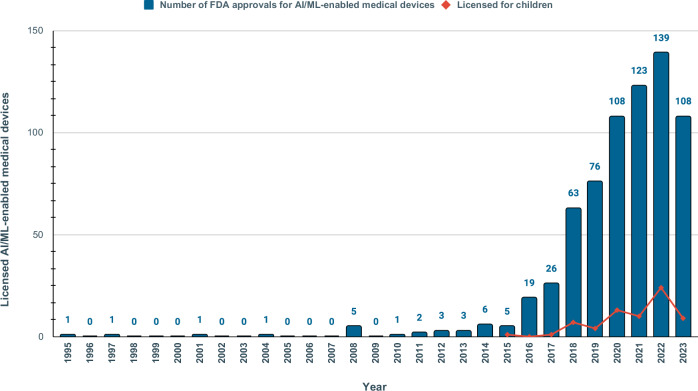
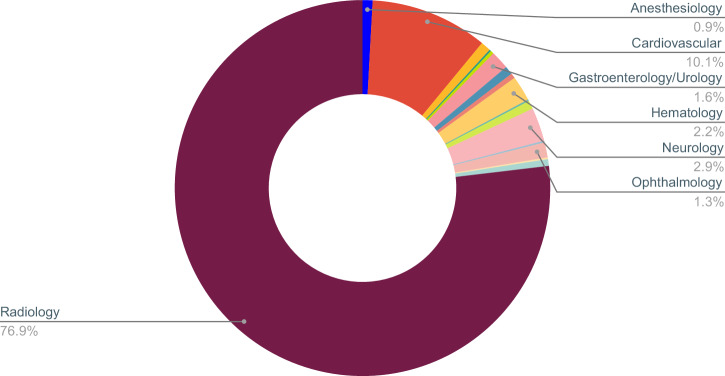
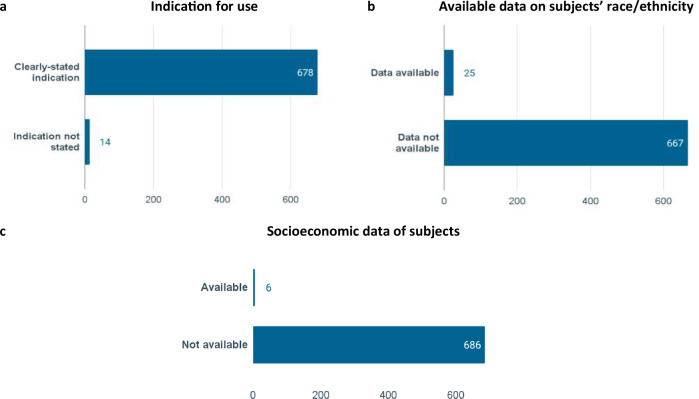
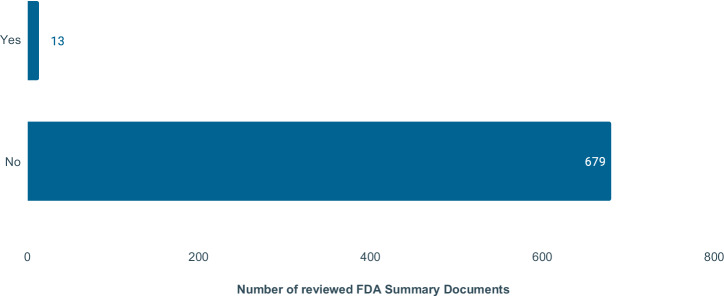
Machine learning and artificial intelligence (AI/ML) models in healthcare may exacerbate health biases. Regulatory oversight is critical in evaluating the safety and effectiveness of AI/ML devices in clinical settings. We conducted a scoping review on the 692 FDA-approved AI/ML-enabled medical devices approved from 1995-2023 to examine transparency, safety reporting, and sociodemographic representation. Only 3.6% of approvals reported race/ethnicity, 99.1% provided no socioeconomic data. 81.6% did not report the age of study subjects. Only 46.1% provided comprehensive detailed results of performance studies; only 1.9% included a link to a scientific publication with safety and efficacy data. Only 9.0% contained a prospective study for post-market surveillance. Despite the growing number of market-approved medical devices, our data shows that FDA reporting data remains inconsistent. Demographic and socioeconomic characteristics are underreported, exacerbating the risk of algorithmic bias and health disparity.
Overview
The claims and statistics of this paper haven’t been checked yet.
Free: it reads the open-access text and checks the first 5 claims that cite a source we can check. Create a free account to check every claim.
Integrity signals
Registry
Cites
Statistics
Figures
Verification
Claims the paper makes
The claims and statistics of this paper haven’t been checked yet.
Free: it reads the open-access text and checks the first 5 claims that cite a source we can check. Create a free account to check every claim.
Claims other papers make about this one
Each is checked against this paper’s own text: does it say what the citing paper says it does?
The source backs part of the claim, not all of it — or backs it for a different population, condition or comparison.
In the citing paper
“Regulatory bodies such as the U.S. Food and Drug Administration (FDA) and the European Medicines Agency (EMA) are increasingly emphasizing the need for transparency and accountability in AI-based medical devices [17,18].”
From Explainable AI in Clinical Decision Support Systems: A Meta-Analysis of Methods, Applications, and Usability Challenges (2025) · cites this paper as [18]
Experimental — accuracy not yet measuredThe source backs part of the claim, not all of it — or backs it for a different population, condition or comparison.
In the citing paper
“Most AI models therefore had not yet undergone the clinical scrutiny necessary for safe translation into practice13.”
From A quantitative analysis of global AI medical studies: gaps in randomized controlled trials (2026) · cites this paper as [13]
Experimental — accuracy not yet measuredThe check wasn’t confident either way, so it gives no verdict — never disputed.
In the citing paper
“A diagnostic pipeline that mimics the clinical process/reasoning of a physician, including chain of thought reasoning with LLM prompts, has shown performance boosts.22”
From Review of Artificial Intelligence for Clinical Use in Alzheimer's Disease and Related Dementias (2026) · cites this paper as [22]
Experimental — accuracy not yet measured
Self-check
Percentages, sums and reported differences re-computed from the paper’s own numbers.
The self-check needs the paper’s full text.
Citations
Cites
PRISMA Extension for Scoping Reviews (PRISMA-ScR): Checklist and Explanation
Tricco, A. C., Lillie, E., Zarin, W., O'Brien, K. K., Colquhoun, H., Levac, D., Moher, D., Peters, M. D. J., Horsley, T., Weeks, L., et al. (2018) · Annals of Internal Medicine · doi:10.7326/m18-0850 · Cited by 43,565 · cited 1×
“Thisscopingreviewwasconductedin accordancewiththePreferredReportingItemsforSystematicReviewsand Meta-AnalysesExtensionforScopingReviews(PRISMA-ScR)guidelines 71 .”
Zhang, Q., Wang, C., Zheng, M., Li, Y., Li, J., Zhang, L., Shang, X., & Yan, C. (2015) · Cerebrovascular Diseases · doi:10.1159/000369778 · Cited by 11,533
Projections of Global Mortality and Burden of Disease from 2002 to 2030
Mathers, C. D., & Loncar, D. (2006) · PLoS Medicine · doi:10.1371/journal.pmed.0030442 · Cited by 11,386
Dissecting racial bias in an algorithm used to manage the health of populations
Obermeyer, Z., Powers, B., Vogeli, C., & Mullainathan, S. (2019) · Science · doi:10.1126/science.aax2342 · Cited by 7,137 · cited 1×
“Initiatives promoting diversity in data collection and consideration of model performance across socioeconomic groups are paramount and must be incorporated in the assessment of market approval for emerging technologies 32 .”
BackgroundKey challenges for delivering clinical impact with artificial intelligence
Kelly, C. J., Karthikesalingam, A., Suleyman, M., Corrado, G., & King, D. (2019) · BMC Medicine · doi:10.1186/s12916-019-1426-2 · Cited by 3,136
Implementing Machine Learning in Health Care — Addressing Ethical Challenges
Char, D. S., Shah, N. H., & Magnus, D. (2018) · New England Journal of Medicine · doi:10.1056/nejmp1714229 · Cited by 1,857 · cited 1×
“Including ethics methods in both study protocols and future regulatory documents may minimize privacy concerns arising from the potential misuse, and increase end-user con fi dence 62,63 .”
MethodThe World Health Organization (WHO) approach to healthy ageing
Rudnicka, E., Napierała, P., Podfigurna, A., Męczekalski, B., Smolarczyk, R., & Grymowicz, M. (2020) · Maturitas · doi:10.1016/j.maturitas.2020.05.018 · Cited by 1,750 · cited 1×
“…National Institutes of Health (NIH) Inclusion Across the Lifespan policy aim to promote the participation of older adults in research studies, which may help equitize the potential impacts of algorithmic development for this population, considering unique ethical and clinical considerations 44,45 .”
BackgroundLiu, X., Cruz Rivera, S., Moher, D., Calvert, M. J., Denniston, A. K., The SPIRIT-AI and CONSORT-AI Working Group, SPIRIT-AI and CONSORT-AI Steering Group, Chan, A.-W., Darzi, A., Holmes, C., et al. (2020) · Nature Medicine · doi:10.1038/s41591-020-1034-x · Cited by 1,421
Do no harm: a roadmap for responsible machine learning for health care
Wiens, J., Saria, S., Sendak, M., Ghassemi, M., Liu, V. X., Doshi-Velez, F., Jung, K., Heller, K., Kale, D., Saeed, M., et al. (2019) · Nature Medicine · doi:10.1038/s41591-019-0548-6 · Cited by 1,266 · cited 1×
“Recentliterature strongly emphasizes the risks of increasing racial health disparity through the propagation of algorithmic bias 14 – 16 .”
BackgroundAddressing bias in big data and AI for health care: A call for open science
Norori, N., Hu, Q., Aellen, F. M., Faraci, F. D., & Tzovara, A. (2021) · Patterns · doi:10.1016/j.patter.2021.100347 · Cited by 903
Research works printed but not linked: 1
- Jiang, H. & Nachum, O. Identifying and correcting label bias in machine learning. Proc. Mach. Learn. Res. 108, 4621–4630 (2020).
Cited by
Items 201–226 of 226
AI-Based Safety, Explainability, and Risk Assessment in Gene and Cell Therapies
Baskaran, R., Anandharaj, G., Sreeja, P. A., Selvaraj, D., & Kandimalla, R. (2026) · Advances in computational intelligence and robotics book series · doi:10.4018/979-8-2600-0161-5.ch013
Perceptions of doctors disclosing AI use in their online biographies: evidence from an experiment
Perrault, E. K., Momade, G. M., & Yel, E. (2026) · International Journal of Pharmaceutical and Healthcare Marketing · doi:10.1108/ijphm-01-2026-0009
When Statistics Meet AI, or How to Not Show Your Results to the Scientific Community
Úbeda, P. L., Martín‐Noguerol, T., & Luna, A. (2026) · Academic Radiology · doi:10.1016/j.acra.2026.08.008
Biomarkers in axial spondyloarthritis diagnosis: from clinical signs to multi-omics integration
Xin, P., Xu, Z., Pan, Y., Zhang, M., & Wang, R. (2026) · Frontiers in Immunology · doi:10.3389/fimmu.2026.1929862
Post-Deployment Update Triggers for Clinical AI: An Error-Taxonomy Framework for Safe Model Revision
Herrera, L., Rojas, D., & Castro, A. (2024) · Journal of Health Informatics and Digital Systems · doi:10.68159/b329996013
Pediatric Artificial Intelligence in Radiology: Unmet Needs and Next Steps— AJR Expert Panel Review
Sinti-Ycochea, M., Sammer, M. B. K., Sotardi, S. T., Kwon, J. K., Schooler, G. R., Tsai, A., & Otero, H. J. (2026) · American Journal of Roentgenology · doi:10.2214/ajr.26.35523
Carter, G. A. (2026) · Journal of Nursing Care Quality · doi:10.1097/ncq.0000000000001011
Santoyo, J., Figueroa, C. V., Nabizada, H., Argüello-Lacayo, L., Arias, G., & Abdelgawad, M. M. (2026) · Journal of Dental Health and Oral Research · doi:10.46889/jdhor.2026.7302
“Within an intelligent surgical ecosystem, digital biomarkers may therefore connect preoperative prediction, surgical intervention and postoperative adaptation, allowing artificial intelligence to extend from image interpretation toward continuous biological decision support [58].”
Liu, T., Chen, L., Chu, M., Liu, Z., Wu, X., Zhang, N., Lan, Z., & Cao, J. (2026) · Digital Health · doi:10.1177/20552076261488580
Artificial intelligence in cardiology: an evidence map across subspecialties, 2014–26
Koltowski, L., Basza, M., Soliński, M., Rolek, B., Brandberg, H., Costa, F., Keser, N., Marketou, M. E., Grabowski, M., Vidal-Pérez, R., et al. (2026) · European Heart Journal - Digital Health · doi:10.1093/ehjdh/ztag152
“82 These observations high-light the importance of regulatory oversight and structured post-market monitoring, as real-world deployments may carry risks insufficiently captured in published or regulatory documents.”
Marconi, L., Vignali, M., Marino, M. D., & Cabitza, F. (2026) · International Journal of Medical Informatics · doi:10.1016/j.ijmedinf.2026.106732
Part 1: Artificial intelligence in neurointerventional surgery: current state and challenges
Vargas, J., Hoffman, H., Schirmer, C. M., Hui, F. K., 河野健一, Booth, T. C., Kellogg, R. T., & Levitt, M. (2026) · JNIS Advances · doi:10.1136/jnisadv-2026-000011
Explainable Artificial Intelligence
Bechný, M., Švihrová, R., & Wortmann, F. (2026) · Sleep Medicine Clinics · doi:10.1016/j.jsmc.2026.08.002
Purkayastha, S., Kuruvikkattil, A. V., Sammeta, C., Perumbilly, A. N., Kudamala, R., & Gichoya, J. W. (2026) · Research Square · doi:10.21203/rs.3.rs-10808081/v1
Artificial Intelligence in Sleep Medicine: From Bench Code to Bedside Care
BaHammam, A. S., & Sharafkhaneh, A. (2026) · Sleep Medicine Clinics · doi:10.1016/j.jsmc.2026.09.001
Irshad, S. U., Ismail, S. M., Haider, N.-U.-E., Mir, S., Hanzala, M., khan, M. S., Ullah, I., & Mumtaz, A. (2026) · JNIS Advances · doi:10.1136/jnisadv-2026-000052
Rao, V. M., Chen, E., Saenz, A., Banerjee, O., Marklund, H., Bijnens, L., Kim, S. E., Zucker, E. J., Shelmerdine, S. C., Palacio, J. R., et al. (2026) · Nature Biomedical Engineering · doi:10.1038/s41551-026-01812-6
Jowhari, M. A. (2026) · Nuclear Medicine Communications · doi:10.1097/mnm.0000000000002253
Qureshi, K., Anzueto, J., Parmar, T., Sun, G., Yekula, A., Jayaram, R. H., Chinnasamy, V., Alvin, J., Saenz, S., Goulart, C. R., et al. (2026) · Neurosurgical FOCUS · doi:10.3171/2026.8.focus26413
Innovazione al tempo dell’IA e della crisi ambientale
Crimi, A. (2026) · SxI Springer per l'Innovazione · doi:10.1007/978-3-032-35860-8_4
Bogdanova, N. G., Serebrova, S. Y., Климов, В. И., Esakova, E. Y., & Zhuravleva, M. V. (2026) · Meditsinskiy sovet = Medical Council · doi:10.21518/ms2026-418
Rahi, S., Chandranand, P. S., Rana, A., & Lather, V. (2026) · Indian Journal of Pharmaceutical Education and Research · doi:10.5530/ijper.20273785
Lee, W. Y., Lin, C.-C., Young, G.-H., & Wang, R. Y. L. (2026) · Frontiers in Digital Health · doi:10.3389/fdgth.2026.1934685
HybridVision Transformers for Multi-scale Morphological Assessment in Precision Mammography
Wajid, T., Baig, M. M. A., Asif, A., Talha, M., Abbas, M. H., & Adnan, O. B. (2026) · Discover Artificial Intelligence · doi:10.1007/s44163-026-02688-w
“A systematic review of 692 FDA-cleared AI/ML-enabled medical devices found that only 9.0% included a prospective post-mar-ket surveillance study in their clearance package, and only 3.6% of submissions reported racial or ethnic characteristics of the test population [73].”
InfluentialSunday, I. E., Nwogboji, E. U., & Bamigbola, P. I. (2026) · IIAR Journal of Communication Media and Digital Society · doi:10.68854/7evf1x91
ARTIFICIAL INTELLIGENCE IN FETAL MEDICINE: APPLICATIONS IN DIAGNOSIS AND GESTATIONAL RISK PREDICTION
Feitosa, G. D. C., Rodolpho, G. C., Medeiros, R. D. O., Abrão, F., Abrão, L., Noronha, L. D. A., Kataoka, I. F., de Souza, R. T., Salles, M. L. D. D. M., Barbieri, L. G., et al. (2026) · Artefactum · doi:10.23900/artefactum.v25i13.076
Metadata
- Authors
- Muralidharan, V., Adewale, B. A., Huang, C. J., Nta, M. T., Ademiju, P. O., Pathmarajah, P., Hang, M. K., Adesanya, O., Abdullateef, R. O., Babatunde, A. O., Ajibade, A., Onyeka, S., Cai, Z. R., Daneshjou, R., & Olatunji, T.
- Affiliations
- Stanford Medicine (US)
- University of Ibadan (NG)
- Afe Babalola University (NG)
- University College London (GB)
- University of Illinois Urbana-Champaign (US)
- Corresponding author
- Muralidharan, Vijaytha
- ORCID
- Venue
- npj Digital Medicine
- Published
- 2024-10-03
- Volume
- 7
- Issue
- 1
- Pages
- 273-273
- ISSN
- 2398-6352 (ISSN-L)
- PMC
- PMC11450195
- OpenAlex
- W4403107901
- Semantic Scholar
- bf51921bf8338d93e3006f7d46300b3f3b475470
- Cited by
- 201
- References
- 54
- Citations by year
- 2026: 108 · 2025: 87 · 2024: 6
- FWCI
- 4.53
- Type
- journal article
- Language
- en
- Open access
- gold
- doi.org
- Licence
- cc-by-nc-nd
- creativecommons.org/licenses/by-nc-nd/4.0 (tdm)
- creativecommons.org/licenses/by-nc-nd/4.0 (vor)
- Locations
- npj Digital Medicine (publishedVersion, cc-by-nc-nd)
- PubMed Central (publishedVersion, cc-by-nc-nd)
- PubMed (publishedVersion)
- DOAJ (DOAJ: Directory of Open Access Journals) (submittedVersion, cc-by-sa)
- Topics
- Health Sciences › Medicine › Health Informatics › Artificial Intelligence in Healthcare and Education
- Physical Sciences › Computer Science › Artificial Intelligence › Ethics and Social Impacts of AI
- Health Sciences › Medicine › Public Health, Environmental and Occupational Health › Healthcare Regulation
- Keywords
- AI medical devices, FDA device approval, reporting gaps, algorithmic bias, health disparities, race and ethnicity, socioeconomic status, post-marketing surveillance, performance studies, transparency, machine learning in healthcare, regulatory oversight
About these checks
Registry, retraction, Cites and statistics results are computed, not judged, with one exception: a printed reference that no index lists is read once by a model before it counts as a citation error. Claims are extracted by a model and kept only when their quote appears verbatim in the text; each cited source is then checked, with a model’s help, for whether it says what the claim relies on. Those verdicts can be wrong — read the claim’s quote and the cited source before relying on one.
Statistics and arithmetic are recomputed, not judged.
Confidence bands are shown only for fields calibrated on our annotated test set. None is calibrated yet, so no band is shown.
What counts as a claim ›How we measure confidence ›How we check this ›
Are you an author, or do you see a problem with this page? Request a review
Data sources
Bibliographic data: Semantic Scholar, OpenAlex, Crossref.
Contains information from the Semantic Scholar Academic Graph Datasets, made available under the ODC Attribution License (ODC-BY 1.0).
Semantic Scholar’s data is described in: Kinney, R., et al. (2023). The Semantic Scholar Open Data Platform. arXiv:2301.10140.
