

Systematic review of cost effectiveness and budget impact of artificial intelligence in healthcare
Open accessThe DOI matches its Crossref record; 59 of the 59 references it cites were found in a registry or an index; 25 of the 53 sources its claims cite were checked for support.
Abstract
This systematic review examines 19 studies of clinical AI interventions across multiple specialties and finds economic promise, while warning that cost components are often underreported.
Overview
CoChat Summary
## TL;DR
This systematic review of 19 studies found that clinical AI interventions were generally associated with improved diagnostic accuracy, gains in QALYs, and frequent cost savings or favorable ICERs across multiple specialties. The authors caution that many studies used static models and omitted important cost components, so the reported economic value of AI may be overstated.
## Key findings
- The review included 19 studies published from 2020 to 2024 across oncology, atrial fibrillation screening, gastrointestinal endoscopy, diabetic retinopathy screening, dental caries detection, ICU management, medication management, tuberculosis screening/monitoring, glaucoma screening, lung cancer screening, and breast cancer screening.
- Economic evaluation types were CEA (n = 14), CUA (n = 4), CMA (n = 2), and BIA (n = 1); 13 studies used a healthcare system perspective, 4 a societal perspective, and 1 a payer perspective.
- Example results reported in the paper include AF screening ICERs of £4847–£5544 per QALY gained, diabetic retinopathy screening cost reductions of 14–19.5% with ICERs as low as $1107.63 per QALY, and AI-assisted colonoscopy savings of $149.2 million in Japan and $85.2 million in the United States annually.
- Reporting quality was high: CHEERS 2022 scores ranged from 21/28 to 27/28, and Drummond scores ranged from 8/10 to 9/10.
## Methods
- The authors conducted a PRISMA 2020 systematic review of clinical AI economic evaluations, searching PubMed/MEDLINE, Embase, Web of Science, and the Cochrane Library from database inception to January 2025.
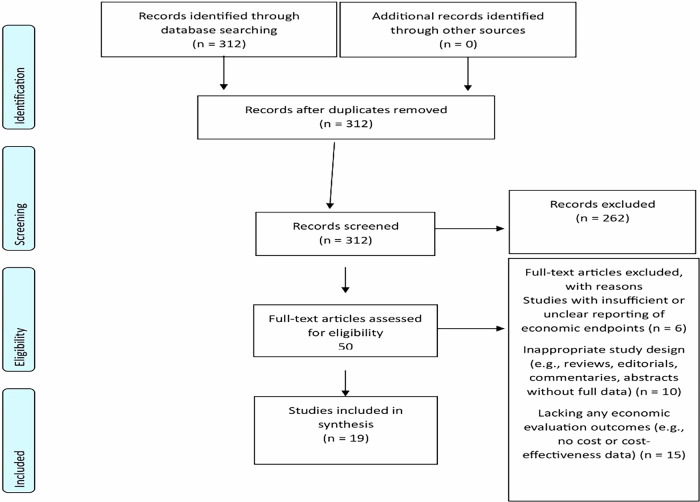
- They screened 312 unique records, assessed 50 full-text articles, and included 19 studies after excluding studies for unclear/insufficient economic reporting, ineligible design, or no economic outcomes.
- They extracted study characteristics and economic outcomes using a standardized form, then performed a thematic synthesis and quality appraisal with CHEERS 2022 and the Drummond checklist.
## Limitations
- The paper states that many studies omitted indirect costs, upfront infrastructure costs, integration costs, and ongoing maintenance costs, which may overstate economic benefits.
- The paper states that many evaluations used static decision-analytic models and did not capture adaptive learning or time-dependent performance improvements in AI; this may overestimate cost-effectiveness.
- The paper states that equity was underexplored, with limited subgroup analyses and limited disaggregation by demographic variables.
- Evident from the text: the review synthesized heterogeneous studies across settings, specialties, and methods, which the authors say may limit generalizability.
Model-written summary. Check it against the paper before relying on it.
Integrity signals
Registry
Cites
Statistics
Figures
Verification
Claims the paper makes
21 Valid · 2 Not valid · 17 Not checked · 76 Own results and interpretations
Every source the paper cites for this claim was checked and supports it.
In the paper
“Mori et al.20 reported annual national savings of $149.2 million in Japan and $85.2 million in the United States from an AI-assisted colonoscopy strategy”
§ Systematic review of cost effectiveness and budget impact of artificial intelligence in healthcare > Results > Comparative economic outcomes
What the sources say
- Supportedcites Mori et al.20 Mori, Y. et al. Cost savings in colonoscopy with artificial intelligence-aided polyp diagnosis: an add-on analysis of a clinical trial (with video). Gastrointest. Endosc. 92, 905–911.e1 (2020). 32240683 source
The Abstract reports estimated reductions in gross annual colonoscopy reimbursement of $149.2 million in Japan and $85.2 million in the United States. The Discussion identifies these as savings from an AI-supported diagnose-and-leave strategy compared with resecting all polyps; they are estimates, not observed national savings. (LLM, conf=0.93)
plainstates a cause- Asserted: passes — The authors put it forward as true.
- Checkable: passes — It can be checked against evidence.
- Load-bearing: unclear — It is unclear whether the paper’s conclusions depend on it.
- Based: passes — The paper gives a reason why it holds.
- Supported
The cited sources support only part of this claim — read each source’s verdict below.
In the paper
“Ziegelmayer et al.25 used up to 30,000 Monte Carlo simulations to demonstrate that AI-assisted LDCT remained cost-saving under various scenarios.”
§ Systematic review of cost effectiveness and budget impact of artificial intelligence in healthcare > Results > Comparative economic outcomes
What the sources say
- Partly supportedcites Ziegelmayer et al.25 Ziegelmayer, S., Graf, M., Makowski, M., Gawlitza, J. & Gassert, F. Cost-effectiveness of artificial intelligence support in computed tomography-based lung cancer screening. Cancers14, 1729 (2022). PMC8997030 35406501 sourceExperimental — accuracy not yet measured
Methods §2.7 reports a Monte Carlo probabilistic sensitivity analysis with 30,000 iterations, rather than 30,000 separate simulations. Results §3.1 finds lower costs for CT + AI in the base case, but Results §3.2 says the ICER turned positive when specificity varied. Those cases remained cost-effective at the stated willingness-to-pay threshold, not cost-saving. (LLM, conf=0.90)
boostedstates a cause- Asserted: passes — The authors put it forward as true.
- Checkable: passes — It can be checked against evidence.
- Load-bearing: unclear — It is unclear whether the paper’s conclusions depend on it.
- Based: passes — The paper gives a reason why it holds.
- Partly supported
The cited sources support only part of this claim — read each source’s verdict below.
In the paper
“the performance differences between semi-automated and fully automated AI models—as shown by Xie et al.23 and Huang et al.36 —directly impacted cost per patient and ICERs”
§ Systematic review of cost effectiveness and budget impact of artificial intelligence in healthcare > Results > Comparative economic outcomes
What the sources say
- Partly supportedcites Xie et al.23 Xie, Y. et al. Artificial intelligence for teleophthalmology-based diabetic retinopathy screening in a national programme: an economic analysis modelling study. Lancet Digit Health 2, e240–e249 (2020). 33328056 sourceExperimental — accuracy not yet measured
Our copy supports the cost-per-patient half of the attribution: the Results (base-case analysis) report 12-month total costs of $77, $62 and $66 per patient for the human assessment, semi-automated and fully automated models, and the Results sensitivity paragraph states that 'Specificity was the most important factor affecting the cost differentials, because the higher rate of false positives drives up costs', with the Discussion attributing the fully automated model's higher cost to its higher false-positive rate. However, the ICER half is not supported: the study is explicitly a cost-minimisation analysis (Cost-minimisation analysis; Added value of this study), in which the null hypothesis of no difference in sensitivity/false negatives between models could not be rejected and effectiveness was therefore assumed equal, so no incremental cost-effectiveness ratios were computed; searches for 'incremental cost-effectiveness ratio', 'ICER' and 'QALY' returned no passage in our copy. The claim also bundles Huang et al., which is judged separately and not on this source. (LLM, conf=0.78)
- Partly supportedcites Huang et al.36 Huang, X. M. et al. Cost-effectiveness of artificial intelligence screening for diabetic retinopathy in rural China. BMC Health Serv. Res 22, 1–12 (2022). 35216586 PMC8881835 sourceExperimental — accuracy not yet measured
The Discussion (page unavailable) reports lower per-patient grading costs for AI than for ophthalmologist screening, and the Results > Cost-effectiveness analysis reports an ICER for AI screening. The paper does not compare semi-automated with fully automated AI models or show that performance differences between those models directly affected costs or ICERs; it mentions those model types separately when discussing other studies. (LLM, conf=0.86)
plainstates a cause- Asserted: passes — The authors put it forward as true.
- Checkable: passes — It can be checked against evidence.
- Load-bearing: unclear — It is unclear whether the paper’s conclusions depend on it.
- Based: passes — The paper gives a reason why it holds.
- Partly supported
The cited sources support only part of this claim — read each source’s verdict below.
In the paper
“Salcedo et al.30 found that AiCure was cost-saving in 96.4% of simulations at a $150,000/QALY threshold.”
§ Systematic review of cost effectiveness and budget impact of artificial intelligence in healthcare > Results > Comparative economic outcomes
What the sources say
- Partly supportedcites Salcedo et al.30 Salcedo, J. et al. Cost-effectiveness of artificial intelligence monitoring for active tuberculosis treatment: a modeling study. PLoS One16, e0254950 (2021). PMC8294556 34288951 sourceExperimental — accuracy not yet measured
The Results report that AiCure was cost-effective in 96.4% of simulations at a $150,000/QALY threshold. They separately report that it produced more QALYs at a lower cost than DOT in 93.5% of simulations. The claim conflates cost-effectiveness with cost savings. (LLM, conf=0.94)
plainstates a cause- Asserted: passes — The authors put it forward as true.
- Checkable: passes — It can be checked against evidence.
- Load-bearing: unclear — It is unclear whether the paper’s conclusions depend on it.
- Based: passes — The paper gives a reason why it holds.
- Partly supported
Every source the paper cites for this claim was checked and supports it.
In the paper
“Szymanski et al.28 further estimated that ML-based AF screening in the UK could reduce NHS and Personal Social Services (PSS) costs by up to –£80.4 million over three years28.”
§ Systematic review of cost effectiveness and budget impact of artificial intelligence in healthcare > Results > Comparative economic outcomes
What the sources say
- Supportedcites Szymanski et al.28 Szymanski, T. et al. Budget impact analysis of a machine learning algorithm to predict high risk of atrial fibrillation among primary care patients. Europace 24, 1240–1247 (2022). 35226101 source
The Estimated budget impact section reports £80,441,386 in savings over three years for Scenario 2 when Personal Social Services costs are included alongside NHS costs. This is the largest saving reported across the three screening scenarios, matching the claim’s ‘up to £80.4 million’ estimate. (LLM, conf=0.93)
hedgedstates a cause- Asserted: passes — The authors put it forward as true.
- Checkable: passes — It can be checked against evidence.
- Load-bearing: unclear — It is unclear whether the paper’s conclusions depend on it.
- Based: passes — The paper gives a reason why it holds.
- Supported
64 more claims · 3 with their cited sources checked
Create a free account to see all 116 claims and to verify the 16 references still open.
- It may state two separate claims as one. 29
- Probably not a substantial claim. 18
Claims other papers make about this one
Each is checked against this paper’s own text: does it say what the citing paper says it does?
The source backs part of the claim, not all of it — or backs it for a different population, condition or comparison.
In the citing paper
“Dynamic modeling suggests that long-term value is maximized when adaptive learning and workflow integration are considered, but indirect costs and equity issues are often underreported in current analyses [59].”
From Artificial Intelligence in Oncologic Thoracic Surgery: Clinical Decision Support and Emerging Applications (2026) · cites this paper as [59]
Experimental — accuracy not yet measuredThe source backs part of the claim, not all of it — or backs it for a different population, condition or comparison.
In the citing paper
“Artificial intelligence in thoracic surgery demonstrates potential for cost-effectiveness primarily by improving diagnostic accuracy, reducing unnecessary procedures, and optimizing resource utilization.”
From Artificial Intelligence in Oncologic Thoracic Surgery: Clinical Decision Support and Emerging Applications (2026) · cites this paper as [59]
Experimental — accuracy not yet measured
Self-check
Percentages, sums and reported differences re-computed from the paper’s own numbers.
Self-check results appear here once an independent check has confirmed them.
Cited works that were retracted
Works this paper cites that were later retracted, from the retraction notices publishers deposit. Major when the notice came out before this paper was published.
A note, not an issue: for example, a cited work that was retracted only after this paper was published, which its authors could not have known.
In the paper
“Whether an incremental analysis was performed, 8.”
Cited work 10.1016/j.heliyon.2024.e33186 · retracted 2025-11-12 · notice 10.1016/j.heliyon.2025.e44166 · this paper published 2025-08-26
Citations
Cites
1 retracted
Hussain, A., Umair, M., Khan, S., Alonazi, W. B., Almutairi, S. S., & Malik, A. (2024) · Heliyon · doi:10.1016/j.heliyon.2024.e33186 · Cited by 141 · cited 1×
“Whether an incremental analysis was performed, 8.”
RetractedUsing thematic analysis in psychology
Braun, V., & Clarke, V. (2006) · Qualitative Research in Psychology · doi:10.1191/1478088706qp063oa · Cited by 194,414
Rayyan-a web and mobile app for systematic reviews.
Ouzzani, M., Hammady, H., Fedorowicz, Z., & Elmagarmid, A. (2016) · Systematic Reviews · doi:10.1186/s13643-016-0384-4 · Cited by 26,092
Methods for the thematic synthesis of qualitative research in systematic reviews
Thomas, J., & Harden, A. (2008) · BMC Medical Research Methodology · doi:10.1186/1471-2288-8-45 · Cited by 9,312
Updating guidance for reporting systematic reviews: development of the PRISMA 2020 statement
Page, M. J., McKenzie, J. E., Bossuyt, P. M., Boutron, I., Hoffmann, T. C., Mulrow, C. D., Shamseer, L., Tetzlaff, J. M., & Moher, D. (2021) · Journal of Clinical Epidemiology · doi:10.1016/j.jclinepi.2021.02.003 · Cited by 3,490
Artificial intelligence in healthcare: transforming the practice of medicine
Bajwa, J., Munir, U., Nori, A., & Williams, B. (2021) · Future Healthcare Journal · doi:10.7861/fhj.2021-0095 · Cited by 1,856
Husereau, D., Drummond, M., Augustovski, F., de Bekker-Grob, E., Briggs, A. H., Carswell, C., Caulley, L., Chaiyakunapruk, N., Greenberg, D., Loder, E., et al. (2022) · Value in Health · doi:10.1016/j.jval.2021.10.008 · Cited by 847 · cited 2×
“Strategies to mitigate these obstacles include encouraging global adherence to standards such as CHEERS 2022 49 and CHEERS-AI 45 , facilitating international consensus-building forums, and standardizing reporting practices to enhance trans-parency and comparability across healthcare systems.”
Bias in artificial intelligence algorithms and recommendations for mitigation
Nazer, L. H., Zatarah, R., Waldrip, S., Ke, J. X. C., Moukheiber, M., Khanna, A. K., Hicklen, R. S., Moukheiber, L., Moukheiber, D., Ma, H., et al. (2023) · PLOS Digital Health · doi:10.1371/journal.pdig.0000278 · Cited by 621
Sources of bias in artificial intelligence that perpetuate healthcare disparities—A global review
Celi, L. A., Cellini, J., Charpignon, M.-L., Dee, E. C., Dernoncourt, F., Eber, R., Mitchell, W. G., Moukheiber, L., Schirmer, J., Situ, J., et al. (2022) · PLOS Digital Health · doi:10.1371/journal.pdig.0000022 · Cited by 576
Medical image analysis using deep learning algorithms
Li, M., Jiang, Y., Zhang, Y., & Zhu, H. (2023) · Frontiers in Public Health · doi:10.3389/fpubh.2023.1273253 · Cited by 505 · cited 1×
“For instance, deep learning algorithms applied to medical imaging have demonstrated diagnostic accuracies that rival — and in some cases surpass — that of expert clinicians 11 .”
Research works printed but not linked: 1
- Drummond, M. F., Sculpher, M. J., Claxton, K., Stoddart, G. L. & Torrance, G. W. Methods for the Economic Evaluation of Health Care Programmes. Consumption Benefits of Healthcare (Oxford University Press, London, 2015).
Cited by
El Arab, R. A., Alshakihs, A. H., Alabdulwahab, S. H., Almubarak, Y. S., Alkhalifah, S. S., Abdrbo, A., Hassanein, S., & Sagbakken, M. (2025) · Frontiers in Digital Health · doi:10.3389/fdgth.2025.1666005 · Cited by 113
Młynarska, E., Bojdo, K., Bulicz, A., Frankenstein, H., Gąsior, M., Kustosik, N., Rysz, J., & Franczyk, B. (2025) · Current Issues in Molecular Biology · doi:10.3390/cimb47100787 · Cited by 108
“Consequently, their accessibility could be severely limited, exacerbating inequities in healthcare resource distribution, as only those systems with considerable budgets can afford the initial investment and ongoing maintenance of such sophisticated AI [178,180].”
Boussi Rahmouni, H., Hassine, N. B. E. H., Chouchen, M., Ceylan, H. İ., Muntean, R. I., Bragazzi, N. L., & Dergaa, I. (2025) · Healthcare · doi:10.3390/healthcare13202553 · Cited by 25
“Operationally, these investments may be considerable, emphasizing that the “predicted financial outcome” might be overstated if such costs are overlooked [189,190].”
Al-Ewaidat, O. A., & Naffaa, M. M. (2025) · Rheumato · doi:10.3390/rheumato5040017 · Cited by 28
“Interoperability remains a persistent barrier, as variability across hospital information systems often impedes the standardized exchange of multimodal data essential for model recalibration and longitudinal monitoring [245–247].”
Artificial Intelligence for Noninvasive Health Diagnostics
Wankhede, P., Bhuyar, D. L., Zanwar, S. R., Pawar, R., Jadhav, M. R., Gandhewar, N., Kulkarni, M. B., Bhaiyya, M. L., & Haick, H. (2025) · ACS Sensors · doi:10.1021/acssensors.5c03171 · Cited by 33
Al‐Nusair, J., Lanino, L., Durmaz, A., Porta, M. G. D., Zeidan, A. M., & Kewan, T. Z. (2025) · Blood Reviews · doi:10.1016/j.blre.2025.101340 · Cited by 14
Artificial Intelligence Platform Architecture for Hospital Systems: Systematic Review
Maimaitiaili, M., Jiamaliding, Y., Dai, G., Xiao, H., Kuerbanjiang, W., & Yi, Y. (2025) · Journal of Medical Internet Research · doi:10.2196/79788 · Cited by 14
“High upfront and maintenance costs, uncertain return on investment, and misalignment with hospital budget cycles were repeatedly described [25,68].”
Canino, G., Costanzo, A. D., Salerno, N., Leo, I., Cannataro, M., Guzzi, P. H., Veltri, P., Sorrentino, S., Rosa, S. D., & Torella, D. (2025) · Bioengineering · doi:10.3390/bioengineering12101102 · Cited by 18
Artificial intelligence in mental health care: a scoping review of reviews
Abu‐Mahfouz, M. S., AlFehaid, S., Burqan, H. M., & Arab, R. A. E. (2026) · Frontiers in Psychiatry · doi:10.3389/fpsyt.2026.1688043 · Cited by 20
Self-citationArtificial intelligence in rare diseases: toward clinical impact
Amorim, A. M. B., Orzeł, U., Caniceiro, A. B., Rosário‐Ferreira, N., & Moreira, I. S. (2025) · Trends in Pharmacological Sciences · doi:10.1016/j.tips.2025.10.010 · Cited by 18
Petrella, F., & Rizzo, S. (2026) · Cancers · doi:10.3390/cancers18020246 · Cited by 10
Artificial Intelligence for Predicting Difficult Airways: A Review
Alatau, M., Bauer, J., & Sazonov, V. (2025) · Journal of Clinical Medicine · doi:10.3390/jcm14238600 · Cited by 16
“Therefore, future research should incorporate health economic evaluations and decision analytic modeling to determine whether the observed improvements in diagnostic accuracy justify the financial and organizational investment required for large-scale deployment [53].”
Augmented Decisions: AI-Enhanced Accuracy in Glaucoma Diagnosis and Treatment
Zeppieri, M., Gagliano, C., Tognetto, D., Musa, M., Avitabile, A., D’Esposito, F., Nicolosi, S. G., & Capobianco, M. (2025) · Journal of Clinical Medicine · doi:10.3390/jcm14186519 · Cited by 11
What Are the Opportunities and Challenges of Using AI in Medical Education in Vietnam?
Nguyen, T. A., Nguyen, T. B., Nguyen, D. C., Vu, A. D., Dang, K. L., Le, N. Q., Ngo, D. A., Nguyen, D. K., Hoang, V. T., & Ngo, T. B. (2025) · JMIR Medical Education · doi:10.2196/77817 · Cited by 16
Hernández-Almonacid, P. G., & Marín-Quintero, X. (2026) · World Journal of Gastroenterology · doi:10.3748/wjg.v32.i2.111737 · Cited by 10
Glinkowski, W., Spalińska, A., Wołk, A., & Wołk, K. (2026) · Journal of Clinical Medicine · doi:10.3390/jcm15051751 · Cited by 14
The augmentation myth: AI, economics, and workforce substitution in radiology
Cuocolo, R., & Huisman, M. (2026) · European Radiology · doi:10.1007/s00330-026-12568-7 · Cited by 6
Precision cardiovascular medicine with big data and AI
Xu, Q., Li, Y., Zhu, M., Cai, Y., Cheng, X., Wan, M., Ju, J., Xu, Y., Li, Y., & Liu, Y. (2026) · npj Digital Medicine · doi:10.1038/s41746-026-02538-0 · Cited by 8
Artificial Intelligence in Environment and Human Health: Progress, Opportunities and Challenges
Han, D., Xu, Y., Lin, L., Meng, X., Chen, R., & Kan, H. (2025) · Current Environmental Health Reports · doi:10.1007/s40572-025-00510-w · Cited by 9
Artificial intelligence in musculoskeletal radiology: practical aspects and latest perspectives
Tordjman, M., Fritz, J. M., Regnard, N.-E., Kijowski, R., Bouvier, F. M., Taouli, B. A., Mei, X., Huang, M., & Guermazi, A. (2024) · BJR|Open · doi:10.1093/bjro/tzaf029 · Cited by 8
“38 Commercial AI software is typically subscription-or license-based, and in some countries these expenses may be passed on, at least in part, to patients through increased examination fees.”
AI for screening in healthcare: promise and challenges
Saito, K., Walston, S. L., Takita, H., Mitsuyama, Y., Arita, Y., & Ueda, D. (2026) · Abdominal Radiology · doi:10.1007/s00261-025-05370-4 · Cited by 3
“The integration of AI has the poten - tial to optimize resource allocation, as measured by met - rics such as Quality-Adjusted Life Years (QALYs) [ 18 – 20].”
InfluentialLee, J. T., Shen, T. K.-B., Liu, V. T.-N., Chen, T. H.-H., Lee, C., Lu, C., Huang, C., & Atun, R. A. (2025) · medRxiv · doi:10.1101/2025.10.27.25338867 · Cited by 3
A systematic review of economic evidence of artificial intelligence in healthcare
Schmidt, J., Carter, A. W., McGuire, A. J., Mossialos, E. A., & van Kessel, R. (2026) · Health Policy · doi:10.1016/j.healthpol.2026.105715 · Cited by 5
Intelligent technologies in operating room nursing: A bibliometric analysis of research
Yu, Y., Rao, Z., Zheng, W., Su, T., Wen, X., Yao, L., Zheng, W., Wang, Y., Chen, X., & Wang, Y. (2026) · International Journal of Nursing Studies Advances · doi:10.1016/j.ijnsa.2026.100557 · Cited by 6
Artificial Intelligence in Head and Neck Surgical Oncology: A State-of-the-Art Review
Chen, S., Feucht, M., Bhatt, A. M., & Farlow, J. L. (2026) · Journal of Clinical Medicine · doi:10.3390/jcm15072767 · Cited by 5
“Development, validation, and maintenance of AI systems require significant investment in infrastructure, data engineering, cybersecurity, and personnel expertise [78–80].”
GCMA-Net: A Gated Cross-Modal Attention Network for Arabic Multimodal Sentiment Analysis
Cheikhi, A. B., & Nfaoui, E. H. (2026) · IEEE Access · doi:10.1109/access.2026.3667314 · Cited by 4
“Artificial intelligence is widely used across many disciplinary domains, such as green energy [1], [2], as well as applications in natural language processing [3], healthcare [4], and cyber security [5].”
Abouelmagd, K., Saleem, N., Kuhn, K., Oyedele, T. J., Abdelbar, S. M. M., Rath, S., & Alsabri, M. (2025) · Current Emergency and Hospital Medicine Reports · doi:10.1007/s40138-025-00334-w · Cited by 2
Corneal cross-linking for keratoconus: a global economic and clinical perspective
Gurnani, B., & Kaur, K. (2025) · Journal of Medical Economics · doi:10.1080/13696998.2025.2587416 · Cited by 2
“When paired with timely intervention, these innovations maximize vision preservation, reduce the need for advanced care, and ultimately amplify the long-term societal and economic benefits of CXL 10 .”
Kim, Y., & Woo, K.-S. (2025) · Health Economics Review · doi:10.1186/s13561-025-00690-z · Cited by 4
“…trends that implicitly reflected gradual technological progress, these models did not account for potential rapid technological advances such as AI-enabled diagnostic support or digital health innovations that could fundamentally alter cost structures and utilization patterns [33, 34, 53].”
Artificial Intelligence–Powered Strategies for Smart Skin Scarring Management
Wang, Z., Zhang, H., Liu, Y., Sun, Y., Xia, W., Zhao, Y., Gao, Y., Lin, Y., Huang, X., & Zan, T. (2025) · Dermatologic Therapy · doi:10.1155/dth/2874866 · Cited by 2
Khalid, S. A., Khaliq, T., Rehman, Y. N., Anwar, Z., & Mirani, W. (2025) · Cureus · doi:10.7759/cureus.95943 · Cited by 4
“Second, economic evaluations are scarce; no trial to date has incorporated cost-effectiveness or cost-utility analyses, which are crucial for informing reimbursement policies and national screening strategies [25].”
Large language medicine: defining a new paradigm in human health
Guni, A., Hu, W., Morley, J., Cohen, I. G., Barnaghi, P. M., & Ashrafian, H. (2026) · Frontiers in Science · doi:10.3389/fsci.2026.1810095 · Cited by 3
Dayı, F., Erdoğdu, A., Esmer, Y., YILDIZ, F., & Ganji, F. (2026) · Healthcare · doi:10.3390/healthcare14111540 · Cited by 1
Cao, Y., Peng, Z., Deng, X., Tang, Y., Feng, Z., Gao, Y., & Deng, L. (2026) · BMC Medical Ethics · doi:10.1186/s12910-026-01476-6 · Cited by 2
“…of artificial intelligence in improving efficiency, optimizing resource allocation, and providing assistance in precise diagnosis and treatment [2]; however, given the inherent characteristics of healthcare settings, including high risk, high responsibility, and low tolerance for error,…”
Ahmed, M. M., Okesanya, O. J., Othman, Z. K., Adebayo, U. O., Oso, T. A., & Lucero‐Prisno, D. E. (2026) · Informatics and Health · doi:10.1016/j.infoh.2026.03.002 · Cited by 1
Arab, R. A. E., Moosa, O. A. A., Almagharbeh, W. T., Abuadas, F. H. A., Abdalla, N., Abdrbo, A. A., & Hassanein, S. E. (2026) · Journal of Medical Systems · doi:10.1007/s10916-026-02400-6 · Cited by 7
Self-citationDang, H. N. N., Luong, T. V., Vo, H. T. H., Nguyen, L. T. K., Tran, T. N., Pham, H. T. A., Truong, H. T., Tran, H., Tran, T. T., Hoang, T. A., et al. (2026) · BMC Medical Education · doi:10.1186/s12909-026-09305-5 · Cited by 5
“Previous research has highlighted the potential of AI in healthcare to decrease costs [35], yet its economic impact within medical education remains unclear [36].”
Seurig, S., Traidl, S., & Mathes, S. (2026) · JEADV Clinical Practice · doi:10.1002/jvc2.70297 · Cited by 2
How can junior doctors safeguard their development as clinicians in the age of AI?
Nguyen, N. P., Tran, V.-P., Bui, A. C. M., Tran, P., & Nguyen, H. (2026) · JME Practical Bioethics · doi:10.1136/jmepb-2025-000053 · Cited by 2
Kikuchi, S., Sakata, M., Hasegawa, T., Wada, S., Funada, S., 眞喜志, ま., & Akechi, T. (2026) · Palliative Medicine · doi:10.1177/02692163261416261 · Cited by 4
“53 Future studies should therefore include cost-effectiveness analyses alongside clinical outcomes to assess affordability and sustainability, particularly in resource-limited settings.”
Monitoring and evaluation instruments of individual health in community settings: a scoping review
Zhang, Y., Chen, H., Chen, X., Gao, S. H., Zhu, W., Hu, L., Li, Y., & Sun, H. (2026) · Archives of Public Health · doi:10.1186/s13690-026-01833-2 · Cited by 2
“With the emergence of precision medicine, healthcare practitioners increasingly break through traditional healthcare models and utilize artificial intelligence technology to investigate health status in a more precise manner, reducing healthcare costs without compromising quality or outcomes [4, 5].”
Paolini, E., Menegaz, G., Tamilia, E., & Storti, S. F. (2026) · IEEE Transactions on Artificial Intelligence · doi:10.1109/tai.2026.3653713 · Cited by 1
Importance and Impact of Digital Health Innovations
Traub, J. (2026) · doi:10.1007/978-3-032-16837-5_2 · Cited by 1
Syailendra, E. A., Arshad, H., Lopez‐Ramirez, F., Tixier, F., Kawamoto, S., Fishman, E. K., & Chu, L. C. H. (2026) · Korean Journal of Radiology · doi:10.3348/kjr.2026.0003 · Cited by 2
Beyond the Algorithm: A Field Guide to Deploying AI Agents in Clinical PracticePreprint
Gallifant, J., Kellogg, K. C., Butler, M., Centi, A., Chen, S., Doyle, P., Dutta, S., Guo, J., Hadfield, M., Kim, E., et al. (2025) · SSRN Electronic Journal · doi:10.2139/ssrn.5732262 · Cited by 2
Cost-Effectiveness and Budget Impact of Lung Cancer Screening: A Systematic Review
Chen, N., Wang, S., Bai, J., Franchini, F., Winn, K. M., Hu, J., Wang, J., & Chen, G. (2026) · PharmacoEconomics · doi:10.1007/s40273-026-01639-8 · Cited by 1
Wang, M., Chen, L., Yin, M., Zhang, B., Wu, J., Sun, H., Yan, L., Wei, B., Zhang, F., Bi, C., et al. (2026) · Frontiers in Physiology · doi:10.3389/fphys.2026.1883295
Touray, M., Longo, M., Ala, A., Prada, J. M., Kanteh, D., Onwuchekwa, U. U., & Green, R. (2026) · Frontiers in Artificial Intelligence · doi:10.3389/frai.2026.1866941
de Barros, G. O., & Condeixa, J. (2026) · Systems · doi:10.3390/systems14091162 · Cited by 1
Zeng, H., Yu, C., Ouyang, Y., & Hu, M. (2026) · Journal of Medical Internet Research · doi:10.2196/95592
Cost-effectiveness of artificial intelligence model for glaucoma screening in Thailand
Ittarat, M., Chansaengpetch, S., Tantibundhit, C., & Chansangpetch, S. (2026) · AJO International · doi:10.1016/j.ajoint.2026.100313
Kalpavi, C. Y., Sujatha, B. M., Deepthi, V., & Sindhu, K. (2026) · Journal of Liver Transplantation · doi:10.1016/j.liver.2026.100388
A five-phase evaluation framework for diagnostic and predictive medical artificial intelligence
Ye, Z., Chen, Y., Huang, X., Chen, M., Wang, W., Zhu, H., Han, K., Wang, J., Lu, Q., Zhao, Y., et al. (2026) · npj Digital Medicine · doi:10.1038/s41746-026-03155-7 · Cited by 4
Negoiță, D.-C., Stanga, L., Branea, H. S., Rosca, C. I., Ilie, A. C., & Roșca, O. (2026) · Healthcare · doi:10.3390/healthcare14172820 · Cited by 1
Developing an AI Score for Diagnostic Decision Support Systems
Kirchhoff, J., Berns, F., Schieder, C., & Schobel, J. (2026) · Lecture notes in networks and systems · doi:10.1007/978-3-032-32732-1_33
Artificial intelligence in risk stratification and therapeutic decision-making for multiple myeloma
Zhang, Y., Jin, X., & Zhuang, J. (2026) · Intelligent Medicine · doi:10.1016/j.imed.2026.09.006
Miao, J. H., Mohamed, O. A. E., Straus, C. M., Peters, V., Miller, E., Dawoud, B., Brooks, J., Megahed, H., & Hamimi, A. (2026) · Cancers · doi:10.3390/cancers18172753 · Cited by 1
Suresh, S., Parvathy, A. S., Raj, M., S., K. G., Priya, M. L., Biswas, R., Ramaiah, S., & Anbarasu, A. (2026) · Frontiers in Digital Health · doi:10.3389/fdgth.2026.1872286 · Cited by 1
“Ultimately, acceptance depends on ensuring that AI aligns with clinical values such as safety, accountability, and improved patient outcomes (137, 138).”
Closing Editorial: Toward Safe, Equitable, and Intelligent Healthcare
Tang, D., & Lam, T. Y. T. (2026) · Healthcare · doi:10.3390/healthcare14172703
“To provide solid data support for policymaking and clinical adoption, standardized evaluation frameworks must be established to comprehensively measure the overall societal costs, physicians’ time saved, and long-term cost-effectiveness following the integration of AI systems [22–24].”
Rational Medicine: The Culture of Stewardship and the Role of the Physician
Mukherjee, R. (2026) · British Journal of Hospital Medicine · doi:10.31083/bjhm55476
Integrated rescue: A narrative review of machine learning in hospitalized patient rescue
Koo, C. B. C., Herasevich, V., Diedrich, D. A., Brown, D. R., & Pickering, B. W. (2026) · Intensive Care Science · doi:10.1016/j.iics.2026.08.001
Liang, Y., Li, Z., & Ge, J. (2026) · Vessel Plus · doi:10.20517/2574-1209.2026.40
AI-Augmented Teach-Back in Dentistry: From Patient Education to Verified Clinical Understanding
Thakkar, A., Bhattu, B. K., & Desai, C. (2026) · Cureus · doi:10.7759/cureus.113774
The Rise of Generalist Foundation Models and Quantum Computing in Oncology
Kakar, M. (2026) · Technology in Cancer Research & Treatment · doi:10.1177/15330338261476208
“110,111 So, for the long-term viability and sustainability of AI in oncology, it is important to move away from fragile and resource-intensive models to architectures that can be self-sustaining.”
Ravindran, D., Abbas, A., Lex, J. R., et al. (2026) · Research Square · doi:10.21203/rs.3.rs-9903709/v1
Barros, G. D. M., Amaral, C. E. M., Macieira, C., de Freitas, M. A. C., de Paula, F. P., & dos Santos, A. D. F. (2026) · Telemedicine Journal and e-Health · doi:10.1177/15305627261471706 · Cited by 1
Telecan, T., Capraș, R.-D., Poenar, S. T., Sevan-Libotean, R., Gaia‐Oltean, A. I., Crivii, C. B., & Badea, A. F. (2026) · Bioengineering · doi:10.3390/bioengineering13080855
Şahman, O., & Islıcık, S. (2026) · Sağlık ve Sosyal Refah Araştırmaları Dergisi · doi:10.55050/sarad.1979886
Human-AI Synergy in Clinical Decision-Making: Balancing Innovation, Safety and Patient-Centric Care
Eskandar, K. (2026) · Artificial intelligence · doi:10.5772/intechopen.1014561
Kakaraparthi, V. N., Gannamaneni, V. K., Reddy, R. S., Samuel, P. S., & Kakaraparthi, L. (2026) · Work · doi:10.1177/10519815261469153
Abdulwahab, L. O. (2026) · Advances in computational intelligence and robotics book series · doi:10.4018/979-8-3373-9119-9.ch008 · Cited by 1
Bayraktaroglu, H., Heimer, M. M., Kuhnle, J. F., et al. (2026) · European Journal of Radiology · doi:10.1016/j.ejrad.2026.113080
Chitca, D.-D., Botezatu, C., Pancă, C. C., Mastalier, B. S. M., & BUJDEI-TEBEICA, V. (2026) · Proceedings of the ... International Conference on Business Excellence · doi:10.2478/picbe-2026-0382
Dombrovska, S., Захаров, С. В., Abdallah, I. M. E., Shpak, D., & NAUMENKO, K. (2026) · Financial and credit activity problems of theory and practice · doi:10.55643/fcaptp.3.68.2026.5249
AI in variant analysis: fast track to genetic diagnoses
Wilk, E. J., Taluri, S., Howton, T. C., Crumley, A. B., Mrug, M. M., & Lasseigne, B. N. (2026) · Human Genetics · doi:10.1007/s00439-026-02847-0 · Cited by 4
“While AI has the potential to reduce overall healthcare costs by improving diagnostic accuracy and optimizing resource allocation (El Arab and Al Moosa 2025 ), equitable access must remain a primary consider - ation (McCoy et al. 2025 ).”
Poniatowska, M. E., Troschke, T., Birkenfeld, B., & Piwowarska-Bilska, H. (2026) · Journal of Clinical Medicine · doi:10.3390/jcm15134952
“As shown by El Arab et al., AI can improve diagnostic accuracy, reduce unnecessary procedures, extend QALYs and optimise resource utilisation [50].”
Χαλλουμής, C. C. Κ. (2026) · Advances in computational intelligence and robotics book series · doi:10.4018/979-8-3373-8944-8.ch002
Χαλλουμής, C. C. Κ. (2026) · Advances in computational intelligence and robotics book series · doi:10.4018/979-8-3373-8944-8.ch001
AI and Its Shifting Roles in the Therapeutic Relationship: Implications for Precision Medicine
Igoumenidis, M., & Velonaki, V. S. (2026) · Journal of Personalized Medicine · doi:10.3390/jpm16060324
Groot, O. Q. (2026) · Clinical Orthopaedics and Related Research · doi:10.1097/corr.0000000000004024
Asghari, M. M., Changizi, S., Rassoli, A., et al. (2026) · European Spine Journal · doi:10.1007/s00586-026-10097-x
Eskandar, K. (2026) · World Journal of Nephrology · doi:10.5527/wjn.v15.i2.117719 · Cited by 1
Plażuk, E. (2026) · Rozprawy Społeczne · doi:10.29316/rs/222530
Căliman-Sturdza, O. A., Gheorghita, R. E., Filip, R., & Lobiuc, A. (2026) · Diagnostics · doi:10.3390/diagnostics16121827 · Cited by 5
“As an example, increased sensitivity of TB triage or DR screening significantly reduced downstream expenses [73,74].”
InfluentialSodeify, R., Seyednazari, M. A., Dorosti, A. M., & Nourazarian, A. (2026) · Journal of Materials Science Materials in Medicine · doi:10.1007/s10856-026-07070-x · Cited by 3
Bachuk, O., Ikonnykov, V., Rekun, G., Kovalevska, A., & Rodchenko, V. (2026) · RIVISTA DI STUDI SULLA SOSTENIBILITA · doi:10.3280/riss2026oa22250 · Cited by 1
The metamorphosis of evidence: Predictions for the next decade
Poves‐Álvarez, R., & Tamayo, E. (2026) · Revista Española de Anestesiología y Reanimación (English Edition) · doi:10.1016/j.redare.2026.502050
Liu, S., Wang, H., & He, L. (2026) · Frontiers in Oncology · doi:10.3389/fonc.2026.1848084 · Cited by 3
Akwo, A. U., Ketu, K. V., Enjong, A. B., Akam, L. A., Aleisahmbom, C. G., Kintung, I. F., Grace, M. K., & Vanelle, T. T. (2026) · Next Nanotechnology · doi:10.1016/j.nxnano.2026.100493
Incentivizing artificial intelligence in surgery
Alomar, A., Dhar, V. K., Madani, A., & Laplante, S. J. (2026) · Surgical Endoscopy · doi:10.1007/s00464-026-12879-2 · Cited by 1
Iuga, H., Balcı, M. A., Iuga, I. C., & Akgüller, Ö. (2026) · BMC Public Health · doi:10.1186/s12889-026-27676-8 · Cited by 1
“…AI-enabled tools can deliver measurable improvements in diagnostic accuracy, earlier detection, and reductions in unnecessary procedures [1, 2, 6–9], insofar as our pan-demic-era treatable mortality finding is consistent with such gains becoming visible at the population level when deployment…”
Harnessing Microbiome and Genomics for Precision Antibiotics
Patel, T. K. (2026) · Advances in computational intelligence and robotics book series · doi:10.4018/979-8-3373-5268-8.ch003
Lehmann, S., Wilhelmy, F., Schwaebe, F. V., von Dercks, N., Güresir, E., & Wach, J. (2026) · Applied Clinical Informatics · doi:10.1055/a-2913-8450
Иванович, К. Д., & Lamotkin, A. I. (2026) · FARMAKOEKONOMIKA Modern Pharmacoeconomics and Pharmacoepidemiology · doi:10.17749/2070-4909/farmakoekonomika.2026.362
Mian, Q., Guillen, P. A. V., Nooruddin, M., Alami, L., Vintimilla, B., Castillo, J., Satea, S. R. S. A. M., & Shafeea, M. S. (2026) · IntechOpen eBooks · doi:10.5772/intechopen.1015203
New Technologies and Enduring Challenges in the Healthcare Market
Sudarvel, J., Velmurugan, R., Thirumalaisamy, R., Smruthymol, J., Jothi, K., & Ganesh, R. S. (2026) · Advances in computational intelligence and robotics book series · doi:10.4018/979-8-2600-0939-0.ch006
Lin, T., Lau, R. Y. K., & Hu, S. (2026) · Artificial Intelligence Review · doi:10.1007/s10462-026-11565-y · Cited by 13
Does artificial intelligence provide value for money in oncology care? A personal perspective
Annemans, L. (2026) · Academia oncology. · doi:10.20935/acadonco8235
Du, W., Gao, C.-M., Li, Y. S., & Fu, P. (2026) · Frontiers in Public Health · doi:10.3389/fpubh.2026.1769664
“As a result, many cost-effectiveness studies rely on limited or short-term data, making it hard to assess value over a lifetime (85).”
Son, J., & Bae, S. (2026) · Drug Targets and Therapeutics · doi:10.58502/dtt.26.0003
Metadata
- Authors
- El Arab, R. A., & Al Moosa, O. A.
- Venue
- npj Digital Medicine
- Published
- 2025-08-26
- Volume
- 8
- Issue
- 1
- Pages
- 548-548
- ISSN
- 2398-6352 (ISSN-L)
- PMC
- PMC12381244
- OpenAlex
- W4413645249
- Semantic Scholar
- 477e6d6bf842a0e02d123b0e917a98e340b31cff
- Cited by
- 149
- References
- 58
- Citations by year
- 2026: 123 · 2025: 25
- FWCI
- 8.74
- Type
- journal article
- Language
- en
- Open access
- gold
- doi.org
- Licence
- cc-by
- creativecommons.org/licenses/by/4.0 (tdm)
- creativecommons.org/licenses/by/4.0 (vor)
- Locations
- npj Digital Medicine (publishedVersion, cc-by)
- Europe PMC (PubMed Central) (publishedVersion, cc-by)
- PubMed Central (publishedVersion, cc-by)
- PubMed (publishedVersion)
- DOAJ (DOAJ: Directory of Open Access Journals) (submittedVersion, cc-by-sa)
- Funders
- Almoosa College of Health Sciences
- Topics
- Health Sciences › Medicine › Health Informatics › Artificial Intelligence in Healthcare and Education
- Social Sciences › Economics, Econometrics and Finance › Economics and Econometrics › Health Systems, Economic Evaluations, Quality of Life
- Health Sciences › Health Professions › Health Information Management › Artificial Intelligence in Healthcare
- Keywords
- clinical AI, cost-effectiveness, budget impact, incremental cost-effectiveness ratio, diagnostic accuracy, quality-adjusted life years, health equity, ophthalmology, infectious diseases
About these checks
Registry, retraction, Cites and statistics results are computed, not judged, with one exception: a printed reference that no index lists is read once by a model before it counts as a citation error. Claims are extracted by a model and kept only when their quote appears verbatim in the text; each cited source is then checked, with a model’s help, for whether it says what the claim relies on. Those verdicts can be wrong — read the claim’s quote and the cited source before relying on one.
The claim verdicts this report counts are experimental: their accuracy is not yet measured.
A language model drew the claims from the paper on 2026-10-10, under version 3 of the claim definition (model deepseek-v4.1-flash, prompt extract-v3).
A second model labelled each claim on 2026-10-10 (model jev-1.13-20260917, definition revision gold-guideline-v0.2).
Cited sources are checked with a language model’s help (gpt-6-sol and qwen3.8-omni-flash).
Statistics and arithmetic are recomputed, not judged.
Confidence bands are shown only for fields calibrated on our annotated test set. None is calibrated yet, so no band is shown.
What counts as a claim ›How we measure confidence ›How we check this ›
Are you an author, or do you see a problem with this page? Request a review
Data sources
Bibliographic data: Semantic Scholar, OpenAlex, Crossref.
Contains information from the Semantic Scholar Academic Graph Datasets, made available under the ODC Attribution License (ODC-BY 1.0).
Semantic Scholar’s data is described in: Kinney, R., et al. (2023). The Semantic Scholar Open Data Platform. arXiv:2301.10140.
